Results by title
230 books match the query 'Ethnicity' and 19 start with m

Making Martial Races
Gender, Society, and Warfare in AfricaMyles Osborne
Ohio University Press, 2024

Making Sense of Collectivity
Ethnicity, Nationalism and GlobalisationEdited by Sinisa Malesevic and Mark Haugaard
Pluto Press, 2002

Making the Mission
Planning and Ethnicity in San FranciscoOcean Howell
University of Chicago Press, 2015
In Making the Mission, Ocean Howell tells the story of how residents of the Mission District organized to claim the right to plan their own neighborhood and how they mobilized a politics of place and ethnicity to create a strong, often racialized identity—a pattern that would repeat itself again and again throughout the twentieth century. Surveying the perspectives of formal and informal groups, city officials and district residents, local and federal agencies, Howell articulates how these actors worked with and against one another to establish the very ideas of the public and the public interest, as well as to negotiate and renegotiate what the neighborhood wanted. In the process, he shows that national narratives about how cities grow and change are fundamentally insufficient; everything is always shaped by local actors and concerns.

Mammographies
The Cultural Discourses of Breast Cancer NarrativesMary K. DeShazer
University of Michigan Press, 2015
While breast cancer continues to affect the lives of millions, contemporary writers and artists have responded to the ravages of the disease in creative expression. Mary K. DeShazer’s book looks specifically at breast cancer memoirs and photographic narratives, a category she refers to as mammographies, signifying both the imaging technology by which most Western women discover they have this disease and the documentary imperatives that drive their written and visual accounts of it. Mammographies argues that breast cancer narratives of the past ten years differ from their predecessors in their bold address of previously neglected topics such as the link between cancer and environmental carcinogens, the ethics and efficacy of genetic testing and prophylactic mastectomy, and the shifting politics of prosthesis and reconstruction.
Mammographies is distinctive among studies of contemporary illness narratives in its exclusive focus on breast cancer, its analysis of both memoirs and photographic texts, its attention to hybrid and collaborative narratives, and its emphasis on ecological, genetic, transnational, queer, and anti-pink discourses. DeShazer’s methodology—best characterized as literary critical, feminist, and interdisciplinary—includes detailed interpretation of the narrative strategies, thematic contours, and visual imagery of a wide range of contemporary breast cancer memoirs and photographic anthologies. The author explores the ways in which the narratives constitute a distinctive testimonial and memorial tradition, a claim supported by close readings and theoretical analysis that demonstrates how these narratives question hegemonic cultural discourses, empower reader-viewers as empathic witnesses, and provide communal sites for mourning, resisting, and remembering.
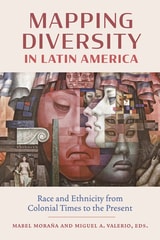
Mapping Diversity in Latin America
Race and Ethnicity from Colonial Times to the PresentEdited by Mabel Moraña and Miguel A. Valerio
Vanderbilt University Press, 2025
Taking an interdisciplinary approach to understanding issues of collective identity, otherness, alterity, and the like, Mapping Diversity in Latin America sheds light on histories that have been traditionally overlooked in texts on race in Latin America, such as the rich history of diasporic Asian, Syrian Lebanese, and Jewish communities, and the more recent emergence of Latinx populations in the United States. The book includes a critical examination of fundamental concepts such as mestizaje, mulataje, creolization, negritud, and blanquitud, as well as critical and theoretical approaches to the study of these issues in postcolonial societies.

Mark One or More
Civil Rights in Multiracial AmericaKim M. Williams
University of Michigan Press, 2010
The movement to add a multiracial category to the 2000 U.S. Census provoked unprecedented debates about race. The effort made for strange bedfellows. Republicans like House Speaker Newt Gingrich and affirmative action opponent Ward Connerly took up the multiracial cause. Civil rights leaders opposed the movement on the premise that it had the potential to dilute the census count of traditional minority groups. The activists themselves—a loose confederation of organizations, many led by the white mothers of interracial children—wanted recognition. What they got was the transformation of racial politics in America.
Mark One or More is the compelling account of how this small movement sparked a big change, and a moving call to reassess the meaning of racial identity in American life.
Kim M. Williams is Associate Professor of Public Policy in Harvard's Kennedy School of Government, and an expert in racial and ethnic politics and political movements.

Marx at the Margins
On Nationalism, Ethnicity, and Non-Western SocietiesKevin B. Anderson
University of Chicago Press, 2010
In Marx at the Margins, Kevin Anderson uncovers a variety of extensive but neglected texts by the well-known political economist which cast what we thought we knew about his work in a startlingly different light. Analyzing a variety of Marx’s writings, including journalistic work written for the New York Tribune, Anderson presents us with a Marx quite at odds with our conventional interpretations. Rather than providing us with an account of Marx as an exclusively class-based thinker, Anderson here offers a portrait of Marx for the twenty-first century: a global theorist whose social critique was sensitive to the varieties of human social and historical development, including not just class, but nationalism, race, and ethnicity, as well.
Marx at the Margins ultimately argues that alongside his overarching critique of capital, Marx created a theory of history that was multi-layered and not easily reduced to a single model of development or revolution. Through highly-informed readings on work ranging from Marx’s unpublished 1879–82 notebooks to his passionate writings about the antislavery cause in the United States, this volume delivers a groundbreaking and canon-changing vision of Karl Marx that is sure to provoke lively debate in Marxist scholarship and beyond.
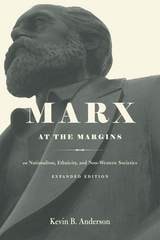
Marx at the Margins
On Nationalism, Ethnicity, and Non-Western SocietiesKevin B. Anderson
University of Chicago Press, 2016
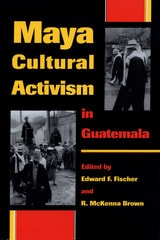
Maya Cultural Activism in Guatemala
Edited by Edward F. Fischer and R. McKenna Brown
University of Texas Press, 1996
Maya Cultural Activism in Guatemala marks a new era in Guatemalan studies by offering an up-to-the-minute look at the pan-Maya movement and the future of the Maya people as they struggle to regain control over their cultural destiny. The successful emergence of what is in some senses a nationalism grounded in ethnicity and language has challenged scholars to reconsider their concepts of nationalism, community, and identity.
Editors Edward F. Fischer and R. McKenna Brown have brought together essays by virtually all the leading U.S. experts on contemporary Maya communities and the top Maya scholars working in Guatemala today. Supplementing scholarly analysis of Mayan cultural activism is a position statement originating within the movement and more wide-ranging and personal reflections by anthropologists and linguists who have worked with the Maya over the years. Among the broader issues that come in for examination are the complex relations between U.S. Mayanists and the Mayan cultural movement, efforts to promote literacy in Mayan languages, the significance of woven textiles and native dress, the relations between language and national identity, and the cultural meanings that the present-day Maya have encountered in ancient Mayan texts and hieroglyphic writing.

Melayu
The Politics, Poetics and Paradoxes of MalaynessEdited by Maznah Mohamad and Syed Muhd Khairudin Aljunied
National University of Singapore Press, 2012
In Melayu: The Politics, Poetics and Paradoxes of Malayness, the contributors examine the checkered, wavering and changeable understanding of the word Melayu by considering hitherto unexplored case studies dealing with use of the term in connection with origins, nations, minority-majority politics, Filipino Malays, Riau Malays, Orang Asli, Straits Chinese literature, women's veiling, vernacular television, social dissent, literary women, and modern Sufism. Taken as a whole, this volume offers a creative approach to the study of Malayness while providing new perspectives to the studies of identity formation and politics of ethnicity that have wider implications beyond the Southeast Asian region.
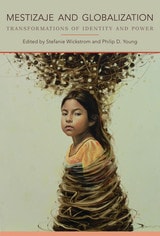
Mestizaje and Globalization
Transformations of Identity and PowerEdited by Stefanie Wickstrom and Philip D. Young
University of Arizona Press, 2014
Mestizaje and Globalization presents perspectives on the underlying transformation of identity and power associated with the term during times of great change in the Americas. The volume offers a comprehensive and empirically diverse collection of insights concerning mestizaje’s complex relationship with indigeneity, the politics of ethnic identity, transnational social movements, the aesthetic of cultural production, development policies, and capitalist globalization, with particular attention to cases in Latin America and the United States.
Beyond the narrow and often inadequate meaning of mestizaje as biological and racial mixing, the concept deserves an innovative theoretical consideration due to its multidimensional, multifaceted character and its resilience as an ideological construct. The contributors argue that historical analyses of mestizaje do not sufficiently understand contemporary ways that racism, ethnic discrimination, and social injustice intermingle with current discourse and practice of cultural recognition and multiculturalism in the Americas.
Mestizaje and Globalization contributes to an emerging multidisciplinary effort to explore how identities are imposed, negotiated, and reconstructed. The chapter authors clearly set forth the issues and obstacles that indigenous peoples and subjugated minorities face, as well as the strategies they have employed to gain empowerment in the face of globalization.

Mexican Americans and Language
Del dicho al hechoGlenn A. Martínez
University of Arizona Press, 2006
This book offers an overview of some of the central issues in the Mexican American language experience, describing it in terms of both bilingualism and minority status. It is the first book to focus on the historical, social, political, and structural aspects of multiple languages in the Mexican American experience and to address the principles and methods of applied sociolinguistic research in the Mexican American community. Spanish and non-Spanish speakers in the Mexican American community share a common set of social and ethnic bonds. They also share a common experience of bilingualism.
As Martínez observes, the ideas that have been constructed around bilingualism are as important to understanding the Mexican American language experience as bilingualism itself. Mexican Americans and Language gives students the background they need to respond to the multiple social problems that can result from the language differences that exist in the Mexican American community. By showing students how to go from word to deed (del dicho al hecho), it reinforces the importance of language for their community, and for their own lives and futures.
Migration and Ethnicity in Middle Range Societies
A View from the SouthwestTammy Stone
University of Utah Press, 2015
Author Tammy Stone focuses on a number of general deliberations on the archaeology of middle-range society and the prehistory of the American Southwest. This includes the complex dynamics of migration, identity, ethnic interaction, and the ability of archaeologists to identify these patterns in the archaeological record. The integration and ultimate expulsion of a group of Kayenta Anasazi at Point of Pines Pueblo in the Mogollon Highlands of east-central Arizona provides a case study and location where these themes played out. Stone uses a detailed architectural analysis of the pueblo to attain a nuanced and dynamic understanding of migration from the perspective of both the Kayenta migrants and their Mogollon hosts. By examining the choices that individuals, families, and small groups made about identity and alliance from the perspective of both the migrants and host community—the latter being an aspect often missing from analyses of migration—this volume provides never-before-published data on Point of Pines Pueblo and contributes considerably to the study of community dynamics at large.
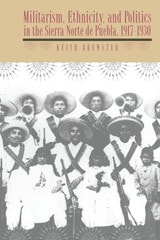
Militarism, Ethnicity, and Politics in the Sierra Norte de Puebla, 1917-1930
Keith Brewster
University of Arizona Press, 2003
Gabriel Barrios Cabrera, leader of the Brigada Serrana, rose from rural obscurity in the tiny village of Cuacuila to a position of unprecedented military strength during the Revolution, and throughout the 1920s he and his brother Demetrio came to enjoy the confidence of the nation's presidents. This work provides an in-depth look at how a local political boss held on to power. Keith Brewster reveals how the story of the Sierra is inextricably linked to that of the Barrios Cabrera family, and he investigates the ways in which this interconnection developed.
Brewster argues that Barrios owed his long prominence to his sensitivity to the region's culture, but also shows that the extent of his power was exaggerated by both contemporaries and historians. Barrios was able to develop a working relationship with the federal government by endorsing its objectives and convincing them of his own indispensability, but his authority depended on the weakness of the federal government and on infighting within the Puebla state government; once both governments stabilized, Barrios quickly lost his grip on power.
Masterfully blending archival sources and oral history, Brewster captures life in the Sierra during the 1920s and examines the decision-making processes that determined how communities responded to new pressures, such as requests for soldiers or support for development projects. He shows that subaltern groups were able to shape and even resist state reforms, mustering evidence that the Sierra's indigenous communities drove hard bargains over issues affecting their everyday lives. Although many communities used Barrios as an intermediary, Brewster reveals that they did not universally accept his legitimacy but simply used his connections to pursue their own local agendas.
Brewster depicts the Sierra de Puebla of the 1920s as a scene of shifting balances of power where political, economic, social, and ethnic factors combined to produce the temporary ascendancy of different interest groups beyond and within the region. His study forces us to question assumptions about how power was exercised at the local and regional levels in postrevolutionary Mexico and will be of lasting interest to all concerned with the dynamics of caciquismo and the evolution of the Mexican political system.

Modern Blackness
Nationalism, Globalization, and the Politics of Culture in JamaicaDeborah A. Thomas
Duke University Press, 2004
Thomas combines historical research with fieldwork she conducted in Jamaica between 1993 and 2003. Drawing on her research in a rural hillside community just outside Kingston, she looks at how Jamaicans interpreted and reproduced or transformed on the local level nationalist policies and popular ideologies about progress. With detailed descriptions of daily life in Jamaica set against a backdrop of postcolonial nation-building and neoliberal globalization, Modern Blackness is an important examination of the competing identities that mobilize Jamaicans locally and represent them internationally.
Modernism
Representations of National CultureAhmet Ersoy
Central European University Press, 2010
Modernism
The Creation of Nation-StatesMichal Kopecek
Central European University Press, 2010
Modernity At Large
Cultural Dimensions of GlobalizationArjun Appadurai
University of Minnesota Press, 1996
Examines the role of imagination in the cultural development of our shrinking world.
The world is growing smaller. Every day we hear this idea expressed and witness its reality in our lives-through the people we meet, the products we buy, the foods we eat, and the movies we watch. In this bold look at the cultural effects of a shrinking world, leading cultural theorist Arjun Appadurai places these challenges and pleasures of contemporary life in a broad global perspective.
Offering a new framework for the cultural study of globalization, Modernity at Large shows how the imagination works as a social force in today's world, providing new resources for identity and energies for creating alternatives to the nation-state, whose era some see as coming to an end. Appadurai examines the current epoch of globalization, which is characterized by the twin forces of mass migration and electronic mediation, and provides fresh ways of looking at popular consumption patterns, debates about multiculturalism, and ethnic violence. He considers the way images-of lifestyles, popular culture, and self-representation-circulate internationally through the media and are often borrowed in surprising (to their originators) and inventive fashions.
Appadurai simultaneously explores and explodes boundaries-between how we imagine the world and how that imagination influences our self-understanding, between social institutions and their effects on the people who participate in them, between nations and peoples that seem to be ever more homogeneous and yet ever more filled with differences. Modernity at Large offers a path to move beyond traditional oppositions between culture and power, tradition and modernity, global and local, pointing out the vital role imagination plays in our construction of the world of today-and tomorrow.
Multicultural Politics
Racism, Ethnicity, and Muslims in BritainTariq Modood
University of Minnesota Press, 2005