Results by title
340 books match the query 'Folklore' and 21 start with m
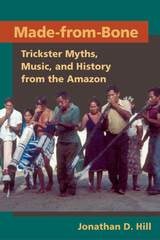
Made from Bone
Trickster Myths, Music, and History from the AmazonJonathan D. Hill
University of Illinois Press, 2008
Made-from-Bone is the first work to provide a complete set of English translations of narratives about the mythic past and its transformations from the indigenous Arawak-speaking people of South America. Among the Arawak-speaking Wakuénai of southernmost Venezuela, storytellers refer to these narratives as "words from the primordial times," and they are set in an unfinished space-time before there were any clear distinctions between humans and animals, men and women, day and night, old and young, and powerful and powerless. The central character throughout these primordial times and the ensuing developments that open up the world of distinct peoples, species, and places is a trickster-creator, Made-from-Bone, who survives a prolonged series of life-threatening attacks and ultimately defeats all his adversaries.
Carefully recorded and transcribed by Jonathan D. Hill, these narratives offer scholars of South America and other areas the only ethnographically generated cosmogony of contemporary or ancient native peoples of South America. Hill includes translations of key mythic narratives along with interpretive and ethnographic discussion that expands on the myths surrounding this fascinating and enigmatic character with broad appeal throughout various folkloric traditions.
Magic
A Theory from the SouthErnesto de Martino
HAU, 2015
Though his work was little known outside Italian intellectual circles for most of the twentieth century, anthropologist and historian of religions Ernesto de Martino is now recognized as one of the most original thinkers in the field. This book is testament to de Martino’s innovation and engagement with Hegelian historicism and phenomenology—a work of ethnographic theory way ahead of its time.
This new translation of Sud e Magia, his 1959 study of ceremonial magic and witchcraft in southern Italy, shows how De Martino is not interested in the question of whether magic is rational or irrational but rather in why it came to be perceived as a problem of knowledge in the first place. Setting his exploration within his wider, pathbreaking theorization of ritual, as well as in the context of his politically sensitive analysis of the global south’s historical encounters with Western science, he presents the development of magic and ritual in Enlightenment Naples as a paradigmatic example of the complex dynamics between dominant and subaltern cultures. Far ahead of its time, Magic is still relevant as anthropologists continue to wrestle with modernity’s relationship with magical thinking.
Magical Arrows
The Maori, The Greeks, And The Folklore Of The UniverseGregory A. Schrempp
University of Wisconsin Press, 1992
Schrempp suggests that perhaps the most noteworthy Zenoian insight is that paradox is intrinsic to cosmological speculation. But he points out that there are many other characteristics of Zeno’s approach, including the strategy of juxtaposing concrete images to mathematical forms of representation, that reappear persistently in Western intellectual history. Schrempp proceeds through a series of juxtapositions—between Zeno, Kant, Lovejoy, and Lévi-Strauss, and between Western cosmologists and those from other cultures—to highlight subtle similarities and differences among intellectual traditions and to examine the conceptual apparatus of Western social science.
Schrempp concludes that a meaningful comparative cosmology is possible and that the tradition of Zeno provides a propitious starting point for such a perspective.
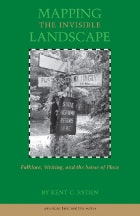
Mapping the Invisible Landscape
Folklore, Writing, and the Sense of PlaceKent C. Ryden
University of Iowa Press, 1993
Any landscape has an unseen component: a subjective component of experience, memory, and narrative which people familiar with the place understand to be an integral part of its geography but which outsiders may not suspect the existence of—unless they listen and read carefully. This invisible landscape is make visible though stories, and these stories are the focus of this engrossing book.
Traveling across the invisible landscape in which we imaginatively dwell, Kent Ryden—himself a most careful listener and reader—asks the following questions. What categories of meaning do we read into our surroundings? What forms of expression serve as the most reliable maps to understanding those meanings? Our sense of any place, he argues, consists of a deeply ingrained experiential knowledge of its physical makeup; an awareness of its communal and personal history; a sense of our identity as being inextricably bound up with its events and ways of life; and an emotional reaction, positive or negative, to its meanings and memories.
Ryden demonstrates that both folk and literary narratives about place bear a striking thematic and stylistic resemblance. Accordingly, Mapping the Invisible Landscape examines both kinds of narratives. For his oral materials, Ryden provides an in-depth analysis of narratives collected in the Coeur d'Alene mining district in the Idaho panhandle; for his consideration of written works, he explores the “essay of place,” the personal essay which takes as its subject a particular place and a writer's relationship to that place.
Drawing on methods and materials from geography, folklore, and literature, Mapping the Invisible Landscape offers a broadly interdisciplinary analysis of the way we situate ourselves imaginatively in the landscape, the way we inscribe its surface with stories. Written in an extremely engaging style, this book will lead its readers to an awareness of the vital role that a sense of place plays in the formation of local cultures, to an understanding of the many-layered ways in which place interacts with individual lives, and to renewed appreciation of the places in their own lives and landscapes.
Meaning of Folklore
The Analytical Essays of Alan DundesSimon J. Bronner
Utah State University Press, 2020
Runner-up, the Wayland Hand Award for Folklore and History, 2009

Media Sense
The Folklore-Popular Culture ContinuumUniversity of Wisconsin Press, 0
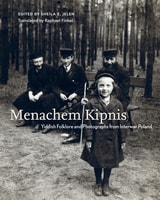
Menachem Kipnis
Yiddish Folklore and Photographs from Interwar PolandSheila E. Jelen
Rutgers University Press, 2026
Menachem Kipnis (1878–1942) was one of the early twentieth-century’s greatest Jewish eastern European ethnomusicologists, folklorists, and photographers. He had a weekly column in the Warsaw Yiddish newspaper Haynt, retelling humorous old folk stories about the fictional Polish town of Chelm, populated exclusively by fools. At the same time, his photographs of Jewish life in eastern Europe regularly appeared in the Forverts (Forward), the most popular Yiddish daily newspaper in the United States. Now, for the first time, Kipnis’s stories and photographs are published together in a single book.
Menachem Kipnis brings these photographs and stories into dialogue with one another, bridging the Jewish communities in Poland and in America during the interwar period. This dialogue, between image and text, between European metropolis and American metropolis, captures a key historical moment when American Jews sought to imagine the lives of their coreligionists in the “Old Country” and eastern European urban Jews sought to distinguish themselves from their Jewish compatriots who were still living in the shtetl. Including an introductory essay, annotations, and an epilogue by Sheila E. Jelen, Menachem Kipnis suggests new ways of understanding both visual and literary depictions of eastern European Jewish culture between the two world wars.

Metaphysical Community
The Interplay of the Senses and the IntellectBy Greg Urban
University of Texas Press, 1996
Winner, Senior Book Prize, American Ethnological Society
Starting with the post-structuralist idea that truth systems are lodged in discourse, and that discourse varies from society to society, Greg Urban seeks to discover the nature and extent of that variation. His journey to an Amerindian society in which dreams are more prominent than everyday aspects of the sensible world leads him to radically reformulate one of the main problematics of Western thought: the relationship between our sensations of the world and the understandings we form of them.
Metaphysical Community proposes that this dichotomy comes from the interplay between two sides of discourse-its intelligible side as a carrier of meanings, and its sensible side as thing-in-the-world that must be replicated. This insight leads to the heart of the book-the exploration of the uneasy tension that binds experience and understanding, phenomena and noumena.
Urban challenges basic assumptions that underlie social and cultural anthropology and much of the social sciences and humanities. His provocative insights will be of interest to all those concerned with anthropology, cultural studies, literary criticism, the sociology and politics of culture, and philosophy.
Mexican Folk Narrative from the Los Angeles Area
Introduction, Notes, and ClassificationBy Elaine K. Miller
University of Texas Press, 1973
Urban Los Angeles is the setting in which Elaine Miller has collected her narratives from Mexican-Americans. The Mexican folk tradition, varied and richly expressive of the inner life not only of a people but also of the individual as each lives it and personalizes it, is abundantly present in the United States. Since it is in the urban centers that most Mexican-Americans have lived, this collection represents an important contribution to the study of that tradition and to the study of the changes urban life effects on traditional folklore.
The collection includes sixty-two legendary narratives and twenty traditional tales. The legendary narratives deal with the virgins and saints as well as with such familiar characters as the vanishing hitchhiker, the headless horseman, and the llorona. Familiar characters appear in the traditional tales—Juan del Oso, Blancaflor, Pedro de Ordimalas, and others. Elaine Miller concludes that the traditional tales are dying out in the city because tale telling itself is not suited to the fast pace of modern urban life, and the situations and characters in the tales are not perceived by the people to be meaningfully related to the everyday challenges and concerns of that life. The legendary tales survive longer in an urban setting because, although containing fantastic elements, they are related to the beliefs and hopes of the narrator—even in the city one may be led to buried treasure on some dark night by a mysterious woman.
The penchant of the informants for the fantastic in many of their tales often reflects their hopes and fears, such as their dreams of suddenly acquiring wealth or their fears of being haunted by the dead. Miller closely observes the teller's relation to the stories—to the duendes, the ánimas, Death, God, the devil—and she notes the tension on the part of the informant in his relation to their religion.
The material is documented according to several standard tale and motif indices and is placed within the context of the larger body of Hispanic folk tradition by the citation of parallel versions throughout the Hispanic world. The tales, transcribed from taped interviews, are presented in colloquial Spanish accompanied by summaries in English.
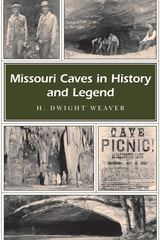
Missouri Caves in History and Legend
H. Dwight Weaver
University of Missouri Press, 2007
Missouri has been likened to a “cave factory” because its limestone bedrock can be slowly dissolved by groundwater to form caverns, and the state boasts more than six thousand caves in an unbelievable variety of sizes, lengths, and shapes. Dwight Weaver has been fascinated by Missouri’s caves since boyhood and now distills a lifetime of exploration and research in a book that will equally fascinate readers of all ages.
Missouri Caves in History and Legend records a cultural heritage stretching from the end of the ice age to the twenty-first century. In a grand tour of the state’s darkest places, Weaver takes readers deep underground to shed light on the historical significance of caves, correct misinformation about them, and describe the ways in which people have used and abused these resources.
Weaver tells how these underground places have enriched our knowledge of extinct animals and early Native Americans. He explores the early uses of caves: for the mining of saltpeter, onyx, and guano; as sources of water; for cold storage; and as livestock shelters. And he tells how caves were used for burial sites and moonshine stills, as hideouts for Civil War soldiers and outlaws—revealing how Jesse James became associated with Missouri caves—and even as venues for underground dance parties in the late nineteenth century.
Bringing caves into the modern era, Weaver relates the history of Missouri’s “show caves” over a hundred years—from the opening of Mark Twain Cave in 1886 to that of Onyx Mountain Caverns in 1990—and tells of the men and women who played a major role in expanding the state’s tourism industry. He also tracks the hunt for the buried treasure and uranium ore that have captivated cave explorers, documents the emergence of organized caving, and explains how caves now play a role in wildlife management by providing a sanctuary for endangered bats and other creatures.
Included in the book is an overview of cave resources in twelve regions, covering all the counties that currently have recorded caves, as well as a superb selection of photos from the author’s extensive collection, depicting the history and natural features of these underground wonders. Missouri Caves in History and Legend is a riveting account that marks an important contribution to the state’s heritage and brings this world of darkness into the light of day.

Mojo Workin'
The Old African American Hoodoo SystemKatrina Hazzard-Donald
University of Illinois Press, 2013
A bold reconsideration of Hoodoo belief and practice
Katrina Hazzard-Donald explores African Americans' experience and practice of the herbal, healing folk belief tradition known as Hoodoo. She examines Hoodoo culture and history by tracing its emergence from African traditions to religious practices in the Americas. Working against conventional scholarship, Hazzard-Donald argues that Hoodoo emerged first in three distinct regions she calls "regional Hoodoo clusters" and that after the turn of the nineteenth century, Hoodoo took on a national rather than regional profile. The spread came about through the mechanism of the "African Religion Complex," eight distinct cultural characteristics familiar to all the African ethnic groups in the United States.
The first interdisciplinary examination to incorporate a full glossary of Hoodoo culture, Mojo Workin': The Old African American Hoodoo System lays out the movement of Hoodoo against a series of watershed changes in the American cultural landscape. Hazzard-Donald examines Hoodoo material culture, particularly the "High John the Conquer" root, which practitioners employ for a variety of spiritual uses. She also examines other facets of Hoodoo, including rituals of divination such as the "walking boy" and the "Ring Shout," a sacred dance of Hoodoo tradition that bears its corollaries today in the American Baptist churches. Throughout, Hazzard-Donald distinguishes between "Old tradition Black Belt Hoodoo" and commercially marketed forms that have been controlled, modified, and often fabricated by outsiders; this study focuses on the hidden system operating almost exclusively among African Americans in the Black spiritual underground.
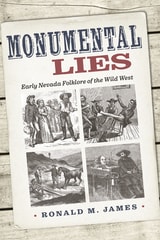
Monumental Lies
Early Nevada Folklore of the Wild WestRonald M. James
University of Nevada Press, 2023
Monumental Lies: Early Nevada Folklore of the Wild West opens the door to understanding how legends and traditions emerged during the first decades following the “Rush to Washoe,” which transformed the region beginning in 1859. During this Wild West period, there was widespread celebration of deceit, manifesting in tall tales, burlesque lies, practical jokes, and journalistic hoaxes. Humor was central to these endeavors and practitioners easily found themselves scorned if they failed to be adequately funny. This ethos became central to the way folklore emerged during the formative years of the Nevada territory and state.
The tens of thousands of people who came to the West, attracted by gold and silver mining, brought distinct cultural legacies. The interaction of diverse perspectives, even while new stories and traditions coalesced or simply appeared, was a complex process. Author Ronald M. James addresses how the fluidity of the region affected new expressions of folklore as they took root.
Mark Twain, often a go-to source for collections of early tall tales of this region, cannot be overlooked, but his interaction with local traditions was specific and narrow. More importantly, William Wright—publishing as Dan De Quille—arose as a key collector of legends, a counterpart of early European folklorists. With a bedrock understanding of what unfolded in the nineteenth century, it is possible to consider
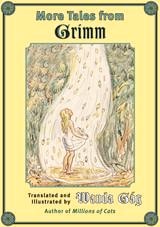
More Tales from Grimm
Wanda Gág
University of Minnesota Press, 2006
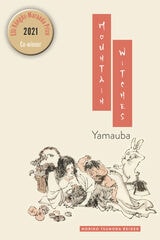
Mountain Witches
YamaubaNoriko T. Reider
Utah State University Press, 2021
Situating the yamauba within the construct of yōkai and archetypes, Noriko T. Reider investigates the yamauba attributes through the examination of narratives including folktales, literary works, legends, modern fiction, manga, and anime. She traces the lineage of a yamauba image from the seventh-century text Kojiki to the streets of Shibuya, Tokyo, and explores its emergence as well as its various, often conflicting, characteristics. Reider also examines the adaptation and re-creation of the prototype in diverse media such as modern fiction, film, manga, anime, and fashion in relation to the changing status of women in Japanese society.
Offering a comprehensive overview of the development of the yamauba as a literary and mythic trope, Mountain Witches is a study of an archetype that endures in Japanese media and folklore. It will be valuable to students, scholars, and the general reader interested in folklore, Japanese literature, demonology, history, anthropology, cultural studies, gender studies, and the visual and performing arts.

Multi-Ethnic Bird Guide of the Sub-Antarctic Forests of South America
Ricardo Rozzi
University of North Texas Press, 2010

Music and the Staged Veillée in Quebec
Performing TraditionLaura Risk
University of Illinois Press, 2026
Fiddlers, step dancers, storytellers, traditional singers, and folklorists staged Montreal’s first veillée in 1919. All that was missing, announced one of the organizers, was a magic carpet to transport the audience into the countryside and a kiss of forgetfulness to erase the woes of modern life.
Laura Risk tells the story of the veillées and explores how these commercial performances of idealized rural life became part of Quebec’s cultural heritage. Her in-depth examinations of key performances and recordings follow traditional music and dance from the stage onto radio, records and other audio media, and television. Throughout, Risk documents how veillées redefined folklore in twentieth-century Quebec and illuminates how their distinctive framing of traditional musicians and repertoire impacts the performance and reception of the music to the present day.
Astute and evocative, Music and the Staged Veillée in Quebec reveals the music, dancing, call-and-response songs, and extramusical associations winding through century-long conversations about nation, culture, and identity in Quebec.
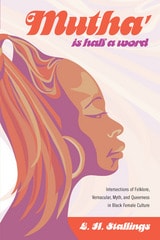
Mutha’ Is Half a Word
Intersections of Folklore, Vernacular, Myth, and Queerness in Black Female CultureL. H. Stallings
The Ohio State University Press, 2007
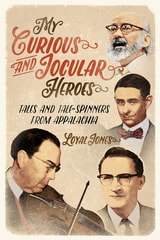
My Curious and Jocular Heroes
Tales and Tale-Spinners from AppalachiaLoyal Jones
University of Illinois Press, 2017
We stopped, and we heard the biggest racket you ever heard up in the house.
“What’s the matter, son?”
“Why, Maw and Paw are up there fightin’.”
“Who is your Paw, son?”
“Well, that’s what they are fightin’ over.”
Brimming with ballads, stories, riddles, tall tales, and great good humor, My Curious and Jocular Heroes pays homage to four people who guided and inspired Loyal Jones’s own study of Appalachian culture. His sharp-eyed portraits introduce a new generation to Bascom Lunsford, the pioneer behind the “memory collections” of song and story at Columbia University and the Library of Congress; the Sorbonne-educated collector and performer Josiah H. Combs; Cratis D. Williams, the legendary father of Appalachian studies; and the folklorist and master storyteller Leonard W. Roberts. Throughout, Jones highlights the tales, songs, jokes, and other collected nuggets that define the breadth of each man’s research and repertoire.
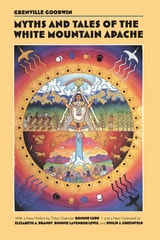
Myths and Tales of the White Mountain Apache
Grenville Goodwin; With a New Preface by Tribal Chairman Ronnie Lupe, and a New Foreword by Elizabeth A. Brandt, Bonnie Lavender-Lewis, and Philip J. Greenfeld
University of Arizona Press, 1994
These fifty-seven tales (with seven variants) gathered between 1931 and 1936 include major cycles dealing with Creation and Coyote, minor tales, and additional stories derived from Spanish and Mexican tradition. The tales are of two classes: holy tales said by some to explain the origin of ceremonies and holy powers, and tales which have to do with the creation of the earth, the emergence, the flood, the slaying of monsters, and the origin of customs. As Grenville Goodwin was the first anthropologist to work with the White Mountain Apache, his insights remain a primary source on this people.
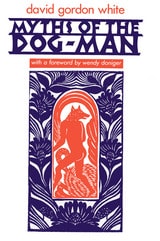
Myths of the Dog-Man
David Gordon White
University of Chicago Press, 1991

Möbius Media
Popular Culture, Folklore, and the FolkloresqueJeffrey A. Tolbert
Utah State University Press, 2024
The collection challenges readers to consider the stakes of labeling something as folklore or folk. It demonstrates the rhetorical and political potency of ideas such as traditionality, heritage, and community in storytelling venues (including films, games, and even podcasts), in the construction and policing of genres, and in the selling of commodities. By interrogating popular media and expressions that make use of ideas such as folklore, tradition, authenticity, and heritage, Möbius Media further develops the theoretical applicability of the folkloresque concept and encourages productive interdisciplinary dialogue. Through the lens of the folkloresque, scholars can better see the hidden ideologies that inform the marketplace and influence contemporary modes of communication.
This interdisciplinary work will appeal to scholars and students of cultural studies, media studies, popular culture, literature, anthropology, and related areas.