Results by title
1441 books match the query 'Great Britain' and 76 start with m
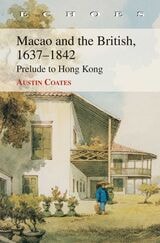
Macao and the British, 1637–1842
Prelude to Hong KongAustin Coates
Hong Kong University Press, 2009
Macaronic Sermons
Bilingualism and Preaching in Late-Medieval EnglandSiegfried Wenzel
University of Michigan Press, 2010
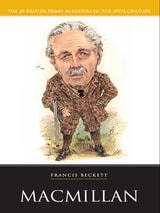
Macmillan
Francis Beckett
Haus Publishing, 2006

Magna Carta
history, context and influence: Papers delivered at Peking University on the 800th anniversary of Magna CartaEdited by Lawrence Goldman
University of London Press, 2018
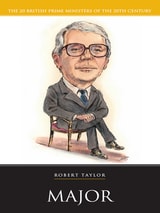
Major
Robert Taylor
Haus Publishing, 2006

Major Robert Farmar of Mobile
Robert R. Rea
University of Alabama Press, 1990
"An engaging biography [and] a colorful tale. . . . Robert Farmar, a son of New Jersey, used his position among that colony's elite to secure a commission as a captain in the British Army during the War of Jenkins' Ear and King George's War, serving in the unsuccessful assaults at Cartegena, Cuba, and Panama and then in the disaster at Fontenoy in Flanders and in the reversals at Rocoux and Laffeldt. . . . During the Seven Years' War he participated in the capture of Havana.
Major Women Writers of Seventeenth-Century England
James Fitzmaurice, Josephine A. Roberts, Carol L. Barash, Eugene R. Cunnar, and Nancy A. Gutierrez, Editors
University of Michigan Press, 1997
Making "Nature"
The History of a Scientific JournalMelinda Baldwin
University of Chicago Press, 2015
But how did Nature become such an essential institution? In Making "Nature," Melinda Baldwin charts the rich history of this extraordinary publication from its foundation in 1869 to current debates about online publishing and open access. This pioneering study not only tells Nature's story but also sheds light on much larger questions about the history of science publishing, changes in scientific communication, and shifting notions of "scientific community." Nature, as Baldwin demonstrates, helped define what science is and what it means to be a scientist.
Making England Western
Occidentalism, Race, and Imperial CultureSaree Makdisi
University of Chicago Press, 2013

Making Jet Engines in World War II
Britain, Germany, and the United StatesHermione Giffard
University of Chicago Press, 2016
Giffard compares the approaches of Britain, Germany, and the United States. Each approached jet engines in different ways because of its own war aims and industrial expertise. Germany, which produced more jet engines than the others, did so largely as replacements for more expensive piston engines. Britain, on the other hand, produced relatively few engines—but, by shifting emphasis to design rather than production, found itself at war's end holding an unrivaled range of designs. The US emphasis on development, meanwhile, built an institutional basis for postwar production. Taken together, Giffard's work makes a powerful case for a more nuanced understanding of technological innovation, one that takes into account the influence of the many organizational factors that play a part in the journey from idea to finished product.
Making Modern Girls
A History of Girlhood, Labor, and Social Development in Colonial LagosAbosede A. George
Ohio University Press, 2014
Winner of the 2015 Aidoo-Snyder Book Prize for outstanding book on African women's experiences. (African Studies Association)
Honorable Mention, New York African Studies Association Book Prize
In Making Modern Girls, Abosede A. George examines the influence of African social reformers and the developmentalist colonial state on the practice and ideology of girlhood as well as its intersection with child labor in Lagos, Nigeria. It draws from gender studies, generational studies, labor history, and urban history to shed new light on the complex workings of African cities from the turn of the twentieth century through the nationalist era of the 1950s.
The two major schemes at the center of this study were the modernization project of elite Lagosian women and the salvationist project of British social workers. By approaching children and youth, specifically girl hawkers, as social actors and examining the ways in which local and colonial reformers worked upon young people, the book offers a critical new perspective on the uses of African children for the production and legitimization of national and international social development initiatives.
Making Modern Girls demonstrates how oral sources can be used to uncover the social history of informal or undocumented urban workers and to track transformations in practices of childhood over the course of decades. George revises conventional accounts of the history of development work in Africa by drawing close attention to the social welfare initiatives of late colonialism and by highlighting the roles that African women reformers played in promoting sociocultural changes within their own societies.
Making Modern Love
Sexual Narratives and Identities in Interwar BritainLisa Z. Sigel
Temple University Press, 2012
After the Great War, British men and women grappled with their ignorance about sexuality and desire. Seeking advice and information from doctors, magazines, and each other, they wrote tens of thousands of letters about themselves as sexual subjects. In these letters, they disclosed their uncertainties, their behaviors, and the role of sexuality in their lives. Their fascinating narratives tell how people sought to unleash their imaginations and fashion new identities.
Making Modern Love shows how readers embraced popular media—self-help books, fetish magazines, and advice columns—as a source of information about sexuality and a means for telling their own stories. From longings for transcendent marital union to fantasies of fetish-wear, cross-dressing, and whipping, men and women revealed a surprising range of desires and behaviors (queer and otherwise) that have been largely disregarded until now.
Lisa Sigel mines these provocative narratives to understand how they contributed to new subjectivities and the development of modern sexualities.
Making Money
Life, Death, and Early Modern Trade on Africa’s Guinea CoastColleen E. Kriger
Ohio University Press, 2017
A new era in world history began when Atlantic maritime trade among Africa, Asia, Europe, and the Americas opened up in the fifteenth century, setting the stage for massive economic and cultural change. In Making Money, Colleen Kriger examines the influence of the global trade on the Upper Guinea Coast two hundred years later—a place and time whose study, in her hands, imparts profound insights into Anglo-African commerce and its wider milieu.
A stunning variety of people lived in this coastal society, struggling to work together across deep cultural divides and in the process creating a dynamic creole culture. Kriger digs further than any previous historian of Africa into the records of England’s Royal African Company to illuminate global trade patterns, the interconnectedness of Asian, African, and European markets, and—most remarkably—the individual lives that give Making Money its human scale.
By inviting readers into the day-to-day workings of early modern trade in the Atlantic basin, Kriger masterfully reveals the rich social relations at its core. Ultimately, this accessible book affirms Africa’s crucial place in world history during a transitional period, the early modern era.
Making Rights Real
Activists, Bureaucrats, and the Creation of the Legalistic StateCharles R. Epp
University of Chicago Press, 2009
It’s a common complaint: the United States is overrun by rules and procedures that shackle professional judgment, have no valid purpose, and serve only to appease courts and lawyers. Charles R. Epp argues, however, that few Americans would want to return to an era without these legalistic policies, which in the 1970s helped bring recalcitrant bureaucracies into line with a growing national commitment to civil rights and individual dignity.
Focusing on three disparate policy areas—workplace sexual harassment, playground safety, and police brutality in both the United States and the United Kingdom—Epp explains how activists and professionals used legal liability, lawsuit-generated publicity, and innovative managerial ideas to pursue the implementation of new rights. Together, these strategies resulted in frameworks designed to make institutions accountable through intricate rules, employee training, and managerial oversight. Explaining how these practices became ubiquitous across bureaucratic organizations, Epp casts today’s legalistic state in an entirely new light.
Making Sense of the Census Revisited
Census Records for England and Wales,1801-1901. A Handbook for Historical ResearchersEdward Higgs
University of London Press, 2005
Making Stars
Biography and Celebrity in Eighteenth-Century BritainNora Nachumi
University of Delaware Press, 2022
Making a Man
Gentlemanly Appetites in the Nineteenth Century British NovelGwen Hyman
Ohio University Press, 2009
The gentleman, Making a Man argues, is a dangerous alimental force. Threatened with placelessness, he seeks to locate and mark himself through his feasting and fasting. But in doing so, he inevitably threatens to starve, to subsume, to swallow the community around him. The gentleman is at once fundamental and fundamentally threatening to the health of the nation: his alimental monstrousness constitutes the nightmare of the period’s striving, anxious, alimentally fraught middle class.
Making a Man makes use of food history and theory, literary criticism, anthropology, gender theory, economics, and social criticism to read gentlemanly consumers from Mr. Woodhouse, the gruel-eater in Jane Austen’s Emma, through the vampire and the men who hunt him in Bram Stoker’s Dracula. Hyman argues that appetite is a crucial means of casting light on the elusive identity of the gentleman, a figure who is the embodiment of power and yet is hardly embodied in Victorian literature.
Making a Social Body
British Cultural Formation, 1830-1864Mary Poovey
University of Chicago Press, 1995
Poovey illuminates the ways literary genres, such as the novel, and innovations in social thought, such as statistical thinking and anatomical realism, helped separate social concerns from the political and economic domains. She then discusses the influence of the social body concept on Victorian ideas about the role of the state, examining writings by James Phillips Kay, Thomas Chalmers, and Edwin Chadwick on regulating the poor. Analyzing the conflict between Kay's idea of the social body and Babbage's image of the social machine, she considers the implications of both models for the place of Victorian women. Poovey's provocative readings of Disraeli's Coningsby, Gaskell's Mary Barton, and Dickens's Our Mutual Friend show that the novel as a genre exposed the role gender played in contemporary discussions of poverty and wealth.
Making a Social Body argues that gender, race, and class should be considered in the context of broader concerns such as how social authority is distributed, how institutions formalize knowledge, and how truth is defined.
Making the Past Present
David Jones, the Middle Ages and ModernismPaul Robichaud
Catholic University of America Press, 2007
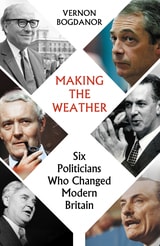
Making the Weather
Six Politicians Who Changed Modern BritainVernon Bogdanor
Haus Publishing, 2025
Making the Weather is the story of six postwar politicians, all of whom exerted an outsized influence on the political life of the United Kingdom—an influence greater than that of most prime ministers. Vernon Bogdanor’s cast includes three from the political Left—Aneurin “Nye” Bevan, Roy Jenkins, and Tony Benn—and three from the Right—Enoch Powell, Keith Joseph, and Nigel Farage. Each study is a fascinating analysis examining how these men achieved such prominence and influence and how, though very different figures in many ways, they came to dominate the political landscape, often for years.
Each of the six made fundamental contributions to the debate about Britain’s future and to the vibrancy of British democracy. From immigration to Europe, from the National Health Service to devolution, the issues and causes that brought these men to prominence are still relevant.
Man-Made Woman
The Dialectics of Cross-DressingCiara Colin Cremin
Pluto Press, 2017
Interweaving personal narrative with political discourse, Man-Made Woman is a vivid exploration of gender, identity, fetishism, aesthetics, and popular culture through the lenses of feminism, Marxism, and psychoanalytic theory. Cremin’s anti-moralistic approach dismantles the abjection associated with male-to-female cross dressing, examines the causes of repression, and considers what it means to publicly materialize desire on one’s body. Man-Made Woman is an experiment that ultimately draws both author and reader into a conflict with their material, ideological, and libidinal relationship to patriarchal-capitalism.
With an emancipatory and empowering voice, Cremin interrogates her, his, and our relationship to the gender binary. In light of recent debate surrounding transgender bathroom rights in the United States, Man-Made Woman is a deeply personal account that offers timely insight for anyone interested in contemporary trans politics and queer theory.
Manifold Greatness
The Making of the King James BibleEdited by Helen Moore and Julian Reid
Bodleian Library Publishing, 2011
Published to commemorate the four hundredth anniversary of the publication of the King James Bible, Manifold Greatness tells the story of the creation and immediate afterlife of the King James translation of the Bible, first published in 1611. Revolutionary at its time, the King James translation quickly became the dominant authorized translation of the Christian Bible in English. There are more than one billion copies in print, making it the best-selling book of all time, and its effect on the English language is incalculable, both in common speech and in literature.
This accessible and richly illustrated visual history contains eighty color illustrations, including images of rare manuscripts, artifacts, and archival material such as the annotated Bodleian Bishops’ Bible of 1602, pages from the Wycliffite and Tyndale Bibles, and an edition of the Bishop’s Bible owned by Elizabeth I. Eight chapters contributed by leading academics in the field discuss the history of biblical translation, the political background of the project, the Oxford Translators—including Henry Savile, John Rainolds, and John Harmar—and their working milieu, the cultural politics, and the reception and influence of the King James Bible up until the 1769 publication of the Oxford Standard Edition, which was the first revision of the original 1611 translation. Also included is a look at the later reception of the King James Bible in America, including a chapter specifically on the King James Bible and the Folger Shakespeare Library.
Manifold Greatness brings together key research and documentation to provide a lively and comprehensive visual account to celebrate one of the most important occasions in publishing and modern religious history.
Mapping the State
English Boundaries and the 1832 Reform ActMartin Spychal
University of London Press, 2024
The 1832 Reform Act was a landmark moment in the development of modern British politics. By overhauling the country’s ancient representative system, the legislation reshaped constitutional arrangements at Westminster, reinvigorated political relationships between the center and the provinces, and established the political structures and precedents that both shaped and hindered Britain’s slow lurch towards democracy by 1928.
Mapping the State leads to a fundamental rethinking of the 1832 Reform Act by demonstrating how boundary reform and the reconstruction of England’s electoral map by the little-known 1831–1832 boundary commission underpinned this turning point in the development of the British political nation. Eschewing traditional approaches to the 1832 Reform Act, it draws from a significant new archival discovery—the working papers of the boundary commission—and a range of innovative quantitative techniques to provide a major reassessment of why and how the 1832 Reform Act passed, its impact on reformed politics both at Westminster and in the constituencies, and its significance to the expansion of the modern British state.
Marketable Values
Inventing the Property Market in Modern BritainDesmond Fitz-Gibbon
University of Chicago Press, 2018
In Marketable Values, Desmond Fitz-Gibbon seeks to answer that question. He tells the story of how Britons imagined, organized, and debated the buying and selling of land from the mid-eighteenth to the early twentieth century. In a society organized around the prestige of property, the desire to commodify land required making it newly visible through such spectacles as public auctions, novel professions like auctioneering, and real estate journalism. As Fitz-Gibbon shows, these innovations sparked impassioned debates on where, when, and how to demarcate the limits of a market society. As a result of these collective efforts, the real estate business became legible to an increasingly attentive public and a lynchpin of modern economic life.
Drawing on an eclectic range of sources—from personal archives and estate correspondence to building designs, auction handbills, and newspapers—Marketable Values explores the development of the British property market and the seminal role it played in shaping the relationship we have to property around the world today.
Markets and Medicine
The Politics of Health Care Reform in Britain, Germany, and the United StatesSusan Giaimo
University of Michigan Press, 2002
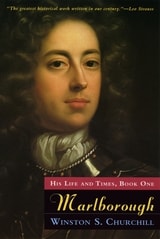
Marlborough
His Life and Times, Book OneWinston S. Churchill
University of Chicago Press, 2002
John Churchill, the Duke of Marlborough (1644-1722), was one of the greatest military commanders and statesmen in the history of England. Victorious in the Battles of Blenheim (1704), Ramillies (1706), and countless other campaigns, Marlborough, whose political intrigues were almost as legendary as his military skill, never fought a battle he didn't win. Although he helped James II crush the rebellion of the Duke of Monmouth, Marlborough later supported William of Orange against James II in the Glorious Revolution of 1688 and brilliantly managed England's diplomatic triumphs during the War of the Spanish Succession. Marlborough also bequeathed the world another great British military strategist and diplomat—his descendant, Winston S. Churchill, who wrote this book to redeem Marlborough's reputation from Macaulay's smears.
One million words long and ten years in the making, Churchill's Marlborough stands as both a literary and historical masterpiece, giving us unique insights into the Churchill of World War II, for just as Churchill's literary skill helps us understand the complexities of Marlborough's life, so too did his writing of Marlborough help Churchill master the arts of military strategy and diplomacy. This two-volume edition includes the entire text and almost all the original maps.

Marlborough
His Life and Times, Book TwoWinston S. Churchill
University of Chicago Press, 2002
John Churchill, the Duke of Marlborough (1644-1722), was one of the greatest military commanders and statesmen in the history of England. Victorious in the Battles of Blenheim (1704), Ramillies (1706), and countless other campaigns, Marlborough, whose political intrigues were almost as legendary as his military skill, never fought a battle he didn't win. Although he helped James II crush the rebellion of the Duke of Monmouth, Marlborough later supported William of Orange against James II in the Glorious Revolution of 1688 and brilliantly managed England's diplomatic triumphs during the War of the Spanish Succession. Marlborough also bequeathed the world another great British military strategist and diplomat—his descendant, Winston S. Churchill, who wrote this book to redeem Marlborough's reputation from Macaulay's smears.
One million words long and ten years in the making, Churchill's Marlborough stands as both a literary and historical masterpiece, giving us unique insights into the Churchill of World War II, for just as Churchill's literary skill helps us understand the complexities of Marlborough's life, so too did his writing of Marlborough help Churchill master the arts of military strategy and diplomacy. This two-volume edition includes the entire text and almost all the original maps.
Marriage, Gender and Refugee Migration
Spousal Relationships among Somali Muslims in the United KingdomNatasha Carver
Rutgers University Press, 2021
This ethical and poetic ethnography analyses the upheavals to gender roles and marital relationships brought about by Somali refugee migration to the UK. Unmoored from the socio-cultural norms that made them men and women, being a refugee is described as making "everything" feel "different, mixed up, upside down." Marriage, Gender and Refugee Migration details how Somali gendered identities are contested, negotiated, and (re)produced within a framework of religious and politico-national discourses, finding that the most significant catalysts for challenging and changing harmful gender practices are a combination of the welfare system and Islamic praxis. Described as “an important and urgent monograph," this book will be a key text relevant to scholars of migration, transnational families, personal life, and gender. Written in a beautiful and accessible style, the book voices the participants with respect and compassion, and is also recommended for scholars of qualitative social research methods.
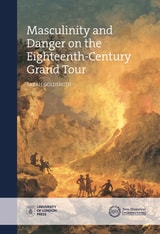
Masculinity and Danger on the Eighteenth-Century Grand Tour
Sarah Goldsmith
University of London Press, 2020
Goldsmith demonstrates that the Grand Tour was a means of constructing Britain’s next generation of leaders. Influenced by aristocratic concepts of honor and inspired by military-style leadership, elite society viewed experiences of danger and hardship as powerfully transformative and therefore as central to constructing masculinity. Scaling mountains, volcanoes, and glaciers, and even encountering war and disease, Grand Tourists willingly tackled a variety of perils. Through her study of these dangers, Goldsmith offers a bold revision of eighteenth-century elite masculine culture and the critical role the Grand Tour played within it.
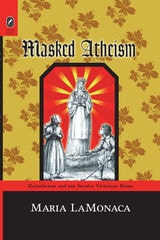
Masked Atheism
Catholicism and the Secular Victorian HomeMaria LaMonaca
The Ohio State University Press, 2008
Why did the Victorians hate and fear Roman Catholics so much? This question has long preoccupied literary and cultural scholars alike. Masked Atheism: Catholicism and the Secular Victorian Home by Maria LaMonaca begins with the assumption that anti-Catholicism reveals far more about the Victorians than simple theological disagreements or religious prejudice. An analysis of anti-Catholicism exposes a host of anxieties, contradictions, and controversies dividing Great Britain, the world’s most powerful nation by the mid-nineteenth century.
Noting that Catholicism was frequently caricatured by the Victorians as “masked atheism”—that is, heathenism and paganism masquerading as legitimate Christianity—LaMonaca’s study suggests that much anti-Catholic rhetoric in Victorian England was fueled by fears of encroaching secularism and anxieties about the disappearance of God in the modern world. For both male and female writers, Catholicism became a synonym for larger, “ungodly” forces threatening traditional ways of life: industrialization, rising standards of living, and religious skepticism.
LaMonaca situates texts by Charlotte Brontë, George Eliot, Christina Rossetti, Elizabeth Barrett Browning, Michael Field, and others against a rich background of discourses about the growing visibility of Anglo and Roman Catholicism in Victorian England. In so doing, she demonstrates the influence of both pro- and anti-Catholic sentiment on constructs of Victorian domesticity, and explores how writers appropriated elements of Catholicism to voice anxieties about the growing secularization of the domestic sphere: a bold challenge to sentimental notions of the home as a “sacred” space. Masked Atheism will contribute a fresh perspective to an ongoing conversation about the significance of Catholicism in Victorian literature and culture.
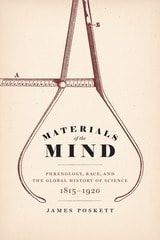
Materials of the Mind
Phrenology, Race, and the Global History of Science, 1815-1920James Poskett
University of Chicago Press, 2019
Phrenology was the most popular mental science of the Victorian age. From American senators to Indian social reformers, this new mental science found supporters around the globe. Materials of the Mind tells the story of how phrenology changed the world—and how the world changed phrenology.
This is a story of skulls from the Arctic, plaster casts from Haiti, books from Bengal, and letters from the Pacific. Drawing on far-flung museum and archival collections, and addressing sources in six different languages, Materials of the Mind is an impressively innovative account of science in the nineteenth century as part of global history. It shows how the circulation of material culture underpinned the emergence of a new materialist philosophy of the mind, while also demonstrating how a global approach to history can help us reassess issues such as race, technology, and politics today.
Maximum Movies—Pulp Fictions
Film Culture and the Worlds of Samuel Fuller, Mickey Spillane, and Jim ThompsonStanfield, Peter
Rutgers University Press, 2011
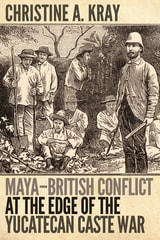
Maya-British Conflict at the Edge of the Yucatecan Caste War
Christine A. Kray
University Press of Colorado, 2023
Official British declarations of neutrality in the Caste War were confounded by a variety of political and economic factors, including competing land claims befuddled by a tangled set of treaties, mahogany extraction by British companies in contested territories, Maya rent demands, British trade in munitions to different groups of Maya combatants, and a labor system reliant on debt servitude. All these factors contributed to uneasy alliances and opportunistic crossings of imagined geopolitical borders in both directions, ultimately leading to a new military conflict in the western and northern regions of the territory claimed by Britain. What frequently began as hyper-local disputes spun out into international affairs as actors called upon more powerful groups for assistance. Evading reductionism, this work traces the decisions and actions of key figures as they maneuvered through the miasma of violence, abuse, deception, fear, flight, and glimpses of freedom.
Positioning the historiographic and ethnographic gaze on the English side without adopting the colonialist narratives and objectives found in English repositories, Maya-British Conflict at the Edge of the Yucatecan Caste War is an important and original contribution to a neglected area of study. It will appeal to students, scholars, and general readers interested in anthropology, Latin American cultures and history, Central American history, British imperialism, Indigenous rights, political anthropology, and colonialism and culture.
Meddling in Middle Europe
Britain and the 'Lands Between' 1919-1925Miklos Lojkó
Central European University Press, 2006
Media and the Mind
Art, Science, and Notebooks as Paper Machines, 1700-1830Matthew Daniel Eddy
University of Chicago Press, 2022
We often think of reason as a fixed entity, as a definitive body of facts that do not change over time. But during the Enlightenment, reason also was seen as a process, as a set of skills enacted on a daily basis. How, why, and where were these skills learned? Concentrating on Scottish students living during the long eighteenth century, this book argues that notebooks were paper machines and that notekeeping was a capability-building exercise that enabled young notekeepers to mobilize everyday handwritten and printed forms of material and visual media in a way that empowered them to judge and enact the enlightened principles they encountered in the classroom. Covering a rich selection of material ranging from simple scribbles to intricate watercolor diagrams, the book reinterprets John Locke’s comparison of the mind to a blank piece of paper, the tabula rasa. Although one of the most recognizable metaphors of the British Enlightenment, scholars seldom consider why it was so successful for those who used it. Each chapter uses one core notekeeping skill to reveal the fascinating world of material culture that enabled students in the arts, sciences, and humanities to transform the tabula rasa metaphor into a dynamic cognitive model. Starting in the home, moving to schools, and ending with universities, the book reconstructs the relationship between media and the mind from the bottom up. It reveals that the cognitive skills required to make and use notebooks were not simply aids to reason; rather, they were part of reason itself.
Medical Women and Victorian Fiction
Kristine Swenson
University of Missouri Press, 2005
Medieval Londoners
essays to mark the eightieth birthday of Caroline M. BarronEdited by Christian Steer and Elizabeth New
University of London Press, 2019
Medieval Merchants and Money
Essays in Honour of James L. BoltonEdited by Matthew Davies
University of London Press, 2016
Memoirs (1630-1680)
Sophia of Hanover
Iter Press, 2013
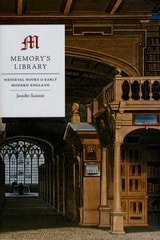
Memory's Library
Medieval Books in Early Modern EnglandJennifer Summit
University of Chicago Press, 2008
In Jennifer Summit’s account, libraries are more than inert storehouses of written tradition; they are volatile spaces that actively shape the meanings and uses of books, reading, and the past. Considering the two-hundred-year period between 1431, which saw the foundation of Duke Humfrey’s famous library, and 1631, when the great antiquarian Sir Robert Cotton died, Memory’s Library revises the history of the modern library by focusing on its origins in medieval and early modern England.
Summit argues that the medieval sources that survive in English collections are the product of a Reformation and post-Reformation struggle to redefine the past by redefining the cultural place, function, and identity of libraries. By establishing the intellectual dynamism of English libraries during this crucial period of their development, Memory’s Library demonstrates how much current discussions about the future of libraries can gain by reexamining their past.

Men among the Mammoths
A. Bowdoin Van Riper
University of Chicago Press, 1993
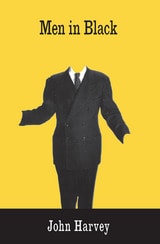
Men in Black
John Harvey
University of Chicago Press, 1995
"Why can't we pick out our own color?"
Joe:
"I tried that once, it don't work. You get four guys fighting over who's gonna be Mr. Black."
—Quentin Tarantino, Reservoir Dogs
Men's clothes went black in the nineteenth century. Dickens, Ruskin and Baudelaire all asked why it was, in an age of supreme wealth and power, that men wanted to dress as if going to a funeral. The answer is in this history of the color black. Over the last 1000 years there have been successive expansions in the wearing of black—from the Church to the Court, from the Court to the merchant class. Though black as fashion was often smart and elegant, its growth as a cultural marker was fed by several currents in Europe's history—in politics, asceticism, religious warfare. Only in the nineteenth century, however, did black fully come into its own as fashion, the most telling witnesses constantly saw connections between the taste for black and the forms of constraint with which European society regimented itself.
Concentrating on the general shift away from color that began around 1800, Harvey traces the transition to black from the court of Burgundy in the 15th century, through 16th-century Venice, 17th-century Spain and the Netherlands. He uses paintings from Van Eyck and Degas to Francis Bacon, religious art, period lithographs, wood engravings, costume books, newsphotos, movie stills and related sources in his compelling study of the meaning of color and clothes.
Although in the twentieth century tastes have moved toward new colors, black has retained its authority as well as its associations with strength and cruelty. At the same time black is still smart, and fashion keeps returning to black. It is, perhaps, the color that has come to acquire the greatest, most significant range of meaning in history.
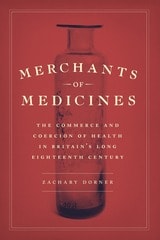
Merchants of Medicines
The Commerce and Coercion of Health in Britain’s Long Eighteenth CenturyZachary Dorner
University of Chicago Press, 2020
In Merchants of Medicines, Zachary Dorner follows the earliest industrial pharmaceuticals from their manufacture in the United Kingdom, across trade routes, and to the edges of empire, telling a story of what medicines were, what they did, and what they meant. He brings to life business, medical, and government records to evoke a vibrant early modern world of London laboratories, Caribbean estates, South Asian factories, New England timber camps, and ships at sea. In these settings, medicines were produced, distributed, and consumed in new ways to help confront challenges of distance, labor, and authority in colonial territories. Merchants of Medicines offers a new history of economic and medical development across early America, Britain, and South Asia, revealing the unsettlingly close ties among medicine, finance, warfare, and slavery that changed people’s expectations of their health and their bodies.
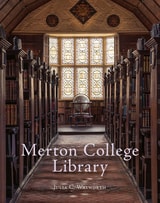
Merton College Library
Julia C. Walworth
Bodleian Library Publishing, 2020
Drawing on the remarkable wealth of documentation in the college’s archives, this is the first history of the library to explore collections, buildings, readers, and staff across more than seven hundred years. The story is told in part through stunning color images that depict not only exceptional treasures but also the library furnishings and decorations, and which show manuscripts, books, bindings, and artifacts of different periods in their changing contexts. Featuring a historical timeline and a floor plan of the college, this book will be of interest to historians, alumni, and tourists alike.
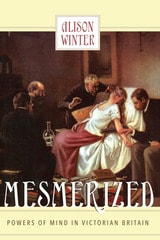
Mesmerized
Powers of Mind in Victorian BritainAlison Winter
University of Chicago Press, 1998
"Dazzling. . . . This splendid book . . . gives us a new form of historical understanding and a model for open and imaginative reading."—James R. Kinkaid, Boston Globe
"A landmark in the history of science scholarship."—John Sutherland, The Independent
"It is difficult to imagine the documentary side of the story being better done than by Winter's well-researched and generously illustrated study. . . . She is a lively and keen observer; and her book is a pleasure to read purely for its range of material and wealth of detail. . . . Fruitful and suggestive."—Daniel Karlin, Times Literary Supplement
"An ambitious, sweeping and fascinating historical study. . . . Beautifully written, thoroughly researched, and well-illustrated."—Bernard Lightman, Washington Times
Metaromanticism
Aesthetics, Literature, TheoryPaul Hamilton
University of Chicago Press, 2003
Through a close look at the aesthetics of Friedrich Schiller and Jean-Jacques Rousseau, and key works by Samuel Taylor Coleridge, Percy and Mary Shelley, John Keats, Sir Walter Scott, Jane Austen, and many others, Hamilton shows how the romantic movement's struggle with its own tenets was not an effort to seek an alternative way of thought, but instead a way of becoming what it already was. And yet, as he reveals, the romanticists were still not content with their own self-consciousness. Pushed to the limit, such contemplation either manifested itself as self-disgust or found aesthetic ideas regenerated in discourses outside of aesthetics altogether.
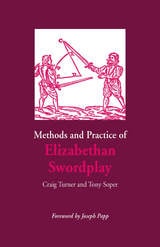
Methods and Practice of Elizabethan Swordplay
Craig Turner and Tony Soper. Foreword by Joseph Papp
Southern Illinois University Press, 1990
Featuring period drawings and prints of swordplay, this book examines and compares three Elizabethan fencing manuals written in English before 1600: Giacomo Di Grassi’s His True Arte of Defense (1594), Vincentio Saviolo’s His Practice in Two Bookes (1595), and George Silver’s Paradoxes of Defence and Bref Instructions upon My Paradoxes of Defence (1599).
More than a technical manual on swordplay, this book explores the influence of a new form of violence introduced into Elizabethan culture by the invention of the rapier. The authors examine the rapier’s influence on the various social classes, the clash between the traditional English fencing masters and those embracing the new style, the growing concern with unregulated dueling, and the frequent references to rapier play in the works of Shakespeare and his contemporaries.
As producer Joseph Papp notes in his foreword, this is a book that "makes a difference in performance."
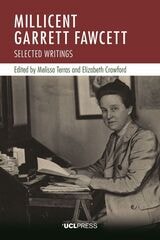
Millicent Garrett Fawcett
Selected WritingsEdited by Melissa Terras and Elizabeth Crawford
University College London, 2022
“Courage calls to courage everywhere” is the best-known phrase associated with Millicent Garrett Fawcett (1847–1929), the leading UK suffragist and women’s rights campaigner of the late nineteenth and early twentieth centuries. But what is the source of her quote, and what is its context?
This book reproduces Fawcett’s essential speeches, pamphlets, and newspaper columns to tell the story of her dynamic contribution to public life. Thirty-five texts and twenty-two images are contextualized and linked to contemporary news coverage as well as to historical and literary references. These speeches, articles, artworks, and photographs cover both the advances and the defeats in the campaign for women’s votes. They also demonstrate a variety of the topics and causes Fawcett pursued: the provision of education for women, feminist history, a love of literature (and Fawcett’s own attempt at fiction), purity and temperance, the campaign against the employment of children, the British Army’s approach to the South African War, the Unionist cause against Home Rule for Ireland, and the role of suffrage organizations during World War I. This volume offers a rich, intertextual web of literary works, preferred reading material, organizations, contacts, friends, and sometimes enemies, that reveals Fawcett the individual throughout sixty-one years of campaigning.
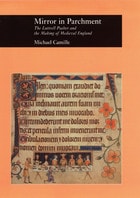
Mirror in Parchment
The Luttrell Psalter and the Making of Medieval EnglandMichael Camille
University of Chicago Press, 1998
The richly illuminated Luttrell Psalter was created for the English nobleman Sir Geoffrey Luttrell (1276-1345). Inexpensive mechanical illustration has since disseminated the book's images to a much wider audience; hence the Psalter's representations of manorial life have come to profoundly shape our modern idea of what medieval English people, high and low, looked like at work and at play. Alongside such supposedly truthful representations, the Psalter presents myriad images of fantastic monsters and beasts. These patently false images have largely been disparaged or ignored by modern historians and art historians alike, for they challenge the credibility of those pictures in the Luttrell Psalter that we wish to see as real.
In the conviction that medieval images were not generally intended to reflect daily life but rather to shape a new reality, Michael Camille analyzes the Psalter's famous pictures as representations of the world, imagined and real, of its original patron. Addressed are late medieval chivalric ideals, physical sites of power, and the boundaries of Sir Geoffrey's imagined community, wherein agricultural laborers and fabulous monsters play a similar ideological role. The Luttrell Psalter thus emerges as a complex social document of the world as its patron hoped and feared it might be.

Mixed Feelings
Feminism, Mass Culture, and Victorian SensationalismCvetkovich, Ann
Rutgers University Press, 1992