Results by title
998 books match the query 'Life' and 50 start with m

Mac Runciman
A Life in the Grain TradePaul D. Earl
University of Manitoba Press, 2000
Making Houston Modern
The Life and Architecture of Howard BarnstoneBy Barrie Scardino Bradley, Stephen Fox, and Michelangelo Sabatino
University of Texas Press, 2020
Complex, controversial, and prolific, Howard Barnstone was a central figure in the world of twentieth-century modern architecture. Recognized as Houston’s foremost modern architect in the 1950s, Barnstone came to prominence for his designs with partner Preston M. Bolton, which transposed the rigorous and austere architectural practices of Ludwig Mies van der Rohe to the hot, steamy coastal plain of Texas. Barnstone was a man of contradictions—charming and witty but also self-centered, caustic, and abusive—who shaped new settings that were imbued, at once, with spatial calm and emotional intensity.
Making Houston Modern explores the provocative architect’s life and work, not only through the lens of his architectural practice but also by delving into his personal life, class identity, and connections to the artists, critics, collectors, and museum directors who forged Houston’s distinctive culture in the postwar era. Edited by three renowned voices in the architecture world, this volume situates Barnstone within the contexts of American architecture, modernism, and Jewish culture to unravel the legacy of a charismatic personality whose imaginative work as an architect, author, teacher, and civic commentator helped redefine architecture in Texas.
Making Money
Life, Death, and Early Modern Trade on Africa’s Guinea CoastColleen E. Kriger
Ohio University Press, 2017
A new era in world history began when Atlantic maritime trade among Africa, Asia, Europe, and the Americas opened up in the fifteenth century, setting the stage for massive economic and cultural change. In Making Money, Colleen Kriger examines the influence of the global trade on the Upper Guinea Coast two hundred years later—a place and time whose study, in her hands, imparts profound insights into Anglo-African commerce and its wider milieu.
A stunning variety of people lived in this coastal society, struggling to work together across deep cultural divides and in the process creating a dynamic creole culture. Kriger digs further than any previous historian of Africa into the records of England’s Royal African Company to illuminate global trade patterns, the interconnectedness of Asian, African, and European markets, and—most remarkably—the individual lives that give Making Money its human scale.
By inviting readers into the day-to-day workings of early modern trade in the Atlantic basin, Kriger masterfully reveals the rich social relations at its core. Ultimately, this accessible book affirms Africa’s crucial place in world history during a transitional period, the early modern era.
Making Precarity Work
Life on the Edge of Venice BeachLaura A. Orrico
University of Chicago Press, 2025
In Making Precarity Work, sociologist Laura A. Orrico shows how Los Angeles’s Venice Beach boardwalk, which is a magnet for tourists, is also a workplace, one that wouldn’t exist without the motley crew of people selling art, drinking, performing, using drugs, and working odd jobs who gather daily to engage in varied activities, from selling crafts to minding each other’s wares and asking for spare change.
Throughout the book, Orrico lifts up this workplace as a collective accomplishment, demonstrating how it can be a safety net to manage insecurity and inequality for those opting into its flexible and precarious structure, as well as how the LA government’s efforts to stabilize this work often disrupt the success of this collaborative and creative ecosystem. She also presents the ways this work can exacerbate those very inequalities. Sharing the personal stories of boardwalk workers, Orrico considers these juxtaposed realities and asks her audience to question how we can and should respond to a society whose best option for the disadvantaged is precarity.
Making Sense in Life and Literature
Hans Ulrich Gumbrecht
University of Minnesota Press, 1992
“The translation of these essays by Gumbrecht on literary theory and history marks the appearance in English of one of Europe’s most learned, productive, and inventive scholars. Their range is extraordinary. They show that Gumbrecht is not only a sophisticated theorist and historian of literature, but a master practitioner of cultural studies.” --Hayden White, University of California, Santa Cruz
Man Made God
The Meaning of LifeLuc Ferry
University of Chicago Press, 2002
Luc Ferry argues that modernity and the emergence of secular humanism in Europe since the eighteenth century have not killed the search for meaning and the sacred, or even the idea of God, but rather have transformed both through a dual process: the humanization of the divine and the divinization of the human. Ferry sees evidence for the first of these in the Catholic Church's attempts to counter the growing rejection of dogmatism and to translate the religious tradition into contemporary language. The second he traces to the birth of modern love and humanitarianism, both of which demand a concern for others and even self-sacrifice in defense of values that transcend life itself. Ferry concludes with a powerful statement in favor of what he calls "transcendental humanism"—a concept that for the first time in human history gives us access to a genuine spirituality rooted in human beings instead of the divine.

Man with the Killer Smile
The Life and Crimes of a Serial Mass MurdererMitchel P. Roth
University of North Texas Press, 2022
Margaret Webster
A Life in the TheaterMilly S. Barranger
University of Michigan Press, 2004
-Marian Seldes
"Margaret Webster is a highly welcome addition to our knowledge of the first important female director in American theater. Remembered now especially for her staging of Othello with Paul Robeson, Uta Hagen, and Jose Ferrer, Margaret Webster was probably the best-known, in-demand, and admired director of Shakespeare in America in the 1940s and 1950s. Fascinating throughout, the book's discussions of working with Robeson, and of HUAC, which targeted her just as her career was reaching a peak, make for especially engrossing reading."
-Oscar Brockett
Margaret Webster: A Life in the Theater is an engrossing backstage account of the life of pioneering director Margaret Webster (1905-72).
This is the first book-length biography of Webster, a groundbreaking stage and opera director whose career challenged not only stage tradition but also mainstream attitudes toward professional women.
Often credited with first having brought Shakespeare to Broadway, and renowned for her bold casting of an African American (Paul Robeson) in the role of Othello, Webster was a creative force in modern American and British theater.
Her story reveals the independent-minded artist undeterred by stage tradition and unmindful of rules about a woman's place in the professional theater. In addition to providing fascinating glimpses into Webster's personal and family life, Margaret Webster: A Life in the Theater also offers a who's-who list of the biggest names in New York and London theater of the time, as well as Hollywood: John Gielgud, Noël Coward, George Bernard Shaw, Uta Hagen, Sybil Thorndike, Eva LeGallienne, and John Barrymore, among others, all of whom crossed paths with Webster. Capping Webster's amazing story is her investigation by Senator Joseph McCarthy and HUAC, which left her unable to work for a year, and from which she never fully recovered.
Marguerite Duras
A LifeLaure Adler
University of Chicago Press, 2000
Adler, through her exploration of the events central to Duras's career, including her affair with and eventual denunciation of a Nazi collaborator and her childhood in Indochina, reveals Duras as the consummate pragmatist. She has combed through archives, unearthed letters, studied unpublished manuscripts, and interviewed scores of Duras's friends, lovers, enemies, and colleagues—as well as Duras herself—and she emerges with the richest portrait we have of Duras's life: her upbringing, her student days at the Sorbonne, her career as a novelist and filmmaker, and her involvement in French politics through the most complex decades of the twentieth century. "The masks and the truth" was the headline of a French review of Marguerite Duras, and Adler explores both, probing the line between fiction and selfhood and between political activities and personal responsibility.

Marguerite Yourcenar
Inventing a LifeJosyane Savigneau
University of Chicago Press, 1993
Here, in its intricate and often contradictory detail, is Marguerite Yourcenar's story, one in which loss and learning intertwined almost from the first and in which love assumed a strangely paradoxical place. Drawing on letters, diaries, and interviews with Yourcenar's friends, colleagues, and lovers, Josyane Savigneau's biography paints an intimate portrait of an artist who lived according to her own, occasionally contrary, terms: a Frenchwoman ardently in love with her native tongue, yet who lived half her life in New England; an avid seductress of women, who spent nearly forty years with one woman, yet fell in love early and late in her life with two young men; a powerful female writer whose most memorable protagonists were male, from Alexis of her first novel to the later historical characters Hadrian and Zeno. Savigneau weaves these and other contraries of Yourcenar's life into a vibrant and engrossing pattern.
Editor of "Le Monde des Livres," the literary pages of France's most influential newspaper, Savigneau first met Marguerite Yourcenar on assignment in 1984. What began as a professional relationship gradually turned into a friendship. Her personal insights into that life enrich this exhaustively documented text. Following the lead set by Yourcenar in her memoir Dear Departed, the biographer found herself "searching for a truth that is multiple, unstable, evasive, sometimes saddening, and at first glance scandalous but that one cannot approach without often feeling for human beings in all their frailty a certain measure of kinship and, always, a sense of pity." Yourcenar's profound intelligence and sympathy, her foibles and obsessions, her accomplishments and trials: all are revealed here in an uncompromising portrait of an incomparable artist.
Mario Vargas Llosa
A Life of WritingBy Raymond Leslie Williams
University of Texas Press, 2014
Awarded the Nobel Prize in 2010 at the age of seventy-four, Peruvian writer Mario Vargas Llosa has held pivotal roles in the evolution and revolutions of modern Latin American literature. Perhaps surprisingly, no complete history of Vargas Llosa’s works, placed in biographical and historical context, has been published—until now. A masterwork from one of America’s most revered scholars of Latin American fiction, Mario Vargas Llosa: A Life of Writing provides a critical overview of Vargas Llosa’s numerous novels while reinvigorating debates regarding conventional interpretations of the work.
Weaving analysis with discussions of the writer’s political commentary, Raymond Leslie Williams traces the author’s youthful identity as a leftist student of the 1960s to a repudiation of some of his earlier ideas beginning in the 1980s. Providing a unique perspective on the complexity, nuance, and scope of Vargas Llosa’s lauded early novels and on his passionate support of indigenous populations in his homeland, Williams then turns his eye to the recent works, which serve as a bridge between the legacies of the Boom and the diverse array of contemporary Latin American fiction writers at work today. In addition, Williams provides a detailed description of Vargas Llosa’s traumatic childhood and its impact on him—seen particularly in his lifelong disdain for authority figures—as well as of the authors who influenced his approach, from Faulkner to Flaubert. Culminating in reflections drawn from Williams’s formal interviews and casual conversations with the author at key phases of both men’s careers, this is a landmark publication that will spark new lines of inquiry into an intricate body of work.
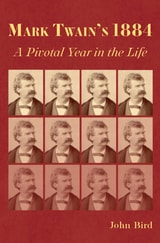
Mark Twain's 1884
A Pivotal Year in the LifeJohn Bird
University of Missouri Press, 2026
Many biographies of Mark Twain cover his entire life, while others focus on specific periods, especially his later years. In this innovative new work, John Bird takes an entirely different approach. Mark Twain’s 1884: A Pivotal Year in the Life is a “micro-biography” that homes in on a single—and pivotal—year.
In 1884, Twain stood at the height of his powers as a writer and enjoyed one of the happiest years in his domestic family life. During the course of the year he was readying his greatest work, Adventures of Huckleberry Finn, for publication, which occurred in England near the end of the year; he was launching his own publishing house, Charles L. Webster and Company, after becoming disillusioned with his previous publishers; and he publicly embroiled himself in presidential politics in a way that presaged his later involvement with American and international politics. Finally, Twain’s 1884 ended with a great deal more public exposure thanks to an extensive multi-city lecture tour he undertook with George Washington Cable, as well as the beginnings of his ultimately successful attempt to secure publishing rights for Ulysses S. Grant’s memoirs.
The level of detail provided by a day-to-day narrative gives the reader a chance to imaginatively live that year in Twain’s life: his work, his family life, his correspondence, his business dealings, his travels, his recreational pursuits, and his political involvement. Bird enlarges upon a great many moments in and aspects of Twain’s life that other biographies barely touch on or ignore completely.
In this new approach to biography, Bird gives readers a broader appreciation not only of Mark Twain the author but of Mark Twain the husband, father, uncle, and friend, and national celebrity and persona.
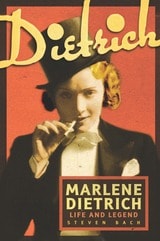
Marlene Dietrich
Life and LegendSteven Bach
University of Minnesota Press, 2011
Marsilio Ficino, Three Books on Life
A Critical Edition and TranslationCarol V. Kaske
Arizona Center for Medieval and Renaissance Studies, 2019

Masked
The Life of Anna Leonowens, Schoolmistress at the Court of SiamAlfred Habegger
University of Wisconsin Press, 2014
But who was Leonowens and why did her story take hold? Although it has been known for some time that she was of Anglo-Indian parentage and that her tales about the Siamese court are unreliable, not until now, with the publication of Masked, has there been a deeply researched account of her extraordinary life. Alfred Habegger, an award-winning biographer, draws on the archives of five continents and recent Thai-language scholarship to disclose the complex person behind the mask and the troubling facts behind the myth. He also ponders the curious fit between Leonowens’s compelling fabrications and the New World’s innocent dreams—in particular the dream that democracy can be spread through quick and easy interventions.
Exploring the full historic complexity of what it once meant to pass as white, Masked pays close attention to Leonowens’s midlevel origins in British India, her education at a Bombay charity school for Eurasian children, her material and social milieu in Australia and Singapore, the stresses she endured in Bangkok as a working widow, the latent melancholy that often afflicted her, the problematic aspects of her self-invention, and the welcome she found in America, where a circle of elite New England abolitionists who knew nothing about Southeast Asia gave her their uncritical support. Her embellished story would again capture America’s imagination as World War II ended and a newly interventionist United States looked toward Asia.
Best Books for General Audiences, selected by the American Association of School Librarians
Best Regional Special Interest Boosk, selected by the Public Library Reviewers
Matters of Life and Death
Moral Responsibility, Care, and Dignity in DyingStephanie O'Connor
Haus Publishing, 2026
A thoughtful examination of dignity at the end of life and the ethical limits of choice in modern medicine.
For most of human history, death was shaped by circumstance, custom, and human presence. Today, it is increasingly mediated by medicine, law, and the language of choice. Our expanding capacity to prolong life and manage dying has outstripped the moral habits that once helped us make sense of such moments. What confronts us now is not only the question of what may be done, or what is permitted, but also how moral responsibility is borne when knowledge is partial and responsibility is dispersed.
Resisting moral certainty and procedural comfort, Stephanie O’Connor considers what is revealed and obscured when complex situations are reduced to questions of choice or rights alone. Considering dignity as a guiding moral concern at the limits of life, and drawing on healthcare ethics, case law, and contemporary debates—including those surrounding assisted dying and artificial intelligence—this book examines how decisions made under conditions of vulnerability are shaped not only by autonomy and consent, but also by dependence, unequal power, and institutional practice. Acutely attentive to the tensions that exist between compassion and restraint, as well as personal agency and shared responsibility, O’Connor does not propose solutions or offer moral closure. Instead, she asks what is owed: to those whose lives are ending, to those who care for them, and to the fragile shared moral life that binds personal decisions to their public consequences.
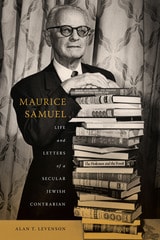
Maurice Samuel
Life and Letters of a Secular Jewish ContrarianAlan T. Levenson
University of Alabama Press, 2022
An intellectual biography that reassesses one of the premier Jewish humanists of the mid-twentieth century
In Maurice Samuel: Life and Letters of a Secular Jewish Contrarian, Alan T. Levenson captures the life, works, and milieu of the Romanian-born, English-educated, American belletrist Maurice Samuel. A diaspora intellectual—or a rooted cosmopolitan, as Levenson describes him—Samuel made an indelible mark on many features of contemporary Jewish thought and culture. A generalist in an age of experts, an independent scholar in an age of rabbis and professors, Samuel was one of the most productive and visible members of the group dubbed the “other” New York Jewish intellectuals.
His fame as a public intellectual and popular speaker were well warranted: no mere popularizer, Samuel contributed significantly to four seemingly unrelated but critical areas of modern Jewish thought. Samuel is characterized by some as principally a Zionist, by others as an accomplished translator and many Americans’ first entrée into the world of Yiddish literature, by still others as a polemicist and campaigner against anti-Semitism, and finally as a media-savvy Biblical critic, essayist, and radio personality. But he was all of these things, since Samuel succeeded in an era when it was possible to be a public intellectual without being an expert.
Drawing on Samuel’s vast literary opus, as well as previously unexplored archival material from three continents, this study writes Samuel back into the history of mid-twentieth-century American letters. Levenson argues that Samuel’s varied and substantive contributions demand reconsideration of our assumptions about the means and ends of cultural transmission, and merit him a place as one of twentieth-century American Jewry’s most significant cultural and intellectual voices.

Max Brand
Western Giant: The Life and Times of Frederick Schiller FaustWilliam F. Nolan
University of Wisconsin Press, 1985

Measuring the Subjective Well-Being of Nations
National Accounts of Time Use and Well-BeingEdited by Alan B. Krueger
University of Chicago Press, 2009
Surely everyone wants to know the source of happiness, and indeed, economists and social scientists are increasingly interested in the study and effects of subjective well-being. Putting forward a rigorous method and new data for measuring, comparing, and analyzing the relationship between well-being and the way people spend their time—across countries, demographic groups, and history—this book will help set the agenda of research and policy for decades to come.
It does so by introducing a system of National Time Accounting (NTA), which relies on individuals’ own evaluations of their emotional experiences during various uses of time, a distinct departure from subjective measures such as life satisfaction and objective measures such as the Gross Domestic Product. A distinguished group of contributors here summarize the NTA method, provide illustrative findings about well-being based on NTA, and subject the approach to a rigorous conceptual and methodological critique that advances the field. As subjective well-being is topical in economics, psychology, and other social sciences, this book should have cross-disciplinary appeal.
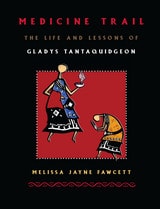
Medicine Trail
The Life and Lessons of Gladys TantaquidgeonMelissa Jayne Fawcett
University of Arizona Press, 2000
Contrary to the fictional account of James Fenimore Cooper, the Mohegan/Mohican nation did not vanish with the death of Chief Uncas more than three hundred years ago. In the remarkable life story of one of its most beloved matriarchs—100-year-old medicine woman Gladys Tantaquidgeon—Medicine Trail tells of the Mohegans' survival into this century.
Blending autobiography and history, with traditional knowledge and ways of life, Medicine Trail presents a collage of events in Tantaquidgeon's life. We see her childhood spent learning Mohegan ceremonies and healing methods at the hands of her tribal grandmothers, and her Ivy League education and career in the white male-dominated field of anthropology. We also witness her travels to other Indian communities, acting as both an ambassador of her own tribe and an employee of the federal government's Bureau of Indian Affairs. Finally we see Tantaquidgeon's return to her beloved Mohegan Hill, where she cofounded America's oldest Indian-run museum, carrying on her life's commitment to good medicine and the cultural continuance and renewal of all Indian nations.
Written in the Mohegan oral tradition, this book offers a unique insider's understanding of Mohegan and other Native American cultures while discussing the major policies and trends that have affected people throughout Indian Country in the twentieth century. A significant departure from traditional anthropological "as told to" American Indian autobiography, Medicine Trail represents a major contribution to anthropology, history, theology, women's studies, and Native American studies.
Meditación Fronteriza
Poems of Love, Life, and LaborNorma Elia Cantú
University of Arizona Press, 2019
The poems are a celebration of culture, tradition, and creativity that navigates themes of love, solidarity, and political transformation. Deeply personal yet warmly relatable, these poems flow from Spanish to English gracefully. With Gloria Anzaldúa’s foundational work as an inspiration, Meditación Fronteriza unveils unique images that provide nuance and depth to the narrative of the borderlands.
Poems addressed to talented and influential women such as Gwendolyn Brooks and Adrienne Rich, among others, pour gratitude and recognition into the collection. While many of the poems in Meditación Fronteriza are gentle and inviting, there are also moments that grieve for the state of the borderlands, calling for political resistance.
Mekong Dreaming
Life and Death along a Changing RiverAndrew Alan Johnson
Duke University Press, 2020
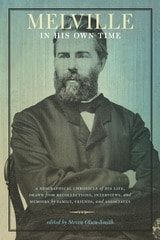
Melville in His Own Time
A Biographical Chronicle of His Life, Drawn from Recollection, Interviews, and Memoirs by Family, Friends, and AssociatesSteven Olsen-Smith
University of Iowa Press, 2015
Melville’s mastery of the English language and heterodox views made him a source of both controversy and fascination to western readers, until his increasing commitment to artistry and contempt for artificial conventions led him to write Moby-Dick (1851) and its successor Pierre (1852). Although the former is considered his masterwork today, the books offended mid-nineteenth-century cultural sensibilities and alienated Melville from the American literary marketplace. The resulting eclipse of his popular reputation was deepened by his voluntary withdrawal from society, so that obituaries written after his death in 1891 frequently expressed surprise that he hadn’t died long before.
With most of his personal papers and letters lost or destroyed, his library of marked and annotated books dispersed, and first-hand accounts of him scattered, brief, and frequently conflicting, Melville’s place in American literary scholarship illustrates the importance of accurately edited documents and the value of new information to our understanding of his life and thought. As a chronologically organized collection of surviving testimonials about the author, Melville in His Own Time continues the tradition of documentary research well-exemplified over the past half-century by the work of Jay Leyda, Merton M. Sealts, and Hershel Parker. Combining recently discovered evidence with new transcriptions of long-known but rarely consulted testimony, this collection offers the most up-to-date and correct record of commentary on Melville by individuals who knew him.
Membranes to Molecular Machines
Active Matter and the Remaking of LifeMathias Grote
University of Chicago Press, 2019
Membranes to Molecular Machines explores just how late twentieth-century science came to think of our cells and bodies this way. This story is told through the lens of membrane research, an unwritten history at the crossroads of molecular biology, biochemistry, physiology, and the neurosciences, that directly feeds into today's synthetic biology as well as nano- and biotechnology. Mathias Grote shows how these sciences not only have made us think differently about life, they have, by reworking what membranes and proteins represent in laboratories, allowed us to manipulate life as "active matter" in new ways. Covering the science of biological membranes in the United States and Europe from the mid-1960s to the 1990s, this book connects that history to contemporary work with optogenetics, a method for stimulating individual neurons using light, and will enlighten and provoke anyone interested in the intersection of chemical research and the life sciences—from practitioner to historian to philosopher.
The research described in the book and its central actor, Dieter Oesterhelt, were honored with the 2021 Albert Lasker Basic Medical Research Award for his contribution to the development of optogenetics. The 2026 Nobel Prize in Physiology or Medicine was awarded to three scientists for discoveries leading to optogenetics. Membranes to Molecular Machines can be read as a prehistory of this research.

Memoirs of an Early Arab Feminist
The Life and Activism of Anbara Salam KhalidiAnbara Salam Khalidi
Pluto Press, 2013
Memoirs of an Early Arab Feminist is the first English translation of the memoirs of Anbara Salam Khalidi, the iconic Arab feminist. At a time when women are playing a leading role in the Arab Spring, this book brings to life an earlier period of social turmoil and women's activism through one remarkable life.
Anbara Salam was born in 1897 to a notable Sunni Muslim family of Beirut. She grew up in 'Greater Syria', in which unhindered travel between Beirut, Jerusalem and Damascus was possible, and wrote a series of newspaper articles calling on women to fight for their rights within the Ottoman Empire. In 1927 she caused a public scandal by removing her veil during a lecture at the American University of Beirut.
Later she translated Homer and Virgil into Arabic and fled from Jerusalem to Beirut following the establishment of Israel in 1948. She died in Beirut in 1986. These memoirs have long been acclaimed by Middle East historians as an essential resource for the social history of Beirut and the larger Arab world in the 19th and 20th centuries.
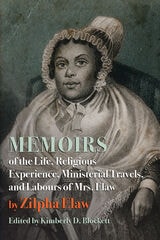
Memoirs of the Life, Religious Experience, Ministerial Travels, and Labours of Mrs. Elaw
Zilpha Elaw
West Virginia University Press, 2021
As a young Black orphan indentured to a Quaker family in Bristol, Pennsylvania, Zilpha Elaw (c. 1793–1873) decided to join the upstart Methodists in 1808. She preached her first sermon a decade later, ignoring her husband and the many church leaders, clergy, and laity who tried to silence her. Elaw’s memoir chronicles the first twenty years of her forty-year itinerant ministry during massive Protestant revivalism in the United States and England.
Elaw preached from Maine to Virginia, attracting multiracial and multidenominational audiences that included powerful men, wealthy White women, poor families, and enslaved communities. She moved from Bristol to Burlington, New Jersey, then to Nantucket, Massachusetts, and finally, in 1840, to London’s East End. In England, Elaw’s celebrity expanded, and at least twice she drew crowds so large they caused human stampedes and multiple injuries.
Blockett’s introduction and extensive annotations draw on newly unearthed information about the entirety of Elaw’s evangelism to provide context for this remarkable story of an antebellum Black woman’s personal and professional mobility.
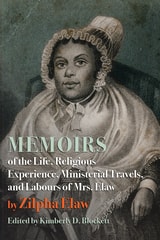
Memoirs of the Life, Religious Experience, Ministerial Travels, and Labours of Mrs. Elaw
Kimberly D. Blockett
University of Delaware Press, 0
Elaw preached from Maine to Virginia, attracting multiracial and multidenominational audiences that included powerful men, wealthy White women, poor families, and enslaved communities. She moved from Bristol to Burlington, New Jersey, then to Nantucket, Massachusetts, and finally, in 1840, to London’s East End. In England, Elaw’s celebrity expanded, and at least twice she drew crowds so large they caused human stampedes and multiple injuries.
Kimberly D. Blockett’s introduction and extensive annotations draw on newly unearthed information about the entirety of Elaw’s evangelism to provide context for this remarkable story of an antebellum Black woman’s personal and professional mobility.
Metamorphoses
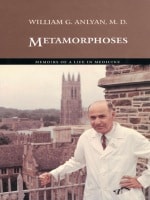
Memoirs of a Life in MedicineWilliam G. Anlyan, M. D.
Duke University Press, 2004
Born in Alexandria, Egypt, in 1925, and schooled in the British tradition, Anlyan attended Yale University as an undergraduate and medical student before coming to the relatively unknown medical school at Duke University in 1949 for an internship in general and thoracic surgery. He stayed on, first as a resident, then as a staff surgeon. By 1961, he was a full professor of surgery. In 1964, Anlyan was named dean of the medical school, the first in a series of administrative posts at the medical school and hospital. Anlyan’s role in the transformation of the Duke University Medical Center into an internationally renowned health system is manifest: he restructured the medical school and hospital and supervised the addition of almost four million square feet of new or renovated space. He hired outstanding administrators and directed a staff that instituted innovative programs and groundbreaking research centers, such as the Cancer Center and the Physician’s Assistant Program.
Anlyan describes a series of metamorphoses in his own life, in the world of medicine, in Durham, and at Duke. At the time of his prep school upbringing in Egypt, medicine was a matter of controlling infectious diseases like tuberculosis and polio. As he became an immigrant medical student and then a young surgeon, he observed vast advances in medical practice and changes in the financing of medical care. During his tenure at Duke, Durham was transformed from a sleepy mill and tobacco town into the “City of Medicine,” a place where patients routinely travel for open-heart surgery and cutting-edge treatments for cancer and other diseases.
Anyone interested in health care, medical education, and the history of Duke University will find Anlyan’s memoir of interest.
Metapersons
Transcendence and LifeJoão Pina-Cabral
HAU, 2026
Metapersons begins from a simple yet striking observation: across the world, people live in the company of divinities, ancestors, spirits, sacred mountains, or enlivened statues. They pray with intensity, sense the presence of ghosts, and experience forms of coexistence with beings beyond the human. Drawing on fieldwork in Portugal, China, Mozambique, and Brazil, João Pina-Cabral shows how humans continually move beyond their embodied condition through lived relations with such entities.
Revisiting classic anthropological debates—from Durkheim and Mauss on prayer and the sacred to later critiques of religion—this book argues that a “new anthropological synthesis” has emerged in recent decades: one that understands transcendence as a fundamental feature of life itself. In this light, familiar categories such as “superstition” require reconsideration in new terms. Pina-Cabral develops a scalar model of life’s plurality, seeing personhood as the dynamic source of transcendence.
Engaging with contemporary debates across the life sciences, social sciences, and philosophy, Metapersons offers a groundbreaking, person-centered perspective on transcendence, animism, and spirituality. It challenges disciplinary boundaries while providing an innovative framework for rethinking prayer, religion, and the very conditions of human coexistence with the more-than-human world.
Millions of Suns
On Writing and LifeSharon Fagan McDermott and M. C. Benner Dixon
University of Michigan Press, 2023
With decades of combined teaching experience, McDermott and Benner Dixon share practical craft-of-writing advice with the reader, including over fifty engaging writing prompts to spark the creative process. These prompts guide readers toward the freedom and joy that comes with finding one’s authentic voice. Embracing both the painful and the playful, Millions of Suns is an ideal text for classrooms, professional development, or daily writing practice. Through humor, lyricism, and poignancy, the fundamental message of the book remains the same for newcomers and career authors, whether they write poetry, fiction, non-fiction, or memoir. Let Millions of Suns open a door for you into your creative work, inviting imagination, memory, and inspiration into your writing life.
Minerva and the Muse
A Life of Margaret FullerDoe Coover Agency
University of Massachusetts Press, 1996

Minnesota's Geologist
The Life of Newton Horace WinchellSue Leaf
University of Minnesota Press, 2026
Winner of the 2021 Minnesota Book Award for Minnesota Nonfiction
The story of the scientist who first mapped Minnesota’s geology, set against the backdrop of early scientific inquiry in the state
At twenty, Newton Horace Winchell declared, “I know nothing about rocks.” At twenty-five, he decided to make them his life’s work. As a young geologist tasked with heading the Minnesota Geological and Natural History Survey, Winchell (1839–1914) charted the prehistory of the region, its era of inland seas, its volcanic activity, and its several ice ages—laying the foundation for the monumental five-volume Geology of Minnesota. Tracing Winchell’s remarkable path from impoverished fifteen-year-old schoolteacher to a leading light of an emerging scientific field, Minnesota’s Geologist also recreates the heady early days of scientific inquiry in Minnesota, a time when one man’s determination and passion for learning could unlock the secrets of the state’s distant past and present landscape.
Traveling by horse and cart, by sailboat and birchbark canoe, Winchell and his group surveyed rock outcrops, river valleys, basalt formations on Lake Superior, and the vast Red River Valley. He studied petrology at the Sorbonne in Paris, bringing cutting-edge knowledge to bear on the volcanic rocks of the Arrowhead region. As a founder of the American Geological Society and founding editor of American Geologist, the first journal for professional geologists, Winchell was the driving force behind scientific endeavor in early state history, serving as mentor to many young scientists and presiding over a household—the Winchell House, located on the University of Minnesota’s present-day mall—that was a nexus of intellectual ferment. His life story, told here for the first time, draws an intimate picture of this influential scientist, set against a backdrop of Minnesota’s geological complexity and splendor.

Minnesota's Geologist
The Life of Newton Horton WinchellSue Leaf
University of Minnesota Press, 2020
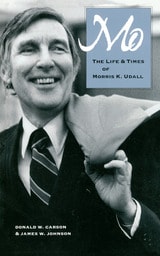
Mo
The Life and Times of Morris K. UdallDonald W. Carson and James W. Johnson
University of Arizona Press, 2001
Mo provides the most complete record of Udall's thirty-year congressional career ever published. It reveals how he challenged the House seniority system and turned the House Interior Committee into a powerful panel that did as much to protect the environment as any organization in the twentieth century. It shows Udall to have been a consensus builder for environmental issues who paved the way for the Alaska Lands Act of 1980, helped set aside 2.4 million acres of wilderness in Arizona, and fought for the Central Arizona Project, one of the most ambitious water projects in U.S. history. Carson and Johnson record Udall's early opposition to the Vietnam War at a time when that conflict was largely perceived as a just cause, as well as his early advocacy of campaign finance reform. They also provide a behind-the-scenes account of his run for the presidency—the first House member to seek the office in nearly a century—which gained him an intensely loyal national following.
Mo explores the paradoxes that beset Udall: He was a man able to accomplish things politically because people genuinely liked and respected him, yet he was a loner and workaholic whose focus on politics overshadowed his personal life. Carson and Johnson devote a chapter to the famous Udall sense of humor. They also look sensitively at his role as a husband and father and at his proud and stubborn bout with Parkinson's disease. Mo Udall will long be remembered for his contributions to environmental legislation, for his unflagging efforts in behalf of Arizona, and for the gentle humor with which he conducted his life. This book secures his legacy.
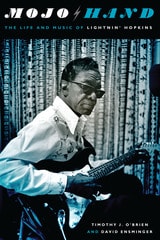
Mojo Hand
The Life and Music of Lightnin' HopkinsBy Timothy J. O'Brien and David Ensminger
University of Texas Press, 2013
In a career that took him from the cotton fields of East Texas to the concert stage at Carnegie Hall and beyond, Lightnin’ Hopkins became one of America’s greatest bluesmen, renowned for songs whose topics effortlessly ranged from his African American roots to space exploration, the Vietnam War, and lesbianism, performed in a unique, eccentric, and spontaneous style of guitar playing that inspired a whole generation of rock guitarists. Hopkins’s music directly and indirectly influenced an amazing range of artists, including Jimi Hendrix, Stevie Ray Vaughan, Miles Davis, John Coltrane, Tom Waits, and Bob Dylan, as well as bands such as the Grateful Dead, Jefferson Airplane, and ZZ Top, with whom Hopkins performed.
Mojo Hand follows Lightin’ Hopkins’s life and music from the acoustic country blues that he began performing in childhood, through the rise of 1950s rock ’n’ roll, which nearly derailed his career, to his reinvention and international success as a pioneer of electric folk blues from the 1960s to the 1980s. The authors draw on 130 vivid oral histories, as well as extensive archival and secondary sources, to provide the fullest account available of the development of Hopkins’s music; his idiosyncratic business practices, such as shunning professional bookers, managers, and publicists; and his durable and indelible influence on modern roots, blues, rock ’n’ roll, singer-songwriter, and folk music. Mojo Hand celebrates the spirit and style, intelligence and wit, and confounding musical mystique of a bluesman who shaped modern American music like no one else.
Moments from the Life of a Hedgehog
and Other StoriesEdina Szvoren
Seagull Books, 2026
Available for the first time in English, Hungarian writer Edina Szvoren's short story collection gives voice to lives shaped by repression, cruelty, and silence.
Moments from the Life of a Hedgehog and Other Stories introduces English-language readers to the unsettling, exacting fiction of Hungarian author Edina Szvoren. Disturbing yet deliberately modest, these stories evoke a claustrophobic world of compromise and quiet desperation: fractured families warped by history and habit, boarding schools and workplaces ruled by cruelty, and domestic interiors heavy with unspoken dread. Set in the final decades of Hungarian socialism and its immediate aftermath, Szvoren’s sharply observed miniatures are animated by ever-shifting perspectives—outsiders, misfits, refusers—struggling to make sense of lives largely beyond their control. Grotesque without excess, absurd without relief, Szvoren’s narrative voices overlap and collide in ways that recall Franz Kafka and István Örkény. Yet her work remains firmly grounded in the body: queasy, intimate, and insistently physical, with a feminist and existential charge. Among polyester ornaments and unbearable family encounters, these stories offer a powerful, understated testimony to the unheard—and the nearly unhearable.
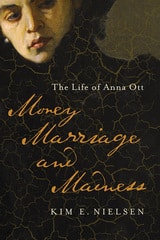
Money, Marriage, and Madness
The Life of Anna OttKim E. Nielsen
University of Illinois Press, 2020
Kim E. Nielsen explores a life at once irregular and unexceptional. Historical and institutional structures, like her whiteness and laws that liberalized divorce and women's ability to control their property, opened up uncommon possibilities for Ott. Other structures, from domestic violence in the home to rampant sexism and ableism outside of it, remained a part of even affluent women's lives. Money, Marriage, and Madness tells a forgotten story of how the legal and medical cultures of the time shaped one woman—and what her life tells us about power and society in nineteenth century America.
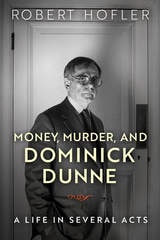
Money, Murder, and Dominick Dunne
A Life in Several ActsRobert Hofler
University of Wisconsin Press, 2019
Dunne admitted to inventing himself, and it was that public persona he wrote about in his own memoir, The Way We Lived Then. Left out of that account, but brought to light here, were his intense rivalry with his brother John Gregory, the gay affairs and relationships he had throughout his marriage and beyond, and his fights with editors at Vanity Fair. Robert Hofler also reveals the painful rift in the family after the murder of Dominick's daughter, Dominique—compounded by his coverage of her killer's trial, which launched his career as a reporter.
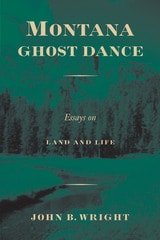
Montana Ghost Dance
Essays on Land and LifeBy John B. Wright
University of Texas Press, 1998
Montana has been the "last best place" for so many people. A century ago, Native Americans gathered here to perform the Ghost Dance—a last, doomed attempt to make white settlers vanish and bring back the old ways of life. Today, people are still pouring into Montana, looking for the pristine wilderness they saw in A River Runs through It.
The reality of Montana—indeed, of all the West—has never matched the myths, but this book eloquently explores how the search for a perfect place is driving growth, development, and resource exploitation in Big Sky country. In ten personal essays, John Wright looks at such things as Montana myths; old-timers; immigrants; elk; ways of seeing the landscape; land conservation and land trusts; the fate of the Blackfoot, Bitterroot, and Paradise valleys; and some means of preserving the last, best places.
These reflections offer a way of understanding Montana that goes far beyond the headlines about militia groups and celebrities' ranches. Montana never was or will be a pristine wilderness, but Wright believes that much can be saved if natives and newcomers alike see what stands to be lost. His book is a wake-up call, not a ghost dance.
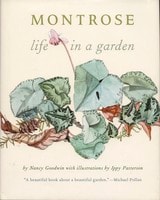
Montrose
Life in a GardenNancy Goodwin
Duke University Press, 2005
Beautifully written and illustrated, Montrose: Life in a Garden is Goodwin’s affectionate biography of her gardens, recounting how and why each section was developed over the years, including the Dianthus Walk, Nandinaland, Hellebore Slope, Mother-in-Law Walk, Snowdrop Woods, and Jo’s Bed. It is also a meticulous month-by-month chronicle of a specific year in these gardens—a year that saw a punishing drought that threatened Goodwin’s no-irrigation policy, a damaging December ice storm, and the beginnings of a plan to preserve Montrose in the future.
Working on her knees for long days throughout the year, Nancy Goodwin always has a vision of how her gardens will appear in twelve months or in twelve years. She will spend weeks, for instance, planting hundreds of snow drops along a woodsy path in order to enjoy a fleeting week of exquisite beauty in coming years. She never puts anything into the ground without imagining what form, color, and texture it will add to a bed. With tireless patience and unflagging optimism, Goodwin will wait years to see a single plant bloom.
Following Goodwin’s activities throughout the year, readers will learn the fundamentals of maintaining a four-season garden in Zone 7 in the South. Award-winning garden illustrator Ippy Patterson has provided more than 160 lavish illustrations of the gardens at Montrose and these meticulously detailed drawings appear throughout the book.
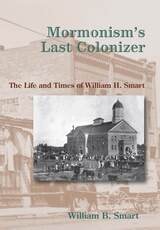
Mormonism's Last Colonizer
The Life and Times of William H. SmartWilliam B. Smart
Utah State University Press, 2008
Winner of the Evans Handcart Prize 2009
Winner of the Mormon History Assn Best Biography Award 2009
By the early twentieth century, the era of organized Mormon colonization of the West from a base in Salt Lake City was all but over. One significant region of Utah had not been colonized because it remained in Native American hands--the Uinta Basin, site of a reservation for the Northern Utes. When the federal government decided to open the reservation to white settlement, William H. Smart--a nineteenth-century Mormon traditionalist living in the twentieth century, a polygamist in an era when it was banned, a fervently moral stake president who as a youth had struggled mightily with his own sense of sinfulness, and an entrepreneurial businessman with theocratic, communal instincts--set out to ensure that the Uinta Basin also would be part of the Mormon kingdom.
Included with the biography is a searchable CD containing William H. Smart's extensive journals, a monumental personal record of Mormondom and its transitional period from nineteenth-century cultural isolation into twentieth-century national integration.
Mother of Detective Fiction
The Life and Works of Anna Katharine GreenPatricia D. Maida
University of Wisconsin Press, 1989
In examining the life and works of Anna Katharine Green, one discovers a slice of American life: in the social events of New York City, in the plight of young working women, in the moral dilemmas of upright citizens pursuing the American dream.

Mr. All-Around
The Life of Tom GolaDavid Grzybowski
Temple University Press, 2019
Tom Gola is a Philadelphia Big Five basketball icon. He led La Salle to the NIT championship in 1952 and the NCAA championship in 1954, and holds the NCAA record for most rebounds in a career. Gola also helped the Philadelphia Warriors win the NBA championship as a rookie in 1956 and was named an All-Star five times before retiring in 1966. But Gola also had many amazing achievements as a coach; his La Salle Explorer teams were a large part of the national basketball landscape. He was inducted into the Naismith Memorial Basketball Hall of Fame in 1976.
In Mr. All-Around, avid sports fan and reporter David Grzybowski provides a definitive biography of Gola. He uses exclusive interviews he conducted with Gola in 2013 and features anecdotes by many figures of Philadelphia and basketball history, including John Cheney, Fran Dunphy, and Lionel Simmons.
After the NBA, Gola transitioned to a second career as a politician, serving as Pennsylvania State Representative and Philadelphia City Controller. His dedication to public service involved joining politician Arlen Specter on a campaign that revolutionized political marketing within Philadelphia. Mr. All-Around is an affectionate testament to the life, career, and legacy of one of Philadelphia’s most beloved sports legends.
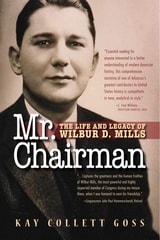
Mr. Chairman
The Life and Legacy of Wilbur D. MillsKay Collett Goss
Parkhurst Brothers, Inc., 2012
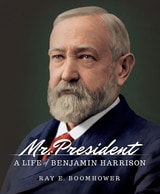
Mr. President
A Life of Benjamin HarrisonRay E. Boomhower
Indiana Historical Society Press, 2018
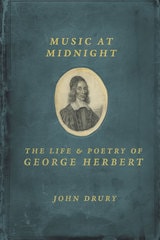
Music at Midnight
The Life and Poetry of George HerbertJohn Drury
University of Chicago Press, 2014
As Drury writes in his preface, Herbert lived “a quiet life with a crisis in the middle of it.” Drury follows Herbert from his academic success as a young man, seemingly destined for a career at court, through his abandonment of those hopes, his devotion to the restoration of a church in Huntingdonshire, and his final years as a country parson. Because Herbert’s work was only published posthumously, it has always been difficult to know when or in what context Herbert wrote his poems. But Drury skillfully places readings of the poems into his narrative at biographically credible moments, allowing us to appreciate not only Herbert’s frame of mind while writing, but also the society that produced it. A sensitive critic of Herbert’s poems as well as a theologian, Drury does full justice to the spiritual dimension of Herbert’s work. In addition, he reveals the occasions of sorrow, happiness, regret, and hope that Herbert captured in his poetry and that led T. S. Eliot to write, “What we can confidently believe is that every poem . . . is true to the poet’s experience.”
Painting a picture of a man torn between worldly ambition and spiritual life, Music at Midnight is an eloquent biography that breathes new life into some of the greatest English poems ever written.
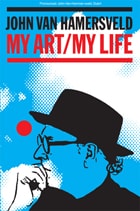
My Art, My Life
John Van Hamersveld
St. Augustine's Press, 2010
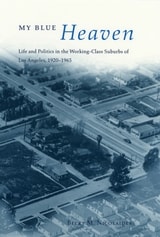
My Blue Heaven
Life and Politics in the Working-Class Suburbs of Los Angeles, 1920-1965Becky M. Nicolaides
University of Chicago Press, 2002
As Becky M. Nicolaides shows in My Blue Heaven, this ethic of self-reliance and homeownership formed the core of South Gate's identity. With post-World War II economic prosperity, the community's emphasis shifted from building homes to protecting them as residents tried to maintain their standard of living against outside threats—including the growing civil rights movement—through grassroots conservative politics based on an ideal of white homeowner rights. As the citizens of South Gate struggled to defend their segregated American Dream of suburban community, they fanned the flames of racial inequality that erupted in the 1965 Watts riots.
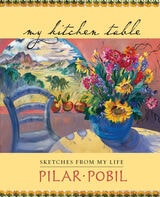
My Kitchen Table
Sketches from My LifePilar Pobil
University of Utah Press, 2007
Other stories describe her meeting in Mallorca with the Utah man who would become her husband, her journey to a faraway country, the birth of her children, and her discovery of her artistic impulses and abilities. All are woven with the threads of color and culture of her two homes. Filled with wit and insight, My Kitchen Table reveals foremost the voice of a woman determined to be true to herself and to her art.
Accompanying the narrative are some fifty color reproductions of the paintings and sculptures for which Pilar Pobil has become known. This is a volume that art lovers everywhere will treasure.
"Like her paintings, Pilar’s stories overflow their pages. They fold us into their embrace, so we feel and see her dancing in and out of our minds, a curious and mischievous child, a young woman in love coming to a foreign land with a foreign culture and tongue, the heartbreak of her losses, and the continual renewals that have ripened her art. Pilar’s book, like her house, is a magic kingdom and she is the fairy princess who presides. She paints her shoes for social engagements. The seats of her chairs beam faces. Her electrical wiring metamorphoses into fantastic snakes. The garden that leads to her studio is Salt Lake City’s Giverny. Paintings are everywhere and talk to each other with glittering non sequiturs. At the center of it all is her kitchen table, the place from which she serves the voices and visions of her life. The subtleties of her telling, like the bold clarity of her judgments, are those of an artist whose inspirations are a feast she graciously invites us to share."
— from the Foreword by Robert D. Newman, Dean of the College of Humanities, University of Utah
A finalist for the Utah Book Award in Nonfiction.
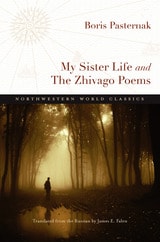
My Sister Life and The Zhivago Poems
Boris Pasternak, Translated from the Russian by James E. Falen
Northwestern University Press, 2012
Boris Pasternak is best known in the West for his epic novel Doctor Zhivago, whereas in Russia he is most celebrated as a poet. The two poetry collections offered here in translation are chronological and thematic bookends, and they capture Pasternak’s abiding and powerful vision of life: his sense of its beauty and terror, its precariousness for the individual, and its persistence in time—that vitality of being with which he is on familiar and familial terms.
In the early work My Sister Life, which commemorates the year 1917, Pasternak, then in his late twenties, found his poetic voice. The book would go on to become one of the most influential collections of Russian poetry of the twentieth century. “The Poems of Yury Zhivago” are a part of the poet’s famous novel, Dr. Zhivago, whose title might be rendered in English as “Doctor Life.” These later lyrics are a kind of summing up that reflect, from the perspective of age and approaching death, upon the accumulated experience of a contemplative life amid turbulent and terrifying times.
Falen’s fresh new translations of these poems capture their expression of the beauty and the joy, the terror and the pain, of what it is to be alive . . . and to die.