Results by title
1445 books match the query 'Life Sciences' and 49 start with m
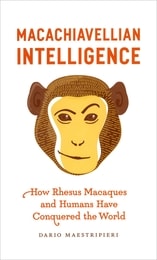
Macachiavellian Intelligence
How Rhesus Macaques and Humans Have Conquered the WorldDario Maestripieri
University of Chicago Press, 2007
Dario Maestripieri thinks it is high time we shelve that misperception, and with Macachiavellian Intelligence he gives rhesus macaques their rightful turn in the spotlight. The product of more than twenty years studying these fascinating creatures, Macachiavellian Intelligence caricatures a society that is as much human as monkey, with hierarchies and power struggles that would impress Machiavelli himself. High-status macaques, for instance, maintain their rank through deft uses of violence and manipulation, while altruism is almost unknown and relationships are perpetually subject to the cruel laws of the market. Throughout this eye-opening account, Maestripieri weds his thorough knowledge of macaque behavior to his abiding fascination with human society and motivations. The result is a book unlike any other, one that draws on economics as much as evolutionary biology, politics as much as primatology.
Rife with unexpected connections and peppered with fascinating anecdotes, Macachiavellian Intelligence has as much to teach us about humans as it does about macaques, presenting a wry, rational, and wholly surprising view of our humanity as seen through the monkey in the mirror.
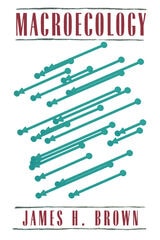
Macroecology
James H. Brown
University of Chicago Press, 1995
While much ecological research is narrowly focused and experimental, providing detailed information that cannot be used to generalize from one ecological community or time period to another, macroecology draws on data from many disciplines to create a less detailed but much broader picture with greater potential for generalization. Integrating data from ecology, systematics, evolutionary biology, paleobiology, and biogeography to investigate problems that could only be addressed on a much smaller scale by traditional approaches, macroecology provides a richer, more complete understanding of how patterns of life have moved across the earth over time. Brown also demonstrates the advantages of macroecology for conservation, showing how it allows scientists to look beyond endangered species and ecological communities to consider the long history and large geographic scale of human impacts.
An important reassessment of the direction of ecology by one of the most influential thinkers in the field, this work will shape future research in ecology and other disciplines.
"This approach may well mark a major new turn in the road in the history of ecology, and I find it extremely exciting. The scope of Macroecology is tremendous and the book makes use of its author's exceptionally broad experience and knowledge. An excellent and important book."—Lawrence R. Heaney, Center for Environmental and Evolutionary Biology, the Field Museum
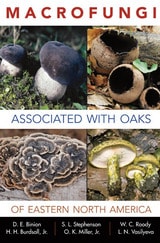
Macrofungi Associated with Oaks of Eastern North America
DENISE E. BINION
West Virginia University Press, 2008
Macrofungi Associated with Oaks of Eastern North America, which was written as a companion to Field Guide to Oak Species of Eastern North America, represents the first major publication devoted exclusively to the macrofungi that occur in association with oak trees in the forests of eastern North America. The macrofungi covered in this volume include many of the more common examples of the three groups—mycorrhizal fungi, decomposers, and pathogens—that are ecologically important to the forest ecosystems in which oaks occur. More than 200 species of macrofungi are described and illustrated via vibrantly colored photographs. Information is given on edibility, medicinal properties, and other novel uses as well. This publication reflects the combined expertise of six mycologists on the macrofungi anyone would be likely to encounter in an oak forest.
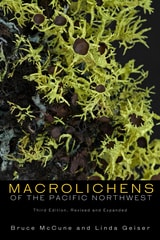
Macrolichens of the Pacific Northwest
Bruce McCune
Oregon State University Press, 2023
A key component in healthy ecosystems, lichens can be found in almost any natural habitat in the Pacific Northwest. This comprehensive guide to the region’s macrolichens is intended for use by beginners as well as specialists: weekend naturalists will be able to identify specimens and recognize the great diversity of lichens, while lichenologists and mycologists will gain greater knowledge of the distribution and abundance of various species.
This revised and expanded edition of Macrolichens of the Pacific Northwest includes includes keys to over 600 species —all the macrolichens known or expected to occur in Oregon and Washington. The keys also provide coverage for lichens of Idaho and Montana, inland to the Continental Divide. Almost all macrolichens known from northern California and southern British Columbia, and from coastal southeast Alaska, are included as well.
Color photographs and detailed descriptions are provided for more than 250 species, emphasizing lichens prevalent in forested ecosystems. The illustrated glossary and introductory material cover the terminology needed to identify macrolichens and provide information on collection and handling. The biology, ecology, and air-quality sensitivity of lichens are discussed. Macrolichens of the Pacific Northwest will prove invaluable to anyone seeking to identify lichens or to better understand these organisms and their vital role in the natural world.
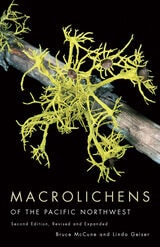
Macrolichens of the Pacific Northwest, Second Ed.
Bruce McCune
Oregon State University Press, 2009
A key component in healthy ecosystems, lichens can be found in almost any natural habitat in the Pacific Northwest. This comprehensive guide to the region’s macrolichens is intended for use by beginners as well as specialists: weekend naturalists will be able to identify specimens and recognize the great diversity of lichens, while lichenologists and mycologists will gain greater knowledge of the distribution and abundance of various species.
This revised and expanded edition of Macrolichens of the Pacific Northwest includes 116 new species and 176 additional illustrations and incorporates an understanding of macrolichens that has advanced tremendously in the past decade.
Macrolichens of the Pacific Northwest includes keys to 113 genera and 586 species of Oregon and Washington macrolichens—all the macrolichens known or expected to occur in the two states. The keys also provide reasonable coverage for lichens of Idaho and Montana, inland to the Continental Divide. Color photographs and detailed descriptions are provided for 246 species, emphasizing lichens prevalent in forested ecosystems.
The illustrated glossary and introductory material cover the terminology needed to identify macrolichens and provide information on collection and handling. The biology, ecology, and air-quality sensitivity of lichens are discussed; regional air-quality sensitivities are provided for 184 species.
Macrolichens of the Pacific Northwest will prove invaluable to anyone seeking to identify lichens or to better understand these organisms and their vital role in the natural world.
Major Evolutionary Transitions in Flowering Plant Reproduction
Edited Spencer C. H. Barrett
University of Chicago Press, 2008
Making Animal Meaning
Linda Kalof
Michigan State University Press, 2012
An elucidating collection of ten original essays, Making Animal Meaning reconceptualizes methods for researching animal histories and rethinks the contingency of the human-animal relationship. The vibrant and diverse field of animal studies is detailed in these interdisciplinary discussions, which include voices from a broad range of scholars and have an extensive chronological and geographical reach. These exciting discourses capture the most compelling theoretical underpinnings of animal significance while exploring meaning-making through the study of specific spaces, species, and human-animal relations. A deeply thoughtful collection — vital to understanding central questions of agency, kinship, and animal consumption — these essays tackle the history and philosophy of constructing animal meaning.
Making PCR
A Story of BiotechnologyPaul Rabinow
University of Chicago Press, 1996
Making PCR explores the culture of biotechnology as it emerged at Certus Corporation during the 1980s and focuses on its distinctive configuration of scientific, technical, social, economic, political, and legal elements, each of which had its own separate trajectory over the preceding decade. The book contains interviews with the remarkable cast of characters who made PCR, including Kary Mullin, the maverick who received the Nobel prize for "discovering" it, as well as the team of young scientists and the company's business leaders.
This book shows how a contingently assembled practice emerged, composed of distinctive subjects, the site where they worked, and the object they invented.
"Paul Rabinow paints a . . . picture of the process of discovery in Making PCR: A Story of Biotechnology [and] teases out every possible detail. . . . Makes for an intriguing read that raises many questions about our understanding of the twisting process of discovery itself."—David Bradley, New Scientist
"Rabinow's book belongs to a burgeoning genre: ethnographic studies of what scientists actually do in the lab. . . . A bold move."—Daniel Zalewski, Lingua Franca
"[Making PCR is] exotic territory, biomedical research, explored. . . . Rabinow describes a dance: the immigration and repatriation of scientists to and from the academic and business worlds."—Nancy Maull, New York Times Book Review

Making Sense of Evolution
The Conceptual Foundations of Evolutionary BiologyMassimo Pigliucci and Jonathan Kaplan
University of Chicago Press, 2006
Making Sense of Evolution explores contemporary evolutionary biology, focusing on the elements of theories—selection, adaptation, and species—that are complex and open to multiple possible interpretations, many of which are incompatible with one another and with other accepted practices in the discipline. Particular experimental methods, for example, may demand one understanding of “selection,” while the application of the same concept to another area of evolutionary biology could necessitate a very different definition.
Spotlighting these conceptual difficulties and presenting alternate theoretical interpretations that alleviate this incompatibility, Massimo Pigliucci and Jonathan Kaplan intertwine scientific and philosophical analysis to produce a coherent picture of evolutionary biology. Innovative and controversial, Making Sense of Evolution encourages further development of the Modern Synthesis and outlines what might be necessary for the continued refinement of this evolving field.
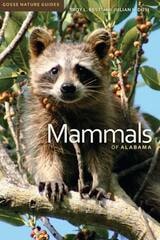
Mammals of Alabama
Troy L. Best and Julian L. Dusi
University of Alabama Press, 2014
Beautifully designed and sturdily bound for rugged field use, Mammals of Alabama is the first and only exhaustive guidebook to Alabama’s diverse and fascinating mammalian fauna.
European and American naturalists visited the territory that would become Alabama as early as the late eighteenth century and marveled at the breadth and variety of its flora and fauna. Yet until today scientists, scholars, and nature enthusiasts had no systematic guide to the state’s mammals. Mammals of Alabama fills the gap.
Naturally occurring in the state are nine orders, twenty-two families, fifty-one genera, and seventy-two species of living mammals. Best and Dusi offer an engaging entry for each as well as additional species that have become extinct through natural processes or human extirpation.
Illustrated with maps and photos, each entry includes:
• Identification notes • Dental formula
• Size and weight • Distribution
• Ecology • Life History
• Behavior • Parasites and Diseases
• Conservation Status • Notes and References
Ideal for backyards, hikes, libraries, and classrooms, Mammals of Alabama includes hundreds of professional, close-up color specimen photographs of both living animals in their natural habitats and skull plates, making identification of animals easy.
Best also offers fascinating and fun facts about Alabama mammals that will delight nature lovers of all ages, such as the surprising and excellent tree-climbing skills of the gray fox, the use in the past of mole skins to apply cosmetics, and the litters of identical quadruplets common to the nine-banded armadillo.
Published in cooperation with the Alabama Wildlife Federation
Mammals of South America, Volume 1
Marsupials, Xenarthrans, Shrews, and BatsEdited by Alfred L. Gardner
University of Chicago Press, 2008
Mammals of South America, Volume 2
RodentsEdited by James L. Patton, Ulyses F. J. Pardiñas, and Guillermo D’Elía
University of Chicago Press, 2015
From spiny mice and guinea pigs to the oversized capybara, this book covers all native rodents of South America, the continental islands of Trinidad and Tobago, and the Caribbean Netherlands off the Venezuelan coast. It includes identification keys and descriptions of all genera and species; comments on distribution; maps of localities; discussions of subspecies; and summaries of natural, taxonomic, and nomenclatural history. Rodents also contains a detailed list of cited literature and a separate gazetteer based on confirmed identifications from museum vouchers and the published literature.
Mammals of the Neotropics, Volume 1
The Northern Neotropics: Panama, Colombia, Venezuela, Guyana, Suriname, French GuianaJohn F. Eisenberg
University of Chicago Press, 1989
John Eisenberg, a leading researcher of Neotropical fauna, begins the volume with a discussion of historical biogeography and contemporary habitats of the northern Neotropics. Each of the chapters that follow presents a mammalian order, with data for all indigenous species. Eisenberg has provided physical descriptions and summaries of range and habitat for nearly 450 species. For those species that have been studied in the field or in captivity, additional notes on natural history are included. For the larger taxa, field keys to help to identify the specimens. Range maps, line drawings, and color plates supplement the text, further aiding identification.
Throughout the book, Eisenberg provides a larger context for the species descriptions. He comments on the diversity of forms within each order, places the Neotropical species in a worldwide geographical perspective, and reviews taxonomic questions and controversies. At the end of each chapter, an extensive bibliography directs readers to related articles on systematics, behavior, ecology, and evolution. Eisenberg concludes with chapters on speciation events and mammalian community ecology.
No comparable account of South and Central American mammals has ever been published in any language. This volume of Mammals of the Neotropics and the forthcoming companion volumes will be an invaluable reference for students and professionals and will help further the research that is so vital to conservation efforts.

Mammals of the Neotropics, Volume 2
The Southern Cone: Chile, Argentina, Uruguay, ParaguayKent H. Redford and John F. Eisenberg
University of Chicago Press, 1992
This second of a projected three volumes covers southern South America. The authors discuss the historical biogeography and contemporary habitats of the region and then
provide individual accounts for nearly 360 indigenous species, including information on size, appearance, ecology, behavior, and life history. Range maps, line drawings, and color plates supplement the text. To place the species accounts in a broader context, the authors consider the diversity of animals within each taxonomic group, examine the Neotropical species from a worldwide geographical perspective, and review taxonomic questions and
controversies. Two final chapters deal with the community ecology of mammals and the effects humans have had on the mammalian fauna of the southern cone.
Mammals of the Neotropics, Volume 3
Ecuador, Bolivia, BrazilJohn F. Eisenberg and Kent H. Redford
University of Chicago Press, 2000
Third in a series that reviewers have described as "state of the art" (Journal of Biogeography) and "invaluable to anyone interested in the mammalian fauna of the Neotropics" (Quarterly Review of Biology), this volume follows the format of its acclaimed predecessors. Chapters present not only up-to-date taxonomic information but also ecological and behavioral characteristics, conservation status, and distribution maps for most species. Numerous illustrations are provided to assist in field and laboratory identification, including exquisite color and black-and-white plates by Fiona Reid. New to this volume are chapters contributed by experts on the mammalian fossil record of this region and on its current biodiversity and biogeography. An appendix summarizes changes to the nomenclature that have altered the scientific names used in the first two volumes.
Volumes 1 and 2 of Mammals of the Neotropics, which are also available, describe the mammals of Panama, Colombia, Venezuela, Guyana, Suriname, and French Guiana (volume 1) and Chile, Argentina, Uruguay, and Paraguay (volume 2). The fourth and final volume of this series will cover the mammals of Mexico and Central America.
Man-Made
The Evolutionary Influence of HumansLynn Carpenter
Michigan Publishing Services, 2023
Manual of Grasses for North America
Mary E. Barkworth, Laurel K. Anderton Kathleen M. Capels, Sandy Long, and Michael B. Piep
Utah State University Press, 2007
The Manual of Grasses for North America is designed as a successor to the classic volume by Hitchcock and Chase. It reflects current taxonomic thought and includes keys, illustrations, and distribution maps for the nearly 900 native and 400 introduced species that have been found in North America north of Mexico. In addition, it presents keys and illustrations for several species that are known only in cultivation or are of major agricultural significance, either as progenitors of bread wheat and corn or as a major threat to North American agriculture because of their ability to hybridize with crop species. The Manual is a major reference work for grasses that will retain its value for many years.
Marine Macroecology
Edited by Jon D. Witman and Kaustuv Roy
University of Chicago Press, 2009
Pioneered in the late 1980s, the concept of macroecology—a framework for studying ecological communities with a focus on patterns and processes—revolutionized the field. Although this approach has been applied mainly to terrestrial ecosystems, there is increasing interest in quantifying macroecological patterns in the sea and understanding the processes that generate them. Taking stock of the current work in the field and advocating a research agenda for the decades ahead, Marine Macroecology draws together insights and approaches from a diverse group of scientists to show how marine ecology can benefit from the adoption of macroecological approaches.
Divided into three parts, Marine Macroecology first provides an overview of marine diversity patterns and offers case studies of specific habitats and taxonomic groups. In the second part, contributors focus on process-based explanations for marine ecological patterns. The third part presents new approaches to understanding processes driving the macroecolgical patterns in the sea. Uniting unique insights from different perspectives with the common goal of identifying and understanding large-scale biodiversity patterns, Marine Macroecology will inspire the next wave of marine ecologists to approach their research from a macroecological perspective.
Maternal Effects in Mammals
Edited by Dario Maestripieri and Jill M. Mateo
University of Chicago Press, 2009
Evolutionary maternal effects occur whenever a mother’s phenotypic traits directly affect her offspring’s phenotype, independent of the offspring’s genotype. Some of the phenotypic traits that result in maternal effects have a genetic basis, whereas others are environmentally determined. For example, the size of a litter produced by a mammalian mother—a trait with a strong genetic basis—can affect the growth rate of her offspring, while a mother’s dominance rank—an environmentally determined trait—can affect the dominance rank of her offspring.
The first volume published on the subject in more than a decade, Maternal Effects in Mammals reflects advances in genomic, ecological, and behavioral research, as well new understandings of the evolutionary interplay between mothers and their offspring. Dario Maestripieri and Jill M. Mateo bring together a learned group of contributors to synthesize the vast literature on a range of species, highlight evolutionary processes that were previously overlooked, and propose new avenues of research. Maternal Effects in Mammals will serve as the most comprehensive compendium on and stimulus for interdisciplinary treatments of mammalian maternal effects.
Mathematical Models of Social Evolution
A Guide for the PerplexedRichard McElreath and Robert Boyd
University of Chicago Press, 2007
Over the last several decades, mathematical models have become central to the study of social evolution, both in biology and the social sciences. But students in these disciplines often seriously lack the tools to understand them. A primer on behavioral modeling that includes both mathematics and evolutionary theory, Mathematical Models of Social Evolution aims to make the student and professional researcher in biology and the social sciences fully conversant in the language of the field.
Teaching biological concepts from which models can be developed, Richard McElreath and Robert Boyd introduce readers to many of the typical mathematical tools that are used to analyze evolutionary models and end each chapter with a set of problems that draw upon these techniques. Mathematical Models of Social Evolution equips behaviorists and evolutionary biologists with the mathematical knowledge to truly understand the models on which their research depends. Ultimately, McElreath and Boyd’s goal is to impart the fundamental concepts that underlie modern biological understandings of the evolution of behavior so that readers will be able to more fully appreciate journal articles and scientific literature, and start building models of their own.
Meetings with Remarkable Mushrooms
Forays with Fungi across HemispheresAlison Pouliot
University of Chicago Press, 2023
A whirlwind journey through fungus frontiers that underscores how appreciating fungi is key to understanding our planet’s power and fragility.
What can we learn from the lives of fungi? Splitting time between the northern and southern hemispheres, ecologist Alison Pouliot ensures that she experiences two autumns per year in the pursuit of fungi—from Australia’s deserts to Iceland’s glaciers to America’s Cascade Mountains. In Meetings with Remarkable Mushrooms, we journey alongside Pouliot, magnifiers in hand, as she travels the world.
With Pouliot as our guide, we smell fire-loving truffles that transform their scent after burning to lure mammals who eat them and, ultimately, spread their spores. We spot the eerie glow of the ghost fungus, a deceptive entity that looks like an edible oyster mushroom but will soon heave back out—along with everything else in your stomach—if you take a bite. And we crawl alongside vegetable caterpillars, which are neither vegetable nor caterpillar but a fungus that devours insects from the inside out.
Featuring stunning color photographs of these mycological miracles, Meetings with Remarkable Mushrooms shows that understanding fungi is fundamental for harmonizing with the natural world.

Membranes to Molecular Machines
Active Matter and the Remaking of LifeMathias Grote
University of Chicago Press, 2019
Membranes to Molecular Machines explores just how late twentieth-century science came to think of our cells and bodies this way. This story is told through the lens of membrane research, an unwritten history at the crossroads of molecular biology, biochemistry, physiology, and the neurosciences, that directly feeds into today's synthetic biology as well as nano- and biotechnology. Mathias Grote shows how these sciences not only have made us think differently about life, they have, by reworking what membranes and proteins represent in laboratories, allowed us to manipulate life as "active matter" in new ways. Covering the science of biological membranes in the United States and Europe from the mid-1960s to the 1990s, this book connects that history to contemporary work with optogenetics, a method for stimulating individual neurons using light, and will enlighten and provoke anyone interested in the intersection of chemical research and the life sciences—from practitioner to historian to philosopher.
The research described in the book and its central actor, Dieter Oesterhelt, were honored with the 2021 Albert Lasker Basic Medical Research Award for his contribution to the development of optogenetics. The 2026 Nobel Prize in Physiology or Medicine was awarded to three scientists for discoveries leading to optogenetics. Membranes to Molecular Machines can be read as a prehistory of this research.

Memory
Fragments of a Modern HistoryAlison Winter
University of Chicago Press, 2011
Picture your twenty-first birthday. Did you have a party? If so, do you remember who was there? Now step back: how clear are those memories? Should we trust them to be accurate, or is there a chance that you’re remembering incorrectly? And where have the many details you can no longer recall gone? Are they hidden somewhere in your brain, or are they gone forever?
Such questions have fascinated scientists for hundreds of years, and, as Alison Winter shows in Memory: Fragments of a Modern History, the answers have changed dramatically in just the past century. Tracing the cultural and scientific history of our understanding of memory, Winter explores early metaphors that likened memory to a filing cabinet; later, she shows, that cabinet was replaced by the image of a reel of film, ever available for playback. That model, too, was eventually superseded, replaced by the current understanding of memory as the result of an extremely complicated, brain-wide web of cells and systems that together assemble our pasts. Winter introduces us to innovative scientists and sensationalistic seekers, and, drawing on evidence ranging from scientific papers to diaries to movies, explores the way that new understandings from the laboratory have seeped out into psychiatrists' offices, courtrooms, and the culture at large. Along the way, she investigates the sensational battles over the validity of repressed memories that raged through the 1980s and shows us how changes in technology—such as the emergence of recording devices and computers—have again and again altered the way we conceptualize, and even try to study, the ways we remember.
Packed with fascinating details and curious episodes from the convoluted history of memory science, Memory is a book you'll remember long after you close its cover.
Messages from Islands
A Global Biodiversity TourIlkka Hanski
University of Chicago Press, 2016
Beginning each chapter on a particular island, Hanski dives into reflections on his own field studies before going on to pursue a variety of ecological questions, including: What is the biodiversity crisis? What are extinction thresholds and extinction debts? What can the biodiversity hypothesis tell us about rapidly increasing allergies, asthma, and other chronic inflammatory disorders? The world’s largest island, Greenland, for instance, is the starting point for a journey into the benefits that humankind acquires from biodiversity, including the staggering biodiversity of microbes in the ecosystems that are closest to us—the ecosystems in our guts, in our respiratory tracts, and under our skin. Conceptually oriented but grounded in an adventurous personal narrative, Messages from Islands is a landmark work that lifts the natural mysteries of islands from the sea, bringing to light the thrilling complexities and connections of ecosystems worldwide.
Mestizo Genomics
Race Mixture, Nation, and Science in Latin AmericaPeter Wade, Carlos López Beltrán, Eduardo Restrepo and Ricardo Ventura Santos, eds.
Duke University Press, 2014
Drawing on ethnographic research in Brazil, Colombia, and Mexico, the contributors to Mestizo Genomics explore how the concepts of race, ethnicity, nation, and gender enter into and are affected by genomic research. In Latin America, national identities are often based on ideas about mestizaje (race mixture), rather than racial division. Since mestizaje is said to involve relations between European men and indigenous or African women, gender is a key factor in Latin American genomics and in the analyses in this book. Also important are links between contemporary genomics and recent moves toward official multiculturalism in Brazil, Colombia, and Mexico. One of the first studies of its kind, Mestizo Genomics sheds new light on the interrelations between "race," identity, and genomics in Latin America.
Contributors. Adriana Díaz del Castillo H., Roosbelinda Cárdenas, Vivette García Deister, Verlan Valle Gaspar Neto, Michael Kent, Carlos López Beltrán, María Fernanda Olarte Sierra, Eduardo Restrepo, Mariana Rios Sandoval, Ernesto Schwartz-Marín, Ricardo Ventura Santos, Peter Wade
Metaphysics, Materialism, and the Evolution of Mind
The Early Writings of Charles DarwinCharles Darwin
University of Chicago Press, 1980
First published in 1974 as a companion volume to Darwin on Man by Howard E. Gruber, Paul Barrett’s transcriptions of Darwin’s M and N notebooks served to shed new light on the evolutionist’s methods and motivation.
According to Stephen Jay Gould in the New York Times Book Review, “Darwin kept [these notebooks] primarily in 1838, when he was 29 years old. In them, he recorded his early conviction of evolutionary continuity between humans and all other animals. . . . These notebooks display all the features of humanistic intellect that his detractors denied. We find erudition in his comments on Plato, Locke, Hume, Adam Smith, Whewell, Burke, Montaigne, Lessing and Spencer. . . . We appreciate an artistic bent in his delight with nature and her prophet Wordsworth. . . . We grasp the breadth of his bold attempt to clothe all human thought and behaviour in a new evolutionary garb. . . . Charles Darwin was reconstructing the world and he knew exactly what he was doing.”
Mexican Macaws
Comparative Osteology and Survey of Remains from the SouthwestLyndon L. Hargrave
University of Arizona Press, 1970

Mice in the Freezer, Owls on the Porch
The Lives of Naturalists Frederick and Francis HamerstromHelen M. Corneli
University of Wisconsin Press, 2006
Mice in the Freezer, Owls on the Porch is in many ways a love story—about a quiet scientist and his flamboyant wife, but also about their passions for hunting, for wild lands, and for the grouse and raptor species that they were instrumental in saving from destruction.
From the papers and letters of Frederick and Frances Hamerstrom, the reminiscences of contemporaries, and her own long friendship with this extraordinary couple who were her neighbors, Helen Corneli draws an intimate picture of Fran and "Hammy" from childhood through the genesis and maturation of a romantic, creative, and scientific relationship. Following the Hamerstroms as they give up a life of sophisticated convention and comfort for the more "civilized" (as Aldo Leopold would have it) pleasures of living and conducting on-the-spot research into diminishing species, Corneli captures the spirit of the Hamerstroms, their profession, and the natural and human environments in which they worked. A nuanced account of the labors, adventures, and achievements that distinguished the Hamerstroms over the years—and that inspired a generation of naturalists—this book also provides a dramatic account of conservation history over the course of the twentieth century, particularly in Wisconsin during the eventful years from the 1920s through the 1970s.
Michigan Shrubs and Vines
A Guide to Species of the Great Lakes RegionBurton V. Barnes, Christopher W. Dick, and Melanie E. Gunn
University of Michigan Press, 2016

Microbes from Hell
Patrick Forterre
University of Chicago Press, 2016
In Microbes from Hell, one of the world’s leading experts on archaea and hyperthermophiles, or organisms that have evolved to flourish in extreme temperatures, offers a colorful, engaging account of this taxonomic upheaval. Blending tales of his own search for thermophiles with discussions of both the physiological challenges thermophiles face and the unique adaptations they have evolved to live in high-temperature environments, Forterre illuminates our developing understanding of the relationship between archaea and the rest of Earth’s organisms. From biotech applications to the latest discoveries in thermophile research, from microbiomes to the communities of organisms that dwell on deep-sea vents, Forterre’s exploration of life-forms that seem to thrive at the mouth of hell provides a glimpse into the early days of Earth, offering deep insight into what life may have looked like in the extreme environments of our planet’s dawn.
Microbial Resolution
Visualization and Security in the War against Emerging MicrobesGloria Chan-Sook Kim
University of Minnesota Press, 2024
An interdisciplinary study charting the war against microbial futures leads to a new theory of contemporary vision and visuality
In 1989, a group of U.S. government scientists met to discuss some surprising findings: new diseases were appearing around the world, and viruses that they thought long vanquished were resurfacing. Their appearance heralded a future perpetually threatened by unforeseeable biological risks, sparking a new concept of disease: the “emerging microbe.” With the Cold War nearing its end, American scientists and security experts turned to confront this new “enemy,” redirecting national security against its risky horizons. In order to be fought, emerging microbes first needed to be made perceptible; but how could something immaterial, unknowable, and ever mutating be coaxed into visibility, knowability, and operability?
Microbial Resolution charts the U.S.-led war on the emerging microbe to show how their uncertain futures were transformed into objects of global science and security. Moving beyond familiar accounts that link scientific knowledge production to optical practices of visualizing the invisible, Gloria Chan-Sook Kim develops a theory of “microbial resolution” to analyze the complex problematic that arises when dealing with these entities: what can be seen when there is nothing to see? Through a syncretic analysis of data mining, animal-tracking technologies, media networks, computer-modeled futures, and global ecologies and infrastructures, she shows how a visual impasse—the impossibility of seeing microbial futures—forms the basis for new modes of perceiving, knowing, and governing in the present.
Timely and thought provoking, Microbial Resolution opens up the rich paradoxes, irreconcilabilities, and failures inherent in this project and demonstrates how these tensions profoundly animate twenty-first-century epistemologies, aesthetics, affects, and ecologies.
Mimicry and the Evolutionary Process
Edited by Lincoln P. Brower
University of Chicago Press, 1989

Mirage
Florida and the Vanishing Water of the Eastern U.S.Cynthia Barnett
University of Michigan Press, 2007
“Never before has the case been more compellingly made that America’s dependence on a free and abundant water supply has become an illusion. Cynthia Barnett does it by telling us the stories of the amazing personalities behind our water wars, the stunning contradictions that allow the wettest state to have the most watered lawns, and the thorough research that makes her conclusions inescapable. Barnett has established herself as one of Florida’s best journalists and Mirage is a must-read for anyone who cares about the future of the state.”
—Mary Ellen Klas, Capital Bureau Chief, Miami Herald
“Mirage is the finest general study to date of the freshwater-supply crisis in Florida. Well-meaning villains abound in Cynthia Barnett’s story, but so too do heroes, such as Arthur R. Marshall Jr., Nathaniel Reed, and Marjorie Harris Carr. The author’s research is as thorough as her prose is graceful. Drinking water is the new oil. Get used to it.”
—Michael Gannon, Distinguished Professor of history, University of Florida, and author of Florida: A Short History
“With lively prose and a journalist’s eye for a good story, Cynthia Barnett offers a sobering account of water scarcity problems facing Florida—one of our wettest states—and the rest of the East Coast. Drawing on lessons learned from the American West, Mirage uses the lens of cultural attitudes about water use and misuse to plead for reform. Sure to engage and fascinate as it informs.”
—Robert Glennon, Morris K. Udall Professor of Law and Public Policy, University of Arizona, and author of Water Follies: Groundwater Pumping and the Fate of America’s Fresh Waters
Part investigative journalism, part environmental history, Mirage reveals how the eastern half of the nation—historically so wet that early settlers predicted it would never even need irrigation—has squandered so much of its abundant freshwater that it now faces shortages and conflicts once unique to the arid West.
Florida’s parched swamps and supersized residential developments set the stage in the first book to call attention to the steady disappearance of freshwater in the American East, from water-diversion threats in the Great Lakes to tapped-out freshwater aquifers along the Atlantic seaboard.
Told through a colorful cast of characters including Walt Disney, Jeb Bush and Texas oilman Boone Pickens, Mirage ferries the reader through the key water-supply issues facing America and the globe: water wars, the politics of development, inequities in the price of water, the bottled-water industry, privatization, and new-water-supply schemes.
From its calamitous opening scene of a sinkhole swallowing a house in Florida to its concluding meditation on the relationship between water and the American character, Mirage is a compelling and timely portrait of the use and abuse of freshwater in an era of rapidly vanishing natural resources.
Mixed Messages
Cultural and Genetic Inheritance in the Constitution of Human SocietyRobert A. Paul
University of Chicago Press, 2015
Examining a wide array of cultures, Paul reveals how the inherent tensions between these two modes of transmission generate many of the features of human society, such as marriage rules, initiation rituals, gender asymmetry, and sexual symbolism. Exploring differences in the requirements, range, and agendas of genetic and symbolic reproduction, he shows that a properly conceived dual inheritance model does a better job of accounting for the distinctive character of actual human societies than either evolutionary or socio-cultural construction theories can do alone. Ultimately this book offers a powerful call for a synthesis of the traditions inspired by Darwin, Durkheim, and Freud—one that is critically necessary if we are to advance our understanding of human social life.
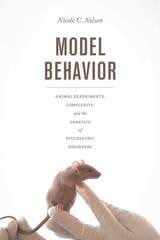
Model Behavior
Animal Experiments, Complexity, and the Genetics of Psychiatric DisordersNicole C. Nelson
University of Chicago Press, 2018
Behavior genetics is a particularly challenging field for making a clear-cut case that mouse experiments work, because researchers believe that both the phenomena they are studying and the animal models they are using are complex. These assumptions of complexity change the nature of what laboratory work produces. Whereas historical and ethnographic studies traditionally portray the laboratory as a place where scientists control, simplify, and stabilize nature in the service of producing durable facts, the laboratory that emerges from Nelson’s extensive interviews and fieldwork is a place where stable findings are always just out of reach. The ongoing work of managing precarious experimental systems means that researchers learn as much—if not more—about the impact of the environment on behavior as they do about genetics. Model Behavior offers a compelling portrait of life in a twenty-first-century laboratory, where partial, provisional answers to complex scientific questions are increasingly the norm.
Modeling Nature
Sharon E. Kingsland
University of Chicago Press, 1995
Modularity in Development and Evolution
Edited by Gerhard Schlosser and Günter P. Wagner
University of Chicago Press, 2004
A timely synthesis of a crucial topic, Modularity in Development and Evolution shows the invaluable insights modules can give into both developmental complexities and their evolutionary origins.
Molecular Capture
The Animation of BiologyAdam Nocek
University of Minnesota Press, 2021
How computer animation technologies became vital visualization tools in the life sciences
Who would have thought that computer animation technologies developed in the second half of the twentieth century would become essential visualization tools in today’s biosciences? This book is the first to examine this phenomenon. Molecular Capture reveals how popular media consumption and biological knowledge production have converged in molecular animations—computer simulations of molecular and cellular processes that immerse viewers in the temporal unfolding of molecular worlds—to produce new regimes of seeing and knowing.
Situating the development of this technology within an evolving field of historical, epistemological, and political negotiations, Adam Nocek argues that molecular animations not only represent a key transformation in the visual knowledge practices of life scientists but also bring into sharp focus fundamental mutations in power within neoliberal capitalism. In particular, he reveals how the convergence of the visual economies of science and entertainment in molecular animations extends neoliberal modes of governance to the perceptual practices of scientific subjects. Drawing on Alfred North Whitehead’s speculative metaphysics and Michel Foucault’s genealogy of governmentality, Nocek builds a media philosophy well equipped to examine the unique coordination of media cultures in this undertheorized form of scientific media. More specifically, he demonstrates how governmentality operates across visual practices in the biosciences and the popular mediasphere to shape a molecular animation apparatus that unites scientific knowledge and entertainment culture.
Ultimately, Molecular Capture proposes that molecular animation is an achievement of governmental design. It weaves together speculative media philosophy, science and technology studies, and design theory to investigate how scientific knowledge practices are designed through media apparatuses.

Molecular Politics
Developing American and British Regulatory Policy for Genetic Engineering, 1972-1982Susan Wright
University of Chicago Press, 1994
In this comparative study of the development of regulatory policy for genetic engineering in the United States and the United Kingdom, Susan Wright analyzes government responses to the struggles among corporations, scientists, universities, trade unions, and public interest groups over regulating this new field. Drawing on archival materials, government records, and interviews with industry executives, politicians, scientists, trade unionists, and others on both sides of the Atlantic, Molecular Politics provides a comprehensive account of a crucial set of policy decisions and explores their implications for the political economy of science.
By combining methods from political science and the history of science, Wright advances a provocative interpretation of the evolution of genetic engineering policy and makes a major contribution to science and public policy studies.
Monkeytalk
Inside the Worlds and Minds of PrimatesJulia Fischer
University of Chicago Press, 2017
An eye-opening blend of storytelling, memoir, and science, Monkeytalk takes us into the field and the world’s primate labs to investigate the intricacies of primate social mores through the lens of communication. After first detailing the social interactions of key species from her fieldwork—from baby-wielding male Barbary macaques, who use infants as social accessories in a variety of interactions, to aggression among the chacma baboons of southern Africa and male-male tolerance among the Guinea baboons of Senegal—Fischer explores the role of social living in the rise of primate intelligence and communication, ultimately asking what the ways in which other primates communicate can teach us about the evolution of human language.
Funny and fascinating, Fischer’s tale roams from a dinner in the field shared with lionesses to insights gleaned from Rico, a border collie with an astonishing vocabulary, but its message is clear: it is humans who are the evolutionary mimics. The primate heritage visible in our species is far more striking than the reverse, and it is the monkeys who deserve to be seen. “The social life of macaques and baboons is a magnificent opera,” Fischer writes. “Permit me now to raise the curtain on it.”
Moral Entanglements
Conserving Birds in Britain and GermanyStefan Bargheer
University of Chicago Press, 2018
Morphologic Encyclopedia of Palynology
An International Collection of Definitions and Illustrations of Spores and PollensGerhard Kremp
University of Arizona Press, 0

Morphological Integration
Everett C. Olson and Robert L. Miller
University of Chicago Press, 1999
Everett C. Olson was a professor at the University of Chicago and at the University of California, Los Angeles. He was a former president of the Society of Vertebrate Paleontology. Robert L. Miller was associate professor of geology at the University of Chicago, associate scientist in marine geology at the Woods Hole Oceanographic Institution, and a member of the board of editors of the Journal of Geology.
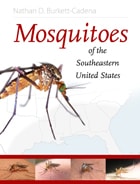
Mosquitoes of the Southeastern United States
Nathan D. Burkett-Cadena
University of Alabama Press, 2013
The definitive guide to the Southeast’s most persistent—and medically important—tiny predators.
Mosquitoes of the Southeastern United States is a full-color, highly illustrated guide to the sixty-four known species of mosquitoes in eleven genera that populate the South—from the Gulf Coastal states to the Carolinas. In addition to detailed and fully illustrated identification keys for both larvae and adults, it includes information on the mosquito’s lifecycle, interaction with humans, and biological diversity in the southeast.
This area of the country has a rich mosquito fauna with diverse species ranging from the tiny pitcher plant mosquito to the brilliantly colored cannibal mosquito. Close-up photographs of live adults showcase their widely varied and beautiful bodies while remarkable images made with the aid of a microaquarium reveal the differences in larval stages of the subjects. For each species described, Nathan D. Burkett-Cadena provides biological information including distribution maps, habitat associations of the larvae and adults, range of animals fed upon, and importance from a medical standpoint.
This book’s usefulness to mosquito control programs in the Southeast and beyond cannot be overstated. Not only for native species, but for new species introduced from exotic locales, mosquitoes must be properly identified in order to know how best to control them. This volume will also be valuable to medical and public health specialists working on mosquito-borne diseases, such as malaria, dengue, yellow fever, West Nile virus, and filariasis. Mosquitoes of the Southeastern United States is the first guide to integrate full-color photography, illustrated keys, and current information on the biology of mosquitoes into one definitive resource.
Mountain Sheep of North America
Raul Valdez
University of Arizona Press, 1999
This book is a major reference on the natural history, ecology, and management of wild sheep in North America. Written by wildlife biologists who have devoted years of study to the animals, it covers Dall's and Stone's sheep and Rocky Mountain, California, and desert bighorn and examines a variety of factors pertinent to their life histories: habitat, diet, activity, social organization, reproduction, and population dynamics. Additional chapters consider distribution and abundance, adaptive strategies, and management guidelines. Discussions on diseases of wild sheep present a wealth of information that will be of particular use to wildlife biologists, including detailed clinical descriptions of conditions that threaten sheep populations, from pasteurellosis to capture myopathy. An appendix reviews the cytogenetics and genetics of wild sheep.
North American wild sheep may face extinction in many areas unless critical questions concerning their management are answered soon. Prior to the publication of this book, there was no single reference available in which one could find such a synthesis of information. Mountain Sheep of North America provides that source and points toward the preservation of these magnificent wild creatures.
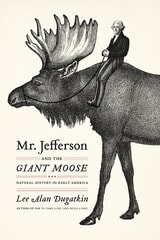
Mr. Jefferson and the Giant Moose
Natural History in Early AmericaLee Alan Dugatkin
University of Chicago Press, 2009
In the years after the Revolutionary War, the fledgling republic of America was viewed by many Europeans as a degenerate backwater, populated by subspecies weak and feeble. Chief among these naysayers was the French Count and world-renowned naturalist Georges-Louis Leclerc de Buffon, who wrote that the flora and fauna of America (humans included) were inferior to European specimens.
Thomas Jefferson—author of the Declaration of Independence, U.S. president, and ardent naturalist—spent years countering the French conception of American degeneracy. His Notes on Virginia systematically and scientifically dismantled Buffon’s case through a series of tables and equally compelling writing on the nature of his home state. But the book did little to counter the arrogance of the French and hardly satisfied Jefferson’s quest to demonstrate that his young nation was every bit the equal of a well-established Europe. Enter the giant moose.
The American moose, which Jefferson claimed was so enormous a European reindeer could walk under it, became the cornerstone of his defense. Convinced that the sight of such a magnificent beast would cause Buffon to revise his claims, Jefferson had the remains of a seven-foot ungulate shipped first class from New Hampshire to Paris. Unfortunately, Buffon died before he could make any revisions to his Histoire Naturelle, but the legend of the moose makes for a fascinating tale about Jefferson’s passion to prove that American nature deserved prestige.
In Mr. Jefferson and the Giant Moose, Lee Alan Dugatkin vividly recreates the origin and evolution of the debates about natural history in America and, in so doing, returns the prize moose to its rightful place in American history.

Multiplicity in Unity
Plant Subindividual Variation and Interactions with AnimalsCarlos M. Herrera
University of Chicago Press, 2009
Plants produce a considerable number of structures of one kind, like leaves, flowers, fruits, and seeds, and this reiteration is a quintessential feature of the body plan of higher plants. But since not all structures of the same kind produced by a plant are identical—for instance, different branches on a plant may be male or female, leaf sizes in the sun differ from those in the shade, and fruit sizes can vary depending on patterns of physiological allocation among branches—a single plant genotype generally produces a multiplicity of phenotypic versions of the same organ.
Multiplicity in Unity uses this subindividual variation to deepen our understanding of the ecological and evolutionary factors involved in plant-animal interactions. On one hand, phenotypic variation at the subindividual scale has diverse ecological implications for animals that eat plants. On the other hand, by choosing which plants to consume, these animals may constrain or modify plant ontogenetic patterns, developmental stability, and the extent to which feasible phenotypic variants are expressed by individuals.
An innovative study of the ecology, morphology, and evolution of modular organisms, Multiplicity in Unity addresses a topic central to our understanding of the diversity of life and the ways in which organisms have coevolved to cope with variable environments.
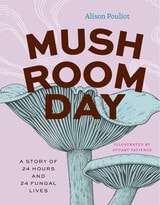
Mushroom Day
A Story of 24 Hours and 24 Fungal LivesAlison Pouliot
University of Chicago Press, 2025
On this mushroom-filled day, ecologist Alison Pouliot tours the world to introduce readers to a fascinating variety of fungi. Each chapter of Mushroom Day introduces a single fungus during a single hour, highlighting twenty-four different species.
In the dark of the night, the green glow of the ghost fungus guides us into the forest to learn about the mysteries of bioluminescence. At dawn, we awaken to find a fairy ring of mushrooms that has appeared overnight like something out of folklore. But we don’t have much time to linger, as we must reach the Italian forest before other porcino hunters forage the morning’s fattest and finest. In the heat of the afternoon, the ripe stench of the stinkhorn might send us out of the woods, while the enticing aroma of the aniseed funnel lures us back in. Late in the evening we spy a fungus known as the witches cauldron and wonder what it might tell us about the future. By the end of our mushroom day, we’ll have glimpsed the diversity of this unique kingdom, met fungus friends that feed and fascinate, and learned how humans can encourage their flourishing.
For each hour, celebrated artist Stuart Patience has depicted these scenes with evocative pen and ink illustrations. Working together to narrate and illustrate these unique moments in time, Pouliot and Patience have created an engaging read that is a perfect way to spend an hour or two—and a true gift for foragers, mycophiles, and anyone who wants to stop and appreciate fungi.

Musical Vitalities
Ventures in a Biotic Aesthetics of MusicHolly Watkins
University of Chicago Press, 2018
Redefining music as “the art of possibly animate things,” Musical Vitalities charts a new path for music studies that blends musicological methods with perspectives drawn from the life sciences. In opposition to humanist approaches that insist on a separation between culture and nature—approaches that appear increasingly untenable in an era defined by human-generated climate change—Musical Vitalities treats music as one example of the cultural practices and biotic arts of the animal kingdom rather than as a phenomenon categorically distinct from nonhuman forms of sonic expression. The book challenges the human exceptionalism that has allowed musicologists to overlook music’s structural resemblances to the songs of nonhuman species, the intricacies of music’s physiological impact on listeners, and the many analogues between music’s formal processes and those of the dynamic natural world. Through close readings of Austro-German music and aesthetic writings that suggest wide-ranging analogies between music and nature, Musical Vitalities seeks to both rekindle the critical potential of nineteenth-century music and rejoin the humans at the center of the humanities with the nonhumans whose evolutionary endowments and planetary fates they share.