Results by title
905 books match the query 'Literary' and 50 start with m
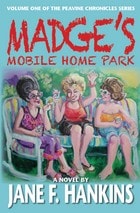
Madge's Mobile Home Park
Volume One of the Peavine ChroniclesJane F. Hankins
Parkhurst Brothers, Inc., 2012
This hilarious send-up of outlandish Southern characters includes a beautician, a luncheonette waitress, a radio evangelist, the widow of a gas and oil distributror and the residents of a fictional mobile home park in Arkansas as they find uproarious ways to enjoy life, needle each other, and remember the dear-departed.
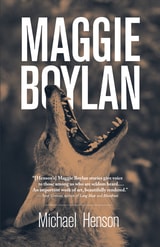
Maggie Boylan
Michael Henson
Ohio University Press, 2018
Finalist, 2019 Weatherford Award (Fiction) • A Great Group Reads Selection for National Reading Group Month from The Women’s National Book Association
Set in Appalachian Ohio amid an epidemic of prescription opiate abuse, Michael Henson’s linked collection tells of a woman’s search for her own peculiar kind of redemption, and brings the novel-in-stories form to new heights. Maggie Boylan is an addict, thief, liar, and hustler. But she is also a woman of deep compassion and resilience. The stories follow Maggie as she spirals through her addictive process, through the court system and treatment, and into a shaky new beginning.
In these masterful stories, we rarely occupy Maggie’s perspective, but instead gain a multilayered portrait of a community as we see other people’s lives bump up against hers—and we witness her inserting herself into their spheres, refusing to be rebuffed. The result is a prismatic view of a community fighting to stay upright against the headwinds of a drug epidemic: always on edge, always human.
Malawi's Sisters
Melanie S. Hatter
Four Way Books, 2019
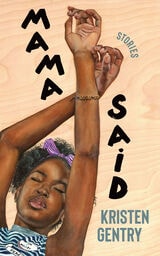
Mama Said
StoriesKristen Gentry
West Virginia University Press, 2023
The linked stories in Mama Said are set in Louisville, Kentucky, a city with a rich history steeped in tobacco, bourbon, and gambling, indulgences that can quickly become gripping and destructive vices. Set amid the tail end of the crack epidemic and the rise of the opioid crisis, Mama Said evokes Black family life in all its complexity, following JayLynn, along with her cousins Zaria and Angel, as they come of age struggling against their mothers’ drug addictions.
JayLynn heads to college intent on gaining distance from her depressed mother, only to learn that her mother’s illness has reached a terrifying peak. She fears the chaos and instability of her extended family will prove too much for her boyfriend, whose idyllic family feels worlds, not miles, apart from her own. When bats invade Zaria’s new home, she is forced to determine how much she is willing to sacrifice to be a good mother. Angel rebels on Derby night, risking her safety to connect with her absent mother and the wild ways that consumed her.
Mama Said separates from stereotypes of Black families, presenting instead the joy, humor, and love that coexist with the trauma of drug abuse within communities. Kristen Gentry’s stories showcase the wide-reaching repercussions of addiction and the ties that forever bind daughters to their mothers, flaws and all.
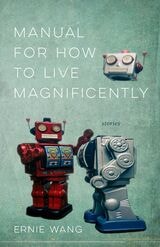
Manual for How to Live Magnificently
StoriesErnie Wang
Acre Books, 2026
This debut collection turns the ordinary into sweeping tragicomedy, probing the small, daily confrontations that shape a life well lived.
In a debut collection at once deeply felt and delightfully playful, Ernie Wang presents ordinary people struggling with challenges that confront many today: how to find steady, meaningful work; how to manage when our healthcare system fails us; how to navigate thorny relationships with lovers, with friends, with children; how to keep one’s dreams alive, and how to let them go. The thirteen stories in Manual for How to Live Magnificently are intriguingly linked, with narrators becoming players and players becoming narrators. Several stories feature cameos by the irrepressible seventy-something Mabel Rogerson, who serves by turns as catalyst, comic relief, and means to catharsis. The book toggles among dramatically different locales—Dayton, Ohio; Las Vegas; Disneyland; Kamisoshigaya, Japan—drawing them thematically into a shared orbit.
Though each of Wang’s offerings has heft and poignancy, the stories also serve up superb comic set pieces. A fake fortuneteller forgoes his crystal ball in favor of a snow globe; a priest moonlights as a professional wrestler named the Grim Preacher; a troubled lawyer who reluctantly cat-sits for a friend winds up finding solace with Killer and Hoedaddy. Revelations are reached at the male strip club Dayton Dix, or during a ritual spanking at Hofbräuhaus just off the Las Vegas Strip, or on Captain Hook’s flying galleon during a theme park ride. And almost everyone eventually ends up at Applebee’s. When storylines converge in a terrifying tragedy, Wang takes the opportunity to explore the complexity of family, to deepen our understanding of sacrifice and the many ways people demonstrate love for one another.
Many Californias
Literature from the Golden StateGerald W. Haslam
University of Nevada Press, 1999
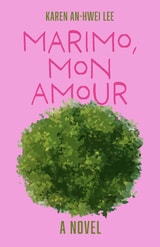
Marimo, Mon Amour
A NovelKaren An-hwei Lee
University of Alabama Press, 2026
WINNER OF THE CATHERINE DOCTOROW INNOVATIVE FICTION PRIZE
A technocratic collapse erases an obscure poet from existence, she and her pet moss ball refuse to disappear
Marimo, Mon Amour is a surreal, contemplative novel set in the quarantined borough of Alphabet City, where a botched data migration leaves obscure poet Zinger Zingiber effectively erased from the record. Furloughed from her jobs as a dumpling-maker and asylum specialist, she withdraws to her apartment with only her pet moss ball, Marimo, for company. As the Bureau of Misidentification bans forbidden words and controls identity, Zinger appoints herself the “Minister of Loneliness,” observing a world suspended in time.
From this quiet refuge, Zinger meditates on solitude, the fragility of memory, and the small, ephemeral moments that become acts of meaning. Her narration drifts between dream and reality, blending whimsy with philosophical inquiry. Lyrical and recursive, the novel draws on the psychological depth of Dostoevsky and the surreal sensibilities of Italo Calvino and Yoko Ogawa as it explores agency a plague of absentia. Marimo, Mon Amour will appeal to readers of literary and speculative fiction, fans of surreal or philosophical narratives, and anyone drawn to meditations on isolation, resistance, and the endurance of the human spirit.

Mark Twain's Homes and Literary Tourism
Hilary Iris Lowe
University of Missouri Press, 2025
A century after Samuel Clemens’s death, Mark Twain thrives. One way fans still celebrate the first true American writer and his work is by visiting any number of Mark Twain destinations. They believe they can learn something unique by visiting the places where he lived. Mark Twain’s Homes and Literary Tourism untangles the complicated ways that Clemens’s houses, now museums, have come to tell the stories that they do about Twain and, in the process, reminds us that the sites themselves are the products of multiple agendas and, in some cases, unpleasant histories.
Hilary Iris Lowe leads us through four Twain homes, beginning at the beginning—Florida, Missouri, where Clemens was born. Today the site is simply a concrete pedestal missing its bust, a plaque, and an otherwise-empty field. Though the original cabin where he was born likely no longer exists, Lowe treats us to an overview of the history of the area and the state park challenged with somehow marking this site. Next, we travel with Lowe to Hannibal, Missouri, Clemens’s childhood home, which he saw become a tourist destination in his own lifetime. Today mannequins remind visitors of the man that the boy who lived there became and the literature that grew out of his experiences in the house and little town on the Mississippi.
Literary historic sites pin their authority on the promise of exclusive insight into authors and texts through firsthand experience. As tempting as it is to accept the authenticity of Clemens’s homes, Mark Twain’s Homes and Literary Tourism argues that house museums are not reliable critical texts but are instead carefully constructed spaces designed to satisfy visitors. This volume shows us how these houses’ portrayals of Clemens change frequently to accommodate and shape our own expectations of the author and his work.
Martin Kacur
The Biography of an IdealistIvan Cankar
Central European University Press, 2009
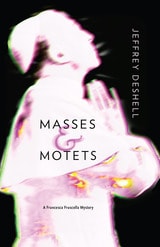
Masses and Motets
A Francesca Fruscella MysteryJeffrey DeShell
University of Alabama Press, 2019
Masses and Motets is a tale composed of four basic interwoven threads, corresponding to the four-part choral writing of Pierre de la Rue’s service music. The first thread comes from the diaries of a recently murdered priest, Father Andrea Vidal, former secretary to the notorious Father Marcial Maciel. The second thread is the mystery story, a police procedural focusing on the efforts of Denver detective Francesca Fruscella to solve the murder and retrieve Vidal’s diary. The third strand is the story of Father Signelli, a priest sent from the Vatican to “fix” the murder. And the fourth strand explores the best and worst of Catholic culture: art and music created by Catholic artists and sexual abuse by Catholic priests.
Vidal’s narrative is the story of a priest who systematically, sincerely, and hopefully tries to destroy his very self through sex, drinking, and drugs in order to get closer to God. Fruscella’s story is that of a middle-aged, female detective trying to solve a ghastly murder while constantly battling the sexism of the Catholic Church. Signelli’s tale is that of an older career priest who, in doing the bidding of his superiors to fix problems that threaten the order of the Church, has perhaps compromised his own soul. By no means a simple narrative of wicked priests, this is a story of men who desperately want to believe, as well as a story of what this belief might shelter and cost.
Materada
Fulvio Tomizza
Northwestern University Press, 1999
A picture of a disappearing way of life, a tale of feud and displacement, and imbued with the tastes, tales, and songs of his native Istria, Koslovic's story is a testament to the intertwined ethnic roots of Balkan history.
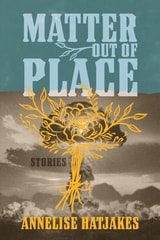
Matter Out of Place
StoriesAnnElise Hatjakes
University of Nevada Press, 2026
Experimental in its approach and unflinching in its execution, Matter Out of Place is an exploration of bright spots of humanity in dark underbellies, a feminist reckoning with “sin,” and a love letter to the strange mirage that is northern Nevada. It inhabits physical and digital spaces with equal wariness, and its characters—filled with grit—navigate the fraught divide between appearances and reality, approval and judgment, gambling everything despite knowing that the house always wins.

Maurice, or The Fisher's Cot
A TaleMary Wollstonecraft Shelley
University of Chicago Press, 2000
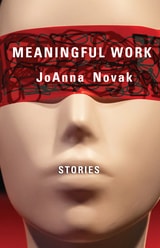
Meaningful Work
StoriesJoAnna Novak
University of Alabama Press, 2021
WINNER OF FC2's RONALD SUKENICK INNOVATIVE FICTION PRIZE
A stunning look at the labor of obsession and the industry of self-destruction
In her lush, lyrical, and unflinching short fiction debut, JoAnna Novak examines the restless throb of desire amid the rote work of jobs and obligations, from the walk-ins of a New York banquet kitchen to the pier of Venice Beach. Fueled by jellyfish pad Thai and Necco wafers, Mountain Dew and Xiaolongbao, the characters in these stories defy boundaries and mores: In “MEMO 19,” a former anorectic, bored of recovery and her clerical job, invites an unparalleled act of sexual defilement and in “Rio Grande, Wisconsin,” a fleshly preteen fantasizes about Bill Murray on a family vacation to Wisconsin. Celebrating the grueling beauty of the shift and the ticking virtues of self-restraint, Meaningful Work is a pageant of formal experimentation, in fearless, glittering prose.
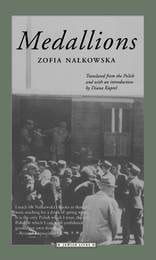
Medallions
Zofia Nalkowska
Northwestern University Press, 2000
Considered a masterpiece of antifascist world literature, Medallions stands as the culmination of Nalkowska's literary style, a style the Polish writer Witold Gombrowicz once described as "the iron capital of her art and one of the very few exportables in our national literature." More than mere historical record, Medallions offers the reader startling immediacy, the repetition of an event as it persists in the testimonial present, in the scars on the consciousness and conscience of individuals.
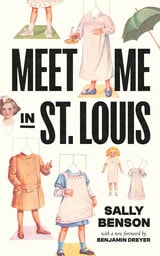
Meet Me in St. Louis
Sally Benson
University of Chicago Press, 2026
Sally Benson’s charming slice-of-life story is back in print for a new generation of readers.
Originally published as World War II raged overseas, Meet Me in St. Louis is Sally Benson’s semi-autobiographical account of the intergenerational Smith family during the twelve months leading up to the 1904 World’s Fair in St. Louis, Missouri. With warmth and tenderness, Benson chronicles the Smiths’ lives as they navigate sibling rivalries, first loves, financial hardship, jealousy, and heartaches in a poignant ode to the bonds of family.
Benson's novel is infused with wit as she details the lighthearted, pleasant existence of the Smith family’s five children—one rife with chaste crushes, victimless pranks, and other childhood escapades. Yet, the novel’s episodic, squeaky-clean veneer belies a dark comedic brilliance that transcends the ages and speaks, even today, to the universal experience of growing up.
Long out of print, this new edition of Benson’s timeless work includes a foreword by bestselling author Benjamin Dreyer, who comments both on the book's origins and its afterlife in popular culture as the source material for Judy Garland’s beloved musical of the same name. An effervescent midcentury novel waiting to be rediscovered, Meet Me in St. Louis is ready to meet its new generation of readers.
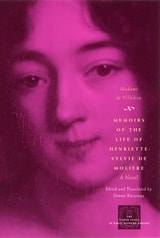
Memoirs of the Life of Henriette-Sylvie de Moliere
A NovelMadame de Villedieu
University of Chicago Press, 2004
Memoirs of the Life of Henriette-Sylvie de Molière, a semi autobiographical novel, portrays an enterprising woman who writes the story of her life, a complex tale that runs counter to social expectations and novelistic conventions. A striking work, the story skillfully mixes real events from the author's life with fictional adventures. At a time when few women published, Villedieu's Memoirs is a significant achievement in creating a voice for the early modern woman writer. Produced while the French novel form was still in its infancy, it should be welcomed by any scholar of women's writing or the early development of the novel.
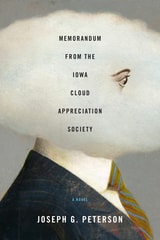
Memorandum from the Iowa Cloud Appreciation Society
A NovelJoseph G. Peterson
University of Iowa Press, 2022
Stuck in an airport because of blizzard conditions, and packed into a crowded terminal with other travelers, Moore has come to believe that his life is not worth reporting about because it has largely been a life lived without incident. However, chance encounters with a yoga instructor, a man traveling to bury his mother, and an enigmatic woodsman reawaken long dormant emotions about his father’s suicide and cause Jim to newly reflect on his own life and on a memorandum that he later discovered in his deceased father’s papers, which lists all the names of the clouds, and which Jim now, from time to time, recants as if it were his own private kaddish to memorialize his lost father.
Like the pilgrims in Chaucer’s The Canterbury Tales who pass the time telling stories while stranded in the Tabard Inn, Memorandum from the Iowa Cloud Appreciation Society tells the tale of a traveling salesman and what really happened over the course of his forty- six years.
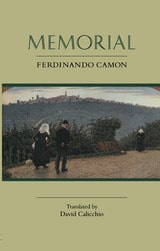
Memorial
Ferdinando Camon
Northwestern University Press, 1996
Camon's northern Italy was primitive and poor; little more than strong religious beliefs helped sustain its people through years of poverty, hunger, and disease. With the arrival of modern life and its "civilizing" aspects, the peasant ways, and all they stood for, changed forever.
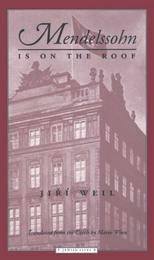
Mendelssohn Is on the Roof
Jiri Weil
Northwestern University Press, 1998
Thus begins a story of disarming simplicity that traces the transformation of ordinary lives in Nazi-occupied Prague. Death abetted by the petty malevolence of Nazi functionaries wins all the battles but ultimately loses the war, defeated by the fragile flowering of courage and defiance.
Messiahs
Marc Anthony Richardson
University of Alabama Press, 2021
2021 BIG OTHER BOOK AWARD FICTION FINALIST
A fiercely ecstatic tale of betrayal and self-sacrifice
Messiahs centers on two nameless lovers, a woman of east Asian descent and a former state prisoner, a black man who volunteered incarceration on behalf of his falsely convicted nephew, yet was “exonerated” after more than two years on death row. In this dystopian America, one can assume a relative’s capital sentence as an act of holy reform—“the proxy initiative,” patterned after the Passion.
The lovers begin their affair by exchanging letters, and after his release, they withdraw to a remote cabin during a torrential winter, haunted by their respective past tragedies. Savagely ostracized by her family for years, the woman is asked by her mother to take the proxy initiative for her brother—creating a conflict she cannot bear to share with her lover. Comprised of ten poetic paragraphs, Messiahs’ rigorous style and sustained intensity equals agony and ecstasy.
Mevlido's Dreams
A Post-Exotic NovelAntoine Volodine
University of Minnesota Press, 2024
A postapocalyptic noir that asks if love and political ideals can survive civilizational collapse
A meditative, postapocalyptic noir, Mevlido’s Dreams is an urgent communiqué from a far-future reality of irreversible environmental damage and civilizational collapse. Mevlido is a double agent working for the police and living in the last habitable city on the planet, a sprawling abyssal ruin marked by war and ruled by criminals. Suspended in the bardo between his loyalty to the surveillance state and to the anarchists, communists, and other rebels he monitors, Mevlido clings to life and hope—barely—in the city’s vast slums, haunted by the memory of the wife he failed to save during the last war and dreaming of a mysterious mission he is told he must accomplish. At the same time, an enigmatic organization existing elsewhere—the Organs—observes Mevlido’s actions and debates its responsibility to him and to humanity as a whole.
Asking what it means to love and care for others at the end of the world, this dense, brilliantly detailed postcollapse reality imagined by Antoine Volodine is one that grows ever more relevant amidst intensifying climate and political catastrophes. A key work in Volodine’s post-exotic fictional universe, Mevlido’s Dreams envisions a world changed beyond recognition and ruled under irrational authoritarianism in which dreams nest within dreams and the boundaries between life and death are fluid and uncertain.
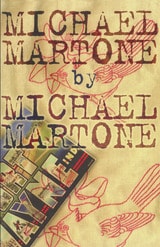
Michael Martone
FictionsMichael Martone
University of Alabama Press, 2005
When the author becomes the story, the possibilities are endless.
Michael Martone, by Michael Martone, continues the author's giddy exploration of the parts of books nobody ever reads. Michael Martone is its own appendix, comprising fifty “contributors notes,” each of which identifies in exorbitant biographical detail the author of the other forty-nine. Full of fanciful anecdotes and preposterous reminiscences, Martone’s self-inventions include the multiple deaths of himself and all his family members, his Kafkaesque rebirth as a giant insect, and his stints as circus performer, assembly-line worker, photographer, and movie extra.
Expect no autobiographical consistency here. A note revealing Martone's mother as the ghost-writer of all his books precedes the note beginning, “Michael Martone, an orphan . . . “ We learn of Martone’s university career and sketchy formal education, his misguided caretaking of his teacher John Barth’s lawn, and his impersonation of a poor African republic in political science class, where Martone's population is allowed to starve as his more fortunate fellow republics fight over development and natural resource trading-cards.
The author of Michael Martone, whose other names include Missy, Dolly, Peanut, Bug, Gigi-tone, Tony's boy, Patty's boy, Junior's, Mickey, Monk, Mr. Martone, and “the contributor named in this note," proves as Protean as fiction itself, continuously transforming the past with every new attribution but never identifying himself by name. It is this missing personage who, from first note to last, constitutes the unformed subject of Michael Martone.
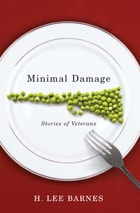
Minimal Damage
Stories of VeteransH. Lee Barnes
University of Nevada Press, 2013
In the seven stories and novella of Minimal Damage, veterans search for dignity in a civilian life that has no need for men who were soldiers. Finding themselves psychically scarred, in crisis, on the fringes of society, or in battle with their memories, these men are living "like warts on America's ass." The characters range from the enigmatic Mr. K, who runs a reality television show and once led an escape from a Korean pow camp, to the doomed Billy Debecki, who regains his dignity in the last minutes of his life by remembering that he once willingly risked his life to save an enemy soldier. In one story, a man who was never a soldier finds a path toward reconciliation with his brother, a former Marine. In another, a man recalls becoming a soldier by watching the humanity of a fellow recruit disintegrate in basic training. In the novella "Snake Boy," a homeless Vietnam vet is kidnapped by a snake-handling evangelist. In proper, upstanding lives and lost, drifting ones, the depth of damage is never immediately apparent for these men. In war, chance, luck, and arbitrary timing conspire to determine a soldier's fate. As civilians, the same uncontrollable forces influence who finds a place in society and who is doomed to keep searching. With emotion, humor, and clarity, Barnes creates characters who show us what it is to live with the trauma of having experienced combat. The fractured souls and lives of these men remind us that the damage doesn't remain on the battlefield. Western Literature Series.
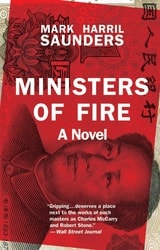
Ministers of Fire
A NovelMark Harril Saunders
Ohio University Press, 2012
Kabul, Afghanistan, 1979: CIA station chief Lucius Burling, an idealistic but flawed product of his nation’s intelligence establishment, barely survives the assassination of the American ambassador. Burling’s reaction to the murder, and his desire to understand its larger meaning, propel him on a journey of intrigue and betrayal that will reach its ultimate end in the streets of Shanghai, months after 9/11. A Chinese dissident physicist may (or may not) be planning to sell his country’s nuclear secrets, and in his story Burling, now living quietly as consul, recognizes the fingerprints of a covert operation, one without the obvious sanction of the Agency. The dissident’s escape draws the violent attention of the Chinese internal security service, and as Burling is drawn inexorably into their path, he must face the ghosts of his past misadventures and a present world of global trafficking, fragile alliances, and the human need for connection above all.
Reminiscent of the best work of Graham Greene and John le Carré, Ministers of Fire extends the spy thriller into new historical, political, and emotional territory.
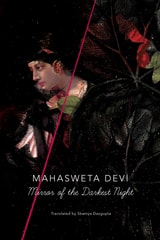
Mirror of the Darkest Night
Mahasweta Devi
Seagull Books, 0
Mirror of the Darkest Night is almost an aberration in Mahasweta Devi’s oeuvre. Known for her activism and hard-hitting indictment of social inequalities, she pays close attention to detail in this sparkling novel. It offers a rare glimpse of Devi’s talent for telling the sort of story she normally eschewed—and it’s a cracker of a tale.
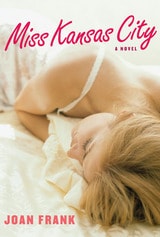
Miss Kansas City
Joan Frank
University of Michigan Press, 2006
Friendless and reclusive, Alex Blue commutes two hours each way to a job that serves mainly as a place to bide time, until one day she meets the wealthy, worldly—and married—owner of a high-concept Bay Area lifestyle company. Meanwhile, the melancholy and closeted Morton Levi, yearning for a loving partner but stung by prior experience, lives a secret life outside the software information company he manages with a steady, efficient hand—the same company where Alex works.
As ominous rumors of mergers and layoffs swirl, and Alex and Mort are pushed to the emotional brink by the vagaries of love, they find themselves forging an unexpected alliance. Miss Kansas City is a moving exploration of the notion of possibility, and of a seasoned hope that can emerge on the other side of loneliness and loss.
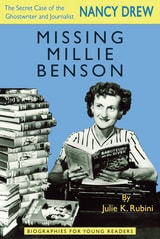
Missing Millie Benson
The Secret Case of the Nancy Drew Ghostwriter and JournalistJulie K. Rubini
Ohio University Press, 2015
Growing up in Ladora, Iowa, Mildred “Millie” Benson had ample time to develop her imagination and sense of adventure. While still a journalism graduate student at the University of Iowa, Millie began writing for the Stratemeyer Syndicate, which published the phenomenally popular Hardy Boys series, among others. Soon, Millie was tapped for a new series starring amateur sleuth Nancy Drew, a young, independent woman not unlike Millie herself. Under the pen name Carolyn Keene, Millie wrote the first book, The Secret of the Old Clock, and twenty-two other Nancy Drew Mystery Stories. In all, Millie wrote more than a hundred novels for young people.
Millie was also a journalist for the Toledo Times and the Toledo Blade. At sixty-two, she obtained her pilot’s license. Follow the clues throughout Missing Millie to discover the story of this ghostwriter, journalist, and adventurer.
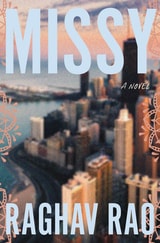
Missy
A NovelRaghav Rao
Northwestern University Press, 2026
A remarkable young woman flees India to chase the dream of self-reinvention in America
The orphaned girls of St. Ursula’s convent are destined to be nuns or servants, but seventeen-year-old Savi dreams of escape. She is chosen to work as a governess for the wealthy Nandiyar family at their country estate in Tamil Nadu, where she falls for a lively and carefree apprentice sculptor. After the violent and horrific events of a single night, they are forced to flee, leaving their homeland forever in the rearview.
Decades later, Savi has become known to all as “Missy” and runs a successful driving school in Chicago. She is a pillar of the South Asian community and the mother of two brilliant, stubborn young women, Mansi and Shilpa. But when Varun, a charming doctor with mysterious connections to her past, enters their lives, a chain of events is set off that puts Missy’s carefully constructed world in jeopardy. Can Missy outrun her secrets? And, if she is forced to face them, what will become of those she loves?
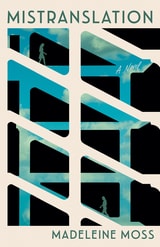
Mistranslation
Moss, Madeleine
University of Iowa Press, 2026
A Debutiful “Most Anticipated Debut Book of 2026”
In upstate New York in 2001, nine-year-old twins Sabina and Camilla spend the summer weathering the moods of their erratic mother while finding themselves pulled toward diverging interests: Sabina into the mystery of their absent French father and Camilla into burgeoning popularity. But their lives are shaken up by the arrival of an Arab French family across the street. Thrilled by what she sees as a link to the country of her origins, Sabina attempts to befriend the family’s son, Khalil, and is rebuffed for reasons she doesn’t understand.
Yet as the twins and Khalil come of age, they are drawn into a tense and ever-shifting triangular dynamic. As Sabina strives to find her father and make sense of her mother, as Camilla confronts whether the power she held in youth translates to adulthood, and as Khalil reckons with the psychological fallout of a family tragedy, their paths converge in ways both surprising and inevitable. Bookended by events with global resonance, Mistranslation is a continent-spanning chronicle of family, inheritance, and the reverberations of the choices we do—or don’t—make.
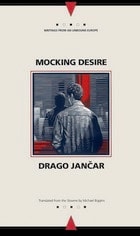
Mocking Desire
Drago Jancar
Northwestern University Press, 1998
Gregor Gradnik, a Slovenian writer, enters the sensual and seething life of New Orleans to teach a creative writing class at a university. Gregor at first acts as only an observer, yet seductive New Orleans soon draws him into a series of bizarre erotic, professional, and social relationships. A profound and entertaining work, Mocking Desire provides the English-speaking world with the perfect introduction to one of Eastern Europe's leading writers.
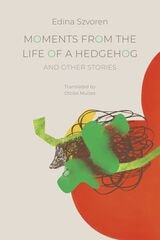
Moments from the Life of a Hedgehog
and Other StoriesEdina Szvoren
Seagull Books, 2026
Available for the first time in English, Hungarian writer Edina Szvoren's short story collection gives voice to lives shaped by repression, cruelty, and silence.
Moments from the Life of a Hedgehog and Other Stories introduces English-language readers to the unsettling, exacting fiction of Hungarian author Edina Szvoren. Disturbing yet deliberately modest, these stories evoke a claustrophobic world of compromise and quiet desperation: fractured families warped by history and habit, boarding schools and workplaces ruled by cruelty, and domestic interiors heavy with unspoken dread. Set in the final decades of Hungarian socialism and its immediate aftermath, Szvoren’s sharply observed miniatures are animated by ever-shifting perspectives—outsiders, misfits, refusers—struggling to make sense of lives largely beyond their control. Grotesque without excess, absurd without relief, Szvoren’s narrative voices overlap and collide in ways that recall Franz Kafka and István Örkény. Yet her work remains firmly grounded in the body: queasy, intimate, and insistently physical, with a feminist and existential charge. Among polyester ornaments and unbearable family encounters, these stories offer a powerful, understated testimony to the unheard—and the nearly unhearable.
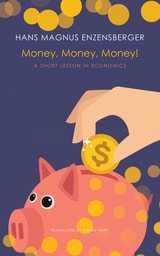
Money, Money, Money!
A Short Lesson in EconomicsHans Magnus Enzensberger
Seagull Books, 2020
The Federmanns live a pleasant but painfully normal life in the Munich suburbs. All that the three children really know about money is that there’s never enough of it in their family.
Every so often, their impish Great-Aunt Fé descends on the city. After repeated cycles of boom and bust, profligacy and poverty, the grand old lady has become enormously wealthy and lives alone in a villa on the shore of Lake Geneva. But what does Great-Aunt Fé want from the Federmanns, her only surviving relatives? This time, she invites the children to tea at her luxury hotel where she spoils, flummoxes, and inspires them. Dismayed at their ignorance of the financial ways of the world, she gives them a crash course in economics that piques their curiosity, unsettles their parents, and throws open a whole new world. The young Federmanns are for once taken seriously and together they try to answer burning questions: Where does money come from? Why are millionaires and billionaires never satisfied? And why are those with the most always showered with more?
In this rich volume, the renowned poet, translator, and essayist Hans Magnus Enzensberger turns his gimlet eye on the mechanisms and machinations of banks and politicians—the human greed, envy, and fear that fuels the global economy. A modern, but moral-less fable, Money, Money, Money! is shot through with Enzensberger’s trademark erudition, wit, and humanist desire to cut through jargon and forearm his readers against obscurantism.
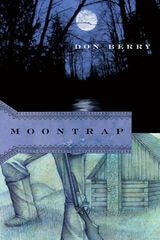
Moontrap
Don Berry
Oregon State University Press, 1962
Winner of the Western Writers of America Spur Award for best historical novel, Moontrap is a book of remarkable beauty and power about a man caught between his vivid past and an uncertain future.
The year is 1850, a transitional period in the new Oregon Territory, with settlers and lawmakers working to subdue the untamed region. Johnson Monday, a former mountain man, has been living on a bend of the Willamette River near Oregon City for seven years with his Shoshone Indian wife, struggling to make a place in settled society. One day, Webster T. Webster, a raucous, unrepentant trapper, arrives for an unexpected visit. With his earthy humor and stubborn adherence to the simple life, "Webb" leads Monday through adventures that flirt dangerously close to lawlessness, while helping him to rediscover his moral center. Through defiance, triumph, and tragedy, Moontrap follows Johnson Monday as he realizes that relinquishing the stark honesty of mountain life for the compromises of civilization may be too high a price to pay.
Following Trask in Don Berry's trilogy of novels set in the Oregon Territory, Moontrap offers a richly comic and intensely poignant portrayal of pioneer life.
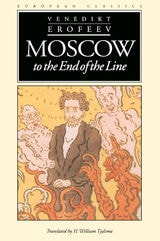
Moscow to the End of the Line
Venedikt Erofeev, translated from the Russian by H. William Tjalsma
Northwestern University Press, 1992
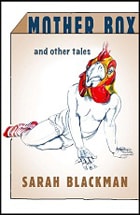
Mother Box and Other Tales
Sarah Blackman
University of Alabama Press, 2013
In language that is both barb and bauble, bitter and unbearably sweet, Sarah Blackman spins the threads of stories where everything is probable and nothing is constant. The stories in Mother Box, and Other Tales occur in an in-between world of outlandish possibility that has become irrefutable reality: a woman gives birth to seven babies and realizes at one of their weddings that they were foxes all along; a girl with irritating social quirks has been raised literally by cardboard boxes; a young woman throws a dinner party only to have her elaborate dessert upstaged by one of the guests who, as it turns out, is the moon. Love between mothers and children is a puzzling thrum that sounds at the very edge of hearing; a muted pulse that, nevertheless, beats and beats and beats.
In these tales, the prosaic details of everyday life—a half-eaten sandwich, an unopened pack of letters on a table—take on fevered significance as the characters blunder into revelations that occlude even as they unfold.
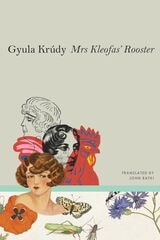
Mrs Kleofas’s Rooster
Three NovellasGyula Krúdy
Seagull Books, 2026
Mrs Kleofas’ Rooster brings together three captivating novellas by Gyula Krúdy, originally written in the 1920s and now available in English for the first time. Each story centers on a woman protagonist: a timeless adventuress, a resilient single mother, and a seductive Budapest femme fatale, respectively. In the title novella, a roguish narrator listens to the thrilling life story of an ageless, mysterious woman whose journey takes her from a childhood of suffering to a career as a cunning accomplice in daring schemes. The next story, NN, follows the life of a steadfast single mother, Juliska, amid the rhythms of village life. In Autumn Meeting, Krudy’s sharp wit unfolds through Rizili, a charming yet ruthless socialite who leads a suspended jockey on an intoxicating night through Budapest’s City Park.
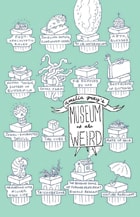
Museum of the Weird
Amelia Gray
University of Alabama Press, 2010
WINNER OF FC2’s AMERICAN BOOK REVIEW/RONALD SUKENICK INNOVATE FICTION PRIZE
Step inside a gallery where the strange feels familiar.
A monogrammed cube appears in your town. Your landlord cheats you out of first place in the annual Christmas decorating contest. You need to learn how to love and care for your mate—a paring knife. These situations and more reveal the wondrous play and surreal humor that make up the stories in Amelia Gray’s stunning collection of stories: Museum of the Weird.
Acerbic wit and luminous prose mark these shorts, while sickness and death lurk amidst the humor. Characters find their footing in these bizarre scenarios and manage to fall into redemption and rebirth. Museum of the Weird invites you into its hallways, then beguiles, bewitches, and reveals a writer who has discovered a manner of storytelling all her own.
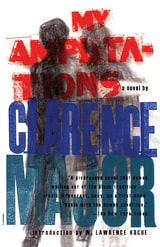
My Amputations
Clarence Major
University of Alabama Press, 1986
Originally published in 1986, this new edition returns to print a classic, influential work of American fiction
The author of the acclaimed novel Reflex and Bone Structure returns here in My Amputations to the question of identity, the double, adventure, detection, and mystery, but with more hypnotic power and range. In My Amputations he has his protagonist, Mason Ellis (who may just be “a desperate ex-con” or a wronged American novelist out to right the wrong done to him), jump through flaming loops like a trained dog, so to speak. In other words, there seems to be no end to the troubles Mason Ellis faces.
His story takes him from the South Side of Chicago, to New York, with a stint in Attica prison, across America and Europe and into the primal depths of Africa. Mason, all the while, tries to convince the reader that he is the important American writer he says he is. Upon his release from prison he sets out to prove his claim. After an audacious bank-robbery and a couple of burglaries that are hilarious, he goes into hiding to escape the malice of one of his cohorts, and eventually flees to Europe. The irony is that he is now as much the runner as the seeker. After encounters with a Zuni ex-folksinger, kidnappers, the New York underworld, literary groupies, an Italian swordsman, a violent German secret society, and an anti-bellum cotillion in rural Greece, he finds himself face to face (behind a mask) with his own destiny.

My Days of Anger
James T. Farrell. Introduction by Charles Fanning.
University of Illinois Press, 2007
The fourth novel in James T. Farrell’s pentalogy chronicles Danny O’Neill’s coming of age. Recording his reactions to initiation into college life at the University of Chicago and the imminent death of his grandmother, one of his primary caretakers, Danny realizes the value of time and gains confidence in his writing abilities. As he works on his first novel, he prepares to leave his family, his Catholicism, and his neighborhood in Chicago behind for a new life as a writer in New York.
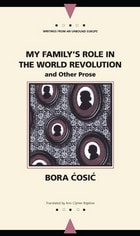
My Family's Role in the World Revolution
and Other ProseBora Cosic
Northwestern University Press, 1997
During the German occupation of Belgrade, a family—including an alarmist mother, an eternally drunk father, two young aunts who swoon over American movie stars, and a playboy uncle—attempt to find any kind of work they can do at home. When the postwar Socialist society is being ushered in after the war, the narrator becomes the slogan-spouting ideological leader of the household, while his family tries—and often fails miserably—to take part in the "great change."
This volume also includes several Ćosić short stories, and recent essays on the war in the former Yugoslavia.
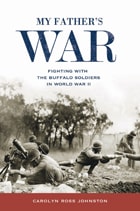
My Father's War
Fighting with the Buffalo Soldiers in World War IICarolyn Ross Johnston
University of Alabama Press, 2012
A compelling story of a unit of Buffalo Soldiers and their white commander fighting on the Italian front during World War II.
The 92nd Division of the Fifth Army was the only African American infantry division to see combat in Europe during 1944 and 1945, suffering more than 3,200 casualties. Members of this unit, known as Buffalo Soldiers, endured racial violence on the home front and experienced racism abroad. Engaged in combat for nine months, they were under the command of southern white infantry officers like their captain, Eugene E. Johnston.
Carolyn Ross Johnston draws on her father’s account of the war and her extensive interviews with other veterans of the 92nd Division to describe the experiences of a naïve southern white officer and his segregated unit on an intimate level. During the war, the protocol that required the assignment of southern white officers to command black units, both in Europe and in the Pacific theater, was often problematic, but Johnston seemed more successful than most, earning the trust and respect of his men at the same time that he learned to trust and respect them. Gene Johnston and the African American soldiers were transformed by the war and upon their return helped transform the nation.

My Haunted Home
StoriesVictoria Hood
University of Alabama Press, 2022
WINNER OF FC2’s RONALD SUKENICK INNOVATIVE FICTION PRIZE
Meditations on the ways grief is felt and harvested—the funny, the sorrowful, the surreal, and the unmentionable
The stories in My Haunted Home delve in startling ways into the lives of the obsessed, the grieving, and the truly haunted. Victoria Hood conjures a shifting range of narrators through an unstable range of worlds where mothers might be dead, girls compulsively shove peanuts inside their ears, agoraphobia traps people inside their houses, and cats won’t eat your soup. In “The Teeth, the Way I Smile,” a daughter who looks like her dead mother manifests grief both in her house and her body. In “Smelly Smelly,” a woman slowly comes to realize her boyfriend has been dead for weeks. In “You, Your Fault,” we explore the unfolding love of two women who love every part of each other—including the parts that fixate on arson and murder.
Each story is a bite-size piece of haunting candy on a necklace of obsession holding them together. Hood probes the worlds of what can be haunted, unpacking the ways in which hauntings can be manifested in physical forms, mentally harvested and lived through, and even a change in what is haunting.
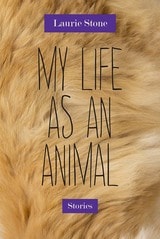
My Life as an Animal
StoriesLaurie Stone
Northwestern University Press, 2017
A woman meets a man and falls in love. She is sixty, a writer and lifelong New Yorker raised by garmentos. She thought this kind of thing wouldn’t happen again. He is English, so who knows what he thinks. He is fifty-six, a professor now living in Arizona, the son of a bespoke tailor. As the first of Laurie Stone’s linked stories begins, the writer contemplates what life would be like in the desert with the professor. As we learn how she became the person she is, we also come to know the artists and politics of the downtown scene of the ’70s, ’80s, and ’90s, a cultural milieu that remains alive in her. In sharply etched prose, Stone presents a woman constantly seduced by strangers, language, the streets— even a wildlife trail. Her characters realize that they feel at home in dislocation—in always living in two places at the same time: east and west, past and present, the bed and the grave (or copper urn). Love may not last, the writer knows. Then again, when has anything you thought about the future turned out right?
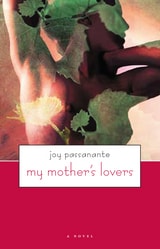
My Mother's Lovers
(A Novel)Joy Passanante
University of Nevada Press, 2002
As a teenager, Lake joins her grandparents in Missouri and spends her youth seeking answers to her questions about the past, trying to understand the complex pattern of betrayals that shaped it. Only when she herself becomes party to a betrayal as devastating as any committed by her mother does Lake begin to understand.
Passanante writes with a keen eye for the details of behavior that reveal the yearnings and fears beneath the surface. She shows us that the path to understanding is never a smooth one, and that love is often far more complex than we can imagine. Western Literature Series.
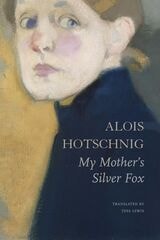
My Mother's Silver Fox
Alois Hotschnig
Seagull Books, 2025
Heinz Fitz has only one tangible clue to his past: a worn piece of paper from the SS-Lebensborn program, a Nazi initiative designed to promote so-called racial purity. His mother, a Norwegian woman, fell in love with the wrong man—an Austrian soldier—during the German occupation. Betrayed and abandoned, she fled to Austria, only to be turned away by his family. Branded a collaborator in her homeland and a pariah in a foreign land, she was left to survive as best she could. Now, years later, her son is determined to piece together the fragments of his origins.
But every answer leads to more questions, and as he unearths painful truths, an alternative story—one of resilience, love, and survival—emerges from the darkness. Inspired by real events, Alois Hotschnig’s novel is both a fierce reckoning with history and a poignant tribute to a mother’s strength. A masterful meditation on memory and storytelling, My Mother’s Silver Fox asks whether the past can ever truly be understood—or if it will always slip through our grasp, like snow through our fingers.
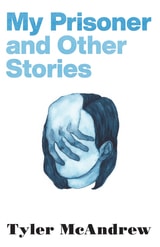
My Prisoner and Other Stories
Tyler McAndrew
The Ohio State University Press, 2025
Set largely in the Rust Belt of the 1990s and early 2000s, My Prisoner and Other Stories gives us protagonists who repeatedly confront helplessness in the face of others’ suffering. A teenage girl tries to help an elderly woman who has locked herself out of her house only to be shaken by the trauma and loneliness that the woman—a Holocaust survivor and recent widow—eventually shares with her. A schoolteacher writes letters to his cousin, who has schizophrenia and is serving a life sentence for the murder of three of their relatives. A middle school student makes a complicated gesture of charity after befriending the poor kid at his lunch table. Siblings seed the ground for an eccentric treasure hunter only to find that their prank leads them into unexpected emotional peril. The structural forces that stain life in late-capitalist America—the prison system, economic desperation—lurk throughout these muscular and empathetic tales, but in the face of endemic adversity, shrewd and loving characters strive for and sometimes achieve hope and tenderness. Tyler McAndrew shows us an unadorned America that can still tap its capacity for human kindness.
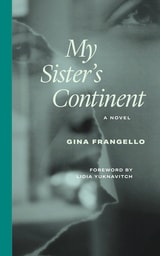
My Sister's Continent
A NovelGina Frangello, Lidia Yuknavitch
Northwestern University Press, 2026
Kirby is a young woman attempting to come to terms with a failed bout of therapy and the truth about her identical twin, Kendra. Since girlhood, Kirby both idolized and envied Kendra, a fearless and charismatic ballet dancer who commanded the attention of everyone in their orbit. In the aftermath of tragedy, Kirby is sent a case study by a former psychiatrist intent on publishing a distorted version of her family’s secrets. She responds by using Kendra’s private and revealing journals to reconstruct their final months together, as well as her own “disastrous” time in therapy, to voice her own truth.
Freud’s “Dora,” a young woman whose mysterious symptoms he contentiously chalked up to “hysteria,” appears at turns in the faces of each twin as they navigate a world of sexuality, familial dysfunction, and possibly-psychosomatic ailments. Reissued with a new foreword by Lidia Yuknavitch, Frangello’s groundbreaking early novel brings “Dora” into a new era.
Myself, Four Times
Maria Lazar
Seagull Books, 2026
Long unpublished and presumed lost, Myself, Four Times reveals Maria Lazar as a bold, psychologically acute feminist writer whose work deserves a central place in twentieth-century European literature.
Myself, Four Times is a rediscovered novel of friendship, desire, and self-invention by Maria Lazar (1895–1948), one of the most incisive and unjustly neglected voices of interwar Austrian literature. Written in Vienna in the late 1920s but never published in Lazar’s lifetime, the novel appears now for the first time, drawn from her literary estate.
The book follows four women—friends since their school days—whose lives unfold in strikingly different directions, yet remain inseparably bound from adolescence into adulthood. Set against the backdrop of the not-so-golden 1920s, it traces shared youth and first love alongside the darker currents of friendship: self-deception, betrayal, jealousy, and emotional manipulation. At the same time, Lazar charts women’s struggles for independence, identity, and fulfillment in a society poised between liberation and collapse.
With psychological acuity and social sharpness, Myself, Four Times captures both the exhilaration and the cost of female solidarity. Its long suppression mirrors Lazar’s own fate: a celebrated writer forced into exile by Nazism, silenced after she died in 1948, and only recently reclaimed as a major figure of twentieth-century European literature.
Mysterious Solidarities
Pascal Quignard
Seagull Books, 2020
This is a tale of dramatic episodes, told through intermingling voices and the atmospherics of the austere Breton landscape. Ultimately, it is a story of obsessional love and of a parallel sibling bond that is equally strong.