Results by title
156 books match the query 'Los Angeles' and 13 start with m
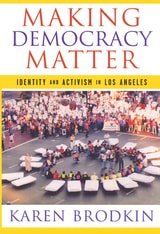
Making Democracy Matter
Identity and Activism in Los AngelesBrodkin, Karen
Rutgers University Press, 2007
This book seeks to answer these questions through conversations and interviews with a generation of activists who came of political age in Los Angeles during the 1990s. Politically schooled in the city's vibrant immigrant worker and youth-led campaigns against xenophobic and racist voter initiatives, these young activists created a new political cohort with its own signature of democratic practice and vision. Combining analytical depth, engaging oral history, and rich description, this absorbing and accessible book will appeal to all those interested in social movements, racial justice, the political activism of women and men of color, and the labor movement today.
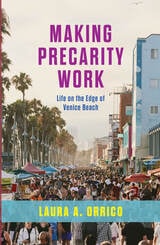
Making Precarity Work
Life on the Edge of Venice BeachLaura A. Orrico
University of Chicago Press, 2025
In Making Precarity Work, sociologist Laura A. Orrico shows how Los Angeles’s Venice Beach boardwalk, which is a magnet for tourists, is also a workplace, one that wouldn’t exist without the motley crew of people selling art, drinking, performing, using drugs, and working odd jobs who gather daily to engage in varied activities, from selling crafts to minding each other’s wares and asking for spare change.
Throughout the book, Orrico lifts up this workplace as a collective accomplishment, demonstrating how it can be a safety net to manage insecurity and inequality for those opting into its flexible and precarious structure, as well as how the LA government’s efforts to stabilize this work often disrupt the success of this collaborative and creative ecosystem. She also presents the ways this work can exacerbate those very inequalities. Sharing the personal stories of boardwalk workers, Orrico considers these juxtaposed realities and asks her audience to question how we can and should respond to a society whose best option for the disadvantaged is precarity.
Making a Better World
Public Housing, the Red Scare, and the Direction of Modern Los AngelesDon Parson
University of Minnesota Press, 2005
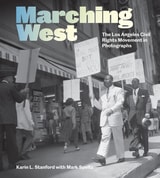
Marching West
The Los Angeles Civil Rights Movement in PhotographsKarin L. Stanford
J. Paul Getty Trust, The, 2026
This volume presents the first visual history of the people and organizations that led the fight for change during the civil rights era in Los Angeles.
During a 1963 speech to a crowd of nearly forty thousand at Wrigley Field in Los Angeles, Dr. Martin Luther King Jr. addressed the question of how Angelenos could contribute to the civil rights movement: “The most important thing that you can do is to set Los Angeles free, because you have segregation and discrimination here, and police brutality.”
Marching West illuminates the dynamic history of civil rights activism in Los Angeles and explores how the medium of photography both witnessed and advanced the fight for Black equality. Over one hundred images, some of which have never been previously published, reveal connections between the local and national movements and document the actions of Western coalitions, religious leaders, Hollywood stars, and concerned citizens. Drawn from the Tom & Ethel Bradley Center at California State University, Northridge (CSUN), the Getty Research Institute, and other Southern California collections—including prints by Harry Adams, Howard Bingham, Charles Brittin, Joe Flowers, Vera Jackson, and Charles Williams—this unprecedented volume presents less familiar but essential stories about American progress toward social justice.
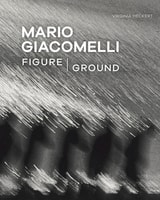
Mario Giacomelli
Figure/GroundVirginia Heckert
J. Paul Getty Trust, The, 2021
Mario Giacomelli (1925–2000) was born into poverty and lived his entire life in Senigallia, a seaside town along the Adriatic coast in Italy’s Marche region. He purchased his first camera in 1953 and quickly gained recognition for the raw expressiveness of his images. His preference for grainy, high-contrast film and paper produced bold, geometric compositions with glowing whites and deep blacks. Giacomelli most frequently focused his camera on the people, landscapes, and seascapes of the Marche, and he often spent several years expanding and reinterpreting a single body of work or repurposing an image made for one series for inclusion in another. By applying titles derived from poetry and literature to his photographs, he transformed ordinary subjects into meditations on time, memory, and existence.
Spanning the photographer’s earliest pictures to those made in the final years of his life, this publication celebrates the J. Paul Getty Museum’s extensive Giacomelli holdings, formed in large part through a significant gift from Daniel Greenberg and Susan Steinhauser.
This volume is published to accompany an exhibition on view at the J. Paul Getty Museum at the Getty Center from June 29 to October 10, 2021.
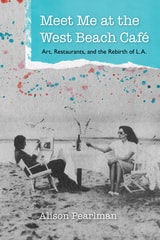
Meet Me at the West Beach Café
Art, Restaurants, and the Rebirth of L.A.Alison Pearlman
University of Nevada Press, 2027
When fine dining met fine art, a new Los Angeles was born.
Between 1979 and 1987, the city witnessed two cultural breakthroughs that may seem unrelated. A wave of bold, design‑forward restaurants helped launch the nationwide “New American” movement, serving innovative cuisine in sleek, modern spaces adorned with contemporary art. At the same time, Los Angeles celebrated a milestone: the opening of the Museum of Contemporary Art (MOCA), its first major museum devoted solely to contemporary art—an institution long missing from a city with global ambitions.
Though often told separately, these stories are deeply intertwined. In this lively, revelatory book, Alison Pearlman uncovers how restaurants became galleries as well as vital crossroads for the chefs, artists, collectors, architects, and civic leaders who reshaped L.A.’s cultural identity. Together, they revived hopes that L.A. could reclaim the creative energy of its 1960s heyday and join the ranks of the world’s cultural capitals.
Drawing on extensive interviews with those who built this transformative era, Pearlman shows how L.A.—through distinctive architecture, daring personalities, and unconventional collaborations—created a cultural moment with national impact. Vivid, engaging, and richly researched, this book brings to life a heady period in the city’s history.
A must‑read for lovers of art, food, and the vibrant alchemy that emerges when creative worlds collide.
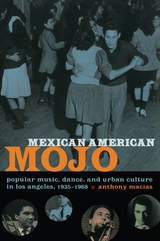
Mexican American Mojo
Popular Music, Dance, and Urban Culture in Los Angeles, 1935–1968Anthony Macías
Duke University Press, 2008
Macías conducted numerous interviews for Mexican American Mojo, and the voices of little-known artists and fans fill its pages. In addition, more famous musicians such as Ritchie Valens and Lalo Guerrero are considered anew in relation to their contemporaries and the city. Macías examines language, fashion, and subcultures to trace the history of hip and cool in Los Angeles as well as the Chicano influence on urban culture. He argues that a grass-roots “multicultural urban civility” that challenged the attempted containment of Mexican Americans and African Americans emerged in the neighborhoods, schools, nightclubs, dance halls, and auditoriums of mid-twentieth-century Los Angeles. So take a little trip with Macías, via streetcar or freeway, to a time when Los Angeles had advanced public high school music programs, segregated musicians’ union locals, a highbrow municipal Bureau of Music, independent R & B labels, and robust rock and roll and Latin music scenes.
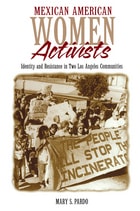
Mexican American Women Activists
Mary Pardo
Temple University Press, 1998
By focusing on women in two contiguous but very different communities -- the working-class, inner-city neighborhood of Boyle Heights in Eastside Los Angeles and the racially mixed middle-class suburb of Monterey Park -- Pardo is able to bring class as ell as gender and ethnic concerns to bear on her analysis in ways that shed light on the complexity of mobilizing for urban change.
Unlike many studies, the stories told here focus on women's strengths rather than on their problems. We follow the process by which these women empowered themselves by using their own definitions of social justice and their own convictions about the importance of traditional roles. Rather than becoming political participants in spite of their family responsibilities, women in both neighborhoods seem to have been more powerful because they had responsibilities, social networks, and daily routines separate from the men in their communities.
Pardo asserts that the decline of real wages and the growing income gap means that unforunately most women will no longer be able to focus their energies on unpaid community work. She reflects on the consequences of this change for women's political involvement, as well as on the politics of writing about women and politics.
Mexican Folk Narrative from the Los Angeles Area
Introduction, Notes, and ClassificationBy Elaine K. Miller
University of Texas Press, 1973
Urban Los Angeles is the setting in which Elaine Miller has collected her narratives from Mexican-Americans. The Mexican folk tradition, varied and richly expressive of the inner life not only of a people but also of the individual as each lives it and personalizes it, is abundantly present in the United States. Since it is in the urban centers that most Mexican-Americans have lived, this collection represents an important contribution to the study of that tradition and to the study of the changes urban life effects on traditional folklore.
The collection includes sixty-two legendary narratives and twenty traditional tales. The legendary narratives deal with the virgins and saints as well as with such familiar characters as the vanishing hitchhiker, the headless horseman, and the llorona. Familiar characters appear in the traditional tales—Juan del Oso, Blancaflor, Pedro de Ordimalas, and others. Elaine Miller concludes that the traditional tales are dying out in the city because tale telling itself is not suited to the fast pace of modern urban life, and the situations and characters in the tales are not perceived by the people to be meaningfully related to the everyday challenges and concerns of that life. The legendary tales survive longer in an urban setting because, although containing fantastic elements, they are related to the beliefs and hopes of the narrator—even in the city one may be led to buried treasure on some dark night by a mysterious woman.
The penchant of the informants for the fantastic in many of their tales often reflects their hopes and fears, such as their dreams of suddenly acquiring wealth or their fears of being haunted by the dead. Miller closely observes the teller's relation to the stories—to the duendes, the ánimas, Death, God, the devil—and she notes the tension on the part of the informant in his relation to their religion.
The material is documented according to several standard tale and motif indices and is placed within the context of the larger body of Hispanic folk tradition by the citation of parallel versions throughout the Hispanic world. The tales, transcribed from taped interviews, are presented in colloquial Spanish accompanied by summaries in English.
Mexico on Main Street
Transnational Film Culture in Los Angeles before World War IIGunckel, Colin
Rutgers University Press, 2015

Mujeres de Maiz en Movimiento
Spiritual Artivism, Healing Justice, and Feminist PraxisEdited by Amber Rose González, Felicia ‘Fe’ Montes, and Nadia Zepeda
University of Arizona Press, 2024
MdM’s political-ethical-spiritual commitments, cultural production, and everyday practices are informed by Indigenous and transnational feminist of color artistic, ceremonial, activist, and intellectual legacies. Contributors fuse stories of celebration, love, and spirit-work with an incisive critique of interlocking oppressions, both intimate and structural, encouraging movement toward “a world where many worlds fit.”
The multidisciplinary, intergenerational, and critical-creative nature of the project coupled with the unique subject matter makes the book a must-have for high school and college students, activist-scholars, artists, community organizers, and others invested in social justice and liberation.
Murder in Hollywood
Solving a Silent Screen MysteryCharles Higham
University of Wisconsin Press, 2004
When it was discovered that a famous star of the day had probably killed Taylor, a massive cover-up began—from the removal of crucial evidence to the naming of innocent people as killers—which has continued until now to protect the truth. Murder in Hollywood goes beyond the killing to unearth unknown details about the life of Taylor before his arrival in Hollywood, as well as the stories and histories buried by the crooked authorities and criminals involved the case. The author’s exclusive interviews with the culpable star, his unique possession of long-vanished police records, and the support of the present-day Los Angeles county coroner—who examined the evidence as if the murder had taken place now—have ensured a hair-raising thriller.
Charles Higham successfully presents the most plausible and convincing solution yet to the mystery. In the process he paints a vivid portrait of Hollywood in the 1920s—from its major stars to its bisexual subculture. The result is a compelling answer to a long-standing mystery and a fascinating study of a place, and an industry that, as today, let people reinvent themselves. Murder in Hollywood is more extraordinary than any crime of fiction and more exciting than any action adventure movie.
My Blue Heaven
Life and Politics in the Working-Class Suburbs of Los Angeles, 1920-1965Becky M. Nicolaides
University of Chicago Press, 2002
As Becky M. Nicolaides shows in My Blue Heaven, this ethic of self-reliance and homeownership formed the core of South Gate's identity. With post-World War II economic prosperity, the community's emphasis shifted from building homes to protecting them as residents tried to maintain their standard of living against outside threats—including the growing civil rights movement—through grassroots conservative politics based on an ideal of white homeowner rights. As the citizens of South Gate struggled to defend their segregated American Dream of suburban community, they fanned the flames of racial inequality that erupted in the 1965 Watts riots.