Results by title
637 books match the query 'Political activity' and 24 start with m
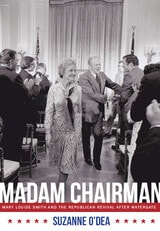
Madam Chairman
Mary Louise Smith and the Republican Revival after WatergateSuzanne O'Dea
University of Missouri Press, 2012
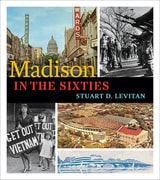
Madison in the Sixties
Stuart D. Levitan
Wisconsin Historical Society Press, 2018
Landmark civil rights laws were passed. Pivotal campus protests were waged. A spring block party turned into a three-night riot. Factor in urban renewal troubles, a bitter battle over efforts to build Frank Lloyd Wright’s Monona Terrace, and the expanding influence of the University of Wisconsin, and the decade assumes legendary status.
In this first-ever comprehensive narrative of these issues—plus accounts of everything from politics to public schools, construction to crime, and more—Madison historian Stuart D. Levitan chronicles the birth of modern Madison with style and well-researched substance. This heavily illustrated book also features annotated photographs that document the dramatic changes occurring downtown, on campus, and to the Greenbush neighborhood throughout the decade. Madison in the Sixties is an absorbing account of ten years that changed the city forever.
Making Freedom
Apartheid, Squatter Politics, and the Struggle for HomeAnne-Maria Makhulu
Duke University Press, 2015
Making the World Safe for Workers
Labor, the Left, and Wilsonian InternationalismElizabeth McKillen
University of Illinois Press, 2018
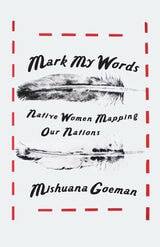
Mark My Words
Native Women Mapping Our NationsMishuana Goeman
University of Minnesota Press, 2013
Dominant history would have us believe that colonialism belongs to a previous era that has long come to an end. But as Native people become mobile, reservation lands become overcrowded and the state seeks to enforce means of containment, closing its borders to incoming, often indigenous, immigrants.
In Mark My Words, Mishuana Goeman traces settler colonialism as an enduring form of gendered spatial violence, demonstrating how it persists in the contemporary context of neoliberal globalization. The book argues that it is vital to refocus the efforts of Native nations beyond replicating settler models of territory, jurisdiction, and race. Through an examination of twentieth-century Native women’s poetry and prose, Goeman illuminates how these works can serve to remap settler geographies and center Native knowledges. She positions Native women as pivotal to how our nations, both tribal and nontribal, have been imagined and mapped, and how these women play an ongoing role in decolonization.
In a strong and lucid voice, Goeman provides close readings of literary texts, including those of E. Pauline Johnson, Esther Belin, Joy Harjo, Leslie Marmon Silko, and Heid Erdrich. In addition, she places these works in the framework of U.S. and Canadian Indian law and policy. Her charting of women’s struggles to define themselves and their communities reveals the significant power in all of our stories.
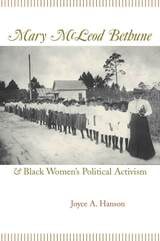
Mary McLeod Bethune and Black Women's Political Activism
Joyce A. Hanson
University of Missouri Press, 2003
Mary McLeod Bethune was a significant figure in American political history. She devoted her life to advancing equal social, economic, and political rights for blacks. She distinguished herself by creating lasting institutions that trained black women for visible and expanding public leadership roles. Few have been as effective in the development of women’s leadership for group advancement. Despite her accomplishments, the means, techniques, and actions Bethune employed in fighting for equality have been widely misinterpreted.
Examining the historical evolution of African American women’s activism in the critical period between 1920 and 1950, a time previously characterized as “doldrums” for both feminist and civil rights activity, Mary McLeod Bethune and Black Women’s Political Activism is important for understanding the centrality of black women to the political fight for social, economic, and racial justice.
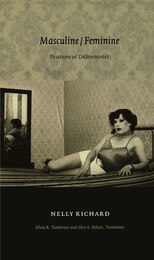
Masculine/Feminine
Practices of Difference(s)Nelly Richard
Duke University Press, 2004
Richard helped to organize the 1987 International Conference on Latin American Women’s Literature in Santiago, one of the most significant literary events to take place under the Pinochet dictatorship. Published in Chile in 1993, Masculine/Feminine develops some of the key issues brought to the fore during that landmark meeting. Richard theorizes why the feminist movement has been crucial not only to the liberation of women but also to understanding the ways in which power operated under the military regime in Chile. In one of her most widely praised essays, she explores the figure of the transvestite, artistic imagery of which exploded during the Chilean dictatorship. She examines the politics and the aesthetics of this phenomenon, particularly against the background of prostitution and shantytown poverty, and she argues that gay culture works to break down the social demarcations and rigid structures of city life. Masculine/Feminine makes available, for the first time in English, one of Latin America’s most significant works of feminist theory.
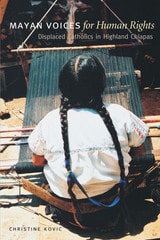
Mayan Voices for Human Rights
Displaced Catholics in Highland ChiapasBy Christine Kovic
University of Texas Press, 2005
In the last decades of the twentieth century, thousands of Mayas were expelled, often violently, from their homes in San Juan Chamula and other highland communities in Chiapas, Mexico, by fellow Mayas allied with the ruling Institutional Revolutionary Party (PRI). State and federal authorities generally turned a blind eye to these human rights abuses, downplaying them as local conflicts over religious conversion and defense of cultural traditions. The expelled have organized themselves to fight not only for religious rights, but also for political and economic justice based on a broad understanding of human rights.
This pioneering ethnography tells the intertwined stories of the new communities formed by the Mayan exiles and their ongoing efforts to define and defend their human rights. Focusing on a community of Mayan Catholics, the book describes the process by which the progressive Diocese of San Cristóbal and Bishop Samuel Ruiz García became powerful allies for indigenous people in the promotion and defense of human rights. Drawing on the words and insights of displaced Mayas she interviewed throughout the 1990s, Christine Kovic reveals how the exiles have created new communities and lifeways based on a shared sense of faith (even between Catholics and Protestants) and their own concept of human rights and dignity. She also uncovers the underlying political and economic factors that drove the expulsions and shows how the Mayas who were expelled for not being "traditional" enough are in fact basing their new communities on traditional values of duty and reciprocity.
Mennonites, Politics, and Peoplehood
1525 to 1980James Urry
University of Manitoba Press, 2006
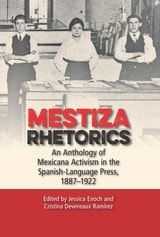
Mestiza Rhetorics
An Anthology of Mexicana Activism in the Spanish-Language Press, 1887-1922Edited by Jessica Enoch and Cristina Devereaux Ramirez
Southern Illinois University Press, 2019
Mestiza Rhetorics is the first anthology dedicated to mexicana rhetors and provides unmatched access to mexicana rhetorics. This collection puts forward the work of mexicana newspaperwomen in Spanish and English, provides evidence of their participation in political and educational debates at the turn of the twentieth century, and demonstrates how the Spanish-language press operated as a rhetorical space for mexicanas.
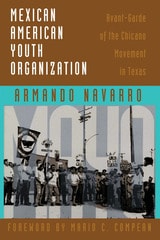
Mexican American Youth Organization
Avant-Garde of the Chicano Movement in TexasBy Armando Navarro
University of Texas Press, 1995
Among the protest movements of the 1960s, the Mexican American Youth Organization (MAYO) emerged as one of the principal Chicano organizations seeking social change. By the time MAYO evolved into the Raza Unida Party (RUP) in 1972, its influence had spread far beyond its Crystal City, Texas, origins. Its members precipitated some thirty-nine school walkouts, demonstrated against the Vietnam War, and confronted church and governmental bodies on numerous occasions.
Armando Navarro here offers the first comprehensive assessment of MAYO's history, politics, leadership, ideology, strategies and tactics, and activist program. Interviews with many MAYO and RUP organizers and members, as well as first-hand knowledge drawn from his own participation in meetings, presentations, and rallies, enrich the text.
This wealth of material yields the first reliable history of this extremely vocal and visible catalyst of the Chicano Movement. The book will add significantly to our understanding of Sixties protest movements and the social and political conditions that gave them birth.

Michael Moore
Filmmaker, Newsmaker, Cultural IconMatthew Bernstein, Editor
University of Michigan Press, 2010
For more than twenty years, Michael Moore has transformed himself from a marginal filmmaker into a cultural icon, unofficial spokesperson for liberals and the Left. American conservatives constantly use him for target practice and target. Book author, film director, television personality, and Web presence, Moore is now a one-man cultural phenomenon. Although Michael Moore is a constant presence on the media landscape, this is the first volume to focus on the Moore phenomenom. It explores Moore's work in film and elsewhere, bringing diverse perspectives on his activities and status as voice of liberal America and the disenfranchised working class. Topics examined include the disjunction between Moore's celebrity status and everyman, middle-western persona, his self-mocking ironic sensibility, his tendency to diagnose American social and political problems in terms of class rather than gender, his reception abroad, and his uneasy relationship with the conventions of documentary filmmaking. The contributors are leading scholars and film critics, including Paul Arthur, Cary Elza, Jeffrey P. Jones, Douglas Kellner, Richard Kilborn, William Luhr, Charles Musser, Richard R. Ness, Miles Orvell, Richard Porton, Sergio Rizzo, Christopher Sharrett, Gaylyn Studlar, and David Teztlaff. The volume features both assessments of Moore's work in general and close analyses of his most successful films. The result is a definitive assessment of Moore's career to date.
Matthew Bernstein is Professor and Chair of Film Studies at Emory University. He is author of Walter Wanger: Hollywood Independent.
Michigan's Con-Con 11
Women and State Constitution-making in 1961Lynn Liberato
Michigan State University Press, 2025
Military Institutions and Coercion in the Developing Nations
The Military in the Political Development of New NationsMorris Janowitz
University of Chicago Press, 1988
Minority Report
Evaluating Political Equality in AmericaJohn D. Griffin and Brian Newman
University of Chicago Press, 2008
Mobilizing Black Germany
Afro-German Women and the Making of a Transnational MovementTiffany N. Florvil
University of Illinois Press, 2020
Tiffany N. Florvil examines the role of queer and straight women in shaping the contours of the modern Black German movement as part of the Black internationalist opposition to racial and gender oppression. Florvil shows the multifaceted contributions of women to movement making, including Audre Lorde’s role in influencing their activism; the activists who inspired Afro-German women to curate their own identities and histories; and the evolution of the activist groups Initiative of Black Germans and Afro-German Women. These practices and strategies became a rallying point for isolated and marginalized women (and men) and shaped the roots of contemporary Black German activism.
Richly researched and multidimensional in scope, Mobilizing Black Germany offers a rare in-depth look at the emergence of the modern Black German movement and Black feminists’ politics, intellectualism, and internationalism.
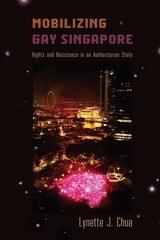
Mobilizing Gay Singapore
Rights and Resistance in an Authoritarian StateLynette J Chua
Temple University Press, 2015
For decades, Singapore's gay activists have sought equality and justice in a state where law is used to stifle basic civil and political liberties. In her groundbreaking book, Mobilizing Gay Singapore, Lynette Chua asks, what does a social movement look like in an authoritarian state? She takes an expansive view of the gay movement to examine its emergence, development, strategies, and tactics, as well as the roles of law and rights in social processes.
Chua tells this important story using in-depth interviews with gay activists, observations of the movement's activities-including "Pink Dot" events, where thousands of Singaporeans gather in annual celebrations of gay pride-movement documents, government statements, and media reports. She shows how activists deploy "pragmatic resistance" to gain visibility and support, tackle political norms that suppress dissent, and deal with police harassment, while avoiding direct confrontations with the law.
Mobilizing Gay Singapore also addresses how these brave, locally engaged citizens come out into the open as gay activists and expand and diversify their efforts in the global queer political movement.
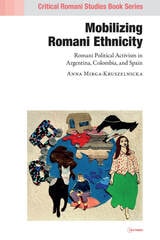
Mobilizing Romani Ethnicity
Romani Political Activism in Argentina, Colombia and SpainAnna Mirga-Kruszelnicka
Central European University Press, 2022
The Roma issue is generally treated as a European matter. Indeed, the Roma are the largest European minority—their presence outside of Europe is a result of various waves of migration over the past four hundred years. Likewise, the stereotypes associated with the Roma—the problematized, stigmatized status of a “Gypsy” as well as the historical and contemporary manifestations of antigypsyism—are also of European origin. This book claims, however, that the perception of Roma being strictly a European issue is flawed, and that re-connecting the Roma issue globally represents an important learning experience and an added value.
The book offers a critical exploration of Romani political activism in Colombia and Argentina, and compares it to that in Spain, narrated from the intimate perspective of Romani actors themselves. By outlining parallel lineages of Romani activism in three countries and on two continents, the author arrives at broad conclusions regarding the nature of ethnic mobilization. Mirga-Kruszelnicka proposes a new synergetic conceptualization of this multidirectional concept as an interplay between political opportunities, mobilizing structures, and frames of identity.
Contributing to the vivid debate about the relationship between the researcher and the researched, the book also includes an original discussion of the positionality of scholars of Romani background.
Monitored
Business and Surveillance in a Time of Big DataPeter Bloom
Pluto Press, 2019
What does this technocratic ideology and surveillance-heavy culture reveal about the deeper reality of modern society? Monitored investigates the history and implications of this modern accountability paradox. Peter Bloom reveals pervasive monitoring practices which mask how at its heart, the elite remains socially and ethically out of control.
Challenging their exploitive 'accounting power', Bloom demands that the systems that administer our lives are oriented to social liberation and new ways of being in the world.
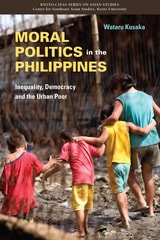
Moral Politics in the Philippines
Inequality, Democracy and the Urban PoorWataru Kusaka
National University of Singapore Press, 2017

Mothers Of Invention
Women, Italian Facism, and CultureRobin Pickering-Iazzi
University of Minnesota Press, 1995
The first in-depth look at culture produced by women in Fascist Italy.
Mothers of Invention was first published in 1995. Minnesota Archive Editions uses digital technology to make long-unavailable books once again accessible, and are published unaltered from the original University of Minnesota Press editions.
To Mussolini, she was either donna-madre, the lauded domestic model, or donna-crisi, intellectual, masculine, a degenerate type. But woman, as Mothers of Invention shows, was not a category so easily defined or contained by the Italian Fascist state. This volume is the first thorough investigation of culture produced by Italian women during Fascism (1922-1943).In literature, painting, sculpture, film, and fashion, the contributors explore the politics of invention articulated by these women as they negotiated prevailing ideologies. Essays on women’s film spectatorship, on Anna Kuliscioff as the leading feminist in the Socialist party, on Teresa Labriola’s concept of Fascist feminism, on futurism and on Irene Brin’s reportage on female fashion and self-invention examine women in mass culture, political thought, and daily living. Contributors: Rosalia Colombo Ascari, Sweet Briar College; Fiora A. Bassanese, U of Massachusetts, Boston; Maurizia Boscagli, U of California, Santa Barbara; Emily Braun, Hunter College, CUNY; Carole C. Gallucci; Mariolina Graziosi, U of Milan; Clara Orban, Depaul U; Lucia Re, UCLA; Jacqueline Reich, Trinity College; and Barbara Spackman, New York University.
Mothers and Daughters
Women of the Intelligentsia in Nineteenth-Century RussiaBarbara Alpern Engel
Northwestern University Press, 2000
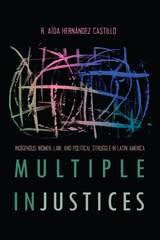
Multiple InJustices
Indigenous Women, Law, and Political Struggle in Latin AmericaR. Aída Hernández Castillo
University of Arizona Press, 2016
Multiple InJustices synthesizes R. Aída Hernández Castillo’s twenty-four years of activism and research among indigenous women’s organizations in Latin America. As both feminist and critical anthropologist, Hernández Castillo analyzes the context of legal pluralism wherein the indigenous women of Mexico, Guatemala, and Colombia struggle for justice. Through ethnographical research in community, state, and international justice, she reflects on the possibilities and limitations of customary, national, and international law for indigenous women.
Colonialism, racism, and patriarchal violence have been fundamental elements for the reproduction of capitalism, Hernández Castillo asserts. Only a social policy that offers economic alternatives based on distribution of wealth and a real recognition of cultural and political rights of indigenous peoples can counter the damage of outside forces such as drug cartels on indigenous lands.
She concludes that the theories of indigenous women on culture, tradition, and gender equity—as expressed in political documents, event reports, public discourse, and their intellectual writings—are key factors in the decolonization of Latin American feminisms and social justice for all.
Muslims in Kenyan Politics
Political Involvement, Marginalization, and Minority StatusHassan J. Ndzovu
Northwestern University Press, 2014
Kenya’s Muslim population comprises ethnic Arabs, Indians, and black Africans, and its status has varied historically. Under British rule, an imposed racial hierarchy affected Muslims particularly, thwarting the development of a united political voice. Drawing on a broad range of interviews and historical research, Ndzovu presents a nuanced picture of political associations during the postcolonial period and explores the role of Kenyan Muslims as political actors.