Results by title
2916 books match the query 'Politics and government' and 139 start with m
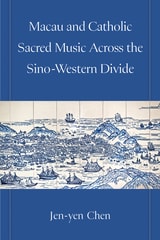
Macau and Catholic Sacred Music Across the Sino-Western Divide
Jen-yen Chen
University of Michigan Press, 2026
Drawing from sound studies and musicological methods, Chen argues that Chinese descriptions of Catholic sounds in Macau, including the ringing of church bells, the playing of the organ, and choral singing, illuminate spatial, sonic, and ideological mobilities that reconfigure Chinese and European identities. Macau and Catholic Music Across the Sino-Western Divide also extends to contemporary times to explore how present day members of Macau’s Catholic community position themselves in relation to the historical narratives often told about their city, cultivating a rich individuality of identity that refuses conformity to fixed notions of Asianness or Westernness.

Machine Politics in Transition
Party and Community in ChicagoThomas M. Guterbock
University of Chicago Press, 1980
For three years, Thomas M. Guterbock participated in the daily activities of the Regular Democratic Organization in one North Side Chicago ward in order to discover how political machines win the support of the urban electorate. Guterbock's participant observation data, supplemented by a sample survey of ward residents' attitudes toward, and contacts with the machine, provide convincing evidence that the most widely accepted notions of how political machines work are no longer correct.
Contrary to conventional wisdom about the machine, Guterbock finds that the party does not secure votes by doing "favors" for people, nor do services rendered determine actual voting behavior. Instead, party loyalty is governed by such factors as social status, educational achievement, and bureaucratic competence. Guterbock finds that Democratic loyalists are drawn disproportionately from the ward's lowest strata. Ironically, the characteristics of these loyal Democrats contrast sharpely with the characteristics of those most likely to use party services.
What keeps the machine going, then? To answer this question, Guterbock takes us behind the scenes for a unique look inside the ward club. He shows how members develop loyalty and motivation beyond concern for their own pocketbooks. And he analyzes the public involvement of machine politicians in neighborhood affairs, describing the skillful—sometimes devious—ways in which they appeal to their constituents' sense of community. By focusing on the interplay of party loyalty and community attachments, Guterbock is able to explain the continued hegemony of Chicago's political machine and its enduring image of legitimacy.
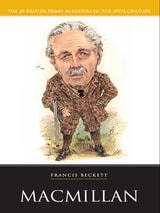
Macmillan
Francis Beckett
Haus Publishing, 2006
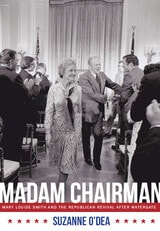
Madam Chairman
Mary Louise Smith and the Republican Revival after WatergateSuzanne O'Dea
University of Missouri Press, 2012
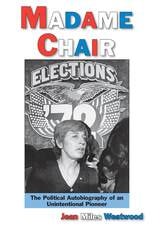
Madame Chair
A Political Autobiography of an Unintentional PioneerJean Miles Westwood
Utah State University Press, 2007
A Utah national committeewoman and member of the reform committee that reorganized the party, Westwood answered George McGovern’s call to lead his presidential campaign. In the dramatic year of 1972, she became “chairman” of the party, McGovern lost in a landslide, Nixon was reelected, and a covert operation burglarized Democratic National Committee headquarters at the Watergate.
Westwood provides an inside account of a period that reshaped national politics. Second-wave feminism—“women’s liberation”—and the civil rights and antiwar movements opened the way. As a major player in political reform, Jean Westwood both helped build that road and traveled it.
Madison's Nightmare
How Executive Power Threatens American DemocracyPeter M. Shane
University of Chicago Press, 2009
The George W. Bush administration’s ambitious—even breathtaking—claims of unilateral executive authority raised deep concerns among constitutional scholars, civil libertarians, and ordinary citizens alike. But Bush’s attempts to assert his power are only the culmination of a near-thirty-year assault on the basic checks and balances of the U.S. government—a battle waged by presidents of both parties, and one that, as Peter M. Shane warns in Madison’s Nightmare, threatens to utterly subvert the founders’ vision of representative government.
Tracing this tendency back to the first Reagan administration, Shane shows how this era of "aggressive presidentialism" has seen presidents exerting ever more control over nearly every arena of policy, from military affairs and national security to domestic programs. Driven by political ambition and a growing culture of entitlement in the executive branch—and abetted by a complaisant Congress, riven by partisanship—this presidential aggrandizement has too often undermined wise policy making and led to shallow, ideological, and sometimes outright lawless decisions. The solution, Shane argues, will require a multipronged program of reform, including both specific changes in government practice and broader institutional changes aimed at supporting a renewed culture of government accountability.
From the war on science to the mismanaged war on terror, Madison’s Nightmare outlines the disastrous consequences of the unchecked executive—and issues a stern wake-up call to all who care about the fate of our long democratic experiment.
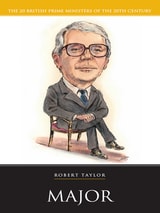
Major
Robert Taylor
Haus Publishing, 2006
Makers of Democracy
A Transnational History of the Middle Classes in ColombiaA. Ricardo López-Pedreros
Duke University Press, 2019
Making Ecuadorian Histories
Four Centuries of Defining PowerBy O. Hugo Benavides
University of Texas Press, 2004
In Ecuador, as in all countries, archaeology and history play fundamental roles in defining national identity. Connecting with the prehistoric and historic pasts gives the modern state legitimacy and power. But the state is not the only actor that lays claim to the country's archaeological patrimony, nor is its official history the only version of the story. Indigenous peoples are increasingly drawing on the past to claim their rights and standing in the modern Ecuadorian state, while the press tries to present a "neutral" version of history that will satisfy its various publics.
This pathfinding book investigates how archaeological knowledge is used for both maintaining and contesting nation-building and state-hegemony in Ecuador. Specifically, Hugo Benavides analyzes how the pre-Hispanic site of Cochasquí has become a source of competing narratives of Native American, Spanish, and Ecuadorian occupations, which serve the differing needs of the nation-state and different national populations at large. He also analyzes the Indian movement itself and the recent controversy over the final resting place for the traditional monolith of San Biritute. Offering a more nuanced view of the production of history than previous studies, Benavides demonstrates how both official and resistance narratives are constantly reproduced and embodied within the nation-state's dominant discourses.

Making Endless War
The Vietnam and Arab-Israeli Conflicts in the History of International LawBrian Cuddy and Victor Kattan, Editors
University of Michigan Press, 2023
Making Endless War is built on the premise that any attempt to understand how the content and function of the laws of war changed in the second half of the twentieth century should consider two major armed conflicts, fought on opposite edges of Asia, and the legal pathways that link them together across time and space. The Vietnam and Arab-Israeli conflicts have been particularly significant in the shaping and attempted remaking of international law from 1945 right through to the present day. This carefully curated collection of essays by lawyers, historians, philosophers, sociologists, and political geographers of war explores the significance of these two conflicts, including their impact on the politics and culture of the world’s most powerful nation, the United States of America. The volume foregrounds attempts to develop legal rationales for the continued waging of war after 1945 by moving beyond explaining the end of war as a legal institution, and toward understanding the attempted institutionalization of endless war.
Making Hispanics
How Activists, Bureaucrats, and Media Constructed a New AmericanG. Cristina Mora
University of Chicago Press, 2014
Some argue that these cultures are fundamentally similar and that the Spanish language is a natural basis for a unified Hispanic identity. But Mora shows very clearly that the idea of ethnic grouping was historically constructed and institutionalized in the United States. During the 1960 census, reports classified Latin American immigrants as “white,” grouping them with European Americans. Not only was this decision controversial, but also Latino activists claimed that this classification hindered their ability to portray their constituents as underrepresented minorities. Therefore, they called for a separate classification: Hispanic. Once these populations could be quantified, businesses saw opportunities and the media responded. Spanish-language television began to expand its reach to serve the now large, and newly unified, Hispanic community with news and entertainment programming. Through archival research, oral histories, and interviews, Mora reveals the broad, national-level process that led to the emergence of Hispanicity in America.

Making History / Making Blintzes
How Two Red Diaper Babies Found Each Other and Discovered AmericaFlacks, Mickey
Rutgers University Press, 2018
Throughout this memoir, the couple demonstrates that their lifelong commitment to making history through social activism cannot be understood without returning to the deeply personal context of their family history—of growing up “Red Diaper babies” in 1950s New York City, using folk music as self-expression as adolescents in the 1960s, and of making blintzes for their own family through the 1970s and 1980s. As the children of immigrants and first generation Jews, Dick and Mickey crafted their own religious identity as secular Jews, created a critical space for American progressive activism through SDS, and ultimately, found themselves raising an “American” family.
Making History Matter
Robert Dawidoff
Temple University Press, 2000
As a scholar of intellectual and cultural history, Dawidoff takes the stance that historians ought to take an active role in our democratic culture, informing and participating in public discourse. He argues for a broad reach when it comes to cultural expression, resisting the polarization of formal intellectual history and folk or commercial popular culture. In his view, Ralph Waldo Emerson and Katherine Hepburn are equally worthy topics for a historian's consideration, provided that they are treated with equal seriousness of purpose and analytic rigor. In "The Gay Nineties" section that closes the book, he traces key events in the continual struggle for gay and lesbian civil rights and takes on such unresolved issues as safer sex, needle exchange programs to control HIV transmission, and the public controversy around the portrayal of gay and lesbian television characters.
Divided into sections that deal with the patriarchs of American political and intellectual culture, expressive culture, and a historian's public voice, this book is a model of engaged and engaging writing. Accessible and witty, Making History Matter will appeal to general and academic readers interested in American history as well as gay and lesbian political and cultural issues.

Making Institutions Work in Peru
Democracy, Development and Inequality Since 1980Edited by John Crabtree
University of London Press, 2006
Contributors include Paulo Drino (University of Manchester), Cynthia Sanborn (Centro de Investigaciones, Universidad del Pacifico, Lima), Carlos Monge (Participacion Ciudadana, Lima), Fernando Rospigliosi (Instituto de Estudios Peruanos, Lima), Pedro Franck (Departamento de Economia, Universidad Catolica, Lima), Fernando Eguren (Centro Peruano de Ciencias Sociales, Lima), Rosemary Thorp (Queen Elizabeth House/St Antony's College, Oxford), Eduardo Dargent (University of Texas,Austin), Coletta Youngers (Washington Office on Latin America,Washington D.C.), Francisco Durand (University of Texas, San Antonio), Jose Tavara (Departamento de Economia, Universidad Catolica, Lima, and OSIPTEL), and Richard Webb (Instituto Cuanto and Central Bank of Peru).
Making Maine
Statehood and the War of 1812Joshua M. Smith
University of Massachusetts Press, 2022
Honorable mention for U.S. Maritime History, John Lyman Book Awards
After the Revolutionary War ended, the new American nation grappled with a question about its identity: Were the states sovereign entities or subordinates to a powerful federal government? The War of 1812 brought this vexing issue into sharp relief, as a national government intent on waging an unpopular war confronted a populace in Massachusetts that was vigorously opposed to it. Maine, which at the time was part of Massachusetts, served as the battleground in this political struggle.
Joshua M. Smith recounts an innovative history of the war, focusing on how it specifically affected what was then called the District of Maine. Drawing on archival materials from the United States, Britain, and Canada, Smith exposes the bitter experience of Maine’s citizens during that conflict as they endured multiple hardships, including starvation, burdensome taxation, smuggling, treason, and enemy occupation. War’s inherent miseries, along with a changing relationship between regional and national identities, gave rise to a statehood movement that rejected a Boston-centric worldview in favor of a broadly American identity.
Making Minnesota Liberal
Civil Rights And The Transformation Of The Democratic PartyJennifer A. Delton
University of Minnesota Press, 2002
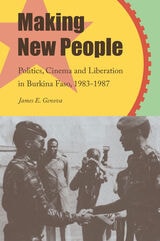
Making New People
Politics, Cinema, and Liberation in Burkina Faso, 1983–1987James Genova
Michigan State University Press, 2022
Making Of Asian America
Through Political ParticipationPei-te Lien
Temple University Press, 2001
Professor Lien looks at political participation by Asian Americans prior to 1965 and then examines, at both organizational and mass politics levels, how race, ethnicity, and transnationalism help to construct a complex American electorate. She looks not only at rates of participation among Asian Americans as compared with blacks, Latinos, American Indians, and non-Hispanic whites, but also among specific groups of Asian Americans—Chinese, Japanese, Filipinos, Koreans, Asian Indians, and Vietnamese. She also discusses how gender, socioeconomic class, and place of birth affect political participation.
With documentation ranging from historical narrative to opinion survey data, Professor Lien creates a picture of a diverse group of politically active people who are intent on carving out a place for themselves in American political life.
Making Race, Making Power
North Carolina's Road to DisfranchisementKent Redding
University of Illinois Press, 2003
Far from being a low-level, localized trend, the struggle for power in North Carolina would be felt across the entire country as race-and class-based organizing challenged the dominant models of making and holding power.
Redding reveals how the ruling class operates with motivations and methods very similar to those of the black voters and Populist farmers they fought against. He tracks how the elites co-opted the innovative mobilizing strategies of the subaltern groups to effectively use their own weapons against them.
At the core of Making Race, Making Power is an insightful dissection of the concrete connections between political strategies of solidarity and exclusion and underlying patterns of race relations.
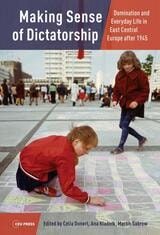
Making Sense of Dictatorship
Domination and Everyday Life in East Central Europe after 1945Celia Donert
Central European University Press, 2022
How did political power function in the communist regimes of East Central Europe after 1945? Making Sense of Dictatorship addresses this question with a particular focus on the acquiescent behavior of the majority of the population until, at the end of the 1980s, their rejection of state socialism and its authoritarian world.
The authors refer to the concept of Sinnwelt, the way in which groups and individuals made sense of the world around them. The essays focus on the dynamics of everyday life and the extent to which the relationship between citizens and the state was collaborative or antagonistic. Each chapter addresses a different aspect of life in this period, including modernization, consumption and leisure, and the everyday experiences of “ordinary people,” single mothers, or those adopting alternative lifestyles.
Empirically rich and conceptually original, the essays in this volume suggest new ways to understand how people make sense of everyday life under dictatorial regimes.
Making Sense of the Arab State
Steven Heydemann and Marc Lynch, Editors
University of Michigan Press, 2024
Making Sense of the Arab State brings together top scholars from diverse theoretical orientations to address some of the most critically important questions facing the region today. The authors grapple with enduring questions such as the uneven development of state capacity, the failures of developmentalism and governance, the centrality of regime security and survival concerns, the excesses of surveillance and control, and the increasing personalization of power. Making Sense of the Arab State will be a must-read for scholars of the Middle East and of comparative politics more broadly.
Making an Antislavery Nation
Lincoln, Douglas, and the Battle over FreedomGraham A. Peck
University of Illinois Press, 2020
This sweeping narrative presents an original and compelling explanation for the triumph of the antislavery movement in the United States prior to the Civil War. Abraham Lincoln's election as the first antislavery president was hardly preordained. From the country's inception, Americans had struggled to define slavery's relationship to freedom. Most Northerners supported abolition in the North but condoned slavery in the South, while most Southerners denounced abolition and asserted slavery's compatibility with whites' freedom. On this massive political fault line hinged the fate of the nation.
Graham A. Peck meticulously traces the conflict over slavery in Illinois from the Northwest Ordinance in 1787 to Lincoln's defeat of his archrival Stephen A. Douglas in the 1860 election. Douglas's attempt in 1854 to persuade Northerners that slavery and freedom had equal national standing stirred a political earthquake that brought Lincoln to the White House. Yet Lincoln's framing of the antislavery movement as a conservative return to the country's founding principles masked what was in fact a radical and unprecedented antislavery nationalism. It justified slavery's destruction but triggered the Civil War.
Presenting pathbreaking interpretations of Lincoln, Douglas, and the Civil War's origins, Making an Antislavery Nation shows how battles over slavery paved the way for freedom's triumph in America.
Making and Breaking the Yugoslav Working Class
The Story of Two Self-Managed FactoriesGoran Music
Central European University Press, 2021
Workers' self-management was one of the unique features of communist Yugoslavia. Goran Musić has investigated the changing ways in which blue-collar workers perceived the recurring crises of the regime. Two self-managed metal enterprises, one in Serbia another in Slovenia, provide the frame of the analysis in the time span between 1945 and 1989. These two factories became famous for strikes in 1988 that evoked echoes in popular discourses in former Yugoslavia. Drawing on interviews, factory publications and other media, local archives, and secondary literature, Musić analyzes the two cases, going beyond the clichés of political manipulation from the top and workers' intrinsic attraction to nationalism.
The author explains how, in the later phase of communist Yugoslavia, growing social inequalities among the workers and undemocratic practices inside the self-managed enterprises facilitated the spread of a nationalist and pro-market ideology on the shop floors. Yet rather than being a mass taken advantage of by populist leaders, the working class Musić presents is one with agency and voice, a force that played an important role in shaping the fate of the country. The book thus seeks to open a debate on the social processes leading up to the dissolution of Yugoslavia.
Making the MexiRican City
Migration, Placemaking, and Activism in Grand Rapids, MichiganDelia Fernández-Jones
University of Illinois Press, 2023
A Choice Outstanding Academic Title for 2023
Large numbers of Latino migrants began to arrive in Grand Rapids, Michigan, in the 1950s. They joined a small but established Spanish-speaking community of people from Texas, Mexico, and Puerto Rico. Delia Fernández-Jones merges storytelling with historical analysis to recapture the placemaking practices that these Mexicans, Tejanos, and Puerto Ricans used to create a new home for themselves. Faced with entrenched white racism and hostility, Latinos of different backgrounds formed powerful relationships to better secure material needs like houses and jobs and to recreate community cultural practices. Their pan-Latino solidarity crossed ethnic and racial boundaries and shaped activist efforts that emphasized working within the system to advocate for social change. In time, this interethnic Latino alliance exploited cracks in both overt and structural racism and attracted white and Black partners to fight for equality in social welfare programs, policing, and education.
Groundbreaking and revelatory, Making the MexiRican City details how disparate Latino communities came together to respond to social, racial, and economic challenges.
Making the Modern Middle East
Second EditionT.G. Fraser, Andrew Mango, and Robert McNamara
Gingko, 2015
This fully revised and updated second edition of The Makers of the Modern Middle East traces those changes and the ensuing history of the region through the rest of the twentieth century and on to the present. Focusing in particular on three leaders—Emir Feisal, Mustafa Kemal, and Chaim Weizmann—the book offers a clear, authoritative account of the region seen from a transnational perspective, one that enables readers to understand its complex history and the way it affects present-day events.
Malaysiakini and the Power of Independent Media in Malaysia
Janet Steele
National University of Singapore Press, 2023
Founded in 1999 by Steven Gan and Premesh Chandran, Malaysiakini was one of many online portals that sprung up in the wake of Reformasi, a period of public protests sparked by Prime Minister Mahathir Mohammad’s 1998 firing of his deputy Anwar Ibrahim. At first, there was no reason to think that Malaysiakini would be anything momentous. However, Malaysiakini wanted to do something much more important than just reporting on Reformasi—its founders intended to bring independent journalism to Malaysia in hopes of changing the country for the better.
Based on more than fifteen years of observation of Malaysiakini's newsroom practices, Malaysiakini and the Power of Independent Media in Malaysia is an intimate portrait of the people and issues behind Malaysia’s only truly independent media outlet. The author illustrates Malaysiakini’s unique mix of idealism in action, studying how sensitive issues such as race, religion, politics, and citizenship are discussed in the newsroom. This attention to the inner workings of one of the most important media institutions in the region yields not only a deep newsroom ethnography but a nuanced, rich history of modern Malaysia.

Managing Legal Uncertainty
Elite Lawyers in the New DealRonen Shamir
Duke University Press, 1995
Applying the insights of Weber and Bourdieu to the sociology of the legal profession, Shamir shows that elite members of the bar had a keen self-interest in blocking the expansion of administrative law. He dismisses as oversimplified the view that elite lawyers were "hired guns" who argued that New Deal legislation was unconstitutional solely because of their duty to represent their capitalist clients. Instead, Shamir suggests, their alignment with the capitalist class was an incidental result of their attempt to articulate their vision of the law as scientific, apolitical, and judicially oriented—and thereby to defend their own position within the law profession. The academic legal realists on the other side of the constitutional debates criticized the rigidity of the traditional judicial process and insisted that flexibility of interpretation and the uncertainty of legal outcomes was at the heart of the legal system. The author argues that many legal realists, encouraged by the experimental nature of the New Deal, seized an opportunity to improve on their marginal status within the legal profession by moving their discussions from academic circles to the national policy agenda.
Managing the Counterrevolution
The United States and Guatemala, 1954–1961Stephen M. Streeter
Ohio University Press, 2001
The Eisenhower administration’s intervention in Guatemala is one of the most closely studied covert operations in the history of the Cold War. Yet we know far more about the 1954 coup itself than its aftermath. This book uses the concept of “counterrevolution” to trace the Eisenhower administration’s efforts to restore U.S. hegemony in a nation whose reform governments had antagonized U.S. economic interests and the local elite.
Comparing the Guatemalan case to U.S.-sponsored counterrevolutions in Iran, the Dominican Republic, Brazil, and Chile reveals that Washington’s efforts to roll back “communism” in Latin America and elsewhere during the Cold War represented in reality a short-term strategy to protect core American interests from the rising tide of Third World nationalism.

Manifold Destiny
Arabs at an American Crossroads of Exceptional RuleJohn Tofik Karam
Vanderbilt University Press, 2021
At the border where Brazil, Paraguay, and Argentina meet under the scrutiny of the US and Mercosur (the large South American trade bloc), Arabs have long fulfilled what author John Tofik Karam calls a "manifold destiny." Karam casts Lebanese, Palestinians, and Syrians at this American border as circumstantial protagonists of a hemispheric saga.
For the more than six decades since they started settling at the trinational border between Brazil, Paraguay, and Argentina, Arabs have animated the hemisphere. Their transnational economic and social projects reveal a heretofore unacknowledged venue of exceptional rule in which the community accommodates and abides multiple states' varied suspensions of norms and laws. Arabs set up businesses and community centers at the border under authoritarian military governments between the 1950s and 1980s; thereafter, when denied full democratic enfranchisement, they instead underwent increasing surveillance from the 1990s to today. Karam reveals an unfinished history of exceptional rule that Arabs accommodate from an authoritarian past to a counterterrorist present.
Karam's riveting account draws on anthropological and historical research from each side of this trinational South American border, as well as from the US—where government bureaucrats still suspect Arabs at the border of would-be-terrorist subversion. Offering a fresh understanding of the hemisphere, Manifold Destiny brings the transnational turn of Middle Eastern studies to bear upon the fields of American studies, Brazilian studies, and Latin American studies.

Mano Dura
The Politics of Gang Control in El SalvadorBy Sonja Wolf
University of Texas Press, 2017
In 1992, at the end of a twelve-year civil war, El Salvador was poised for a transition to democracy. Yet, after longstanding dominance by a small oligarchy that continually used violence to repress popular resistance, El Salvador’s democracy has proven to be a fragile one, as social ills (poverty chief among them) have given rise to neighborhoods where gang activity now thrives. Mano Dura examines the ways in which the ruling ARENA party used gang violence to solidify political power in the hands of the elite—culminating in draconian “iron fist” antigang policies that undermine human rights while ultimately doing little to address the roots of gang membership.
Drawing on extensive ethnographic fieldwork and policy analysis, Mano Dura examines the activities of three nongovernmental organizations (NGOs) that have advocated for more nuanced policies to eradicate gangs and the societal issues that are both a cause and an effect of gang proliferation. While other studies of street gangs have focused on relatively distant countries such as Colombia, Argentina, and Jamaica, Sonja Wolf’s research takes us to a country closer to the United States, where forced deportation has brought with it US gang culture. Charting the limited success of NGOs in influencing El Salvador’s security policies, the book brings to light key contextual aspects—including myopic media coverage and the ironic populist support for ARENA, despite the party’s protection of the elite at the expense of the greater society.
Mapping Identity
The Creation of the Coeur d'Alene Indian Reservation, 1805-1902Laura Woodworth-Ney
University Press of Colorado, 2004
Mapping Identity builds on the growing body of literature that presents a more complex picture of federal policy, native identity, and the creation of Indian reservations in the western United States. It will be important to readers interested in western U.S. history, legal and administrative history, Native American history, and interior Northwest history.

Maras
Gang Violence and Security in Central AmericaEdited by Thomas C. Bruneau, Lucía Dammert, and Elizabeth Skinner
University of Texas Press, 2011
Sensational headlines have publicized the drug trafficking, brutal violence, and other organized crime elements associated with Central America's mara gangs, but there have been few clear-eyed analyses of the history, hierarchies, and future of the mara phenomenon. The first book to look specifically at the Central American gang problem by drawing on the perspectives of researchers from different disciplinary backgrounds, Maras: Gang Violence and Security in Central America provides much-needed insight.
These essays trace the development of the gangs, from Mara Salvatrucha to the 18th Street Gang, in Los Angeles and their spread to El Salvador, Honduras, Guatemala, and Nicaragua as the result of members' deportation to Central America; there, they account for high homicide rates and threaten the democratic stability of the region. With expertise in areas ranging from political science to law enforcement and human rights, the contributors also explore the spread of mara violence in the United States. Their findings comprise a complete documentation that spans sexualized violence, case studies of individual gangs, economic factors, varied responses to gang violence, the use of intelligence gathering, the limits of state power, and the role of policy makers.
Raising crucial questions for a wide readership, these essays are sure to spark productive international dialogues.
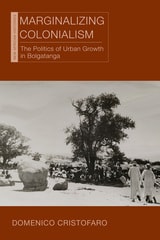
Marginalizing Colonialism
The Politics of Urban Growth in BolgatangaDomenico Cristofaro
Ohio University Press, 2026
Marginalizing Colonialism offers a social, political, and spatial history of Bolgatanga, a northern Ghanaian town whose colonial-era urban development has been largely overlooked in African historiography. Covering the late nineteenth century through the 1940s, the book traces how this settlement—long characterized as a remote hinterland of the British Empire—emerged as a commercial and political center in the region. Rather than depicting urbanization as an imperial project, it reveals how African actors actively shaped Bolgatanga’s growth and repeatedly marginalized, redirected, and evaded colonial authority.
The narrative follows Bolgatanga’s transformation from a dispersed settlement organized around kinship, ritual geographies, and earth shrines into a dynamic urban hub integrated into regional trade networks. Central to this shift were new land tenure systems, commercial expansion, and changing spatial practices. By the 1930s and 1940s, trade in kola, groundnuts, livestock, and other goods surged, stimulated by new roads and increased mobility. Population growth converted farmland into leased plots, permanent buildings replaced older compounds, and areas around the market became focal points of economic and social life.
These changes were driven not by the colonial state but rather by local negotiations and strategic adaptations. Chiefs, earth priests, merchants, and migrant traders mediated and reshaped colonial policies, while missionaries and settlers concluded land agreements beyond official oversight. Roads and marketplaces, planned through negotiations between colonial officials and local chiefs and built largely through African labor, became central infrastructures of local economic life. Even as colonial administrators sought to codify land tenure and regulate commerce, their influence remained largely nominal—a background presence in a story propelled by African initiative.
Drawing on archival documents, oral histories, and unpublished manuscripts by local intellectuals, Marginalizing Colonialism provides the first comprehensive urban history of Bolgatanga. It challenges dominant narratives in African colonial and urban historiography by exposing the silences of the colonial archive and highlighting the significance of medium-sized towns as arenas of negotiation and creativity. Ultimately, the book argues that Bolgatanga’s urbanization was a locally driven process that redefined power, space, and governance—leaving a legacy that continues to shape the city’s identity and regional role today.
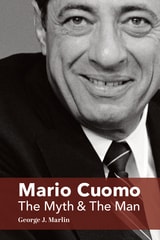
Mario Cuomo
The Myth and the ManGeorge J.
St. Augustine's Press, 2020
As governor, Mario Cuomo is remembered most for his advocacy of the “personally-opposed-but” position on abortion that led to confrontations with Catholic Church hierarchy, and for dithering about his presidential ambitions, that led the media to dub him the “Hamlet on the Hudson.” His political style reminded many of Machiavelli; Cuomo styled himself a successor to St. Thomas More.
In this political profile, George J. Marlin sets the record straight on Mario Cuomo.
Marlin traces Cuomo’s political rise and documents how and why he abandoned his public opposition to abortion to be elected New York’s chief executive.
In great detail, Marlin describes the protracted conflict between Cuomo and his church on abortion and refutes the governor’s claim that his “position on abortion is absolutely theologically sound.”
Marlin critiques Cuomo’s famous 1984 Democratic convention speech as nothing more than the usual high-toned partisan liberal bromides that offered little, if anything, that hadn’t been touted by his party for half a century.
The book also uncovers New York State’s fiscal, economic, and social decline during Cuomo’s 12 years as governor. It explains why voters repudiated Cuomo’s version of a welfare state when he sought a fourth term in 1994 and why, in the words of his son, Governor Andrew Cuomo, his father was “more accomplished as a speech-giver than as a governor.”
Marlin skillfully separates the Cuomo “Public Intellectual” myth from the political man.
Mario Cuomo, three times Governor of New York, an eloquent hard edged Catholic from Queens, dominated not only his home state but national liberal politics in the age of Reagan. Whether the subject was police or theology, Cuomo rhetorically overpowered the reporters who covered him. But he’s finally met his match in George Marlin’s Mario Cuomo The Myth and the Man. Marlin’s extraordinary equipment; a former candidate for Mayor of N.Y.C., former executive director of the New York and New Jersey Port Authority, author of books on Catholic voters and the Archbishops of New York, has made him the ideal author of what’s sure to be seen as the definitive political biography of Mario Cuomo. — Fred Siegel, Author, The Prince of the City: Giuliani, New York, and the Genius of American Life and The Future Once Happened Here: New York, D.C., L.A., and the Fate of America’s Big Cities.
“It’s easy to forget what an important and fascinating figure Mario Cuomo was during New York’s raucous political heyday of the 1970s, 80s and 90s, when the likes of Hugh Carey, Ed Koch, Al D’Amato, and Rudy Giuliani strode the political stage. Thankfully, George Marlin’s wonderful new Cuomo biography will help everyone remember both the good and bad of the remarkable man who served three terms as governor, turned down a seat on the Supreme Court and rejected the chance to run for President. Here are both Cuomo’s successes and failures — and of the latter there were many. An important work that helps restore our collective memory. — Fredric U. Dicker, the New York Post’s longtime state editor and a TV and radio commentator, covered six governors during 40 years at the state Capitol in Albany.
George Marlin is virtually peerless in blending high principle with knowledge of street-level politics and the nuts-and-bolts of otherwise mundane governance to produce readable, yet deeply insightful, social and political portraits. Mario Cuomo: The Myth and the Man, examines in fine detail one of one of New York state’s most consequential, if also deeply flawed, 20th-century gubernatorial incumbencies. Plus, readers get a bonus: Insight into what shaped the career of Mario Cuomo’s Democratic superstar son, Andrew. Marlin has been in the trenches himself and thus can separate blarney from beefsteak – which this fine volume once again demonstrates. —Bob McManus, Contributing Editor, The City Journal, was the New York Post’s Editorial Page Editor (2000-2013), and The Albany Times Union’s Executive City Editor (1975-1981).
“George Marlin not only captures the political life and journey of Mario Cuomo, but details his policy approach that led to the near demise of the Empire State. Fortunately, the Conservative Party of New York was there to carry the torch and provide the margin of victory for George Pataki ending the senior Cuomo’s reign.” —Michael Long, State Chairman, Conservative Party of New York (1988-2019)
“For both better and worse, Mario Cuomo was the quintessential American Catholic politician of an entire postwar generation: ambitious, brilliant, articulate, serious about his faith, and flexible in how and where he applied it. George Marlin is a writer of considerable skill, and he uses here it to produce a provocative, absorbing portrait of the man and his career. —Francis X. Maier, Senior Fellow in Catholic Studies at the Ethics and Public Policy Center

Mark One or More
Civil Rights in Multiracial AmericaKim M. Williams
University of Michigan Press, 2010
The movement to add a multiracial category to the 2000 U.S. Census provoked unprecedented debates about race. The effort made for strange bedfellows. Republicans like House Speaker Newt Gingrich and affirmative action opponent Ward Connerly took up the multiracial cause. Civil rights leaders opposed the movement on the premise that it had the potential to dilute the census count of traditional minority groups. The activists themselves—a loose confederation of organizations, many led by the white mothers of interracial children—wanted recognition. What they got was the transformation of racial politics in America.
Mark One or More is the compelling account of how this small movement sparked a big change, and a moving call to reassess the meaning of racial identity in American life.
Kim M. Williams is Associate Professor of Public Policy in Harvard's Kennedy School of Government, and an expert in racial and ethnic politics and political movements.

Marketing the Wilderness
Outdoor Recreation, Indigenous Activism, and the Battle over Public LandsJoseph Whitson
University of Minnesota Press, 2025
How outdoor industry marketing promotes an image of “the wilderness” as an unpeopled haven
Marketing the Wilderness analyzes the relationship between the outdoor recreation industry, public lands in the United States, and Indigenous sovereignty and representation in recreational spaces. Combining social media analysis, digital ethnography, and historical research, Joseph Whitson offers nuanced insights into more than a century of the outdoor recreation industry’s marketing strategies, unraveling its complicity in settler colonialism.
Complicating the narrative of outdoor recreation as a universal good, Whitson introduces the concept of “wildernessing” to describe the physical, legal, and rhetorical production of pristine, empty lands that undergirds the outdoor recreation industry, a process that further disenfranchises Indigenous people from whom these lands were stolen. He demonstrates how companies such as Patagonia and REI align with the mining and drilling industries in their need to remove Indigenous peoples and histories from valuable lands. And he describes the ways Indigenous and decolonial activists are subverting and resisting corporate marketing strategies to introduce new narratives of place.
Through the lens of environmental justice activism, Marketing the Wilderness reconsiders the ethics of recreational land use, advocating for engagement with issues of cultural representation and appropriation informed by Indigenous perspectives. As he discusses contemporary public land advocacy around places such as Bears Ears National Monument, Whitson focuses on the deeply fraught relationship between the outdoor recreation industry and Indigenous communities. Emphasizing the power of the corporate system and its treatment of land as a commodity under capitalism, he shows how these tensions shape the American idea of “wilderness” and what it means to fight for its preservation.
Retail e-book files for this title are screen-reader friendly with images accompanied by short alt text and/or extended descriptions.

Marlborough
His Life and Times, Book OneWinston S. Churchill
University of Chicago Press, 2002
John Churchill, the Duke of Marlborough (1644-1722), was one of the greatest military commanders and statesmen in the history of England. Victorious in the Battles of Blenheim (1704), Ramillies (1706), and countless other campaigns, Marlborough, whose political intrigues were almost as legendary as his military skill, never fought a battle he didn't win. Although he helped James II crush the rebellion of the Duke of Monmouth, Marlborough later supported William of Orange against James II in the Glorious Revolution of 1688 and brilliantly managed England's diplomatic triumphs during the War of the Spanish Succession. Marlborough also bequeathed the world another great British military strategist and diplomat—his descendant, Winston S. Churchill, who wrote this book to redeem Marlborough's reputation from Macaulay's smears.
One million words long and ten years in the making, Churchill's Marlborough stands as both a literary and historical masterpiece, giving us unique insights into the Churchill of World War II, for just as Churchill's literary skill helps us understand the complexities of Marlborough's life, so too did his writing of Marlborough help Churchill master the arts of military strategy and diplomacy. This two-volume edition includes the entire text and almost all the original maps.

Marlborough
His Life and Times, Book TwoWinston S. Churchill
University of Chicago Press, 2002
John Churchill, the Duke of Marlborough (1644-1722), was one of the greatest military commanders and statesmen in the history of England. Victorious in the Battles of Blenheim (1704), Ramillies (1706), and countless other campaigns, Marlborough, whose political intrigues were almost as legendary as his military skill, never fought a battle he didn't win. Although he helped James II crush the rebellion of the Duke of Monmouth, Marlborough later supported William of Orange against James II in the Glorious Revolution of 1688 and brilliantly managed England's diplomatic triumphs during the War of the Spanish Succession. Marlborough also bequeathed the world another great British military strategist and diplomat—his descendant, Winston S. Churchill, who wrote this book to redeem Marlborough's reputation from Macaulay's smears.
One million words long and ten years in the making, Churchill's Marlborough stands as both a literary and historical masterpiece, giving us unique insights into the Churchill of World War II, for just as Churchill's literary skill helps us understand the complexities of Marlborough's life, so too did his writing of Marlborough help Churchill master the arts of military strategy and diplomacy. This two-volume edition includes the entire text and almost all the original maps.
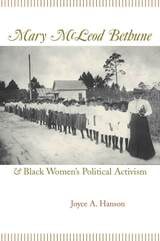
Mary McLeod Bethune and Black Women's Political Activism
Joyce A. Hanson
University of Missouri Press, 2003
Mary McLeod Bethune was a significant figure in American political history. She devoted her life to advancing equal social, economic, and political rights for blacks. She distinguished herself by creating lasting institutions that trained black women for visible and expanding public leadership roles. Few have been as effective in the development of women’s leadership for group advancement. Despite her accomplishments, the means, techniques, and actions Bethune employed in fighting for equality have been widely misinterpreted.
Examining the historical evolution of African American women’s activism in the critical period between 1920 and 1950, a time previously characterized as “doldrums” for both feminist and civil rights activity, Mary McLeod Bethune and Black Women’s Political Activism is important for understanding the centrality of black women to the political fight for social, economic, and racial justice.
Massachusetts Politics and Public Policy
Studies in Power and LeadershipRichard A. Hogarty
University of Massachusetts Press, 2002
Hogarty examines both the process of policymaking and the complexities of on-the-ground implementation, identifying the various participants and their roles and strategies. He describes power struggles that are entangled in intricate webs of personal and political relationships, and explores their historical antecedents.
Based on an extensive review of newspaper and media accounts, a survey of the surprisingly scanty professional literature, a close scrutiny of public documents, and dozens of personal interviews, the book addresses such topics as the delivery of mental health services, urban transportation, environmental protection, public safety, welfare, corrections, the death penalty, public higher education, ethnic politics, and state ethics reform. Hogarty analyzes the shifting problems of accountability that arise when public services are provided by a variety of political actors and organizations with a wide range of ideological motivations and social and cultural commitments.
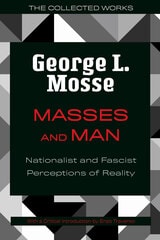
Masses and Man
Nationalist and Fascist Perceptions of RealityGeorge L. Mosse
University of Wisconsin Press, 2024
Masses and Man comprises three parts. The first lays out a cultural history of nationalism, essentially the first of its kind, emphasizing the importance of sacred expressions like myths, symbols, and rituals as appropriated in a political context. The second zeroes in on fascism’s most dramatic irruptions in European history in the rise of Italian Fascism and the Nazi Party in Germany, elucidating these as not just political movements but also cultural and even aesthetic ones. The third part considers nationalism and fascism from the particular standpoint of German Jews.
Taken in full, the volume offers an eloquent summation of Mosse’s groundbreaking insights into European nationalism, fascism, and Jewish history in the twentieth century. A new critical introduction by Enzo Traverso helpfully situates Mosse’s work in context and exposes the many ways in which Masses and Man, first published in 1980, remains relevant today.
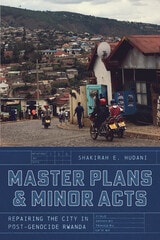
Master Plans and Minor Acts
Repairing the City in Post-Genocide RwandaShakirah E. Hudani
University of Chicago Press, 2024
Master Plans and Minor Acts examines a “material politics of repair” in post-genocide Rwanda, where in a country saturated with deep historical memory, spatial master planning aims to drastically redesign urban spaces. How is the post-conflict city reconstituted through the work of such planning, and with what effects for material repair and social conciliation?
Through extended ethnographic and qualitative research in Rwanda in the decades after the genocide of 1994, this book questions how repair after conflict is realized amidst large-scale urban transformation. Bridging African studies, urban studies, and human geography in its scope, this work ties Rwanda’s transformation to contexts of urban change in other post-conflict spaces, bringing to the fore critical questions about the ethics of planning in such complex geographies.
Master and Disciple
The Cultural Foundations of Moroccan AuthoritarianismAbdellah Hammoudi
University of Chicago Press, 1997
Building on the work of Foucault, Hammoudi argues that at the heart of Moroccan culture lies a paradigm of authority that juxtaposes absolute authority against absolute submission. Rooted in Islamic mysticism, this paradigm can be observed in the drama of mystic initiation, with its fundamental dialectic between Master and Disciple; in conflict with other cultural forms, and reelaborated in colonial and postcolonial circumstances, it informs all major aspects of Moroccan personal, political, and gender relations. Its influence is so pervasive and so firmly embedded that it ultimately legitimizes the authoritarian structure of power. Hammoudi contends that as long as the Master-Disciple dialectic remains the dominant paradigm of power relations, male authoritarianism will prevail as the dominant political form.
"Connecting political domination to gift exchange, ritual initiation, social loyalty, and gender reversals, Master and Disciple is nothing less than a thoroughgoing revision of our understanding of authoritarian rule in Morocco and in the Arab world in general."—Clifford Geertz, Institute for Advanced Study

Masterpieces of History
The Peaceful End of the Cold War in Europe, 1989The National Security Archive Savranskaya
Central European University Press, 2010
Mastery and Drift
Professional-Class Liberals since the 1960sEdited by Brent Cebul and Lily Geismer
University of Chicago Press, 2025
Since the 1960s, American liberalism and the Democratic Party have been remade along professional class lines, widening liberalism’s impact but narrowing its social and political vision. In Mastery and Drift, historians Brent Cebul and Lily Geismer have assembled a group of scholars to address the formation of “professional-class liberalism” and its central role in remaking electoral politics and the practice of governance. Across subjects as varied as philanthropy, consulting, health care, welfare, race, immigration, economics, and foreign conflicts, the authors examine not only the gaps between liberals’ egalitarian aspirations and their approaches to policymaking but also how the intricacies of contemporary governance have tended to bolster professional-class liberals’ power.
The contributors to Mastery and Drift all came of age amid the development of professional-class liberalism, giving them distinctive and important perspectives in understanding its internal limitations and its relationship to neoliberalism and the Right. With never-ending disputes over the meaning of liberalism, the content of its governance, and its relationship to a resurgent Left, now is the time to consider modern liberalism’s place in contemporary American life.

Max Weber and German Politics, 1890-1920
Wolfgang J. Mommsen
University of Chicago Press, 1990
First published in German in 1959, Max Weber and German Politics appeared in a revised edition in 1974 and became available in an English translation only in 1984. In writing this work, Mommsen drew extensively on Weber's published and unpublished essays, newspaper articles, memoranda, and correspondence.

May '68 and Its Afterlives
Kristin Ross
University of Chicago Press, 2002
Kristin Ross shows how the current official memory of May '68 came to serve a political agenda antithetical to the movement's aspirations. She examines the roles played by sociologists, repentant ex-student leaders, and the mainstream media in giving what was a political event a predominantly cultural and ethical meaning. Recovering the political language of May '68 through the tracts, pamphlets, and documentary film footage of the era, Ross reveals how the original movement, concerned above all with the question of equality, gained a new and counterfeit history, one that erased police violence and the deaths of participants, removed workers from the picture, and eliminated all traces of anti-Americanism, anti-imperialism, and the influences of Algeria and Vietnam. May '68 and Its Afterlives is especially timely given the rise of a new mass political movement opposing global capitalism, from labor strikes and anti-McDonald's protests in France to the demonstrations against the World Trade Organization in Seattle.
Maya Cultural Activism in Guatemala
Edited by Edward F. Fischer and R. McKenna Brown
University of Texas Press, 1996
Maya Cultural Activism in Guatemala marks a new era in Guatemalan studies by offering an up-to-the-minute look at the pan-Maya movement and the future of the Maya people as they struggle to regain control over their cultural destiny. The successful emergence of what is in some senses a nationalism grounded in ethnicity and language has challenged scholars to reconsider their concepts of nationalism, community, and identity.
Editors Edward F. Fischer and R. McKenna Brown have brought together essays by virtually all the leading U.S. experts on contemporary Maya communities and the top Maya scholars working in Guatemala today. Supplementing scholarly analysis of Mayan cultural activism is a position statement originating within the movement and more wide-ranging and personal reflections by anthropologists and linguists who have worked with the Maya over the years. Among the broader issues that come in for examination are the complex relations between U.S. Mayanists and the Mayan cultural movement, efforts to promote literacy in Mayan languages, the significance of woven textiles and native dress, the relations between language and national identity, and the cultural meanings that the present-day Maya have encountered in ancient Mayan texts and hieroglyphic writing.
Maya Ethnolinguistic Identity
Violence, Cultural Rights, and Modernity in Highland GuatemalaBrigittine M. French
University of Arizona Press, 2010
French shows, with useful examples, how constructions of language and collective identity are in fact strategies undertaken to serve the goals of institutions (including the government, the military, the educational system, and the church) and social actors (including linguists, scholars, and activists). But by incorporating in-depth fieldwork with groups that speak Kaqchikel and K’iche’ along with analyses of Spanish-language discourses, Maya Ethnolinguistic Identity also shows how some individuals in urban, bilingual Indian communities have disrupted the essentializing projects of multiculturalism. And by focusing on ideologies of language, the author is able to explicitly link linguistic forms and functions with larger issues of consciousness, gender politics, social positions, and the forging of hegemonic power relations.
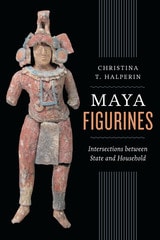
Maya Figurines
Intersections between State and HouseholdBy Christina T. Halperin
University of Texas Press, 2014
Rather than view the contours of Late Classic Maya social life solely from towering temple pyramids or elite sculptural forms, this book considers a suite of small anthropomorphic, zoomorphic, and supernatural figurative remains excavated from household refuse deposits. Maya Figurines examines these often neglected objects and uses them to draw out relationships between the Maya state and its subjects.
These figurines provide a unique perspective for understanding Maya social and political relations; Christina T. Halperin argues that state politics work on the microscale of everyday routines, localized rituals, and small-scale representations. Her comprehensive study brings together archeology, anthropology, and art history with theories of material culture, performance, political economy, ritual humor, and mimesis to make a fascinating case for the role politics plays in daily life. What she finds is that, by comparing small-scale figurines with state-sponsored, often large-scale iconography and elite material culture, one can understand how different social realms relate to and represent one another. In Maya Figurines, Halperin compares objects from diverse households, archeological sites, and regions, focusing especially on figurines from Petén, Guatemala, and comparing them to material culture from Belize, the northern highlands of Guatemala, the Usumacinta River, the Campeche coastal area, and Mesoamerican sites outside the Maya zone. Ultimately, she argues, ordinary objects are not simply passive backdrops for important social and political phenomena. Instead, they function as significant mechanisms through which power and social life are intertwined.