Results by title
1325 books match the query 'Psychology' and 76 start with m
MMPI-2 Correlates for Outpatient Community Mental Health Settings
John R. Graham
University of Minnesota Press, 1999

Macachiavellian Intelligence
How Rhesus Macaques and Humans Have Conquered the WorldDario Maestripieri
University of Chicago Press, 2007
Dario Maestripieri thinks it is high time we shelve that misperception, and with Macachiavellian Intelligence he gives rhesus macaques their rightful turn in the spotlight. The product of more than twenty years studying these fascinating creatures, Macachiavellian Intelligence caricatures a society that is as much human as monkey, with hierarchies and power struggles that would impress Machiavelli himself. High-status macaques, for instance, maintain their rank through deft uses of violence and manipulation, while altruism is almost unknown and relationships are perpetually subject to the cruel laws of the market. Throughout this eye-opening account, Maestripieri weds his thorough knowledge of macaque behavior to his abiding fascination with human society and motivations. The result is a book unlike any other, one that draws on economics as much as evolutionary biology, politics as much as primatology.
Rife with unexpected connections and peppered with fascinating anecdotes, Macachiavellian Intelligence has as much to teach us about humans as it does about macaques, presenting a wry, rational, and wholly surprising view of our humanity as seen through the monkey in the mirror.

Mad Men Unzipped
Fans on Sex, Love, and the Sixties on TVKaren L. Dill-Shackleford, Cynthia Vinney, Jeri Lynn Hogg, Kristin Hopper-Losenicky
University of Iowa Press, 2015
In answering these questions, the authors explore not just the online commentary but also Mad Men fans’ fan fiction, cosplay, cocktail making, and vintage furniture collecting. Whether tweeting as one of the main characters (or just a lowly mail clerk), setting Peggy up with the man who’ll treat her right, or figuring out just which “Mad Man” they are at heart, fans integrate the show into their lives and use it to make sense of their own choices in work, leisure, and love.

Mad and Divine
Spirit and Psyche in the Modern WorldSudhir Kakar
University of Chicago Press, 2009
Sudhir Kakar, India’s foremost practitioner of psychoanalysis, has focused his career on infusing this preeminently Western discipline with ideas and views from the East. In Mad and Divine, he takes on the separation of the spirit and the body favored by psychoanalysts, cautioning that a single-minded focus on the physical denies a person’s wholeness. Similarly, Kakar argues, to focus on the spirit alone is to hold in contempt the body that makes us human.
Mad and Divine looks at the interplay between spirit and psyche and the moments of creativity and transformation that occur when the spirit overcomes desire and narcissism. Kakar examines this relationship in religious rituals and healing traditions— both Eastern and Western—as well as in the lives of some extraordinary men: the mystic and guru Rajneesh, Gandhi, and the Buddhist saint Drukpa Kunley.
Enriched with a novelist’s felicity of language and an analyst’s piercing insights and startling interpretations, Mad and Divine is a valuable addition to the literature on the integration of the spirit and psyche in the evolving psychology of the individual.

Madness Is Civilization
When the Diagnosis Was Social, 1948-1980Michael E. Staub
University of Chicago Press, 2011
In the 1960s and 1970s, a popular diagnosis for America’s problems was that society was becoming a madhouse. In this intellectual and cultural history, Michael E. Staub examines a time when many believed insanity was a sane reaction to obscene social conditions, psychiatrists were agents of repression, asylums were gulags for society’s undesirables, and mental illness was a concept with no medical basis.
The first study to describe how social diagnostic thinking emerged, Madness Is Civilization casts new light on the politics of the postwar era.

Madness and Grace
A Practical Guide for Pastoral Care and Serious Mental IllnessMatthew Stanford
Templeton Press, 2021
Research tells us that when most people suffer from a mental health crisis, the first person they turn to for help is not a physician, a psychiatrist, or a social worker, but a pastor, a priest, or a minister. In other words, a leader in their church. Unfortunately, many church leaders are not trained to recognize mental illness and don’t know when to refer someone to a mental health professional. The consequence—unintended yet tragic—is continued and unnecessary suffering.
Madness and Grace is a comprehensive guide for church ministry to alleviate this situation. Written by Dr. Matthew Stanford, the book is carefully constructed to help build competency in detecting a wide spectrum of mental disorders, such as knowing when a person is contemplating suicide based on telltale patterns of speech. It also explodes common discriminatory myths that stigmatize people with mental illness, such as the myth that they are more prone to violence than others.
Dr. Stanford has treated clients throughout his career who were afflicted with all manner of mental disorders. In Madness and Grace, he takes the full extent of his experience and makes it accessible and actionable for the lay reader. He begins by explaining what constitutes a mental illness and how these disorders are classified according to science. He next teaches how to notice the presence of a mental illness by listening carefully to phraseology, observing behavior, and asking discerning questions. He goes on to discuss methods of treatment, common religious concerns about mental health, and ways church communities can support people on the road to recovery.
As a Christian, Dr. Stanford wants his fellow believers to know that acknowledging and seeking help for a mental illness is not a sign of weak faith. That’s why, in addition to sharing his medical expertise with church leaders, he commends pertinent biblical passages that underscore God’s concern for our mental wellbeing. These passages provide strength and comfort as complements to clinically-derived treatment and are essential to Dr. Stanford’s approach. “When working with those in severe psychological distress,” he writes, “compassion and grace are always the first line of pastoral care.”

Magdalene House
A Place about MercySarah VanHooser Suiter
Vanderbilt University Press, 2012
However, the story of the Magdalene community is not about these statistics, but about the stories the women tell. They say they thrive in the community because it is a place where they are free to be themselves, safe to give and receive love, and free to speak their trutheven to complain sometimes about how their storytelling is exploited "for the good of the community." A Place about Mercy is a participantobservation account of the history of this remarkable community founded in 1997, its structure, its Thistle Farms beauty products operation, and Reverend Becca Stevens's communal and spiritual vision. The book is finally about what it means to walk the path of healing with a group of unlikely women as guide.
Magdalene House was the subject of a multiplepart documentary on National Public Radio.
Make Your Job a Calling Resource Guide
Bryan J. Dik
Templeton Press, 2014
It is designed to assist instructors, book study leaders, career counselors, human resources professionals, and individual readers who seek to delve deeper into the book, Make Your Job a Calling. In each chapter of the guide, the reader is given (1) a chapter summary, (2) general themes, (3) discussion questions, and (4) suggested activities. The suggested activities often involve a free write where you are encouraged to write your thoughts down without editing yourself. In a free-write you are not concerned with proper grammar or punctuation. Rather, you write your immediate thoughts down in a free-flowing manner. This allows for deep exploration and can inform rich discussion of ideas in a productive learning environment.
The elements in this guide are designed to facilitate the reflection and discussion process, providing readers with useful starting points. Of course, not all group leaders will find every question or activity useful for their particular group, which is why we encourage flexible use of the material. By all means, pick, choose, add to, and adapt according to your sense of what will be most helpful for the group you are leading.
Whether you feel stuck or overwhelmed, hopeful or uncertain, or energized and ready to go, this guide can assist you in that journey.
Make Your Job a Calling
How the Psychology of Vocation Can Change Your Life at WorkBryan J. Dik
Templeton Press, 2013
Making Grateful Kids
The Science of Building CharacterJeffrey Froh
Templeton Press, 2014
If there was a new wonder drug on the market that got kids to behave better, improve their grades, feel happier, and avoid risky behaviors, many parents around the world would be willing to empty their bank accounts to acquire it. Amazingly, such a product actually does exist. It’s not regulated by the FDA, it has no ill side-effects, and it’s absolutely free and available to anyone at any time. This miracle cure is gratitude.
Over the past decade, science has shown that gratitude is one of the most valuable and important emotions we possess, and it is a virtue that anyone can cultivate. In fact, researchers have developed many different methods people can use to foster an attitude of gratitude, and the science shows that many of them really work.
In Making Grateful Kids, two of the leading authorities on gratitude among young people, Jeffrey J. Froh and Giacomo Bono, introduce their latest and most compelling research, announce groundbreaking findings, and share real-life stories from adults and youth to show parents, teachers, mentors, and kids themselves how to achieve greater life satisfaction through gratitude. Most importantly perhaps, they expand on this groundbreaking research to offer practical and effective common-sense plans that can be used in day-to-day interactions between kids and adults to enhance success and wellbeing.
Their unique, scientifically-based approach for producing grateful youth works whether these kids are very young elementary school students or troubled teenagers. Not only does the purposeful practice of gratitude increase their happiness, but the research indicates that grateful kids also report more self-discipline, fulfilling relationships, and engagement with their schools and communities when compared to their less grateful counterparts. After reading Making Grateful Kids, parents, teachers, and anyone who works with youth will be able to connect more meaningfully with kids so that all parties can focus on the things that matter most and, in turn, create a more cooperative and thriving society.

Making Love with the Land
EssaysJoshua Whitehead
University of Minnesota Press, 2024
A moving and deeply personal excavation of Indigenous beauty and passion in a suffering world
The novel Jonny Appleseed established Joshua Whitehead as one of the most exciting and important new literary voices on Turtle Island, winning both a Lambda Literary Award and Canada Reads 2021. In Making Love with the Land, his first nonfiction book, Whitehead explores the relationships between body, language, and land through creative essay, memoir, and confession.
In prose that is evocative and sensual, unabashedly queer and visceral, raw and autobiographical, Whitehead writes of an Indigenous body in pain, coping with trauma. Deeply rooted within, he reaches across the anguish to create a new form of storytelling he calls “biostory”—beyond genre, and entirely sovereign. Through this narrative perspective, Making Love with the Land recasts mental health struggles and our complex emotional landscapes from a nefarious parasite on his (and our) well-being to kin, even a relation, no matter what difficulties they present to us. Whitehead ruminates on loss and pain without shame or ridicule but rather highlights waypoints for personal transformation. Written in the aftermath of heartbreak, before and during the pandemic, Making Love with the Land illuminates this present moment in which both Indigenous and non-Indigenous people are rediscovering old ways and creating new ones about connection with and responsibility toward each other and the land.
Intellectually audacious and emotionally compelling, Whitehead shares his devotion to the world in which we live and brilliantly—even joyfully—maps his experience on the land that has shaped stories, histories, and bodies from time immemorial.
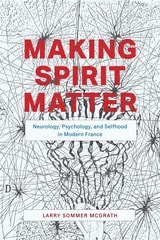
Making Spirit Matter
Neurology, Psychology, and Selfhood in Modern FranceLarry Sommer McGrath
University of Chicago Press, 2020
The connection between mind and brain has been one of the most persistent problems in modern Western thought; even recent advances in neuroscience haven’t been able to explain it satisfactorily. Historian Larry Sommer McGrath’s Making Spirit Matter studies how a particularly productive and influential group of nineteenth- and early twentieth-century French thinkers attempted to solve this puzzle by showing the mutual dependence of spirit and matter. The scientific revolution taking place at this point in history across disciplines, from biology to psychology and neurology, located our mental powers in the brain and offered a radical reformulation of the meaning of society, spirit, and the self. Tracing connections among thinkers such as Henri Bergson, Alfred Fouillée, Jean-Marie Guyau, and others, McGrath plots alternative intellectual movements that revived themes of creativity, time, and experience by applying the very sciences that seemed to undermine metaphysics and religion. Making Spirit Matter lays out the long legacy of this moment in the history of ideas and how it might renew our understanding of the relationship between mind and brain today.

Making a Monster
Jesse Pomeroy, the Boy Murderer of 1870s BostonDawn Keetley
University of Massachusetts Press, 2017
In this book, Dawn Keetley details the story of Pomeroy's crimes and the intense public outcry. She explores the two reigning theories at the time—that he was shaped before birth when his pregnant mother visited a slaughterhouse and that he imitated brutal acts found in popular dime novels. Keetley then thoughtfully offers a new theory: that Pomeroy suffered a devastating reaction to a smallpox vaccination which altered his brain, creating a psychopath who revealed the human potential for brutality. The reaction to Pomeroy's acts, then and now, demonstrates the struggle to account for exactly those aspects of human nature that remain beyond our ability to understand.

Managerial Psychology
Managing Behavior in OrganizationsHarold J. Leavitt and Homa Bahrami
University of Chicago Press, 1988

Mandela's Dark Years
A Political Theory of DreamingSharon Sliwinski
University of Minnesota Press, 2015
Inspired by one of Nelson Mandela’s recurring nightmares, Mandela’s Dark Years offers a political reading of dream-life. Sharon Sliwinski guides the reader through the psychology of apartheid, recasting dreaming as a vital form of resistance to political violence, away from a rational binary of thinking.
This short, provocative study blends political theory with clinical psychoanalysis, opening up a new space to consider the politics of reverie.
Forerunners is a thought-in-process series of breakthrough digital works. Written between fresh ideas and finished books, Forerunners draws on scholarly work initiated in notable blogs, social media, conference plenaries, journal articles, and the synergy of academic exchange. This is gray literature publishing: where intense thinking, change, and speculation take place in scholarship.

Manhood Impossible
Men's Struggles to Control and Transform Their Bodies and WorkMelzer, Scott
Rutgers University Press, 2018
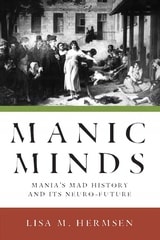
Manic Minds
Mania's Mad History and Its Neuro-FutureLisa M. Hermsen
Rutgers University Press, 2012
Spanning several centuries, Manic Minds traces the multiple ways in which the word "mania" has been used by popular, medical, and academic writers. It reveals why the rhetorical history of the word is key to appreciating descriptions and meanings of the "manic" episode." Lisa M. Hermsen examines the way medical professionals analyzed the manic condition during the nineteenth and twentieth centuries and offers the first in-depth analysis of contemporary manic autobiographies: bipolar figures who have written from within the illness itself.
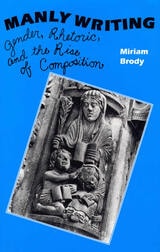
Manly Writing
Gender, Rhetoric and the Rise of CompostionMiriam Brody
Southern Illinois University Press, 1993
In this critical history of the gendered politics of rhetoric and the rise of composition, Miriam Brody argues that nothing about words or their arrangement is innately gendered. Yet since the English Enlightenment, teachers have encouraged their students to admire and imitate "manly" writing, writing that is plain, forceful, cogent, and true. Similarly, students have been enjoined to avoid so-called effeminate or feminine writing—writing characterized as vague, unorganized, ornate, and deceitful.
Such advice, part of what Brody terms the hidden curriculum, has served the interests of discourse communities as various as the early Enlightenment Royal Society in seventeenth-century London (by urging a clear and masculine style for the work of science) and the land-grant universities of nineteenth-century America (by claiming that the work of writing was similar to clearing the land and pushing back the frontier). Brody’s discussion in fact becomes a social history of canonical rhetorical essays and important late Enlightenment, nineteenth-century, and early modern school texts. She points out that in their advice to writers even the Strunks and Whites and Peter Elbows of more recent times have extolled masculine virtues and urged control over invasive and problematic feminine qualities.
Brody’s book not only clarifies rhetoric’s inheritance and transformation of the classical ideal of manliness, it also is the first critical work to explore the ideological significance of gendered imagery and to interpret in light of this imagery rhetorical essays and hard-to-locate early composition texts against a background of previously unpublished archival materials.

Mantle of Mercy
Islamic Chaplaincy in North AmericaMuhammad A. Ali
Templeton Press, 2022
Working in a variety of settings—including hospitals, prisons, universities, and the armed forces—Muslim chaplains encounter unique challenges on a daily basis, requiring them to call upon the resources of their Islamic faith with wisdom and tenderness. The contributors to this volume explore these circumstances vividly and honestly. Their personal stories are instructive of how Islamic principles can be employed with spiritual insight to bring strength and comfort to the sick and suffering.
Manual for Using the MMPI-2 as a Therapeutic Intervention
Stephen E. Finn
University of Minnesota Press, 1996
Mark, Mutuality, and Mental Health
Encounters with JesusSimon Mainwaring
SBL Press, 2014
An incitement to re-assess how society relates to persons with poor mental health
Mainwaring explores the societal contexts of those who suffer poor mental health, and in particular the relational dynamics of how identity, agency, and dialogue are negotiated in personal encounters. This work seeks to serve as an experiment, such that interested readers might better understand the dynamics of relational power that pervade encounters with persons with poor mental health.
Features:
- Foucauldian analysis of the relational dynamics of poor mental health used to re-imagine hegemonic relational dynamics
- Close readings of encounters between individual characters to evaluate how mutuality operates in those encounters
- Study of mutuality as it has emerged in mental health literature, feminist theologies, and theologies of disability

Marx on Suicide
Karl Marx
Northwestern University Press, 1999

Mary Climbs In
The Journeys of Bruce Springsteen's Women FansLorraine Mangione
Rutgers University Press, 2023
Mary Climbs In illuminates this once overlooked but increasingly important and multi-faceted conversation about female audiences for Springsteen’s music. Drawing on unique surveys of fans themselves, the study offers insight into women’s experiences in their own voices. Authors Lorraine Mangione and Donna Luff explore the depth of women fans’ connection to Springsteen and the profound ways this connection has shaped their lives. Reflections from fans enliven each page as readers journey through the camaraderie and joy of concerts, the sorrow and confusion of personal loss and suffering, the love and closeness of community, and the search for meaning and for the self. Viewed through a psychological lens, women fans’ relationship with Springsteen is revealed in all its complexity as never before. Mary Climbs In is an important interdisciplinary contribution to the growing field of Springsteen studies and a must-read for any fan.
Masculindians
Conversations about Indigenous ManhoodSam McKegney
Michigan State University Press, 2014
Contributors: Taiaiake Alfred, Kim Anderson, Joanne Arnott, Joseph Boyden, Alison Calder, Warren Cariou, Jessica Danforth, Louise Halfe, Tomson Highway, Daniel Heath Justice, Janice C. Hill Kanonhsyonni, Lee Maracle, Neal McLeod, Daniel David Moses, Gregory Scofield, Thomas Kimeksum Thrasher, and Richard Van Camp.
Masculinity and Femininity in the MMPI-2 and MMPI-A
Hale Martin
University of Minnesota Press, 2010
Martin and Finn consider the factor structure and correlates of masculinity and femininity in the MMPI in multiple samples. Through their analyses, they are able to address such questions as: Is there such a thing as masculinity/femininity? If so, are masculinity and femininity separate constructs, or are they opposite ends of a bipolar dimension? What are the core aspects of masculinity and femininity? Are they the same for men and women? Do the meanings of masculinity and femininity vary across the human life span and in different cultures? To what extent are masculinity and femininity biologically or socially determined? Can masculinity and femininity be adequately measured by the MMPI-2 and MMPI-A?
This insightful work uses solid empirical methods to clarify significant constructs. It will be an essential resource for researchers in the areas of personality, psychological assessment, and gender studies, as well as for clinicians working with clients who have nontraditional gender identities.
Masculinity and Femininity
Their Psychological Dimensions, Correlates, and AntecedentsBy Janet T. Spence and Robert L. Helmreich
University of Texas Press, 1978
Many societies assign sharply distinguished roles to men and women. Personality differences, as well as physical differences, between men and women are used to justify these different sex roles, and women are seen as more emotionally and interpersonally sensitive than men, while men are said to be more competent, achievement oriented, and assertive than women. A widely held view is that not only do men and women differ but that possession of "masculine" characteristics precludes possession of "feminine" characteristics. This bipolar conception has led to the definition of masculinity and femininity as opposites. Acceptance of this idea has caused social scientists and laypersons to consider men and women who possess cross-sex personality characteristics as less emotionally healthy and socially adjusted than those with sex-appropriate traits. Previous research by the authors and others, done almost exclusively with college students, has shown, however, that masculinity and femininity do not relate negatively to each other, thus supporting a dualistic rather than a bipolar conception of these two psychological dimensions.
Spence and Helmreich present data showing that the dualistic conception holds for a large number of groups, varying widely in age, geographical location, socioeconomic status, and patterns of interest, whose psychological masculinity and femininity were measured with an objective instrument, the Personality Attributes Questionnaire, devised by the authors. Many individuals are shown to be appropriately sex-typed; that is, men tend to be high in masculinity and low in femininity and women the reverse. However, a substantial number of men and women are androgynous—high in both masculine and feminine characteristics—while some are not high in either. Importantly, the authors find that androgynous individuals display more self-esteem, social competence, and achievement orientation than individuals who are strong in either masculinity or femininity or are not strong in either.
One of the major contributions of the work is the development of a new, multifaceted measure of achievement motivation (the Work and Family Orientation Questionnaire), which can be used successfully to predict behavior in both males and females and is related to masculinity and femininity in both sexes.
In addition to investigating the correlates of masculinity and femininity, the authors attempt to isolate parental factors that contribute to the development of these characteristics and achievement motivation. The book includes analyses of data from students on their perception of their parents, which enable the authors to examine the influence of parental masculinity and femininity and parental behaviors and child-rearing attitudes on the development of masculinity and femininity and achievement motivation characteristics in their children. The important implications of these findings for theories of sex roles, personality development, and achievement motivation are examined.
Masculinity in Transition
K. Allison Hammer
University of Minnesota Press, 2023
Locating the roots of toxic masculinity and finding its displacement in unruly culture
Masculinity in Transition analyzes shifting relationships to masculinity in canonical works of twentieth-century literature and film, as well as in twenty-first-century media, performance, and transgender poetics. Focusing on “toxic masculinity,” which has assumed new valence since 2016, K. Allison Hammer traces its roots to a complex set of ideologies embedded in the histories of settler colonialism, racial capitalism, and political fraternity, and finds that while toxic strains of masculinity are mainly associated with straight, white men, trans and queer masculinities can be implicated in these systems of power.
Hammer argues, however, that these malignant forms of masculinity are not fixed and can be displaced by “unruly alliances”—texts and relationships that reject the nationalisms and gender politics of white male hegemony and perform an urgently needed reimagining of what it means to be masculine. Locating these unruly alliances in the writings, performances, and films of butch lesbians, gay men, cisgender femmes, and trans and nonbinary individuals, Masculinity in Transition works through an archive of works of performance art, trans poetics, Western films and streaming media, global creative responses to HIV/AIDS, and working-class and “white trash” fictions about labor and unionization.
Masculinity in Transition moves the study of masculinity away from an overriding preoccupation with cisnormativity, whiteness, and heteronormativity, and toward a wider and more generative range of embodiments, identifications, and ideologies. Hammer’s bold rethinking of masculinity and its potentially toxic effects lays bare the underlying fragility of normative masculinity.
Retail e-book files for this title are screen-reader friendly with images accompanied by short alt text and/or extended descriptions.
Masculinity, Motherhood, and Mockery
Psychoanalyzing Culture and the Iatmul Naven Rite in New GuineaEric Kline Silverman
University of Michigan Press, 2001
Throughout this work, Eric Silverman details the dialogics of mothering and manhood throughout Eastern Iatmul culture, including in his analysis cosmology and myth; food- and childraising; architecture and canoes; ethnophysiology and sexuality; shame and hygiene; marriage and kinship; and perhaps most significantly, a ceremonial locus classicus in anthropology: the famous Iatmul naven rite. This book provides the first sustained examination of naven since Bateson, presenting new data and interpretations that are based entirely on original, first-hand ethnographic research.
The sustained engagement with anthropological and psychoanalytic theory coupled with a refreshing examination of a famous and still-enigmatic ritual is sure to make multiple contributions to pressing debates in contemporary anthropology and social theory.
Eric Silverman is Associate Professor of Anthropology, DePauw University.

Mask Off
Masculinity RedefinedJJ Bola
Pluto Press, 2019
From Blurred Lines to gang signs, how does society cause toxic masculinity? How do we define masculinity today? Dominating the world around us, seen in deadly gun violence, higher male suicide rates, and the incels on Reddit, masculinity is perceived to be “toxic,” “fragile,” and “in crisis.” What does that mean for society, and how can we understand it?
In Mask Off, JJ Bola exposes masculinity as a performance that men are socially conditioned into. Using examples of non-Western cultural traditions, music, and sport, he shines light on historical narratives around manhood, debunking popular myths along the way. He explores how LGBTQ men, men of color, and male refugees experience masculinity in diverse ways, revealing its fluidity, how it's strengthened and weakened by different political contexts, such as the patriarchy or the far-right, and perceived differently by those around them. Chapters include:
*Real men: Myths of masculinity
*What’s love got to do with it? Love, sex and consent
*This is a man’s world: The politics of masculinity, the masculinity of politics
*If I were a boy: Gender equality and feminism
*Slamdunk at the funk: masculinity and sport
At the heart of love and sex, the political stage, competitive sports, gang culture, and mental health issues, lies masculinity: Mask Off is an urgent call to unravel masculinity and redefine it. "What do our own perceptions of masculinity and the wider cultural norms around it mean for young boys growing up into manhood? What do they mean for young men and older men grappling with a society that encourages them to hold on to the anger that destroys the lives of women as well as the lives of many men?" Those questions and more offer food for thought for every man.

Materiality
Daniel Miller, ed.
Duke University Press, 2005
Considering topics as diverse as theology, technology, finance, and art, the contributors—most of whom are anthropologists—examine the many different ways in which materiality has been understood and the consequences of these differences. Their case studies show that the latest forms of financial trading instruments can be compared with the oldest ideals of ancient Egypt, that the promise of software can be compared with an age-old desire for an unmediated relationship to divinity. Whether focusing on the theology of Islamic banking, Australian Aboriginal art, derivatives trading in Japan, or textiles that respond directly to their environment, each essay adds depth and nuance to the project that Materiality advances: a profound acknowledgment and rethinking of one of the basic properties of being human.
Contributors. Matthew Engelke, Webb Keane, Susanne Küchler, Bill Maurer, Lynn Meskell, Daniel Miller, Hirokazu Miyazaki, Fred Myers, Christopher Pinney, Michael Rowlands, Nigel Thrift

Matters of Significance
Replication, Translation and Academic Freedom in developmental scienceMarinus H. van IJzendoorn and Marian J. Bakermans-Kranenburg
University College London, 2024
Application of scientific findings to effective practice and informed policymaking is an aspiration for much research in the biomedical, behavioral, and developmental sciences. But too often translations of science to practice are conceptually narrow and developed quickly as salves to an urgent problem. For developmental science, widely implemented parenting interventions are prime examples of technical translations from knowledge about the causes of children’s mental distress. Aiming to support family relationships and facilitate adaptive child development, these programs are rushed through when the scientific findings on which they are based remain contested and without enough evidence of success from randomized controlled trials.
In Matters of Significance, the authors draw on forty years of experience with theoretical, empirical, meta-analytic, and translational work in child development research to highlight the complex relations between replication, translation, and academic freedom. They argue that challenging fake facts promulgated by under-replicated and underpowered studies is also a method of translation. Such a challenge can, in the highlighted field of attachment and emotion regulation research, bust popular myths about the decisive role of genes, hormones, or the brain on parenting and child development, with a balancing impact on practice and policy making. The authors argue that academic freedom from interference by pressure groups, stakeholders, funders, or university administrators in the core stages of research is a necessary but besieged condition for adversarial research and myth-busting.

Mature Audiences
Television in the Lives of EldersKaren E. Riggs
Rutgers University Press, 1998
Meaningful Technologies
How Digital Metaphors Change the Way We Think and LiveEric Chown and Fernando Nascimento
Lever Press, 2022
As smartphones mediate more of our activities, they are changing our relationship with meaning. To a teenager, for example a “conversation” is just as likely to refer to an exchange of text messages as it is a face-to-face discussion. Meanwhile, Facebook has redefined what friendship means, Snapchat what a memory means, etc. The kinds of changes smartphones bring are happening at rapid pace: TikTok reached a billion users in just over three years, whereas it took the telephone 75 years to reach a tenth of that number of people. Meaningful Technologies: How Digital Metaphors Change the Way We Think and Live by Eric Chown and Fernando Nascimento offers systematic reconsideration of the ways in which digital technologies impact our lives both individually and collectively.
Metaphors aren’t just a clever way to describe technology, they are also changing the way we think. When we click on a picture of a shopping cart it connects a complex set of technologies to represent a simple idea that we’re all familiar with. A heart icon under a photo is understood as an easy way to express appreciation. We aren’t required to understand how technology works, just how we interact with it. The ambiguity of metaphors, and the complexity of technology can also hide important realities about what is being described. “The cloud,” for example, actually consists of very real data centers, which consume huge amounts of natural resources to keep running. Meanwhile, pressing that heart icon on a photo is a signal to the artificial intelligences running in your app that you want to see more things like that photo and that it should adjust what it knows about you accordingly.
There is a constant feedback loop between us and the digital technologies we use. We are constantly using them and they are changing us through their usage. Meaningful Technologies focuses on this loop from the perspectives of hermeneutic philosophy and cognitive science. Through the former, the authors examine meaning and how it changes over time. Through the latter, they gain understanding of how this feedback loop impacts individuals, especially in terms of learning and attention. Chown and Nascimento argue that, on the one hand, apps have a kind of agency never before possible in a technology, but also that, armed with a critical framework for examining such apps, we can regain some of our own agency. This book will appeal to scholars of digital media digital and computational studies, and those interested in issues related to ethical impacts of digital technologies.
Meanings for Manhood
Edited by Mark C. Carnes and Clyde Griffen
University of Chicago Press, 1990
Media Madness
Public Images of Mental IllnessOtto F. Wahl
Rutgers University Press, 1997
"Media Madness is a most timely, readable, and useful book, exposing, as it does, the myths about mental illness that most of us live by--myths that are as destructive as they are pervasive. Wahl is especially good at showing, in detail, the many ways in which false views of mental illness, purveyed in the media, shape the ways even the most enlightened of us view the world around us. A most thoughtful, stimulating book, from which I learned a great deal." --Jay Neugeboren, author of Imagining Robert: My Brother, Madness, and Survival--A Memoir
"An outstanding book . . . well-researched . . . it is 'must reading.'" --Laurie Flynn, former executive director, National Alliance for the Mentally Ill "The rampant inaccuracies about mental illnesses in newspapers, magazines, movies, and books make it clear that this is not merely stereotyping, but rather a pervasive ignorance. Dr. Wahl's book goes far to explain where the errors are and to educate and sensitize the reader to frequent inaccuracies. In addition, the book is very readable." --NAMI Advocate
"What do the media have to do with one's perception of mental illness? Wahl takes an in-depth look a how unfavorable public images of mental illness are often inaccurate. Statistics show that one out of every five people in the U.S. will experience a psychiatric illness. With boldness and sensitivity, Wahl takes a powerful look at the inaccurate stereotypes created by the media."
Medicine over Mind
Mental Health Practice in the Biomedical EraDena T. Smith
Rutgers University Press, 2019
Medieval Masculinities
Regarding Men in the Middle AgesClare A. Lees
University of Minnesota Press, 1994
"Ranging from questions of epic violence and heroic embodiments of manhood to constructions of bachelorhood, husbandry, and sainthood, Medieval Masculinities is the first synthesis of medieval and gender studies to focus on masculinities."
Harry Brod, editor of The Making of Masculinities"We should not be working [exclusively] on the subjected sex any more than a historian of class can focus exclusively on peasants."-Natalie Zemon Davis, 1975 In the years since Natalie Davis made this remark, men's studies, and gender studies along with it, has earned its place in scholarship. What is often missing from such studies, however, is the insight that the concept of gender in general, and that of masculinity in particular, can be understood only in relation to individual societies, examined at specific historical and cultural moments. A brilliant application of this insight, Medieval Masculinities is the first full-length collection to explore the issues of men's studies and contemporary theories of gender within the context of the Middle Ages. Interdisciplinary and multicultural, the essays range from matrimony in medieval Italy to bachelorhood in Renaissance Venice, from friars and saints to the male animal in the fables of Marie de France, from manhood in Sir Gawain and the Green Knight, Beowulf, and the Roman d'Eneas to men as "other," whether Muslim or Jew, in medieval Castilian epic and ballad. The authors are especially concerned with cultural manifestations of masculinity that transcend this particular historical period-idealized gender roles, political and economic factors in structuring social institutions, and the impact of masculinist ideology in fostering and maintaining power. Together, their essays constitute an important reassessment of traditional assumptions within medieval studies as well as a major contribution to the evolving study of gender.ContributorsChristopher Baswell, Barnard CollegeVern L. Bullough, SUNY, BuffaloStanley Chojnacki, Michigan State UniversityJohn Coakley, New Brunswick Theological SeminaryThelma Fenster, Fordham UniversityClare Kinney, University of VirginiaClare A. Lees, University of PennsylvaniaJo Ann McNamara, Hunter CollegeLouise Mirrer, Fordham UniversityHarriet Spiegel, California State University, ChicoSusan Mosher Stuard, Haverford College
Melancholy, Love, and Time
Boundaries of the Self in Ancient LiteraturePeter Toohey
University of Michigan Press, 2004
Mema's House, Mexico City
On Transvestites, Queens, and MachosAnnick Prieur
University of Chicago Press, 1998
Mema, an AIDS educator and the leader of this gang of homosexual men, invited Annick Prieur, a European sociologist, to meet the community and to conduct her fieldwork at his house. Prieur lived there for six months between 1988 and 1991, and she has kept in touch for more than eight years. As Prieur follows the transvestites in their daily activities—at their work as prostitutes or as hairdressers, at night having fun in the streets and in discos—on visits with their families and even in prisons, a fascinating story unfolds of love, violence, and deceit.
She analyzes the complicated relations between the effeminate homosexuals, most of them transvestites, and their partners, the masculine-looking bisexual men, ultimately asking why these particular gender constructions exist in the Mexican working classes and how they can be so widespread in a male-dominated society—the very society from which the term machismo stems. Expertly weaving empirical research with theory, Prieur presents new analytical angles on several concepts: family, class, domination, the role of the body, and the production of differences among men.
A riveting account of heroes and moral dilemmas, community gossip and intrigue, Mema's House, Mexico's City offers a rich story of a hitherto unfamiliar culture and lifestyle.
Memorializing Violence
Transnational Feminist ReflectionsAlison Crosby
Rutgers University Press, 2025
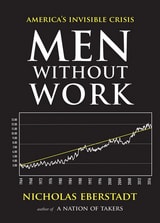
Men Without Work
America's Invisible CrisisNicholas Eberstadt
Templeton Press, 2016
By one reading, things look pretty good for Americans today: the country is richer than ever before and the unemployment rate is down by half since the Great Recession—lower today, in fact, than for most of the postwar era.
But a closer look shows that something is going seriously wrong. This is the collapse of work—most especially among America’s men. Nicholas Eberstadt, a political economist who holds the Henry Wendt Chair in Political Economy at the American Enterprise Institute, shows that while “unemployment” has gone down, America’s work rate is also lower today than a generation ago—and that the work rate for US men has been spiraling downward for half a century. Astonishingly, the work rate for American males aged twenty-five to fifty-four—or “men of prime working age”—was actually slightly lower in 2015 than it had been in 1940: before the War, and at the tail end of the Great Depression.
Today, nearly one in six prime working age men has no paid work at all—and nearly one in eight is out of the labor force entirely, neither working nor even looking for work. This new normal of “men without work,” argues Eberstadt, is “America’s invisible crisis.”
So who are these men? How did they get there? What are they doing with their time? And what are the implications of this exit from work for American society?
Nicholas Eberstadt lays out the issue and Jared Bernstein from the left and Henry Olsen from the right offer their responses to this national crisis.
For more information, please visit http://menwithoutwork.com.
Men in Black
John Harvey
University of Chicago Press, 1995
"Why can't we pick out our own color?"
Joe:
"I tried that once, it don't work. You get four guys fighting over who's gonna be Mr. Black."
—Quentin Tarantino, Reservoir Dogs
Men's clothes went black in the nineteenth century. Dickens, Ruskin and Baudelaire all asked why it was, in an age of supreme wealth and power, that men wanted to dress as if going to a funeral. The answer is in this history of the color black. Over the last 1000 years there have been successive expansions in the wearing of black—from the Church to the Court, from the Court to the merchant class. Though black as fashion was often smart and elegant, its growth as a cultural marker was fed by several currents in Europe's history—in politics, asceticism, religious warfare. Only in the nineteenth century, however, did black fully come into its own as fashion, the most telling witnesses constantly saw connections between the taste for black and the forms of constraint with which European society regimented itself.
Concentrating on the general shift away from color that began around 1800, Harvey traces the transition to black from the court of Burgundy in the 15th century, through 16th-century Venice, 17th-century Spain and the Netherlands. He uses paintings from Van Eyck and Degas to Francis Bacon, religious art, period lithographs, wood engravings, costume books, newsphotos, movie stills and related sources in his compelling study of the meaning of color and clothes.
Although in the twentieth century tastes have moved toward new colors, black has retained its authority as well as its associations with strength and cruelty. At the same time black is still smart, and fashion keeps returning to black. It is, perhaps, the color that has come to acquire the greatest, most significant range of meaning in history.

Mental Health Services for Deaf People
Treatment Advances, Opportunities, and ChallengesBenito Estrada Aranda
Gallaudet University Press, 2015
Volume editors Benito Estrada Aranda and Ines Sleeboom-van Raaij have divided the book into three parts—Mental Health Issues and Treatment, Deaf Populations, and Deaf Children and Their Families. In the first part, the contributors provide in-depth analysis of specific challenges and treatment modalities ranging from the provision of mental healthcare as a basic human right to psychopharmacological treatment, the challenges in developing mental health services for deaf and hard of hearing people in countries where none exist, and new treatment therapies.
Part two looks at issues of self-esteem and cultural identity among deaf and hard of hearing adults in Greece and Cyprus, the services for deaf people at a public health clinic in Austria, and the quality of life among Latino Deaf bilinguals in the United States. In the last part, the contributors focus on mental health issues found in deaf children and adolescents and on the relationships between deaf teenagers and their hearing mothers. The volume concludes with a case study of a prelingually deaf child diagnosed as autistic. Taken all together, these cutting-edge articles explore the important issues within the specialized area of mental health and deafness.

Mental Traveler
A Father, a Son, and a Journey through SchizophreniaW. J. T. Mitchell
University of Chicago Press, 2020
Gabriel Mitchell was diagnosed with schizophrenia at age twenty-one and died by suicide eighteen years later. He left behind a remarkable archive of creative work and a father determined to honor his son’s attempts to conquer his own illness. Before his death, Gabe had been working on a film that would show madness from inside and out, as media stereotype and spectacle, symptom and stigma, malady and minority status, disability and gateway to insight. He was convinced that madness is an extreme form of subjective experience that we all endure at some point in our lives, whether in moments of ecstasy or melancholy, or in the enduring trauma of a broken heart. Gabe’s declared ambition was to transform schizophrenia from a death sentence to a learning experience, and madness from a curse to a critical perspective.
Shot through with love and pain, Mental Traveler shows how Gabe drew his father into his quest for enlightenment within madness. It is a book that will touch anyone struggling to cope with mental illness, and especially for parents and caregivers of those caught in its grasp.

Mesmerized
Powers of Mind in Victorian BritainAlison Winter
University of Chicago Press, 1998
"Dazzling. . . . This splendid book . . . gives us a new form of historical understanding and a model for open and imaginative reading."—James R. Kinkaid, Boston Globe
"A landmark in the history of science scholarship."—John Sutherland, The Independent
"It is difficult to imagine the documentary side of the story being better done than by Winter's well-researched and generously illustrated study. . . . She is a lively and keen observer; and her book is a pleasure to read purely for its range of material and wealth of detail. . . . Fruitful and suggestive."—Daniel Karlin, Times Literary Supplement
"An ambitious, sweeping and fascinating historical study. . . . Beautifully written, thoroughly researched, and well-illustrated."—Bernard Lightman, Washington Times
Meta-Analysis for Explanation
A CasebookThomas D. Cook
Russell Sage Foundation, 1992
Metaphors Dead and Alive, Sleeping and Waking
A Dynamic ViewCornelia Müller
University of Chicago Press, 2008
To build this model, Müller presents an overview of notions of metaphor from the classical period to the present; studies in detail how metaphors function in speech, text, gesture, and images; and examines the way mixed metaphors sometimes make sense and sometimes do not. This analysis leads her to conclude that metaphors may oscillate between various degrees of sleeping and waking as their status changes depending on context and intention. Bridging the gap between conceptual metaphor theory and more traditional linguistic theories, this book is a major advance for the field and will be vital to novices and initiates alike.
Metaphysical Community
The Interplay of the Senses and the IntellectBy Greg Urban
University of Texas Press, 1996
Winner, Senior Book Prize, American Ethnological Society
Starting with the post-structuralist idea that truth systems are lodged in discourse, and that discourse varies from society to society, Greg Urban seeks to discover the nature and extent of that variation. His journey to an Amerindian society in which dreams are more prominent than everyday aspects of the sensible world leads him to radically reformulate one of the main problematics of Western thought: the relationship between our sensations of the world and the understandings we form of them.
Metaphysical Community proposes that this dichotomy comes from the interplay between two sides of discourse-its intelligible side as a carrier of meanings, and its sensible side as thing-in-the-world that must be replicated. This insight leads to the heart of the book-the exploration of the uneasy tension that binds experience and understanding, phenomena and noumena.
Urban challenges basic assumptions that underlie social and cultural anthropology and much of the social sciences and humanities. His provocative insights will be of interest to all those concerned with anthropology, cultural studies, literary criticism, the sociology and politics of culture, and philosophy.
Methods That Matter
Integrating Mixed Methods for More Effective Social Science ResearchEdited by M. Cameron Hay
University of Chicago Press, 2016
Historically, the largest division between social science methods has been that between quantitative and qualitative measures. For people trained in psychology or sociology, the bias has been toward the former, using surveys and experiments that yield readily comparable numerical results. For people trained in anthropology, it has been toward the latter, using ethnographic observations and interviews that offer richer nuances of meaning but are difficult to compare across societies. Discussing their own endeavors to combine the quantitative with the qualitative, the authors invite readers into a conversation about the best designs and practices of mixed methodologies to stimulate creative ideas and find new pathways of insight. The result is an engaging exploration of a promising new approach to the social sciences.
Midlife Crisis
The Feminist Origins of a Chauvinist ClichéSusanne Schmidt
University of Chicago Press, 2020
The first book-length history of this controversial concept, Susanne Schmidt’s Midlife Crisis recounts the surprising origin story of the midlife debate and traces its movement from popular culture into academia. Schmidt’s engaging narrative telling of the feminist construction—and ensuing antifeminist backlash—of the midlife crisis illuminates a lost legacy of feminist thought, shedding important new light on the history of gender and American social science in the 1970s and beyond.