Results by title
436 books match the query 'Renaissance' and 23 start with m
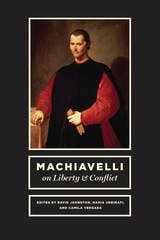
Machiavelli on Liberty and Conflict
Edited by David Johnston, Nadia Urbinati, and Camila Vergara
University of Chicago Press, 2017
With Machiavelli on Liberty and Conflict, David Johnston, Nadia Urbinati, and Camila Vergara have brought together the most recent research on The Prince, with contributions from many of the leading scholars of Machiavelli, including Quentin Skinner, Harvey Mansfield, Erica Benner, John McCormick, and Giovanni Giorgini. Organized into four sections, the book focuses first on Machiavelli’s place in the history of political thought: Is he the last of the ancients or the creator of a new, distinctly modern conception of politics? And what might the answer to this question reveal about the impact of these disparate traditions on the founding of modern political philosophy? The second section contrasts current understandings of Machiavelli’s view of virtues in The Prince. The relationship between political leaders, popular power, and liberty is another perennial problem in studies of Machiavelli, and the third section develops several claims about that relationship. Finally, the fourth section explores the legacy of Machiavelli within the republican tradition of political thought and his relevance to enduring political issues.
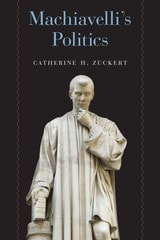
Machiavelli's Politics
Catherine H. Zuckert
University of Chicago Press, 2017
Starting with Machiavelli’s two major political works, Zuckert persuasively shows that the moral revolution Machiavelli sets out in The Prince lays the foundation for the new form of democratic republic he proposes in the Discourses. Distrusting ambitious politicians to serve the public interest of their own accord, Machiavelli sought to persuade them in The Prince that the best way to achieve their own ambitions was to secure the desires and ambitions of their subjects and fellow citizens. In the Discourses, he then describes the types of laws and institutions that would balance the conflict between the two in a way that would secure the liberty of most, if not all. In the second half of her book, Zuckert places selected later works—La Mandragola, The Art of War, The Life of Castruccio Castracani, Clizia, and Florentine Histories—under scrutiny, showing how Machiavelli further developed certain aspects of his thought in these works. In The Art of War, for example, he explains more concretely how and to what extent the principles of organization he advanced in The Prince and the Discourses ought to be applied in modern circumstances. Because human beings act primarily on passions, Machiavelli attempts to show readers what those passions are and how they can be guided to have productive rather than destructive results.
A stunning and ambitious analysis, Machiavelli’s Politics brilliantly shows how many conflicting perspectives do inform Machiavelli’s teachings, but that one needs to consider all of his works in order to understand how they cohere into a unified political view. This is a magisterial work that cannot be ignored if a comprehensive understanding of the philosopher is to be obtained.
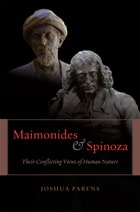
Maimonides and Spinoza
Their Conflicting Views of Human NatureJoshua Parens
University of Chicago Press, 2012
Until the last century, it was generally agreed that Maimonides was a great defender of Judaism, and Spinoza—as an Enlightenment advocate for secularization—among its key opponents. However, a new scholarly consensus has recently emerged that the teachings of the two philosophers were in fact much closer than was previously thought. In his perceptive new book, Joshua Parens sets out to challenge the now predominant view of Maimonides as a protomodern forerunner to Spinoza—and to show that a chief reason to read Maimonides is in fact to gain distance from our progressively secularized worldview.
Marsilio Ficino, Three Books on Life
A Critical Edition and TranslationCarol V. Kaske
Arizona Center for Medieval and Renaissance Studies, 2019
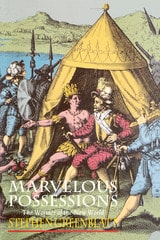
Marvelous Possessions
The Wonder of the New WorldStephen Greenblatt
University of Chicago Press, 1991
In a series of innovative readings of travel narratives, judicial documents, and official reports, Stephen Greenblatt shows that the experience of the marvelous, central to both art and philosophy, was cunningly yoked by Columbus and others to the service of colonial appropriation. He argues that the traditional symbolic actions and legal rituals through which European sovereignty was asserted were strained to the breaking point by the unprecedented nature of the discovery of the New World. But the book also shows that the experience of the marvelous is not necessarily an agent of empire: in writers as different as Herodotus, Jean de Léry, and Montaigne—and notably in Mandeville's Travels, the most popular travel book of the Middle Ages—wonder is a sign of a remarkably tolerant recognition of cultural difference.
Marvelous Possession is not only a collection of the odd and exotic through which Stephen Greenblatt powerfully conveys a sense of the marvelous, but also a highly original extension of his thinking on a subject that has occupied him throughout his career. The book reaches back to the ancient Greeks and forward to the present to ask how it is possible, in a time of disorientation, hatred of the other, and possessiveness, to keep the capacity for wonder from being poisoned?
"A marvellous book. It is also a compelling and a powerful one. Nothing so original has ever been written on European responses to 'The wonder of the New World.'"—Anthony Pagden, Times Literary Supplement
"By far the most intellectually gripping and penetrating discussion of the relationship between intruders and natives is provided by Stephen Greenblatt's Marvelous Possessions."—Simon Schama, The New Republic
"For the most engaging and illuminating perspective of all, read Marvelous Possessions."—Laura Shapiro, Newsweek
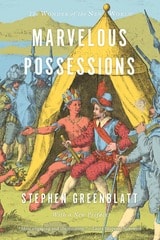
Marvelous Possessions
The Wonder of the New WorldStephen Greenblatt
University of Chicago Press, 2017
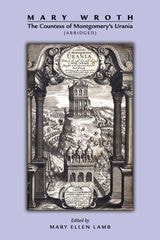
Mary Wroth
The Countess of Montgomery's Urania (Abridged)Edited by Mary Ellen Lamb
Arizona Center for Medieval and Renaissance Studies, 2000
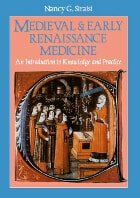
Medieval and Early Renaissance Medicine
An Introduction to Knowledge and PracticeNancy G. Siraisi
University of Chicago Press, 1990
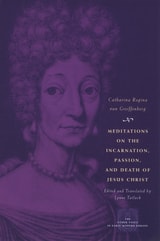
Meditations on the Incarnation, Passion, and Death of Jesus Christ
Catharina Regina von Greiffenberg
University of Chicago Press, 2009
Read by Protestants and Catholics alike, Catharina Regina von Greiffenberg (1633–94) was the foremost German woman poet and writer in the seventeenth-century German-speaking world. Privileged by her social station and education, she published a large body of religious writings under her own name to a reception unequaled by any other German woman during her lifetime. But once the popularity of devotional writings as a genre waned, Catharina’s works went largely unread until scholars devoted renewed attention to them in the twentieth century.
For this volume, Lynne Tatlock translates for the first time into English three of the thirty-six meditations, restoring Catharina to her rightful place in print. These meditations foreground women in the life of Jesus Christ—including accounts of women at the Incarnation and the Tomb—and in Scripture in general. Tatlock’s selections give the modern reader a sense of the structure and nature of Catharina’s devotional writings, highlighting the alternative they offer to the male-centered view of early modern literary and cultural production during her day, and redefining the role of women in Christian history.
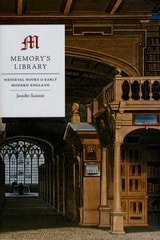
Memory's Library
Medieval Books in Early Modern EnglandJennifer Summit
University of Chicago Press, 2008
In Jennifer Summit’s account, libraries are more than inert storehouses of written tradition; they are volatile spaces that actively shape the meanings and uses of books, reading, and the past. Considering the two-hundred-year period between 1431, which saw the foundation of Duke Humfrey’s famous library, and 1631, when the great antiquarian Sir Robert Cotton died, Memory’s Library revises the history of the modern library by focusing on its origins in medieval and early modern England.
Summit argues that the medieval sources that survive in English collections are the product of a Reformation and post-Reformation struggle to redefine the past by redefining the cultural place, function, and identity of libraries. By establishing the intellectual dynamism of English libraries during this crucial period of their development, Memory’s Library demonstrates how much current discussions about the future of libraries can gain by reexamining their past.
Metaphysical Disputation I
On the Nature of First Philosophy or MetaphysicsFrancisco Suarez
Catholic University of America Press, 2021
Metaphysical Disputation II
On the Essential Concept or Concept of BeingFrancisco Suarez
Catholic University of America Press, 2022
Metaphysical Disputations III and IV
On Being's Passions in General and Its Principles and On Transcendental Unity in GeneralFrancisco Suarez
Catholic University of America Press, 2023
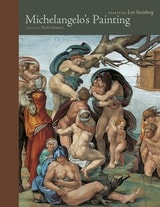
Michelangelo's Painting
Selected EssaysLeo Steinberg
University of Chicago Press, 2019
For half a century, Steinberg delved into Michelangelo’s work, revealing the symbolic structures underlying the artist’s highly charged idiom. This volume of essays and unpublished lectures elucidates many of Michelangelo’s paintings, from frescoes in the Sistine Chapel to the Conversion of St. Paul and the Crucifixion of St. Peter, the artist’s lesser-known works in the Vatican’s Pauline Chapel; also included is a study of the relationship of the Doni Madonna to Leonardo.
Steinberg’s perceptions evolved from long, hard looking. Almost everything he wrote included passages of old-fashioned formal analysis, but always put into the service of interpretation. He understood that Michelangelo’s rendering of figures, as well as their gestures and interrelations, conveys an emblematic significance masquerading under the guise of naturalism. Michelangelo pushed Renaissance naturalism into the furthest reaches of metaphor, using the language of the body to express fundamental Christian tenets once expressible only by poets and preachers.
Leo Steinberg was one of the most original art historians of the twentieth century, known for taking interpretive risks that challenged the profession by overturning reigning orthodoxies. Michelangelo’s Painting is the second volume in a series that presents Steinberg’s writings, selected and edited by his longtime associate Sheila Schwartz.
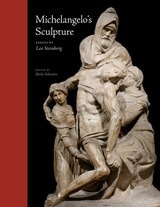
Michelangelo’s Sculpture
Selected EssaysLeo Steinberg
University of Chicago Press, 2018
For half a century, Steinberg delved into Michelangelo’s work, revealing the symbolic structures underlying the artist’s highly charged idiom. This volume of essays and unpublished lectures explicates many of Michelangelo’s most celebrated sculptures, applying principles gleaned from long, hard looking. Almost everything Steinberg wrote included passages of old-fashioned formal analysis, but here put to the service of interpretation. He understood that Michelangelo’s rendering of figures as well as their gestures and interrelations conveys an emblematic significance masquerading under the guise of naturalism. Michelangelo pushed Renaissance naturalism into the furthest reaches of metaphor, using the language of the body and its actions to express fundamental Christian tenets once expressible only by poets and preachers—or, as Steinberg put it, in Michelangelo’s art, “anatomy becomes theology.”
Michelangelo’s Sculpture is the first in a series of volumes of Steinberg’s selected writings and unpublished lectures, edited by his longtime associate Sheila Schwartz. The volume also includes a book review debunking psychoanalytic interpretation of the master’s work, a light-hearted look at Michelangelo and the medical profession and, finally, the shortest piece Steinberg ever published.
Midwife to the Queen of France
Diverse ObservationsLouise Bourgeois
Iter Press, 2017
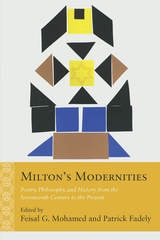
Milton's Modernities
Poetry, Philosophy, and History from the Seventeenth Century to the PresentEdited by Feisal G. Mohamed and Patrick Fadely
Northwestern University Press, 2017
Bristling with insights on Milton’s major works, Milton’s Modernities offers fresh perspectives on the thinkers central to our theorizations of modernity: from Lucretius and Spinoza, Hegel and Kant, to Benjamin and Deleuze. At the volume's core is an embrace of the possibilities unleashed by current trends in philosophy, variously styled as the return to ethics, or metaphysics, or religion. These make all the more visible Milton’s dialogues with later modernity, dialogues that promise to generate much critical discussion in early modern studies and beyond.
Such approaches necessarily challenge many prevailing assumptions that have guided recent Milton criticism—assumptions about context and periodization, for instance. In this way, Milton’s Modernities powerfully broadens the historical archive beyond the materiality of events and things, incorporating as well intellectual currents, hybrids, and insights.
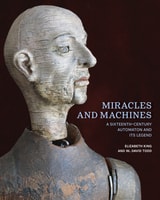
Miracles and Machines
A Sixteenth-Century Automaton and Its LegendElizabeth King
J. Paul Getty Trust, The, 0
This volume tells the singular story of an uncanny, rare object at the cusp of art and science: a 450-year-old automaton known as “the monk.” The walking, gesticulating figure of a friar, in the collection of the Smithsonian Institution’s National Museum of American History, is among the earliest extant ancestors of the self-propelled robot. According to legend connected to the court of Philip II of Spain, the monk represents a portrait of Diego de Alcalá, a humble Franciscan lay brother whose holy corpse was said to be agent to the miraculous cure of Spain’s crown prince as he lay dying in 1562.
In tracking the origins of the monk and its legend, the authors visited archives, libraries, and museums across the United States and Europe, probing the paradox of a mechanical object performing an apparently spiritual act. They identified seven kindred automata from the same period, which, they argue, form a paradigmatic class of walking “prime movers,” unprecedented in their combination of visual and functional realism. While most of the literature on automata focuses on the Enlightenment, this enthralling narrative journeys back to the late Renaissance, when clockwork machinery was entirely new, foretelling the evolution of artificial life to come.
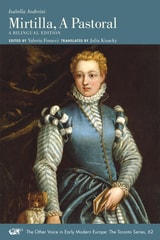
Mirtilla, A Pastoral
A Bilingual EditionIsabella Andreini
Iter Press, 2018
The Other Voice in Early Modern Europe - The Toronto Series: Volume 62
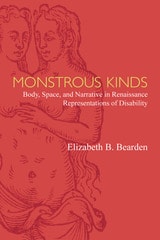
Monstrous Kinds
Body, Space, and Narrative in Renaissance Representations of DisabilityElizabeth B. Bearden
University of Michigan Press, 2019
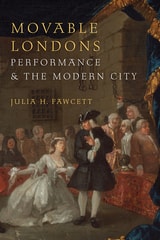
Movable Londons
Performance and the Modern CityJulia H Fawcett
University of Michigan Press, 2025
Music in the Culture of the Renaissance and Other Essays
Edward E. Lowinsky
University of Chicago Press, 1989
"Professor Lowinsky's method is the only kind of 'writing about music' that I value."—Igor Stravinsky
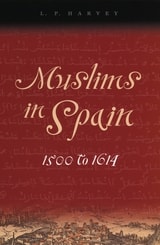
Muslims in Spain, 1500 to 1614
L. P. Harvey
University of Chicago Press, 2005
Picking up at the end of his earlier classic study, Islamic Spain, 1250 to 1500— which described the courageous efforts of the followers of Islam to preserve their secular, as well as sacred, culture in late medieval Spain—L. P. Harvey chronicles here the struggles of the Moriscos. These forced converts to Christianity lived clandestinely in the sixteenth century as Muslims, communicating in aljamiado— Spanish written in Arabic characters. More broadly, Muslims in Spain, 1500 to 1614, tells the story of an early modern nation struggling to deal with diversity and multiculturalism while torn by the fanaticism of the Counter-Reformation on one side and the threat of Ottoman expansion on the other. Harvey recounts how a century of tolerance degenerated into a vicious cycle of repression and rebellion until the final expulsion in 1614 of all Muslims from the Iberian Peninsula.
Retold in all its complexity and poignancy, this tale of religious intolerance, political maneuvering, and ethnic cleansing resonates with many modern concerns. Eagerly awaited by Islamist and Hispanist scholars since Harvey's first volume appeared in 1990, Muslims in Spain, 1500 to 1614, will be compulsory reading for student and specialist alike.