Results by title
4127 books match the query 'Science' and 197 start with m
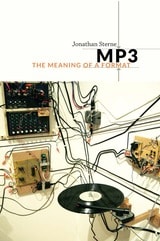
MP3
The Meaning of a FormatJonathan Sterne
Duke University Press, 2012
MP3s are products of compression, a process that removes sounds unlikely to be heard from recordings. Although media history is often characterized as a progression toward greater definition, fidelity, and truthfulness, MP3: The Meaning of a Format illuminates the crucial role of compression in the development of modern media and sound culture. Taking the history of compression as his point of departure, Jonathan Sterne investigates the relationships among sound, silence, sense, and noise; the commodity status of recorded sound and the economic role of piracy; and the importance of standards in the governance of our emerging media culture. He demonstrates that formats, standards, and infrastructures—and the need for content to fit inside them—are every bit as central to communication as the boxes we call "media."
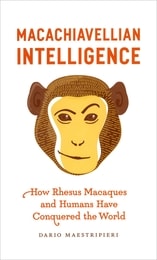
Macachiavellian Intelligence
How Rhesus Macaques and Humans Have Conquered the WorldDario Maestripieri
University of Chicago Press, 2007
Dario Maestripieri thinks it is high time we shelve that misperception, and with Macachiavellian Intelligence he gives rhesus macaques their rightful turn in the spotlight. The product of more than twenty years studying these fascinating creatures, Macachiavellian Intelligence caricatures a society that is as much human as monkey, with hierarchies and power struggles that would impress Machiavelli himself. High-status macaques, for instance, maintain their rank through deft uses of violence and manipulation, while altruism is almost unknown and relationships are perpetually subject to the cruel laws of the market. Throughout this eye-opening account, Maestripieri weds his thorough knowledge of macaque behavior to his abiding fascination with human society and motivations. The result is a book unlike any other, one that draws on economics as much as evolutionary biology, politics as much as primatology.
Rife with unexpected connections and peppered with fascinating anecdotes, Macachiavellian Intelligence has as much to teach us about humans as it does about macaques, presenting a wry, rational, and wholly surprising view of our humanity as seen through the monkey in the mirror.
Machine and Sovereignty
For a Planetary Thinkingyuk
University of Minnesota Press, 2024
Developing a new political thought to address today’s planetary crises
What is “planetary thinking” today? Arguing that a new approach is urgently needed, Yuk Hui develops a future-oriented mode of political thought that encompasses the unprecedented global challenges we are confronting: the rise of artificial intelligence, the ecological crisis, and intensifying geopolitical conflicts.
Machine and Sovereignty starts with three premises. The first affirms the necessity of developing a new language of coexistence that surpasses the limits of nation-states and their variations; the second recognizes that political forms, including the polis, empire, and the state, are technological phenomena, which Lewis Mumford terms “megamachines.” The third suggests that a particular political form is legitimated and rationalized by a corresponding political epistemology. The planetary thinking that this book sketches departs from the opposition between mechanism and organism, which characterized modern thought, to understand the epistemological foundations of Hegel’s political state and Schmitt’s Großraum and their particular ways of conceiving the question of sovereignty. Through this reconstruction, Hui exposes the limits of the state and reflects on a new theoretical matrix based on the interrelated concepts of biodiversity, noodiversity, and technodiversity.
Arguing that we are facing the limit of modernity, of the eschatological view of history, of globalization, and of the human, Hui conceives necessary new epistemological and technological frameworks for understanding and rising to the crises of our present and our future.
Retail e-book files for this title are screen-reader friendly.
Macroecology
James H. Brown
University of Chicago Press, 1995
While much ecological research is narrowly focused and experimental, providing detailed information that cannot be used to generalize from one ecological community or time period to another, macroecology draws on data from many disciplines to create a less detailed but much broader picture with greater potential for generalization. Integrating data from ecology, systematics, evolutionary biology, paleobiology, and biogeography to investigate problems that could only be addressed on a much smaller scale by traditional approaches, macroecology provides a richer, more complete understanding of how patterns of life have moved across the earth over time. Brown also demonstrates the advantages of macroecology for conservation, showing how it allows scientists to look beyond endangered species and ecological communities to consider the long history and large geographic scale of human impacts.
An important reassessment of the direction of ecology by one of the most influential thinkers in the field, this work will shape future research in ecology and other disciplines.
"This approach may well mark a major new turn in the road in the history of ecology, and I find it extremely exciting. The scope of Macroecology is tremendous and the book makes use of its author's exceptionally broad experience and knowledge. An excellent and important book."—Lawrence R. Heaney, Center for Environmental and Evolutionary Biology, the Field Museum
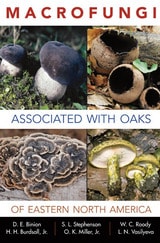
Macrofungi Associated with Oaks of Eastern North America
DENISE E. BINION
West Virginia University Press, 2008
Macrofungi Associated with Oaks of Eastern North America, which was written as a companion to Field Guide to Oak Species of Eastern North America, represents the first major publication devoted exclusively to the macrofungi that occur in association with oak trees in the forests of eastern North America. The macrofungi covered in this volume include many of the more common examples of the three groups—mycorrhizal fungi, decomposers, and pathogens—that are ecologically important to the forest ecosystems in which oaks occur. More than 200 species of macrofungi are described and illustrated via vibrantly colored photographs. Information is given on edibility, medicinal properties, and other novel uses as well. This publication reflects the combined expertise of six mycologists on the macrofungi anyone would be likely to encounter in an oak forest.
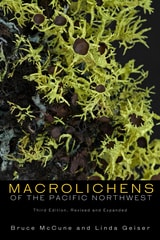
Macrolichens of the Pacific Northwest
Bruce McCune
Oregon State University Press, 2023
A key component in healthy ecosystems, lichens can be found in almost any natural habitat in the Pacific Northwest. This comprehensive guide to the region’s macrolichens is intended for use by beginners as well as specialists: weekend naturalists will be able to identify specimens and recognize the great diversity of lichens, while lichenologists and mycologists will gain greater knowledge of the distribution and abundance of various species.
This revised and expanded edition of Macrolichens of the Pacific Northwest includes includes keys to over 600 species —all the macrolichens known or expected to occur in Oregon and Washington. The keys also provide coverage for lichens of Idaho and Montana, inland to the Continental Divide. Almost all macrolichens known from northern California and southern British Columbia, and from coastal southeast Alaska, are included as well.
Color photographs and detailed descriptions are provided for more than 250 species, emphasizing lichens prevalent in forested ecosystems. The illustrated glossary and introductory material cover the terminology needed to identify macrolichens and provide information on collection and handling. The biology, ecology, and air-quality sensitivity of lichens are discussed. Macrolichens of the Pacific Northwest will prove invaluable to anyone seeking to identify lichens or to better understand these organisms and their vital role in the natural world.
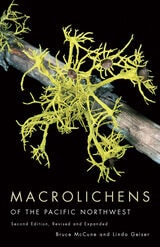
Macrolichens of the Pacific Northwest, Second Ed.
Bruce McCune
Oregon State University Press, 2009
A key component in healthy ecosystems, lichens can be found in almost any natural habitat in the Pacific Northwest. This comprehensive guide to the region’s macrolichens is intended for use by beginners as well as specialists: weekend naturalists will be able to identify specimens and recognize the great diversity of lichens, while lichenologists and mycologists will gain greater knowledge of the distribution and abundance of various species.
This revised and expanded edition of Macrolichens of the Pacific Northwest includes 116 new species and 176 additional illustrations and incorporates an understanding of macrolichens that has advanced tremendously in the past decade.
Macrolichens of the Pacific Northwest includes keys to 113 genera and 586 species of Oregon and Washington macrolichens—all the macrolichens known or expected to occur in the two states. The keys also provide reasonable coverage for lichens of Idaho and Montana, inland to the Continental Divide. Color photographs and detailed descriptions are provided for 246 species, emphasizing lichens prevalent in forested ecosystems.
The illustrated glossary and introductory material cover the terminology needed to identify macrolichens and provide information on collection and handling. The biology, ecology, and air-quality sensitivity of lichens are discussed; regional air-quality sensitivities are provided for 184 species.
Macrolichens of the Pacific Northwest will prove invaluable to anyone seeking to identify lichens or to better understand these organisms and their vital role in the natural world.
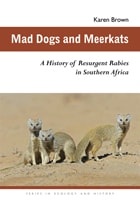
Mad Dogs and Meerkats
A History of Resurgent Rabies in Southern AfricaKaren Brown
Ohio University Press, 2011
Through the ages, rabies has exemplified the danger of diseases that transfer from wild animals to humans and their domestic stock. In South Africa, rabies has been on the rise since the latter part of the twentieth century despite the availability of postexposure vaccines and regular inoculation campaigns for dogs.
In Mad Dogs and Meerkats: A History of Resurgent Rabies in Southern Africa, Karen Brown links the increase of rabies to the HIV/AIDS epidemic. Her study shows that the most afflicted regions of South Africa have seen a dangerous rise in feral dog populations as people lack the education, means, or will to care for their pets or take them to inoculation centers. Most victims are poor black children. Ineffective disease control, which in part depends on management policies in neighboring states and the diminished medical and veterinary infrastructures in Zimbabwe, has exacerbated the problem.
This highly readable book is the first study of rabies in Africa, tracing its history in South Africa and neighboring states from 1800 to the present and showing how environmental and economic changes brought about by European colonialism and global trade have had long-term effects.
Mad Dogs and Meerkats is recommended for public health policy makers and anyone interested in human-animal relations and how societies and governments have reacted to one of the world’s most feared diseases.
Made to Hear
Cochlear Implants and Raising Deaf ChildrenLaura Mauldin
University of Minnesota Press, 2016
A mother whose child has had a cochlear implant tells Laura Mauldin why enrollment in the sign language program at her daughter’s school is plummeting: “The majority of parents want their kids to talk.” Some parents, however, feel very differently, because “curing” deafness with cochlear implants is uncertain, difficult, and freighted with judgment about what is normal, acceptable, and right. Made to Hear sensitively and thoroughly considers the structure and culture of the systems we have built to make deaf children hear.
Based on accounts of and interviews with families who adopt the cochlear implant for their deaf children, this book describes the experiences of mothers as they navigate the health care system, their interactions with the professionals who work with them, and the influence of neuroscience on the process. Though Mauldin explains the politics surrounding the issue, her focus is not on the controversy of whether to have a cochlear implant but on the long-term, multiyear undertaking of implantation. Her study provides a nuanced view of a social context in which science, technology, and medicine are trusted to vanquish disability—and in which mothers are expected to use these tools. Made to Hear reveals that implantation has the central goal of controlling the development of the deaf child’s brain by boosting synapses for spoken language and inhibiting those for sign language, placing the politics of neuroscience front and center.
Examining the consequences of cochlear implant technology for professionals and parents of deaf children, Made to Hear shows how certain neuroscientific claims about neuroplasticity, deafness, and language are deployed to encourage compliance with medical technology.
Madness and Enterprise
Psychiatry, Economic Reason, and the Emergence of Pathological ValueNima Bassiri
University of Chicago Press, 2024
Madness and Enterprise reveals the economic norms embedded within psychiatric thinking about mental illness in the North Atlantic world. Over the course of the nineteenth century, various forms of madness were subjected to a style of psychiatric reasoning that was preoccupied with money. Psychiatrists across Western Europe and the United States attributed financial and even moral value to an array of pathological conditions, such that some mental disorders were seen as financial assets and others as economic liabilities. By turning to economic conduct and asking whether potential patients appeared capable of managing their financial affairs or even generating wealth, psychiatrists could often bypass diagnostic uncertainties about a person’s mental state.
Through an exploration of the intertwined histories of psychiatry and economic thought, Nima Bassiri shows how this relationship transformed the very idea of value in the modern North Atlantic, as the most common forms of social valuation—moral value, medical value, and economic value—were rendered equivalent and interchangeable. If what was good and what was healthy were increasingly conflated with what was remunerative (and vice versa), then a conceptual space opened through which madness itself could be converted into an economic form and subsequently redeemed—and even revered.

Madness and Enterprise
Psychiatry, Economic Reason, and the Emergence of Pathological ValueNima Bassiri
University of Chicago Press, 2024
This is an auto-narrated audiobook version of this book.
Uncovers a powerful relationship between pathology and money: beginning in the nineteenth century, the severity of mental illness was measured against a patient’s economic productivity.
Madness and Enterprise reveals the economic norms embedded within psychiatric thinking about mental illness in the North Atlantic world. Over the course of the nineteenth century, various forms of madness were subjected to a style of psychiatric reasoning that was preoccupied with money. Psychiatrists across Western Europe and the United States attributed financial and even moral value to an array of pathological conditions, such that some mental disorders were seen as financial assets and others as economic liabilities. By turning to economic conduct and asking whether potential patients appeared capable of managing their financial affairs or even generating wealth, psychiatrists could often bypass diagnostic uncertainties about a person’s mental state.
Through an exploration of the intertwined histories of psychiatry and economic thought, Nima Bassiri shows how this relationship transformed the very idea of value in the modern North Atlantic, as the most common forms of social valuation—moral value, medical value, and economic value—were rendered equivalent and interchangeable. If what was good and what was healthy were increasingly conflated with what was remunerative (and vice versa), then a conceptual space opened through which madness itself could be converted into an economic form and subsequently redeemed—and even revered.
Major Evolutionary Transitions in Flowering Plant Reproduction
Edited Spencer C. H. Barrett
University of Chicago Press, 2008
Make It Rain
State Control of the Atmosphere in Twentieth-Century AmericaKristine C. Harper
University of Chicago Press, 2017
In Make It Rain, Kristine C. Harper tells the long and somewhat ludicrous history of state-funded attempts to manage, manipulate, and deploy the weather in America. Harper shows that governments from the federal to the local became helplessly captivated by the idea that weather control could promote agriculture, health, industrial output, and economic growth at home, or even be used as a military weapon and diplomatic tool abroad. Clear fog for landing aircraft? There’s a project for that. Gentle rain for strawberries? Let’s do it! Enhanced snowpacks for hydroelectric utilities? Check. The heyday of these weather control programs came during the Cold War, as the atmosphere came to be seen as something to be defended, weaponized, and manipulated. Yet Harper demonstrates that today there are clear implications for our attempts to solve the problems of climate change.
Making "Nature"
The History of a Scientific JournalMelinda Baldwin
University of Chicago Press, 2015
But how did Nature become such an essential institution? In Making "Nature," Melinda Baldwin charts the rich history of this extraordinary publication from its foundation in 1869 to current debates about online publishing and open access. This pioneering study not only tells Nature's story but also sheds light on much larger questions about the history of science publishing, changes in scientific communication, and shifting notions of "scientific community." Nature, as Baldwin demonstrates, helped define what science is and what it means to be a scientist.
Making Animal Meaning
Linda Kalof
Michigan State University Press, 2012
An elucidating collection of ten original essays, Making Animal Meaning reconceptualizes methods for researching animal histories and rethinks the contingency of the human-animal relationship. The vibrant and diverse field of animal studies is detailed in these interdisciplinary discussions, which include voices from a broad range of scholars and have an extensive chronological and geographical reach. These exciting discourses capture the most compelling theoretical underpinnings of animal significance while exploring meaning-making through the study of specific spaces, species, and human-animal relations. A deeply thoughtful collection — vital to understanding central questions of agency, kinship, and animal consumption — these essays tackle the history and philosophy of constructing animal meaning.
Making Grateful Kids
The Science of Building CharacterJeffrey Froh
Templeton Press, 2014
If there was a new wonder drug on the market that got kids to behave better, improve their grades, feel happier, and avoid risky behaviors, many parents around the world would be willing to empty their bank accounts to acquire it. Amazingly, such a product actually does exist. It’s not regulated by the FDA, it has no ill side-effects, and it’s absolutely free and available to anyone at any time. This miracle cure is gratitude.
Over the past decade, science has shown that gratitude is one of the most valuable and important emotions we possess, and it is a virtue that anyone can cultivate. In fact, researchers have developed many different methods people can use to foster an attitude of gratitude, and the science shows that many of them really work.
In Making Grateful Kids, two of the leading authorities on gratitude among young people, Jeffrey J. Froh and Giacomo Bono, introduce their latest and most compelling research, announce groundbreaking findings, and share real-life stories from adults and youth to show parents, teachers, mentors, and kids themselves how to achieve greater life satisfaction through gratitude. Most importantly perhaps, they expand on this groundbreaking research to offer practical and effective common-sense plans that can be used in day-to-day interactions between kids and adults to enhance success and wellbeing.
Their unique, scientifically-based approach for producing grateful youth works whether these kids are very young elementary school students or troubled teenagers. Not only does the purposeful practice of gratitude increase their happiness, but the research indicates that grateful kids also report more self-discipline, fulfilling relationships, and engagement with their schools and communities when compared to their less grateful counterparts. After reading Making Grateful Kids, parents, teachers, and anyone who works with youth will be able to connect more meaningfully with kids so that all parties can focus on the things that matter most and, in turn, create a more cooperative and thriving society.

Making Jet Engines in World War II
Britain, Germany, and the United StatesHermione Giffard
University of Chicago Press, 2016
Giffard compares the approaches of Britain, Germany, and the United States. Each approached jet engines in different ways because of its own war aims and industrial expertise. Germany, which produced more jet engines than the others, did so largely as replacements for more expensive piston engines. Britain, on the other hand, produced relatively few engines—but, by shifting emphasis to design rather than production, found itself at war's end holding an unrivaled range of designs. The US emphasis on development, meanwhile, built an institutional basis for postwar production. Taken together, Giffard's work makes a powerful case for a more nuanced understanding of technological innovation, one that takes into account the influence of the many organizational factors that play a part in the journey from idea to finished product.
Making Knowledge in Early Modern Europe
Practices, Objects, and Texts, 1400 - 1800Edited by Pamela H. Smith and Benjamin Schmidt
University of Chicago Press, 2008
Composed by scholars in disciplines ranging from the history of science to art history to religious studies, the pieces collected here look at the production and consumption of knowledge as a social process within many different communities. They focus, in particular, on how the methods employed by scientists and intellectuals came to interact with the practices of craftspeople and practitioners to create new ways of knowing. Examining the role of texts, reading habits, painting methods, and countless other forms of knowledge making, this volume brilliantly illuminates the myriad ways these processes affected and were affected by the period’s monumental shifts in culture and learning.
Making Marie Curie
Intellectual Property and Celebrity Culture in an Age of InformationEva Hemmungs Wirtén
University of Chicago Press, 2015
Making Marie Curie explores what went into the creation of this icon of science. It is not a traditional biography, or one that attempts to uncover the “real” Marie Curie. Rather, Eva Hemmungs Wirtén, by tracing a career that spans two centuries and a world war, provides an innovative and historically grounded account of how modern science emerges in tandem with celebrity culture under the influence of intellectual property in a dawning age of information. She explores the emergence of the Curie persona, the information culture of the period that shaped its development, and the strategies Curie used to manage and exploit her intellectual property. How did one create and maintain for oneself the persona of scientist at the beginning of the twentieth century? What special conditions bore upon scientific women, and on married women in particular? How was French identity claimed, established, and subverted? How, and with what consequences, was a scientific reputation secured?
In its exploration of these questions and many more, Making Marie Curie provides a composite picture not only of the making of Marie Curie, but the making of modern science itself.
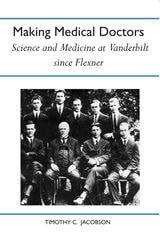
Making Medical Doctors
Science and Medicine at Vanderbilt since FlexnerTimothy C. Jacobson
University of Alabama Press, 1987
Making Medical Doctors is not a conventional institutional history, but rather a study of the union of science and medicine in a particularly illustrative institutional setting. Its general subject is the institution where science and medicine most dramatically came together: the modern medical school and medical center. Its particular subject is the medical school and center of Vanderbilt University, which was rebuilt in the 1920s as a model for medical education and research. Making Medical Doctors also explores the intellectual and financial sources of institutional development: the worlds of Abraham Flexner, Frederick T. Gates, and Henry S. Pritchett, three foundation masters of the early 20th century. It examines closely the vanished medical world of that generation of doctors who reached the height of their influence in the period between the two world wars and describes how they actually did medicine, surgery, and science.
The convergence of science and medicine in the 19th and 20th centuries produced what we know today as modern medicine. The balance of power and interdependence between science and medicine have changed vastly from the 1920s and 1930s, as Vanderbilt’s story clearly illustrates.
Making Modern Science, Second Edition
Peter J. Bowler and Iwan Rhys Morus
University of Chicago Press, 2020
Thoroughly revised and expanded, the second edition draws on the latest research and scholarship. It also contains two entirely new chapters: one that explores the impact of computing on the development of science, and another that shows how the West used science and technology as tools for geopolitical expansion. Designed for entry-level college courses and as a single-volume introduction for the general reader, Making Modern Science presents the history of science not as a series of names and dates, but as an interconnected and complex web of relationships joining science and society.
Making Modern Science
A Historical SurveyPeter J. Bowler and Iwan Rhys Morus
University of Chicago Press, 2005
Opening with an introduction that explains developments in the history of science over the last three decades and the controversies these initiatives have engendered, the book then proceeds in two parts. The first section considers key episodes in the development of modern science, including the Scientific Revolution and individual accomplishments in geology, physics, and biology. The second section is an analysis of the most important themes stemming from the social relations of science-the discoveries that force society to rethink its religious, moral, or philosophical values. Making Modern Science thus chronicles all major developments in scientific thinking, from the revolutionary ideas of the seventeenth century to the contemporary issues of evolutionism, genetics, nuclear physics, and modern cosmology.
Written by seasoned historians, this book will encourage students to see the history of science not as a series of names and dates but as an interconnected and complex web of relationships between science and modern society. The first survey of its kind, Making Modern Science is a much-needed and accessible introduction to the history of science, engagingly written for undergraduates and curious readers alike.
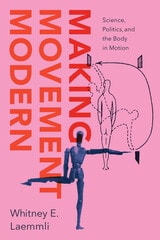
Making Movement Modern
Science, Politics, and the Body in MotionWhitney E. Laemmli
University of Chicago Press, 2026
In the early twentieth century, human bodily movement garnered interest among researchers who were convinced that understanding and controlling it could help govern an increasingly frazzled, fragmented world. Making Movement Modern traces one movement visualization technique, Labanotation, from its origins in expressionist dance, Austro-Hungarian military discipline, and contemporary physiology to its employment in factories and offices a half-century later. Frustrated by societies that seemed plagued by regimentation and alienation, the users of Laban-inspired systems—from artists and scientists to factory owners, politicians, lawyers, anthropologists, psychiatrists, and computer scientists—hoped to provide opportunities for individual expression while simultaneously harnessing movement to serve the needs of larger communities, businesses, and states.
Making Movement Modern reveals how Labanotation’s creator, choreographer Rudolf Laban, and his acolytes offered this system to a surprising variety of individuals and groups. It was a technique that promised liberation through expressive movement; it was also a means of organizing fascist displays of pure “Aryan” culture. The book explores these political ambiguities as Laban-based systems entered postwar society in the United States and the United Kingdom, where they were used to document disappearing folk cultures, treat Holocaust survivors, and make even the dullest, most repetitive work feel spiritually meaningful. Central to these efforts were vast programs to collect and store new kinds of personal movement data, and this history also has much to tell us about mass data collection today. This is a book for anyone interested in the relationship between art, science, data, and the human body across the tumultuous twentieth century.
Making Natural Knowledge
Constructivism and the History of Science, with a new PrefaceJan Golinski
University of Chicago Press, 2005
Viewing scientific knowledge as a product of human culture, Jan Golinski challenges the traditional trajectory of the history of science as steady and autonomous progress. In exploring topics such as the social identity of the scientist, the significance of places where science is practiced, and the roles played by language, instruments, and images, Making Natural Knowledge sheds new light on the relations between science and other cultural domains.
"A standard introduction to historically minded scholars interested in the constructivist programme. In fact, it has been called the 'constructivist's bible' in many a conference corridor."—Matthew Eddy, British Journal for the History of Science
Making PCR
A Story of BiotechnologyPaul Rabinow
University of Chicago Press, 1996
Making PCR explores the culture of biotechnology as it emerged at Certus Corporation during the 1980s and focuses on its distinctive configuration of scientific, technical, social, economic, political, and legal elements, each of which had its own separate trajectory over the preceding decade. The book contains interviews with the remarkable cast of characters who made PCR, including Kary Mullin, the maverick who received the Nobel prize for "discovering" it, as well as the team of young scientists and the company's business leaders.
This book shows how a contingently assembled practice emerged, composed of distinctive subjects, the site where they worked, and the object they invented.
"Paul Rabinow paints a . . . picture of the process of discovery in Making PCR: A Story of Biotechnology [and] teases out every possible detail. . . . Makes for an intriguing read that raises many questions about our understanding of the twisting process of discovery itself."—David Bradley, New Scientist
"Rabinow's book belongs to a burgeoning genre: ethnographic studies of what scientists actually do in the lab. . . . A bold move."—Daniel Zalewski, Lingua Franca
"[Making PCR is] exotic territory, biomedical research, explored. . . . Rabinow describes a dance: the immigration and repatriation of scientists to and from the academic and business worlds."—Nancy Maull, New York Times Book Review

Making Physics
A Biography of Brookhaven National Laboratory, 1946-1972Robert P. Crease
University of Chicago Press, 1999
"[A] very readable, well illustrated and sometimes even racy, recounting of Brookhaven's history, politics and personalities."—Denys Wilkinson, Physics World
Making Sense in Common
A Reading of Whitehead in Times of CollapseIsabelle Stengers
University of Minnesota Press, 2023
A leading philosopher seeks to recover “common sense” as a meeting place to reconcile science and philosophy
With her previous books on Alfred North Whitehead, Isabelle Stengers not only secured a reputation as one of the premier philosophers of our times but also inspired a rethinking of critical theory, political thought, and radical philosophy across a range of disciplines. Here, Stengers unveils what might well be seen as her definitive reading of Whitehead.
Making Sense in Common will be greeted eagerly by the growing group of scholars who use Stengers’s work on Whitehead as a model for how to think with conceptual precision through diverse domains of inquiry: environmentalism and ecology, animal studies, media and technology studies, the history and philosophy of science, feminism, and capitalism. On the other hand, the significance of this new book extends beyond Whitehead. Instead, it lies in Stengers’s recovery of the idea of “common sense” as a meeting place—a commons—where opposed ideas of science and humanistic inquiry can engage one another and help to move society forward. Her reconciliation of science and philosophy is especially urgent today—when climate disaster looms all around us, when the values of what we thought of as civilization and modernity are discredited, and when expertise of any kind is under attack.

Making Sense of Evolution
The Conceptual Foundations of Evolutionary BiologyMassimo Pigliucci and Jonathan Kaplan
University of Chicago Press, 2006
Making Sense of Evolution explores contemporary evolutionary biology, focusing on the elements of theories—selection, adaptation, and species—that are complex and open to multiple possible interpretations, many of which are incompatible with one another and with other accepted practices in the discipline. Particular experimental methods, for example, may demand one understanding of “selection,” while the application of the same concept to another area of evolutionary biology could necessitate a very different definition.
Spotlighting these conceptual difficulties and presenting alternate theoretical interpretations that alleviate this incompatibility, Massimo Pigliucci and Jonathan Kaplan intertwine scientific and philosophical analysis to produce a coherent picture of evolutionary biology. Innovative and controversial, Making Sense of Evolution encourages further development of the Modern Synthesis and outlines what might be necessary for the continued refinement of this evolving field.
Making Spirit Matter
Neurology, Psychology, and Selfhood in Modern FranceLarry Sommer McGrath
University of Chicago Press, 2020
The connection between mind and brain has been one of the most persistent problems in modern Western thought; even recent advances in neuroscience haven’t been able to explain it satisfactorily. Historian Larry Sommer McGrath’s Making Spirit Matter studies how a particularly productive and influential group of nineteenth- and early twentieth-century French thinkers attempted to solve this puzzle by showing the mutual dependence of spirit and matter. The scientific revolution taking place at this point in history across disciplines, from biology to psychology and neurology, located our mental powers in the brain and offered a radical reformulation of the meaning of society, spirit, and the self. Tracing connections among thinkers such as Henri Bergson, Alfred Fouillée, Jean-Marie Guyau, and others, McGrath plots alternative intellectual movements that revived themes of creativity, time, and experience by applying the very sciences that seemed to undermine metaphysics and religion. Making Spirit Matter lays out the long legacy of this moment in the history of ideas and how it might renew our understanding of the relationship between mind and brain today.

Making Time
Astronomical Time Measurement in Tokugawa JapanYulia Frumer
University of Chicago Press, 2017
In the mid-sixteenth century, when the first mechanical clocks arrived in Japan from Europe, the Japanese found them interesting but useless, because they failed to display time in units that changed their length with the seasons, as was customary in Japan at the time. In 1873, however, the Japanese government adopted the Western equal-hour system as well as Western clocks. Given that Japan carried out this reform during a period of rapid industrial development, it would be easy to assume that time consciousness is inherent to the equal-hour system and a modern lifestyle, but Making Time suggests that punctuality and time-consciousness are equally possible in a society regulated by a variable-hour system, arguing that this reform occurred because the equal-hour system better reflected a new conception of time — as abstract and universal—which had been developed in Japan by a narrow circle of astronomers, who began seeing time differently as a result of their measurement and calculation practices. Over the course of a few short decades this new way of conceptualizing time spread, gradually becoming the only recognized way of treating time.
Making Truth
Metaphor in ScienceTheodore L. Brown
University of Illinois Press, 2002
To illustrate the roles of metaphor in science, Brown presents a series of studies of scientific systems. These range from the atom, historically one of the most important ideas in science, through models in chemistry and biology, including current “hot” topics such as protein folding, chaperone proteins, and global warming. The case studies in Making Truth illustrate the deeply metaphorical nature of scientific reasoning and communication. They provide the basis for far-reaching conclusions about science as an intellectual and social practice and about the nature of scientific truth.
Making the Mission
Planning and Ethnicity in San FranciscoOcean Howell
University of Chicago Press, 2015
In Making the Mission, Ocean Howell tells the story of how residents of the Mission District organized to claim the right to plan their own neighborhood and how they mobilized a politics of place and ethnicity to create a strong, often racialized identity—a pattern that would repeat itself again and again throughout the twentieth century. Surveying the perspectives of formal and informal groups, city officials and district residents, local and federal agencies, Howell articulates how these actors worked with and against one another to establish the very ideas of the public and the public interest, as well as to negotiate and renegotiate what the neighborhood wanted. In the process, he shows that national narratives about how cities grow and change are fundamentally insufficient; everything is always shaped by local actors and concerns.
Making the Unseen Visible
Science and the Contested Histories of Radiation ExposureJacob Darwin Hamblin
Oregon State University Press, 2023
From 2017 to 2020, Jacob Hamblin and Linda Richards ran the Oregon State University Downwinders Project, sponsored by the National Science Foundation, to support research and scholarship on the Hanford downwinders cases. Additionally, each summer the project team sponsored a workshop that brought a variety of stakeholders together to explore the science, history, and lived experiences of nuclear exposure. These workshops took a broad view of nuclear exposure, beyond Hanford, beyond the United States, and beyond academia. Community members and activists presented their testimonies and creative work alongside scholars studying exposure worldwide.
Making the Unseen Visible collects the best work arising from the project and its workshops. Scholarly research chapters and reflective essays cover topics and experiences ranging from colonial nuclear testing in North Africa, to Hiroshima survivor stories, to uranium mining in the Navajo Nation, to battles over public memory around Hanford. Scholarship on nuclear topics has largely happened on a case study basis, focusing on individual disasters or locations. Making the Unseen Visible brings a variety of current community and scholarly work together to create a clearer, larger web uniting nuclear humanities research across time and geography.

Maladies of Modernity
Scientism and the Deformation of Political OrderDavid N. Whitney
St. Augustine's Press, 2014
“Chief among the spiritually blighting tendencies of the age is materialist reductionism parading as scientific orthodoxy. David Whitney powerfully explores this movement and habit of mind as it takes its rise in the form of scientism, especially from Sir Francis Bacon’s NEW ATLANTIS in the 17th century and finds full fruition in the positivist teachings of August Comte in the 19th century—a preamble to the behavioralist dogmas of our own time. The openness to the facts of experience characteristic of all science as a search for the truth of reality in all its dimensions and diversity is thereby effectively abandoned in favor of an unrelenting insistence on a restrictive methodology ostensibly grounded in phenomenal reality that is perversely made the touchstone of all valid inquiry. The consequences are philosophically as well as politically disastrous, as Whitney brilliantly demonstrates in this path-breaking study.”
– Ellis Sandoz, Founder of the Eric Voegelin Institute for American Renaissance Studies
"David Whitney’s excellent critique of what he calls scientism, a dogmatic application of the methods of natural science to social science, provides a high-brow diagnosis of the modern maladies that result from the “rhetorical power of science.”
–– Scott Robinson, voegelinview
Mammalian Dispersal Patterns
The Effects of Social Structure on Population GeneticsEdited by B. Diane Chepko-Sade and Zuleyma Tang Halpin
University of Chicago Press, 1987
Theoretical work in population genetics indicates that such social factors as skewed sex ratios, restrictive mating patterns, and delayed age of first reproduction will lower the reproductive variability of a population by reducing the number of genotypes passed from one generation to the next. Field studies have shown that many mammalian species do exhibit many such social characteristics. Among horses, elephant seals, and a number of primates, the majority of females are inseminated by only a fraction of the males. In pacts of wolves and mongooses, usually only the highest-ranking male and female breed in a given season. Although socially restricted mating tends to lower genetic variability in isolated populations, it actually tends to increase genetic variability in subdivided populations with low rates of migration between subunits. Among some species there is little dispersal and thus little gene flow between subpopulations; other species travel far afield before mating.
The contributors to this volume examine actual data from populations of mammals, the way patterns of dispersal correlate with the genetic structure of individuals and populations, and mathematical models of population structure. This interdisciplinary approach has an important bearing on work in conservation of both wildlife and zoo populations, for it shows that the home range and the population size needed to maintain genetic variability can differ greatly from one species to the next. The volume also offers a fruitful model for future research.
Mammals of Alabama
Troy L. Best and Julian L. Dusi
University of Alabama Press, 2014
Beautifully designed and sturdily bound for rugged field use, Mammals of Alabama is the first and only exhaustive guidebook to Alabama’s diverse and fascinating mammalian fauna.
European and American naturalists visited the territory that would become Alabama as early as the late eighteenth century and marveled at the breadth and variety of its flora and fauna. Yet until today scientists, scholars, and nature enthusiasts had no systematic guide to the state’s mammals. Mammals of Alabama fills the gap.
Naturally occurring in the state are nine orders, twenty-two families, fifty-one genera, and seventy-two species of living mammals. Best and Dusi offer an engaging entry for each as well as additional species that have become extinct through natural processes or human extirpation.
Illustrated with maps and photos, each entry includes:
• Identification notes • Dental formula
• Size and weight • Distribution
• Ecology • Life History
• Behavior • Parasites and Diseases
• Conservation Status • Notes and References
Ideal for backyards, hikes, libraries, and classrooms, Mammals of Alabama includes hundreds of professional, close-up color specimen photographs of both living animals in their natural habitats and skull plates, making identification of animals easy.
Best also offers fascinating and fun facts about Alabama mammals that will delight nature lovers of all ages, such as the surprising and excellent tree-climbing skills of the gray fox, the use in the past of mole skins to apply cosmetics, and the litters of identical quadruplets common to the nine-banded armadillo.
Published in cooperation with the Alabama Wildlife Federation

Mammals of South America, Volume 1
Marsupials, Xenarthrans, Shrews, and BatsEdited by Alfred L. Gardner
University of Chicago Press, 2008
Mammals of South America, Volume 2
RodentsEdited by James L. Patton, Ulyses F. J. Pardiñas, and Guillermo D’Elía
University of Chicago Press, 2015
From spiny mice and guinea pigs to the oversized capybara, this book covers all native rodents of South America, the continental islands of Trinidad and Tobago, and the Caribbean Netherlands off the Venezuelan coast. It includes identification keys and descriptions of all genera and species; comments on distribution; maps of localities; discussions of subspecies; and summaries of natural, taxonomic, and nomenclatural history. Rodents also contains a detailed list of cited literature and a separate gazetteer based on confirmed identifications from museum vouchers and the published literature.
Mammals of the Neotropics, Volume 1
The Northern Neotropics: Panama, Colombia, Venezuela, Guyana, Suriname, French GuianaJohn F. Eisenberg
University of Chicago Press, 1989
John Eisenberg, a leading researcher of Neotropical fauna, begins the volume with a discussion of historical biogeography and contemporary habitats of the northern Neotropics. Each of the chapters that follow presents a mammalian order, with data for all indigenous species. Eisenberg has provided physical descriptions and summaries of range and habitat for nearly 450 species. For those species that have been studied in the field or in captivity, additional notes on natural history are included. For the larger taxa, field keys to help to identify the specimens. Range maps, line drawings, and color plates supplement the text, further aiding identification.
Throughout the book, Eisenberg provides a larger context for the species descriptions. He comments on the diversity of forms within each order, places the Neotropical species in a worldwide geographical perspective, and reviews taxonomic questions and controversies. At the end of each chapter, an extensive bibliography directs readers to related articles on systematics, behavior, ecology, and evolution. Eisenberg concludes with chapters on speciation events and mammalian community ecology.
No comparable account of South and Central American mammals has ever been published in any language. This volume of Mammals of the Neotropics and the forthcoming companion volumes will be an invaluable reference for students and professionals and will help further the research that is so vital to conservation efforts.
Mammals of the Neotropics, Volume 2
The Southern Cone: Chile, Argentina, Uruguay, ParaguayKent H. Redford and John F. Eisenberg
University of Chicago Press, 1992
This second of a projected three volumes covers southern South America. The authors discuss the historical biogeography and contemporary habitats of the region and then
provide individual accounts for nearly 360 indigenous species, including information on size, appearance, ecology, behavior, and life history. Range maps, line drawings, and color plates supplement the text. To place the species accounts in a broader context, the authors consider the diversity of animals within each taxonomic group, examine the Neotropical species from a worldwide geographical perspective, and review taxonomic questions and
controversies. Two final chapters deal with the community ecology of mammals and the effects humans have had on the mammalian fauna of the southern cone.
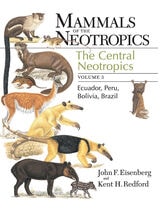
Mammals of the Neotropics, Volume 3
Ecuador, Bolivia, BrazilJohn F. Eisenberg and Kent H. Redford
University of Chicago Press, 2000
Third in a series that reviewers have described as "state of the art" (Journal of Biogeography) and "invaluable to anyone interested in the mammalian fauna of the Neotropics" (Quarterly Review of Biology), this volume follows the format of its acclaimed predecessors. Chapters present not only up-to-date taxonomic information but also ecological and behavioral characteristics, conservation status, and distribution maps for most species. Numerous illustrations are provided to assist in field and laboratory identification, including exquisite color and black-and-white plates by Fiona Reid. New to this volume are chapters contributed by experts on the mammalian fossil record of this region and on its current biodiversity and biogeography. An appendix summarizes changes to the nomenclature that have altered the scientific names used in the first two volumes.
Volumes 1 and 2 of Mammals of the Neotropics, which are also available, describe the mammals of Panama, Colombia, Venezuela, Guyana, Suriname, and French Guiana (volume 1) and Chile, Argentina, Uruguay, and Paraguay (volume 2). The fourth and final volume of this series will cover the mammals of Mexico and Central America.
Man's Role in Changing the Face of the Earth
Edited by William L. Thomas Jr.
University of Chicago Press, 1956
The volume is organized into three parts. Part 1 deals with man's rise to the status of ecological dominance, and includes discussions of such topics as the role of fire as the first great force harnessed by man, early food-producing populations, the clearing of Europe's woodlands, subsistence economies and commercial economies, and the natural history of urbanization.
Part 2 investigates environmental changes such as man's impact upon the seas and coastlines. The highly topical ecology of wastes is discussed, as well as urban-industrial demands and the depletion of natural resources.
Part 3 is concerned with the limits of the earth's resources. It includes papers dealing with the population spiral, possible limitations of raw-material consumption and energy use, and technological denudation.
Each part is accompanied by a report summarizing the ideas discussed at the conference by the participants.
Man-Made
The Evolutionary Influence of HumansLynn Carpenter
Michigan Publishing Services, 2023

Managing the Environmental Crisis
Incorporating Competing Values in Natural Resource AdministrationWilliam R. Mangun and Daniel H. Henning
Duke University Press, 1999
With a new foreword by Lynton Keith Caldwell
In Managing the Environmental Crisis William R. Mangun and Daniel H. Henning provide a balanced and comprehensive guide to the management of complex environmental and natural resource policy issues. Taking into account new developments, trends, and issues that have arisen in recent years, the authors begin with the recognition, often overlooked, that it is not the environment that needs to be managed but human action relating to the environment.
The authors review issues associated with a range of environmental policy concerns, including energy considerations, renewable and non renewable resource management, pollution control, wilderness management, and urban and regional policy. The history of these issues, recent actions pertaining to their management, difficulties associated with their continued presence, and the consequences of a failure to address these concerns are explored. Though focused on specific political issues, Mangun and Henning direct their attention to two large-scale trends—globalization and the political polarization of the environmental movement. At the level of the decision-making process, the incorporation of values—specifically addressed from multicultural and cross-disciplinary perspectives—is also discussed. International in scope, the book provides descriptions of the roles of both governmental and nongovernmental organizations in the formulations and implementation of national and global environmental policy.
This thoroughly revised second edition discusses various successes in the arenas of environmental cooperation and management strategy while pointing to the new challenges that have emerged in the last decade.
Managing the River Commons
Fishing and New England's Rural EconomyErik Reardon
University of Massachusetts Press, 2021
Historian Erik Reardon argues that to protect these fish, New England's farmer-fishermen pushed for conservation measures to limit commercial fishing and industrial uses of the river. Beginning in the colonial period and continuing to the mid-nineteenth century, they advocated for fishing regulations to promote sustainable returns, compelled local millers to open their dams during seasonal fish runs, and defeated corporate proposals to erect large-scale dams. As environmentalists work to restore rivers in New England and beyond in the present day, Managing the River Commons offers important lessons about historical conservation efforts that can help guide current campaigns to remove dams and allow anadromous fish to reclaim these waters.
Manifesto of a Passionate Moderate
Unfashionable EssaysSusan Haack
University of Chicago Press, 1998
"The virtue of Haack's book, and I mean virtue in the ethical sense, is that it embodies the attitude that it exalts. . . Haack's voice is urbane, sensible, passionate—the voice of philosophy that matters. How good to hear it again."—Jonathan Rauch, Reason
"A tough mind, confident of its power, making an art of logic . . . a cool mastery."—Paul R. Gross, Wilson Quarterly
"Few people are better able to defend the notion of truth, and in strong, clear prose, than Susan Haack . . . a philosopher of great distinction."—Hugh Lloyd-Jones, National Review
"If you relish acute observation and straight talk, this is a book to read."—Key Reporter (Phi Beta Kappa)
"Everywhere in this book there is the refreshing breeze of common sense, patiently but inexorably blowing."—Roger Kimball, Times Literary Supplement
"A refreshing alternative to the extremism that characterizes so much rhetoric today."—Kirkus Reviews
Manual of Grasses for North America
Mary E. Barkworth, Laurel K. Anderton Kathleen M. Capels, Sandy Long, and Michael B. Piep
Utah State University Press, 2007
The Manual of Grasses for North America is designed as a successor to the classic volume by Hitchcock and Chase. It reflects current taxonomic thought and includes keys, illustrations, and distribution maps for the nearly 900 native and 400 introduced species that have been found in North America north of Mexico. In addition, it presents keys and illustrations for several species that are known only in cultivation or are of major agricultural significance, either as progenitors of bread wheat and corn or as a major threat to North American agriculture because of their ability to hybridize with crop species. The Manual is a major reference work for grasses that will retain its value for many years.
Many Skies
Alternative Histories of the Sun, Moon, Planets, and StarsUpgren, Arthur
Rutgers University Press, 2012
These and other imaginative scenarios are the subject of Arthur Upgren's inventive book Many Skies: Alternative Histories of the Sun, Moon, Planets, and Stars. Although the night sky as we know it seems eternal and inevitable, Upgren reminds us that, just as easily, it could have been very different.
Had the solar sytem happened to be in the midst of a star cluster, we might have many more bright stars in the sky. Yet had it been located beyond the edge of the Milky Way galaxy, we might have no stars at all. If Venus or Mars had a moon as large as ours, we would be able to view it easily with the unaided eye. Given these or other alternative skies, what might Ptolemy or Copernicus have concluded about the center of the solar sytem and the Sun?
This book not only examines the changes in science that these alternative solar, stellar, and galactic arrangements would have brought, it also explores the different theologies, astrologies, and methods of tracking time that would have developed to reflect them. Our perception of our surroundings, the number of gods we worship, the symbols we use in art and literature, even the way we form nations and empires are all closely tied to our particular (and accidental) placement in the universe.
Many Skies, however, is not merely a fanciful play on what might have been. Upgren also explores the actual ways that human interferences such as light pollution are changing the night sky. Our atmosphere, he warns, will appear very different if we have belt of debris circling the globe and blotting out the stars, as will happen if advertisers one day pollute space with brilliant satellites displaying their products.
From fanciful to foreboding, the scenarios in Many Skies will both delight and inspire reflection, reminding us that ours is but one of many worldviews based on our experience of a universe that is as much a product of accident as it is of intention.
Map Men
Transnational Lives and Deaths of Geographers in the Making of East Central EuropeSteven Seegel
University of Chicago Press, 2018
Taking us deep into cartographical archives, Seegel re-creates the public and private worlds of these five mapmakers, who interacted with and influenced one another even as they played key roles in defining and redefining borders, territories, nations—and, ultimately, the interconnection of the world through two world wars. Throughout, he examines the transnational nature of these processes and addresses weighty questions about the causes and consequences of the world wars, the rise of Nazism and Stalinism, and the reasons East Central Europe became the fault line of these world-changing developments.
At a time when East Central Europe has surged back into geopolitical consciousness, Map Men offers a timely and important look at the historical origins of how the region was defined—and the key people who helped define it.
Mapping Abundance for a Planetary Future
Kanaka Maoli and Critical Settler Cartographies in Hawai'iCandace Fujikane
Duke University Press, 2021