Results by title
4038 books match the query 'Social aspects' and 230 start with m

MOOCs and Their Afterlives
Experiments in Scale and Access in Higher EducationEdited by Elizabeth Losh
University of Chicago Press, 2017
Elizabeth Losh has gathered experts from across disciplines—education, rhetoric, philosophy, literary studies, history, computer science, and journalism—to tease out lessons and chart a course into the future of open, online education. Instructors talk about what worked and what didn’t. Students share their experiences as participants. And scholars consider the ethics of this education. The collection goes beyond MOOCs to cover variants such as hybrid or blended courses, SPOCs (Small Personalized Online Courses), and DOCCs (Distributed Open Collaborative Course). Together, these essays provide a unique, even-handed look at the MOOC movement and will serve as a thoughtful guide to those shaping the next steps for open education.

Machine
Thomas Pringle
University of Minnesota Press, 2018
On the social consequences of machines
Automation, animation, and ecosystems are terms of central media-philosophical concern in today’s society of humans and machines. This volume describes the social consequences of machines as a mediating concept for the animation of life and automation of technology. Bernard Stiegler’s automatic society illustrates how digital media networks establish a new proletariat of knowledge workers. Gertrud Koch offers the animation of the technical to account for the pathological relations that arise between people and their devices. And Thomas Pringle synthesizes how automation and animation explain the history of intellectual exchanges that led to the hybrid concept of the ecosystem, a term that blends computer and natural science. All three contributions analyse how categories of life and technology become mixed in governmental policies, economic exploitation and pathologies of everyday life thereby both curiously and critically advancing the term that underlies those new developments: ‘machine.’

Machine and Sovereignty
For a Planetary Thinkingyuk
University of Minnesota Press, 2024
Developing a new political thought to address today’s planetary crises
What is “planetary thinking” today? Arguing that a new approach is urgently needed, Yuk Hui develops a future-oriented mode of political thought that encompasses the unprecedented global challenges we are confronting: the rise of artificial intelligence, the ecological crisis, and intensifying geopolitical conflicts.
Machine and Sovereignty starts with three premises. The first affirms the necessity of developing a new language of coexistence that surpasses the limits of nation-states and their variations; the second recognizes that political forms, including the polis, empire, and the state, are technological phenomena, which Lewis Mumford terms “megamachines.” The third suggests that a particular political form is legitimated and rationalized by a corresponding political epistemology. The planetary thinking that this book sketches departs from the opposition between mechanism and organism, which characterized modern thought, to understand the epistemological foundations of Hegel’s political state and Schmitt’s Großraum and their particular ways of conceiving the question of sovereignty. Through this reconstruction, Hui exposes the limits of the state and reflects on a new theoretical matrix based on the interrelated concepts of biodiversity, noodiversity, and technodiversity.
Arguing that we are facing the limit of modernity, of the eschatological view of history, of globalization, and of the human, Hui conceives necessary new epistemological and technological frameworks for understanding and rising to the crises of our present and our future.
Retail e-book files for this title are screen-reader friendly.

Machines of Youth
America’s Car ObsessionGary S. Cross
University of Chicago Press, 2018
Machines of Youth traces the rise, and more recently the fall, of car culture among American teens. In this book, Gary S. Cross details how an automobile obsession drove teen peer culture from the 1920s to the 1980s, seducing budding adults with privacy, freedom, mobility, and spontaneity. Cross shows how the automobile redefined relationships between parents and teenage children, becoming a rite of passage, producing new courtship rituals, and fueling the growth of numerous car subcultures. Yet for teenagers today the lure of the automobile as a transition to adulthood is in decline.Tinkerers are now sidelined by the advent of digital engine technology and premolded body construction, while the attention of teenagers has been captured by iPhones, video games, and other digital technology. And adults have become less tolerant of teens on the road, restricting both cruising and access to drivers’ licenses.
Cars are certainly not going out of style, Cross acknowledges, but how upcoming generations use them may be changing. He finds that while vibrant enthusiasm for them lives on, cars may no longer be at the center of how American youth define themselves. But, for generations of Americans, the modern teen experience was inextricably linked to this particularly American icon.

Mad Men Unzipped
Fans on Sex, Love, and the Sixties on TVKaren L. Dill-Shackleford, Cynthia Vinney, Jeri Lynn Hogg, Kristin Hopper-Losenicky
University of Iowa Press, 2015
In answering these questions, the authors explore not just the online commentary but also Mad Men fans’ fan fiction, cosplay, cocktail making, and vintage furniture collecting. Whether tweeting as one of the main characters (or just a lowly mail clerk), setting Peggy up with the man who’ll treat her right, or figuring out just which “Mad Man” they are at heart, fans integrate the show into their lives and use it to make sense of their own choices in work, leisure, and love.
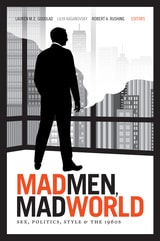
Mad Men, Mad World
Sex, Politics, Style, and the 1960sLauren M. E. Goodlad, Lilya Kaganovsky, and Robert A. Rushing, eds.
Duke University Press, 2013
In the introduction, the editors explore the show's popularity; its controversial representations of race, class, and gender; its powerful influence on aesthetics and style; and its unique use of period historicism and advertising as a way of speaking to our neoliberal moment. Mad Men, Mad World also includes an interview with Phil Abraham, an award-winning Mad Men director and cinematographer. Taken together, the essays demonstrate that understanding Mad Men means engaging the show not only as a reflection of the 1960s but also as a commentary on the present day.
Contributors. Michael Bérubé, Alexander Doty, Lauren M. E. Goodlad, Jim Hansen, Dianne Harris, Lynne Joyrich, Lilya Kaganovsky, Clarence Lang, Caroline Levine, Kent Ono, Dana Polan, Leslie Reagan, Mabel Rosenheck, Robert A. Rushing, Irene Small, Michael Szalay, Jeremy Varon
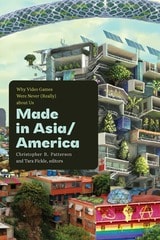
Made in Asia/America
Why Video Games Were Never (Really) about UsChristopher B. Patterson and Tara Fickle, editors
Duke University Press, 2024
Contributors. Matthew Seiji Burns, Edmond Y. Chang, Naomi Clark, Miyoko Conley, Toby Đỗ, Anthony Dominguez, Tara Fickle, Sarah Christina Ganzon, Yuxin Gao, Domini Gee, Melos Han-Tani, Huan He, Matthew Jungsuk Howard, Rachael Hutchinson, Paraluman (Luna) Javier, Sisi Jiang, Marina Ayano Kittaka, Minh Le, Haneul Lee, Rachel Li, Christian Kealoha Miller, Patrick Miller, Keita C. Moore, Souvik Mukherjee, Christopher B. Patterson, Pamela (Pam) Punzalan, Takeo Rivera, Yasheng She, D. Squinkifer, Lien B. Tran, Prabhash Ranjan Tripathy, Emperatriz Ung, Gerald Voorhees, Yizhou (Joe) Xu, Robert Yang, Mike Ren Yi
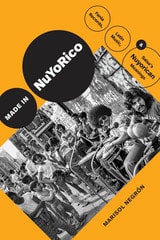
Made in NuYoRico
Fania Records, Latin Music, and Salsa’s Nuyorican MeaningsMarisol Negrón
Duke University Press, 2024
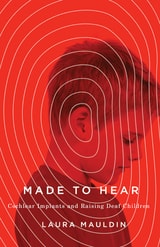
Made to Hear
Cochlear Implants and Raising Deaf ChildrenLaura Mauldin
University of Minnesota Press, 2016
A mother whose child has had a cochlear implant tells Laura Mauldin why enrollment in the sign language program at her daughter’s school is plummeting: “The majority of parents want their kids to talk.” Some parents, however, feel very differently, because “curing” deafness with cochlear implants is uncertain, difficult, and freighted with judgment about what is normal, acceptable, and right. Made to Hear sensitively and thoroughly considers the structure and culture of the systems we have built to make deaf children hear.
Based on accounts of and interviews with families who adopt the cochlear implant for their deaf children, this book describes the experiences of mothers as they navigate the health care system, their interactions with the professionals who work with them, and the influence of neuroscience on the process. Though Mauldin explains the politics surrounding the issue, her focus is not on the controversy of whether to have a cochlear implant but on the long-term, multiyear undertaking of implantation. Her study provides a nuanced view of a social context in which science, technology, and medicine are trusted to vanquish disability—and in which mothers are expected to use these tools. Made to Hear reveals that implantation has the central goal of controlling the development of the deaf child’s brain by boosting synapses for spoken language and inhibiting those for sign language, placing the politics of neuroscience front and center.
Examining the consequences of cochlear implant technology for professionals and parents of deaf children, Made to Hear shows how certain neuroscientific claims about neuroplasticity, deafness, and language are deployed to encourage compliance with medical technology.

Madness, Language, Literature
Michel Foucault
University of Chicago Press, 2023
Perceiving an enigmatic relationship between madness, language, and literature, French philosopher Michel Foucault developed ideas during the 1960s that are less explicit in his later, more well-known writings. Collected here, these previously unpublished texts reveal a Foucault who undertakes an analysis of language and experience detached from their historical constraints. Three issues predominate: the experience of madness across societies; madness and language in Artaud, Roussel, and Baroque theater; and structuralist literary criticism. Not only do these texts pursue concepts unique to this period such as the “extra-linguistic,” but they also reveal a far more complex relationship between structuralism and Foucault than has typically been acknowledged.
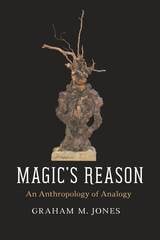
Magic's Reason
An Anthropology of AnalogyGraham M. Jones
University of Chicago Press, 2017
Using French magicians’ engagements with North African ritual performers as a case study, Jones shows how magic became enshrined in anthropological reasoning. Acknowledging the residue of magic’s colonial origins doesn’t require us to dispense with it. Rather, through this radical reassessment of classic anthropological ideas, Magic’s Reason develops a new perspective on the promise and peril of cross-cultural comparison.

Magical Habits
Monica Huerta
Duke University Press, 2021
Mainstreaming Gays
Critical Convergences of Queer Media, Fan Cultures, and Commercial TelevisionEve Ng
Rutgers University Press, 2023
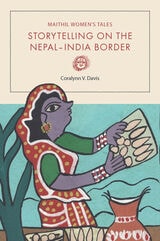
Maithil Women's Tales
Storytelling on the Nepal-India BorderCoralynn V. Davis
University of Illinois Press, 2014
In Maithil Women’s Tales, Coralynn V. Davis examines how these storytellers weave together their own life experiences--the hardships and the pleasures--with age-old themes. In so doing, Davis demonstrates, they harness folk traditions to grapple personally as well as collectively with social values, behavioral mores, relationships, and cosmological questions.
Each chapter includes stories and excerpts that reveal Maithil women’s gift for rich language, layered plots, and stunning allegory. In addition, Davis provides ethnographic and personal information that reveal the complexity of women’s own lives, and includes works painted by Maithil storytellers to illustrate their tales. The result is a fascinating study of being and becoming that will resonate for readers in women’s and Hindu studies, folklore, and anthropology.
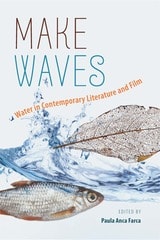
Make Waves
Water in Contemporary Literature and FilmPaula Anca Farca
University of Nevada Press, 2019
In this edited collection, contributors tackle current water issues in the era of climate change using a wide variety of recent literature and film. At its core, this collection demonstrates that water is an immense reservoir of artistic potential and an agent of historical and cultural exchange. Creating familiar and relatable contexts for water dilemmas, authors and directors of contemporary literary texts and films present compelling stories of our relationships to water, water health, ecosystems, and conservation. They also explore how global water problems affect local communities around the world and intersect with social and cultural aspects such as health, citizenship, class, gender, race, and ethnicity.
This transformative work highlights the cultural significance of water—the source of life and a powerful symbol in numerous cultures. It also raises awareness about global water debates and crises.
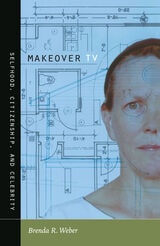
Makeover TV
Selfhood, Citizenship, and CelebrityBrenda R. Weber
Duke University Press, 2009
Based on her analysis of more than 2,500 hours of makeover TV, Weber argues that the much-desired After-body speaks to and makes legible broader cultural narratives about selfhood, citizenship, celebrity, and Americanness. Although makeovers are directed at both male and female viewers, their gendered logic requires that feminized subjects submit to the controlling expertise wielded by authorities. The genre does not tolerate ambiguity. Conventional (middle-class, white, ethnically anonymous, heterosexual) femininity is the goal of makeovers for women. When subjects are male, makeovers often compensate for perceived challenges to masculine independence by offering men narrative options for resistance or control. Foregoing a binary model of power and subjugation, Weber provides an account of makeover television that is as appreciative as it is critical. She reveals the makeover show as a rich and complicated text that expresses cultural desires and fears through narratives of selfhood.
Making Americans Healthier
Social and Economic Policy as Health PolicyRobert F. Schoeni
Russell Sage Foundation, 2008
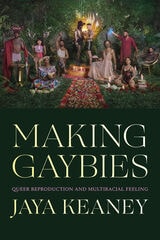
Making Gaybies
Queer Reproduction and Multiracial FeelingJaya Keaney
Duke University Press, 2023
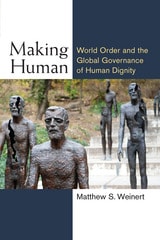
Making Human
World Order and the Global Governance of Human DignityMatthew S. Weinert
University of Michigan Press, 2015
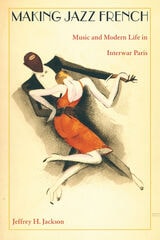
Making Jazz French
Music and Modern Life in Interwar ParisJeffrey H. Jackson
Duke University Press, 2003
Drawing on memoirs, press accounts, and cultural criticism, Jackson uses the history of jazz in Paris to illuminate the challenges confounding French national identity during the interwar years. As he explains, many French people initially regarded jazz as alien because of its associations with America and Africa. Some reveled in its explosive energy and the exoticism of its racial connotations, while others saw it as a dangerous reversal of France’s most cherished notions of "civilization." At the same time, many French musicians, though not threatened by jazz as a musical style, feared their jobs would vanish with the arrival of American performers. By the 1930s, however, a core group of French fans, critics, and musicians had incorporated jazz into the French entertainment tradition. Today it is an integral part of Parisian musical performance. In showing how jazz became French, Jackson reveals some of the ways a musical form created in the United States became an international phenomenon and acquired new meanings unique to the places where it was heard and performed.
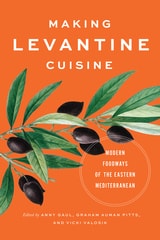
Making Levantine Cuisine
Modern Foodways of the Eastern MediterraneanEdited by Anny Gaul, Graham Auman Pitts, and Vicki Valosik
University of Texas Press, 2021
Melding the rural and the urban with the local, regional, and global, Levantine cuisine is a mélange of ingredients, recipes, and modes of consumption rooted in the Eastern Mediterranean. Making Levantine Cuisine provides much-needed scholarly attention to the region’s culinary cultures while teasing apart the tangled histories and knotted migrations of food. Akin to the region itself, the culinary repertoires that constitute Levantine cuisine endure and transform—are unified but not uniform. This book delves into the production and circulation of sugar, olive oil, and pistachios; examines the social origins of kibbe, Adana kebab, shakshuka, falafel, and shawarma; and offers a sprinkling of family recipes along the way. The histories of these ingredients and dishes, now so emblematic of the Levant, reveal the processes that codified them as national foods, the faulty binaries of Arab or Jewish and traditional or modern, and the global nature of foodways. Making Levantine Cuisine draws from personal archives and public memory to illustrate the diverse past and persistent cultural unity of a politically divided region.

Making Local News
Phyllis Kaniss
University of Chicago Press, 1991
"Making Local News by Phyllis Kaniss . . . is significant. . . . If we can continue to get smarter about that which journalism leaves out or distorts in its coverage of politics, we may eventually get smarter about politics itself."—Mitchell Stephens, The Philadelphia Inquirer View
"A convincing analysis of the factors and forces which color how and why local issues do, or do not, become newsworthy." —Michael H. Ebner, Journal of Interdisciplinary History
"This work serves as a reminder of the importance of a medium that is often overlooked until economic realities threaten its very existence." —Choice
"Kaniss is truly a pioneer in the study of local news."—Susan Herbst, Contemporary Sociology
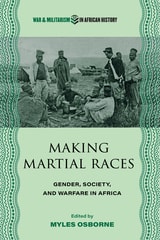
Making Martial Races
Gender, Society, and Warfare in AfricaMyles Osborne
Ohio University Press, 2024
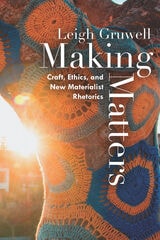
Making Matters
Craft, Ethics, and New Materialist RhetoricsLeigh Gruwell
Utah State University Press, 2022
To recast new materialist rhetorics as inherently crafty, Leigh Gruwell historicizes and locates the concept of craft both within rhetorical history as well as in the disciplinary history of writing studies. Her investigation centers on three specific case studies: craftivism, the fibercraft website Ravelry, and the 2017 Women’s March. These instances all highlight how a material, ecological understanding of rhetorical agency can enact political change.
Craft agency models how we humans might work with and alongside things—nonhuman, sometimes digital, sometimes material—to create more equitable relationships. Making Matters argues that craft is a useful starting point for addressing criticisms of new materialist rhetorics not only because doing so places rhetorical action as a product of complex relationships between a network of human and nonhuman actors, but also because it does so with an explicitly activist agenda that positions the body itself as a material interface.
Making Meaning
"Printers of the Mind" and Other EssaysD. F. McKenzie
University of Massachusetts Press, 2002
The greatest bibliographer of our time, was how historian Robert Darnton described D. F. McKenzie. Yet until now many of McKenzie's major essays, scattered in specialist journals and inaccessible publications, have circulated mainly in tattered photocopies. This volume, edited by two of McKenzie's former students, brings together for the first time a wide range of his writings on bibliography, the book trade, and the “sociology of texts.” Selected by the author himself before his sudden death in 1999, the essays range from the material transmission of Shakespeare's plays in the seventeenth century to the connections among oral, manuscript, and print cultures.
Making Meaning reflects McKenzie's virtuosity as a traditional bibliographer and reveals how his thought-provoking scholarship made him a driving force in the genesis and development of the new interdisciplinary field of book history. His refusal to recognize the traditional boundary between bibliography and literary history re-energized the study of the social, political, economic, and cultural aspects of book production and reception.
The editors' introduction and headnotes situate McKenzie's innovative and controversial thinking in the debates of his time.
Making Movement Modern
Science, Politics, and the Body in MotionWhitney E. Laemmli
University of Chicago Press, 2026
In the early twentieth century, human bodily movement garnered interest among researchers who were convinced that understanding and controlling it could help govern an increasingly frazzled, fragmented world. Making Movement Modern traces one movement visualization technique, Labanotation, from its origins in expressionist dance, Austro-Hungarian military discipline, and contemporary physiology to its employment in factories and offices a half-century later. Frustrated by societies that seemed plagued by regimentation and alienation, the users of Laban-inspired systems—from artists and scientists to factory owners, politicians, lawyers, anthropologists, psychiatrists, and computer scientists—hoped to provide opportunities for individual expression while simultaneously harnessing movement to serve the needs of larger communities, businesses, and states.
Making Movement Modern reveals how Labanotation’s creator, choreographer Rudolf Laban, and his acolytes offered this system to a surprising variety of individuals and groups. It was a technique that promised liberation through expressive movement; it was also a means of organizing fascist displays of pure “Aryan” culture. The book explores these political ambiguities as Laban-based systems entered postwar society in the United States and the United Kingdom, where they were used to document disappearing folk cultures, treat Holocaust survivors, and make even the dullest, most repetitive work feel spiritually meaningful. Central to these efforts were vast programs to collect and store new kinds of personal movement data, and this history also has much to tell us about mass data collection today. This is a book for anyone interested in the relationship between art, science, data, and the human body across the tumultuous twentieth century.

Making Myself at Home in a Nursing Home
Vanderbilt University PressSandra J. Gaffney
Vanderbilt University Press, 2012
She describes her situation in these words: "As a nursing home resident, I require total or maximum care. I have limited use of my hands and arms. With special splints, I am able to turn the pages of my books, use the telephone and TV/VCR/FM radio remote control. When my cup is positioned properly, I can drink independently. I am able to walk with a platform walker and the help of two nursing assistants. My walking is not functional; it is only for exercise. After I moved into my third nursing home, I learned to operate a power wheelchair by using an adaptive switch between my knees. ... All other areas of physical care have to be done for me. My speech is impaired. If people listen carefully, they can understand what I am saying. ... I am able to eat regular food and breathe on my own."
Gaffney became an acute observer and strategist about how to live in a nursing home. Her first-person account, dictated to family members and assistants, covers making the decision to enter a nursing home, choosing the right one, and understanding its culture. She talks about how to furnish your room and about all the issues that arise in a resident's typical day. She has much to say about communication with staff and family about "how to help others help me." Gaffney's daughters, Amy and Bridget, and her friend Ellen Potter provide additional perspectives on the caregiving experience.
Making Of Asian America
Through Political ParticipationPei-te Lien
Temple University Press, 2001
Professor Lien looks at political participation by Asian Americans prior to 1965 and then examines, at both organizational and mass politics levels, how race, ethnicity, and transnationalism help to construct a complex American electorate. She looks not only at rates of participation among Asian Americans as compared with blacks, Latinos, American Indians, and non-Hispanic whites, but also among specific groups of Asian Americans—Chinese, Japanese, Filipinos, Koreans, Asian Indians, and Vietnamese. She also discusses how gender, socioeconomic class, and place of birth affect political participation.
With documentation ranging from historical narrative to opinion survey data, Professor Lien creates a picture of a diverse group of politically active people who are intent on carving out a place for themselves in American political life.
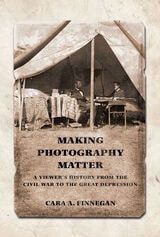
Making Photography Matter
A Viewer's History from the Civil War to the Great DepressionCara Finnegan
University of Illinois Press, 2017
Cara A. Finnegan analyzes a wealth of newspaper and magazine articles, letters to the editor, trial testimony, books, and speeches produced by viewers in response to specific photos they encountered in public. From the portrait of a young Lincoln to images of child laborers and Depression-era hardship, Finnegan treats the photograph as a locus for viewer engagement and constructs a history of photography's viewers that shows how Americans used words about images to participate in the politics of their day. As she shows, encounters with photography helped viewers negotiate the emergent anxieties and crises of U.S. public life through not only persuasion but action, as well.

Making Samba
A New History of Race and Music in BrazilMarc A. Hertzman
Duke University Press, 2013
The success of "Pelo telephone" embroiled Donga in controversy. A group of musicians claimed that he had stolen their work, and a prominent journalist accused him of selling out his people in pursuit of profit and fame. Within this single episode are many of the concerns that animate Making Samba, including intellectual property claims, the Brazilian state, popular music, race, gender, national identity, and the history of Afro-Brazilians in Rio de Janeiro. By tracing the careers of Rio's pioneering black musicians from the late nineteenth century until the 1970s, Marc A. Hertzman revises the histories of samba and of Brazilian national culture.
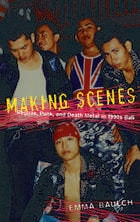
Making Scenes
Reggae, Punk, and Death Metal in 1990s BaliEmma Baulch
Duke University Press, 2007
Making Scenes is an exploration of the subtle politics of identity that took place within and among these scenes throughout the course of the 1990s. Participants in the different scenes often explained their interest in death metal, punk, or reggae in relation to broader ideas about what it meant to be Balinese, which reflected views about Bali’s tourism industry and the cultural dominance of Jakarta, Indonesia’s capital and largest city. Through dance, dress, claims to public spaces, and onstage performances, participants and enthusiasts reworked “Balinese-ness” by synthesizing global media, ideas of national belonging, and local identity politics. Making Scenes chronicles the creation of subcultures at a historical moment when media globalization and the gradual demise of the authoritarian Suharto regime coincided with revitalized, essentialist formulations of the Balinese self.
Making Senses of the Past
Toward a Sensory ArchaeologyEdited by Jo Day
Southern Illinois University Press, 2013
In ancient Peru, a site provides sensory surprises as voices resound beneath the ground and hidden carvings slowly reveal their secrets. In Canada and New Zealand, the flicker of reflected light from a lake dances on the faces of painted rocks and may have influenced when and why the pigment was applied. In Mesopotamia, vessels for foodstuffs build a picture of a past cuisine that encompasses taste and social activity in the building of communities. While perfume and flowers are examined in various cultures, in the chamber tombs of ancient Roman Palestine, we are reminded that not all smells are pleasant. Making Senses of the Past explores alternative ways to perceive past societies and offers a new way of wiring archaeology that incorporates the senses.
Making Things Perfectly Queer
Interpreting Mass CultureAlexander Doty
University of Minnesota Press, 1993
Doty argues that films, television, and other forms of mass culture consistently elicit a wide range of queer (sexually liminal) responses, and suggests an interpretive framework for understanding mass culture that stands as a corrective to many standard cultural approaches.

Making Uncertainty
Tuberculosis, Substance Use, and Pathways to Health in South AfricaAnna Versfeld
Rutgers University Press, 2023
Making Value
Music, Capital, and the SocialTimothy D. Taylor
Duke University Press, 2024
Making Whole What Has Been Smashed
On Reparations PoliticsTorpey, John
Rutgers University Press, 2017
Viewing the search for “coming to terms with the past” as a form of politics, John Torpey argues that there are major differences between reparations for the living victims of past wrongdoing and reparations for the descendants of such victims. More fundamentally, he argues that claims for reparations comprise a relatively novel kind of politics that involves a quest for symbolic recognition and material compensation for those seeking them—through the idiom of the past rather than the present. This reissue is the first paperback edition and contains a new preface by the author.
Making Women Pay
Microfinance in Urban IndiaSmitha Radhakrishnan
Duke University Press, 2022
Making a Scene
Urban Landscapes, Gentrification, and Social Movements in SwedenKimberly A. Creasap
Temple University Press, 2022
In the three largest cities in Sweden, social movement “scenes”—networks of social movement actors and the places they inhabit—challenge threats such as gentrification. The geography of the built environment influences their ability to lay claim to urban space and to local political processes. In Making a Scene, Kimberly Creasap emphasizes that it is the centrality, concentration, and visibility of these scenes that make them most effective. Whereas some scenes become embedded as part of everyday life—as in Malmö—in contrast, scenes in Göteborg and Stockholm often fail to become part of the fabric of urban neighborhoods.
Creasap investigates key spaces for scenes, from abandoned industrial areas and punk clubs to street festivals, bookstores, and social centers, to show how activists create sites and develop structures of resistance that are anti-capitalist, anti-fascist, anti-gentrification, queer, and feminist. She also charts the relationship between scenes and city spaces to show these autonomous social movements create their own cultural landscapes. Making a Scene encourages critical thinking about spatiality and place in the sociology of social movements and the role of social movements as important actors in urban development.
Making and Breaking the Yugoslav Working Class
The Story of Two Self-Managed FactoriesGoran Music
Central European University Press, 2021
Workers' self-management was one of the unique features of communist Yugoslavia. Goran Musić has investigated the changing ways in which blue-collar workers perceived the recurring crises of the regime. Two self-managed metal enterprises, one in Serbia another in Slovenia, provide the frame of the analysis in the time span between 1945 and 1989. These two factories became famous for strikes in 1988 that evoked echoes in popular discourses in former Yugoslavia. Drawing on interviews, factory publications and other media, local archives, and secondary literature, Musić analyzes the two cases, going beyond the clichés of political manipulation from the top and workers' intrinsic attraction to nationalism.
The author explains how, in the later phase of communist Yugoslavia, growing social inequalities among the workers and undemocratic practices inside the self-managed enterprises facilitated the spread of a nationalist and pro-market ideology on the shop floors. Yet rather than being a mass taken advantage of by populist leaders, the working class Musić presents is one with agency and voice, a force that played an important role in shaping the fate of the country. The book thus seeks to open a debate on the social processes leading up to the dissolution of Yugoslavia.
Making the American Team
Sport, Culture, and the Olympic ExperienceMark Dyreson
University of Illinois Press, 1998
Sport dominates television and the mass media. Politics and business are a-bustle with sports metaphors. Endorsements by athletes sell us products. "Home run," "slam dunk," and the rest of the vocabulary of sport color daily conversation. Even in times of crisis and emergency, the media reports the scores and highlights.
Marky Dyreson delves into how our obsession with sport came into being with a close look at coverage of the Olympic Games between 1896 and 1912. How people reported and consumed information on the Olympics offers insight into how sport entered the heart of American culture as part of an impetus for social reform. Political leaders came to believe in the power of sport to revitalize the "republican experiment." Sport could instill a new sense of national identity that would forge a new sense of community and a healthy political order while at the same time linking America's intellectual and power elite with the experiences of the masses.

Maladies of Modernity
Scientism and the Deformation of Political OrderDavid N. Whitney
St. Augustine's Press, 2014
“Chief among the spiritually blighting tendencies of the age is materialist reductionism parading as scientific orthodoxy. David Whitney powerfully explores this movement and habit of mind as it takes its rise in the form of scientism, especially from Sir Francis Bacon’s NEW ATLANTIS in the 17th century and finds full fruition in the positivist teachings of August Comte in the 19th century—a preamble to the behavioralist dogmas of our own time. The openness to the facts of experience characteristic of all science as a search for the truth of reality in all its dimensions and diversity is thereby effectively abandoned in favor of an unrelenting insistence on a restrictive methodology ostensibly grounded in phenomenal reality that is perversely made the touchstone of all valid inquiry. The consequences are philosophically as well as politically disastrous, as Whitney brilliantly demonstrates in this path-breaking study.”
– Ellis Sandoz, Founder of the Eric Voegelin Institute for American Renaissance Studies
"David Whitney’s excellent critique of what he calls scientism, a dogmatic application of the methods of natural science to social science, provides a high-brow diagnosis of the modern maladies that result from the “rhetorical power of science.”
–– Scott Robinson, voegelinview
Malady of Monoculture
Pellagra, Public Health, and the Pathologies of Cotton's CapitalismDana Landress
University of Chicago Press, 2027
How the cotton industry restricted sharecroppers’ access to nutritious food, a public health crisis that spurred a wave of influential and inspiring activism.
Pellagra, a nutritional deficiency disease, was once widespread in the southern United States, where it was concentrated in areas of high-yield cotton production. This wasn’t a coincidence. In the early twentieth century, pellagra was ubiquitous in regions where monocultural cotton production foreclosed cotton workers’ access to nutritious foods. Planters paid sharecroppers and millworkers in their own currency—tokens, coins, and other substitutes for money—and sold them unhealthy and overpriced food in company-owned stores. Employers kept workers poor through wage theft, predatory credit systems, and labor coercion, all of which maintained a system of food scarcity.
In Malady of Monoculture, Dana Landress reveals how the unrelenting demands of the cotton economy during the Jim Crow South created a public health crisis in the form of pellagra. She carefully details a “closed food system” that restricted workers’ diets through employer-generated currency; the use of food as an instrument of labor compulsion; manufactured debt structures; alliances between government and private industry; and restrictions on foraging, gardening, and land use. Though official public health programs framed pellagra in personal and behavioral terms, those afflicted with the illness actively challenged the closed food system through union organizing, community health care, freedom farms, and collective action lawsuits. Excavating the landmark contributions of Black nutritionists to the field of public health, Landress spotlights the many constituencies that worked tirelessly to combat hunger and foregrounds their creativity, resilience, and determination.

Malaria on the Move
Rural Communities and Public Health in Zimbabwe, 1890-2015Kundai Manamere
Ohio University Press, 2025

Male Delivery
Reproduction, Effeminacy, and Pregnant Men in Early Modern SpainSherry Velasco
Vanderbilt University Press, 2006
Men were increasingly taking over medical duties--especially surrounding childbirth--usually left to women and, as their medical knowledge increased, they became aware of bodies and behaviors--both male and female--that transgressed gender norms. The anxieties about men who acted in ways seen as increasingly womanly (from acting effeminately to participating in homosexual activity) played out in the character of pregnant Juan Rana.
Then, Velasco turns to Hollywood and asks if we might not use the lessons of Juan Rana to help explain why contemporary America is also fascinated by the idea of male pregnancy--think Arnold Schwarzenegger in Junior--and our increasing anxiety over the changing face of masculinity in our own culture.
Mama's Gun
Black Maternal Figures and the Politics of TransgressionMarlo D. David
The Ohio State University Press, 2016
Taking inspiration from African American fiction, historical accounts of black life, Afrofuturism, and black popular culture in music and on screen, David turns her attention to Sapphire’s Push, Octavia Butler’s Dawn, and Suzan-Lori Parks’s Getting Mother’s Body as well as the performance art of Erykah Badu and the films of Tyler Perry. She draws out the implications of black maternal figures in these texts who balk at tradition and are far from “ideal.” David’s study shows how representations of blackness are deeply embedded in the neoliberal language of contemporary American politics and how black writers and performers resist such mainstream ideologies with their own transgressive black maternal figures.
Man, Play and Games
Roger Caillois
University of Illinois Press, 1961
In this classic study, Caillois defines play as a free and voluntary activity that occurs in a pure space, isolated and protected from the rest of life. Play is uncertain, since the outcome may not be foreseen, and it is governed by rules that provide a level playing field for all participants. In its most basic form, play consists of finding a response to the opponent's action--or to the play situation--that is free within the limits set by the rules.
Caillois qualifies types of games-- according to whether competition, chance, simulation, or vertigo (being physically out of control) is dominant--and ways of playing, ranging from the unrestricted improvisation characteristic of children's play to the disciplined pursuit of solutions to gratuitously difficult puzzles. Caillois also examines the means by which games become part of daily life and ultimately contribute to various cultures their most characteristic customs and institutions.
Presented here in Meyer Barash's superb English translation, Man, Play and Games is a companion volume to Caillois's Man and the Sacred.
Managed Migrations
Growers, Farmworkers, and Border Enforcement in the Twentieth CenturyBy Cristina Salinas
University of Texas Press, 2018
2020 National Association for Chicana and Chicano Studies (NACCS) Book Award Winner
Honorable Mention, Ramirez Family Award for Most Significant Scholarly Book, Texas Institute of Letters, 2019
Managed Migrations examines the concurrent development of a border agricultural industry and changing methods of border enforcement in the Rio Grande Valley of Texas during the past century.
Needed at one moment, scorned at others, Mexican agricultural workers have moved back and forth across the US–Mexico border for the past century. In South Texas, Anglo growers’ dreams of creating a modern agricultural empire depended on continuous access to Mexican workers. While this access was officially regulated by immigration laws and policy promulgated in Washington, DC, in practice the migration of Mexican labor involved daily, on-the-ground negotiations among growers, workers, and the US Border Patrol. In a very real sense, these groups set the parameters of border enforcement policy.
Managed Migrations examines the relationship between immigration laws and policy and the agricultural labor relations of growers and workers in South Texas and El Paso during the 1940s and 1950s. Cristina Salinas argues that immigration law was mainly enacted not in embassies or the halls of Congress but on the ground, as a result of daily decisions by the Border Patrol that growers and workers negotiated and contested. She describes how the INS devised techniques to facilitate high-volume yearly deportations and shows how the agency used these enforcement practices to manage the seasonal agricultural labor migration across the border. Her pioneering research reveals the great extent to which immigration policy was made at the local level, as well as the agency of Mexican farmworkers who managed to maintain their mobility and kinship networks despite the constraints of grower paternalism and enforcement actions by the Border Patrol.
Managing "Modernity"
Work, Community, and Authority in Late-Industrializing Japan and RussiaRudra Sil
University of Michigan Press, 2002
Managing "Modernity" engages a variety of intellectual perspectives in the social sciences. The theoretical approach represents a conscious effort to overcome the contentious debates in political science and sociology among proponents of historical institutionalism, cultural analysis, and rational-choice theory. The substantive argument draws on, and partially integrates, concepts and findings from comparative politics, economic sociology, industrial relations, organization theory, business management, and the political economy of Japan and Russia.
In light of ongoing debates over the significance and impact of "globalization," the eclectic and integrative approach in Managing "Modernity" offers a fresh and provocative contribution that will interest scholars and graduate students across a variety of disciplines and subfields. It offers compelling insights to anyone generally concerned with the social forces that facilitate or hinder the diffusion of ideas and institutions across national boundaries.
Rudra Sil is Janice and Julian Bers Assistant Professor in the Social Sciences, Department of Political Science, University of Pennsylvania.

Managing Sickle Cell Disease
In Low-Income FamiliesShirley A. Hill
Temple University Press, 2003
Managing the Infosphere
Governance, Technology, and Cultural Practice in MotionStephen D. McDowell, Philip E. Steinberg and Tami K. Tomasello
Temple University Press, 2007
The authors argue that the roles of these systems in cyberspace cannot be fully understood unless they are seen as mutually constituting each other in specific historical structures, institutions, and practices. With vision and insight, the authors look beyond the Internet to examine the entire networked world, from cell phones and satellites to global tourism and business travel.