Results by title
331 books match the query 'World Literature' and 22 start with m

Making Skeletons Dance
Peter Macsovszky
Seagull Books, 2024
Simon Blef, who comes from “a small, stifling country without a sea” in some corner of Europe, has gone to live in the Netherlands. There he has found a wife and hopes he may yet find work. He is making preparations: he carries around a notebook and jots down his thoughts. One day he would like to write a novel, but in the meantime, he records, embellishes, invents, and combines what he sees with what he dreams: the happy, hard-working Dutch, with their seventy-year-old hippies—the “superannuated generation of rockers”— and their new “sexless generation,” as well as the tourists and immigrants from beyond the seven seas.
Set in a single day, Making Skeletons Dance is full of impressionistic musings, in equal measure mordant and humorous. Simon has left his small unhappy country to get away from the past—but how is it that the past is so devilishly resourceful, liable to turn up in any Amsterdam pub? As the afternoon wears on, the drama of his life unfolds in fascinating detail, be it comedy or tragedy, or both.
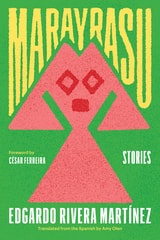
Marayrasu
StoriesEdgardo Rivera Martínez, Amy Olen
Northwestern University Press, 2026
The stories in Marayrasu stage fantastical, mysterious encounters that belie the characters’ often harsh economic and political realities as they seek belonging in modern Peru through art, music, and relationships. Depicted in poetic prose, these characters are loners, orphans, and outcasts experiencing quiet, tender encounters with other people and animals, the creative arts, and the land they find themselves depending on. Living vibrantly within these stories, the leviathan of Inca lore considers its own form, a young boy moves to a mining town and gets involved with a local union leader’s fight for worker rights while feeling the powerful pull of a large mountain overlooking the town, and a Persian cat captures the attention of a family down on its luck. Amy Olen’s translation smoothly captures Rivera Martínez’s impressive stories, offering a unique lens into the region at the heart of this canonical author’s inimitable work.
Marcoré
By Antonio Olavo Pereira
University of Texas Press, 1970
Marcoré, first published in Rio de Janeiro in 1957, won the coveted prize for fiction awarded by the Brazilian Academy of Letters and has been praised by leading critics and writers in Brazil. The novel has maintained favor with the Brazilian public and has also been published and received with enthusiasm in Portugal.
Adopting the intimist, introspective approach characteristic of such writers as Machado de Assis and Graciliano Ramos, Pereira tells a moving, bittersweet tale of personal problems and family relationships. The central character of Marcoré is the narrator, a modest, introverted individual who, aware of his own human condition, tends to view life with pessimism tempered with compassion.
As the narrator reflects on his life and relationships in a small town in the state of São Paulo, an unobtrusive document of Brazilian family life unfolds. The novel contains several highly dramatic scenes as well as many tender and entertaining ones and introduces a set of very human, very credible characters, including a most irascible mother-in-law and a wife who makes a strange vow.
The reactions, thoughts, and hidden motivations of the characters are revealed in precise and economical language—evidence of the author's powers of observation and knowledge of human nature.
Rachel de Queiroz has described Marcoré as "a beautiful and tormented book." It has become a modern Brazilian classic.
Martin Kacur
The Biography of an IdealistIvan Cankar
Central European University Press, 2009
Materada
Fulvio Tomizza
Northwestern University Press, 1999
A picture of a disappearing way of life, a tale of feud and displacement, and imbued with the tastes, tales, and songs of his native Istria, Koslovic's story is a testament to the intertwined ethnic roots of Balkan history.
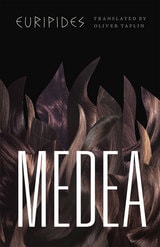
Medea
Euripides
University of Chicago Press, 2014
This new translation of Medea by classicist Oliver Taplin, originally published as part of the acclaimed third edition of Chicago’s Complete Greek Tragedies, brilliantly replicates the musicality and strength of Euripides’s verse while retaining the play’s dramatic and emotional impact. Taplin has created an edition of Medea that is particularly suited to performance, while not losing any of the power it has long held as an object of reading or study. This edition is poised to become the new standard, and to introduce a new generation of readers to the heights and depths of Greek tragedy.
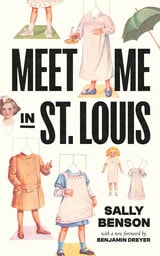
Meet Me in St. Louis
Sally Benson
University of Chicago Press, 2026
Sally Benson’s charming slice-of-life story is back in print for a new generation of readers.
Originally published as World War II raged overseas, Meet Me in St. Louis is Sally Benson’s semi-autobiographical account of the intergenerational Smith family during the twelve months leading up to the 1904 World’s Fair in St. Louis, Missouri. With warmth and tenderness, Benson chronicles the Smiths’ lives as they navigate sibling rivalries, first loves, financial hardship, jealousy, and heartaches in a poignant ode to the bonds of family.
Benson's novel is infused with wit as she details the lighthearted, pleasant existence of the Smith family’s five children—one rife with chaste crushes, victimless pranks, and other childhood escapades. Yet, the novel’s episodic, squeaky-clean veneer belies a dark comedic brilliance that transcends the ages and speaks, even today, to the universal experience of growing up.
Long out of print, this new edition of Benson’s timeless work includes a foreword by bestselling author Benjamin Dreyer, who comments both on the book's origins and its afterlife in popular culture as the source material for Judy Garland’s beloved musical of the same name. An effervescent midcentury novel waiting to be rediscovered, Meet Me in St. Louis is ready to meet its new generation of readers.
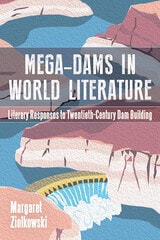
Mega-Dams in World Literature
Literary Responses to Twentieth-Century Dam BuildingMargaret Ziolkowski
University of Wyoming Press, 2024
Using North American, Native American, Russian, Egyptian, Indian, and Chinese novels and poems, Ziolkowski explores the supposed progress that these structures bring. The book asks how the human urge to exploit and control waterways has affected our relationships to nature and the environment and argues that the high modernism of the twentieth century, along with its preoccupation with development, casts the hydroelectric dam as a central symbol of domination over nature and the power of the nation state.
Beyond examining the exultation of large dams as symbols of progress, Mega-Dams in World Literature takes a broad international and cultural approach that humanizes and personalizes the major issues associated with large dams through nuanced analyses, paying particular attention to issues engendered by high modernism and settler colonialism. Both general and specialist readers interested in human-environment relationships will enjoy this prescient book.
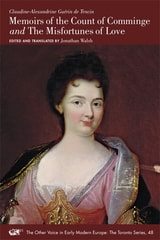
Memoirs of the Count of Comminge and The Misfortunes of Love
Claudine-Alexandrine Guérin de Tencin
Iter Press, 2016
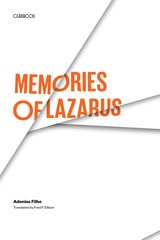
Memories of Lazarus
By Adonias Filho
University of Texas Press, 1969
These are the recollections of Alexandre—of his life, his death-in-life, and his ultimate death, as they are played out against the mobile tapestry of the valley where he was born. The valley itself, in the backlands of the state of Bahia, Brazil, alternates at different stages in Alexandre’s consciousness between reality and symbol. It swings from a harsh regional specificity to become the panorama of all human life, its endless, eroding wind the devouring hostility of all environments and its pain the pain of every human being in the face of his own brutality and that of others.
Throughout the novel Alexandre’s mind ranges from sharp awareness, through hallucination, to oblivion (“a man dies while alive,” says Jeronimo, his mentor), and back again as he experiences the violent, obtuse phenomena of life in the valley—his universe and ours. This latter-day Lazarus leaves the resisting hills and black sky once only, hounded by the valley dwellers who believe he has murdered his wife, her father, and her brother. Yet despite his awareness of the horror of the valley and his intuition of something beyond it, it is precisely his contact with the gentler existence to which he escapes that forces Alexandre to recognize his nature for what it is. Turning his back on a greater and more varied range of feeling and experience, he chooses the narrow ferocity of the valley, to which he returns to die the final death for which the earlier deaths have prepared him.
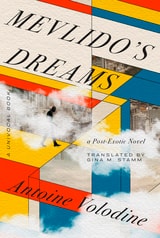
Mevlido's Dreams
A Post-Exotic NovelAntoine Volodine
University of Minnesota Press, 2024
A postapocalyptic noir that asks if love and political ideals can survive civilizational collapse
A meditative, postapocalyptic noir, Mevlido’s Dreams is an urgent communiqué from a far-future reality of irreversible environmental damage and civilizational collapse. Mevlido is a double agent working for the police and living in the last habitable city on the planet, a sprawling abyssal ruin marked by war and ruled by criminals. Suspended in the bardo between his loyalty to the surveillance state and to the anarchists, communists, and other rebels he monitors, Mevlido clings to life and hope—barely—in the city’s vast slums, haunted by the memory of the wife he failed to save during the last war and dreaming of a mysterious mission he is told he must accomplish. At the same time, an enigmatic organization existing elsewhere—the Organs—observes Mevlido’s actions and debates its responsibility to him and to humanity as a whole.
Asking what it means to love and care for others at the end of the world, this dense, brilliantly detailed postcollapse reality imagined by Antoine Volodine is one that grows ever more relevant amidst intensifying climate and political catastrophes. A key work in Volodine’s post-exotic fictional universe, Mevlido’s Dreams envisions a world changed beyond recognition and ruled under irrational authoritarianism in which dreams nest within dreams and the boundaries between life and death are fluid and uncertain.
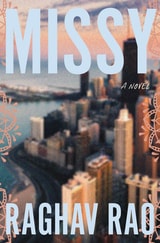
Missy
A NovelRaghav Rao
Northwestern University Press, 2026
A remarkable young woman flees India to chase the dream of self-reinvention in America
The orphaned girls of St. Ursula’s convent are destined to be nuns or servants, but seventeen-year-old Savi dreams of escape. She is chosen to work as a governess for the wealthy Nandiyar family at their country estate in Tamil Nadu, where she falls for a lively and carefree apprentice sculptor. After the violent and horrific events of a single night, they are forced to flee, leaving their homeland forever in the rearview.
Decades later, Savi has become known to all as “Missy” and runs a successful driving school in Chicago. She is a pillar of the South Asian community and the mother of two brilliant, stubborn young women, Mansi and Shilpa. But when Varun, a charming doctor with mysterious connections to her past, enters their lives, a chain of events is set off that puts Missy’s carefully constructed world in jeopardy. Can Missy outrun her secrets? And, if she is forced to face them, what will become of those she loves?
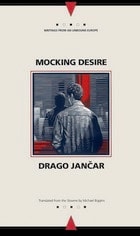
Mocking Desire
Drago Jancar
Northwestern University Press, 1998
Gregor Gradnik, a Slovenian writer, enters the sensual and seething life of New Orleans to teach a creative writing class at a university. Gregor at first acts as only an observer, yet seductive New Orleans soon draws him into a series of bizarre erotic, professional, and social relationships. A profound and entertaining work, Mocking Desire provides the English-speaking world with the perfect introduction to one of Eastern Europe's leading writers.
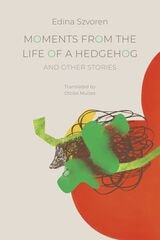
Moments from the Life of a Hedgehog
and Other StoriesEdina Szvoren
Seagull Books, 2026
Available for the first time in English, Hungarian writer Edina Szvoren's short story collection gives voice to lives shaped by repression, cruelty, and silence.
Moments from the Life of a Hedgehog and Other Stories introduces English-language readers to the unsettling, exacting fiction of Hungarian author Edina Szvoren. Disturbing yet deliberately modest, these stories evoke a claustrophobic world of compromise and quiet desperation: fractured families warped by history and habit, boarding schools and workplaces ruled by cruelty, and domestic interiors heavy with unspoken dread. Set in the final decades of Hungarian socialism and its immediate aftermath, Szvoren’s sharply observed miniatures are animated by ever-shifting perspectives—outsiders, misfits, refusers—struggling to make sense of lives largely beyond their control. Grotesque without excess, absurd without relief, Szvoren’s narrative voices overlap and collide in ways that recall Franz Kafka and István Örkény. Yet her work remains firmly grounded in the body: queasy, intimate, and insistently physical, with a feminist and existential charge. Among polyester ornaments and unbearable family encounters, these stories offer a powerful, understated testimony to the unheard—and the nearly unhearable.
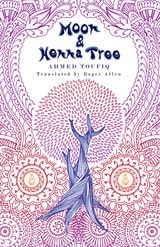
Moon and Henna Tree
By Ahmed Toufiq
University of Texas Press, 2013
Set in the High Atlas in pre-modern Morocco, Moon and Henna Tree chronicles the rise and fall of a local potentate, Hmmu. Not content with the territory left to him upon his father’s death, Hmmu, under the influence of his scheming advisor, Ibn al-Zara, begins a campaign to acquire those lands that adjoin his, either through marriage or physical force.
Ahmed Toufiq’s subtle investigation of the abuse of power and its effects on those who suffer under its tyranny also provides a unique look at Amazigh (Berber) culture. While most of Toufiq’s contemporaries focus on modern urban Morocco, he provides a fascinating, and accurate, account of the customs and traditions of a large, yet often ignored, segment of the population. Moon and Henna Tree (in the original Arabic) won the Moroccan Book Prize in 1989.

Mr. Dooley in Peace and in War
Finley Peter Dunne
University of Illinois Press, 1988
As Charlie McCarthy is to Edgar Bergen, so is Martin T. Dooley to newspaper humorist Finley Peter Dunne. Mr. Dooley in Peace and in War, originally published in 1898, collects brief, humorous pieces Dunne wrote for the Chicago Evening Post and the Chicago Journal. In an Irish-American dialect as thick as the foam on a pint of stout, Mr. Dooley and his friends discuss the military "sthrateejy" for American action in Cuba, "iliction" day shenanigans, Queen Victoria's jubilee, the "new woman," and the strange American sport of football, in which a player puts "a pair iv matthresses on his legs, a pillow behind, [and] a mask over his nose" and tries to kill his fellow men. Through his tall tales and speculations, Mr. Dooley reveals the pleasure and pain of being Irish in Chicago at the turn of the twentieth century.
Clothed in the charming hyperbole and mislocution of the unflappable Mr. Dooley, Dunne's incisive social criticism flies unerringly to the target, exposing prejudice, hypocrisy, insensitivity, and plain old-fashioned humbug.
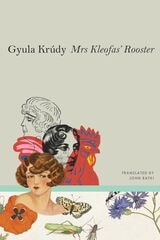
Mrs Kleofas’s Rooster
Three NovellasGyula Krúdy
Seagull Books, 2026
Mrs Kleofas’ Rooster brings together three captivating novellas by Gyula Krúdy, originally written in the 1920s and now available in English for the first time. Each story centers on a woman protagonist: a timeless adventuress, a resilient single mother, and a seductive Budapest femme fatale, respectively. In the title novella, a roguish narrator listens to the thrilling life story of an ageless, mysterious woman whose journey takes her from a childhood of suffering to a career as a cunning accomplice in daring schemes. The next story, NN, follows the life of a steadfast single mother, Juliska, amid the rhythms of village life. In Autumn Meeting, Krudy’s sharp wit unfolds through Rizili, a charming yet ruthless socialite who leads a suspended jockey on an intoxicating night through Budapest’s City Park.
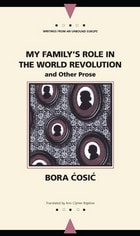
My Family's Role in the World Revolution
and Other ProseBora Cosic
Northwestern University Press, 1997
During the German occupation of Belgrade, a family—including an alarmist mother, an eternally drunk father, two young aunts who swoon over American movie stars, and a playboy uncle—attempt to find any kind of work they can do at home. When the postwar Socialist society is being ushered in after the war, the narrator becomes the slogan-spouting ideological leader of the household, while his family tries—and often fails miserably—to take part in the "great change."
This volume also includes several Ćosić short stories, and recent essays on the war in the former Yugoslavia.
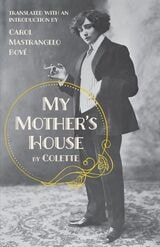
My Mother's House
Colette
Carnegie Mellon University Press, 2026
An updated translation of Colette’s revolutionary 1922 autobiographical collection that contains six previously untranslated chapters.
This book is a much-needed new translation of Colette’s classic La Maison de Claudine. A careful re-reading of the text was long overdue, given Colette’s evolution into one of the most admired French novelists in the modern world, the inadequacy of earlier translations, which omitted six significant chapters, and changes in contemporary attitudes on motherhood and sexual orientation. The controversial topic at the center of the novel, her passion for her mother Sido, animates her writing as a whole. As the BBC notes, “The Most Beloved French writer of all time. . . . An icon in her native France, Colette's scandalous life and works still captivate readers 150 years on from her birth, writes John Self.”
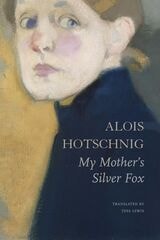
My Mother's Silver Fox
Alois Hotschnig
Seagull Books, 2025
Heinz Fitz has only one tangible clue to his past: a worn piece of paper from the SS-Lebensborn program, a Nazi initiative designed to promote so-called racial purity. His mother, a Norwegian woman, fell in love with the wrong man—an Austrian soldier—during the German occupation. Betrayed and abandoned, she fled to Austria, only to be turned away by his family. Branded a collaborator in her homeland and a pariah in a foreign land, she was left to survive as best she could. Now, years later, her son is determined to piece together the fragments of his origins.
But every answer leads to more questions, and as he unearths painful truths, an alternative story—one of resilience, love, and survival—emerges from the darkness. Inspired by real events, Alois Hotschnig’s novel is both a fierce reckoning with history and a poignant tribute to a mother’s strength. A masterful meditation on memory and storytelling, My Mother’s Silver Fox asks whether the past can ever truly be understood—or if it will always slip through our grasp, like snow through our fingers.
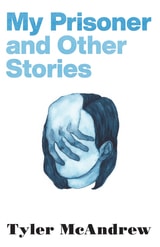
My Prisoner and Other Stories
Tyler McAndrew
The Ohio State University Press, 2025
Set largely in the Rust Belt of the 1990s and early 2000s, My Prisoner and Other Stories gives us protagonists who repeatedly confront helplessness in the face of others’ suffering. A teenage girl tries to help an elderly woman who has locked herself out of her house only to be shaken by the trauma and loneliness that the woman—a Holocaust survivor and recent widow—eventually shares with her. A schoolteacher writes letters to his cousin, who has schizophrenia and is serving a life sentence for the murder of three of their relatives. A middle school student makes a complicated gesture of charity after befriending the poor kid at his lunch table. Siblings seed the ground for an eccentric treasure hunter only to find that their prank leads them into unexpected emotional peril. The structural forces that stain life in late-capitalist America—the prison system, economic desperation—lurk throughout these muscular and empathetic tales, but in the face of endemic adversity, shrewd and loving characters strive for and sometimes achieve hope and tenderness. Tyler McAndrew shows us an unadorned America that can still tap its capacity for human kindness.
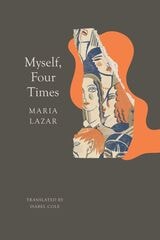
Myself, Four Times
Maria Lazar
Seagull Books, 2026
Long unpublished and presumed lost, Myself, Four Times reveals Maria Lazar as a bold, psychologically acute feminist writer whose work deserves a central place in twentieth-century European literature.
Myself, Four Times is a rediscovered novel of friendship, desire, and self-invention by Maria Lazar (1895–1948), one of the most incisive and unjustly neglected voices of interwar Austrian literature. Written in Vienna in the late 1920s but never published in Lazar’s lifetime, the novel appears now for the first time, drawn from her literary estate.
The book follows four women—friends since their school days—whose lives unfold in strikingly different directions, yet remain inseparably bound from adolescence into adulthood. Set against the backdrop of the not-so-golden 1920s, it traces shared youth and first love alongside the darker currents of friendship: self-deception, betrayal, jealousy, and emotional manipulation. At the same time, Lazar charts women’s struggles for independence, identity, and fulfillment in a society poised between liberation and collapse.
With psychological acuity and social sharpness, Myself, Four Times captures both the exhilaration and the cost of female solidarity. Its long suppression mirrors Lazar’s own fate: a celebrated writer forced into exile by Nazism, silenced after she died in 1948, and only recently reclaimed as a major figure of twentieth-century European literature.