Results by title
22279 books match the query 'Social Science' and 1258 start with m
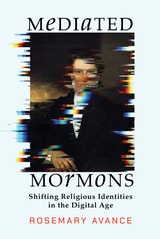
Mediated Mormons
Shifting Religious Identities in the Digital AgeRosemary Avance
University of Utah Press, 2024
Mediated Mormons uses a case study approach to consider various iterations of Mormon identity as presented by church authorities, faithful members, the secular media, and heterodox and former adherents. These often-conflicting perspectives challenge traditional models of LDS authority, dismantling a monolithic view of Mormons and offering a window into processes of social activism and institutional change in the internet era.
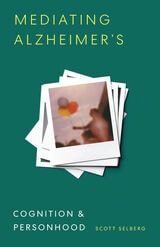
Mediating Alzheimer's
Cognition and PersonhoodScott Selberg
University of Minnesota Press, 2022
An exploration of the representational culture of Alzheimer’s disease and how media technologies shape our ideas of cognition and aging
With no known cause or cure despite a century of research, Alzheimer’s disease is a true medical mystery. In Mediating Alzheimer’s, Scott Selberg examines the nature of this enduring national health crisis by looking at the disease’s relationship to media and representation. He shows how collective investments in different kinds of media have historically shaped how we understand, treat, and live with this disease.
Selberg demonstrates how the cognitive abilities that Alzheimer’s threatens—memory, for example—are integrated into the operations of representational technologies, from Polaroid photographs to Post-its to digital artificial intelligence. Focusing on a wide variety of media technologies, such as neuroimaging, art therapy, virtual reality, and social media, he shows how these cognitively oriented media ultimately help define personhood for people with Alzheimer’s. Media have changed the practices of successful aging in the United States, and Selberg takes us deep into how technologies like digital brain-training and online care networks shape ideas of cognition and healthy aging.
Packed with startlingly fresh insights, Mediating Alzheimer’s contributes to debates around bioethics, the labor of caregiving, and a national economy increasingly invested in communication and digital media. Probing the very technologies that promise to save and understand our brains, it gives us new ways of understanding Alzheimer’s disease and aging in America.
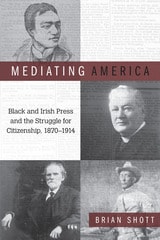
Mediating America
Black and Irish Press and the Struggle for Citizenship, 1870-1914Brian Shott
Temple University Press, 2019
Until recently, print media was the dominant force in American culture. The power of the paper was especially true in minority communities. African Americans and European immigrants vigorously embraced the print newsweekly as a forum to move public opinion, cohere group identity, and establish American belonging.
Mediating America explores the life and work of T. Thomas Fortune and J. Samuel Stemons as well as Rev. Peter C. Yorke and Patrick Ford—respectively two African American and two Irish American editor/activists in the late nineteenth and early twentieth centuries. Historian Brian Shott shows how each of these “race men” (the parlance of the time) understood and advocated for his group’s interests through their newspapers. Yet the author also explains how the newspaper medium itself—through illustrations, cartoons, and photographs; advertisements and page layout; and more—could constrain editors’ efforts to guide debates over race, religion, and citizenship during a tumultuous time of social unrest and imperial expansion.
Black and Irish journalists used newspapers to recover and reinvigorate racial identities. As Shott proves, minority print culture was a powerful force in defining American nationhood.
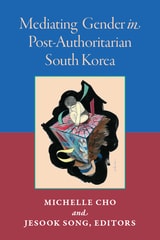
Mediating Gender in Post-Authoritarian South Korea
Michelle Cho and Jesook Song
University of Michigan Press, 2024
Mediating Gender in Post-Authoritarian South Korea maps the ways in which popular media and public discourse make the social dynamics of gender visible and open them up for debate and dismantling. In presenting innovative new research on the ways in which popular ideas about gender gain concrete form and political substance through mass mediation, the book’s contributors investigate the discursive production of gender in contemporary South Korea through trends, tropes, and thematics, as popular media become the domain in which new gendered subjectivities and relations transpire. The essays in this volume present cases and media objects that span multiple media and platforms, introducing new ways of thinking about gender as a platform and a conceptual infrastructure in the post-authoritarian era.
Mediating Indianness
Cathy Covell Waegner
Michigan State University Press, 2015
Mediating Knowledges
Origins of a Zuni Tribal MuseumGwyneira Isaac
University of Arizona Press, 2007
These personal narratives provide insight into the diversity of perspectives found within the community, as well as tracing the ongoing negotiation of the relationship between Zuni and Anglo-American cultures. In particular, Isaac examines how Zunis, who transmit knowledge about their history through oral tradition and initiation into religious societies, must navigate the challenge of utilizing Anglo-American museum practices, which privilege technology that aids the circulation of knowledge beyond its original narrators.
This book provides a much-needed contemporary ethnography of a Pueblo community recognized for its restrictive approach to outside observers. The complex interactions between Zunis and anthropologists explored here, however, reveal not only Puebloan but also Anglo-American attitudes toward secrecy and the control of knowledge.
Mediating Modernisms
Indigenous Artists, Modernist Mediators, Global NetworksRuth B. Phillips and Norman Vorano, editors
Duke University Press, 2025
Contributors. Peter Brunt, Roberto Conduru, Hanna Horsberg Hansen, Elizabeth Harney, Jyotindra Jain, Sandra Klopper, Ian McLean, Anitra Nettleton, Chika Okeke-Agulu, Ruth B. Phillips, Una Rey, Megan Tamati-Quennell, Nicholas Thomas, Norman Vorano, Mark Andrew White
Mediating Morality
The Politics of Teen Pregnancy in the Post-Welfare EraClare Daniel
University of Massachusetts Press, 2017
Daniel investigates coordinated teen pregnancy prevention efforts within federal political discourse, along with public policy, popular culture, national advocacy, and local initiatives, revealing the evidence of this transformation. In the 1970s and 1980s, political leaders from both parties used teen pregnancy to strengthen their attacks on racialized impoverished communities. With a new welfare policy in 1996 that rhetoric moved toward blaming teen pregnancy—seemingly in a race- and class-neutral way—on the teens who engaged in sex prematurely and irresponsibly. Daniel effectively illustrates that the construction of teen pregnancy as an individual's problem has been a key component in a neoliberal agenda that frees the government from the responsibility of addressing systemic problems of poverty, lack of access to education, ongoing structural racism, and more.
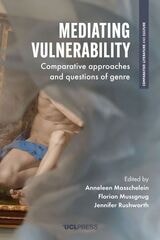
Mediating Vulnerability
Comparative Approaches and Questions of GenreEdited by Anneleen Masschelein, Florian Mussgnug, and Jennifer Rushworth
University College London, 2021
To experience vulnerability is to experience the tension between ruin and creativity: a vulnerable species faces extinction but also evolution, and a vulnerable person risks both irreparable harm and transformative connection. Mediating Vulnerability explores how this tension plays out across contemporary literary studies. Examining a variety of approaches to the destructive and remediating powers of genre, the authors consider how vulnerability intersects a range of representational forms including high-profile fiction by Margaret Atwood and Cormac McCarthy as well as lesser-known graphic novels, video games, television, and photography.
Mediating the South Korean Other
Representations and Discourses of Difference in the Post/Neocolonial Nation-StateDavid C. Oh, Editor
University of Michigan Press, 2022
This collection brings together leading and emerging scholars of multiculturalism in Korean media culture to examine mediated constructions of the “other,” taking into account the nation’s postcolonial and neocolonial relationships and its mediated construction of self. “Anthrocategorism ,” a more nuanced translation of injongchabyeol, is proffered as a new framework for understanding difference in ways that are locally meaningful in a society and media system in which racial or even ethnic differences are not the most salient. The collection points to the construction of racial others that elevates, tolerates, and incorporates difference; the construction of valued and devalued ethnic others, and the ambivalent construction of co-ethnic others as sympathetic victims or marginalized threats.
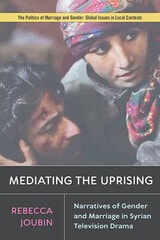
Mediating the Uprising
Narratives of Gender and Marriage in Syrian Television DramaRebecca Joubin
Rutgers University Press, 2020
While for some screenwriters a return to pre-2011 life would be welcome after so much bloodshed, others advocated profound cultural and social transformation, instead. They employed marriage and gender metaphors in the stories they wrote to engage in political critique, even at the risk of creating marketing difficulties for the shows or they created escapist stories such as transnational adaptations and Old Damascus tales. Serving as heritage preservation, Mediating the Uprising underscores that television drama creators in Syria have many ways of engaging in protest, with gender and marriage at the heart of the polemic.

Mediation and Protest Movements
Edited by Bart Cammaerts, Alice Mattoni, and Patrick McCurdy
Intellect Books, 2013
Over the past year, international and national media have been full of stories about protest movements and tumultuous social upheaval from Tunisia to California. But scholars have not yet fully addressed the connection between these movements and the media and communication channels through which their messages spread. Correcting that imbalance, Mediation and Protest Movements explores the nature of the relationship between protest movements, media representation, and communication strategies and tactics.
In a series of fascinating essays, contributors to this timely volume focus on the processes and practices in which contemporary protesters engage when acting with and through media. Covering both online and offline contexts as well as mainstream and alternative media, they consider media environments around the world in all their complexity. They also provide a broad and comparative perspective on the ways that protest movements at local and transnational levels engage in mediation processes and develop media practices. Bridging the gap between social movement theory and media and communication studies, Mediation and Protest Movements will serve as an important reference for students and scholars of the media and social change.
Mediatization(s)
Theoretical Conversations between Europe and Latin AmericaEdited by Carlos A. Scolari, José L. Fernández, and Joan R. Rodríguez-Amat
Intellect Books, 2021
This book presents the work of key authorities on mediatization from Europe and Latin America in one single volume, integrating macro-level theorization with applied observations of mediatization processes from a multidisciplinary perspective. Presented in a handbook format, with comprehensive introductory sections written by the editors and original texts signed by world-renowned researchers, this collection is a vital new resource for researchers and students alike.
Mediators
Aesthetics, Politics, and the CityReinhold Martin
University of Minnesota Press, 2014
Forerunners: Ideas First is a thought-in-process series of breakthrough digital publications. Written between fresh ideas and finished books, Forerunners draws on scholarly work initiated in notable blogs, social media, conference plenaries, journal articles, and the synergy of academic exchange. This is gray literature publishing: where intense thinking, change, and speculation take place in scholarship.
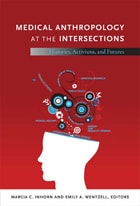
Medical Anthropology at the Intersections
Histories, Activisms, and FuturesMarcia C. Inhorn and Emily A. Wentzell, eds.
Duke University Press, 2012
Contributors. Lawrence Cohen, Didier Fassin, Faye Ginsburg, Marcia C. Inhorn, Arthur Kleinman, Margaret Lock, Emily Martin, Lynn M. Morgan, Richard Parker, Rayna Rapp, Merrill Singer, Emily A. Wentzell

Medical Entanglements
Rethinking Feminist Debates about HealthcareKristina Gupta
Rutgers University Press, 2020

Medical Malpractice and the American Jury
Confronting the Myths about Jury Incompetence, Deep Pockets, and Outrageous Damage AwardsNeil Vidmar
University of Michigan Press, 1997
Written in a thoroughly inviting, jargon-free style, Medical Malpractice and the American Jury places those cases that go to trial in the broader context of litigation, noting that only about ten percent of malpractice cases ever result in trials. Of those that do go to trial, the author notes, more than two out of three cases are decided in the doctor's favor--repudiating the view that jurors are inherently biased against doctors and are motivated more by sympathy for the plaintiff than by the facts of the case.
Neil Vidmar comprehensively addresses all the claims that have been leveled against the performance of malpractice juries. For example, he compares actual jury decisions on negligence with neutral physicians' ratings of whether negligence occurred in the medical treatment and finds a remarkable consistency--repudiating the view that jurors are unable to understand experts or uncritically defer to their opinion.
"Medical Malpractice and the American Jury is quite simply the most compelling, comprehensive examination of the American jury system yet written. It brings reason and fact to the debate in a way that puts the lie to the many myths surrounding medical negligence cases. For anyone genuinely interested in just solutions, this book should be required reading. To act in ignorance of its findings invites disaster." --Trial
"For anyone really interested in the evidence about the daily grind of the courthouse mill, Neil Vidmar's Medical Malpractice and the American Jury is a good place to start." --Washington Post Book World
Neil Vidmar is Professor of Social Science and Law, Duke Law School, and Professor of Psychology, Duke University.

Medical Malpractice
Law, Tactics, and EthicsFrank M. McClellan
Temple University Press, 1993
From practical to philosophical considerations, this succinct, clear presentation of medical malpractice issues is a valuable resource for the classroom and the reference shelf. Frank M. McClellan illustrates the multitude of considerations that impact the merit of each case, never losing sight of the importance of preserving human dignity in malpractice lawsuits.
Early chapters urge the evaluation of legal, medical, and ethical standards, especially the Standard of Care. Part II focuses on assessing and proving compensatory and punitive damages, Part III sets out guidelines for intelligence gathering, medical research, choosing expert witnesses, and preparing for trial.
Students of law, medicine, and public health, as well as lawyers and health care professionals, will find in Medical Malpractice a valuable text or reference book. "Problems" in twelve of the thirteen chapters illustrate the range of issues that can arise in malpractice suits. An appendix lists leading cases that have shaped medical malpractice law.

Medical Misinformation in Early Modern Germany
Christopher Hutchinson
University of Delaware Press, 2026
Medical Misinformation in Early Modern Germany examines how doctors, writers, and printers in sixteenth-century Germany responded to the rapid expansion of print and its implications for medical knowledge. The spread of printed texts generated widespread suspicion about print’s reliability as a conduit of information and led writers to reflect on questions of audience, vernacularity, and medical authority in their responses to disease. The book investigates literary texts alongside popular vernacular medical pamphlets on the major epidemic diseases of the period––plague, syphilis, and the English sweating sickness––to reveal a widespread concern with the impact of printed texts on public health. During the 1529 outbreak of the English sweating sickness, this concern culminated in writers’ use of a “rhetoric of virality,” explicitly comparing the circulation of texts to the spread of disease, as they confronted the parallel contagions of disease and information.
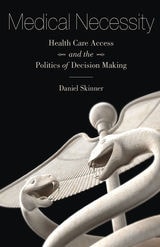
Medical Necessity
Health Care Access and the Politics of Decision MakingDaniel Skinner
University of Minnesota Press, 2019
How the politics of “medical necessity” complicates American health care
The definition of medical necessity has morphed over the years, from a singular physician’s determination to a complex and dynamic political contest involving patients, medical companies, insurance companies, and government agencies. In this book, Daniel Skinner constructs a comprehensive understanding of the politics of defining this concept, arguing that sustained political engagement with medical necessity is essential to developing a health care system that meets basic public health objectives.
From medical marijuana to mental health to reproductive politics, the concept of medical necessity underscores many of the most divisive and contentious debates in American health care. Skinner’s close reading of medical necessity’s production illuminates the divides between perceptions of medical need as well as how the gatekeeper concept of medical necessity tends to frame medical objectives. He questions the wisdom of continuing to use medical necessity when thinking critically about vexing health care challenges, exploring the possibility that contracts, rights, and technology may resolve the contentious politics of medical necessity.
Skinner ultimately contends that a major shift is needed, one in which health care administrators, doctors, and patients admit that medical necessity is, at its base, a contestable political concept.

Medical Technics
Don Ihde
University of Minnesota Press, 2019
A personal account of the aging body and advanced technologies by a preeminent philosopher of technology
Medical Technics is a rigorous examination of how medical progress has modified our worlds and contributed to a virtual revolution in longevity. Don Ihde offers a unique autobiographical tour of medical events experienced in a decade, beginning in his 70s. Ihde offers experiential and postphenomenological analyses of technologies such as sonography and microsurgery, and ultimately asks what it means to increasingly become a cyborg.
Forerunners: Ideas FirstShort books of thought-in-process scholarship, where intense analysis, questioning, and speculation take the lead
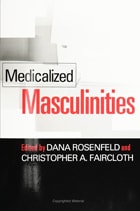
Medicalized Masculinities
edited by Dana Rosenfeld and Christopher A. Faircloth
Temple University Press, 2006
Medicalized Masculinities considers how these threads in scholarship failed to consider the male body adequately and presents cutting-edge research into the definition and regulation of masculinity by medicine. Renowned health and gender studies experts examine medicalized conditions such as balding, aging, and other dimensions of the life cycle in the tradition of the sociology of health and gender.
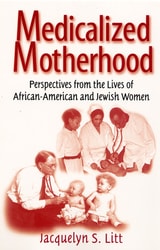
Medicalized Motherhood
Perspectives from the Lives of African-American and Jewish WomenJacquelyn S. Litt
Rutgers University Press, 1999
When Jacquelyn S. Litt interviewed African-American and Jewish women who raised their children in the 1930s and 1940s, she found that these women responded to experts' advice in ways uniquely shaped by their ethnicity, race, and class. For middle-class African-American and Jewish women, medicalization took place in ethnically/racially segregated networks and functioned as a collectively held strategy for social advance as much as a set of technical practices for raising healthy children. For poor, single African-American mothers, everyday networks offered limited access to medical institutions or mainstream norms. Medical discourse was largely controlled by white women and men, which left these women disempowered in medical institutions and marginal to dominant definitions of acceptable mothering.
Litt's book is enriched with many narratives from the mothers themselves. Both the women's voices and her acute sociological research bring to light how medicalized motherhood, while not the single cause of difference and inequality among the women, was a site where they were produced.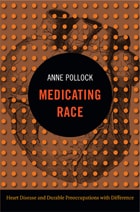
Medicating Race
Heart Disease and Durable Preoccupations with DifferenceAnne Pollock
Duke University Press, 2012
Medication in Maternity
Infant Exposure and Maternal InformationYvonne Brackbill, Karen McManus, and Lynn Woodward
University of Michigan Press, 1985
Medicinal Plants of Native America, Vols. 1 and 2
Daniel E. Moerman
University of Michigan Press, 1987
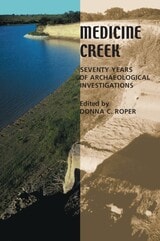
Medicine Creek
Seventy Years of Archaeological InvestigationsEdited by Donna C. Roper
University of Alabama Press, 2002
This valuable book is an excellent overview of long-term archaeological investigations in the valley that remains at the forefront of studies on the First Americans.
In southwest Nebraska, a stretch of Medicine Creek approximately 20 kilometers long holds a remarkable concentration of both late Paleoindian and late prehistoric sites. Unlike several nearby similar and parallel streams that drain the divide between the Platte and Republican Rivers, Medicine Creek has undergone 70 years of archaeological excavations that reveal a long occupation by North America's earliest inhabitants.
Donna Roper has collected the written research in this volume that originated in a conference celebrating the 50th anniversary of the 1947 River Basin Survey. In addition to 12 chapters reviewing the long history of archaeological investigations at Medicine Creek, the volume contains recent analyses of and new perspectives on old sites and old data. Two of the sites discussed are considered for pre-Clovis status because they show evidence of human modification of mammoth faunal remains in the late Pleistocene Age. Studies of later occupation of Upper Republican phase sites yield information on the lifeways of Plains village people.
Presented by major investigators at Medicine Creek, the contributions are a balanced blend of the historical research and the current state-of-the-art work and analysis. Roper's comprehensive look at the archaeology, paleontology, and geomorphology at Medicine Creek gives scientists and amateurs a full assessment of a site that has taught us much about the North American continent and its early people.
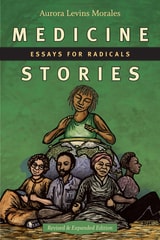
Medicine Stories
Essays for RadicalsAurora Levins Morales
Duke University Press, 2019
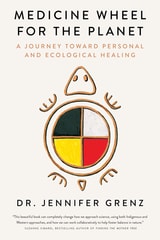
Medicine Wheel for the Planet
A Journey Toward Personal and Ecological HealingJennifer Grenz
University of Minnesota Press, 2024
A personal journey of bringing together Western science and Indigenous ecology to transform our understanding of the human role in healing our planet
I used to be an ecologist. . . . Now, I am a community gatherer, working to help bring healing beyond just the land. I am a story-listener. I am a storyteller. I am a shaper of ecosystems. I work on bringing communities together, in circle, to listen to each other.
A farm kid at heart, and a Nlaka’pamux woman of mixed ancestry, Dr. Jennifer Grenz always felt a deep connection to the land. However, after nearly two decades of working as a restoration ecologist in the Pacific Northwest, she became frustrated that despite the best efforts of her colleagues and numerous volunteers, they weren’t making the meaningful change needed for plant, animal, and human communities to adapt to a warming climate. Restoration ecology is grounded in an idea that we must return the natural world to an untouched, pristine state, placing humans in a godlike role—a notion at odds with Indigenous histories of purposeful, reciprocal interaction with the environment. This disconnect sent Dr. Grenz on a personal journey of joining her head (Western science) and her heart (Indigenous worldview) to find a truer path toward ecological healing.
In Medicine Wheel for the Planet, building on sacred stories, field observations, and her own journey, Dr. Grenz invites readers to share in the teachings of the four directions of the medicine wheel: the North, which draws upon the knowledge and wisdom of elders; the East, where we let go of colonial narratives and see with fresh eyes; the South, where we apply new-old worldviews to envision a way forward; and the West, where a relational approach to land reconciliation is realized.
Eloquent, inspiring, and disruptive, Medicine Wheel for the Planet circles around an argument that we need more than a singular worldview to protect the planet and make the significant changes we are running out of time for.
Medicine in the Meantime
The Work of Care in MozambiqueRamah McKay
Duke University Press, 2018

Medicine over Mind
Mental Health Practice in the Biomedical EraDena T. Smith
Rutgers University Press, 2019
Medicines That Feed Us
Plants, Healing, and Sovereignty in a Toxic WorldStacey A. Langwick
Duke University Press, 2026
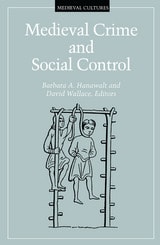
Medieval Crime and Social Control
Barbara A. Hanawalt
University of Minnesota Press, 1998
Uses historical and literary insights to consider crime and punishment in the Middle Ages.
Crime is a matter of interpretation, and never was this truer than in the Middle Ages, when societies faced with new ideas and pressures were continually forced to rethink what a crime was-and what was a crime. This collection undertakes a thorough exploration of shifting definitions of crime and changing attitudes toward social control in medieval Europe.
These essays-by leading specialists in European history and literature-reveal how various forces in medieval society interacted and competed in interpreting and influencing mechanisms for social control. They also demonstrate how well the different methods of history and literature combine to illuminate these developments.The essays show how the play with boundaries between legitimate and illegitimate actions took place not only in laws and courts, but also in the writing of social commentators such as John Fortescue and Jean Gerson, in the works of authors such as William Langland and Geoffrey Chaucer, and in popular literature such as sagas and romances. Drawing on a wide range of historical and literary sources-legal treatises, court cases, statutes, poems, romances, and comic tales-the contributors consider topics including fear of crime, rape and violence against women, revenge and condemnations of crime, learned dispute about crime and social control, and legal and political struggles over hunting rights. Their work shows how medieval society also defined its boundaries in contested spaces such as taverns and forests and in the different rules applying to the behavior and treatment of men and women.Contributors: Christopher Cannon, Oxford U; Elizabeth Fowler, Yale U; Louise O. Fradenburg, U of California, Santa Barbara; Claude Gauvard, Sorbonne; James H. Landman, U of North Texas; William Perry Marvin, Colorado State U; William Ian Miller, U of Michigan; Louise Mirrer, CUNY; Walter Prevenier, U of Ghent.ISBN 0-8166-3168-9 Cloth $49.95xxISBN 0-8166-3169-7 Paper $19.95x268 pages 5 7/8 x 9 JanuaryMedieval Cultures Series, volume 16Translation inquiries: University of Minnesota Press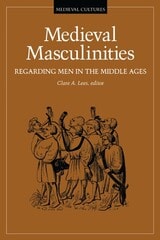
Medieval Masculinities
Regarding Men in the Middle AgesClare A. Lees
University of Minnesota Press, 1994
"Ranging from questions of epic violence and heroic embodiments of manhood to constructions of bachelorhood, husbandry, and sainthood, Medieval Masculinities is the first synthesis of medieval and gender studies to focus on masculinities."
Harry Brod, editor of The Making of Masculinities"We should not be working [exclusively] on the subjected sex any more than a historian of class can focus exclusively on peasants."-Natalie Zemon Davis, 1975 In the years since Natalie Davis made this remark, men's studies, and gender studies along with it, has earned its place in scholarship. What is often missing from such studies, however, is the insight that the concept of gender in general, and that of masculinity in particular, can be understood only in relation to individual societies, examined at specific historical and cultural moments. A brilliant application of this insight, Medieval Masculinities is the first full-length collection to explore the issues of men's studies and contemporary theories of gender within the context of the Middle Ages. Interdisciplinary and multicultural, the essays range from matrimony in medieval Italy to bachelorhood in Renaissance Venice, from friars and saints to the male animal in the fables of Marie de France, from manhood in Sir Gawain and the Green Knight, Beowulf, and the Roman d'Eneas to men as "other," whether Muslim or Jew, in medieval Castilian epic and ballad. The authors are especially concerned with cultural manifestations of masculinity that transcend this particular historical period-idealized gender roles, political and economic factors in structuring social institutions, and the impact of masculinist ideology in fostering and maintaining power. Together, their essays constitute an important reassessment of traditional assumptions within medieval studies as well as a major contribution to the evolving study of gender.ContributorsChristopher Baswell, Barnard CollegeVern L. Bullough, SUNY, BuffaloStanley Chojnacki, Michigan State UniversityJohn Coakley, New Brunswick Theological SeminaryThelma Fenster, Fordham UniversityClare Kinney, University of VirginiaClare A. Lees, University of PennsylvaniaJo Ann McNamara, Hunter CollegeLouise Mirrer, Fordham UniversityHarriet Spiegel, California State University, ChicoSusan Mosher Stuard, Haverford College
Medieval Misogyny and the Invention of Western Romantic Love
R. Howard Bloch
University of Chicago Press, 1991
Through analyses of a broad range of patristic and medieval texts, Bloch explores the Christian construction of gender in which the flesh is feminized, the feminine is aestheticized, and aesthetics are condemned in theological terms. Tracing the underlying theme of virginity from the Church Fathers to the courtly poets, Bloch establishes the continuity between early Christian antifeminism and the idealization of woman that emerged in the twelfth and thirteenth centuries. In conclusion he explains the likely social, economic, and legal causes for the seeming inversion of the terms of misogyny into those of an idealizing tradition of love that exists alongside its earlier avatar until the current era.
This startling study will be of great value to students of medieval literature as well as to historians of culture and gender.
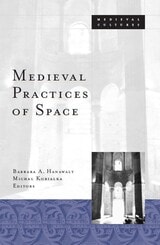
Medieval Practices Of Space
Barbara A. Hanawalt
University of Minnesota Press, 2000
Interprets space and place in the medieval era.
Interprets space and place in the medieval era.
A glance at medieval maps tells us that cartographers of the Middle Ages divided space differently than we do today. In the great mappae mundi, for instance, Jerusalem takes center stage, with an image of the crucified Christ separating one place from another. The architects of medieval cathedrals manipulated space to clarify the roles and status of all who entered. Even in the most everyday context, space was allotted according to gender and class and was freighted with infinitely subtle meanings. The contributors to this volume cross disciplinary and theoretical boundaries to read the words, metaphors, images, signs, poetic illusions, and identities with which medieval men and women used space and place to add meaning to the world.Contributors: Kathleen Biddick, U of Notre Dame; Charles Burroughs, SUNY, Binghamton; Michael Camille, U of Chicago; Tom Conley, Harvard U; Donnalee Dox, U of Arizona; Jody Enders, U of California, Santa Barbara; Valerie K. J. Flint, U of Hull, UK; Andrzej Piotrowski, U of Minnesota; Daniel Lord Smail, Fordham U.Barbara A. Hanawalt is King George III Professor of British History at Ohio State University. Michal Kobialka is associate professor of theatre at University of Minnesota.
Medina by the Bay
Scenes of Muslim Study and SurvivalMaryam Kashani
Duke University Press, 2023

Meditations on the Incarnation, Passion, and Death of Jesus Christ
Catharina Regina von Greiffenberg
University of Chicago Press, 2009
Read by Protestants and Catholics alike, Catharina Regina von Greiffenberg (1633–94) was the foremost German woman poet and writer in the seventeenth-century German-speaking world. Privileged by her social station and education, she published a large body of religious writings under her own name to a reception unequaled by any other German woman during her lifetime. But once the popularity of devotional writings as a genre waned, Catharina’s works went largely unread until scholars devoted renewed attention to them in the twentieth century.
For this volume, Lynne Tatlock translates for the first time into English three of the thirty-six meditations, restoring Catharina to her rightful place in print. These meditations foreground women in the life of Jesus Christ—including accounts of women at the Incarnation and the Tomb—and in Scripture in general. Tatlock’s selections give the modern reader a sense of the structure and nature of Catharina’s devotional writings, highlighting the alternative they offer to the male-centered view of early modern literary and cultural production during her day, and redefining the role of women in Christian history.
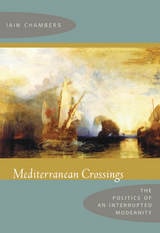
Mediterranean Crossings
The Politics of an Interrupted ModernityIain Chambers
Duke University Press, 2008
In evocative and erudite prose, Chambers renders the Mediterranean a mutable space, profoundly marked by the linguistic, literary, culinary, musical, and intellectual dissemination of Arab, Jewish, Turkish, and Latin cultures. He brings to light histories of Mediterranean crossings—of people, goods, melodies, thought—that are rarely part of orthodox understandings. Chambers writes in a style that reflects the fluidity of the exchanges that have formed the region; he segues between major historical events and local daily routines, backwards and forwards in time, and from one part of the Mediterranean to another. A sea of endlessly overlapping cultural and historical currents, the Mediterranean exceeds the immediate constraints of nationalism and inflexible identity. It offers scholars an opportunity to rethink the past and present and to imagine a future beyond the confines of Western humanistic thought.
Mediterranean Security at the Cross Roads, Volume 8
Nikolaos Stavrou and Raymond C. Ewing
Duke University Press, 0
The potential role of NATO is controversial but crucial to the future of the Mediterranean. Some contributors suggest that the southward expansion of NATO could be an important first step toward stability, while others argue that the Mediterranean should be treated as an integrated geostrategic region, with a central place in Western security considerations.
Highlighting this issue is a foreword by former U.S. Secretary of State George P. Schultz, and a piece focusing on NATO in the Mediterranean by Javier Solana, the Secretary General of NATO. Other essays discuss the comparative experience of UNPROFOR and IFOR in the former Yugoslavia; the role of Italy in the future of the Mediterranean; the economic challenges facing the Middle East; and the role of Israel and its relationship to its neighbors. Mediterranean Security at the Crossroads is one of the first in-depth looks at this region from a strictly post—Cold War perspective.
Medium Cool, Volume 101
Andrew McNamara and Peter Krapp, eds.
Duke University Press, 0
Contributors. Keith Broadfoot, Rex Butler, Patrick Crogan, Wolfgang Ernst, Gary Hall, Rosemary Hawker, Peter Krapp, Catherine Liu, John MacArthur, Andrew McNamara, Toni Ross, Lisa Trahair, Georg Stanitzek, Georg Christoph Tholen, Lisa Trahair, Samuel Weber, Simon Morgan Wortham
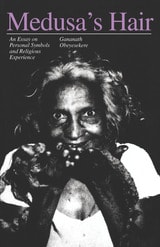
Medusa's Hair
An Essay on Personal Symbols and Religious ExperienceGananath Obeyesekere
University of Chicago Press, 1981
The increasing popularity of these ecstatics poses a challenge not only to orthodox Sinhala Buddhism (the official religion of Sri Lanka) but also, as Gananath Obeyesekere shows, to the traditional anthropological and psychoanalytic theories of symbolism. Focusing initially on one symbol, matted hair, Obeyesekere demonstrates that the conventional distinction between personal and cultural symbols is inadequate and naive. His detailed case studies of ecstatics show that there is always a reciprocity between the personal-psychological dimension of the symbol and its public, culturally sanctioned role. Medusa's Hair thus makes an important theoretical contribution both to the anthropology of individual experience and to the psychoanalytic understanding of culture. In its analyses of the symbolism of guilt, the adaptational and integrative significance of belief in spirits, and a host of related issues concerning possession states and religiosity, this book marks a provocative advance in psychological anthropology.
Meearmeear Traditions
C. C. Trowbridge
University of Michigan Press, 1938

Meet Joe Copper
Masculinity and Race on Montana's World War II Home FrontMatthew L. Basso
University of Chicago Press, 2013

Meet Me at the West Beach Café
Art, Restaurants, and the Rebirth of L.A.Alison Pearlman
University of Nevada Press, 2027
When fine dining met fine art, a new Los Angeles was born.
Between 1979 and 1987, the city witnessed two cultural breakthroughs that may seem unrelated. A wave of bold, design‑forward restaurants helped launch the nationwide “New American” movement, serving innovative cuisine in sleek, modern spaces adorned with contemporary art. At the same time, Los Angeles celebrated a milestone: the opening of the Museum of Contemporary Art (MOCA), its first major museum devoted solely to contemporary art—an institution long missing from a city with global ambitions.
Though often told separately, these stories are deeply intertwined. In this lively, revelatory book, Alison Pearlman uncovers how restaurants became galleries as well as vital crossroads for the chefs, artists, collectors, architects, and civic leaders who reshaped L.A.’s cultural identity. Together, they revived hopes that L.A. could reclaim the creative energy of its 1960s heyday and join the ranks of the world’s cultural capitals.
Drawing on extensive interviews with those who built this transformative era, Pearlman shows how L.A.—through distinctive architecture, daring personalities, and unconventional collaborations—created a cultural moment with national impact. Vivid, engaging, and richly researched, this book brings to life a heady period in the city’s history.
A must‑read for lovers of art, food, and the vibrant alchemy that emerges when creative worlds collide.
Meeting Place
The Human Encounter and the Challenge of CoexistencePaul Carter
University of Minnesota Press, 2013
In this remarkable and often dazzling book, Paul Carter explores the conditions for sociability in a globalized future. He argues that we make many assumptions about communication but overlook barriers to understanding between strangers as well as the importance of improvisation in overcoming these obstacles to meeting. While disciplines such as sociology, legal studies, psychology, political theory, and even urban planning treat meeting as a good in its own right, they fail to provide a model of what makes meeting possible and worth pursuing: a yearning for encounter.
The volume’s central narrative—between Northern cultural philosophers and Australian societies—traverses the troubled history of misinterpretation that is characteristic of colonial cross-cultural encounter. As he brings the literature of Indigenous and non-Indigenous anthropological research into dialogue with Western approaches of conceptualizing sociability, Carter makes a startling discovery: that meeting may not be desirable and, if it is, its primary objective may be to negotiate a future of non-meeting.
To explain the phenomenon of encounter, Carter performs it in differing scales, spaces, languages, tropes, and forms of knowledge, staging in the very language of the book what he calls “passages.” In widely varying contexts, these passages posit the disjunction of Greco-Roman and Indigenous languages, codes, theatrics of power, social systems, and visions of community. In an era of new forms of technosocialization, Carter offers novel ways of presenting the philosophical dimensions of waiting, meeting, and non-meeting.
Meeting the Universe Halfway
Quantum Physics and the Entanglement of Matter and MeaningKaren Barad
Duke University Press, 2006
In an agential realist account, the world is made of entanglements of “social” and “natural” agencies, where the distinction between the two emerges out of specific intra-actions. Intra-activity is an inexhaustible dynamism that configures and reconfigures relations of space-time-matter. In explaining intra-activity, Barad reveals questions about how nature and culture interact and change over time to be fundamentally misguided. And she reframes understanding of the nature of scientific and political practices and their “interrelationship.” Thus she pays particular attention to the responsible practice of science, and she emphasizes changes in the understanding of political practices, critically reworking Judith Butler’s influential theory of performativity. Finally, Barad uses agential realism to produce a new interpretation of quantum physics, demonstrating that agential realism is more than a means of reflecting on science; it can be used to actually do science.
Meetings at the Margins
Prehistoric Cultural Interactions in the Intermountain WestDavid Rhode
University of Utah Press, 2012
Environmental conditions clearly influenced the cultural development of societies in the Intermountain West, but how did interactions with neighbors living along the region’s borders affect a society’s growth and advancement, its cultural integrity, and its long-term survival? Relationships among different societies are, of course, crucial to the spread of information, innovation, and belief systems; to the maintenance of exchange and mating networks; and to the forging of ethnic identity. In these ways and others, intergroup relationships can be as strong a force in shaping a society’s identity and future as are local social and economic dynamics.
Meetings at the Margins focuses on the ways in which different societies in the Intermountain West profoundly influenced each other’s histories throughout the more than fourteen millennia of prehistoric occupation. Historically, inhabitants of this region frequently interacted with more than forty different groups—neighbors who spoke some two dozen different languages and maintained diverse economies. The contributors to this volume demonstrate that in the prehistoric Intermountain West, as elsewhere throughout the world, intergroup interactions were pivotal for the dynamic processes of cultural cohesion, differentiation, and change, and they affirm the value of a long-term, large-scale view of prehistory.

Megadrought in the Carolinas
The Archaeology of Mississippian Collapse, Abandonment, and CoalescenceJohn S. Cable
University of Alabama Press, 2020
A prevailing enigma in American archaeology is why vast swaths of land in the Southeast and Southwest were abandoned between AD 1200 and 1500. The most well-known abandonments occurred in the Four Corners and Mimbres areas of the Southwest and the central Mississippi valley in the twelfth and thirteenth centuries and in southern Arizona and the Ohio Valley during the fifteenth century. In Megadrought in the Carolinas: The Archaeology of Mississippian Collapse, Abandonment, and Coalescence, John S. Cable demonstrates through the application of innovative ceramic analysis that yet another fifteenth-century abandonment event took place across an area of some 34.5 million acres centered on the South Carolina coast.
Most would agree that these sweeping changes were at least in part the consequence of prolonged droughts associated with a period of global warming known as the Medieval Climatic Anomaly. Cable strengthens this inference by showing that these events correspond exactly with the timing of two different geographic patterns of megadrought as defined by modern climate models.
Cable extends his study by testing the proposition that the former residents of the coastal zone migrated to surrounding interior regions where the effects of drought were less severe. Abundant support for this expectation is found in the archaeology of these regions, including evidence of accelerated population growth, crowding, and increased regional hostilities. Another important implication of immigration is the eventual coalescence of ethnic and/or culturally different social groups and the ultimate transformation of societies into new cultural syntheses. Evidence for this process is not yet well documented in the Southeast, but Cable draws on his familiarity with the drought-related Puebloan intrusions into the Hohokam Core Area of southern Arizona during the thirteenth and fourteenth centuries to suggest strategies for examining coalescence in the Southeast. The narrative concludes by addressing the broad implications of late prehistoric societal collapse for today’s human-propelled global warming era that portends similar but much more long-lasting consequences.
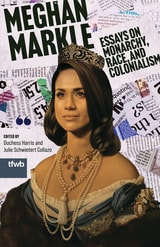
Meghan Markle
Essays on Monarchy, Race, and ColonialismEdited by Duchess Harris and Julie Schwietert Collazo
University of Arizona Press, 2026
This bold and timely anthology interrogates the British monarchy through the lens of race, gender, and postcolonial critique. The contributors of ten original essays use Meghan Markle’s public life and identity as a nexus for understanding the enduring legacies of empire, white supremacy, and institutional exclusion.
Each chapter blends academic analysis with the authors’ own lived experiences and identities, creating a deeply engaging and multifaceted narrative. Essays cover media representation, mental health, motherhood, and the politics of belonging.
Written in an accessible and engaging style, this volume speaks to readers interested in the intersections of monarchy, race, feminism, and celebrity culture. Through its interdisciplinary approach and critical insight, these essays reveal how one woman’s experience within the royal family brings into focus broader social and historical processes of racial identity making and colonial power. This is essential reading for anyone seeking to understand the cultural and political significance of Meghan Markle’s story—and what it tells us about the world we live in.
Contributors
Lucca Ramone Carlson
Duchess Harris
Marissa Kessenich
Jasmine Mitchell
Sarah Olutola
Portia Owusu
Therí Pickens
Amelia Ryan
Julie Schwietert Collazo
Lily Talmont
Ariane Tulloch
Elwood Watson
Stephanie L. Williams
Sharon D. Wright Austin