Results by title
3388 books match the query 'Fiction' and 173 start with m

Maternal Body and Voice in Toni Morrison, Bobbie Ann Mason, and Lee Smith
Paula Gallant Eckard
University of Missouri Press, 2002

Matter Out of Place
StoriesAnnElise Hatjakes
University of Nevada Press, 2026
Experimental in its approach and unflinching in its execution, Matter Out of Place is an exploration of bright spots of humanity in dark underbellies, a feminist reckoning with “sin,” and a love letter to the strange mirage that is northern Nevada. It inhabits physical and digital spaces with equal wariness, and its characters—filled with grit—navigate the fraught divide between appearances and reality, approval and judgment, gambling everything despite knowing that the house always wins.

Maurice, or The Fisher's Cot
A TaleMary Wollstonecraft Shelley
University of Chicago Press, 2000

May You Live In Interesting Times
Tereze Gluck
University of Iowa Press, 1995
Obsession, adultery, infidelity, unrequited love, suicide, betrayal, death—Tereze Glück's clear-sighted characters coolly assess their actions and reactions. When a man's wife dies suddenly, he feels liberated, and learning this stuns him. Taking a leap into personhood, a child watching her mother in the garden experiences empathy. A woman addicted to a lover realizes how she has squandered herself. A kiss in a taxicab sets two people on the road to inevitability. Scars, even small ones, reflect the power and mystery of the roads people take from one life into another. In the intense title story, suicide, long-distance love, and a cat's nine lives overshadow a woman's subterranean life.
Glück's wry and rueful stories chronicle her characters' struggles to tell the truth regardless of where that might lead them. Insistent, stubbornly spirited voices inform these tales; Glück's characters dig in their heels and announce, for good or ill, “This is who I am.” In the end their moral integrity forces them to come face to face with themselves. At the intersection where these insightful stories take place, what is in one's heart and what one reveals to the world converge. Each story is a resonant act of self-discovery for both writer and reader.

Mazaltob
A NovelBlanche Bendahan
Brandeis University Press, 2024
Raised in the Judería or Jewish quarter of Tetouan, Morocco, at the turn of the 20th-century, sixteen-year-old Mazaltob finds herself betrothed to José, an uncouth man from her own community who has returned from Argentina to take a wife. Mazaltob, however, is in love with Jean, who is French, half-Jewish, and a free spirit. In this classic of North African Jewish fiction, Blanche Bendahan evokes the two compelling forces tearing Mazaltob apart in her body and soul: her loyalty to the Judería and her powerful desire to follow her own voice and find true love. Bendahan’s nuanced and moving novel is a masterly exploration of the language, religion, and quotidian customs constraining North African Jewish women on the cusp of emancipation and decolonization. Yaëlle Azagury and Frances Malino provide the first English translation of this modern coming-of-age tale, awarded a prize by the Académie Française in 1930, and analyze the ways in which Mazaltob, with its disconcerting blend of ethnographic details and modernist experimentation, is the first of its genre—that of the feminist Sephardi novel. A historical introduction, a literary analysis, and annotations elucidate historical and cultural terms for readers, supplementing the author’s original notes.
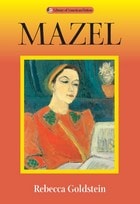
Mazel
Rebecca Goldstein
University of Wisconsin Press, 2002
Mazel means luck in Yiddish, and luck is the guiding force in this magical and mesmerizing novel that spans three generations. Sasha Saunders is the daughter of a Polish rabbi who abandons the shtetl and wins renown as a Yiddish actress in Warsaw and New York. Her daughter Chloe becomes a professor of classics at Columbia. Chloe’s daughter Phoebe grows up to become a mathematician who is drawn to traditional Judaism and the sort of domestic life her mother and grandmother rejected.
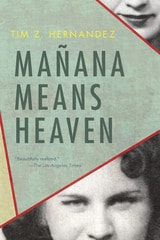
Mañana Means Heaven
Tim Z. Hernandez
University of Arizona Press, 2013
When they meet, Franco is a migrant farmworker with two children and a failing marriage, living with poverty, violence, and the looming threat of deportation, while the “college boy” yearns to one day make a name for himself in the writing world. The significance of their romance poses vastly different possibilities and consequences.
Mañana Means Heaven deftly combines fact and fiction to pull back the veil on one of literature’s most mysterious and evocative characters. Inspired by Franco’s love letters to Kerouac and Hernandez’s interviews with Franco, now in her nineties and living in relative obscurity, the novel brings this lost gem of a story out of the shadows and into the spotlight.
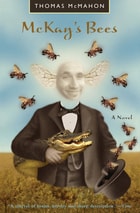
McKay's Bees
A NovelThomas McMahon
University of Chicago Press, 1978
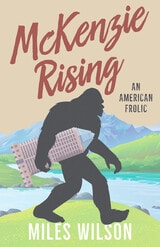
McKenzie Rising
An American FrolicMiles Wilson
University of Nevada Press, 2022
Their work is countered by a Dickensian ensemble of characters, many of whom are chronically sidetracked from the heroic community purpose by various amatory diversions. Given that the protesters include such locals as D.B. Cooper (the long-vanished airplane hijacker) and Sasquatch, in all his odoriferous glory, the reader is in for a rollicking but powerfully thought-provoking journey.
A lusty, environmental picaresque, McKenzie Rising satirizes our shortfalls, while celebrating our resilience and the triumph of community. The book offers a corrective to some of the amendable follies we lug with us as we careen into the (post)-Trump, (post)-COVID era.
Mdeilmm
Mole SpeechHélène Cixous
Seagull Books, 2025
Weaving together history, literature, and personal experience, this recent book from a master of literature crafts a mesmerizing exploration of language, loss, and the enduring power of the spirit world.
The strange word “Mdeilmm” was reported to have been uttered by the spirit of Shakespeare when called up during a séance in 1854 at the instigation of the French poet Victor Hugo. Hugo was then living in exile on the island of Jersey where he took part in several such séances. Hélène Cixous weaves this scene into a rich tapestry that draws from many corners of her world, both real and fictional: Dostoevsky’s Idiot, Hugo’s Last Day of a Condemned Man, Poe’s story “The Gold Bug,” but also film footage of the assassination of Itzhak Rabin and many layers of memories of her Algerian childhood. Transcribed communications from spirits of the departed, her father and grandfather among them, provide a fascinating glimpse into past spiritual practices.
Cixous’s unique narrative style enhances the book’s enchanting quality, ensuring that readers are not only engaged by the content but also captivated by the beauty of the prose. Meanwhile, the reader falls under the spell of the author’s incomparable “mole speech,” the language in which poets communicate.
Meaningful Work
StoriesJoAnna Novak
University of Alabama Press, 2021
WINNER OF FC2's RONALD SUKENICK INNOVATIVE FICTION PRIZE
A stunning look at the labor of obsession and the industry of self-destruction
In her lush, lyrical, and unflinching short fiction debut, JoAnna Novak examines the restless throb of desire amid the rote work of jobs and obligations, from the walk-ins of a New York banquet kitchen to the pier of Venice Beach. Fueled by jellyfish pad Thai and Necco wafers, Mountain Dew and Xiaolongbao, the characters in these stories defy boundaries and mores: In “MEMO 19,” a former anorectic, bored of recovery and her clerical job, invites an unparalleled act of sexual defilement and in “Rio Grande, Wisconsin,” a fleshly preteen fantasizes about Bill Murray on a family vacation to Wisconsin. Celebrating the grueling beauty of the shift and the ticking virtues of self-restraint, Meaningful Work is a pageant of formal experimentation, in fearless, glittering prose.
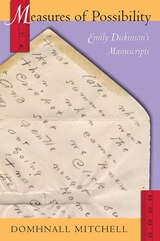
Measures of Possibility
Emily Dickinson's ManuscriptsDomhnall Mitchell
University of Massachusetts Press, 2005
In Measures of Possibility, Domhnall Mitchell sets out to test the hypothesis of Dickinson's textual radicalism, and its consequences for readers, students, and teachers, by looking closely at features such as spacing, the physical direction of the writing, and letter-shapes in handwritten lyric and epistolary texts. Through systematic contextualization and cross-referencing, Mitchell provides the reader with a critical apparatus by which to measure the extent to which contemporary approaches to Dickinson's autograph procedures can reasonably be formulated as corresponding to the poet's own purposes.
Medallions
Zofia Nalkowska
Northwestern University Press, 2000
Considered a masterpiece of antifascist world literature, Medallions stands as the culmination of Nalkowska's literary style, a style the Polish writer Witold Gombrowicz once described as "the iron capital of her art and one of the very few exportables in our national literature." More than mere historical record, Medallions offers the reader startling immediacy, the repetition of an event as it persists in the testimonial present, in the scars on the consciousness and conscience of individuals.
Medea
Euripides
University of Chicago Press, 2014
This new translation of Medea by classicist Oliver Taplin, originally published as part of the acclaimed third edition of Chicago’s Complete Greek Tragedies, brilliantly replicates the musicality and strength of Euripides’s verse while retaining the play’s dramatic and emotional impact. Taplin has created an edition of Medea that is particularly suited to performance, while not losing any of the power it has long held as an object of reading or study. This edition is poised to become the new standard, and to introduce a new generation of readers to the heights and depths of Greek tragedy.

Meet Me Halfway
Milwaukee StoriesJennifer Morales
University of Wisconsin Press, 2015
Morales gives life to multifaceted characters—white schoolteachers and senior citizens, Latino landlords, black and Puerto Rican teens, political activists, and Vietnam vets. As their lives unfold in these stories, we learn about Johnquell’s family—his grandparents’ involvement in the local Black Panther Party, his sister’s on-again, off-again friendship with a white classmate, and his aunt’s identity crisis as she finds herself falling in love with a woman. We also meet Johnquell’s mother, Gloria, and his school friend Taquan, who is struggling to chart his own future.
As an activist mother in the thick of Milwaukee politics, Morales developed a keen ear and a tender heart for the kids who have inherited the city’s troubled racial legacy. With a critical eye on promises unfulfilled, Meet Me Halfway raises questions about the notion of a “postracial” society and, with humor and compassion, lifts up the day-to-day work needed to get there.
Runner-up, Short Story/Anthology, Midwest Book Awards
Best books for public & secondary school libraries from university presses, American Library Association
Wisconsin representative for “Great Lakes Reads,” Library of Congress Center for the Book and its affiliated Midwest centers
Outstanding Achievement Award, Wisconsin Library Association (one of ten 2015 books chosen)
Meet Me in St. Louis
Sally Benson
University of Chicago Press, 2026
Sally Benson’s charming slice-of-life story is back in print for a new generation of readers.
Originally published as World War II raged overseas, Meet Me in St. Louis is Sally Benson’s semi-autobiographical account of the intergenerational Smith family during the twelve months leading up to the 1904 World’s Fair in St. Louis, Missouri. With warmth and tenderness, Benson chronicles the Smiths’ lives as they navigate sibling rivalries, first loves, financial hardship, jealousy, and heartaches in a poignant ode to the bonds of family.
Benson's novel is infused with wit as she details the lighthearted, pleasant existence of the Smith family’s five children—one rife with chaste crushes, victimless pranks, and other childhood escapades. Yet, the novel’s episodic, squeaky-clean veneer belies a dark comedic brilliance that transcends the ages and speaks, even today, to the universal experience of growing up.
Long out of print, this new edition of Benson’s timeless work includes a foreword by bestselling author Benjamin Dreyer, who comments both on the book's origins and its afterlife in popular culture as the source material for Judy Garland’s beloved musical of the same name. An effervescent midcentury novel waiting to be rediscovered, Meet Me in St. Louis is ready to meet its new generation of readers.
Memoirs of the Count of Comminge and The Misfortunes of Love
Claudine-Alexandrine Guérin de Tencin
Iter Press, 2016
Memoirs of the Life of Henriette-Sylvie de Moliere
A NovelMadame de Villedieu
University of Chicago Press, 2004
Memoirs of the Life of Henriette-Sylvie de Molière, a semi autobiographical novel, portrays an enterprising woman who writes the story of her life, a complex tale that runs counter to social expectations and novelistic conventions. A striking work, the story skillfully mixes real events from the author's life with fictional adventures. At a time when few women published, Villedieu's Memoirs is a significant achievement in creating a voice for the early modern woman writer. Produced while the French novel form was still in its infancy, it should be welcomed by any scholar of women's writing or the early development of the novel.
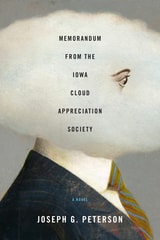
Memorandum from the Iowa Cloud Appreciation Society
A NovelJoseph G. Peterson
University of Iowa Press, 2022
Stuck in an airport because of blizzard conditions, and packed into a crowded terminal with other travelers, Moore has come to believe that his life is not worth reporting about because it has largely been a life lived without incident. However, chance encounters with a yoga instructor, a man traveling to bury his mother, and an enigmatic woodsman reawaken long dormant emotions about his father’s suicide and cause Jim to newly reflect on his own life and on a memorandum that he later discovered in his deceased father’s papers, which lists all the names of the clouds, and which Jim now, from time to time, recants as if it were his own private kaddish to memorialize his lost father.
Like the pilgrims in Chaucer’s The Canterbury Tales who pass the time telling stories while stranded in the Tabard Inn, Memorandum from the Iowa Cloud Appreciation Society tells the tale of a traveling salesman and what really happened over the course of his forty- six years.
Memorial
Ferdinando Camon
Northwestern University Press, 1996
Camon's northern Italy was primitive and poor; little more than strong religious beliefs helped sustain its people through years of poverty, hunger, and disease. With the arrival of modern life and its "civilizing" aspects, the peasant ways, and all they stood for, changed forever.

Memories of Lazarus
By Adonias Filho
University of Texas Press, 1969
These are the recollections of Alexandre—of his life, his death-in-life, and his ultimate death, as they are played out against the mobile tapestry of the valley where he was born. The valley itself, in the backlands of the state of Bahia, Brazil, alternates at different stages in Alexandre’s consciousness between reality and symbol. It swings from a harsh regional specificity to become the panorama of all human life, its endless, eroding wind the devouring hostility of all environments and its pain the pain of every human being in the face of his own brutality and that of others.
Throughout the novel Alexandre’s mind ranges from sharp awareness, through hallucination, to oblivion (“a man dies while alive,” says Jeronimo, his mentor), and back again as he experiences the violent, obtuse phenomena of life in the valley—his universe and ours. This latter-day Lazarus leaves the resisting hills and black sky once only, hounded by the valley dwellers who believe he has murdered his wife, her father, and her brother. Yet despite his awareness of the horror of the valley and his intuition of something beyond it, it is precisely his contact with the gentler existence to which he escapes that forces Alexandre to recognize his nature for what it is. Turning his back on a greater and more varied range of feeling and experience, he chooses the narrow ferocity of the valley, to which he returns to die the final death for which the earlier deaths have prepared him.
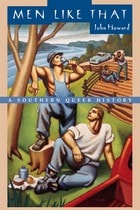
Men Like That
A Southern Queer HistoryJohn Howard
University of Chicago Press, 1999
Spanning four decades, Men Like That complicates traditional notions of a post-WWII conformist wave in America. Howard argues that the 1950s, for example, were a period of vibrant queer networking in Mississippi, while during the so-called "free love" 1960s homosexuals faced aggressive oppression. When queer sex was linked to racial agitation and when key civil rights leaders were implicated in homosexual acts, authorities cracked down and literally ran the accused out of town.
In addition to firsthand accounts, Men Like That finds representations of homosexuality in regional pulp fiction and artwork, as well as in the number one pop song about a suicidal youth who jumps off the Tallahatchie Bridge. And Howard offers frank, unprecedented assessments of outrageous public scandals: a conservative U.S. congressman caught in the act in Washington, and a white candidate for governor accused of patronizing black transgender sex workers.
The first book-length history of the queer South, Men Like That completely reorients our presuppositions about gay identity and about the dynamics of country life.
"Men Like That goes a long way towards redressing the urban bias in American lesbian and gay-history writing. . . . Howard's rigorous scholarship, which is based both on oral history and traditional historical documents . . . is enhanced by a disarmingly personal touch. . . . His insights into queerness and the mentality of the American South should be of great interest both to the professional gay historian and the general reader."—Madeleine Minson, Times Higher Education Supplement
"Howard creates a history remarkable in its complexity yet intimate in its portraiture. At long last an intimate and full vision of queer lives in America that did not unfold in San Francisco's discos."—Kirkus Reviews
"In this groundbreaking and engrossing analysis of gay male life in postwar Mississippi, Howard . . . boldly demonstrates that gay culture and sex not only existed but flourished in small towns."—Publishers Weekly, starred review
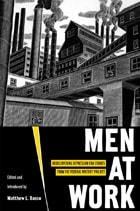
Men at Work
Rediscovering Depression-era Stories from the Federal Writers’ ProjectMatthew Basso
University of Utah Press, 2012
As part of Roosevelt’s New Deal program of the 1930s, the Works Progress Administration (WPA) provided relief jobs to millions of Americans. One facet of the WPA was the hiring of men and women to document the history and folklore of America so as to capture the “soul” of the nation. While researching at the Montana Historical Society Research Center more than a decade ago, historian Matthew Basso stumbled upon copies of six stories that had been submitted for inclusion in a volume titled Men at Work.They arrived too late to be considered. Federal Writers’ Project (FWP) staff had already chosen thirty-four stories from submissions across the country and the volume was nearing publication. In the end, however, that publication was waylaid by the eruption of World War II and the manuscript was forgotten. Now, Basso is bringing these rediscovered stories to their intended audience—the American people.
Works of fiction that have a creative nonfiction feel, these narratives stem from direct observation of or participation in the work described and offer portraits of Americans from diverse ethnic backgrounds who labored in jobs as varied as logging, mining, fruit packing, and rodeo riding. The writers, directed by editor Harold Rosenberg, also represent a variety of backgrounds and experience. Some, like Jack Conroy, Jim Thompson, and Chester Himes, became strong voices in the literary world. The vivid accounts in Men at Work illuminate the meaning of work during a time when jobs were scarce and manual labor highly valued. With our country once again in financial crisis and workers facing an anemic job market, today’s readers will find these stories especially poignant.
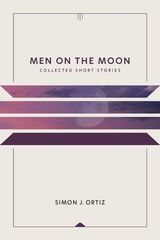
Men on the Moon
Collected Short StoriesSimon J. Ortiz
University of Arizona Press, 1999
Best known for his poetry, Ortiz also has authored 26 short stories that have won the hearts of readers through the years. Men on the Moon brings these stories together—stories filled with memorable characters, written with love by a keen observer and interpreter of his people's community and culture. True to Native American tradition, these tales possess the immediacy—and intimacy—of stories conveyed orally. They are drawn from Ortiz's Acoma Pueblo experience but focus on situations common to Native people, whether living on the land or in cities, and on the issues that affect their lives. We meet Jimmo, a young boy learning that his father is being hunted for murder, and Kaiser, the draft refuser who always wears the suit he was given when he left prison. We also meet some curious Anglos: radicals supporting Indian causes, scholars studying Indian ways, and San Francisco hippies who want to become Indians too.
Whether telling of migrants working potato fields in Idaho and pining for their Arizona home or of a father teaching his son to fly a kite, Ortiz takes readers to the heart of storytelling. Men on the Moon shows that stories told by a poet especially resound with beauty and depth.
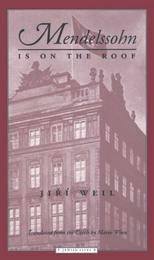
Mendelssohn Is on the Roof
Jiri Weil
Northwestern University Press, 1998
Thus begins a story of disarming simplicity that traces the transformation of ordinary lives in Nazi-occupied Prague. Death abetted by the petty malevolence of Nazi functionaries wins all the battles but ultimately loses the war, defeated by the fragile flowering of courage and defiance.
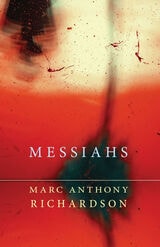
Messiahs
Marc Anthony Richardson
University of Alabama Press, 2021
2021 BIG OTHER BOOK AWARD FICTION FINALIST
A fiercely ecstatic tale of betrayal and self-sacrifice
Messiahs centers on two nameless lovers, a woman of east Asian descent and a former state prisoner, a black man who volunteered incarceration on behalf of his falsely convicted nephew, yet was “exonerated” after more than two years on death row. In this dystopian America, one can assume a relative’s capital sentence as an act of holy reform—“the proxy initiative,” patterned after the Passion.
The lovers begin their affair by exchanging letters, and after his release, they withdraw to a remote cabin during a torrential winter, haunted by their respective past tragedies. Savagely ostracized by her family for years, the woman is asked by her mother to take the proxy initiative for her brother—creating a conflict she cannot bear to share with her lover. Comprised of ten poetic paragraphs, Messiahs’ rigorous style and sustained intensity equals agony and ecstasy.
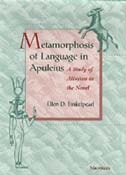
Metamorphosis of Language in Apuleius
A Study of Allusion in the NovelEllen D. Finkelpearl
University of Michigan Press, 1998
When Apuleius wrote his Metamorphoses, the novel--indeed the very concept of fiction in prose--was new. This study argues that Apuleius' repeated allusions to earlier Latin authors such as Vergil, Ovid, and Seneca represent an exploration on his part of the relationship between the novel and more established genres of the era. Apuleius' struggle with this tradition, Finkelpearl maintains, parallels the protagonist's move from an acceptance of the dominance of traditional forms to a sense of arrival and self- discovery.
An introductory chapter includes general discussion of the theory and practice of allusion. Finkelpearl then revisits the issues of parody in Apuleius. She also includes discussion of Apuleius' use of Vergil's Sinon, the Charite episode in relation to Apuleius' African origins, and the stepmother episode. Finally a new reading of Isis is offered, which emphasizes her associations with writing and matches the multiformity of the goddess with the novel's many voices.
This book will be of interest to scholars of literature and the origins of the novel, multiculturalism, and classical literature.
Ellen D. Finkelpearl is Associate Professor of Classics at Scripps College, Claremont, California.
Meteor in the Madhouse
Leon Forrest
Northwestern University Press, 2011
Mevlido's Dreams
A Post-Exotic NovelAntoine Volodine
University of Minnesota Press, 2024
A postapocalyptic noir that asks if love and political ideals can survive civilizational collapse
A meditative, postapocalyptic noir, Mevlido’s Dreams is an urgent communiqué from a far-future reality of irreversible environmental damage and civilizational collapse. Mevlido is a double agent working for the police and living in the last habitable city on the planet, a sprawling abyssal ruin marked by war and ruled by criminals. Suspended in the bardo between his loyalty to the surveillance state and to the anarchists, communists, and other rebels he monitors, Mevlido clings to life and hope—barely—in the city’s vast slums, haunted by the memory of the wife he failed to save during the last war and dreaming of a mysterious mission he is told he must accomplish. At the same time, an enigmatic organization existing elsewhere—the Organs—observes Mevlido’s actions and debates its responsibility to him and to humanity as a whole.
Asking what it means to love and care for others at the end of the world, this dense, brilliantly detailed postcollapse reality imagined by Antoine Volodine is one that grows ever more relevant amidst intensifying climate and political catastrophes. A key work in Volodine’s post-exotic fictional universe, Mevlido’s Dreams envisions a world changed beyond recognition and ruled under irrational authoritarianism in which dreams nest within dreams and the boundaries between life and death are fluid and uncertain.
Mexican Folk Tales
Anthony John Campos
University of Arizona Press, 1977
Mexican Village and Other Works
Josefina Niggli
Northwestern University Press, 2007
A long-overdue gathering of Niggli's work, this volume showcases the writer's remarkable literary versatility, as well as the groundbreaking nature of her writing, which in many ways established a blueprint for future generations of writers and readers of Chicano literature. This collection includes Niggli's most famous and influential work, Mexican Village—a literary chronicle of Hidalgo, Mexico, which explores the distinct nature and tensions of Mexican life—along with her novel Step Down, Elder Brother, and five of her most well-known plays.
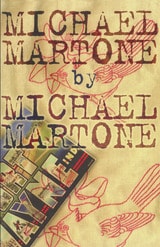
Michael Martone
FictionsMichael Martone
University of Alabama Press, 2005
When the author becomes the story, the possibilities are endless.
Michael Martone, by Michael Martone, continues the author's giddy exploration of the parts of books nobody ever reads. Michael Martone is its own appendix, comprising fifty “contributors notes,” each of which identifies in exorbitant biographical detail the author of the other forty-nine. Full of fanciful anecdotes and preposterous reminiscences, Martone’s self-inventions include the multiple deaths of himself and all his family members, his Kafkaesque rebirth as a giant insect, and his stints as circus performer, assembly-line worker, photographer, and movie extra.
Expect no autobiographical consistency here. A note revealing Martone's mother as the ghost-writer of all his books precedes the note beginning, “Michael Martone, an orphan . . . “ We learn of Martone’s university career and sketchy formal education, his misguided caretaking of his teacher John Barth’s lawn, and his impersonation of a poor African republic in political science class, where Martone's population is allowed to starve as his more fortunate fellow republics fight over development and natural resource trading-cards.
The author of Michael Martone, whose other names include Missy, Dolly, Peanut, Bug, Gigi-tone, Tony's boy, Patty's boy, Junior's, Mickey, Monk, Mr. Martone, and “the contributor named in this note," proves as Protean as fiction itself, continuously transforming the past with every new attribution but never identifying himself by name. It is this missing personage who, from first note to last, constitutes the unformed subject of Michael Martone.
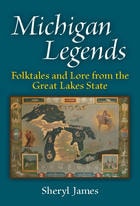
Michigan Legends
Folktales and Lore from the Great Lakes StateSheryl James
University of Michigan Press, 2013
Over the course of its history, the state of Michigan has produced its share of folktales and lore. Many are familiar with the Ojibwa legend of Sleeping Bear Dunes, and most have heard a yarn or two told of Michigan’s herculean lumberjack, Paul Bunyan.
But what about Detroit’s Nain Rouge, the red-eyed imp they say bedeviled the city’s earliest residents? Or Le Griffon, the Great Lakes’ original ghost ship that some believe haunts the waters to this day? Or the Bloodstoppers, Upper Peninsula folk who’ve been known to halt a wound’s bleeding with a simple touch thanks to their magic healing powers?
In Michigan Legends, Sheryl James collects these and more stories of the legendary people, events, and places from Michigan’s real and imaginary past. Set in a range of historical time periods and locales as well as featuring a collage of ethnic traditions—including Native American, French, English, African American, and Finnish—these tales are a vivid sample of the state’s rich cultural heritage. This book will appeal to all Michiganders and anyone else interested in good folktales, myths, legends, or lore.

Michigan Salvage
The Fiction of Bonnie Jo CampbellLisa DuRose
Michigan State University Press, 2023
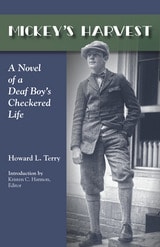
Mickey’s Harvest
A Novel of a Deaf Boy’s Checkered LifeHoward L. Terry
Gallaudet University Press, 2015
Mickey Dunmore’s story begins with the sinking of his father’s merchant sailing ship and ends with a cliffhanger in World War I. In school, after an illness caused his deafness, Mickey finds himself constantly fighting the hearing boys and later competing with the signing students when he attends a residential school for deaf students. In college, he and his best friend Dick Wagner leave early to travel the nation with the hobos, carnies, and grifters. In one town, they outfox a barker who was using a deaf girl to “read” the minds of their marks. Further on, they meet Bunny, the Mighty Mite deaf man who helps expose a hearing woman posing as deaf to scam sympathetic people. Mickey faces his greatest challenge when he falls in love with Marion Carrel, a deaf girl whose hearing father forbids their romance on eugenics grounds.
Terry, who became deaf at the age of 11, states from the outset that he means for his novel to reveal the biases confronting deaf people at the time. As a tonic, he populates Mickey’s Harvest with artistic, talented deaf individuals who engage readers in an earlier, colorful time as they “show their stuff.”
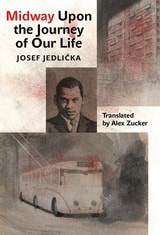
Midway Upon the Journey of Our Life
Josef Jedlicka
Karolinum Press, 2016
Meditative and speculative reflections here alternate and overlap with fragmentary accounts of Jedlicka’s own biography and slices of the lives of people around him, typically rendered as overheard conversations. The narrative passages range in chronology from May 1945 to the early 1950s, with sporadic leaps through time as the characters go about the business of “building a new society” and the mythology that goes with it. Due to its critical view of socialist society, Midway remained unpublished until 1966, amid the easing of cultural control, but a complete version of this darkly comic novel did not appear in Czech until 1994.

Mindscapes
The Geographies of Imagined WorldsEdited by George E. Slusser and Eric S. Rabkin
Southern Illinois University Press, 1989
Eighteen essays plus four examples from the ninth annual J. Lloyd Eaton Conference on Science Fiction and Fantasy Literature at the University of California, Riverside.
The concept of mindscape, Slusser and Rabkin explain, allows critics to focus on a single fundamental problem: "The constant need for a relation between mind and some being external to mind."
The essayists are Poul Anderson, Wendy Doniger O’Flaherty, Ronald J. Heckelman, David Brin, Frank McConnell, George E. Slusser, James Romm, Jack G. Voller, Peter Fitting, Michael R. Collings, Pascal J. Thomas, Reinhart Lutz, Joseph D. Miller, Gary Westfahl, Bill Lee, Max P. Belin, William Lomax, and Donald M. Hassler.
The book concludes with four authors discussing examples of mindscape. The participants are Jean-Pierre Barricelli, Gregory Benford, Gary Kern, and David N. Samuelson.

Minimal Damage
Stories of VeteransH. Lee Barnes
University of Nevada Press, 2013
In the seven stories and novella of Minimal Damage, veterans search for dignity in a civilian life that has no need for men who were soldiers. Finding themselves psychically scarred, in crisis, on the fringes of society, or in battle with their memories, these men are living "like warts on America's ass." The characters range from the enigmatic Mr. K, who runs a reality television show and once led an escape from a Korean pow camp, to the doomed Billy Debecki, who regains his dignity in the last minutes of his life by remembering that he once willingly risked his life to save an enemy soldier. In one story, a man who was never a soldier finds a path toward reconciliation with his brother, a former Marine. In another, a man recalls becoming a soldier by watching the humanity of a fellow recruit disintegrate in basic training. In the novella "Snake Boy," a homeless Vietnam vet is kidnapped by a snake-handling evangelist. In proper, upstanding lives and lost, drifting ones, the depth of damage is never immediately apparent for these men. In war, chance, luck, and arbitrary timing conspire to determine a soldier's fate. As civilians, the same uncontrollable forces influence who finds a place in society and who is doomed to keep searching. With emotion, humor, and clarity, Barnes creates characters who show us what it is to live with the trauma of having experienced combat. The fractured souls and lives of these men remind us that the damage doesn't remain on the battlefield. Western Literature Series.
Ministers of Fire
A NovelMark Harril Saunders
Ohio University Press, 2012
Kabul, Afghanistan, 1979: CIA station chief Lucius Burling, an idealistic but flawed product of his nation’s intelligence establishment, barely survives the assassination of the American ambassador. Burling’s reaction to the murder, and his desire to understand its larger meaning, propel him on a journey of intrigue and betrayal that will reach its ultimate end in the streets of Shanghai, months after 9/11. A Chinese dissident physicist may (or may not) be planning to sell his country’s nuclear secrets, and in his story Burling, now living quietly as consul, recognizes the fingerprints of a covert operation, one without the obvious sanction of the Agency. The dissident’s escape draws the violent attention of the Chinese internal security service, and as Burling is drawn inexorably into their path, he must face the ghosts of his past misadventures and a present world of global trafficking, fragile alliances, and the human need for connection above all.
Reminiscent of the best work of Graham Greene and John le Carré, Ministers of Fire extends the spy thriller into new historical, political, and emotional territory.
Mink River
Brian Doyle
Oregon State University Press, 2010
Like Dylan Thomas’ Under Milk Wood and Sherwood Anderson’s Winesburg, Ohio, Brian Doyle’s stunning fiction debut brings a town to life through the jumbled lives and braided stories of its people.
In a small town on the Oregon coast there are love affairs and almost-love-affairs, mystery and hilarity, bears and tears, brawls and boats, a garrulous logger and a silent doctor, rain and pain, Irish immigrants and Salish stories, mud and laughter. There’s a Department of Public Works that gives haircuts and counts insects, a policeman addicted to Puccini, a philosophizing crow, beer and berries. An expedition is mounted, a crime committed, and there’s an unbelievably huge picnic on the football field. Babies are born. A car is cut in half with a saw. A river confesses what it’s thinking…
It’s the tale of a town, written in a distinct and lyrical voice, and readers will close the book more than a little sad to leave the village of Neawanaka, on the wet coast of Oregon, beneath the hills that used to boast the biggest trees in the history of the world.
Minus One
Doris Iarovici
University of Wisconsin Press, 2020
Woven through this slim and powerful volume are astute observations on how pain and grief can be inherited from one generation to the next. With tenderness and honesty, Doris Iarovici explores the plunging depths of the human experience, lingering on moments of familial warmth and joy but never shying away from conflict and tension. These stories reveal glimmers of hope and possibility, even in our darkest times.
Mirror of the Darkest Night
Mahasweta Devi
Seagull Books, 0
Mirror of the Darkest Night is almost an aberration in Mahasweta Devi’s oeuvre. Known for her activism and hard-hitting indictment of social inequalities, she pays close attention to detail in this sparkling novel. It offers a rare glimpse of Devi’s talent for telling the sort of story she normally eschewed—and it’s a cracker of a tale.
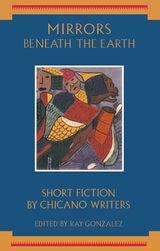
Mirrors Beneath the Earth
Short Fiction by Chicano WritersRay González
Northwestern University Press, 1995
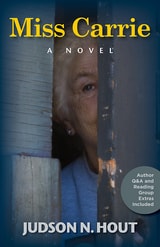
Miss Carrie
A NovelJudson N. Hout
Parkhurst Brothers, Inc., 2013
“Set in Arkansas during World War II, Hout’s touching story of an orphaned boy's relationship with the inhabitant of a small town's "haunted house” will keep you guessing, right up to the satisfying ending. Another endearing novel from Judson Hout."
--Cindy Ward, Dallas, Texas

Miss Kansas City
Joan Frank
University of Michigan Press, 2006
Friendless and reclusive, Alex Blue commutes two hours each way to a job that serves mainly as a place to bide time, until one day she meets the wealthy, worldly—and married—owner of a high-concept Bay Area lifestyle company. Meanwhile, the melancholy and closeted Morton Levi, yearning for a loving partner but stung by prior experience, lives a secret life outside the software information company he manages with a steady, efficient hand—the same company where Alex works.
As ominous rumors of mergers and layoffs swirl, and Alex and Mort are pushed to the emotional brink by the vagaries of love, they find themselves forging an unexpected alliance. Miss Kansas City is a moving exploration of the notion of possibility, and of a seasoned hope that can emerge on the other side of loneliness and loss.
Miss Muriel and Other Stories
Ann Petry, foreword by Jamilah Lemieux
Northwestern University Press, 2017
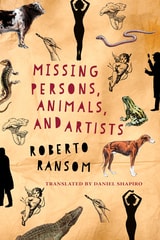
Missing Persons, Animals, and Artists
Roberto Ransom
Swan Isle Press, 2017
Missing Persons, Animals, and Artists is the follow-up to Ransom’s highly acclaimed A Tale of Two Lions, praised by Ignacio Padilla as “the best Mexican literary work I have read in recent years. . . . [It] heralds a pen capable of that rarest of privileges in our letters: attaining the comic and profoundly human through a perfect simplicity.” This collection of short stories has been translated with great care by Daniel Shapiro.
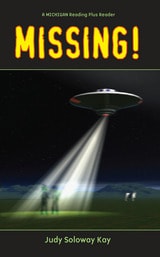
Missing!
Judy Soloway Kay
University of Michigan Press, 2005
The MICHIGAN Reading Plus Readers are original fiction written for students who wish to improve their reading skills. The MICHIGAN Reading Plus Readers support the need for extensive reading on topics of interest to today's students. The Readers offer students books in the genres of mystery, science-fiction, and romance. Activities that practice vocabulary and reading skills are provided on the companion website.
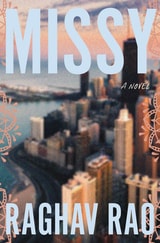
Missy
A NovelRaghav Rao
Northwestern University Press, 2026
A remarkable young woman flees India to chase the dream of self-reinvention in America
The orphaned girls of St. Ursula’s convent are destined to be nuns or servants, but seventeen-year-old Savi dreams of escape. She is chosen to work as a governess for the wealthy Nandiyar family at their country estate in Tamil Nadu, where she falls for a lively and carefree apprentice sculptor. After the violent and horrific events of a single night, they are forced to flee, leaving their homeland forever in the rearview.
Decades later, Savi has become known to all as “Missy” and runs a successful driving school in Chicago. She is a pillar of the South Asian community and the mother of two brilliant, stubborn young women, Mansi and Shilpa. But when Varun, a charming doctor with mysterious connections to her past, enters their lives, a chain of events is set off that puts Missy’s carefully constructed world in jeopardy. Can Missy outrun her secrets? And, if she is forced to face them, what will become of those she loves?
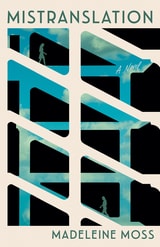
Mistranslation
Moss, Madeleine
University of Iowa Press, 2026
A Debutiful “Most Anticipated Debut Book of 2026”
In upstate New York in 2001, nine-year-old twins Sabina and Camilla spend the summer weathering the moods of their erratic mother while finding themselves pulled toward diverging interests: Sabina into the mystery of their absent French father and Camilla into burgeoning popularity. But their lives are shaken up by the arrival of an Arab French family across the street. Thrilled by what she sees as a link to the country of her origins, Sabina attempts to befriend the family’s son, Khalil, and is rebuffed for reasons she doesn’t understand.
Yet as the twins and Khalil come of age, they are drawn into a tense and ever-shifting triangular dynamic. As Sabina strives to find her father and make sense of her mother, as Camilla confronts whether the power she held in youth translates to adulthood, and as Khalil reckons with the psychological fallout of a family tragedy, their paths converge in ways both surprising and inevitable. Bookended by events with global resonance, Mistranslation is a continent-spanning chronicle of family, inheritance, and the reverberations of the choices we do—or don’t—make.