Results by title
2817 books match the query 'Nature' and 116 start with m
Memories of Earth and Sea
An Ethnographic History of the Islands of ChiloéAnton Daughters
University of Arizona Press, 2019
Staring in the 1980s, Chiloé was thrust into the global economy when major companies moved into the region to extract wild stocks of fish and to grow salmon and shellfish for export. The archipelago’s economy shifted abruptly from one of subsistence farming and fishing to wage labor in export industries. Local knowledge, traditions, memories, and identities similarly shifted, with young islanders expressing a more critical view of the rural past than their elders.
This book highlights the region’s unique past, emphasizing the generational tensions, disconnects, and continuities of the last half century. Drawing on interviews, field observations, and historical documents, Anton Daughters brings to life one of South America’s most culturally distinct regions.
Merleau-Ponty’s Philosophy of Nature
Ted Toadvine
Northwestern University Press, 2009
In our time, Ted Toadvine observes, the philosophical question of nature is almost entirely forgotten—obscured in part by a myopic focus on solving "environmental problems" without asking how these problems are framed. But an "environmental crisis," existing as it does in the human world of value and significance, is at heart a philosophical crisis. In this book, Toadvine demonstrates how Maurice Merleau-Ponty’s phenomenology has a special power to address such a crisis—a philosophical power far better suited to the questions than other modern approaches, with their over-reliance on assumptions drawn from the natural sciences.
The book examines key moments in the development of Merleau-Ponty’s philosophy of nature while roughly following the historical sequence of his major works. Toadvine begins by setting out an ontology of nature proposed in Merleau-Ponty’s first book, The Structure of Behavior. He takes up the theme of the expressive role of reflection in Phenomenology of Perception, as it negotiates the area between nature’s own "self-unfolding" and human subjectivity. Merleau-Ponty’s notion of "intertwining" and his account of space provide a transition to Toadvine’s study of the philosopher’s later work—in which the concept of "chiasm," the crossing or intertwining of sense and the sensible, forms the key to Merleau-Ponty’s mature ontology—and ultimately to the relationship between humans and nature.
Messages from Islands
A Global Biodiversity TourIlkka Hanski
University of Chicago Press, 2016
Beginning each chapter on a particular island, Hanski dives into reflections on his own field studies before going on to pursue a variety of ecological questions, including: What is the biodiversity crisis? What are extinction thresholds and extinction debts? What can the biodiversity hypothesis tell us about rapidly increasing allergies, asthma, and other chronic inflammatory disorders? The world’s largest island, Greenland, for instance, is the starting point for a journey into the benefits that humankind acquires from biodiversity, including the staggering biodiversity of microbes in the ecosystems that are closest to us—the ecosystems in our guts, in our respiratory tracts, and under our skin. Conceptually oriented but grounded in an adventurous personal narrative, Messages from Islands is a landmark work that lifts the natural mysteries of islands from the sea, bringing to light the thrilling complexities and connections of ecosystems worldwide.
Messages from the Wild
An Almanac of Suburban Natural and Unnatural HistoryBy Frederick R. Gehlbach
University of Texas Press, 2002
Seeking a closer connection with nature than the manicured lawns of suburbia, naturalist Fred Gehlbach and his family built a house on the edge of a wooded ravine in Central Texas in the mid-1960s. On daily walks over the hills, creek hollows, and fields of the ravine, Gehlbach has observed the cycles of weather and seasons, the annual migrations of birds, and the life cycles of animals and plants that also live in the ravine.
In this book, Gehlbach draws on thirty-five years of journal entries to present a composite, day-by-day almanac of the life cycles of this semiwild natural island in the midst of urban Texas. Recording such events as the hatching of Eastern screech owl chicks, the emergence of June bugs, and the first freeze of November, he reminds us of nature's daily, monthly, and annual cycles, from which humans are becoming ever more detached in our unnatural urban environments. The long span of the almanac also allows Gehlbach to track how local and even global developments have affected the ravine, from scars left by sewer construction to an increase in frost-free days probably linked to global warming.
This long-term record of natural cycles provides one of only two such baseline data sets for North America. At the same time, the book is an eloquent account of one keen observer's daily interactions with his wild and human neighbors and of the lessons in connectedness and the "play of life" that they teach.
Metacommunities
Spatial Dynamics and Ecological CommunitiesEdited by Marcel Holyoak, Mathew A. Leibold, and Robert D. Holt
University of Chicago Press, 2005
Metacommunities takes the hallmarks of metapopulation theory to the next level by considering a group of communities, each of which may contain numerous populations, connected by species interactions within communities and the movement of individuals between communities. In examining communities open to dispersal, the book unites a broad range of ecological theories, presenting some of the first empirical investigations and revealing the value of the metacommunity approach.
The collection of empirical, theoretical, and synthetic chapters in Metacommunities seeks to understand how communities work in fragmented landscapes. Encouraging community ecologists to rethink some of the leading theories of population and community dynamics, Metacommunities urges ecologists to expand the spatiotemporal scales of their research.

Metaphysical Disputation I
On the Nature of First Philosophy or MetaphysicsFrancisco Suarez
Catholic University of America Press, 2021
Mexican Wilderness and Wildlife
By Ben Tinker
University of Texas Press, 1978
From the mountainous area bordering Arizona and New Mexico, the western range of the Sierra Madres reaches south into Mexico to the state of Jalisco. The eastern range stretches from the Texas border down to Morelia and the Valley of Mexico. Ben Tinker spent years exploring this rugged wilderness and the vast deserts of Sonora and Baja California. Mexican Wilderness and Wildlife condenses a lifetime of outdoor lore and learning.
Tinker provides detailed life sketches of Mexico's Desert Bighorn Sheep, Pronghorn Antelope, Mule Deer, Whitetail Deer, Peccary, Grizzly and Black Bears, Wild Turkey, Jaguar, Mountain Lion, Timber Wolf, Coyote, and Bobcat. Each is illustrated by wildlife artist Doris Tischler, and Tinker describes their habitats, habits, reproduction, and peculiarities. Information is supplied on the physical measurements of several species of major wildlife. Tinker's observations are laced with anecdotes about his experiences in Mexico's remote backcountry—encounters with bandits, survival in the desert mountains, and the chance discovery of archaeological ruins.
The book describes the terrain and flora of the four life zones inhabited by major game and predatory animals. The section on desert water is a fascinating account of how animals thrive among cacti, thorn trees, and creosote bush remote from streams and waterholes. There is also a brief discussion of conservation efforts in Mexico, chapters on trout fishing in the Sierra Madre Occidental and Baja California, and a guide to big game habitats. This volume will be valuable to hunters, conservationists, naturalists, and others interested in the wilderness and wildlife of Mexico.
Ben Tinker collected much of the material for this book during the years he roamed northern Mexico as Federal Game Guardian. Though an American, Tinker had long been familiar with Mexican wildlife through his Sonoran ranching operation and was known for his interest in conservation when he was appointed by Alvaro Obregón in 1922.
Mexico’s Community Forest Enterprises
Success on the Commons and the Seeds of a Good AnthropoceneDavid Barton Bray
University of Arizona Press, 2020
Mexico presents a unique case in which much of the nation’s forests were placed as commons in the hands of communities, who, with state support and their own entrepreneurial vigor, created community forest enterprises (CFEs). David Barton Bray, who has spent more than thirty years engaged with and researching Mexican community forestry, shows that this reform has transformed forest management in that country at a scale and level of maturity unmatched anywhere else in the world.
For decades Mexico has been conducting a de facto large-scale experiment in the design of a national social-ecological system (SES) focused on community forests. What happens when you give subsistence communities rights over forests, as well as training, organizational support, equipment, and financial capital? Do the communities destroy the forest in the name of economic development, or do they manage them sustainably, generating current income while maintaining intergenerational value as a resource for their children? Bray shares the scientific and social evidence that can now begin to answer these questions. This is an invaluable resource for students, researchers, and the interested public on the future of global forest resilience and the possibilities for a good Anthropocene.
Mexico’s Valleys of Cuicatlán and Tehuacán
From Deserts to CloudsDavid Yetman and Alberto Búrquez
University of Arizona Press, 2023
Through firsthand experience and engaging prose, the authors provide a synthesis of the geology, ecology, history, and cultures of the valleys, showing their importance and influence as Mesoamerican arteries for environmental and cultural interchange through Mexico. It also reveals the extraordinary plant life that draws from habitats ranging from deserts to tropical forests.
The authors, both experts in their respective fields, begin with a general description of the geography of the valleys, followed by an introduction to climate and hydrology, a look at the valleys’ often bewildering geology. The book delves into cultural and linguistic backgrounds of the valleys and discusses archaeological sites that that encapsulate the valleys’ fascinating history prior to the arrival of Europeans. The book concludes by describing the flora that makes the region so singular.

Mezcal
By Charles Bowden
University of Texas Press, 1988
Praise for Mezcal:
"Mezcal is also a lyrical meditation upon the ultimate strength of the land, specifically the desert Southwest, and how that land prevails and endures despite every effort of modern industry and development to rape and savage it in the name of progress. Mezcal lingers in the mind as only the very best books manage to do."—Harry Crews
"The author . . . excavates his own tormented life—and its relation to the land he loves—in a series of powerful, imagistic autobiographical essays. Like the desert he cherishes, this memoir is harsh yet lovely, full of sour self-truth. . . . A potent presentation of the wounds of one man's life, packed with indelible impressions; but there's little healing here, making this a bitter if beautiful read."—Kirkus Review
"In Mezcal . . . Bowden drops the journalistic veil, exploring the ecology of his interior landscape at least as thoroughly as the changing scenery that surrounds him. . . . Others—Aldo Leopold, Edward Abbey—have already staked inviolate claims on the Southwestern deserts. But Bowden owns the complex terrain where, like a mezcal-inspired mirage, the Sonoran sun-belt overlaps the gray convolutions of the American mind."—Los Angeles Times

Mice in the Freezer, Owls on the Porch
The Lives of Naturalists Frederick and Francis HamerstromHelen M. Corneli
University of Wisconsin Press, 2006
Mice in the Freezer, Owls on the Porch is in many ways a love story—about a quiet scientist and his flamboyant wife, but also about their passions for hunting, for wild lands, and for the grouse and raptor species that they were instrumental in saving from destruction.
From the papers and letters of Frederick and Frances Hamerstrom, the reminiscences of contemporaries, and her own long friendship with this extraordinary couple who were her neighbors, Helen Corneli draws an intimate picture of Fran and "Hammy" from childhood through the genesis and maturation of a romantic, creative, and scientific relationship. Following the Hamerstroms as they give up a life of sophisticated convention and comfort for the more "civilized" (as Aldo Leopold would have it) pleasures of living and conducting on-the-spot research into diminishing species, Corneli captures the spirit of the Hamerstroms, their profession, and the natural and human environments in which they worked. A nuanced account of the labors, adventures, and achievements that distinguished the Hamerstroms over the years—and that inspired a generation of naturalists—this book also provides a dramatic account of conservation history over the course of the twentieth century, particularly in Wisconsin during the eventful years from the 1920s through the 1970s.
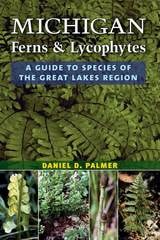
Michigan Ferns and Lycophytes
A Guide to Species of the Great Lakes RegionDaniel D. Palmer
University of Michigan Press, 2018
Unlike the well-studied flowering plants and gymnosperms, Michigan’s ferns and lycophytes have long lacked a reliable, up-to-date guidebook, and this book fills that gap. Covering all 120 taxa found in the state, it features detailed keys, species descriptions, and range maps alongside precise illustrations. Readers learn about the etymology of species’ common and scientific names as well as interesting facts about their historic uses by humans and place within the Michigan ecosystem. The book also provides information on the challenging taxonomy of many ferns and lycophytes, with special attention given to the species likely to hybridize and those prone to misidentification. This is a must-have reference for anyone who wishes to learn about these important components of the Great Lakes flora.

Michigan Free
Your Comprehensive Guide to Free Travel, Recreation, and Entertainment OpportunitiesEric Freedman
University of Michigan Press, 1993
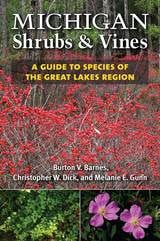
Michigan Shrubs and Vines
A Guide to Species of the Great Lakes RegionBurton V. Barnes, Christopher W. Dick, and Melanie E. Gunn
University of Michigan Press, 2016
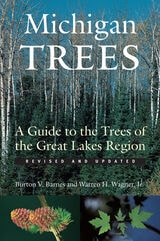
Michigan Trees, Revised and Updated
A Guide to the Trees of the Great Lakes RegionBurton V. Barnes and Warren H. Wagner, Jr.
University of Michigan Press, 2004
Now in its tenth decade of publication, Michigan Trees has been, since it was first introduced in 1913, the must-have reference book for anyone who wants to know about the trees of this unique North American region.
In this new and updated edition, several new species have been added to the lineup, as well as sections on tree ecology and fall color. Written and illustrated in a style that appeals at once to academic botanists and armchair arborphiles alike, Michigan Trees gives readers everything they need to know for identifying trees in the Great Lakes state. Included with each description are fascinating notes and asides (for example, this tidbit on the jack pine: "Parklike or savanna stands in north-central Michigan are prime habitat for the rare Kirtland's warbler that breeds nowhere else in the world."). Also includes a tree key and identification section illustrated with elegantly simple line drawings that reveal the tiny, signature details that make each tree unique.
Burton V. Barnes is Professor of Forestry at the University of Michigan. Formerly a research forester, he is best known for his research and publications in forest ecology and forest genetics.
Warren H. Wagner, Jr. was a world authority on ferns. He had been Professor Emeritus of Botany and Natural Resources at the University of Michigan before his death at the age of 80 in 2000.
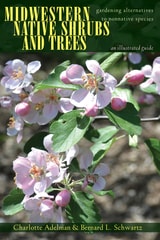
Midwestern Native Shrubs and Trees
Gardening Alternatives to Nonnative Species: An Illustrated GuideCharlotte Adelman, Bernard L. Schwartz
Ohio University Press, 2016
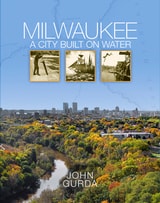
Milwaukee
A City Built on WaterJohn Gurda
Wisconsin Historical Society Press, 2026
The success and survival of Milwaukee lies in the rivers that meander through its streets and the great lake at its eastern boundary. The Indigenous peoples of the region recognized the value of an abundant, clean water supply for food and transportation. Generations of immigrants, entrepreneurs, innovators, and recreationists used the same waters to travel greater distances, power million-dollar industries, and even have a bit of fun.
In Milwaukee: A City Built on Water, celebrated historian John Gurda relates the history of the waters that gave Milwaukee life—and occasionally threatened the city through erosion, invasive species, and water-borne diseases. Telling tales of brewers, brickmakers, ecologists, and engineers, Gurda explores the city’s complicated connections with its most precious resource and greatest challenge. You’ll meet the generations of people, from a Potawatomi chief to fur traders and fishermen, who settled on the small spit of land known as Jones Island; learn how Milwaukee’s unique water composition creates its distinct cream-colored bricks; visit Wisconsin’s first waterparks; and see how city leaders transformed the Milwaukee River—once described as a “vast sewer” with an “odorous tide”—into today’s lively and lovely Riverwalk.
Now available in paperback, Milwaukee: A City Built on Water is the sweeping chronicle of a critical natural resource that has weathered heavy use and flagrant abuse to emerge as a focal point of both celebration and concern in the twenty-first century.

Mind The Gap
The Education Of A Nature WriterJohn Hay
University of Nevada Press, 2006

Mind, Matter, and Nature
James D. Madden
Catholic University of America Press, 2013

Minimal Ethics for the Anthropocene
Joanna Zylinska
Michigan Publishing Services, 2014
Minnesota Birds
Where, When, and How ManyJanet Green
University of Minnesota Press, 1980

Minnesota’s Endangered Flora and Fauna
Barbara A. Coffin and Lee Pfannmuller, EditorsIllustrations by Jan A. Janssens, Nan Marie Kane, Kris A. Kohn, Don Luce, James Tidwell, and Vera Ming Wong
University of Minnesota Press, 1988
Minnesota's Endangered Flora and Fauna was first published in 1988. Minnesota Archive Editions uses digital technology to make long-unavailable books once again accessible, and are published unaltered from the original University of Minnesota Press editions.
"Extinction of species, the silent crisis of our time, diminishes our world...and a commitment to the preservation of species diversity is fundamental to an optimistic view of the future of our own species," says Harrison B. Tordoff in his forward to this comprehensive reference book. Minnesota's Endangered Flora and Fauna is the result of a legislative mandate -- the 1981 amendment to the State Endangered Species Act -- which called upon the state's Department of Natural Resources and an expert advisory committee to prepare a list of plants and animals in jeopardy.
Covered in the book are some 300 species, ranging from mosses and lichens to jumping spiders, and including vascular plants, birds, mammals, reptiles, and amphibians, fish, butterflies, mollusks, and tiger beetles. A chapter is devoted to each of these floral and faunal groups, with individual status accounts provided for all species. Each account includes the designation endangered, threatened,or special concern,the reasons for that choice, and related information on habitat and distribution. Endangered and threatened species are illustrated; state distribution maps are provided for all species, as well as information on national range. In their substantial introduction, the editors describe the historical background of this project; the components of Minnesota's Endangered Species Program -- one of the most comprehensive and respected in the nation; and the state's natural environment -- its diverse landforms and vegetation.
An up-to-date and expanded version of the information contained in Minnesota's Endangered Flora and Fauna is available online through the Minnesota DNR's Rare Species Guide at www.mndnr.gov/rsg.
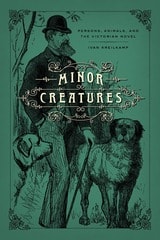
Minor Creatures
Persons, Animals, and the Victorian NovelIvan Kreilkamp
University of Chicago Press, 2018

Mirage
Florida and the Vanishing Water of the Eastern U.S.Cynthia Barnett
University of Michigan Press, 2007
“Never before has the case been more compellingly made that America’s dependence on a free and abundant water supply has become an illusion. Cynthia Barnett does it by telling us the stories of the amazing personalities behind our water wars, the stunning contradictions that allow the wettest state to have the most watered lawns, and the thorough research that makes her conclusions inescapable. Barnett has established herself as one of Florida’s best journalists and Mirage is a must-read for anyone who cares about the future of the state.”
—Mary Ellen Klas, Capital Bureau Chief, Miami Herald
“Mirage is the finest general study to date of the freshwater-supply crisis in Florida. Well-meaning villains abound in Cynthia Barnett’s story, but so too do heroes, such as Arthur R. Marshall Jr., Nathaniel Reed, and Marjorie Harris Carr. The author’s research is as thorough as her prose is graceful. Drinking water is the new oil. Get used to it.”
—Michael Gannon, Distinguished Professor of history, University of Florida, and author of Florida: A Short History
“With lively prose and a journalist’s eye for a good story, Cynthia Barnett offers a sobering account of water scarcity problems facing Florida—one of our wettest states—and the rest of the East Coast. Drawing on lessons learned from the American West, Mirage uses the lens of cultural attitudes about water use and misuse to plead for reform. Sure to engage and fascinate as it informs.”
—Robert Glennon, Morris K. Udall Professor of Law and Public Policy, University of Arizona, and author of Water Follies: Groundwater Pumping and the Fate of America’s Fresh Waters
Part investigative journalism, part environmental history, Mirage reveals how the eastern half of the nation—historically so wet that early settlers predicted it would never even need irrigation—has squandered so much of its abundant freshwater that it now faces shortages and conflicts once unique to the arid West.
Florida’s parched swamps and supersized residential developments set the stage in the first book to call attention to the steady disappearance of freshwater in the American East, from water-diversion threats in the Great Lakes to tapped-out freshwater aquifers along the Atlantic seaboard.
Told through a colorful cast of characters including Walt Disney, Jeb Bush and Texas oilman Boone Pickens, Mirage ferries the reader through the key water-supply issues facing America and the globe: water wars, the politics of development, inequities in the price of water, the bottled-water industry, privatization, and new-water-supply schemes.
From its calamitous opening scene of a sinkhole swallowing a house in Florida to its concluding meditation on the relationship between water and the American character, Mirage is a compelling and timely portrait of the use and abuse of freshwater in an era of rapidly vanishing natural resources.
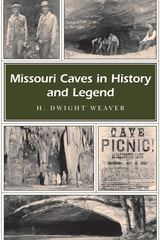
Missouri Caves in History and Legend
H. Dwight Weaver
University of Missouri Press, 2007
Missouri has been likened to a “cave factory” because its limestone bedrock can be slowly dissolved by groundwater to form caverns, and the state boasts more than six thousand caves in an unbelievable variety of sizes, lengths, and shapes. Dwight Weaver has been fascinated by Missouri’s caves since boyhood and now distills a lifetime of exploration and research in a book that will equally fascinate readers of all ages.
Missouri Caves in History and Legend records a cultural heritage stretching from the end of the ice age to the twenty-first century. In a grand tour of the state’s darkest places, Weaver takes readers deep underground to shed light on the historical significance of caves, correct misinformation about them, and describe the ways in which people have used and abused these resources.
Weaver tells how these underground places have enriched our knowledge of extinct animals and early Native Americans. He explores the early uses of caves: for the mining of saltpeter, onyx, and guano; as sources of water; for cold storage; and as livestock shelters. And he tells how caves were used for burial sites and moonshine stills, as hideouts for Civil War soldiers and outlaws—revealing how Jesse James became associated with Missouri caves—and even as venues for underground dance parties in the late nineteenth century.
Bringing caves into the modern era, Weaver relates the history of Missouri’s “show caves” over a hundred years—from the opening of Mark Twain Cave in 1886 to that of Onyx Mountain Caverns in 1990—and tells of the men and women who played a major role in expanding the state’s tourism industry. He also tracks the hunt for the buried treasure and uranium ore that have captivated cave explorers, documents the emergence of organized caving, and explains how caves now play a role in wildlife management by providing a sanctuary for endangered bats and other creatures.
Included in the book is an overview of cave resources in twelve regions, covering all the counties that currently have recorded caves, as well as a superb selection of photos from the author’s extensive collection, depicting the history and natural features of these underground wonders. Missouri Caves in History and Legend is a riveting account that marks an important contribution to the state’s heritage and brings this world of darkness into the light of day.
Moala
Culture and Nature on a Fijian IslandMarshall D. Sahlins
University of Michigan Press, 1962

Modern Melbourne
City and Site of Nature and CultureRod Giblett
Intellect Books, 2020
It places Melbourne within an international context by comparing and contrasting it to other cities built on or beside wetlands, including London, New York, Paris, Los Angeles, and Toronto. Further, it is the first book to apply the work of European thinkers and writers on modernity and the modern city—such as Walter Benjamin and Peter Sloterdijk—to an analysis of Melbourne. Giblett considers the intertwining of nature and culture, people and place, and cities and wetlands in this bioregional and ecocultural analysis. Placing the city in its proper bioregional and international contexts, Modern Melbourne provides a rich historical analysis of the cultural capital of Australia.
Molds, Mushrooms, and Mycotoxins
Clyde M. Christensen
University of Minnesota Press, 1975
Molds, Mushrooms, and Mycotoxins was first published in 1975. Minnesota Archive Editions uses digital technology to make long-unavailable books once again accessible, and are published unaltered from the original University of Minnesota Press editions.
As Professor Christensen has made evident in his earlier books, including The Molds and Man,fungi are significantly interesting in their life-styles and in the many ways in which they affect man. Here he continues his exploration of the lives of the fungi and their relation to man, focusing on the harmful or dangerous effects which certain molds, mushrooms, and other fungi can have on human beings.
The first several chapters deal with fungi that are toxic in one way or another: either the fungi themselves are toxic when consumed, as with poisonous mushrooms and ergot, or the fungi secrete toxic compounds that diffuse into the substance on which they grow, making that substance toxic when eaten. He discusses hallucinogenic as well as poisonous mushrooms and provides extensive information about mycotoxins in human and animal foods, which are recently discovered health hazards.
Other chapters deal with fungus spores, which are a major cause of respiratory allergies, and with fungi which are predators or parasites of insects and nematodes. A chapter is devoted to fungus infections of man and animals, which at times constitute a serious public health problem. Another chapter discusses the nature, cause, and prevention of wood decay in trees and buildings. In a final chapter the author discusses some aspects of organic evolution in general as a background for presenting theories and facts on the evolution of fungi. He summarizes some of the ways in which fungi enter into our lives and economy, and looks to the role of fungi in the future.
The illustrations, in both black and white and color, show some of the fungi and processes that are discussed.

Money Trees
The Douglas Fir and American Forestry, 1900-1944Emily K. Brock
Oregon State University Press, 2015
Money Trees is an interdisciplinary history of the crucial decades that shaped the modern American conception of the value of the forest. It begins with early 20th century environmental changes in the Douglas Fir forests of the Pacific Northwest, which led to increasing divisiveness and controversy among foresters. Brock balances this regional story with a national view of the intellectual and political currents that governed forest management, marshaling archival evidence from industry, government, and scientific sources.
An important contribution to environmental scholarship, Money Trees offers a nuanced vision of forestry’s history and its past relationship to both wilderness activism and scientific ecology. With fresh perspectives on well-known environmental figures such as Bob Marshall and Gifford Pinchot, it will add to the conversation among scholars in environmental history, history of science, and the history of the American West. It will be welcomed as a key resource across the spectrum of environmental studies, and by anyone interested in natural resources, land management, the role of science in environmentalism, and the modern wilderness movement.
Monstrous Nature and Representations of Environmental Harms
A Green Cultural Criminological PerspectiveAvi Brisman and Nigel South
Temple University Press, 2025
The authors use examples from popular culture, including Disney and Marvel Cinematic Universe films, to consider ideas about how the environment responds to people who cause it harm. Brisman and South identify and discuss three dominant and interrelated depictions of the relationship between humans and the environment: first, nature as monstrous or fear inducing; second, nature and the Earth (or parts of it) as abject; and third, the entanglement of nature and the apocalypse, wherein nature is contributing to the end of the world, with an end point sometimes conceptualized as one without humans.
Monstrous Nature and Representations of Environmental Harms argues that such representations have material consequences. The authors make the case for challenging them so that we neither perpetuate them nor retreat into cynicism and defeatism about the future of our planet.
Montana Ghost Dance
Essays on Land and LifeBy John B. Wright
University of Texas Press, 1998
Montana has been the "last best place" for so many people. A century ago, Native Americans gathered here to perform the Ghost Dance—a last, doomed attempt to make white settlers vanish and bring back the old ways of life. Today, people are still pouring into Montana, looking for the pristine wilderness they saw in A River Runs through It.
The reality of Montana—indeed, of all the West—has never matched the myths, but this book eloquently explores how the search for a perfect place is driving growth, development, and resource exploitation in Big Sky country. In ten personal essays, John Wright looks at such things as Montana myths; old-timers; immigrants; elk; ways of seeing the landscape; land conservation and land trusts; the fate of the Blackfoot, Bitterroot, and Paradise valleys; and some means of preserving the last, best places.
These reflections offer a way of understanding Montana that goes far beyond the headlines about militia groups and celebrities' ranches. Montana never was or will be a pristine wilderness, but Wright believes that much can be saved if natives and newcomers alike see what stands to be lost. His book is a wake-up call, not a ghost dance.
Moral Entanglements
Conserving Birds in Britain and GermanyStefan Bargheer
University of Chicago Press, 2018
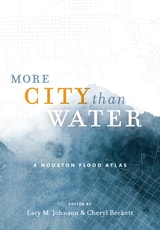
More City than Water
A Houston Flood AtlasEdited by Lacy M. Johnson and Cheryl Beckett
University of Texas Press, 2022
2022 Art in Service to the Environment Award, Sierra Club Lone Star Chapter
Honorable Mention, 2022 Nonfiction Prize, Writers' League of Texas
Writers explore a city’s relationship with chronic catastrophic flooding.
Shortly after Hurricane Harvey dumped a record 61 inches of rain on Houston in 2017, celebrated writer and Bayou City resident Lacy M. Johnson began collecting flood stories. Although these stories attested to the infinite variety of experience in America’s most diverse city, they also pointed to a consistent question: What does catastrophic flooding reveal about this city, and what does it obscure?
More City than Water brings together essays, conversations, and personal narratives from climate scientists, marine ecologists, housing activists, urban planners, artists, poets, and historians as they reflect on the human geography of a region increasingly defined by flooding. Both a literary and a cartographic anthology, More City than Water features striking maps of Houston’s floodplains, waterways, drainage systems, reservoirs, and inundated neighborhoods. Designed by University of Houston seniors from the Graphic Design program, each map, imaginative and precise, shifts our understanding of the flooding, the public’s relationship to it, and the fraught reality of rebuilding. Evocative and unique, this is an atlas that uncovers the changing nature of living where the waters rise.
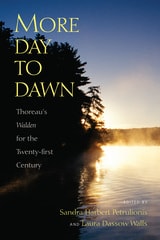
More Day to Dawn
Thoreau's Walden for the Twenty-first CenturySandra Harbert Petrulionis
University of Massachusetts Press, 2007
Thoreau asserted that the leaves of the earth's strata were not page upon page to be studied by geologists and antiquaries chiefly, "but living poetry like the leaves of a tree." The continuing vitality of Walden shows that it, too, is not a fossil but a living book, still putting out green leaves of insight.
Each decade since Walden was published in 1854 has seen the world grow more crowded and less "simple." What, in our consumerist, speed-of-light, hypermediated world would Thoreau have found worth pursuing? How would he structure his life so as to shut out the phones ringing, the cars honking, the litter trashing his beloved haunts? Readers still seek answers to such questions by picking up their dog-eared copy of Walden and immersing themselves yet again in its pages. Students convince us that this book still holds the power to change lives. These essays are written with the expectation that Thoreau in the new century can help us realize that there are more lives to live and more day to dawn—that "the sun is but a morning star."
Contributors include Nina Baym, Robert Cummings, Robert Oscar López, Lance Newman, H. Daniel Peck, Dana Phillips, Larry J. Reynolds, David M. Robinson, William Rossi, Robert Sattelmeyer, Sarah Ann Wider, and Michael G. Ziser.
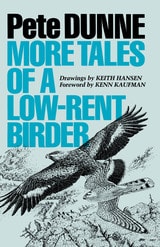
More Tales of a Low-Rent Birder
By Pete Dunne
University of Texas Press, 1994
More Tales of a Low-Rent Birder brings together twenty-five essays that originally appeared in major birding publications. In these pieces, Pete Dunne ranges from wildly humorous to sadly elegiac, as he describes everything from the "field plumage" of the dedicated birder to the lingering death of an accidentally injured golden plover. Running like a thread through all the essays is Dunne's love and respect for the birds he watches, his concern over human threats to their survival, and his tolerance, even affection, for the human "odd birds" that birding attracts. Truly, these essays offer something for everyone interested in birds and the natural habitats our species share.

More-than-Human Aging
Animals, Robots, and Care in Later LifeCristina Douglas
Rutgers University Press, 2025

More-than-Human Histories of Latin America and the Caribbean
Decentring the Human in Environmental HistoryEdited by Diogo de Carvalho Cabral
University of London Press, 2024
The Latin American and Caribbean regions’ historical trajectories have been shaped by complex human-nonhuman interactions. In these histories, people are important, even crucial, actors, but not the only ones. Offering a novel approach to the writing of Latin American history, this book brings eight thought-provoking chapters together with a historiographical introduction and critical afterword to center nonhuman beings and things. The oscillating glare of the sun, the allure and resourcefulness of animals, the reluctant genetic malleability of plant seeds, and the life-giving and intractable impassivity of rivers are some of the other-than-human agents driving history in the volume’s chapters.
This book problematizes Latin American(ist) historiography’s tendency to frame “nature” as a separate ontological domain that is only acted upon—conquered, manipulated, devastated—lacking the self-propelled dynamics capable of shaping the course of events. With broad regional and temporal coverage across Latin America and the Caribbean from the pre-colonial period to the present day, More-than-Human Histories of Latin America and the Caribbean responds to environmental history’s call to write biophysical environments into the human past—a reconsideration of historical agency that, in this era of climate change, is more necessary than ever.
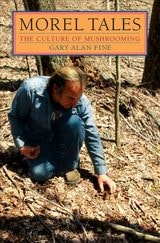
Morel Tales
THE CULTURE OF MUSHROOMINGGary Alan Fine
University of Illinois Press, 2003
A landmark work of environmental sociology, Morel Tales is an engaging and instructive examination of a thriving community, one with its own language, ceremonies, jokes, narratives, rivalries, and social codes. Fine also provides a detailed discussion of the American phenomenon he calls “naturework” -- that is, culturally constructing one’s own place in the natural environment through communities with shared systems of assigned meaning.
“Naturework,” Fine observes, is something we all do on some level -- not only birders, butterfly collectors, rock hounds, hunters, hikers, campers, and outdoor enthusiasts, but all of us who construct community through narrative and nature through culture.
Mortal Imitations of Divine Life
The Nature of the Soul in Aristotle's De AnimaEli Diamond
Northwestern University Press, 2015
In Mortal Imitations of Divine Life, Diamond offers an interpretation of De Anima, which explains how and why Aristotle places souls in a hierarchy of value. Aristotle’s central intention in De Anima is to discover the nature and essence of soul—the principle of living beings. He does so by identifying the common structures underlying every living activity, whether it be eating, perceiving, thinking, or moving through space. As Diamond demonstrates through close readings of De Anima, the nature of the soul is most clearly seen in its divine life, while the embodied soul’s other activities are progressively clear approximations of this principle. This interpretation shows how Aristotle’s psychology and biology cannot be properly understood apart from his theological conception of God as life, and offers a new explanation of De Anima’s unity of purpose and structure.

Mortal Stakes
Hunters and Hunting in Contemporary AmericaJan E. Dizard
University of Massachusetts Press, 2003
Each autumn, millions of men and increasing numbers of women don camouflage or blaze orange outfits and go afield in pursuit of game. For much of American history, there was no need to explain why they did this. Hunting was simply another aspect of the annual cycle of planting, breeding, and harvesting. But modern hunting began separating from its agrarian roots well over a century ago, and although it has retained its connection to the metaphor of the harvest, the self-perceptions and motives of hunters today are no longer transparent, especially to nonhunters. Indeed, hunting—and those who hunt—have become targets of a vocal and growing array of critics.
In Mortal Stakes, Jan E. Dizard examines the place of hunting in contemporary America. Drawing on detailed interviews with hunters as well as opinion surveys and demographic statistics, he analyzes the meanings these men and women attach to hunting and situates this traditional activity in its current setting. He looks at who hunts, how they compare socially and politically with nonhunters, and how they see themselves and are seen by others.
With fewer and fewer Americans closely linked to the land, hunting seems less ordinary and less necessary. As the gulf between hunters and nonhunters widens, hunters have begun to think of themselves as a minority group which, like other minorities, suffers from prejudice and stereotyping. As a result, Dizard argues, hunting is fast becoming one more front in an expanding “culture war” over what it means to be an American.
Mosquitoes of the Southeastern United States
Nathan D. Burkett-Cadena
University of Alabama Press, 2013
The definitive guide to the Southeast’s most persistent—and medically important—tiny predators.
Mosquitoes of the Southeastern United States is a full-color, highly illustrated guide to the sixty-four known species of mosquitoes in eleven genera that populate the South—from the Gulf Coastal states to the Carolinas. In addition to detailed and fully illustrated identification keys for both larvae and adults, it includes information on the mosquito’s lifecycle, interaction with humans, and biological diversity in the southeast.
This area of the country has a rich mosquito fauna with diverse species ranging from the tiny pitcher plant mosquito to the brilliantly colored cannibal mosquito. Close-up photographs of live adults showcase their widely varied and beautiful bodies while remarkable images made with the aid of a microaquarium reveal the differences in larval stages of the subjects. For each species described, Nathan D. Burkett-Cadena provides biological information including distribution maps, habitat associations of the larvae and adults, range of animals fed upon, and importance from a medical standpoint.
This book’s usefulness to mosquito control programs in the Southeast and beyond cannot be overstated. Not only for native species, but for new species introduced from exotic locales, mosquitoes must be properly identified in order to know how best to control them. This volume will also be valuable to medical and public health specialists working on mosquito-borne diseases, such as malaria, dengue, yellow fever, West Nile virus, and filariasis. Mosquitoes of the Southeastern United States is the first guide to integrate full-color photography, illustrated keys, and current information on the biology of mosquitoes into one definitive resource.
Mosses of the Great Lakes Forest
Howard Alvin Crum
Michigan Publishing Services, 2025
This comprehensive and richly illustrated account of the mosses found throughout the Great Lakes Basin and St. Lawrence River Valley is tailored for use in much of eastern North America. Detailed descriptions, keys, and a glossary are provided. 592 pages, frontispiece, hard cover.
Moth Catcher
An Evolutionist's Journey Through Canyon And PassMichael M. Collins
University of Nevada Press, 2007
The memoir of a scientist and the wild silk moths he studies
Biologist Michael Collins has been studying wild silk moths since he was a boy. This family — which includes the largest and most colorful of the North American moths — led Collins into a long career as a scientist, and has provided him with significant insights into the process by which new species evolve. Moth Catcher is Collins’s engaging account of his development as a scientist and of his groundbreaking research. The canyon and pass environments of the American West offer a setting in which, since the last Ice Age, organisms have adapted to new surroundings and where many have formed new species. Collins has discovered in the Sierra Nevada that geneticists call a “hybrid zone” where two species interbreed. This hybrid zone is unusual because both sexes are fertile, unlike lab-bred hybrids between the same silk moth species. Collins explains how such hybrid populations serve as laboratories in nature where the process of speciation can be observed and studied. This book offers a fascinating view into the work of a field scientist and the ways that evolution continues to operate around us. Collins’s colorful accounts of his fieldwork will delight any reader who loves the outdoors and is captivated by the diversity and interrelations of the life forms found there. And his passion for his research and the fragile, exquisite creatures that he studies will inspire a new appreciation of the wonders of the natural world and the myriad life forms that occupy it.
Mother Earth and Uncle Sam
How Pollution and Hollow Government Hurt Our KidsBy Rena I. Steinzor
University of Texas Press, 2007
In this compelling study, Rena Steinzor highlights the ways in which the government, over the past twenty years, has failed to protect children from harm caused by toxic chemicals. She believes these failures—under-funding, excessive and misguided use of cost/benefit analysis, distortion of science, and devolution of regulatory authority—have produced a situation in which harm that could be reduced or eliminated instead persists.
Steinzor states that, as a society, we are neglecting our children's health to an extent that we would find unthinkable as individual parents, primarily due to the erosion of the government's role in protecting public health and the environment. At this pace, she asserts, our children will inherit a planet under grave threat. We can arrest these developments if a critical mass of Americans become convinced that these problems are urgent and the solutions are near at hand.
By focusing on three specific case studies—mercury contamination through the human food chain, perchlorate (rocket fuel) in drinking water, and the effects of ozone (smog) on children playing outdoors—Steinzor creates an analysis grounded in law, economics, and science to prove her assertions about the existing dysfunctional system.
Steinzor then recommends a concise and realistic series of reforms that could reverse these detrimental trends and serve as a blueprint for restoring effective governmental intervention. She argues that these recommendations offer enough material to guide government officials and advocacy groups toward prompt implementation, for the sake of America's—and the world's—future generations.
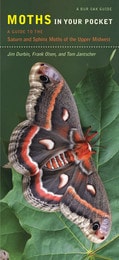
Moths in Your Pocket
A Guide to the Saturn and Sphinx Moths of the Upper MidwestJim Durbin, Frank Olsen, and Tom Jantscher
University of Iowa Press, 2014
The Saturniid, or Giant Silk moths, are well named. Their large size—up to 6.5 inches for the cecropia moth—and the soft silky browns, greens, and oranges of their wings are unforgettable when they appear at a lighted window at night. Equally well named are the Sphinx or Hawk moths, important pollinators that hover like hummingbirds when nectar-feeding at dusk and even in daylight. The caterpillars of both families can be just as distinctive as the adults, as anyone who has ever come upon a tobacco or a tomato hornworm can attest.
For each species the authors have included common and scientific names, wingspan, and time of flight for the adults at this final stage in their life cycle. Striking photographs of the adult moths and of their larval stages make this guide as beautiful as it is useful.
For all naturalists captivated by the clear window eyespots of a Swallow-tailed Luna moth, the dark eyespots and bright yellow “pupils” of an Io moth, or the extendable proboscis of a White-lined Sphinx moth flitting from one moss rose to another, the photographs and descriptions in Moths in Your Pocket will be an invaluable reference.

Mountain Dialogues
Frank Waters
Ohio University Press, 1999
“Mysticism is peculiar to the mountainbred,” Frank Waters once told an interviewer for Psychology Today. And in Mountain Dialogues, available for the first time in paperback, the mountainbred Waters proves it true. Ranging over such diverse subjects as silence, spirits, time, change, and the sacred mountains of the world, Waters sounds again and again the radiant, mystic theme of man’s inherent wholeness and his oneness with the cosmos.
Writing in Western American Literature, Charles L. Adams said, “In Mountain Dialogues, we see Frank Waters acknowledging his sources—major influences on a great American thinker and writer. Waters weaves together threads of these influences, adds his own thought, and presents us with a truly cosmic overview. This overview is thoroughly that of an American ‘Westerner’; it also is one that merits international consideration.”
And as the Bloomsbury Review wrote: “Mountain Dialogues is more than just a collection of personal essays. It is an ‘evolutionist’s handbook’ for the sons and daughters of the new West, a guide for those who would transcend the limitations of Western civilization.”
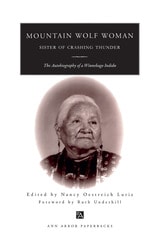
Mountain Wolf Woman, Sister of Crashing Thunder
The Autobiography of a Winnebago IndianEdited by Nancy Oestreich Lurie
University of Michigan Press, 1961
From pony to airplane, from medicine dance to Christian worship, Mountain Wolf Woman, Sister of Crashing Thunder is the life story of a Winnebago woman, told in her own words to her adopted kinswoman, Nancy Lurie. This retelling of more than seventy-five years of Native American life is both a candid and compelling account of how one woman lived through a period of cultural crisis.
Mountain Wolf Woman tells of her childhood in Wisconsin, her brief stay at a mission school, her marriage to "Bad Soldier," and her religious experiences with peyote. Her struggle to maintain her family against many hardships---odds that would have defeated a less vigorous and self-confident person---underscores her perseverance and tenacity. Whether she is describing her wanderings as a child or her misfortunes later in life, Mountain Wolf Woman sets forth her views in honest and perceptive terms, adding all the more power to her narrative.
This book is a valuable companion to the story of Mountain Wolf Woman's brother, immortalized by Paul Radin in Crashing Thunder, a classic of anthropological literature. It will also be of interest to those interested in ethnographic records, the role of women in native cultures, and Midwestern Native Americans, in general.
" . . . a superb human document."
---Chicago Sun-Times
" . . . one of those rare books . . . ."
---Saturday Review
". . . a notable contribution to the literature of culture change and culture and personality."
---American Anthropologist
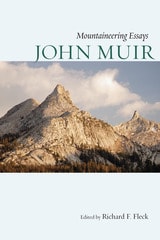
Mountaineering Essays
John Muir
University of Utah Press, 1997
One of the world’s foremost writers of the mountaineering essay—his writings are finely wrought expressions of the transcendental joy he found in the mountains—John Muir also founded the Sierra Club in 1892 as a way of supporting his belief that Americans must preserve national parks throughout the country in order that future generations might be spiritually inspired. Characterized by an iron endurance and an insatiable curiosity, Muir vowed to spend his days studying God’s unwritten Bible—nature—or what he termed the "University of the Wilderness." Muir early on learned to keep a journal in the manner of Emerson, but he is also considered one of America’s pioneer glaciologists, an interest he gained while wandering in Yosemite and the Sierra Nevada mountains. Whether frozen in a subzero blizzard on Mount Shasta, seemingly doomed on the unforgiving slopes of Mount Ritter, or exhilarated by the ice-shapes viewed from the summit of Mount Rainier, Muir reveled in the mountain experience.
This volume contains eleven mountain essays that include both adventurous narrative, joyful exultation, and descriptions of natural features such as alpine soil beds, ancient glaciers and living glaciers, and mountain sculpture. In each, Muir maintains a careful and subtle balance between the physical aspects of ascending and the more symbolic observations of the sublimity of his surroundings. Mountains are for him a source of discovery that provide an affirmation of the human spirit.
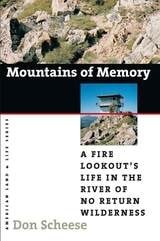
Mountains Of Memory
A Fire Lookout'S LifeDon Scheese
University of Iowa Press, 2001
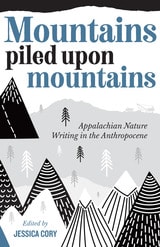
Mountains Piled upon Mountains
Appalachian Nature Writing in the AnthropoceneJessica Cory
West Virginia University Press, 2019
Mountains Piled upon Mountains features nearly fifty writers from across Appalachia sharing their place-based fiction, literary nonfiction, and poetry. Moving beyond the tradition of transcendental nature writing, much of the work collected here engages current issues facing the region and the planet (such as hydraulic fracturing, water contamination, mountaintop removal, and deforestation), and provides readers with insights on the human-nature relationship in an era of rapid environmental change.
This book includes a mix of new and recent creative work by established and emerging authors. The contributors write about experiences from northern Georgia to upstate New York, invite parallels between a watershed in West Virginia and one in North Carolina, and often emphasize connections between Appalachia and more distant locations. In the pages of Mountains Piled upon Mountains are celebration, mourning, confusion, loneliness, admiration, and other emotions and experiences rooted in place but transcending Appalachia’s boundaries.