Results by title
4155 books match the query 'State & Local' and 216 start with m
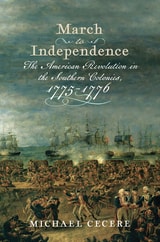
March to Independence
The Revolutionary War in the Southern Colonies, 1775–1776Michael Cecere
Westholme Publishing, 2027
The Independence Trilogy
The American Revolutionary War began when Massachusetts militiamen and British troops clashed at Lexington and Concord on April 19, 1775. Two months later, a much larger engagement occurred at Bunker Hill in Boston. The conflict then expanded into a continent-wide war for independence from Great Britain. Or so we are taught. A closer look at events in the South in the eighteen months following Lexington and Concord tells different story. The practice of teaching the Revolutionary War as one generalized conflict between the American colonies and Great Britain assumes the South’s support for the Revolutionary War was a foregone conclusion. However, once shots were fired, it was not certain that the southern colonies would support the independence movement. What is clear is that both the fledgling American republic and the British knew that the southern colonies were critical to any successful prosecution of the war by either side.
In March to Independence: The American Revolution in the Southern Colonies, 1775–1776, historian Michael Cecere, consulting primary source documents, examines how Virginia, North Carolina, South Carolina, and Georgia ended up supporting the colonies to the north, while East Florida remained within the British sphere. South Carolina, Georgia, and East Florida all retained their royal governors through the summer of 1775, and no military engagements occurred in any of the southern colonies in the six months following the battles in Massachusetts. The situation changed significantly in the fall, however, with armed clashes in Virginia and South Carolina; by early 1776 the war had spread to all of the southern colonies except East Florida. Although their march to independence did not follow the exact route as the colonies to the north, events in the South pulled the southern colonists in the same direction, culminating with a united Declaration of Independence on July 4, 1776. This book explores the crucial events in the southern colonies that led all but East Florida to support the American cause.
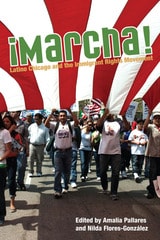
Marcha
Latino Chicago and the Immigrant Rights MovementEdited by Amalia Pallares and Nilda Flores-Gonzalez
University of Illinois Press, 2010
Marcha is a multidisciplinary survey of the individuals, organizations, and institutions that have given shape and power to the contemporary immigrant rights movement in Chicago. A city with longstanding historic ties to immigrant activism, Chicago has been the scene of a precedent-setting immigrant rights mobilization in 2006 and subsequent mobilizations in 2007 and 2008.
Positing Chicago as a microcosm of the immigrant rights movement on national level, these essays plumb an extraordinarily rich set of data regarding recent immigrant rights activities, defining the cause as not just a local quest for citizenship rights, but a panethnic, transnational movement. The result is a timely volume likely to provoke debate and advance the national conversation about immigration in innovative ways.
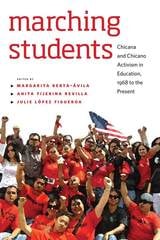
Marching Students
Chicana and Chicano Activism in Education, 1968 to the PresentMargarita Berta-Avila
University of Nevada Press, 2011
Contributors: Alejandro Covarrubias, Xico González, Eracleo Guevara, Adriana Katzew, Lilia R. De Katzew, Rita Kohli, Edward M. Olivos, Alejo Padilla, Carmen E. Quintana, Evelyn M. Rangel-Medina, Marianna Rivera, Daniel G. Solórzano, Carlos Tejeda
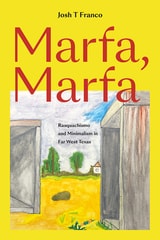
Marfa, Marfa
Rasquachismo and Minimalism in Far West TexasJosh T Franco
Duke University Press, 2026

Marfa
The Transformation of a West Texas TownBy Kathleen Shafer
University of Texas Press, 2019
A small town in the vast desert of West Texas, Marfa attracts visitors from around the world to its art foundations and galleries, film and music festivals, and design and architecture symposiums. While newcomers sometimes see it as “another Santa Fe,” long-time residents often take a bemused, even disapproving attitude toward the changes that Marfa has undergone since artist Donald Judd came to town in the 1970s and began creating spaces for his own and other artists’ work. They remember when ranching and the military formed the basis of the town’s economy, even as they acknowledge that tourist dollars are now essential to Marfa’s sustainability
Marfa tells an engaging story of how this isolated place became a beacon in the art world, like the famous Marfa Lights that draw curious spectators into the West Texas night. As Kathleen Shafer delves into the town’s early history, the impact of Donald Judd, the expansion of arts programming, and the increase in tourism, she unlocks the complex interplay between the particularities of the place, the forces of commerce and growth, the textures of local culture and tradition, and the transformative role of artists and creative work. Bookending her story between two iconic artworks—the whimsical Prada Marfa and the crass Playboy Marfa—Shafer illuminates the shifting cultural landscape of Marfa, showing why this place has become a mecca for so many and how the influx of newcomers has transformed its character.
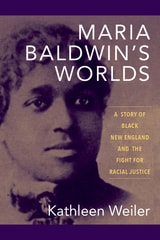
Maria Baldwin's Worlds
A Story of Black New England and the Fight for Racial JusticeKathleen Weiler
University of Massachusetts Press, 2019
Maria Baldwin (1856–1922) held a special place in the racially divided society of her time, as a highly respected educator at a largely white New England school and an activist who carried on the radical spirit of the Boston area's internationally renowned abolitionists from a generation earlier.
African American sociologist Adelaide Cromwell called Baldwin “the lone symbol of Negro progress in education in the greater Boston area” during her lifetime. Baldwin used her respectable position to fight alongside more radical activists like William Monroe Trotter for full citizenship for fellow members of the black community. And, in her professional and personal life, she negotiated and challenged dominant white ideas about black womanhood. In Maria Baldwin's Worlds, Kathleen Weiler reveals both Baldwin's victories and what fellow activist W. E. B. Du Bois called her “quiet courage” in everyday life, in the context of the wider black freedom struggle in New England.
Maria's Journey
Ramon Arredondo and Trisha (Hull) Arredondo
Indiana Historical Society Press, 2010

Markets of Sorrow, Labors of Faith
New Orleans in the Wake of KatrinaVincanne Adams
Duke University Press, 2013
Filled with the often desperate voices of residents who returned to New Orleans, Markets of Sorrow, Labors of Faith describes the human toll of disaster capitalism and the affect economy it has produced. While for-profit companies delayed delivery of federal resources to returning residents, faith-based and nonprofit groups stepped in to rebuild, compelled by the moral pull of charity and the emotional rewards of volunteer labor. Adams traces the success of charity efforts, even while noting an irony of neoliberalism, which encourages the very same for-profit companies to exploit these charities as another market opportunity. In so doing, the companies profit not once but twice on disaster.

Married To A Daughter Of The Land
Spanish-Mexican Women And Interethnic Marriage In California, 1820-80Maria Raquel Casas
University of Nevada Press, 2009

Mary Austin Holley
The Texas Diary, 1835–1838Edited by J. P. Bryan
University of Texas Press, 1965

Mary Lincoln Demystified
Frequently Asked Questions about Abraham’s WifeDonna D. McCreary
Southern Illinois University Press, 2022
Answering the most enigmatic questions about Mary Lincoln’s life
After portraying Mary Lincoln in hundreds of performances and giving lectures over a more than thirty-year career, Donna D. McCreary has fielded every imaginable inquiry about the First Lady. Gathered here, readers will find answers to the most frequently asked questions to come from live audiences. This first question-and-answer book arises directly from a public’s enduring curiosity with one the country’s most important historical figures. Decades of conversations with audiences, scholars, and relatives of the Todd family frame McCreary’s intimate and devoted research to offer a new and unique portrait of the most tragic First Lady.
Though Mary has been portrayed in books and film, McCreary’s book contains information not found elsewhere—details others have overlooked and those that would not fit well into a narrative history—such as lists of Mary’s beaus, servants, and the people the Todd family enslaved; appendixes that present mini-biographies of families and friends; and a uniquely thorough timeline. Mary Lincoln Demystified covers areas in which McCreary’s audiences have expressed the most interest: Mary’s sanity, her family relationships, her views on slavery and African Americans, her personality and habits, and what happened to her possessions and children after she died.
While sympathetic to the woman she portrayed for two decades, McCreary examines both sides of controversial issues and presents the facts with her trademark style and flair. More than a good read, McCreary’s Q&A factbook, based as it is on decades of extensive research in primary and secondary sources, will be the definitive resource for answers about Mary for years to come.

Massachusetts Politics and Public Policy
Studies in Power and LeadershipRichard A. Hogarty
University of Massachusetts Press, 2002
Hogarty examines both the process of policymaking and the complexities of on-the-ground implementation, identifying the various participants and their roles and strategies. He describes power struggles that are entangled in intricate webs of personal and political relationships, and explores their historical antecedents.
Based on an extensive review of newspaper and media accounts, a survey of the surprisingly scanty professional literature, a close scrutiny of public documents, and dozens of personal interviews, the book addresses such topics as the delivery of mental health services, urban transportation, environmental protection, public safety, welfare, corrections, the death penalty, public higher education, ethnic politics, and state ethics reform. Hogarty analyzes the shifting problems of accountability that arise when public services are provided by a variety of political actors and organizations with a wide range of ideological motivations and social and cultural commitments.
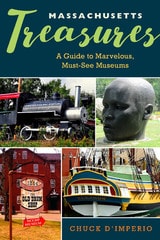
Massachusetts Treasures
A Guide to Marvelous, Must-See MuseumsChuck D'Imperio
University of Massachusetts Press, 2018
Well known for its world-renowned art museums—from the Clark Art Institute in Williamstown to the Museum of Fine Arts in Boston—Massachusetts is also home to numerous institutions with more eclectic collections and, oftentimes, lower profiles. These include Mansfield's National Black Doll Museum of History and Culture, Watertown's Plumbing Museum, and Granville's Noble and Cooley Center for Historic Preservation.
In Massachusetts Treasures, Chuck D'Imperio explores more than forty museums scattered throughout the Bay State, from Cape Cod to the Berkshires. Many—but not all—might be considered “offbeat,” and each and every one is enchanting. Through personal visits and interviews with founders and directors, D'Imperio offers an inside glimpse into some of the Commonwealth's most unique museums, providing a valuable guide for road warriors and history buffs discovering Massachusetts either for the first or the tenth time.
Massachusetts and the Civil War
The Commonwealth and National DisunionMatthew Mason
University of Massachusetts Press, 2015
All states are not created equal, at least not when it comes to their influence on American history. That assumption underlies Massachusetts and the Civil War. The volume's ten essays coalesce around the national significance of Massachusetts through the Civil War era, the ways in which the commonwealth reflected and even modeled the Union's precarious but real wartime unification, and the Bay State's postwar return to the schisms that predated the war. Rather than attempting to summarize every aspect of the state's contribution to the wartime Union, the collection focuses on what was distinctive about its influence during the great crisis of national unity.
In the first section, “The Opposition to Slavery,” essays by John Stauffer, Dean Grodzins, Peter Wirzbicki, and Richard S. Newman demonstrate the central role Massachusetts played in the rise of both the antislavery movement and abolitionism. They show how slavery's foes united, planned, and understood their cause, and how they envisioned a postwar nation free of servitude. In the second section, “The War Years,” Matthew Mason, Carol Bundy, and Ronald J. Zboray and Mary Saracino Zboray investigate how the exigencies of war unified the commonwealth across party lines and over the distance between home and the front. In the final section, “Reconciliation,” Sarah J. Purcell, Amy Morsman, and Kanisorn Wongsrichanalai probe postwar efforts to recover from the war's profound disruptions.
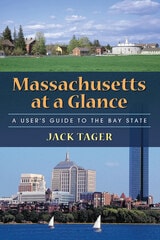
Massachusetts at a Glance
A User's Guide to the Bay StateJack Tager
University of Massachusetts Press, 2004
Site of the first Thanksgiving in the seventeenth century and seedbed of revolutionary sentiment during the eighteenth, the Bay State became a center of industrialization during the nineteenth and of the high tech revolution during the twentieth. It has served as home to some of the nation's most renowned writers, from Henry David Thoreau and Ralph Waldo Emerson to Robert Lowell and Sylvia Plath, as well as some of its most prominent public figures, including Samuel Adams, Daniel Webster, W. E. B. Du Bois, and John F. Kennedy.
A professional historian with a long-standing interest in the history of Massachusetts, Jack Tager has organized the book to allow readers to find answers to questions in an efficient and reliable manner. He begins with a compilation of basic facts about Massachusetts, including population data drawn from the latest census, state motto and seal, even the state bird. This is followed by the main section of the book, an A-to-Z list of individuals, events, and sites of interest.
Additional information about the state can be found in a year-by-year chronology of key historical developments, a statistical profile of the state's 351 towns and cities, and lists of the state's museums, historic sites, and state parks as well as its many colleges and universities, with addresses, telephone numbers, and websites for readers who might wish to contact these institutions directly. Finally, an extensive listing of suggested readings is included for those who would like to explore further any of the topics covered in the book.
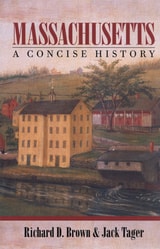
Massachusetts
A Concise HistoryRichard D. Brown
University of Massachusetts Press, 2000
From the moment the first English colonists landed on the shores of Plymouth Bay, the experiences of the people of Massachusetts have been emblematic of larger themes in American history. The story of the first Pilgrim thanksgiving is commemorated as a national holiday, while the Boston Tea Party and Paul Revere's ride have passed into the national mythology. Even the grimmer aspects of the American experience—Indian warfare and the conquest of an ever expanding frontier—were part of the early history of Massachusetts. In this book, Richard D. Brown and Jack Tager survey the rich heritage of this distinctive, and distinctly American, place, showing how it has long exerted an influence disproportionate to its size.
A seedbed of revolt against British colonial rule, Massachusetts has supplied the nation with a long line of political leaders—from Samuel and John Adams to William Lloyd Garrison and Lucy Stone to John, Robert, and Edward Kennedy. Its early textile mills helped shape the industrial revolution, while its experiences with urbanization, immigration, ethnic conflict, and labor strife reflected the growth of the national economy. In the twentieth century, the state continued to lead the country through a series of wrenching economic changes as it moved from the production of goods to the provision of services, eventually becoming a center of the high-tech revolution in telecommunications. If there is one common theme in the Bay State's history, Brown and Tager make clear, it is the capacity to adapt to change. In part this trait can be attributed to the state's unique blend of resources, including its many distinguished colleges and universities. But it can also be credited to the people themselves, who have created a singular sense of place by reconciling claims of tradition with the possibilities of innovation. This book tells their story.
Massacre at the Yuma Crossing
Spanish Relations with the Quechans, 1779-1782Mark Santiago
University of Arizona Press, 1998
The route from the Spanish presidial settlements in upper Sonora to the Colorado River was called the Camino del Diablo, the "Road of the Devil." Running through the harshest of deserts, this route was the only way for the Spanish to transport goods overland to their settlements in California. At the end of the route lay the only passable part of the lower Colorado, and the people who lived around the river, the Yumas or Quechans, initially joined into a peaceful union with the Spanish. When the relationship soured and the Yumas revolted in 1781, it essentially ended Spanish settlement in the area, dashed the dreams of the mission builders, and limited Spanish expansion into California and beyond.
In Massacre at the Yuma Crossing, Mark Santiago introduces us to the important and colorful actors involved in the dramatic revolt of 1781: Padre Francisco Garcés, who discovered a path from Sonora to California, made contact with the Yumas and eventually became their priest; Salvador Palma, the informal leader of the Yuman people, whose decision to negotiate with the Spanish earned him a reputation as a peacebuilder in the region, which eventually caused his downfall; and Teodoro de Croix, the Spanish commandant-general, who, breaking with traditional settlement practice, established two pueblos among the Quechans without an adequate garrison or mission, thereby leaving the settlers without any sort of defense when the revolt finally took place.
Massacre at the Yuma Crossing not only tells the story of the Yuma Massacre with new details but also gives the reader an understanding of the pressing questions debated in the Spanish Empire at the time: What was the efficacy of the presidios? How extensive should the power of the Catholic mission priests be? And what would be the future of Spain in North America?

Mastering the Inland Seas
How Lighthouses, Navigational Aids, and Harbors Transformed the Great Lakes and AmericaTheodore J. Karamanski
University of Wisconsin Press, 2020
Karamanski explores both the navigational and sailing tools of First Nations peoples and the dismissive and foolhardy attitude of early European maritime sailors. He investigates the role played by commercial boats in the Underground Railroad, as well as how the federal development of crucial navigational resources exacerbated sectionalism in the antebellum United States. Ultimately Mastering the Inland Sea shows the undeniable environmental impact of technologies used by the modern commercial maritime industry. This expansive story illuminates the symbiotic relationship between infrastructure investment in the region's interconnected waterways and North America's lasting economic and political development.
Mastodons to Mississippians
Adventures in Nashville's Deep PastAaron Deter-Wolf
Vanderbilt University Press, 2021
Was Nashville once home to a giant race of humans?
No, but in 1845, you could have paid a quarter to see the remains of one who allegedly lived here before The Flood. That summer, Middle Tennessee well diggers had unearthed the skeleton of an American mastodon. Before it went on display, it was modified and augmented with wooden “bones” to make it look more like a human being and passed off as an antediluvian giant. Then, like so many Nashvillians, after a little success here, it went on tour and disappeared from history.
But this fake history of a race of Pre-Nashville Giants isn’t the only bad history of what, and who, was here before Nashville. Sources written for schoolchildren and the public lead us to believe that the first Euro-Americans arrived in Nashville to find a pristine landscape inhabited only by the buffalo and boundless nature, entirely untouched by human hands. Instead, the roots of our city extend some 14,000 years before Illinois lieutenant-governor-turned-fur-trader Timothy Demonbreun set foot at Sulphur Dell.
During the period between about AD 1000 and 1425, a thriving Native American culture known to archaeologists as the Middle Cumberland Mississippian lived along the Cumberland River and its tributaries in today’s Davidson County. Earthen mounds built to hold the houses or burials of the upper class overlooked both banks of the Cumberland near what is now downtown Nashville. Surrounding densely packed village areas including family homes, cemeteries, and public spaces stretched for several miles through Shelby Bottoms, and the McFerrin Park, Bicentennial Mall, and Germantown neighborhoods. Other villages were scattered across the Nashville landscape, including in the modern neighborhoods of Richland, Sylvan Park, Lipscomb, Duncan Wood, Centennial Park, Belle Meade, White Bridge, and Cherokee Park.
This book is the first public-facing effort by legitimate archaeologists to articulate the history of what happened here before Nashville happened.

Matchless Organization
The Confederate Army Medical DepartmentGuy R. Hasegawa, Foreword by F. Terry Hambrecht
Southern Illinois University Press, 2021
Despite the many obstacles it had to overcome—including a naval blockade, lack of a strong industrial base, and personnel unaccustomed to military life—the Richmond-based Confederate Army Medical Department developed into a robust organization that nimbly adapted to changing circumstances. In the first book to address the topic, Guy R. Hasegawa describes the organization and management of the Confederate army’s medical department. At its head was Surgeon General Samuel Preston Moore, a talented multitasker with the organizational know-how to put in place qualified medical personnel to care for sick and wounded Confederate soldiers.
Hasegawa investigates how political considerations, personalities, and, as the war progressed, the diminishing availability of human and material resources influenced decision-making in the medical department. Amazingly, the surgeon general’s office managed not only to provide care but also to offer educational opportunities to its personnel and collect medical and surgical data for future use, regardless of constant and growing difficulties.
During and after the war, the medical department of the Confederate army was consistently praised as being admirably organized and efficient. Although the department was unable to match its Union counterpart in manpower and supplies, Moore’s intelligent management enabled it to help maintain the fighting strength of the Confederate army.
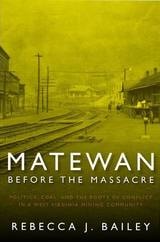
Matewan Before the Massacre
Politics, Coal, and the Roots of Conflict in a West Virginia Mining CommunityRebecca J. Bailey
West Virginia University Press, 2008
On May 19, 1920, gunshots rang through the streets of Matewan, West Virginia, in an event soon known as the “Matewan Massacre.” Most historians of West Virginia and Appalachia see this event as the beginning of a long series of tribulations known as the second Mine Wars. But was it instead the culmination of an even longer series of proceedings that unfolded in Mingo County, dating back at least to the Civil War? Matewan Before the Massacre provides the first comprehensive history of the area, beginning in the late eighteenth century continuing up to the Massacre. It covers the relevant economic history, including the development of the coal mine industry and the struggles over land ownership; labor history, including early efforts of unionization; transportation history, including the role of the N&W Railroad; political history, including the role of political factions in the county’s two major communities—Matewan and Williamson; and the impact of the state’s governors and legislatures on Mingo County.

Maury Maverick
A Political BiographyBy Richard B. Henderson
University of Texas Press, 1970
Maury Maverick was possibly the first liberal United States Congressman from Texas to achieve national and even international stature. A dedicated Democrat, he was ready to attack Franklin D. Roosevelt whenever he felt that Roosevelt was flagging in his enthusiasm for reform. He was honest to the point of rudeness, and he belonged to the "damn the torpedoes" class that pulled ahead regardless of political consequences.
He was at home with the literate—he was a prodigious writer and speaker—but always ready to puncture their pretensions. And he could cuss with sailors, pecan shellers, and any breed of saloon keeper. Put all that together with a short, stocky, bulldog frame, a fierce face and a voice to match, and you have one of the nation's more colorful political figures.
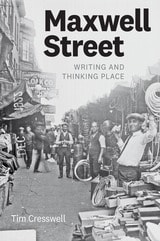
Maxwell Street
Writing and Thinking PlaceTim Cresswell
University of Chicago Press, 2019
In Maxwell Street, Cresswell advocates approaching the study of place as an “assemblage” of things, meanings, and practices. He models this innovative approach through a montage format that exposes the different types of texts—primary, secondary, and photographic sources—that have attempted to capture the essence of the area. Cresswell studies his historical sources just as he explores the different elements of Maxwell Street—exposing them layer by layer. Brilliantly interweaving words and images, Maxwell Street sheds light on a historic Chicago neighborhood and offers a new model for how to write about place that will interest anyone in the fields of geography, urban studies, or cultural history.
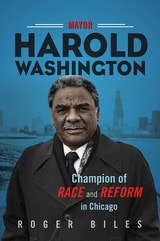
Mayor Harold Washington
Champion of Race and Reform in ChicagoRoger Biles
University of Illinois Press, 2020
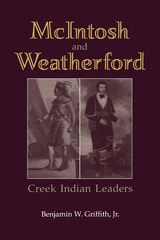
McIntosh and Weatherford
Creek Indian LeadersBenjamin W. Griffith
University of Alabama Press, 1998
The human story behind the Creek War and the coming of Indian Removal.
About the time of the American Revolutionary war, when the Creek Indians owned land that is today approximately the lower two-thirds of Alabama and of Georgia west of the Oconee River, two sons were born to Indian mothers and Scots fathers in obscure towns in the territory of the Creek Nation. Both sons were named William, and both were to become leaders of their mothers’ people.
The two remarkable men lived during a period of war and turbulence along the frontier in Alabama and Georgia. More often the subjects of folk tale and legend than serious historical inquiry, McIntosh and Weatherford fought on opposing sides in the Creek War of 1813-1814. McIntosh allied himself with Andrew Jackson and the friendly Lower Creeks, while Weatherford joined with the hostile Red Stick and was the leader of a band of Upper Creeks in the massacre at Fort Mims. McIntosh, who was given the rank of brigadier general for his military feats, was involved in the machinations that led to the ceding of Creek lands to Georgia. As a result, he died in disgrace at the hands of his fellow Creeks. Weatherford, once hated and feared, died a planter and local hero in Alabama near the site of Fort Mims.
Meadowood Phase Settlement Pattern in the Niagara Frontier Region of Western New York State
Joseph E. Granger, Jr.
University of Michigan Press, 1978
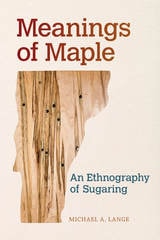
Meanings of Maple
An Ethnography of SugaringMichael Lange
University of Arkansas Press, 2017
Readers will go deep into a Vermont sugar bush and its web of plastic tubes, mainline valves, and collection tanks. They will visit sugarhouses crammed with gas evaporators and reverse-osmosis machines. And they will witness encounters between sugar makers and the tourists eager to invest Vermont with mythological fantasies of rural simplicity.
So much more than a commodity study, Meanings of Maple frames a new approach for evaluating the broader implications of iconic foodways, and it will animate conversations in food studies for years to come.

Medicine at Michigan
A History of the University of Michigan Medical School at the BicentennialDea H. Boster and Joel D. Howell
University of Michigan Press, 2017
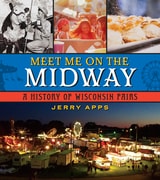
Meet Me on the Midway
A History of Wisconsin FairsJerry Apps
Wisconsin Historical Society Press, 2022

Memoirs of Elleanor Eldridge
Joycelyn K. Moody
University of Delaware Press, 0
Elleanor Eldridge, born of African and US indigenous descent in 1794, operated a lucrative domestic services business in nineteenth century Providence, Rhode Island. In defiance of her gender and racial background, she purchased land and built rental property from the wealth she gained as a business owner. In the 1830s, Eldridge was defrauded of her property by a white lender. In a series of common court cases as defendant and plaintiff, she managed to recover it through the Rhode Island judicial system. In order to raise funds to carry out this litigation, her memoir, which includes statements from employers endorsing her respectable character, was published in 1838. Frances Harriet Whipple, an aspiring white writer in Rhode Island, narrated and co-authored Eldridge’s story, expressing a proto-feminist outrage at the male “extortioners” who caused Eldridge’s loss and distress.
With the rarity of Eldridge’s material achievements aside, Memoirs of Elleanor Eldridge forms an exceptional antebellum biography, chronicling Eldridge’s life from her birth. Because of Eldridge’s exceptional life as a freeborn woman of color entrepreneur, it constitutes a counter-narrative to slave narratives of early nineteenth-century New England, changing the literary landscape of conventional American Renaissance studies and interpretations of American Transcendentalism.
With an introduction by Joycelyn K. Moody, this new edition contextualizes the extraordinary life of Elleanor Eldridge—from her acquisition of wealth and property to the publication of her biography and her legal struggles to regain stolen property. Because of her mixed-race identity, relative wealth, local and regional renown, and efficacy in establishing a collective of white women patrons, this biography challenges typical African and Indigenous women’s literary production of the early national period and resituates Elleanor Eldridge as an important cultural and historical figure of the nineteenth century.
Memorializing Motherhood
Anna Jarvis and the Struggle for Control of Mother's DayKatharine Lane Antolini
West Virginia University Press, 2017
Few know the name Anna Jarvis, yet on the second Sunday in May, we mail the card, buy the flowers, place the phone call, or make the brunch reservation to honor our mothers, all because of her.
Anna Jarvis organized the first official Mother’s Day celebration in Grafton, West Virginia in 1908 and then spent decades promoting the holiday and defending it from commercialization. She designed her Mother’s Day celebration around a sentimental view of motherhood and domesticity, envisioning a day venerating the daily services and sacrifices of mothers within the home.
After Mother’s Day became a national holiday in 1914, many organizations sought to align the holiday’s meaning with changing perceptions of modern motherhood in the twentieth century. Instead of restricting a mother’s service and influence solely to the domestic sphere, they emphasized the power of mothers both within their homes and throughout their communities.
Jarvis refused to accept this changing interpretation, claiming both intellectual and legal ownership of Mother’s Day. Her obsession with protecting the purity of her vision sustained a war of verbal and legal assaults against rival holiday promoters, patriotic women’s organizations, charitable foundations, public health reformers, and the Franklin D. Roosevelt administration. The struggle for control of Mother’s Day ultimately threatened her livelihood, physical health, and emotional stability.
Memorializing Motherhood explores the complicated history of Anna Jarvis’s movement to establish and control Mother’s Day, as well as the powerful conceptualization of this day as both a holiday and a cultural representation of motherhood.
Memorializing Pearl Harbor
Unfinished Histories and the Work of RemembranceGeoffrey M. White
Duke University Press, 2016
Memories of Lac du Flambeau Elders
Edited by Elizabeth M. Tornes
University of Wisconsin Press, 2004
Most historical accounts of the Ojibwe have been written by Americans of European descent. This book tells the history of the Lac du Flambeau Ojibwe in their own words. It also includes a historical introduction, by Leon Valliere, Jr., going back four hundred years to Lac du Flambeau’s original settlement. A black-and-white photographic portrait of each elder prefaces each interview, and historical photos from the George W. Brown Jr. Ojibwe Museum Cultural Center and collection illustrate the text.
Distributed for the Center for the Study of Upper Midwestern Cultures.

Memory of Trees
A Daughter’s Story of a Family FarmGayla Marty
University of Minnesota Press, 2013
Memory of Trees is a multigenerational story of Gayla Marty’s family farm near Rush City, Minnesota. Cleared from woodlands by her great-grandfather Jacob in the 1880s, the farm passed to her father, Gordon, and his brother, Gaylon. Hewing to a conservative Swedish Baptist faith, the two brothers worked the farm, raising their families in side-by-side houses.
As the years go by, the families grow—and slowly grow apart. Uncle Gaylon, more doctrinaire in his faith, rails against the permissiveness of Gayla’s parents. Financial tensions arise as well when the farm economy weakens and none of the children is willing or able to take over. Gayla is encouraged to leave for college, international travel, and city life, but the farm remains essential to her sense of self, even after the family decides to sell the land.
When Gaylon has an accident on a tractor, Gayla becomes driven to reconnect with him and to find out why she and her uncle—once so close but now estranged—were the only two members of the family who had resisted selling the land. Guided by vivid images of the farm’s many beautiful trees, she pores over sacred and classical works as well as layers of her own memory to understand the forces that have transformed the American landscape and culture in the last half of the twentieth century. Beneath the belief in land as a giver of life and blessing, she discovers a powerful anxiety born of human uprootedness and loss. Movingly written, Memory of Trees will resonate for many with attachments to small towns or farms, whether they continue to work the land or, like so many, have left for a different life.
Men of No Reputation
Robert Boatright, the Buckfoot Gang, and the Fleecing of Middle AmericaKimberly Harper
University of Arkansas Press, 2024
Winner, 2025 Missouri Conference on History Book Award
Swindler. Murderer. Scoundrel.
Robert Boatright was one of Middle America’s greatest confidence men. Although little remembered today, his story provides a rare glimpse into America’s criminal past. Working in concert with a local bank and an influential Democratic boss, “this dean of modern confidence men” and his colorful confederacy of con men known as the Buckfoot Gang seemed untouchable. A series of missteps, however, led to a string of court cases across the country that brought Boatright’s own criminal enterprise to an end. And yet, the con continued: Boatright’s successor, John C. Mabray, and his cronies, many of whom had been in the Buckfoot Gang, preyed upon victims across North America in one of the largest midwestern criminal syndicates in history before they were brought to heel.
Like the works of Sinclair Lewis, Boatright’s story exposes a rift in the wholesome midwestern stereotype and furthers our understanding of nineteenth- and twentieth-century American society.
Mercury and the Making of California
Mining, Landscape, and Race, 1840–1890Andrew Scott Johnston
University Press of Colorado, 2015
Gold and silver could not be refined without mercury; therefore, its production and use were vital to securing power and wealth in the West. The first industrialized mining in California, mercury mining had its own particular organization, structure, and built environments. These were formed within the Spanish Empire, subsequently transformed by British imperial ambitions, and eventually manipulated by American bankers and investors. In California, mercury mining also depended on a workforce differentiated by race and ethnicity. The landscapes of work and camp and the relations among the many groups involved in the industry—Mexicans, Chileans, Spanish, English, Irish, Cornish, American, and Chinese—form a crucial chapter in the complex history of race and ethnicity in the American West.
This pioneering study explicates the mutual structuring of the built environments of the mercury-mining industry and the emergence of California’s ethnic communities. Combining rich documentary sources with a close examination of the existing physical landscape, Johnston explores both the detail of everyday work and life in the mines and the larger economic and social structures in which mercury mining was enmeshed, revealing the significance of mercury mining for Western history.
Meredith Nicholson
A Writing LifeRalph D. Gray
Indiana Historical Society Press, 2007
Message to Our Folks
The Art Ensemble of ChicagoPaul Steinbeck
University of Chicago Press, 2017
In Message to Our Folks, Paul Steinbeck combines musical analysis and historical inquiry to give us the definitive study of the Art Ensemble. In the book, he proposes a new theory of group improvisation that explains how the band members were able to improvise together in so many different styles while also drawing on an extensive repertoire of notated compositions. Steinbeck examines the multimedia dimensions of the Art Ensemble’s performances and the ways in which their distinctive model of social relations kept the group performing together for four decades. Message to Our Folks is a striking and valuable contribution to our understanding of one of the world’s premier musical groups.
Mexican American Civil Rights in Texas
Robert Brischetto
Michigan State University Press, 2022
Mexican American Mojo
Popular Music, Dance, and Urban Culture in Los Angeles, 1935–1968Anthony Macías
Duke University Press, 2008
Macías conducted numerous interviews for Mexican American Mojo, and the voices of little-known artists and fans fill its pages. In addition, more famous musicians such as Ritchie Valens and Lalo Guerrero are considered anew in relation to their contemporaries and the city. Macías examines language, fashion, and subcultures to trace the history of hip and cool in Los Angeles as well as the Chicano influence on urban culture. He argues that a grass-roots “multicultural urban civility” that challenged the attempted containment of Mexican Americans and African Americans emerged in the neighborhoods, schools, nightclubs, dance halls, and auditoriums of mid-twentieth-century Los Angeles. So take a little trip with Macías, via streetcar or freeway, to a time when Los Angeles had advanced public high school music programs, segregated musicians’ union locals, a highbrow municipal Bureau of Music, independent R & B labels, and robust rock and roll and Latin music scenes.
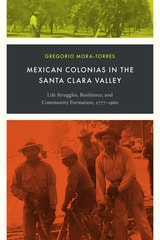
Mexican Colonias in the Santa Clara Valley
Life Struggles, Resilience, and Community Formation, 1777–1960Gregorio Mora-Torres
University of Nevada Press, 2027
Today, ethnic Mexicans and other Latinos make up the largest population group in California, and in the Santa Clara Valley they represent roughly 30 percent of residents, a proportion that has remained steady for nearly two centuries. Despite this population’s long presence as some of the earliest non-Indigenous settlers in the region and their major contributions to its economy, culture, and development, the history of ethnic Mexicans and other Latinos in the valley has been left untold. Much historical writing by local scholars has focused on ethnic Mexicans before 1846, often implying that their meaningful presence declined after the U.S. gained control of California. As a result, few scholarly works address ethnic Mexican history in the Santa Clara Valley after statehood.
Mexican Colonias in the Santa Clara Valley examines the formation and growth of ethnic Mexican neighborhoods from the late nineteenth century through the mid-twentieth century. Author Gregorio Mora-Torres traces continuity from Californios in the San José Pueblo to later arrivals of ethnic Mexicans from Mexico and the U.S. Southwest, highlighting their efforts to build community while working in agriculture and other manual labor. Despite economic hardship, these communities developed rich cultural and social traditions, including celebrations, entertainment, sports, and civic life. The book also explores midcentury transformation, including tensions between assimilation and cultural retention and the rise of political activism in the early 1960s.
Drawing on Anglo-American newspaper accounts and Mexican, Mexican American, and other Latino perspectives from El Excentrico (1949–1981), the study reconstructs narratives of identity, visibility, and change in the Santa Clara Valley over time.
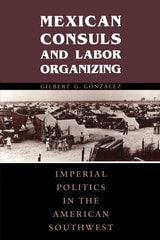
Mexican Consuls and Labor Organizing
Imperial Politics in the American SouthwestBy Gilbert G. González
University of Texas Press, 1999
Chicano history, from the early decades of the twentieth century up to the present, cannot be explained without reference to the determined interventions of the Mexican government, asserts Gilbert G. González. In this pathfinding study, he offers convincing evidence that Mexico aimed at nothing less than developing a loyal and politically dependent emigrant community among Mexican Americans, which would serve and replicate Mexico's political and economic subordination to the United States.
González centers his study around four major agricultural workers' strikes in Depression-era California. Drawing on a wide variety of sources, he documents how Mexican consuls worked with U.S. growers to break the strikes, undermining militants within union ranks and, in one case, successfully setting up a grower-approved union. Moreover, González demonstrates that the Mexican government's intervention in the Chicano community did not end after the New Deal; rather, it continued as the Bracero Program of the 1940s and 1950s, as a patron of Chicano civil rights causes in the 1960s and 1970s, and as a prominent voice in the debates over NAFTA in the late 1980s and early 1990s.

Mexican Waves
Radio Broadcasting Along Mexico's Northern Border, 1930–1950Sonia Robles
University of Arizona Press, 2019
Historian Sonia Robles examines the transnational business practices of Mexican radio entrepreneurs between the Golden Age of radio and the early years of television history. Intersecting Mexican history and diaspora studies with communications studies, this book explains how Mexican radio entrepreneurs targeted the Mexican population in the United States decades before U.S. advertising agencies realized the value of the Spanish-language market.
Robles’s robust transnational research weaves together histories of technology, performance, entrepreneurship, and business into a single story. Examining the programming of northern Mexican commercial radio stations, the book shows how radio stations from Tijuana to Matamoros courted Spanish-language listeners in the U.S. Southwest and local Mexican audiences between 1930 and 1950. Robles deftly demonstrates Mexico’s role in creating the borderlands, adding texture and depth to the story.
Scholars and students of radio, Spanish-language media in the United States, communication studies, Mexican history, and border studies will see how Mexican radio shaped the region’s development and how transnational listening communities used broadcast media’s unique programming to carve out a place for themselves as consumers and citizens of Mexico and the United States.
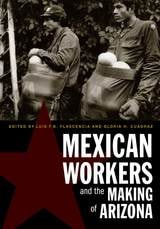
Mexican Workers and the Making of Arizona
Edited by Luis F. B. Plascencia and Gloria H. Cuádraz
University of Arizona Press, 2018
Mexican Workers and the Making of Arizona centers on the production of an elastic supply of labor, revealing how this long-standing approach to the building of Arizona has obscured important power relations, including the state’s favorable treatment of corporations vis-à-vis workers. Building on recent scholarship about Chicanas/os and others, the volume insightfully describes how U.S. industries such as railroads, mining, and agriculture have fostered the recruitment of Mexican labor, thus ensuring the presence of a surplus labor pool that expands and contracts to accommodate production and profit goals.
The volume’s contributors delve into examples of migration and settlement in the Salt River Valley; the mobilization and immobilization of cotton workers in the 1920s; miners and their challenge to a dual-wage system in Miami, Arizona; Mexican American women workers in midcentury Phoenix; the 1980s Morenci copper miners’ strike and Chicana mobilization; Arizona’s industrial and agribusiness demands for Mexican contract labor; and the labor rights violations of construction workers today.
Mexican Workers and the Making of Arizona fills an important gap in our understanding of Mexicans and Mexican Americans in the Southwest by turning the scholarly gaze to Arizona, which has had a long-standing impact on national policy and politics.

Mexicans and Mexican Americans in Michigan
Rudolph V. Alvarado
Michigan State University Press, 2003
Unlike most of their immigrant counterparts, up until the turn of the twentieth century most Mexicans and Mexican Americans did not settle permanently in Michigan but were seasonal laborers, returning to homes in the southwestern United States or Mexico in the winter. Nevertheless, during the past century the number of Mexicans and Mexican Americans settling in Michigan has increased dramatically, and today Michigan is undergoing its third “great wave” of Mexican immigration. Though many Mexican and Mexican American immigrants still come to Michigan seeking work on farms, many others now come seeking work in manufacturing and construction, college educations, opportunities to start businesses, and to join family members already established in the state. In Mexicans and Mexican Americans in Michigan, Rudolph Valier Alvarado and Sonya Yvette Alvarado examine the settlement trends and growth of this population, as well as the cultural and social impact that the state and these immigrants have had on one another. The story of Mexicans and Mexican Americans in Michigan is one of a steadily increasing presence and influence that well illustrates how peoples and places combine to create traditions and institutions.
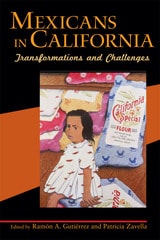
Mexicans in California
Transformations and ChallengesEdited by Ramon A. Gutierrez and Patricia Zavella
University of Illinois Press, 2008
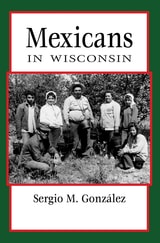
Mexicans in Wisconsin
Sergio González
Wisconsin Historical Society Press, 2017
From agricultural and factory workers to renowned writers and musicians, the Mexican immigrants who have made their homes in Wisconsin over the past century have become a significant and diverse part of this state’s cultural and economic history. Coming from a variety of educational and professional backgrounds, the earliest Mexican immigrants traveled north in search of better economic opportunities and relief from the violence and economic turmoil of the Mexican Revolution. They found work in tanneries and foundries, and on beet farms where they replaced earlier European immigrant workers who had moved on to family farms. As Mexican immigration has grown to the present day, these families have become integral members of Wisconsin communities, building businesses, support systems, and religious institutions. But their experience has also been riddled with challenges, as they have fought for adequate working conditions, access to education, and acceptance amid widespread prejudice. In this concise history, learn the fascinating stories of this vibrant and resilient immigrant population: from the Tejano migrant workers who traveled north seasonally to work in the state’s cucumber fields, to the determined labor movement led by Jesus Salas, to the young activists of the Chicano Movement, and beyond.
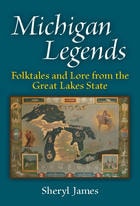
Michigan Legends
Folktales and Lore from the Great Lakes StateSheryl James
University of Michigan Press, 2013
Over the course of its history, the state of Michigan has produced its share of folktales and lore. Many are familiar with the Ojibwa legend of Sleeping Bear Dunes, and most have heard a yarn or two told of Michigan’s herculean lumberjack, Paul Bunyan.
But what about Detroit’s Nain Rouge, the red-eyed imp they say bedeviled the city’s earliest residents? Or Le Griffon, the Great Lakes’ original ghost ship that some believe haunts the waters to this day? Or the Bloodstoppers, Upper Peninsula folk who’ve been known to halt a wound’s bleeding with a simple touch thanks to their magic healing powers?
In Michigan Legends, Sheryl James collects these and more stories of the legendary people, events, and places from Michigan’s real and imaginary past. Set in a range of historical time periods and locales as well as featuring a collage of ethnic traditions—including Native American, French, English, African American, and Finnish—these tales are a vivid sample of the state’s rich cultural heritage. This book will appeal to all Michiganders and anyone else interested in good folktales, myths, legends, or lore.
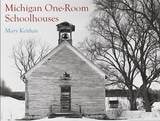
Michigan One-Room Schoolhouses
Mary Keithan
University of Michigan Press, 2008
Nostalgic reminders of a time now past, one-room schoolhouses are deeply embedded in our heritage. Decades after their original purpose and inhabitants have vanished, they dot the rural landscape in all conditions, from neglected and near collapse to handsomely renovated places repurposed into a new existence as living quarters. Today no matter their state they stand as miniature gems of nineteenth-century American history as well as charming examples of rural architecture---above all, things to be treasured and preserved. Mary Keithan's Michigan One-Room Schoolhouses is a beautifully illustrated chronicle that details nearly a hundred of the state's early schoolhouses. Together with information about each schoolhouse's architecture and history, including interviews with former students and teachers, Keithan's photographs bring these structures back to life and assure their place in history.
Mary Keithan is a professional photographer living in Ray, Michigan. Her previous books include Michigan's Heritage Barns and A Time in Michigan: A Photographic Series. New York Times critic Vicki Goldberg selected Keithan's 1995 image "Desert Storm Barn" for the Light Impression Biennial.