Results by title
1927 books match the query 'Technology & Engineering' and 125 start with m
Metamaterials and Metasurfaces
Foundations, trends and applicationsSubal Kar
The Institution of Engineering and Technology, 2025

Metasurface Electromagnetics
The Cagniard-DeHoop time-domain approachMartin Štumpf
The Institution of Engineering and Technology, 2022

Methane and Hydrogen for Energy Storage
Rupp Carriveau
The Institution of Engineering and Technology, 2016
Metrology for 5G and Emerging Wireless Technologies
Tian Hong Loh
The Institution of Engineering and Technology, 2022
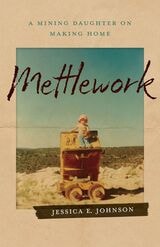
Mettlework
A Mining Daughter on Making HomeJessica E. Johnson
Acre Books, 2024
In the weeks after her first child is born, Jessica E. Johnson receives an email from her mother that contains artifacts of the author’s early childhood: scans of Polaroids and letters her mother wrote in mountain west mining camps and ghost towns—places without running water, companions, or help. Awash in love and restlessness, Johnson begins to see how the bedrock images of her isolated upbringing have stayed with her, even when she believed she was removing herself from their logic.
As she copes with the swirling pressures of parenting, teaching at an urban community college, and a partnership shaped by chronic illness, Johnson starts digging through her mother’s keepsakes and the histories of the places her family passed through, uncovering the linked misogyny and disconnection that characterized her childhood world—a world with uncomfortable echoes in the present and even in the act of writing itself. The resulting journey encompasses Johnson’s early memories, the story of the earth told in the language of geology, bits of vivid correspondence, a mothering manual from the early twentieth century, and the daily challenges of personal and collective care in a lonesome-crowded Pacific wonderland. Mettlework traces intergenerational failures of homemaking, traveling toward presence and relationship amid the remains of extractive industry and unsustainable notions of family.
Michael Faraday's 'Chemical Notes, Hints, Suggestions and Objects of Pursuit' of 1822
Ryan D. Tweney
The Institution of Engineering and Technology, 1991

Michigan Family Farms and Farm Buildings
Landscapes of the Heart and MindHemalata Dandekar
University of Michigan Press, 2010
Eight family-farm case studies display farm buildings' relationship to the land they sit on, their function on the farm, the materials they're made with, the farm enterprises themselves, and the families who own them. Photographs, plans, elevations, and sections of typical, exemplary traditional farm buildings show the aesthetic and architectural qualities of those types of buildings across the state.
The ways in which the buildings serve the productive activities of the farm, shelter and nourish the people and livestock, yield a living, and enable the aspirations of farm people are shown in the words and photographs of the farmers themselves. The buildings form a window into the lives of Michigan's family farms and into the hearts and minds of the people who have lived and worked in them their entire lives.
Micro-Doppler Radar and its Applications
Francesco Fioranelli
The Institution of Engineering and Technology, 2020
Microgrids and Active Distribution Networks
S. Chowdhury
The Institution of Engineering and Technology, 2009
Microgrids for Rural Areas
Research and case studiesRajeev Kumar Chauhan
The Institution of Engineering and Technology, 2020

Microstrip Antenna Theory and Design
J.R. James
The Institution of Engineering and Technology, 1981
Microstrip and Printed Antenna Design
Randy Bancroft
The Institution of Engineering and Technology, 2009
Microstrip and Printed Antenna Design
Randy Bancroft
The Institution of Engineering and Technology, 2020
Microstrip and Printed Antenna Design
Randy Bancroft
The Institution of Engineering and Technology, 2026
Microwave Antenna Theory and Design
Samuel Silver
The Institution of Engineering and Technology, 1984
Microwave Circuit Theory and Foundations of Microwave Metrology
Glenn F. Engen
The Institution of Engineering and Technology, 1992
Microwave Field-Effect Transistors
Theory, design and applicationsRaymond S. Pengelly
The Institution of Engineering and Technology, 1994
Microwave Horns and Feeds
A.D. Olver
The Institution of Engineering and Technology, 1994
Microwave Measurements
R.J. Collier
The Institution of Engineering and Technology, 2007

Microwave Receivers with Electronic Warfare Applications
James Bao-Yen Tsui
The Institution of Engineering and Technology, 2005
Microwave Transmission Line Impedence Data
M.A.R. Gunston
The Institution of Engineering and Technology, 1997
Mining Irish-American Lives
Western Communities from 1849 to 1920Alan J. M. Noonan
University Press of Colorado, 2022
Historian Alan J. M. Noonan uses a range of previously overlooked sources, including collections of emigrant letters, hospital logbooks, private detective reports, and internment records, to tell the stories of Irish men and women who emigrated to mining towns to search for opportunity. Noonan details the periods, the places, and the experiences over multiple generations in the late nineteenth and early twentieth centuries. He carefully examines their encounters with nativists, other ethnic groups, and mining companies to highlight the contested emergence of a hyphenated Irish-American identity.
Unearthing personal details along with the histories of different communities, the book investigates Irish immigrants and Irish-Americans through the prism of their own experiences, significantly enriching the history of the period.
Mining among the Clouds
The Mosquito Range and the Origins of Colorado's Silver BoomHarvey N. Gardiner
University Press of Colorado, 2002

Mining in Africa
Regulation and DevelopmentBonnie Campbell
Pluto Press, 2009
The continent of Africa is rich in minerals needed by Western economies, but rather than forming the basis for economic growth the mining industry contributes very little to African development
Investigating the impact of the 2003 Extractive Industries Review on a number of African countries, the contributors find that a key dimension of the problem lies in the regulatory frameworks imposed on the African countries by the IMF and World Bank. They aim to convince academics, governments and industry that regulation needs to be reformed to create a mining industry favourable to social and economic development and environmental protection.
The book takes a multidisciplinary approach and provides a historical perspective of each country, making it ideal for students of development studies and development organisations.
Mining in World History
Martin Lynch
Reaktion Books, 2004
Mining in the Museum
Mineral Technology on Display in American HistoryEric C. Nystrom
University of Massachusetts Press, 2027
Examining 150 years of mining and mineral technology exhibits at the Smithsonian
Buried deep underground or cut into remote landscapes, mines are often dirty, dark, and dangerous places, located far from the everyday urban spaces that most Americans call home. Yet mining is foundational to the making of the United States, supplying the raw materials that built its infrastructure, powered its industries, and shaped its scientific institutions, even as the work itself has remained physically removed, technically complex, and culturally overlooked. Mining in the Museum reveals how Americans have encountered this vital industry not at the distant mine face, but in museum galleries. Tracing more than 150 years of mining and mineral technology exhibits at the Smithsonian Institution in Washington, DC, Eric C. Nystrom shows how curators transformed ore, instruments, models, and machinery into stories about progress, innovation, and national development, and how those interpretive choices shaped what the nation remembers—and forgets—about mining.
Using mining collections as a lens into institutional change, Nystrom offers a new history of the Smithsonian and its United States National Museum, examining how curators, administrators, and policymakers debated what museums were for, which kinds of knowledge they should produce, and what objects deserved display. He follows the shifting fortunes of mineral and mining exhibits across world’s fairs, scientific surveys, and changing exhibition philosophies, showing how display strategies evolved alongside professional science and public education. As mining’s place in the national imagination changed, so too did its presence in the federal museum, moving from a central scientific and technological showcase to a subject increasingly preserved by regional and local institutions closer to mining communities themselves. Grounded in extensive archival research, Mining in the Museum illuminates the evolving relationship among technology, public history, and the politics of display, demonstrating how museums help define which industries, and which kinds of work, become part of the American story.
Mining the Borderlands
Industry, Capital, and the Emergence of Engineers in the Southwest Territories, 1855-1910Sarah E. M. Grossman
University of Nevada Press, 2018
At the dawn of the twentieth century, the US-Mexico border was home to some of the largest and most technologically advanced industrial copper mines. This despite being geographically, culturally, and financially far-removed from traditional urban centers of power. Mining the Borderlands argues that this was only possible because of the emergence of mining engineers—a distinct technocratic class of professionals who connected capital, labor, and expertise.
Mining engineers moved easily between remote mining camps and the upscale parlors of east coast investors. Working as labor managers and technical experts, they were involved in the daily negotiations, which brought private US capital to the southwestern border. The success of the massive capital-intensive mining ventures in the region depended on their ability to construct different networks, serving as intermediaries to groups that rarely coincided.
Grossman argues that this didn’t just lead to bigger and more efficient mines, but served as part of the ongoing project of American territorial and economic expansion. By integrating the history of technical expertise into the history of the transnational mining industry, this in-depth look at borderlands mining explains how American economic hegemony was established in a border region peripheral to the federal governments of both Washington, D.C. and Mexico City.
Minuteman
A Technical History of the Missile That Defined American Nuclear WarfareDavid K. Stumpf
University of Arkansas Press, 2021
Minuteman offers a fascinating look at the technological breakthroughs necessary to field this weapon system that has served as a powerful component of the strategic nuclear triad for more than half a century. With exacting detail, Stumpf examines the construction of launch and launch control facilities; innovations in solid propellant, lightweight inertial guidance systems, and lightweight reentry vehicle development; and key flight tests and operational flight programs—all while situating the Minuteman program in the context of world events. In doing so, the author reveals how the historic missile has adapted to changing defense strategies—from counterforce to mutually assured destruction to sufficiency.
Miracles and Machines
A Sixteenth-Century Automaton and Its LegendElizabeth King
J. Paul Getty Trust, The, 0
This volume tells the singular story of an uncanny, rare object at the cusp of art and science: a 450-year-old automaton known as “the monk.” The walking, gesticulating figure of a friar, in the collection of the Smithsonian Institution’s National Museum of American History, is among the earliest extant ancestors of the self-propelled robot. According to legend connected to the court of Philip II of Spain, the monk represents a portrait of Diego de Alcalá, a humble Franciscan lay brother whose holy corpse was said to be agent to the miraculous cure of Spain’s crown prince as he lay dying in 1562.
In tracking the origins of the monk and its legend, the authors visited archives, libraries, and museums across the United States and Europe, probing the paradox of a mechanical object performing an apparently spiritual act. They identified seven kindred automata from the same period, which, they argue, form a paradigmatic class of walking “prime movers,” unprecedented in their combination of visual and functional realism. While most of the literature on automata focuses on the Enlightenment, this enthralling narrative journeys back to the late Renaissance, when clockwork machinery was entirely new, foretelling the evolution of artificial life to come.
Missions for Science
U.S. Technology and Medicine in America's African WorldMcBride, David
Rutgers University Press, 2002
--What specific technologies and medical resources were transferred by U.S. institutions to black populations centers and why?
--How did the professed aims of U.S. technical projects, public health, and military activities differ from their actual effects and consequences?
--Did the U.S. technical transfer amount to a form of political hegemony?
--What lessons can we learn from the history of technology and medicine in these key geographic regions?
Missions for Science is the first book to explain how modern industrial and scientific advances shaped black Atlantic population centers. McBride is the first to provide a historical analysis of how shifting environmental factors and disease-control aid from the United States affected the collective development of these populations. He also discusses how independent black Atlantic republics with close historical links to the United States independently envisioned and attempted to use science and technology to build their nations.
Mobile Biometrics
Guodong Guo
The Institution of Engineering and Technology, 2017
Mobile Secrets
Youth, Intimacy, and the Politics of Pretense in MozambiqueJulie Soleil Archambault
University of Chicago Press, 2017
With Mobile Secrets, Julie Soleil Archambault offers a complete rethinking of how we understand uncertainty, truth, and ignorance by revealing how better access to information may in fact be anything but desirable. By engaging with young adults in a Mozambique suburb, Archambault shows how, in their efforts to create fulfilling lives, young men and women rely on mobile communication not only to mitigate everyday uncertainty but also to juggle the demands of intimacy by courting, producing, and sustaining uncertainty. In their hands, the phone has become a necessary tool in a wider arsenal of pretense—a means of creating the open-endedness on which harmonious social relations depend in postwar postsocialist Mozambique. As Mobile Secrets shows, Mozambicans have harnessed the technology not only to acquire information but also to subvert regimes of truth and preserve public secrets, allowing everyone to feign ignorance about the workings of the postwar intimate economy.
Mobile Technologies for Delivering Healthcare in Remote, Rural or Developing Regions
Pradeep Kumar Ray
The Institution of Engineering and Technology, 2020
Mobile and Wireless Communications
Key technologies and future applicationsPeter Smyth
The Institution of Engineering and Technology, 2004
Mobility as a Service
Its development, deployment, and futureBeate Kubitz
The Institution of Engineering and Technology, 2024
Model Predictive Control for Microgrids
From power electronic converters to energy managementJiefeng Hu
The Institution of Engineering and Technology, 2021
Model-Based Requirements Engineering
Jon Holt
The Institution of Engineering and Technology, 2011
Modeling and Dynamic Behaviour of Hydropower Plants
Nand Kishor
The Institution of Engineering and Technology, 2017
Modeling and Simulation of Complex Communication Networks
Muaz A. Niazi
The Institution of Engineering and Technology, 2019
Modeling and Simulation of Complex Power Systems
Antonello Monti
The Institution of Engineering and Technology, 2022
Modeling and Simulation of HVDC Transmission
Minxiao Han
The Institution of Engineering and Technology, 2021
Modeling, Simulation and Control of Electrical Drives
Mohammed Fazlur Rahman
The Institution of Engineering and Technology, 2019
Modelling Control Systems Using IEC 61499
Alois Zoitl
The Institution of Engineering and Technology, 2014
Modelling Control Systems Using IEC 61499
Applying function blocks to distributed systemsRobert Lewis
The Institution of Engineering and Technology, 2001
Modelling Distributed Energy Resources in Energy Service Networks
Salvador Acha
The Institution of Engineering and Technology, 2013
Modelling Enterprise Architectures
Jon Holt
The Institution of Engineering and Technology, 2010
Modelling Methodologies in Analogue Integrated Circuit Design
Günhan Dündar
The Institution of Engineering and Technology, 2020
Modelling and Parameter Estimation of Dynamic Systems
J.R. Raol
The Institution of Engineering and Technology, 2004
Modelling and Simulation of Small Scale Hydro Generation Systems
René Wamkeue
The Institution of Engineering and Technology, 2020
Modelling and Stability of Smart Grids
Marta Molinas
The Institution of Engineering and Technology, 2016