Results by title
28167 books match the query 'History' and 1583 start with m

Migrating Fictions
Gender, Race, and Citizenship in U.S. Internal DisplacementsAbigail G. H. Manzella
The Ohio State University Press, 2018
Winner, 2021 CCCC Outstanding Book Award
Migrating Fictions analyzes the role of race, gender, and citizenship in the major internal displacements of the 20th century in history and in narrative. Surveying the particular tactics employed by the United States during the Great Migration, the Dust Bowl, the Japanese American incarceration, and the migrant labor of the Southwest, Abigail G. H. Manzella reveals how the country’s past is imbued with governmentally (en)forced movements that diminished access to full citizenship rights for the laboring class, people of color, and women.
This work is the first book-length study to examine all of these movements together along with their literature, including Zora Neale Hurston’s Their Eyes Were Watching God, Sanora Babb’s Whose Names Are Unknown, Julie Otsuka’s When the Emperor Was Divine, Helena María Viramontes’s Under the Feet of Jesus, and Jesmyn Ward’s Salvage the Bones. Manzella shows how the United States’ history of spatial colonization within its own borders extends beyond isolated incidents into a pattern based on ideology about nation-building, citizenship, and labor. This book seeks to theorize a Thirdspace, an alternate location for social justice that acknowledges the precarity of the internally displaced person.
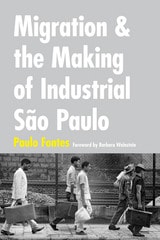
Migration and the Making of Industrial São Paulo
Paulo Fontes
Duke University Press, 2016
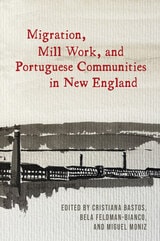
Migration, Mill Work, and Portuguese Communities in New England
Edited by Cristiana Bastos, Bela Feldman-Bianco, and Miguel Moniz
Tagus Press, 2024
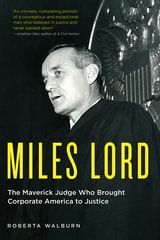
Miles Lord
The Maverick Judge Who Brought Corporate America to JusticeRoberta Walburn
University of Minnesota Press, 2017
The life of a crusading federal judge who stood up and fought for “the little guy”
This is the story of Miles Lord (1919–2016), who rose from humble beginnings on Minnesota’s Iron Range to become one of the most colorful and powerful judges in the country, described as “an unabashed Prairie populist” and “a live-wire slayer of corporate behemoths.” He cut a wide swath through history on his path to the bench: coming of age alongside a cadre of young Midwestern social-gospel progressives, including Hubert H. Humphrey, Eugene McCarthy, and Walter Mondale, in the days before they reached national fame; teaming with Bobby Kennedy as a hotshot prosecutor in pursuit of Jimmy Hoffa; and serving as the secret envoy between his friends Hubert and Eugene in their battle for the soul of the Democratic party in the historic 1968 presidential campaign. Later, after donning his black robe, he reshaped jurisprudence with precedent-breaking rulings—on issues ranging from women’s rights to consumer protection to education reform—and breaking trail when he ordered the shutdown of the Reserve Mining Company in northern Minnesota, which was spewing its waste into Lake Superior, in the most sensational trial of the early environmental era.
One of Judge Lord’s landmark cases—and interlaced as a centerpiece narrative of this book—involved the Dalkon Shield intrauterine device, which caused horrific infections in thousands of women, resulting in infertility and sometimes death. Author Roberta Walburn served as the judge’s law clerk during that litigation in 1983–84, and she provides a page-turning account (both an insider’s view and an in-depth chronicle) of what was called “one of the most disastrous episodes of American corporate misconduct.” In the end, more than 200,000 women received nearly $3 billion in compensation, and the Fortune 500 defendant was left in ruins. But Judge Lord was hauled up on judicial misconduct charges for his no-holds-barred actions that were certainly provocative but also stand as a timely reminder, even (or especially) today, of the challenges in balancing the scales of justice for a legal system that too often skews to the rich and powerful.
The author deftly weaves the Dalkon Shield drama into the larger story of the life of a one-of-a-kind man, crafting a sweeping and spirited true-life tale with not only her first-hand experiences as the judge’s law clerk but also with unrestricted access to the judge’s personal files. This is a rare and compelling portrait of a remarkable man and his place in both Minnesota and U.S. history.

Miles of Smiles, Years of Struggle
STORIES OF BLACK PULLMAN PORTERSJack Santino
University of Illinois Press, 1989
Jack Santino's interviews with retired porters provide extensive firsthand accounts of their work, the job inequities they faced, the formation of the Brotherhood of Sleeping Car Porters, and the aborted Pullman porter strike of 1928. Through the testimony of ran-and-file workers as well as key figures such as E. D. Nixon, the porter who initiated the Montgomery bus boycott and helped launch the career of Martin Luther King, Jr. and C.L. Dellums, the only surviving founding member of the BSCP, Miles of Smiles, Years of Struggle illuminates the Pullman porters' struggle for dignity.
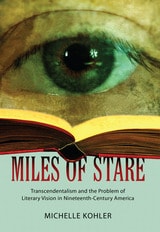
Miles of Stare
Transcendentalism and the Problem of Literary Vision in Nineteenth-Century AmericaMichelle Kohler
University of Alabama Press, 2014
The strangeness of nineteenth-century poetic vision is exemplified most famously by Emerson’s transparent eyeball. That disembodied, omniscient seer is able to shed its body and transcend sight paradoxically in order to see—not to create—poetic language “manifest” on the American landscape. In Miles of Stare, Michelle Kohler explores the question of why, given American transcendentalism’s anti-empiricism, the movement’s central trope becomes an eye purged of imagination. And why, furthermore, she asks, despite its insistent empiricism, is this notorious eye also so decidedly not an eye? What are the ethics of casting a boldly equivocal metaphor as the source of a national literature amidst a national landscape fraught with slavery, genocide, poverty, and war?
Miles of Stare explores these questions first by tracing the historical emergence of the metaphor of poetic vision as the transcendentalists assimilated European precedents and wrestled with America’s troubling rhetoric of manifest destiny and national identity. These questions are central to the work of many nineteenth-century authors writing in the wake of transcendentalism, and Kohler offers examples from the writings of Douglass, Hawthorne, Dickinson, Howells, and Jewett that form a cascade of new visual metaphors that address the irreconcilable contradictions within the transcendentalist metaphor and pursue their own efforts to produce an American literature. Douglass’s doomed witness to slavery, Hawthorne’s reluctantly omniscient narrator, and Dickinson’s empty “miles of Stare” variously skewer the authority of Emerson’s all-seeing poetic eyeball while attributing new authority to the limitations that mark their own literary gazes.
Tracing this metaphorical conflict across genres from the 1830s through the 1880s, Miles of Stare illuminates the divergent, contentious fates of American literary vision as nineteenth-century writers wrestle with the commanding conflation of vision and language that lies at the center of American transcendentalism—and at the core of American national identity.

Milestones in the History of English in America, Volume 76
Allen Walker Read, Richard W. Bailey, editor
Duke University Press, 0
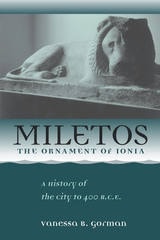
Miletos, the Ornament of Ionia
A History of the City to 400 B.C.E.Vanessa B. Gorman
University of Michigan Press, 2001
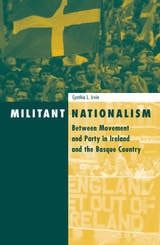
Militant Nationalism
Between Movement and Party in Ireland and the Basque CountryCynthia Irvin
University of Minnesota Press, 1999
A comparative analysis of two militant nationalist groups.
Why do some militant nationalists turn to electoral politics while others resist-and even seek to destroy-that arena? Cynthia L. Irvin examines two cases of electoral interventions by nationalist organizations engaged in violent political competition: in Northern Ireland and in the Basque provinces of Spain. Based on her findings, she offers insights into the circumstances that lead such groups to abandon violence in favor of institutional political struggle.
Using fieldwork done in Northern Ireland and the Basque Country, Irvin develops a model linking the internal dynamics of Sinn Fein and Herri Batasuna (the electoral arm of the militant Basque separatists) to changes in their external environments. In this unusual comparative analysis, she draws on interviews with more than 100 Sinn Fein and Herri Batasuna activists and on a unique survey of 140 Herri Batasuna activists. This approach moves Irvin’s work beyond previous analyses, which have relied on either descriptive and historical accounts or formal models of insurgent violence. This detailed account has broad implications for the study of social movements and ethnic identity, providing a valuable new perspective into the strategic interactions and often conflict-ridden relationship between social movements and political parties. ISBN 0-8166-3114-X Cloth £00.00 $49.95xxISBN 0-8166-3115-8 Paper £00.00 $19.95x304 Pages 26 Tables 5 7/8 x 9 MaySocial Movements, Protest, and Contention Series, volume 9Translation inquiries: University of Minnesota Press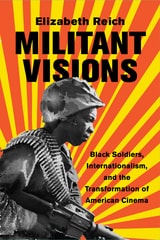
Militant Visions
Black Soldiers, Internationalism, and the Transformation of American CinemaReich, Elizabeth
Rutgers University Press, 2016
Offering a nuanced reading of a figure that was simultaneously conservative and radical, Reich considers how the cinematic black soldier lent a human face to ongoing debates about racial integration, black internationalism, and American militarism. Militant Visions thus not only presents a new history of how American cinema represented race, but also demonstrates how film images helped to make history, shaping the progress of the civil rights movement itself.

Militant Zionism in America
The Rise and Impact of the Jabotinsky Movement in the United States, 1926-1948Rafael Medoff
University of Alabama Press, 2006
This in-depth look at a controversial faction of American Zionism fills
a void in the story of American Zionism--and in the story of American Judaism.
This book recounts the fascinating and little-known story
of the militant American Zionists who lobbied Congress, rallied American
public opinion, and influenced British-American relations in their campaign
for Jewish statehood in the 1930s and 1940s. Although these activists have
been dismissed as fanatics who fragmented the American Zionist movement,
Rafael Medoff reveals that the faction--which included an Academy Award-winning
screenwriter and several future members of the Israeli parliament--was
more influential than has been previously acknowledged.
These militants stirred America's conscience by placing
controversial newspaper ads, lobbying conservative as well as liberal members
of Congress, and staging dramatic protest rallies. Through these tactics,
Medoff shows, they attracted a wave of support from an extraordinary cross-section
of leading Americans, including comedians Harpo Marx and Carl Reiner, actors
Vincent Price, Marlon Brando, and Jane Wyatt, musician Leonard Bernstein,
and rising young politicians Jacob Javits and Hubert Humphrey. Medoff also
describes the shadowy underground division that smuggled weapons to the
Holy Land in caskets, naming and interviewing for the first time members
of this gunrunning network.
Based on years of archival research and interviews and
written in a compelling style, Militant Zionism in America documents
events that reshaped the American Jewish community, influenced American
foreign policy, and contributed to one of the most extraordinary events
of modern history: the creation of the State of Israel.
Rafael Medoff is a Visiting Scholar at the State University of New York -- Purchase College.
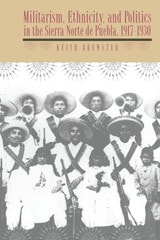
Militarism, Ethnicity, and Politics in the Sierra Norte de Puebla, 1917-1930
Keith Brewster
University of Arizona Press, 2003
Gabriel Barrios Cabrera, leader of the Brigada Serrana, rose from rural obscurity in the tiny village of Cuacuila to a position of unprecedented military strength during the Revolution, and throughout the 1920s he and his brother Demetrio came to enjoy the confidence of the nation's presidents. This work provides an in-depth look at how a local political boss held on to power. Keith Brewster reveals how the story of the Sierra is inextricably linked to that of the Barrios Cabrera family, and he investigates the ways in which this interconnection developed.
Brewster argues that Barrios owed his long prominence to his sensitivity to the region's culture, but also shows that the extent of his power was exaggerated by both contemporaries and historians. Barrios was able to develop a working relationship with the federal government by endorsing its objectives and convincing them of his own indispensability, but his authority depended on the weakness of the federal government and on infighting within the Puebla state government; once both governments stabilized, Barrios quickly lost his grip on power.
Masterfully blending archival sources and oral history, Brewster captures life in the Sierra during the 1920s and examines the decision-making processes that determined how communities responded to new pressures, such as requests for soldiers or support for development projects. He shows that subaltern groups were able to shape and even resist state reforms, mustering evidence that the Sierra's indigenous communities drove hard bargains over issues affecting their everyday lives. Although many communities used Barrios as an intermediary, Brewster reveals that they did not universally accept his legitimacy but simply used his connections to pursue their own local agendas.
Brewster depicts the Sierra de Puebla of the 1920s as a scene of shifting balances of power where political, economic, social, and ethnic factors combined to produce the temporary ascendancy of different interest groups beyond and within the region. His study forces us to question assumptions about how power was exercised at the local and regional levels in postrevolutionary Mexico and will be of lasting interest to all concerned with the dynamics of caciquismo and the evolution of the Mexican political system.
Militarism, Imperialism, and Racial Accommodation
An Analysis and Interpretation of the Early Writings of Robert E. ParkStanford Lyman
University of Arkansas Press, 1992
1993 Mid-South Sociological Association Book Award
Robert E. Park has long been recognized as one of the most influential thinkers in early American sociology, yet virtually all of his works appearing before 1913 were published in popular magazines and were dismissed as nonsociological muckraking. In Militarism, Imperialism, and Racial Accommodation: An Analysis and Interpretation of the Early Writings of Robert E. Park, Stanford M. Lyman examines and reprints many of these little-known works, including Park’s essays on German military organization, his exposés of the atrocities committed by Belgium’s Leopold II in the Congo State, his studies of the black community in Winston-Salem, North Carolina, and of Booker T. Washington’s agricultural education program at Tuskegee, Alabama.
Lyman shows clearly that Park’s essays, written outside the academy, formulated a far more complex perspective on modern modes of evil than any proposed by his contemporaries, thereby influencing sociological debates for decades to come. By writing his essays on topical subjects and by publishing them for a public audience, Park dramatized his profound belief that the struggle to achieve racial accommodation and to establish a true and lasting democracy is a concern for all.

Militarized Currents
Toward a Decolonized Future in Asia and the PacificSetsu Shigematsu
University of Minnesota Press, 2010
Militarized Modernity and Gendered Citizenship in South Korea
Seungsook Moon
Duke University Press, 2005
Moon situates militarized modernity in the historical context of colonialism and nationalism in the twentieth century. She follows the course of militarized modernity in South Korea from its development in the early 1960s through its peak in the 1970s and its decline after rule by military dictatorship ceased in 1987. She highlights the crucial role of the Cold War in South Korea’s militarization and the continuities in the disciplinary tactics used by the Japanese colonial rulers and the postcolonial military regimes. Moon reveals how, in the years since 1987, various social movements—particularly the women’s and labor movements—began the still-ongoing process of revitalizing South Korean civil society and forging citizenship as a new form of membership in the democratizing nation.
Militarizing Marriage
West African Soldiers’ Conjugal Traditions in Modern French EmpireSarah J. Zimmerman
Ohio University Press, 2020
Following tirailleurs sénégalais’ deployments in West Africa, Congo, Madagascar, North Africa, Syria-Lebanon, Vietnam, and Algeria from the 1880s to 1962, Militarizing Marriage historicizes how African servicemen advanced conjugal strategies with women at home and abroad. Sarah J. Zimmerman examines the evolution of women’s conjugal relationships with West African colonial soldiers to show how the sexuality, gender, and exploitation of women were fundamental to the violent colonial expansion and the everyday operation of colonial rule in modern French Empire.
These conjugal behaviors became military marital traditions that normalized the intimate manifestation of colonial power in social reproduction across the empire. Soldiers’ cross-colonial and interracial households formed at the intersection of race and sexuality outside the colonizer/colonized binary. Militarizing Marriage uses contemporary feminist scholarship on militarism and violence to portray how the subjugation of women was indispensable to military conquest and colonial rule.

Military Ascendancy and Political Culture
A Study of Indonesia's GolkarLeo Suryadinata
Ohio University Press, 1989
Leo Suryadinata traces the birth, struggle, and emergence of this party so closely identified with Indonesia’s President Suharto. Yet, to claim that Suharto and the military dominate the party is to view Golkar superficially, for the party is also composed of factions of civil servants and the Minister of Security and Defense, as well as several other governmental agencies. A complex and well-detailed cultural history of Indonesia’s most powerful political party, this case study should have wider implications for the study of military behavior in the Third World.
Military Institutions and Coercion in the Developing Nations
The Military in the Political Development of New NationsMorris Janowitz
University of Chicago Press, 1988

Military Intervention after the Cold War
The Evolution of Theory and PracticeAndrea Kathryn Talentino
Ohio University Press, 2005
Military Intervention After the Cold War explores how and why this change took place, looking at how both ideas and actions changed in the post-Cold War period to make military intervention a tool of international security and a defining characteristic of the international system. Although it is often touted as a strategy to rebuild collapsed states, the examples of success are few and far between. Andrea Kathryn Talentino argues that standards of human rights and responsible governance have become part of the definition of international security. She addresses questions that are vital in the post-9/11 world, where weak and collapsed states are recognized as permissive and at times supportive environments for criminal actors.
The specter of terrorism has placed even greater emphasis on the need to understand why military intervention happens and how it could be more effective. With the news full of stories on intervention and nation-building, scholars, graduate and undergraduate students, and readers interested in understanding global interdependence will find Military Intervention After the Cold War an indispensable book.Andrea Kathryn Talentino is an assistant professor of international relations at Tulane University, New Orleans.The author of numerous articles on military intervention and post- conflict rebuilding, she is currently focusing on the link between nation-building and political violence.
Military Power and Popular Protest
The U.S. Navy in Vieques, Puerto RicoMcCaffrey, Katherine T
Rutgers University Press, 2002
Residents of Vieques, a small island just off the east coast of Puerto Rico, live wedged between an ammunition depot and live bombing range for the U.S. Navy. Since the 1940s when the navy expropriated over two-thirds of the island, residents have struggled to make a life amid the thundering of bombs and rumbling of weaponry fire. Like the armys base in Okinawa, Japan, the facility has drawn vociferous protests from residents who challenged U.S. security interests overseas. In 1999, when a local civilian employee of the base was killed by a stray bomb, Vieques again erupted in protests that have mobilized tens of thousands individuals and transformed this tiny Caribbean Island into the setting for an international cause célèbre.
Katherine T. McCaffrey gives a complete analysis of the troubled relationship between the U.S. Navy and island residents. She explores such topics as the history of U.S. naval involvement in Vieques; a grassroots mobilizationled by fishermenthat began in the 1970s; how the navy promised to improve the lives of the island residentsand failed; and the present-day emergence of a revitalized political activism that has effectively challenged naval hegemony.
The case of Vieques brings to the fore a major concern within U.S. foreign policy that extends well beyond Puerto Rico: military bases overseas act as lightning rods for anti-American sentiment, thus threatening this countrys image and interests abroad. By analyzing this particular, conflicted relationship, the book also explores important lessons about colonialism and postcolonialism and the relationship of the United States to the countries in which it maintains military bases.
Military Prisons of the Civil War
A Comparative StudyDavid L. Keller
Westholme Publishing, 2021
Over the course of the American Civil War, more than four hundred thousand prisoners were taken by the North and South combined—the largest number in any conflict up to that time, and nearly fifty-eight thousand of these men died while incarcerated or soon after being released. Neither side expected to take so many prisoners in the wake of battles and neither had any experience on how to deal with such large numbers. Prison camps were quickly established, and as the war progressed, reports of sickness, starvation, mistreatment by guards, and other horrors circulated in the press. After the war, recriminations were leveled on both sides, and much of the immediate ill-will between the North and South dealt with prisoners and their treatment.
In Military Prisons of the Civil War: A Comparative Analysis historic preservationist David L. Keller consulted official records, newspaper reports, first-person accounts from prisoners, and other primary source material in order to understand why imprisonment during the Civil War failed on both sides. His research identifies five factors shared among both Union and Confederate prisons that led to so many deaths, including the lack of a strategic plan on either side for handling prisoners, inadequate plans for holding prisoners for long periods of time, and poor selection and training of camp command and guards.
Military Realism
The Logic and Limits of Force and Innovation in the U.S. ArmyPeter Campbell
University of Missouri Press, 2024
In five case studies of U.S. Army doctrine, Campbell pits military realism against bureaucratic and cultural perspectives in three key areas—nuclear versus conventional warfare, preferences for offense versus defense, and COIN missions—and finds that the army has been more doctrinally flexible than those perspectives would predict. He demonstrates that decision makers, while vowing in the wake of Vietnam to avoid (COIN) missions, nonetheless found themselves adapting to the geopolitical realities of fighting “low intensity” conflicts. In essence, he demonstrates that pragmatism has won out over dogmatism. At a time when American policymakers remain similarly conflicted about future defense strategies, Campbell’s work will undoubtedly shape and guide the debate.
Mill and Mansion
A Study of Architecture and Society in Lowell, Massachusetts, 1820-1865John Coolidge
University of Massachusetts Press, 1993
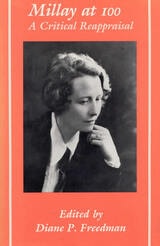
Millay At 100
A Critical ReappraisalDiane F. Freedman
Southern Illinois University Press, 1995
Though finding its occasion in the life of Millay— the centennial of the writer’ s birth— this volume refocuses attention on Millay’ s art by asking questions central to our present concerns: What in the varied body of Millay’ s work speaks to us most forcefully today? Which critical perspectives most illuminate her texts? How might those approaches be challenged, extended, or reoriented? In seeking the answers to such questions, the volume’ s contributors illuminate the means by which Millay’ s early success has been slighted and misunderstood and examine issues of personality, personae, critical stature, and formal experimentation in Millay’ s various genres: lyric poetry, the sonnet, verse drama, fiction, and the personal letter.
In 1920, following the publication of A Few Figs from Thistles, Millay was the "It girl" of American poetry. But by the late 1930s, her popularity waned as her critical reputation declined under the reign of high modernism and its critics. In fact, Millay, like others of her generation, had rejected modernist elitism in favor of public engagement, using her powerful public voice to plead for an end to the Sacco-Vanzetti trials as well as for U.S. entry into World War II. Condemned for both her politicizing and her political poetry, she was the first to admit that she and her poetry suffered in the service of public causes.
Grouped into four parts, these essays focus on Millay’ s relation to modernism, her revisionary perspectives on love, her treatment of time and of the female body, and her use of masquerade and impersonation in life and in art. Throughout, the essayists pose such questions as: Where is Millay’ s place in the literary histories of modern writing and in our hearts? How are we to value, interpret, and characterize the various forms and genres in which she wrote? What is the cultural work Millay achieves and reflects? How does she help us redefine modernism? What do Millay’ s great gifts enable us to see about genre, the social construction of gender, the definition of modernism, and the role of the poet?
Millay’ s considerable productivity, the range and virtues of her forms, and her experimentation clearly argue for a wide-ranging reappraisal of her work.
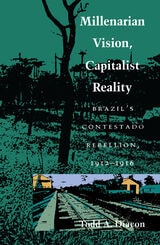
Millenarian Vision, Capitalist Reality
Brazil’s Contestado Rebellion, 1912–1916Todd A. Diacon
Duke University Press, 1991
Combining oral history with detailed archival research, Millenarian Vision, Capitalist Reality depicts a peasant community whose security in economic, social, and religious relations was suddenly disrupted by the intrusion of international capital. Diacon shows how a “deadly triumvirate” comprised to foreign capital, state power, and local bosses engineered a land tenure revolution that threatened smallholders’ subsistence, sparking rebellion among the Contestado peasants.
Unlike most analysis of millenarian movements, Diacon combines a material analysis with a careful exploration of the movement’s millenarian ideology to demonstrate how a particular combination of external and internal forces produced a crisis of values in the Contestado society. Such a crisis, Diacon concludes, gave a special power to the millenarian vision that promised not only outward reform, but inner salvation as well. This work offers a significant contribution to the literature of millenarian movements, popular religion, peasant rebellions, and the transition to capitalism in Brazil.
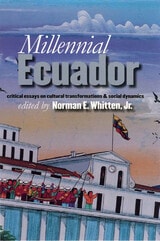
Millennial Ecuador
Critical Essays Cultural TransformationsNorman E Whitten
University of Iowa Press, 2003
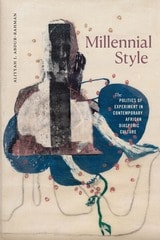
Millennial Style
The Politics of Experiment in Contemporary African Diasporic CultureAliyyah I. Abdur-Rahman
Duke University Press, 2024

Millennials Killed the Video Star
MTV's Transition to Reality ProgrammingAmanda Ann Klein
Duke University Press, 2021
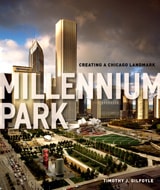
Millennium Park
Creating a Chicago LandmarkTimothy J. Gilfoyle
University of Chicago Press, 2006
Timothy Gilfoyle here offers a biography of this phenomenal undertaking, beginning before 1850 when the site of the park, the “city’s front yard,” was part of Lake Michigan. Gilfoyle studied the history of downtown; spent years with the planners, artists, and public officials behind Millennium Park; documented it at every stage of its construction; and traced the skeins of financing through municipal government, global corporations, private foundations, and wealthy civic leaders. The result is a thoroughly readable and lavishly illustrated testament to the park, the city, and all those attempting to think and act on a monumental scale. And underlying Gilfoyle’s history is also a revealing study of the globalization of art, the use of culture as an engine of economic expansion, and the nature of political and philanthropic power.
Born out of civic idealism, raised in political controversy, and maturing into a
symbol of the new Chicago, Millennium Park is truly a twenty-first-century
landmark, and it now has the history it deserves.
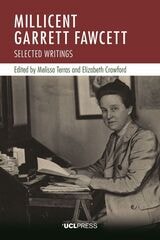
Millicent Garrett Fawcett
Selected WritingsEdited by Melissa Terras and Elizabeth Crawford
University College London, 2022
“Courage calls to courage everywhere” is the best-known phrase associated with Millicent Garrett Fawcett (1847–1929), the leading UK suffragist and women’s rights campaigner of the late nineteenth and early twentieth centuries. But what is the source of her quote, and what is its context?
This book reproduces Fawcett’s essential speeches, pamphlets, and newspaper columns to tell the story of her dynamic contribution to public life. Thirty-five texts and twenty-two images are contextualized and linked to contemporary news coverage as well as to historical and literary references. These speeches, articles, artworks, and photographs cover both the advances and the defeats in the campaign for women’s votes. They also demonstrate a variety of the topics and causes Fawcett pursued: the provision of education for women, feminist history, a love of literature (and Fawcett’s own attempt at fiction), purity and temperance, the campaign against the employment of children, the British Army’s approach to the South African War, the Unionist cause against Home Rule for Ireland, and the role of suffrage organizations during World War I. This volume offers a rich, intertextual web of literary works, preferred reading material, organizations, contacts, friends, and sometimes enemies, that reveals Fawcett the individual throughout sixty-one years of campaigning.
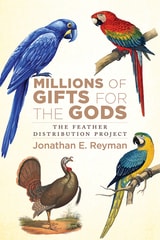
Millions of Gifts for the Gods
The Feather Distribution ProjectJonathan Reyman
University Press of Colorado, 2025
Grounded in Sol Tax’s concept of “action anthropology,” the project facilitated community-driven decision-making rather than imposing external solutions. This collaborative approach enabled Indigenous communities to maintain cultural practices that have persisted for over a millennium, dating back to the Ancestral Pueblo people and the Mogollon and Sinagua tribes, who viewed birds as sacred beings that helped humans emerge from the underworld. Yet the project’s impact extended far beyond cultural preservation. Over three decades, it distributed approximately 14.5 million feathers, valued at $20 million, to the Southwest Pueblos and other Indigenous Americans at no cost to them. Through partnerships with turkey hunters, zoos, bird clubs, the National Wild Turkey Federation, and dozens of volunteers, the initiative reduced illegal bird smuggling from Latin America, alleviated pressure on threatened bird populations, and eliminated harmful plucking practices.
Millions of Gifts for the Gods is an extended case study in applied anthropology, demonstrating how sustained collaboration between anthropologists and Indigenous communities can effectively address complex cultural, legal, and environmental challenges while preserving sacred traditions. This unique project is of special interest to anthropologists working in the American Southwest, as well as students and scholars of archaeology, ethnography, and ethnohistory.
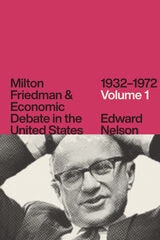
Milton Friedman and Economic Debate in the United States, 1932–1972, Volume 1
Edward Nelson
University of Chicago Press, 2020
This two-volume account provides a foundational introduction to Friedman’s role in several major economic debates that took place in the United States between 1932 and 1972. The first volume, which takes the story through 1960, covers the period in which Friedman began and developed his research on monetary policy. It traces Friedman’s thinking from his professional beginnings in the 1930s as a combative young microeconomist, to his wartime years on the staff of the US Treasury, and his emergence in the postwar period as a leading proponent of monetary policy. The second volume covers the years between 1960 and 1972— years that saw the publication of Friedman and Anna Schwartz’s Monetary History of the United States. The book also covers Friedman’s involvement in a number of debates in the 1960s and 1970s, on topics such as unemployment, inflation, consumer protection, and the environment.
As a fellow monetary economist, Nelson writes from a unique vantage point, drawing on both his own expertise in monetary analysis and his deep familiarity with Friedman’s writings. Using extensive documentation, the book weaves together Friedman’s research contributions and his engagement in public debate, providing an unparalleled analysis of Friedman’s views on the economic developments of his day.
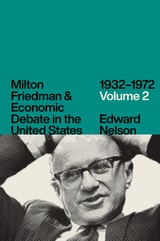
Milton Friedman and Economic Debate in the United States, 1932–1972, Volume 2
Edward Nelson
University of Chicago Press, 2020
This two-volume account provides a foundational introduction to Friedman’s role in several major economic debates that took place in the United States between 1932 and 1972. The first volume, which takes the story through 1960, covers the period in which Friedman began and developed his research on monetary policy. It traces Friedman’s thinking from his professional beginnings in the 1930s as a combative young microeconomist, to his wartime years on the staff of the US Treasury, and his emergence in the postwar period as a leading proponent of monetary policy. The second volume covers the years between 1960 and 1972— years that saw the publication of Friedman and Anna Schwartz’s Monetary History of the United States. The book also covers Friedman’s involvement in a number of debates in the 1960s and 1970s, on topics such as unemployment, inflation, consumer protection, and the environment.
As a fellow monetary economist, Nelson writes from a unique vantage point, drawing on both his own expertise in monetary analysis and his deep familiarity with Friedman’s writings. Using extensive documentation, the book weaves together Friedman’s research contributions and his engagement in public debate, providing an unparalleled analysis of Friedman’s views on the economic developments of his day.

Milton's Epic Voice
The Narrator in Paradise LostAnne Ferry
University of Chicago Press, 1983
Milton's Modernities
Poetry, Philosophy, and History from the Seventeenth Century to the PresentEdited by Feisal G. Mohamed and Patrick Fadely
Northwestern University Press, 2017
Bristling with insights on Milton’s major works, Milton’s Modernities offers fresh perspectives on the thinkers central to our theorizations of modernity: from Lucretius and Spinoza, Hegel and Kant, to Benjamin and Deleuze. At the volume's core is an embrace of the possibilities unleashed by current trends in philosophy, variously styled as the return to ethics, or metaphysics, or religion. These make all the more visible Milton’s dialogues with later modernity, dialogues that promise to generate much critical discussion in early modern studies and beyond.
Such approaches necessarily challenge many prevailing assumptions that have guided recent Milton criticism—assumptions about context and periodization, for instance. In this way, Milton’s Modernities powerfully broadens the historical archive beyond the materiality of events and things, incorporating as well intellectual currents, hybrids, and insights.

Milwaukee Braves
Heroes and HeartbreakWilliam Povletich
Wisconsin Historical Society Press, 2009
During their thirteen years in Wisconsin, the Milwaukee Braves never endured a losing season, won two National League pennants, and in 1957 brought Milwaukee its only World Series championship. With a lineup featuring future Hall of Famers Henry Aaron, Warren Spahn, Eddie Matthews, Red Schoendienst, and Phil Niekro, the team immediately brought Milwaukee "Big League" credentials, won the hearts of fans, and shattered attendance records. The Braves' success in Milwaukee prompted baseball to redefine itself as a big business—resulting in franchises relocating west, multi-league expansion, and teams leveraging cities for civically funded stadiums. But the Braves' instant success and accolades made their rapid fall from grace after winning the 1957 world championship all the more stunning, as declining attendance led the team to Atlanta in one of the ugliest divorces between a city and baseball franchise in sports history.
Featuring more than 100 captivating photos, many published here for the first time, Milwaukee Braves preserves the Braves' legacy for the team's many fans and introduces new generations to a fascinating chapter in sports history.

Milwaukee Mayhem
Murder and Mystery in the Cream City's First CenturyMatthew J. Prigge
Wisconsin Historical Society Press, 2015
From murder and matchstick men to all-consuming fires, painted women, and Great Lakes disasters--and the wide-eyed public who could not help but gawk at it all--"Milwaukee Mayhem" uncovers the little-remembered and rarely told history of the underbelly of a Midwestern metropolis. "Milwaukee Mayhem" offers a new perspective on Milwaukee's early years, forgoing the major historical signposts found in traditional histories and focusing instead on the strange and brutal tales of mystery, vice, murder, and disaster that were born of the city's transformation from lakeside settlement to American metropolis. Author Matthew J. Prigge presents these stories as they were recounted to the public in the newspapers of the era, using the vivid and often grim language of the times to create an engaging and occasionally chilling narrative of a forgotten Milwaukee.
Through his thoughtful introduction, Prigge gives the work context, eschewing assumptions about "simpler times" and highlighting the mayhem that the growth and rise of a city can bring about. These stories are the orphans of Milwaukee's history, too unusual to register in broad historic narratives, too strange to qualify as nostalgia, but nevertheless essential to our understanding of this American city.
Milwaukee Through History
A Young Reader's Guide to the People and Events That Shaped a CityJames K. Nelsen
Wisconsin Historical Society Press, 2025
This richly illustrated book for middle grade and high school learners uses primary sources and archival photos to explore Milwaukee’s role in Wisconsin and US history. Milwaukee Through History highlights the city’s multiple transformations—from a resource-rich homeland of Ho-Chunk, Menominee, Ojibwe, Potawatomi, and other Native peoples to an immigrant hub to an industrial boomtown and, finally, to a vibrant tourist destination that continues to grapple with issues of poverty and inequality.
Readers will discover key people, places, events, and innovations that made Milwaukee—and national—history, including:
• Freedom seeker Joshua Glover
• Industrial giants like Harley Davidson & Allen Bradley
• Whitnall Park and the North Point Water Tower
• Labor movements and the fair housing marches
• Civil rights leader Vel Phillips
Author James K. Nelsen sheds new light on important events and milestones in history, including the American Revolution, the War of 1812, the Civil War, and the Great Migration. Written with middle and high school readers in mind, the book will appeal to people of all ages who are curious about Milwaukee’s history and culture. Milwaukee Through History is both an engaging supplement to Wisconsin and US history curricula and a great read for anyone seeking a deeper understanding of a diverse and dynamic city.
Milwaukee in the 1930s
A Federal Writers Project City GuideJohn D. Buenker
Wisconsin Historical Society Press, 2016
What would it be like to take an intensive tour of Milwaukee as it was during the late 1930s—at the confluence of the Great Depression, the New Deal, and the run-up to World War II? That is precisely what the participants in the Federal Writers Project did while researching their Guide to Milwaukee. The fruits of their labors were ready for publication by 1940, but for a number of reasons the finished product never saw the light of day—until now.
Fortunately, the manuscript has been carefully preserved in the Wisconsin Historical Society Archives
. Seventy-five years after the work’s completion, the Wisconsin Historical Society Press and historian John D. Buenker present this guide—now serving as a time machine, ready to transport readers back to the Milwaukee of the 1930s, neighborhood by neighborhood, building by building. Much more than a nostalgic snapshot, the book examines Milwaukee’s history from its earliest days to 1940.
Buenker’s thoughtful introduction provides historical context, detailing the FWP’s development of this guide, as well as Milwaukee’s political climate leading up to, and during, the 1930s. Next, essays on thirteen "areas," ranging from Civic Center to Bay View, delve deeper into the geography, economy, and culture of old Milwaukee’s neighborhoods, and simulated auto tours take readers to locales still familiar today, exploring the city’s most celebrated landmarks and institutions. With a calendar of annual events and a list of public services and institutions, plus dozens of photographs from the era, Milwaukee in the 1930s provides a unique record of a pre–World War II American city.
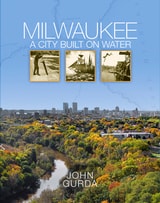
Milwaukee
A City Built on WaterJohn Gurda
Wisconsin Historical Society Press, 2026
The success and survival of Milwaukee lies in the rivers that meander through its streets and the great lake at its eastern boundary. The Indigenous peoples of the region recognized the value of an abundant, clean water supply for food and transportation. Generations of immigrants, entrepreneurs, innovators, and recreationists used the same waters to travel greater distances, power million-dollar industries, and even have a bit of fun.
In Milwaukee: A City Built on Water, celebrated historian John Gurda relates the history of the waters that gave Milwaukee life—and occasionally threatened the city through erosion, invasive species, and water-borne diseases. Telling tales of brewers, brickmakers, ecologists, and engineers, Gurda explores the city’s complicated connections with its most precious resource and greatest challenge. You’ll meet the generations of people, from a Potawatomi chief to fur traders and fishermen, who settled on the small spit of land known as Jones Island; learn how Milwaukee’s unique water composition creates its distinct cream-colored bricks; visit Wisconsin’s first waterparks; and see how city leaders transformed the Milwaukee River—once described as a “vast sewer” with an “odorous tide”—into today’s lively and lovely Riverwalk.
Now available in paperback, Milwaukee: A City Built on Water is the sweeping chronicle of a critical natural resource that has weathered heavy use and flagrant abuse to emerge as a focal point of both celebration and concern in the twenty-first century.
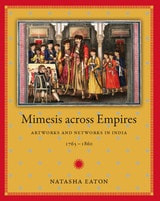
Mimesis across Empires
Artworks and Networks in India, 1765-1860Natasha Eaton
Duke University Press, 2013
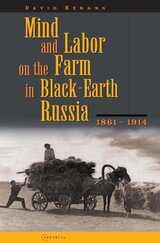
Mind and Labor on the Farm in Black-Earth Russia, 1861-1914
David Kerans
Central European University Press, 2001

Minding the Helm
An Unlikely Career in the U.S. Coast GuardKevin P. Gilheany
University of North Texas Press, 2019

Minding the South
John Shelton Reed
University of Missouri Press, 2003
You're in the American South now, a proud region with a distinctive history and culture. A place that echoes with names like Thomas Jefferson and Robert E. Lee, Scarlett O'Hara and Uncle Remus, Martin Luther King and William Faulkner, Billy Graham, Mahalia Jackson, Muhammad Ali, Elvis Presley. Home of the country blues and country music, bluegrass and Dixieland jazz, gospel music and rock and roll. Where menus offer both down-home biscuits and gravy and uptown shrimp and grits. Where churches preach against "cigarettes, whiskey, and wild, wild women" (all Southern products) and where American football is a religion.
For more than thirty years John Shelton Reed has been “minding” the South—watching over it, providing commentary upon it. He is the author or editor of thirteen books about the South, and despite his disclaimer regarding formal study of Southern history, Reed has read widely and in depth about the South. His primary focus is upon Southerners’ present-day culture and consciousness, but he knows that one must approach the South historically in order to understand the place and its people.

Minds and Hearts
The Story of James Otis Jr. and Mercy Otis WarrenJeffrey H. Hacker
University of Massachusetts Press, 2021
Minds and Hearts is the dual biography of these remarkable siblings, placing James and Mercy in the spotlight together for the first time, amid the rush of events, competing ideologies, and changing social conditions of eighteenth-century America. Jeffrey H. Hacker crafts a compelling narrative that focuses on the Otises' unique and dramatic relationship and traces their impact on the Revolutionary movement in Massachusetts. If the real American Revolution took place "in the minds and hearts of the people," as John Adams claimed, then the Otises were among the nation's true patriots.
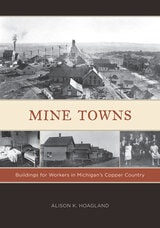
Mine Towns
Buildings for Workers in Michigan’s Copper CountryAlison K. Hoagland
University of Minnesota Press, 2010

Mineral Point
A HistoryGeorge Fiedler
Wisconsin Historical Society Press, 1973
Miners, Merchants, and Farmers in Colonial Colombia
By Ann Twinam
University of Texas Press, 1982
The inhabitants of the department of Antioquía in north-central Colombia have played a unique role in that country’s economic history. During the colonial period Antioqueño placer miners supplied a substantial portion of New Granada’s gold exports. Their nineteenth-century descendants pioneered investments in lode mining, colonization, international commerce, banking, stock raising, tobacco, and coffee. In the twentieth century, Antioqueños initiated the industrialization of the regional capital, Medellín.
Many theories have been set forth to account for the special energy and initiative of Antioqueños. They range from ethnic and psychological interpretations (Antioqueños are descended from Jews or Basques; they are driven to succeed because of status deprivation) to historical explanations that emphasize their geographic isolation, mining heritage, or the coffee-export economy. In Miners, Merchants, and Farmers in Colonial Colombia, Ann Twinam critiques these theories and sets forth her own revisionist interpretation of Antioqueño enterprise. Rather than emphasize the alien or deviant in Antioqueño psychology or culture, Twinam re-creates the region’s late colonial economic and social structure and attributes the origins of Antioqueño enterprise to a particular mix of human and natural resources that directed the region’s development toward capital accumulation and reinvestment.
Although the existing limitations of their colonial environment may have forced Antioqueños along enterprising pathways initially, the continuation of Antioqueño investments to the present day suggests that their adaptation to a specific economic reality became a way of life transcending the historical conditions that created it.

Miniature Messages
The Semiotics and Politics of Latin American Postage StampsJack Child
Duke University Press, 2008
Child combines history and political science with philatelic research of nearly forty thousand Latin American stamps. He focuses on Argentina and the Southern Cone, highlighting stamps representing the consolidation of the Argentine republic and those produced under its Peronist regime. He compares Chilean stamps issued by the leftist government of Salvador Allende and by Augusto Pinochet’s dictatorship. Considering postage stamps produced under other dictatorial regimes, he examines stamps from the Dominican Republic, Guatemala, Nicaragua, and Paraguay. Child studies how international conflicts have been depicted on the stamps of Argentina, Chile, and Peru, and he pays particular attention to the role of South American and British stamps in establishing claims to the Malvinas/Falkland Islands and to Antarctica. He also covers the cultural and political history of stamps in Bolivia, Brazil, Colombia, Cuba, Grenada, Mexico, Uruguay, Venezuela and elsewhere. In Miniature Messages, Child finds the political history of modern Latin America in its “tiny posters.”

Minimum Wages in Central and Eastern Europe
From Protection to DestitutionGuy Standing
Central European University Press, 1995