Results by title
28167 books match the query 'History' and 1583 start with m
More Than a Game
Life Lessons from Philadelphia's Sports CommunityEliot Shorr-Parks
Temple University Press, 2012
Anyone who has sat at the "Vet," watched a pick-up game, or played catch in the yard, knows that sports is more than a game in Philadelphia—it's a commitment to hard work, a belief in community values, and a tradition of never giving up.
Told through the personal experiences of professional athletes, community leaders, and everyday players, More Than a Game captures how sports build character and communities with each hit of the ball, catch of a touchdown pass, or dunk of the basketball.
Among those featured are Carlos Ruiz, Chris Pronger, Sonny Hill, Angelo Cataldi, Leonard Weaver, Rita Sloan Green, Ruben Amaro, Jr., Joe Banner, Alyson Goodner, Gary Cobb, Jim Ellis, Mayor Michael Nutter, Nicholas Bradley, Governor Edward Rendell, and Rami Ibrahim.
The perfect gift for the aspiring athlete, the community coach, or the supportive parent.

More than "First, Do No Harm"
Academic Global HealthTimothy R. B. Johnson
Michigan Publishing Services, 2023
Using personal experience and narrative, as well as the voices of students, trainees, and academic colleagues, this book illustrates how an initiative beginning over thirty years ago to train obstetrician-gynecologists in Ghana can serve as a model for global engagement by universities and learners at many levels. In addition to detailing a proven sustainable model for global health programs, this book highlights the ethical and moral imperatives participants should expect and demand of truly engaged academic global health.
More than 1001 Days and Nights of Hong Kong Internment
A Personal NarrativeChaloner Grenville Alabaster
Hong Kong University Press, 2022
More Than 1001 Days and Nights of Hong Kong Internment is the wartime journal of Sir Chaloner Grenville Alabaster, former attorney-general of Hong Kong and one of the three highest-ranking British officials during the Japanese occupation. He was imprisoned by the Japanese at the Stanley Internment Camp from 1941 to 1945. During his internment, he kept a diary of his life in the camp in small notebooks, hiding them until his release in 1945. He wrote his wartime journal on the basis of these notes. The journal records his day-to-day experiences of the fall of Hong Kong, his time at Stanley, and his eventual release. The book is an important primary source for understanding the daily operation of the Stanley Internment Camp and the period immediately after the fall of Hong Kong.
More than Lore
Reminiscences of Marion TalbotMarion Talbot
University of Chicago Press, 2015
Originally published in 1936, More than Lore is a unique firsthand account of the early days of the university, capturing the excitement and travails of life on an academic frontier. Talbot shares gossip from the faculty lounge, relays student antics in the dorms, and tells stories from the living rooms of Hyde Park. It’s also a fascinating look at life as an early twentieth-century college woman, with scandals over improper party invitations and underground sororities, petitions calling for more female professors, and campaigns to have students be known as “university women” instead of “college girls.” With Talbot as our guide, we reenter a lost world where simply to be a woman was to be a pioneer and where the foundations of the modern undergrad experience were being established.

More than They Bargained For
Scott Walker, Unions, and the Fight for WisconsinJason Stein and Patrick Marley
University of Wisconsin Press, 2013
“Stein and Marley deliver an impressively objective account of the struggle, ably describing the objectives and tactics of each side in a confident and engaging style.”—Kirkus Reviews
“Stein and Marley deliver a swashbuckling tale of Wisconsin's Republican Governor Scott Walker's election and tumultuous first year in office. . . . Instead of an expected dry read, the authors' lively, economical prose, supplemented by snippets of social media reporting in real time, place readers in the crowded Capitol building stairwells, or in the midst of Wisconsin's largest sustained demonstration since Vietnam protests rocked the University of Wisconsin campus.”—Publishers Weekly
“This book is a political thriller, an activists’ handbook (for the Left on how to organize mass protests, and for the Right on how to effectively fight public employee unions), and a work of investigative journalism all rolled into one. Social scientists, political junkies, and anyone interested in public affairs will devour it.”—Library Journal
“Not only have Stein and Marley organized this mass of material into a coherent whole, but they also write well, ensuring that even the drier parts of their narrative are clear as well as fair. Their book provides plenty of ammunition for both sides. But it also offers something far better: the basis for an adult conversation about what actually happened.”—Milwaukee Journal Sentinel
“This timely account covers the ethics investigations, public demonstrations, runaway legislators, recalls, and physical confrontation between two state Supreme Court justices. . . . This book is written in a concise, unbiased manner and includes complete details. In a greater sense, it explores the drastic polarization endemic in American society today.”—Choice
“A testament to the information-gathering powers of good beat reporters. In Bob Woodward style, they reconstruct the backroom meetings that ushered Gov. Scott Walker’s Act 10 legislation through the protester-crammed halls of the Wisconsin State Capitol.”—Milwaukee Magazine
“Stein and Marley have managed to produce a very readable, well-researched, and thoroughly interesting narrative without any notable bias—a major accomplishment.”—Wisconsin People & Ideas Magazine
More than a Farmer's Wife
Voices of American Farm Women, 1910-1960Amy Mattson Lauters
University of Missouri Press, 2009

More-than-Human Histories of Latin America and the Caribbean
Decentring the Human in Environmental HistoryEdited by Diogo de Carvalho Cabral
University of London Press, 2024
The Latin American and Caribbean regions’ historical trajectories have been shaped by complex human-nonhuman interactions. In these histories, people are important, even crucial, actors, but not the only ones. Offering a novel approach to the writing of Latin American history, this book brings eight thought-provoking chapters together with a historiographical introduction and critical afterword to center nonhuman beings and things. The oscillating glare of the sun, the allure and resourcefulness of animals, the reluctant genetic malleability of plant seeds, and the life-giving and intractable impassivity of rivers are some of the other-than-human agents driving history in the volume’s chapters.
This book problematizes Latin American(ist) historiography’s tendency to frame “nature” as a separate ontological domain that is only acted upon—conquered, manipulated, devastated—lacking the self-propelled dynamics capable of shaping the course of events. With broad regional and temporal coverage across Latin America and the Caribbean from the pre-colonial period to the present day, More-than-Human Histories of Latin America and the Caribbean responds to environmental history’s call to write biophysical environments into the human past—a reconsideration of historical agency that, in this era of climate change, is more necessary than ever.

Morgan Park
Duluth, U.S. Steel, and the Forging of a Company TownArnold R. Alanen
University of Minnesota Press, 2008
From 1915 to 1971 the large U.S. Steel plant was a major part of Duluth’s landscape and life. Just as important was Morgan Park—an innovatively planned and close-knit community constructed for the plant’s employees and their families. In this new book Arnold R. Alanen brings to life Morgan Park, the formerly company-controlled town that now stands as a city neighborhood, and the U.S. Steel plant for which it was built.
Planned by renowned landscape architects, architects, and engineers, and provided with schools, churches, and recreational and medical services by U.S. Steel, Morgan Park is an iconic example—like Lowell, Massachusetts, and Pullman, Illinois—of a twentieth-century company town, as well as a window into northeastern Minnesota’s industrial roots.
Starting with the intense political debates that preceded U.S. Steel’s decision to build a plant in Duluth, Morgan Park follows the town and its residents through the boom years to the closing of the outmoded facility—an event that foreshadowed industrial shutdowns elsewhere in the United States—and up to today, as current residents work to preserve the community’s historic character.
Through compelling archival and contemporary photographs and vibrant stories of a community built of concrete and strong as steel, Alanen shows the impact both the plant and Morgan Park have had on life in Duluth.
Arnold R. Alanen is professor of landscape architecture at the University of Wisconsin–Madison. His previous books include Main Street Ready-Made: The New Deal Community of Greendale, Wisconsin and Preserving Cultural Landscapes in America.

Moritz Gottlieb Saphir
Nineteenth-Century Pioneer of Journalism and Food WritingAndrás Koerner
Central European University Press, 2027
His literary and journalistic innovations included publishing the first modern newspapers in Berlin, Munich and Vienna, developing a new style of humorous writing, introducing the journalistic genre of the feuilleton to Austria, authoring the first extended prose poem in the German language and writing the first study of vernacular Ashkenazi Jewish cuisine, as well as the first review of a Jewish cookbook and restaurant. Although due to censorship he had to largely eschew political subjects, he courageously fought for press freedom and against anti-Jewish prejudice. Although perhaps not a great writer, he was an important and intriguing figure of European cultural history who certainly doesn’t deserve the neglect his work has suffered since the early 20th century.
András Koerner’s book is the first modern monograph of him, which in addition to a detailed presentation of his eventful, interesting life and an examination of his personality, identity and work also includes the first-ever extensive annotated anthology of him in English.
Morkan's Quarry
A NovelSteve Yates
Moon City Press, 2010

Mormon Battalion
United States Army of the West, 1846-1848Norma Baldwin Ricketts
Utah State University Press, 1997
Mormon Colonies in Mexico
Thomas Cottam Romney
University of Utah Press, 2005
"Romney’s unique vantage point is the strongest draw of this narrative: Romney and his family lived much of their life in the Mexican Mormon colonies. But the narrative’s value is much broader and deeper than just that. Romney’s insights into Mexican politics and personalities, and his view of the course of history from inside rather than from outside, are fascinating, colorful and opinionated. He was clear about who he admired and why, and who he did not."
—from the Foreword
In the 1880s, as a precondition to granting Utah statehood, the United States government enacted laws to put a stop to the Mormon practice of polygamy. Those who continued to practice this principle were forced underground as federal marshals roamed the territory searching for "polygs." In response, the Church of Jesus Christ of Latter-day Saints looked for safe places to send its members; many found refuge across the border in Mexico.
Unavailable since its original publication in 1938, this important document of a little-known chapter in Mormon history is now reprinted with a foreword by Martha Sonntag Bradley. Romney was raised and spent much of his life in the colonies, making this book a significant contribution to LDS history. It chronicles a new kind of Mormon pioneer facing the hardships of an unfamiliar land, a tenuous relationship with the government, and the necessary fortitude to hold fast to one’s belief in the face of difficulty and trial.

Mormon Enigma
Emma Hale SmithLinda King Newell and Valeen Tippetts Avery
University of Illinois Press, 1994
Winner of the Evans Biography Award, the Mormon History Association Best Book Award, and the John Whitmer Association (RLDS) Best Book Award.
Mormon Enigma is the bestselling biography of Emma Hale Smith, wife of the Mormon prophet Joseph Smith. It was Joseph Smith who announced that an angel of the Lord had commanded him to introduce a 'new order of marriage.' And it was Emma Hale Smith who confronted the practice of polygamy head on.
As the authors note in their introduction, "Early leaders in Utah castigated Emma from their pulpits for opposing Brigham Young and the practice of polygamy, and for lending support to the Reorganization. As these attitudes filtered down through the years, Emma was virtually written out of official Utah histories. In this biography, we have attempted to reconstruct the full story of this remarkable and much misunderstood woman's experiences.
Mormon Envoy
The Diplomatic Legacy of Dr. John Milton BernhiselBruce W. Worthen
University of Illinois Press, 2023
Having risen from a Pennsylvania backcountry upbringing to become a respected member of the upper class, Bernhisel possessed a personal history that allowed him to reach common ground with politicians and other outsiders. He negotiated for Joseph Smith’s life and, after the Church’s relocation to the Utah Territory, took on the task of rehabilitating the public image of the Latter-day Saints. Brigham Young’s defiance of the government undermined Bernhisel’s work, but their close if sometimes turbulent relationship ultimately allowed Bernhisel to make peace with Washington, secure a presidential pardon for Young, and put Utah and the Latter-day Saints on the road to formally joining the United States.
Mormon Healer Folk Poet
Mary Susannah Fowler's Life of 'Unselfish Usefulness'Margaret Brady
Utah State University Press, 2000
Mormon Midwife
edited by Donna Toland Smart
Utah State University Press, 1999
Mormon Passage of George D. Watt
First British Convert, Scribe for ZionRonald G. Watt
Utah State University Press, 2009
Mormon Polygamy
A HistoryRichard S. Van Wagoner
Signature Books, 1989
What emerges is a portrait that neither discounts nor exaggerates the historical evidence. He presents polygamy in context, neither condemning nor defending, while relevant contemporary accounts are treated sympathetically but interpreted critically. No period of Mormon history is emphasized over another. The result is a systematic view that is unavailable in studies of isolated periods or in the repetitions of folklore that only disguise the reality of what polygamy was.
Scattered throughout the western United States today are an estimated 30,000 fundamentalist Mormons who still live “the principle.” They, too, are a part of Joseph Smith’s legacy and are included in this study.
Mormon Sisters
Women In Early UtahClaudia Bushman
Utah State University Press, 1997
Mormon Trail
Yesterday and TodayWilliam E. Hill
Utah State University Press, 1996
Back in print, this essential reference for readers interested in the Mormon Trail is part history, part resource book, part guide and photographic essay. Driven from their home in Nauvoo, Illinois, Mormons led by Brigham Young began in 1846 to journey west to an expected haven in the Great Salt Lake Valley. The first party arrived there in July 1847. Thousands of members and converts later followed the Mormon Trail, which for much of its way traced the route of the Oregon Trail, although it generally stayed across the Platte River from the more-traveled way. It was thus, until the railroad's arrival in 1869, one of the West's most important and heavily used roads.
Although the Mormons' experience was in most ways similar to that of other emigrants, the religious motivations, tight organization, and family groups of the Mormons gave their migration a distinct character. William E. Hill introduces the Mormons, their eventful early history, and the characteristics of the migration west. His book also includes a chronology of trail-related events, excerpts from diaries and guidebooks, songs, historical maps, over 200 then-and-now illustrations, descriptions of major museums and displays on the trail, and recommendations for further reading.
Mormon Vanguard Brigade Of 1847
Norton Jacob's Recordedited by Ronald O. Barney
Utah State University Press, 2005
Mormonism and the Making of a British Zion
Matthew L. Rasmussen
University of Utah Press, 2016
After many British believers left for America, church membership in England fell so sharply that the movement in Britain seemed to be on the brink of collapse. Yet British Mormonism gradually resurged and continues today. How did this religious minority flourish when so many nineteenth-century revivalist movements did not? Rasmussen explains Mormonism’s inception, perpetuation, and maturation in Britain in a compelling case study of a “new religious movement” with staying power. From its establishment in 1837 to its maturation in 1998, the Mormon perspective of Britain shifted dramatically. This book chronicles that shift, and illustrates how doctrinal adaptation has enabled Mormonism in Britain to persist.
Mormonism's Last Colonizer
The Life and Times of William H. SmartWilliam B. Smart
Utah State University Press, 2008
Winner of the Evans Handcart Prize 2009
Winner of the Mormon History Assn Best Biography Award 2009
By the early twentieth century, the era of organized Mormon colonization of the West from a base in Salt Lake City was all but over. One significant region of Utah had not been colonized because it remained in Native American hands--the Uinta Basin, site of a reservation for the Northern Utes. When the federal government decided to open the reservation to white settlement, William H. Smart--a nineteenth-century Mormon traditionalist living in the twentieth century, a polygamist in an era when it was banned, a fervently moral stake president who as a youth had struggled mightily with his own sense of sinfulness, and an entrepreneurial businessman with theocratic, communal instincts--set out to ensure that the Uinta Basin also would be part of the Mormon kingdom.
Included with the biography is a searchable CD containing William H. Smart's extensive journals, a monumental personal record of Mormondom and its transitional period from nineteenth-century cultural isolation into twentieth-century national integration.
Mormonism
THE STORY OF A NEW RELIGIOUS TRADITIONJan Shipps
University of Illinois Press, 1985
Mormons and Cowboys, Moonshiners and Klansman
Federal Law Enforcement in the South and West, 1870-1893Stephen Cresswell
University of Alabama Press, 1991
A critical study of the expansion of federal law enforcement across the post-Civil War American South and frontier West.
In the decades immediately following the Civil War, the United States expanded rapidly. As the nation grew, so too did federal law, moving into areas of citizens’ lives previously regulated by local custom and state and territorial statutes.
Drawing on contemporary accounts and the letters that flowed between the Washington office of the Justice Department and its attorneys and marshals throughout the states and territories, Cresswell uses a case-study approach to explore the enforcement of federal law in four regions. In northern Mississippi, the rights of freedmen to vote clashed with established rules of relations between blacks and whites. In Utah Territory, Mormon polygamy and economic dominance challenged the aspirations of non-Mormon settlers. In eastern Tennessee, desperate poverty lent enchantment to the easy money of moonshining. In Arizona Territory, frontier greed and violence threatened the lives of people and the chances of early admission to the Union of states.
Mormons and Cowboys, Moonshiners and Klansmen moves beyond these local case studies to illuminate larger questions, including the evolution of the American criminal justice system, the relationship of the South and the West to the rest of the nation, the workings of the 19th-century American bureaucracy, and conflict of the local, state, and federal governments.
Out of the efforts of these early federal marshals came the modern federal justice system, with its firm policy guidelines, its Federal Bureau of Investigation, and its broader powers over the country as a whole.
Mormons, Musical Theater, and Belonging in America
Jake Johnson
University of Illinois Press, 2019
Morning Star
surrealism, marxism, anarchism, situationism, utopiaBy Michael Löwy
University of Texas Press, 2009
An expanded edition of revered theorist Michael Löwy's Morning Star: Marxism and Surrealism (previously published in French, Portuguese, Spanish, Italian, and Greek), this masterwork collects the author's essays on the ways in which surrealism intersected with a variety of revolutionary political approaches, ranging from utopian ideals to Marxism and situationism. Taking its title from André Breton's essay "Arcane 17," which casts the star as the searing firebrand of rebellion, Löwy's provocative work spans many perspectives. These include surrealist artists who were deeply interested in Marxism and anarchism (Breton among them), as well as Marxists who were deeply interested in surrealism (Walter Benjamin in particular).
Probing the dialectics of innovation, diversity, continuity, and unity throughout surrealism's international presence, Morning Star also incorporates analyses of Claude Cahun, Guy Debord, Pierre Naville, José Carlos Mariátegui and others, accompanied by numerous reproductions of surrealist art. An extraordinarily rich collection, Morning Star promises to ignite new dialogues regarding the very nature of dissent.
Moroccan Islam
Tradition and Society in a Pilgrimage CenterBy Dale F. Eickelman
University of Texas Press, 1976
This book is one of the first comprehensive studies of Islam as locally understood in the Middle East. Specifically, it is concerned with the prevalent North African belief that certain men, called marabouts, have a special relation to God that enables them to serve as intermediaries and to influence the well-being of their clients and kin. Dale F. Eickelman examines the Moroccan pilgrimage center of Boujad and unpublished Moroccan and French archival materials related to it to show how popular Islam has been modified by its adherents to accommodate new social and economic realities. In the course of his analysis he demonstrates the necessary interrelationship between social history and the anthropological study of symbolism.
Eickelman begins with an outline of the early development of Islam in Morocco, emphasizing the "maraboutic crisis" of the fourteenth through sixteenth centuries. He also examines the history and social characteristics of the Sherqawi religious lodge, on which the study focuses, in preprotectorate Morocco. In the central portion of the book, he analyzes the economic activities and social institutions of Boujad and its rural hinterland, as well as some basic assumptions the townspeople and tribesmen make about the social order. Finally, there is an intensive discussion of maraboutism as a phenomenon and the changing local character of Islam in Morocco.
In focusing on the "folk" level of Islam, rather than on "high culture" tradition, the author has made possible a more general interpretation of Moroccan society that is in contrast with earlier accounts that postulated a marked discontinuity between tribe and town, past and present.
Moroccan Modernism
Holiday Powers
Ohio University Press, 2024
In the years after independence, new art forms and practices flourished at the Casablanca École des beaux-arts, transforming the colonial relic into a wellspring of Moroccan modernism. Casablanca School artists, including Farid Belkahia, Mohammed Chebaa, and Mohammed Melehi, defined the modernist movement in Morocco. Their visual arts activism was displayed at their iconic outdoor exhibition in the Djemaa al-Fna plaza in Marrakech, in their collaborations with the cultural and political journal Souffles, through their radical anticolonial pedagogy, and through their use of abstraction to expand the horizons of postcolonial national culture.
In Moroccan Modernism, Holiday Powers argues that the pedagogy and transnational solidarities of this generation of artists were intrinsic to their broader artistic projects. She advances a novel reading of Moroccan modernism that is rooted in its cosmopolitan national context and in Pan-Africanism and Pan-Arabism, the transnational anticolonial intellectual movements that defined the era.
Mortal Kombat
Games of DeathDavid Church
University of Michigan Press, 2022
This book traces Mortal Kombat’s history as an American product inspired by both Japanese video games and Chinese martial-arts cinema, its successes and struggles in adapting to new market trends, and the ongoing influence of its secret-strewn narrative world. After outlining the specific elements of gameplay that differentiated Mortal Kombat from its competitors in the coin-op market, David Church examines the various martial-arts films that inspired its Orientalist imagery, helping explain its stereotypical uses of race and gender. He also posits the games as a cultural landmark from a moment when public policy attempted to intervene in both the remediation of cinematic aesthetics within interactive digital games and in the transition of public gaming spaces into the domestic sphere. Finally, the book explores how the franchise attempted to conquer other forms of media in the 1990s, lost ground to a new generation of 3D games in the 2000s, and has successfully rebooted itself in the 2010s to reclaim its legacy.
Mortuary Practices and Social Differentiation at Casas Grandes, Chihuahua, Mexico
John C. Ravesloot
University of Arizona Press, 1988
Moses and the Monster and Miss Anne
Carole C. Marks
University of Illinois Press, 2008
All three women lived for a time in close proximity on the Eastern Shore of Maryland, an isolated region that thrived on tobacco and then lost it, procured slaves and then lost them, and produced strong-minded women and then condemned them. Though they never actually met, and their backgrounds and beliefs differed drastically, these women's lives converged through their active experiences of the conflict over slavery in Maryland and beyond, the uncertainties of economic transformation, the struggles in the legal foundation of slavery and, most of all, the growing dispute in gender relations in America.
Throughout this book, Carole C. Marks gleans historical fact and sociological insight from the persistent myths and exaggerations that color the women's legacies, and she investigates the common roots and motivations of three remarkable figures who bucked the era's expectations for women. She also considers how each woman's public identity reflected changing ideas of domesticity and the public sphere, spirituality, and legal rights and limitations. Cannon, Carroll, and Tubman, each in her own way, passionately fought for the future of Maryland and the United States, and from these unique vantage points, Moses and the Monster and Miss Anne portrays the intersecting and conflicting forces of race, economics, and gender that threatened to rend a nation apart.

Mosquito Warrior
Yellow Fever, Public Health, and the Forgotten Career of General William C. GorgasCarol R. Byerly
University of Alabama Press, 2024
A compelling biography of General William C. Gorgas, the US Army doctor's campaign against mosquito-borne disease reshaped public health, military medicine, and U. S. power on the world stage.
Mosquito Warrior tells the engrossing story of General William C. Gorgas (1854–1920), the once-renowned pioneer in tropical disease research and public health. His fascinating life illuminates vast transformations in the United States, including the end of the Civil War and the industrialization of the US military and economy, the emergence of germ theory and the modernization of the public health system, and the rise of the United States as a world power.
A scion of Confederate elites, Gorgas came of age amidst war and disease and the politics of racial segregation. He followed his father into military service as an army medical officer, treating troops on America’s western frontier posts. During the US occupation of Cuba, Gorgas applied Walter Reed’s research on the theory of mosquito-borne disease transmission, ending centuries of yellow fever in Havana through the eradication of the deadly Aedes aegypti mosquito. Applying similar strategies on the isthmus of Panama against yellow fever and malaria, Gorgas enabled the completion of the Panama Canal, then the largest engineering project in the world. Hailed a hero, he pursued his fight against mosquito-borne disease throughout the tropics, expanding American interests as he went. Appointed as US Army surgeon general on the eve of World War I, Gorgas resumed work modernizing the army health care system, strengthening US medical and military authority on the world stage.
Celebrated in life, Gorgas’s reputation fell victim to competing political interests and jealousies after his death, a cautionary tale about historical memory and the politics of science and personality. Carol R. Byerly’s balanced and contemporary examination of Gorgas illuminates his complex legacy in medicine and public health, military history, and American ambitions at the dawn of US global ascendency.
Mother Earth
An American StorySam D. Gill
University of Chicago Press, 1987
Attributed to Tecumseh in the early 1800s, this statement is frequently cited to uphold the view, long and widely proclaimed in scholarly and popular literature, that Mother Earth is an ancient and central Native American figure. In this radical and comprehensive rethinking, Sam D. Gill traces the evolution of female earth imagery in North America from the sixteenth century to the present and reveals how the evolution of the current Mother Earth figure was influenced by prevailing European-American imagery of America and the Indians as well as by the rapidly changing Indian identity.
Gill also analyzes the influential role of scholars in creating and establishing the imagery that underlay the recent origins of Mother Earth and, upon reflection, he raises serious questions about the nature of scholarship.
"Mother Earth might be modern, stressing the supposed biological ground of native life and its rich mythic tradition, but it hardly frees the native people from their long, lamentable involvement with the white man. For making this point clear, Gill deserves high praise."—Bernard W. Sheehan, Journal of the American Academy of Religion
"In one of the finest studies of recent years we have an ambitious attempt to satisfy scholar, Native American, popular reader, and truth."—Thomas McElwain, Western Folklore
Mother Imagery in the Novels of Afro-Caribbean Women
Simone A. James Alexander
University of Missouri Press, 2000
Focusing on specific texts by Jamaica Kincaid, Maryse Condé, and Paule Marshall, this fascinating study explores the intricate trichotomous relationship between the mother (biological or surrogate), the motherlands Africa and the Caribbean, and the mothercountry represented by England, France, and/or North America. The mother-daughter relationships in the works discussed address the complex, conflicting notions of motherhood that exist within this trichotomy. Although mothering is usually socialized as a welcoming, nurturing notion, Alexander argues that alongside this nurturing notion there exists much conflict. Specifically, she argues that the mother-daughter relationship, plagued with ambivalence, is often further conflicted by colonialism or colonial intervention from the "other," the colonial mothercountry.
Mother Imagery in the Novels of Afro-Caribbean Women offers an overview of Caribbean women's writings from the 1990s, focusing on the personal relationships these three authors have had with their mothers and/or motherlands to highlight links, despite social, cultural, geographical, and political differences, among Afro-Caribbean women and their writings. Alexander traces acts of resistance, which facilitate the (re)writing/righting of the literary canon and the conception of a "newly created genre" and a "womanist" tradition through fictional narratives with autobiographical components.
Exploring the complex and ambiguous mother-daughter relationship, she examines the connection between the mother and the mother's land. In addition, Alexander addresses the ways in which the absence of a mother can send an individual on a desperate quest for selfhood and a home space. This quest forces and forges the creation of an imagined homeland and the re-validation of "old ways and cultures" preserved by the mother. Creating such an imagined homeland enables the individual to acquire "wholeness," which permits a spiritual return to the motherland, Africa via the Caribbean. This spiritual return or homecoming, through the living and practicing of the old culture, makes possible the acceptance and celebration of the mother's land.
Alexander concludes that the mothers created by these authors are the source of diasporic connections and continuities. Writing/righting black women's histories as Kincaid, Condé, and Marshall have done provides a clearing, a space, a mother's land, for black women. Mother Imagery in the Novels of Afro-Caribbean Women will be of great interest to all teachers and students of women's studies, African American studies, Caribbean literature, and diasporic literatures.
Mother India
Selections from the Controversial 1927 Text, Edited and with an Introduction by Mrinalini SinhaKatherine Mayo
University of Michigan Press, 2000
Mrinalini's Sinha's edition provides selections of this controversial book and commentary on the Mother India phenomenon. It also reprints a range of responses from Mayo's contemporaries. Sinha's edition works to locate the book and the controversy it incited in the context of U.S. domestic, British Imperial, and Indian nationalist politics. Unlike previous editions, Sinha's examines the history of cultural feminisms and the relations between women's movements in the United States, Britain, and India; the examination of these different movements reveals intriguing insights into the nature of the varied reactions to Mayo's book. The edition includes several formerly obscure contemporary responses to Mother India from representatives of the women's movement and of the anti-caste movement in India.
Intended as a tool for students and teachers alike, this book will be an important text in the field of women's studies, cultural studies, political science, history, and religion, among others.
Mrinalini Sinha is Associate Professor of History, Southern Illinois University. She is the author of Colonial Masculinity: The 'Manly Englishman' and the 'Effeminate Bengali' in the Late Nineteenth Century.
Mother-Work
Women, Child Welfare, and the State, 1890-1930Molly Ladd-Taylor
University of Illinois Press, 1994
Early in the twentieth century, maternal and child welfare evolved from a private family responsibility into a matter of national policy. Molly Ladd-Taylor explores both the private and public aspects of child-rearing, using the relationship between them to cast new light on the histories of motherhood, the welfare state, and women's activism in the United States.
Ladd-Taylor argues that mother-work, "women's unpaid work of reproduction and caregiving," motivated women's public activism and "maternalist" ideology. Mothering experiences led women to become active in the development of public health, education, and welfare services. In turn, the advent of these services altered mothering in many ways, including the reduction of the infant mortality rate.

Motherhood in Bondage
Foreword by Margaret MarshMargaret Sanger
The Ohio State University Press, 2000
In Motherhood in Bondage, first published in 1928, Sanger reproduced letters written to her from women and sometimes men from all over the country, in both urban and rural areas, who were seeking advice on reproductive matters and marital relations, but mostly imploring her to help them find ways to avoid more pregnancies. The letters are grouped by theme into sixteen chapters, and Sanger wrote an introduction to each chapter. With clear relevance to the current post-Roe moment, these pleas to Sanger for advice on avoiding unwanted pregnancy dramatically detail the desperation for reproductive agency when birth control was unknown, withheld, or otherwise inaccessible.
In her foreword for this edition, Margaret Marsh describes the controversies surrounding these letters and places them in their historical context.
Mothering and Motherhood in Ancient Greece and Rome
Edited by Lauren Hackworth Petersen and Patricia Salzman-Mitchell
University of Texas Press, 2012
Motherhood played a central role in ancient Greece and Rome, despite the virtual absence of female participation in the public spheres of life. Mothers could wield enormous influence as the reproductive bodies of society and, in many cases, of culture. Yet motherhood and acts of mothering have received relatively little focused and sustained attention by modern scholars, who have concentrated almost exclusively on analyzing depictions of ancient women more generally.
In this volume, experts from across the humanities present a wealth of evidence from legal, literary, and medical texts, as well as art, architecture, ritual, and material culture, to reveal the multilayered dimensions of motherhood in both Greece and Rome and to confront the fact that not all mothers and acts of mothering can be easily categorized. The authors consider a variety of mothers—from the mythical to the real, from empress to prostitute, and from citizen to foreigner—to expose both the mundane and the ideologically charged lives of mothers in the Classical world. Some essays focus on motherhood as a largely private (emotional, intimate) experience, while others explore the ramifications of public, oftentimes politicized, displays of motherhood. This state-of-the art look at mothers and mothering in the ancient world also takes on a contemporary relevance as the authors join current debates on motherhood and suggest links between the lives of ancient mothers and the diverse, often conflicting roles of women in modern Western society.

Mothering in the Time of Coronavirus
Amy Lutz, Sujung (Crystal) Lee, and Baurzhan Bokayev
University of Massachusetts Press, 2025
When stay-at-home orders during the COVID-19 pandemic erased the division between home and school, many parents in the United States were suddenly expected to become their children’s teachers. Despite this new arrangement, older gender norms largely remained in place, and these extra child rearing responsibilities fell disproportionately on mothers. Mothering in the Time of Coronavirus explores how they juggled working, supervising at-home learning, and protecting their children’s emotional and physical health during the outbreak.
Focusing on both remote and essential workers in central New York, Amy Lutz, Sujung (Crystal) Lee, and Baurzhan Bokayev argue that the pandemic transformed an already intensive style of contemporary American child rearing, in which mothers are expected to be constantly available to meet their children’s needs even when they are working outside the home, into extremely intensive mothering. The authors investigate the consequences of this shift, and how it is influenced by issues such as class and race. They also bring attention to how and why current public policies are not conducive to the de-intensification of motherhood. Locating their study within larger intersections of gender, family, and education, they contend that to fully appreciate the broader social consequences of COVID-19, we must understand the experiences of mothers.
Motherless Tongues
The Insurgency of Language amid Wars of TranslationVicente L. Rafael
Duke University Press, 2016
Mothers and Daughters of Invention
Notes for a Revised History of TechnologyStanley, Autumn
Rutgers University Press, 1995
Mothers and Daughters
Women of the Intelligentsia in Nineteenth-Century RussiaBarbara Alpern Engel
Northwestern University Press, 2000
Mothers and Medicine
A Social History of Infant Feeding, 1890–1950Rima D. Apple
University of Wisconsin Press, 1987
In the nineteenth century, infants were commonly breast-fed; by the middle of the twentieth century, women typically bottle-fed their babies on the advice of their doctors. In this book, Rima D. Apple discloses and analyzes the complex interactions of science, medicine, economics, and culture that underlie this dramatic shift in infant-care practices and women’s lives.
As infant feeding became the keystone of the emerging specialty of pediatrics in the twentieth century, the manufacture of infant food became a lucrative industry. More and more mothers reported difficulty in nursing their babies. While physicians were establishing themselves and the scientific experts and the infant-food industry was hawking the scientific bases of their products, women embraced “scientific motherhood,” believing that science could shape child care practices. The commercialization and medicalization of infant care established an environment that made bottle feeding not only less feared by many mothers, but indeed “natural” and “necessary.” Focusing on the history of infant feeding, this book clarifies the major elements involved in the complex and sometimes contradictory interaction between women and the medical profession, revealing much about the changing roles of mothers and physicians in American society.
“The strength of Apple’s book is her ability to indicate how the mutual interests of mothers, doctors, and manufacturers led to the transformation of infant feeding. . . . Historians of science will be impressed with the way she probes the connections between the medical profession and the manufacturers and with her ability to demonstrate how medical theories were translated into medical practice.”—Janet Golden, Isis
Mothers and the Mexican Antinuclear Power Movement
Velma García-Gorena
University of Arizona Press, 1999
In Mothers and the Mexican Antinuclear Power Movement, Velma García-Gorena traces the protest movement against the Mexican government's Laguna Verde nuclear plant, outlining the movement's formation, development, and decline. Documenting the movement's key players and turning points in superb detail, she interweaves important historical narrative with a deft examination of the events, framing her analysis in terms of social movement literature. In a departure from the more conventional New Social Movements approach to analyzing antinuclear movements, García-Gorena demonstrates how, in many ways, movements of this kind are not so new and how a modified "political process" approach fits much better. With a sophisticated application of various social movements' paradigms, García-Gorena incorporates perspectives such as resource mobilization, political process paradigms, and feminist theory.
Timely, well written, and thoroughly researched, Mothers and the Mexican Antinuclear Power Movement fills a major gap in the literature on grassroots environmental movements in Latin America. Both rich in empirical detail and convincing in its conclusions, this study provides a broader understanding of Mexican social movements and the quest for democracy in developing countries.
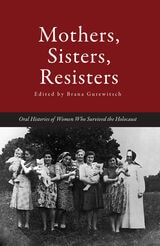
Mothers, Sisters, Resisters
Oral Histories of Women Who Survived the HolocaustBrana Gurewitsch
University of Alabama Press, 1999
Powerful oral histories revealing the unique experiences of women during the Holocaust.
In Mothers, Sisters, Resisters, 25 survivors of the Holocaust furnish compelling and historically vital testimony that illuminates and explores Jewish women's experiences during that terrible period. In entries that preserve each voice, personality, and style, survivors describe their efforts to evade Nazi laws and subsequent dehumanization, protect their children and siblings, and maintain their Jewish identity.
Throughout each narrative, from Brandla Small's description of having her child dragged from her arms at Auschwitz, to Eva Schonbrun's remembrances of her sister who refused to leave her siblings and save herself, to Emilie Schindler's account of rescuing Jews left abandoned on a cattle car, we become intimately involved with each woman's struggle and eventual survival. We also gain a new appreciation and understanding of the Holocaust experiences unique to women.
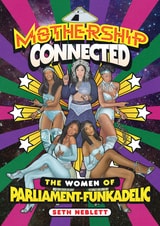
Mothership Connected
The Women of Parliament-FunkadelicSeth Neblett
University of Texas Press, 2025
An oral history with the women of Parliament-Funkadelic, from forming the band to landing the mothership.
Parliament-Funkadelic is perhaps the greatest funk band ever assembled. Yet at the time of the group’s induction into the Rock & Roll Hall of Fame, none of the women who helped create the sound and performed in P-Funk were invited to the ceremony and their contributions have been largely overlooked.
Mothership Connected tells the story of Mallia Franklin, Lynn Mabry, Dawn Silva, Debbie Wright, and Shirley Hayden, all of whom were instrumental in making Parliament-Funkadelic, as well as the spin-off groups Parlet and the Brides of Funkenstein, into the legends they are today. Assembled by Seth Neblett, son of the “Queen of Funk” Mallia Franklin, and filled with the voices of funk icons like George Clinton, Sly Stone, Bootsy Collins, and the women themselves, this oral history makes clear why these “architects” at the “core” of P-Funk were both essential—and erased. From Franklin introducing Bootsy Collins to Clinton, to the Brides’ top-10 hit “Disco to Go,” to the drugs that helped destroy the group, this book reveals the hidden lives and uncomfortable truths of life in P-Funk. More than sex, drugs, and rock and roll, Mothership Connected is about Black women navigating a tumultuous era and industry to become musical pioneers. Now, after decades in the shadows, these genre-defining women are finally telling their story.
Mound City
The Place of the Indigenous Past and Present in St. LouisPatricia Cleary
University of Missouri Press, 2025
Nearly one thousand years ago, Native peoples built a satellite suburb of America's great metropolis on the site that later became St. Louis. At its height, as many as 30,000 people lived in and around present-day Cahokia, Illinois. While the mounds around Cahokia survive today (as part of a state historic site and UNESCO world heritage site), the monumental earthworks that stood on the western shore of the Mississippi were razed in the 1800s. But before and after they fell, the mounds held an important place in St. Louis history, earning it the nickname “Mound City.” For decades, the city had an Indigenous reputation. Tourists came to marvel at the mounds and to see tribal delegations in town for trade and diplomacy. As the city grew, St. Louisans repurposed the mounds—for a reservoir, a restaurant, and railroad landfill—in the process destroying cultural artifacts and sacred burial sites. Despite evidence to the contrary, some white Americans declared the mounds natural features, not built ones, and cheered their leveling. Others espoused far-fetched theories about a lost race of Mound Builders killed by the ancestors of contemporary tribes. Ignoring Indigenous people's connections to the mounds, white Americans positioned themselves as the legitimate inheritors of the land and asserted that modern Native peoples were destined to vanish. Such views underpinned coerced treaties and forced removals, and—when Indigenous peoples resisted—military action. The idea of the “Vanishing Indian” also fueled the erasure of Indigenous peoples’ histories, a practice that continued in the 1900s in civic celebrations that featured white St. Louisans “playing Indian” and heritage groups claiming the mounds as part of their own history. Yet Native peoples endured and in recent years, have successfully begun to reclaim the sole monumental mound remaining within city limits.
Drawing on a wide range of sources, Patricia Cleary explores the layers of St. Louis’s Indigenous history. Along with the first in-depth overview of the life, death, and afterlife of the mounds, Mound City offers a gripping account of how Indigenous histories have shaped the city’s growth, landscape, and civic culture.
Mound Excavations at Moundville
Architecture, Elites and Social OrderVernon James Knight, Jr.
University of Alabama Press, 2010
How social and political power was wielded in order to build Moundville
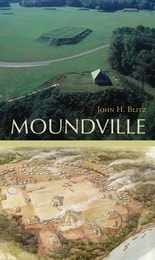
Moundville
John H. Blitz
University of Alabama Press, 2008
Exploring the legacy of America’s great mound builders.
In the 13th century, Moundville was one of the largest Native American settlements north of Mexico. Spread over 325 acres were 29 earthen mounds arranged around a great plaza, a mile-long stockade, and dozens of dwellings for thousands of people. Moundville, in size and complexity second only to the Cahokia site in Illinois, was a heavily populated town, as well as a political and religious center.
Moundville was sustained by tribute of food and labor provided by the people who lived in the nearby floodplain as well as other smaller mound centers. The immediate area appears to have been thickly populated, but by about A.D. 1350, Moundville retained only ceremonial and political functions. A decline ensued, and by the 1500s the area was abandoned. By the time the first Europeans reached the Southeast in the 1540s, the precise links between Moundville's inhabitants and what became the historic Native American tribes had become a mystery.
Illustrated with 50 color photos, maps, and figures, Moundville tells the story of the ancient people who lived there, the modern struggle to save the site from destruction, and the scientific saga of the archaeologists who brought the story to life. Moundville is the book to read before, during, or after a visit to Alabama’s prehistoric metropolis.