Results by title
3258 books match the query 'Art' and 191 start with m
Metropolitan Museum Journal, volume 56 number 1 (January 2021)
The University of Chicago Press
University of Chicago Press Journals, 2021
Metropolitan Museum Journal, volume 57 number 1 (January 2022)
The University of Chicago Press
University of Chicago Press Journals, 2022
Metropolitan Museum Journal, volume 58 number 1 (January 2023)
The University of Chicago Press
University of Chicago Press Journals, 2023
Metropolitan Museum Journal, volume 59 number 1 (January 2024)
The University of Chicago Press
University of Chicago Press Journals, 2024
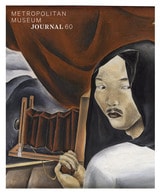
Metropolitan Museum Journal, volume 60 number 1 (2025)
The University of Chicago Press
University of Chicago Press Journals, 2025
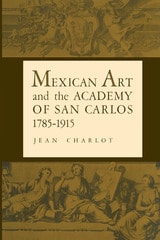
Mexican Art and the Academy of San Carlos, 1785-1915
By Jean Charlot
University of Texas Press, 1962
Was the Royal Academy of San Carlos, founded in 1785 by the King of Spain, beneficial or detrimental to the development of a valid, living art in Mexico? The answer lies in the archives of the school, but nobody thought about constructing an aesthetic history from them until Jean Charlot accidentally discovered their extent and interest while searching for other material.
In this straightforward, documented account he presents not merely opinions and criticism but evidence, including curricula and contemporary drawings by students and teachers.
Since Pre-Conquest art there have been, it is usually assumed, two periods in Mexican art: the Colonial and the Modern. Between these peaks lies the dark Academy-dominated hiatus called Neo-Classicism, an episode that this treatise makes the first attempt to under-stand. The academic canons imported from Europe during this period were undeniably wrong for the indigenous people, and especially wrong at a time when a revolutionary Mexico was struggling for its own identity. But instead of throwing out this strange episode as foreign and imitative, it now becomes possible to see it as a period of acculturation through which the Mexican spirit emerged.
Aside from its interest as aesthetic history, this book makes an important contribution to the social history of Mexico. Some provocative ideas emerge: the interrelations between cultural and political attitudes, the historical impact of events and personalities on ideology. In the seesaw of political and financial fortunes, the worst moments of confusion were often the most pregnant artistically, with mexicanidad rising inevitably when official guidance weakened. As social history this account constitutes an interesting parallel to similar cultural experiences in the United States and in other countries of the Americas.
Charlot presents this material without special pleading, but not without appraisal. He writes: “… in the periods when the Academy was most strictly run along academic lines, it helped the young, by contrast, to realize the meaning of freedom. When the school was manned by men blind to the Mexican tradition, and sensitive only to European values, their stubborn stand became a most healthy invitation to artistic revolution.”
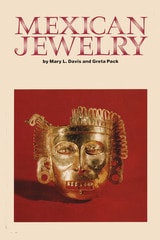
Mexican Jewelry
Mary L. Davis
University of Texas Press, 1963
Mexico’s streams give forth cool green jade and rich gold; its shores provide coral and dainty pearls. Its brown hills yield silver and copper and gems whose colors form a dazzling palette for the jeweler. And Mexico has never lacked the artists to mold its abundant jewels into finished pieces of beauty.
In this enjoyable volume, Mary L. Davis and Greta Pack show us the splendors of Mexican jewelry. After briefly tracing the history of the jewelry of Mexico, they describe the various types and explain the basic techniques used in handling the metals of Mexican jewelry and in displaying the gems. Finally, they examine the creative accomplishments of some influential twentieth-century jewelry makers.
A favorite among travelers, coilectors, and jewelry makers, Mexican Jewelry has become a classic introduction to the richness and variety of this Mexican folk art.
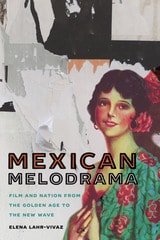
Mexican Melodrama
Film and Nation from the Golden Age to the New WaveElena Lahr-Vivaz
University of Arizona Press, 2016
Mexico’s Golden Age of film—the period from the 1930s to the 1950s—is considered “golden” due to both the prestige of the era’s stars and the critical and popular success of the films released. Golden Age directors often turned to the tropes of melodrama and allegory to offer spectators an image of an idealized Mexico and to spur the formation of a spectatorship united through shared tears and laughter. In contrast, Lahr-Vivaz demonstrates that new-wave directors of the 1990s and 2000s use the melodramatic mode to present a vision of fragmentation and to open a space for critical resistance. In so doing, new-wave directors highlight the limitations rather than the possibilities of a unified spectatorship, and point to the need for spectators to assume a critical stance in the face of the exigencies of the present.
Written in an accessible style, Mexican Melodrama offers a timely comparative analysis of critically acclaimed films that will serve as key referents in discussions of Mexican cinema for years to come.

Meyerhold and the Cubists
Perspectives on Painting and PerformanceAmy Skinner
Intellect Books, 2015
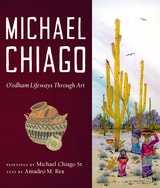
Michael Chiago
O’odham Lifeways Through ArtPaintings by Michael Chiago Sr. Text by Amadeo M. Rea
University of Arizona Press, 2022
A wide array of Chiago’s paintings are represented in this book, illustrating past and present Akimel O’odham and Tohono O’odham culture. The paintings show the lives and traditions of O’odham people from both the artist’s parents’ and grandparents’ generations and today. The paintings demonstrate the colonial Spanish, Mexican, and Anglo-American influences on O’odham culture throughout the decades, and the text explains how wells and windmills, schools, border walls, and nonnative crops have brought about significant change in O’odham life. The paintings and text in this book beautifully depict a variety of O’odham lifeways, including the striking Sonoran Desert environment of O’odham country, gathering local foods and cooking meals, shrines, ceremonies, dances, and more.
By combining Chiago’s paintings of his lived experiences with Rea’s ethnographic work, this book offers a full, colorful, and powerful picture of O’odham heritage, culture, and language, creating a teaching reference for future generations.
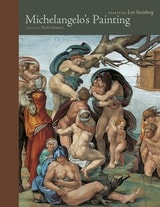
Michelangelo's Painting
Selected EssaysLeo Steinberg
University of Chicago Press, 2019
For half a century, Steinberg delved into Michelangelo’s work, revealing the symbolic structures underlying the artist’s highly charged idiom. This volume of essays and unpublished lectures elucidates many of Michelangelo’s paintings, from frescoes in the Sistine Chapel to the Conversion of St. Paul and the Crucifixion of St. Peter, the artist’s lesser-known works in the Vatican’s Pauline Chapel; also included is a study of the relationship of the Doni Madonna to Leonardo.
Steinberg’s perceptions evolved from long, hard looking. Almost everything he wrote included passages of old-fashioned formal analysis, but always put into the service of interpretation. He understood that Michelangelo’s rendering of figures, as well as their gestures and interrelations, conveys an emblematic significance masquerading under the guise of naturalism. Michelangelo pushed Renaissance naturalism into the furthest reaches of metaphor, using the language of the body to express fundamental Christian tenets once expressible only by poets and preachers.
Leo Steinberg was one of the most original art historians of the twentieth century, known for taking interpretive risks that challenged the profession by overturning reigning orthodoxies. Michelangelo’s Painting is the second volume in a series that presents Steinberg’s writings, selected and edited by his longtime associate Sheila Schwartz.
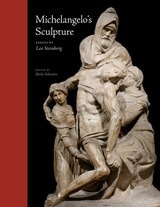
Michelangelo’s Sculpture
Selected EssaysLeo Steinberg
University of Chicago Press, 2018
For half a century, Steinberg delved into Michelangelo’s work, revealing the symbolic structures underlying the artist’s highly charged idiom. This volume of essays and unpublished lectures explicates many of Michelangelo’s most celebrated sculptures, applying principles gleaned from long, hard looking. Almost everything Steinberg wrote included passages of old-fashioned formal analysis, but here put to the service of interpretation. He understood that Michelangelo’s rendering of figures as well as their gestures and interrelations conveys an emblematic significance masquerading under the guise of naturalism. Michelangelo pushed Renaissance naturalism into the furthest reaches of metaphor, using the language of the body and its actions to express fundamental Christian tenets once expressible only by poets and preachers—or, as Steinberg put it, in Michelangelo’s art, “anatomy becomes theology.”
Michelangelo’s Sculpture is the first in a series of volumes of Steinberg’s selected writings and unpublished lectures, edited by his longtime associate Sheila Schwartz. The volume also includes a book review debunking psychoanalytic interpretation of the master’s work, a light-hearted look at Michelangelo and the medical profession and, finally, the shortest piece Steinberg ever published.

Microgroove
Forays into Other MusicJohn Corbett
Duke University Press, 2015
Midcentury Modern Art in Texas
By Katie Robinson Edwards
University of Texas Press, 2014
Winner, Award of Merit for Non-Fiction, The Philosophical Society of Texas, 2015
Before Abstract Expressionism of New York City was canonized as American postwar modernism, the United States was filled with localized manifestations of modern art. One such place where considerable modernist activity occurred was Texas, where artists absorbed and interpreted the latest, most radical formal lessons from Mexico, the East Coast, and Europe, while still responding to the state’s dramatic history and geography. This barely known chapter in the story of American art is the focus of Midcentury Modern Art in Texas.
Presenting new research and artwork that has never before been published, Katie Robinson Edwards examines the contributions of many modernist painters and sculptors in Texas, with an emphasis on the era’s most abstract and compelling artists. Edwards looks first at the Dallas Nine and the 1936 Texas Centennial, which offered local artists a chance to take stock of who they were and where they stood within the national artistic setting. She then traces the modernist impulse through various manifestations, including the foundations of early Texas modernism in Houston; early practitioners of abstraction and non-objectivity; the Fort Worth Circle; artists at the University of Texas at Austin; Houston artists in the 1950s; sculpture in and around an influential Fort Worth studio; and, to see how some Texas artists fared on a national scale, the Museum of Modern Art’s “Americans” exhibitions.
The first full-length treatment of abstract art in Texas during this vital and canon-defining period, Midcentury Modern Art in Texas gives these artists their due place in American art, while also valuing the quality of Texan-ness that subtly undergirds much of their production.
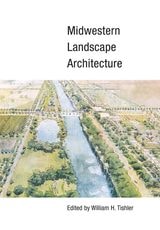
Midwestern Landscape Architecture
Edited by William H. Tishler
University of Illinois Press, 2000
The pioneers of landscape architecture in the Midwest are responsible for creating some of the most recognizable parks, cemeteries, recreation areas, and other public gathering places in the region. Midwestern Landscape Architecture includes essays on Adolph Strauch, who introduced a new concept of visually integrated landscape treatment in Cincinnati's Spring Grove Cemetery; William Le Baron Jenney, designer of Chicago's diverse West Parks; and Jens Jensen, who created the American Garden in Union Park in Chicago (a celebration of native flora) and founder of The Clearing, a unique school of the arts and humanities in Wisconsin. Other major figures include Frederick Law Olmsted Sr., co-designer of New York's Central Park, whose work in the Midwest included the layout of the 1893 World's Columbian Exposition, and Ossian Cole Simonds, who helped reconcile the formal approach of the City Beautiful movement with the naturalism of the Prairie School in urban park design.
This volume also details the contributions of crusaders for ecological awareness and an appreciation of the region's natural heritage. These include horticultural writer Wilhelm Miller, who spread the ideals of the Prairie style, and Genevieve Gillette, a landscape architect and conservationist whose preservation efforts led to the establishment of numerous Michigan state parks and wilderness areas.
Midwestern Landscape Architecture fosters a better understanding of how landscape design took shape in the Midwest and how the land itself inspired new solutions to enhance its understated beauty. Despite Olmsted's assessment of the Illinois prairie as "one of the most tiresome landscapes that I ever met with," the Midwest has amassed an important legacy of landscape design that continues to influence how people interact with their environment in the heartland.
Millennial Style
The Politics of Experiment in Contemporary African Diasporic CultureAliyyah I. Abdur-Rahman
Duke University Press, 2024
Millionaire Shopping
The Collections of Alfred Morrison, 1821–1897Edited by Caroline Dakers
University College London, 2025
Although his fame has faded with time, Alfred Morrison was one of the most influential and avid collectors and patrons of the arts in Victorian England. Morrison was an obsessive and comprehensive collector, using his extravagant wealth to accumulate old master paintings, autograph manuscripts, coins and medals, imperial Chinese porcelain, and other treasures, and his commissions were equally eclectic. Millionaire Shopping includes contributions by contemporary museum curators, scholars, and dealers in painting, sculpture, and decorative arts, with each chapter dedicated to a particular aspect of Morrison’s collecting and patronage. Extensive illustrations, including many never-before-seen images from private archives, help bring his impressive artistic footprint to life.
Mimesis across Empires
Artworks and Networks in India, 1765-1860Natasha Eaton
Duke University Press, 2013
Mimesis, Masochism, and Mime
The Politics of Theatricality in Contemporary French ThoughtTimothy Murray, Editor
University of Michigan Press, 1997
Minding Movies
Observations on the Art, Craft, and Business of FilmmakingDavid Bordwell and Kristin Thompson
University of Chicago Press, 2011
David Bordwell and Kristin Thompson are two of America’s preeminent film scholars. You would be hard pressed to find a serious student of the cinema who hasn’t spent at least a few hours huddled with their seminal introduction to the field—Film Art, now in its ninth edition—or a cable television junkie unaware that the Independent Film Channel sagely christened them the “Critics of the Naughts.” Since launching their blog Observations on Film Art in 2006, the two have added web virtuosos to their growing list of accolades, pitching unconventional long-form pieces engaged with film artistry that have helped to redefine cinematic storytelling for a new age and audience.
Minding Movies presents a selection from over three hundred essays on genre movies, art films, animation, and the business of Hollywood that have graced Bordwell and Thompson’s blog. Informal pieces, conversational in tone but grounded in three decades of authoritative research, the essays gathered here range from in-depth analyses of individual films such as Slumdog Millionaire and Inglourious Basterds to adjustments of Hollywood media claims and forays into cinematic humor. For Bordwell and Thompson, the most fruitful place to begin is how movies are made, how they work, and how they work on us. Written for film lovers, these essays—on topics ranging from Borat to blockbusters and back again—will delight current fans and gain new enthusiasts.
Serious but not solemn, vibrantly informative without condescension, and above all illuminating reading, Minding Movies offers ideas sure to set film lovers thinking—and keep them returning to the silver screen.
Mining in the Museum
Mineral Technology on Display in American HistoryEric C. Nystrom
University of Massachusetts Press, 2027
Examining 150 years of mining and mineral technology exhibits at the Smithsonian
Buried deep underground or cut into remote landscapes, mines are often dirty, dark, and dangerous places, located far from the everyday urban spaces that most Americans call home. Yet mining is foundational to the making of the United States, supplying the raw materials that built its infrastructure, powered its industries, and shaped its scientific institutions, even as the work itself has remained physically removed, technically complex, and culturally overlooked. Mining in the Museum reveals how Americans have encountered this vital industry not at the distant mine face, but in museum galleries. Tracing more than 150 years of mining and mineral technology exhibits at the Smithsonian Institution in Washington, DC, Eric C. Nystrom shows how curators transformed ore, instruments, models, and machinery into stories about progress, innovation, and national development, and how those interpretive choices shaped what the nation remembers—and forgets—about mining.
Using mining collections as a lens into institutional change, Nystrom offers a new history of the Smithsonian and its United States National Museum, examining how curators, administrators, and policymakers debated what museums were for, which kinds of knowledge they should produce, and what objects deserved display. He follows the shifting fortunes of mineral and mining exhibits across world’s fairs, scientific surveys, and changing exhibition philosophies, showing how display strategies evolved alongside professional science and public education. As mining’s place in the national imagination changed, so too did its presence in the federal museum, moving from a central scientific and technological showcase to a subject increasingly preserved by regional and local institutions closer to mining communities themselves. Grounded in extensive archival research, Mining in the Museum illuminates the evolving relationship among technology, public history, and the politics of display, demonstrating how museums help define which industries, and which kinds of work, become part of the American story.

Minor China
Method, Materialisms, and the AestheticHentyle Yapp
Duke University Press, 2021
Miracles and Machines
A Sixteenth-Century Automaton and Its LegendElizabeth King
J. Paul Getty Trust, The, 0
This volume tells the singular story of an uncanny, rare object at the cusp of art and science: a 450-year-old automaton known as “the monk.” The walking, gesticulating figure of a friar, in the collection of the Smithsonian Institution’s National Museum of American History, is among the earliest extant ancestors of the self-propelled robot. According to legend connected to the court of Philip II of Spain, the monk represents a portrait of Diego de Alcalá, a humble Franciscan lay brother whose holy corpse was said to be agent to the miraculous cure of Spain’s crown prince as he lay dying in 1562.
In tracking the origins of the monk and its legend, the authors visited archives, libraries, and museums across the United States and Europe, probing the paradox of a mechanical object performing an apparently spiritual act. They identified seven kindred automata from the same period, which, they argue, form a paradigmatic class of walking “prime movers,” unprecedented in their combination of visual and functional realism. While most of the literature on automata focuses on the Enlightenment, this enthralling narrative journeys back to the late Renaissance, when clockwork machinery was entirely new, foretelling the evolution of artificial life to come.
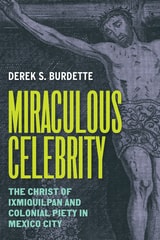
Miraculous Celebrity
The Christ of Ixmiquilpan and Colonial Piety in Mexico CityDerek S. Burdette
University of Texas Press, 2025
A study of the Christ of Ixmiquilpan, a historically beloved religious icon from sixteenth-century Mexico, and its evolving cultural importance.
The life-sized crucifix known as the Christ of Ixmiquilpan (also the Señor de Santa Teresa) was one of the most important artworks in colonial Mexico. The statue began as an ordinary devotional image, but in 1621 devotees witnessed it undergo a miraculous renovation that gave it a supernatural beauty. Over the next two and half centuries, its perceived power increased until it was surpassed in importance only by the Virgin of Guadalupe. Despite its historical significance, the Christ of Ixmiquilpan’s history has yet to be fully told.
Derek Burdette brings the miraculous crucifix out of the shadows and explores its instrumental role in shaping the devotional culture of New Spain. Following the arc of the statue’s life, he chronicles the story of the statue’s creation, miraculous renovation, and subsequent veneration at the heart of Mexico City. He also reveals how colonial politics were woven into the statue’s life from the very start. Reconstructing the history of a key artwork, Miraculous Celebrity sheds new light on the intersection of art, faith, and politics in the Spanish colonial world.
Mirror Affect
Seeing Self, Observing Others in Contemporary ArtCristina Albu
University of Minnesota Press, 2016
For decades, contemporary artworks with reflective properties have stimulated public forms of spectatorship. According to Cristina Albu, these artworks, which can include elements such as mirrors, live video feedback, or sensors, draw attention to affective interdependence and mechanisms of social control.
In Mirror Affect, Albu provides a historical account of mirroring processes in contemporary art and offers insight into the phenomenological and sociopolitical concerns that have inspired artists to stage processes of affective, perceptual, and behavioral mirroring between art viewers. Beginning with the 1960s, Albu charts the rise of interpersonal modes of art spectatorship. She reveals contemporary artists’ strategic use of reflective and responsive interfaces to instill doubt in visual representation and appeal to active scrutiny of the changing social dynamics. She suggests that the mirroring processes envisioned by contemporary artists such as Joan Jonas, Dan Graham, Lynn Hershman Leeson, Olafur Eliasson, and Rafael Lozano-Hemmer trigger visual disjunctions to upset narcissistic inclinations. They invite viewers to see themselves in relation to others and to ponder their role within complex social systems.
From sculpture and performance to art and technology projects, video art, and installation art, Mirror Affect analyzes forms of interpersonal spectatorship, revising and expanding current historiographies of participatory art.
Mirror in Parchment
The Luttrell Psalter and the Making of Medieval EnglandMichael Camille
University of Chicago Press, 1998
The richly illuminated Luttrell Psalter was created for the English nobleman Sir Geoffrey Luttrell (1276-1345). Inexpensive mechanical illustration has since disseminated the book's images to a much wider audience; hence the Psalter's representations of manorial life have come to profoundly shape our modern idea of what medieval English people, high and low, looked like at work and at play. Alongside such supposedly truthful representations, the Psalter presents myriad images of fantastic monsters and beasts. These patently false images have largely been disparaged or ignored by modern historians and art historians alike, for they challenge the credibility of those pictures in the Luttrell Psalter that we wish to see as real.
In the conviction that medieval images were not generally intended to reflect daily life but rather to shape a new reality, Michael Camille analyzes the Psalter's famous pictures as representations of the world, imagined and real, of its original patron. Addressed are late medieval chivalric ideals, physical sites of power, and the boundaries of Sir Geoffrey's imagined community, wherein agricultural laborers and fabulous monsters play a similar ideological role. The Luttrell Psalter thus emerges as a complex social document of the world as its patron hoped and feared it might be.
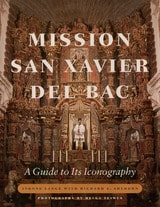
Mission San Xavier del Bac
A Guide to Its IconographyYvonne Lange with Richard E. Ahlborn; Photographs by Helga Teiwes
University of Arizona Press, 2004
This book is the first study of the iconography at San Xavier since its restoration in the 1990s by an international team of professional conservators. It expands our understanding of the numerous Catholic images and emblems of San Xavier through a close analysis of the newly revealed iconographic elements and an interpretation of the significance of their placement. It also proposes that the selection of specific religious themes and their locations was determined by an unfamiliar convention based on a tree-like design, in which the founder of a religious Order appears as the root and followers above in later branchings—an inversion of the more familiar top-to-bottom hierarchy.
Historians Lange and Ahlborn identify all the saintly images and religious elements that adorn San Xavier and suggest how and why they are so arranged. They examine the sculptures and paintings of the church from the façade throughout the cruciform interior in order to determine the organizational concepts that underlie their placement. They note that the selection of images in this Franciscan mission follows traditional Roman Catholic practice for decorating churches in order to instruct novices and reinforce the teaching of conversion in a pictographic catechism of Church doctrine. In short, the book is a dictionary of religious personages and symbols that will help the visitor identify the biblical stories and people portrayed, as well as associated signs and symbols. Entries include a description of the subject, its location, appropriate cross-references, and a bibliography. Recent illustrations by photographer Helga Teiwes and a floor plan facilitate the location of images by visitors.
A handsome, large-format book featuring more than one hundred photographs and supporting line illustrations, Lange and Ahlborn’s work confirms the significance of San Xavier’s iconography for art historians, students of religion, and visitors alike. It is both an incomparable guide and valuable reference source for the famed mission’s magnificent artistic heritage.
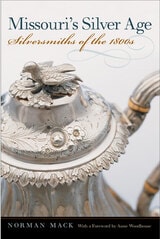
Missouri's Silver Age
Silversmiths of the 1800sNorman Mack. Foreword by Anne Woodhouse
Southern Illinois University Press, 2005
The result of nearly two decades of intensive research by Norman Mack and his late wife, Beatrice Davidow Mack, Missouri’s Silver Age: Silversmiths of the 1800s is a comprehensive directory of nineteenth-century Missouri silversmiths, their works, and their identifying makers’ marks. Illustrated with over one hundred photographs, this exceptional reference for historians and silver collectors showcases the Macks’ three-hundred-piece collection of Missouri silver, which includes a representative sample by nearly every known Missouri silversmith and is housed at the Missouri Historical Society in St. Louis.
Featuring more than a hundred detailed biographies of the artisans and apprentices who created handmade silver in St. Louis and Missouri during the nineteenth century, Missouri’s Silver Age also contains extensive photographs of makers’ touchmarks and of the pieces themselves, which include bowls, dishes, spoons, and ladles, as well as other household utensils and decorative items. Arranged alphabetically, the biographies reveal all known details of the business activities and locations of the silversmiths. Collectively, the entries and the illustrations shed light on the growth of enterprise in Missouri, show the impact of the individual on the developing frontier economies of the Midwest, and reveal how the production, acquisition, and possession of material goods reflected the culture and values of Americans during the 1800s.
Mack provides a brief but thorough history of silversmithing in America for novice collectors and historians, detailing the various methods used in making silver and the range of styles that were popular, providing insight into the methods of training apprentices, and explaining the effects of mechanization on the trade. Augmenting this volume are an appendix by Jo Ann Griffin on how to care for old silver, a map of the silversmiths’ primary locations, and a helpful alphabetical appendix of the silversmiths that includes illustrations of their touchmarks.
Mobile Museums
Collections in CirculationEdited by Felix Driver, Mark Nesbitt, and Caroline Cornish
University College London, 2021
How did the process of the circulation re-examine, inform, and unsettle common assumptions about the way museum collections have evolved over time and space? Mobile Museums presents an argument for the importance of circulation in the study of museum collections, both past and present. It brings together a diverse array of international scholars and curators from a variety of disciplines to consider the mobility of collections, especially in the context of Indigenous community engagement. By foregrounding the question of circulation, the book represents a paradigm shift in the understanding of the history and future uses of museum collections. Taking on a global perspective and addressing a variety of types of collection, including the botanical, ethnographic, economic, and archaeological, the book helps us to understand why the mobility of museum collections was a fundamental aspect of their history—and why it continues to matter today.
Mobilizing Pedagogy
Two Social Practice Projects in the Americas by Pablo Helguera with Suzanne Lacy and Pilar Riaño-AlcaláEdited by Elyse A. Gonzales and Sara Reisman
Amherst College Press, 2018
Social practice artists offer a clear and unflinching answer to this question, setting before us works intended not merely to ask questions but to propose pathways toward large societal change.
In this volume, the work of two social practice artists of different generations and different social locations—Suzanne Lacy and Pablo Helguera—are brought into creative tension by two visionary curators: Elyse A. Gonzalez of the Art, Design & Architecture Museum of the University of California, Santa Barbara, and Sara Reisman of the Shelley and Donald Rubin Foundation of New York. Working together, Gonzales and Reisman bring the work of these two engaged and activist artists into dialogue, showing how art can be not merely the mirror of society but the means of making it more just, more inclusive, and more humane.

Modeling Sculpture
Clodion and the Aesthetics of TerracottaElizabeth Saari Browne
University of Delaware Press, 2027
In eighteenth-century Europe, connoisseurs, financiers, artists, and aristocrats alike all avidly collected the terracotta vases and statues made by Claude Michel, called Clodion. Yet, despite the widespread enthusiasm for his work, Clodion’s terracottas have since then been largely dismissed as decorative, feminine, or mere luxury. Modeling Sculpture, the first English-language monograph dedicated to Clodion’s terracotta oeuvre, counters such conventional narratives. Against the understanding of “serious” sculpture as works that publicly perpetuate the heroic actions and virtues of great men, author Elizabeth Saari Browne argues instead that philosophically engaged sculpture might be found in materials, forms, and places where one least expects it. Across this richly illustrated, multi-disciplinary study, earthen clay emerges as a medium suited to the flexible modes of thought advocated by some of the period’s most renowned philosophers, naturalists, and even arts reformers. This book therefore foregrounds clay’s potential to challenge the perceived primacy of white figurative statuary in art historiography, emblematic of hierarchical notions of class, power, learning, and prestige.
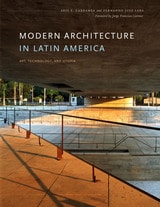
Modern Architecture in Latin America
Art, Technology, and UtopiaBy Luis E. Carranza and Fernando Luiz Lara; foreword by Jorge Francisco Liernur
University of Texas Press, 2015
Designed as a survey and focused on key examples and movements arranged chronologically from 1903 to 2003, this is the first comprehensive history of modern architecture in Latin America in any language.
Runner-up, University Co-op Robert W. Hamilton Book Award, 2015
Modern Architecture in Latin America: Art, Technology, and Utopia is an introductory text on the issues, polemics, and works that represent the complex processes of political, economic, and cultural modernization in the twentieth century. The number and types of projects varied greatly from country to country, but, as a whole, the region produced a significant body of architecture that has never before been presented in a single volume in any language. Modern Architecture in Latin America is the first comprehensive history of this important production.
Designed as a survey and focused on key examples/paradigms arranged chronologically from 1903 to 2003, this volume covers a myriad of countries; historical, social, and political conditions; and projects/developments that range from small houses to urban plans to architectural movements. The book is structured so that it can be read in a variety of ways—as a historically developed narrative of modern architecture in Latin America, as a country-specific chronology, or as a treatment of traditions centered on issues of art, technology, or utopia. This structure allows readers to see the development of multiple and parallel branches/historical strands of architecture and, at times, their interconnections across countries. The authors provide a critical evaluation of the movements presented in relationship to their overall goals and architectural transformations.
Modern Argentine Masculinities
Edited by Carolina Rocha
Intellect Books, 2013
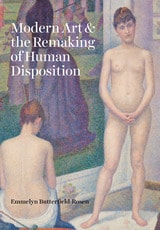
Modern Art and the Remaking of Human Disposition
Emmelyn Butterfield-Rosen
University of Chicago Press, 2021
With this book, Emmelyn Butterfield-Rosen brings a new formal and conceptual rubric to the study of turn-of-the-century modernism, transforming our understanding of the era’s canonical works. Butterfield-Rosen analyzes a hitherto unexamined formal phenomenon in European art: how artists departed from conventions for posing the human figure that had long been standard. In the decades around 1900, artists working in different countries and across different media began to present human figures in strictly frontal, lateral, and dorsal postures. The effect, both archaic and modern, broke with the centuries-old tradition of rendering bodies in torsion, with poses designed to simulate the human being’s physical volume and capacity for autonomous thought and movement. This formal departure destabilized prevailing visual codes for signifying the existence of the inner life of the human subject.
Exploring major works by Georges Seurat, Gustav Klimt, and the dancer and choreographer Vaslav Nijinsky— replete with new archival discoveries—Modern Art and the Remaking of Human Disposition combines intensive formal analysis with inquiries into the history of psychology and evolutionary biology. In doing so, it shows how modern understandings of human consciousness and the relation of mind to body were materialized in art through a new vocabulary of postures and poses.
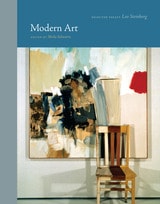
Modern Art
Selected EssaysLeo Steinberg
University of Chicago Press, 2023
Leo Steinberg was one of the most original art historians of the twentieth century, known for taking interpretive risks that challenged the profession by overturning reigning orthodoxies. In essays and lectures ranging from old masters to modern art, he combined scholarly erudition with eloquent prose that illuminated his subject and a credo that privileged the visual evidence of the image over the literature written about it. His writings, sometimes provocative and controversial, remain vital and influential reading. Steinberg’s perceptions evolved from long, hard looking at his objects of study. Almost everything he wrote included passages of formal analysis that were always put into the service of interpretation.
Following the series publication on Pablo Picasso, this volume focuses on other modern artists, including Cézanne, Monet, Matisse, Max Ernst, Jasper Johns, Robert Rauschenberg, Roy Lichtenstein, Hans Haacke, and Jeff Koons. Included are seven unpublished lectures and essays, Steinberg’s landmark essay “Encounters with Rauschenberg,” a survey of twentieth-century sculpture, and an examination of the role of authorial predilections in critical writing. The final chapter presents a collection of Steinberg’s humorous pieces, witty forays penned for his own amusement.
Modern Art is the fifth and final volume in a series that presents Steinberg’s writings, selected and edited by his longtime associate Sheila Schwartz.
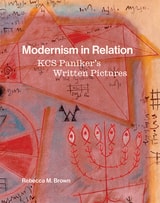
Modernism in Relation
KCS Paniker’s Written PicturesRebecca M. Brown
J. Paul Getty Trust, The, 0
This innovative book reimagines modernism through the illegible scribbles and vibrant colors of southern Indian artist KCS Paniker.
KCS Paniker (1911–1977) is a canonical figure in India’s twentieth-century modernism. He was principal of the Madras School of Art and founder of one of the world’s longest-standing artists’ communities. Yet, even within India, he remains a marginal figure, positioned at the periphery of a dominant art world centered in the north. Paniker’s best-known body of work, the Words and Symbols series (1963–77), calls on us to reconsider how knowledge is produced and disseminated in a postcolonial, decolonizing world. These “written pictures”—paintings filled with symbols, tables, equations, and illegible scribbles—invite decoding, only to undermine the pursuit of wholeness or stable meaning.
Paniker famously called Paul Klee his “guru.” In this book, art historian Rebecca M. Brown explores what that might mean, moving beyond tracing influence and derivation to embrace a fuller sense of artistic relation across geography and time. Featuring over 100 stunning illustrations, Modernism in Relation explores the dynamic, twisting currents of modernism, tracing how Paniker navigated its waters on his own terms—abandoning prescriptions for what modern art should be or what Indian modernism should look like. The book reveals a maker seeking new creative languages, challenging ways of knowing, and exploring the unpredictable, ever-changing nature of relation.

Modernism, Catastrophe, Utopianism
Hal Foster
Prickly Paradigm Press, 2027
In this collection of essays, Hal Foster reflects on how modernism's utopian frameworks can be reactivated in the face of recent political challenges.
In both contemporary art and politics since COVID-19, the discourses of modernism and modernity have been challenged by unexpected developments. The convergences between left-wing indigeneity and right-wing nativism, and the political right's appropriation of transgression—long a strategy of the left—point to essential challenges of the modernist project. The five essays of Modernism, Catastrophe, Utopia reflects on such developments, seeking to parse the elements of modernist discourse that remain valid or can be repurposed, and those which must be jettisoned. Literary and cultural critic Hal Foster shows how the constructive, even utopian dimension of modernism might be remotivated in the face of ecological catastrophe, potentially liberating us from a melancholic fixation on our traumatic past.
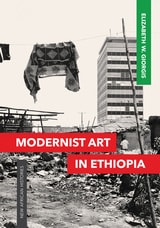
Modernist Art in Ethiopia
Elizabeth W. Giorgis
Ohio University Press, 2019
Short-listed for the Fage & Oliver Prize for outstanding scholarly work published on Africa.
Finalist, African Studies Association Book Prize.
Finalist, ASA Bethwell A. Ogot Prize for best book in east African studies.
If modernism initially came to Africa through colonial contact, what does Ethiopia’s inimitable historical condition—its independence save for five years under Italian occupation—mean for its own modernist tradition? In Modernist Art in Ethiopia—the first book-length study of the topic—Elizabeth W. Giorgis recognizes that her home country’s supposed singularity, particularly as it pertains to its history from 1900 to the present, cannot be conceived outside the broader colonial legacy. She uses the evolution of modernist art in Ethiopia to open up the intellectual, cultural, and political histories of it in a pan-African context.
Giorgis explores the varied precedents of the country’s political and intellectual history to understand the ways in which the import and range of visual narratives were mediated across different moments, and to reveal the conditions that account for the extraordinary dynamism of the visual arts in Ethiopia. In locating its arguments at the intersection of visual culture and literary and performance studies, Modernist Art in Ethiopia details how innovations in visual art intersected with shifts in philosophical and ideological narratives of modernity. The result is profoundly innovative work—a bold intellectual, cultural, and political history of Ethiopia, with art as its centerpiece.
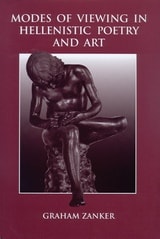
Modes of Viewing in Hellenistic Poetry and Art
And ArtGraham Zanker
University of Wisconsin Press, 2003
Taking a fresh look at the poetry and visual art of the Hellenistic age, from the death of Alexander the Great in 323 B.C. to the Romans’ defeat of Cleopatra in 30 B.C., Graham Zanker makes enlightening discoveries about the assumptions and conventions of Hellenistic poets and artists and their audiences.
Zanker’s exciting new interpretations closely compare poetry and art for the light each sheds on the other. He finds, for example, an exuberant expansion of subject matter in the Hellenistic periods in both literature and art, as styles and iconographic traditions reserved for grander concepts in earlier eras were applied to themes, motifs, and subjects that were emphatically less grand.
Moment of Action
Riddles of Cinematic PerformancePomerance, Murray
Rutgers University Press, 2016
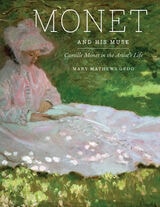
Monet and His Muse
Camille Monet in the Artist's LifeMary Mathews Gedo
University of Chicago Press, 2010
“The mourning never stops, it just changes.” (Edward Albee)
For Claude Monet (1840–1926), the founder of French Impressionist painting, these words are a fitting testament to his lifelong relationship with the female muse, most notably—and most hauntingly—with his first wife, the model Camille Doncieux.
For the esteemed clinical psychologist and art historian Mary Mathews Gedo, Monet and His Muse represents a project twenty years in the making. Artfully interweaving biographical insight with psychoanalytic criticism, Gedo takes us on an exploration of Claude Monet’s conflicted relationships with women, complete with exquisitely researched material never before understood about one of our most popular—and inimitable—artists. Beginning with Monet’s childhood, Gedo delves into his relationships with a distant, unreliable father and his beloved, doting mother—whose death when Monet was just sixteen, the author establishes, inspired a lifetime preoccupation with the sea, its lushly imagined flora, and the figurative landscapes Monet painted to such acclaim.
And then—Camille. Entering Monet’s life when he was still a young man, becoming first his model and then mistress and then—finally—his wife, Camille Doncieux always fulfilled the function of muse, even after her life had ended, as Monet not only painted her one last time on her deathbed, but preserved her memory through the gardens he planted at his home in Giverny. Demonstrating how Monet’s connections with women were exceedingly complex, fraught with abusive impulses and infantile longing, Gedo sensitively uses Monet and Camille as exemplars in order to explore links between artists and muses in our modern age.
Monet, Narcissus, and Self-Reflection
The Modernist Myth of the SelfSteven Z. Levine
University of Chicago Press, 1994
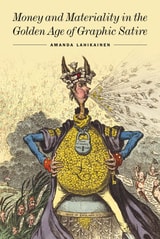
Money and Materiality in the Golden Age of Graphic Satire
Amanda Lahikainen
University of Delaware Press, 2022
This book examines the entwined and simultaneous rise of graphic satire and cultures of paper money in late eighteenth- and early nineteenth-century Britain. Asking how Britons learned to value both graphic art and money, the book makes surprising connections between two types of engraved images that grew in popularity and influence during this time. Graphic satire grew in visual risk-taking, while paper money became a more standard carrier of financial value, courting controversy as a medium, moral problem, and factor in inflation. Through analysis of satirical prints, as well as case studies of monetary satires beyond London, this book demonstrates several key ways that cultures attach value to printed paper, accepting it as social reality and institutional fact. Thus, satirical banknotes were objects that broke down the distinction between paper money and graphic satire altogether.
Money in the Air
Art Dealers and the Making of a Transatlantic Market, 1880–1930Gail Feigenbaum
J. Paul Getty Trust, The, 2024
“There was money in the air, ever so much money,” wrote Henry James in 1907, reflecting on the American appetite for art acquisitions. Indeed, collectors such as Henry Clay Frick and Andrew W. Mellon are credited with bringing noteworthy European art to the United States, with their collections forming the backbone of major American museums today. But what of the dealers, who possessed the expertise in art and recognized the potential of developing a new market model on both sides of the Atlantic?
Money in the Air investigates the often-overlooked role of these dealers in creating an international art world. Contributors examine the histories of well-known international firms like Duveen Brothers, M. Knoedler & Co., and Goupil & Cie and their relationships with American clients, as well as accounts of other remarkable dealers active in the transatlantic art market. Drawing on dealer archives, scholars reveal compelling findings, including previously unknown partnerships and systems of cooperation. This volume offers new perspectives on the development of art collections that formed the core of American art museums, such as the National Gallery of Art, the Metropolitan Museum of Art, and the Frick Collection.
Money, Trains, and Guillotines
Art and Revolution in 1960s JapanWilliam Marotti
Duke University Press, 2013

Monochrome Multitudes
Art of One Color from Albers to ZeislerEdited by Orianna Cacchione and Christine Mehring
University of Chicago Press, 2027
A vividly illustrated volume tracing the monochrome as a fundamental yet expansive strategy in twentieth- and twenty-first-century art.
Exploring a fantastic range of monochromatic artworks, Monochrome Multitudes upends traditional accounts of abstraction, revisits modernist ideas, and reveals the creative possibilities and global resonance of a seemingly reductive art form.
Bringing together examples spanning five continents, the book considers how artists such as El Anatsui, Mark Bradford, Lygia Clark, Lucio Fontana, Ellsworth Kelly, Yayoi Kusama, Kasimir Malevich, Gerhard Richter, Betye Saar, Amanda Williams, Haegue Yang, as well as little-known early cartoonists have experimented with monochrome compositions. Scholars of art history, film, music, law, disability studies, astrophysics, neurobiology, mathematics, and more reflect on monochrome artworks that build on foundational components of modernism. Together, they illuminate often overlooked cultural, political, racial, and gendered meanings of artworks; reveal the significance of materials ranging from fiber, wall paint, and videotape, to footballs, pantyhose, and candy; and engage North American art in a global dialog extending into Europe, Asia, Latin America, and Africa. Artworks are presented in monochromatic groupings—yellow, blue, white, red, gray, and black—and thematic sections trace connections across topics such as the body, the environment, urban space, sound, and media.
Montage of a Dream
The Art and Life of Langston HughesEdited by John Edgar Tidwell & Cheryl R. Ragar, Foreword by Arnold Rampersad
University of Missouri Press, 2007
Over a forty-six-year career, Langston Hughes experimented with black folk expressive culture, creating an enduring body of extraordinary imaginative and critical writing. Riding the crest of African American creative energy from the Harlem Renaissance to the onset of Black Power, he commanded an artistic prowess that survives in the legacy he bequeathed to a younger generation of writers, including award winners Alice Walker, Paule Marshall, and Amiri Baraka.
Montage of a Dream extends and deepens previous scholarship, multiplying the ways in which Hughes’s diverse body of writing can be explored. The contributors, including such distinguished scholars as Steven Tracy, Trudier Harris, Juda Bennett, Lorenzo Thomas, and Christopher C. De Santis, carefully reexamine the significance of his work and life for their continuing relevance to American, African American, and diasporic literatures and cultures.
Probing anew among Hughes’s fiction, biographies, poetry, drama, essays, and other writings, the contributors assert fresh perspectives on the often overlooked “Luani of the Jungles” and Black Magic and offer insightful rereadings of such familiar pieces as “Cora Unashamed,” “Slave on the Block,” and Not without Laughter. In addition to analyzing specific works, the contributors astutely consider subjects either lightly explored by or unavailable to earlier scholars, including dance, queer studies, black masculinity, and children’s literature. Some investigate Hughes’s use of religious themes and his passion for the blues as the fabric of black art and life; others ponder more vexing questions such as Hughes’s sexuality and his relationship with his mother, as revealed in the letters she sent him in the last decade of her life.
Montage of a Dream richly captures the power of one man’s art to imagine an America holding fast to its ideals while forging unity out of its cultural diversity. By showing that Langston Hughes continues to speak to the fundamentals of human nature, this comprehensive reconsideration invites a renewed appreciation of Hughes’s work—and encourages new readers to discover his enduring relevance as they seek to understand the world in which we all live.
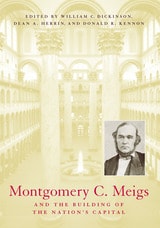
Montgomery C. Meigs and the Building of the Nation’s Capital
William C. Dickinson
Ohio University Press, 2001
At the age of thirty-six, in 1852, Lt. Montgomery Cunningham Meigs of the Army Corps of Engineers reported to Washington, D.C., for duty as a special assistant to the chief army engineer, Gen. Joseph G. Totten. It was a fateful assignment, both for the nation’s capital and for the bright, ambitious, and politically connected West Point graduate.
Meigs's forty-year tenure in the nation's capital was by any account spectacularly successful. He surveyed, designed, and built the Washington water supply system, oversaw the extension of the U.S. Capitol and the erection of its massive iron dome, and designed and supervised construction of the Pension Building, now the home of the National Building Museum. The skills he exhibited in supervising engineering projects were carefully noted by political leaders, including president-elect Abraham Lincoln, who named Meigs quartermaster general of the Union Army, the most important position he held during his long and active military career.
Meigs believed Washington, D.C., should be the reincarnation of Rome, the ancient capital of the Roman Empire. He endeavored to memorialize the story of the American nation in all the structures he built, expressing these ideas in murals, sculpture, and monumental design.
Historians have long known Meigs for the organizational genius with which he fulfilled his duty as quartermaster general during the Civil War and for his unwavering loyalty to Lincoln and Secretary of War Edwin Stanton. This volume establishes his claim as one of the major nineteenth-century contributors to the built environment of the nation's capital.
Montréal Chic
A Locational History of Montréal FashionKatrina Sark and Sara Danièle Bélanger-Michaud
Intellect Books, 2016
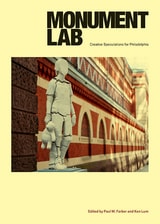
Monument Lab
Creative Speculations for PhiladelphiaPaul M. Farber
Temple University Press, 2020
What is an appropriate monument for the current city of Philadelphia? That was the question posed by the curators, artists, scholars, and students who comprise the Philadelphia-based public art and history studio Monument Lab. And in 2017, along with Mural Arts Philadelphia, they produced and organized a groundbreaking, city-wide exhibition of temporary, site-specific works that engaged directly with the community. The installations, by a cohort of diverse artists considering issues of identity, appeared in iconic public squares and neighborhood parks with research and learning labs and prototype monuments.
Monument Lab is a fabulous compendium of the exhibition and a critical reflection of the proceedings, including contributions from interlocutors and collaborators. The exhibition and this handbook were designed to generate new ways of thinking about monuments and public art as well as to find new, critical perspectives to reflect on the monuments we have inherited and to imagine those we have yet to build. Monument Lab energizes acivic dialogue about place and history as forces for a deeper questioning of what it means to be Philadelphian in a time of renewal and continuing struggle.
Contributors: Alexander Alberro, Alliyah Allen, Laurie Allen, Andrew Friedman, Justin Geller, Kristen Giannantonio, Jane Golden, Aviva Kapust, Fariah Khan, Homay King, Stephanie Mach, Trapeta B. Mayson, Nathaniel Popkin, Ursula Rucker, Jodi Throckmorton, Salamishah Tillet, Jennifer Harford Vargas, Naomi Waltham-Smith, Bethany Wiggin, Mariam I. Williams, Leslie Willis-Lowry, and the editors.
Artists: Tania Bruguera, Mel Chin, Kara Crombie, Tyree Guyton, Hans Haacke, David Hartt, Sharon Hayes, King Britt and Joshua Mays, Klip Collective, Duane Linklater, Emeka Ogboh, Karyn Olivier, Michelle Angela Ortiz, Kaitlin Pomerantz, RAIR, Alexander Rosenberg, Jamel Shabazz, Hank Willis Thomas, Shira Walinsky and Southeast by Southeast, and Marisa Williamson.