Results by title
3388 books match the query 'Fiction' and 173 start with m
Mixed Realism
Videogames and the Violence of FictionTimothy J. Welsh
University of Minnesota Press, 2016
Mixed Realism is about how we interact with media. Timothy J. Welsh shows how videogames, like novels, both promise and trouble experiences of “immersion.” His innovative methodology offers a new understanding of the expanding role of virtuality in contemporary life.
Today’s wired culture is a mixed reality, conducted as exchanges between virtual and material contexts. We make balance transfers at an ATM, update Facebook timelines, and squeeze in sessions of Angry Birds on the subway. However, the “virtual” is still frequently figured as imaginary, as opposed to “real.” The vision of 1990s writers of a future that would pit virtual reality against actual reality has never materialized, yet it continues to haunt cultural criticism. Our ongoing anxiety about immersive media now surrounds videogames, especially “shooter games,” and manifests as a fear that gamers might not know the difference between the virtual world and the real world.
As Welsh notes, this is the paradox of real virtuality. We understand that the media-generated virtualities that fill our lives are not what they represent. But what are they if they are not real? Do they have presence, significance, or influence exceeding their material presence and the user processes that invoke them? What relationships do they establish through and beyond our interactions with them?
Mixed Realism brims with fresh analyses of literary works such as Truman Capote’s In Cold Blood and Mark Z. Danielewski’s House of Leaves, along with sustained readings of controversial videogames such as Super Columbine Massacre and Call of Duty: Modern Warfare 2. Continually connecting the dots between surprising groupings of texts and thinkers, from David Foster Wallace to the cult-classic videogame Eternal Darkness and from Cormac McCarthy to Grand Theft Auto, it offers a fresh perspective on both digital games and contemporary literature.
Moby-Dick, or The Whale
150th Anniversary EditionHerman Melville, edited by Harrison Hayford, Hershel Parker, and G. Thomas Tanselle
Northwestern University Press, 2001
This text of Moby-Dick is an Approved Text of the Center for Scholarly Editions (Modern Language Association of America).
Moby-Dick, or The Whale
Volume 6, Scholarly EditionHerman Melville, edited by Harrison Hayford, Hershel Parker, and G. Thomas Tanselle
Northwestern University Press, 1988
This scholarly edition is based on collations of both editions published during Melville's lifetime, it adopts 185 revisions and corrections from the English edition and incorporates 237 emendations by the series editors. This is an Approved Text of the Center for Editions of American Authors (Modern Language Association of America).
Mocking Desire
Drago Jancar
Northwestern University Press, 1998
Gregor Gradnik, a Slovenian writer, enters the sensual and seething life of New Orleans to teach a creative writing class at a university. Gregor at first acts as only an observer, yet seductive New Orleans soon draws him into a series of bizarre erotic, professional, and social relationships. A profound and entertaining work, Mocking Desire provides the English-speaking world with the perfect introduction to one of Eastern Europe's leading writers.
Modern American Poetry, 1865-1950
Alan Shucard
University of Massachusetts Press, 1990
Mokusei!
A Love StoryCees Nooteboom
Seagull Books, 2017
This moving novel of obsession and difference is the latest masterwork from one of the greatest European writers working today, redolent with the power of desire and alive to the limits of our understanding of others.
Moments from the Life of a Hedgehog
and Other StoriesEdina Szvoren
Seagull Books, 2026
Available for the first time in English, Hungarian writer Edina Szvoren's short story collection gives voice to lives shaped by repression, cruelty, and silence.
Moments from the Life of a Hedgehog and Other Stories introduces English-language readers to the unsettling, exacting fiction of Hungarian author Edina Szvoren. Disturbing yet deliberately modest, these stories evoke a claustrophobic world of compromise and quiet desperation: fractured families warped by history and habit, boarding schools and workplaces ruled by cruelty, and domestic interiors heavy with unspoken dread. Set in the final decades of Hungarian socialism and its immediate aftermath, Szvoren’s sharply observed miniatures are animated by ever-shifting perspectives—outsiders, misfits, refusers—struggling to make sense of lives largely beyond their control. Grotesque without excess, absurd without relief, Szvoren’s narrative voices overlap and collide in ways that recall Franz Kafka and István Örkény. Yet her work remains firmly grounded in the body: queasy, intimate, and insistently physical, with a feminist and existential charge. Among polyester ornaments and unbearable family encounters, these stories offer a powerful, understated testimony to the unheard—and the nearly unhearable.
Money, Money, Money!
A Short Lesson in EconomicsHans Magnus Enzensberger
Seagull Books, 2020
The Federmanns live a pleasant but painfully normal life in the Munich suburbs. All that the three children really know about money is that there’s never enough of it in their family.
Every so often, their impish Great-Aunt Fé descends on the city. After repeated cycles of boom and bust, profligacy and poverty, the grand old lady has become enormously wealthy and lives alone in a villa on the shore of Lake Geneva. But what does Great-Aunt Fé want from the Federmanns, her only surviving relatives? This time, she invites the children to tea at her luxury hotel where she spoils, flummoxes, and inspires them. Dismayed at their ignorance of the financial ways of the world, she gives them a crash course in economics that piques their curiosity, unsettles their parents, and throws open a whole new world. The young Federmanns are for once taken seriously and together they try to answer burning questions: Where does money come from? Why are millionaires and billionaires never satisfied? And why are those with the most always showered with more?
In this rich volume, the renowned poet, translator, and essayist Hans Magnus Enzensberger turns his gimlet eye on the mechanisms and machinations of banks and politicians—the human greed, envy, and fear that fuels the global economy. A modern, but moral-less fable, Money, Money, Money! is shot through with Enzensberger’s trademark erudition, wit, and humanist desire to cut through jargon and forearm his readers against obscurantism.

Monkey Secret
Diane Glancy
Northwestern University Press, 1995
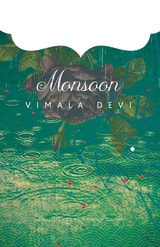
Monsoon
Vimala Devi
Seagull Books, 2019
Through these stories, written with a mix of poignant nostalgia and sharp criticism, Vimala Devi recreates the colonial Goa of her childhood. First published in 1963, two years after the Portuguese colony became part of India, Monsoon is a cycle of twelve stories that vary in tone. By turns satirical, desolate, tender, humorous, and dramatic, they come together through a subtle interplay of echoes, parallels and cross-references to form a composite picture of a world gone by. They delve into divisions of caste, religion, language, and material privilege, setting them off against a common historical experience and deeply felt attachment to the land.
Including a critical and contextualizing introduction by Jason Keith Fernandes, this rendition of Monsoon allows contemporary readers a rare peep into a colonial society that was significantly different from the British Indian mainstream.
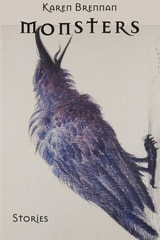
Monsters
Karen Brennan
Four Way Books, 2016
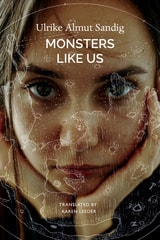
Monsters Like Us
Ulrike Almut Sandig
Seagull Books, 2022
What is it like to be young and broken in a country that is on the brink of collapse? This is what acclaimed poet and sound artist Ulrike Almut Sandig shows us in her debut novel, through the story of old friends Ruth and Viktor in the last days of Communist East Germany. The two central characters are inseparable since kindergarten, but they are forced to go their different ways to escape their difficult childhood: Ruth into music and the life of a professional musician; Viktor into violence and a neo-Nazi gang. Monsters Like Us is a story of families, a story of abuse, a story about the search for redemption and the ways it takes shape over generations. More than anything, it is about the stories we tell ourselves about who we are, and who we want to be. Bold, brutal, and lyrical, this is a coming-of-age novel that charts the hidden violence of the world we live in today.
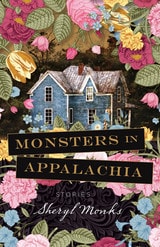
Monsters in Appalachia
StoriesSheryl Monks
West Virginia University Press, 2016
We come upon them in the mountains of West Virginia, in the backyards of rural North Carolina, and at tourist traps along Route 66, where they smolder with hidden desires and struggle to resist the temptations that plague them.
A Melungeon woman has killed her abusive husband and drives by the home of her son’s new foster family, hoping to lure the boy back. An elderly couple witnesses the end-times and is forced to hunt monsters if they hope to survive. A young girl “tanning and manning” with her mother and aunt resists being indoctrinated by their ideas about men. A preacher’s daughter follows in the footsteps of her backsliding mother as she seduces a man who looks a lot like the devil.
A master of Appalachian dialect and colloquial speech, Monks writes prose that is dark, taut, and muscular, but also beguiling and playful. Monsters in Appalachia is a powerful work of fiction.
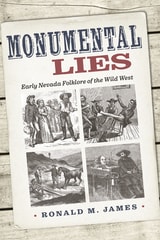
Monumental Lies
Early Nevada Folklore of the Wild WestRonald M. James
University of Nevada Press, 2023
Monumental Lies: Early Nevada Folklore of the Wild West opens the door to understanding how legends and traditions emerged during the first decades following the “Rush to Washoe,” which transformed the region beginning in 1859. During this Wild West period, there was widespread celebration of deceit, manifesting in tall tales, burlesque lies, practical jokes, and journalistic hoaxes. Humor was central to these endeavors and practitioners easily found themselves scorned if they failed to be adequately funny. This ethos became central to the way folklore emerged during the formative years of the Nevada territory and state.
The tens of thousands of people who came to the West, attracted by gold and silver mining, brought distinct cultural legacies. The interaction of diverse perspectives, even while new stories and traditions coalesced or simply appeared, was a complex process. Author Ronald M. James addresses how the fluidity of the region affected new expressions of folklore as they took root.
Mark Twain, often a go-to source for collections of early tall tales of this region, cannot be overlooked, but his interaction with local traditions was specific and narrow. More importantly, William Wright—publishing as Dan De Quille—arose as a key collector of legends, a counterpart of early European folklorists. With a bedrock understanding of what unfolded in the nineteenth century, it is possible to consider
Moon Lily
(a novel)Susan Lang
University of Nevada Press, 2008
Moon and Henna Tree
By Ahmed Toufiq
University of Texas Press, 2013
Set in the High Atlas in pre-modern Morocco, Moon and Henna Tree chronicles the rise and fall of a local potentate, Hmmu. Not content with the territory left to him upon his father’s death, Hmmu, under the influence of his scheming advisor, Ibn al-Zara, begins a campaign to acquire those lands that adjoin his, either through marriage or physical force.
Ahmed Toufiq’s subtle investigation of the abuse of power and its effects on those who suffer under its tyranny also provides a unique look at Amazigh (Berber) culture. While most of Toufiq’s contemporaries focus on modern urban Morocco, he provides a fascinating, and accurate, account of the customs and traditions of a large, yet often ignored, segment of the population. Moon and Henna Tree (in the original Arabic) won the Moroccan Book Prize in 1989.
Moontrap
Don Berry
Oregon State University Press, 1962
Winner of the Western Writers of America Spur Award for best historical novel, Moontrap is a book of remarkable beauty and power about a man caught between his vivid past and an uncertain future.
The year is 1850, a transitional period in the new Oregon Territory, with settlers and lawmakers working to subdue the untamed region. Johnson Monday, a former mountain man, has been living on a bend of the Willamette River near Oregon City for seven years with his Shoshone Indian wife, struggling to make a place in settled society. One day, Webster T. Webster, a raucous, unrepentant trapper, arrives for an unexpected visit. With his earthy humor and stubborn adherence to the simple life, "Webb" leads Monday through adventures that flirt dangerously close to lawlessness, while helping him to rediscover his moral center. Through defiance, triumph, and tragedy, Moontrap follows Johnson Monday as he realizes that relinquishing the stark honesty of mountain life for the compromises of civilization may be too high a price to pay.
Following Trask in Don Berry's trilogy of novels set in the Oregon Territory, Moontrap offers a richly comic and intensely poignant portrayal of pioneer life.
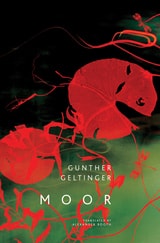
Moor
Gunther Geltinger
Seagull Books, 2017
Moor is Dion’s story—a story of escaping the quicksand of loneliness and of the demands we make on love, even as those surrounding us are hurt in their misguided attempts to bear our suffering. Powerfully tuned to the relationship between human and nature, mother and son, Moor is a mysterious and experimental portrait of childhood. Written by up-and-coming German novelist Gunther Geltinger, the novel received critical acclaim in Germany and is now presented in English for the first time by translator Alexander Booth. Evocative and bold, Dion’s story emerges from the forces of nature, his voice rising from the ground beneath the reader’s feet, not soon to be forgotten.
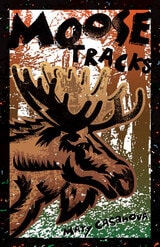
Moose Tracks
Mary Casanova
University of Minnesota Press, 2013
Twelve-year-old Seth wants to prove to his stepfather, the game warden, that he is responsible enough to use his shotgun on his own. Without permission, he takes matters into his own hands and shoots his first rabbit. He is worried about what his father will say when he finds out—and Seth himself is unsure of how he feels about it—but before he can confess, Seth’s life is turned upside down.
In the woods near his house, he sees poachers slaughter a moose cow and injure her calf. Rather than tell his stepfather about the incident, Seth tries to save the calf, but the poachers know who he is and threaten his family. Can he rescue the moose and bring the poachers to justice? He has to try.
More Stories from the Round Barn
Jacqueline Dougan Jackson
Northwestern University Press, 2002
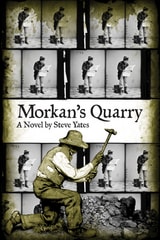
Morkan's Quarry
A NovelSteve Yates
Moon City Press, 2010

Moscow Yankee
Myra Page
University of Illinois Press, 1995
of a Ford plant sends Andy and two companions to Moscow to find work in
a Soviet automotive plant, where he meets Natasha, an exemplar of the
"new Soviet woman." Based on Myra Page's own experiences in Moscow during
the first Five-Year Plan, Natasha is a portrait of women's contradictory
social position in the early periods of socialist construction. At the
core of this novel is a firsthand look at the developing forces and changing
relations of production forces that bring about the conversion of Andy
into a "Moscow Yankee." While revealing the political and economic policies
that would inevitably lead to the demise of Soviet-style socialism, Moscow
Yankee refutes the notion that egalitarian societies cannot succeed
because they fail to take into account the individualism and greed of
"human nature." Barbara Foley's introduction analyzes the Soviet Socialist
construction in Page's novel and the politics of the novelistic form in
relation to Moscow Yankee.
Originally published in 1935
"A picture of Americans lured
to Moscow by hope in the 'great experiment,' and of others driven there
by the depression, and of still others attracted by the simple desire
to get good engineering jobs, Moscow Yankee; has a decided
value . . . a sense of life, stirring in the chaos of destruction and
reconstruction." -- The New York Times Book Review
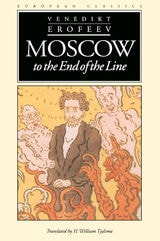
Moscow to the End of the Line
Venedikt Erofeev, translated from the Russian by H. William Tjalsma
Northwestern University Press, 1992
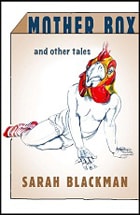
Mother Box and Other Tales
Sarah Blackman
University of Alabama Press, 2013
In language that is both barb and bauble, bitter and unbearably sweet, Sarah Blackman spins the threads of stories where everything is probable and nothing is constant. The stories in Mother Box, and Other Tales occur in an in-between world of outlandish possibility that has become irrefutable reality: a woman gives birth to seven babies and realizes at one of their weddings that they were foxes all along; a girl with irritating social quirks has been raised literally by cardboard boxes; a young woman throws a dinner party only to have her elaborate dessert upstaged by one of the guests who, as it turns out, is the moon. Love between mothers and children is a puzzling thrum that sounds at the very edge of hearing; a muted pulse that, nevertheless, beats and beats and beats.
In these tales, the prosaic details of everyday life—a half-eaten sandwich, an unopened pack of letters on a table—take on fevered significance as the characters blunder into revelations that occlude even as they unfold.
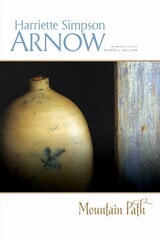
Mountain Path
Harriette Simpson Arnow
Michigan State University Press, 2012
Masterfully wrought and keenly observed, Mountain Path draws on Harriette Simpson Arnow’s experiences as a schoolteacher in downtrodden Pulaski County, Kentucky, deep in the heart of Appalachia, prior to WWII. Far from a quaint portrait of rural life, Arnow’s novel documents hardships, poverty, illiteracy, and struggles. She also recognizes a fragile cultural richness, one characterized by “those who like open fires, hounds, children, human talk and song instead of TV and radio, the wisdom of the old who had seen all of life from birth to death,” and which has since been eroded by the advent of highways and industry. In Mountain Path, Arnow exquisitely captures the voices, faces, and ways of a people she cared for deeply, and who evoked in her a deep respect and admiration.
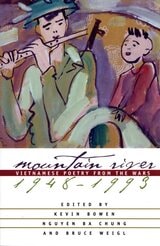
Mountain River
Vietnamese Poetry from the Wars, 1948-1993Kevin Bowen
University of Massachusetts Press, 1998
This landmark bilingual collection presents a comprehensive selection of Vietnamese poetry spanning nearly fifty years of warfare and its aftermath, from the Indochinese War (1946-1954) through the Vietnam War (1961-1975) and into the post-war period. Edited and translated by renowned Vietnam War scholars and poets Kevin Bowen and Bruce Weigl, in collaboration with Vietnamese poet and editor Nguyen Ba Chung, this volume captures the voices of Vietnamese writers who experienced, witnessed, or processed the transformative conflicts that shaped modern Vietnam.
Encompassing poetry from multiple generations, these poems reflect on the diverse responses to conflict: some express patriotic commitment, others grapple with loss and trauma, while many explore the intimate human experiences of war. Mountain River demonstrates how Vietnamese poets drew upon a rich literary tradition while creating new forms of expression to address the unprecedented scale of modern warfare. The result is a collaborative effort that represents a significant achievement in postwar Vietnamese-American literary relations and cross-cultural translation.

Mountains Piled upon Mountains
Appalachian Nature Writing in the AnthropoceneJessica Cory
West Virginia University Press, 2019
Mountains Piled upon Mountains features nearly fifty writers from across Appalachia sharing their place-based fiction, literary nonfiction, and poetry. Moving beyond the tradition of transcendental nature writing, much of the work collected here engages current issues facing the region and the planet (such as hydraulic fracturing, water contamination, mountaintop removal, and deforestation), and provides readers with insights on the human-nature relationship in an era of rapid environmental change.
This book includes a mix of new and recent creative work by established and emerging authors. The contributors write about experiences from northern Georgia to upstate New York, invite parallels between a watershed in West Virginia and one in North Carolina, and often emphasize connections between Appalachia and more distant locations. In the pages of Mountains Piled upon Mountains are celebration, mourning, confusion, loneliness, admiration, and other emotions and experiences rooted in place but transcending Appalachia’s boundaries.

Mourner's Bench
A NovelSanderia Faye
University of Arkansas Press, 2015
But first, Sarah would need to navigate the growing tensions of small-town Arkansas in the 1960s. Both smarter and more serious than her years (a “fifty-year-old mind in an eight-year-old body,” according to Esther), Sarah was torn between the traditions, religion, and work ethic of her community and the progressive civil rights and feminist politics of her mother, who had recently returned from art school in Chicago. When organizers from the Student Non-Violent Coordinating Committee (SNCC) came to town just as the revival was beginning, Sarah couldn’t help but be caught up in the turmoil. Most folks just wanted to keep the peace, and Reverend Jefferson called the SNCC organizers “the evil among us.” But her mother, along with local civil rights activist Carrie Dilworth, the SNCC organizers, Daisy Bates, attorney John Walker, and indeed most of the country, seemed determined to push Maeby toward integration.
With characters as vibrant and evocative as their setting, Mourner’s Bench is the story of a young girl coming to terms with religion, racism, and feminism while also navigating the terrain of early adolescence and trying to settle into her place in her family and community.
Mourning Light
Richard Goodkin
University of Wisconsin Press, 2022
Told in a series of flashbacks and remembrances, the novel concludes with a whirlwind of revelations that both complicate and resolve Reb’s view of his world and his lover.

Mr Adamson
Urs Widmer
Seagull Books, 2019
Told with Urs Widmer’s signature humor, genius, and lively imagination, Mr Adamson is a superb story and a spellbinding book. With its vitality and zest for life, it manages to hold at bay that scandal we must all face in our lives: death.
Praise for Widmer
“One of the best representatives of Swiss literature.”—Le Monde
Mr Zed’s Reflections
Hans Magnus Enzensberger
Seagull Books, 2015
Collected in this thought-provoking and unique work are the considerations and provocations of this squat, park-bench philosopher, giving us a volume of truths and conversations that are clear-cut, skeptical, and fiercely illuminating.

Mr. Dooley in Peace and in War
Finley Peter Dunne
University of Illinois Press, 1988
As Charlie McCarthy is to Edgar Bergen, so is Martin T. Dooley to newspaper humorist Finley Peter Dunne. Mr. Dooley in Peace and in War, originally published in 1898, collects brief, humorous pieces Dunne wrote for the Chicago Evening Post and the Chicago Journal. In an Irish-American dialect as thick as the foam on a pint of stout, Mr. Dooley and his friends discuss the military "sthrateejy" for American action in Cuba, "iliction" day shenanigans, Queen Victoria's jubilee, the "new woman," and the strange American sport of football, in which a player puts "a pair iv matthresses on his legs, a pillow behind, [and] a mask over his nose" and tries to kill his fellow men. Through his tall tales and speculations, Mr. Dooley reveals the pleasure and pain of being Irish in Chicago at the turn of the twentieth century.
Clothed in the charming hyperbole and mislocution of the unflappable Mr. Dooley, Dunne's incisive social criticism flies unerringly to the target, exposing prejudice, hypocrisy, insensitivity, and plain old-fashioned humbug.
Mr. K Released
Matéi Visniec
Seagull Books, 2019
One day, Mr. K finds himself unexpectedly released. Unable to comprehend his sudden liberation, he becomes traumatized by the realities of freedom—more so than the familiar trauma of captivity or imprisonment. In the hope of obtaining some clarification, Mr. K keeps waiting for an appointment with the prison governor, however, their meeting is constantly being delayed. During this endless process of waiting, Mr. K gets caught up in a clinical exploration of his physical surroundings. He does not have the courage or indeed inclination to leave, but can move unrestricted within the prison compound, charting endless series of absurd circles in which readers might paradoxically recognize themselves.
Mr. Sampath--the Printer of Malgudi
R. K. Narayan
University of Chicago Press, 1949
Offering rare insight into the complexities of Indian middle-class society, R. K. Narayan traces life in the fictional town of Malgudi. The Dark Room is a searching look at a difficult marriage and a woman who eventually rebels against the demands of being a good and obedient wife. In Mr. Sampath, a newspaper man tries to keep his paper afloat in the face of social and economic changes sweeping India. Narayan writes of youth and young adulthood in the semiautobiographical Swami and Friends and The Bachelor of Arts. Although the ordinary tensions of maturing are heightened by the particular circumstances of pre-partition India, Narayan provides a universal vision of childhood, early love and grief.
"The experience of reading one of his novels is . . . comparable to one's first reaction to the great Russian novels: the fresh realization of the common humanity of all peoples, underlain by a simultaneous sense of strangeness—like one's own reflection seen in a green twilight."—Margaret Parton, New York Herald Tribune
"Narayan's limits are meticulously imposed and observed but his humor and compassion come from a deep universal well, with the result that he has transformed his imaginary township of Malgudi into a bubbling parish of the world."—Christopher Wordsworth, Observer
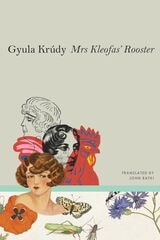
Mrs Kleofas’s Rooster
Three NovellasGyula Krúdy
Seagull Books, 2026
Mrs Kleofas’ Rooster brings together three captivating novellas by Gyula Krúdy, originally written in the 1920s and now available in English for the first time. Each story centers on a woman protagonist: a timeless adventuress, a resilient single mother, and a seductive Budapest femme fatale, respectively. In the title novella, a roguish narrator listens to the thrilling life story of an ageless, mysterious woman whose journey takes her from a childhood of suffering to a career as a cunning accomplice in daring schemes. The next story, NN, follows the life of a steadfast single mother, Juliska, amid the rhythms of village life. In Autumn Meeting, Krudy’s sharp wit unfolds through Rizili, a charming yet ruthless socialite who leads a suspended jockey on an intoxicating night through Budapest’s City Park.
Mrs. Shaw
A NovelMukoma Wa Ngugi
Ohio University Press, 2015
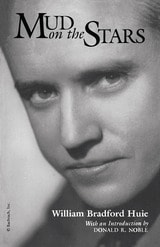
Mud on the Stars
William Bradford Huie
University of Alabama Press, 1996
William Bradford Huie’s first novel, Mud on the Stars, is largely autobiographical and is set in the years 1929-1942. As in many of his later books, the theme here is of the education of the inexperienced youth, which is, after all, the quintessential American story. Drawing on his own boyhood, Huie gives the reader a detailed account of rural life and race relations in the Tennessee Valley in the early years of this century, including a vivid picture of college life at The University of Alabama during the Great Depression. Through a careful weaving of characters and events, fact and fiction, Huie’s novel captures the tumultuous times before World War II in the urban South, times of social unrest and testing of new political ideologies. The book’s publication in 1942 was a huge financial success, by the economic standards of the day, and not only brought Huie the acclaim his talent warranted but also focused an approving national spotlight on this prolific Alabama writer.
Mulberry Street Stories
Mary Slechta
Four Way Books, 0
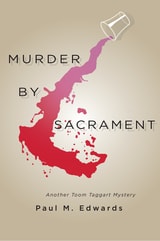
Murder by Sacrament
Another Toom Taggart MysteryPaul M. Edwards
Signature Books, 2014
Taggart is annoyed at having to navigate the political structure of the bureaucracy, but he cannot bring himself to leave. He is able to teach, and he likes his proximity to Church archives, local bookstores, and the woman who, according to fate, is still seeing the policeman from The Angel Acronym. All the major characters are back, and Taggart’s romantic rival is given the new murder case, meaning that he has to rely once again on Taggart for his knowledge of the Church’s secrets. This gives both men a reason to keep an eye on the other, making for entertaining situations in a funny, insider send-up of the RLDS community.
Murder in Ancient China
Two Judge Dee MysteriesRobert van Gulik
University of Chicago Press, 2013
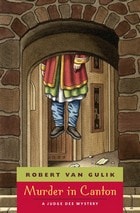
Murder in Canton
A Judge Dee MysteryRobert van Gulik
University of Chicago Press, 1966
Murder in Canton takes place in the year 680, as Judge Dee, recently promoted to lord chief justice, is sent incognito to Canton to investigate the disappearance of a court censor. With the help of his trusted lieutenants Chiao Tai and Tao Gan, and that of a clever blind girl who collects crickets, Dee solves a complex puzzle of political intrigue and murder through the three separate subplots "the vanished censor," "the Smaragdine dancer," and "the Golden Bell."
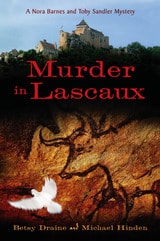
Murder in Lascaux
Betsy Draine and Michael Hinden
University of Wisconsin Press, 2014
The cave of Lascaux may be closed to the public, but five scholars a day are allowed inside, and Nora Barnes has finagled an appointment. True, she may have fudged a bit in her letter to the authorities, but she does teach art history, and she isn’t about to miss her chance to see the world’s most famous prehistoric paintings. Nora and her high-spirited husband, Toby, are visiting the Dordogne, in the southern French region of the Aquitaine. Aware that the Dordogne’s renown for cave art is matched only by its reputation for delicious cuisine, the couple has also signed up for a cooking class at a nearby château, but they soon find that more than food is on their minds.
During their tour of the cave, another visitor is murdered. When the local inspector pegs Nora and Toby as suspects, they embark on a mission to solve the crime, tracing strange links between a Cro-Magnon symbol and a thirteenth-century religious cult. As they match wits with the crusty inspector, Nora finds herself immersed in the notebooks of a forgotten artist who once lived in the château. In sifting through the artist’s papers and uncovering old secrets, she begins to piece together the motives for the murder. But has she cooked up more trouble than she can handle?
Best Books for General Audiences, selected by the Public Library Reviewers
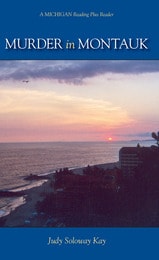
Murder in Montauk
Judy Soloway Kay
University of Michigan Press, 2005
The MICHIGAN Reading Plus Readers are original fiction written for students who wish to improve their reading skills. The MICHIGAN Reading Plus Readers support the need for extensive reading on topics of interest to today's students. The Readers offer students books in the genres of mystery, science-fiction, and romance. Activities that practice vocabulary and reading skills are provided on the companion website.
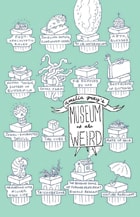
Museum of the Weird
Amelia Gray
University of Alabama Press, 2010
WINNER OF FC2’s AMERICAN BOOK REVIEW/RONALD SUKENICK INNOVATE FICTION PRIZE
Step inside a gallery where the strange feels familiar.
A monogrammed cube appears in your town. Your landlord cheats you out of first place in the annual Christmas decorating contest. You need to learn how to love and care for your mate—a paring knife. These situations and more reveal the wondrous play and surreal humor that make up the stories in Amelia Gray’s stunning collection of stories: Museum of the Weird.
Acerbic wit and luminous prose mark these shorts, while sickness and death lurk amidst the humor. Characters find their footing in these bizarre scenarios and manage to fall into redemption and rebirth. Museum of the Weird invites you into its hallways, then beguiles, bewitches, and reveals a writer who has discovered a manner of storytelling all her own.
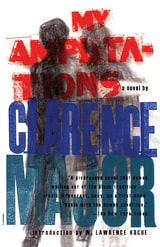
My Amputations
Clarence Major
University of Alabama Press, 1986
Originally published in 1986, this new edition returns to print a classic, influential work of American fiction
The author of the acclaimed novel Reflex and Bone Structure returns here in My Amputations to the question of identity, the double, adventure, detection, and mystery, but with more hypnotic power and range. In My Amputations he has his protagonist, Mason Ellis (who may just be “a desperate ex-con” or a wronged American novelist out to right the wrong done to him), jump through flaming loops like a trained dog, so to speak. In other words, there seems to be no end to the troubles Mason Ellis faces.
His story takes him from the South Side of Chicago, to New York, with a stint in Attica prison, across America and Europe and into the primal depths of Africa. Mason, all the while, tries to convince the reader that he is the important American writer he says he is. Upon his release from prison he sets out to prove his claim. After an audacious bank-robbery and a couple of burglaries that are hilarious, he goes into hiding to escape the malice of one of his cohorts, and eventually flees to Europe. The irony is that he is now as much the runner as the seeker. After encounters with a Zuni ex-folksinger, kidnappers, the New York underworld, literary groupies, an Italian swordsman, a violent German secret society, and an anti-bellum cotillion in rural Greece, he finds himself face to face (behind a mask) with his own destiny.
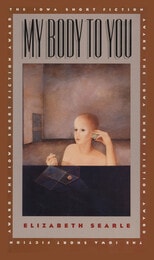
My Body To You
Elizabeth Searle
University of Iowa Press, 1993
A woman in love with a gay man she calls Sister Kin attempts to escape the bonds of her own body. An eighteen-year-old virgin enters into a passionate affair with an older man who turns out to be a virgin of a different sort. A special education teacher in a school for aggressive teenagers finds herself attracted to another teacher, also female. An intelligent outcast girl bonds with her mindlessly seductive mother to form “one person.”
Searle reveals other characters through inventive and often comic feats of narrative daring. A girl grows into womanhood during a single family dinner that spans twenty years. A middle-aged wife, once dubbed “The First Most Beautiful Woman in the World,” watches her former selves parade before her family in a lively evening of home movies. Two women—one recently divorced, the other a group home resident in love with The Who—join forces as they figure out “What to Do in an Emergency.” An old woman experiences both physical breakdown and spiritual breakdown in a supermarket's vegetable department. A young woman is drawn into the emotional and sexual life of an autistic boy obsessed with the number 8.
Each of these stories is written in a language that strives to match the intensity of Searle's characters; each gives the reader an exceptionally intimate portrait of a unique female and the central, sensual mystery of her body.
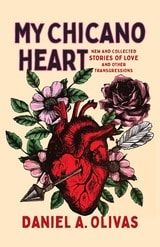
My Chicano Heart
New and Collected Stories of Love and Other TransgressionsDaniel A. Olivas
University of Nevada Press, 2024
Each story is drawn from Olivas’s nearly twenty-five years of experience writing fiction deeply steeped in Chicano and Mexican culture. Some of the stories are fanciful and full of magic, while others are more realistic, and still others border on noir. All touch upon that most ephemeral and confounding of human emotions: love in all its wondrous forms.
My Daughter's Eyes and Other Stories
StoriesAnnecy Báez
Northwestern University Press, 2007

My Days of Anger
James T. Farrell. Introduction by Charles Fanning.
University of Illinois Press, 2007
The fourth novel in James T. Farrell’s pentalogy chronicles Danny O’Neill’s coming of age. Recording his reactions to initiation into college life at the University of Chicago and the imminent death of his grandmother, one of his primary caretakers, Danny realizes the value of time and gains confidence in his writing abilities. As he works on his first novel, he prepares to leave his family, his Catholicism, and his neighborhood in Chicago behind for a new life as a writer in New York.
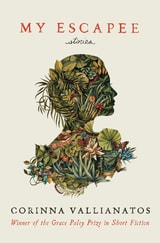
My Escapee
StoriesCorinna Vallianatos
University of Massachusetts Press, 2012
ANew York Times Book Review Editor's Choice
Delicate and assured, the stories in My Escapee illuminate unseen forces in women's lives: the shameful thought, the stifled hope, the subterranean stresses of marriage, friendship, and family. Grappling with lost memories, escaped time, the longing to be loved, and the instinct for autonomy, the stories peer inside their characters' minds to their benign delusions, their triumphs and defeats.
A girl taking a test for admittance to a selective school finds that what she loves most of all is the ordinary. A lonely young woman, sick of being sick, swaps places with her nurse. A college student deploys her more charming roommate to discover the secret rituals of an all-male club on campus. And in the title story, a woman in a nursing home receives mysterious missives from her longtime lover recalling fragments of their old life together.