Results by title
4743 books match the query 'Religion' and 235 start with m
Metropolitan Jews
Politics, Race, and Religion in Postwar DetroitLila Corwin Berman
University of Chicago Press, 2015
Complex and subtle, Metropolitan Jews pushes urban scholarship beyond the tenacious black/white, urban/suburban dichotomy. It demands a more nuanced understanding of the process and politics of suburbanization and will reframe how we think about the American urban experiment and modern Jewish history.
Mexican American Religions
Spirituality, Activism, and CultureGastón Espinosa and Mario T. García, eds.
Duke University Press, 2008
Turning to literature, contributors consider Gloria Anzaldúa’s view of the borderlands as a mystic vision and the ways that Chicana writers invoke religious symbols and rhetoric to articulate a moral vision highlighting social injustice. They investigate the role of healing, looking at it in relation to both the Latino Pentecostal movement and the practice of the curanderismo tradition in East Los Angeles. Delving into to popular culture, they reflect on Luis Valdez’s video drama La Pastorela: “The Shepherds’ Play,” the spirituality of Chicana art, and the religious overtones of the reverence for the slain Tejana music star Selena. This volume signals the vibrancy and diversity of the practices, arts, traditions, and spiritualities that reflect and inform Mexican American religion.
Contributors: Rudy V. Busto, Davíd Carrasco, Socorro Castañeda-Liles, Gastón Espinosa, Richard R. Flores, Mario T. García, María Herrera-Sobek, Luís D. León, Ellen McCracken, Stephen R. Lloyd-Moffett, Laura E. Pérez, Roberto Lint Saragena, Anthony M. Stevens-Arroyo, Kay Turner
Mexico Mystique
The Coming Sixth World of ConsciousnessFrank Waters
Ohio University Press, 1989
In Mexico Mystique Frank Waters draws us deeply into the ancient but still-living myths of Mexico. To reveal their hidden meanings and their powerful symbolism, he brings to bear his gift for intuitive imagination as well as a broad knowledge of anthropology, Jungian psychology, astrology, and Eastern and esoteric religions. He offers a startling interpretation of the Mayan Great Cycle — our present Fifth World — whose beginning has been projected to 3113 B.C., and whose cataclysmic end has been predicted by 2011 A.D.
Micah
Introduction and CommentaryCarolyn J. Sharp
SBL Press, 2025
Michael Oakeshott on Religion, Aesthetics, and Politics
Elizabeth Campbell Corey
University of Missouri Press, 2006
For much of his career, British political philosopher Michael Oakeshott was identified with Margaret Thatcher’s conservative policies. He has been called by some a guru to the Tories, while others have considered him one of the last proponents of British Idealism. Best known for such books as Experience and Its Modes and Rationalism in Politics, Oakeshott has been the subject of numerous studies, but always with an emphasis on his political thought.
Gnosticism and considers both thinkers’ treatment of Hobbes to delineate their philosophical differences.
Michoacán and Eden
Vasco de Quiroga and the Evangelization of Western MexicoBy Bernardino Verástique
University of Texas Press, 2000
Don Vasco de Quiroga (1470-1565) was the first bishop of Michoacán in Western Mexico. Driven by the desire to convert the native Purhépecha-Chichimec peoples to a purified form of Christianity, free of the corruptions of European Catholicism, he sought to establish New World Edens in Michoacán by congregating the people into pueblo-hospital communities, where mendicant friars could more easily teach them the fundamental beliefs of Christianity and the values of Spanish culture.
In this broadly synthetic study, Bernardino Verástique explores Vasco de Quiroga's evangelizing project in its full cultural and historical context. He begins by recreating the complex and not wholly incompatible worldviews of the Purhépecha and the Spaniards at the time of their first encounter in 1521. With Quiroga as a focal point, Verástique then traces the uneasy process of assimilation and resistance that occurred on both sides as the Spaniards established political and religious dominance in Michoacán. He describes the syncretisms, or fusions, between Christianity and indigenous beliefs and practices that arose among the Purhépecha and relates these to similar developments in other regions of Mexico.
Written especially for students and general readers, this book demonstrates how cultural and geographical environments influence religious experience, while it adds to our understanding of the process of indigenous appropriation of Christian theological concepts in the New World.

Migration and Diaspora
Exegetical Voices of Women in Northeast Asian CountriesHisako Kinukawa
SBL Press, 2014
Engage and explore readings from a multi-religious, globalized, multicultural region
The papers in this collection were presented at the third meeting of the Society of Asian Biblical Studies held at the Sabah Theological Seminary, Malaysia in 2012. The essays represent the work of women/feminist scholars in biblical hermeneutics in this region who have raised questions against traditional, male-centered interpretations, offering distinct perspectives based on their experiences of pain, subjugation, and a forced sacrificial philosophy of life.
Features:
- Articles focused on finding justice for women through dialogue with biblical texts
- Reflections on migration, diaspora, displacement, discrimination, and conditions generated by poverty and systemic oppression
- Five essays from women in China, Japan, and Korea
Militant Zionism in America
The Rise and Impact of the Jabotinsky Movement in the United States, 1926-1948Rafael Medoff
University of Alabama Press, 2006
This in-depth look at a controversial faction of American Zionism fills
a void in the story of American Zionism--and in the story of American Judaism.
This book recounts the fascinating and little-known story
of the militant American Zionists who lobbied Congress, rallied American
public opinion, and influenced British-American relations in their campaign
for Jewish statehood in the 1930s and 1940s. Although these activists have
been dismissed as fanatics who fragmented the American Zionist movement,
Rafael Medoff reveals that the faction--which included an Academy Award-winning
screenwriter and several future members of the Israeli parliament--was
more influential than has been previously acknowledged.
These militants stirred America's conscience by placing
controversial newspaper ads, lobbying conservative as well as liberal members
of Congress, and staging dramatic protest rallies. Through these tactics,
Medoff shows, they attracted a wave of support from an extraordinary cross-section
of leading Americans, including comedians Harpo Marx and Carl Reiner, actors
Vincent Price, Marlon Brando, and Jane Wyatt, musician Leonard Bernstein,
and rising young politicians Jacob Javits and Hubert Humphrey. Medoff also
describes the shadowy underground division that smuggled weapons to the
Holy Land in caskets, naming and interviewing for the first time members
of this gunrunning network.
Based on years of archival research and interviews and
written in a compelling style, Militant Zionism in America documents
events that reshaped the American Jewish community, influenced American
foreign policy, and contributed to one of the most extraordinary events
of modern history: the creation of the State of Israel.
Rafael Medoff is a Visiting Scholar at the State University of New York -- Purchase College.
Millennial Praises
A Shaker HymnalChristian Goodwillie
University of Massachusetts Press, 2009
Millions of Gifts for the Gods
The Feather Distribution ProjectJonathan Reyman
University Press of Colorado, 2025
Grounded in Sol Tax’s concept of “action anthropology,” the project facilitated community-driven decision-making rather than imposing external solutions. This collaborative approach enabled Indigenous communities to maintain cultural practices that have persisted for over a millennium, dating back to the Ancestral Pueblo people and the Mogollon and Sinagua tribes, who viewed birds as sacred beings that helped humans emerge from the underworld. Yet the project’s impact extended far beyond cultural preservation. Over three decades, it distributed approximately 14.5 million feathers, valued at $20 million, to the Southwest Pueblos and other Indigenous Americans at no cost to them. Through partnerships with turkey hunters, zoos, bird clubs, the National Wild Turkey Federation, and dozens of volunteers, the initiative reduced illegal bird smuggling from Latin America, alleviated pressure on threatened bird populations, and eliminated harmful plucking practices.
Millions of Gifts for the Gods is an extended case study in applied anthropology, demonstrating how sustained collaboration between anthropologists and Indigenous communities can effectively address complex cultural, legal, and environmental challenges while preserving sacred traditions. This unique project is of special interest to anthropologists working in the American Southwest, as well as students and scholars of archaeology, ethnography, and ethnohistory.

Milton’s Earthly Paradise
A Historical Study of EdenJoseph E. Duncan
University of Minnesota Press, 1972
Milton's Earthly Paradise was first published in 1972. Minnesota Archive Editions uses digital technology to make long-unavailable books once again accessible, and are published unaltered from the original University of Minnesota Press editions.
This study provides a history of the changing interpretations of the first earthly paradise—the garden of Eden—in Western thought and relates Paradise Lost and other literary works to this paradise tradition. The author traces the beginnings of the tradition as they appear in the Bible and in classical literature and shows how these two strains were joined in early Christian and medieval literature. His emphasis, however, is on the relation of Paradise Lost to Renaissance commentary and to other literary works of the period dealing with the paradise story.
Professor Duncan views Paradise Lost as one of many Renaissance works that reveal an untiring effort to understand and explain the first chapters of Genesis. In the rational and humanistic commentary of the Renaissance, he explains, the aim was to provide an interpretation of the literal sense of the Scriptural account that was credible, detailed, and historically valid. He finds that the cumulative influence of the commentary is reflected in Milton's attention to the location of paradise, the emphasis on the natural and the rational in his description of paradise, and in the importance of the typological relationship between the terrestrial and celestial paradises. This illuminating discussion makes it clear that Milton's re-creation of paradise is not only superb poetry but also a penetrating account of the origins of man, involving highly complex and controversial issues.
Mimetic Politics
Dyadic Patterns in Global PoliticsRoberto Farneti
Michigan State University Press, 2015
Mimetic Theory and Its Shadow
Girard, Milbank, and Ontological ViolenceScott Cowdell
Michigan State University Press, 2023
Mimetic Theory and World Religions
Wolfgang Palaver
Michigan State University Press, 2017

Mind Of The Universe
Understanding Science & ReligionMariano Artigas
Templeton Press, 2001
Ministry to the Sick and Dying in the Late Medieval Church
Thomas M. Izbicki
Catholic University of America Press, 2023
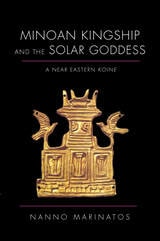
Minoan Kingship and the Solar Goddess
A Near Eastern KoineNanno Marinatos
University of Illinois Press, 2010
Ancient Minoan culture has been typically viewed as an ancestor of classical Greek civilization, but this book shows that Minoan Crete was on the periphery of a powerfully dynamic cultural interchange with its neighbors. Rather than viewing Crete as the autochthonous ancestor of Greece's glory, Nanno Marinatos considers ancient Crete in the context of its powerful competitors to the east and south.
Analyzing the symbols of the Minoan theocratic system and their similarities to those of Syria, Anatolia, and Egypt, Marinatos unlocks many Minoan visual riddles and establishes what she calls a "cultural koine," or standard set of cultural assumptions, that circulated throughout the Near East and the eastern Mediterranean at the time Minoan civilization reached its peak. With more than one hundred and fifty illustrations, Minoan Kingship and the Solar Goddess delivers a comprehensive reading of Minoan art as a system of thought.
Miracle Discourse in the New Testament
Duane F. Watson
SBL Press, 2012

Mishkan Aveilut
Where Grief ResidesRabbi Eric Weiss
Central Conference of American Rabbis, 2019
Mishkan Ga'avah
Where Pride Dwells: A Celebration of LGBTQ Jewish Life and RitualRabbi Denise L. Eger
Central Conference of American Rabbis, 2020
This groundbreaking collection of LGBTQ prayers, poems, liturgy, and rituals is both a spiritual resource and a celebratory affirmation of Jewish diversity. Giving voice to the private and public sectors of queer Jewish experience, Mishkan Ga'avah is also a commemoration of the fiftieth anniversary of both the Stonewall Riots and the first pride march, reflecting the longtime advocacy of the Reform Movement for full LGBTQ inclusion.
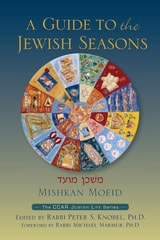
Mishkan Moeid
A Guide to the Jewish SeasonsRabbi Peter S. Knobel, PhD
Central Conference of American Rabbis, 2013
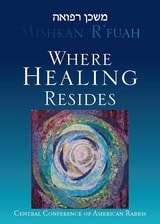
Mishkan R'fuah
Where Healing ResidesRabbi Eric Weiss
Central Conference of American Rabbis, 2013
This beautiful compilation contains contemplative readings and prayers for many different moments of spiritual need, including illness, surgery, treatment, hearing good news, transitions, addiction, infertility, end-of-life, and more.

Mishkan T'filah Weekdays and Festivals Large Print
A Reform SiddurRabbi Elyse D. Frishman
Central Conference of American Rabbis, 2007
This volume is for weekdays and festivals only, and does not include Shabbat liturgy.
This Siddur includes:
- Broad selection of readings, including beloved passages from our Reform liturgical tradition and great poetic writings from throughout Jewish history
- Faithful, elegant translations
- Contemporary, gender-inclusive English
- Theological and stylistic diversity
- Full transliteration
- Extensive commentaries, source notes and usage guides
- More than 100 contemporary and traditional song texts
- Innovative design in two-page spreads
- Two-color printing to enhance usability
Mishkan T'filah Weekdays and Festivals, Non-transliterated
A Reform SiddurRabbi Elyse D. Frishman
Central Conference of American Rabbis, 2007
Includes services for weekdays, festivals, and other occasions of public worship. Mishkan T'filah reflects the full diversity of our Movement, including texts for more than a hundred songs.
This volume is for weekdays and festivals only. This version does not include Shabbat liturgy or transliteration.
This Siddur does include:
- Broad selection of readings, including beloved passages from our Reform liturgical tradition and great poetic writings from throughout Jewish history
- Faithful, elegant translations
- Contemporary, gender-inclusive English
- Theological and stylistic diversity
- Extensive commentaries, source notes and usage guides
- More than 100 contemporary and traditional song texts
- Innovative design in two-page spreads
- Two-color printing to enhance usability
Mishkan T'filah World Union Edition
Elyse D. Frishman
Central Conference of American Rabbis, 2010
Mishkan T'filah for Gatherings
A Reform SiddurRabbi Sue Ann Wasserman
Central Conference of American Rabbis, 2009
A lightweight edition combining weekday and Shabbat services. Perfect for meetings, conferences, kallot, and retreats.
Mishkan T'filah for Shabbat Evening
Rabbi Elsye D. Frishman, Rabbi Hara E Person, Rafael Chaiken, Rabbi Annie Villarreal-Belford
Central Conference of American Rabbis, 2026
Mishkan T’filah: Siddur for Shabbat Evening is a comprehensively revised twentieth-anniversary edition of the prayer book for Friday night. Since its publication in 2007, under the leadership of Rabbi Elyse Frishman, Mishkan T’filah: A Reform Siddur has reinvigorated worship and become a beloved part of the Jewish landscape.
This new edition includes the complete Kabbalat Shabbat and Arvit services, along with the Torah service for communities that read Torah on Friday nights as well as an appendix of favorite songs. This lightweight yet durable hardcover features updated translations, full transliteration, additional liturgical texts, and a refreshed and streamlined layout. A wealth of new readings have been added to the left-hand pages, alongside indispensable classics. Gender-neutral and nonbinary options ensure that all worshipers can feel welcome. Songs that have become integral to Reform services in the past twenty years are conveniently placed next to prayers. Mishkan T’filah: Siddur for Shabbat Evening will rejuvenate your Shabbat experience.
Mishkan T'filah for Travelers
A Reform SiddurRabbi Sue Ann Wasserman
Central Conference of American Rabbis, 2009
Also includes Festival liturgy.
Mishkan T'filah for the House of Mourning, Large Print
A Reform SiddurRabbi Elaine S. Zecher and Rabbi Hara E. Person
Central Conference of American Rabbis, 0
An innovative approach to services in the house of mourning. Includes thoughtful readings and commentary from traditional and contemporary sources. Easy-to-transport paperback format. Available in large print for those with vision impairments.
Mishkan T'filah for the House of Mourning
A Reform SiddurRabbi Elaine S. Zecher and Rabbi Hara E. Person
Central Conference of American Rabbis, 2010
Mishkan T'filah
A Reform Siddur, non-transliterated (Shabbat, Weekdays, Festivals): A Reform SiddurRabbi Elyse D. Frishman
Central Conference of American Rabbis, 2007
Includes services for Shabbat, weekdays, and festivals, as well as other occasions of public worship and texts for more than a hundred songs. Mishkan T'filah reflects the full diversity of our Movement.
This volume does not contain transliteration.
This Siddur includes:
- Broad selection of readings, including beloved passages from our Reform liturgical tradition and great poetic writings from throughout Jewish history
- Faithful, elegant translations
- Contemporary, gender-inclusive English
- Theological and stylistic diversity
- Extensive commentaries, source notes and usage guides
- More than 100 contemporary and traditional song texts
- Innovative design in two-page spreads (additional Shabbat services in linear style also included)
- Two-color printing to enhance usability
Mishkan T'filah
A Reform Siddur, transliterated (Shabbat, Weekdays, Festivals): A Reform SiddurRabbi Elyse D. Frishman
Central Conference of American Rabbis, 2007
Includes services for Shabbat, weekdays, and festivals, as well as other occasions of public worship and texts for more than a hundred songs. Mishkan T'filah reflects the full diversity of our Movement.
This Siddur includes:
- Broad selection of readings, including beloved passages from our Reform liturgical tradition and great poetic writings from throughout Jewish history
- Faithful, elegant translations
- Contemporary, gender-inclusive English
- Theological and stylistic diversity
- Full transliteration
- Extensive commentaries, source notes and usage guides
- More than 100 contemporary and traditional song texts
- Innovative design in two-page spreads (additional Shabbat services in linear style also included)
- Two-color printing to enhance usability
Mishkan T'filah
Gift EditionElyse D. Frishman
Central Conference of American Rabbis, 2007
Mishkan T'filah
Journal Edition, Non-transliterated: A Reform SiddurRabbi Joel Abraham and Michelle Shapiro Abraham, RJE
Central Conference of American Rabbis, 2010
Note: Page numbers in this special edition are meant to be consistent with the page numbering of the standard, complete edition of Mishkan T'filah. However, because the Journal Edition does not contain some of the material from the complete edition, there are several jumps in page numbering in this edition.
Mishkan T'filah
Journal Edition: A Reform SiddurRabbi Joel Abraham and Michelle Shapiro Abraham
Central Conference of American Rabbis, 2010
Note: Page numbers in this special edition are meant to be consistent with the page numbering of the standard, complete edition of Mishkan T'filah. However, because the Journal Edition does not contain some of the material from the complete edition, there are several jumps in page numbering in this edition.
Mishkan T'filah
Large Print, Shabbat: A Reform SiddurRabbi Elyse D. Frishman
Central Conference of American Rabbis, 0
Including services for Shabbat and texts for more than a hundred songs, Mishkan T'filah reflects the full diversity of our Movement. Available in large print for the visually impaired.
This volume is for Shabbat only, and does not include weekday and festival liturgy.
This Siddur includes:
- Broad selection of readings, including beloved passages from our Reform liturgical tradition and great poetic writings from throughout Jewish history
- Faithful, elegant translations
- Contemporary, gender-inclusive English
- Theological and stylistic diversity
- Full transliteration
- Extensive commentaries, source notes and usage guides
- More than 100 contemporary and traditional song texts
- Innovative design in two-page spreads (additional Shabbat services in linear style also included)
- Two-color printing to enhance usability
Mishkan T'filah
Pulpit Edition: A Reform SiddurRabbi Elyse D. Frishman
Central Conference of American Rabbis, 2010
Purchase of this volume grants the buyer the right to make copies on a one-time basis for the purpose of practice or preparation only. These pages are not to be used for the creation of new services or for publication of any kind.
Each page contains a copyright notice.
Mishkan T'filah
Shabbat, non-transliterated: A Reform SiddurRabbi Elyse D. Frishman
Central Conference of American Rabbis, 0
Including services for Shabbat and texts for more than a hundred songs, Mishkan T'filah reflects the full diversity of our Movement. This volume is for Shabbat only and does not include weekday and festival liturgy.
This volume does not contain transliteration.
This Siddur includes:
- Broad selection of readings, including beloved passages from our Reform liturgical tradition and great poetic writings from throughout Jewish history
- Faithful, elegant translations
- Contemporary, gender-inclusive English
- Theological and stylistic diversity
- Extensive commentaries, source notes and usage guides
- More than 100 contemporary and traditional song texts
- Innovative design in two-page spreads (additional Shabbat services in linear style also included)
- Two-color printing to enhance usability
Mishkan T'filah
Shabbat, transliterated: A Reform SiddurRabbi Elyse D. Frishman
Central Conference of American Rabbis, 0
Including services for Shabbat and texts for more than a hundred songs, Mishkan T'filah reflects the full diversity of our Movement.
This volume is for Shabbat only and does not include weekday and festival liturgy.
This Siddur includes:
- Broad selection of readings, including beloved passages from our Reform liturgical tradition and great poetic writings from throughout Jewish history
- Faithful, elegant translations
- Contemporary, gender-inclusive English
- Theological and stylistic diversity
- Full transliteration
- Extensive commentaries, source notes and usage guides
- More than 100 contemporary and traditional song texts
- Innovative design in two-page spreads (additional Shabbat services in linear style also included)
- Two-color printing to enhance usability
Mishkan T'filah
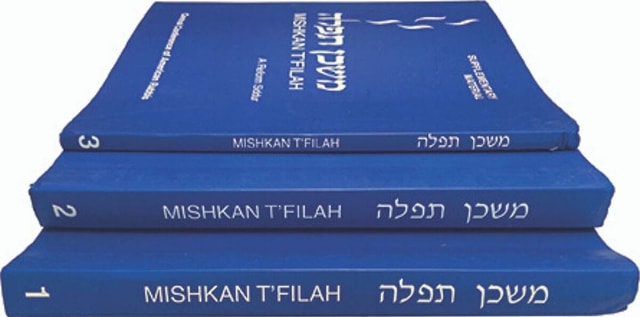
Special Large Print Edition - Three-Volume Set: A Reform SiddurRabbi Elyse D. Frishman
Central Conference of American Rabbis, 0
This Special Large Print edition is an oversize three volume set, created with the support of Women of Reform Judaism and in consultation with the Jewish Braille Institute. Each spiral bound volume uses specific layout and fonts meant to make the pages of Mishkan T'filah accessible to those with significant visual impairment.
Available only as a set of 3:
Volume 1 - Shabbat
Volume 2 - Weekdays and Festivals
Volume 3 - Supplementary Material (Blessings for the Home, Songs, Sources, Permissions)
Coil Binding
Hebrew-opening
Transliterated
Mishkan T'filah
Weekdays/Festivals, transliterated: A Reform SiddurRabbi Elyse D. Frishman
Central Conference of American Rabbis, 0
Includes services for weekdays, festivals, and other occasions of public worship. Mishkan T'filah reflects the full diversity of our Movement, including texts for more than a hundred songs.
This volume is for weekdays and festivals only and does not include Shabbat liturgy.
This Siddur includes:
- Broad selection of readings, including beloved passages from our Reform liturgical tradition and great poetic writings from throughout Jewish history
- Faithful, elegant translations
- Contemporary, gender-inclusive English
- Theological and stylistic diversity
- Full transliteration
- Extensive commentaries, source notes and usage guides
- More than 100 contemporary and traditional song texts
- Innovative design in two-page spreads
- Two-color printing to enhance usability
Mishkan T'filah
World Union Edition: A Reform SiddurRabbi Elyse D. Frishman
Central Conference of American Rabbis, 0
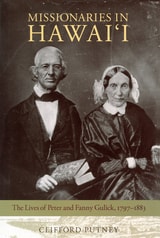
Missionaries in Hawai'i
The Lives of Peter and Fanny Gulick, 1797-1883Clifford Putney
University of Massachusetts Press, 2010
Ever since Protestant missionaries from the United States first reached Hawai'i in 1820, they have inspired conflicting passions. In evangelical circles, the missionaries are praised for Christianizing Hawai'i, transforming Hawaiian into a written language, and inoculating the islanders against smallpox. But this celebratory assessment is rejected by modern-day Hawaiian nationalists, who excoriate the missionaries as advance agents of U.S. imperialism.
In this biography of pioneer missionaries Peter and Fanny Gulick, Clifford Putney offers a balanced view of their contributions. He says the nationalists are right to credit the missionaries with drawing Hawai'i into America's political orbit, but argues that the missionary enterprise helped in some ways to preserve key elements of Hawaiian culture.
Based primarily on letters, journals, and other archival materials, Putney's book provides readers with a detailed portrait of the lives of Peter and Fanny Gulick. Inspired by America's Second Great Awakening to spread the Gospel overseas, the Gulicks voyaged to Hawai'i in 1828 and lived there for the next forty-six years, actively proselytizing and working to change the islands. On Kaua'i, they helped to ensure the success of Hawai'i's first sugar plantation and acquainted Hawaiians with inventions such as the wagon. On Moloka'i (later the site of a leper colony) the couple struggled merely to survive. And on O'ahu, they took up ranching and helped to found Punahou School, the alma mater of President Barack Obama.
While laboring in Hawai'i, the Gulicks interacted with kings, queens, and other historically important figures, and Putney chronicles those relationships. He also explores issues of race and gender, and sheds new light on the democratization of government, the spread of capitalism, and the privatization of land. From these last two developments, a number of missionaries grew immensely rich, but the Gulicks did not, and neither did their descendants. A group that includes influential missionaries, educators, and physical fitness experts, the descendants of Peter and Fanny have had numerous books written about them, but Putney is the first to write extensively about the progenitors of the Gulick clan.
Missionary Cosmopolitanism in Nineteenth-Century British Literature
Winter Jade Werner
The Ohio State University Press, 2020
Missionary Cosmopolitanism identifies the nineteenth-century novel as thematically and formally attuned to the tension between missionaries’ cosmopolitan values and the moral impoverishment of their imperialist and expansionist practices. Werner’s chapters interact with canonical works such as Charlotte Brontë’s Jane Eyre and Charles Dickens’s Bleak House, along with lesser-known works by Robert Southey and Sydney Owenson. Ultimately, Missionary Cosmopolitanism demonstrates that nineteenth-century literature both illustrated and helped define missionary discourses regarding cosmopolitan ideas, showing how global evangelicalism continues to tap into the “new cosmopolitanisms” of today.
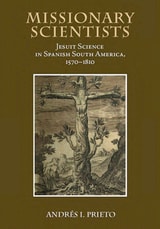
Missionary Scientists
Jesuit Science in Spanish South America, 1570-1810Andres I. Prieto
Vanderbilt University Press, 2011
What becomes clear throughout Missionary Scientists is that early missionaries were adept in adapting to local practices, in order to both understand the scientific foundations of these techniques and ingratiate themselves to the native communities.
Spanning the disciplines of history, religion, and Latin American studies, Missionary Scientists reshapes our understanding of the importance of the Jesuit missions in establishing early scientific traditions in the New World.
Mixed Feelings and Vexed Passions
Exploring Emotions in Biblical LiteratureF. Scott Spencer
SBL Press, 2017
A ground-breaking collection exploring the rich array of emotions in biblical literature
An international team of Hebrew Bible and New Testament scholars offers incisive case studies of passions displayed by divine and human figures in the biblical texts ranging from joy, happiness, and trust to grief, hate, and disgust. Essays address how biblical characters' feelings affect their relationship with God, one another, and the world and how these feelings mix together, for good or ill, for flourishing or vexation. Deeply engaged with both ancient and modern contexts, including the burgeoning interdisciplinary study of emotion in the humanities and sciences, these essays break down the artificial divide between reason and passion, cognition and emotion, thought and feeling in biblical study.
Features
- Case studies drawn from multiple genres across the Bible: narrative, prophets, poetry, wisdom, Gospels, and letters
- Helpful select bibliographies of interdisciplinary resources at the end of each essay
- Critical balance between theory and practice and between method and close textual analysis
- Distinctive ancient Hebrew and Greek uses of emotional terms and concepts compared with each other and with evolving understandings in Western culture
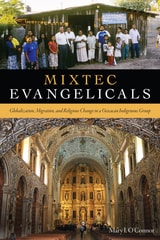
Mixtec Evangelicals
Globalization, Migration, and Religious Change in a Oaxacan Indigenous GroupMary I. O'Connor
University Press of Colorado, 2016
Mixtec Evangelicals is a comparative ethnography of four Mixtec communities in Oaxaca, detailing the process by which economic migration and religious conversion combine to change the social and cultural makeup of predominantly folk-Catholic communities. The book describes the effects on the home communities of the Mixtecs who travel to northern Mexico and the United States in search of wage labor and return having converted from their rural Catholic roots to Evangelical Protestant religions.
O’Connor identifies globalization as the root cause of this process. She demonstrates the ways that neoliberal policies have forced Mixtecs to migrate and how migration provides the contexts for conversion. Converts challenge the set of customs governing their Mixtec villages by refusing to participate in the Catholic ceremonies and social gatherings that are at the center of traditional village life. The home communities have responded in a number of ways—ranging from expulsion of converts to partial acceptance and adjustments within the village—depending on the circumstances of conversion and number of converts returning.
Presenting data and case studies resulting from O’Connor’s ethnographic field research in Oaxaca and various migrant settlements in Mexico and the United States, Mixtec Evangelicals explores this phenomenon of globalization and observes how ancient communities are changed by their own emissaries to the outside world. Students and scholars of anthropology, Latin American studies, and religion will find much in this book to inform their understanding of globalization, modernity, indigeneity, and religious change.
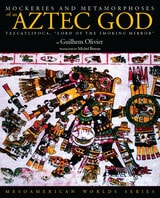
Mockeries and Metamorphoses of an Aztec God
Tezcatlipoca, "Lord of the Smoking Mirror"Guilhem Olivier
University Press of Colorado, 2003
An enigmatic and melodramatic figure, the Lord of the Smoking Mirror was both drunken seducer and mutilated transgressor and although he severely punished those who violated pre-Columbian moral codes, he also received mortal confessions. A patron deity to kings and warriors as well as a protector of slaves, Tezcatlipoca often clashed in epic confrontations with his "enemy brother" Quetzalcoatl, the famed Feathered Serpent. Yet these powers of Mesoamerican mythology collaborated to create the world, and their common attributes hint at a dual character.
In a sophisticated, systematic tour through the sources and problems related to Tezcatlipoca's protean powers and shifting meanings, Olivier guides readers through the symbolic names of this great god, from his representation on skins and stones to his relationship to ritual knives and other deities.
Drawing upon iconographic material, chronicles written in Spanish and in Nahuatl, and the rich contributions of ethnography, Mockeries and Metamorphoses of an Aztec God - like the mirror of Tezcatlipoca in which the fates of mortals were reflected - reveals an important but obscured portion of the cosmology of pre-Columbian Mexico.

Modern American Religion, Volume 1
The Irony of It All, 1893-1919Martin E. Marty
University of Chicago Press, 1986
"Marty writes with the highest standards of scholarship and with his customary stylistic grace. No series of books is likely to tell us as much about the religious condition of our own time as "Modern American Religion."—Robert L. Spaeth, Minneapolis Star Tribune
"The wealth of material and depth of insight are beyond reproach. This book will clearly stand as an important meteorological guide to the storm front of modernity as it swept Americans into the twentieth century."—Belden C. Lane, Review of Religions
"Whatever one thinks about Marty's theological or philosophical position as a historian, the charm of his friendly circumspective approach to American religious history is irresistible."—John E. Wilson, Theological Studies
"Marty attempts to impose historical order on the divergent ways a century of Americans have themselves tried to find order in their worlds. . . . [He] meets the challenge deftly. . . . It is a book relevant to our time. . . . Engages the heart and mind jointly."—Andy Solomon, Houston Post

Modern American Religion, Volume 2
The Noise of Conflict, 1919-1941Martin E. Marty
University of Chicago Press, 1991
"He tells the story [of the 1920s and 1930s] with a verve seldom equaled and manages to condense in one volume the results of dozens of specialized monographs. . . . [It] bears the usual hallmarks of a Marty book: a smoothly flowing narrative, passages studded with suggestive insight inviting further research, and apt quotations that capture the gist of complicated issues. . . . [A] splendid book. . . . Deserves a wide readership and undoubtedly will receive it." —James H. Moorhead, Chicago Sunday Tribune
"There is simply no better source, certainly none so engaging, for the interactions of religion and the larger culture in the interwar period." —Robert Booth Fowler, Journal of American History
"[This book is] not merely a history of American religion, but what might better be called a religious history" —David M. Kennedy, New York Times Book Review