Results by title
1927 books match the query 'Technology & Engineering' and 125 start with m
Modern Communications Systems
A First CourseTodor Cooklev
Michigan Publishing Services, 2024

Modern Filter Design
Active RC and switched capacitorMohammed S. Ghausi
The Institution of Engineering and Technology, 2003

Modern Personal Radio Systems
R.C.V. Macario
The Institution of Engineering and Technology, 1996
Modern Power Electronic Devices
Physics, applications, and reliabilityFrancesco Iannuzzo
The Institution of Engineering and Technology, 2020

Modern Radar Detection Theory
Antonio De Maio
The Institution of Engineering and Technology, 2016

Modern Radar for Automotive Applications
Zhengyu Peng
The Institution of Engineering and Technology, 2022
Monarchs, Ministers, and Maps
The Emergence of Cartography as a Tool of Government in Early Modern EuropeEdited by David Buisseret
University of Chicago Press, 1992
consolidate their power realized that better knowledge of
their lands would strengthen their control over them. By
1550, the cartographer's art had already become an important
instrument for bringing territories under the control of
centralized government; increasing governmental reliance on
maps stimulated the refinement of cartographic techniques
throughout the following century.
This volume, a detailed survey of the political uses of
cartography between 1400 and 1700 in Italy, France, England,
Poland, Austria, and Spain, answers these questions: When
did monarchs and ministers begin to perceive that maps could
be useful in government? For what purposes were maps
commissioned? How accurate and useful were they? How did
cartographic knowledge strengthen the hand of government?
The chapters offer new insights into the development of
cartography and its role in European history.
Contributors to the volume are John Marino, Peter
Barber, David Buisseret, Geoffrey Parker, James Vann, and
Michael J. Mikòs.

Monitoring and Control using Synchrophasors in Power Systems with Renewables
Innocent Kamwa
The Institution of Engineering and Technology, 2020

Monster Fire at Minong
Wisconsin’s Five Mile Tower Fire of 1977Bill Matthias
Wisconsin Historical Society Press, 2010

Montgomery C. Meigs and the Building of the Nation’s Capital
William C. Dickinson
Ohio University Press, 2001
At the age of thirty-six, in 1852, Lt. Montgomery Cunningham Meigs of the Army Corps of Engineers reported to Washington, D.C., for duty as a special assistant to the chief army engineer, Gen. Joseph G. Totten. It was a fateful assignment, both for the nation’s capital and for the bright, ambitious, and politically connected West Point graduate.
Meigs's forty-year tenure in the nation's capital was by any account spectacularly successful. He surveyed, designed, and built the Washington water supply system, oversaw the extension of the U.S. Capitol and the erection of its massive iron dome, and designed and supervised construction of the Pension Building, now the home of the National Building Museum. The skills he exhibited in supervising engineering projects were carefully noted by political leaders, including president-elect Abraham Lincoln, who named Meigs quartermaster general of the Union Army, the most important position he held during his long and active military career.
Meigs believed Washington, D.C., should be the reincarnation of Rome, the ancient capital of the Roman Empire. He endeavored to memorialize the story of the American nation in all the structures he built, expressing these ideas in murals, sculpture, and monumental design.
Historians have long known Meigs for the organizational genius with which he fulfilled his duty as quartermaster general during the Civil War and for his unwavering loyalty to Lincoln and Secretary of War Edwin Stanton. This volume establishes his claim as one of the major nineteenth-century contributors to the built environment of the nation's capital.

Moralizing Technology
Understanding and Designing the Morality of ThingsPeter-Paul Verbeek
University of Chicago Press, 2011

More Important Than the Music
A History of Jazz DiscographyBruce D. Epperson
University of Chicago Press, 2013
Mothers and Daughters of Invention
Notes for a Revised History of TechnologyStanley, Autumn
Rutgers University Press, 1995

Motion Vision
Design of compact motion sensing solutions for navigation of autonomous systemsJ. Kolodko
The Institution of Engineering and Technology, 2005

Motion-Induced Eddy Current Techniques for Non-Destructive Testing and Evaluation
Hartmut Brauer
The Institution of Engineering and Technology, 2019

Mule South to Tractor South
Mules, Machines, and the Transformation of the Cotton SouthGeorge B. Ellenberg
University of Alabama Press, 2013
The adoption of the mule as the major agricultural resource in the American South and its later displacement by the mechanical tractor.
The author describes the adoption of the mule as the major agricultural resource in the American South and its later displacement by the mechanical tractor. After describing the surprising slowness of southern farmers to realize the superiority of the mule over the horse for agricultural labor, Ellenberg strives to capture the symbiosis that emerged between animal and man to illuminate why and how the mule became a standard feature in Southern folk culture.
Having been slow to adopt the mule, southern farmers were then reluctant to set it aside in favor of the tractor. Ellenberg describes the transformation as the tractor gradually displaced the mule and the role of the U.S. Department of Agriculture in this process.
The work not only becomes a survey of the development of southern agriculture as revealed through an examination of this premier work animal but also follows the emergence of the animal as a cultural icon, as it figures in southern literature, folklore, and music.
Multichannel Heart Sound Signal Processing and Classification
A concise overviewGoutam Saha
The Institution of Engineering and Technology, 2027

Multicore Simulation of Power System Transients
Fabian M. Uriarte
The Institution of Engineering and Technology, 2013
Multidimensional Magnetic-Field Microsensors
Chavdar Roumenin
The Institution of Engineering and Technology, 2017

Multidimensional Radar Imaging, Volume 1
Marco Martorella
The Institution of Engineering and Technology, 2020

Multidimensional Radar Imaging, Volume 2
Marco Martorella
The Institution of Engineering and Technology, 2024
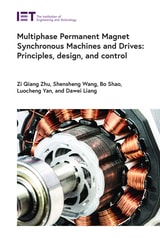
Multiphase Permanent Magnet Synchronous Machines and Drives
Principles, design, and controlZi Qiang Zhu
The Institution of Engineering and Technology, 2025

Multistatic Passive Radar Target Detection
A detection theory frameworkAmir Zaimbashi
The Institution of Engineering and Technology, 2023

My Fair Ladies
Female Robots, Androids, and Other Artificial EvesWosk, Julie
Rutgers University Press, 2015
The fantasy of a male creator constructing his perfect woman dates back to the Greek myth of Pygmalion and Galatea. Yet as technology has advanced over the past century, the figure of the lifelike manmade woman has become nearly ubiquitous, popping up in everything from Bride of Frankenstein to Weird Science to The Stepford Wives. Now Julie Wosk takes us on a fascinating tour through this bevy of artificial women, revealing the array of cultural fantasies and fears they embody.
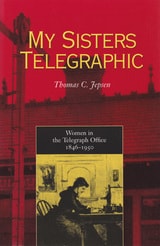
My Sisters Telegraphic
Women in the Telegraph Office, 1846–1950Thomas C. Jepsen
Ohio University Press, 2000
The role of the telegraph operator in the mid-nineteenth century was like that of today’s software programmer/analyst, according to independent scholar Tom Jepsen, who notes that in the “cyberspace” of long ago, male operators were often surprised to learn that the “first-class man” on the other end of the wire was a woman.
Like the computer, the telegraph caused a technological revolution. The telegraph soon worked synergistically with the era’s other mass-scale technology, the railroad, to share facilities as well as provide communications to help trains run on time.
The strategic nature of the telegraph in the Civil War opened opportunities for women, but tension arose as men began to return from military service. However, women telegraphers did not affect male employment or wage levels. Women kept their jobs after the war with support from industry—Western Union in particular—and because they defended and justified their role.
“Although women were predominantly employed in lower-paying positions and in rural offices, women who persisted and made a career of the profession could work up to managerial or senior technical positions that, except for wage discrimination, were identical to those of their male counterparts,” writes Jepsen. “Telegraphy as an occupation became gendered, in the sense that we understand today, only after the introduction of the teletype and the creation of a separate role for women teletype operators.”
My Sisters Telegraphic is a fresh introduction to this pivotal communications technology and its unsung women workers, long neglected by labor and social historians.