Results by title
28167 books match the query 'History' and 1583 start with m
Music and Capitalism
A History of the PresentTimothy D. Taylor
University of Chicago Press, 2015
Taylor explores everything from the branding of musicians to the globalization of music to the emergence of digital technologies in music production and consumption. Drawing on interviews with industry insiders, musicians, and indie label workers, he traces both the constricting forces of bottom-line economics and the revolutionary emergence of the affordable home studio, the global internet, and the mp3 that have shaped music in different ways. A sophisticated analysis of how music is made, repurposed, advertised, sold, pirated, and consumed, Music and Capitalism is a must read for anyone who cares about what they are listening to, how, and why.
Music and Conflict
Edited by John Morgan O'Connell and Salwa El-Shawan Castello-Branco
University of Illinois Press, 2010
Music and Ideas in the Sixteenth and Seventeenth Centuries
Thomas Mathiesen
University of Illinois Press, 2017

Music and Levels of Narration in Film
Steps across the BorderGuido Heldt
Intellect Books, 2013
A PDF version of this book is available for free in open access via the OAPEN Library platform, www.oapen.org It has been made available under a Creative Commons Attribution 4.0 International Public License and is part of Knowledge Unlatched.
Music and Mystique in Muscle Shoals
Christopher M. Reali
University of Illinois Press, 2022
The forceful music that rolled out of Muscle Shoals in the 1960s and 1970s shaped hits by everyone from Wilson Pickett and Aretha Franklin to the Rolling Stones and Paul Simon. Christopher M. Reali's in-depth look at the fabled musical hotbed examines the events and factors that gave the Muscle Shoals sound such a potent cultural power. Many artists trekked to FAME Studios and Muscle Shoals Sound in search of the sound of authentic southern Black music—and at times expressed shock at the mostly white studio musicians waiting to play it for them. Others hoped to draw on the hitmaking production process that defined the scene. Reali also chronicles the overlooked history of Muscle Shoals's impact on country music and describes the region's recent transformation into a tourism destination.
Multifaceted and informed, Music and Mystique in Muscle Shoals reveals the people, place, and events behind one of the most legendary recording scenes in American history.
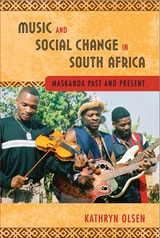
Music and Social Change in South Africa
Maskanda Past and PresentKathryn Olsen
Temple University Press, 2014
Working closely with translated song lyrics and musical notation-and applying musical and socio-political analysis to this music and its cultural context-Olsen argues that maskanda offers insight into how the post-apartheid ideal of social transformation is experienced by those who were marginalized for most of the twentieth century.
Drawing on a decade of research, Olsen strives to demystify the Zulu part of contemporary experience in South Africa and to reveal some of the complexities of the social, economic, and political landscape of contemporary South Africa.

Music and Theater in Minnesota History
John K. Sherman
University of Minnesota Press, 1958
Music and Theater in Minnesota History was first published in 1958. Minnesota Archive Editions uses digital technology to make long-unavailable books once again accessible, and are published unaltered from the original University of Minnesota Press editions.
Music and the Making of Portugal and Spain
Nationalism and Identity Politics in the Iberian PeninsulaEdited by Matthew Machin-Autenrieth, Salwa el-Shawan Castelo-Branco, and Samuel Llano
University of Illinois Press, 2023
What does music in Portugal and Spain reveal about the relationship between national and regional identity building? How do various actors use music to advance nationalism? How have state and international heritage regimes contributed to nationalist and regionalist projects? In this collection, contributors explore these and other essential questions from a range of interdisciplinary vantage points. The essays pay particular attention to the role played by the state in deciding what music represents Portuguese or Spanish identity. Case studies examine many aspects of the issue, including local recording networks, so-called national style in popular music, and music’s role in both political protest and heritage regimes. Topics include the ways the Salazar and Franco regimes adapted music to align with their ideological agendas; the twenty-first-century impact of UNESCO’s Intangible Cultural Heritage program on some of Portugal and Spain's expressive practices; and the tensions that arise between institutions and community in creating and recreating meanings and identity around music.
Contributors: Ricardo Andrade, Vera Marques Alves, Salwa El-Shawan Castelo-Branco, Cristina Sánchez-Carretero, José Hugo Pires Castro, Paulo Ferreira de Castro, Fernán del Val, Héctor Fouce, Diego García-Peinazo, Leonor Losa, Josep Martí, Eva Moreda Rodríguez, Pedro Russo Moreira, Cristina Cruces Roldán, and Igor Contreras Zubillaga
Music and the New Global Culture
From the Great Exhibitions to the Jazz AgeHarry Liebersohn
University of Chicago Press, 2019
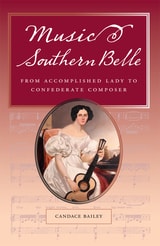
Music and the Southern Belle
From Accomplished Lady to Confederate ComposerCandace Bailey
Southern Illinois University Press, 2010
Candace Bailey’s exploration of the intertwining worlds of music and gender shows how young southern women pushed the boundaries of respectability to leave their unique mark on a patriarchal society. Before 1861, a strictly defined code of behavior allowed a southern woman to identify herself as a “lady” through her accomplishments in music, drawing, and writing, among other factors. Music permeated the lives of southern women, and they learned appropriate participation through instruction at home and at female training institutions. A belle’s primary venue was the parlor, where she could demonstrate her usefulness in the domestic circle by providing comfort and serving to enhance social gatherings through her musical performances, often by playing the piano or singing. The southern lady performed in public only on the rarest of occasions, though she might attend public performances by women. An especially talented lady who composed music for a broader audience would do so anonymously so that her reputation would remain unsullied.
The tumultuous Civil War years provided an opportunity for southern women to envision and attempt new ways to make themselves useful to the broader, public society. While continuing their domestic responsibilities and taking on new ones, young women also tested the boundaries of propriety in a variety of ways. In a broad break with the past, musical ladies began giving public performances to raise money for the war effort, some women published patriotic Confederate music under their own names, supporting their cause and claiming public ownership for their creations. Bailey explores these women’s lives and analyzes their music. Through their move from private to public performance and publication, southern ladies not only expanded concepts of social acceptability but also gained a valued sense of purpose.
Music and the Southern Belle places these remarkable women in their social context, providing compelling insight into southern culture and the intricate ties between a lady’s identity and the world of music. Augmented by incisive analysis of musical compositions and vibrant profiles of composers, this volume is the first of its kind, making it an essential read for devotees of Civil War and southern history, gender studies, and music.
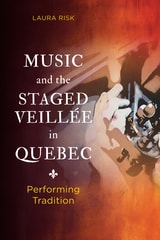
Music and the Staged Veillée in Quebec
Performing TraditionLaura Risk
University of Illinois Press, 2026
Fiddlers, step dancers, storytellers, traditional singers, and folklorists staged Montreal’s first veillée in 1919. All that was missing, announced one of the organizers, was a magic carpet to transport the audience into the countryside and a kiss of forgetfulness to erase the woes of modern life.
Laura Risk tells the story of the veillées and explores how these commercial performances of idealized rural life became part of Quebec’s cultural heritage. Her in-depth examinations of key performances and recordings follow traditional music and dance from the stage onto radio, records and other audio media, and television. Throughout, Risk documents how veillées redefined folklore in twentieth-century Quebec and illuminates how their distinctive framing of traditional musicians and repertoire impacts the performance and reception of the music to the present day.
Astute and evocative, Music and the Staged Veillée in Quebec reveals the music, dancing, call-and-response songs, and extramusical associations winding through century-long conversations about nation, culture, and identity in Quebec.
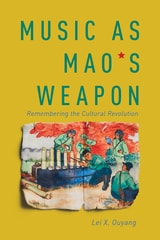
Music as Mao's Weapon
Remembering the Cultural RevolutionLei X. Ouyang
University of Illinois Press, 2022
China's Cultural Revolution (1966-1976) produced propaganda music that still stirs unease and, at times, evokes nostalgia. Lei X. Ouyang uses selections from revolutionary songbooks to untangle the complex interactions between memory, trauma, and generational imprinting among those who survived the period of extremes. Interviews combine with ethnographic fieldwork and surveys to explore both the Cultural Revolution's effect on those who lived through it as children and contemporary remembrance of the music created to serve the Maoist regime. As Ouyang shows, the weaponization of music served an ideological revolution but also revolutionized the senses. She examines essential questions raised by this phenomenon, including: What did the revolutionization look, sound, and feel like? What does it take for individuals and groups to engage with such music? And what is the impact of such an experience over time?
Perceptive and provocative, Music as Mao's Weapon is an insightful look at the exploitation and manipulation of the arts under authoritarianism.
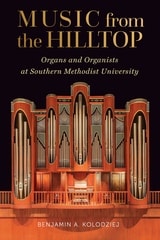
Music from the Hilltop
Organs and Organists at Southern Methodist UniversityBenjamin A. Kolodziej
University of North Texas Press, 2023
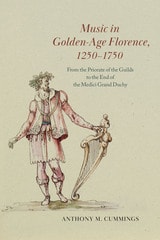
Music in Golden-Age Florence, 1250–1750
From the Priorate of the Guilds to the End of the Medici Grand DuchyAnthony M. Cummings
University of Chicago Press, 2023
Florence is justly celebrated as one of the world’s most important cities. It enjoys mythic status and occupies an enviable place in the historical imagination. But its musico-historical importance is not as well understood as it should be. If Florence was the city of Dante, Michelangelo, and Galileo, it was also the birthplace of the madrigal, opera, and the piano. Music in Golden-Age Florence, 1250–1750 recounts Florence’s principal contributions to music and the history of how music was heard and cultivated in the city, from civic and religious institutions to private patronage and the academies. This book is an invaluable complement to studies of the art, literature, and political thought of the late-medieval and early-modern eras and the quasi-legendary figures in the Florentine cultural pantheon.

Music in the Age of Anxiety
American Music in the FiftiesJames Wierzbicki
University of Illinois Press, 2016
Music historian James Wierzbicki sheds light on how the Fifties' pervasive moods affected its sounds. Moving across genres established--pop, country, opera--and transfigured--experimental, rock, jazz--Wierzbicki delves into the social dynamics that caused forms to emerge or recede, thrive or fade away. Red scares and white flight, sexual politics and racial tensions, technological progress and demographic upheaval--the influence of each rooted the music of this volatile period to its specific place and time. Yet Wierzbicki also reveals the host of underlying connections linking that most apprehensive of times to our own uneasy present.

Music in the Castle
Troubadours, Books, and Orators in Italian Courts of the Thirteenth, Fourteenth, and Fifteenth CenturiesF. Alberto Gallo
University of Chicago Press, 1996
In the first of three elegant essays, Gallo examines the troubadours who traveled to northern Italian courts from Provence during the thirteenth century. He discusses their performance practices, the verbal and musical sophistication of their songs, and their role in the daily life of courtiers at Genoa, Ferrara, and Monferrato. The second essay concerns the now dispersed collection of the Visconti library at Pavia. Here, Gallo examines how this collection expressed the tastes of the fourteenth-century court of Giangaleazzo Visconti, how French arts were imported and imitated at Pavia, and the effects this had on music heard at the court. In the final essay, Gallo looks at the fifteenth-century tradition of improvised music, and especially the virtuoso lute player Pietrobono. Mythologized in literary circles of his day, Pietrobono becomes a point of departure for a discussion of the entire vision of music of Italian humanists, from Guarino Veronese to Aurelio Brandolini.

Music in the Flesh
An Early Modern Musical PhysiologyBettina Varwig
University of Chicago Press, 2023
Music in the Flesh reimagines the lived experiences of music-making subjects—composers, performers, listeners—in the long seventeenth century. There are countless historical testimonies of the powerful effects of music upon the early modern body; it is described as moving, ravishing, painful, dangerous, curative, and miraculous while affecting “the circulation of the humors, the purification of the blood, the dilation of the vessels and pores.”
How were these early modern European bodies constituted that music generated such potent bodily-spiritual effects? Bettina Varwig argues that early modern music-making practices challenge our modern understanding of human nature as a mind-body dichotomy. Instead, they persistently affirm a more integrated anthropology, in which body, soul, and spirit remain inextricably entangled. Moving with ease across repertories and regions, sacred and vernacular musics, and domestic and public settings, Varwig sketches a “musical physiology” that is as historically illuminating as it is relevant for present-day performance. This book makes a significant contribution not just to the history of music, but also to the history of the body, the senses, and the emotions, revealing music as a unique access point for reimagining early modern modes of being-in-the-world.
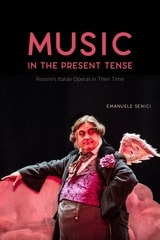
Music in the Present Tense
Rossini’s Italian Operas in Their TimeEmanuele Senici
University of Chicago Press, 2019
Emanuele Senici’s new book provides a fresh look at the motives behind the Rossinian furore and its aftermath by examining the composer’s works in the historical context in which they were conceived, performed, seen, heard, and discussed. Situating the operas firmly within the social practices, cultural formations, ideological currents, and political events of early nineteenth-century Italy, Senici reveals Rossini’s dramaturgy as a radically new and specifically Italian reaction to the epoch-making changes witnessed in Europe at the time. The first book-length study of Rossini’s Italian operas to appear in English, Music in the Present Tense exposes new ways to explore nineteenth-century music and addresses crucial issues in the history of modernity, such as trauma, repetition, and the healing power of theatricality.
Music of Another World
Szymon Laks
Northwestern University Press, 2000
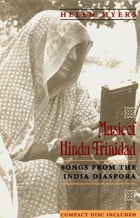
Music of Hindu Trinidad
Songs from the India DiasporaHelen Myers
University of Chicago Press, 1998
Myers details the musical repertory of Felicity, which is based largely on north Indian genres including the traditional Bhojpuri folk songs and drumming styles brought by the first indentured laborers in 1845. In her engaging exploration of the fate of Indian classical music and new popular styles such as Hindi calypso, soca, and chutney, she even finds herself at the ancestral home of Trinidadian V. S. Naipaul in India. Copiously illustrated and accompanied by a compact disk, Music of Hindu Trinidad is a model ethnographic study.
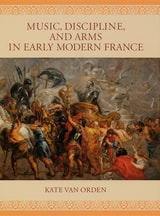
Music, Discipline, and Arms in Early Modern France
Kate van Orden
University of Chicago Press, 2005
The great pressure on French noblemen to take up the life of the warrior gave rise to bellicose art forms such as sword dances and equestrian ballets. Far from being construed as effeminizing, such combinations of music and the martial arts were at once refined and masculine-a perfect way to display military prowess. The incursion of music into riding schools and infantry drills contributed materially to disciplinary order, enabling the larger and more effective armies of the seventeenth century. This book is a history of the development of these musical spheres and how they brought forth new cultural priorities of civility, military discipline, and political harmony. Music, Discipline, and Arms in Early Modern France effectively illustrates the seminal role music played in mediating between the cultural spheres of letters and arms.
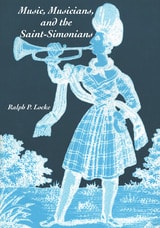
Music, Musicians, and the Saint-Simonians
Ralph P. Locke
University of Chicago Press, 1986
The disciples of Claude Henri de Rouvroy, comte de Saint-Simon, believed that increased industrial production would play a crucial role in improving the condition of the working masses and in shifting power from the aristocratic "drones" to the enterprising men of talent then rising in the French middle class. As a powerful means of winning support for their views, music became an integral part of the Saint-Simonians' writings and ceremonial activities.
Among the musicians Locke discusses are Berlioz, Liszt, and Mendelssohn, whose tangential association with the Saint-Simonians reveals new aspects of their social and aesthetic views. Other musicians became the Saint-Simonians' faithful followers, among them Jules Vinçard, Dominique Tajan-Rogé, and particularly Félicien David, the movement's principal composer. Many of these composers' works, reconstructed by Locke from authentic sources, are printed here, including the "Premier Chant des industriels," written at Saint-Simon's request by Rouget de Lisle, composer of the "Marseillaise."
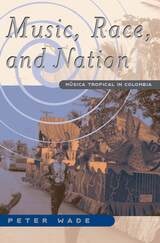
Music, Race, and Nation
Musica Tropical in ColombiaPeter Wade
University of Chicago Press, 2000
Wade's fresh look at the way music transforms and is transformed by ideologies of race, nation, sexuality, tradition, and modernity is the first book-length study of Colombian popular music.
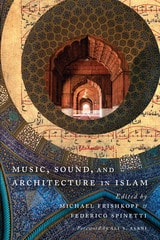
Music, Sound, and Architecture in Islam
Edited by Michael Frishkopf and Federico Spinetti
University of Texas Press, 2018
Tracing the connections between music making and built space in both historical and contemporary times, Music, Sound, and Architecture in Islam brings together domains of intellectual reflection that have rarely been in dialogue to promote a greater understanding of the centrality of sound production in constructed environments in Muslim religious and cultural expression.
Representing the fields of ethnomusicology, anthropology, art history, architecture, history of architecture, religious studies, and Islamic studies, the volume’s contributors consider sonic performances ranging from poetry recitation to art, folk, popular, and ritual musics—as well as religious expressions that are not usually labeled as “music” from an Islamic perspective—in relation to monumental, vernacular, ephemeral, and landscape architectures; interior design; decoration and furniture; urban planning; and geography. Underscoring the intimate relationship between traditional Muslim sonic performances, such as the recitation of the Qur’an or devotional songs, and conventional Muslim architectural spaces, from mosques and Sufi shrines to historic aristocratic villas, gardens, and gymnasiums, the book reveals Islam as an ideal site for investigating the relationship between sound and architecture, which in turn proves to be an innovative and significant angle from which to explore Muslim cultures.
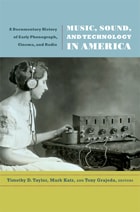
Music, Sound, and Technology in America
A Documentary History of Early Phonograph, Cinema, and RadioTimothy D. Taylor, Mark Katz, and Tony Grajeda, eds.
Duke University Press, 2012
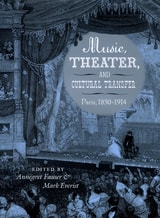
Music, Theater, and Cultural Transfer
Paris, 1830-1914Edited by Annegret Fauser and Mark Everist
University of Chicago Press, 2009
Opera and musical theater dominated French culture in the 1800s, and the influential stage music that emerged from this period helped make Paris, as Walter Benjamin put it, the “capital of the nineteenth century.” The fullest account available of this artistic ferment and its international impact, Music, Theater, and Cultural Transfer explores the diverse institutions that shaped Parisian music and extended its influence across Europe, the Americas, and Australia.
The contributors to this volume, who work in fields ranging from literature to theater to musicology, focus on the city’s musical theater scene as a whole rather than on individual theaters or repertories. Their broad range enables their collective examination of the ways in which all aspects of performance and reception were affected by the transfer of works, performers, and management models from one environment to another. By focusing on this interplay between institutions and individuals, the authors illuminate the tension between institutional conventions and artistic creation during the heady period when Parisian stage music reached its zenith.

Music, ritual, and Falasha history
Kay Kaufman. Shelemay
Michigan State University Press, 1989
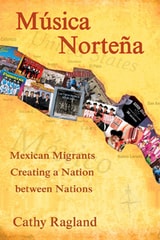
Musica Nortena
Mexican Americans Creating a Nation Between NationsCathy Ragland
Temple University Press, 2009
Música norteña, a musical genre with its roots in the folk ballad traditions of northern Mexico and the Texas-Mexican border region, has become a hugely popular musical style in the U.S., particularly among Mexican immigrants. Featuring evocative songs about undocumented border-crossers, drug traffickers, and the plight of immigrant workers, música norteña has become the music of a "nation between nations." Música Norteña is the first definitive history of this transnational music that has found enormous commercial success in norteamérica.
Cathy Ragland, an ethnomusicologist and former music critic, serves up the fascinating fifty-year story of música norteña, enlivened by interviews with important musicians and her own first-hand observations of live musical performances. Beyond calling our attention to musical influences, ragland shows readers the social and economic forces at work behind the music. By comparing música norteña with other popular musical forms, including conjunto tejano, she helps us understand and appreciate the musical ties that bind the Mexican diaspora.
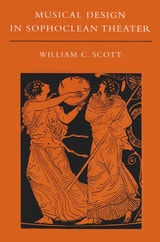
Musical Design in Sophoclean Theater
William C. Scott
Dartmouth College Press, 2000
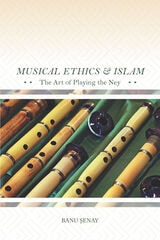
Musical Ethics and Islam
The Art of Playing the NeyBanu Senay
University of Illinois Press, 2020
Banu Şenay documents the years-long training required to become a neyzen—a player of the ney. The process holds a transformative power that invites students to create a new way of living that involves alternative relationships with the self and others, changing perceptions of the city, and a dedication to craftsmanship. Şenay visits reed harvesters and travels from studios to workshops to explore the practical processes of teaching and learning. She also becomes an apprentice ney-player herself, exploring the desire for spirituality that encourages apprentices and masters alike to pursue ney music and its scaffolding of Islamic ethics and belief.
Musical Improvisation
Art, Education, and SocietyEdited by Gabriel Solis and Bruno Nettl
University of Illinois Press, 2008
Contributors are Stephen Blum, Patricia Shehan Campbell, Sabine M. Feisst, Lawrence Gushee, Robert S. Hatten, William Kinderman, Natalie Kononenko, Robert Levin, Charlotte Mattax Moersch, Ingrid Monson, John P. Murphy, Bruno Nettl, A. Jihad Racy, Anne K. Rasmussen, Stephen Slawek, Gabriel Solis, Nicholas Temperley, John Toenjes, and Thomas Turino.
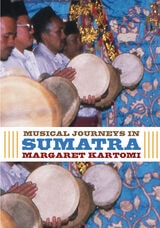
Musical Journeys in Sumatra
Margaret Kartomi
University of Illinois Press, 2012
Although Sumatra is the sixth largest island in the world and home to an estimated 44 million Indonesians, its musical arts and cultures have not been the subject of a book-length study until now. Documenting and explaining the ethnographic, cultural, and historical contexts of Sumatra's performing arts, Musical Journeys in Sumatra also traces the changes in their style, content, and reception from the early 1970s onward.
Having dedicated almost forty years of scholarship to exploring the rich and varied music of Sumatran provinces, Margaret Kartomi provides a fascinating ethnographic record of vanishing musical genres, traditions, and practices that have become deeply compromised by the pressures of urbanization, rural poverty, and government policy. This deeply informed collection showcases the complex diversity of Indonesian music and includes field observations from six different provinces: Aceh, North Sumatra, Riau, West Sumatra, South Sumatra, and Bangka-Belitung. Featuring photographs and original drawings from Kartomi's field observations of instruments and performances, Musical Journeys in Sumatra provides a comprehensive musical introduction to this neglected, very large island, with its hundreds of ethno-linguistic-musical groups.
Musical Migration and Imperial New York
Early Cold War ScenesBrigid Cohen
University of Chicago Press, 2022
From the urban street level of music clubs and arts institutions to the world-making routes of global migration and exchange, this book redraws the map of experimental art to reveal the imperial dynamics and citizenship struggles that continue to shape music in the United States.
Beginning with the material conditions of power that structured the cityscape of New York in the early Cold War years, Brigid Cohen looks at a wide range of artistic practices (concert music, electronic music, jazz, performance art) and actors (Edgard Varèse, Charles Mingus, Yoko Ono, and Fluxus founder George Maciunas) as they experimented with new modes of creativity. Cohen links them with other migrant creators vital to the city’s postwar culture boom, creators whose stories have seldom been told (Halim El-Dabh, Michiko Toyama, Vladimir Ussachevsky). She also gives sustained and serious treatment to the work of Yoko Ono, something long overdue in music scholarship. Musical Migration and Imperial New York is indispensable reading, offering a new understanding of global avant-gardes and American experimental music as well as the contrasting feelings of belonging and exclusion on which they were built.
Musicians in Transit
Argentina and the Globalization of Popular MusicMatthew B. Karush
Duke University Press, 2017
Musicophilia in Mumbai
Performing Subjects and the Metropolitan UnconsciousTejaswini Niranjana
Duke University Press, 2020
Muslim Becoming
Aspiration and Skepticism in PakistanNaveeda Khan
Duke University Press, 2012

Muslim Communities Reemerge
Historical Perspectives on Nationality, Politics, and Opposition in the Former Soviet Union and YugoslaviaAndreas Kappeler, Gerhard Simon, and Georg Brunner, eds.
Duke University Press, 1994
In fourteen chapters and an updated introduction, European and North American specialists examine the recent evolution of Islamic expression and practice in these former Communist regions, as well as its political significance within officially atheistic regimes. Representing a wide range of disciplines and perspectives, the authors detail how the modern ethno-religious situation developed and matured in hostile circumstances, the degree of latitude the local Muslims achieved in religious expression, and what prospect the future seemed to offer just before the breakup of the Soviet Union and the Federal Republic of Yugoslavia. Overall, the book provides a thorough analysis of the coincidence and tension between ethnic and religious identity in two countries officially devoted to the separation of ethnic groups in domestic cultural arrangements but not in the social or political realm.
Contributors. Edward Allworth, Hans Bräker, Marie Broxup, Georg Brunner, Bert G. Fragner, Uwe Halbach, Wolfgang Höpken, Andreas Kappeler, Edward J. Lazzerini, Richard Lorenz, Alexandre Popovi´c, Sabrina Petra Ramet, Azade-Ayse Rorlich, Gerhard Simon, Tadeusz Swietochowski
Muslim Land, Christian Labor
Transforming Ottoman Imperial Subjects into Bulgarian National Citizens, c. 1878-1939Anna M. Mirkova
Central European University Press, 2017
Muslim National Communism in the Soviet Union
A Revolutionary Strategy for the Colonial WorldAlexandre A. Bennigsen and S. Enders Wimbush
University of Chicago Press, 1978
The authors show that the ideas of Muslim national communism persist in the land of their birth and have spread to such developing societies as China, Algeria, and Indonesia. This doctrine is an important factor in the ideological split and increasing tensions between industrial and nonindustrial nations, East and West, and now North and South, which grip the world communist movement.
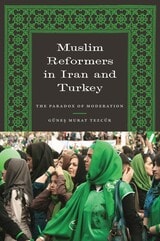
Muslim Reformers in Iran and Turkey
The Paradox of ModerationBy Güneş Murat Tezcür
University of Texas Press, 2010
Moderation theory describes the process through which radical political actors develop commitments to electoral competition, political pluralism, human rights, and rule of law and come to prefer negotiation, reconciliation, and electoral politics over provocation, confrontation, and contentious action. Revisiting this theory through an examination of two of the most prominent moderate Islamic political forces in recent history, Muslim Reformers in Iran and Turkey analyzes the gains made and methods implemented by the Reform Front in the Islamic Republic of Iran and the Justice and Development Party in Turkey.
Both of these groups represent Muslim reformers who came into continual conflict with unelected adversaries who attempted to block their reformist agendas. Based on extensive field research in both locales, Muslim Reformers in Iran and Turkey argues that behavioral moderation as practiced by these groups may actually inhibit democratic progress. Political scientist Güneş Murat Tezcür observes that the ability to implement conciliatory tactics, organize electoral parties, and make political compromises impeded democracy when pursued by the Reform Front and the Justice and Development Party. Challenging conventional wisdom, Tezcür's findings have broad implications for the dynamics of democratic progress.
Muslim Spain
Its History and CultureAnwar G. Chejne
University of Minnesota Press, 1974
Muslim Spain was first published in 1974. Minnesota Archive Editions uses digital technology to make long-unavailable books once again accessible, and are published unaltered from the original University of Minnesota Press editions.
This comprehensive history of Muslim Spain in the centuries from 711 to 1492 provides a panoramic view of the whole field of Hispano-Arabic culture, including science, philosophy, and the arts. As the account makes clear, Muslim Spain was always an integral part of the main literary and intellectual stream of the East and as such was as Islamic as Syria or Egypt. Thus the history is important for an understanding of Islamic culture as a whole and of the interaction of people and ideas. The author shows that the interdependence and continuity of Muslim culture through its long history was nurtured by the unhampered travel of students and scholars and the circulation of publications throughout the width and breadth of the Islamic Empire, notwithstanding the political division that separated Muslim Spain from the center of Islam.
The first five chapter of the book describe, dynasty by dynasty, the Muslims' conquest and rule. The remaining chapters discuss in detail all aspects of Hispano-Arabic culture. Among the subjects are the social structure, the sciences and education, Arabic and linguistic studies, prose and belles lettres, poetry, history, geography, and travel, courtly love, religion, philosophy and mysticism, the natural sciences, and architecture, the minor arts, and music.
The book is illustrated with photographs, drawings, and maps, and there is an extensive bibliography.
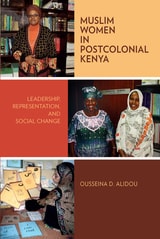
Muslim Women in Postcolonial Kenya
Leadership, Representation, and Social ChangeOusseina D. Alidou
University of Wisconsin Press, 2013
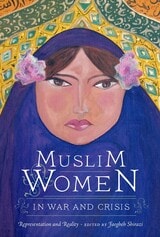
Muslim Women in War and Crisis
Representation and RealityEdited by Faegheh Shirazi
University of Texas Press, 2010
Representing diverse cultural viewpoints, Muslim Women in War and Crisis collects an array of original essays that highlight the experiences and perspectives of Muslim women—their dreams and nightmares and their daily struggles—in times of tremendous social upheaval. Analyzing both how Muslim women have been represented and how they represent themselves, the authors draw on primary sources ranging from poetry and diaries to news reports and visual media. Topics include:
- Peacebrokers in Indonesia
- Exploitation in the Islamic Republic of Iran
- Chechen women rebels
- Fundamentalism in Afghanistan, from refugee camps to Kabul
- Memoirs of Bengali Muslim women
- The 7/7 London bombings, British Muslim women, and the media
Also exploring such images in the United States, Spain, the former Yugoslavia, Tunisia, Algeria, Lebanon, and Iraq, this collection offers a chorus of multidimensional voices that counter Islamophobia and destructive clichés. Encompassing the symbolic national and religious identities of Muslim women, this study goes beyond those facets to examine the realities of day-to-day existence in societies that seek scapegoats and do little to defend the victims of hate crimes. Enhancing their scholarly perspectives, many of the contributors (including the editor) have lived through the strife they analyze. This project taps into their firsthand experiences of war and deadly political oppression.
Muslims Talking Politics
Framing Islam, Democracy, and Law in Northern NigeriaBrandon Kendhammer
University of Chicago Press, 2016
Kendhammer argues that despite Nigeria’s struggles with jihadist insurgency, its recent history is really one of tenuous and fragile reconciliation between mass democratic aspirations and concerted popular efforts to preserve Islamic values in government and law. Combining an innovative analysis of Nigeria’s Islamic and political history with visits to the living rooms of working families, he sketches how this reconciliation has been constructed in the conversations, debates, and everyday experiences of Nigerian Muslims. In doing so, he uncovers valuable new lessons—ones rooted in the real politics of ordinary life—for how democracy might work alongside the legal recognition of Islamic values, a question that extends far beyond Nigeria and into the Muslim world at large.
Muslims in Central Asia
Expressions of Identity and ChangeJo-Ann Gross, ed.
Duke University Press, 1992
This study includes several geopolitical regions—Chinese Central Asia, Soviet Central Asia, Afghanistan, Transoxiana and Khurasan—and covers historical periods from the fifteenth century to the present. Drawing on scholarship in anthropology, religion, history, literature, and language studies, Muslims in Central Asia argues for an interdisciplinary, inter-regional dialog in the development of new approaches to understanding the Muslim societies in Central Asia. The authors creatively examine the social construction of identities as expressed through literature, Islamic discourse, historical texts, ethnic labels, and genealogies, and explore how such identities are formed, changed, and adopted through time.
Contributors. Hamid Algar, Muriel Atkin, Walter Feldman, Dru C. Gladney, Edward J. Lazzerini, Beatrice Forbes Manz, Christopher Murphy, Oliver Roy, Isenbike Togan
Muslims in Kenyan Politics
Political Involvement, Marginalization, and Minority StatusHassan J. Ndzovu
Northwestern University Press, 2014
Kenya’s Muslim population comprises ethnic Arabs, Indians, and black Africans, and its status has varied historically. Under British rule, an imposed racial hierarchy affected Muslims particularly, thwarting the development of a united political voice. Drawing on a broad range of interviews and historical research, Ndzovu presents a nuanced picture of political associations during the postcolonial period and explores the role of Kenyan Muslims as political actors.
Muslims in Spain, 1500 to 1614
L. P. Harvey
University of Chicago Press, 2005
Picking up at the end of his earlier classic study, Islamic Spain, 1250 to 1500— which described the courageous efforts of the followers of Islam to preserve their secular, as well as sacred, culture in late medieval Spain—L. P. Harvey chronicles here the struggles of the Moriscos. These forced converts to Christianity lived clandestinely in the sixteenth century as Muslims, communicating in aljamiado— Spanish written in Arabic characters. More broadly, Muslims in Spain, 1500 to 1614, tells the story of an early modern nation struggling to deal with diversity and multiculturalism while torn by the fanaticism of the Counter-Reformation on one side and the threat of Ottoman expansion on the other. Harvey recounts how a century of tolerance degenerated into a vicious cycle of repression and rebellion until the final expulsion in 1614 of all Muslims from the Iberian Peninsula.
Retold in all its complexity and poignancy, this tale of religious intolerance, political maneuvering, and ethnic cleansing resonates with many modern concerns. Eagerly awaited by Islamist and Hispanist scholars since Harvey's first volume appeared in 1990, Muslims in Spain, 1500 to 1614, will be compulsory reading for student and specialist alike.
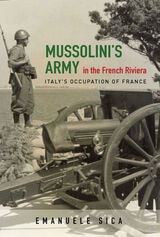
Mussolini's Army in the French Riviera
Italy's Occupation of FranceEmanuele Sica
University of Illinois Press, 2016
Employing a multi-tiered approach, Emanuele Sica examines the simultaneously conflicting and symbiotic relationship between the French population and Italian soldiers. At the grassroots level, Sica asserts that the cultural proximity between the soldiers and the local population, one-quarter of which was Italian, smoothed the sharp angles of miscommunication and cultural faux-pas at a time of great uncertainty. At the same time, it encouraged a laxness in discipline that manifested as fraternization and black marketeering. Sica's examination of political tensions highlights how French prefects and mayors fought to keep the tatters of sovereignty in the face of military occupation. In addition, he reveals the tense relationship between Fascist civilian authorities eager to fulfil imperial dreams of annexation and army leaders desperate to prevent any action that might provoke French insurrection. Finally, he completes the tableau with detailed accounts of how food shortages and French Resistance attacks brought sterner Italian methods, why the Fascists' attempted "Italianization" of the French border city of Menton failed, and the ways the occupation zone became an unlikely haven for Jews.

Must We All Die?
Alaska's Enduring Struggle with TuberculosisRobert Fortuine
University of Alaska Press, 2024
Fortuine chronicles the removal of tuberculosis victims, many of them children, from their families and villages to hospitals in the Lower 48 states. He describes treatments, medical advances, and day-to-day life for the nurses, physicians, missionaries, and teachers who worked to stem the tide that killed and disabled thousands. The struggle against tuberculosis in Alaska is a story of triumph against untold suffering and crippling odds, but it is also a cautionary tale as an increasingly resistant strain of this disease has emerged in the twenty-first century.
"Must We All Die?" is an encyclopedic contribution to the history of medicine and a tribute to those who fought tuberculosis and to the Alaska Natives who endured a cruel disease that destroyed families and ravaged villages.
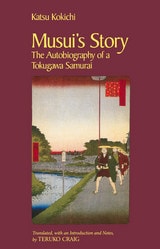
Musui's Story
The Autobiography of a Tokugawa SamuraiKokichi Katsu; Translated by Teruko Craig
University of Arizona Press, 1988
From childhood, Katsu was given to mischief. He ran away from home, once at thirteen, making his way as a beggar on the great trunk road between Edo and Kyoto, and again at twenty, posing as the emissary of a feudal lord. He eventually married and had children but never obtained official preferment and was forced to supplement a meager stipend by dealing in swords, selling protection to shopkeepers, and generally using his muscle and wits.
Katsu's descriptions of loyalty and kindness, greed and deception, vanity and superstition offer an intimate view of daily life in nineteenth-century Japan unavailable in standard history books. Musui's Story will delight not only students of Japan's past but also general readers who will be entranced by Katsu's candor and boundless zest for life.