Results by title
3258 books match the query 'Art' and 191 start with m
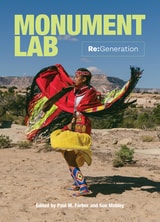
Monument Lab
Re:GenerationEdited by Paul M. Farber and Sue Mobley
Temple University Press, 2026
Monument Lab: Re:Generation presents case studies that travel across America, highlighting local commemorative campaigns dedicated to advancing public memory. Featuring articles and artwork from the country’s leading monument makers, each project includes a framing essay that provides insights into the varied contexts of location, culture, form, and subject matter.
Monument Lab: Re:Generation provides innovative, healing, and practical approaches to the United States’ unreconciled past and divided present facing our nation. In doing so, it invites readers to engage with a broader discourse of monuments and public memory.
Contributors: Thomas J. Adams, Kareal Amenumey, Sháńdíín Brown, Jonathan Jae-an Crisman, Kristen Dorsey, Aruna D'Souza, Mariluz Franco Ortiz, Jacqui Germain, Grace Sanders Johnson, Dani R. Merriman, Deirdre Cooper Owens, Naima Murphy Salcido, Kirk Savage, Clint Smith, Tsione Wolde-Michael, Eric Zimmer, and the editors
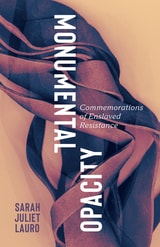
Monumental Opacity
Commemorations of Enslaved ResistanceSarah Juliet Lauro
University of Minnesota Press, 2027
A groundbreaking exploration of how opaque monuments demand respectful commemoration of enslaved lives
In an era of debate over how monuments should function and whose stories they should tell, Monumental Opacity asks us to consider how some commemorations withhold information to resist appropriation. Sarah Juliet Lauro posits that monuments, broadly defined, that shape public memories of slavery and its resistance could employ intentional obfuscation as an insurgent strategy to protect the self-emancipation of the enslaved person and combat visual possession by curious visitors.
Construing opacity as a form of opposition that renders its subject unapprehendable to viewers, Lauro explores how this concept plays out in museums devoted to the history of slavery, as well as in literature, film, art, countermovements, and protests, with particular attention to artistic works by Kara Walker and Kerry James Marshall and literary works by Victor Hugo and Herman Melville. Opaque commemorations of rebels and freedom fighters create an unbridgeable distance between the spectator and the history they represent. In that space, we are called to consider all that we don’t know about the figures we celebrate and their choice to resist their own objectification, thereby fostering a deeper sense of recognition.
Monumental Opacity is a timely and necessary call to reconsider the very act of commemoration and what it accomplishes. Offering a powerful aesthetic of subversion, Lauro inspires us to think about how—and why—history can be made unconsumable, protected from a voracious public.
Retail e-book files for this title are screen-reader friendly with images accompanied by short alt text and/or extended descriptions.
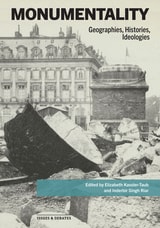
Monumentality
Geographies, Histories, IdeologiesElizabeth Kassler-Taub
J. Paul Getty Trust, The, 0
An exploration of how monuments—both physical and conceptual—shape memory, identity, and public debate across cultures and time.
This compelling volume invites readers to reimagine how monuments shape history, identity, and public space. Monumentality is explored as a dynamic and contested idea—one that moves beyond grand buildings and enduring structures to understand how societies remember the past and envision the future.
Engaging scholarly essays, accompanied by focused reflections on objects held in Getty collections, analyze the emotional, ideological, and technological dimensions of monuments by tracing their changing meanings across cultures and historical periods. Spanning themes of destruction, circulation, territorialization, and empire, the book investigates topics such as the ruin aesthetic of the Paris Commune, the material remnants of Buddhism in India, the construction of Cold War dams, and the influence of Almohad minaret architecture. Throughout, readers will encounter the enduring effects of colonialism, modernization, and settlements on societies around the world—from nineteenth-century West Africa to postwar Japan and Guam to present-day Israel and Ukraine.
Together, these studies integrate histories of art, architecture, and urban landscapes to examine the role of monuments in contemporary life. Monumentality offers fresh perspectives on what we choose to honor, why the past is preserved (or forgotten), and how the complex narratives embedded in memorials or public art condition our experience of the present.
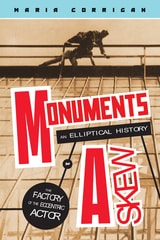
Monuments Askew
An Elliptical History of the Factory of the Eccentric ActorMaria Corrigan
Rutgers University Press, 2025
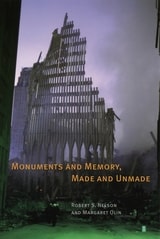
Monuments and Memory, Made and Unmade
Edited by Robert S. Nelson and Margaret Olin
University of Chicago Press, 2003
Examining how monuments preserve memory, these essays demonstrate how phenomena as diverse as ancient drum towers in China and ritual whale-killings in the Pacific Northwest serve to represent and negotiate time. Connecting that history to the present with an epilogue on the World Trade Center, Monuments and Memory, Made and Unmade is pertinent not only for art historians but for anyone interested in the turbulent history of monuments—a history that is still very much with us today.
Contributors:
Stephen Bann, Jonathan Bordo, Julia Bryan-Wilson, Jas Elsner, Tapati Guha-Thakurta, Robert S. Nelson, Margaret Olin, Ruth B. Phillips, Mitchell Schwarzer, Lillian Lan-ying Tseng, Richard Wittman, Wu Hung

Monuments of Romanesque Art
The Art of the Church Treasures in Northwestern EuropeHanns Swarzenski
University of Chicago Press, 1974
More Art in the Public Eye
Micaela Martegani, Jeff Kaspar, and Emma Drew, editors
Duke University Press, 2019
Contributors. Rebecca Amato, Michael Birchall, Ofri Cnaani, Michelle Coffey, Jennifer Dalton, Emma Drew, Pablo Helguera, Mary Jane Jacob, Jessica Lynne, Jeff Kasper, Kimsooja, Micaela Martegani, Andrea Mastrovito, Tony Oursler, William Powhida, Ernesto Pujol, Michael Rakowitz, Kirk Savage, Dread Scott, Andres Serrano, Gregory Sholette, Xaviera Simmons, Krzysztof Wodiczko
More Philadelphia Murals and the Stories They Tell
Jane Golden
Temple University Press, 2006
More Than Life
Georg Simmel and Walter Benjamin on ArtStéphane Symons
Northwestern University Press, 2017
Reading Simmel’s work, particularly his essays on Michelangelo, Rembrandt, and Rodin, alongside Benjamin’s concept of Unscheinbarkeit (inconspicuousness) and his writings on Charlie Chaplin, More Than Life demonstrates that both Simmel and Benjamin conceive of art as the creation of something entirely new rather than as a mimetic reproduction of a given. The two thinkers diverge in that Simmel emphasizes the presence of a continuous movement of life, whereas Benjamin highlights the priority of discontinuous, interruptive moments.
With the aim of further elucidating Simmel and Benjamin’s ideas on art, Stéphane Symons presents a number of in-depth analyses of specific artworks that were not discussed by these authors. Through an insightful examination of both the conceptual affinities and the philosophical differences between Simmel and Benjamin , Symons reconstructs a crucial episode in twentieth-century debates on art and aesthetics.
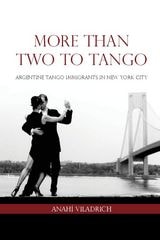
More Than Two to Tango
Argentine Tango Immigrants in New York CityAnahí Viladrich
University of Arizona Press, 2013
Based on a highly visible group of performers within the almost hidden population of Argentines in the United States, More than Two to Tango addresses broader questions on the understudied role of informal webs in the entertainment field. Through the voices of both early generations of immigrants and the latest wave of newcomers, Anahí Viladrich explores how the dancers, musicians, and singers utilize their complex social networks to survive as artists and immigrants. She reveals a diverse community navigating issues of identity, class, and race as they struggle with practical concerns, such as the high cost of living in New York City and affordable health care.
Argentina’s social history serves as the compelling backdrop for understanding the trajectory of tango performers, and Viladrich uses these foundations to explore their current unified front to keep tango as their own “authentic” expression. Yet social ties are no panacea for struggling immigrants. Even as More Than Two to Tango offers the notion that each person is truly conceived and transformed by their journeys around the globe, it challenges rosy portraits of Argentine tango artists by uncovering how their glamorous representations veil their difficulties to make ends meet in the global entertainment industry. In the end, the portrait of Argentine tango performers’ diverse career paths contributes to our larger understanding of who may attain the “American Dream,” and redefines what that means for tango artists.
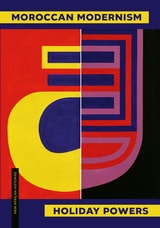
Moroccan Modernism
Holiday Powers
Ohio University Press, 2024
In the years after independence, new art forms and practices flourished at the Casablanca École des beaux-arts, transforming the colonial relic into a wellspring of Moroccan modernism. Casablanca School artists, including Farid Belkahia, Mohammed Chebaa, and Mohammed Melehi, defined the modernist movement in Morocco. Their visual arts activism was displayed at their iconic outdoor exhibition in the Djemaa al-Fna plaza in Marrakech, in their collaborations with the cultural and political journal Souffles, through their radical anticolonial pedagogy, and through their use of abstraction to expand the horizons of postcolonial national culture.
In Moroccan Modernism, Holiday Powers argues that the pedagogy and transnational solidarities of this generation of artists were intrinsic to their broader artistic projects. She advances a novel reading of Moroccan modernism that is rooted in its cosmopolitan national context and in Pan-Africanism and Pan-Arabism, the transnational anticolonial intellectual movements that defined the era.
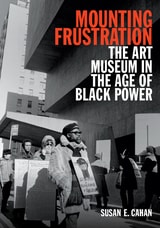
Mounting Frustration
The Art Museum in the Age of Black PowerSusan E. Cahan
Duke University Press, 2015
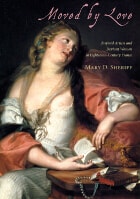
Moved by Love
Inspired Artists and Deviant Women in Eighteenth-Century FranceMary D. Sheriff
University of Chicago Press, 2004
Mary D. Sheriff uses these very different visions of enthusiasm to explore the complex interrelationships among creativity, sexuality, the body and the mind in eighteenth-century France. Drawing on evidence from the visual arts, literature, philosophy, and medicine, she portrays the deviance ascribed to both inspired men and women. But while various mythologies worked to normalize deviance in male artists, women had no justification for their deviance. For instance, the mythical sculptor Pygmalion was cured of an abnormal love for his statue through the making of art. He became a model for creative artists, living happily with his statue come to life. No happy endings, though, were imagined for such inspired women writers as Sappho and Heloise, who burned with erotomania their art could not quench. Even so, Sheriff demonstrates, the perceived connections among sexuality, creativity, and disease also opened artistic opportunities for creative women took full advantage of them.
Brilliantly reassessing the links between sexuality and creativity, artistic genius and madness, passion and reason, Moved by Love will profoundly reshape our view of eighteenth- century French culture.
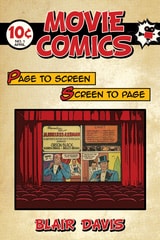
Movie Comics
Page to Screen/Screen to PageDavis, Blair
Rutgers University Press, 2017
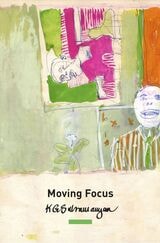
Moving Focus
Essays on Indian ArtK. G. Subramanyan
Seagull Books, 2024
Written between the early 1960s and the mid-1970s, the articles and lectures collected in Moving Focus reflect on some of the major concerns of the practicing artist and scholar of modern Indian art: tradition and modernism, the question of the image, and the use of art criticism. The collection also includes essays on the work of Rabindranath Tagore, Abanindranath Tagore, Binodebehari Mukherjee, Ramkinker Baij, and Amrita Sher-Gil. Together, they deal with the focal changes taking place in the contemporary art situation—a period of great significance in terms of cultural development, just about a decade and a half after India’s hard-won Independence—and seek to put them in perspective. The analytical essays of K. G. Subramanyan, one of India's most celebrated artists, remain as relevant and useful today as they were when this collection first appeared decades ago, and are perfectly suited to introducing the non-specialist to Indian modernism and its global concerns.
Subramanyan played a pivotal role in shaping India’s artistic identity after Independence. Mani-da, as he was fondly called, seamlessly blended elements of modernism with folk expression in his works, spanning paintings, murals, sculptures, prints, set designs, and toys. Beyond his visual artistry, his writings have laid a solid foundation for understanding the demands of art on the individual. In the year of his centenary, Seagull is proud to publish his writings in special new editions.
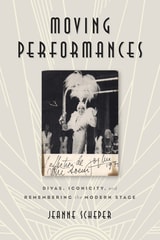
Moving Performances
Divas, Iconicity, and Remembering the Modern StageScheper, Jeanne
Rutgers University Press, 2017
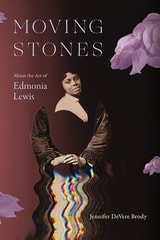
Moving Stones
About the Art of Edmonia LewisJennifer DeVere Brody
Duke University Press, 2026
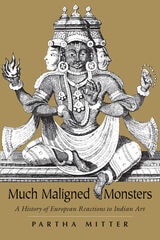
Much Maligned Monsters
A History of European Reactions to Indian ArtPartha Mitter
University of Chicago Press, 1992
Multiples in Pre-Modern Art
Edited by Walter Cupperi
Diaphanes, 2014
Multiples in Pre-Modern Art looks at the production and reception of replicas and multiples before the nineteenth century. A wide variety of media are considered, including metal, marble, terra cotta, textiles, plaster, porcelain, canvas, wood, and wax. Through a series of questions—What happens if a copy purposely points not to an original but to another copy? What does it matter that some serially made multiples are not identical?—many of the works are reappraised as significant art forms in their own right.
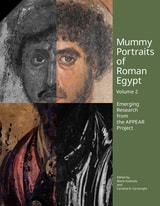
Mummy Portraits of Roman Egypt, Volume 2
Emerging Research from the APPEAR ProjectMarie Svoboda
J. Paul Getty Trust, The, 2026
Nearly a thousand funerary portraits from Roman Egypt, once interred with mummified remains, survive in museums around the world. These fascinating paintings offer the unparalleled opportunity for viewers to come face-to-face with people who lived and died some two thousand years ago.
The international collaboration known as APPEAR (Ancient Panel Paintings: Examination, Analysis, and Research) was launched in 2013 to promote the study of these objects and gather research findings in a shared database. This second volume of Mummy Portraits of Roman Egypt compiles seventeen scholarly papers from the APPEAR conference hosted in October 2022 at the Allard Pierson Museum, Amsterdam. Conservators, scientists, and curators presented new research on topics such as technical imaging; nondestructive analytical techniques; provenance and collecting; treatment histories; connoisseurship and forgeries; comparisons of works across institutions; and scientific studies of woods, pigments, coatings, binders, and supports. This volume will be a valuable resource to conservators, scientists, curators, and collectors.
The free online edition of this open-access publication is available at getty.edu/publications/mummy-portraits-2/ and includes zoomable illustrations and graphs. Also available are free PDF and EPUB downloads of the book.
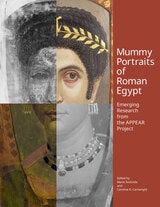
Mummy Portraits of Roman Egypt
Emerging Research from the APPEAR ProjectMarie Svoboda
J. Paul Getty Trust, The, 2020
Once interred with mummified remains, nearly a thousand funerary portraits from Roman Egypt survive today in museums around the world, bringing viewers face-to-face with people who lived two thousand years ago. Until recently, few of these paintings had undergone in-depth study to determine by whom they were made and how.
An international collaboration known as APPEAR (Ancient Panel Paintings: Examination, Analysis, and Research) was launched in 2013 to promote the study of these objects and to gather scientific and historical findings into a shared database. The first phase of the project was marked with a two-day conference at the Getty Villa. Conservators, scientists, and curators presented new research on topics such as provenance and collecting, comparisons of works across institutions, and scientific studies of pigments, binders, and supports. The papers and posters from the conference are collected in this publication, which offers the most up-to-date information available about these fascinating remnants of the ancient world.
The free online edition of this open-access publication is available at www.getty.edu/publications/mummyportraits/ and includes zoomable illustrations and graphs. Also available are free PDF, EPUB, and Kindle/MOBI downloads of the book.
Muscles in the Movies
Perfecting the Art of IllusionJohn D. Fair
University of Missouri Press, 2020
Museum Culture
Histories, Discourses, SpectaclesDaniel Sherman
University of Minnesota Press, 1994
Museum Diplomacy
Transnational Public History and the U.S. Department of StateRichard J. W. Harker
University of Massachusetts Press, 2020
As more historic sites and museums seek to surmount social, cultural, and economic barriers between themselves and their communities in their exhibitions and programming, the Museums Connect program provides important lessons on how to overcome entrenched hierarchies of power in public history.
Museum Frictions
Public Cultures/Global TransformationsIvan Karp, Corinne A. Kratz, Lynn Szwaja, and Tomás Ybarra-Frausto With Gustavo Buntinx, Barbara Kirshenblatt-Gimblett, and Ciraj Rassool, eds.
Duke University Press, 2006
Whether contrasting the transformation of Africa’s oldest museum, the South Africa Museum, with one of its newest, the Lwandle Migrant Labor Museum; offering an interpretation of the audio guide at the Guggenheim Bilbao; reflecting on the relative paucity of art museums in Peru and Cambodia; considering representations of slavery in the United States and Ghana; or meditating on the ramifications of an exhibition of Australian aboriginal art at the Asia Society in New York City, the contributors highlight the frictions, contradictions, and collaborations emerging in museums and heritage sites around the world. The volume opens with an extensive introductory essay by Ivan Karp and Corinne A. Kratz, leading scholars in museum and heritage studies.
Contributors. Tony Bennett, David Bunn, Gustavo Buntinx, Cuauhtémoc Camarena, Andrea Fraser, Martin Hall, Ivan Karp, Barbara Kirshenblatt-Gimblett, Corinne A. Kratz, Christine Mullen Kreamer, Joseph Masco, Teresa Morales, Howard Morphy, Ingrid Muan, Fred Myers, Ciraj Rassool, Vicente Razo, Fath Davis Ruffins, Lynn Szwaja, Krista A. Thompson, Leslie Witz, Tomás Ybarra-Frausto
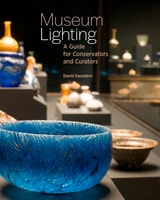
Museum Lighting
A Guide for Conservators and CuratorsDavid Saunders
J. Paul Getty Trust, The, 2020
Author David Saunders, former keeper of conservation and scientific research at the British Museum, explores how to balance the conflicting goals of visibility and preservation under a variety of conditions. Beginning with the science of how light, color, and vision function and interact, he proceeds to offer detailed studies of the impact of light on a wide range of objects, including paintings, manuscripts, textiles, bone, leather, and plastics.
With analyses of the effects of light on visibility and deterioration, Museum Lighting provides practical information to assist curators, conservators, and other museum professionals in making critical decisions about the display and preservation of objects in their collections.
Museum Pieces
Collectors and CollectionNeil Harris
University of Chicago Press, 0
An eminent historian assembles a career-long group of essays about art collecting and the leadership, strategies, and shifting cultural power of American art museums as they have emerged over the past 150 years.
Museums and their cultural power, and the vagaries of collecting in the United States have fascinated University of Chicago historian Neil Harris for more than sixty years. In this collection of eighteen lively essays from across his distinguished career, Harris addresses period rooms, visitor research, museum education, museum branding and merchandising, and the persistent influence of individual collectors and patrons such as J. Pierpont Morgan, among other important topics. Harris’s geographical range is broad, too, with considerations of museums in Boston, New York, Washington, D.C., Toledo, Chicago, Denver, and elsewhere.
Harris remains one of a very small number of art-minded scholars whose work on museums, taste, and collecting not only can be read by other historians of the United States but can be read with real profit. In a rich and reflective introduction, Harris connects his deep interest in recurring subjects to both his own intellectual biography and broader trends in American scholarship.
Museum Skepticism
A History of the Display of Art in Public GalleriesDavid Carrier
Duke University Press, 2006
Carrier illuminates the public role of art museums by describing the ways they influence how art is seen: through their architecture, their collections, the narratives they offer museum visitors. He insists that an understanding of the art museum must take into account the roles of collectors, curators, and museum architects. Toward that end, he offers a series of case studies, showing how particular museums and their collections evolved. Among those who figure prominently are Baron Dominique Vivant Denon, the first director of the Louvre; Bernard Berenson, whose connoisseurship helped Isabella Stewart Gardner found her museum in Boston; Ernest Fenollosa, who assembled much of the Asian art collection now in the Museum of Fine Arts, Boston; Albert Barnes, the distinguished collector of modernist painting; and Richard Meier, architect of the J. Paul Getty Center in Los Angeles. Carrier’s learned consideration of what the art museum is and has been provides the basis for understanding the radical transformation of its public role now under way.
Museums Matter
In Praise of the Encyclopedic MuseumJames Cuno
University of Chicago Press, 2011
The concept of an encyclopedic museum was born of the Enlightenment, a manifestation of society’s growing belief that the spread of knowledge and the promotion of intellectual inquiry were crucial to human development and the future of a rational society. But in recent years, museums have been under attack, with critics arguing that they are little more than relics and promoters of imperialism. Could it be that the encyclopedic museum has outlived its usefulness?
With Museums Matter, James Cuno, president and director of the Art Institute of Chicago, replies with a resounding “No!” He takes us on a brief tour of the modern museum, from the creation of the British Museum—the archetypal encyclopedic collection—to the present, when major museums host millions of visitors annually and play a major role in the cultural lives of their cities. Along the way, Cuno acknowledges the legitimate questions about the role of museums in nation-building and imperialism, but he argues strenuously that even a truly national museum like the Louvre can’t help but open visitors’ eyes and minds to the wide diversity of world cultures and the stunning art that is our common heritage. Engaging with thinkers such as Edward Said and Martha Nussbaum, and drawing on examples from the politics of India to the destruction of the Bramiyan Buddhas to the history of trade and travel, Cuno makes a case for the encyclopedic museum as a truly cosmopolitan institution, promoting tolerance, understanding, and a shared sense of history—values that are essential in our ever more globalized age.
Powerful, passionate, and to the point, Museums Matter is the product of a lifetime of working in and thinking about museums; no museumgoer should miss it.
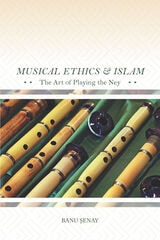
Musical Ethics and Islam
The Art of Playing the NeyBanu Senay
University of Illinois Press, 2020
Banu Şenay documents the years-long training required to become a neyzen—a player of the ney. The process holds a transformative power that invites students to create a new way of living that involves alternative relationships with the self and others, changing perceptions of the city, and a dedication to craftsmanship. Şenay visits reed harvesters and travels from studios to workshops to explore the practical processes of teaching and learning. She also becomes an apprentice ney-player herself, exploring the desire for spirituality that encourages apprentices and masters alike to pursue ney music and its scaffolding of Islamic ethics and belief.
Musical Improvisation
Art, Education, and SocietyEdited by Gabriel Solis and Bruno Nettl
University of Illinois Press, 2008
Contributors are Stephen Blum, Patricia Shehan Campbell, Sabine M. Feisst, Lawrence Gushee, Robert S. Hatten, William Kinderman, Natalie Kononenko, Robert Levin, Charlotte Mattax Moersch, Ingrid Monson, John P. Murphy, Bruno Nettl, A. Jihad Racy, Anne K. Rasmussen, Stephen Slawek, Gabriel Solis, Nicholas Temperley, John Toenjes, and Thomas Turino.
My Art, My Life
John Van Hamersveld
St. Augustine's Press, 2010
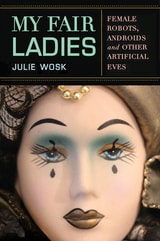
My Fair Ladies
Female Robots, Androids, and Other Artificial EvesWosk, Julie
Rutgers University Press, 2015
The fantasy of a male creator constructing his perfect woman dates back to the Greek myth of Pygmalion and Galatea. Yet as technology has advanced over the past century, the figure of the lifelike manmade woman has become nearly ubiquitous, popping up in everything from Bride of Frankenstein to Weird Science to The Stepford Wives. Now Julie Wosk takes us on a fascinating tour through this bevy of artificial women, revealing the array of cultural fantasies and fears they embody.
My Father's House
On Will Barnet's PaintingThomas Dumm
Duke University Press, 2014
Dumm first became acquainted with Barnet and his paintings in 2008. Given his scholarly focus on the lives of ordinary people, he was immediately attracted to the artist's work. When they met, Dumm and Barnet began a friendship and dialogue that lasted until the painter's death in 2012, at the age of 101. This book reflects the many discussions the two had concerning the series of paintings, Barnet's family, his early life in Beverly, and his eighty-year career as a prominent New York artist. Reading the almost gothic paintings in conversation with the writers and thinkers key to both his and Barnet's thinking—Emerson, Spinoza, Dickinson, Benjamin, Cavell, Nietzsche, Melville—Dumm's haunting meditations evoke broader reflections on family, mortality, the uncanny, and the loss that comes with remembrance.
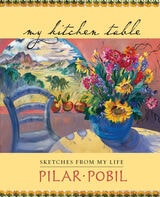
My Kitchen Table
Sketches from My LifePilar Pobil
University of Utah Press, 2007
Other stories describe her meeting in Mallorca with the Utah man who would become her husband, her journey to a faraway country, the birth of her children, and her discovery of her artistic impulses and abilities. All are woven with the threads of color and culture of her two homes. Filled with wit and insight, My Kitchen Table reveals foremost the voice of a woman determined to be true to herself and to her art.
Accompanying the narrative are some fifty color reproductions of the paintings and sculptures for which Pilar Pobil has become known. This is a volume that art lovers everywhere will treasure.
"Like her paintings, Pilar’s stories overflow their pages. They fold us into their embrace, so we feel and see her dancing in and out of our minds, a curious and mischievous child, a young woman in love coming to a foreign land with a foreign culture and tongue, the heartbreak of her losses, and the continual renewals that have ripened her art. Pilar’s book, like her house, is a magic kingdom and she is the fairy princess who presides. She paints her shoes for social engagements. The seats of her chairs beam faces. Her electrical wiring metamorphoses into fantastic snakes. The garden that leads to her studio is Salt Lake City’s Giverny. Paintings are everywhere and talk to each other with glittering non sequiturs. At the center of it all is her kitchen table, the place from which she serves the voices and visions of her life. The subtleties of her telling, like the bold clarity of her judgments, are those of an artist whose inspirations are a feast she graciously invites us to share."
— from the Foreword by Robert D. Newman, Dean of the College of Humanities, University of Utah
A finalist for the Utah Book Award in Nonfiction.
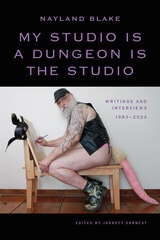
My Studio Is a Dungeon Is the Studio
Writings and Interviews, 1983–2024Nayland Blake. Edited and with an Introduction by Jarrett Earnest.
Duke University Press, 2025
Myself and My Aims
Writings on Art and CriticismKurt Schwitters
University of Chicago Press, 2021
As the first anthology in English of the critical and theoretical writings of this influential artist, Myself and My Aims makes the case for Schwitters as one of the most creative thinkers of his generation. Including material that has never before been published, this volume presents the full range of his prolific writing on the art and attitudes of his time, joining existing translations of his children’s stories, poetry, and fiction to give new readers unprecedented access to his literary imagination. With an accessible introduction by Megan R. Luke and elegant English translations by Timothy Grundy, this book will prove an exceptional resource for artists, scholars, and enthusiasts of his art.
Myth, Ethos, and Actuality
Official Art in Fifth Century B.C. AthensDavid Castriota
University of Wisconsin Press, 1992
Using material remains, as well as the evidence of contemporary Greek history, rhetoric, and poetry, David Castriota interprets the Athenian monuments as vehicles of an official ideology intended to celebrate and justify the present in terms of the past.
Castriota focuses on the strategy of ethical antithesis that asserted Greek moral superiority over the “barbaric” Persians, whose invasion had been repelled a generation earlier. He examines how, in major public programs of painting and sculpture, the leading artists of the period recast the Persians in the guise of wild and impious mythic antagonists to associate them with the ethical flaws or weaknesses commonly ascribed to women, animals, and foreigners. The Athenians, in contrast, were compared to mythic protagonists representing the excellence and triumph of Hellenic culture.
Castriota’s study is innovative in emphasizing the ethical implication of mythic precedents, which required substantial alterations to render them more effective as archetypes for the defense of Greek culture against a foreign, morally inferior enemy. The book looks in new ways at how the patrons and planners sought to manipulate viewer response through the selective presentation or repackaging of mythic traditions.
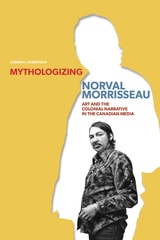
Mythologizing Norval Morrisseau
Art and the Colonial Narrative in the Canadian MediaCarmen L. Robertson
University of Manitoba Press, 2016
Myths of the Popol Vuh in Cosmology, Art, and Ritual
Holley Moyes
University Press of Colorado, 2021
The chapters are grouped into four sections. The first section interprets the Highland Maya worldview through examination of the text, analyzing interdependence between deities and human beings as well as the textual and cosmological coherence of the Popol Vuh as a source. The second section analyzes the Precolumbian Maya archaeological record as it relates to the myths of the Popol Vuh, providing new interpretations of the use of space, architecture, burials, artifacts, and human remains found in Classic Maya caves. The third explores ancient Maya iconographic motifs, including those found in Classic Maya ceramic art; the nature of predatory birds; and the Hero Twins’ deeds in the Popol Vuh. The final chapters address mythological continuities and change, reexamining past methodological approaches using the Popol Vuh as a resource for the interpretation of Classic Maya iconography and ancient Maya religion and mythology, connecting the myths of the Popol Vuh to iconography from Preclassic Izapa, and demonstrating how narratives from the Popol Vuh can illuminate mythologies from other parts of Mesoamerica.
The Myths of the Popol Vuh in Cosmology, Art, and Ritual is the first volume to bring together multiple perspectives and original interpretations of the Popol Vuh myths. It will be of interest not only to Mesoamericanists but also to art historians, archaeologists, ethnohistorians, iconographers, linguists, anthropologists, and scholars working in ritual studies, the history of religion, historic and Precolumbian literature and historic linguistics.
Contributors: Jaime J. Awe, Karen Bassie-Sweet, Oswaldo Chinchilla Mazariegos, Michael D. Coe, Iyaxel Cojtí Ren, Héctor Escobedo, Thomas H. Guderjan, Julia Guernsey, Christophe Helmke, Nicholas A. Hopkins, Barbara MacLeod, Jesper Nielsen, Colin Snider, Karl A. Taube
minor cosmopolitan
Thinking art, politics, and the universe together otherwiseEdited by Zairong Xiang
Diaphanes, 2020