Results by title
3258 books match the query 'Performing Arts' and 184 start with m
Movies & Mass Culture
Belton, John
Rutgers University Press, 1995

Movies Grow Up 1940-1980
Charles Champlin
Ohio University Press, 1980
Movies That Mattered
More Reviews from a Transformative DecadeDave Kehr
University of Chicago Press, 2017
With When Movies Mattered, readers welcomed the first collection of Kehr’s criticism, written during his time at the Chicago Reader. Movies That Mattered is its sequel, with fifty more reviews and essays drawn from the archives of both the Chicago Reader and Chicago magazine from 1974 to 1986. As with When Movies Mattered, the majority of the reviews offer in-depth analyses of individual films that are among Kehr’s favorites, from a thoughtful discussion of the sobering Holocaust documentary Shoah to an irresistible celebration of the raucous comedy Used Cars. But fans of Kehr’s work will be just as taken by his dissections of critically acclaimed films he found disappointing, including The Shining, Apocalypse Now, and Raiders of the Lost Ark.
Whether you’re a long-time reader or just discovering Dave Kehr, the insights in Movies That Mattered will enhance your appreciation of the movies you already love—and may even make you think twice about one or two you hated.
Movies under the Influence
Jocelyn Szczepaniak-Gillece
University of Minnesota Press, 2024
A cultural history of the enduring relationship between film spectatorship and intoxicating substances
Movies under the Influence charts the entangled histories of moviegoing and mind-altering substances from early cinema through the psychedelic 1970s. Jocelyn Szczepaniak-Gillece examines how the parallel trajectories of these two enduring aspects of American culture, linked by their ability to influence individual and collective consciousness, resulted in them being treated and regulated in similar ways. Rather than looking at representations of drug use within film, she regards cinema and intoxicants as kindred experiences of immersion that have been subject to corresponding forces of ideology and power.
Exploring the effects of intoxicants such as caffeine, nicotine, alcohol, marijuana, and psychedelics on film spectatorship, Szczepaniak-Gillece demonstrates how American movie theaters sought to cultivate a dual identity, presenting themselves as both a place of wholesome entertainment and a shadowy zone of illicit behavior. Movies under the Influence highlights the various legislative, legal, and corporate powers that held sway over the darkened anonymity of theaters, locating the convergence of moviegoing and drug use as a site of mediation and social control in America.
As much as substances and cinema are points where power intervenes, they are also settings of potential transcendence, and Movies under the Influence maintains this paradox as a necessary component of American film history. Recontextualizing a wide range of films, from Hollywood to the avant-garde, this book examines the implicit relationship intoxicants suggest between mass media, spectatorship, and governmental regulation and provides a new angle from which to understand cinema’s lasting role in evolving American culture.
Movies, Censorship, and the Law
Ira H. Carmen
University of Michigan Press, 1966
Moving Color
Early Film, Mass Culture, ModernismYumibe, Joshua
Rutgers University Press, 2012
Color was used in film well before The Wizard of Oz. Thomas Edison, for example, projected two-colored films at his first public screening in New York City on April 23, 1896. These first colors of early cinema were not photographic; they were applied manually through a variety of laborious processes—most commonly by the hand-coloring and stenciling of prints frame by frame, and the tinting and toning of films in vats of chemical dyes. The results were remarkably beautiful.
Moving Color is the first book-length study of the beginnings of color cinema. Looking backward, Joshua Yumibe traces the legacy of color history from the beginning of the nineteenth century to the cinema of the early twentieth century. Looking forward, he explores the implications of this genealogy on experimental and contemporary digital cinemas in which many colors have become, once again, vividly unhinged from photographic reality. Throughout this history, Moving Color revolves around questions pertaining to the sensuousness of color: how color moves us in the cinema—visually, emotionally, and physically.
Moving Consciously
Somatic Transformations through Dance, Yoga, and TouchEdited by Sondra Fraleigh
University of Illinois Press, 2015
Moving Image Theory
Ecological ConsiderationsEdited by Joseph D. Anderson and Barbara Fisher Anderson. Foreword by David Bordwell
Southern Illinois University Press, 2007
Moving Islands
Contemporary Performance and the Global PacificDiana Looser
University of Michigan Press, 2021
Moving Islands reveals the international and intercultural connections within contemporary performance from Oceania, focusing on theater, performance art, art installations, dance, film, and activist performance in sites throughout Oceania and in Australia, Asia, North America, and Europe. Diana Looser’s study moves beyond a predictable country-specific or island-specific focus to encompass an entire region defined by diversity and global exchange, showing how performance operates to frame social, artistic, and political relationships across widely dispersed locations. The study also demonstrates how Oceanian performance contributes to international debates about diaspora, indigeneity, urbanization, and environmental sustainability. The author considers the region’s unique cultural and geographic dynamics as she brings forth the paradigm of transpasifika to suggest a way of understanding these intercultural exchanges and connections, with the aim to “rework the cartographic and disciplinary priorities of transpacific studies to privilege the activities of Islander peoples.”
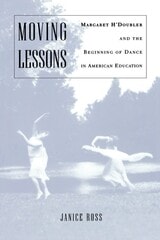
Moving Lessons
Margaret H'Doubler and the Beginning of Dance in American EducationJanice Ross
University of Wisconsin Press, 2000
Ross brings together many discourses—from dance history, pedagogical theory, women's history, feminist theory, American history, and the history of the body—in intelligent, exciting, and illuminating ways and adds a new chapter to each of them. She shows how H'Doubler, like Isadora Duncan and other modern dancers, helped to raise dance in the eyes of the middle class from its despised status as lower-class entertainment and "dangerous" social interaction to a serious enterprise. Taking a nuanced critical approach to the history of women's bodies and their representations, Moving Lessons fills a very large gap in the history of dance education.
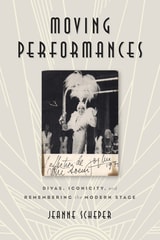
Moving Performances
Divas, Iconicity, and Remembering the Modern StageScheper, Jeanne
Rutgers University Press, 2017
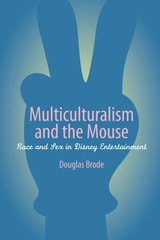
Multiculturalism and the Mouse
Race and Sex in Disney EntertainmentBy Douglas Brode
University of Texas Press, 2006
In his latest iconoclastic work, Douglas Brode—the only academic author/scholar who dares to defend Disney entertainment—argues that "Uncle Walt's" output of films, television shows, theme parks, and spin-off items promoted diversity decades before such a concept gained popular currency in the 1990s. Fully understood, It's a Small World—one of the most popular attractions at the Disney theme parks—encapsulates Disney's prophetic vision of an appealingly varied world, each race respecting the uniqueness of all the others while simultaneously celebrating a common human core. In this pioneering volume, Brode makes a compelling case that Disney's consistently positive presentation of "difference"—whether it be race, gender, sexual orientation, ideology, or spirituality—provided the key paradigm for an eventual emergence of multiculturalism in our society.
Using examples from dozens of films and TV programs, Brode demonstrates that Disney entertainment has consistently portrayed Native Americans, African Americans, women, gays, individual acceptance of one's sexual orientation, and alternatives to Judeo-Christian religious values in a highly positive light. Assuming a contrarian stance, Brode refutes the overwhelming body of "serious" criticism that dismisses Disney entertainment as racist and sexist. Instead, he reveals through close textual analysis how Disney introduced audiences to such politically correct principles as mainstream feminism. In so doing, Brode challenges the popular perception of Disney fare as a bland diet of programming that people around the world either uncritically deem acceptable for their children or angrily revile as reactionary pabulum for the masses.
Providing a long overdue and thoroughly detailed alternative, Brode makes a highly convincing argument that with an unwavering commitment to racial diversity and sexual difference, coupled with a vast global popularity, Disney entertainment enabled those successive generations of impressionable youth who experienced it to create today's aura of multiculturalism and our politically correct value system.
Multiple Voices in Feminist Film Criticism
Diane Carson
University of Minnesota Press, 1993
Murder Most Queer
The Homicidal Homosexual in the American TheaterJordan Schildcrout
University of Michigan Press, 2014

Murder Most Queer
The Homicidal Homosexual in the American TheaterJordan Schildcrout
University of Michigan Press, 2014
Murder by Accident
Medieval Theater, Modern Media, Critical IntentionsJody Enders
University of Chicago Press, 2009
Over fifty years ago, it became unfashionable—even forbidden—for students of literature to talk about an author’s intentions for a given work. In Murder by Accident, Jody Enders boldly resurrects the long-disgraced concept of intentionality, especially as it relates to the theater.
Drawing on four fascinating medieval events in which a theatrical performance precipitated deadly consequences, Enders contends that the marginalization of intention in critical discourse is a mirror for the marginalization—and misunderstanding—of theater. Murder by Accident revisits the legal, moral, ethical, and aesthetic limits of the living arts of the past, pairing them with examples from the present, whether they be reality television, snuff films, the “accidental” live broadcast of a suicide on a Los Angeles freeway, or an actor who jokingly fired a stage revolver at his temple, causing his eventual death. This book will force scholars and students to rethink their assumptions about theory, intention, and performance, both past and present.
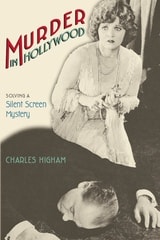
Murder in Hollywood
Solving a Silent Screen MysteryCharles Higham
University of Wisconsin Press, 2004
When it was discovered that a famous star of the day had probably killed Taylor, a massive cover-up began—from the removal of crucial evidence to the naming of innocent people as killers—which has continued until now to protect the truth. Murder in Hollywood goes beyond the killing to unearth unknown details about the life of Taylor before his arrival in Hollywood, as well as the stories and histories buried by the crooked authorities and criminals involved the case. The author’s exclusive interviews with the culpable star, his unique possession of long-vanished police records, and the support of the present-day Los Angeles county coroner—who examined the evidence as if the murder had taken place now—have ensured a hair-raising thriller.
Charles Higham successfully presents the most plausible and convincing solution yet to the mystery. In the process he paints a vivid portrait of Hollywood in the 1920s—from its major stars to its bisexual subculture. The result is a compelling answer to a long-standing mystery and a fascinating study of a place, and an industry that, as today, let people reinvent themselves. Murder in Hollywood is more extraordinary than any crime of fiction and more exciting than any action adventure movie.
Muscle Works
Physical Culture and the Performance of MasculinityBroderick D. V. Chow
Northwestern University Press, 2024
This book recounts the story of fitness culture from its beginnings as spectacles of strongmen, weightlifters, acrobats, and wrestlers to its legitimization in the twentieth-century in the form of competitive sports and health and wellness practices. Broderick D. V. Chow shows how these modes of display contribute to the construction and deconstruction of definitions of masculinity.
Attending to its theatrical origins, Chow argues for a more nuanced understanding of fitness culture, one informed by the legacies of self-described Strongest Man in the World Eugen Sandow and the history of fakery in strongman performance; the philosophy of weightlifter George Hackenschmidt and the performances of martial artist Bruce Lee; and the intersections of fatigue, resistance training, and whiteness. Muscle Works: Physical Culture and the Performance of Masculinity moves beyond the gym and across the archive, working out techniques, poses, and performances to consider how, as gendered subjects, we inhabit and make worlds through our bodies.
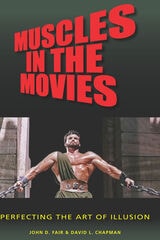
Muscles in the Movies
Perfecting the Art of IllusionJohn D. Fair
University of Missouri Press, 2020
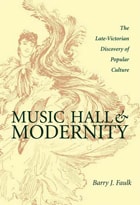
Music Hall and Modernity
The Late-Victorian Discovery of Popular CultureBarry J. Faulk
Ohio University Press, 2004
The late-Victorian discovery of the music hall by English intellectuals marks a crucial moment in the history of popular culture. Music Hall and Modernity demonstrates how such pioneering cultural critics as Arthur Symons and Elizabeth Robins Pennell used the music hall to secure and promote their professional identity as guardians of taste and national welfare. These social arbiters were, at the same time, devotees of the spontaneous culture of “the people.”
In examining fiction from Walter Besant, Hall Caine, and Henry Nevinson, performance criticism from William Archer and Max Beerbohm, and late-Victorian controversies over philanthropy and moral reform, scholar Barry Faulk argues that discourse on music-hall entertainment helped consolidate the identity and tastes of an emergent professional class. Critics and writers legitimized and cleaned up the music hall, at the same time allowing issues of class, respect, and empowerment to be negotiated.
Music Hall and Modernity offers a complex view of the new middle-class, middlebrow mass culture of late-Victorian London and contributes to a body of scholarship on nineteenth-century urbanism. The book will also interest scholars concerned with the emergence of a professional managerial class and the genealogy of cultural studies.

Music and Levels of Narration in Film
Steps across the BorderGuido Heldt
Intellect Books, 2013
A PDF version of this book is available for free in open access via the OAPEN Library platform, www.oapen.org It has been made available under a Creative Commons Attribution 4.0 International Public License and is part of Knowledge Unlatched.
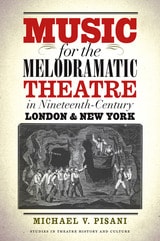
Music for the Melodramatic Theatre in Nineteenth-Century London and New York
Michael V. Pisani
University of Iowa Press, 2014
Mining old manuscripts and newspapers, he finds that starting in the 1790s, theatrical managers in Britain and the United States began to rely on music to play an interpretive role in melodramatic productions. During the nineteenth century, instrumental music—in addition to song—was a common feature in the production of stage plays.
The music played by instrumental ensembles not only enlivened performances but also served other important functions. Many actors and actresses found that accompanimental music helped them sustain the emotional pitch of a monologue or dialogue sequence. Music also helped audiences to identify the motivations of characters. Playwrights used music to hold together the hybrid elements of melodrama, heighten the build toward sensation, and dignify the tragic pathos of villains and other characters. Music also aided manager-directors by providing cues for lighting and other stage effects. Moreover, in a century of seismic social and economic changes, music could provide a moral compass in an uncertain moral universe.
Featuring dozens of musical examples and images of the old theatres, Music for the Melodramatic Theatre charts the progress of the genre from its earliest use in the eighteenth century to the elaborate stage productions of the very early twentieth century.

Music in American Crime Prevention and Punishment
Lily E. Hirsch
University of Michigan Press, 2014
Although the use of music for extramusical purposes has been a part of American culture for some time, the phenomenon remained largely unknown to the general public until revelations became widespread of startling military practices during the second Iraq War. In Music in American Crime Prevention and Punishment, Lily E. Hirsch explores the related terrain at the intersection of music and law, demonstrating the ways in which music has become a tool of law enforcement and justice through: police and community leaders’ use of classical music in crime deterrence and punishment; the use of rap lyrics as prosecutorial evidence; allegations of music as incitement to violence; and the role of music in U.S. prisons and in detention centers in Guantanamo, Iraq, and Afghanistan.
In the course of her study, Hirsch asks several questions: How does the law treat music? When and why does music participate in the law? How does music influence the legal process? How does the legal process influence music? And how do these appropriations affect the Romantic ideals underlying our view of music?
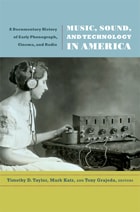
Music, Sound, and Technology in America
A Documentary History of Early Phonograph, Cinema, and RadioTimothy D. Taylor, Mark Katz, and Tony Grajeda, eds.
Duke University Press, 2012
Musical Design in Aeschylean Theater
William C. Scott
Dartmouth College Press, 2000
Musical Design in Sophoclean Theater
William C. Scott
Dartmouth College Press, 2000
Muslim Rap, Halal Soaps, and Revolutionary Theater
Artistic Developments in the Muslim WorldEdited by Karin van Nieuwkerk
University of Texas Press, 2011
From "green" pop and "clean" cinema to halal songs, Islamic soaps, Muslim rap, Islamist fantasy serials, and Suficized music, the performing arts have become popular and potent avenues for Islamic piety movements, politically engaged Islamists, Islamic states, and moderate believers to propagate their religio-ethical beliefs. Muslim Rap, Halal Soaps, and Revolutionary Theater is the first book that explores this vital intersection between artistic production and Islamic discourse in the Muslim world.
The contributors to this volume investigate the historical and structural conditions that impede or facilitate the emergence of a "post-Islamist" cultural sphere. They discuss the development of religious sensibilities among audiences, which increasingly include the well-to-do and the educated young, as well as the emergence of a local and global religious market. At the heart of these essays is an examination of the intersection between cultural politics, performing art, and religion, addressing such questions as where, how, and why pop culture and performing arts have been turned into a religious mission, and whether it is possible to develop a new Islamic aesthetic that is balanced with religious sensibilities. As we read about young Muslims and their quest for a "cool Islam" in music, their struggle to quell their stigmatized status, or the collision of morals and the marketplace in the arts, a vivid, varied new perspective on Muslim culture emerges.
Mute Dreams, Blind Owls, and Dispersed Knowledges
Persian Poesis in the Transnational CircuitryMichael M. J. Fischer
Duke University Press, 2004
Fischer reveals how the distinctive expressive idiom emerging in contemporary Iranian film reworks Persian imagery that has itself been in dialogue with other cultures since the time of Zoroaster and ancient Greece. He examines a range of narrative influences on this expressive idiom and imagery, including Zoroastrian ritual as it is practiced in Iran, North America, and India; the mythic stories, moral lessons, and historical figures written about in Iran’s national epic, the Shahnameh; the dreamlike allegorical world of Persian surrealism exemplified in Sadeq Hedayat’s 1939 novella The Blind Owl; and the politically charged films of the 1960s and 1970s. Fischer contends that by combining Persian traditions with cosmopolitan influences, contemporary Iranian filmmakers—many of whom studied in Europe and America—provide audiences around the world with new modes of accessing ethical and political experiences.
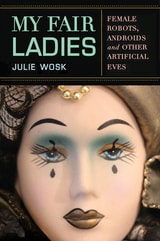
My Fair Ladies
Female Robots, Androids, and Other Artificial EvesWosk, Julie
Rutgers University Press, 2015
The fantasy of a male creator constructing his perfect woman dates back to the Greek myth of Pygmalion and Galatea. Yet as technology has advanced over the past century, the figure of the lifelike manmade woman has become nearly ubiquitous, popping up in everything from Bride of Frankenstein to Weird Science to The Stepford Wives. Now Julie Wosk takes us on a fascinating tour through this bevy of artificial women, revealing the array of cultural fantasies and fears they embody.
My Life in Vaudeville
The Autobiography of Ed LowryEd Lowry, Edited by Paul M. Levitt
Southern Illinois University Press, 2011
Normal0falsefalsefalseEN-USX-NONEX-NONE
An entertaining record of a life and a time
Ed Lowry joined the vaudeville circuit in 1910 at the age of fourteen. He never achieved stardom equal to the likes of Fred Allen, Jack Benny, George Burns, Buster Keaton, or Eddie Cantor, and he never considered himself an “artiste.” Instead, he saw himself as a hoofer and comic simply trying to make a living on the vaude scene. My Life in Vaudeville recounts Lowry’s long career in entertainment from the viewpoint of a foot soldier with a big dream.
Lowry’s story begins in the heyday of vaudeville in the early twentieth century and follows its gradual decline. Unlike many of his associates, he recognized that movies and other forms of entertainment were the future, and thus branched out into other venues. He took gigs in radio in Philadelphia, Newark, New York, and Los Angeles; explored revues, cabarets, burlesque, and film; and organized USO road shows. With wit and perception, he reveals his stage roots as an entertainer playing to his audience, and editor Paul M. Levitt’s introduction beautifully sets the stage for Lowry’s gags-to-riches tale, providing much-needed historical perspective.
My Life in Vaudeville is an unpretentious record of a time when thousands of young people went into show business to escape the boredom of daily life, and Lowry’s story is a view of vaudeville not often encountered. Lowry does much more than recall the daily life of a working actor, musician, and comedian. His story brings vaudeville to life and places it within the larger narratives of popular culture and popular entertainment of the twentieth century.

Mysterious Actions
New American Drama, Volume 99Jody McAuliffe, ed.
Duke University Press, 0
Monster, by Neal Bell, is a powerful adaptation of Mary Shelley’s Frankenstein, thrusting the violence of the novel into the sharp relief of our times. Nilo Cruz’s Two Sisters and a Piano takes an intimate look at Cuba during the collapse of the Soviet Union and contemplates the meaning of “Cubanness” in today’s culture. The Mystery at the Middle of Ordinary Life, DeLillo’s short play, meditates on the “gradually shattering” nature of human relationships. In The Trail of Her Inner Thigh, Erin Cressida Wilson follows a boy-man as he embarks on an epic journey into emotionality and sensuality with the help of the women in his life. And Marlane Meyer’s play, The Mystery of Attraction, navigates the dangerous waters of contemporary masculinity.
Contributors. Neal Bell, Nilo Cruz, Don DeLillo, Frederic Jameson, William Davies King, Frank Lentricchia, Jody McAuliffe, Marlane Meyer, José Esteban Muñoz, Teri Reynolds, Erin Cressida Wilson
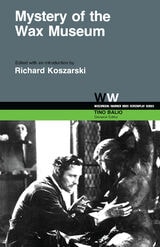
Mystery of the Wax Museum
Edited, with an introduction by Richard Koszarski; Tino T. Balio, Series Editor
University of Wisconsin Press, 1979
The Depression-era vogue for horror and the supernatural produced some of Hollywoood's most memorable chillers, among them Dr. Jekyll and Mr. Hyde (Paramount), Frankenstein, (Universal), and King Kong (RKO). At Warner Brothers, the main entry was Mystery of the Wax Museum, directed by Michael Curtiz, a grand thriller of 1933 in which Fay Wray (Who would appear opposite Kong later that same year) was threatened with waxy immortality by the maniacal Lionel Atwill.
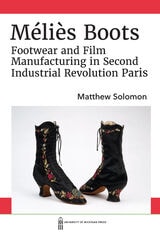
Méliès Boots
Footwear and Film Manufacturing in Second Industrial Revolution ParisMatthew Solomon
University of Michigan Press, 2022
Winner of the 2024 Society for Cinema and Media Studies Katherine Singer Kovacs Book Award
Before he became an influential cinematic innovator, Georges Méliès (1861–1938) was a maker of deluxe French footwear, an illusionist, and a caricaturist. Proceeding from these beginnings, Méliès Boots traces how the full trajectory of Georges Méliès’ career during the late-nineteenth and early-twentieth centuries, along with the larger cultural and historical contexts in which Méliès operated, shaped his cinematic oeuvre. Solomon examines Méliès’ unpublished drawings and published caricatures, the role of laughter in his magic theater productions, and the constituent elements of what Méliès called "the new profession of the cinéaste." The book also reveals Méliès' connections to the Incohérents, a group of ephemeral artists from the 1880s, demonstrating the group’s relevance for Méliès, early cinema, and modernity. By positioning Méliès in relation to the material culture of his time, Solomon demonstrates that Méliès’ work was expressive of a distinctly modern, and modernist, sensibility that appeared in France during the 1880s in the wake of the Second Industrial Revolution.
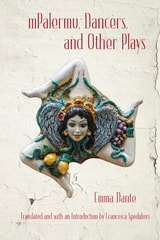
mPalermu, Dancers, and Other Plays
Emma Dante
Swan Isle Press, 2019
This exquisite first English translation of Emma Dante’s work enables English-speaking readers, theatre scholars, and directors alike to encounter character-driven “civic theatre” with its portraits of individuals existing at the fringes of Italy. Ultimately, it allows us to “listen” to those who are not given a voice anywhere else.