Results by title
28167 books match the query 'History' and 1583 start with m
Making Up Our Mind
What School Choice Is Really AboutSigal R. Ben-Porath and Michael C. Johanek
University of Chicago Press, 2019
Those are not only the wrong questions—they’re the wrong premises, argue philosopher Sigal R. Ben-Porath and historian Michael C. Johanek in Making Up Our Mind. Market-driven school choices aren’t new. They predate the republic, and for generations parents have chosen to educate their children through an evolving mix of publicly supported, private, charitable, and entrepreneurial enterprises. The question is not whether to have school choice. It is how we will regulate who has which choices in our mixed market for schooling—and what we, as a nation, hope to accomplish with that mix of choices. Looking beyond the simplistic divide between those who oppose government intervention and those who support public education, the authors make the case for a structured landscape of choice in schooling, one that protects the interests of children and of society, while also identifying key shared values on which a broadly acceptable policy could rest.
Making Value
Music, Capital, and the SocialTimothy D. Taylor
Duke University Press, 2024
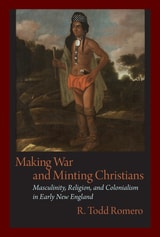
Making War and Minting Christians
Masculinity, Religion, and Colonialism in Early New EnglandR. Todd Romero
University of Massachusetts Press, 2011
In this book, R. Todd Romero traces the interaction of notions of gender, the practice of religion, and the conduct of warfare in colonial America. He shows how Native and Anglo-American ideas of manhood developed in counterpoint, in the context of Christian evangelization, colonial expansion, and recurrent armed conflict.
For the English, the cultivation of manliness became an important aspect of missionary efforts. Conversion demanded that the English “make men” of the Indians before they could “make them Christians,” a process that involved reshaping Native masculinity according to English patriarchal ideals that the colonists themselves rarely matched. For their part, Native Americans held on to older ways of understanding the divine and defining gender even as they entered English “praying towns” and negotiated the steep demands of the missionaries.
Evolving ideas of masculinity resonated with religious significance and shaped the meaning of warfare for Natives and colonists alike. Just as the English believed that their territorial expansion was divinely sanctioned, Indians attributed a string of victories in King Philip's War to “the Great God” and the perception that their enemies “were like women.” Trusting that war and manliness were necessarily linked, both groups engaged in ritual preparations for battle, believed deeply in the efficacy of the supernatural to affect the outcome of combat, and comprehended the meaning of war in distinctly religious ways.
Making War in Côte d'Ivoire
Mike McGovern
University of Chicago Press, 2011
After a brief period of active combat in 2002, the conflict in Côte d’Ivoire settled into a pattern of neither war nor peace until the 2010 elections led to a new phase of direct conflict. During these taut years, short bursts of intense violence alternated with long periods of standoff. When things were peaceful, the Ivorian political elite and the press produced inflammatory rhetoric while soldiers and militias used the state of emergency as an excuse to shake down civilians at roadblocks. What kept this perpetually tense, dismal, and destructive situation simmering? In this groundbreaking book, Mike McGovern suggests the answer lies in understanding war as a process, not a series of events, and that rather than focusing on the role of political institutions, we should be paying attention to the flawed and unpredictable people within them.
McGovern argues that only deep knowledge of a region—its history, languages, literature, and popular culture—can yield meaningful insights into political decision making. Putting this theory into action, he examines an array of issues from the micro to the macro, including land tenure disputes, youth boredom, organized crime, and the international cocoa trade. Drawn from McGovern’s academic research and experience working for a conflict resolution think tank and the political access that position gave him, Making War in Côte D’Ivoire will be the definitive work on the Ivorian conflict and an innovative example of how anthropology can address the complexities of politics.
Making Waves
Michigan’s Boat-Building Industry, 1865-2000Scott M. Peters
University of Michigan Press, 2015
Making Whole What Has Been Smashed
On Reparations PoliticsTorpey, John
Rutgers University Press, 2017
Viewing the search for “coming to terms with the past” as a form of politics, John Torpey argues that there are major differences between reparations for the living victims of past wrongdoing and reparations for the descendants of such victims. More fundamentally, he argues that claims for reparations comprise a relatively novel kind of politics that involves a quest for symbolic recognition and material compensation for those seeking them—through the idiom of the past rather than the present. This reissue is the first paperback edition and contains a new preface by the author.
Making Women Pay
Microfinance in Urban IndiaSmitha Radhakrishnan
Duke University Press, 2022
Making World Literature
Actors, Institutions, and Networks in the United States since 1890Anna Muenchrath
University of Massachusetts Press, 2024
From universities to governments, the Big Five publishers to Amazon, the influence of institutions abounds in US publishing. A diverse array of books from around the globe have been made into world literature in the US, selected by editors, publishers, and bureaucrats, produced by non-profits and for-profit presses of all sizes, and distributed through schools, publishing programs, and bookstores. The resulting world literary canon is the product of complex negotiations between individual preferences and institutional mandates, as well as economic, cultural, and pedagogical logics. While book publishing has fallen increasingly under the sway of global capitalism, yet the literary world remains made up of a series of individuals making choices about whom to fund, teach, translate, edit, and publish. The “world” of world literature, Anna Muenchrath argues, is a heterogeneous network of people whose circulation of literature is necessarily imbricated in the market economy, but whose selections might resist that economy and open new literary futures. Through archival research and close readings, this book considers what those participating are trying to do in circulating a text, and what communities they are helping to form or strengthen.
Making World Literature posits that network theory can effectively model the agency of actors and institutions in the literary field, making visible both the long-term accrual of power, as well as the choices of authors, translators, editors, and readers who do not simply replicate the values of a global literary marketplace, but divert, question, and undermine them. Muenchrath closely examines the paratexts and archival documents surrounding moments of global circulation in and through institutions like US world literature anthologies, the Council of Books in Wartime, the Iowa Writer’s Workshop, Oprah’s Book Club, and Amazon’s translation imprint. The granularity of these case studies reveals the increasingly limited agency of the individual in the global literary field, demonstrating how such players are important actors, and how their choices open up further options for later actors seeking to take texts down new paths toward or after publication.
Making a Better World
Public Housing, the Red Scare, and the Direction of Modern Los AngelesDon Parson
University of Minnesota Press, 2005
Making a Global Immigrant Neighborhood
Brooklyn's Sunset ParkTarry Hum
Temple University Press, 2014
Based on more than a decade of research, Making a Global Immigrant Neighborhood charts the evolution of Sunset Park--with a densely concentrated working-poor and racially diverse immigrant population--from the late 1960s to its current status as one of New York City's most vibrant neighborhoods.
Tarry Hum shows how processes of globalization, such as shifts in low-wage labor markets and immigration patterns, shaped the neighborhood. She explains why Sunset Park's future now depends on Asian and Latino immigrant collaborations in advancing common interests in community building, civic engagement, entrepreneurialism, and sustainability planning. She shows, too, how residents' responses to urban development policies and projects and the capital represented by local institutions and banks foster community activism.
Hum pays close attention to the complex social, political, and spatial dynamics that forge a community and create new models of leadership as well as coalitions. The evolution of Sunset Park so astutely depicted in this book suggests new avenues for studying urban change and community development.
Making a Great Ruler
Grand Duke Vytautas of LithuaniaGiedre Mickunaite
Central European University Press, 2006
Making a Green Machine
The Infrastructure of Beverage Container RecyclingJørgensen, Finn Arne
Rutgers University Press, 2011
Making a Man
Gentlemanly Appetites in the Nineteenth Century British NovelGwen Hyman
Ohio University Press, 2009
The gentleman, Making a Man argues, is a dangerous alimental force. Threatened with placelessness, he seeks to locate and mark himself through his feasting and fasting. But in doing so, he inevitably threatens to starve, to subsume, to swallow the community around him. The gentleman is at once fundamental and fundamentally threatening to the health of the nation: his alimental monstrousness constitutes the nightmare of the period’s striving, anxious, alimentally fraught middle class.
Making a Man makes use of food history and theory, literary criticism, anthropology, gender theory, economics, and social criticism to read gentlemanly consumers from Mr. Woodhouse, the gruel-eater in Jane Austen’s Emma, through the vampire and the men who hunt him in Bram Stoker’s Dracula. Hyman argues that appetite is a crucial means of casting light on the elusive identity of the gentleman, a figure who is the embodiment of power and yet is hardly embodied in Victorian literature.
Making a Mass Institution
Indianapolis and the American High SchoolKyle P. Steele
Rutgers University Press, 2020
Making a New World
Founding Capitalism in the Bajío and Spanish North AmericaJohn Tutino
Duke University Press, 2011
Making a Promised Land
Harlem in Twentieth-Century Photography and FilmMassood, Paula J.
Rutgers University Press, 2013
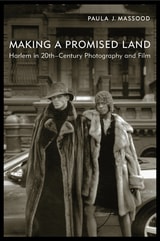
Making a Promised Land examines the interconnected histories of African American representation, urban life, and citizenship as documented in still and moving images of Harlem over the last century. Paula J. Massood analyzes how photography and film have been used over time to make African American culture visible to itself and to a wider audience and charts the ways in which the “Mecca of the New Negro” became a battleground in the struggle to define American politics, aesthetics, and citizenship. Visual media were first used as tools for uplift and education. With Harlem’s downturn in fortunes through the 1930s, narratives of black urban criminality became common in sociological tracts, photojournalism, and film. These narratives were particularly embodied in the gangster film, which was adapted to include stories of achievement, economic success, and, later in the century, a nostalgic return to the past. Among the films discussed are Fights of Nations (1907), Dark Manhattan (1937), The Cool World (1963), Black Caesar (1974), Malcolm X (1992), and American Gangster (2007). Massood asserts that the history of photography and film in Harlem provides the keys to understanding the neighborhood’s symbolic resonance in African American and American life, especially in light of recent urban redevelopment that has redefined many of its physical and demographic contours.
Making a Social Body
British Cultural Formation, 1830-1864Mary Poovey
University of Chicago Press, 1995
Poovey illuminates the ways literary genres, such as the novel, and innovations in social thought, such as statistical thinking and anatomical realism, helped separate social concerns from the political and economic domains. She then discusses the influence of the social body concept on Victorian ideas about the role of the state, examining writings by James Phillips Kay, Thomas Chalmers, and Edwin Chadwick on regulating the poor. Analyzing the conflict between Kay's idea of the social body and Babbage's image of the social machine, she considers the implications of both models for the place of Victorian women. Poovey's provocative readings of Disraeli's Coningsby, Gaskell's Mary Barton, and Dickens's Our Mutual Friend show that the novel as a genre exposed the role gender played in contemporary discussions of poverty and wealth.
Making a Social Body argues that gender, race, and class should be considered in the context of broader concerns such as how social authority is distributed, how institutions formalize knowledge, and how truth is defined.
Making a Spectacle
Feminist Essays on Contemporary Women's TheatreEdited and with an Introduction by Lynda Hart
University of Michigan Press, 1988
Making a World after Empire
The Bandung Moment and Its Political AfterlivesChristopher J. Lee
Ohio University Press, 2010
In April 1955, twenty-nine countries from Africa, Asia, and the Middle East came together for a diplomatic conference in Bandung, Indonesia, intending to define the direction of the postcolonial world. Representing approximately two-thirds of the world’s population, the Bandung conference occurred during a key moment of transition in the mid-twentieth century—amid the global wave of decolonization that took place after the Second World War and the nascent establishment of a new cold war world order in its wake. Participants such as Jawaharlal Nehru of India, Gamal Abdel Nasser of Egypt, Zhou Enlai of China, and Ahmed Sukarno of Indonesia seized this occasion to attempt the creation of a political alternative to the dual threats of Western neocolonialism and the cold war interventionism of the United States and the Soviet Union.
The essays in this volume explore the diverse repercussions of this event, tracing the diplomatic, intellectual, and sociocultural histories that have emanated from it. Making a World after Empire consequently addresses the complex intersection of postcolonial history and cold war history and speaks to contemporary discussions of Afro-Asianism, empire, and decolonization, thus reestablishing the conference’s importance in twentieth-century global history.
Contributors: Michael Adas, Laura Bier, James R. Brennan, G. Thomas Burgess, Antoinette Burton, Dipesh Chakrabarty, Julian Go, Christopher J. Lee, Jamie Monson, Jeremy Prestholdt, Denis M. Tull
Making a World after Empire
The Bandung Moment and Its Political AfterlivesChristopher J. Lee
Ohio University Press, 2019
With a new foreword by Vijay Prashad
In April 1955, twenty-nine countries from Africa, Asia, and the Middle East came together for a diplomatic conference in Bandung, Indonesia, intending to define the direction of the postcolonial world. Ostensibly representing two-thirds of the world’s population, the Bandung conference occurred during a key moment of transition in the mid-twentieth century—amid the global wave of decolonization that took place after the Second World War and the nascent establishment of a new Cold War world order in its wake. Participants such as Jawaharlal Nehru of India, Gamal Abdel Nasser of Egypt, Zhou Enlai of China, and Sukarno of Indonesia seized this occasion to attempt the creation of a political alternative to the dual threats of Western neocolonialism and the Cold War interventionism of the United States and the Soviet Union.
The essays collected here explore the diverse repercussions of this event, tracing diplomatic, intellectual, and sociocultural histories that ensued as well as addressing the broader intersection of postcolonial and Cold War history. With a new foreword by Vijay Prashad and a new preface by the editor, Making a World after Empire speaks to contemporary discussions of decolonization, Third Worldism, and the emergence of the Global South, thus reestablishing the conference’s importance in twentieth-century global history.
Contributors: Michael Adas, Laura Bier, James R. Brennan, G. Thomas Burgess, Antoinette Burton, Dipesh Chakrabarty, Julian Go, Christopher J. Lee, Jamie Monson, Jeremy Prestholdt, and Denis M. Tull.
Making an American Workforce
The Rockefellers and the Legacy of LudlowFawn-Amber Montoya
University Press of Colorado, 2014
Focusing on the workers themselves—men, women, and children representative of a variety of immigrant and ethnic groups—contributors trace the emergence of the Employee Representation Plan, the work of the company's Sociology Department, and CF&I's interactions with the YMCA in the early twentieth century. They examine CF&I's early commitment to Americanize its immigrant employees and shape worker behavior, the development of policies that constructed the workforce it envisioned while simultaneously laying the groundwork for the strike that eventually led to the Ludlow Massacre, and the impact of the massacre on the employees, the company, and beyond.
Making an American Workforce provides greater insight into the repercussions of the Industrial Representation Plan and the Ludlow Massacre, revealing the long-term consequences of Colorado Fuel and Iron Company policies on the American worker, the state of Colorado, and the creation of corporate culture. Making an American Workforce will be of interest to Western, labor, and business historians.
Making an Antislavery Nation
Lincoln, Douglas, and the Battle over FreedomGraham A. Peck
University of Illinois Press, 2020
This sweeping narrative presents an original and compelling explanation for the triumph of the antislavery movement in the United States prior to the Civil War. Abraham Lincoln's election as the first antislavery president was hardly preordained. From the country's inception, Americans had struggled to define slavery's relationship to freedom. Most Northerners supported abolition in the North but condoned slavery in the South, while most Southerners denounced abolition and asserted slavery's compatibility with whites' freedom. On this massive political fault line hinged the fate of the nation.
Graham A. Peck meticulously traces the conflict over slavery in Illinois from the Northwest Ordinance in 1787 to Lincoln's defeat of his archrival Stephen A. Douglas in the 1860 election. Douglas's attempt in 1854 to persuade Northerners that slavery and freedom had equal national standing stirred a political earthquake that brought Lincoln to the White House. Yet Lincoln's framing of the antislavery movement as a conservative return to the country's founding principles masked what was in fact a radical and unprecedented antislavery nationalism. It justified slavery's destruction but triggered the Civil War.
Presenting pathbreaking interpretations of Lincoln, Douglas, and the Civil War's origins, Making an Antislavery Nation shows how battles over slavery paved the way for freedom's triumph in America.
Making and Breaking the Yugoslav Working Class
The Story of Two Self-Managed FactoriesGoran Music
Central European University Press, 2021
Workers' self-management was one of the unique features of communist Yugoslavia. Goran Musić has investigated the changing ways in which blue-collar workers perceived the recurring crises of the regime. Two self-managed metal enterprises, one in Serbia another in Slovenia, provide the frame of the analysis in the time span between 1945 and 1989. These two factories became famous for strikes in 1988 that evoked echoes in popular discourses in former Yugoslavia. Drawing on interviews, factory publications and other media, local archives, and secondary literature, Musić analyzes the two cases, going beyond the clichés of political manipulation from the top and workers' intrinsic attraction to nationalism.
The author explains how, in the later phase of communist Yugoslavia, growing social inequalities among the workers and undemocratic practices inside the self-managed enterprises facilitated the spread of a nationalist and pro-market ideology on the shop floors. Yet rather than being a mass taken advantage of by populist leaders, the working class Musić presents is one with agency and voice, a force that played an important role in shaping the fate of the country. The book thus seeks to open a debate on the social processes leading up to the dissolution of Yugoslavia.
Making and Unmaking Intellectual Property
Creative Production in Legal and Cultural PerspectiveEdited by Mario Biagioli, Peter Jaszi, and Martha Woodmansee
University of Chicago Press, 2011
Rules regulating access to knowledge are no longer the exclusive province of lawyers and policymakers and instead command the attention of anthropologists, economists, literary theorists, political scientists, artists, historians, and cultural critics. This burgeoning interdisciplinary interest in “intellectual property” has also expanded beyond the conventional categories of patent, copyright, and trademark to encompass a diverse array of topics ranging from traditional knowledge to international trade. Though recognition of the central role played by “knowledge economies” has increased, there is a special urgency associated with present-day inquiries into where rights to information come from, how they are justified, and the ways in which they are deployed.
Making and Unmaking Intellectual Property, edited by Mario Biagioli, Peter Jaszi, and Martha Woodmansee, presents a range of diverse—and even conflicting—contemporary perspectives on intellectual property rights and the contested sources of authority associated with them. Examining fundamental concepts and challenging conventional narratives—including those centered around authorship, invention, and the public domain—this book provides a rich introduction to an important intersection of law, culture, and material production.
Making and Unmaking Literature in the Warsaw, Lodz, and Vilna Ghettos
Sven-Erik Rose
Brandeis University Press, 2025
A study of literature written by Jewish authors while interned in Nazi ghettos emphasizes how authors processed their horrific experiences through poetry and prose.
Published in Association with the United States Holocaust Memorial Museum
This is the first study devoted to how little known but essential authors grappled with the destitution of ghetto existence by writing within, at the limits of, and against an array of literary scenarios, tropes, plot lines, and generic conventions, including those of nature lyric, modernist interior monologue, the realist social novel, the detective story, and the gothic horror tale. Contending with starvation, disease, desperate housing conditions and the looming threat of being murdered, inhabitants of ghettos in Poland nonetheless made them sites of rich Jewish cultural production. Rose’s readings of these literary works reveal how authors asserted their humanity by insisting on writing works of literature. In such radically dehumanizing circumstances, however, their recourse to established literary genres was not naive. Rather, ghetto authors brilliantly meditated on the grotesque incongruities between established literary models and the extreme conditions of ghetto existence.
Making and Unmaking Public Health in Africa
Ethnographic and Historical PerspectivesRuth J. Prince
Ohio University Press, 2013
This volume explores how medical professionals and patients, government officials, and ordinary citizens approach questions of public health as they navigate contemporary landscapes of NGOs and transnational projects, faltering state services, and expanding privatization. Its contributors analyze the relations between the public and the private providers of public health, from the state to new global biopolitical formations of political institutions, markets, human populations, and health. Tensions and ambiguities animate these complex relationships, suggesting that the question of what public health actually is in Africa cannot be taken for granted. Offering historical and ethnographic analyses, the volume develops an anthropology of public health in Africa.
Contributors: P. Wenzel Geissler; Murray Last; Rebecca Marsland; Lotte Meinert; Benson A. Mulemi; Ruth J. Prince; and Noemi Tousignant.

Making of Legends
More True Stories of Frontier AmericaMark Dugan
Ohio University Press, 1997
Mark Dugan brings reality to the forefront in The Making of Legends. Some of the characters in his accounts are practically unknown but deserve more recognition than the bandits whose names are mythic. Exhaustive archival research enables him to recreate such colorful lives as North Carolina’s Malina Blaylock, who, disguised as a man, joined her outlaw husband in the Confederate army; slippery escape artist David Lewis, the Robin Hood of the Cumberland, who finally stopped two bullets in a chaotic Pennsylvania shoot-out; Wyatt Earp, in his mysterious post-OK Corral year, amidst the Coeur d’Alene gold rush; and grim “Laughing Sam” Hartman, of South Dakota.
Dugan sets the stage by explaining how newspapers and dime novels fanned the flames of public fascination with outlaws. He unmasks the real Billy the Kid, traces the paths of Butch Cassidy and the Sundance Kid to their historic shoot-out in South America, and masterfully summarizes the Civil War grudges, bloodshed, and wanton destruction along the Kansas-Missouri border that spawned Jesse and Frank James and the Younger brothers gang.
In researching the lawless era of the American frontier, Dugan discovered much information that has never been published — material that will expand readers' views of frontier history and people, both good and bad. The Making of Legends proves that the actual stories of notorious legends can be more exciting, moving, and intriguing than anything dreamed up in a dime novel or a Hollywood fantasy.
With The Making of Legends Mark Dugan’s pursuit of outlaws takes him to Pennsylvania, North Carolina, Texas, California, South Dakota, Idaho, Oregon, Nebraska, Indiana, Wyoming, and Montana.
Making the American Home
Middle-Class Women and Domestic Material Culture, 1840–1940Marilyn F. Motz
University of Wisconsin Press, 1988
Making the American Mouth
Dentists and Public Health in the Twentieth CenturyPicard, Alyssa
Rutgers University Press, 2009
Making the American Mouth is at once a history of United States dentistry and a study of a billion-dollar industry. Alyssa Picard chronicles the forces that limited Americans' access to dental care in the early twentieth century and the ways dentists worked to expand that access--and improve the public image of their profession. Comprehensive in scope, this work describes how dentists' early public health commitments withered under the strain of fights over fluoride, mid-century social movements for racial and gender equity, and pressure to insure dental costs. It explains how dentists came to promote cosmetic services, and why Americans were so eager to purchase them. As we move into the twentyfirst century, dentists' success in shaping their industry means that for many, the perfect American smile will remain a distant--though tantalizing--dream.
Making the American Team
Sport, Culture, and the Olympic ExperienceMark Dyreson
University of Illinois Press, 1998
Sport dominates television and the mass media. Politics and business are a-bustle with sports metaphors. Endorsements by athletes sell us products. "Home run," "slam dunk," and the rest of the vocabulary of sport color daily conversation. Even in times of crisis and emergency, the media reports the scores and highlights.
Marky Dyreson delves into how our obsession with sport came into being with a close look at coverage of the Olympic Games between 1896 and 1912. How people reported and consumed information on the Olympics offers insight into how sport entered the heart of American culture as part of an impetus for social reform. Political leaders came to believe in the power of sport to revitalize the "republican experiment." Sport could instill a new sense of national identity that would forge a new sense of community and a healthy political order while at the same time linking America's intellectual and power elite with the experiences of the masses.

Making the Carry
The Lives of John and Tchi-Ki-Wis LinklaterTimothy Cochrane
University of Minnesota Press, 2023
An extraordinary illustrated biography of a Métis man and Anishinaabe woman navigating great changes in their homeland along the U.S.–Canada border in the early twentieth century
John Linklater, of Anishinaabeg, Cree, and Scottish ancestry, and his wife, Tchi-Ki-Wis, of the Lac La Croix First Nation, lived in the canoe and border country of Ontario and Minnesota from the 1870s until the 1930s. During that time, the couple experienced radical upheavals in the Quetico–Superior region, including the cutting of white and red pine forests, the creation of Indian reserves/reservations and conservation areas, and the rise of towns, tourism, and mining. With broad geographical sweep, historical significance, and biographical depth, Making the Carry tells their story, overlooked for far too long.
John Linklater, a renowned game warden and skilled woodsman, was also the bearer of traditional ecological knowledge and Indigenous heritage, both of which he was deeply committed to teaching others. He was sought by professors, newspaper reporters, museum personnel, and conservationists—among them Sigurd Olson, who considered Linklater a mentor. Tchi-Ki-Wis, an extraordinary craftswoman, made a sweeping array of necessary yet beautiful objects, from sled dog harnesses to moose calls to birch bark canoes. She was an expert weaver of large Anishinaabeg cedar bark mats with complicated geometric designs, a virtually lost art.
Making the Carry traces the routes by which the couple came to live on Basswood Lake on the international border. John’s Métis ancestors with deep Hudson’s Bay Company roots originally came from Orkney Islands, Scotland, by way of Hudson Bay and Red River, or what is now Winnipeg. His family lived in Manitoba, northwest Ontario, northern Minnesota, and, in the case ofJohn and Tchi-Ki-Wis, on Isle Royale. A journey through little-known Canadian history, the book provides an intimate portrait of Métis people.
Complete with rarely seen photographs of activities from dog mushing to guiding to lumbering, as well as of many objects made by Tchi-Ki-Wis, such as canoes, moccasins, and cedar mats, Making the Carry is a window on a traditional way of life and a restoration of two fascinating Indigenous people to their rightful place in our collective past.
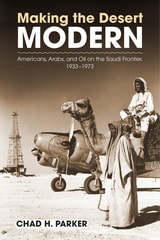
Making the Desert Modern
Americans, Arabs, and Oil on the Saudi Frontier, 1933–1973Chad Parker
University of Massachusetts Press, 2015
In 1933 American oilmen representing what later became the Arabian American Oil Company (Aramco) signed a concession agreement with the Saudi Arabian king granting the company sole proprietorship over the oil reserves in the country's largest province. As drilling commenced and wells proliferated, Aramco soon became a major presence in the region. In this book Chad H. Parker tells Aramco's story, showing how an American company seeking resources and profits not only contributed to Saudi “nation building” but helped define U.S. foreign policy during the early Cold War.
In the years following World War II, as Aramco expanded its role in Saudi Arabia, the idea of “modernization” emerged as a central component of American foreign policy toward newly independent states. Although the company engaged in practices supportive of U.S. goals, its own modernizing efforts tended to be pragmatic rather than policy-driven, more consistent with furthering its business interests than with validating abstract theories. Aramco built the infrastructure necessary to extract oil and also carved an American suburb out of the Arabian desert, with all the air-conditioned comforts of Western modern life. At the same time, executives cultivated powerful relationships with Saudi government officials and, to the annoyance of U.S. officials, even served the monarchy in diplomatic disputes. Before long the company became the principal American diplomatic, political, and cultural agent in the country, a role it would continue to play until 1973, when the Saudi government took over its operation.
Making the Forever War
Marilyn B. Young on the Culture and Politics of American MilitarismMary L. Dudziak
University of Massachusetts Press, 2021
Making the Forever War brings Young's articles and essays on American war together for the first time, including never before published works. Moving from the first years of the Cold War to Korea, Vietnam, and more recent "forever" wars in Iraq and Afghanistan, Young reveals the ways in which war became ever-present, yet more covert and abstract, particularly as aerial bombings and faceless drone strikes have attained greater strategic value. For Young, U.S. empire persisted because of, not despite, the inattention of most Americans. The collection concludes with an afterword by prominent military historian Andrew Bacevich.
Making the Grade
The Economic Evolution of American School DistrictsWilliam A. Fischel
University of Chicago Press, 2009
A significant factor for many people deciding where to live is the quality of the local school district, with superior schools creating a price premium for housing. The result is a “race to the top,” as all school districts attempt to improve their performance in order to attract homebuyers. Given the importance of school districts to the daily lives of children and families, it is surprising that their evolution has not received much attention.
In this provocative book, William Fischel argues that the historical development of school districts reflects Americans’ desire to make their communities attractive to outsiders. The result has been a standardized, interchangeable system of education not overly demanding for either students or teachers, one that involved parents and local voters in its governance and finance. Innovative in its focus on bottom-up processes generated by individual behaviors rather than top-down decisions by bureaucrats, Making the Grade provides a new perspective on education reform that emphasizes how public schools form the basis for the localized social capital in American towns and cities.
Making the Heartland Quilt
A Geographical History of Settlement and Migration in Early-Nineteenth-Century IllinoisDouglas K. Meyer
Southern Illinois University Press, 2000
In Making the Heartland Quilt, Douglas K. Meyer reconstructs the settlement patterns of thirty-three immigrant groups and confirms the emergence of discrete culture regions and regional way stations. Meyer argues that midcontinental Illinois symbolizes a historic test strip of the diverse population origins that unfolded during the Great Migration. Basing his research on the 1850 U.S. manuscript schedules, Meyer dissects the geographical configurations of twenty-three native and ten foreign-born adult male immigrant groups who peopled Illinois. His historical geographical approach leads to the comprehension of a new and clearer map of settlement and migration history in the state.
Meyer finds that both cohesive and mixed immigrant settlements were established. Balkan-like immigrant enclaves or islands were interwoven into evolving local, regional, and national settlement networks. The midcontinental location of Illinois, its water and land linkages, and its lengthy north-south axis enhanced cultural diversity. The barrier effect of Lake Michigan contributed to the convergence and mixing of immigrants. Thus, Meyer demonstrates, Illinois epitomizes midwestern dichotomies: northern versus southern; native-born versus foreign-born; rural versus urban; and agricultural versus manufacturing.
Making the Immigrant Soldier
How Race, Ethnicity, Class, and Gender Intersect in the US MilitaryCristina-Ioana Dragomir
University of Illinois Press, 2023
A compelling union of analysis and rich storytelling, Making the Immigrant Soldier traces the complexities of serving in the military in order to pursue the American dream.
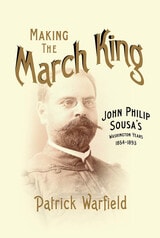
Making the March King
John Philip Sousa's Washington Years, 1854-1893Patrick Warfiled
University of Illinois Press, 2013
Warfield examines Sousa's wide-ranging experience composing, conducting, and performing in the theater, opera house, concert hall, and salons, as well as his leadership of the United States Marine Band and the later Sousa Band, early twentieth-century America's most famous and successful ensemble. Sousa composed not only marches during this period but also parlor, minstrel, and art songs; parade, concert, and medley marches; schottisches, waltzes, and polkas; and incidental music, operettas, and descriptive pieces. Warfield's examination of Sousa's output reveals a versatile composer much broader in stylistic range than the bandmaster extraordinaire remembered as the March King.
In particular, Making the March King demonstrates how Sousa used his theatrical training to create the character of the March King. The exuberant bandmaster who pleased audiences was both a skilled and charismatic conductor and a theatrical character whose past and very identity suggested drama, spectacle, and excitement. Sousa's success was also the result of perseverance and lessons learned from older colleagues on how to court, win, and keep an audience. Warfield presents the story of Sousa as a self-made business success, a gifted performer and composer who deftly capitalized on his talents to create one of the most entertaining, enduring figures in American music.
Making the MexiRican City
Migration, Placemaking, and Activism in Grand Rapids, MichiganDelia Fernández-Jones
University of Illinois Press, 2023
A Choice Outstanding Academic Title for 2023
Large numbers of Latino migrants began to arrive in Grand Rapids, Michigan, in the 1950s. They joined a small but established Spanish-speaking community of people from Texas, Mexico, and Puerto Rico. Delia Fernández-Jones merges storytelling with historical analysis to recapture the placemaking practices that these Mexicans, Tejanos, and Puerto Ricans used to create a new home for themselves. Faced with entrenched white racism and hostility, Latinos of different backgrounds formed powerful relationships to better secure material needs like houses and jobs and to recreate community cultural practices. Their pan-Latino solidarity crossed ethnic and racial boundaries and shaped activist efforts that emphasized working within the system to advocate for social change. In time, this interethnic Latino alliance exploited cracks in both overt and structural racism and attracted white and Black partners to fight for equality in social welfare programs, policing, and education.
Groundbreaking and revelatory, Making the MexiRican City details how disparate Latino communities came together to respond to social, racial, and economic challenges.
Making the Mission
Planning and Ethnicity in San FranciscoOcean Howell
University of Chicago Press, 2015
In Making the Mission, Ocean Howell tells the story of how residents of the Mission District organized to claim the right to plan their own neighborhood and how they mobilized a politics of place and ethnicity to create a strong, often racialized identity—a pattern that would repeat itself again and again throughout the twentieth century. Surveying the perspectives of formal and informal groups, city officials and district residents, local and federal agencies, Howell articulates how these actors worked with and against one another to establish the very ideas of the public and the public interest, as well as to negotiate and renegotiate what the neighborhood wanted. In the process, he shows that national narratives about how cities grow and change are fundamentally insufficient; everything is always shaped by local actors and concerns.
Making the Modern Middle East
Second EditionT.G. Fraser, Andrew Mango, and Robert McNamara
Gingko, 2015
This fully revised and updated second edition of The Makers of the Modern Middle East traces those changes and the ensuing history of the region through the rest of the twentieth century and on to the present. Focusing in particular on three leaders—Emir Feisal, Mustafa Kemal, and Chaim Weizmann—the book offers a clear, authoritative account of the region seen from a transnational perspective, one that enables readers to understand its complex history and the way it affects present-day events.
Making the Modern
Industry, Art, and Design in AmericaTerry Smith
University of Chicago Press, 1993
Making the Most of Tomorrow
A Laboratory of Socialist Modernity in CzechoslovakiaMatej Spurný
Karolinum Press, 2019
In this book, Matěj Spurný explores the historical city of Most from the nineteenth century into the years following World War II, investigating the decision to destroy it as well as the negotiations concerning the spirit of the proposed new city. Situating postwar Most in the context of cultural and social shifts in Czechoslovakia and Europe as a whole, Spurný traces the path a medieval city took to become a showcase of brutalist architecture and the regime’s technicist inhumanity.
But the book, like the city of Most itself, does not end in tragedy. Fusing architectural and political history with urban and environmental studies, Spurný’s tale shows the progress that can be made when Czechs confront the crimes of the past—including the expulsion of local Germans and the treatment of the Romani minority—and engage with rational, contemporary European concepts of urban renewal.
Making the News Popular
Mobilizing U.S. News AudiencesAnthony Nadler
University of Illinois Press, 2016
Anthony Nadler charts a paradigm shift, from market research's reach into the editorial suite in the 1970s through contemporary experiments in collaborative filtering and social news sites like Reddit and Digg. As Nadler shows, the transition was and is a rocky one. It also goes back much further than many experts suppose. Idealized visions of demand-driven news face obstacles with each iteration. Furthermore, the post-professional philosophy fails to recognize how organizations mobilize interest in news and public life. Nadler argues that this civic function of news organizations has been neglected in debates on the future of journalism. Only with a critical grasp of news outlets' role in stirring broad interest in democratic life, he says, might journalism's digital crisis push us toward building a more robust and democratic news media.
Wide-ranging and original, Making the News Popular offers a critical examination of an important, and still evolving, media phenomenon.
Making the News
Modernity and the Mass Press in Nineteenth-Century FranceDean de la Motte
University of Massachusetts Press, 1999
Much recent writing on print culture has focused on the social and political implications of the transition from “elite” to “mass” culture in the 1800s. The essays in this volume add significantly to our understanding of the role of the nineteenth-century French press in producing the commodities, consumers, and ideological frameworks that are the hallmarks of this shift. The book also offers an opportunity for useful comparisons with recent scholarship on the rise on the popular press in the United States, Great Britain, and Germany.
The essays address a wide range of topics, from the emergence of commercial daily newspapers during the July Monarchy to the photographic representation of women in the Paris Commune. Together they demonstrate that the French mass press was far more heterogeneous than previously supposed, tapping into an expanding readership composed of a variety of publics—from affluent bourgeois to disaffected workers to disenfranchised women. It was also relentlessly innovative, using caricature, argot, advertisements, and other attention-grabbing techniques that blurred the lines separating art, politics, and the news.
Making the Past Present
David Jones, the Middle Ages and ModernismPaul Robichaud
Catholic University of America Press, 2007
Making the Radical University
Identity and Politics on the American College Campus, 1966–1991Elizabeth M. Kalbfleisch
University of Massachusetts Press, 2024
In the 1960s, professors, students, and activists on the political Left viewed college curricula as useful sites for political transformation. They coordinated efforts to alter general education requirements at the college level to foster change in American thought, with greater openness toward people who had previously been excluded, including women, people of color, the poor and working classes, people with disabilities, and members of the LGBTQ community. Their work reshaped American culture and politics, while prompting a significant backlash from conservatives attempting to, in their view, protect classical education from modern encroachment.
Elizabeth M. Kalbfleisch details how American universities became a battleground for identity politics from the 1960s through the 1980s. Focusing on two case studies at Stanford University and the University of Texas at Austin, Making the Radical University examines how curricular changes led to polarizing discussions nationwide around academic standards and identity politics, including the so-called canon wars. Today, these debates have only become more politically charged, complex, and barbed.
Making the Scene in the Garden State
Popular Music in New Jersey from Edison to Springsteen and BeyondDewar MacLeod
Rutgers University Press, 2020
Making the Second Ghetto
Race and Housing in Chicago 1940-1960Arnold R. Hirsch
University of Chicago Press, 1998
"In this excellent, intricate, and meticulously researched study, Hirsch exposes the social engineering of the post-war ghetto."—Roma Barnes, Journal of American Studies
"According to Arnold Hirsch, Chicago's postwar housing projects were a colossal exercise in moral deception. . . . [An] excellent study of public policy gone astray."—Ron Grossman, Chicago Tribune
"An informative and provocative account of critical aspects of the process in [Chicago]. . . . A good and useful book."—Zane Miller, Reviews in American History
"A valuable and important book."—Allan Spear, Journal of American History
Making the Second Ghetto
Race and Housing in Chicago, 1940-1960Arnold R. Hirsch
University of Chicago Press, 2021
Hirsch’s classic and groundbreaking work of urban history is a revelatory look at Chicago in the decades after the Great Depression, a period when the city dealt with its rapidly growing Black population not by working to abolish its stark segregation but by expanding and solidifying it. Even as the civil rights movement rose to prominence, Chicago exploited a variety of methods of segregation—including riots, redevelopment, and a host of new legal frameworks—that provided a national playbook for the emergence of a new kind of entrenched inequality. Hirsch’s chronicle of the strategies employed by ethnic, political, and business interests in reaction to the Great Migration of Southern Blacks in the mid-twentieth century makes startingly clear how the violent reactions of an emergent white population found common ground with policy makers to segregate first a city and then the nation.
This enlarged edition of Making the Second Ghetto features a visionary afterword by historian N. D. B. Connolly, explaining why Hirsch’s book still crackles with “blistering relevance” for contemporary readers.
Making the Unequal Metropolis
School Desegregation and Its LimitsAnsley T. Erickson
University of Chicago Press, 2016
Taking Nashville as her focus, Erickson uncovers the hidden policy choices that have until now been missing from popular and legal narratives of inequality. In her account, inequality emerges not only from individual racism and white communities’ resistance to desegregation, but as the result of long-standing linkages between schooling, property markets, labor markets, and the pursuit of economic growth. By making visible the full scope of the forces invested in and reinforcing inequality, Erickson reveals the complex history of, and broad culpability for, ongoing struggles in our schools.