Results by title
3745 books match the query 'Europe' and 307 start with m
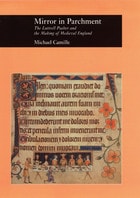
Mirror in Parchment
The Luttrell Psalter and the Making of Medieval EnglandMichael Camille
University of Chicago Press, 1998
The richly illuminated Luttrell Psalter was created for the English nobleman Sir Geoffrey Luttrell (1276-1345). Inexpensive mechanical illustration has since disseminated the book's images to a much wider audience; hence the Psalter's representations of manorial life have come to profoundly shape our modern idea of what medieval English people, high and low, looked like at work and at play. Alongside such supposedly truthful representations, the Psalter presents myriad images of fantastic monsters and beasts. These patently false images have largely been disparaged or ignored by modern historians and art historians alike, for they challenge the credibility of those pictures in the Luttrell Psalter that we wish to see as real.
In the conviction that medieval images were not generally intended to reflect daily life but rather to shape a new reality, Michael Camille analyzes the Psalter's famous pictures as representations of the world, imagined and real, of its original patron. Addressed are late medieval chivalric ideals, physical sites of power, and the boundaries of Sir Geoffrey's imagined community, wherein agricultural laborers and fabulous monsters play a similar ideological role. The Luttrell Psalter thus emerges as a complex social document of the world as its patron hoped and feared it might be.
Mirror of the Indies
A History of Dutch Colonial LiteratureRob Nieuwenhuys
University of Massachusetts Press, 1982
Mission Accomplished
On Founding Constitutional Adjudication in Central EuropeRadoslav Procházka
Central European University Press, 2002
Mobile Orientations
An Intimate Autoethnography of Migration, Sex Work, and Humanitarian BordersNicola Mai
University of Chicago Press, 2018
Using a bold blend of personal narrative and autoethnography, Mai provides intimate portrayals of sex workers from sites including the Balkans, the Maghreb, and West Africa who decided to sell sex as the means to achieve a better life. Mai explores the contrast between how migrants understand themselves and their work and how humanitarian and governmental agencies conceal their stories, often unwittingly, by addressing them all as helpless victims. The culmination of two decades of research, Mobile Orientations sheds new light on the desires and ambitions of migrant sex workers across the world.
Mobility of Imagination
A companion guide to international cultural cooperationDragan Klaic
Central European University Press, 2006
Mobilizing Black Germany
Afro-German Women and the Making of a Transnational MovementTiffany N. Florvil
University of Illinois Press, 2020
Tiffany N. Florvil examines the role of queer and straight women in shaping the contours of the modern Black German movement as part of the Black internationalist opposition to racial and gender oppression. Florvil shows the multifaceted contributions of women to movement making, including Audre Lorde’s role in influencing their activism; the activists who inspired Afro-German women to curate their own identities and histories; and the evolution of the activist groups Initiative of Black Germans and Afro-German Women. These practices and strategies became a rallying point for isolated and marginalized women (and men) and shaped the roots of contemporary Black German activism.
Richly researched and multidimensional in scope, Mobilizing Black Germany offers a rare in-depth look at the emergence of the modern Black German movement and Black feminists’ politics, intellectualism, and internationalism.
Mobilizing Youth
Communists and Catholics in Interwar FranceSusan B. Whitney
Duke University Press, 2009
Moving back and forth between the constantly shifting tactics devised to mobilize young people and the circumstances of their lives, Whitney gives special consideration to the context in which the youth movements operated and in which young people made choices. She traces the impact of the First World War on the young and on the formulation of generation-based political and religious identities, the role of work and leisure in young people’s lives and political mobilization, the impact of the Depression, the importance of Soviet ideas and intervention in French Communist youth politics, and the state’s attention to youth after the victory of France’s Popular Front government in 1936. Mobilizing Youth concludes by inserting the era’s youth activists and movements into the complicated events of the Second World War.
Moderate Modernity
The Newspaper Tempo and the Transformation of Weimar DemocracyJochen Hung
University of Michigan Press, 2023
The newspaper’s idea of a modern, democratic Germany was undermined by the political and economic crises that hit Germany at the beginning of the 1930s. The way the newspaper described German democracy changed under these pressures. Flappers, American fridges, and modern music—the things that Tempo had once marshalled as representatives of a German future—were now rejected by the newspaper as emblems of a bygone age. The changes in Tempo’s vision of Germany’s future show that descriptions of Weimar politics as a standoff between upright democrats and rabid extremists do not do justice to the historical complexity of the period. Rather, we need to accept the Nazis as a lethal product of a German democracy itself. The history of Tempo teaches us how liberal democracies can create and nurture their own worst enemies.

Modern Cows and Bovine Transformations
The Remaking of India's Cattle, 1790-1950David Arnold
University of Chicago Press, 0
Examines how India’s cattle underwent profound changes during the years of British colonial rule.
Drawing on extensive, untapped archives, Modern Cowsand Bovine Transformations illustrates the radical remaking of India’s cattle against the backdrop of colonial policies, environmental change, and anticolonial politics. Historian David Arnold examines the history of cows in India from 1790 to 1950, focusing on science, technology, and medicine to provide a secular account of imperial animal husbandry.
Doing justice to the wide variety of Indian cattle breeds, Arnold unpacks “bovine technology” and its subaltern linkages, covering topics such as the role of cattle in agriculture and the military; haulage and transport; breeding strategies; bacteriology and nutrition science, and India’s milk revolution. He also examines the dispersal of Indian cattle around the globe and the role that colonial policies played in spreading knowledge of Indian cattle breeds and facilitating their export. Finally, he addresses the “cattle crisis” brought on by famines, droughts, and disease, and disputes between colonial rulers and Hindu nationalists. He concludes with the impact of World War II and Partition on bovine populations, illustrating the consequences for independent India’s attempts to restore the milk supply and rebuild cattle breeds while also respecting the Hindu cow protection agenda. In the end, Arnold argues, the history of cattle in India provides us with a new way of understanding the power of the colonial state, its ambitions to transform India, its appropriation of the Indian subcontinent’s resources, and the myriad contradictions of its policies.
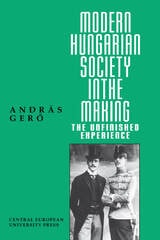
Modern Hungarian Society in the Making
András Gero
Central European University Press, 1995
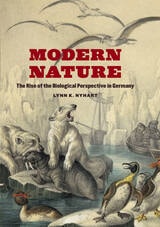
Modern Nature
The Rise of the Biological Perspective in GermanyLynn K. Nyhart
University of Chicago Press, 2009
In Modern Nature,Lynn K. Nyhart traces the emergence of a “biological perspective” in late nineteenth-century Germany that emphasized the dynamic relationships among organisms, and between organisms and their environment. Examining this approach to nature in light of Germany’s fraught urbanization and industrialization, as well the opportunities presented by new and reforming institutions, she argues that rapid social change drew attention to the role of social relationships and physical environments in rendering a society—and nature—whole, functional, and healthy.
This quintessentially modern view of nature, Nyhart shows, stood in stark contrast to the standard naturalist’s orientation toward classification. While this new biological perspective would eventually grow into the academic discipline of ecology, Modern Nature locates its roots outside the universities, in a vibrant realm of populist natural history inhabited by taxidermists and zookeepers, schoolteachers and museum reformers, amateur enthusiasts and nature protectionists.
Probing the populist beginnings of animal ecology in Germany, Nyhart unites the history of popular natural history with that of elite science in a new way. In doing so, she brings to light a major orientation in late nineteenth-century biology that has long been eclipsed by Darwinism.
Modernism
Representations of National CultureAhmet Ersoy
Central European University Press, 2010
Modernism
The Creation of Nation-StatesMichal Kopecek
Central European University Press, 2010
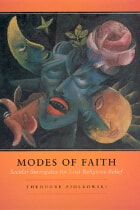
Modes of Faith
Secular Surrogates for Lost Religious BeliefTheodore Ziolkowski
University of Chicago Press, 2007
In the decades surrounding World War I, religious belief receded in the face of radical new ideas such as Marxism, modern science, Nietzschean philosophy, and critical theology. Modes of Faith addresses both this decline of religious belief and the new modes of secular faith that took religion’s place in the minds of many writers and poets.
Theodore Ziolkowski here examines the motives for this embrace of the secular, locating new modes of faith in art, escapist travel, socialism, politicized myth, and utopian visions. James Joyce, he reveals, turned to art as an escape while Hermann Hesse made a pilgrimage to India in search of enlightenment. Other writers, such as Roger Martin du Gard and Thomas Mann, sought temporary solace in communism or myth. And H. G. Wells, Ziolkowski argues, took refuge in utopian dreams projected in another dimension altogether.
Rooted in innovative and careful comparative reading of the work of writers from France, England, Germany, Italy, and Russia, Modes of Faith is a critical masterpiece by a distinguished literary scholar that offers an abundance of insight to anyone interested in the human compulsion to believe in forces that transcend the individual.
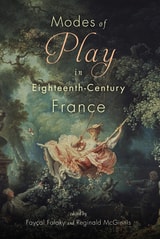
Modes of Play in Eighteenth-Century France
Fayçal Falaky
Bucknell University Press, 2022
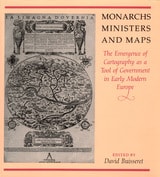
Monarchs, Ministers, and Maps
The Emergence of Cartography as a Tool of Government in Early Modern EuropeEdited by David Buisseret
University of Chicago Press, 1992
consolidate their power realized that better knowledge of
their lands would strengthen their control over them. By
1550, the cartographer's art had already become an important
instrument for bringing territories under the control of
centralized government; increasing governmental reliance on
maps stimulated the refinement of cartographic techniques
throughout the following century.
This volume, a detailed survey of the political uses of
cartography between 1400 and 1700 in Italy, France, England,
Poland, Austria, and Spain, answers these questions: When
did monarchs and ministers begin to perceive that maps could
be useful in government? For what purposes were maps
commissioned? How accurate and useful were they? How did
cartographic knowledge strengthen the hand of government?
The chapters offer new insights into the development of
cartography and its role in European history.
Contributors to the volume are John Marino, Peter
Barber, David Buisseret, Geoffrey Parker, James Vann, and
Michael J. Mikòs.
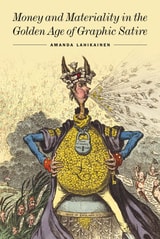
Money and Materiality in the Golden Age of Graphic Satire
Amanda Lahikainen
University of Delaware Press, 2022
This book examines the entwined and simultaneous rise of graphic satire and cultures of paper money in late eighteenth- and early nineteenth-century Britain. Asking how Britons learned to value both graphic art and money, the book makes surprising connections between two types of engraved images that grew in popularity and influence during this time. Graphic satire grew in visual risk-taking, while paper money became a more standard carrier of financial value, courting controversy as a medium, moral problem, and factor in inflation. Through analysis of satirical prints, as well as case studies of monetary satires beyond London, this book demonstrates several key ways that cultures attach value to printed paper, accepting it as social reality and institutional fact. Thus, satirical banknotes were objects that broke down the distinction between paper money and graphic satire altogether.
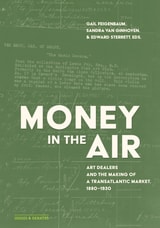
Money in the Air
Art Dealers and the Making of a Transatlantic Market, 1880–1930Gail Feigenbaum
J. Paul Getty Trust, The, 2024
“There was money in the air, ever so much money,” wrote Henry James in 1907, reflecting on the American appetite for art acquisitions. Indeed, collectors such as Henry Clay Frick and Andrew W. Mellon are credited with bringing noteworthy European art to the United States, with their collections forming the backbone of major American museums today. But what of the dealers, who possessed the expertise in art and recognized the potential of developing a new market model on both sides of the Atlantic?
Money in the Air investigates the often-overlooked role of these dealers in creating an international art world. Contributors examine the histories of well-known international firms like Duveen Brothers, M. Knoedler & Co., and Goupil & Cie and their relationships with American clients, as well as accounts of other remarkable dealers active in the transatlantic art market. Drawing on dealer archives, scholars reveal compelling findings, including previously unknown partnerships and systems of cooperation. This volume offers new perspectives on the development of art collections that formed the core of American art museums, such as the National Gallery of Art, the Metropolitan Museum of Art, and the Frick Collection.
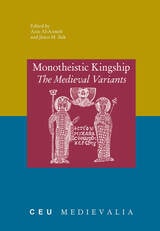
Monotheistic Kingship
The Medieval VariantsAziz Al-Azmeh
Central European University Press, 2004
This volume of essays intends to present diverse aspects of monotheistic kingship during the Middle Ages in two general-theoretical articles and a series of “case studies” on the relationship of religion and rulership. The authors discuss examples of the role of religion—based on both textual and iconic evidence—in Carolingian, Ottonian and late medieval western Europe; in Byzantium and Armenia; Georgia; Hungary; the Khazar Khanate; Poland, and Rus’. Two studies explore the issue in medieval Jewish and Islamic political thought. The editors hope that these special inquiries will engender more comparative studies on the subject.
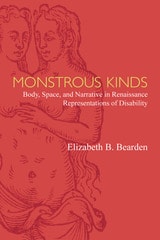
Monstrous Kinds
Body, Space, and Narrative in Renaissance Representations of DisabilityElizabeth B. Bearden
University of Michigan Press, 2019
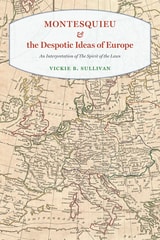
Montesquieu and the Despotic Ideas of Europe
An Interpretation of "The Spirit of the Laws"Vickie B. Sullivan
University of Chicago Press, 2017
Nowhere is Montesquieu’s critique of the despotic ideas of Europe more powerful than in his enormously influential The Spirit of the Laws, and Vickie B. Sullivan guides readers through Montesquieu’s sometimes veiled, yet sharply critical accounts of Machiavelli, Hobbes, Aristotle, and Plato, as well as various Christian thinkers. He finds deleterious consequences, for example, in brutal Machiavellianism, in Hobbes’s justifications for the rule of one, in Plato’s reasoning that denied slaves the right of natural defense, and in the Christian teachings that equated heresy with treason and informed the Inquisition.
In this new reading of Montesquieu’s masterwork, Sullivan corrects the misconception that it offers simple, objective observations, showing it instead to be a powerful critique of European politics that would become remarkably and regrettably prescient after Montesquieu’s death when despotism wound its way through Europe.
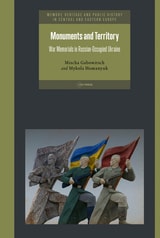
Monuments and Territory
War Memorials in Russian-Occupied UkraineMischa Gabowitsch
Central European University Press, 2025
From the very first weeks of Russia’s large-scale attack on Ukraine in February 2022, Russian soldiers, politicians, and proxy administrators expended considerable effort interacting with monuments on newly occupied territory. Why did the invaders care enough about war memorials to divert scarce resources to destroying, maintaining, or building them amid a massive war? Why did they remove some memorials and spare others? What was the point of commemorating past victories and defeats while bombing Ukrainian cities, and how did commemorative ceremonies in the occupied territories
change over the first year of the war? What was the broader impact of monument-related practices beyond the local settings in which they occurred? And what does the Ukrainian case teach us more generally about how memorials to past wars can be used to justify new conquests? These are some of the questions this book explores, based on fieldwork in occupied Ukraine and online research.
Moorings
Portuguese Expansion and the Writing of AfricaJosiah Blackmore
University of Minnesota Press, 2008
How Africa was perceived in the early modern imaginary
In this first book to study Portuguese texts about Africa, Moorings brings an important but little-known body of European writings to bear on contemporary colonial thought. Images of Africa as monstrous, dangerous, and lush were created in early Portuguese imperial writings and dominated its representation in European literature. Moorings establishes these key works in their proper place: foundational to Western imperial discourse.
Attentive to history as well as the nuances of language, Josiah Blackmore leads readers from the formation of the “Moor” in medieval Iberia to the construction of a full colonial imaginary, as found in the works of two writers: the royal chronicler Gomes Eanes de Zurara and the epic poet Luís de Camões. Blackmore’s original work helps to explain how concepts and myths—such as the “otherness” of Africa and Africans—originated, functioned, and were perpetuated.Delving into the Portuguese imperial experience, Moorings enriches our understanding of historical and literary imagination during a significant period of Western expansion.
Moral Entanglements
Conserving Birds in Britain and GermanyStefan Bargheer
University of Chicago Press, 2018
More Adventures with Britannia
Personalities, Politics and Culture in BritainEdited by Wm. Roger Louis
University of Texas Press, 1998
Collecting the interpretations of outstanding writers on the literature and history of modern Britain, this book deals with a rich variety of themes, some familiar, many unexpected, taking the reader on a highly engaging excursion through British life and intellectual biography. The scope includes not only the personalities, politics, and culture of England, Wales, Scotland, and Ireland, but also the interaction of British and other societies throughout the world.

Moritz Gottlieb Saphir
Nineteenth-Century Pioneer of Journalism and Food WritingAndrás Koerner
Central European University Press, 2027
His literary and journalistic innovations included publishing the first modern newspapers in Berlin, Munich and Vienna, developing a new style of humorous writing, introducing the journalistic genre of the feuilleton to Austria, authoring the first extended prose poem in the German language and writing the first study of vernacular Ashkenazi Jewish cuisine, as well as the first review of a Jewish cookbook and restaurant. Although due to censorship he had to largely eschew political subjects, he courageously fought for press freedom and against anti-Jewish prejudice. Although perhaps not a great writer, he was an important and intriguing figure of European cultural history who certainly doesn’t deserve the neglect his work has suffered since the early 20th century.
András Koerner’s book is the first modern monograph of him, which in addition to a detailed presentation of his eventful, interesting life and an examination of his personality, identity and work also includes the first-ever extensive annotated anthology of him in English.
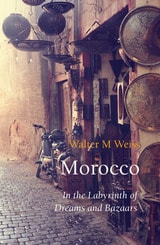
Morocco
In the Labyrinth of Dreams and BazaarsWalter M. Weiss
Haus Publishing, 2016
In Morocco, Walter M. Weiss brings extensive knowledge of the region to bear as he travels the breadth and depth of the country’s social and geographical contrasts. Berber villagers of the mountains are for the most part still illiterate and consider their king to be divinely chosen, while businessmen in Casablanca’s towering offices dream of closer ties to the European Union. Weiss visits the settings of modern legends, such as Tangier, as well as the two medieval centres Fès and Meknès, and sees earthen kasbahs and Marrakech’s bazaar. On the way, he meets acrobats, Sufi musicians, pilgrims, craftsmen, beatniks, rabbis, and Berber farmers—a kaleidoscope of variety and cultural influence.
Mosques in the Metropolis
Incivility, Caste, and Contention in EuropeElisabeth Becker
University of Chicago Press, 2021
Mothers on the Move
Reproducing Belonging between Africa and EuropePamela Feldman-Savelsberg
University of Chicago Press, 2016
Feldman-Savelsberg introduces readers to several Cameroonian mothers, each with her own unique history, concerns, and voice. Through scenes of their lives—at a hometown association’s year-end party, a celebration for a new baby, a visit to the Foreigners’ Office, and many others—as well as the stories they tell one another, Feldman-Savelsberg enlivens our thinking about migrants’ lives and the networks and repertoires that they draw on to find stability and, ultimately, belonging. Placing women’s individual voices within international social contexts, this book unveils new, intimate links between the geographical and the generational as they intersect in the dreams, frustrations, uncertainties, and resolve of strong women holding families together across continents.

Mountain and Plain
From the Lycian Coast to the Phrygian Plateau in the Late Roman and Early Byzantine PeriodMartin Harrison
University of Michigan Press, 2001
The present study is the fruit of years of excavation and research by the author. The manuscript was largely sketched out when Martin Harrison unexpectedly passed away, and the volume has been finished and prepared for press by his long-time assistant Wendy Young, with further guidance from friends and colleagues with whom he had discussed the project.
The resulting volume explores Martin Harrison's belief that the coastal cities of Lycia declined after the fifth century C.E., and that smaller settlements (monasteries, villages, and towns) appeared in the mountains and further inland. In addition he considered that there was a demographic shift of masons and sculptors from the cities to serve these new settlements. This beautifully illustrated study provides convincing evidence from architecture, sculpture, and inscriptional sources to support this theory. It also contains a description of Amorium in Phrygia, as revealed in survey and excavation seasons from 1987 until the author's untimely death half a dozen years later. The volume includes a preface by Stephen Hill and an appendix by Michael Ballance and Charlotte Roueché on three special inscriptions from Ovacik.
The volume will be of interest to historians of the Near East and classical antiquity, to archaeologists, and to students of architectural history.
Martin Harrison was Professor of Archaeology, University of Oxford. Wendy Young was Research Assistant to the author until his death.
Movable Londons
Performance and the Modern CityJulia H Fawcett
University of Michigan Press, 2025
Movie Workers
The Women Who Made British CinemaMelanie Bell
University of Illinois Press, 2021
After the advent of sound, women in the British film industry formed an essential corps of below-the-line workers, laboring in positions from animation artist to negative cutter to costume designer. Melanie Bell maps the work of these women decade-by-decade, examining their far-ranging economic and creative contributions against the backdrop of the discrimination that constrained their careers. Her use of oral histories and trade union records presents a vivid counter-narrative to film history, one that focuses not only on women in a male-dominated business, but on the innumerable types of physical and emotional labor required to make a motion picture. Bell's feminist analysis looks at women's jobs in film at important historical junctures while situating the work in the context of changing expectations around women and gender roles.
Illuminating and astute, Movie Workers is a first-of-its-kind examination of the unsung women whose invisible work brought British filmmaking to the screen.
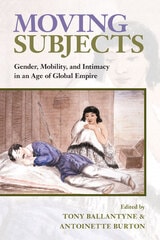
Moving Subjects
Gender, Mobility, and Intimacy in an Age of Global EmpireEdited by Tony Ballantyne and Antoinette Burton
University of Illinois Press, 2008
Moving Subjects is the first of its kind to make a case not simply for the necessity of a spatial analysis of imperial formations, but for the indispensability of an investigative approach that links space and movement with the domain of the intimate. Through careful archival research and a commitment to excavating the variety of "mobile intimacies" at the heart of imperial power, its agents, and its interlocutors, contributors offer new evidence and approaches for scholars engaged in capturing the historical nuances of imperial domination.
Contributors are Tony Ballantyne, Antoinette Burton, Adrian Carton, David Haines, Katherine Ellinghaus, Charlotte Macdonald, Michael A. McDonnell, Kirsten McKenzie, Michelle Moran, Fiona Paisley, Adele Perry, Dana Rabin, Christine M. Skwiot, Rachel Standfield, Frances Steel, Elizabeth Vibert, and Kerry Wynn.
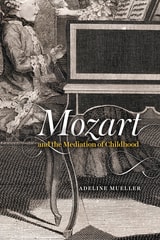
Mozart and the Mediation of Childhood
Adeline Mueller
University of Chicago Press, 2021
The story of Wolfgang Amadeus Mozart’s precocity is so familiar as to be taken for granted. In scholarship and popular culture, Mozart the Wunderkind is often seen as belonging to a category of childhood all by himself. But treating the young composer as an anomaly risks minimizing his impact. In this book, Adeline Mueller examines how Mozart shaped the social and cultural reevaluation of childhood during the Austrian Enlightenment. Whether in a juvenile sonata printed with his age on the title page, a concerto for a father and daughter, a lullaby, a musical dice game, or a mass for the consecration of an orphanage church, Mozart’s music and persona transformed attitudes toward children’s agency, intellectual capacity, relationships with family and friends, political and economic value, work, school, and leisure time.
Thousands of children across the Habsburg Monarchy were affected by the Salzburg prodigy and the idea he embodied: that childhood itself could be packaged, consumed, deployed, “performed”—in short, mediated—through music. This book builds upon a new understanding of the history of childhood as dynamic and reciprocal, rather than a mere projection or fantasy—as something mediated not just through texts, images, and objects but also through actions. Drawing on a range of evidence, from children’s periodicals to Habsburg court edicts and spurious Mozart prints, Mueller shows that while we need the history of childhood to help us understand Mozart, we also need Mozart to help us understand the history of childhood.

Mrs Kleofas’s Rooster
Three NovellasGyula Krúdy
Seagull Books, 2026
Mrs Kleofas’ Rooster brings together three captivating novellas by Gyula Krúdy, originally written in the 1920s and now available in English for the first time. Each story centers on a woman protagonist: a timeless adventuress, a resilient single mother, and a seductive Budapest femme fatale, respectively. In the title novella, a roguish narrator listens to the thrilling life story of an ageless, mysterious woman whose journey takes her from a childhood of suffering to a career as a cunning accomplice in daring schemes. The next story, NN, follows the life of a steadfast single mother, Juliska, amid the rhythms of village life. In Autumn Meeting, Krudy’s sharp wit unfolds through Rizili, a charming yet ruthless socialite who leads a suspended jockey on an intoxicating night through Budapest’s City Park.
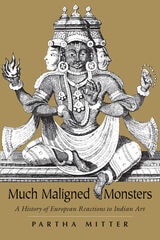
Much Maligned Monsters
A History of European Reactions to Indian ArtPartha Mitter
University of Chicago Press, 1992
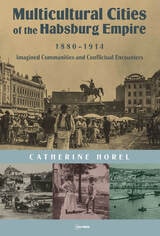
Multicultural Cities of the Habsburg Empire, 1880–1914
Imagined Communities and Conflictual EncountersCatherine Horel
Central European University Press, 2023
Catherine Horel has undertaken a comparative analysis of the societal, ethnic, and cultural diversity in the last decades of the Habsburg Monarchy as represented in twelve cities: Arad, Bratislava, Brno, Chernivtsi, Lviv, Oradea, Rijeka, Sarajevo, Subotica, Timișoara, Trieste, and Zagreb. By purposely selecting these cities, the author aims to counter the disproportionate attention that the largest cities in the empire receive.
With a focus on the aspects of everyday life faced by the city inhabitants (associations, schools, economy, and municipal politics) the book avoids any idealization of the monarchy as a paradise of peaceful multiculturalism, and also avoids exaggerating conflicts. The author claims that the world of the Habsburg cities was a dynamic space where many models coexisted and created vitality, emulation, and conflict. Modernization brought about the dissolution of old structures, but also mobility, the progress of education, the explosion of associative life, and constantly growing cultural offerings.
Multicultural Politics
Racism, Ethnicity, and Muslims in BritainTariq Modood
University of Minnesota Press, 2005
Multiparty Government
The Politics of Coalition in EuropeMichael Laver and Norman Schofield
University of Michigan Press, 1998
Multiple Meanings of Gender Equality
A critical frame analysis of gender policies in EuropeMieke Verloo
Central European University Press, 2007

Murder Scenes
Normality, Deviance, and Criminal Violence in Weimar BerlinSace Elder
University of Michigan Press, 2010
---Kenneth Ledford, Case Western Reserve University

Musashino in Tuscany
Japanese Overseas Travel Literature, 1860–1912Susanna Fessler
University of Michigan Press, 2004
Music Metropolis Berlin
Three Centuries of Musical Culture in the Capital CityPamela M. Potter
University of Chicago Press, 0
Tracing the development of Berlin as a center of music from the eighteenth century to the present, examining how its music survived despite its turbulent history.
Berlin is a music-lover’s paradise, offering up everything from operas to raves. Yet unlike Vienna, Leipzig, or even Nashville, Berlin does not immediately come to mind as a city of music. Instead, its turbulent history evokes images of industry, commerce, militarism, destruction, division, and resurrection. Over the past three centuries, Berlin was the capital of a kingdom, an empire, a republic, and a dictatorship; it was ravaged by war and occupied by foreign powers; and its division and reunification made it a powerful symbol of the Cold War. Through all these highs and lows, the music played on. Music Metropolis Berlin is the first full-length exploration of how Berlin became a city of music against all odds.
Unlike the other European music centers that stake their reputations on the fame of composers like Bach or Beethoven, Berlin is known for its ensembles, artists, theaters, organizers, intellectuals, and media stars. This is because Berlin took a very different, and almost accidental, route to becoming a city of music. Hampered for centuries by rulers who were more focused on military and industrial expansion than on cultural prestige, Berlin’s musical life prospered thanks to the ambitions of entrepreneurs and politicians who saw the value in serving the ever-changing music public in an expanding urban landscape. By focusing on Berlin as a rapidly developing global capital, Music Metropolis Berlin looks beyond the music, its creators, and its institutions to reveal how political, economic, and social forces fueled the creation of the Berlin metropolis and continue to nurture a vibrant and diverse musical life.
Music and Culture in Eighteenth-Century Europe
A Source BookEnrico Fubini
University of Chicago Press, 1994
Enrico Fubini offers a sampling of English, French, German, and Italian writings on topics ranging from Enlightenment rationalism and the theories of harmony to German musical culture and the polemics on J. S. Bach. Organized by topic and historical period these selections go beyond writings dealing exclusively with specific musical works to larger issues of theory and the reception of musical ideas in the culture at large. The selections are from books, journals, newspapers, pamphlets, and letters; the contributors include Diderot, Rousseau, Voltaire, Grimm, Alfieri, Rameau, Quantz, Gluck, Tartini, Leopold and W. A. Mozart, and C. P .E. Bach. Many are translated here for the first time.
With general and chapter introductions, restored footnotes, and other valuable annotations, and a biographical appendix, this anthology will interest music scholars, students, and teachers.
Music and the Making of Portugal and Spain
Nationalism and Identity Politics in the Iberian PeninsulaEdited by Matthew Machin-Autenrieth, Salwa el-Shawan Castelo-Branco, and Samuel Llano
University of Illinois Press, 2023
What does music in Portugal and Spain reveal about the relationship between national and regional identity building? How do various actors use music to advance nationalism? How have state and international heritage regimes contributed to nationalist and regionalist projects? In this collection, contributors explore these and other essential questions from a range of interdisciplinary vantage points. The essays pay particular attention to the role played by the state in deciding what music represents Portuguese or Spanish identity. Case studies examine many aspects of the issue, including local recording networks, so-called national style in popular music, and music’s role in both political protest and heritage regimes. Topics include the ways the Salazar and Franco regimes adapted music to align with their ideological agendas; the twenty-first-century impact of UNESCO’s Intangible Cultural Heritage program on some of Portugal and Spain's expressive practices; and the tensions that arise between institutions and community in creating and recreating meanings and identity around music.
Contributors: Ricardo Andrade, Vera Marques Alves, Salwa El-Shawan Castelo-Branco, Cristina Sánchez-Carretero, José Hugo Pires Castro, Paulo Ferreira de Castro, Fernán del Val, Héctor Fouce, Diego García-Peinazo, Leonor Losa, Josep Martí, Eva Moreda Rodríguez, Pedro Russo Moreira, Cristina Cruces Roldán, and Igor Contreras Zubillaga
Music in Golden-Age Florence, 1250–1750
From the Priorate of the Guilds to the End of the Medici Grand DuchyAnthony M. Cummings
University of Chicago Press, 2023
Florence is justly celebrated as one of the world’s most important cities. It enjoys mythic status and occupies an enviable place in the historical imagination. But its musico-historical importance is not as well understood as it should be. If Florence was the city of Dante, Michelangelo, and Galileo, it was also the birthplace of the madrigal, opera, and the piano. Music in Golden-Age Florence, 1250–1750 recounts Florence’s principal contributions to music and the history of how music was heard and cultivated in the city, from civic and religious institutions to private patronage and the academies. This book is an invaluable complement to studies of the art, literature, and political thought of the late-medieval and early-modern eras and the quasi-legendary figures in the Florentine cultural pantheon.
Music in the Castle
Troubadours, Books, and Orators in Italian Courts of the Thirteenth, Fourteenth, and Fifteenth CenturiesF. Alberto Gallo
University of Chicago Press, 1996
In the first of three elegant essays, Gallo examines the troubadours who traveled to northern Italian courts from Provence during the thirteenth century. He discusses their performance practices, the verbal and musical sophistication of their songs, and their role in the daily life of courtiers at Genoa, Ferrara, and Monferrato. The second essay concerns the now dispersed collection of the Visconti library at Pavia. Here, Gallo examines how this collection expressed the tastes of the fourteenth-century court of Giangaleazzo Visconti, how French arts were imported and imitated at Pavia, and the effects this had on music heard at the court. In the final essay, Gallo looks at the fifteenth-century tradition of improvised music, and especially the virtuoso lute player Pietrobono. Mythologized in literary circles of his day, Pietrobono becomes a point of departure for a discussion of the entire vision of music of Italian humanists, from Guarino Veronese to Aurelio Brandolini.
Music in the Flesh
An Early Modern Musical PhysiologyBettina Varwig
University of Chicago Press, 2023
Music in the Flesh reimagines the lived experiences of music-making subjects—composers, performers, listeners—in the long seventeenth century. There are countless historical testimonies of the powerful effects of music upon the early modern body; it is described as moving, ravishing, painful, dangerous, curative, and miraculous while affecting “the circulation of the humors, the purification of the blood, the dilation of the vessels and pores.”
How were these early modern European bodies constituted that music generated such potent bodily-spiritual effects? Bettina Varwig argues that early modern music-making practices challenge our modern understanding of human nature as a mind-body dichotomy. Instead, they persistently affirm a more integrated anthropology, in which body, soul, and spirit remain inextricably entangled. Moving with ease across repertories and regions, sacred and vernacular musics, and domestic and public settings, Varwig sketches a “musical physiology” that is as historically illuminating as it is relevant for present-day performance. This book makes a significant contribution not just to the history of music, but also to the history of the body, the senses, and the emotions, revealing music as a unique access point for reimagining early modern modes of being-in-the-world.
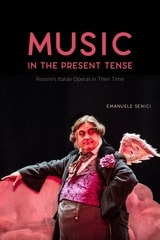
Music in the Present Tense
Rossini’s Italian Operas in Their TimeEmanuele Senici
University of Chicago Press, 2019
Emanuele Senici’s new book provides a fresh look at the motives behind the Rossinian furore and its aftermath by examining the composer’s works in the historical context in which they were conceived, performed, seen, heard, and discussed. Situating the operas firmly within the social practices, cultural formations, ideological currents, and political events of early nineteenth-century Italy, Senici reveals Rossini’s dramaturgy as a radically new and specifically Italian reaction to the epoch-making changes witnessed in Europe at the time. The first book-length study of Rossini’s Italian operas to appear in English, Music in the Present Tense exposes new ways to explore nineteenth-century music and addresses crucial issues in the history of modernity, such as trauma, repetition, and the healing power of theatricality.
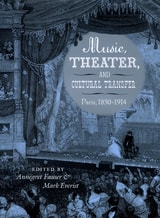
Music, Theater, and Cultural Transfer
Paris, 1830-1914Edited by Annegret Fauser and Mark Everist
University of Chicago Press, 2009
Opera and musical theater dominated French culture in the 1800s, and the influential stage music that emerged from this period helped make Paris, as Walter Benjamin put it, the “capital of the nineteenth century.” The fullest account available of this artistic ferment and its international impact, Music, Theater, and Cultural Transfer explores the diverse institutions that shaped Parisian music and extended its influence across Europe, the Americas, and Australia.
The contributors to this volume, who work in fields ranging from literature to theater to musicology, focus on the city’s musical theater scene as a whole rather than on individual theaters or repertories. Their broad range enables their collective examination of the ways in which all aspects of performance and reception were affected by the transfer of works, performers, and management models from one environment to another. By focusing on this interplay between institutions and individuals, the authors illuminate the tension between institutional conventions and artistic creation during the heady period when Parisian stage music reached its zenith.