Results by title
8812 books match the query 'Political Science' and 421 start with m

Michael Oakeshott on Religion, Aesthetics, and Politics
Elizabeth Campbell Corey
University of Missouri Press, 2006
For much of his career, British political philosopher Michael Oakeshott was identified with Margaret Thatcher’s conservative policies. He has been called by some a guru to the Tories, while others have considered him one of the last proponents of British Idealism. Best known for such books as Experience and Its Modes and Rationalism in Politics, Oakeshott has been the subject of numerous studies, but always with an emphasis on his political thought.
Gnosticism and considers both thinkers’ treatment of Hobbes to delineate their philosophical differences.

Michigan Government, Politics, and Policy
John S. Klemanski and David A. Dulio, editors
University of Michigan Press, 2017
As the state continues to deal with many of these challenges, Michiganders more than ever need a clear picture of how their state’s political institutions, actors, and processes work. To that end, this book provides a comprehensive analysis of Michigan’s politics and government that will help readers better understand the state’s history and its future prospects. Chapters elucidate the foundational aspects of the state’s government (the Michigan Constitution and intergovernmental relations); its political institutions (the state legislature, governor, and court system); its politics (political parties and elections); and its public policy (education, economic development, and budget and fiscal policy). The book’s four themes—historical context, decline, responses to challenges, and state-local government relations—run throughout and are buttressed by coverage of recent events. Moreover, they are brought together in a compelling chapter with a particular focus on the Flint water crisis.
An ideal fit for courses on state and local government, this thorough, well-written text will also appeal to readers simply interested in learning more about the inner workings of government in the Great Lakes State.
Michigan's Con-Con 11
Women and State Constitution-making in 1961Lynn Liberato
Michigan State University Press, 2025

Micro-Politics
Agency in a Postfeminist EraPatricia S. Mann
University of Minnesota Press, 1994
Micro-Politics was first published in 1994. Minnesota Archive Editions uses digital technology to make long-unavailable books once again accessible, and are published unaltered from the original University of Minnesota Press editions.
Patricia S. Mann explains our current period as a time of social transformation resulting from an "unmooring" of women, men, and children from the nuclear family, gender relations having replaced economic relations as the primary site of social tension and change in our lives. The feminist movement has evolved, according to Mann, into a popularly based postfeminist struggle to reconstruct relationships between women and men within everyday contexts of work, family, education, and politics.
Mann formulates a "postmodern" theory of political agency, utilizing it to explain political events such as the Hill-Thomas Senate hearings and their social aftermath. While liberal and progressive theories have explained political agency in terms of individual or group forms of identity, Mann suggests another alternative. Individuals such as Anita Hill are drawn into socially meaningful struggles in the context of their daily lives-as we all are potentially participating in micro-political forms of activism in a variety of institutional contexts. These dynamic micropolitical situations involve intersecting dimensions of race, class, and sexuality, as well as gender. Within specific conflicts, individuals rearticulate their notions of desire and responsibility, and their expectations for recognition and reward; according to Mann political agency resides in these choices. Addressing some of the most important controversies in political philosophy, Mann weaves together strands of the "participatory politics" of the 1960s and the multicultural politics of the 1990s. In doing so, she offers a new basis for understanding social change.
Microsociology
Discourse, Emotion, and Social StructureThomas J. Scheff
University of Chicago Press, 1990
Thomas J. Scheff brings together the study of communication and the social
psychology of emotions to explore the microworld of thoughts, feelings,
and moods. Drawing on strikingly diverse and rich sources—the findings of
artificial intelligence and cognitive science, and examples from literary
dialogues and psychiatric interviews—Scheff provides an inventive account
of the nature of social life and a theory of motivation that brilliantly
accounts for the immense complexity involved in understanding even the most
routine conversation.
"A major contribution to some central debates in social theory at the
present time. . . . What Thomas Scheff seeks to develop is essentially a
quite novel account of the nature of social life, its relation to language
and human reflexivity, in which he insists upon the importance of a theory
of emotion. . . . A work of true originality and jolting impact. . . .
Microsociology is of exceptional interest, which bears witness to the
very creativity which it puts at the center of human social contact."
—Anthony Giddens, from the Foreword
"Scheff provides a rich theory that can easily generate further exploration. And he drives home the message that sociological work on interaction, social bonds, and society cannot ignore human emotionality."—Candace Clark, American Journal of Sociology
"This outstanding and ground-breaking little volume contains a wealth of original ideas that bring together many insights concerning the relationship of emotion to motivation in a wide variety of social settings. It is strongly recommended to all serious students of emotion, of society, and of human nature."—Melvin R. Lansky, American Journal of Psychiatry

Midwest Maize
How Corn Shaped the U.S. HeartlandCynthia Clampitt
University of Illinois Press, 2015

Midwestern Native Shrubs and Trees
Gardening Alternatives to Nonnative Species: An Illustrated GuideCharlotte Adelman, Bernard L. Schwartz
Ohio University Press, 2016
Migrant Labour in Global Factories
Care, welfare and government under market socialism in China and VietnamJake Lin, Minh T. N. Nguyen, and Jingyu Mao
University College London, 2026
This interdisciplinary study investigates the unique challenges faced by migrant workers in the market socialist countries of China and Vietnam.
The labor of hundreds of millions of internal migrant workers plays a crucial role for China and Vietnam’s national development and the expansion of global production chains in these market socialist countries. As the Communist party states have been promoting both marketization and welfare expansion since their respective reforms began, contradictions between the commodification and social protection of labor lead to significant obstacles to migrant workers’ welfare and well-being in the post-reform era.
Bringing into focus the connection between the reconfiguration of labor and changes in the two countries’ welfare systems, Migrant Labour in Global Factories analyzes how these contradictions shape the care of their huge migrant labor forces. It explores how they unfold in the historical and political contexts of both countries, bringing a range of relevant theories about welfare and social policymaking to bear on the features of the market socialist economy. The book argues that the evolving welfare systems in China and Vietnam fail to meaningfully address the social consequences of labor commodification in contexts where neoliberal development is instrumentalized to serve the political control and legitimacy of the party states. This is often at the cost of long-term and sustainable social policies for migrant labor in global factories.
Migrants for Export
How the Philippine State Brokers Labor to the WorldRobyn Magalit Rodriguez
University of Minnesota Press, 2010
Migration Stories
Connecting Activism, Policy, and ScholarshipEdited by Benjamin Gatling
University of Illinois Press, 2025
Ranging from oral history projects to the asylum process to calls for decolonial justice, the contributors’ analyses illuminate how migrants’ and refugees’ personal narratives influence both perceptions and policies. Their merger of perspectives provides a nuanced understanding of migration and emphasizes the importance of how storytelling can foster empathy, challenge stereotypes, and drive social change. At the same time, the essays center migrants’ and refugees’ voices within public debates and in work done to humanize the reality they face.
Original and multifaceted, Migration Stories provides a vital addition to how we study and frame immigration.
Migration and Mortality
Social Death, Dispossession, and Survival in the AmericasEdited by Jamie Longazel and Miranda Cady Hallett
Temple University Press, 2021
Death threatens migrants physically during perilous border crossings between Central and North America, but many also experience legal, social, and economic mortality. Rooted in histories of colonialism and conquest, exclusionary policies and practices deliberately take aim at racialized, dispossessed people in transit. Once in the new land, migrants endure a web of systems across every facet of their world—work, home, healthcare, culture, justice—that strips them of their personhood, denies them resources, and creates additional obstacles that deprive them of their ability to live fully.
As laws and policies create ripe conditions for the further extraction of money, resources, and labor power from the dispossessed, the contributors to this vibrant anthology, Migration and Mortality, examine restrictive immigration policies and the broader capitalist systems of exploitation and inequality while highlighting the power of migrants’ collective resistance and resilience.
The case studies in this timely collection explore border deaths, detention economies, asylum seeking, as well as the public health and mental health of migrants. Ultimately, these examples of oppression and survival contribute to understanding broader movements for life and justice in the Americas.

Migration and Multiculturalism in Scandinavia
Edited by Eric Einhorn, Sherrill Harbison, and Markus Huss
University of Wisconsin Press, 2022
Drawing from personal experiences and theoretical perspectives in such varied fields as sociology, political science, literature, and media studies, nineteen scholars assess recent shifts in Scandinavian societies and how they intertwine with broader transformations in Europe and beyond. Chapters explore a variety of topics, including themes of belonging and identity in Norway, the experiences and activism of the Nordic countries’ Indigenous populations, and parallels between the racist far-right resurgence in Sweden and the United States.
Contributors: Ellen A. Ahlness, Julie K. Allen, Grete Brochmann, Eric Einhorn, Sherrill Harbison, Anne Heith, Markus Huss, Peter Leonard, Barbara Mattsson, Kelly McKowen, Andreas Önnerfors, Elisabeth Oxfeldt, Tony Sandset, Carly Elizabeth Schall, Ryan Thomas Skinner, Admir Skodo, Benjamin R. Teitelbaum, Sayaka Osanami Törngren, Ethelene Whitmire

Miles Lord
The Maverick Judge Who Brought Corporate America to JusticeRoberta Walburn
University of Minnesota Press, 2017
The life of a crusading federal judge who stood up and fought for “the little guy”
This is the story of Miles Lord (1919–2016), who rose from humble beginnings on Minnesota’s Iron Range to become one of the most colorful and powerful judges in the country, described as “an unabashed Prairie populist” and “a live-wire slayer of corporate behemoths.” He cut a wide swath through history on his path to the bench: coming of age alongside a cadre of young Midwestern social-gospel progressives, including Hubert H. Humphrey, Eugene McCarthy, and Walter Mondale, in the days before they reached national fame; teaming with Bobby Kennedy as a hotshot prosecutor in pursuit of Jimmy Hoffa; and serving as the secret envoy between his friends Hubert and Eugene in their battle for the soul of the Democratic party in the historic 1968 presidential campaign. Later, after donning his black robe, he reshaped jurisprudence with precedent-breaking rulings—on issues ranging from women’s rights to consumer protection to education reform—and breaking trail when he ordered the shutdown of the Reserve Mining Company in northern Minnesota, which was spewing its waste into Lake Superior, in the most sensational trial of the early environmental era.
One of Judge Lord’s landmark cases—and interlaced as a centerpiece narrative of this book—involved the Dalkon Shield intrauterine device, which caused horrific infections in thousands of women, resulting in infertility and sometimes death. Author Roberta Walburn served as the judge’s law clerk during that litigation in 1983–84, and she provides a page-turning account (both an insider’s view and an in-depth chronicle) of what was called “one of the most disastrous episodes of American corporate misconduct.” In the end, more than 200,000 women received nearly $3 billion in compensation, and the Fortune 500 defendant was left in ruins. But Judge Lord was hauled up on judicial misconduct charges for his no-holds-barred actions that were certainly provocative but also stand as a timely reminder, even (or especially) today, of the challenges in balancing the scales of justice for a legal system that too often skews to the rich and powerful.
The author deftly weaves the Dalkon Shield drama into the larger story of the life of a one-of-a-kind man, crafting a sweeping and spirited true-life tale with not only her first-hand experiences as the judge’s law clerk but also with unrestricted access to the judge’s personal files. This is a rare and compelling portrait of a remarkable man and his place in both Minnesota and U.S. history.
Militant Nationalism
Between Movement and Party in Ireland and the Basque CountryCynthia Irvin
University of Minnesota Press, 1999
A comparative analysis of two militant nationalist groups.
Why do some militant nationalists turn to electoral politics while others resist-and even seek to destroy-that arena? Cynthia L. Irvin examines two cases of electoral interventions by nationalist organizations engaged in violent political competition: in Northern Ireland and in the Basque provinces of Spain. Based on her findings, she offers insights into the circumstances that lead such groups to abandon violence in favor of institutional political struggle.
Using fieldwork done in Northern Ireland and the Basque Country, Irvin develops a model linking the internal dynamics of Sinn Fein and Herri Batasuna (the electoral arm of the militant Basque separatists) to changes in their external environments. In this unusual comparative analysis, she draws on interviews with more than 100 Sinn Fein and Herri Batasuna activists and on a unique survey of 140 Herri Batasuna activists. This approach moves Irvin’s work beyond previous analyses, which have relied on either descriptive and historical accounts or formal models of insurgent violence. This detailed account has broad implications for the study of social movements and ethnic identity, providing a valuable new perspective into the strategic interactions and often conflict-ridden relationship between social movements and political parties. ISBN 0-8166-3114-X Cloth £00.00 $49.95xxISBN 0-8166-3115-8 Paper £00.00 $19.95x304 Pages 26 Tables 5 7/8 x 9 MaySocial Movements, Protest, and Contention Series, volume 9Translation inquiries: University of Minnesota Press
Militarization
A ReaderRoberto J. González, Hugh Gusterson, and Gustaaf Houtman, editors
Duke University Press, 2019
In collaboration with Catherine Besteman, Andrew Bickford, Catherine Lutz, Katherine T. McCaffrey, Austin Miller, David H. Price, David Vine
Militarized Currents
Toward a Decolonized Future in Asia and the PacificSetsu Shigematsu
University of Minnesota Press, 2010
Militarizing Marriage
West African Soldiers’ Conjugal Traditions in Modern French EmpireSarah J. Zimmerman
Ohio University Press, 2020
Following tirailleurs sénégalais’ deployments in West Africa, Congo, Madagascar, North Africa, Syria-Lebanon, Vietnam, and Algeria from the 1880s to 1962, Militarizing Marriage historicizes how African servicemen advanced conjugal strategies with women at home and abroad. Sarah J. Zimmerman examines the evolution of women’s conjugal relationships with West African colonial soldiers to show how the sexuality, gender, and exploitation of women were fundamental to the violent colonial expansion and the everyday operation of colonial rule in modern French Empire.
These conjugal behaviors became military marital traditions that normalized the intimate manifestation of colonial power in social reproduction across the empire. Soldiers’ cross-colonial and interracial households formed at the intersection of race and sexuality outside the colonizer/colonized binary. Militarizing Marriage uses contemporary feminist scholarship on militarism and violence to portray how the subjugation of women was indispensable to military conquest and colonial rule.

Military Ascendancy and Political Culture
A Study of Indonesia's GolkarLeo Suryadinata
Ohio University Press, 1989
Leo Suryadinata traces the birth, struggle, and emergence of this party so closely identified with Indonesia’s President Suharto. Yet, to claim that Suharto and the military dominate the party is to view Golkar superficially, for the party is also composed of factions of civil servants and the Minister of Security and Defense, as well as several other governmental agencies. A complex and well-detailed cultural history of Indonesia’s most powerful political party, this case study should have wider implications for the study of military behavior in the Third World.
Military Institutions and Coercion in the Developing Nations
The Military in the Political Development of New NationsMorris Janowitz
University of Chicago Press, 1988

Military Intervention after the Cold War
The Evolution of Theory and PracticeAndrea Kathryn Talentino
Ohio University Press, 2005
Military Intervention After the Cold War explores how and why this change took place, looking at how both ideas and actions changed in the post-Cold War period to make military intervention a tool of international security and a defining characteristic of the international system. Although it is often touted as a strategy to rebuild collapsed states, the examples of success are few and far between. Andrea Kathryn Talentino argues that standards of human rights and responsible governance have become part of the definition of international security. She addresses questions that are vital in the post-9/11 world, where weak and collapsed states are recognized as permissive and at times supportive environments for criminal actors.
The specter of terrorism has placed even greater emphasis on the need to understand why military intervention happens and how it could be more effective. With the news full of stories on intervention and nation-building, scholars, graduate and undergraduate students, and readers interested in understanding global interdependence will find Military Intervention After the Cold War an indispensable book.Andrea Kathryn Talentino is an assistant professor of international relations at Tulane University, New Orleans.The author of numerous articles on military intervention and post- conflict rebuilding, she is currently focusing on the link between nation-building and political violence.

Military Occupation and Diplomacy
Soviet Troops in Romania, 1944–1958Sergiu Verona
Duke University Press, 1992
Drawing on declassified archival material in the United States and the United Kingdom, the author considers Khrushchev’s reversal of Stalinist expansionism by examining the motivation, function, and operation of the initial occupation of Romania; the complex involvement of Soviet diplomacy and its perception by the United States and other Western powers; the process by which Khrushchev decided to withdraw Soviet troops from that country; and the impact of this decision on Soviet policy. Verona extends his analysis, providing comparisons between Khrushchev’s and Gorbachev’s approaches to Eastern Europe, noting that similarities exist not only in domestic policies but in the realm of foreign policy as well.
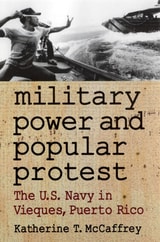
Military Power and Popular Protest
The U.S. Navy in Vieques, Puerto RicoMcCaffrey, Katherine T
Rutgers University Press, 2002
Residents of Vieques, a small island just off the east coast of Puerto Rico, live wedged between an ammunition depot and live bombing range for the U.S. Navy. Since the 1940s when the navy expropriated over two-thirds of the island, residents have struggled to make a life amid the thundering of bombs and rumbling of weaponry fire. Like the armys base in Okinawa, Japan, the facility has drawn vociferous protests from residents who challenged U.S. security interests overseas. In 1999, when a local civilian employee of the base was killed by a stray bomb, Vieques again erupted in protests that have mobilized tens of thousands individuals and transformed this tiny Caribbean Island into the setting for an international cause célèbre.
Katherine T. McCaffrey gives a complete analysis of the troubled relationship between the U.S. Navy and island residents. She explores such topics as the history of U.S. naval involvement in Vieques; a grassroots mobilizationled by fishermenthat began in the 1970s; how the navy promised to improve the lives of the island residentsand failed; and the present-day emergence of a revitalized political activism that has effectively challenged naval hegemony.
The case of Vieques brings to the fore a major concern within U.S. foreign policy that extends well beyond Puerto Rico: military bases overseas act as lightning rods for anti-American sentiment, thus threatening this countrys image and interests abroad. By analyzing this particular, conflicted relationship, the book also explores important lessons about colonialism and postcolonialism and the relationship of the United States to the countries in which it maintains military bases.

Military, Inc.
Inside Pakistan's Military EconomyAyesha Siddiqa
Pluto Press, 2016
This book offers a close look at what the rise of the military has meant for Pakistani society. Ayesha Siddiqa shows how entrenched the military has become, not just in day-to-day governance, but in the Pakistani corporate sector as well. What are the consequences of this unprecedented merging of the military and corporate sectors? What does it mean for Pakistan’s economic development—let alone for hopes of an eventual return to democracy and de-militarization? This new edition brings Siddiqa’s account fully up to date with a new preface and conclusion that emphasize the changing role of the media.

Milk Money
Cash, Cows, and the Death of the American Dairy FarmKirk Kardashian
Brandeis University Press, 2025
The dairy business is at the heart of the culture and economy of Vermont, just as it is in many other states. That fact meant little to Kirk Kardashian until he started taking his daughter to daycare at a dairy farm a few miles from his Vermont home. The farm had been owned by the same family for generations but struggled to make ends meet in a market where retail milk prices have held steady for decades while the prices paid to farmers have plummeted. Suddenly, the abstractions of economics and commodities markets were replaced by the flesh and blood of a farm family whom he greeted every day.
In the tradition of Michael Pollan and Eric Schlosser, Kardashian asks whether it is right that family farmers in America should toil so hard, produce a food so wholesome and so popular, and still lose money. His investigation uncovers the hidden forces behind dairy farm consolidation and explains why milk—a staple subject to both government oversight and industry collusion—has proven so tricky to stabilize, even as scores of small dairy farms close. This new edition brings the story up to date, as farmers grapple with an ever-changing landscape that includes shifting consumer preferences, immigration issues, climate change, and bird flu.

Milk Shake
Abundance and Loss in America’s DairylandGarbo Wedde
Wisconsin Historical Society Press, 2027
The story of how today’s dairy farmers are navigating a historic crossroads of agriculture and rural life in a rapidly changing world.
For generations, the dairy farmer has embodied the character, resilience, and values of the Midwest. Yet between 2005 and 2020, Wisconsin—known as America’s Dairyland—lost half of its dairy farms, marking one of the most profound economic and cultural transformations in its history. In Milk Shake: Abundance and Loss in America’s Dairyland, journalist Garbo Wedde delivers a thorough and emotionally resonant portrait of the farm families living through this time of change in rural life.
Drawing on extensive research and candid conversations with dozens of dairy farmers and industry stakeholders, Wedde looks beyond statistics to reveal the human stories behind the decline of the small family dairy farm. At the heart of the book are four Wisconsin farm families grappling with an uncertain future and how to respond: one leaves the industry, one embraces automation, one finds hope in a new generation willing to carry on the work, and one faces mounting financial strain that culminates in tragedy.
Interwoven among these narratives is a penetrating examination of the rise of large-scale industrial farms, their economic and environmental impacts, and the ways communities are responding. Wedde also explores the political, economic, demographic, and cultural forces reshaping dairy farming, from environmental regulation and labor shortages to gerrymandering, changing consumer preferences, and growing consolidation of small farms into agribusiness.
Richly observed scenes—from dairy breakfasts and farm auctions to public hearings on concentrated animal feeding operations (CAFOs)—bring readers inside a world that is both quintessentially American and increasingly endangered. Part social history and part elegy, Milk Shake captures a pivotal moment in America’s Dairyland while exploring questions that reach far beyond Wisconsin: What is lost when family farms disappear, and what does that loss mean for the communities, traditions, and values they sustain?

Milking in the Shadows
Migrants and Mobility in America’s DairylandKeller, Julie C
Rutgers University Press, 2019
Mill on Democracy
From the Athenian Polis to Representative GovernmentNadia Urbinati
University of Chicago Press, 2002
Redirecting attention to Mill as a political thinker, Nadia Urbinati argues that this claim misrepresents Mill's thinking. Although he did not elaborate a theory of democracy, Mill did devise new avenues of democratic participation in government that could absorb the transformation of politics engendered by the institution of representation. More generally, Urbinati assesses Mill's contribution to modern democratic theory by critiquing the dominant "two liberties" narrative that has shaped Mill scholarship over the last several decades. As Urbinati shows, neither Isaiah Berlin's theory of negative and positive freedom nor Quentin Skinner's theory of liberty as freedom from domination adequately captures Mill's notion of political theory.
Drawing on Mill's often overlooked writings on ancient Greece, Urbinati shows that Mill saw the ideal representative government as a "polis of the moderns," a metamorphosis of the unique features of the Athenian polis: the deliberative character of its institutions and politics; the Socratic ethos; and the cooperative implications of political agonism and dissent. The ancient Greeks, Urbinati shows, and Athenians in particular, are the key to understanding Mill's contribution to modern democratic theory and the theory of political liberty.
Urbinati concludes by demonstrating the importance of Mill's deliberative model of politics to the contemporary debate on liberal and republican views of liberty. Her fresh and persuasive approach not only clarifies Mill's political ideas but also illustrates how they can help enrich our contemporary understanding of democracy.
Millennial Capitalism and the Culture of Neoliberalism
Jean Comaroff and John L. Comaroff, eds.
Duke University Press, 2001
In exploring the material and cultural dimensions of the Age of Millennial Capitalism, the contributors interrogate the so-called crisis of the nation-state, how the triumph of the free market obscures rising tides of violence and cultures of exclusion, and the growth of new forms of identity politics. The collection also investigates the tendency of neoliberal capitalism to produce a world of increasing differences in wealth, environmental catastrophes, heightened flows of people and value across space and time, moral panics and social impossibilities, bitter generational antagonisms and gender conflicts, invisible class distinction, and “pariah” forms of economic activity. In the process, the volume opens up an empirically grounded, conceptual discussion about the world-at-large at a particularly momentous historical time—when the social sciences and humanities are in danger of ceding intellectual initiative to the masters of the market and the media.
In addition to its crossdisciplinary essays, Millennial Capitalism and the Culture of Neoliberalism—originally the third installment of the journal Public Culture’s “Millennial Quartet”—features several photographic essays. The book will interest anthropologists, political geographers, economists, sociologists, and political theorists.
Contributors. Scott Bradwell, Jean Comaroff, John L. Comaroff, Fernando Coronil, Peter Geschiere, David Harvey, Luiz Paulo Lima, Caitrin Lynch, Rosalind C. Morris, David G. Nicholls, Francis Nyamnjoh, Elizabeth A. Povinelli, Paul Ryer, Allan Sekula, Irene Stengs, Michael Storper, Seamus Walsh, Robert P. Weller, Hylton White, Melissa W. Wright, Jeffrey A. Zimmerman

Millennial Makeover
MySpace, YouTube, and the Future of American PoliticsWinograd, Morley
Rutgers University Press, 2008
A 2008 New York Times Notable Book of the Year
It happens in America every four decades and it is about to happen again. America’s demand for change in the 2008 election will cause another of our country’s periodic political makeovers. This realignment, like all others before it, will result from the coming of age of a new generation of young Americans—the Millennial Generation—and the full emergence of the Internet-based communications technology that this generation uses so well. Beginning in 2008, almost everything about American politics and government will transform—voting patterns, the fortunes of the two political parties, the issues that engage the nation, and our government and its public policy.
Building on the seminal work of previous generational theorists,Morley Winograd and Michael D. Hais demonstrate and describe, for the first time, the two types of realignments—“idealist” and “civic”—that have alternated with one another throughout the nation’s history. Based on these patterns, Winograd and Hais predict that the next realignment will be very different from the last one that occurred in 1968. “Idealist” realignments, like the one put into motion forty years ago by the Baby Boomer Generation, produce, among other things, a political emphasis on divisive social issues and governmental gridlock. “Civic” realignments, like the one that is coming, and the one produced by the famous GI or “Greatest” Generation in the 1930s, by contrast, tend to produce societal unity, increased attention to and successful resolution of basic economic and foreign policy issues, and institution-building.
The authors detail the contours and causes of the country’s five previous political makeovers, before delving deeply into the generational and technological trends that will shape the next. The book’s final section forecasts the impact of the Millennial Makeover on the elections, issues, and public policies that will characterize America’s politics in the decades ahead.
For additional information go to:
Millennial Makeover website.

Millennial Makeover
MySpace, YouTube, and the Future of American PoliticsWinograd, Morley
Rutgers University Press, 2008
A 2008 New York Times Notable Book of the Year
It happens in America every four decades and it is about to happen again. America’s demand for change in the 2008 election will cause another of our country’s periodic political makeovers. This realignment, like all others before it, will result from the coming of age of a new generation of young Americans—the Millennial Generation—and the full emergence of the Internet-based communications technology that this generation uses so well. Beginning in 2008, almost everything about American politics and government will transform—voting patterns, the fortunes of the two political parties, the issues that engage the nation, and our government and its public policy.
Building on the seminal work of previous generational theorists,Morley Winograd and Michael D. Hais demonstrate and describe, for the first time, the two types of realignments—“idealist” and “civic”—that have alternated with one another throughout the nation’s history. Based on these patterns, Winograd and Hais predict that the next realignment will be very different from the last one that occurred in 1968. “Idealist” realignments, like the one put into motion forty years ago by the Baby Boomer Generation, produce, among other things, a political emphasis on divisive social issues and governmental gridlock. “Civic” realignments, like the one that is coming, and the one produced by the famous GI or “Greatest” Generation in the 1930s, by contrast, tend to produce societal unity, increased attention to and successful resolution of basic economic and foreign policy issues, and institution-building.
The authors detail the contours and causes of the country’s five previous political makeovers, before delving deeply into the generational and technological trends that will shape the next. The book’s final section forecasts the impact of the Millennial Makeover on the elections, issues, and public policies that will characterize America’s politics in the decades ahead.
For additional information go to:
Millennial Makeover website.
Millennial Momentum
How a New Generation Is Remaking AmericaWinograd, Morley
Rutgers University Press, 2011
About every eight decades, coincident with the most stressful and perilous events in U.S. history—the Revolutionary and Civil Wars and the Great Depression and World War II—a new, positive, accomplished, and group-oriented “civic generation” emerges to change the course of history and remake America. The Millennial Generation (born 1982–2003) is America’s newest civic generation.
In their 2008 book, Millennial Makeover, Morley Winograd and Michael D. Hais made a prescient argument that the Millennial Generation would change American politics for good. Later that year, a huge surge of participation from young voters helped to launch Barack Obama into the White House.
Now, in Millennial Momentum, Winograd and Hais investigate how the beliefs and practices of the Millennials are transforming other areas of American culture, from education to entertainment, from the workplace to the home, and from business to politics and government. The Millennials’ cooperative ethic and can-do spirit have only just begun to make their mark, and are likely to continue to reshape American values for decades to come.
Drawing from an impressive array of demographic data, popular texts, and personal interviews, the authors show how the ethnically diverse, socially tolerant, and technologically fluent Millennials can help guide the United States to retain its leadership of the world community and the global marketplace. They also illustrate why this generation’s unique blend of civic idealism and savvy pragmatism will enable us to overcome the internal culture wars and institutional malaise currently plaguing the country. Millennial Momentum offers a message of hope for a deeply divided nation.
Millennial Reflections on International Studies
Michael Brecher and Frank P. Harvey, Editors
University of Michigan Press, 2002
Forty-five prominent scholars engage in self-critical, state-of-the-art reflection on international studies to stimulate debates about successes and failures and to address the larger question of progress in the discipline. Written especially for the collection, these essays are in hardcover in the form of an easy-to-use handbook, and in paperback as a number of separate titles, each of which consists of a particular thematic cluster to merge with the range of topics taught in undergraduate and graduate courses in international studies.
The themes addressed are realism, institutionalism, critical perspectives, feminist theory and gender studies, methodology (formal modeling, quantitative, and qualitative), foreign policy analysis, international security and peace studies, and international political economy.
This collection provides an accessible and wide-ranging survey of the issues in the field as well as an invaluable bibliography, and will undoubtedly determine the shape of future research in international studies for the millennium.
Paperbacks for course adoption:
Realism and Institutionalism in International Studies
Michael Brecher and Frank P. Harvey, Editors
Conflict, Security, Foreign Policy, and International Political Economy:Past Paths and Future Directions in International Studies
Michael Brecher and Frank P. Harvey, Editors
Evaluating Methodology in International Studies
Frank P. Harvey and Michael Brecher, Editors
Critical Perspectives in International Studies
Frank P. Harvey and Michael Brecher, Editors
Contributors are: Steve J. Brams, Davis B. Bobrow, Michael Cox, Robert W. Cox, Bruce Bueno de Mesquita, Joseph M. Grieco, Ernst B. Haas , Peter M. Haas, Kal J. Holsti, Ole R. Holsti, Patrick James, Robert O. Keohane, Edward A. Kolodziej, Louis Kriesberg Robert T. Kudrle, David A. Lake, Yosef Lapid, Russell Leng , Jack S. Levy, L. H. M. Ling, Zeev Maoz, Lisa L. Martin, John J. Mearsheimer, Manus I. Midlarsky, Linda B. Miller, Helen Milner , Michael Nicholson, Joseph Nye, V. Spike Peterson , Jan Jindy Pettman, James Lee Ray , James Rosenau, Harvey Starr, J. David Singer, Steve Smith, Christine Sylvester, J. Ann Tickner, John Vasquez, Yaacov Y. I. Vertzberger, R. B. J. Walker, Stephen G. Walker , Jonathan Wilkenfeld, Oran Young, Marysia Zalewski, and Dina A. Zinnes.
Michael Brecher is R. B. Angus Professor of Political Science, McGill University, and former president of the International Studies Association.
Frank P. Harvey is Professor of Political Science and Director, Center for Foreign Policy Studies, Dalhousie University.

Millicent Fenwick
Her WaySchapiro, Amy
Rutgers University Press, 2003
Amy Schapiro has written the first biography of Millicent Fenwick, the popular and colorful New Jersey congresswoman. Affectionately remembered as the pipe-smoking grandmother who served as the model for Garry Trudeau’s Doonesbury character Lacey Davenport, Fenwick defied such simplistic expectations to become, in the words of Walter Cronkite, “the conscience of Congress.”
Born in 1910 into comfortable circumstances, Fenwick faced tragedy at an early age when her mother was lost in the sinking of the Lusitania. Following an upper-class childhood and a failed marriage, she began a fourteen-year career at Vogue magazine.
In the 1960s, Fenwick became involved in the civil rights movement and took part in local and state politics in New Jersey. Blessed with striking good looks and a sharp wit, she cut a glamorous figure, rising quickly through the ranks of the state Republican Party at a time when most of her peers were retiring. When this colorful, outspoken figure—one of only five New Jersey women ever elected to Congress— went to Washington in 1974 at age sixty-four, her victory was portrayed by the media as a “geriatric triumph.”
Schapiro’s extensive interviews with Fenwick’s son, Hugh, who granted her exclusive rights to Fenwick’s personal papers, oral histories, letters, and photographs, provide rare insight into the life and career of one of America’s most memorable politicians.

Milwaukee
A City Built on WaterJohn Gurda
Wisconsin Historical Society Press, 2026
The success and survival of Milwaukee lies in the rivers that meander through its streets and the great lake at its eastern boundary. The Indigenous peoples of the region recognized the value of an abundant, clean water supply for food and transportation. Generations of immigrants, entrepreneurs, innovators, and recreationists used the same waters to travel greater distances, power million-dollar industries, and even have a bit of fun.
In Milwaukee: A City Built on Water, celebrated historian John Gurda relates the history of the waters that gave Milwaukee life—and occasionally threatened the city through erosion, invasive species, and water-borne diseases. Telling tales of brewers, brickmakers, ecologists, and engineers, Gurda explores the city’s complicated connections with its most precious resource and greatest challenge. You’ll meet the generations of people, from a Potawatomi chief to fur traders and fishermen, who settled on the small spit of land known as Jones Island; learn how Milwaukee’s unique water composition creates its distinct cream-colored bricks; visit Wisconsin’s first waterparks; and see how city leaders transformed the Milwaukee River—once described as a “vast sewer” with an “odorous tide”—into today’s lively and lovely Riverwalk.
Now available in paperback, Milwaukee: A City Built on Water is the sweeping chronicle of a critical natural resource that has weathered heavy use and flagrant abuse to emerge as a focal point of both celebration and concern in the twenty-first century.
Mimetic Politics
Dyadic Patterns in Global PoliticsRoberto Farneti
Michigan State University Press, 2015

Mind and Labor on the Farm in Black-Earth Russia, 1861-1914
David Kerans
Central European University Press, 2001

Minimum Wages in Central and Eastern Europe
From Protection to DestitutionGuy Standing
Central European University Press, 1995

Mining, the Environment, and Indigenous Development Conflicts
Saleem H. Ali
University of Arizona Press, 2003
This book gets to the heart of resource conflicts and environmental impact assessment by asking why indigenous communities support environmental causes in some cases of mining development but not in others. Saleem Ali examines environmental conflicts between mining companies and indigenous communities and with rare objectivity offers a comparative study of the factors leading to those conflicts.
Mining, the Environment, and Indigenous Development Conflicts presents four cases from the United States and Canada: the Navajos and Hopis with Peabody Coal in Arizona; the Chippewas with the Crandon Mine proposal in Wisconsin; the Chipewyan Inuits, Déné and Cree with Cameco in Saskatchewan; and the Innu and Inuits with Inco in Labrador. These cases exemplify different historical relationships with government and industry and provide an instance of high and low levels of Native resistance in each country. Through these cases, Ali analyzes why and under what circumstances tribes agree to negotiated mining agreements on their lands, and why some negotiations are successful and others not.
Ali challenges conventional theories of conflict based on economic or environmental cost-benefit analysis, which do not fully capture the dynamics of resistance. He proposes that the underlying issue has less to do with environmental concerns than with sovereignty, which often complicates relationships between tribes and environmental organizations. Activist groups, he observes, fail to understand such tribal concerns and often have problems working with tribes on issues where they may presume a common environmental interest.
This book goes beyond popular perceptions of environmentalism to provide a detailed picture of how and when the concerns of industry, society, and tribal governments may converge and when they conflict. As demands for domestic energy exploration increase, it offers clear guidance for such endeavors when native lands are involved.
Minnesota Farmer-Laborism
The Third-Party AlternativeMillard L. Gieske
University of Minnesota Press, 1979
Minnesota Farmer-Laborism was first published in 1979. Minnesota Archive Editions uses digital technology to make long-unavailable books once again accessible, and are published unaltered from the original University of Minnesota Press editions.
Minnesota's Farmer-Labor party, a coalition of reformers and radicals ,farmers and unionists, flourished in the state during the years between world wars. Unlike most third parties, it gained political power and for a time virtually displaced the near-moribund Democratic party, vying successfully with Republicans for congressional and state offices. In this book, Millard L. Gieske provides the first detailed history of the Farmer-Labor movement from its inception late in World War I down to its merger with the state Democratic party in 1944.
Gieske finds the origins of the Farmer-Labor party in the Populist and Progressive movements, its specific forebears in the farmers' cooperative movement and the Nonpartisan League. Radical union members in Minneapolis, St. Paul, and the Iron Range, dissatisfied with the conservative program of the American Federation of Labor, gave the party an additional economic base. Most Farmer-Labor adherents shared the belief that the political and economic systems were un-responsive and that the two parties were either unwilling to reform them or incapable of doing so.
Down the years, the Farmer-Labor movement was subject to mercurial shifts in its strength and effectiveness. Gieske's narrative covers the party's squabbles and near collapse in the late 1920s and its resurgence in the 1930s during the Great Depression. He emphasizes the divergent and often conflicting elements that made up the party, traces its tortuous relation with Communists, and notes that significance of foreign policy issues in a movement concerned for the most part with domestic economic issues.
The Farmer-Labor party attracted some of the state's most vivid political figures, whom Gieske skillfully portrays -- Henrik Shipstead, Floyd B. Olson, Elmer Benson, and others. Primarily the story of a specific party, the book also examines the role of the third-party movement in a two-party system. Minnesota Farmer-Laborism is based largely on primary sources and will be a valuable work not only for political historians but also for readers who are interested in Minnesota history or in radical political movements.

Minority Memory, Identity, and Reconciliation
The Turkish Muslim Minority of Greece and the Greek Orthodox Minority of TürkiyeGül M. Gür
University of Michigan Press, 2025
Drawing from the personal stories of members of these two minority communities regarding their struggle with displacement, discrimination, and cultural assimilation, as well as comprehensive historical analysis, this book examines how historical traumas, national policies, and sociopolitical dynamics have influenced contemporary minority memory and identity formation. By incorporating interviews with community leaders, civil society representatives, and state officials, this book offers a rich, multifaceted perspective on the processes of memory and identity formation that underscores the broader implications of these processes for international relations in the region and minority rights. Gül M. Gür pulls together theories of nationalism, collective memory, and narrative practice to highlight the unique process of minority memory work and its role in sustaining minority identity and their advocacy efforts.
Minority Parties in U.S. Legislatures
Conditions of InfluenceJennifer Hayes Clark
University of Michigan Press, 2015
Challenging conventional assumptions that the majority party dominates the legislature, Jennifer Hayes Clark investigates precisely the ways in which—and under what conditions—members of the minority party successfully pursue their interests. For this study, Clark collects fine-grained data from both the U.S. Congress and state legislatures to get a close look at three key points in the legislative process: committee assignments, bill cosponsorship, and roll-call votes. She finds that minority party members are not systematically excluded throughout the policymaking process. Indeed, their capacity to shape legislative decision-making is enhanced when party polarization is low, when institutional prerogatives are broadly dispersed rather than centralized, and when staff resources are limited. Under these conditions, bipartisanship bill cosponsorship and voting coalitions are also more prevalent.
With the sharp increase of partisan polarization in state legislatures and in Congress, it is essential to understand how and when a minority party can effectively represent constituents.
Minority Party Misery
Political Powerlessness and Electoral DisengagementJacob F. H. Smith
University of Michigan Press, 2021
This book examines the role of minority party status on politicians’ engagement in electoral politics. Jacob Smith argues that politicians are more likely to be engaged in electoral politics when they expect their party to be in the majority in Congress after the next election and less likely when they anticipate their party will be in the minority. This effect is particularly likely to hold true in recent decades where parties disagree on a substantial number of issues. Politicians whose party will be in the majority have a clear incentive to engage in electoral politics because their preferred policies have a credible chance of passing if they are in the majority. In contrast, it is generally difficult for minority party lawmakers to get a hearing on—much less advance—their preferred policies, particularly when institutional rules inside Congress favor the majority party. Instead, minority party lawmakers spend most of their time fighting losing battles against policy proposals from the majority party. Minority Party Misery examines the consequences of the powerlessness that politicians feel from continually losing battles to the majority party in Congress. Its findings have important consequences for democratic governance, as highly qualified minority party politicians may choose to leave office due to their dismal circumstances rather than continue to serve until their party eventually reenters the majority.
Minority Report
Evaluating Political Equality in AmericaJohn D. Griffin and Brian Newman
University of Chicago Press, 2008

Miranda's Waning Protections
Police Interrogation Practices after DickersonWelsh S. White
University of Michigan Press, 2003
Welsh S. White looks at both sides of the issue, emphasizing that Miranda represents just one stage in the Court's ongoing struggle to accommodate a fundamental conflict between law enforcement and civil liberties, and assessing whether the Court's present decisions (including Miranda) strike an appropriate balance between promoting law enforcement's interest in obtaining reliable evidence and the individual's interest in being protected from overreaching police practices.
Welsh S. White is Professor of Law, University of Pittsburgh School of Law. He is best known for his work on capital punishment and has published and lectured on the death penalty for the past twenty years.
Misinformation Policy in Sub-Saharan Africa
From Laws and Regulations to Media LiteracyPeter Cunliffe-Jones, Assane Diagne, Alan Finlay, Sahite Gaye, Wallace Gichunge, Chido Onumah, Cornia Pretorius and Anya Schiffrin
University of Westminster Press, 2021
Misinformation Policy in Sub-Saharan Africa is a single volume containing two research reports by eight authors examining policy towards misinformation in Sub-Saharan Africa.
The volume first examines the teaching of ‘media literacy’ in state-run schools in seven Sub-Saharan African countries as of mid-2020, as relates to misinformation. It explains the limited elements of media and information literacy (MIL) that are included in the curricula in the seven countries studied and the elements of media literacy related to misinformation taught in schools in one province of South Africa since January 2020. The authors propose six fields of knowledge and skills specific to misinformation that are required in order to reduce students’ susceptibility to false and misleading claims. Identifying obstacles to the introduction and effective teaching of misinformation literacy, the authors make five recommendations for the promotion of misinformation literacy in schools, to reduce the harm misinformation causes.
The second report in the volume examines changes made to laws and regulations related to ‘false information’ in eleven countries across Sub-Saharan Africa 2016-2020 from Ethiopia to South Africa. By examining the terms of such laws against what is known of misinformation types, drivers and effects, it assesses the likely effects of punitive policies and those of more positive approaches that provide accountability in political debate by promoting access to accurate information and corrective speech. In contrast to the effects described for most recent regulations relating to misinformation, the report identifies ways in which legal and regulatory frameworks can be used to promote a healthier information environment.
Mission Accomplished
On Founding Constitutional Adjudication in Central EuropeRadoslav Procházka
Central European University Press, 2002

Mission Improbable
Using Fantasy Documents to Tame DisasterLee Clarke
University of Chicago Press, 1999
For example, Clarke studies corporations' plans for cleaning up oil spills in Prince William Sound prior to the Exxon Valdez debacle, and he finds that the accepted strategies were not just unrealistic but completely untenable. Although different organizations were required to have a cleanup plan for huge spills in the sound, a really massive spill was unprecedented, and the accepted policy was little more than a patchwork of guesses based on (mostly unsuccessful) cleanups after smaller accidents.
While we are increasingly skeptical of big organizations, we still have no choice but to depend on them for protection from large-scale disasters. We expect their specialists to tell the truth, and yet, as Clarke points out, reassuring rhetoric (under the guise of expert prediction) may have no basis in fact or truth because no such basis is attainable.
In uncovering the dangers of planning when implementation is a fantasy, Clarke concludes that society would be safer, smarter, and fairer if organizations could admit their limitations.
"An incursion into new territory written with insight and flair, Clarke's book achieves a revolution in understanding plans as an organizational activity-how they come about, why they go awry, and the often-disastrous disconnect between plans and an organization's ability to carry them out. A book that will fascinate general readers, administrators, organization theorists, and disaster buffs, Mission Improbable stands as a valuable companion volume to Pressman and Wildavsky's Implementation."—Diane Vaughan, author of The Challenger Launch Decision
Missouri Government and Politics
Revised and Enlarged EditionEdited by Richard J. Hardy, Richard R. Dohm, & David A. Leuthold
University of Missouri Press, 1995
Since the publication of the first edition in 1985, Missouri Government and Politics has been widely acclaimed as an outstanding text. This revised and enlarged edition updates all of the chapters to reflect the changes that have occurred in the state's government during the last decade. Five new chapters have been added on topics previously unaddressed: economic development, energy, and the environment; state policy making in higher education; funding for education in the 1990s; the statewide elected executive officials; and the types of law in Missouri.
The twenty-six chapters are grouped into four main categories: "The Context of Missouri Politics," "State Governmental Framework," "Policies and Policy Making in Missouri," and "Local Government and Politics in Missouri." Helpful additions to the basic text include more than fifty tables and figures, a glossary giving clear definitions of many governmental terms, and a bibliography on Missouri politics and government.
The authors have become experts about Missouri by serving as teachers and researchers in Missouri colleges and universities, as candidates and workers in Missouri political campaigns, and as officeholders and public administrators in Missouri state government. Their collective experience in Missouri politics ensures that this new edition provides the most thorough and comprehensive overview of the structure and inner workings of Missouri's political system.
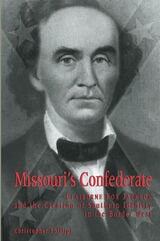
Missouri's Confederate
Claiborne Fox Jackson and the Creation of Southern Identity in the Border WestChristopher Phillips
University of Missouri Press, 2000
Claiborne Fox Jackson (1806-1862) remains one of Missouri's most controversial historical figures. Elected Missouri's governor in 1860 after serving as a state legislator and Democratic party chief, Jackson was the force behind a movement for the neutral state's secession before a federal sortie exiled him from office. Although Jackson's administration was replaced by a temporary government that maintained allegiance to the Union, he led a rump assembly that drafted an ordinance of secession in October 1861 and spearheaded its acceptance by the Confederate Congress. Despite the fact that the majority of the state's populace refused to recognize the act, the Confederacy named Missouri its twelfth state the following month. A year later Jackson died in exile in Arkansas, an apparent footnote to the war that engulfed his region and that consumed him.
In this first full-length study of Claiborne Fox Jackson, Christopher Phillips offers much more than a traditional biography. His extensive analysis of Jackson's rise to power through the tangle that was Missouri's antebellum politics and of Jackson's complex actions in pursuit of his state's secession complete the deeper and broader story of regional identity--one that began with a growing defense of the institution of slavery and which crystallized during and after the bitter, internecine struggle in the neutral border state during the American Civil War. Placing slavery within the realm of western democratic expansion rather than of plantation agriculture in border slave states such as Missouri, Philips argues that southern identity in the region was not born, but created. While most rural Missourians were proslavery, their "southernization" transcended such boundaries, with southern identity becoming a means by which residents sought to reestablish local jurisdiction in defiance of federal authority during and after the war. This identification, intrinsically political and thus ideological, centered—and still centers—upon the events surrounding the Civil War, whether in Missouri or elsewhere. By positioning personal and political struggles and triumphs within Missourians' shifting identity and the redefinition of their collective memory, Phillips reveals the complex process by which these once Missouri westerners became and remain Missouri southerners.
Missouri's Confederate not only provides a fascinating depiction of Jackson and his world but also offers the most complete scholarly analysis of Missouri's maturing antebellum identity. Anyone with an interest in the Civil War, the American West, or the American South will find this important new biography a powerful contribution to our understanding of nineteenth-century America and the origins—as well as the legacy—of the Civil War.

Missouri’s War
The Civil War in DocumentsSilvana R. Siddali
Ohio University Press, 2009
Winner of a 2011 “Distinguished Achievement in Literature” award, Missouri Humanities Council
Civil War Missouri stood at the crossroads of America. As the most Southern-leaning state in the Middle West, Missouri faced a unique dilemma. The state formed the gateway between east and west, as well as one of the borders between the two contending armies. Moreover, because Missouri was the only slave state in the Great Interior, the conflicts that were tearing the nation apart were also starkly evident within the state. Deep divisions between Southern and Union supporters, as well as guerrilla violence on the western border, created a terrible situation for civilians who lived through the attacks of bushwhackers and Jayhawkers.
The documents collected in Missouri's War reveal what factors motivated Missourians to remain loyal to the Union or to fight for the Confederacy, how they coped with their internal divisions and conflicts, and how they experienced the end of slavery in the state. Private letters, diary entries, song lyrics, official Union and Confederate army reports, newspaper editorials, and sermons illuminate the war within and across Missouri's borders.
Missouri's War also highlights the experience of free and enslaved African Americans before the war, as enlisted Union soldiers, and in their effort to gain rights after the end of the war. Although the collection focuses primarily on the war years, several documents highlight both the national sectional conflict that led to the outbreak of violence and the effort to reunite the conflicting forces in Missouri after the war.