Results by title
3576 books match the query 'American' and 93 start with n
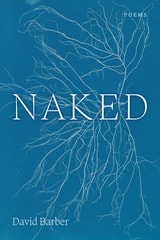
NAKED
PoemsDavid Barber
Northwestern University Press, 2027
A moving and sonically stunning exploration into the body and soul
David Barber’s masterful new book, NAKED, is powered by prolific feats of verbal prowess. With formal dexterity, nerve, and ingenious wordplay, these poems grapple with the serious business of soulmaking. In a spacious collection that enacts changes on the touch-and-go of innocence and experience, these poems are rife with inklings and reckonings in the name of muscle memory and mortal longing. Here, Hollywood meets Babylon in the Garden of Earthly Delights; Odysseus opts for a username; the naked eye goes toe-to-toe with the naked truth; American sonnets & ampersands run wild. NAKED is an all-out lovers’ quarrel over the give-and-take of the spirit and flesh—and Barber is all in.
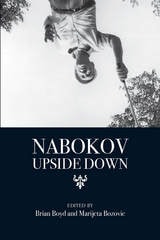
Nabokov Upside Down
Edited by Brian Boyd and Marijeta Bozovic
Northwestern University Press, 2017
Nabokov Upside Down brings together essays that explicitly diverge from conventional topics and points of reference when interpreting a writer whose influence on contemporary literature is unrivaled. Scholars from around the world here read Nabokov in terms of bodies rather than minds, belly-laughs rather than erudite wit, servants rather than master-artists, or Asian rather than Western perspectives. The first part of the volume is dedicated to surveys of Nabokov’s oeuvre that transform some long-held assumptions concerning the nature of and significance of his work.
Often thought of as among the most cerebral of artists, Nabokov comes across in these essays as profoundly aware of the physical world, as evidenced by his masterly representation of physical movement, his bawdy humor, and his attention to gustatory pleasure, among other aspects of his writing. The volume’s second half focuses on individual works or phases in Nabokov’s career, noting connections among them as well as to other fields of inquiry beyond literature. Engaged in conversation with each other and, in his editorial comments, with Brian Boyd, the essays in this volume show Nabokov scholarship continuing to renew itself.

Nabokov and Indeterminacy
The Case of The Real Life of Sebastian KnightPriscilla Meyer
Northwestern University Press, 2018
In Nabokov and Indeterminacy, Priscilla Meyer shows how Vladimir Nabokov’s early novel The Real Life of Sebastian Knight illuminates his later work. Meyer first focuses on Sebastian Knight, exploring how Nabokov associates his characters with systems of subtextual references to Russian, British, and American literary and philosophical works. She then turns to Lolita and Pale Fire, applying these insights to show that these later novels clearly differentiate the characters through subtextual references, and that Sebastian Knight’s construction models that of Pale Fire.
Meyer argues that the dialogue Nabokov constructs among subtexts explores his central concern: the continued existence of the spirit beyond bodily death. She suggests that because Nabokov’s art was a quest for an unattainable knowledge of the otherworldly, knowledge which can never be conclusive, Nabokov’s novels are never closed in plot, theme, or resolution—they take as their hidden theme the unfinalizability that Bakhtin says characterizes all novels.
The conclusions of Nabokov's novels demand a rereading, and each rereading yields a different novel. The reader can never get back to the same beginning, never attain a conclusion, and instead becomes an adept of Nabokov’s quest. Meyer emphasizes that, unlike much postmodern fiction, the contradictions created by Nabokov’s multiple paths do not imply that existence is constructed arbitrarily of pre-existing fragments, but rather that these fragments lead to an ever-deepening approach to the unknowable.

Nabokov's Canon
From "Onegin" to "Ada"Marijeta Bozovic
Northwestern University Press, 2016
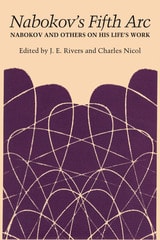
Nabokov's Fifth Arc
Nabokov and Others on His Life's WorkEdited by J. E. Rivers and Charles Nicol
University of Texas Press, 1982
In his autobiography Speak, Memory, Vladimir Nabokov compared his life to a spiral, in which “twirl follows twirl, and every synthesis is the thesis of the next series.” The first four arcs of the spiral of Nabokov’s life—his youth in Russia, voluntary exile in Europe, two decades spent in the United States, and the final years of his life in Switzerland—are now followed by a fifth arc, his continuing life in literary history, which this volume both explores and symbolizes.
This is the first collection of essays to examine all five arcs of Nabokov’s creative life through close analyses of representative works. The essays cast new light on works both famous and neglected and place these works against the backgrounds of Nabokov’s career as a whole and modern literature in general. Nabokov analyzes his own artistry in his “Postscript to the Russian Edition of Lolita,” presented here in its first English translation, and in his little-known “Notes to Ada by Vivian Darkbloom,” published now for the first time in America and keyed to the standard U.S. editions of the novel. In addition to a defense of his father’s work by Dmitri Nabokov and a portrait-interview by Alfred Appel, Jr., the volume presents a vast spectrum of critical analyses covering all Nabokov’s major novels and several important short stories. The highly original structure of the book and the fresh and often startling revelations of the essays dramatize as never before the unity and richness of Nabokov’s unique literary achievement.
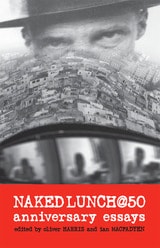
Naked Lunch @ 50
Anniversary EssaysEdited by Oliver Harris and Ian MacFadyen
Southern Illinois University Press, 2009
Naked Lunch was banned, castigated, and recognized as a work of genius on its first publication in 1959, and fifty years later it has lost nothing of its power to astonish, shock, and inspire. A lacerating satire, an exorcism of demons, a grotesque cabinet of horrors, it is the Black Book of the Beat Generation, the forerunner of the psychedelic counterculture, and a progenitor of postmodernism and the digital age. A work of excoriating laughter, linguistic derangement, and transcendent beauty, it remains both influential and inimitable.
This is the first book devoted in its entirety to William Burroughs’ masterpiece, bringing together an international array of scholars, artists, musicians, and academics from many fields to explore the origins, writing, reception, and complex meanings of Naked Lunch. Tracking the legendary book from Texas and Mexico to New York, Tangier, and Paris, Naked Lunch@50 significantly advances our understanding and appreciation of this most elusive and uncanny of texts.
Contributors:
Contributors:
Keith Albarn
Eric Andersen
Gail-Nina Anderson
Théophile Aries
Jed Birmingham
Shaun de Waal
Richard Doyle
Loren Glass
Oliver Harris
Kurt Hemmer
Allen Hibbard
Rob Holton
Andrew Hussey
Rob Johnson
Jean-Jacques Lebel
Ian MacFadyen
Polina Mackay
Jonas Mekas
Barry Miles
R. B. Morris
Timothy S. Murphy
Jurgen Ploog
Davis Schneiderman
Jennie Skerl
DJ Spooky
Philip Taaffe
Names Above Houses
Oliver de la Paz
Southern Illinois University Press, 2001
In Names above Houses, Oliver de la Pazuses both prose and verse poems to create the magical realm of Fidelito Recto—a boy who wants to fly—and his family of Filipino immigrants. Fidelito’s mother, Maria Elena, tries to keep her son grounded while struggling with her own moorings. Meanwhile, Domingo, Fidelito's fisherman father, is always at sea, even when among them. From the archipelago of the Philippines to San Francisco, horizontal and vertical movements shape moments of displacement and belonging for this marginalized family. Fidelito approaches life with a sense of wonder, finding magic in the mundane and becoming increasingly uncertain whether he is in the sky or whether his feet are planted firmly on the ground.
Narcissus Americana
PoemsTravis Mossotti
University of Arkansas Press, 2018
Winner, 2018 Miller Williams Poetry Prize
Narcissus Americana sings and scraps and wrestles its way across various landscapes—abandoned quarries, art museums, lavish homes, and tar pits—in a quest to attain a more complex vision of what it means to be upwardly mobile.
These poems question the usefulness of wealth and ownership as markers of success. Taking wine fridges and fake flowers as emblems of capitalism’s failure to assuage human loneliness, the speakers in these poems find joy in shared meals and glasses of wine, and use moments of mutual attention to challenge notions of class in America. Intimacy is on display in “Cruising Altitude,” where the speaker finds a sublime communion between two disparate worldviews during an in-flight conversation with his father:
I ask if his certainty about humanity’s course gives
his life some kind of purpose. He doesn’t sleep well.
I know this. I quote Yeats. He quotes scripture.
Light balances on the wing and casts its yellow spell. . . .
Sharply written, and with an eye for form, these poems engage with heavy inquiry but also know better than to take themselves too seriously, making it possible for, say, dungeons to share space with donuts, as in the poem “Rancho La Brea.”
Mossotti’s timely book invites the reader to traverse America, and see the nation anew, on a journey marked simultaneously by critical scrutiny and deep affection.
Narrating Demons, Transformative Texts
Rereading Genius in Mid-Century Modern Fictional MemoirDaniel T. O’Hara
The Ohio State University Press, 2012
Narrative Prosthesis
Disability and the Dependencies of DiscourseDavid T. Mitchell and Sharon L. Snyder
University of Michigan Press, 2001
Narrative, Race, and Ethnicity in the United States
Edited by James J. Donahue, Jennifer Ann Ho, and Shaun Morgan
The Ohio State University Press, 2017
Recognizing that racial/ethnic issues and tensions are often contextualized geographically, this volume focuses on narratives associated with various racial and ethnic communities in the United States. By engaging with new developments in narrative theory and critical race studies, this volume demonstrates the vitality of using the tools of narratology and critical race theory together to understand how race influences narrative and how narratology illuminates a reading of race in ethnic American literature.
Narratives of the American West
Literature and HistoryRichard W. Etulain
University of Nevada Press, 2027
Narratives of the American West: Literature and History brings together Richard W. Etulain’s most resonant work—along with newly written essays—to reveal how history and storytelling have continually shaped each other in the making of the West. Part historiographical memoir, part wide‑ranging critical survey, the collection moves from Etulain’s Basque upbringing in eastern Washington to his lifetime of teaching, editing, and writing, showing how personal experience and intellectual inquiry converge on the page.
In the tradition of Elliott West’s The Essential West, Etulain maps the field’s major interpretive turns, from Frederick Jackson Turner to Earl Pomeroy to West’s“Greater Reconstruction,” and demonstrates how literary craft and historical method inform each other. Along the way, he demythologizes the stories of iconic figures, such as Billy the Kid, Calamity Jane, Chief Joseph, and Sacagawea, tracing how cultural memory evolves across novels, films, and archives.
Featuring new essays on Wallace Stegner and Elliott West, alongside revised classics on western myths, genres, regions, and peoples, this accessible yet rigorous volume invites readers to embrace narratives that are complex and morally engaged. Essential for scholars, students, and curious general readers alike, Narratives of the American West is a compelling guide to how the West has been written and remembered—and why those stories still matter.
Natal Command
Peter Sacks
University of Chicago Press, 1997
Nathanael West
An Interpretive StudyJames F. Light
Northwestern University Press, 1971
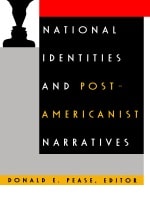
National Identities and Post-Americanist Narratives
Donald E. Pease
Duke University Press, 1994
This volume, originally published as a special issue of bounrary 2, focuses on the process of assembling and dismantling the American national narrative(s), sketching its inception and demolition. The contributors examine various cultural, political, and historical sources--colonial literature, mass movements, epidemics of disease, mass spectacle, transnational corporations, super-weapons, popular magazines, literary texts--out of which this narrative was constructed, and propose different understandings of nationality and identity following in its wake.
Contributors. Jonathan Arac, Lauren Berlant, Robert J. Corber, Elizabeth Freeman, Kathryn V. Lingberg, Jack Matthews, Alan Nadel, Patrick O'Donnell, Daniel O'Hara, Donald E. Pease, Ross Posnock, John Carlos Rowe, Rob Wilson
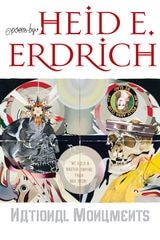
National Monuments
Heid E. Erdrich
Michigan State University Press, 2008
Many of the poems in National Monuments explore bodies, particularly the bodies of indigenous women worldwide, as monuments—in life, in photos, in graves, in traveling exhibitions, and in plastic representations at the airport. Erdrich sometimes imagines what ancient bones would say if they could speak. Her poems remind us that we make monuments out of what remains—monuments are actually our own imaginings of the meaning or significance of things that are, in themselves, silent.
As Erdrich moves from the expectedly "poetic" to the voice of a newspaper headline or popular culture, we are jarred into wondering how we make our own meanings when the present is so immediately confronted by the past (or vice versa). The language of the scientists that Erdrich sometimes quotes in epigraphs seems reductive in comparison to the richness of tone and meaning that these poems—filled with puns, allusions, and wordplay—provide.
Erdrich's poetry is literary in the best sense of the word, infused with an awareness of the poetic canon. Her revisions of and replies to poems by William Carlos Williams, Robert Frost, and others offer an indigenous perspective quite different from the monuments of American literature they address.
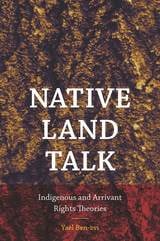
Native Land Talk
Indigenous and Arrivant Rights TheoriesYael Ben-zvi
Dartmouth College Press, 2018
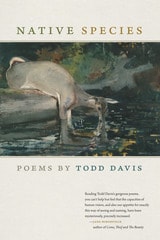
Native Species
Todd Davis
Michigan State University Press, 2019
Natural Aristocracy
History, Ideology, and the Production of William FaulknerKevin Railey
University of Alabama Press, 1999
Natural Selections
Joseph Campana
University of Iowa Press, 2012
Nature's Kindred Spirits
Aldo Leopold, Joseph Wood Krutch, Edward Abbey, Annie Dillard, and Gary SnyderJames I. McClintock
University of Wisconsin Press, 1994
In Nature's Kindred Spirits James McClintock shows how their mystical experiences with the wild led to dramatic conversions in their thinking and behavior. By embracing the ecstasy of nature, they reject modern alienation and spiritual confusion.
From Aldo Leopold, America’s most important conservationist and author of the classic A Sand County Almanac, to Pulitzer Prize winners Annie Dillard and Gary Snyder and defenders of the desert Joseph Wood Krutch and Edward Abbey, these writers share a common vision that harkens back to Henry David Thoreau and John Muir. To nineteenth-century Romantic ideals, they add the authority of modern ecological science. Collectively they have elevated nature’s importance in American culture, shaping the growth of the environmental movement and influencing American environmental policies.
Widely admired among educated readers but relatively neglected by the literary establishment, these writers unite the experiential with the metaphysical, the ordinary with the sacred, the personal with the public, and the natural with the social. Using ecology as a touchstone, McClintock further draws connections among science, politics, religion, and philosophy to create an enlightening overview of the work of these “kindred spirits.”
Nature's Panorama
Thoreau on the SeasonsRonald A. Bosco
University of Massachusetts Press, 2005
Sponsored by the Thoreau Society, the brief, handsomely presented books in this series offer the thoughts of a great writer on a variety of topics, some that we readily associate with him, some that may be surprising. Each volume includes selections from his familiar published works as well as from less well known lectures, letters, and journal entries. The books include original engravings by renowned illustrator and book artist Barry Moser.
Near/Miss
Charles Bernstein
University of Chicago Press, 2018
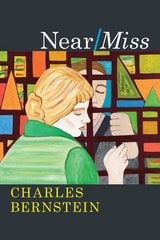
This collection’s title highlights poetry’s ability to graze reality without killing it, and at the same time implies that the poems themselves are wounded by the grief of loss. The book opens with a rollicking satire of difficult poetry—proudly declaring itself “a totally inaccessible poem”—and moves on to the stuff of contrarian pop culture and political cynicism—full of malaprops, mondegreens, nonsequiturs, translations of translations, sardonically vandalized signs, and a hilarious yet sinister feed of blog comments. At the same time, political protest also rubs up against epic collage, through poems exploring the unexpected intimacies and continuities of “our united fates.” These poems engage with works by contemporary painters—including Amy Sillman, Rackstraw Downes, and Etel Adnan—and echo translations of poets ranging from Catullus and Virgil to Goethe, Cruz e Souza, and Kandinsky.
Grounded in a politics of multiplicity and dissent, and replete with both sharp edges and subtle intimacies, Near/Miss is full of close encounters of every kind.
Near/Miss
Charles Bernstein
University of Chicago Press, 2018
This collection’s title highlights poetry’s ability to graze reality without killing it, and at the same time implies that the poems themselves are wounded by the grief of loss. The book opens with a rollicking satire of difficult poetry—proudly declaring itself “a totally inaccessible poem”—and moves on to the stuff of contrarian pop culture and political cynicism—full of malaprops, mondegreens, nonsequiturs, translations of translations, sardonically vandalized signs, and a hilarious yet sinister feed of blog comments. At the same time, political protest also rubs up against epic collage, through poems exploring the unexpected intimacies and continuities of “our united fates.” These poems engage with works by contemporary painters—including Amy Sillman, Rackstraw Downes, and Etel Adnan—and echo translations of poets ranging from Catullus and Virgil to Goethe, Cruz e Souza, and Kandinsky.
Grounded in a politics of multiplicity and dissent, and replete with both sharp edges and subtle intimacies, Near/Miss is full of close encounters of every kind.
Necessary Light
Patricia Fargnoli
Utah State University Press, 1999
Necessary Nonsense
Aesthetics, History, Neurology, PsychologyIrving Massey
The Ohio State University Press, 2018
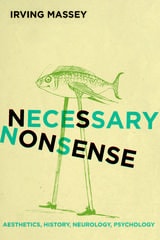
In Necessary Nonsense, Massey explores a range of literary and philosophical subjects, from Immanuel Kant to Lewis Carroll—parsing the ways in which nonsense permeates their writing and dialectics—including an exploration of the inability of those who suffer from Asperger's syndrome to distinguish between metaphor and nonsense, and an investigation of the neural signature of the nonsense words and phrases that occur during the transition from waking to sleep. Massey argues that while nonsense may be the “archenemy of reason,” it is also tied to the intrinsic nature of reason; the two, simply put, cannot exist without each other. Through a stunning array of exploratory topics, Massey concludes that we all live under a canopy of nonsense.
Neck of the World
F. Daniel Rzicznek
Utah State University Press, 2007
Negative Capability
Contemporary American PoetryLinda Gregerson
University of Michigan Press, 2001
In a wide-ranging and fiercely intelligent series of readings, Linda Gregerson presents an eloquent overview of the contemporary American lyric. This lyric is distinguished, she argues, not only by its unprecedented variety and abundance, but by its persistent and supple engagement with form. In detailed examinations of work by John Ashbery, Mark Strand, Louis Gluck, James Schuyler, Muriel Rukeyser, C. K. Williams, Rita Dove, Philip Levine, Heather McHugh, William Meredith, John Hollander, and a host of other recent and contemporary poets, Gregerson documents the depth and richness of American lyric production at the turn of the twenty-first century. In its scruples and reservations as in its discriminating explanations, Negative Capability unearths the contours of a distinctive American poetic tradition. This book is a rich symbiosis of critical and poetic intelligence. It is also a work of passionate advocacy. The book will appeal to those interested in the current state of American poetry: practicing poets, readers and students of literature and literary criticism, and professional critics.
Negative Liberties
Morrison, Pynchon, and the Problem of Liberal IdeologyCyrus R. K. Patell
Duke University Press, 2001
Pynchon and Morrison reveal the official narrative of individualism as encompassing a complex structure of contradiction held in abeyance. This narrative imagines that the goals of the individual are not at odds with the goals of the family or society and in fact obscures the existence of an unholy truce between individual liberty and forms of oppression. By bringing these two fiction writers into a discourse dominated by Ralph Waldo Emerson, Isaiah Berlin, John Rawls, George Kateb, Robert Bellah, and Michael Sandel, Patell unmasks the ways in which contemporary U.S. culture has not fully shed the oppressive patterns of reasoning handed down by the slaveholding culture from which American individualism emerged.
With its interdisciplinary approach, Negative Liberties will appeal to students and scholars of American literature, culture, sociology, and politics.
Negotiating Difference
Race, Gender, and the Politics of PositionalityMichael Awkward
University of Chicago Press, 1995
From Spike Lee's She's Gotta Have It to Michael Jackson's physical transmutations, from Toni Morrison's Song of Solomon to August Wilson's Fences, from male scholars' investments in feminism to white scholars' in black texts—Awkward explores cultural moments that challenge the exclusive critical authority of race and gender. In each instance he confronts the question: What do artists, scholars, and others concerned with representations of Afro-American life make of the view that gender, race, and sexuality circumscribe their own and others' lives and narratives? Throughout he demonstrates the perils and merits of the sort of "boundary crossing" this book ultimately makes: a black male feminism.
In pursuing a black male feminist criticism, Awkward's study acknowledges the complexities of interpretation in an age when a variety of powerful discourses have proliferated on the subject of racial, gendered, and sexual difference; at the same time, it identifies this proliferation as an opportunity to negotiate seemingly fixed cultural and critical positions.
Negotiating a Perilous Empowerment
Appalachian Women’s LiteraciesErica Abrams Locklear
Ohio University Press, 2011
In many parts of Appalachia, family ties run deep, constituting an important part of an individual’s sense of self. In some cases, when Appalachian learners seek new forms of knowledge, those family ties can be challenged by the accusation that they have gotten above their raisings, a charge that can have a lasting impact on family and community acceptance. Those who advocate literacy sometimes ignore an important fact — although empowering, newly acquired literacies can create identity conflicts for learners, especially Appalachian women. In Negotiating a Perilous Empowerment, Erica Abrams Locklear explores these literacy-initiated conflicts, analyzing how authors from the region portray them in their fiction and creative nonfiction.
Abrams Locklear blends literacy studies with literary criticism to analyze the central female characters in the works of Harriette Simpson Arnow, Linda Scott DeRosier, Denise Giardina, and Lee Smith. She shows how these authors deftly overturn stereotypes of an illiterate Appalachia by creating highly literate characters, women who not only cherish the power of words but also push the boundaries of what literacy means.
Negotiating a Perilous Empowerment includes in-depth interviews with Linda Scott DeRosier and Lee Smith, making this an insightful study of an important literary genre.
Neodomestic American Fiction
Kristin J. Jacobson
The Ohio State University Press, 2010
Neoliberalism and Contemporary American Literature
Edited by Liam Kennedy and Stephen Shapiro
Dartmouth College Press, 2019
Networks of Modernism
Reorganizing American NarrativeWesley Beal
University of Iowa Press, 2015
In this ferment of social upheaval and technological change, the moderns found what we would today term “the network,” though they did not have the vocabulary for it that we do now, to be a versatile model for their aesthetic experiments in representing social space and social relations. Whether they used the figuration of the network as a kind of formal experiment to negotiate the tensions between dispersal and unity, fragment and totality, or took the network as a subject in itself, as seen when dealing with crowds or public spaces, the network was a way for writers and artists to conceptualize and explore their rapidly changing society. Through readings of the works of Randolph Bourne, Jean Toomer, Anita Loos, John Dos Passos, and Nathanael West, Networks of Modernism positions the network as the defining figure of American modernist aesthetics and explores its use as a conceptual tool used to think through the rapid changes in American society.
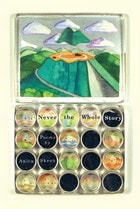
Never the Whole Story
Anita Skeen
Michigan State University Press, 2011
Epiphanic and rich with striking imagery, Anita Skeen’s new collection of poetry documents the fragmentary nature of life and celebrates the desire to make a meaningful narrative from momentary experience. In Never the Whole Story, the past is never past, and the present comes filled with the miracle of small gestures—singular moments that have the power to transport the mind from one geographic place to the next, one emotional world to another. Memory is incomplete, events unfold from multiple perspectives, and secrets unspool from the ordinary. Following in the tradition of James Wright, Maxine Kumin, Mary Oliver, Jane Kenyon, Robert Hass, and other writers whose work is grounded in the detail of ordinary life, Never the Whole Story will be a welcome addition to the libraries of those who turn to literature to find deeper connections between their own lives and the natural world.
New American Studies
John Carlos Rowe
University of Minnesota Press, 2002
A clarion call for a more theoretically and politically informed approach to American Studies
John Carlos Rowe, a leading American Studies scholar, has examined his field of study and declared it not ready for the twenty-first century. In The New American Studies, Rowe demands a reinvention of the discipline that includes a commitment to making it more theoretically informed, and he draws on the work of cultural critics, postmodernist theorists, and scholars in ethnic, gender, gay, and media studies. Rowe asserts that with American Studies’s strong history of social criticism and practical pedagogy it is an easy leap to the type of progressive commitments characteristic of these areas of scholarship.
The New American Studies is a compelling combination of theory and application, synthesis and polemic. Rowe traces the evolution of American Studies over the last quarter century and looks to the future, placing the field in a postnationalist context that encompasses all of the Americas and the disparate cultural zones within. He then demonstrates the kind of literary and cultural interpretation he calls for, examining subjects ranging from Hawthorne’s and James’s responses to nineteenth-century sexual mores, to the ways television legitimated itself in its first few decades, to the Elián González custody case.
New Chicana/Chicano Writing, Volume 2
Charles M. Tatum
University of Arizona Press, 1992
"A sampling of typically captivating contemporary Chicano literature by established and emerging writers." —El Puente. The Quarterly Newsletter of the Hispanic Culture Foundation
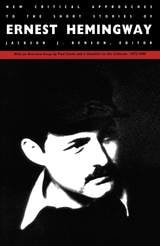
New Critical Approaches to the Short Stories of Ernest Hemingway
Jackson J. Benson, ed.
Duke University Press, 1990
New Critical Approaches to the Short Stories of Ernest Hemingway is an all-new sequel to Benson’s highly acclaimed 1975 book, which provided the first comprehensive anthology of criticism of Ernest Hemingway’s masterful short stories. Since that time the availability of Hemingway’s papers, coupled with new critical and theoretical approaches, has enlivened and enlarged the field of American literary studies. This companion volume reflects current scholarship and draws together essays that were either published during the past decade or written for this collection.
The contributors interpret a variety of individual stories from a number of different critical points of view—from a Lacanian reading of Hemingway’s “After the Storm” to a semiotic analysis of “A Very Short Story” to an historical-biographical analysis of “Old Man at the Bridge.” In identifying the short story as one of Hemingway’s principal thematic and technical tools, this volume reaffirms a focus on the short story as Hemingway’s best work. An overview essay covers Hemingway criticism published since the last volume, and the bibliographical checklist to Hemingway short fiction criticism, which covers 1975 to mid-1989, has doubled in size.
Contributors. Debra A. Moddelmog, Ben Stotzfus, Robert Scholes, Hubert Zapf, Susan F. Beegel, Nina Baym, William Braasch Watson, Kenneth Lynn, Gerry Brenner, Steven K. Hoffman, E. R. Hagemann, Robert W. Lewis, Wayne Kvam, George Monteiro, Scott Donaldson, Bernard Oldsey, Warren Bennett, Kenneth G. Johnston, Richard McCann, Robert P. Weeks, Amberys R. Whittle, Pamela Smiley, Jeffrey Meyers, Robert E. Fleming, David R. Johnson, Howard L. Hannum, Larry Edgerton, William Adair, Alice Hall Petry, Lawrence H. Martin Jr., Paul Smith
New Deal Modernism
American Literature and the Invention of the Welfare StateMichael Szalay
Duke University Press, 2000
Szalay situates his study within a liberal culture bent on security, a culture galvanized by its imagined need for private and public insurance.
Taking up prominent exponents of social and economic security—such as Franklin Delano Roosevelt, John Maynard Keynes, and John Dewey—Szalay demonstrates how the New Deal’s revision of free-market culture required rethinking the political function of aesthetics. Focusing in particular on the modernist fascination with the relation between form and audience, Szalay offers innovative accounts of Busby Berkeley, Jack London, James M. Cain, Robert Frost, Ayn Rand, Betty Smith, and Gertrude Stein, as well as extended analyses of the works of Ernest Hemingway, John Steinbeck, and Richard Wright.
New Israel / New England
Jews and Puritans in Early AmericaMichael Hoberman
University of Massachusetts Press, 2011
More often than not, Michael Hoberman shows, Puritans thought and wrote about Jews in order to resolve their own theological and cultural dilemmas. A number of prominent New Englanders, including Roger Williams, Increase Mather, Samuel Sewall, Benjamin Colman, Cotton Mather, Jonathan Edwards, and Ezra Stiles, wrote extensively about post-biblical Jews, in some cases drawing on their own personal acquaintance with Jewish contemporaries.
Among the intriguing episodes that Hoberman investigates is the recruitment and conversion of Harvard's first permanent instructor of Hebrew, the Jewish-born Judah Monis. Later chapters describe the ecumenical friendship between Newport minister Ezra Stiles and Haim Carigal, an itinerant rabbi from Palestine, as well as the life and career of Moses Michael Hays, the prominent freemason who was Boston's first permanently established Jewish businessman, a founder of its insurance industry, an early sponsor of the Bank of Massachusetts, and a personal friend of Paul Revere.
New Jersey
Betsy Andrews
University of Wisconsin Press, 2007
New Jersey Fan Club
Artists and Writers Celebrate the Garden StateKerri Sullivan
Rutgers University Press, 2022
Despite the many jokes and stereotypes about New Jersey and its residents, in reality the state is a wildly diverse place, home to a vast variety of landscapes, cultures, and people. There is no singular New Jersey experience, and the stories that its residents have to share about the state will surprise you.
New Jersey Fan Club: Artists and Writers Celebrate the Garden State is an eclectic anthology featuring personal essays, interviews, and comics from a broad group of established and emerging writers and artists who have something to say about New Jersey. It offers a multifaceted look at the state’s history and significance, told through narrative nonfiction, photographs, and illustrations.
New Jersey Fan Club is edited by Kerri Sullivan, founder of the popular Instagram account Jersey Collective (@jerseycollective), which features weekly takeovers by different New Jerseyans. This book functions the same way: it gives dozens of different contributors the chance to share what New Jersey looks like to them. The book is an exploration of how the same locale can shape people in different ways, and it will inspire readers to look at the Garden State with fresh eyes and appreciate its bounty of beautiful places and vibrant spaces.
New Stories from the Southwest
D. Seth Horton
Ohio University Press, 2008
The beauty and barrenness of the southwestern landscape naturallylends itself to the art of storytellers. It is a land of heat and dryness, aland of spirits, a land that is misunderstood by those living along thecoasts.
New Stories from the Southwest presents nineteen short stories that appeared in North American periodicals between January and December 2006. Though many of these stories vary by aesthetics, tone, voice, and almost any other craft category one might wish to use, they are nevertheless bound together by at least one factor, which is that the landscape of the region plays a key role in their narratives. They each evoke and explore what it means to exist in thisunique corner of the country.
Selected by editor D. Seth Horton, the former fiction editor for the Sonora Review, from a wide cross-section of journals and magazines, and with a foreword by noted writer Ray Gonzalez, New Stories from the Southwest presents a generous sampling of the best of contemporary fiction situated in this often overlooked area of the country. Swallow Press is particularly pleased to publish this wide-ranging collection of stories from both new and established writers.
Contributors to New Stories from the Southwest are:
- Alan Cheuse
- Matt Clark
- Lorien Crow
- Kathleen De Azvedo
- Alan Elyshevitz
- Marcela Fuentes
- Dennis Fulgoni
- Ray Gonzalez
- Anna Green
- Donald Lucio Hurd
- Toni Jensen
- Charles Kemnitz
- Elmo Lum
- Tom McWhorter
- S. G. Miller
- Peter Rock
- Alicita Rodriguez
- John Tait
- Patrick Tobin
- Valery Varble
New Visions of Community in Contemporary American Fiction
Tan, Kingsolver, Castillo, MorrisonMagali Cornier Michael
University of Iowa Press, 2006
New Vrindaban
Jacob Strautmann
Four Way Books, 2024
New Vrindaban lives in the disputed territory between the past and present, between the idealistic hopes and complicated reality of creating a better world. An electrifying collision of uniquely Appalachian cultural forces, the formal division of poems into “Side One” and “Side Two” pay homage to the concept albums of 1970s garage rock, while the book’s title alludes to the intentional Hare Krishna community in West Virginia founded in the same era.
Jacob Strautmann’s latest collection builds an extraordinary temple on the compromised ground — it houses the compressed narratives of varied characters, monumentalizes the beautiful illusions of failed ideas, and remembers the irretrievable innocent love of youth. The music of New Vrindaban is both a ballad of survivor’s guilt and the raucous soundtrack of a record party among friends. It is the “black swift-moving waters,” “the bright clouds unmoored in the wind.”
New World Drama
The Performative Commons in the Atlantic World, 1649-1849Elizabeth Maddock Dillon
Duke University Press, 2014
Audiences in London eagerly watched the royal slave, Oroonoko, tortured on stage, while audiences in Charleston and Kingston were forbidden from watching the same scene. Audiences in Kingston and New York City exuberantly participated in the slaying of Richard III on stage, enacting the rise of the "people," and Native American leaders were enjoined to watch actors in blackface "jump Jim Crow." Dillon argues that the theater served as a "performative commons," staging debates over representation in a political world based on popular sovereignty. Her book is a capacious account of performance, aesthetics, and modernity in the eighteenth-century Atlantic world.
New World, Known World
Shaping Knowledge in Early Anglo-American WritingDavid Read
University of Missouri Press, 2005
New York Trilogy
Peter Balakian
University of Chicago Press, 2025
In an inventive, elliptical language, New York Trilogy explores one man’s journey from the late 1960s to the twenty-first century, as he moves through a series of experiences centered in New York City and the surrounding New Jersey Palisades. Throughout this long poem in three parts, the protagonist’s life is impacted by historical events including the Armenian Genocide, the bombing of Hiroshima, the Vietnam War, the AIDS epidemic, the attacks of September 11th, the US war in Iraq, and the climate crisis.
Comprised of three multi-sequence poems originally included in Peter Balakian’s collections No Sign, Ozone Journal, and Ziggurat, the sections of New York Trilogy come together to form a poetry that embraces interior and aesthetic experiences, celebrates human intimacy, and bears witness to history. The historical power and psychological depth of Balakian’s work expands on the tradition of the American long poem with a lyrical narrative that weaves intimate personal moments into the vastness of shared history.
New York-Paris
Whitman, Baudelaire, and the Hybrid CityLaure Katsaros
University of Michigan Press, 2012
As New York and Paris began to modernize, new modes of entertainment, such as panoramas, dioramas, and photography, seemed poised to take the place of the more complex forms of literary expression. Dioramas and photography were invented in Paris but soon spread to America, forming part of an increasingly universal idiom of the spectacle. This brave new world of technologically advanced but crudely mimetic spectacles haunts both Whitman's vision of New York and Baudelaire's view of Paris. In New York-Paris, Katsaros explores the images of the mid-nineteenth-century city in the poetry of both Whitman and Baudelaire and seeks to demonstrate that, by projecting an image of the other's city onto his own, each poet tried to resist the apparently irresistible forward momentum of modernity rather than create a paradigmatically happy mixture of "high" and "low" culture.
New and Selected Poems
1956-1996Philip Appleman
University of Arkansas Press, 1996
With an astonishing command of nature imagery, from sparrows to mastodons, Philip Appleman can deftly weave into a single poem an intricate pattern of ideas drawn from evolution, humanism, anthropology, religious skepticism, and everyday experience. Appealing to reason as well as to emotion and imagination, he writes poems of lyrical intensity and remarkable narrative depth. He creates characters—Eve or Darwin or a failed priest—with such wit, compassion, and subtle humor that they live on the page and surprise us with new insights into joy and sorrow, life and death. Set on the beach at Malibu, in the port of Trieste, or in a Manhattan subway, his poems evoke genuine feeling with out sentimentality and transform the personal into the universal.
Drawn from six previous books of poetry written over four decades, and with fourteen new poems, this collection shows the power and complexity of Appleman’s wide-ranging talent.