Results by title
41 books match the query 'Liberation'
Against War
Views from the Underside of ModernityNelson Maldonado-Torres
Duke University Press, 2008
Considering Levinas’s critique of French liberalism and Nazi racial politics, and the links between them, Maldonado-Torres identifies a “master morality” of dominion and control at the heart of western modernity. This master morality constitutes the center of a warring paradigm that inspires and legitimizes racial policies, imperial projects, and wars of invasion. Maldonado-Torres refines the description of modernity’s war paradigm and the Levinasian critique through Fanon’s phenomenology of the colonized and racial self and the politics of decolonization, which he reinterprets in light of the Levinasian conception of ethics. Drawing on Dussel’s genealogy of the modern imperial and warring self, Maldonado-Torres theorizes race as the naturalization of war’s death ethic. He offers decolonial ethics and politics as an antidote to modernity’s master morality and the paradigm of war. Against War advances the de-colonial turn, showing how theory and ethics cannot be conceived without politics, and how they all need to be oriented by the imperative of decolonization in the modern/colonial and postmodern world.
An Asian American Theology of Liberation
Tian An Wong
Lever Press, 2023
Providing an intersectional frame that considers the breadth and diversity of Asian American experiences alongside those of Black, Indigenous, and Latinx thinkers in the United States and across the globe, An Asian American Theology of Liberation puts Asian American theology in dialogue with theories from psychoanalysis, Afro-pessimism, Black Marxism, postcolonial studies, and queer theology. In this groundbreaking work, Wong Tian An combines archival research uncovering a much overlooked theology of liberation — born in the 1970s out of Asian Americans’ struggles for political recognition and civil rights in the United States — with powerful analyses drawing from the theological, intellectual, and political developments of the last half century.
This wide-ranging study connects urgent themes such as protest movements in Hong Kong, anti-Asian violence in the United States, and Indigenous struggles everywhere, while building on Asian theologies such as Dalit theology in India, theology of struggle in the Philippines, and Minjung theology in Korea. Drawing deeply and broadly across disciplines, the book altogether revives and renews an Asian American theology of liberation for a new generation.
Bollywood’s New Woman
Liberalization, Liberation, and Contested BodiesMegha Anwer
Rutgers University Press, 2021
Britain and the Greek Economic Crisis, 1944-1947
From Liberation to the Truman DoctrineAthanasios Lykogiannis
University of Missouri Press, 2002
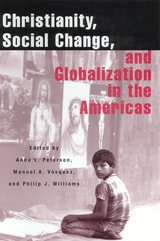
Christianity, Social Change, and Globalization in the Americas
Peterson, Anna L
Rutgers University Press, 2001
Organized around three central themes-family, youth, and community; democratization, citizenship, and political participation; and immigration and transnationalism-the book argues that, at the local level, religion helps people, especially women and youths, solidify their identities and confront the challenges of the modern world. Religious communities are seen as both peaceful venues for people to articulate their needs, and forums for building participatory democracies in the Americas. Finally, the contributors examine how religion enfranchises poor women, youths, and people displaced by war or economic change and, at the same time, drives social movements that seek to strengthen family and community bonds disrupted by migration and political violence.
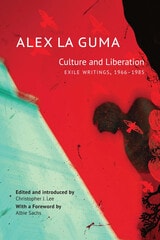
Culture and Liberation
Exile Writings, 1966–1985Alex La Guma
Seagull Books, 2020
This volume spans La Guma’s political and literary life in exile through accounts of his travels to Algeria, Lebanon, Vietnam, Soviet Central Asia, and elsewhere, along with his critical assessments of Paul Robeson, Nadine Gordimer, Maxim Gorky, Alexander Solzhenitsyn, and Pablo Neruda, among other writers. The first dedicated collection of La Guma’s exile writing, Culture and Liberation restores an overlooked dimension of his life and work, while opening a window on a wider world of cultural and political struggles in Africa, Asia, and Latin America during the second half of the twentieth century.
Ethics of Liberation
In the Age of Globalization and ExclusionEnrique Dussel
Duke University Press, 2012
Throughout his career, Dussel has sought to open a space for articulating new possibilities for humanity out of, and in light of, the suffering, dignity, and creative drive of those who have been excluded from Western Modernity and neoliberal rationalism. Grounded in engagement with the oppressed, his thinking has figured prominently in philosophy, political theory, and liberation movements around the world.
In Ethics of Liberation, Dussel provides a comprehensive world history of ethics, demonstrating that our most fundamental moral and ethical traditions did not emerge in ancient Greece and develop through modern European and North American thought. The obscured and ignored origins of Modernity lie outside the Western tradition. Ethics of Liberation is a monumental rethinking of the history, origins, and aims of ethics. It is a critical reorientation of ethical theory.
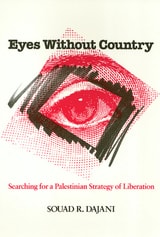
Eyes Without Country
Searching for a Palestinian Strategy of LiberationSouad R. Dajani
Temple University Press, 1994
Since Israel's occupation of the West Bank and Gaza Strip in 1967, the quest for just and lasting peace has been a fountainhead of debate, negotiation, and violent friction. Souad Dajani traces the Palestinians' struggle and argues for a strategy of nonviolent civilian resistance based on deterrence and defense. This strategy would defeat Israel's political will to maintain their occupation and prepare Palestinians for a time beyond the interim period of self-rule agreed upon by Israel and the PLO in September 19932.
Dajani's formulation of nonviolent civilian resistance is examined against a backdrop of early developments in Mandate Palestine, the impact of Zionist ideology, and the realities of life for Palestinians under occupation. Her assessment of the role of the PLO, objectives of the Palestinian National Movement, developments since the Gulf War, and other factors crucial to an effective strategy raises critical questions surrounding the operation of nonviolent techniques for the Palestinian community, Israeli politics, and international actors, most prominently the United States.

Freedom Made Manifest
Peter Joseph Fritz
Catholic University of America Press, 2019
Freedom Not Yet
Liberation and the Next World OrderKenneth Surin
Duke University Press, 2009
Surin begins by examining the current regime of accumulation—the global domination of financial markets over traditional industrial economies—which is used as an instrument for the subordination and dependency of poorer nations. He then moves to the constitution of subjectivity, or the way humans are produced as social beings, which he casts as the key arena in which struggles against dispossession occur. Surin critically engages with the major philosophical positions that have been posed as models of liberation, including Derrida’s notion of reciprocity between a subject and its other, a reinvigorated militancy in political reorientation based on the thinking of Badiou and Zizek, the nomad politics of Deleuze and Guattari, and the politics of the multitude suggested by Hardt and Negri. Finally, Surin specifies the material conditions needed for liberation from the economic, political, and social failures of our current system. Seeking to illuminate a route to a better life for the world’s poorer populations, Surin investigates the philosophical possibilities for a Marxist or neo-Marxist concept of liberation from capitalist exploitation and the regimes of power that support it.
Freedom’s Ring
Literatures of Liberation from Civil Rights to the Second WaveJacqueline Foertsch
Rutgers University Press, 2021
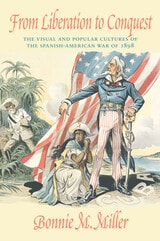
From Liberation to Conquest
The Visual and Popular Cultures of the Spanish-American War of 1898Bonnie M. Miller
University of Massachusetts Press, 2011
Although media campaigns initially advocated for the United States to step in to rescue Cuba from the horrors of colonial oppression, the war ended just months later with the U.S. acquisition of Spain's remaining empire, including Cuba, Puerto Rico, Guam, and the Philippines. President William McKinley heeded the call for war, with the American people behind him, and then proceeded to use the conflict to further his foreign policy agenda of expanding U.S. interests in the Caribbean and Far East.
Miller examines the shifting media portrayals of U.S. actions for the duration of the conflict, from liberation to conquest. She shows how the media capitalized on the public's thirst for drama, action, and spectacle and adapted to emerging imperial possibilities. Growing resistance to American imperialism by the war's end unraveled the consensus in support of U.S policy abroad and produced a rich debate that found expression in American visual and popular culture.
From Liberation to Remediation
The Rhetoric of General EducationKelly Ritter
Utah State University Press, 2026
Kelly Ritter addresses how lawmakers, for-profit testing companies, and even universities fuel public misconceptions of what Gen Ed can provide for our democracy and the role that a broad-based college education plays in social uplift. Tracing the history of the public rhetoric that persuades parents and students to see these courses as a set of interchangeable precollege credits to gain (or game) by any means necessary, she examines how positive and negative public responses to the curricula affected the position of core subjects in US universities, focusing on first-year writing. She also explores the role local, state, and organizational politics played in Gen Ed’s positioning, including decisions related to race, social class, and educational attainment; the impact credit-by-exemption and seamless transfer had on the quality and import of Gen Ed programming in both high schools and colleges; and the perceived use-value of the courses themselves in the face of rising college costs. Finally, she considers which student populations have benefited from the denigration of Gen Ed’s value and which have been left behind.
Drawing on archival research and case studies, From Liberation to Remediation raises important questions about equity, access, and the role of General Education in US higher education’s future and demonstrates that recovering the original post-war democratizing principles and practices of Gen Ed is critical to the continuance of a literate, empathetic, and civic-minded democracy for the twenty-first century.
From Popular to Insurgent Intellectuals
Peasant Catechists in the Salvadoran RevolutionLeigh Binford
Rutgers University Press, 2023

Herbert Marcuse
An Aesthetics of LiberationMalcolm Miles
Pluto Press, 2012
When capitalism is clearly catastrophically out of control and its excesses cannot be sustained socially or ecologically, the ideas of Herbert Marcuse become as relevant as they were in the 1960s. This is the first English introduction to Marcuse to be published for decades, and deals specifically with his aesthetic theories and their relation to a critical theory of society.
Although Marcuse is best known as a critic of consumer society, epitomised in the classic One-Dimensional Man, Malcolm Miles provides an insight into how Marcuse's aesthetic theories evolved within his broader attitudes, from his anxiety at the rise of fascism in the 1930s through heady optimism of the 1960s, to acceptance in the 1970s that radical art becomes an invaluable progressive force when political change has become deadlocked.
Marcuse's aesthetics of liberation, in which art assumes a primary role in interrupting the operation of capitalism, made him a key figure for the student movement in the 1960s. As diverse forms of resistance rise once more, a new generation of students, scholars and activists will find Marcuse’s radical theory essential to their struggle.
Information Politics
Liberation and Exploitation in the Digital SocietyTim Jordan
Pluto Press, 2015
The first of Pluto Press’s new Digital Barricades series, focusing on ground-breaking critical explorations of resistance within the digital world, Information Politics explores the exploitations both facilitated by, and contested through, increases in information flows; the embedding of information technologies in daily life; and the intersection of network and control protocols. Anyone hoping to get to grips with the rapidly changing terrain of digital culture and conflict should start here.
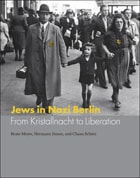
Jews in Nazi Berlin
From Kristallnacht to LiberationEdited by Beate Meyer, Hermann Simon, and Chana Schütz
University of Chicago Press, 2009
Though many of the details of Jewish life under Hitler are familiar, historical accounts rarely afford us a real sense of what it was like for Jews and their families to live in the shadow of Nazi Germany’s oppressive racial laws and growing violence. With Jews in Nazi Berlin, those individual lives—and the constant struggle they required—come fully into focus, and the result is an unprecedented and deeply moving portrait of a people.
Drawing on a remarkably rich archive that includes photographs, objects, official documents, and personal papers, the editors of Jews in Nazi Berlin have assembled a multifaceted picture of Jewish daily life in the Nazi capital during the height of the regime’s power. The book’s essays and images are divided into thematic sections, each representing a different aspect of the experience of Jews in Berlin, covering such topics as emigration, the yellow star, Zionism, deportation, betrayal, survival, and more. To supplement—and, importantly, to humanize—the comprehensive documentary evidence, the editors draw on an extensive series of interviews with survivors of the Nazi persecution, who present gripping first-person accounts of the innovation, subterfuge, resilience, and luck required to negotiate the increasing brutality of the regime.
A stunning reconstruction of a storied community as it faced destruction, Jews in Nazi Berlin renders that loss with a startling immediacy that will make it an essential part of our continuing attempts to understand World War II and the Holocaust.
José Martí’s Liberative Political Theology
Miguel A. De La Torre
Vanderbilt University Press, 2021
Miguel De La Torre has authored the most comprehensive text written thus far concerning Martí's religious views and how they affected his political thought. The few similar texts that exist are written in Spanish, and most of them romanticize Martí's spirituality in an attempt to portray him as a “Christian believer.” Only a handful provide an academic investigation of Martí's theological thought based solely on his writings, and those concentrate on just one aspect of Martí's religious influences. José Martí's Liberative Political Theology allows for mutual influence between Martí's political and religious views, rather than assuming one had precedence over the other.
Kwame Nkrumah
Visions of LiberationJeffrey S. Ahlman
Ohio University Press, 2021

Liberation Theology and Praxis in Contemporary Latin America
As It Was in the Beginning?Edited by Pablo Bradbury and Niall H.D. Geraghty
University of London Press, 2025
This highly interdisciplinary collection brings together diverse and complementary approaches from history, theology, cultural studies, architecture, sociology, and anthropology to reevaluate the legacy of liberation theology in Latin America.
Liberation theology was born in the 1960s at a time of Church renewal and socio-economic ferment, as many sought more radical solutions in the context of the exhaustion of developmentalist projects and the institutionalized violence of capitalism. The book’s central focus on the lived experiences and embodied practices of those engaged in social action in the region challenges the narrative that suggests that liberation theology had reached its decline by the end of the 1970s. It demonstrates that liberationist Christianity was at once more diverse and internally conflicted, more widely resonant outside ecclesial confines, and more interconnected over time than often allowed.
The chapters investigate a range of topics: the ecclesiology of a revolutionary movement of Argentine priests in the 1960s and ́1970s, the engagement of liberation theology with Participatory Action Research and its influence on architectural approaches and urbanism, 1980s feminist liberation theology, encounters with Western human rights at a time of Cold War repression and exile, and ecofeminist political theology in contemporary Latin America. Pulling these threads together, Liberation Theology and Praxis in Contemporary Latin America invites us to reconsider how we understand liberation theology’s history as well as its reach into the present day.
Liberation and Democratization
The South African and Palestinian National MovementsMona N. Younis
University of Minnesota Press, 2000
The first comprehensive comparison of two of the century’s most important liberation movements.
Arising in the 1910s and emerging as legitimate governing bodies in the 1990s, the South African and the Palestinian national liberation movements have exhibited remarkable parallels over the course of their development. The fortunes of the African National Congress and the Palestinian Liberation Organization, however, have proven strikingly different. How the movements, despite similar circumstances and experiences, have arrived at such dissimilar outcomes is described in Liberation and Democratization.
Younis traces the evolution of the movements, from early domination by elites to the ascendancy of mass-based forces in their last phases of expansion. She shows how this latest shift, accompanied by a democratization of the process of liberation, made the movements more effective in the 1980s. Liberation and Democratization also identifies dissimilarities—the balance of class forces and resources—that led to the A.N.C.’s greater success relative to the P.L.O.’s achievements. The first comprehensive comparison of two of the most significant liberation movements of this century, Younis’s work brings to light problems and dynamics that will remain at work well into the future.
Liberation and Development
Black Consciousness Community Programs in South AfricaLeslie Anne Hadfield
Michigan State University Press, 2016
Liberation and Education
Perspectives on Black Educational ThoughtRonald E. Chennault
Rutgers University Press, 2026
Liberation and Education brings together a collection of essays about Black educators’ and organizations’ quests to cultivate and employ educational strategies for the liberation of Black people. The contributions examine the enduring nature of Black people’s thinking about education prior to and through enslavement to the present. It documents a variety of critical accounts of how Black people have developed ways to free themselves mentally from the legacies of slavery, the view of Black inferiority, and historical and systemic racism.
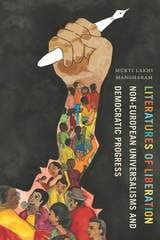
Literatures of Liberation
Non-European Universalisms and Democratic ProgressMukti Lakhi Mangharam
The Ohio State University Press, 2017
In this way, she posits that these universalisms reconceptualize democratic ideals not as Western imports into precolonial societies but as regional phenomena tied to local relations of power and resistance. In charting these alternative democratic trajectories, Mangharam examines oft-overlooked regional and vernacular literary forms and provides a fresh approach to current theorizations of postcolonial and world literatures.
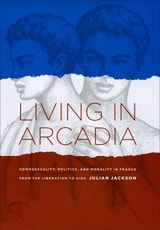
Living in Arcadia
Homosexuality, Politics, and Morality in France from the Liberation to AIDSJulian Jackson
University of Chicago Press, 2009
In Paris in 1954, a young man named André Baudry founded Arcadie, an organization for “homophiles” that would become the largest of its kind that has ever existed in France, lasting nearly thirty years. In addition to acting as the only public voice for French gays prior to the explosion of radicalism of 1968, Arcadie—with its club and review—was a social and intellectual hub, attracting support from individuals as diverse as Jean Cocteau and Michel Foucault and offering support and solidarity to thousands of isolated individuals. Yet despite its huge importance, Arcadie has largely disappeared from the historical record.
The main cause of this neglect, Julian Jackson explains in Living in Arcadia, is that during the post-Stonewall era of queer activism, Baudry’s organization fell into disfavor, dismissed as conservative, conformist, and closeted. Through extensive archival research and numerous interviews with the reclusive Baudry, Jackson challenges this reductive view, uncovering Arcadie’s pioneering efforts to educate the European public about homosexuality in an era of renewed repression. In the course of relating this absorbing history, Jackson offers a startlingly original account of the history of homosexuality in modern France.
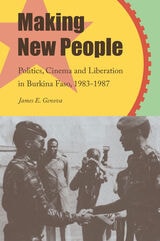
Making New People
Politics, Cinema, and Liberation in Burkina Faso, 1983–1987James Genova
Michigan State University Press, 2022
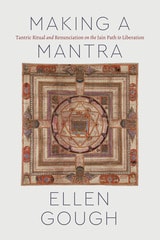
Making a Mantra
Tantric Ritual and Renunciation on the Jain Path to LiberationEllen Gough
University of Chicago Press, 2021
Typically, Jainism is characterized as a celibate, ascetic path to liberation in which one destroys karma through austerities, while the tantric path to liberation is characterized as embracing the pleasures of the material world, requiring the ritual use of mantras to destroy karma. Gough, however, argues that asceticism and Tantra should not be viewed in opposition to one another. She does so by showing that Jains perform “tantric” rituals of initiation and meditation on mantras and maṇḍalas. Jainism includes kinds of tantric practices, Gough provocatively argues, because tantric practices are a logical extension of the ascetic path to liberation.
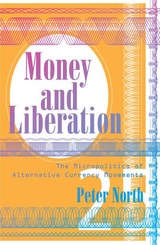
Money and Liberation
The Micropolitics of Alternative Currency MovementsPeter North
University of Minnesota Press, 2007
Is conventional money simply a discourse? Is it merely a socially constructed unit of exchange? If money is not an actual thing, are people then free to make collective agreements to use other forms of currency that might work more effectively for them? Proponents of “better money” argue that they have created currencies that value people more than profitability, ensuring that human needs are met with reasonable costs and decent wages—and supporting local economies that emphasize local sustainability. How did proponents develop these new economies? Are their claims valid?
Grappling with these questions and more, Money and Liberation examines the experiences of groups who have tried to build a more equitable world by inventing new forms of money. Presenting in-depth profiles of the trading networks that have been constructed both historically and more recently, including Local Exchange Trading Schemes (England), Green Dollars (New Zealand), Talente (Hungary), and the barter system in Argentina, Peter North shows how the use of currency has been redefined as part of political action, revealing surprising political ambiguity and a nuanced understanding of the potential and limits on alternative currencies as a resistance practice.
Peter North is lecturer in geography at the University of Liverpool.
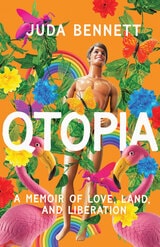
Qtopia
A Memoir of Love, Land, and LiberationJuda Bennett
University of Wisconsin Press, 2026
In the 1970s, while communes bloomed like wildflowers across the land, most had no room for queer members. The so-called counterculture still clung to heterosexual norms, even as it preached freedom from traditional gender roles and the nuclear family. Juda Bennett’s engrossing memoir follows his escape from suburbia into the back-to-the-land movement—and chronicles the efforts it took for him to “drop back in” to mainstream society and the ways in which he and his compatriots continued to honor their communal vision.
After enduring the hollow promises of “progressive” communes, Bennett finally found what he didn’t know he was looking for at Lavender Hill, a rural queer commune of visionaries carving out a life beyond heteronormativity, beyond capitalism, beyond shame. They didn’t just survive; they built something messy, luminous, and defiantly alive. And when the commune began to unravel, they didn’t vanish. They evolved. Qtopia is a story of chosen family and radical transformation. It is a reminder that queer utopia isn’t behind us—it’s still out there on the horizon, singing its song of joy, defiance, and fabulousness.
Religion and Poverty
Pan-African PerspectivesPeter J. Paris, ed.
Duke University Press, 2009
Contributors from Africa and North America explore poverty’s roots and effects, the ways that experiences and understandings of deprivation are shaped by religion, and the capacity and limitations of religion as a means of alleviating poverty. As part of a collaborative project, the contributors visited Ghana, Kenya, and South Africa, as well as Jamaica and the United States. In each location, they met with clergy, scholars, government representatives, and NGO workers, and they examined how religious groups and community organizations address poverty. Their essays complement one another. Some focus on poverty, some on religion, others on their intersection, and still others on social change. A Jamaican scholar of gender studies decries the feminization of poverty, while a Nigerian ethicist and lawyer argues that the protection of human rights must factor into efforts to overcome poverty. A church historian from Togo examines the idea of poverty as a moral virtue and its repercussions in Africa, and a Tanzanian theologian and priest analyzes ujamaa, an African philosophy of community and social change. Taken together, the volume’s essays create a discourse of mutual understanding across linguistic, religious, ethnic, and national boundaries.
Contributors. Elizabeth Amoah, Kossi A. Ayedze, Barbara Bailey, Katie G. Cannon, Noel Erskine, Dwight N. Hopkins, Simeon O. Ilesanmi, Laurenti Magesa, Madipoane Masenya, Takatso A. Mofokeng, Esther M. Mombo, Nyambura J. Njoroge, Jacob Olupona, Peter J. Paris, Anthony B. Pinn, Linda E. Thomas, Lewin L. Williams
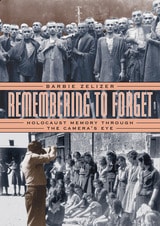
Remembering to Forget
Holocaust Memory through the Camera's EyeBarbie Zelizer
University of Chicago Press, 1998
"[A] fascinating study. . . . Here we have a completely fresh look at the emergence of photography as a major component of journalistic reporting in the course of the liberation of the camps by the Western Allies. . . . Well written and argued, superbly produced with more photographs of atrocity than most people would want to see in a lifetime, this is clearly an important book."—Omer Bartov, Times Literary Supplement
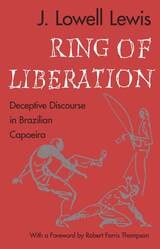
Ring of Liberation
Deceptive Discourse in Brazilian CapoeiraJ. Lowell Lewis
University of Chicago Press, 1992
Capoeira originated in early slave culture and is practiced widely today by urban Brazilians and others. At once game, sport, mock combat, and ritualized performance, it involves two players who dance and "battle" within a ring of musicians and singers. Stunning physical performances combine with music and poetry in a form as expressive in movement as it is in word.
J. Lowell Lewis explores the convergence of form and content in capoeira. The many components and characteristics of this elaborate black art form—for example, competing genre frameworks and the necessary fusion of multiple modes of expression—demand, Lewis feels, to be given "body" as well as "voice." In response, he uses Peircean semiotics and recent work in discourse and performance theory to map the connections between physical, musical, and linguistic play in capoeira and to reflect on the general relations between semiotic systems and the creation and recording of cultural meaning.
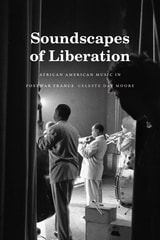
Soundscapes of Liberation
African American Music in Postwar FranceCeleste Day Moore
Duke University Press, 2021
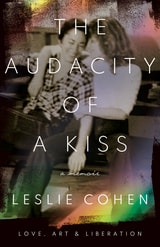
The Audacity of a Kiss
Love, Art, and LiberationLeslie Cohen
Rutgers University Press, 2021
Rendered in bronze, covered in white lacquer, two women sit together on a park bench in Greenwich Village. One of the women touches the thigh of her partner as they gaze into each other’s eyes. The two women are part of George Segal’s iconic sculpture “Gay Liberation,” but these powerful symbols were modeled on real people: Leslie Cohen and her partner (now wife) Beth Suskin.
In this evocative memoir, Cohen tells the story of a love that has lasted for over fifty years. Transporting the reader to the pivotal time when brave gay women and men carved out spaces where they could live and love freely, she recounts both her personal struggles and the accomplishments she achieved as part of New York’s gay and feminist communities. Foremost among these was her 1976 cofounding of the groundbreaking women’s nightclub Sahara, which played host to such luminaries as Betty Friedan, Gloria Steinem, Pat Benatar, Ntozake Shange, Rita Mae Brown, Adrienne Rich, Patti Smith, Bella Abzug, and Jane Fonda. The Audacity of a Kiss is a moving and inspiring tale of how love, art, and solidarity can overcome oppression.

The Battle for the Fourteenth Colony
America’s War of Liberation in Canada, 1774–1776Mark R. Anderson
University Press of New England, 2013
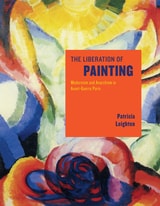
The Liberation of Painting
Modernism and Anarchism in Avant-Guerre ParisPatricia Leighten
University of Chicago Press, 2013
Leighten examines the circle of artists—Pablo Picasso, Juan Gris, František Kupka, Maurice de Vlaminck, Kees Van Dongen, and others—for whom anarchist politics drove the idea of avant-garde art, exploring how their aesthetic choices negotiated the myriad artistic languages operating in the decade before World War I. Whether they worked on large-scale salon paintings, political cartoons, or avant-garde abstractions, these artists, she shows, were preoccupied with social criticism. Each sought an appropriate subject, medium, style, and audience based on different conceptions of how art influences society—and their choices constantly shifted as they responded to the dilemmas posed by contradictory anarchist ideas. According to anarchist theorists, art should expose the follies and iniquities of the present to the masses, but it should also be the untrammeled expression of the emancipated individual and open a path to a new social order. Revealing how these ideas generated some of modernism’s most telling contradictions among the prewar Parisian avant-garde, The Liberation of Painting restores revolutionary activism to the broader history of modern art.
The Theological Metaphors of Marx
Enrique Dussel
Duke University Press, 2024
The Threat of Liberation
Imperialism and Revolution in ZanzibarAmrit Wilson
Pluto Press, 2013
The Threat of Liberation returns to the tumultuous years of the Cold War, when, in a striking parallel with today, imperialist powers were seeking to institute ‘regime change’ and install pliant governments.
Using iconic photographs, declassified US and British documents, and in-depth interviews, Amrit Wilson examines the role of the Umma Party of Zanzibar and its leader, the visionary Marxist revolutionary, Abdulrahman Mohamed Babu. Drawing parallels between US paranoia about Chinese Communist influence in the 1960s with contemporary fears about Chinese influence, it looks at the new race for Africa’s resources, the creation of AFRICOM and how East African politicians have bolstered US control. The book also draws on US cables released by Wikileaks showing Zanzibar's role in the ‘War on Terror’ in Eastern Africa today.
The Threat of Liberation reflects on the history of a party which confronted imperialism and built unity across ethnic divisions, and considers the contemporary relevance of such strategies.
Vexy Thing
On Gender and LiberationImani Perry
Duke University Press, 2018
Violence in a Time of Liberation
Murder and Ethnicity at a South African Gold Mine, 1994Donald L. Donham
Duke University Press, 2011
We Gon’ Be Alright
Resistance and Healing in Black Movement Spaces, 2012–2021Stephanie M. Crumpton
University of Arizona Press, 2025
Drawing on oral histories and personal narratives, Crumpton provides an intimate look at the lived experiences of thirty-seven full-time community organizers. These activists and organizers share their strategies for maintaining an ethic of care that sustains them while fighting against both external oppression and internal community struggles. The book highlights how contemporary Black resisters have leveraged a growing understanding of trauma and healing to enhance their activism. This blend of historical knowledge and modern therapeutic practices has equipped them with a broader array of tools to support their communities.
Rooted in womanist practical theology, We Gon’ Be Alright emphasizes the interconnectedness of white supremacy with other forms of oppression such as sexism, homophobia, and classism. Crumpton’s work underscores the necessity of “deep, deep healing” to address these multifaceted threats to Black life. This book is an essential resource for scholars, activists, and anyone interested in understanding the dynamics of Black resistance and healing in contemporary America. Through its detailed examination of the past decade, it offers valuable insights into the ongoing struggle for Black humanity, dignity, and a thriving future.