Results by title
1414 books match the query 'Medical' and 37 start with n
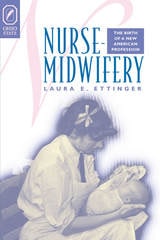
NURSE-MIDWIFERY
THE BIRTH OF A NEW AMERICAN PROFESSIONLaura E. Ettinger
The Ohio State University Press, 2006
Today, nurse-midwives have assumed a larger role in mainstream health care than before, yet they are still marginalized. As in the past, nurse-midwives’ futures will depend on continuing changes in American attitudes about childbirth, health care, and women professionals as well as on their own ability to adapt to the changes. The history of the profession suggests that nurse-midwives will continue to navigate in difficult waters in a middle space between the mainstream and the margins of medicine and between the nursing profession and midwifery traditions.
NURSING AND THE PRIVILEGE OF PRESCRIPTION
1893-2000Arlene W. Keeling
The Ohio State University Press, 2007
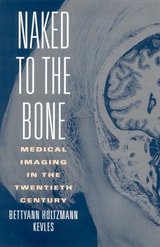
Naked to the Bone
Medical Imaging in the Twentieth CenturyKevles, Bettyann Holtzman
Rutgers University Press, 1996
X-rays, fluoroscopy, ultrasound, CT, MRI, and PET scans--medical imaging has become a familiar part of modern health care today. A century ago, however, the idea of looking inside the living body seemed absurd. Wilhelm Roentgen's X-ray image of his wife's shadowy hand--with her wedding band "floating" around a white bone--convinced doctors to rush the new tool into use for diagnosis and treatment.
By the 1920s, the technology was a commonplace wonder: army recruits had routinely lined up for chest X-rays during World War I, and children delighted in seeing the bones of their feet in the green glow of shoestore fluoroscopes. By the late 1960s, the computer and television were linked to produce medical images that were as startling as Roentgen's original X-rays. Computerized tomography (CT) and magnetic resonance imaging (MR) made it possible to picture soft tissues invisible to ordinary X-rays. Ultrasound allowed expectant parents to see their unborn children. Positron emission tomography (PET) enabled neuroscientists to map the brain.
In this lively history of medical imaging, the first to cover the full scope of the field from X-rays to MR-assistant surgery, Bettyann Kevles explores the consequences of these developments for medicine and society. Through lucid prose, vivid anecdotes, and more than seventy striking illustrations, she shows how medical imaging has transformed the practice of medicine--from pediatrics to dentistry, neurosurgery to geriatrics, gynecology to oncology.
Despite their formidable power to reveal the inner secrets of the body, no form of medical imaging can claim to be the product of a technological imperative. As Kevles points out, few of these costly inventions made it easily to the marketplace, and all are vulnerable to the changing economics of the health-care system. In the early years of X-rays, many doctors, technicians, and patients died from overexposure to the invisible radiation. Although we may still find delayed repercussions from these newer technologies, a different kind of danger may lie in our conviction that an early diagnosis is equivalent to a cure.
Beyond medicine, Kevles describes how X-rays and the newer technologies have become part of the texture of modern life and culture. They helped undermine Victorian sexual sensibilities, gave courts new forensic tools, provided plots for novels and movies, and offered artists from Picasso to Warhol new ways to depict the human form.
Naked to the Bone offers readers an unparalled picture of a key technology of the twentieth century.
Nanofibres in Drug Delivery
Gareth R. Williams, Bahijja T. Raimi-Abraham, and C. J. Luo
University College London, 2018
National Health Care
Lessons for the United States and CanadaJonathan Lemco, Editor
University of Michigan Press, 1994
Nature's Body
Gender in the Making of Modern ScienceSchiebinger, Londa
Rutgers University Press, 2004
Eighteenth-century natural historians created a peculiar, and peculiarly durable, vision of nature—one that embodied the sexual and racial tensions of that era. When plants were found to reproduce sexually, eighteenth-century botanists ascribed to them passionate relations, polyandrous marriages, and suicidal incest, and accounts of steamy plant sex began to infiltrate the botanical literature of the day. Naturalists also turned their attention to the great apes just becoming known to eighteenth-century Europeans, clothing the females in silk vestments and training them to sip tea with the modest demeanor of English matrons, while imagining the males of the species fully capable of ravishing women.
Written with humor and meticulous detail, Nature’s Body draws on these and other examples to uncover the ways in which assumptions about gender, sex, and race have shaped scientific explanations of nature. Schiebinger offers a rich cultural history of science and a timely and passionate argument that science must be restructured in order to get it right.
Near Human
Border Zones of Species, Life, and BelongingMette N. Svendsen
Rutgers University Press, 2022
Needless Suffering
How Society Fails Those with Chronic PainDavid Nagel
University Press of New England, 2016
Negotiating Pharmaceutical Uncertainty
Women's Agency in a South African HIV Prevention TrialEirik Saethre
Vanderbilt University Press, 2017
As embedded anthropologists, Saethre and Stadler provide a unique and nuanced perspective of the reality of a clinical trial that is often hidden from view.
Neither Donkey nor Horse
Medicine in the Struggle over China's ModernitySean Hsiang-lin Lei
University of Chicago Press, 2014
Far from being a remnant of China’s premodern past, Chinese medicine in the twentieth century coevolved with Western medicine and the Nationalist state, undergoing a profound transformation—institutionally, epistemologically, and materially—that resulted in the creation of a modern Chinese medicine. This new medicine was derided as “neither donkey nor horse” because it necessarily betrayed both of the parental traditions and therefore was doomed to fail. Yet this hybrid medicine survived, through self-innovation and negotiation, thus challenging the conception of modernity that rejected the possibility of productive crossbreeding between the modern and the traditional.
By exploring the production of modern Chinese medicine and China’s modernity in tandem, Lei offers both a political history of medicine and a medical history of the Chinese state.
Nested Ecologies
A Multilayered Ethnography of Functional MedicineRosalynn A. Vega
University of Texas Press, 2023
How functional medicine leverages systems biology and epigenetic science to treat the microbiome and reverse chronic disease.
Each body is a system within a system—an ecology within the larger context of social, political, economic, cultural, and environmental factors. This is one of the lessons of epigenetics, whereby structural inequalities are literally encoded in our genes. But our ecological embeddedness extends beyond DNA, for each body also teems with trillions of bacteria, yeast, and fungi, all of them imprints of our individual milieus. Nested Ecologies asks what it would mean to take seriously our microbial being, given that our internal ecologies are shaped by inequalities embedded in our physical and social environments.
Further, Rosalynn Vega argues that health practices focused on patients’ unique biology inadvertently reiterate systemic inequities. In particular, functional medicine—which attempts to heal chronic disease by leveraging epigenetic science and treating individual microbiomes—reduces illness to problems of “lifestyle,” principally diet, while neglecting the inability of poor people to access nutrition. Functional medicine thus undermines its own critique of the economics of health care. Drawing on novel digital ethnographies and reflecting on her own experience of chronic illness, Vega challenges us to rethink not only the determinants of well-being but also what it is to be human.
Neurasthenic Nation
America's Search for Health, Happiness, and Comfort, 1869-1920Schuster, David G
Rutgers University Press, 2011
As the United States rushed toward industrial and technological modernization in the late nineteenth century, people worried that the workplace had become too competitive, the economy too turbulent, domestic chores too taxing, while new machines had created a fast-paced environment that sickened the nation. Physicians testified that, without a doubt, modern civilization was causing a host of ills—everything from irritability to insomnia, lethargy to weight loss, anxiety to lack of ambition, and indigestion to impotence. They called this condition neurasthenia.
Neurasthenic Nation investigates how the concept of neurasthenia helped doctors and patients, men and women, and advertisers and consumers negotiate changes commonly associated with “modernity.” Combining a survey of medical and popular literature on neurasthenia with original research into rare archives of personal letters, patient records, and corporate files, David Schuster charts the emergence of a “neurasthenic nation”—a place where people saw their personal health as inextricably tied to the pitfalls and possibilities of a changing world.

Neurofilaments
Charles A. Marotta
University of Minnesota Press, 1983
Neurofilaments was first published in 1983. Minnesota Archive Editions uses digital technology to make long-unavailable books once again accessible, and are published unaltered from the original University of Minnesota Press editions.
Neurofilaments are fibrous organelles that serve as one of the main structural elements of neurons. Synthesized in the perikaryon ,or nerve cell body, neurofilaments are transported along the axon, where they help to maintain the neuronal architecture. Recent research has shown that neurofilaments are biochemically distinct from other kinds of cellular filaments and that they play a special role in the health and functioning of neurons. Although their existence has been recognized for over a century, scientists have only recently started to apply the methods of cellular and molecular biology to the study of neurofilaments, aided by the use of the electron microscope. The study of neurofilaments has raised a number of interesting biological questions with implications for our understanding of neurophysiology, neuroanatomy, and neurology. This book is the first to provide, in one place, reports by specialists on the most significant areas of research on these neuronal organelles.
The book opens with a historical background to current research, followed by chapters dealing with the neuronal cytoskeleton; the biochemistry of neurofilaments; neurofilaments of the mammalian peripheral nerve; the functional role of neurofilaments in axonal transport; the metabolism of neurofilaments; experimental models of abnormal neurofilamentous pathology; and the relation of these abnormal structures to Alzheimer's disease. Editor Charles Marotta's closing chapter surveys current and future neurofilament research.
Neuropharmacotherapy in Critical Illness
Brophy, Gretchen
Rutgers University Press, 2017
In the treatment of neurocritical disease states, pharmacotherapeutic strategies are increasingly relevant. Neuropharmacotherapy in Critical Illness is the first book that provides this information in a high-yield format for the busy healthcare provider. Edited and authored by leading experts in the field, this book provides practitioners with clinical pearls on neuropharmacology, dosing strategies, monitoring, adverse events, drug interactions, and evidence-based pharmacotherapy.
Neuroscience, Psychology, and Religion
Illusions, Delusions, and Realities about Human NatureMalcolm Jeeves
Templeton Press, 2009
Neuroscience, Psychology, and Religion is the second title published in the new Templeton Science and Religion Series. In this volume, Malcolm Jeeves and Warren S. Brown provide an overview of the relationship between neuroscience, psychology, and religion that is academically sophisticated, yet accessible to the general reader.
The authors introduce key terms; thoroughly chart the histories of both neuroscience and psychology, with a particular focus on how these disciplines have interfaced religion through the ages; and explore contemporary approaches to both fields, reviewing how current science/religion controversies are playing out today. Throughout, they cover issues like consciousness, morality, concepts of the soul, and theories of mind. Their examination of topics like brain imaging research, evolutionary psychology, and primate studies show how recent advances in these areas can blend harmoniously with religious belief, since they offer much to our understanding of humanity's place in the world. Jeeves and Brown conclude their comprehensive and inclusive survey by providing an interdisciplinary model for shaping the ongoing dialogue.
Sure to be of interest to both academics and curious intellectuals, Neuroscience, Psychology, and Religion addresses important age-old questions and demonstrates how modern scientific techniques can provide a much more nuanced range of potential answers to those questions.
New Developments in Productivity Analysis
Edited by Charles R. Hulten, Edwin R. Dean, and Michael J. Harper
University of Chicago Press, 2001
Charles R. Hulten is professor of economics at the University of Maryland. He has been a senior research associate at the Urban Institute and is chair of the Conference on Research in Income and Wealth of the National Bureau of Economic Research. Michael Harper is chief of the Division of Productivity Research at the Bureau of Labor Statistics. Edwin R. Dean, formerly associate commissioner for Productivity and Technology at the Bureau of Labor Statistics, is adjunct professor of economics at The George Washington University.
New England Hospitals
1790-1833Leonard K. Eaton
University of Michigan Press, 1957
New Organs Within Us
Transplants and the Moral EconomyAsl1han Sanal
Duke University Press, 2011
Newer Dimensions of Patient Care
Improving Staff Motivation and CompetenceEsther Lucille Brown
Russell Sage Foundation, 1962
Newer Dimensions of Patient Care
Patients as PeopleEsther Lucile Brown
Russell Sage Foundation, 1964
Newer Dimensions of Patient Care
The Use of the Physical and Social Environment for Therapeutic PurposesEsther Lucille Brown
Russell Sage Foundation, 1961
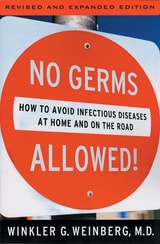
No Germs Allowed!
How to Avoid Infectious Diseases At Home and on the RoadWeinberg, Winkler G
Rutgers University Press, 1996
AIDS, tuberculosis, hepatitis, chickenpox, malaria, Lyme disease, salmonella, strep throat-no matter where you go or where you live, you are at risk from infectious disease. But there are ways you can protect yourself and your family!
The revised and expanded edition of this classic guide explains what you need to know to keep the germs away. From the infections of daily life, like the common cold and traveler's diarrhea, to dangerous, rare diseases such as plague, hantavirus, and invasive strep bacteria, to recent threats of mad cow disease, West Nile virus, SARS, and bioterrorism, this unique guide tells you:
- your chances of getting sick
- simple precautions you can take
- which vaccinations and shots are worthwhile
- how to avoid catching infections in the hospital
- special precautions to take if you are pregnant
- how to ward off infections even if you have chronic health problems or are HIV positive
- how to keep well while traveling
- what to eat-and not eat-on the road
- symptoms that signal trouble
- what illnesses you can get from bug bites and animals
- how to prevent sexually transmitted diseases
- who should get flu shots and why
- why you should see your doctor before you get sick
Dr. Winkler G. Weinberg lets you know what you need to worry about and what you don't.
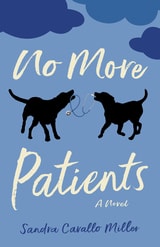
No More Patients
A NovelSandra Cavallo Miller
University of Nevada Press, 2026
Once a free spirit, Vivian celebrated at Woodstock in her thirties and Burning Man in her eighties. Now she spends her time feuding with Marianne Dunwitty, her new rival from the Scrabble Klub. To help resolve her identity crisis, Vivian begins recording reflections on her life, revealing a deep despair that drives her to take on the Klub members, scorn the new cloud-watching man next door, and snoop into a suspected neighborhood homicide.
Norah and Vivian must find ways to deal with their out-of-balance lives, and—most importantly—each other. Picking up where Out of Patients left off, No More Patients is a heartfelt, humorous sequel that stands on its own, about the struggles of healing both patients and relationships alike.
No More Patients
A NovelSandra Cavallo Miller
University of Nevada Press, 2026
Once a free spirit, Vivian celebrated at Woodstock in her thirties and Burning Man in her eighties. Now she spends her time feuding with Marianne Dunwitty, her new rival from the Scrabble Klub. To help resolve her identity crisis, Vivian begins recording reflections on her life, revealing a deep despair that drives her to take on the Klub members, scorn the new cloud-watching man next door, and snoop into a suspected neighborhood homicide.
Norah and Vivian must find ways to deal with their out-of-balance lives, and—most importantly—each other. Picking up where Out of Patients left off, No More Patients is a heartfelt, humorous sequel that stands on its own, about the struggles of healing both patients and relationships alike.
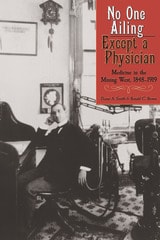
No One Ailing Except a Physician
Medicine in the Mining West, 1848-1919Duane A. Smith
University Press of Colorado, 2001
From burying scurvy victims up to their necks in the earth to drinking kerosene mixed with sugar to treat influenza, mid-nineteenth century medicine in the mining communities of the West usually consisted of home remedies that were often remarkable for their inventiveness but tragically random in their effectiveness. Only as a desperate last resort would people turn to the medical community, which had developed a deplorable reputation for quackery and charlatanism because of its lack of licensing regulations and uniform educational standards. No One Ailing Except a Physician takes readers back to those free-wheeling days in the mining towns and the dark recesses of the mines themselves, a time when illness or injury was usually survived more due to sheer luck than the interventions of medicine.
In this important new contribution to both mining and medical history, historians Duane A. Smith and Ronald C. Brown present a detailed analysis of the ailments that confronted the miners and the methods with which they and their doctors attempted to "cure" them. The occupational hazards of mining, with its strenuous labor and exposure to the elements, contributed to the miners' vulnerability to disease and injury, which was further worsened by the typical miner's refusal to heed prevailing medical wisdom and common sense, often leading to easily preventable diseases such as scurvy. And because medical science of the era had not progressed much beyond that of the ancient Greeks, such debilitating diseases such as cholera, influenza, dysentery, and malaria proved to be virtual death sentences, to say nothing of occupational accidents with fires and explosions, mine collapses, and safety cage mishaps.
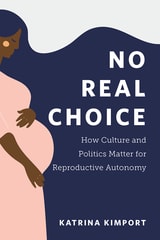
No Real Choice
How Culture and Politics Matter for Reproductive AutonomyKatrina Kimport
Rutgers University Press, 2022
Based on candid, in-depth interviews with women who considered but did not obtain an abortion, No Real Choice punctures the myth that American women have full autonomy over their reproductive choices. Focusing on the experiences of a predominantly Black and low-income group of women, sociologist Katrina Kimport finds that structural, cultural, and experiential factors can make choosing abortion impossible–especially for those who experience racism and class discrimination. From these conversations, we see the obstacles to “choice” these women face, such as bans on public insurance coverage of abortion and rampant antiabortion claims that abortion is harmful. Kimport's interviews reveal that even as activists fight to preserve Roe v. Wade, class and racial disparities have already curtailed many women’s freedom of choice.
No Real Choice analyzes both the structural obstacles to abortion and the cultural ideologies that try to persuade women not to choose abortion. Told with care and sensitivity, No Real Choice gives voice to women whose experiences are often overlooked in debates on abortion, illustrating how real reproductive choice is denied, for whom, and at what cost.
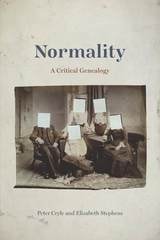
Normality
A Critical GenealogyPeter Cryle and Elizabeth Stephens
University of Chicago Press, 2017
In Normality, Peter Cryle and Elizabeth Stephens offer an intellectual and cultural history of what it means to be normal. They explore the history of how communities settle on any one definition of the norm, along the way analyzing a fascinating series of case studies in fields as remote as anatomy, statistics, criminal anthropology, sociology, and eugenics. Cryle and Stephens argue that since the idea of normality is so central to contemporary disability, gender, race, and sexuality studies, scholars in these fields must first have a better understanding of the context for normality. This pioneering book moves beyond binaries to explore for the first time what it does—and doesn’t—mean to be normal.
Nostalgia
Origins and Ends of an Unenlightened DiseaseHelmut Illbruck
Northwestern University Press, 2012
Not Just Any Department of Family Medicine
Kent J. Sheets, Ph.D.
Michigan Publishing Services, 2018
This book tells how the Department of Family Medicine was established at the University of Michigan in 1978 and how it has evolved since then. The forty years of stories paint a detailed picture of the department leaders, faculty, staff, and learners who coped with setbacks, challenges, and accomplishments in establishing this specialty at a nationally renowned medical school.
Not Quite a Cancer Vaccine
Selling HPV and Cervical CancerS.D. Gottlieb
Rutgers University Press, 2018
Prior to its market debut, Gardasil seemed to offer female empowerment, touting protection against HPV and its potential for cervical cancer. Gottlieb questions the marketing pitch’s vaunted promise and asks why vaccine marketing unnecessarily gendered the vaccine’s utility, undermining Gardasil’s benefit for men and women alike. This book demonstrates why in the ten years since Gardasil’s U.S. launch its low rates of public acceptance have their origins in the early days of the vaccine dissemination. Not Quite a Cancer Vaccine addresses the on-going expansion in U.S. healthcare of patients-as-consumers and the ubiquitous, and sometimes insidious, health marketing of large pharma.
Nursing Civil Rights
Gender and Race in the Army Nurse CorpsCharissa J. Threat
University of Illinois Press, 2015
As Threat reveals, both groups viewed their circumstances with the Army Nurse Corps as a civil rights matter. Each conducted separate integration campaigns to end the discrimination they suffered. Yet their stories defy the narrative that civil rights struggles inevitably arced toward social justice. Threat tells how progressive elements in the campaigns did indeed break down barriers in both military and civilian nursing. At the same time, she follows conservative threads to portray how some of the women who succeeded as agents of change became defenders of exclusionary practices when men sought military nursing careers. The ironic result was a struggle that simultaneously confronted and reaffirmed the social hierarchies that nurtured discrimination.
Nursing Procedures
Marion Vannier
University of Minnesota Press, 1929
"This book is a manual of nursing procedures originally prepared for the students of the University of Minnesota School of Nursing, written to obviate the necessity of note-taking by the students during the presentation of demonstration by the instructor . . . On the whole the manual is excellent. An instructor would find it of great value in planning her demonstration. It would be difficult to improve upon the simplicity and clarity with which the steps of the procedures are given." —Pacific Coast Journal of Nursing
Nursing Procedures was first published in 1929. Minnesota Archive Editions uses digital technology to make long-unavailable books once again accessible, and are published unaltered from the original University of Minnesota Press editions.
Nursing Wounds
Nurse Practitioners, Doctors, Women Patients, and the Negotiation of MeaningFisher, Sue
Rutgers University Press, 1995
The rise of the nurse practitioner as a new kind of health care professional has blurred the traditional distinction between physicians and nurses. Nurse practitioners argue that they combine both the traditionally male health care delivery of the M.D. and the traditionally female caring attention of the R.N. In her previous work Sue Fisher has analyzed the difficulties that women patients have in getting doctors to listen to their medical concerns. Now she asks whether women fare any better with nurse practitioners.
Nursing Wounds takes us into the examining rooms of nurse practitioners and doctors to listen to how health care professionals and women patients communicate. The nurse practitioners, unlike the doctors, go beyond the medical problem to ask about the social context of the patients' lives. In these exchanges the doctors insist on reinforcing both their professional status and dominant cultural assumptions about women. While the nurse practitioners sometimes do this, they also distance themselves from their professional identities, respond to their patients woman to woman, and undermine traditional understandings about gender arrangements.These differences have important consequences for the delivery of health care.
This compelling and complex analysis employs a range of theoretical perspectives–-from sociolinguistic to postmodern and materialist. Fisher concludes by urging a health care policy that capitalizes on the special strengths of nurse practitioners as providers of primary care who pay real attention to what their patients are saying and who support an alternative, even oppositional, understanding of women's lives.
Nursing the Nation
Building the Nurse Labor ForceJean C. Whelan
Rutgers University Press, 2021
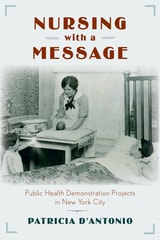
Nursing with a Message
Public Health Demonstration Projects in New York CityD'Antonio, Patricia
Rutgers University Press, 2017
This book is also freely available online as an open access digital edition.
Download the open access ebook here.
Nursing
The Philosophy and Science of CaringJean Watson
University Press of Colorado, 1991
The concept of care is probably one of the least understood ideas used by professional and nonprofessional people, yet it is probably one of the most important concepts to be understood by human groups. It is a word with multiple social usages in the American culture, and has other meanings in other world cultures. The terms care, caring, and nursing care have both symbolic and functional meanings as they are used by caregivers and care-recipients. Nursing care also has a general, special meaning to nurses, and is often taken for granted in nurses' thoughts and action patterns. It is time that we study the implicit and explicit meanings associated with the concepts of care and caring so that we can reduce their ambiguities. Furthermore, the humanistic, scientific, and linguistic meanings related to nursing care and caring behaviors in any culture remain a most fascinating area of study for nurses.
Nursing
The Philosophy and Science of Caring, Revised EditionJean Watson
University Press of Colorado, 2008
A core concept for nurses and the professional and non-professional people they interact with, "care" is one of the field's least understood terms, enshrouded in conflicting expectations and meanings. Although its usages vary among cultures, caring is universal and timeless at the human level, transcending societies, religions, belief systems, and geographic boundaries, moving from Self to Other to community and beyond, affecting all of life.
This second edition reflects on the universal effects of caring and connects caring with love as the primordial moral basis both for the philosophy and science of caring practices and for healing itself. It introduces Caritas Processes, offers centering and mediation exercises on an included audio CD, and provides other energetic and reflective models to assist students and practitioners in cultivating a new level of Caritas Nursing in their work and world.