Results by title
4917 books match the query 'Philosophy' and 125 start with n

NEWER IDEALS OF PEACE
Jane Addams
University of Illinois Press, 2006
In this her second book, Jane Addams moves beyond humanitarian appeals to sensibility and prudence, advancing a more aggressive, positive idea of peace as a dynamic social process emerging out of the poorer quarters of cosmopolitan cities. Her deep analysis of relations among diverse groups in U.S. society, exemplified by inter-ethnic and labor relations in Chicago, draws widely useful lessons for both domestic and global peace, in an early formulation of today’s "globalization from below."
In an unprecedented, revolutionary critique of the pervasive militarization of society, Addams applies her scathing pen to traditional advocates and philosophers of “negative” peace, founders of the U.S. constitution, militarists, bigots, imperialists, and theories of “democratic peace” and liberal capitalism. Instead she sees a slow, powerful emergence of forces from below--the poor, the despised, workers, women, ethnic and racial communities, oppressed groups at home and abroad--that would invent moral substitutes for war and gradually shape a just, peaceful, and varied social order. An extensive, in-depth introduction by Berenice Carroll and Clinton Fink provides historical context, analysis, and a reassessment of the theoretical and practical significance of Newer Ideals of Peace today.

Name and Image
An Essay on Walter BenjaminGianni Carchia
Seagull Books, 2024
Name and Image crystalizes Gianni Carchia’s lifelong pursuit of the infinite philosophical object in the method and thought of one of the most important philosophers of the twentieth century: Walter Benjamin. This intellectual biography touches upon the philosophy of language, historiography, aesthetics, temporality, and transcendental philosophy.
The book has the singular distinction of being both Gianni Carchia’s first and last work. In the spring of 1999, shortly before the resurgence of the disease that would lead to his death, Carchia began revising the graduate thesis he had defended at the University of Turin in 1971 with the title Truth and Language in the Young Walter Benjamin. At age twenty-four, the young scholar already demonstrated the incisive, axiomatic style of a master. The final version, retitled Name and Image, would become his testament. With a remarkable inversion, beginning and end seem to conjoin here in an authentically philosophical act, as though all the motifs of Carchia’s late thought—the conception of philosophy as event and witness, critique of method, and messianic finality—resonated together for the first time in this youthful text. The physiognomy of Benjamin that opens the work is the self-portrait of a figure who stands out ever more as one of the most just voices in twentieth-century Italian philosophy.
Names Of History
On the Poetics of KnowledgeJacques Ranciere
University of Minnesota Press, 1994

Names and Substance in the Australian Subsection System
C. G. von Brandenstein
University of Chicago Press, 1982
Though the author has restricted the results of his research to Aboriginal Australia, his methodological approach is generalizable. Hence this work will be of importance to specialists in many areas.

Naming Evil, Judging Evil
Edited by Ruth W. Grant
University of Chicago Press, 2006
Is it more dangerous to call something evil or not to? This fundamental question deeply divides those who fear that the term oversimplifies grave problems and those who worry that, to effectively address such issues as terrorism and genocide, we must first acknowledge them as evil. Recognizing that the way we approach this dilemma can significantly affect both the harm we suffer and the suffering we inflict, a distinguished group of contributors engages in the debate with this series of timely and original essays.
Drawing on Western conceptions of evil from the Middle Ages to the present, these pieces demonstrate that, while it may not be possible to definitively settle moral questions, we are still able—and in fact are obligated—to make moral arguments and judgments. Using a wide variety of approaches, the authors raise tough questions: Why is so much evil perpetrated in the name of good? Could evil ever be eradicated? How can liberal democratic politics help us strike a balance between the need to pass judgment and the need to remain tolerant? Their insightful answers exemplify how the sometimes rarefied worlds of political theory, philosophy, theology, and history can illuminate pressing contemporary concerns.

Narrating the Catastrophe
An Artist's Dialogue with Deleuze and RicoeurJac Saorsa
Intellect Books, 2011
An extraordinary collaboration between contemporary art and critical discourse, Narrating the Catastrophe guides readers through unfamiliar textual landscapes where “being” is defined as an act rather than a form. Drawing on Paul Ricoeur’s notion of intersubjective narrative identity as well as the catastrophe theory of Gilles Deleuze, Jac Saorsa establishes an alternative perspective from which to interpret and engage with the world around us. A highly original—and visually appealing—take on a high-profile issue in contemporary critical debate, this book will appeal to all those interested in visual arts and philosophy.

Narrative Experiments
The Discursive Authority of Science and TechnologyGayle L. Ormiston and Raphael Sassower
University of Minnesota Press, 1989
Narrative Experiments was first published in 1989. Minnesota Archive Editions uses digital technology to make long-unavailable books once again accessible, and are published unaltered from the original University of Minnesota Press editions.
In Narrative Experiments, Gayle Ormiston and Ralph Sassower bring a refreshing perspective to the domains of inquiry we call "science" and "technology," asserting that traditional definitions (like classical idealism and materialism) fail to suggest the rich and complex cultural/linguistic interplay occurring between them. This context is not merely a background, nor is Ormiston and Sassower's just one more interdisciplinary approach to the subject. Instead, their book argues, science, technology, and the humanities developed in concert with one another, and their reciprocity obliterates all traditional disciplinary boundaries.
Ormiston and Sassower build their case by devoting a chapter to each of the four themes emerging from the etymological introduction. First, they look at the role fiction and other literary modes play in developing our attitudes toward science and technology -- how the visions of Bacon, Hobbes, Galileo, Rousseau, Mary Shelley, and Orwell evoke both anxiety and hope. Next, they examine a series of eighteenth-century "fictions" -- the Enlightenment texts of Kant, Rousseau, and Hume -- and the elevated (but ambiguous) status science and technology associated with them. The last two chapters evaluate modes of discursive authority and its dissemination -- classical and modern extralinguistic approaches; the contemporary-linguistic view espoused by Rorty, Quine, and others; and their own avowedly experimental journey through the labyrinths of cultural and linguistic usage.

Narratives of Debt
Peter Szendy, special issue editor
Duke University Press, 2020
Contributors. Arjun Appadurai, Anthony Bogues, Emmanuel Bouju, Silvia Federici, Mikkel Krause Frantzen, Raphaelle Guidée, Odette Lienau, Catherine Malabou, Vincent Message, Laura Odello, Peter Szendy, Frederik Tygstrup
Nationalism and Beyond
Introducing Moral Debate about ValuesNenad Mišcevic
Central European University Press, 2001
A very readable introduction to the concepts and principles shaping the philosophical debate around nationalism. The book provides portraits of two kinds of nationalists: the tougher type, more common in everyday life, and the ultra-moderate "liberal nationalist" encountered in academia. The author introduces a debate with a "thoughtful nationalist," one who defends the view that states should be organized around national culture and that individuals have basic obligations to their nation. The author attempts to answer his opponent's standard arguments and presents a fully documented critique of his views.
A passion born from Miscevic's encounter with nationalism in the former Yugoslavia glows from every line of the argument. Questions raised and discussed include: Why is radicalism typical of nationalism? How successful is the nation-state? Does nationalism support liberal-democratic values? Is membership in a nation necessary for human fulfillment and for understanding values? Why might nationalism be immoral?
The book is unique not only because it explains a contemporary moral debate, in terms clear to the non-philosopher reader, but also because it has been written from the perspective of Central and Eastern Europe based on the author's personal experience.
Nationalism and the Moral Psychology of Community
Bernard Yack
University of Chicago Press, 2012
Nationalism is one of modern history’s great surprises. How is it that the nation, a relatively old form of community, has risen to such prominence in an era so strongly identified with the individual? Bernard Yack argues that it is the inadequacy of our understanding of community—and especially the moral psychology that animates it—that has made this question so difficult to answer.
Yack develops a broader and more flexible theory of community and shows how to use it in the study of nations and nationalism. What makes nationalism such a powerful and morally problematic force in our lives is the interplay of old feelings of communal loyalty and relatively new beliefs about popular sovereignty. By uncovering this fraught relationship, Yack moves our understanding of nationalism beyond the oft-rehearsed debate between primordialists and modernists, those who exaggerate our loss of individuality and those who underestimate the depth of communal attachments.
A brilliant and compelling book, Nationalism and the Moral Psychology of Community sets out a revisionist conception of nationalism that cannot be ignored.
Natural Law Ethics in Theory and Practic
A Joseph Boyle ReaderJoseph Boyle
Catholic University of America Press, 2020
Part One: Articulating a Theory of Natural Law contains three sections in which Boyle defends the reality of free choice and the view that the basic reasons for action, or first principles of natural law, are incommensurable in goodness. Boyle identifies the basic moral standard for choice and action, and develops an account of human action that elucidates the important role played by intention and double effect in their moral evaluation.
The essays in Part Two: Natural Law Theory and Contemporary Moral Problems demonstrate the strength and scope of Boyle’s natural law account, as he brings it to bear upon just war theory, property and welfare rights, and issues in bioethics. The essays in bioethics address the difficult question of whether it is appropriate to tube-feed patients in persistent vegetative state, and include an unpublished essay, “Against Assisted Death,” which he delivered as the Anscombe Lecture at The Anscombe Bioethics Centre in Oxford about a year before he died.
This volume also includes a Foreword by Princeton’s Robert P. George; an Introduction by the editors that highlights Boyle’s contribution to the development of the new classical natural law theory; and a bibliography of Boyle’s publications.
Natural Law and Thomistic Juridical Realism
Prospects for a Dialogue with Contemporary Legal TheoryPetar Popovic
Catholic University of America Press, 2022
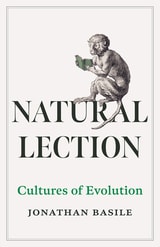
Natural Lection
Cultures of EvolutionJonathan Basile
University of Minnesota Press, 2026
A radical deconstructive approach to evolutionary theory
For as long as there has been evolutionary science, thinkers in the natural sciences, social sciences, and humanities have battled over whether evolutionary theory can or should provide insights into human nature and culture. Yet even the dissenters tend to agree that there is, somewhere, a natural foundation of instinctual or genetic inheritance; the debate is only whether and how human culture is an exception from it. Natural Lection complicates this fundamental boundary as it exposes how our scientific knowledge of nature rests on a faulty foundation that must be supplemented by humanist thought.
Jonathan Basile, as part of the emerging movement of biodeconstruction, extends the work of Jacques Derrida into the life sciences as he parses writing on cultural evolution to reveal the contradictions within our opposing notions of genealogically governed nature and networked or viral human culture. Holding this opposition in suspense, Basile proposes a new framework: natural lection, the view of nature not as original material but as the result of a shifting, always provisional act of reading. By paying careful attention to what biologists describe as a superficial layer of metaphor and rhetoric in their writing—but which he sees as an ineluctable textuality shaping the core of their work—Basile traces the political implications of scientific thought to its theoretical fragility, which calls for philosophical and literary modes of reading.
Showing how contemporary approaches to cultural evolution continue to repeat incoherent patterns of thought at least as old as Darwin—if not Aristotle—Natural Lection dismantles assumptions shared by evolutionary biology, cultural studies, and new materialism. By critically analyzing these foundations, Basile pushes back against the neoliberal and far-right weaponization of evolutionary theory, opening a novel terrain of scientific and political possibility.
Retail e-book files for this title are screen-reader friendly.
Natural Moral Law in Contemporary Society
Holger Zaborowski
Catholic University of America Press, 2010
Natural Questions
Lucius Annaeus Seneca
University of Chicago Press, 2010
Lucius Annaeus Seneca (4 BCE–65 CE) was a Roman Stoic philosopher, dramatist, statesman, and adviser to the emperor Nero, all during the Silver Age of Latin literature. The Complete Works of Lucius Annaeus Seneca is a fresh and compelling series of new English-language translations of his works in seven accessible volumes. Edited by world-renowned classicists Elizabeth Asmis, Shadi Bartsch, and Martha C. Nussbaum, this engaging collection restores Seneca—whose works have been highly praised by modern authors from Desiderius Erasmus to Ralph Waldo Emerson—to his rightful place among the classical writers most widely studied in the humanities.
Written near the end of Seneca’s life, Natural Questions is a work in which Seneca expounds and comments on the natural sciences of his day—rivers and earthquakes, wind and snow, meteors and comets—offering us a valuable look at the ancient scientific mind at work. The modern reader will find fascinating insights into ancient philosophical and scientific approaches to the physical world and also vivid evocations of the grandeur, beauty, and terror of nature.
Natural Right and History
Leo Strauss
University of Chicago Press, 1965
"Strauss . . . makes a significant contribution towards an understanding of the intellectual crisis in which we find ourselves . . . [and] brings to his task an admirable scholarship and a brilliant, incisive mind."—John H. Hallowell, American Political Science Review
Leo Strauss (1899-1973) was the Robert Maynard Hutchins Distinguished Service Professor Emeritus in Political Science at the University of Chicago.
Natural
MindVilém Flusser
University of Minnesota Press, 2013
In Natural:Mind, published for the first time in São Paulo, Brazil, in 1979, Vilém Flusser investigates the paradoxical connection between the concepts of nature and culture through a lively para-phenomenological analysis of natural and cultural phenomena. Can culture be considered natural and nature cultural? If culture is our natural habitat then do we not inhabit nature? These are only some of the questions that are raised in Natural:Mind in order to examine our continual redefinition of both terms and what that means for us existentially.
Always applying his fluid and imagistic Husserlian style of phenomenology, Flusser explores different perspectives and relations of items from everyday life. The book is composed of a series of essays based on close observations of familiar objects such as paths, valleys, cows, meadows, trees, fingers, grass, the moon, and buttons. By focusing on things we mostly take for granted, he manages not only to reveal some aspects of their real and obscured nature but also to radically change how we look at them. The ordinary cow will never be seen in the same way again.
Natural
MindVilém Flusser
University of Minnesota Press, 2027
Philosophical reflections on the relations between nature and culture
In Natural:Mind, published for the first time in São Paulo, Brazil, in 1979, Vilém Flusser investigates the paradoxical connection between the concepts of nature and culture through a lively para-phenomenological analysis of natural and cultural phenomena. Can culture be considered natural and nature considered cultural? If culture is our natural habitat then do we not inhabit nature? These are only some of the questions that are raised in Natural:Mind in order to examine our continual redefinition of both terms and what that means for us existentially.
Always applying his fluid and imagistic Husserlian style of phenomenology, Flusser explores different perspectives and relations of items from everyday life. The book is composed of a series of essays based on close observations of familiar objects such as paths, valleys, cows, meadows, trees, fingers, grass, the moon, and buttons. By focusing on things we mostly take for granted, he manages not only to reveal some aspects of their real and obscured nature but also to radically change how we look at them. The ordinary cow will never be seen in the same way again.
Naturalizing Philosophy of Education
John Dewey in the Postanalytic PeriodJerome A. Popp
Southern Illinois University Press, 1998
Jerome A. Popp examines the role of Dewey-based pragmatism in the past, present, and future of philosophy of education. He insists that even though Marx-ian utopian thought subjugated Dewey’s ideas during the 1970s, Dewey’s epistemological arguments are directly relevant to contemporary philosophy. He contends that not only are Dewey’s arguments related to how we think about philosophy of education; they actually improve the thinking reflected in the literature. Dewey’s arguments, he demonstrates, provide the basis for both a rejuvenated account of conceptual analysis and a criticism of the utopian relativism currently dominating the literature.
Popp notes that empiricism, manifested in the philosophy of education as analytic philosophy, holds that scientific findings, especially from psychology, have no place in philosophy. But contemporary writers in the philosophy of science contend that to justify the methods of science we must consider what is known about intelligence and cognitive processes. These arguments are relevant to the ways in which we justify claims about proper education.
Naturalizing epistemology (using the results of science in philosophic theories) leads to an enhanced account of Dewey’s instrumental approach to normative inquiry and strengthens attempts to justify educational practices. Dewey’s critique of utopian approaches to social theory is bolstered by contemporary arguments in epistemology and the philosophy of science. These arguments reject the attempt by some in philosophy of education to solve value questions through an appeal to utopian thinking. Popp agrees with Dewey’s view that the proper goals of education cannot be stated in these terms.
Nature and Motion in the Middle Ages
James A. Weisheipl
Catholic University of America Press, 2018
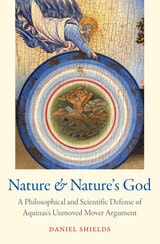
Nature and Nature's God
A Philosophical and Scientific Defense of Aquinas' Unmoved Mover ArgumentDaniel Shields
Catholic University of America Press, 2023
Nature and Scientific Method
Daniel O. Dahlstrom
Catholic University of America Press, 2018
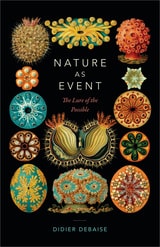
Nature as Event
The Lure of the PossibleDidier Debaise
Duke University Press, 2017
Nature as Guide
Wittgenstein and the Renewal of Moral TheologyDavid Goodill, OP
Catholic University of America Press, 2022
Nature in American Philosophy (Studies in Philosophy and the History of Philosophy, Volume 42)
Jean De Groot
Catholic University of America Press, 2004
Nature in Common?
Environmental Ethics and the Contested Foundations of Environmental PolicyBen A. Minteer
Temple University Press, 2009
This important book brings together leading environmental thinkers to debate a central conflict within environmental philosophy: Should we appreciate nature mainly for its ability to advance our interests or should we respect it as having a good of its own, apart from any contribution to human well being? Specifically, the fourteen essays collected here discuss the "convergence hypothesis" put forth by Bryan Norton—a controversial thesis in environmental ethics about the policy implications of moral arguments for environmental protection. Historically influential essays are joined with newly commissioned essays to provide the first sustained attempt to reconcile two long-opposed positions. Norton himself offers the book's closing essay.
This seminal volume contains contributions from some of the most respected scholars in the field, including Donald Brown, J. Baird Callicott, Andrew Light, Holmes Rolston III, Laura Westra, and many others. Although Nature in Common? will be especially useful for students and professionals studying environmental ethics and philosophy, it will engage any reader who is concerned about the philosophies underlying contemporary environmental policies.

Nature's Keeper
Peter S. Wenz
Temple University Press, 1996
In the West, humans tend to separate themselves from nature, valuing nature only as a means of meeting their own needs and happiness. This domination of nature often fosters human oppression instead of freedom and progress, as those who ignore abuses of nature tend to disregard human injustice as well. Peter S. Wenz argues that this oppression involves such destructive forces as sexism, ethnic strife, and political repression, including repression of the nuclear power industry's victims. Catastrophes like the Holocaust and the Gulf War are the result.
In contrast to the destructive "separate from nature" attitude, Wenz looks to various indigenous peoples as an example of societies where human beings revere nature for itself--societies where human beings flourish as individuals, in families, and in communities. Unlike societies dependent on commerce and industry, many indigenous peoples consider themselves part of a circle of life, reaping benefits far greater than the technological advances of the West. Wenz considers how to adopt the perspective of some indigenous cultures and how to make it work in our fast-food world. Additionally, he uses a trip to the World Uranium Hearings in Salzburg as a vehicle for understanding complex philosophical issues from consumerism to anthropocentrism.
In the series Ethics and Action, edited by Tom Regan.
Nature's Prophet
Alfred Russel Wallace and His Evolution from Natural Selection to Natural TheologyMichael A. Flannery
University of Alabama Press, 2018
An astute study of Alfred Russel Wallace’s path to natural theology.
A spiritualist, libertarian socialist, women’s rights advocate, and critic of Victorian social convention, Alfred Russel Wallace was in every sense a rebel who challenged the emergent scientific certainties of Victorian England by arguing for a natural world imbued with purpose and spiritual significance. Nature’s Prophet: Alfred Russel Wallace and His Evolution from Natural Selection to Natural Theology is a critical reassessment of Wallace’s path to natural theology and counters the dismissive narrative that Wallace’s theistic and sociopolitical positions are not to be taken seriously in the history and philosophy of science.
Author Michael A. Flannery provides a cogent and lucid account of a crucial—and often underappreciated—element of Wallace’s evolutionary worldview. As co-discoverer, with Charles Darwin, of the theory of natural selection, Wallace willingly took a backseat to the well-bred, better known scientist. Whereas Darwin held fast to his first published scientific explanations for the development of life on earth, Wallace continued to modify his thinking, refining his argument toward a more controversial metaphysical view which placed him within the highly charged intersection of biology and religion.
Despite considerable research into the naturalist’s life and work, Wallace’s own evolution from natural selection to natural theology has been largely unexplored; yet, as Flannery persuasively shows, it is readily demonstrated in his writings from 1843 until his death in 1913. Nature’s Prophet provides a detailed investigation of Wallace’s ideas, showing how, although he independently discovered the mechanism of natural selection, he at the same time came to hold a very different view of evolution from Darwin.
Ultimately, Flannery shows, Wallace’s reconsideration of the argument for design yields a more nuanced version of creative and purposeful theistic evolution and represents one of the most innovative contributions of its kind in the Victorian and Edwardian eras, profoundly influencing a later generation of scientists and intellectuals.
Nature's Virtue
James F. Pontuso
St. Augustine's Press, 2016
Yet virtue seems to be a part of everyday life. What accounts for the kindly relationships between people? Why are most people peaceful, law abiding, and decent? If, as some insist, there is no foundation for virtue, or people act only out of self-interest, how can we explain why so many people are good to each other?
Prestigious scholars, such as Alasdair MacIntyre, After Virtue, James Q. Wilson, The Moral Sense, Steven Pinker, The Better Angels of Our Nature, and Philippa Foot, Natural Goodness, have attempted to answer this question. While these authors make great strides in explaining the character of goodness, their works do not face the problem raised by “anti-foundationalist.” Anti-foundationalist such as Richard Rorty, Friedrich Nietzsche, Martin Heidegger, and the libertarian school of economics maintain that humans lack a capacity for comprehending what is good or bad. For anti-foundationalists there are no higher metaphysical principles that guide behavior. Prescriptive judgments are little more than long-held cultural prejudices fortified by habit so as to seem natural. Therefore, philosophic claims about virtue are little more than guesses about proper conduct.
Nature’s Virtue squarely faces the challenge of anti-foundationalists. The book points out the defects of these ideas. It does so by presenting a contemporary restatement of the case for grounding virtue in Platonic forms or ideas.
Nature
Course Notes from the College de FranceMaurice Merleau-Ponty
Northwestern University Press, 2000
Merleau-Ponty's project in these courses is an interrogation of nature, a task at the center of his investigation of perception, truth, and subjectivity. The first course, a survey of the historical elements in our concept of nature, examines first the Cartesian concept of nature and then historical and contemporary responses to Descartes, all with an eye toward developing a vision of nature more consistent with the findings of contemporary science.
In the second course, Merleau-Ponty takes up the problem of the relation of nature to ontology in general. Here, the key question is how the animal finds itself in its world. Because the human body is ultimately "an animal of movements and perceptions," humanity is intertwined with animality.
In the third course, "Nature and Logos: The Human Body," Merleau-Ponty assesses his previous findings and examines the emergence of the human body at the intersection of nature and Logos. This course, contemporaneous with the working notes for <i>The Visible and the Invisible<i>, allows us to observe the evolution of that work as well as to revisit the research he had begun in <i>Primacy of Perception</i>.
In these traces: a new reading of Descartes; a measured appreciation of Schelling; an assessment of recent developments in the sciences (both physical and biological) that leads to the notion of the body as a "system of equivalencies"; and an examination of the phenomenon of life. We have a wealth of material that allows us to reconsider Merleau-Ponty's thinking and to engage his philosophical project anew.
Before his death in 1961, Maurice Merleau-Ponty was chair in philosophy at the Collège de France.
Robert Vallier is completing his doctoral work on Merleau-Ponty and Schelling at DePaul University. He has also taught at the Universite de Paris-X (Nanterre) and at the College Internationale de Philosophie.
Nature’s Suit
Husserl’s Phenomenological Philosophy of the Physical SciencesLee Hardy
Ohio University Press, 2014
Edmund Husserl, founder of the phenomenological movement, is usually read as an idealist in his metaphysics and an instrumentalist in his philosophy of science. In Nature’s Suit, Lee Hardy argues that both views represent a serious misreading of Husserl’s texts.
Drawing upon the full range of Husserl’s major published works together with material from Husserl’s unpublished manuscripts, Hardy develops a consistent interpretation of Husserl’s conception of logic as a theory of science, his phenomenological account of truth and rationality, his ontology of the physical thing and mathematical objectivity, his account of the process of idealization in the physical sciences, and his approach to the phenomenological clarification and critique of scientific knowledge. Offering a jargon-free explanation of the basic principles of Husserl’s phenomenology, Nature’s Suit provides an excellent introduction to the philosophy of Edmund Husserl as well as a focused examination of his potential contributions to the philosophy of science.
While the majority of research on Husserl’s philosophy of the sciences focuses on the critique of science in his late work, The Crisis of European Sciences, Lee Hardy covers the entire breadth of Husserl’s reflections on science in a systematic fashion, contextualizing Husserl’s phenomenological critique to demonstrate that it is entirely compatible with the theoretical dimensions of contemporary science.
Navigating Normative Orders
Interdisciplinary PerspectivesEdited by Matthias C. Kettemann
Campus Verlag, 2020
Navigators of the Contemporary
Why Ethnography MattersDavid A. Westbrook
University of Chicago Press, 2008
Navigators of the Contemporary describes the changing nature of ethnography as anthropologists use it to analyze places closer to home. Westbrook maintains that a conversational style of ethnography can help us look beyond our assumptions and gain new insight into arenas of contemporary life such as corporations, financial institutions, science, the military, and religion. Westbrook’s witty, absorbing book is a friendly challenge to anthropologists to shed light on the present and join broader streams of intellectual life. And for those outside the discipline, his inspiring vision of ethnography opens up the prospect of understanding our own world in much greater depth.
Naïve Readings
Reveilles Political and PhilosophicRalph Lerner
University of Chicago Press, 2016
Lerner analyzes an astonishing diversity of writers, including Francis Bacon, Benjamin Franklin, Edward Gibbon, Judah Halevi, Thomas Jefferson, Abraham Lincoln, Moses Maimonides, and Alexis de Tocqueville. He shows that by reading their words slowly and naïvely, with wide-open eyes and special attention for moments of writing that become self-conscious, impassioned, or idiosyncratic, we can begin to see a pattern that illuminates a thinker’s intent, new messages purposively executed through indirect means. Through these experimental readings, Lerner shows, we can see a deep commonality across writers from disparate times and situations, one that finds them artfully challenging others to reject passivity and fatalism and start thinking afresh.
Necessity and Possibility
The Logical Strategy of Kant's Critique of Pure ReasonKurt Mosser
Catholic University of America Press, 2008
Necessity or Contingency
The Master ArgumentJules Vuillemin
CSLI, 1996
Necessity, Cause and Blame
Perspectives on Aristotle's TheoryRichard Sorabji
University of Chicago Press, 2006
“Necessity, Cause and Blame would be counted by all as one of Sorabji’s finest. The book is essential for philosophers—both specialists on the Greeks and modern thinkers about free will—and also compelling for non-specialists.”—Martha Nussbaum
“Original and important . . . The book relates Aristotle’s discussions to both the contemporary debates on determinism and causation and the ancient ones. It is especially detailed on Stoic arguments about necessity . . . and on the social and legal background to Aristotle’s thought.”—Choice
“It is difficult to convey the extraordinary richness of this book. . . . A Greekless philosopher could read it with pleasure . . . At the same time, its learning and scholarship are enormous.”—G. E. M. Anscombe, Times Literary Supplement
Necromedia
Marcel O'Gorman
University of Minnesota Press, 2015
In Necromedia, media activist Marcel O’Gorman takes aim at “the collusion of death and technology,” drawing on a broad arsenal that ranges from posthumanist philosophy and social psychology to digital art and handmade “objects-to-think-with.” Throughout, O’Gorman mixes philosophical speculation with artistic creation, personal memoir, and existential dread. He is not so much arguing against technoculture as documenting a struggle to embrace the technical essence of human being without permitting technology worshippers to have the last word on what it means to be human.
Inspired in part by the work of cultural anthropologist Ernest Becker, O’Gorman begins by suggesting that technology provides human beings with a cultural hero system built on the denial of death and a false promise of immortality. This theory adds an existential zest to the book, allowing the author not only to devise a creative diagnosis of what Bernard Stiegler has called the malaise of contemporary technoculture but also to contribute a potential therapy—one that requires embracing human finitude, infusing care into the process of technological production, and recognizing the vulnerability of all things, human and nonhuman. With this goal in mind, Necromedia prescribes new research practices in the humanities that involve both written work and the creation of objects-to-think-with that are designed to infiltrate and shape the technoculture that surrounds us.
Necropolitics
Achille Mbembe
Duke University Press, 2019
Negative Certainties
Jean-Luc Marion
University of Chicago Press, 2015
In Negative Certainties, renowned philosopher Jean-Luc Marion challenges some of the most fundamental assumptions we have developed about knowledge: that it is categorical, predicative, and positive. Following Descartes, Kant, and Heidegger, he looks toward our finitude and the limits of our reason. He asks an astonishingly simple—but profoundly provocative—question in order to open up an entirely new way of thinking about knowledge: Isn’t our uncertainty, our finitude, and rational limitations, one of the few things we can be certain about?
Marion shows how the assumption of knowledge as positive demands a reductive epistemology that disregards immeasurable or disorderly phenomena. He shows that we have experiences every day that have no identifiable causes or predictable reasons and that these constitute a very real knowledge—a knowledge of the limits of what can be known. Establishing this “negative certainty,” Marion applies it to four aporias, or issues of certain uncertainty: the definition of man; the nature of God; the unconditionality of the gift; and the unpredictability of events. Translated for the first time into English, Negative Certainties is an invigorating work of epistemological inquiry that will take a central place in Marion’s oeuvre.
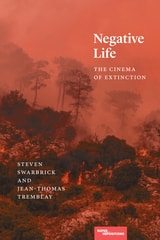
Negative Life
The Cinema of ExtinctionSteven Swarbrick and Jean-Thomas Tremblay
Northwestern University Press, 2024
How films help us understand the inevitable death of Earth and humanity
Negative Life: The Cinema of Extinction brings cinema studies, queer theory, and psychoanalysis into novel configuration around the concept of negative life, a sundering of human and nonhuman relations. Engaging a philosophical and cinematic corpus that rejects the pastoralism of “entanglement” or “enmeshment,” Steven Swarbrick and Jean-Thomas Tremblay counter ecocritical pieties and cut a new path for theory. They examine films by Julian Pölsler, Kelly Reichardt, Lee Isaac Chung, Mahesh Mathai, Paul Schrader, and others that exemplify the existential contradictions currently intensifying amid the sixth mass extinction. Each case study testifies formally and thematically to negative life as a structural condition of thought and film. Together, the cases reveal the unlivable dimension of life and art, where form, desire, and nonbelonging tarry with the future-oriented promise of ecostudies—where all that lives connects. Negative Life militates against this promise, showing that faith in connection is a dead end.

Negativity and Revolution
Adorno and Political ActivismEdited by John Holloway, Fernando Matamoros, and Sergio Tischler
Pluto Press, 2009
How can activists combat the political paralysis that characterises the anti-dialectical Marxism of Foucault, Derrida and Deleuze, without reverting to a dogmatic orthodoxy? This book explores solutions in the 'negative dialectics' of Theodor Adorno.
The poststructuralist shift from dialectics to 'difference' has been so popular that it becomes difficult to create meaningful revolutionary responses to neoliberalism. The contributors to this volume come from within the anti-capitalist movement, and close to the concerns expressed in Negri and Hardt's Empire and Multitude. However, they argue forcefully and persuasively for a return to dialectics so a real-world, radical challenge to the current order can be constructed.
This is a passionate call to arms for the anti-capitalist movement. It should be read by all engaged activists and students of political and critical theory.

Neither Nature nor Grace
Aquinas, Barth, and Garrigou-Lagrance on the Epistemic Use of God's EffectsT. Adam Van Wart
Catholic University of America Press, 2021
Neo-Aristotelianism and the Medieval Renaissance
On Aquinas, Ockham, and EckhartReiner Schürmann
Diaphanes, 2020
Neosentience
The Benevolence EngineBill Seaman and Otto E. Rossler
Intellect Books, 2011
Coined by artist and media researcher Bill Seaman, “neosentience” describes a new branch of scientific inquiry related to artificial intelligence. This volume explores the groundbreaking work of Seaman and theoretical physicist Otto E. Rossler in exploring the potential of an intelligent robotic entity possessed of a form of sentience that ever more closely resembles that of a human being. Individual chapters approach the concept from a range of disciplines, including psychology, neuroscience, linguistics, and the arts. Neosentience is a burgeoning area of interest, and this book encourages readers to reflect on how we experience and interpret the world, how memory works, and what it is to be human.
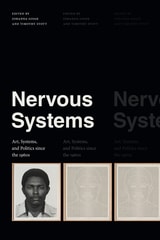
Nervous Systems
Art, Systems, and Politics since the 1960sJohanna Gosse and Timothy Stott, editors
Duke University Press, 2021
Contributors. Cristina Albu, Amanda Boetzkes, Brianne Cohen, Kris Cohen, Jaimey Hamilton Faris, Christine Filippone, Johanna Gosse, Francis Halsall, Judith Rodenbeck, Dawna Schuld, Luke Skrebowski, Timothy Stott, John Tyson
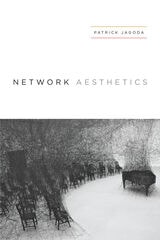
Network Aesthetics
Patrick Jagoda
University of Chicago Press, 2016
Each chapter considers how popular media and artistic forms make sense of decentralized network metaphors and infrastructures. Patrick Jagoda first examines narratives from the 1990s and 2000s, including the novel Underworld, the film Syriana, and the television series The Wire, all of which play with network forms to promote reflection on domestic crisis and imperial decline in contemporary America. Jagoda then looks at digital media that are interactive, nonlinear, and dependent on connected audiences to show how recent approaches, such as those in the videogame Journey, open up space for participatory and improvisational thought.
Contributing to fields as diverse as literary criticism, digital studies, media theory, and American studies, Network Aesthetics brilliantly demonstrates that, in today’s world, networks are something that can not only be known, but also felt, inhabited, and, crucially, transformed.
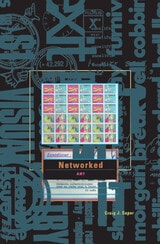
Networked Art
Craig J. Saper
University of Minnesota Press, 2001
Outlines an exciting new approach to this confluence of art, media, and poetry.
The experimental art and poetry of the last half of the twentieth century offers a glimpse of the emerging networked culture that electronic devices will make omnipresent. Craig J. Saper demarcates this new genre of networked art, which uses the trappings of bureaucratic systems—money, logos, corporate names, stamps—to create intimate situations among the participants.
In Saper’s analysis, the pleasures that these aesthetic situations afford include shared special knowledge or new language among small groups of participants. Functioning as artworks in themselves, these temporary institutional structures—networks, publications, and collective works—give rise to a gift-exchange community as an alternative economy and social system. Saper explains how this genre developed from post-World War II conceptual art, including periodicals as artworks in themselves; lettrist, concrete, and process poetry; Bauhaus versus COBRA; Fluxus publications, kits, and machines; mail art and on-sendings. The encyclopedic scope of the book includes discussions of artists from J. Beuys to J. S. G. Boggs, and Bauhaus’s Max Bill to Anna Freud Banana. Networked Art is an essential guide to the digital artists and networks of the emerging future.
Neuropolitics
Thinking, Culture, SpeedWilliam E. Connolly
University of Minnesota Press, 2002
Neurotechnology and the End of Finitude
Michael Haworth
University of Minnesota Press, 2018
A bold philosophical investigation into technology and the limits of the human
A daring, original work of philosophical speculation, Neurotechnology and the End of Finitude mounts a sustained investigation into the possibility that human beings may technologically overcome the transcendental limits of possible experience and envisages what such a transition would look like. Focusing on emergent neurotechnologies, which establish a direct channel of communication between brain and machine, Michael Haworth argues that such technologies intervene at the border between interiority and exteriority, offering the promise of immediacy and the possibility of the mind directly affecting the outside world or even other minds.
Through detailed, targeted readings of Kant, Freud, Heidegger, Croce, Jung, and Derrida, Haworth explores the effect of this transformation on human creativity and our relationships with others. He pursues these questions across four distinct but interrelated spheres: the act of artistic creation and the potential for a technologically enabled coincidence of idea and object; the possibility of humanity achieving the infinite creativity that Kant attributed only to God; the relationship between the psyche and the external world in Freudian psychoanalysis and Jungian analytical psychology; and the viability and impact of techno-telepathic communication.
Addressing readers interested in contemporary continental philosophy and philosophy of technology, media and communications, and science and technology studies, Neurotechnology and the End of Finitude critically envisions a plausible posthuman future.