Results by title
4743 books match the query 'Religion' and 69 start with n
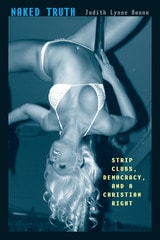
Naked Truth
Strip Clubs, Democracy, and a Christian RightBy Judith Lynne Hanna
University of Texas Press, 2012
Across America, strip clubs have come under attack by a politically aggressive segment of the Christian Right. Using plausible-sounding but factually untrue arguments about the harmful effects of strip clubs on their communities, the Christian Right has stoked public outrage and incited local and state governments to impose onerous restrictions on the clubs with the intent of dismantling the exotic dance industry. But an even larger agenda is at work, according to Judith Lynne Hanna. In Naked Truth, she builds a convincing case that the attack on exotic dance is part of the activist Christian Right’s “grand design” to supplant constitutional democracy in America with a Bible-based theocracy.
Hanna takes readers onstage, backstage, and into the community and courts to reveal the conflicts, charges, and realities that are playing out at the intersection of erotic fantasy, religion, politics, and law. She explains why exotic dance is a legitimate form of artistic communication and debunks the many myths and untruths that the Christian Right uses to fight strip clubs. Hanna also demonstrates that while the fight happens at the local level, it is part of a national campaign to regulate sexuality and punish those who do not adhere to Scripture-based moral values. Ultimately, she argues, the naked truth is that the separation of church and state is under siege and our civil liberties—free speech, women’s rights, and free enterprise—are at stake.
Naming Evil, Judging Evil
Edited by Ruth W. Grant
University of Chicago Press, 2006
Is it more dangerous to call something evil or not to? This fundamental question deeply divides those who fear that the term oversimplifies grave problems and those who worry that, to effectively address such issues as terrorism and genocide, we must first acknowledge them as evil. Recognizing that the way we approach this dilemma can significantly affect both the harm we suffer and the suffering we inflict, a distinguished group of contributors engages in the debate with this series of timely and original essays.
Drawing on Western conceptions of evil from the Middle Ages to the present, these pieces demonstrate that, while it may not be possible to definitively settle moral questions, we are still able—and in fact are obligated—to make moral arguments and judgments. Using a wide variety of approaches, the authors raise tough questions: Why is so much evil perpetrated in the name of good? Could evil ever be eradicated? How can liberal democratic politics help us strike a balance between the need to pass judgment and the need to remain tolerant? Their insightful answers exemplify how the sometimes rarefied worlds of political theory, philosophy, theology, and history can illuminate pressing contemporary concerns.
Naming Our Sins
How Recognizing the Seven Deadly Vices can Renew the Sacrament of ReconciliationJana Bennett
Catholic University of America Press, 2019
Narrative Mode and Theological Claim in Johannine Literature
Essays in Honor of Gail R. O’DayLynn R. Huber
SBL Press, 2021
Exegesis that bears fruit both for the academy and the church
In this collection of essays and sermons on the Gospel of John and Revelation, friends, colleagues, and former students of Gail R. O’Day explore and extend the possibilities raised by her work in her groundbreaking study Revelation in the Fourth Gospel. The essays engage with both historical contextualization and literary analysis to identify the rhetorical features that ancient readers might have apprehended, while the sermons explore how the literary shape of the text can inform preaching through attention to the narrative modes of the text. Contributions from Yoshimi Azuma, Teresa Fry Brown, Patrick Gray, Lynn R. Huber, Susan E. Hylen, Karoline M. Lewis, Thomas G. Long, Veronice Miles, Vernon K. Robbins, Gilberto A. Ruiz, Ted A. Smith, and William M. Wright IV thematize the importance of narrative approaches and the diverse ways they can be employed.
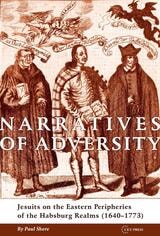
Narratives of Adversity
Jesuits on the Eastern Peripheries of the Habsburg Realms (1640–1773)Paul J. Shore
Central European University Press, 2012
Nation and World, Church and God
The Legacy of Garry WillsEdited by Kenneth L. Vaux and Melanie Baffes
Northwestern University Press, 2014
Garry Wills is the polymathic public intellectual bemoaned as missing from American letters. A professor emeritus at Northwestern University, he has built upon his early studies in classics and patristics, while bringing his considerable intellect to bear on American culture, politics, and religion, notably through provocative articles and books on wars, past and present presidents, and the Catholic Church Wills has distinguished himself in the crowded field of Civil War history; fearlessly taken on the legacies of Richard Nixon and Ronald Reagan, among other presidents; and offered a critical voice in many fraught ethical discussions, especially in the areas of war and peace.
Nation and World, Church and God gathers original critical reflections by leading writers and scholars on Garry Wills’s life work. Organized around the themes of “Classics,” “Civil War,” “War and Peace,” and “Theology, Church, and the Arts,” the book reflects the cultural acumen, fine-grained political analysis, ethical candor, and theological wisdom of one of America’s most prolific writers.
Nationalizing a Borderland
War, Ethnicity, and Anti-Jewish Violence in East Galicia, 1914–1920Alexander Victor Prusin
University of Alabama Press, 2005
Nationalizing a Borderland enriches understanding of ethnic conflict by examining the factors in the Austro-Hungarian province of Galicia between 1914 and 1920 that led to the rise of xenophobic nationalism and to the ethnocide of World War II. From Russian, Polish, Ukrainian, and Austrian archival sources, Prusin argues that while the violence inflicted upon Jews during that period may at first seem irrational and indiscriminate, a closer examination reveals that it was generated by traditional antisemitism and by the security concerns of the Russian and Polish militaries in the front zone. This violence, Prusin contends, served as a means of reshaping the socio-economic and political space of the province by diminishing Jewish cultural and economic influence.
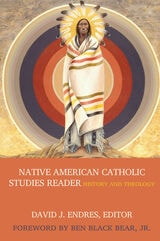
Native American Catholic Studies Reader
History and TheologyDavid J. Endres
Catholic University of America Press, 2022
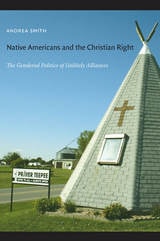
Native Americans and the Christian Right
The Gendered Politics of Unlikely AlliancesAndrea Smith
Duke University Press, 2008
Smith draws on archival research, interviews, and her own participation in Native struggles and Christian Right conferences and events. She considers American Indian activism within the Promise Keepers and new Charismatic movements. She also explores specific opportunities for building unlikely alliances. For instance, while evangelicals’ understanding of the relationship between the Bible and the state may lead to reactionary positions on issues including homosexuality, civil rights, and abortion, it also supports a relatively progressive position on prison reform. In terms of evangelical and Native American feminisms, she reveals antiviolence organizing to be a galvanizing force within both communities, discusses theories of coalition politics among both evangelical and indigenous women, and considers Native women’s visions of sovereignty and nationhood. Smith concludes with a reflection on the implications of her research for the field of Native American studies.
Native Evangelism in Central Mexico
By Hugo G. Nutini and Jean F. Nutini
University of Texas Press, 2014
Evangelical Christianity is Mexico’s fastest-growing religious movement, with about ten million adherents today. Most belong to Protestant denominations introduced from the United States (e.g., Jehovah’s Witnesses, Seventh-day Adventists), but perhaps as many as 800,000 are members of homegrown, “native” evangelical sects. These native Mexican sects share much with the American denominations of which they are spinoffs. For instance, they are Trinitarian, Anabaptist, and Millenarian; they emphasize a personal relationship with God, totally rejecting intermediation by saints; and they insist that they are the only true Christians. Beyond that, each native sect has its distinctive characteristics.
This book focuses on two sharply contrastive native evangelical sects in Central Mexico: Amistad y Vida (Friendship and Life) and La Luz del Mundo (The Light of the World). The former, founded in 1982, now has perhaps 120,000 adherents nationwide. It is nonhierarchical, extremely egalitarian, and has no dogmatic directives. It is a cheerful religion that emphasizes charity, community service, and personal kindness as the path to salvation. It attracts new members, mainly from the urban middle class, through personal example rather than proselytizing. La Luz del Mundo, founded in 1926, now has about 350,000 members in Mexico and perhaps one million in the hemisphere. It is hierarchically organized and demands total devotion to the sect’s founder and his son, who are seen as direct links to Jesus on Earth. It is a proselytizing sect that recruits mainly among the urban poor by providing economic benefits within the congregations, but does no community service as such.
Based on ten years of fieldwork (1996–2006) and contextualized by nearly fifty years of anthropological study in the region, Native Evangelism in Central Mexico presents the first ethnography of Mexico’s native evangelical congregations.
Nature Religion in America
From the Algonkian Indians to the New AgeCatherine L. Albanese
University of Chicago Press, 1990
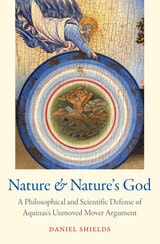
Nature and Nature's God
A Philosophical and Scientific Defense of Aquinas' Unmoved Mover ArgumentDaniel Shields
Catholic University of America Press, 2023
Nature as Guide
Wittgenstein and the Renewal of Moral TheologyDavid Goodill, OP
Catholic University of America Press, 2022
Nature's Prophet
Alfred Russel Wallace and His Evolution from Natural Selection to Natural TheologyMichael A. Flannery
University of Alabama Press, 2018
An astute study of Alfred Russel Wallace’s path to natural theology.
A spiritualist, libertarian socialist, women’s rights advocate, and critic of Victorian social convention, Alfred Russel Wallace was in every sense a rebel who challenged the emergent scientific certainties of Victorian England by arguing for a natural world imbued with purpose and spiritual significance. Nature’s Prophet: Alfred Russel Wallace and His Evolution from Natural Selection to Natural Theology is a critical reassessment of Wallace’s path to natural theology and counters the dismissive narrative that Wallace’s theistic and sociopolitical positions are not to be taken seriously in the history and philosophy of science.
Author Michael A. Flannery provides a cogent and lucid account of a crucial—and often underappreciated—element of Wallace’s evolutionary worldview. As co-discoverer, with Charles Darwin, of the theory of natural selection, Wallace willingly took a backseat to the well-bred, better known scientist. Whereas Darwin held fast to his first published scientific explanations for the development of life on earth, Wallace continued to modify his thinking, refining his argument toward a more controversial metaphysical view which placed him within the highly charged intersection of biology and religion.
Despite considerable research into the naturalist’s life and work, Wallace’s own evolution from natural selection to natural theology has been largely unexplored; yet, as Flannery persuasively shows, it is readily demonstrated in his writings from 1843 until his death in 1913. Nature’s Prophet provides a detailed investigation of Wallace’s ideas, showing how, although he independently discovered the mechanism of natural selection, he at the same time came to hold a very different view of evolution from Darwin.
Ultimately, Flannery shows, Wallace’s reconsideration of the argument for design yields a more nuanced version of creative and purposeful theistic evolution and represents one of the most innovative contributions of its kind in the Victorian and Edwardian eras, profoundly influencing a later generation of scientists and intellectuals.
Nauvoo Polygamy
"…but we called it celestial marriage"George D. Smith
Signature Books, 2011
“Nauvoo Polygamy is s a thorough investigation of sexual politics in the City of the Saints, the 1840s Mormon headquarters in the U.S. State of Illinois. Written with precision, clarity, and ease, it is a major contribution to Mormon history, groundbreaking in identifying the other polygamists who followed the lead of their prophet, Joseph Smith, in taking multiple partners.” —Klaus J. Hansen, Professor Emeritus of History, Queen’s University, Ontario
“If for no other reason, the inclusion of chapter 6 makes this book worth its price. The chapter quotes liberally from those like Elizabeth Ann Whitney and Bathsheba Smith who accepted polygamy rather easily, those like Jane Richards who accepted it only reluctantly, and those like Patty Sessions who found plural marriage almost unbearable. A bonus is chapter 9 which provides a concise historical overview of polygamous societies in Reformation Europe, touches on similar societies in America, and offers an extended discussion of Orson Pratt’s 1852 defense of plural marriage.” —Thomas G. Alexander, Professor Emeritus of History, Brigham Young University
“George Smith shows how many of the prophet’s followers embraced plural marriage during a period when the LDS Church was emphatically denying the practice … [and he tells this in] a lucid writing style.” —Daniel Walker Howe, Pulitzer Prize winning author of What Hath God Wrought: The Transformation of America, 1815-1848.
“An extremely important contribution to the history of polygamy … that allows us to see how Joseph Smith’s marriages fit into the context of his daily life.” —Todd M. Compton, author of In Sacred loneliness: The Plural Wives of Joseph Smith
Navigating the Journey
The Essential Guide to the Jewish Life CycleRabbi Peter Knobel, PhD
Central Conference of American Rabbis, 2018
Naïve Readings
Reveilles Political and PhilosophicRalph Lerner
University of Chicago Press, 2016
Lerner analyzes an astonishing diversity of writers, including Francis Bacon, Benjamin Franklin, Edward Gibbon, Judah Halevi, Thomas Jefferson, Abraham Lincoln, Moses Maimonides, and Alexis de Tocqueville. He shows that by reading their words slowly and naïvely, with wide-open eyes and special attention for moments of writing that become self-conscious, impassioned, or idiosyncratic, we can begin to see a pattern that illuminates a thinker’s intent, new messages purposively executed through indirect means. Through these experimental readings, Lerner shows, we can see a deep commonality across writers from disparate times and situations, one that finds them artfully challenging others to reject passivity and fatalism and start thinking afresh.
Nearest East
American Millenialism and Mission to the Middle EastAuthored by Hans-Lukas Kieser
Temple University Press, 2012
Long before oil interests shaped American interaction with the Middle East, the U.S. had a strong influence on the late Ottoman and post-Ottoman region. Covering the period from approximately 1800 to the 1970s, Hans-Lukas Kieser’s compelling Nearest East tells the story of this intimate, identity-building relationship between the U.S. and the Near East.
Kieser chronicles how American missionaries worked to implement their belief in Biblical millennialism, enlightened modernity, and a modern Zion-Israel. Millennialism was part of an American identity that constituted itself religiously in the interaction with and the representation of the “cradle of Zion.” As such, "going Near East" was—at least to American evangelical Protestants—in some ways more important than colonizing the American West. However, many Ottoman Muslims felt threatened by the American missionaries perceiving their successful institutions as an estranging challenge from the outside.
Measuring the long twisted road from the missionary Zion-builders of the early 19th century to the privileged US-Israeli partnership in the late 20th century, Nearest East looks carefully on both sides of the relationship. Kieser uses a wide range of Ottoman, Turkish, French, German and other sources, unfamiliar to most Anglophone readers, to tell this story that will appeal to historians of all stripes.

Negative Certainties
Jean-Luc Marion
University of Chicago Press, 2015
In Negative Certainties, renowned philosopher Jean-Luc Marion challenges some of the most fundamental assumptions we have developed about knowledge: that it is categorical, predicative, and positive. Following Descartes, Kant, and Heidegger, he looks toward our finitude and the limits of our reason. He asks an astonishingly simple—but profoundly provocative—question in order to open up an entirely new way of thinking about knowledge: Isn’t our uncertainty, our finitude, and rational limitations, one of the few things we can be certain about?
Marion shows how the assumption of knowledge as positive demands a reductive epistemology that disregards immeasurable or disorderly phenomena. He shows that we have experiences every day that have no identifiable causes or predictable reasons and that these constitute a very real knowledge—a knowledge of the limits of what can be known. Establishing this “negative certainty,” Marion applies it to four aporias, or issues of certain uncertainty: the definition of man; the nature of God; the unconditionality of the gift; and the unpredictability of events. Translated for the first time into English, Negative Certainties is an invigorating work of epistemological inquiry that will take a central place in Marion’s oeuvre.
Negotiating Marian Apparitions
The Politics of Religion in Transcarpathian UkraineAgnieszka Halemba
Central European University Press, 2015
Negotiating Power in Ezra-Nehemiah
Donna Laird
SBL Press, 2016
Donna Laird examines Ezra and Nehemiah in the light of modern sociological theorist Pierre Bourdieu. How did this context of hardship, exile, and return change what Ezra and Nehemiah viewed as important? How did they define who was a part of their community, and who was an outsider? It goes on to explore how the books engaged readers at the time: how it addressed their changing circumstances, and how different groups gained and used social power, or the ability to influence society.
Features
- Chapters dedicated to penitential prayer and to the role of ritual
- Illustrations of how the writers used past traditions to justify dividing those who belong, the repatriates, from the local population
- Demonstration of how shifting strategies of discourse in the various sections of Ezra-Nehemiah reflect the changing political and social contexts for the community and the authors
Negotiating the Disabled Body
Representations of Disability in Early Christian TextsAnna Rebecca Solevåg
SBL Press, 2018
An intersectional study of New Testament and noncanonical literature
Anna Rebecca Solevåg explores how nonnormative bodies are presented in early Christian literature through the lens of disability studies. In a number of case studies, Solevåg shows how early Christians struggled to come to terms with issues relating to body, health, and dis/ability in the gospel stories, apocryphal narratives, Pauline letters, and patristic expositions. Solevåg uses the concepts of narrative prosthesis, gaze and stare, stigma, monster theory, and crip theory to examine early Christian material to reveal the multiple, polyphonous, contradictory ways in which nonnormative bodies appear.
Features:
- Case studies that reveal a variety of understandings, attitudes, medical frameworks, and taxonomies for how disabled bodies were interpreted
- A methodology that uses disability as an analytical tool that contributes insights about cultural categories, ideas of otherness, and social groups’ access to or lack of power
- An intersectional perspective drawing on feminist, gender, queer, race, class, and postcolonial studies
Neighboring Faiths
Christianity, Islam, and Judaism in the Middle Ages and TodayDavid Nirenberg
University of Chicago Press, 2014
There have been countless scripture-based studies of the three “religions of the book,” but Nirenberg goes beyond those to pay close attention to how the three religious neighbors loved, tolerated, massacred, and expelled each other—all in the name of God—in periods and places both long ago and far away. Nirenberg argues that the three religions need to be studied in terms of how each affected the development of the others over time, their proximity of religious and philosophical thought as well as their overlapping geographies, and how the three “neighbors” define—and continue to define—themselves and their place in terms of one another. From dangerous attractions leading to interfaith marriage; to interreligious conflicts leading to segregation, violence, and sometimes extermination; to strategies for bridging the interfaith gap through language, vocabulary, and poetry, Nirenberg aims to understand the intertwined past of the three faiths as a way for their heirs to produce the future—together.
Neither Nature nor Grace
Aquinas, Barth, and Garrigou-Lagrance on the Epistemic Use of God's EffectsT. Adam Van Wart
Catholic University of America Press, 2021
Neo-Babylonian Trial Records
Shalom E. Holtz
SBL Press, 2014
New translations of fifty transliterated texts for research and classroom use
This collection of sixth-century B.C.E. Mesopotamian texts provides a close-up, often dramatic, view of ancient courtroom encounters shedding light on Neo-Babylonian legal culture and daily life. In addition to the legal texts, Holtz provides an introduction to Neo-Babylonian social history, archival records, and legal materials. This is an essential resource for scholars interested in the history of law.
Features
- Fifty new English translations
- Transliterations for use in advanced Akkadian courses
- Background essays perfect for courses dealing with ancient Near Eastern history and law
- Explanatory essays preceding each text and its translation
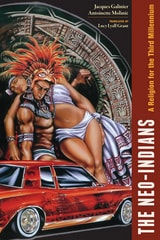
Neo-Indians
A Religion for the Third MilleniumJacques Galinier
University Press of Colorado, 2013
There is no full-time neo-Indian. Both indigenous and non-indigenous practitioners assume Indian identities only when deemed spiritually significant. In their daily lives, they are average members of modern society, dressing in Western clothing, working at middle-class jobs, and retaining their traditional religious identities. As a result of this part-time status the neo-Indians are often overlooked as a subject of study, making this book the first anthropological analysis of the movement.
Galinier and Molinié present and analyze four decades of ethnographic research focusing on Mexico and Peru, the two major areas of the movement’s genesis. They examine the use of public space, describe the neo-Indian ceremonies, provide analysis of the ceremonies’ symbolism, and explore the close relationship between the neo-Indian religion and tourism. The Neo-Indians will be of great interest to ethnographers, anthropologists, and scholars of Latin American history, religion, and cultural studies.
Neuromatic
Or, A Particular History of Religion and the BrainJohn Lardas Modern
University of Chicago Press, 2021
In Neuromatic, religious studies scholar John Lardas Modern offers a sprawling examination of the history of the cognitive revolution and current attempts to locate all that is human in the brain, including spirituality itself. Neuromatic is a wildly original take on the entangled histories of science and religion that lie behind our brain-laden present: from eighteenth-century revivals to the origins of neurology and mystic visions of mental piety in the nineteenth century; from cyberneticians, Scientologists, and parapsychologists in the twentieth century to contemporary claims to have discovered the neural correlates of religion.
What Modern reveals via this grand tour is that our ostensibly secular turn to the brain is bound up at every turn with the religion it discounts, ignores, or actively dismisses. In foregrounding the myths, ritual schemes, and cosmic concerns that have accompanied idealizations of neural networks and inquiries into their structure, Neuromatic takes the reader on a dazzling and disturbing ride through the history of our strange subservience to the brain.
Neuroscience, Psychology, and Religion
Illusions, Delusions, and Realities about Human NatureMalcolm Jeeves
Templeton Press, 2009
Neuroscience, Psychology, and Religion is the second title published in the new Templeton Science and Religion Series. In this volume, Malcolm Jeeves and Warren S. Brown provide an overview of the relationship between neuroscience, psychology, and religion that is academically sophisticated, yet accessible to the general reader.
The authors introduce key terms; thoroughly chart the histories of both neuroscience and psychology, with a particular focus on how these disciplines have interfaced religion through the ages; and explore contemporary approaches to both fields, reviewing how current science/religion controversies are playing out today. Throughout, they cover issues like consciousness, morality, concepts of the soul, and theories of mind. Their examination of topics like brain imaging research, evolutionary psychology, and primate studies show how recent advances in these areas can blend harmoniously with religious belief, since they offer much to our understanding of humanity's place in the world. Jeeves and Brown conclude their comprehensive and inclusive survey by providing an interdisciplinary model for shaping the ongoing dialogue.
Sure to be of interest to both academics and curious intellectuals, Neuroscience, Psychology, and Religion addresses important age-old questions and demonstrates how modern scientific techniques can provide a much more nuanced range of potential answers to those questions.
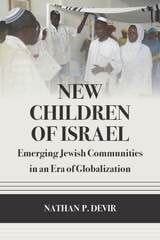
New Children of Israel
Emerging Jewish Communities in an Era of GlobalizationNathan P. Devir
University of Utah Press, 2017
This comparative ethnographic study, the first of its kind, presents in-depth analyses of the backgrounds, motivations, and sociohistorical contexts of emerging Jewish communities in Cameroon, Ghana, India, and other postcolonial locales. It investigates the ramifications of these new movements for the larger Judeo-Christian world, particularly with regard to issues of multiculturalism, immigration, race relations, and messianic expectations concerning the prophecy of Isaiah 11:12, according to which God will “assemble the dispersed of Israel, and gather together the scattered of Judah from the four corners of the earth.”

New Considerations of the Doctrinal Differences Between Catholics and Protestants
A Defense of My Symbolism Against the Objections of Ferdinad Christian Baur in TübingenJohann Adam Möhler
Catholic University of America Press, 2027
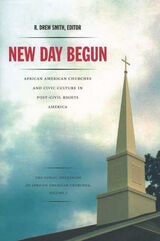
New Day Begun
African American Churches and Civic Culture in Post-Civil Rights AmericaR. Drew Smith, ed.
Duke University Press, 2003
This collection of essays analyzes the results of an unprecedented survey of nearly 2,000 African American churches across the country conducted by The Public Influences of African-American Churches Project, which is based at Morehouse College in Atlanta. These essays—by political scientists, theologians, ethicists, and others—draw on the survey findings to analyze the social, historical, and institutional contexts of black church activism and to consider the theological and moral imperatives that have shaped black church approaches to civic life—including black civil religion and womanist and afrocentric critiques. They also look at a host of faith-based initiatives addressing economic development and the provision of social services. New Day Begun presents necessary new interpretations of how black churches have changed—and been changed by—contemporary American political culture.
Contributors. Lewis Baldwin, Allison Calhoun-Brown, David D. Daniels III, Walter Earl Fluker, C.R.D. Halisi, David Howard-Pitney, Michael Leo Owens, Samuel Roberts, David Ryden, Corwin Smidt, R. Drew Smith
New Documents Illustrating Early Christianity 11A
Texts from EphesusJames R. Harrison
SBL Press, 2024
New Documents Illustrating Early Christianity 11B
Essays on EphesusJames R. Harrison
SBL Press, 2025
New Each Day
A Spiritual Practice for Reading PsalmsRabbi Debra J. Robbins
Central Conference of American Rabbis, 2024
Every day of the year, Jewish liturgy includes the Shir Shel Yom, a psalm recited to mark the day of the week. New Each Day by Rabbi Debra J. Robbins breathes new life into this ancient practice, inviting us to engage with psalms in a fresh, inspiring way. Daily “Reflections for Focus” offer unique insights on each psalm, with a structure for meditation and writing that encourages the reader to develop their own personal routine. Reflections for each month, based on the psalm for Rosh Chodesh, provide a full year of spiritual practice. Just as Rabbi Robbins did for the High Holy Day season in Opening Your Heart with Psalm 27, New Each Day guides us along the journey of the year with intention and meaning.
New Inscriptions and Seals Relating to the Biblical World
Meir Lubetski
SBL Press, 2012
New Jewish Identities
András Kovács
Central European University Press, 2003
New Narratives for Old
The Historical Method of Reading Early Christian Theology: Essays in Honor of Michel Rene BarnesAnthony Briggman
Catholic University of America Press, 2022
New Reform Responsa - PDF Electronic Version
Rabbi Solomon B. Freehof
Central Conference of American Rabbis, 1980
Published originally in 1980, this volume of Responsa deals with such questions as kidney transplants, the role of Gentiles in synagogue services, holiday observance, burying Gentiles in Jewish cemeteries, dealing with aging parents, and other questions related to the realities of Jewish life.
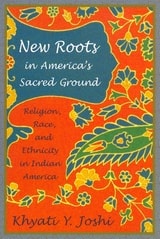
New Roots in America's Sacred Ground
Religion, Race, and Ethnicity in Indian AmericaJoshi, Khyati Y
Rutgers University Press, 2006
In this compelling look at second-generation Indian Americans, Khyati Y. Joshi draws on case studies and interviews with forty-one second-generation Indian Americans, analyzing their experiences involving religion, race, and ethnicity from elementary school to adulthood. As she maps the crossroads they encounter as they navigate between their homes and the wider American milieu, Joshi shows how their identities have developed differently from their parents’ and their non-Indian peers’ and how religion often exerted a dramatic effect.
The experiences of Joshi’s research participants reveal how race and religion interact, intersect, and affect each other in a society where Christianity and whiteness are the norm. Joshi shows how religion is racialized for Indian Americans and offers important insights in the wake of 9/11 and the backlash against Americans who look Middle Eastern and South Asian.
Through her candid insights into the internal conflicts contemporary Indian Americans face and the religious and racial discrimination they encounter, Joshi provides a timely window into the ways that race, religion, and ethnicity interact in day-to-day life.
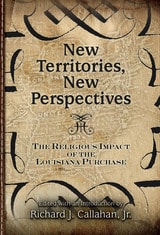
New Territories, New Perspectives
The Religious Impact of the Louisiana PurchaseEdited & Intro by Richard J. Callahan, Jr.
University of Missouri Press, 2008
With the doubling of America’s territory that came with the Louisiana Purchase, American culture was remapped in the bargain. The region’s indigenous inhabitants had already been joined by Catholic missionaries, both French and Spanish, along with Africans brought as slaves to the Caribbean islands and North America; now all were met by a predominantly Protestant culture rushing westward.
New Territories, New Perspectives marks the first study to take the Louisiana Purchase as the focal point for considering the development of American religious history. The process of transforming the Louisiana Territory into U.S. territory meant shaping the space to conform to American cultural and religious identity, and this volume investigates continuities, disruptions, and changes relating to religion in this context.
The contributors ask what might happen to our understanding of religion in America if we look at it through the lens of this annexation. Initial chapters offer fresh perspectives on the new territory by those who settled it, primarily easterners, exploring such topics as the built environment of the region as seen in such settings as frontier camp meetings and communitarian societies, ideas of destiny amid the clash of cultural groups, and religiously significant aspects of African American life.
Subsequent essays take up the religious history of the region from the perspective of New Orleans and the Caribbean. They include an exploration of the roots of Pentecostalism in the mix of black and white cultures in the Mississippi Delta, the “vodou” link between New Orleans and Haiti, and the African-Creole performances of Mardi Gras Indians.
Together, these essays invite readers to consider intersecting histories that are too often neglected in our understanding of America’s religious development, particularly issues that stand apart from traditional histories of religion in the Midwest. By exploring the unexpected, they also promote different ways of thinking about American religious history as a whole.
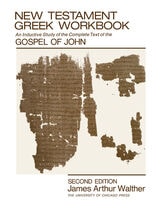
New Testament Greek Workbook
An Inductive Study of the Complete Text of the Gospel of JohnJames Arthur Walther
University of Chicago Press, 1981
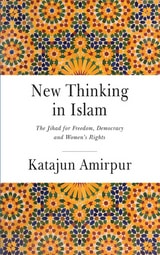
New Thinking in Islam
The Jihad for Democracy, Freedom and Women’s RightsKatajun Amirpur
Gingko, 2015
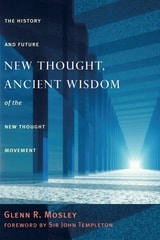
New Thought, Ancient Wisdom
The History and Future of the New Thought MovementGlenn Mosley
Templeton Press, 2006
In this book, Glenn R. Mosley chronicles the history of the movement, including biographical sketches and the philosophies of pioneers and influential leaders linked to the movement's development and growth. These include Charles and Myrtle Fillmore, the founders of Unity; Ernest Holmes, founder of the Science of Mind; Mary Baker Eddy, founder of the Church of Christ Science; Ralph Waldo Trine, philosopher, mystic, teacher, and early mentor of New Thought; Joel Goldsmith, founder of The Infinite Way, among others.
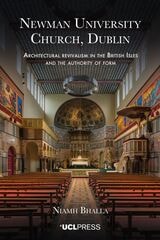
Newman University Church, Dublin
Architectural Revivalism in the British Isles and the Authority of FormNiamh Bhalla
University College London, 2024
Newman University Church, Dublin charts the first ever analysis of University Church’s significance within the history of Victorian revivalist architecture. Author Niamh Bhalla explores the relationship between the church’s context as the first Catholic university in Ireland and the ambiguity of its “early Christian” style, providing an effective lens to understand the architectural revivalism of the nineteenth century, particularly basilican and Byzantine revivalist architectures in the British Isles.
Newman, Canon Law and Development
Quarrying Granite Rocks with RazorsDavid P. Long
Catholic University of America Press, 2024

Nietzsche and the Shadow of God
Didier Franck; Translated from the French by Bettina Bergo and Philippe Farah
Northwestern University Press, 2011
Bergo and Farah’s clear translation introduces this work to an English-speaking audience for the first time.
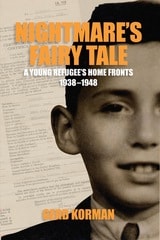
Nightmare's Fairy Tale
A Young Refugee's Home Fronts, 1938–1948Gerd Korman
University of Wisconsin Press, 2007
Fleeing the Nazis in the months before World War II, the Korman family scattered from a Polish refugee camp with the hope of reuniting in America. The father sailed to Cuba on the ill-fated St. Louis; the mother left for the United States after sending her two sons on a Kindertransport. One of the sons was Gerd Korman, whose memoir follows his own path—from the family’s deportation from Hamburg, through his time with an Anglican family in rural England, to the family’s reunited life in New York City. His memoir plumbs the depths of twentieth-century history to rescue the remarkable life story of one of its survivors.
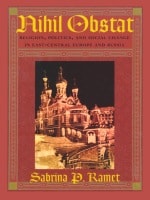
Nihil Obstat
Religion, Politics, and Social Change in East-Central Europe and RussiaSabrina P. Ramet
Duke University Press, 1998
Based on interview research in Germany, Austria, Slovenia, Croatia, Bosnia, Serbia, and Macedonia, and on materials published in German, Italian, Serbo-Croatian, Polish, Czech, Slovak, Russian, and English, Ramet paints a clear picture of the political and religious fragility of former communist states, which are experiencing some aspects of freedom and choice for the first time. With its comprehensive discussion of the largest religious institutions in the area, especially the Catholic and Orthodox Churches, and its extensive survey of nontraditional religious associations that have become active in the region since 1989, this study makes a distinct contribution to growing discussions about the rise of fundamentalism and the inner dilemmas of modernity. With its depth of information and thoughtful exploration of cultural traditions, Nihil Obstat uniquely presents the ramifications and complexities of European religion in a postcommunist world.
Nimble Believing
Dickinson and the UnknownJames McIntosh
University of Michigan Press, 2004
--Harold Bloom, Genius
" . . . a truly literary study in the largest, most humane, sense. Instead of subjecting poems to the distortions of theory, it brings biography, theology, psychology, and cultural history to bear on the intricacies of language, where all the issues of the poet's life and work converge, contend, and seek resolution."
--Albert Gelpi, American Literature
" . . . insightful readings of many of Dickinson's difficult poems and . . . a significant contribution to Dickinson studies."
---Choice
"McIntosh shows the power of Dickinson's religious quest in word, in verse, and in truth. He shows that she was much more than an ever-adolescent angry rebel trying to subvert the religious oppression of benighted Amherst neighbors."
---Emily Dickinson Journal
Nineteenth-Century Women’s Movements and the Bible
Angela Berlis
SBL Press, 2024
Nineteenth-Century Women’s Movements and the Bible examines politically motivated women’s movements in the nineteenth century, including the legal, cultural, and ecclesiastical contexts of women. Focusing on the period beginning with the French Revolution in 1789 through the end of World War I in 1918, contributors explore the many ways that women’s lives were limited in both the public and domestic spheres. Essays consider the social, political, biblical, and theological factors that resulted in a multinational raising of awareness and emancipation for women in the nineteenth century and the strengthening of their international networks. The contributors include Angela Berlis, Kristin Kobes Du Mez, Ute Gerhard, Christiana de Groot, Arnfriður Guðmundsdóttir, Izaak J. de Hulster, Elisabeth Joris, Christine Lienemann-Perrin, Amanda Russell-Jones, Claudia Setzer, Aud V. Tønnessen, Adriana Valerio, and Royce M. Victor.