Results by title
1927 books match the query 'Technology & Engineering' and 48 start with n
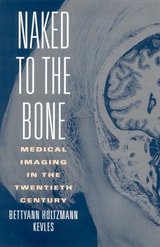
Naked to the Bone
Medical Imaging in the Twentieth CenturyKevles, Bettyann Holtzman
Rutgers University Press, 1996
X-rays, fluoroscopy, ultrasound, CT, MRI, and PET scans--medical imaging has become a familiar part of modern health care today. A century ago, however, the idea of looking inside the living body seemed absurd. Wilhelm Roentgen's X-ray image of his wife's shadowy hand--with her wedding band "floating" around a white bone--convinced doctors to rush the new tool into use for diagnosis and treatment.
By the 1920s, the technology was a commonplace wonder: army recruits had routinely lined up for chest X-rays during World War I, and children delighted in seeing the bones of their feet in the green glow of shoestore fluoroscopes. By the late 1960s, the computer and television were linked to produce medical images that were as startling as Roentgen's original X-rays. Computerized tomography (CT) and magnetic resonance imaging (MR) made it possible to picture soft tissues invisible to ordinary X-rays. Ultrasound allowed expectant parents to see their unborn children. Positron emission tomography (PET) enabled neuroscientists to map the brain.
In this lively history of medical imaging, the first to cover the full scope of the field from X-rays to MR-assistant surgery, Bettyann Kevles explores the consequences of these developments for medicine and society. Through lucid prose, vivid anecdotes, and more than seventy striking illustrations, she shows how medical imaging has transformed the practice of medicine--from pediatrics to dentistry, neurosurgery to geriatrics, gynecology to oncology.
Despite their formidable power to reveal the inner secrets of the body, no form of medical imaging can claim to be the product of a technological imperative. As Kevles points out, few of these costly inventions made it easily to the marketplace, and all are vulnerable to the changing economics of the health-care system. In the early years of X-rays, many doctors, technicians, and patients died from overexposure to the invisible radiation. Although we may still find delayed repercussions from these newer technologies, a different kind of danger may lie in our conviction that an early diagnosis is equivalent to a cure.
Beyond medicine, Kevles describes how X-rays and the newer technologies have become part of the texture of modern life and culture. They helped undermine Victorian sexual sensibilities, gave courts new forensic tools, provided plots for novels and movies, and offered artists from Picasso to Warhol new ways to depict the human form.
Naked to the Bone offers readers an unparalled picture of a key technology of the twentieth century.
Nano-CMOS and Post-CMOS Electronics
Circuits and design, Volume 2Saraju P. Mohanty
The Institution of Engineering and Technology, 2016
Nano-CMOS and Post-CMOS Electronics
Devices and modelling, Volume 1Saraju P. Mohanty
The Institution of Engineering and Technology, 2016
Nano-Electromagnetic Communication at Terahertz and Optical Frequencies
Principles and ApplicationsAkram Alomainy
The Institution of Engineering and Technology, 2020

Nano-Scaled Semiconductor Devices
Physics, modelling, characterisation, and societal impactEdmundo A. Gutiérrez-D
The Institution of Engineering and Technology, 2016
Nanobiosensors for Personalized and Onsite Biomedical Diagnosis
Pranjal Chandra
The Institution of Engineering and Technology, 2016
Nanogrids and Picogrids and their Integration with Electric Vehicles
Surajit Chattopadhyay
The Institution of Engineering and Technology, 2022
Nanotechnologies
Michel Wautelet
The Institution of Engineering and Technology, 2009
Narrative Podcasting in an Age of Obsession
Neil Verma
University of Michigan Press, 2024
Narrative Podcasting in an Age of Obsession is the first book to look back on this prodigious body of material and attempt to make sense of it from a structural, historical, and analytic point of view. Focusing on more than 350 podcasts and other audio works released between Serial and the COVID pandemic, the book explores why so many of these podcasts seem “obsessed with obsession,” why they focus not only on informing listeners but also dramatizing the labor that goes into it, and why fiction podcasts work so hard to prove they are a brand new form, even as they revive features of radio from decades gone by. This work also examines the industry's reckoning with its own implication in systemic racism, misogyny, and other forms of discrimination. Employing innovative new critical techniques for close listening—including pitch tracking software and spectrograms—Narrative Podcasting in an Age of Obsession makes a major contribution to podcast studies and media studies more broadly.
National Insecurity
U.S. Intelligence After the Cold Waredited by Craig Eisendrath, foreword by Tom Harkin
Temple University Press, 2000
In National Insecurity ten prominent experts describe, from an insider perspective, what went wrong with U.S. intelligence and what will be necessary to fix it. Drawing on their experience in government administration, research, and the foreign service, they propose a radical rethinking of the United States' intelligence needs in the post-Cold War world. In addition, they offer a coherent and unified plan for reform that can simultaneously protect U. S. security and uphold the values of our democratic system.
As we now know, even during the Cold War, when intelligence was seen as a matter of life and death, our system served us badly. It provided unreliable information, which led to a grossly inflated military budget, as it wreaked havoc around the world, supporting corrupt regimes, promoting the drug trade, and repeatedly violating foreign and domestic laws. Protected by a shroud of secrecy, it paid no price for its mistakes. Instead it grew larger and more insulated every year.
Taking into consideration our strategic interests abroad as well as the price of covert operations in dollars, in reliability, and in good will, every American taxpayer can be informed by and will want to read this book. National Insecurity is essential for readers interested in contemporary political issues, international relations, U.S. history, public policy issues, foreign policy, intelligence reform, and political science.
Natures of Colonial Change
Environmental Relations in the Making of the TranskeiJacob A. Tropp
Ohio University Press, 2006
In this groundbreaking study, Jacob A. Tropp explores the interconnections between negotiations over the environment and an emerging colonial relationship in a particular South African context—the Transkei—subsequently the largest of the notorious “homelands” under apartheid.
In the late nineteenth century, South Africa’s Cape Colony completed its incorporation of the area beyond the Kei River, known as the Transkei, and began transforming the region into a labor reserve. It simultaneously restructured popular access to local forests, reserving those resources for the benefit of the white settler economy. This placed new constraints on local Africans in accessing resources for agriculture, livestock management, hunting, building materials, fuel, medicine, and ritual practices.
Drawing from a diverse array of oral and written sources, Tropp reveals how bargaining over resources—between and among colonial officials, chiefs and headmen, and local African men and women—was interwoven with major changes in local political authority, gendered economic relations, and cultural practices as well as with intense struggles over the very meaning and scope of colonial rule itself.
Natures of Colonial Change sheds new light on the colonial era in the Transkei by looking at significant yet neglected dimensions of this history: how both “colonizing” and “colonized” groups negotiated environmental access and how such negotiations helped shape the broader making and meaning of life in the new colonial order.
Natures of Data
A Discussion between Biologists, Artists and Science ScholarsPhilipp Fischer, Gabriele Gramelsberger, Christoph Hoffmann, Hans Hofmann, Hans-Jörg Rheinberger, and Hannes Rickli
Diaphanes, 2020
Navigation and Control of Autonomous Marine Vehicles
Sanjay Sharma
The Institution of Engineering and Technology, 2019
Nearly Nuclear
A Mismanaged Energy Transitionleroy smith
Michigan State University Press, 2021
Negative Group Delay Devices
From concepts to applicationsBlaise Ravelo
The Institution of Engineering and Technology, 2019
Nematodes in Soil Ecosystems
Edited by Diana W. Freckman
University of Texas Press, 1982
Many species of the phylum Nematoda, the nonsegmented worms, play an important role as animal or plant parasites; most species are active contributors to the decomposition cycle in soil ecosystems, but the details of that contribution are just beginning to be understood.
Agricultural nematologists, vitally involved in the study of the methodology, taxonomy, and biology of the species due to the direct relationship between crop yield and the size of plant-parasitic nematode populations, have provided much information about the nematodes. More recently, ecologists have contributed additional data on the structure and function of the total soil community, including energy flow and nutrient cycling, and have examined the critical and multifaceted role of soil nematodes in such communities. Nematodes in Soil Ecosystems provides a valuable synthesis of significant research in this area and may stimulate further important communication between the agricultural and ecological branches of nematode research.

Network Design, Modelling and Performance Evaluation
Quoc-Tuan Vien
The Institution of Engineering and Technology, 2019

Network as a Service for Next Generation Internet
Qiang Duan
The Institution of Engineering and Technology, 2017
Networking the World, 1794-2000
Armand Mattelart
University of Minnesota Press, 2000
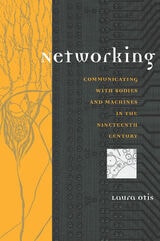
Networking
Communicating with Bodies and Machines in the Nineteenth CenturyLaura Otis
University of Michigan Press, 2011
The interdisciplinary sweep of this book is impressive. Otis focuses simultaneously on literary works by such authors as George Eliot, Bram Stoker, Henry James, and Mark Twain and on the scientific and technological achievements of such pioneers as Luigi Galvani, Hermann von Helmholtz, Charles Babbage, Samuel Morse, and Werner von Siemens.
This unique juxtaposition of physiology, engineering, and literature reveals the common thoughts shared by writers in widely diverse fields and suggests that our current comparisons of nerve and computer networks may not only enhance but shape our understanding of both neurobiology and technology.
Highly accessible and jargon-free, Networking will appeal to general readers as well as to scholars in the fields of interdisciplinary studies, nineteenth-century literature, and the history of science and technology.
Laura Otis is Associate Professor of English, Hofstra University. In 2000, she was awarded a MacArthur Foundation Fellowship for her interdisciplinary studies of literature and science. Her previous books include Membranes: Metaphors of Invasion in Nineteenth-Century Literature, Science, and Politics and Organic Memory: History and the Body in the Late Nineteenth and Early Twentieth Centuries.

Neural Network Applications in Control
G.W. Irwin
The Institution of Engineering and Technology, 1995
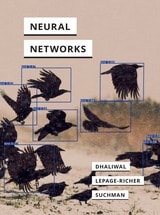
Neural Networks
Ranjodh Singh Dhaliwal
University of Minnesota Press, 2024
A critical examination of the figure of the neural network as it mediates neuroscientific and computational discourses and technical practices
Neural Networks proposes to reconstruct situated practices, social histories, mediating techniques, and ontological assumptions that inform the computational project of the same name. If so-called machine learning comprises a statistical approach to pattern extraction, then neural networks can be defined as a biologically inspired model that relies on probabilistically weighted neuron-like units to identify such patterns. Far from signaling the ultimate convergence of human and machine intelligence, however, neural networks highlight the technologization of neurophysiology that characterizes virtually all strands of neuroscientific and AI research of the past century. Taking this traffic as its starting point, this volume explores how cognition came to be constructed as essentially computational in nature, to the point of underwriting a technologized view of human biology, psychology, and sociability, and how countermovements provide resources for thinking otherwise.
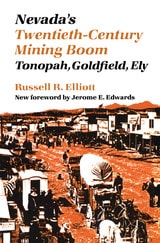
Nevada's Twentieth-Century Mining Boom
Tonopah, Goldfield, ElyRussell R. Elliott
University of Nevada Press, 1966
New Directions in Telecommunications
Volume 2, Information Policy and Economic PolicyPaula R. Newberg, ed.
Duke University Press, 1989

New Jersey's Natures
Environmental Histories of the Garden StateRaechel Lutz
Rutgers University Press, 2026
New Jersey’s Natures takes up the challenge of expanding academic and popular conceptions of New Jersey and its landscapes through the lens of environmental history. Scholars’ essays showcase the ways in which nature is integral to understandings of the state and its past as well as its future. These essays show that New Jersey should no longer solely be known as a place where pollution and suburbanization run amok but rather a place where history happens.
The contributors investigate how nature and history are intertwined within this small but mighty state, covering topics from the colonial period to the present across North, South, and Central Jersey. They investigate natural features like the Delaware River and Bay, the Pinelands, and the unforgettable Jersey Shore. In this book, you will find Indigenous Americans making meaning as settlers threaten their ways of life, Governor William Livingston considering Central Jersey’s features as he fights in the American Revolution, farmers building the state’s industrial agriculture, a foreign diplomat planting an arboretum, squatters in the swampy Meadowlands subverting social and economic norms, activists fighting for parks, forests, and beaches across two centuries, and much more.
New Lines
Critical GIS and the Trouble of the MapMatthew W. Wilson
University of Minnesota Press, 2017
New Lines takes the pulse of a society increasingly drawn to the power of the digital map, examining the conceptual and technical developments of the field of geographic information science as this work is refracted through a pervasive digital culture. Matthew W. Wilson draws together archival research on the birth of the digital map with a reconsideration of the critical turn in mapping and cartographic thought.
Seeking to bridge a foundational divide within the discipline of geography—between cultural and human geographers and practitioners of Geographic Information Systems (GIS)—Wilson suggests that GIS practitioners may operate within a critical vacuum and may not fully contend with their placement within broader networks, the politics of mapping, the rise of the digital humanities, the activist possibilities of appropriating GIS technologies, and more.
Employing the concept of the drawn and traced line, Wilson treads the theoretical terrain of Deleuze, Guattari, and Gunnar Olsson while grounding their thoughts with the hybrid impulse of the more-than-human thought of Donna Haraway. What results is a series of interventions—fractures in the lines directing everyday life—that provide the reader with an opportunity to consider the renewed urgency of forceful geographic representation. These five fractures are criticality, digitality, movement, attention, and quantification. New Lines examines their traces to find their potential and their necessity in the face of our frenetic digital life.
New Methodologies for Understanding Radar Data
Amit Kumar Mishra
The Institution of Engineering and Technology, 2021
New Technologies and Renaissance Studies II
Edited by Tassie Gniady, Kris McAbee, Jessica Murphy
Iter Press, 2014
In the fourth volume of the New Technologies in Medieval and Renaissance Studies series, volume editors Tassie Gniady, Kris McAbee, and Jessica Murphy bring together some of the best work from the New Technologies in Medieval and Renaissance Studies panels at the Renaissance Society of America (RSA) annual meetings for the years 2004–2010. These essays demonstrate a dedication to grounding the use of “newest” practices in the theories of the early modern period. At the same time, the essays are interested in the moment—the needs of scholars then, the theories of media that informed current understanding, and the tools used to conduct studies.
New Trends in Computational Electromagnetics
Özgür Ergül
The Institution of Engineering and Technology, 2020
New Waves in Electromagnetic Technology
Andrew Michael Chugg
The Institution of Engineering and Technology, 2025
Next-Generation Cognitive Radar Systems
Kumar Vijay Mishra
The Institution of Engineering and Technology, 2024
No Dig, No Fly, No Go
How Maps Restrict and ControlMark Monmonier
University of Chicago Press, 2010
Some maps help us find our way; others restrict where we go and what we do. These maps control behavior, regulating activities from flying to fishing, prohibiting students from one part of town from being schooled on the other, and banishing certain individuals and industries to the periphery. This restrictive cartography has boomed in recent decades as governments seek regulate activities as diverse as hiking, building a residence, opening a store, locating a chemical plant, or painting your house anything but regulation colors. It is this aspect of mapping—its power to prohibit—that celebrated geographer Mark Monmonier tackles in No Dig, No Fly, No Go.
Rooted in ancient Egypt’s need to reestablish property boundaries following the annual retreat of the Nile’s floodwaters, restrictive mapping has been indispensable in settling the American West, claiming slices of Antarctica, protecting fragile ocean fisheries, and keeping sex offenders away from playgrounds. But it has also been used for opprobrium: during one of the darkest moments in American history, cartographic exclusion orders helped send thousands of Japanese Americans to remote detention camps. Tracing the power of prohibitive mapping at multiple levels—from regional to international—and multiple dimensions—from property to cyberspace—Monmonier demonstrates how much boundaries influence our experience—from homeownership and voting to taxation and airline travel. A worthy successor to his critically acclaimed How to Lie with Maps, the book is replete with all of the hallmarks of a Monmonier classic, including the wry observations and witty humor.
In the end, Monmonier looks far beyond the lines on the page to observe that mapped boundaries, however persuasive their appearance, are not always as permanent and impermeable as their cartographic lines might suggest. Written for anyone who votes, owns a home, or aspires to be an informed citizen, No Dig, No Fly. No Go will change the way we look at maps forever.

No One Really Knows Me
Helping Young Men Find Connection, Love, and PurposeMichael C. Reichert and Gary Barker
University of Chicago Press, 2027
Counters common and harmful myths about manhood today and offers recommendations for what young men really need as they mature.
From the “manosphere” and LooksMaxxers to Proud Boys, it increasingly feels these days like the kids—particularly the boys—are not all right. Social expectations around what masculinity means are in flux, while algorithms push out misogynist content with no regard for its radicalizing effects. In 2023 and again in 2025, a representative survey of 2,000 American men aged 18-23 found that over two-thirds agreed with the statement: “No one really knows me.” This dramatic finding revealed the failure of American boyhood to account for young men’s full humanity and equip them with the skills, relationships, and support needed for success in these modern times.
In No One Really Knows Me, psychologists Michael C. Reichert and Gary Barker seek to uncover the root causes of and solutions to our contemporary crisis of masculinity. Based on single and group interviews and a wealth of survey data, including their own national survey of 2,000 men ages 18 to 45 from a broad range of economic, racial, and social backgrounds, their findings were clear: across the board, men are struggling to build the social networks they desperately need for health and success. Underlying this failure is a set of historic, pernicious myths that continue to dominate boyhood and shape the imaginations of boys in families, schools, and relationships. Reichert and Barker use each chapter to highlight one myth of masculinity, offer data from their own research and practice to debunk it, and then present life-changing, evidence-based alternatives.
Young men today are in quite a different position than they were a generation ago. As he emerges from boyhood on his way to manhood, each young man needs to be grounded in emotionally open connections, deep relationships with people who have his back, and opportunities to engage with purpose. This book shows us how we can provide young men with surer footing for their passage to adulthood.
Non-Geostationary Satellite Communications Systems
Eva Lagunas
The Institution of Engineering and Technology, 2022
Non-Redundant Near-Field to Far-Field Transformation Techniques
Claudio Gennarelli
The Institution of Engineering and Technology, 2022
Non-linear Predictive Control
Theory and practiceBasil Kouvaritakis
The Institution of Engineering and Technology, 2001
Nonlinear Optimal and Flatness-based Control Methods and Applications for Complex Dynamical Systems
Gerasimos Rigatos
The Institution of Engineering and Technology, 2025
Nonlinear Optimization in Electrical Engineering with Applications in MATLAB®
Mohamed Bakr
The Institution of Engineering and Technology, 2013

Nonlinear and Adaptive Control Systems
Zhengtao Ding
The Institution of Engineering and Technology, 2013
Normandie
Arne Zuidhoek
Amsterdam University Press, 2024
Novel Ecologies
Nature Remade and the Illusions of TechAllison Carruth
University of Chicago Press, 2025
Allison Carruth’s Novel Ecologies shows how the tech industry has taken up the wilderness mythologies that shaped one strain of American environmentalism over the last century. Calling this twenty-first-century environmental imagination Nature Remade, Carruth describes a distinctly West Coast framework that is at once nostalgic and futuristic. Through three case studies (synthetic wildlife, the digital cloud, and space colonization), the book shows Nature Remade to be a quasi-religious belief in venture capitalism and big tech. This paradigm thus imagines a future in which species, ecosystems, and entire planets are re-generated and re-created through engineering.
Novel Ecologies challenges the conviction that climate change and other environmental crises must be met with ever larger-scale forms of technological intervention. Against the new worlds conjured by Google, Meta, Open AI, Amazon, SpaceX, and a host of lesser-known start-ups, Carruth marshals writers and artists who imagine provisionally hopeful environmental futures while refusing to forget the histories that have made the world what it is. On this track of the book, Carruth discusses the works of Octavia Butler, Becky Chambers, Jennifer Egan, Ruth Ozeki, Craig Santos Perez, Tracy K. Smith, Jeff VanderMeer, Saya Woolfalk, and many more. Their novels, poems, installation artworks, and expressive media offer a speculative world built on livable communities rather than engineered lifeforms.
Novel Radar Techniques and Applications
Real aperture array radar, Imaging radar, and Passive and multistatic radar, Volume 1Richard Klemm
The Institution of Engineering and Technology, 2018
Novel Radar Techniques and Applications
Waveform diversity and cognitive radar and Target tracking and data fusion, Volume 2Richard Klemm
The Institution of Engineering and Technology, 2018
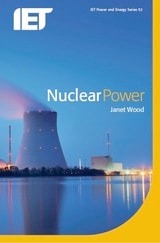
Nuclear Power
Janet Wood
The Institution of Engineering and Technology, 2007

Numerical Analysis of Power System Transients and Dynamics
Akihiro Ametani
The Institution of Engineering and Technology, 2015
Numerical Methods for Engineering
An introduction using MATLAB® and computational electromagnetics examplesKarl F. Warnick
The Institution of Engineering and Technology, 2011
Numerical Methods for Engineering
An introduction using MATLAB® and computational electromagnetics examplesKarl F. Warnick
The Institution of Engineering and Technology, 2020
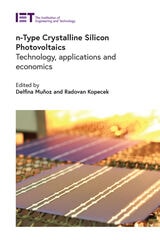
n-Type Crystalline Silicon Photovoltaics
Technology, applications and economicsDelfina Muñoz
The Institution of Engineering and Technology, 2022