Results by title
28164 books match the query 'History' and 647 start with n
North and South
On Polish Politics, History and CultureMarek A. Cichocki
Angelicum University Press Fundacja Swietego Mik, 2025
North of 53°
The Wild Days of the Alaska-Yukon Mining Frontier, 1870-1914William R. Hunt
University of Alaska Press, 2009
“Saints and sinners, whores and housewives, swindlers and laborers alike attempted a hasty adjustment to novel conditions in a land that seemed strange and forbidding,” writes William R. Hunt in his narrative history of Alaska mining. Hunt offers an exciting anecdotal account that follows hungry prospectors, canny shopkeepers, hopeful hangers-on, and crafty lawyers through the gold mining camps and temporary towns of nineteenth-century Alaska. Hunt has hiked and mined many of the same claims he writes about in the book, and North of 53 offers a rare glimpse into far-flung communities from Skagway to the Yukon to the deep interior of Alaska to the Ididarod and Nome on the Bering Sea.
North of Slavery
The Negro in the Free StatesLeon F. Litwack
University of Chicago Press, 1965
This book was a landmark when it was published in 1965, and it has remained a crucial source for our understanding of American history ever since.
Northeastern Indian Lives, 1632-1816
Robert S. Grumet
University of Massachusetts Press, 1996
Few works have directed attention toward such lesser-known figures as Shickellamy, an Oneida diplomat; the Mohawk sachem Theyanoguin; Awashunkes, a Saconett sunksquaw; or Molly Ockett, a Pigwacket doctor. These individuals operated at the often dangerous and always uncertain interstices separating their world from that of the European settlers, as they worked for the security and survival of their peoples during the first centuries of contact. Their efforts helped shape events that determined the course of history in the colonial Northeast.

Northern Arcadia
Foreign Travelers in Scandinavia, 1765 - 1815H. Arnold Barton
Southern Illinois University Press, 1998
Northern Arcadia is a comparative study of the accounts of foreign visitors to the Nordic lands during the late eighteenth and early nineteenth centuries.
Before the late eighteenth century, few foreigners ventured as far as Scandinavia. The region seemed a cold hyperborean wilderness and a voyage there a daring adventure. From the mid-1760s on, however, foreigners arrived in the Nordic lands in increasing numbers, leaving numerous accounts that became increasingly popular, satisfying a growing curiosity about regions beyond the traditional grand tour.
The pre-Romantic mood of the period—with its predilection for untamed nature and for peoples uncorrupted by overrefined civilization—further stimulated fascination with the North. European titerati discovered the Nordic sagas, finding them exhilarating, passionate, imaginative, and original. The French Revolution and the ensuing European wars effectively closed off much of the Continent to foreign travel, turning attention to the still neutral northern kingdoms.
Travel literature about Scandinavia thus illuminates the shift in the European intellectual climate from the enlightened rationalism and utilitarianism of the earlier travelers in this period to the pre-Romantic sensibility of those who followed them. In a Europe torn by war and revolution, sensitive souls could find their new Arcadia in the North—at least until the Scandinavian kingdoms themselves became engulfed by the Napoleonic wars after 1805.
The first scholar to examine as a whole the travel literature dealing with Denmark, Schleswig-Holstein, Norway, Sweden, Finland, Iceland, and the Færø Islands, H. Arnold Barton discusses accounts left by both the celebrated and the obscure. Well-known travelers include Vittorio Alfieri, Francisco de Miranda, Mary Wollstonecraft, Thomas Malthus, and Aaron Burr. Literary travelers of the day included Nathanael Wraxall, William Coxe, Charles Gottlob Küttner, Edward Daniel Clarke, and John Carr.
Northern Arcadia brings out contrasts: among the various Nordic lands and regions; among the reactions of travelers of differing nationality; between the earlier as opposed to the later travelers of the time; between native Scandinavian and foreign perceptions of the North; between conditions in Scandinavia and those in other parts of the Western world; between then and now. It incorporates continuity and change, reality and mentality.
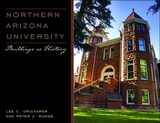
Northern Arizona University
Buildings as HistoryLee C. Drickamer and Peter J. Runge
University of Arizona Press, 2011
This book looks at the buildings that have graced the campus of Northern Arizona University from its opening in 1898 to the present. The school began with a single building, Old Main, and it was joined by five other structures prior to World War I. In the following decades the campus remained relatively small, expanding to approximately twenty-five structures by the late 1950s. During the tenure of President J. Lawrence Walkup (1957–1979), the university effectively doubled in size, spreading southward and adding more than forty buildings, including an entire south campus academic center. Since 1979 the campus has witnessed the addition of more than thirty structures, most as infill within the existing campus layout.
Arranged chronologically, this extensively illustrated volume briefly describes the history of every building that has been a part of the university’s physical layout. The authors describe various structural aspects of each building and provide entertaining and informative anecdotes about events and people associated with the structures. By combing the university’s archives, Drickamer and Runge have turned up photographs of each building as it looked shortly after construction and at present, providing a fascinating visual time lapse.
With more than two hundred images of campus buildings, many of them never before published, Northern Arizona University: Buildings as History provides a wonderful pictorial chronicle of the campus that will interest architectural historians as well as all those who have called NAU home.
Northern Hospitality
Cooking by the Book in New EnglandKeith Stavely
University of Massachusetts Press, 2011
Beginning with four chapters placing the region's best-known cookbook authors and their works in nuanced historical context, Keith Stavely and Kathleen Fitzgerald then proceed to offer a ten-chapter cornucopia of culinary temptation. Readers can sample regional offerings grouped into the categories of the liquid one-pot meal, fish, fowl, meat and game, pie, pudding, bread, and cake. Recipes are presented in their original textual forms and are accompanied by commentaries designed to make them more accessible to the modern reader. Each chapter, and each section within each chapter, is also prefaced by a brief introductory essay. From pottage to pie crust, from caudle to calf's head, historic methods and obscure meanings are thoroughly—sometimes humorously—explained.
Going beyond reprints of single cookbooks and bland adaptations of historic recipes, this richly contextualized critical anthology puts the New England cooking tradition on display in all its unexpected--and delicious--complexity. Northern Hospitality will equip readers with all the tools they need for both historical understanding and kitchen adventure.

Northern Ireland After the Good Friday Agreement
Victims, Grievance and BlameMarie Smyth and Mike Morrissey
Pluto Press, 2002
The result of extensive research among local communities, and drawing on survey and interview evidence, Northern Ireland After the Good Friday Agreement sets this issue within the context of past conflict and the continuing sectarian violence of the present. In particular it presents the views of ordinary people about their personal experiences of political violence and the impact it has had upon their lives.
Moreover, it shows how the Troubles have affected the young people of the region, and looks at the problems facing a society coming out of a protracted period of low-intensity conflict.

Northern Ireland and the UK Constitution
Lisa Claire Whitten
Haus Publishing, 2024
Since the United Kingdom’s withdrawal from the European Union, the constitutional position of Northern Ireland within the Union has endured an unusual level of attention. Northern Ireland and the UK Constitution leads us through its pivotal moments: the 1920–72 Unionist-led governments, the following thirty years of bitter conflicts, the 1998 Belfast/Good Friday Agreement, and the 2016 referendum on the United Kingdom’s membership in the European Union. Considering each of the moments in the broader setting of UK constitutional norms and narratives, she addresses the exceptional constitutional characteristics of Northern Ireland and the ways in which these have often resulted in “blindspot” analyses of the Union. This short book also considers the implications of Brexit and the constitutional impacts and shifts it has brought to Northern Ireland and discusses the possible constitutional repercussions.
Northern Ireland's Troubles
The Human CostsMarie-Therese Fay
Pluto Press, 1999
Northern Navajo Frontier 1860 1900
Robert S. McPherson
Utah State University Press, 2001
The Navajo nation is one of the most frequently researched groups of Indians in North America. Anthropologists, sociologists, historians, and others have taken turns explaining their views of Navajo history and culture. A recurrent theme throughout is that the U.S. government defeated the Navajos so soundly during the early 1860s that after their return from incarceration at Bosque Redondo, they were a badly shattered and submissive people.
The next thirty years saw a marked demographic boom during which the Navajo population doubled. Historians disagree as to the extent of this growth, but the position taken by many historians is that because of this growth and the rapidly expanding herds of sheep, cattle, and horses, the government beneficently gave more territory to its suffering wards.
While this interpretation is partly accurate, it centers on the role of the government, the legislation that was passed, and the frustrations of the Indian agents who rotated frequently through the Navajo Agency in Fort Defiance, New Mexico, and ignores or severely limits one of the most important actors in this process of land acquisition-the Navajos themselves. Instead of being a downtrodden group of prisoners, defeated militarily in the 1860s and dependent on the U.S. government for protection and guidance in the 1870s and 80s, they were vigorously involved in defending and expanding the borders of their homelands. This was accomplished not through war and as a concerted effort, but by an aggressive defensive policy built on individual action that varied with changing circumstances. Many Navajos never made the Long Walk to Bosque Redondo. Instead they eluded capture in northern and western hinterlands and thereby pushed out their frontier. This book focuses on the events and activities in one part of the Navajo borderlands-the northern frontier-where between 1860 and 1900 the Navajos were able to secure a large portion of land that is still part of the reservation. This expansion was achieved during a period when most Native Americans were losing their lands.

Northern New Spain
A Research GuideThomas C. Barnes, Thomas H. Naylor, and Charles W. Polzer
University of Arizona Press, 1981
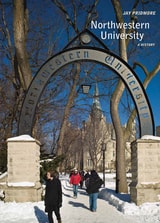
Northwestern University
A HistoryJay Pridmore
Northwestern University Press, 2012
Accompanied by a wealth of color photographs, ephemera, and archival material, Northwestern University: A History brings to the fore the storied traditions and contributions of the administrators, faculty, and alumni who built Northwestern into the world-class institution it is today.
Originally penned to commemorate the university’s sesquicentennial, this new edition charts Northwestern’s evolution in the years of Henry Bienen’s presidency (1995–2009) and offers a new foreword by current president Morton O. Schapiro. Northwestern University: A History captures the rich panoply of the institution’s rise to the first ranks of scholastic excellence and will delight students, their families, and alumni alike.

Northwestern University
Celebrating 150 YearsJay Pridmore
Northwestern University Press, 2000

Norway To America
A History of the MigrationIngrid Semmingsen
University of Minnesota Press, 1980
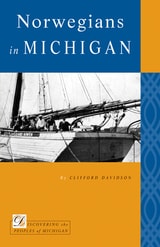
Norwegians in Michigan
Clifford Davidson
Michigan State University Press, 2010
In Norwegians in Michigan, Clifford Davidson shows how Norwegians took advantage of opportunities when they began settling in Michigan in the nineteenth century. Norwegians sailed Lake Michigan, joined the lumber trade, farmed the northwest part of the state, and mined copper and iron in the Upper Peninsula. At the same time, they brought a unique culture that came to be associated with Michigan and the Midwest. The first generations of Norwegians in Michigan maintained close cultural ties with their homeland.
Some Norwegian immigrants adjusted to life in a new land more quickly than others. Among these, according to Davidson, were engineers trained in Norway who developed Michigan's bridges, tunnels, and eventually even the cars that used them.
Illustrated with photographs, maps, and documents, Norwegians in Michigan vividly chronicles a now-familiar pattern of immigrants' cultural understandings prodding and shaping the culture of an emerging region and nation.
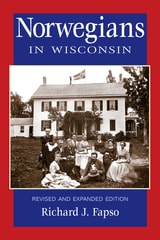
Norwegians in Wisconsin
Richard J. Fapso
Wisconsin Historical Society Press, 2001
This perennially popular book, now revised and expanded with additional historical photos and documents, offers a concise introduction to Wisconsin's Norwegian immigrants. The narrative examines the mass migration of Norwegians from 1837, when Ole Nattestad became the first Norwegian settler in Wisconsin, to the late nineteenth century, when Norwegian immigration largely came to a close. This volume demonstrates the efforts of immigrants to balance newfound American customs with the most treasured traditions of their homeland.
New to this edition are selected letters of Ole Munch Ræder, a scholar sent by the Norwegian government in 1847 to study the American legal system. Ræder visited several Wisconsin cities and villiages and paid special attention to the Norwegian community. His compelling accounts, which appeared in newspapers in Norway, offer a contemporary view of Norwegian life in Wisconsin.
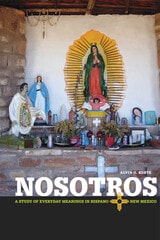
Nosotros
A Study of Everyday Meanings in Hispano New MexicoAlvin O. Korte
Michigan State University Press, 2012
Much knowledge and understanding can be generated from the experiences of everyday life. In this engaging study, Alvin O. Korte examines how this concept applies to Spanish-speaking peoples adapted to a particular locale, specifically the Hispanos and Hispanas of northern New Mexico. Drawing on social philosopher Alfred Schutz’s theory of typification, Korte looks at how meaning and identity are crafted by quotidian activities. Incorporating phenomenological and ethnomethodological strategies, the author investigates several aspects of local Hispano culture, including the oral tradition, leave-taking, death and remembrances of the dead, spirituality, and the circle of life. Although avoiding a social-problems approach, the book devotes necessary attention to mortificación (the death of the self), desmadre (chaos and disorder), and mancornando (cuckoldry). Nosotros is a vivid and insightful exploration with applications in numerous fields.
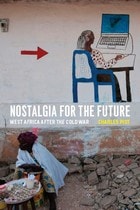
Nostalgia for the Future
West Africa after the Cold WarCharles Piot
University of Chicago Press, 2010
Since the end of the cold war, Africa has seen a dramatic rise in new political and religious phenomena, including an eviscerated privatized state, neoliberal NGOs, Pentecostalism, a resurgence in accusations of witchcraft, a culture of scamming and fraud, and, in some countries, a nearly universal wish to emigrate. Drawing on fieldwork in Togo, Charles Piot suggests that a new biopolitics after state sovereignty is remaking the face of one of the world’s poorest regions.
In a country where playing the U.S. Department of State’s green card lottery is a national pastime and the preponderance of cybercafés and Western Union branches signals a widespread desire to connect to the rest of the world, Nostalgia for the Future makes clear that the cultural and political terrain that underlies postcolonial theory has shifted. In order to map out this new terrain, Piot enters into critical dialogue with a host of important theorists, including Agamben, Hardt and Negri, Deleuze, and Mbembe. The result is a deft interweaving of rich observations of Togolese life with profound insights into the new, globalized world in which that life takes place.
Nostalgia for the Modern
State Secularism and Everyday Politics in TurkeyEsra Özyürek
Duke University Press, 2006
Drawing on her ethnographic research in Istanbul and Ankara during the late 1990s, Özyürek describes how ordinary Turkish citizens demonstrated their affinity for Kemalism in the ways they organized their domestic space, decorated their walls, told their life stories, and interpreted political developments. She examines the recent interest in the private lives of the founding generation of the Republic, reflects on several privately organized museum exhibits about the early Republic, and considers the proliferation in homes and businesses of pictures of Atatürk, the most potent symbol of the secular Turkish state. She also explores the organization of the 1998 celebrations marking the Republic’s seventy-fifth anniversary. Özyürek’s insights into how state ideologies spread through private and personal realms of life have implications for all societies confronting the simultaneous rise of neoliberalism and politicized religion.
Nostalgia
Origins and Ends of an Unenlightened DiseaseHelmut Illbruck
Northwestern University Press, 2012
Not Alone
LGB Teachers Organizations from 1970 to 1985Jason Mayernick
Rutgers University Press, 2024
Not Even Past
A History of the Department of English, The Ohio State University, 1870–2000Morris Beja and Christian K. Zacher
Impromptu Press, 2019
Not Free, Not for All
Public Libraries in the Age of Jim CrowCheryl Knott
University of Massachusetts Press, 2015
Winner of the 2016 Eliza Atkins Gleason Book Award and the 2016 Lillian Smith Book Award
Americans tend to imagine their public libraries as time-honored advocates of equitable access to information for all. Through much of the twentieth century, however, many black Americans were denied access to public libraries or allowed admittance only to separate and smaller buildings and collections. While scholars have examined and continue to uncover the history of school segregation, there has been much less research published on the segregation of public libraries in the Jim Crow South. In fact, much of the writing on public library history has failed to note these racial exclusions.
In Not Free, Not for All, Cheryl Knott traces the establishment, growth, and eventual demise of separate public libraries for African Americans in the South, disrupting the popular image of the American public library as historically welcoming readers from all walks of life. Using institutional records, contemporaneous newspaper and magazine articles, and other primary sources together with scholarly work in the fields of print culture and civil rights history, Knott reconstructs a complex story involving both animosity and cooperation among whites and blacks who valued what libraries had to offer. African American library advocates, staff, and users emerge as the creators of their own separate collections and services with both symbolic and material importance, even as they worked toward dismantling those very institutions during the era of desegregation.

Not June Cleaver
Women and Gender in Postwar America, 1945-1960June Meyerowitz
Temple University Press, 1994
Not Just Any Department of Family Medicine
Kent J. Sheets, Ph.D.
Michigan Publishing Services, 2018
This book tells how the Department of Family Medicine was established at the University of Michigan in 1978 and how it has evolved since then. The forty years of stories paint a detailed picture of the department leaders, faculty, staff, and learners who coped with setbacks, challenges, and accomplishments in establishing this specialty at a nationally renowned medical school.

Not Just Roommates
Cohabitation after the Sexual RevolutionElizabeth H. Pleck
University of Chicago Press, 2012
The late twentieth century has seen a fantastic expansion of personal, sexual, and domestic liberties in the United States. In Not Just Roommates, Elizabeth H. Pleck explores the rise of cohabitation, and the changing social norms that have allowed cohabitation to become the chosen lifestyle of more than fifteen million Americans.
Despite this growing social acceptance, Pleck contends that when it comes to the law, cohabitors have been, and continue to be, treated as second-class citizens, subjected to discriminatory laws, limited privacy, a lack of political representation, and little hope for change. Because cohabitation is not a sexual identity, Pleck argues, cohabitors face the legal discrimination of a population with no group identity, no civil rights movement, no legal defense organizations, and, often, no consciousness of being discriminated against. Through in-depth research in written sources and interviews, Pleck shines a light on the emergence of cohabitation in American culture, its complex history, and its unpleasant realities in the present day.
Not Just a Housewife
Women Strike for Peace and the Cold War Women's Peace MovementJon Coburn
University of Massachusetts Press, 2025
On November 1, 1961, thousands of middle-class white women took to the streets throughout the United States to demonstrate against atomic weapons. They were brought together by the group Women Strike for Peace (WSP), which grew from modest beginnings at a Georgetown cocktail party to become one of the most effective peace organizations in American history. Under the stewardship of children’s book illustrator Dagmar Wilson, and with indispensable support from figures such as Bella Abzug, a lawyer who would later help found the National Women’s Political Caucus and serve as US Representative for New York, WSP branches spread to cities and towns across the country, and the group influenced major arms-control treaties and successful antiwar efforts of the Cold War period. Single-handedly, WSP dismantled the McCarthyite House Un-American Activities Committee (HUAC), catalysed public support for the 1963 Nuclear Weapons Test Ban Treaty, and brokered unprecedented exchanges between American and Vietnamese women during the American War in Vietnam. WSP accomplished their political wins , in part, through a public image that stressed the inherent moral authority and sanctity of motherhood.
In Not Just a Housewife, Jon Coburn explores the fascinating story of WSP to argue that the group’s historic significance was much more complex than the maternal activism for which it is often remembered. He traces activists’ evolution through the Cold War’s cultural upheavals, uncovering the significance of forgotten episodes, such as the extraordinary self-immolation of 82-year-old Detroit activist Alice Herz and WSP’s unheralded contributions to the 1977 National Women’s Conference. In so doing, Coburn recovers WSP’s revolutionary politics and militant protests and contends that the organization fused this radical activism with the seeming respectability of motherhood. Through unprecedented access to organizational archives and oral histories, Not Just a Housewife details how WSP’s unique fusion of radicalism and respectability significantly shaped Cold War-era women’s peace movement history, as well as the broader American culture.

Not Out of Hate
A Novel of BurmaMa Ma Lay
Ohio University Press, 1991

Not Slave, Not Free
The African American Economic Experience Since the Civil WarJay R. Mandle
Duke University Press, 1992
Not Slave, Not Free focuses first on rural southern society before World War II and the role played by African Americans in that setting. The South was the least developed part of the United States, a fact that Mandle considers fundamental in accounting for the poverty of African Americans in the years before the War. At the same time, however, the concentration of the black labor force in plantation work significantly retarded the South’s economic growth. Tracing the postwar migration of blacks from the South, Mandle shifts attention to the problems and opportunities that confronted African Americans in cities. He shows how occupational segregation and income growth accelerated this migration.
Instrumental to an understanding of the history of the political economy of the United States, this book also directs readers and policymakers to the central issues confronting African Americans today.
Not Straight from Germany
Sexual Publics and Sexual Citizenship since Magnus HirschfeldMichael Thomas Taylor, Annette F. Timm, and Rainer Herrn, Editors
University of Michigan Press, 2017
Two visual sourcebooks and catalog essays on an exhibition of contemporary artists’ responses to the Hirschfeld historical materials interrogate the modes of visual representation that Hirschfeld employed by re-imagining the public visibility of his institute from a contemporary perspective. The archival material includes stunning, never-before-published images from Hirschfeld’s institute that challenge many received ideas, while the scholarly and art catalog essays explore collaboration and dialogue as methods of research and activism that resonate beyond the academy to pressing issues of public concern.
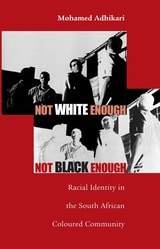
Not White Enough, Not Black Enough
Racial Identity in the South African Coloured CommunityMohamed Adhikari
Ohio University Press, 2005
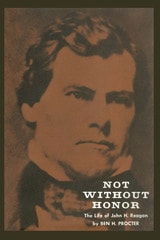
Not Without Honor
The Life of John H. ReaganBy Ben H. Procter
University of Texas Press, 1961
John H. Reagan was one of the most important figures in Texas history; this was the first biography of him to be published. Reagan, who was born in Sevier County, Tennessee, in 1818, came to Texas twenty-one years later—while Texas was still a republic—and stayed to play many major roles in its later economic and political development.
In this excellent biography, Ben H. Procter not only re-creates for us the character of the man, with his forthright integrity and his boundless desire for knowledge, but also places him against the background of the time in which he lived. In vivid language Procter portrays the violence and vigor of pioneer life, the excitement of frontier politics, the dedication, devotion, enthusiasm, and—ultimately—despair of the Civil War, and the bitterness of the struggle with the railroad tycoons and their gargantuan monopolies. Spanning as it does the Republic of Texas, early statehood, the Confederacy, Reconstruction, and the era of the "robber barons," the story of John H. Reagan encompasses a panoramic sweep of mid- to late-nineteenth-century United States history.
Throughout his long life, respect came to Reagan almost as a matter of course. The forceful strength of his personality made an impression few people could ignore. From the day when Colonel Durst hired the young Reagan as a tutor for his children, exclaiming, "This man is a scholar," until the day some fifty years later when Governor Hogg persuaded him to leave the U.S. Senate to become chairman of the new Railroad Commission because the Commission "must be above reproach," his extraordinary character and ability were recognized. In fact, the perceptive intelligence that made him examine all aspects of a situation, and the sturdy integrity and courage that made it impossible for him to abandon a position he believed to be right simply because it was for the moment unpopular, frequently gave him the appearance of a prophet. Although this "prophetic gift" occasionally led to interludes of public disfavor, Reagan was accorded honor, even in his own land—and in later years veneration—that any prophet might envy.
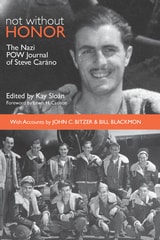
Not Without Honor
The Nazi POW Journal of Steve Carano; With Accounts by John C. Bitzer and Bill BlackmonKay Sloan
University of Arkansas Press, 2008

Not Your Average Zombie
Rehumanizing the Undead from Voodoo to Zombie WalksBy Chera Kee
University of Texas Press, 2017
The zombie apocalypse hasn’t happened—yet—but zombies are all over popular culture. From movies and TV shows to video games and zombie walks, the undead stalk through our collective fantasies. What is it about zombies that exerts such a powerful fascination? In Not Your Average Zombie, Chera Kee offers an innovative answer by looking at zombies that don’t conform to the stereotypes of mindless slaves or flesh-eating cannibals. Zombies who think, who speak, and who feel love can be sympathetic and even politically powerful, she asserts.
Kee analyzes zombies in popular culture from 1930s depictions of zombies in voodoo rituals to contemporary film and television, comic books, video games, and fan practices such as zombie walks. She discusses how the zombie has embodied our fears of losing the self through slavery and cannibalism and shows how “extra-ordinary” zombies defy that loss of free will by refusing to be dehumanized. By challenging their masters, falling in love, and leading rebellions, “extra-ordinary” zombies become figures of liberation and resistance. Kee also thoroughly investigates how representations of racial and gendered identities in zombie texts offer opportunities for living people to gain agency over their lives. Not Your Average Zombie thus deepens and broadens our understanding of how media producers and consumers take up and use these undead figures to make political interventions in the world of the living.
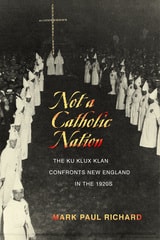
Not a Catholic Nation
The Ku Klux Klan Confronts New England in the 1920sMark Paul Richard
University of Massachusetts Press, 2015
Drawing on a wide range of previously untapped sources—French-language newspapers in the New England–Canadian borderlands; KKK documents scattered in local, university, and Catholic repositories; and previously undiscovered copies of the Maine Klansmen—Richard demonstrates that the Klan was far more active in the Northeast than previously thought. He also challenges the increasingly prevalent view that the Ku Klux Klan became a mass movement during this period largely because it functioned as a social, fraternal, or civic organization for many Protestants. While Richard concedes that some Protestants in New England may have joined the KKK for those reasons, he shows that the politics of ethnicity and labor played a more significant role in the Klan's growth in the region.
The most comprehensive analysis of the Ku Klux Klan's antagonism toward Catholics in the 1920s, this book is also distinctive in its consideration of the history of the Canada–U.S. borderlands, particularly the role of Canadian immigrants as both proponents and victims of the Klan movement in the United States.

Not at All What One Is Used To
The Life and Times of Isabella GardnerMarian Janssen
University of Missouri Press, 2026
Born in 1915 to one of New England’s elite wealthy families, Isabella Gardner was expected to follow a certain path in life—one that would take her from marriageable debutante to proper society lady. But that plan was derailed when at age eighteen, Isabella caused a drunk-driving accident. Her family, to shield her from disgrace, sent her to Europe for acting studies, not foreseeing how life abroad would fan the romantic longings and artistic impulses that would define the rest of Isabella’s years. In Not at All What One Is Used To, author Marian Janssen tells the story of this passionate, troubled woman, whose career as a poet was in constant compromise with her wayward love life and her impulsive and reckless character.
Not by Reason Alone
Religion, History, and Identity in Early Modern Political ThoughtJoshua Mitchell
University of Chicago Press, 1993
This erudite and ambitious work crosses disciplinary boundaries to expose unsuspected connections between political theory, religion, and history. In doing so, it offers a view of modern political thought undistorted by conventional distinctions between the ancient and the modern, and between the religious and the political.
"Original. . . . A delight to read a political philosopher who takes the theologies of Hobbes and Locke seriously." —J. M. Porter, Canadian Journal of History
"Mitchell's argument both illuminates and fascinates. . . . An arresting, even stunning, contribution to our study of modern political thought."—William R. Stevenson, Jr., Christian Scholar's Review
Not for Circulation
The George E. Bogaars StoryBertha Henson
National University of Singapore Press, 2022
Do civil servants make a difference? Can they shape history? In 1985 when John Drysdale published one of the first books on the political history of independent Singapore, George E. Bogaars wrote to his daughter with typical understatement, “I feature in it a bit.” Bogaars headed the special branch at the time of Operation Cold Store. He reported directly to pioneer leaders such as Lee Kuan Yew and Goh Keng Swee before they became political icons. He started the Singapore Armed Forces from scratch when he was Permanent Secretary of the Interior and Defence. He was the head of the civil service, involved in a dozen or so government-linked companies attempting to shore up the country’s infrastructure, and expand its business portfolio. He held the country’s purse strings when he moved into the finance ministry before his retirement at the age of fifty-five. His impressive resume belies a colorful, flamboyant character with a wicked sense of humor. Veteran Singaporean journalist Bertha Henson tells his story.
Not from Here, Not from There/No Soy de Aquí ni de Allá
The Autobiography of Nelson DíazNelson A. Díaz
Temple University Press, 2018
Raised in the squalor of a New York tenement until he was 10 years old, Nelson Díaz saw his life change when his family moved to a brand-new high-rise project in West Harlem in the 1950s. That experience, along with lessons learned as the only Latino law student at Temple University, would drive him throughout his life as a lawyer and activist, fighting for the expansion of rights for all Americans.
“No soy de aquí ni de allá” is a mantra for Puerto Ricans who feel like foreigners wherever they are and who seek a place for themselves. In his inspiring autobiography, Not from Here, Not from There, Díaz tells the story of his struggles and triumphs as his perspective widened from the New York streets and law school classrooms to the halls of power in Philadelphia and Washington, DC. Whether as a leader in economic development, a pioneer in court reform, or a champion of fair housing, Díaz has never stopped advocating for others. Díaz was happy to be the first Latino to “do something,” but he never wanted to be the last. This story of an outsider who worked his way to the inside offers powerful lessons on finding a place in the world by creating spaces where everyone is welcome.

Not in Front of the Children
'Indecency,' Censorship, and the Innocence of YouthHeins, Marjorie
Rutgers University Press, 2007
From Huckleberry Finn to Harry Potter, from Internet filters to the v-chip, censorship exercised on behalf of children and adolescents is often based on the assumption that they must be protected from “indecent” information that might harm their development—whether in art, in literature, or on a Web site. But where does this assumption come from, and is it true?
In Not in Front of the Children, Marjorie Heins explores the fascinating history of “indecency” laws and other restrictions aimed at protecting youth. From Plato’s argument for rigid censorship, through Victorian laws aimed at repressing libidinous thoughts, to contemporary battles over sex education in public schools and violence in the media, Heins guides us through what became, and remains, an ideological minefield. With fascinating examples drawn from around the globe, she suggests that the “harm to minors” argument rests on shaky foundations.
Not of Pure Blood
The Free People of Color and Racial Prejudice in Nineteenth-Century Puerto RicoJay Kinsbruner
Duke University Press, 1996
Following a discussion of Puerto Rican racial prejudice in historical perspective, Kinsbruner describes residential patterns, marriages, births, deaths, occupations, and family and household matters to demonstrate that free people of color were a disadvantaged community whose political, social, and economic status was diminished by racism. He analyzes the complexities and contradictions of Puerto Rican racial prejudice and discrimination, explains the subtleties of “shade discrimination,” and examines the profoundly negative impact on race relations of the U.S. occupation of the island following the Spanish American War.
Looking behind the myth of Puerto Rican racial equity, Not of Pure Blood will be of interest to specialists in Caribbean studies, Puerto Rican history, and Latin America studies, and to scholars in a variety of fields investigating questions of racism and discrimination.
Not so Far from Paquimé
Essays on the Archaeology of Chihuahua, MexicoEdited by Jane Holden Kelley and David A. Phillips Jr.
University of Utah Press, 2017

Not the Camilla We Knew
One Woman's Path from Small-town America to the Symbionese Liberation ArmyRachael Hanel
University of Minnesota Press, 2022
The mystery of how an ordinary Minnesota girl came to be, briefly, one of the most wanted domestic terrorists in the United States
Behind every act of domestic terrorism there is someone’s child, an average American whose life took a radical turn for reasons that often remain mysterious. Camilla Hall is a case in point: a pastor’s daughter from small-town Minnesota who eventually joined the ranks of radicals like Sara Jane Olson (aka Kathleen Soliah) in the notorious Symbionese Liberation Army before dying in a shootout with Los Angeles Police in May 1974. How could a “good girl” like Camilla become one of the most wanted domestic terrorists in the United States? Rachael Hanel tells her story here, revealing both the deep humanity and the extraordinary circumstances of Camilla Hall’s life.
Camilla’s childhood in a tight-knit religious family was marred by loss and grief as, one after another, her three siblings died. Her path from her Minnesota home to her final, radical SLA family featured years as an artist and activist—in welfare offices, political campaigns, union organizing, culminating in a love affair that would be her introduction to the SLA. Through in-depth research and extensive interviews, Hanel pieces together Camilla’s bewildering transformation from a “gentle, zaftig, arty, otherworldy” young woman (as one observer remarked), working for social change within the system, into a gun-wielding criminal involved in the kidnapping of Patty Hearst.
During this time of mounting unrest and violence, Camilla Hall’s story is of urgent interest for what it reveals about the forces of radicalization. But as Hanel ventures ever further into Camilla’s past, searching out the critical points where character and cause might intersect, her book becomes an intriguing, disturbing, and ultimately deeply moving journey into the dark side of America’s promise.
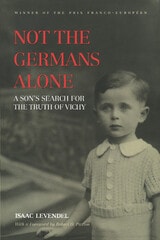
Not the Germans Alone
A Son's Search for the Truth of VichyIsaac Levendel
Northwestern University Press, 2000
On the eve of D-Day, Isaac Levendel's mother left her hiding place on a farm in southern France and never returned. After 40 years of silence and torment, he returned to France in 1990 determined to find out what had happened. This is the story of how, with perseverance, luck, and official help, he gained access to secret wartime documents laying bare the details of French collaboration-and the truth about his mother's fate.
Not the Other Avant-Garde
The Transnational Foundations of Avant-Garde PerformanceEdited by James M. Harding and John Rouse
University of Michigan Press, 2010
Not the Other Avant-Garde is groundbreaking in both avant-garde studies and performance studies and will be a valuable contribution to the fields of theater studies, modernist studies, art history, literature, and music history.
"Joins the growing field of critical and transnational theories on the arts. . . its grounding in live performance and its foregrounding of the performative human body presents a new theoretical paradigm that is pathbreaking."
--Haiping Yan, University of California, Los Angeles
James M. Harding is Associate Professor of English at Mary Washington University. He is author of Adorno and "A Writing of the Ruins": Essays on Modern Aesthetics and Anglo-American Literature and Culture and editor of Contours of the Theatrical Avant-Garde: Performance and Textuality.
John Rouse is Associate Professor of Theater at the University of California, San Diego. He is author of Brecht and the West German Theatre.

Not without Madness
Perspectives on OperaFabrizio Della Seta
University of Chicago Press, 2012

Not without Our Consent
Lakota Resistance to Termination, 1950-59Edward Charles Valandra
University of Illinois Press, 2006
Edward Valandra's Not Without Our Consent documents the tenacious and formidable Lakota resistance to attempts at applying this law. In unprecedented depth, it follows their struggle through the 1950s when, against all odds, their resistance succeeded in the amendment of PL 83-280 to include Native consent as a prerequisite to state jurisdiction. The various House and Senate bills discussed in the manuscript are reproduced in five appendices.
Not-Forgetting
Contemporary Art and the Interrogation of MasteryRosalyn Deutsche
University of Chicago Press, 2022
Amid times of emboldened cruelty and perpetual war, Rosalyn Deutsche links contemporary art to three practices that counter the prevailing destructiveness: psychoanalytic feminism, radical democracy, and war resistance. Deutsche considers how art joins these radical practices to challenge desires for mastery and dominion, which are encapsulated in the Eurocentric conception of the human that goes under the name “Man” and is driven by deadly inclinations that Deutsche calls masculinist. The masculinist subject—as an individual or a group—universalizes itself, claims to speak on behalf of humanity, and meets differences with conquest.
Analyzing artworks by Christopher D’Arcangelo, Robert Filliou, Hans Haacke, Mary Kelly, Silvia Kolbowski, Barbara Kruger, Louise Lawler, Martha Rosler, James Welling, and Krzysztof Wodiczko, Deutsche illuminates the diverse ways in which they expose, question, and trouble the visual fantasies that express masculinist desire. Undermining the mastering subject, these artworks invite viewers to question the positions they assume in relation to others. Together, the essays in Not-Forgetting, written between 1999 and 2020, argue that this art offers a unique contribution to building a less cruel and violent society.

Notable Women of Arkansas
From Hattie to Hillary, 100 Names to KnowNancy Hendricks
Butler Center for Arkansas Studies, 2016
Meet one Arkansas woman who was nominated for the Pulitzer Prize, Tony Award, and three Grammys. Learn about a female presidential candidate whose initials are not HRC. See beauty queens on the runway and a runaway beauty queen. Meet the trailblazing black actress who, if she had been born thirty years later, might have had a career like Halle Berry’s.
They are all Arkansas women, each with their own family, childhood, loves, losses, dreams, fears, hopes for the future, and ghosts from the past. These notable women—profiled together in one volume—have left an impressive legacy.