Results by title
3576 books match the query 'American' and 93 start with n
News from Where I Live
PoemsMartin Lammon
University of Arkansas Press, 1998
Winner of the eighth annual Arkansas Poetry Award, Martin Lammon writes poems that deal fearlessly and directly with their subjects. Tenderness, complexity, compassion, reverence, and condemnation are all within his range.
Writing of love, he can speak broadly and universally of the heart, yet in the same poem, he can intricately describe a woman’s hand, a fire on a beach, or the hollows around a lover’s eye. Even when he works in the voice of a suicide, his precision can be devastating, as in these lines: “When you lie beside me under stars, each needlepoint / of light pricks my bare arms.”
With equal ease, Lammon travels across miles, cultures, and time, writing of kilns and potters in Japan, long-dead Eskimos in Alaska, or Blue Hole Cave in Pennsylvania.
Full of grace and candor, these poems pursue the stories that shimmer behind the day’s headlines, seeking the spirit at stake in the “lives beside [our] own whose secrets are worth loving.”

Nigger Heaven
Carl Van Vechten
University of Illinois Press, 1926
"The book and not the title is the thing," James Weldon Johnson insisted with regard to Nigger Heaven, and the book is indeed a nuanced and vibrant portrait of "the great black walled city" of Harlem. Opening on a scene of tawdry sensationalism, Nigger Heaven shifts decisively to a world of black middle-class respectability, defined by intellectual values, professional ambition, and an acute consciousness of class and racial identity.
Here is a Harlem where upper-class elites discuss art in well-appointed drawing rooms; rowdy and lascivious drunks spend long nights in jazz clubs and speakeasies; and politically conscious young intellectuals drink coffee and debate "the race problem" in walk-up apartments. At the center of the story, two young people--a quiet, serious librarian and a volatile aspiring writer--struggle to love each other as their dreams are slowly suffocated by racism.
This reissue is based on the seventh printing, which included poetry composed by Langston Hughes especially for the book. Kathleen Pfeiffer's astute introduction investigates the controversy surrounding the shocking title and shows how the novel functioned in its time as a site to contest racial violence. She also signals questions of racial authenticity and racial identity raised by a novel about black culture written by a white admirer of that culture.
Night Radio
Kim Young
University of Utah Press, 2012
Winner of the Agha Shahid Ali Poetry Prize
Set against the sprawling backdrop of Los Angeles, Night Radio excavates the kidnapping and sexual assault of a young girl and the resulting layers of trauma exacted upon her and her family. Working within the paradox of the insufficiency of language and the necessity of expression, these poems elevate overwhelming experiences into near-mythic narrative. Night Radio’s attempt through art to “make sense” of a seemingly senseless world raises troubling and timeless questions about the value, necessity, and futility of the aesthetic act. At the heart of the book is a journey toward reconciliation—wherein one discovers an abiding though hard-won faith within a complex, overwhelming, and, at times, frightening universe.
Finalist for the Kate Tufts Discovery Award.
Nightshade
Andrea Cohen
Four Way Books, 2019
Nimble Believing
Dickinson and the UnknownJames McIntosh
University of Michigan Press, 2004
--Harold Bloom, Genius
" . . . a truly literary study in the largest, most humane, sense. Instead of subjecting poems to the distortions of theory, it brings biography, theology, psychology, and cultural history to bear on the intricacies of language, where all the issues of the poet's life and work converge, contend, and seek resolution."
--Albert Gelpi, American Literature
" . . . insightful readings of many of Dickinson's difficult poems and . . . a significant contribution to Dickinson studies."
---Choice
"McIntosh shows the power of Dickinson's religious quest in word, in verse, and in truth. He shows that she was much more than an ever-adolescent angry rebel trying to subvert the religious oppression of benighted Amherst neighbors."
---Emily Dickinson Journal
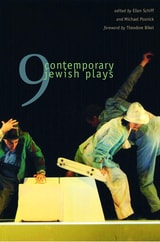
Nine Contemporary Jewish Plays
Edited by Ellen Schiff and Michael Posnick
University of Texas Press, 2005
Jewish theatre—plays about and usually by Jews—enters the twenty-first century with a long and distinguished history. To keep this vibrant tradition alive, the National Foundation for Jewish Culture established the New Play Commissions in Jewish Theatre in 1994. The commissions are awarded in an annual competition. Their goal is to help emerging and established dramatists develop new works in collaboration with a wide variety of theatres. Since its inception, the New Play Commissions has contributed support to more than seventy-five professional productions, staged readings, and workshops.
This anthology brings together nine commissioned plays that have gone on to full production. Ellen Schiff and Michael Posnick have selected works that reflect many of the historical and social forces that have shaped contemporary Jewish experience and defined Jewish identity—among them, surviving the Holocaust, the Israeli-Palestinian conflict, and the lives of newcomers in America, Israel, and Argentina. Following a foreword by Theodore Bikel, the editors provide introductory explanations of the New Play Commissions and an overview of Jewish theatre. The playwrights comment on the genesis of their work and its production history.
Nineteenth-Century Geographies
The Transformation of Space from the Victorian Age to the American CenturyThomas, Ronald R
Rutgers University Press, 2002
The nineteenth century was a time of unprecedented discovery and exploration throughout the globe, a period when the “blank spaces” of the earth were systematically investigated, occupied, and exploited by the major imperial powers of Western Europe and the United States. The lived experience of space was also changing in dramatic ways for people as a result of new developments in technology, communication, and transportation. As a result, the century was characterized by a new and intense interest in place, both local and global.
The collection is comprised of seventeen essays from various disciplines organized into four areas of geographic concern. The first, “Time Zones,” examines several ways that place gets expressed as time during the period, how geography becomes history. A second grouping, “Commodities and Exchanges,” explores the role of geographic origin as it was embodied in particular objects, from the souvenir map to imported tea. The set of essays on “Domestic Fronts” moves the discussion from the public to the private sphere by looking at how domestic space became defined in terms of its boundary with the foreign. The final section, “Orientations,” takes up the changing relations of bodies, identities, and the spaces they inhabit and through which they moved. The collection as a whole also traces the development of the discipline of geography with its different institutional and political trajectories in the United States and Great Britain.
No Acute Distress
Jennifer Richter
Southern Illinois University Press, 2016
Richter seasons her work with irony from the start, titling the book’s opening poem, “Pleasant, healthy-appearing adult white female in no acute distress.” As the collection progresses, the speaker’s growing children bring new, wider perspective to the poems; the heart of the book opens up to embrace the adolescents’ increasing self-sufficiency and the body’s vibrant re-emergence into health.
No Acute Distress offers readers fresh language grounded in a masterful use of form, speaking with an urgency that acknowledges chronic pain’s cumulative damage to the body and spirit, and with an openness that allows for hope and the inexplicable on the path to victorious recovery.
No Chronology
Karen Fish
University of Chicago Press, 2021
Imagine, staring into the sun, then,
how the clouds spread out and open like wallets
over a few corrugated roofs.
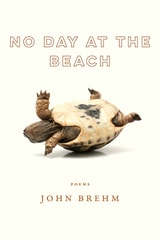
No Day at the Beach
John Brehm
University of Wisconsin Press, 2020
By turns playfully philosophical and bracingly open hearted, Brehm’s engagement with the specters of memory, pride, yearning, gain, and loss illuminate the human condition with humor and empathy.
No Evil Star
Selected Essays, Interviews, and ProseAnne Sexton
University of Michigan Press, 1985
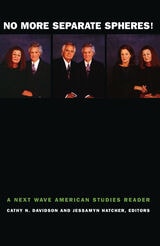
No More Separate Spheres!
A Next Wave American Studies ReaderCathy N. Davidson and Jessamyn Hatcher, eds.
Duke University Press, 2002
Using American literary studies as a way to talk about changing categories of analysis, these essays discuss the work of such major authors as Catharine Sedgwick, Herman Melville, Pauline E. Hopkins, Frederick Douglass, Catharine Beecher, Ralph Waldo Emerson, W. E. B. Du Bois, Sarah Orne Jewett, Nathaniel Hawthorne, María Ampara Ruiz de Burton, Ann Petry, Gwendolyn Brooks, Cynthia Kadohata, Chang Rae-Lee, and Samuel Delany. No More Separate Spheres! shows scholars and students different ways that gender can be approached and incorporated into literary interpretations. Feisty and provocative, it provides a forceful analysis of the limitations of any theory of gender that applies only to women, and urges suspicion of any argument that posits “woman” as a universal or uniform category.
By bringing together essays from the influential special issue of American Literature of the same name, a number of classic essays, and several new pieces commissioned for this volume, No More Separate Spheres! will be an ideal teaching tool, providing a key supplementary text in the American literature classroom.
Contributors. José F. Aranda, Lauren Berlant, Cathy N. Davidson, Judith Fetterley, Jessamyn Hatcher, Amy Kaplan, Dana D. Nelson, Christopher Newfield, You-me Park, Marjorie Pryse, Elizabeth Renker, Ryan Schneider, Melissa Solomon, Siobhan Somerville, Gayle Wald , Maurice Wallace
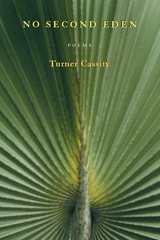
No Second Eden
PoemsTurner Cassity
Ohio University Press, 2002
If you think that Turner Cassity has mellowed or slowed down since the 1998 release of his selected poems, The Destructive Element, think again. In No Second Eden Cassity is back more Swiftian than ever. Among the targets reduced to ruin are countertenors, parole boards, the French Symbolists, calendar reformers, the Yale Divinity School, and the cult of Elvis. Without turning a blind eye, he even extends a toast to Wernher von Braun.
Surprisingly, there is a poem about the Mississippi in which Cassity grew up. Unsurprisingly, it is a vision quite unlike others of that state. Its chilly and amusing precision is about as far from Southern Gothic as you can get, although elsewhere there are faint hints of a failed Good Ole Boy. Indeed, the final poems in the collection are a bit more personal than one expects of this writer.
As rigorous in form as they are in feeling, the poems of No Second Eden are not for those with preconceived ideas of poetry or its purpose. Early in Cassity’s career, James Merrill described Cassity’s work as “an opera house in the jungle.” True so far as it goes, but he might also have called it the jungle in the opera house: a glimpse at the savagery behind every façade.
No Small Gift
Jennifer Franklin
Four Way Books, 2018
No Small Thing
Gabriel Fried
Four Way Books, 2025
No Walls of Stone
An Anthology of Literature by Deaf and Hard of Hearing WritersJill Jepson
Gallaudet University Press, 1992
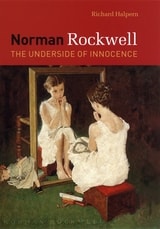
Norman Rockwell
The Underside of InnocenceRichard Halpern
University of Chicago Press, 2006
Norman Rockwell’s scenes of everyday small-town life are among the most indelible images in all of twentieth-century art. While opinions of Rockwell vary from uncritical admiration to sneering contempt, those who love him and those who dismiss him do agree on one thing: his art embodies a distinctively American style of innocence.
In this sure-to-be controversial book, Richard Halpern argues that this sense of innocence arises from our reluctance—and also Rockwell’s—to acknowledge the often disturbing dimensions of his works. Rockwell’s paintings frequently teem with perverse acts of voyeurism and desire but contrive to keep these acts invisible—or rather, hidden in plain sight, available for unacknowledged pleasure but easily denied by the viewer.
Rockwell emerges in this book, then, as a deviously brilliant artist, a remorseless diagnostician of the innocence in which we bathe ourselves, and a continuing, unexpected influence on contemporary artists. Far from a banal painter of the ordinary, Halpern argues, Rockwell is someone we have not yet dared to see for the complex creature he is: a wholesome pervert, a knowing innocent, and a kitschy genius.
Provocative but judicious, witty but deeply informed, Norman Rockwell is a book rich in suggestive propositions and eye-opening details—one that will change forever the way we think about this American icon and his works.
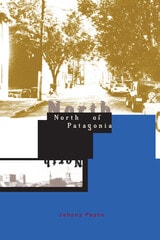
North of Patagonia
Johnny Payne
Northwestern University Press, 2001
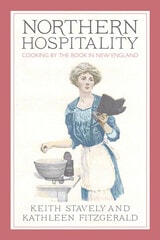
Northern Hospitality
Cooking by the Book in New EnglandKeith Stavely
University of Massachusetts Press, 2011
Beginning with four chapters placing the region's best-known cookbook authors and their works in nuanced historical context, Keith Stavely and Kathleen Fitzgerald then proceed to offer a ten-chapter cornucopia of culinary temptation. Readers can sample regional offerings grouped into the categories of the liquid one-pot meal, fish, fowl, meat and game, pie, pudding, bread, and cake. Recipes are presented in their original textual forms and are accompanied by commentaries designed to make them more accessible to the modern reader. Each chapter, and each section within each chapter, is also prefaced by a brief introductory essay. From pottage to pie crust, from caudle to calf's head, historic methods and obscure meanings are thoroughly—sometimes humorously—explained.
Going beyond reprints of single cookbooks and bland adaptations of historic recipes, this richly contextualized critical anthology puts the New England cooking tradition on display in all its unexpected--and delicious--complexity. Northern Hospitality will equip readers with all the tools they need for both historical understanding and kitchen adventure.
Nostalgia for a World Where We Can Live
Monica Berlin
Southern Illinois University Press, 2018
These poems notice the day in the wind, the night tucked up to the train tracks, and a slipping-in of yesterday, memory-laden, alongside the promise of a more hopeful tomorrow. Here is the Midwest, vibrant and relic, in the ongoing years of collapse and recovery. Here the constant companionship of weather lays claim to its own field of vision. Here, too, devastation: what’s left after. Berlin reminds us we are at the mercy of rivers, oceans, earth, wind, rain, blizzard, drought, and each other. “Maybe what I mean / to say is that I’ve come to see all the names we might / recognize destruction by,” Berlin’s speaker discovers. “We might / sometimes, stupidly, call it love.”
On her familiar prairie of lyricism and tumult, beauty and ruin, Berlin’s poems insist, plead, and seek to reassure. In a collection both mournful and urgent, both a “little book of days” and a song, this poet meditates on loss, wonder, and always the consolations of language.
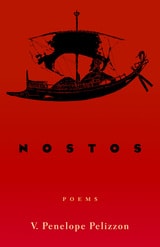
Nostos
V. Penelope Pelizzon
Ohio University Press, 1999
In choosing the winning manuscript for the Hollis Summers Poetry Prize, judge Andrew Hudgins remarked: “With immense poetic verve, Pelizzon finds flamboyance in places where it has been forgotten and brings it back to vivid life—and she sees it for what it is. Her vision is then both passionate and dispassionate at the same time, a maturity of perspective that is just one of the many accomplishments of this superb first book.”
In Nostos (the voyage of return) V. Penelope Pelizzon demonstrates again and again a worldly perspective, made clear and complex by her intelligence that is itself a treat to witness at play. Whether set in a Purgatory garden or on the platform of a bombed train station, these poems enthrall with language that is, in the words of one reader, “both the vehicle for vision and the vision itself.”
Nostos is indeed a voyage—of the mind and heart—guided by Pelizzon’s compelling images and rhythms and one that returns us to where we started, but not unchanged.
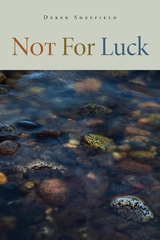
Not For Luck
Derek Sheffield
Michigan State University Press, 2021
In Not For Luck, Derek Sheffield ushers us into the beauty and grace that comes from giving attention to the interconnections that make up our lives. In particular, these poems explore a father’s relationship with his daughters, which is rooted in place and time. There is tenderness and an abiding ecological consciousness, but also loss and heartache, especially about environmental degradation. We are invited to listen to the languages of other beings. Through encounters with a herd of deer, a circle of salmon in a mountain creek, two bears on a stretch of coast, a river otter, and a shiny-eyed wood rat, these poems offer moments of wonder that celebrate our place as one species among many on our only earth.
Not God
A Play in VerseMarc J. Straus
Northwestern University Press, 2006
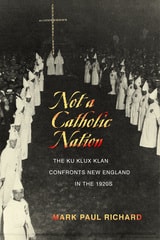
Not a Catholic Nation
The Ku Klux Klan Confronts New England in the 1920sMark Paul Richard
University of Massachusetts Press, 2015
Drawing on a wide range of previously untapped sources—French-language newspapers in the New England–Canadian borderlands; KKK documents scattered in local, university, and Catholic repositories; and previously undiscovered copies of the Maine Klansmen—Richard demonstrates that the Klan was far more active in the Northeast than previously thought. He also challenges the increasingly prevalent view that the Ku Klux Klan became a mass movement during this period largely because it functioned as a social, fraternal, or civic organization for many Protestants. While Richard concedes that some Protestants in New England may have joined the KKK for those reasons, he shows that the politics of ethnicity and labor played a more significant role in the Klan's growth in the region.
The most comprehensive analysis of the Ku Klux Klan's antagonism toward Catholics in the 1920s, this book is also distinctive in its consideration of the history of the Canada–U.S. borderlands, particularly the role of Canadian immigrants as both proponents and victims of the Klan movement in the United States.
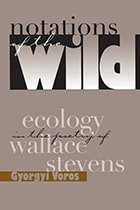
Notations Of The Wild
Ecology Poetry Wallace StevensGyorgyi Voros
University of Iowa Press, 1997
Gyorgyi Voros focuses on three governing metaphors in Stevens' poems—Nature as house, Nature as body, and Nature as self. She argues that Stevens' youthful wilderness experience yielded his primary subject—the relationship between human beings and nonhuman nature—and that it spurred his shift from a romantic to a phenomenological understanding of nature. Most important, it prompted him to reject his culture's narrow humanism in favor of a singular vision that in today's terms would he deemed ecological.
Notebooks of Elizabeth Cook-Lynn
Elizabeth Cook-Lynn
University of Arizona Press, 2007
Through each example, she challenges the status quo and piques the reader’s awareness of persistent abuses of indigenous communities. The voices that Cook-Lynn brings to the texts are as varied as the genres in which she writes. They are astute and lyrical, fierce and heartbreaking. Through these intonations, she maintains a balance between her roles as a scholar and a poet, a popular teacher and a woman who has experienced deep personal loss.
A unique blend of form and content that traverses time, space, and purpose, this collection is a thoroughly original contribution to modern American Indian literature. Moreover, it presents an alternative narrative of the nation’s history and opens an important window into the political challenges that Natives continue to face.
Notes on Blood Meridian
Revised and Expanded EditionBy John Sepich
University of Texas Press, 2008
Notes on Life
Theodore Dreiser
University of Alabama Press, 1974
Exploring human nature, society, and destiny through the lens of American naturalism.
In Notes on Life, Theodore Dreiser—best known for his landmark novels Sister Carrie and An American Tragedy—reveals himself as an incisive thinker grappling with the forces that shape human existence. This compelling collection of essays brings together Dreiser’s reflections on society, ambition, morality, and the often-unseen pressures that guide individual lives. Written during a period of rapid cultural and industrial transformation in the United States, these essays offer a deeply engaged response to the uncertainties and contradictions of modern life.
At the heart of Notes on Life lies Dreiser’s enduring commitment to the principles of literary naturalism: the belief that human behavior is influenced—if not determined—by environment, heredity, and social conditions. Yet these essays go beyond literary theory. They present a searching, often personal inquiry into what it means to live meaningfully in a world shaped by inequality, chance, and desire. Dreiser examines the tension between individual aspiration and societal constraint, probing the psychological and moral dimensions of success, failure, and identity.
What distinguishes this collection is its accessibility and range. Dreiser writes with a directness that invites readers into complex philosophical questions without sacrificing intellectual depth. Whether considering the nature of happiness, the role of material success, or the ethical dilemmas of modern society, he offers insights that remain strikingly relevant. His voice—by turns analytical, reflective, and quietly provocative—bridges the gap between literature and philosophy, making these essays as engaging for general readers as they are valuable for students and scholars.
For those interested in American literature, Notes on Life provides essential context for understanding Dreiser’s fiction and the broader movement of realism and naturalism in the early twentieth century. For contemporary readers, it offers a timeless meditation on the forces that continue to shape human experience: ambition, circumstance, and the search for meaning in an ever-changing world.
Both a work of literary significance and a volume of enduring philosophical reflection, Notes on Life stands as a testament to Dreiser’s intellectual breadth and his unwavering commitment to exploring the complexities of human life.
Notes on Nowhere
Feminism, Utopian Logic, and Social TransformationJennifer Burwell
University of Minnesota Press, 1997
Notes on Nowhere was first published in 1997. Minnesota Archive Editions uses digital technology to make long-unavailable books once again accessible, and are published unaltered from the original University of Minnesota Press editions.
The term utopia implies both "good place" and "nowhere." Since Sir Thomas More wrote Utopia in 1516, debates about utopian models of society have sought to understand the implications of these somewhat contradictory definitions. In Notes on Nowhere, author Jennifer Burwell uses a cross section of contemporary feminist science fiction to examine the political and literary meaning of utopian writing and utopian thought.
Burwell provides close readings of the science fiction novels of five feminist writers-Marge Piercy, Sally Gearhart, Joanna Russ, Octavia Butler, and Monique Wittig-and poses questions central to utopian writing: Do these texts promote a tradition in which narratives of the ideal society have been used to hide rather than reveal violence, oppression, and social divisions? Can a feminist critical utopia offer a departure from this tradition by using utopian narratives to expose contradiction and struggle as central aspects of the utopian impulse? What implications do these questions have for those who wish to retain the utopian impulse for emancipatory political uses?
As one way of answering these questions, Burwell compares two "figures" that inform utopian writing and social theory. The first is the traditional abstract "revolutionary" subject who contradicts existing conditions and who points us to the ideal body politic. The second, "resistant," subject is partial, concrete, and produced by conditions rather than operating outside of them. In analyzing contemporary changes in the subject's relationship to social space, Burwell draws from and revises "standpoint approaches" that tie visions of social transformation to a group's position within existing conditions.
By exploring the dilemmas, antagonisms, and resolutions within the critical literary feminist utopia, Burwell creates connections to a similar set of problems and resolutions characterizing "nonliterary" discourses of social transformation such as feminism, gay and lesbian studies, and Marxism. Notes on Nowhere makes an original, significant, and persuasive contribution to our understanding of the political and literary dimensions of the utopian impulse in literature and social theory.
Jennifer Burwell teaches in the Department of English at Wesleyan University in Connecticut.
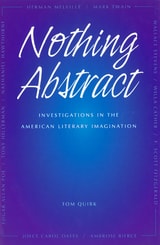
Nothing Abstract
Investigations in the American Literary ImaginationTom Quirk
University of Missouri Press, 2001
Written by one of the leading scholars in the field, Nothing Abstract is a collection of essays gathered over the past twenty years--all of which, in some fashion, have to do with a genetic approach to literary study. In previous books, the author has traced the compositional histories of certain literary works, the course of individual careers, and the genesis of literary movements. In this book, Tom Quirk resists the direction taken by contemporary theory in favor of an approach to literature through source and influence study, the evolution of a writer's achievement, the establishment of biographical or other contexts, and the transition from one literary era to another.
All of the essays that Quirk has chosen for this collection illustrate a scholarly method. The first two essays, somewhat general in their concerns, constitute a defense for the genetic method, and subsequent essays serve as evidence for the usefulness of genetic inquiry. The entire volume challenges poststructuralist theory not through active confrontation, but merely by being what it is and doing what it does. More important though is that all of the chosen essays are intrinsically interesting. They tell fascinating stories—stories about literary genesis, biographical circumstances, and artistic ambitions and achievement.
Authors discussed at length are Edgar Allan Poe, Tony Hillerman, Nathaniel Hawthorne, Herman Melville, Mark Twain, Ambrose Bierce, Wallace Stevens, Willa Cather, F. Scott Fitzgerald, and Joyce Carol Oates. Quirk also touches on Flannery O'Connor, Richard Wright, Robert Frost, Jack London, Stephen Crane, William Faulkner, and others. Nothing Abstract makes a great contribution to the study of important American writers and will be welcomed by all students and scholars of American studies and American literature.
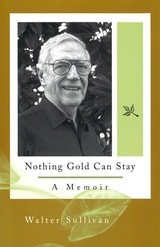
Nothing Gold Can Stay
A MemoirWalter Sullivan
University of Missouri Press, 2006
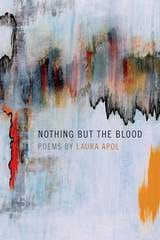
Nothing but the Blood
Laura Apol
Michigan State University Press, 2018
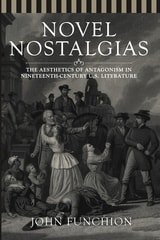
Novel Nostalgias
The Aesthetics of Antagonism in Nineteenth Century U.S. LiteratureJohn Funchion
The Ohio State University Press, 2015
In contrast with studies that characterized the nineteenth-century U.S. novel as a consensus-generating form complicit with disciplinary culture, Funchion shows how novels shaped a series of culture wars by advancing antagonistic nostalgias. Southern slave owners and their slaves or industrial magnates and their union opponents alike enlisted the power of nostalgia to validate their rival visions of the nation as lost moments awaiting recovery. Antagonistic nostalgias legitimated the political claims of movements as diverse as abolitionism, sectionalism, populism, socialism, anarchism, and cosmopolitanism. Novel Nostalgias provides a deep cultural historical understanding of the nineteenth-century United States, but ultimately, it also allows for a better understanding of how twenty-first-century movements function.
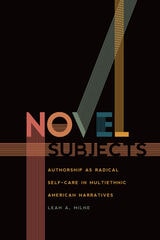
Novel Subjects
Authorship as Radical Self-Care in Multiethnic American NarrativesLeah A. Milne
University of Iowa Press, 2021
In Novel Subjects, Leah Milne offers a new way to look at multicultural literature by focusing on scenes of writing in contemporary works by authors with marginalized identities. These scenes, she argues, establish authorship as a form of radical self-care—a term we owe to Audre Lorde, who defines self-care as self-preservation and “an act of political warfare.”
In engaging in this battle, the works discussed in this study confront limitations on ethnicity and nationality wrought by the institutionalization of multiculturalism. They also focus on identities whose mere presence on the cultural landscape is often perceived as vindictive or willful. Analyzing recent texts by Carmen Maria Machado, Louise Erdrich, Ruth Ozeki, Toni Morrison, and more, Milne connects works across cultures and nationalities in search of reasons for this recent trend of depicting writers as characters in multicultural texts. Her exploration uncovers fiction that embrace unacceptable or marginalized modes of storytelling—such as plagiarism, historical revisions, jokes, and lies—as well as inauthentic, invisible, and unexceptional subjects. These works ultimately reveal a shared goal of expanding the borders of belonging in ethnic and cultural groups, and thus add to the ever-evolving conversations surrounding both multicultural literature and self-care.
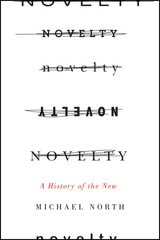
Novelty
A History of the NewMichael North
University of Chicago Press, 2013
In Novelty, Michael North takes us on a dazzling tour of more than two millennia of thinking about the problem of the new, from the puzzles of the pre-Socratics all the way up to the art world of the 1960s and ’70s. The terms of the debate, North shows, were established before Plato, and have changed very little since: novelty, philosophers argued, could only arise from either recurrence or recombination. The former, found in nature’s cycles of renewal, and the latter, seen most clearly in the workings of language, between them have accounted for nearly all the ways in which novelty has been conceived in Western history, taking in reformation, renaissance, invention, revolution, and even evolution. As he pursues this idea through centuries and across disciplines, North exhibits astonishing range, drawing on figures as diverse as Charles Darwin and Robert Smithson, Thomas Kuhn and Ezra Pound, Norbert Wiener and Andy Warhol, all of whom offer different ways of grappling with the idea of originality.
Novelty, North demonstrates, remains a central problem of contemporary science and literature—an ever-receding target that, in its complexity and evasiveness, continues to inspire and propel the modern. A heady, ambitious intellectual feast, Novelty is rich with insight, a masterpiece of perceptive synthesis.
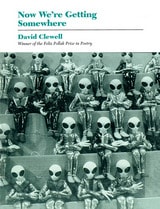
Now We're Getting Somewhere
David Clewell
University of Wisconsin Press, 1994
This is a book of sustenance, of fresh assurances that come to us—ready or not—out of the blue of this spirited poet’s most engaging work yet.
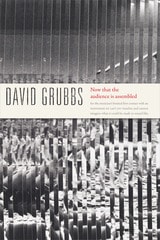
Now that the audience is assembled
David Grubbs
Duke University Press, 2018
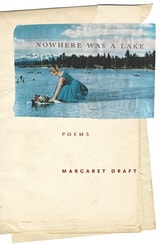
Nowhere Was a Lake
Margaret Draft
Four Way Books, 2024
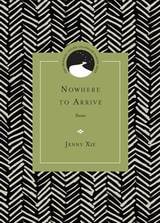
Nowhere to Arrive
PoemsJenny Xie, foreword by Chris Abani
Northwestern University Press, 2017
At the chapbook's center are two long poems, titled "Phnom Penh Diptych: Wet Season" and "Phnom Penh Diptych: Dry Season," that examine the escapist narratives that draw tourists and expatriates to Cambodia, and the speaker’s own privileged positioning.
On a formal level, the poems in Nowhere to Arrive make room for the unsaid and that which cannot be articulated. Here, we have a vocabulary of silence alongside stark imagistic juxtapositions, poems that celebrate compression and the force of paratactic constructions. Attentiveness and concentration emerge as virtues, as the speaker surveys the vast territory of the present with a wakeful gaze.
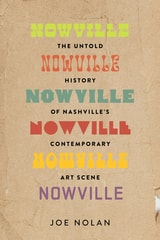
Nowville
The Untold History of Nashville's Contemporary Art SceneJoe Nolan
Vanderbilt University Press, 2024
This is the origin story of Nashville’s surging contemporary art scene told by the ones who were there before anyone else. Not a story about commercial spaces or official institutions—this is the story of moldy warehouse studios and improvised galleries, happy-kegger after-parties and front lawn art sales, exhibitions in apartment living rooms and secret art displays hidden in plain sight.
Nowville is an oral history of the Nashville art scene beginning in the 1990s. Author Joe Nolan tracks down the city’s art punks, art monks, radical art students, and visionary pioneers to share what made their moments in Nashville so special. He also offers insights into how this homespun movement powered by DIY innovating came to be a thriving creative community and a cornerstone of the city’s contemporary allure.
This book is the recipient of the 2025 Norman L. and Roselea J. Goldberg Prize from Vanderbilt University Press for the best book in the area of art or medicine.
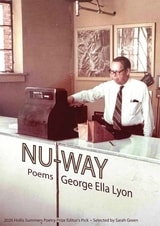
Nu-Way
PoemsGeorge Ella Lyon
Ohio University Press, 2027
Nu-Way traces the evolution of a writer from a three-year-old sitting on the counter of her daddy’s dry cleaner's to a fully developed poet. George Ella Lyon journeys from her role as the keeper of family stories to the teller of her own. This is a book of becoming, of claiming a self.
Growing up in the mountains of eastern Kentucky, near all four of her grandparents, Lyon was schooled in secrets and learned, of necessity, to keep her own. In Nu-Way, her sixth collection, she takes up both sides of the family tapestry: the scenes intentionally stitched and the tangle on the other side. This is not a process of power, but of inner transformation, of coming to terms with herself as well as the people who made her. It holds the tension of opposites—the individual and the collective—without sacrificing either. Highly sharable, Nu-Way will appeal to readers who often feel shut out of poetry.
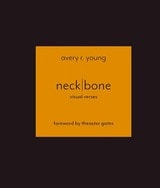
neckbone
visual versesavery r. young; foreword by Theaster Gates
Northwestern University Press, 2019
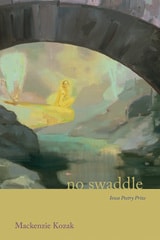
no swaddle
Mackenzie Kozak
University of Iowa Press, 2025
Brockman-Campbell Book Award for Poetry, Honorable Mention
Mackenzie Kozak examines the complex question of whether or not to bear children. Through a series of untitled American sonnets, the poems speak to themes of origin and desire, noting the shame that can accompany such a decision. Many poetry collections speak to the varied griefs of becoming a mother, losing a child, or being unable to have a child, but this collection gives specific voice to another grief that feels unspeakable: the possible conclusion of not wanting to be a mother.
no swaddle reads as a sort of meditation on theme, its repeated form mirroring the spiraling nature of indecision and reconsideration of the same major question alongside its continuous struggle to name. In the end, this grappling with elements of grief and shame becomes a way of moving toward greater agency and fulfillment.