Results by title
8812 books match the query 'Political Science' and 211 start with n

Nations and Nationalism
A ReaderSpencer, Philip
Rutgers University Press, 2005
Nationalism has become a topic of wide-ranging significance and heated debate over recent years, with a huge expansion in the amount of literature available. Bringing together the best and most representative of these writings, Nations and Nationalism is an essential reader for students of political theory and related fields.
Assembled by two influential scholars, the volume includes the core, basic texts required for any course on nationalism, along with a selection of less well-known contributions that illuminates the debates. Articles and chapters cover the origins, different types, and concepts of nationalism; its relationship with race, gender, and ethnicity; the impact of globalization, post-communism, and migration; and debates about citizenship and self-determination. Classic writers such as Ernest Gellner, Anthony Smith, Benedict Anderson, and John Breuilly are represented along with younger scholars who have played a critical role in reshaping contemporary attitudes toward the topic.
Selected writings by historians, sociologists, and anthropologists supplement contributions from political scientists so that students will be able to compare theories and debates across a range of disciplines and time periods. Taken together, the chapters provide a balanced and vivid overview of how nationalism has exploded as a topic of inquiry over the last two decades and how it has interacted with other political and social forces.
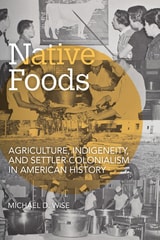
Native Foods
Agriculture, Indigeneity, and Settler Colonialism in American HistoryMichael D. Wise
University of Arkansas Press, 2023
Combining original historical research with interdisciplinary perspectives and informed by the work of Indigenous food sovereignty advocates and activists, this study sheds new light on the historical roles of Native American cuisine in American history and the significance of ongoing colonial processes in present-day discussions about the place of Native foods and Native history in our evolving worlds of taste, justice, and politics.
Native Land Talk
Indigenous and Arrivant Rights TheoriesYael Ben-zvi
Dartmouth College Press, 2018
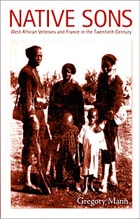
Native Sons
West African Veterans and France in the Twentieth CenturyGregory Mann
Duke University Press, 2006
Focusing on the period between World War I and 1968, Mann draws on archival research and extensive interviews with surviving Malian veterans of French wars to explore the experiences of the African soldiers. He describes the effects their long absences and infrequent homecomings had on these men and their communities, he considers the veterans’ status within contemporary Malian society, and he examines their efforts to claim recognition and pensions from France. Mann contends that Mali is as much a postslavery society as it is a postcolonial one, and that specific ideas about reciprocity, mutual obligation, and uneven exchange that had developed during the era of slavery remain influential today, informing Malians’ conviction that France owes them a “blood debt” for the military service of African soldiers in French wars.
Native Space
Geographic Strategies to Unsettle Settler ColonialismNatchee Blu Barnd
Oregon State University Press, 2017
What are the limits and potentials of indigenous acts of spatial production? Native Space argues that control over the notion of “Indianness” still sits at the center of how space is produced in a neocolonial nation, and shows how non-indigenous communities uniquely deploy Native identities in the direct construction of colonial geographies. In short, “the Indian” serves to create White space in concrete ways. Yet, Native geographies effectively reclaim indigenous identities, assert ongoing relations to the land, and refuse the claims of settler colonialism.
Barnd creatively and persuasively uses original cartographic research and demographic data, a series of interrelated stories set in the Midwestern Plains states of Kansas and Oklahoma, an examination of visual art by contemporary indigenous artists, and discussions of several forms of indigenous activism to support his argument. With its highly original, interdisciplinary approach, Native Space makes a significant contribution to the literature in cultural and critical geography, comparative ethnic studies, indigenous studies, cultural studies, American Studies, and related fields.
Natives against Nativism
Antiracism and Indigenous Critique in Postcolonial FranceOlivia C. Harrison
University of Minnesota Press, 2023
Examining the intersection of Palestine solidarity movements and antiracist activism in France from the 1970s to the present
For the pasty fifty years, the Palestinian question has served as a rallying cry in the struggle for migrant rights in postcolonial France, from the immigrant labor associations of the 1970s and Beur movements of the 1980s to the militant decolonial groups of the 2000s. In Natives against Nativism, Olivia C. Harrison explores the intersection of anticolonial solidarity and antiracist activism from the 1970s to the present.
Natives against Nativism analyzes a wide range of texts—novels, memoirs, plays, films, and militant archives—that mobilize the twin figures of the Palestinian and the American Indian in a crossed critique of Eurocolonial modernity. Harrison argues that anticolonial solidarity with Palestinians and Indigenous Americans has been instrumental in developing a sophisticated critique of racism across imperial formations—in this case, France, the United States, and Israel.
Serving as the first relational study of antiracism in France, Natives against Nativism observes how claims to indigeneity have been deployed in multiple directions, both in the ongoing struggle for migrant rights and racial justice, and in white nativist claims in France today.

Natural Resource Development and Human Rights in Latin America
State and non-state actors in the promotion of and opposition to extractivismEdited by Malayna Raftopoulos and Radoslaw Poweska
University of London Press, 2017
Natural Resources and the New Frontier
Constructing Modern China's BorderlandsJudd C. Kinzley
University of Chicago Press, 2018
China’s westernmost province of Xinjiang has experienced escalating cycles of violence, interethnic strife, and state repression since the 1990s. In their search for the roots of these growing tensions, scholars have tended to focus on ethnic clashes and political disputes. In Natural Resources and the New Frontier, historian Judd C. Kinzley takes a different approach—one that works from the ground up to explore the infrastructural and material foundation of state power in the region.
As Kinzley argues, Xinjiang’s role in producing various natural resources for regional powers has been an important but largely overlooked factor in fueling unrest. He carefully traces the buildup to this unstable situation over the course of the twentieth century by focusing on the shifting priorities of Chinese, Soviet, and provincial officials regarding the production of various resources, including gold, furs, and oil among others. Through his archival work, Kinzley offers a new way of viewing Xinjiang that will shape the conversation about this important region and offer a model for understanding the development of other frontier zones in China as well as across the global south.
Natural Right and History
Leo Strauss
University of Chicago Press, 1965
"Strauss . . . makes a significant contribution towards an understanding of the intellectual crisis in which we find ourselves . . . [and] brings to his task an admirable scholarship and a brilliant, incisive mind."—John H. Hallowell, American Political Science Review
Leo Strauss (1899-1973) was the Robert Maynard Hutchins Distinguished Service Professor Emeritus in Political Science at the University of Chicago.

Natural Visions
The Power of Images in American Environmental ReformFinis Dunaway
University of Chicago Press, 2005
In Natural Visions, Finis Dunaway tells the story of how visual imagery—such as wilderness photographs, New Deal documentary films, and Sierra Club coffee-table books—shaped modern perceptions of the natural world. By examining the relationship between the camera and environmental politics through detailed studies of key artists and activists, Dunaway captures the emotional and spiritual meaning that became associated with the American landscape. Throughout the book, he reveals how photographers and filmmakers adapted longstanding traditions in American culture—the Puritan jeremiad, the romantic sublime, and the frontier myth—to literally picture nature as a place of grace for the individual and the nation.
Beautifully illustrated with photographs by Ansel Adams, Eliot Porter, and a host of other artists, Natural Visions will appeal to a wide range of readers interested in American cultural history, the visual arts, and environmentalism.
Nature Fantasies
Decolonization and Biopolitics in Latin AmericaGabriel Horowitz
Bucknell University Press, 2024
In this original study, Gabriel Horowitz examines the work of select nineteenth- and twentieth-century Latin American writers through the lens of contemporary theoretical debates about nature, postcoloniality, and national identity. In the work of José Martí, Gertrudis Gómez de Avellaneda, Jorge Luis Borges, Augusto Roa Bastos, Cesar Aira, and others, he traces historical constructions of nature in regional intellectual traditions and texts as they inform political culture on the broader global stage. By investigating national literary discourses from Cuba, Argentina, and Paraguay, he identifies a common narrative thread that imagines the utopian wilderness of the New World as a symbolic site of independence from Spain. In these texts, Horowitz argues, an expressed desire to return to the nation’s foundational nature contributed to a movement away from political and social engagement and toward a “biopolitical state,” in which nature, traditionally seen as pre-political, conversely becomes its center.

Nature Inc.
Environmental Conservation in the Neoliberal AgeEdited by Bram Büscher, Wolfram Dressler, and Robert Fletcher
University of Arizona Press, 2014
As public funding for conservation efforts grows ever scarcer and the private sector is brimming with ideas about how its role—along with its profits— can grow, market forces have found their way into environmental management to a degree unimaginable only a few years ago. Ecotourism, payment for environmental services (PES), and new conservation finance instruments such as species banking, carbon trading, and biodiversity derivatives are only some of the market mechanisms that have sprung into being. This is “Nature™ Inc.”: a fast-growing frontier of networks, activities, knowledge, and regulations that are rapidly changing the relations between people and nature on both global and local scales.
Nature™ Inc. brings together cutting-edge research by respected scholars from around the world to analyze how “neoliberal conservation” is reshaping human–nature relations that have been fashioned over two centuries of capitalist development. Contributors synthesize and add to a growing body of academic literature that cuts across the disciplinary boundaries of geography, sociology, anthropology, political science, and development studies to critically interrogate the increasing emphasis on neoliberal market-based mechanisms in environmental conservation. They all grapple with one overriding question: can capitalist market mechanisms resolve the environmental problems they have helped create?
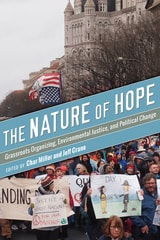
Nature of Hope
Grassroots Organizing, Environmental Justice, and Political ChangeChar Miller
University Press of Colorado, 2018
Through lively and accessible storytelling, The Nature of Hope reveals unsung and unstinting efforts to protect the physical environment and human health in the face of continuing economic growth and development and the failure of state and federal governments to deal adequately with the resulting degradation of air, water, and soils. In an age of environmental crisis, apathy, and deep-seated cynicism, these efforts suggest the dynamic power of a “politics of hope” to offer compelling models of resistance, regeneration, and resilience. The contributors frame their chapters around the drive for greater democracy and improved human and ecological health and demonstrate that local activism is essential to the preservation of democracy and the protection of the environment. The book also brings to light new styles of leadership and new structures for activist organizations, complicating assumptions about the environmental movement in the United States that have focused on particular leaders, agencies, thematic orientations, and human perceptions of nature.
The critical implications that emerge from these stories about ecological activism are crucial to understanding the essential role that protecting the environment plays in sustaining the health of civil society. The Nature of Hope will be crucial reading for scholars interested in environmentalism and the mechanics of social movements and will engage historians, geographers, political scientists, grassroots activists, humanists, and social scientists alike.
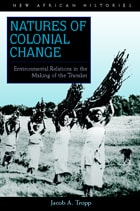
Natures of Colonial Change
Environmental Relations in the Making of the TranskeiJacob A. Tropp
Ohio University Press, 2006
In this groundbreaking study, Jacob A. Tropp explores the interconnections between negotiations over the environment and an emerging colonial relationship in a particular South African context—the Transkei—subsequently the largest of the notorious “homelands” under apartheid.
In the late nineteenth century, South Africa’s Cape Colony completed its incorporation of the area beyond the Kei River, known as the Transkei, and began transforming the region into a labor reserve. It simultaneously restructured popular access to local forests, reserving those resources for the benefit of the white settler economy. This placed new constraints on local Africans in accessing resources for agriculture, livestock management, hunting, building materials, fuel, medicine, and ritual practices.
Drawing from a diverse array of oral and written sources, Tropp reveals how bargaining over resources—between and among colonial officials, chiefs and headmen, and local African men and women—was interwoven with major changes in local political authority, gendered economic relations, and cultural practices as well as with intense struggles over the very meaning and scope of colonial rule itself.
Natures of Colonial Change sheds new light on the colonial era in the Transkei by looking at significant yet neglected dimensions of this history: how both “colonizing” and “colonized” groups negotiated environmental access and how such negotiations helped shape the broader making and meaning of life in the new colonial order.
Navigating Climate Change Policy
The Opportunities of FederalismEdella C. Schlager
University of Arizona Press, 2011
Federalism—the system of government in which power is divided among a national government and state and regional governments—is well-suited to address the challenges of climate change because it permits distinctive policy responses at a variety of scales. The chapters in this book explore questions such as what are appropriate relationships between states, tribes, and the federal government as each actively pursues climate-change policies? How much leeway should states have in designing and implementing climate-change policies, and how extensively should the federal government exercise its preemption powers to constrain state activity? What climate-change strategies are states best suited to pursue, and what role, if any, will regional state-based collaborations and associations play? This book examines these questions from a variety of perspectives, blending legal and policy analyses to provide thought-provoking coverage of how governments in a federal system cooperate, coordinate, and accommodate one another to address this global problem.
Navigating Climate Change Policy is an essential resource for policymakers and judges at all levels of government who deal with questions of climate governance. It will also serve as an important addition to the curriculum on climate change and environmental policy in graduate and undergraduate courses and will be of interest to anyone concerned with how the government addresses environmental issues.
Navigating Gendered Terrain
Stereotypes and Strategy in Political CampaignsKelly Dittmar
Temple University Press, 2014
Navigating Gendered Terrain addresses how gender is used to shape how campaigns are waged by influencing insider perceptions of and decisions about effective campaign messages, images, and tactics within party and political contexts. Dittmar uses survey information and interviews with candidates, political consultants, and other campaign professionals to reveal how gender-informed advertising, websites, and overall presentation to voters respond to stereotypes and perceptions of female and male candidates.
She closes her book by offering a feminist interpretation of women as candidates and explaining how the unintended outcomes of political campaigns reinforce prevailing ideas about gender and candidacy.
Navigating Normative Orders
Interdisciplinary PerspectivesEdited by Matthias C. Kettemann
Campus Verlag, 2020

Navigating the African Diaspora
The Anthropology of InvisibilityDonald Martin Carter
University of Minnesota Press, 2010
Naïve Readings
Reveilles Political and PhilosophicRalph Lerner
University of Chicago Press, 2016
Lerner analyzes an astonishing diversity of writers, including Francis Bacon, Benjamin Franklin, Edward Gibbon, Judah Halevi, Thomas Jefferson, Abraham Lincoln, Moses Maimonides, and Alexis de Tocqueville. He shows that by reading their words slowly and naïvely, with wide-open eyes and special attention for moments of writing that become self-conscious, impassioned, or idiosyncratic, we can begin to see a pattern that illuminates a thinker’s intent, new messages purposively executed through indirect means. Through these experimental readings, Lerner shows, we can see a deep commonality across writers from disparate times and situations, one that finds them artfully challenging others to reject passivity and fatalism and start thinking afresh.

Nearly Neighbors
Jane Addams, Johnny Powers, and the Progressive Political ImaginationTerrence J. McDonald
University of Chicago Press, 2026
Jane Addams was full of courage and goodwill when she opened Hull House in Chicago’s Nineteenth Ward in 1889. However, she failed to understand that her immigrant neighbors had been well-organized around mostly Catholic churches and schools for decades before her arrival. Her ultimate political rival, Johnny Powers, grew up in this culture but was no ethnic hero or deep political thinker. Nearly Neighbors is the first book to provide a contextualized history of their encounter, embedding it in the social and political culture and structures of Chicago and the Nineteenth Ward in the 1890s.
Terrence J. McDonald provides a crucial analysis of two pivotal figures in Chicago’s political history, in part by providing the first detailed assessment of Powers’s life and practices, but also by demonstrating Addams’s misconception of him and her neighbors—and why it matters for understanding her Progressive work overall. In both her political work and writings, Addams saw her ethnic neighbors as bundles of economic need, rather than bearers of ethnic culture. At the same time, she was recruited by elite allies into causes that appeared to be opposed by her neighbors. These views and practices permitted Powers to win in their climactic political battle in 1898 simply by claiming to be the neighborhood defender against Addams and her “downtown” allies. Nearly Neighbors offers a new way of understanding Addams and the complicated legacy of her famous political work and writings.

Necro Citizenship
Death, Eroticism, and the Public Sphere in the Nineteenth-Century United StatesRuss Castronovo
Duke University Press, 2001
Moving from medical engravings, séances, and clairvoyant communication to Supreme Court decisions, popular literature, and physiological tracts, Necro Citizenship explores how rituals of inclusion and belonging have generated alienation and dispossession. Castronovo contends that citizenship does violence to bodies, especially those of blacks, women, and workers. “Necro ideology,” he argues, supplied citizens with the means to think about slavery, economic powerlessness, or social injustice as eternal questions, beyond the scope of politics or critique. By obsessing on sleepwalkers, drowned women, and other corpses, necro ideology fostered a collective demand for an abstract even antidemocratic sense of freedom. Examining issues involving the occult, white sexuality, ghosts, and suicide in conjunction with readings of Harriet Jacobs, Ralph Waldo Emerson, Frederick Douglass, Nathaniel Hawthorne, and Frances Harper, Necro Citizenship successfully demonstrates why Patrick Henry's “give me liberty or give me death” has resonated so strongly in the American imagination.
Negative Liberty
Public Opinion and the Terrorist Attacks on AmericaDarren W. Davis
Russell Sage Foundation, 2007

Negotiated Reform
The Multilevel Governance of Financial RegulationEdited by Renate Mayntz
Campus Verlag, 2016
Negotiating Childhood
French Colonialism and African Children in Senegal, 1848–1940Kelly M. Duke Bryant
University of Massachusetts Press, 2026
A groundbreaking study of the meaning of childhood in French colonial Senegal
Negotiating Childhood explores how colonial child protection policies and African children’s responses to them produced new ways of defining, measuring, documenting, and experiencing childhood in the French colony of Senegal from 1848 to 1940. In this groundbreaking book, Kelly M. Duke Bryant takes the scholarship in new directions, offering to a literature dominated by studies of British colonies in the twentieth century a study of childhood in a French colony from the immediate post-emancipation period through the 1930s. This focus allows her to complicate the generally accepted timeline of child protection in colonial Africa and question other assumptions about children’s history on the continent.
This deeply researched work uses a wide range of sources to examine children’s experiences in spaces where they encountered French discipline and surveillance, such as wardship courts, public streets, schools, juvenile reformatories, and vaccine clinics. The book shows not only how these spaces re-ordered African childhood, but also how children themselves shaped and limited French efforts to impose order, especially when the state depended on African children’s cooperation to make good on rhetoric about child “protection.” It also charts the rise of documentation in children’s lives, as colonial representatives recorded names, ages, and other details about the African children with whom they interacted. Tracing the “documented” child back to the early colonial period, Negotiating Childhood historicizes the emergence of identity documentation—so crucial to our contemporary world—and questions the naturalness of the very idea of the “child.”
Negotiating Empire
The Cultural Politics of Schools in Puerto Rico, 1898–1952Solsiree del Moral
University of Wisconsin Press, 2013
Rather than seeing U.S. empire in Puerto Rico during this period as a contest between two sharply polarized groups, del Moral views their interaction as a process of negotiation. Although educators and families rejected some tenets of Americanization, such as English-language instruction, they also redefined and appropriated others to their benefit to increase literacy and skills required for better occupations and social mobility. Pushing their citizenship-building vision through the schools, Puerto Ricans negotiated a different school project—one that was reformist yet radical, modern yet traditional, colonial yet nationalist.
Negotiating Identity and Collective Memory in Czech Silesia
Johana Wyss
Central European University Press, 2026
Negotiating Tribal Water Rights
Fulfilling Promises in the Arid WestBonnie G. Colby, John E. Thorson, and Sarah Britton; Foreword by David H. Getches
University of Arizona Press, 2005
Much has been written about Indian water rights; for the many tribal and non-Indian stakeholders who rely upon western water, this book now offers practical guidance on how to negotiate them. By providing a comprehensive synthesis of western water issues, tribal water disputes, and alternative approaches to dispute resolution, it offers a valuable sourcebook for all—tribal councils, legislators, water professionals, attorneys—who need a basic understanding of the complexities of the situation.
The book reviews the history, current status, and case law related to western water while revealing strategies for addressing water conflicts among tribes, cities, farms, environmentalists, and public agencies. Drawing insights from the process, structure, and implementation of water rights settlements currently under negotiation or already agreed to, it presents a detailed analysis of how these cases evolve over time. It also provides a wide range of contextual materials, from the nuts and bolts of a Freedom of Information Act request to the hydrology of irrigation. It also includes contributed essays by expert authors on special topics, as well as interviews with key individuals active in water management and tribal water cases.
As stakeholders continue to battle over rights to water, this book clearly addresses the place of Native rights in the conflict. Negotiating Tribal Water Rights offers an unsurpassed introduction to the ongoing challenges these claims present to western water management while demonstrating the innovative approaches that states, tribes, and the federal government have taken to fulfill them while mitigating harm to both non-Indians and the environment.
Negotiating With ETA
Obstacles To Peace In The Basque Country, 1975-1988Robert P. Clark
University of Nevada Press, 1990
Since the late 1960s, the Basque insurgent organization ETA (Euzkadi ta Askatasuna, or Basque Homeland and Freedom) has been engaged in a violent struggle against the Spanish state in an effort to gain the independence of the Basque Country. ETA violence has led to the death of hundreds of people, making the organization the most violent insurgent group in Europe. Between 1975 and 1988, nearly thirty attempts to negotiate an end to violence, with a few limited exceptions, all ended in failure. This important book examines why the efforts to negotiate have failed and makes suggestions on how to improve the chances for successful discussion in the future. Although Clark does not disprove the conventional wisdom that negotiation with terrorists is a bad idea, he does begin from the opposing point of view that there may be some positive values to be realized from such negotiation.Negotiating with ETA describes the various factions that are interested in the outcome of such negotiations and the Spanish antiterrorist policy throughout the period under examination. The book also recounts the early attempts to negotiate, the first attempt at "social reintegration," various attempts by the Basque Government to get negotiations started, negotiation efforts under the Spanish socialist government of Felipe González, and the lengthy negotiations that took place in Algeria. A wide range of scholars and specialists will find this book valuable, including those interested in contemporary Spanish politics, ethnic nationalism, Basque affairs, the problem of terrorism, and conflict resolution.
Negotiating in Civil Conflict
Constitutional Construction and Imperfect Bargaining in IraqHaider Ala Hamoudi
University of Chicago Press, 2013

Negotiation Analysis
H. Peyton Young, Editor
University of Michigan Press, 1991

Neighbors and Strangers
The Fundamentals of Foreign AffairsWilliam R. Polk
University of Chicago Press, 1997
Indeed, going deeper into the human experience, Polk documents "fear of the foreigner" as a visceral response so deep-seated and so pervasive that it transcends human memory, individual experience and even logical analysis. More generally, he shows that the tension created by having to live as neighbors with those who, in the definition of contemporaries, were irredeemably alien has been one of the major causes of the rise of civilizations.
Accessible and engaging, Neighbors and Strangers is a revelatory look at how foreign affairs are a profound reflection of human nature.
Neither Cargo nor Cult
Ritual Politics and the Colonial Imagination in FijiMartha Kaplan
Duke University Press, 1995
Engaging Fijian oral history and texts as well as colonial records, Kaplan resituates Tuka in the flow of indigenous Fijian history-making and rereads the archives for an ethnography of British colonizing power. Proposing neither unchanging indigenous culture nor the inevitable hegemony of colonial power, she describes the dialogic relationship between plural, contesting, and changing articulations of both Fijian and colonial culture.
A remarkable enthnographic account of power and meaning, Neither Cargo nor Cult addresses compelling questions within anthropological theory. It will attract a wide audience among those interested in colonial and postcolonial societies, ritual and religious movements, hegemony and resistance, and the Pacific Islands.

Neither Liberal nor Conservative
Ideological Innocence in the American PublicDonald R. Kinder and Nathan P. Kalmoe
University of Chicago Press, 2017
Well, American elites disagree fiercely. But average Americans do not. This, at least, was the position staked out by Philip Converse in his famous essay on belief systems, which drew on surveys carried out during the Eisenhower Era to conclude that most Americans were innocent of ideology. In Neither Liberal nor Conservative, Donald Kinder and
Nathan Kalmoe argue that ideological innocence applies nearly as well to the current state of American public opinion. Real liberals and real conservatives are found in impressive numbers only among those who are deeply engaged in political life. The ideological battles between American political elites show up as scattered skirmishes in the general public, if they show up at all.
If ideology is out of reach for all but a few who are deeply and seriously engaged in political life, how do Americans decide whom to elect president; whether affirmative action is good or bad? Kinder and Kalmoe offer a persuasive group-centered answer. Political preferences arise less from ideological differences than from the attachments and antagonisms of group life.

Neither Separate Nor Equal
Congress in the 1790sKenneth R. Bowling
Ohio University Press, 2000
Scholars today take for granted the existence of a “wall of separation” dividing the three branches of the federal government. Neither Separate nor Equal: Congress in the 1790s demonstrates that such lines of separation among the legislative, executive, and judicial branches, however, were neither so clearly delineated nor observed in the first decade of the federal government's history.
The first two essays describe the social and cultural milieu attending the movement of the republican court from New York to Philadelphia and the physical and social environment of Philadelphia in the 1790s. The following section examines the congressional career of New York's Egbert Benson, the senatorial career of Robert Morris as an expression of his economic interests, the vigorous opposition of Rep. William Branch Giles to the Federalist policies of the Washington administration, and finally the underappreciated role of congressional spouses.
The last five essays concentrate on areas of interbranch cooperation and conflict. In particular, they discuss the meaning of separation of powers in the 1790s, Washington as an active president with Congress, the contrast between Hamilton's and Jefferson's exercise of political influence with Congress, and John Adams's relationship with Congress during the Quasi-War crisis.
The essays in this collection, the second volume of the series Perspectives on the History of Congress, 1789-1801, originated in two conferences held in 1995 and 1996 by the United States Capitol Historical Society.
Neoliberal Apartheid
Palestine/Israel and South Africa after 1994Andy Clarno
University of Chicago Press, 2017
After a decade of research in the Johannesburg and Jerusalem regions, Andy Clarno presents here a detailed ethnographic study of the precariousness of the poor in Alexandra township, the dynamics of colonization and enclosure in Bethlehem, the growth of fortress suburbs and private security in Johannesburg, and the regime of security coordination between the Israeli military and the Palestinian Authority in the West Bank. The first comparative study of the changes in these two areas since the early 1990s, the book addresses the limitations of liberation in South Africa, highlights the impact of neoliberal restructuring in Palestine, and argues that a new form of neoliberal apartheid has emerged in both contexts.

Neoliberal Chicago
Edited by Larry Bennett, Roberta Garner, and Euan Hague
University of Illinois Press, 2017
Neoliberal Frontiers
An Ethnography of Sovereignty in West AfricaBrenda Chalfin
University of Chicago Press, 2010

Neoliberalism and Unlawful Governance
The Crisis of Democratic RightsGuillermina Seri
University of Michigan Press, 2026
In looking at the ways in which people resist, the book honors the perspective of the excluded and the voices of those most immediately affected by neoliberal austerity—from activists defending land and rights to communities subjected to various forms of exploitation, extractivism, and displacement. Bringing in these voices and theoretical perspectives, including from beyond the English-speaking world, this book highlights alternative ways of thinking about democracy and rights, drawing from the tradition of the commons. Through its deep analysis of history, theory, and world events, Neoliberalism and Unlawful Governance offers fresh insights into how various forms of emergency measures, policing, and security are used to privilege markets over people and the planet, while also emphasizing the crucial role of popular movements in defending and expanding democratic rights and to rebuilding commons.

Neoliberalism as Exception
Mutations in Citizenship and SovereigntyAihwa Ong
Duke University Press, 2006
Ong traces how these and other neoliberal exceptions to business as usual are reconfiguring relationships between governing and the governed, power and knowledge, and sovereignty and territoriality. She argues that an interactive mode of citizenship is emerging, one that organizes people—and distributes rights and benefits to them—according to their marketable skills rather than according to their membership within nation-states. Those whose knowledge and skills are not assigned significant market value—such as migrant women working as domestic maids in many Asian cities—are denied citizenship. Nevertheless, Ong suggests that as the seam between sovereignty and citizenship is pried apart, a new space is emerging for NGOs to advocate for the human rights of those excluded by neoliberal measures of human worthiness.
Neoliberalism from Below
Popular Pragmatics and Baroque EconomiesVerónica Gago
Duke University Press, 2017

Neoliberalism in Vietnam, Volume 20
Ann M. Leshkowich and Christina Schwenkel
Duke University Press, 0
Contributors draw their conclusions from ethnographic fieldwork in contemporary urban spaces. They link neoliberalism in Vietnam to a set of globally diverse technical practices, institutions, modes of power, and governing strategies; for example, in its shifting currency regimes and its anticorruption campaigns. Contributors also explore the growing emphasis on self-improvement and modernization through studies of architecture, changing beauty standards, and the impact of in vitro fertilization. Biopolitical logics and the self-regulation of moral personhood are also addressed in essays on HIV/AIDS and transnational adoption. The issue highlights the ways in which the socialist past is integral to the present in Vietnam, even as it is remade and newly configured.
Contributors: Erik Harms, Nina Hien, Ann Marie Leshkowich, Li Zhang, Ken MacLean, Alfred John Montoya, Melissa J. Pashigian, Christina Schwenkel, Allison Truitt
Guest editors: Christina Schwenkel (Associate Professor, Department of Anthropology, University of California at Riverside) and Ann Marie Leshkowich (Associate Professor and Chair, Department of Sociology and Anthropology, College of the Holy Cross).
Nestor Makhno and Rural Anarchism in Ukraine, 1917-1921
Colin Darch
Pluto Press, 2020
Between 1917 and 1921, the Makhnovists fought German and Austrian invaders, reactionary monarchist forces, Ukrainian nationalists and sometimes the Bolsheviks themselves. Drawing upon anarchist ideology, the Makhnovists gathered widespread support amongst the Ukrainian peasantry, taking up arms when under attack and playing a significant role - in temporary alliance with the Red Army - in the defeats of the White Generals Denikin and Wrangel. Often dismissed as a kulak revolt, or a manifestation of Ukrainian nationalism, Colin Darch analyses the successes and failures of the Makhnovist movement, emphasising its revolutionary character.
Over 100 years after the revolutions, this book reveals a lesser known side of 1917, contributing both to histories of the period and broadening the narrative of 1917, whilst enriching the lineage of anarchist history.

Nestor Makhno and Rural Anarchism in Ukraine, 1917-1921
Colin Darch
Pluto Press, 2020
Between 1917 and 1921, the Makhnovists fought German and Austrian invaders, reactionary monarchist forces, Ukrainian nationalists and sometimes the Bolsheviks themselves. Drawing upon anarchist ideology, the Makhnovists gathered widespread support amongst the Ukrainian peasantry, taking up arms when under attack and playing a significant role - in temporary alliance with the Red Army - in the defeats of the White Generals Denikin and Wrangel. Often dismissed as a kulak revolt, or a manifestation of Ukrainian nationalism, Colin Darch analyzes the successes and failures of the Makhnovist movement, emphasizing its revolutionary character.
Over 100 years after the revolutions, this book reveals a lesser known side of 1917, contributing both to histories of the period and broadening the narrative of 1917, whilst enriching the lineage of anarchist history.
Network Culture
Politics for the Information AgeTiziana Terranova
Pluto Press, 2004
Networked
Business and Politics in Decentralizing Indonesia, 1998-2004Wahyu Prasetyawan
National University of Singapore Press, 2018
Networked Business and Politics in Decentralizing Indonesia evaluates three cases of deep-seated political conflict and intrigue including central government, local governments, and multinational companies. It looks at how the structure of the national political economy has changed as the result of local politicians becoming involved in disputes with the national government over control of natural resources. It also analyzes how these changes will affect the distribution of wealth in the country as well as Indonesia’s evolving democratic politics and modes of governance.
Networking China
The Digital Transformation of the Chinese EconomyYu Hong
University of Illinois Press, 2017

Networking Futures
The Movements against Corporate GlobalizationJeffrey S. Juris
Duke University Press, 2008
In an account full of activist voices and on-the-ground detail, Juris provides a history of anti–corporate globalization movements, an examination of their connections to local dynamics in Barcelona, and an analysis of movement-related politics, organizational forms, and decision-making. Depicting spectacular direct action protests in Barcelona and other cities, he describes how far-flung activist networks are embodied and how networking politics are performed. He further explores how activists have used e-mail lists, Web pages, and free software to organize actions, share information, coordinate at a distance, and stage “electronic civil disobedience.” Based on a powerful cultural logic, anti–corporate globalization networks have become models of and for emerging forms of radical, directly democratic politics. Activists are not only responding to growing poverty, inequality, and environmental devastation; they are also building social laboratories for the production of alternative values, discourses, and practices.
Networks of Champions
Leadership, Access, and Advocacy in the U.S. House of RepresentativesChristine A. DeGregorio
University of Michigan Press, 1999

Neuropolitics
Thinking, Culture, SpeedWilliam E. Connolly
University of Minnesota Press, 2002
Nevada's Great Recession
Looking Back, Moving ForwardElliott Parker
University of Nevada Press, 2017
This is a different kind of economics book. Parker uses his expertise from doing research on the East Asian fiscal crisis to give profound insights into what happened and how to avoid future catastrophes. Marshall personalizes it by providing vignettes of what it was actually like to be in the trenches and fighting the inevitable political battles that came up, and counteracting some of the falsehoods that certain politicians were spreading about the recession.
Parker and Marshall’s book should be required reading for not only every single elected official in Nevada, but for any private citizen who cares about the public good.