Results by title
18284 books match the query 'United States' and 397 start with n
Not Just Black and White
Historical and Contemporary Perspectives on Immgiration, Race, and Ethnicity in the United StatesNancy Foner
Russell Sage Foundation, 2004
Not Just Roommates
Cohabitation after the Sexual RevolutionElizabeth H. Pleck
University of Chicago Press, 2012
The late twentieth century has seen a fantastic expansion of personal, sexual, and domestic liberties in the United States. In Not Just Roommates, Elizabeth H. Pleck explores the rise of cohabitation, and the changing social norms that have allowed cohabitation to become the chosen lifestyle of more than fifteen million Americans.
Despite this growing social acceptance, Pleck contends that when it comes to the law, cohabitors have been, and continue to be, treated as second-class citizens, subjected to discriminatory laws, limited privacy, a lack of political representation, and little hope for change. Because cohabitation is not a sexual identity, Pleck argues, cohabitors face the legal discrimination of a population with no group identity, no civil rights movement, no legal defense organizations, and, often, no consciousness of being discriminated against. Through in-depth research in written sources and interviews, Pleck shines a light on the emergence of cohabitation in American culture, its complex history, and its unpleasant realities in the present day.

Not Just Where To Click
Teaching Students (Pil #68)Heather Jagman
American Library Association, 2015

Not Just Where to Click
Teaching Students How to Think About InformationTroy A. Swanson
Assoc of College & Research Libraries, 2015
Not Quite White
White Trash and the Boundaries of WhitenessMatt Wray
Duke University Press, 2006
Of crucial importance are the ideas about poor whites that circulated through early-twentieth-century public health campaigns, such as hookworm eradication and eugenic reforms. In these crusades, impoverished whites, particularly but not exclusively in the American South, were targeted for interventions by sanitarians who viewed them as “filthy, lazy crackers” in need of racial uplift and by eugenicists who viewed them as a “feebleminded menace” to the white race, threats that needed to be confined and involuntarily sterilized.
Part historical inquiry and part sociological investigation, Not Quite White demonstrates the power of social categories and boundaries to shape social relationships and institutions, to invent groups where none exist, and to influence policies and legislation that end up harming the very people they aim to help. It illuminates not only the cultural significance and consequences of poor white stereotypes but also how dominant whites exploited and expanded these stereotypes to bolster and defend their own fragile claims to whiteness.
Not Under My Roof
Parents, Teens, and the Culture of SexAmy T. Schalet
University of Chicago Press, 2011
Winner of the Healthy Teen Network’s Carol Mendez Cassell Award for Excellence in Sexuality Education and the American Sociological Association's Children and Youth Section's 2012 Distinguished Scholarly Research Award
For American parents, teenage sex is something to be feared and forbidden: most would never consider allowing their children to have sex at home, and sex is a frequent source of family conflict. In the Netherlands, where teenage pregnancies are far less frequent than in the United States, parents aim above all for family cohesiveness, often permitting young couples to sleep together and providing them with contraceptives. Drawing on extensive interviews with parents and teens, Not Under My Roof offers an unprecedented, intimate account of the different ways that girls and boys in both countries negotiate love, lust, and growing up.
Tracing the roots of the parents’ divergent attitudes, Amy T. Schalet reveals how they grow out of their respective conceptions of the self, relationships, gender, autonomy, and authority. She provides a probing analysis of the way family culture shapes not just sex but also alcohol consumption and parent-teen relationships. Avoiding caricatures of permissive Europeans and puritanical Americans, Schalet shows that the Dutch require self-control from teens and parents, while Americans guide their children toward autonomous adulthood at the expense of the family bond.
Not Without Honor
The Life of John H. ReaganBy Ben H. Procter
University of Texas Press, 1961
John H. Reagan was one of the most important figures in Texas history; this was the first biography of him to be published. Reagan, who was born in Sevier County, Tennessee, in 1818, came to Texas twenty-one years later—while Texas was still a republic—and stayed to play many major roles in its later economic and political development.
In this excellent biography, Ben H. Procter not only re-creates for us the character of the man, with his forthright integrity and his boundless desire for knowledge, but also places him against the background of the time in which he lived. In vivid language Procter portrays the violence and vigor of pioneer life, the excitement of frontier politics, the dedication, devotion, enthusiasm, and—ultimately—despair of the Civil War, and the bitterness of the struggle with the railroad tycoons and their gargantuan monopolies. Spanning as it does the Republic of Texas, early statehood, the Confederacy, Reconstruction, and the era of the "robber barons," the story of John H. Reagan encompasses a panoramic sweep of mid- to late-nineteenth-century United States history.
Throughout his long life, respect came to Reagan almost as a matter of course. The forceful strength of his personality made an impression few people could ignore. From the day when Colonel Durst hired the young Reagan as a tutor for his children, exclaiming, "This man is a scholar," until the day some fifty years later when Governor Hogg persuaded him to leave the U.S. Senate to become chairman of the new Railroad Commission because the Commission "must be above reproach," his extraordinary character and ability were recognized. In fact, the perceptive intelligence that made him examine all aspects of a situation, and the sturdy integrity and courage that made it impossible for him to abandon a position he believed to be right simply because it was for the moment unpopular, frequently gave him the appearance of a prophet. Although this "prophetic gift" occasionally led to interludes of public disfavor, Reagan was accorded honor, even in his own land—and in later years veneration—that any prophet might envy.
Not Without Honor
The Nazi POW Journal of Steve Carano; With Accounts by John C. Bitzer and Bill BlackmonKay Sloan
University of Arkansas Press, 2008

Not Yet Pregnant
Infertile Couples in Contemporary AmericaGreil, Arthur L
Rutgers University Press, 1991
Although voluntary childlessness has come to be accepted as permissible, the "normal" plans of most American couples include parenthood. Having a child is still seen as a rite of passage to adulthood. When a couple finds out that they are infertile and that life is not going to go according to plan, they ask, "why me?" Greil explores not only "why me?" and the difficulty of finding a satisfying answer, but other questions as well. Why do women and men respond differently to infertility? Do gender differences play a role in the experience of infertility? How has medical technology affected the experience of infertility? Why are infertile couples so committed to the goal of having biological children?
Greil argues that the complexity of infertility comes from its changing statusÐÐit is no longer considered a provate problem but a medical problem that can be solved. The human body is thought of as a finely-tuned machine and infertility is just a mechanical problem. In America, the author claims, those who suffer from medical problems become subject to cultural beliefs about the nature of illness and the role of the sick. This includes the belief that the sufferer should do everything in his or her power to get better; in the cae of infertility the infertile couple should do everything possible to have a baby. What results is often painful, humiliating, and never-ending treatment programs. But infertile couples are reluctant to stop treatment because new techniques are being developed, and there is always next month. Couples do not consider themselves infertile forever, they consider themselves "not yet pregnant."
Greil explores the effect that infertility has on men and women, and why men seem to accept infertility more easily than women. Women see infertility as failure, they see themselves as incomplete. Men, seeing infertility more frequently as something they cannot change, ask why worry about it? Greil also explores what effect these attitudes have on the couple's marriage, on relationships with their relatives, and with their fertile friends. Infertility is not just a medical problem, it is a personal and emotional problem that affects all other aspects of the couple's life. This is a thorough investigation of what fertility means to contemporary American couples.

Not Yet a Placeless Land
Tracking an Evolving American GeographyWilbur Zelinsky
University of Massachusetts Press, 2011
In this book, cultural geographer Wilbur Zelinsky challenges that nearly universal view and reaches a paradoxical conclusion: that American land and society are becoming more uniform and more diverse at the same time. After recounting the many ways in which modern technologies, an advanced capitalist market system, and a potent central political establishment have standardized the built landscape of the country's vast territory and its burgeoning population over the past two hundred and fifty years, he also considers the vigor of countervailing forces. In a carefully balanced assessment, he documents steady increases in the role of the unpredictable, in the number and variety of arbitrarily located places and activities, and the persistence of basic cultural diversities. Contrary to popular perceptions, place-to-place differences in spoken language, religion, and political behavior have not diminished or disappeared. In fact, Zelinsky shows, novel cultural regions and specialized cities have been emerging even as a latter-day version of regionalism and examples of neo-localism are taking root in many parts of the United States.
Not a Catholic Nation
The Ku Klux Klan Confronts New England in the 1920sMark Paul Richard
University of Massachusetts Press, 2015
Drawing on a wide range of previously untapped sources—French-language newspapers in the New England–Canadian borderlands; KKK documents scattered in local, university, and Catholic repositories; and previously undiscovered copies of the Maine Klansmen—Richard demonstrates that the Klan was far more active in the Northeast than previously thought. He also challenges the increasingly prevalent view that the Ku Klux Klan became a mass movement during this period largely because it functioned as a social, fraternal, or civic organization for many Protestants. While Richard concedes that some Protestants in New England may have joined the KKK for those reasons, he shows that the politics of ethnicity and labor played a more significant role in the Klan's growth in the region.
The most comprehensive analysis of the Ku Klux Klan's antagonism toward Catholics in the 1920s, this book is also distinctive in its consideration of the history of the Canada–U.S. borderlands, particularly the role of Canadian immigrants as both proponents and victims of the Klan movement in the United States.
Not from Here, Not from There/No Soy de Aquí ni de Allá
The Autobiography of Nelson DíazNelson A. Díaz
Temple University Press, 2018
Raised in the squalor of a New York tenement until he was 10 years old, Nelson Díaz saw his life change when his family moved to a brand-new high-rise project in West Harlem in the 1950s. That experience, along with lessons learned as the only Latino law student at Temple University, would drive him throughout his life as a lawyer and activist, fighting for the expansion of rights for all Americans.
“No soy de aquí ni de allá” is a mantra for Puerto Ricans who feel like foreigners wherever they are and who seek a place for themselves. In his inspiring autobiography, Not from Here, Not from There, Díaz tells the story of his struggles and triumphs as his perspective widened from the New York streets and law school classrooms to the halls of power in Philadelphia and Washington, DC. Whether as a leader in economic development, a pioneer in court reform, or a champion of fair housing, Díaz has never stopped advocating for others. Díaz was happy to be the first Latino to “do something,” but he never wanted to be the last. This story of an outsider who worked his way to the inside offers powerful lessons on finding a place in the world by creating spaces where everyone is welcome.
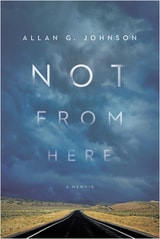
Not from Here
A MemoirAllan Johnson
Temple University Press, 2015
As a white man with Norwegian and English lineage, Johnson explores both America and the question of belonging to a place whose history holds the continuing legacy of the displacement, dispossession, and genocide of Native peoples.
More than a personal narrative, Not from Here illuminates the national silence around unresolved questions of accountability, race, and identity politics, and the dilemma of how to take responsibility for “a past we did not create.” Johnson’s story—about the past living in the present; of redemption, fate, family, tribe, and nation; of love and grief—raises profound questions about belonging, identity, and place.
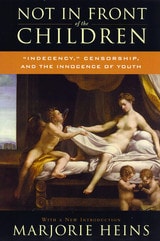
Not in Front of the Children
'Indecency,' Censorship, and the Innocence of YouthHeins, Marjorie
Rutgers University Press, 2007
From Huckleberry Finn to Harry Potter, from Internet filters to the v-chip, censorship exercised on behalf of children and adolescents is often based on the assumption that they must be protected from “indecent” information that might harm their development—whether in art, in literature, or on a Web site. But where does this assumption come from, and is it true?
In Not in Front of the Children, Marjorie Heins explores the fascinating history of “indecency” laws and other restrictions aimed at protecting youth. From Plato’s argument for rigid censorship, through Victorian laws aimed at repressing libidinous thoughts, to contemporary battles over sex education in public schools and violence in the media, Heins guides us through what became, and remains, an ideological minefield. With fascinating examples drawn from around the globe, she suggests that the “harm to minors” argument rests on shaky foundations.
Not in Our Lifetimes
The Future of Black PoliticsMichael C. Dawson
University of Chicago Press, 2011
For all the talk about a new postracial America, the fundamental realities of American racism—and the problems facing black political movements—have not changed. Michael C. Dawson lays out a nuanced analysis of the persistence of racial inequality and structural disadvantages, and the ways that whites and blacks continue to see the same problems—the disastrous response to Katrina being a prime example—through completely different, race-inflected lenses. In fact, argues Dawson, the new era heralded by Barack Obama’s election is more racially complicated, as the widening class gap among African Americans and the hot-button issue of immigration have the potential to create new fissures for conservative and race-based exploitation. Through a thoughtful analysis of the rise of the Tea Party and the largely successful “blackening” of President Obama, Dawson ultimately argues that black politics remains weak—and that achieving the dream of racial and economic equality will require the sort of coalition-building and reaching across racial divides that have always marked successful political movements.
Polemical but astute, passionate but pragmatic, Not in Our Lifetimes forces us to rethink easy assumptions about racial progress—and begin the hard work of creating real, lasting change.

Not the Camilla We Knew
One Woman's Path from Small-town America to the Symbionese Liberation ArmyRachael Hanel
University of Minnesota Press, 2022
The mystery of how an ordinary Minnesota girl came to be, briefly, one of the most wanted domestic terrorists in the United States
Behind every act of domestic terrorism there is someone’s child, an average American whose life took a radical turn for reasons that often remain mysterious. Camilla Hall is a case in point: a pastor’s daughter from small-town Minnesota who eventually joined the ranks of radicals like Sara Jane Olson (aka Kathleen Soliah) in the notorious Symbionese Liberation Army before dying in a shootout with Los Angeles Police in May 1974. How could a “good girl” like Camilla become one of the most wanted domestic terrorists in the United States? Rachael Hanel tells her story here, revealing both the deep humanity and the extraordinary circumstances of Camilla Hall’s life.
Camilla’s childhood in a tight-knit religious family was marred by loss and grief as, one after another, her three siblings died. Her path from her Minnesota home to her final, radical SLA family featured years as an artist and activist—in welfare offices, political campaigns, union organizing, culminating in a love affair that would be her introduction to the SLA. Through in-depth research and extensive interviews, Hanel pieces together Camilla’s bewildering transformation from a “gentle, zaftig, arty, otherworldy” young woman (as one observer remarked), working for social change within the system, into a gun-wielding criminal involved in the kidnapping of Patty Hearst.
During this time of mounting unrest and violence, Camilla Hall’s story is of urgent interest for what it reveals about the forces of radicalization. But as Hanel ventures ever further into Camilla’s past, searching out the critical points where character and cause might intersect, her book becomes an intriguing, disturbing, and ultimately deeply moving journey into the dark side of America’s promise.
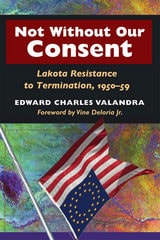
Not without Our Consent
Lakota Resistance to Termination, 1950-59Edward Charles Valandra
University of Illinois Press, 2006
Edward Valandra's Not Without Our Consent documents the tenacious and formidable Lakota resistance to attempts at applying this law. In unprecedented depth, it follows their struggle through the 1950s when, against all odds, their resistance succeeded in the amendment of PL 83-280 to include Native consent as a prerequisite to state jurisdiction. The various House and Senate bills discussed in the manuscript are reproduced in five appendices.
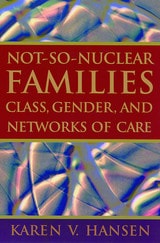
Not-So-Nuclear Families
Class, Gender, and Networks of CareHansen, Karen V
Rutgers University Press, 2004
In recent years U.S. public policy has focused on strengthening the nuclear family as a primary strategy for improving the lives of America's youth. It is often assumed that this normative type of family is an independent, self-sufficient unit adequate for raising children. But half of all households in the United States with young children have two employed parents. How do working parents provide care and mobilize the help that they need?
In Not-So-Nuclear Families: Class, Gender, and Networks of Care, Karen V. Hansen investigates the lives of working parents and the informal networks they construct to help care for their children. She chronicles the conflicts, hardships, and triumphs of four families of various social classes. Each must navigate the ideology that mandates that parents, mothers in particular, rear their own children, in the face of an economic reality that requires that parents rely on the help of others. In vivid family stories, parents detail how they and their networks of friends, paid caregivers, and extended kin collectively close the "care gap" for their school-aged children.
Hansen not only debunks the myth that families in the United States are independent, isolated, and self-reliant units, she breaks new theoretical ground by asserting that informal networks of care can potentially provide unique and valuable bonds that nuclear families cannot.

Notable Women of Arkansas
From Hattie to Hillary, 100 Names to KnowNancy Hendricks
Butler Center for Arkansas Studies, 2016
Meet one Arkansas woman who was nominated for the Pulitzer Prize, Tony Award, and three Grammys. Learn about a female presidential candidate whose initials are not HRC. See beauty queens on the runway and a runaway beauty queen. Meet the trailblazing black actress who, if she had been born thirty years later, might have had a career like Halle Berry’s.
They are all Arkansas women, each with their own family, childhood, loves, losses, dreams, fears, hopes for the future, and ghosts from the past. These notable women—profiled together in one volume—have left an impressive legacy.
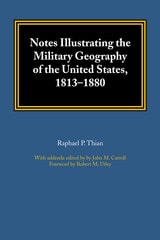
Notes Illustrating the Military Geography of the United States, 1813–1880
By Raphael P. Thian with addenda edited by John M. Carroll; foreword by Robert M. Utley
University of Texas Press, 1979
When the Adjutant General's Office published Raphael Thian's "notes" on U.S. military geography in 1880, it produced an invaluable research tool for generations of military historians to come. In this single documented reference volume, Chief Clerk Thian traced the confusing mutations through which the divisions, departments, and districts of the Army's command had evolved since 1813.
The volume is divided into three parts, beginning with the names of the United States Army Continental Commands, the date and authority for their creation, location of the headquarters, geographical changes and discontinuances, and other details including the geographical boundaries embracing each division, department, and district. Part II is filled with background information on states and territories, and Part III lists the maps contained in The Military Atlas of the United States.
The Addenda to this edition expand and update Thian's work. Notes made by Francis B. Heitman to keep his personal copy current are included, as is the Memorandum published by the government in 1906. This addition lists all changes from 1898 through 1905.
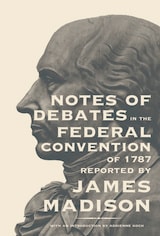
Notes of Debates in the Federal Convention of 1787
James Madison
Ohio University Press, 1987
James Madison’s record of the Constitutional Convention traces day by day the debates held from May to September 1787 and presents the only complete picture we have of the strategy, interests, and ideas of the Founders at the convention itself.
In this indispensable primary document, Madison not only provides detailed insights into one of the great events of US history, but clearly sets forth his own position on such issues as the balance of powers, the separation of functions, and the general role of the federal government. More than in Federalist, which shows the carefully formalized conclusions of his political thought, we see in Debates his philosophy in action, evolving in daily tension with the viewpoints of the other delegates. It is for this reason that Debates is invaluable for placing in perspective the incomplete records of such well-known figures as Rufus King and Alexander Hamilton, and the constitutional plans of such men as Edmund Randolph and Charles Pinckney.
Madison’s contemporaries regarded him as the chief statesmen at the Philadelphia convention; in addition to this, his record outranks in importance all the other writings of the founders of the American republic. He is thus identified, as no other man is, with the making of the Constitution and the correct interpretation of the intentions of its drafters.
New to this edition of Debates is a thorough, scholarly index of some two thousand entries.
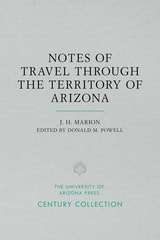
Notes of Travel Through the Territory of Arizona
J. H. Marion; Edited by Donald M. Powell
University of Arizona Press, 1965
“A valuable and well written document, now made available to the general public and enhanced by the addition of an introduction and notes by Mr. Powell. . . . the publication will be of value to serious students of Arizona history.”—Journal of Arizona History
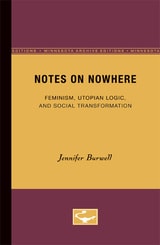
Notes on Nowhere
Feminism, Utopian Logic, and Social TransformationJennifer Burwell
University of Minnesota Press, 1997
Notes on Nowhere was first published in 1997. Minnesota Archive Editions uses digital technology to make long-unavailable books once again accessible, and are published unaltered from the original University of Minnesota Press editions.
The term utopia implies both "good place" and "nowhere." Since Sir Thomas More wrote Utopia in 1516, debates about utopian models of society have sought to understand the implications of these somewhat contradictory definitions. In Notes on Nowhere, author Jennifer Burwell uses a cross section of contemporary feminist science fiction to examine the political and literary meaning of utopian writing and utopian thought.
Burwell provides close readings of the science fiction novels of five feminist writers-Marge Piercy, Sally Gearhart, Joanna Russ, Octavia Butler, and Monique Wittig-and poses questions central to utopian writing: Do these texts promote a tradition in which narratives of the ideal society have been used to hide rather than reveal violence, oppression, and social divisions? Can a feminist critical utopia offer a departure from this tradition by using utopian narratives to expose contradiction and struggle as central aspects of the utopian impulse? What implications do these questions have for those who wish to retain the utopian impulse for emancipatory political uses?
As one way of answering these questions, Burwell compares two "figures" that inform utopian writing and social theory. The first is the traditional abstract "revolutionary" subject who contradicts existing conditions and who points us to the ideal body politic. The second, "resistant," subject is partial, concrete, and produced by conditions rather than operating outside of them. In analyzing contemporary changes in the subject's relationship to social space, Burwell draws from and revises "standpoint approaches" that tie visions of social transformation to a group's position within existing conditions.
By exploring the dilemmas, antagonisms, and resolutions within the critical literary feminist utopia, Burwell creates connections to a similar set of problems and resolutions characterizing "nonliterary" discourses of social transformation such as feminism, gay and lesbian studies, and Marxism. Notes on Nowhere makes an original, significant, and persuasive contribution to our understanding of the political and literary dimensions of the utopian impulse in literature and social theory.
Jennifer Burwell teaches in the Department of English at Wesleyan University in Connecticut.
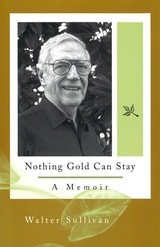
Nothing Gold Can Stay
A MemoirWalter Sullivan
University of Missouri Press, 2006
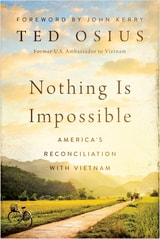
Nothing Is Impossible
America's Reconciliation with VietnamTed Osius
Rutgers University Press, 2022
Ted Osius, former ambassador during the Obama administration, offers a vivid account, starting in the 1990s, of the various forms of diplomacy that made this reconciliation possible. He considers the leaders who put aside past traumas to work on creating a brighter future, including senators John McCain and John Kerry, two Vietnam veterans and ideological opponents who set aside their differences for a greater cause, and Pete Peterson—the former POW who became the first U.S. ambassador to a new Vietnam. Osius also draws upon his own experiences working first-hand with various Vietnamese leaders and traveling the country on bicycle to spotlight the ordinary Vietnamese people who have helped bring about their nation’s extraordinary renaissance.
With a foreword by former Secretary of State John Kerry, Nothing Is Impossible tells an inspiring story of how international diplomacy can create a better world.
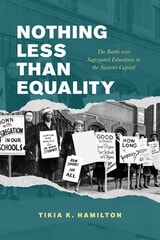
Nothing Less Than Equality
The Battle over Segregated Education in the Nation’s CapitalTikia K. Hamilton
University of Chicago Press, 2026
The landmark Brown v. Board of Education case, which barred racial segregation in American public schools, wasn’t the only path for Black parents, teachers, and activists who sought equality of educational opportunity. Some believed that the solution to inequality lay in pressing the federal government to live up to the Jim Crow doctrine of “separate but equal” by providing more resources to Black schools. And for a time, this seemed true in Washington, DC, where Black activists leveraged their status as residents of the nation’s capital to advocate on behalf of Black education. However, disappointments with the “separate but equal” strategy and a sea change in activism led to an embrace of integration.
In Nothing Less Than Equality, Tikia K. Hamilton reveals the rich and complex history of educational activism in Washington prior to Brown v. Board of Education, illuminating complex dynamics that provide a counterpoint and backdrop to the landmark Supreme Court case. Hamilton thoroughly examines the multipronged strategies employed by parents, teachers, attorneys, and activists to democratize education, demonstrating that there was no linear path to Brown.
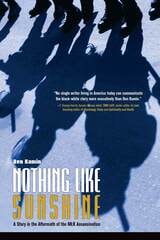
Nothing Like Sunshine
A Story in the Aftermath of the MLK AssassinationBen Kamin
Michigan State University Press, 2010
Rabbi Ben Kamin has written a definitive personal expression about race, coming of age in the 1960s, a forbidden friendship, and his personal love for Dr. Martin Luther King Jr. This is a story that spans a four-decade search for a lost high school chum, a deep misunderstanding, and a coming to terms with an America painfully evolving from the blood of MLK to the promise of Barack Obama.
The book is a remembrance of Kamin's life at Cincinnati's notorious Woodward High School, a microcosm of the 1960s and of America itself, as well as detailing Kamin's search-for Clifton, for America, for the key to understanding what race relations really are in the United States. Simultaneously, it is the story of the emerging rabbi's search for the legacy of his spiritual mentor, Dr. Martin Luther King Jr., taking Kamin from Cincinnati to Cleveland to Memphis to New Orleans and other points, and constantly bringing him home to his friend Clifton and "the heaving hallways" of that high school.
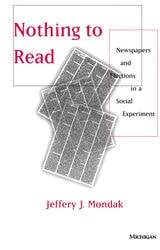
Nothing to Read
Newspapers and Elections in a Social ExperimentJeffery J. Mondak
University of Michigan Press, 1995
Nothing to Read compares the information gathering and voting behavior of residents in Pittsburgh and Cleveland during the 1992 campaign season. Comparable in demographics and political behavior, the only significant difference between the two cities was the availability of local newspapers. Using a research design that combines elements of the opinion survey and the laboratory experiment, the author exploited this situation to produce an unusually sound and thorough examination of media effects on voters.
The results are startling. First and foremost, Nothing to Read reasserts the role of the newspaper in the dissemination of information acquisition. It is the only media source that can rival television in the electoral arena, and it is often more important to voters as a source for local information, including information about U.S. House races. Nothing to Read also shows that voters are more active in seeking out information than typically postulated. Indeed, many voters even differentiate between media sources for information about Senate and House contests and sources for the presidential campaign. Within limits, the electorate is clearly not a passive news audience. Nothing to Read provides a wealth of information on such related topics as the relationship between partisanship and media influence, the interplay between media exposure and interpersonal political conversations and other social interaction, and newspapers' effect on coattail voting. A unique book, Mondak's important study lays a solid foundation for all future work on the relationship between American media and politics.
Jeffery J. Mondak is Associate Professor of Political Science, University of Pittsburgh.
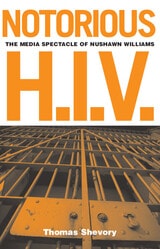
Notorious H.I.V.
The Media Spectacle Of Nushawn WilliamsThomas Shevory
University of Minnesota Press, 2004
The real story behind the Nushawn Williams case: media distortions, judicial contortions, ruined lives
In the fall of 1997, public authorities in Chautauqua County, New York, were granted an exception to the state’s HIV confidentiality law—and released Nushawn Williams’s name and picture to the press, deeming him a “public health threat,” the source of a “near epidemic” of HIV transmission. Williams, who is HIV-positive, had unprotected sex with many young women and girls and infected at least nine of them.
In Notorious H.I.V. Thomas Shevory sorts through the ensuing media panic and legal imbroglio to tell the story behind the Nushawn Williams case. Through media reports, legal documents, and interviews with many of the participants—including Williams, who eventually pled guilty to reckless endangerment and statutory rape charges and is currently serving time in a maximum security prison in New York—Shevory exposes the significant exaggerations, misunderstandings, and distortions that riddled the Williams case from the start. He contends that Williams’s portrayal as an “AIDS monster” served political purposes; specifically, representations of Williams helped to foster the passage of HIV-transmission statutes, resulting in criminalizing a public health problem in a virtually unprecedented fashion.Notorious H.I.V. also traces the impact of such high-profile cases on communities. Shevory provides a nuanced portrait of the hard economic and cultural realities of Jamestown, New York, and, drawing on Williams’s narratives, of the life of a lower-level drug dealer in a small upstate city. His work shows how media coverage robs individuals like Williams of their humanity, creating a pervasive atmosphere of threat that warps the integrity and fairness of the criminal justice and penal system.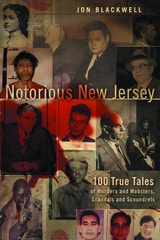
Notorious New Jersey
100 True Tales of Murders and Mobsters, Scandals and ScoundrelsJon Blackwell
Rutgers University Press, 2007
Notorious New Jersey is the definitive guide to murder, mayhem, the mob, and corruption in the Garden State. With tabloid punch, Jon Blackwell tells riveting accounts of Alexander Hamilton falling mortally wounded on the dueling grounds of Weehawken; Dutch Schultz getting pumped full of lead in the men’s room of the Palace Chop House in Newark; and a gang of Islamic terrorists in Jersey City mixing the witch’s brew of explosives that became the first bomb to rock the World Trade Center. Along with these dramatic stories are tales of lesser-known oddities, such as the nineteenth-century murderer whose skin was turned into leather souvenirs, and the state senator from Jersey City who faked his death in a scuba accident in the 1970s in an effort to avoid prison.
Blackwell also sheds light on some historical whodunits—was Bruno Hauptmann really guilty of kidnapping the Lindbergh baby? Who was behind the anthrax attacks of 2001? Not forgotten either are notorious characters who may actually be innocent, including Rubin “Hurricane” Carter, and those who have never been convicted of wrongdoing although they left office in scandal, including Robert Torricelli and James McGreevey.
Through 100 historic true-crime tales that span over 300 years of history, Blackwell shows readers a side of New Jersey that would make even the Sopranos shudder.
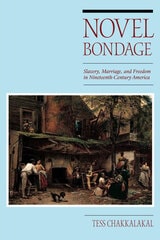
Novel Bondage
Slavery, Marriage, and Freedom in Nineteenth-Century AmericaTess Chakkalakal
University of Illinois Press, 2013
Novel Competition
American Fiction and the Cultural Economy, 1965-1999Evan Brier
University of Iowa Press, 2024
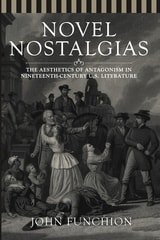
Novel Nostalgias
The Aesthetics of Antagonism in Nineteenth Century U.S. LiteratureJohn Funchion
The Ohio State University Press, 2015
In contrast with studies that characterized the nineteenth-century U.S. novel as a consensus-generating form complicit with disciplinary culture, Funchion shows how novels shaped a series of culture wars by advancing antagonistic nostalgias. Southern slave owners and their slaves or industrial magnates and their union opponents alike enlisted the power of nostalgia to validate their rival visions of the nation as lost moments awaiting recovery. Antagonistic nostalgias legitimated the political claims of movements as diverse as abolitionism, sectionalism, populism, socialism, anarchism, and cosmopolitanism. Novel Nostalgias provides a deep cultural historical understanding of the nineteenth-century United States, but ultimately, it also allows for a better understanding of how twenty-first-century movements function.
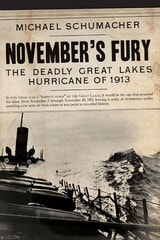
November's Fury
The Deadly Great Lakes Hurricane of 1913Michael Schumacher
University of Minnesota Press, 2014
On Thursday, November 6, the Detroit News forecasted “moderate to brisk” winds for the Great Lakes. On Friday, the Port Huron Times-Herald predicted a “moderately severe” storm. Hourly the warnings became more and more dire. Weather forecasting was in its infancy, however, and radio communication was not much better; by the time it became clear that a freshwater hurricane of epic proportions was developing, the storm was well on its way to becoming the deadliest in Great Lakes maritime history.
The ultimate story of man versus nature, November’s Fury recounts the dramatic events that unfolded over those four days in 1913, as captains eager—or at times forced—to finish the season tried to outrun the massive storm that sank, stranded, or demolished dozens of boats and claimed the lives of more than 250 sailors. This is an account of incredible seamanship under impossible conditions, of inexplicable blunders, heroic rescue efforts, and the sad aftermath of recovering bodies washed ashore and paying tribute to those lost at sea. It is a tragedy made all the more real by the voices of men—now long deceased—who sailed through and survived the storm, and by a remarkable array of photographs documenting the phenomenal damage this not-so-perfect storm wreaked.
The consummate storyteller of Great Lakes lore, Michael Schumacher at long last brings this violent storm to terrifying life, from its first stirrings through its slow-mounting destructive fury to its profound aftereffects, many still felt to this day.
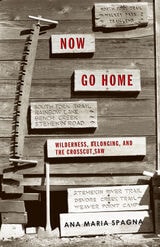
Now Go Home
Wilderness, Belonging, and the Crosscut SawAna Maria Spagna
Oregon State University Press, 2004
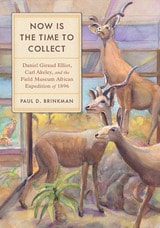
Now Is the Time to Collect
Daniel Giraud Elliot, Carl Akeley, and the Field Museum African Expedition of 1896Paul D. Brinkman
University of Alabama Press, 2024
The rediscovery of a curator’s lost journal illuminates the astonishing African journey that formed the basis of the Chicago Field Museum’s famed collections
“Now” Is the Time to Collect tells the fascinating story of the Chicago Field Museum of Natural History’s zoological expedition to Africa in 1896, the source of many of the museum’s foundational collections and an astounding episode in nineteenth-century science. After the well-publicized extinction of the dodo and Carolina parakeet and the collapse of the American bison population, late nineteenth-century naturalists expected many more vulnerable species to die out with spread of Western-style industrialization. This triggered a race to collect rare species of animals expected soon to be lost forever.
Established in 1893, Chicago’s ambitious Field Museum aimed to become a global center of study. Zoologist Daniel Giraud Elliot persuaded museum patrons to fund an immediate expedition to British Somaliland (contemporary Somalia). There, his team hunted and killed hundreds of animals for the growing collection. On the trip was groundbreaking taxonomist Carl Akeley. Back in Chicago, Akeley created captivating lifelike dioramas of rare animal groups that enhanced the museum’s fame and remain popular to this day.
Enriched with illuminated passages from Elliot’s journal, only recently rediscovered, “Now” Is the Time to Collect is the first book of its kind by an American museum and a case study in what author Paul D. Brinkman calls “salvage zoology”—the practice of aggressively collecting rare animal specimens for preservation just prior to the birth of the modern conservation movement. It is a riveting account of the expedition, the travelers’ experiences in Somalia during its colonial period, and the astonishing origins of one of Chicago’s classic museum experiences.
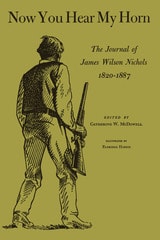
Now You Hear My Horn
The Journal of James Wilson Nichols, 1820–1887Edited by Catherine W. McDowell
University of Texas Press, 1967
Jim Nichols was a lively, vigorous frontiersman who came to Texas about the time of its Revolution. As with many men of that day, Nichols' formal education was lacking, but he was a born writer with a vivid way of saying things. He had an abundance of exciting events to write about: fighting against Mexicans and Indians, Ranger activities, an attack by wolves, a buffalo stampede, and many other colorful episodes. Nichols' account is fast-moving, fascinating frontier history by a man who was really there.
Nowhere Near the Line
Pain and Possibility in Teaching and WritingElizabeth H. Boquet
Utah State University Press, 2016
In this short work, Elizabeth Boquet explores the line Lawrence Schall describes above, tracing the overlaps and intersections of a lifelong education around guns and violence, as a student, a teacher, a feminist, a daughter, a wife, a citizen and across the dislocations and relocations that are part of a life lived in and around school. Weaving narratives of family, the university classroom and administration, her husband’s work as a police officer, and her work with students and the Poetry for Peace effort that her writing center sponsors in the local schools, she recounts her efforts to respond to moments of violence with a pedagogy of peace. “Can we not acknowledge that our experiences with pain anywhere should render us more, not less, capable of responding to it everywhere?” she asks. “Compassion, it seems to me, is an infinitely renewable resource.”
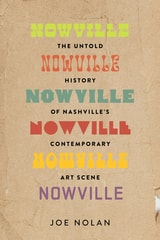
Nowville
The Untold History of Nashville's Contemporary Art SceneJoe Nolan
Vanderbilt University Press, 2024
This is the origin story of Nashville’s surging contemporary art scene told by the ones who were there before anyone else. Not a story about commercial spaces or official institutions—this is the story of moldy warehouse studios and improvised galleries, happy-kegger after-parties and front lawn art sales, exhibitions in apartment living rooms and secret art displays hidden in plain sight.
Nowville is an oral history of the Nashville art scene beginning in the 1990s. Author Joe Nolan tracks down the city’s art punks, art monks, radical art students, and visionary pioneers to share what made their moments in Nashville so special. He also offers insights into how this homespun movement powered by DIY innovating came to be a thriving creative community and a cornerstone of the city’s contemporary allure.
This book is the recipient of the 2025 Norman L. and Roselea J. Goldberg Prize from Vanderbilt University Press for the best book in the area of art or medicine.
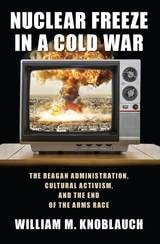
Nuclear Freeze in a Cold War
The Reagan Administration, Cultural Activism, and the End of the Arms RaceWilliam M. Knoblauch
University of Massachusetts Press, 2017
Alarmed, the Reagan administration worked to co-opt the rhetoric of the nuclear freeze and contain antinuclear activism. Recently declassified White House memoranda reveal a concerted campaign to defeat activists' efforts. In this book, William M. Knoblauch examines these new sources, as well as the influence of notable personalities like Carl Sagan and popular culture such as the film The Day After, to demonstrate how cultural activism ultimately influenced the administration's shift in rhetoric and, in time, its stance on the arms race.
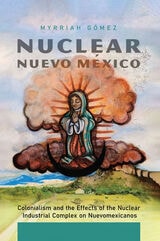
Nuclear Nuevo México
Colonialism and the Effects of the Nuclear Industrial Complex on NuevomexicanosMyrriah Gómez
University of Arizona Press, 2022
Contrary to previous works that suppress Nuevomexicana/o presence throughout U.S. nuclear history, Nuclear Nuevo México focuses on recovering the voices and stories that have been lost or ignored in the telling of this history. By recuperating these narratives, Myrriah Gómez tells a new story of New Mexico, one in which the nuclear history is not separate from the collective colonial history of Nuevo México but instead demonstrates how earlier eras of settler colonialism laid the foundation for nuclear colonialism in New Mexico.
Gómez examines the experiences of Nuevomexicanas/os who have been impacted by the nuclear industrial complex, both the weapons industry and the commercial industry. Gómez argues that Los Alamos was created as a racist project that targeted poor and working-class Nuevomexicana/o farming families, along with their Pueblo neighbors, to create a nuclear empire. The resulting imperialism has left a legacy of disease and distress throughout New Mexico that continues today.
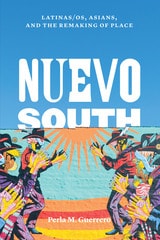
Nuevo South
Latinas/os, Asians, and the Remaking of PlaceBy Perla M. Guerrero
University of Texas Press, 2017
Latinas/os and Asians are rewriting the meaning and history of race in the American South by complicating the black/white binary that has frequently defined the region since before the Civil War. Arriving in southern communities as migrants or refugees, Latinas/os and Asians have experienced both begrudging acceptance and prejudice as their presence confronts and troubles local understandings of race and difference—understandings that have deep roots in each community’s particular racial history, as well as in national fears and anxieties about race.
Nuevo South offers the first comparative study showing how Latinas/os and Asians are transforming race and place in the contemporary South. Integrating political, economic, and social analysis, Perla M. Guerrero examines the reception of Vietnamese, Cubans, and Mexicans in northwestern Arkansas communities that were almost completely white until the mid-1970s. She shows how reactions to these refugees and immigrants ranged from reluctant acceptance of Vietnamese as former US allies to rejection of Cubans as communists, criminals, and homosexuals and Mexicans as “illegal aliens” who were perceived as invaders when they began to establish roots and became more visible in public spaces. Guerrero’s research clarifies how social relations are constituted in the labor sphere, particularly the poultry industry, and reveals the legacies of regional history, especially anti-Black violence and racial cleansing. Nuevo South thus helps us to better understand what constitutes the so-called Nuevo South and how historical legacies shape the reception of new people in the region.
Numbered Voices
How Opinion Polling Has Shaped American PoliticsSusan Herbst
University of Chicago Press, 1993
Exploring the history of public opinion in the United States from the mid-nineteenth century to the present day, Herbst shows how numbers served both instrumental and symbolic functions, not only conveying neutral information but creating a basis authority. Addressing how the quantification of public opinion has affected contemporary politics and the democratic process, Herbst asks difficult but fundamental questions about the workings of American politics.
"An original and thought-provoking analysis of why we have polls, what they accomplish, and how they affect the current political scene. Herbst's scholarship is impeccable, her writing is clear and crisp, and her findings are original. . . . Every reader will benefit by carefully weighing the issues she raises and the conclusions she draws."—Doris A. Graber, Political Science Quarterly
"An intelligent, theoretically rich, and historically broad account of public opinion over several millennia. . . . The historical accounts are interesting and her interpretations are thought-provoking."—Paul Brace, Journal of American History
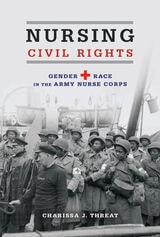
Nursing Civil Rights
Gender and Race in the Army Nurse CorpsCharissa J. Threat
University of Illinois Press, 2015
As Threat reveals, both groups viewed their circumstances with the Army Nurse Corps as a civil rights matter. Each conducted separate integration campaigns to end the discrimination they suffered. Yet their stories defy the narrative that civil rights struggles inevitably arced toward social justice. Threat tells how progressive elements in the campaigns did indeed break down barriers in both military and civilian nursing. At the same time, she follows conservative threads to portray how some of the women who succeeded as agents of change became defenders of exclusionary practices when men sought military nursing careers. The ironic result was a struggle that simultaneously confronted and reaffirmed the social hierarchies that nurtured discrimination.

Nurturing Doubt
From Mennonite Missionary to Anthropologist in the Argentine ChacoElmer S. Miller
University of Illinois Press, 1995
Nut Country
Right-Wing Dallas and the Birth of the Southern StrategyEdward H. Miller
University of Chicago Press, 2015
In Nut Country, Edward H. Miller tells the story of that transformation, showing how a group of influential far-right businessmen, religious leaders, and political operatives developed a potent mix of hardline anticommunism, biblical literalism, and racism to generate a violent populism—and widespread power. Though those figures were seen as extreme in Texas and elsewhere, mainstream Republicans nonetheless found themselves forced to make alliances, or tack to the right on topics like segregation. As racial resentment came to fuel the national Republican party’s divisive but effective “Southern Strategy,” the power of the extreme conservatives rooted in Texas only grew.
Drawing direct lines from Dallas to DC, Miller's captivating history offers a fresh understanding of the rise of the new Republican Party and the apocalyptic language, conspiracy theories, and ideological rigidity that remain potent features of our politics today.
Nuyorican and Diasporican Visual Art
A Critical AnthologyArlene Dávila and Yasmin Ramirez, editors
Duke University Press, 2025
With: Néstor David Pastor, Gabriel Magraner, and Nikki Myers
Contributors. Joseph Anthony Cáceres, Taína Caragol, Arnaldo M. Cruz-Malavé, Deborah Cullen-Morales, Arlene Dávila, Kerry Doran, Elizabeth Ferrer, Yomaira C. Figueroa-Vásquez, Al Hoyos-Twomey, Teréz Iacovino, Johnny Irizarry, Johana Londoño, Urayoán Noel, Néstor David Pastor, Yasmin Ramirez, Melissa M. Ramos Borges, Raquel Reichard, Rojo Robles, Abdiel D. Segarra Ríos, Wilson Valentín-Escobar