475 books match the query 'Catholic' and 16 start with o
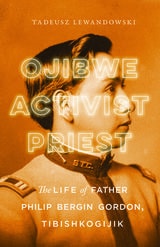
cover of Ojibwe, Activist, Priest: The Life of Father Philip Bergin Gordon, Tibishkogijik

Ojibwe, Activist, Priest

The Life of Father Philip Bergin Gordon, Tibishkogijik

Tadeusz Lewandowski

University of Wisconsin Press, 2019

Born in Wisconsin, Philip Bergin Gordon—whose Ojibwe name Tibishkogijik is said to mean Looking into the Sky—became one of the first Native Americans to be ordained as a Catholic priest in the United States. Gordon's devotion to Catholicism was matched only by his dedication to the protection of his people. A notable Native rights activist, his bold efforts to expose poverty and corruption on reservations and his reputation for agitation earned him the nickname "Wisconsin's Fighting Priest."
Drawing on previously unexplored materials, Tadeusz Lewandowski paints a portrait of a contentious life. Ojibwe, Activist, Priest examines Gordon's efforts to abolish the Bureau of Indian Affairs, his membership in the Society of American Indians, and his dismissal from his Ojibwe parish and exile to a tiny community where he'd be less likely to stir up controversy. Lewandowski illuminates a significant chapter in the struggle for Native American rights through the views and experiences of a key Native progressive.
[more]
cover of On "A Being" and "An Essence" (<i>De ente et essentia</i>)

On "A Being" and "An Essence" (<i>De ente et essentia</i>)

Thomas Aquinas

Catholic University of America Press, 2026
The In De Ente et Essentia is a polemical work of a brilliant young Dominican professor, Thomas de Vio Cajetan (1469-1534), eager to defend the philosophical legacy of Thomas Aquinas. Drawing from the full range of St. Thomas's writings, the work offers a coherent Thomistic metaphysical theory set against the rival Scotist and Averroist positions defended at Italian Universities in the 1490s. This new English translation is an invitation to philosophers and historians to re-engage with Cajetan, with his 15th Century rivals, and, of course, with Thomas Aquinas himself. It is also a challenge and inspiration to do metaphysics through dialectical engagement with the greatest rival theories of our own time and place.
[more]
cover of On Difficulties in Sacred Scripture: The Responses to Thalassios

On Difficulties in Sacred Scripture

The Responses to Thalassios

Maximos St. Maximos the Confessor

Catholic University of America Press, 2018
Maximos the Confessor (ca. 580-662) is now widely recognized as one of the greatest theological thinkers, not simply in the entire canon of Greek patristic literature, but in the Christian tradition as a whole. A peripatetic monk and prolific writer, his penetrating theological vision found expression in an unparalleled synthesis of biblical exegesis, ascetic spirituality, patristic theology, and Greek philosophy, which is as remarkable for its conceptual sophistication as for its labyrinthine style of composition. On Difficulties in Sacred Scripture, presented here for the first time in a complete English translation (including the 465 scholia), contains Maximos’s virtuosic theological interpretations of sixty-five difficult passages from the Old and New Testaments. Because of its great length, along with its linguistic and conceptual difficulty, the work as a whole has been largely neglected. Yet alongside the Ambigua to John, On Difficulties in Sacred Scripture: The Responses to Thalassios deserves to be ranked as the Confessor’s greatest work and one of the most important patristic treatises on the interpretation of Scripture, combining the interconnected traditions of monastic devotion to the Bible, the biblical exegesis of Origen, the sophisticated symbolic theology of Dionysius the Areopagite, and the rich spiritual anthropology of Greek Christian asceticism inspired by the Cappadocian Fathers.
[more]
cover of On Earth as it is in Heaven: Cultivating a Contemporary Theology of Creation

On Earth as it is in Heaven

Cultivating a Contemporary Theology of Creation

David Meconi

Saint Paul Seminary Press, 2021

With the 2015 publication of Pope Francis’s encyclical Laudato Si’, many people of faith have found themselves challenged to seek new ways of addressing serious ecological questions — issues essential to the flourishing of all creatures and not just human beings. This volume brings together fifteen select scholars to consider pressing contemporary environmental concerns through the lens of Catholic theology. Drawing from the early church fathers and other authoritative voices in the Christian tradition, the contributors to On Earth as It Is in Heaven show how ancient, creedal Christianity offers significant insights into our current ecological dilemmas and speaks powerfully about what it means for us today to care well for God’s good creation.
[more]
cover of On Job

On Job

Blind Didymus the Blind

Catholic University of America Press, 0
This volume provides the first full length English translation of the commentary on the Book of Job by Didymus the Blind. One of the earliest line-by-line commentaries on Job to survive from late antiquity, it covers the entirety of the first sixteen chapters of the LXX text of Job with a few unfortunate lacunae. It represents the third commentary of Didymus published in the Fathers of the Church series (preceded by Didymus’ On Genesis and On Zechariah translated by Robert C. Hill) and the last of the commentaries discovered at Tura in 1941 that was edited for circulation in late antiquity, since Didymus’ comments on Ecclesiastes and Psalms are unedited transcripts of his public lectures, replete with student questions. The Book of Job has garnered perpetual attention because of its intriguing dialogues between God and the Devil, Job and his wife, Job and his three friends and inevitably between Job and God. In recent years, it has become the focus of attention among scholars seeking to make sense of the horrors of the Holocaust and other 20th century atrocities where unlimited human cruelty and injustice strained any notions of Providence and the salvific nature of suffering by the righteous. Written at a pivotal time when Christianity and Rabbinic Judaism were emerging as distinct interpretive traditions, Didymus’ commentary on the book of Job offers important insights into the interpretation of Job based on the LXX translation which was a foundational text for early Christian doctrine, spirituality and liturgy. His presentation of Job as the icon of a student-loving teacher stands in contrast to the portrait of a blasphemous Job more familiar to modern audiences that value a bold iconoclastic character who puts God on trial for allowing human injustice. Didymus’ comments on Job hint at the blind teacher’s own mature consideration of his experience as a Christian teacher, concerned to train other potential leaders in the burgeoning post-Constantinian Church, whether as an ecclesiastical minister, monastic abba, governor, or teacher. As such, this early Christian commentary on the Book of Job merits further study because it illustrates an early exegetical trajectory that was already embedded in the Christian tradition prior Jerome’s advocacy of the Hebraica Veritas.
[more]
cover of On Job, Volume 1

On Job, Volume 1

Franklin T. St. Albert The Great

Catholic University of America Press, 2019
Even prior to his death on 15 November 1280, the Dominican master Albert of Lauingen was legendary on account of his erudition. He was widely recognized for the depth and breadth of his learning in the philosophical disciplines as well as in the study of God, earning him the titles Doctor universalis and Doctor expertus. Moreover, his authoritative teaching merited him the moniker Magnus, an appellation bestowed on no other man of the High Middle Ages. This volume contains the first half of Albert the Great’s commentary On Job (on chs. 1-21), translated into English for the first time; a translation of the second half of the work will appear in a subsequent volume of the Fathers of the Church, Mediaeval Continuation series. Albert completed Super Iob in 1272 or 1274, when he was over seventy years old, at the Dominican Kloster of Heilige Kreuz in Cologne, where, as lector emeritus of the Order, he likely lectured on this profound biblical book. Significantly, Albert may have been inspired to produce On Job by his most famous student, Thomas Aquinas, who had written his own Joban commentary, the Expositio super Iob ad litteram, while serving as conventual lector at San Domenico in Orvieto from 1261 to 1264. Yet Albert occupies a unique position in the history of the interpretation of Job: he is the first and only exegete in history who explicitly reads the whole book as a debate in the mode of an academic or scholastic disputation among Job and his friends about divine providence concerning human affairs. The Introduction to this volume situates Albert’s On Job—its general approach and key exegetical features—in the broad context of Dominican theological education and pastoral formation in the thirteenth century.
[more]
cover of On Job, Volume 2

On Job, Volume 2

Franklin T. St. Albert the Great

Catholic University of America Press, 2025

Even prior to his death on 15 November 1280, the Dominican master Albert of Lauingen was legendary for his erudition. He was widely recognized for the depth and breadth of his learning in the philosophical disciplines as well as in the study of God, earning him the titles Doctor universalis and Doctor expertus. Moreover, his authoritative teaching merited him the moniker Magnus, an appellation bestowed on no other man of the High Middle Ages. This volume contains the second half of Albert the Great’s commentary On Job (on chs. 22-42), translated into English for the first time; a translation of the first half of the work appeared in an earlier volume of the Fathers of the Church, Mediaeval Continuation series (vol. 19, 2019). Albert completed Super Iob in 1272 or 1274, when he was over seventy years old, at the Dominican Kloster of Heilige Kreuz in Cologne, where, as lector emeritus of the Order, he likely lectured on this profound biblical book. Significantly, Albert may have been inspired to produce On Job by his most famous student, Thomas Aquinas, who had written his own Joban commentary, the Expositio super Iob ad litteram, while serving as conventual lector at San Domenico in Orvieto from 1261 to 1264. Yet Albert occupies a unique position in the history of the interpretation of Job: he is the first and only exegete in history who explicitly reads the whole book as a debate in the mode of an academic or scholastic disputation among Job and his friends about divine providence concerning human affairs. Albert understands God, in the final chapters of Job, to determine the disputed question in favor of Job and against his friends, namely declaring that He (i.e., God) rules human life with no consideration of human works, but rather that divine governance is dissimilar to every mode of human rule.
[more]
cover of On Laws

On Laws

Seán William of Auvergne

Catholic University of America Press, 2027
William of Auvergne was a long-reigning bishop of Paris (1228-1249) with notable political influence, wide intellectual interests, and an appetite for ideological contest. William’s On Laws (De legibus) is a major treatise on the Law of Moses, its nature and purpose in ancient Judaism and contemporary Christianity. William’s fundamental objective in the work is to show the abiding power of the Law, including its ritual and other seemingly non-moral commands, as a counterforce to perennially recurring idolatries. In this, he shows his debt to, but also his distance from, Maimonides, whose Guide of the Perplexed had, in William’s time, only recently appeared (c. 1223) in a partial Latin translation. Along the way, On Laws includes lengthy sections on non-literal biblical interpretation and its abuses; on the life of Muhammad and the law of Islam; and on contemporary superstition, sorcery, and paganism. On Laws is a work of broad significance for the cultural history of thirteenth-century Europe, including the histories of medieval Jewish-Christian relations, Christian-Muslim relations, heresy, paganism, and witchcraft, as well as the histories, more broadly, of biblical interpretation, philosophy, natural science, and magic. A product of the academic world of early thirteenth-century Paris, On Laws is not a lovely or literary work, but neither is it technical, formulaic, or derivative. The book, like its author, cuts its own paths through the cultural thickets of the day. And by its relative intellectual informality, On Laws gives frequent, inadvertent insight into the intellectual, religious, and social experiences of thirteenth-century people. On Laws has never before been translated from Latin into any other language.
[more]
cover of On Slavery and the Slave Trade: <i>De Iustitia et lure</i>, Book 1, Treatise 2, Disputations 32-40

On Slavery and the Slave Trade

<i>De Iustitia et lure</i>, Book 1, Treatise 2, Disputations 32-40

Luis De Molina

Catholic University of America Press, 2023
In his monumental On Justice and Rights, the Jesuit Luis de Molina (1535-1600) discussed the legal and ethical aspects of the Portuguese trade in African and Asian enslaved persons. Molina surveys, develops, and problematizes the criteria necessary for the legitimate possession, sale, and purchase of human freedom. He insists that, even under legally valid slavery, persons who have sold or lost their freedom have inalienable rights as human beings, such as the freedom to make contracts, to marry, and even, under certain circumstances, to sue their owners in court. Molina also devotes attention to the ways in which slavery could be ended and whether and under what circumstances slaves had the right to escape from their owners. Well informed about the political structures and customs of many peoples in Africa, as well as Japan, China, and India, Molina paints a vivid and detailed picture of Portuguese trade. He gives specific accounts of the origins and development of the slave trade, region by region, and of the nature of the relationship between local rulers and the Portuguese kingdom. In doing so, he carefully describes the deception, coercion, and general indifference that pervades this trade regarding the rights to freedom of these people. It also attempts to identify the political, ecclesiastical, and market agents involved in this great injustice and their varying degrees of culpability. While Molina does not condemn slavery as a legal institution, the deeply flawed and even immoral behavior of sellers, buyers, regulators, and political rulers both in Portugal and in the slave-supplying regions that Molina denounces casts a heavy shadow on the morality of the trade.
[more]
cover of On the Body of the Lord

On the Body of the Lord

Albert Albert the Great

Catholic University of America Press, 2017

Albert the Great wrote On the Body of the Lord in the 1270s, making it his final work of sacramental theology. A companion volume to his commentary on the Mass, On the Body of the Lord is a comprehensive discussion of Eucharistic theology. The treatise is structured around six names for the Eucharist taken from the Mass: grace, gift, food, communion, sacrifice, and sacrament. It emerges from the liturgy and is intended to draw the reader back to worship.

The overall movement of the treatise follows the order of God’s wisdom. Albert begins by discussing the Eucharist as a gift flowing from the goodness of the Trinity. He touches on its relation to redemption and the Church, including a rigorous Aristotelian analysis of Eucharistic change and presence before ending with a discussion of Mass rubrics. The most significant theological emphasis is on the Eucharist as food given to feed the people of God.

The style varies to suit the content: certain sections are terse; others are devotional, allowing the reader to enter the saint’s own prayer. Perhaps most characteristically Albertine is an extended meditation that compares the process of digestion to the incorporation of the Christian into the Body of Christ. The mixed style allows this work to integrate rigorous aspects of scholastic thought with a fervent love for God, making On the Body of the Lord one of Albert’s most human as well as one of his most beautiful works.

On the Body of the Lord was well received, particularly in areas that came to be influenced by the devotio moderna. By 1484, three separate Latin editions had been printed, two of which were the inaugural works on new presses. In the following century the Protestant Reformation brought an end to its popularity. On the Body of the Lord is here translated into English for the first time.
[more]
cover of On the Dignity of Society: Catholic Social Teaching and Natural Law

On the Dignity of Society

Catholic Social Teaching and Natural Law

F. Russell Hittinger

Catholic University of America Press, 2024
In this collection of essays, Francis Russell Hittinger shows that Catholic social teaching is not only an articulate defense of the dignity of the human person, but perhaps more fundamentally an elucidation of the dignity of society. Indeed, Hittinger enables us to see that one cannot properly defend the dignity of the person without also showing the dignity of societies in which human persons – as naturally familial, political, and ecclesial animals – seek their own perfection in communion with others. Hittinger has been a renowned scholar of Catholic social doctrine for some time now, and the essays presented here are the fruit of his mature thinking on the topic over the course of many years. As each chapter shows, Hittinger’s historically important body of work on Catholic moral and social philosophy and theology is rooted in natural law theory and Thomistic philosophy, but also animated by St. Augustine’s thought and thus consistently sensitive to historical contexts and arenas for moral and theological disputation. These magisterial essays therefore integrate historical studies of the development of Catholic social teaching with systematic exposition of the theological coherence of that tradition, while also articulating the essential role of philosophy and natural law within both. The volume is divided into three parts. The first part is comprised of six essays on Catholic social teaching, the second part is made up of six essays on natural law and its role in social doctrine, and the third part includes two essays discussing the first principles of the Church’s teaching on social issues. This collection will no doubt become a standard in the field of scholarship on Catholic social teaching.
[more]
cover of On the Formation of the Clergy

On the Formation of the Clergy

Bleeded Hrabanus Maurus

Catholic University of America Press, 2023
Among the intellectuals of the Carolingian Renaissance of the ninth century, few are as prolific and influential as Hrabanus Maurus (c.780-856), a monk and abbot of the monastery of Fulda and then archbishop of Mainz. Most famous among modern authors as the putative author of the hymn “Come, Holy Ghost,” Hrabanus was highly esteemed by generations of medieval intellectuals, including Dante, who located the archbishop among St. Bonaventure’s cohort in the sphere of the Sun. This volume presents for the first time in English translation Hrabanus’s pedagogical masterpiece On the Formation of Clergy (De institutione clericorum). Unveiled on the Feast of All Saints in 819, at the dedication of the great Salvator basilica, Hrabanus’ work addresses the most important focuses of the Carolingian Renaissance: education and ecclesiastical reform. The treatise promotes a careful balance between classical training and Christian ethics and features the robust pedagogy of the early medieval monastic curriculum. At points it even offers glimpses into the energetic environment of Fulda’s classrooms. On the Formation of Clergy also supplies a program for ecclesiastical reform. It provides readers with a primer on ecclesiastical hierarchy and liturgy, providing glosses on church offices and explanations of important church activities. Hrabanus divided his opus into three books. Book One explains Holy Orders. It lays out the distinctions between clergy and laity, enumerates the ranks of the priesthood, describes clerical vesture, and explores the sacraments. Book Two examines priestly life. It considers ascetic disciplines appropriate for priests at different grades, describes expected prayer routines, and identifies important doctrinal teachings and principal liturgical feasts. Book Three treats biblical studies and preaching. It lays out a curriculum for the liberal arts, connects the liberal arts to catechetics and homiletics, and integrates academic study with moral instruction. On the Formation of Clergy was widely read throughout the Middle Ages. Beyond its impact on the Carolingian Renaissance, the treatise guided legal analysis in Gratian’s Decretum, supplied examples for Peter Lombard’s Sentences, and is cited by theological titans from Rupert of Deutz to Thomas Aquinas to Gabriel Biel.
[more]
cover of On the Moderation of Reason in Religious Matters

On the Moderation of Reason in Religious Matters

Ludovico Antonio Muratori

Catholic University of America Press, 2024
Lodovico Antonio Muratori (1672 –1750) was an Italian Catholic priest, notable as historian and a leading scholar of his age, and for his discovery of the Muratorian fragment, the earliest known list of New Testament books. No other book inspired Catholics of the 18th century more than Muratori's On the Moderation of Reason in Religious Matters. Ever since its publication in 1714, it had virtually a magisterial status by those who sought to revitalize the intellectual verve of Catholic theology. In essay form, Muratori addressed the fundamental challenges of doubt, authority, blind faith, the Copernican worldview, and the limitations of human reason. This work is a must-read for anyone looking to deepen their understanding of the intersection between religion and reason.
[more]
cover of On the Road to Emmaus: The Catholic Dialogue with America and Modernity

On the Road to Emmaus

The Catholic Dialogue with America and Modernity

Glenn W. Olsen

Catholic University of America Press, 2012

In distinctive voice and tone, cultural commentator Glenn W. Olsen presents his latest work on the place of Catholicism in American history. Here he clarifies the meaning of American modernity for Catholics and shows the conflicts and tensions confronting the religious person today.
[more]
cover of On the Sacraments

On the Sacraments

Albert Marie St. Albert the Great

Catholic University of America Press, 2027

Albert the Great’s On the Sacraments is a scholastic treatise loosely based on Peter Lombard’s Sentences. Albert treats the full range of theological issues that will be found in his later Commentary on the Sentences, although in a much leaner manner. In this work, Albert finds himself less bound to the commentary style and sometimes more free to put forward his own conclusions. For example, Albert offers his own definition of a sacrament rather than only critiquing those of others. In most cases, Albert offers the same teaching which he will later present in his more mature Commentary on the Sentences, although there are a few points on which his teaching varies. These have often been noted in the introduction and footnotes. Albert’s sacramental theology centers intensely around the idea of inner healing. Albert’s paradigm for understanding the seven sacraments is Christ the Divine Physician who applies distinct medicines to seven different wounds. Albert roots a strong theology of sacramental signification and (dispositive) causality in the life and power of Christ. He writes, “there are two things in the Son of God, namely power and wisdom, from whom every sacrament draws power, there must be two things in a sacrament corresponding to these, namely, a cause and a sign.” It is partially his consistent application of the rubric of signification and causality to each sacrament that allows Albert to offer a breakthrough teaching on the sacrament of marriage as able to cause grace.
[more]
cover of Os Praesens Ciceronis Epistularis: The Immedaite Mouth of Cicero in His Letters

Os Praesens Ciceronis Epistularis

The Immedaite Mouth of Cicero in His Letters

Reginald Foster

Catholic University of America Press, 0

The Immediate Mouth of Cicero in His Letters, consists of two books. An audiobook presents the integral Latin and English texts of 51 letters Cicero wrote to family and close associates all recited by Reginald Foster. A printed book presents the teaching method of Reginald exemplified by 160 imagined dialogues between a teacher and students working with original thoughts of Cicero to learn the Latin language from the first encounter. This companion volume to The Bones' Meats Abundant analyses how Cicero expressed himself in the Latin of these same 51 letters, with cross references to fuller explanations in The Mere Bones of Latin. Audio book LISTEN to Cicero writing to family and close associates recited by Reginald Foster who embodies that living voice of the master Latinist. READ along while listening and RECITE together with the audio. CONSULT the English text of our translations. Printed book LEARN from the first encounter with the Latin language by reading from Cicero's letters and COMPLETE your understanding through regular readings. Teach the Latin language using excerpts from Cicero's letters from the first day. Understand how Reginald taught the Latin language using solid, unmodified, original Latin texts. Learn to teach from Reginald.
[more]