Results by title
3745 books match the query 'Europe' and 54 start with o
O Sing unto the Lord
A History of English Church MusicAndrew Gant
University of Chicago Press, 2017
The ornate complexity of pre-Reformation Catholic liturgies revealed the exclusive nature of this form of worship. By contrast, simple English psalms, set to well-known folk songs, summed up the aims of the Reformation with its music for everyone. The Enlightenment brought hymns, the Methodists and Victorians a new delight in the beauty and emotion of worship. Today, church music mirrors our multifaceted worldview, embracing the sounds of pop and jazz along with the more traditional music of choir and organ. And reflecting its truly global reach, the influence of English church music can be found in everything from masses sung in Korean to American Sacred Harp singing.
From medieval chorales to “Amazing Grace,” West Gallery music to Christmas carols, English church music has broken through the boundaries of time, place, and denomination to remain familiar and cherished everywhere. Expansive and sure to appeal to all music lovers, O Sing unto the Lord is the biography of a tradition, a book about people, and a celebration of one of the most important sides to our cultural heritage.
Objects of Liberty
British Women Writers and Revolutionary SouvenirsPamela Buck
University of Delaware Press, 2024
Observing by Hand
Sketching the Nebulae in the Nineteenth CenturyOmar W. Nasim
University of Chicago Press, 2013
Obsession, Aesthetics, and the Iberian City
The Partial Madness of Modern Urban CultureBenjamin Fraser
Vanderbilt University Press, 2021
This book investigates the social relationships implied in our urban modernity by concentrating on four cities that are in broad strokes representative of the cultural and linguistic heterogeneity of the Iberian peninsula. Each chapter introduces but moves well beyond an identifiable urban area in a given city, noting the cultural obsession implicit in its reconstruction as well as the role of obsession in its artistic representation of the urban environment. These areas are Barcelona’s Eixample district, Madrid’s Linear City, Lisbon’s central Baixa area, and Bilbao’s Seven Streets, or Zazpikaleak. The theme of obsession—which as explored is synonymous with the concept of partial madness—provides a point of departure for understanding the interconnection of both urbanistic and artistic discourses.
Occupying the Stage
The Theater of May '68Kate Bredeson
Northwestern University Press, 2018
The book shows how French theater artists during this period used a strategy of occupation-occupying buildings, streets, language, words, traditions, and artistic processes-as their central tactic of protest and transformation. It further proposes that the Theater of May '68 has left imprints on contemporary artists and activists, and that this theater offers a scaffolding on which to build a meaningful analysis of contemporary protest and performance in France, North America, and beyond.
At the book's heart is an inquiry into how artists of the period used theater as a way to engage in political work and, concurrently, questioned and overhauled traditional theater practices so their art would better reflect the way they wanted the world to be. Occupying the Stage embraces the utopic vision of May '68 while probing the period's many contradictions. It thus affirms the vital role theater can play in the ongoing work of social change.

Octavia Hill, social activism and the remaking of British society
Edited by Elizabeth Baigent and Ben Cowell
University of London Press, 2016

Oeconomies in the Age of Newton
2003 Supplement, Volume 35Margaret Schabas and Neil De Marchi
Duke University Press, 0
Of Red Dragons and Evil Spirits
Post-Communist Historiography between Democratization and the New Politics of HistoryOto Luthar
Central European University Press, 2017
Oikonomia
Ancient Greek Philosophers on the Meaning of Economic LifeÉtienne Helmer
University of Chicago Press, 2024
In this book, Étienne Helmer offers a comprehensive analysis of oikonomia in ancient Greek philosophy. Despite its similarity to the word “economy,” for the ancients, oikonomia named a branch of knowledge—the science of management—that was aimed at studying the practices we engage in to satisfy our needs. This began with the domestic sphere, but it radiated outward from the oikos (house) to encompass broader issues in the polis (city) as well. Helmer explores topics such as gender roles and marriage, property and the household, the acquisition and preservation of material goods, and how Greek philosophers addressed the issue of slavery in the ancient world. Even if we are not likely to share many of ancient thinkers’ beliefs today, Helmer shows that there was once a way of thinking of “economic life” that went beyond the mere accumulation of wealth, representing a key point of departure for understanding how to inhabit the world with others.
Old Puglia
A Cultural Companion to South-Eastern ItalyDesmond Seward and Susan Mountgarret
Haus Publishing, 2016
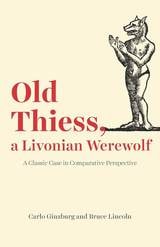
Old Thiess, a Livonian Werewolf
A Classic Case in Comparative PerspectiveCarlo Ginzburg and Bruce Lincoln
University of Chicago Press, 2020
In this book, eminent scholars Carlo Ginzburg and Bruce Lincoln offer a uniquely comparative look at the trial and startling testimony of Old Thiess. They present the first English translation of the trial transcript, in which the man’s own voice can be heard, before turning to subsequent analyses of the event, which range from efforts to connect Old Thiess to shamanistic practices to the argument that he was reacting against cruel stereotypes of the “Livonian werewolf” a Germanic elite used to justify their rule over the Baltic peasantry. As Ginzburg and Lincoln debate their own and others’ perspectives, they also reflect on broader issues of historical theory, method, and politics. Part source text of the trial, part discussion of historians’ thoughts on the case, and part dialogue over the merits and perils of their different methodological approaches, Old Thiess, a Livonian Werewolf opens up fresh insight into a remarkable historical occurrence and, through it, the very discipline of history itself.
On Baltic Slovenia and Adriatic Lithuania
A Qualitative Comparative Analysis of Patterns in Post-Communist TransformationZenonas Norkus
Central European University Press, 2012

On European Ground
Alan Cohen
University of Chicago Press, 2001
Cohen's images achieve a solemn beauty even as they engage history at its most topical. Pictures of trenches and bunkers at the battlefields of Somme and Verdun explore the tension between the violence of the past and the inscrutability of its remnants. Photographs from the grounds of Dachau and Auschwitz solicit a provocative dialogue between the ordinariness of these sites today and their haunting memory. They teach us, as the New Art Examiner notes, "that the living perceptual connection to the Holocaust is vanishing." Images of the Berlin Wall show only the footprint of the barricade that once separated two hostile ideologies. They record the physical erosion and looming disappearance of the Wall while capturing its reappearance as a memorialized abstraction.
Accompanying the photographs in On European Ground are essays by Sander Gilman and Jonathan Bordo, as well as an interview with Cohen by critic Roberta Smith of the New York Times. The essays present both an introduction to and aesthetic analysis of Cohen's work, while the interview discusses the intractable problems of history and memory that his photographs so uniquely capture.
On Hysteria
The Invention of a Medical Category between 1670 and 1820Sabine Arnaud
University of Chicago Press, 2015
In On Hysteria, Sabine Arnaud traces the creation and rise of hysteria, from its invention in the eighteenth century through nineteenth-century therapeutic practice. Hysteria took shape, she shows, as a predominantly aristocratic malady, only beginning to cross class boundaries (and be limited to women) during the French Revolution. Unlike most studies of the role and status of medicine and its categories in this period, On Hysteria focuses not on institutions but on narrative strategies and writing—the ways that texts in a wide range of genres helped to build knowledge through misinterpretation and recontextualized citation.
Powerfully interdisciplinary, and offering access to rare historical material for the first time in English, On Hysteria will speak to scholars in a wide range of fields, including the history of science, French studies, and comparative literature.
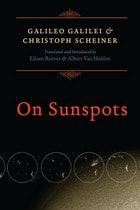
On Sunspots
Galileo Galilei and Christoph Scheiner
University of Chicago Press, 2010
Galileo’s telescopic discoveries, and especially his observation of sunspots, caused great debate in an age when the heavens were thought to be perfect and unchanging. Christoph Scheiner, a Jesuit mathematician, argued that sunspots were planets or moons crossing in front of the Sun. Galileo, on the other hand, countered that the spots were on or near the surface of the Sun itself, and he supported his position with a series of meticulous observations and mathematical demonstrations that eventually convinced even his rival.
On Sunspots collects the correspondence that constituted the public debate, including the first English translation of Scheiner’s two tracts as well as Galileo’s three letters, which have previously appeared only in abridged form. In addition, Albert Van Helden and Eileen Reeves have supplemented the correspondence with lengthy introductions, extensive notes, and a bibliography. The result will become the standard work on the subject, essential for students and historians of astronomy, the telescope, and early modern Catholicism.
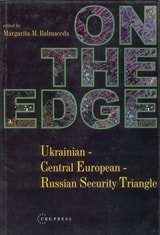
On The Edge
Ukrainian - Central European - Russian Security TriangleMargarita M. Balmaceda
Central European University Press, 2001
A new globally significant relationship arising after the break-up of the Soviet Union is the main topic of this unparalleled volume – the geopolitical link between Russia, Ukraine and the three bordering ‘Central European’ states, Hungary, Poland and Slovakia. On the Edge is a path-breaking analysis of this triangular relationship with an in-depth focus on economic, political and, more importantly, security issues.
The expansion of NATO up to Ukraine’s borders is likely to leave Ukraine in a delicate position vis-à-vis Russia. On the Edge addresses key questions, such as: how are events in Ukraine affecting the security calculations of the Central European states; Central European relations with Russia and NATO; and relations among Central European states themselves? The volume examines what Central European states can do to solidify Ukraine’s independence and help it avoid international isolation.
On the Edge gives a Central European perspective on all these issues and suggests concrete forms of co-operation.

On the Back of an Envelope
A Life in WritingPeter Hennessy
Haus Publishing, 2025
As one of Britain’s foremost constitutional experts and contemporary historians, Peter Hennessy has spent his professional life unpicking the arcane world of Whitehall and Westminster. He began his career as a journalist for the Times, the Economist, and the Financial Times, developing a network of insider contacts who helped him shine a light on some of the dustiest corners of the British establishment. As a journalist, prize-winning contemporary historian, and political commentator, he has chronicled the workings of the British state with wit, affection, and a healthy sense of the absurd over a five-decade career. Now a crossbench peer, he has, in his own words, “moved in with his exhibits.” Hennessy is also a stalwart of BBC election night coverage and a regular commentator on BBC Radio 4, bringing a historical and constitutional perspective on current events.
In this new volume, he brings together selected journalism, unpublished lectures, and new writing alongside personal recollections and reflections on his time observing postwar Britain, how it is governed, and those who do the governing. He reflects on the making and unmaking of prime ministers from Attlee to Truss, life in the House of Lords, and the changing constitutional landscape in the wake of Brexit and amid uncertainty about the future of the Union. Interspersed with lectures, journalism, and new pieces, Hennessy also looks back at a fascinating career, reflecting on his own experiences as a young green graduate navigating the hard-nosed world of Fleet Street in the 1970s, bringing to life a cast of characters from a world now largely gone. He revisits his time as a public historian, academic, and crossbench peer with a levity reflected in his belief that history is “gossip with footnotes.”
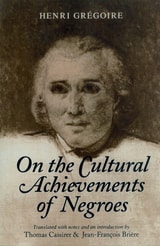
On the Cultural Achievements of Negroes
Henri Gregoire
University of Massachusetts Press, 1996
First published in French in 1808 and translated into English two years later under the title An Enquiry Concerning the Intellectual and Moral Faculties, and Literature of the Negroes, this book was a touchstone for nineteenth-century abolitionists in England and the United States. Written by Abbe Henri Gregoire (1750–1831), it argued vigorously against assumptions of black inferiority and in favor of the humanity, equality, and cultural achievements of people of African heritage. His treatise summarized most of the available written thought on race up to that time. A leading activist in the French Revolution, Gregoire reflected in his arguments the spirit of “libertie, egalite, and fraternite” and anticipated twentieth-century race inquiry and theory. Although influential in its time, the first translation of Gregoire's work was incomplete and flawed. This new edition presents a fresh, accurate, and complete text of this key document in the history of Western racial thought. The book includes a substantial biography of Gregoire and analysis of the historical context in which he wrote and the impact of his work.
On the Current Situation in the Ukraine
Serhii Mazlakh and Vasyl' Shakhrai
University of Michigan Press, 2025
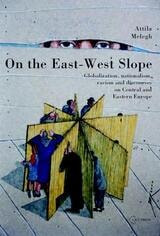
On the East-West Slope
Globalization, Nationalism, Racism and Discourses on Eastern EuropeAttila Melegh
Central European University Press, 2006
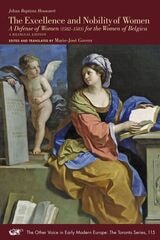
On the Excellence and Nobility of Women
A Defense of Women (1582–1583) for the Women of Belgica. A Bilingual EditionJehan Baptista Houwaert
Iter Press, 2025
Jehan Baptista Houwaert’s Excellence and Nobility of Women constitutes the eighth book of his Plain of the Nine Muses, or The Pleasure Garden of Virtuous Women (1582–1583), an immense conduct book for women in rhymed verse based on the many querelle texts of the French and Burgundian tradition but especially, in its French translation, on the pathbreaking Declamation on the Nobility and Preeminence of the Female Sex (1529) by Henricus Cornelius Agrippa von Nettesheim.
Like its model, Houwaert’s work asserts not merely the equality but the superiority of women. It is unique in that it is addressed not to a wealthy noblewoman or princess, as were most such defenses, but more democratically to the “girls, unmarried women, wives, and widows of Belgica”—all of them!
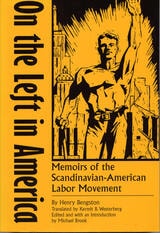
On the Left in America
Memoirs of the Scandinavian-American Labor MovementHenry Bengston. Translated by Kermit B. Westerberg. Edited and with an Introduction by Michael Brook
Southern Illinois University Press, 1999
Previously available only in an out-of-print Swedish edition published in 1955, Henry Bengston's firsthand account deals with what historian Dag Blanck calls the "other Swedish America."
Swedish immigrants in general were conservative, but Bengston and others—most notably Joe Hill—joined the working-class labor movement on the left, primarily as Debsian socialists, although their ranks included other socialists, communists, and anarchists. Involved in the radical labor movement on many fronts, Bengston was the editor of Svenska Socialisten from 1912 until he dropped out of the Scandinavian Socialist Federation in 1920. Even after 1920, however, his sympathies remained with the movement he had once strongly espoused.
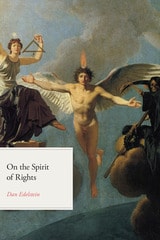
On the Spirit of Rights
Dan Edelstein
University of Chicago Press, 2018
In On the Spirit of Rights, Dan Edelstein answers this question by examining the complex genealogy of the rights that regimes enshrined in the American and French Revolutions. With a lively attention to detail, he surveys a sprawling series of debates among rulers, jurists, philosophers, political reformers, writers, and others who were all engaged in laying the groundwork for our contemporary systems of constitutional governance. Every seemingly new claim about rights turns out to be a variation on a theme, as late medieval notions were subtly repeated and refined to yield the talk of “rights” we recognize today. From the Wars of Religion to the French Declaration of the Rights of Man and of the Citizen to the 1948 Universal Declaration of Human Rights, On the Spirit of Rights is a sweeping tour through centuries of European intellectual history and an essential guide to our ways of thinking about human rights today.
On the Verge of Convergence
Social Stratification in Eastern EuropeHenryk Domanski
Central European University Press, 2000
On the Way to Heidegger’s Contributions to Philosophy
Parvis Emad
University of Wisconsin Press, 2007
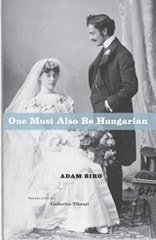
One Must Also Be Hungarian
Adam Biro
University of Chicago Press, 2006
The only country in the world with a line in its national anthem as desperate as “this people has already suffered for its past and its future,” Hungary is a nation defined by poverty, despair, and conflict. Its history, of course, took an even darker and more tragic turn during the Holocaust. But the story of the Jews in Hungary is also one of survival, heroism, and even humor—and that is the one acclaimed author Adam Biro sets out to recover in One Must Also Be Hungarian, an inspiring and altogether poignant look back at the lives of his family members over the past two hundred years.
A Hungarian refugee and celebrated novelist working in Paris, Biro recognizes the enormous sacrifices that his ancestors made to pave the way for his successes and the envious position he occupies as a writer in postwar Europe. Inspired, therefore, to share the story of his family members with his grandson, Biro draws some moving pictures of them here: witty and whimsical vignettes that convey not only their courageous sides, but also their inner fears, angers, jealousies, and weaknesses—traits that lend an indelible humanity to their portraiture. Spanning the turn of the nineteenth century, two destructive world wars, the dramatic rise of communism, and its equally astonishing fall, the stories here convey a particularly Jewish sense of humor and irony throughout—one that made possible their survival amid such enormous adversity possible.
Already published to much acclaim in France, One Must Also Be Hungarian is a wry and compulsively readable book that rescues from oblivion the stories of a long-suffering but likewise remarkable and deservedly proud people.
One Step Ahead
A Jewish Fugitive in Hitler's EuropeAlfred Feldman. Foreword by Susan Zuccotti
Southern Illinois University Press, 2001
Through compelling personal accounts and family correspondence, One Step Ahead documents Alfred Feldman’s harrowing flight into exile as he and his family fled the pogroms that flooded across Nazi-occupied Europe. It is a memoir of horror and hope recounted by a man who survived the organized terror of Hitler’s "Final Solution" as it destroyed entire generations of European Jewish life within ten catastrophic years in the mid-twentieth century. Feldman’s memoir conveys the searing pain that has never left him, while demonstrating the triumphant humanity of a survivor.
Feldman vividly describes the impact of the escalating anti-Semitic hatred and violence in Germany during the 1930s, the impact of the notorious Nuremberg Laws in 1935, and the terrifying Kristallnacht pogrom in 1938. By age sixteen, Feldman was living with his parents and three younger sisters in Antwerp, Belgium, during the 1939 German invasions of Poland, marking the start of World War II. In the face of increasing persecution, Feldman’s extended family scattered over the globe in a desperate attempt to remain one step ahead of their Nazi pursuers.
Recalling his life on the run, Feldman describes what few survivors have chosen to write about: the Vichy raids of August 26, 1942; the French labor brigades; the Comité Dubouchage; and life in super-vised residence in France under the Italians. While in the south of France, Feldman endured food shortages and Nazi anti-Semitic measures, beginning with work camps and culminating in the deportation and ultimate death of his mother and sisters at Auschwitz.
To evade the Germans, Feldman and his father fled into the Italian Alps in September of 1943, hiding between the Allies and the Germans. Aided by local villagers, the Feldmans survived precariously for over a year and a half, along with other Jewish refugees, until that region was liberated. Only then, and only gradually, did Feldman manage to piece together the fate of his surviving family and learn at last of the death of his mother and sisters.
Now, as an adult, Alfred Feldman has retraced his escape and exile, taking his wife and children to his hometown in Germany, the mountains in Italy, and Montagnac, where a plaque commemorates his mother and sisters.
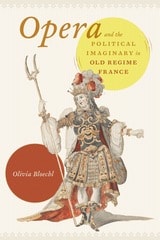
Opera and the Political Imaginary in Old Regime France
Olivia Bloechl
University of Chicago Press, 2018
In Opera and the Political Imaginary in Old Regime France, however, Olivia Bloechl reveals another layer of French opera’s political theater. The make-believe worlds on stage, she shows, involved not just fantasies of sovereign rule but also aspects of government. Plot conflicts over public conduct, morality, security, and law thus appear side-by-side with tableaus hailing glorious majesty. What’s more, opera’s creators dispersed sovereign-like dignity and powers well beyond the genre’s larger-than-life rulers and gods, to its lovers, magicians, and artists. This speaks to the genre’s distinctive combination of a theological political vocabulary with a concern for mundane human capacities, which is explored here for the first time.
By looking at the political relations among opera characters and choruses in recurring scenes of mourning, confession, punishment, and pardoning, we can glimpse a collective political experience underlying, and sometimes working against, ancienrégime absolutism. Through this lens, French opera of the period emerges as a deeply conservative, yet also more politically nuanced, genre than previously thought.

Ophrys
The Bee Orchids of EuropeHenrik Ærenlund Pedersen and Niels Faurholdt
Royal Botanic Gardens, Kew, 2007
Ophrys – the Bee Orchids of Europe is an easy to use, comprehensive introduction to the plants found in Europe. It can be used as a field guide (with keys, descriptions and numerous colour photographs) and a standard reference (with chapters on structure, biology, evolution and conservation). The chapter by Richard Manuel gives ample guidelines for cultivation for growers, and is especially helpful for conservationists introducing plants back into the wild.
The classification is based on a broad species concept, and offers an alternative to the finely split classifications of the genus that prevail in most recent field guides.
Finally, the chapter ‘recommended Ophrys excursions’ is ideal for planning field trips."
Opium in the Balkans
Cultivation, Processing, and Trade during the Interwar PeriodVladan Jovanović
Central European University Press, 2025
Macedonian raw opium was a highly sought-after pharmaceutical raw material. This book focuses on its cultivation and production, and the trafficking of opium-based narcotics. Vladan Jovanović offers fresh insight into a neglected and marginalized subject, tracing and contextualizing both the licit and the illicit processing and trade of opium alkaloids from the Western Balkans through Turkey, and on to the rest of the world between the two World Wars.
His approach is to explore the subject both from the top down, involving the League of Nations and politicians and diplomats, as well as from the bottom up, through the analysis of the activities of smugglers, police, and ordinary people who participated in the production and distribution of opium. The author describes the process of relocating the illegal processing industry from Turkey and Bulgaria to Yugoslavia. He insightfully shows the implicit continuity of relations between the former Ottoman Empire and the newly constituted Yugoslav state in the form of bilateral political agreements.
He pays special attention to the illegal activities within the legal pharmaceutical industry and also exposes the role of criminal networks, which he situates in the appropriate political and social context. The exploration of this sensitive historical subject extends to other Balkan countries, along with Turkey, Western Europe, and the United States.
Opposing Patriarchy
Women and the Law in Action in Pre-Unification Italy (1815–1865)Sara Delmedico
University of London Press, 2021
In Italy and beyond, the nineteenth century was a time of great political change. Shifts in state boundaries and socio-economic structures deeply affected the Italian political landscape, including the nation’s legal system. Many Italian women, who had lived within a strict patriarchal and hierarchical society, began to redefine their identities beyond the traditional domestic roles of daughter, wife, and mother. This volume charts that process by focusing on women’s attitudes towards the law and their interaction with the legal system. Sara Delmedico seeks to recover the forgotten voices and lives of those ordinary women who, in their everyday lives, reacted against the limitations and constraints imposed upon them by society and who refused to accept their status passively. As this volume shows, the women of the period understood the law, questioned obedience, challenged authority, and stood up for themselves. Even though they did not always achieve their goals, their actions contributed to shaping our present.

Orange Parades
The Politics of Ritual, Tradition and ControlDominic Bryan
Pluto Press, 2000
Ordering Customs
Ethnographic Thought in Early Modern VeniceKathryn Taylor
University of Delaware Press, 2023
Organised Militarism in Interwar Britain
The Navy League and the Air League of the British EmpireRowan Thompson
University of London Press, 2026
While militaristic and patriotic organizations formed an important part of political culture in Edwardian Britain, 1918 often marks a terminus for histories of organized militarism. Taking the end of the First World War as its starting point, this book argues that militarism was able to survive World War I, despite the competing rise of liberal internationalism, pacifism, and anti-war sentiment. Focusing on the ideas, aims, and activities of the Navy League and the Air League of the British Empire—two extra-parliamentary organizations established to promote naval and aerial supremacy—the book examines how the Leagues negotiated the trauma of the First World War and how they contributed to the societal and military preparation for a second global conflict as the clouds of war gathered in the late 1930s.
Drawing on extensive archival research, Organised Militarism in Interwar Britain explains how these Leagues mobilized broad public and political support and what the story of each organization tells us about the impact of war on British society and culture, civil-military relations, political and private activism, military theater and commemoration, youth, and the politics of disarmament, collective security, internationalism, and national defense. In doing so, it demonstrates that martial and militaristic sentiment remained an important part of mainstream British political culture, despite the ravages of war.
Organizations, Civil Society, and the Roots of Development
Edited by Naomi R. Lamoreaux and John Joseph Wallis
University of Chicago Press, 2017
The contributions to Organizations, Civil Society, and the Roots of Development seek to answer this question through an exploration of how developing nations throughout the eighteenth and nineteenth centuries, including the United States, United Kingdom, France, and Germany, made the transition to allowing their citizens the right to form organizations. The transition, contributors show, was not an easy one. Neither political changes brought about by revolution nor subsequent economic growth led directly to open access. In fact, initial patterns of change were in the opposite direction, as political coalitions restricted access to specific organizations for the purpose of maintaining political control. Ultimately, however, it became clear that these restrictions threatened the foundation of social and political order. Tracing the path of these modern civil societies, Organizations, Civil Society, and the Roots of Development is an invaluable contribution to all interested in today’s developing countries and the challenges they face in developing this organizational capacity.
Organizing Empire
Individualism, Collective Agency, and IndiaPurnima Bose
Duke University Press, 2003
From a historically grounded, feminist perspective, Bose offers four case studies, each of which illuminates a distinct individualizing rhetorical strategy. She looks at the parliamentary debates on the Amritsar Massacre of 1919, in which several hundred unarmed Indian protesters were killed; Margaret Cousins’s firsthand account of feminist organizing in Ireland and India; Kalpana Dutt’s memoir of the Bengali terrorist movement of the 1930s, which was modeled in part on Irish anticolonial activity; and the popular histories generated by ex-colonial officials and their wives. Bringing to the fore the constraints that colonial domination placed upon agency and activism, Organizing Empire highlights the complexity of the multiple narratives that constitute British colonial history.
Organizing Workers in the Shadow of Slavery
Global Inequality, Racial Boundaries, and the Rise of Unions in American and British Capitalism, 1870–1929Rudi Batzell
University of Chicago Press, 2025
During the rise of the labor movement in the late nineteenth century, why were American workers unable to organize inclusive trade unions like those formed by their counterparts in the United Kingdom? Comparing American and British capitalism in the port cities of Baltimore and Liverpool and the steel cities of Pittsburgh and Sheffield, Rudi Batzell reveals that the answer lies in the legacies of slavery and entrenched structures of racial inequality. Strikebreaking succeeded more often in the United States because landless Black Americans were, out of economic desperation, more likely to become scabs and fracture the class solidarity of any union movement. Batzell shows, in short, how racism was and is deeply connected to class, migration, and capitalism in a global economy marked by slavery and empire. In emphasizing the geography of economic inequality, this book offers new clarity on the late-nineteenth-century successes and failures of working-class formation. More broadly, Organizing Workers in the Shadow of Slavery makes it clear that the pursuit of justice today will require sustained economic reparations for slavery and colonialism.
Orientalism's Interlocutors
Painting, Architecture, PhotographyJill Beaulieu and Mary Roberts, eds.
Duke University Press, 2002
Looking at the political significance of cross-cultural encounters refracted through the visual languages of Orientalism, the contributors engage with pressing recent debates about indigenous agency, postcolonial identity, and gendered subjectivities. The very range of artists, styles, and forms discussed in this collection broadens contemporary understandings of Orientalist art. Among the artists considered are the Algerian painters Azouaou Mammeri and Mohammed Racim; Turkish painter Osman Hamdi; British landscape painter Barbara Bodichon; and the French painter Henri Regnault. From the liminal "Third Space" created by mosques in postcolonial Britain to the ways nineteenth-century harem women negotiated their portraits by British artists, the essays in this collection force a rethinking of the Orientalist canon.
This innovative volume will appeal to those interested in art history, theories of gender, and postcolonial studies.
Contributors. Jill Beaulieu, Roger Benjamin, Zeynep Çelik, Deborah Cherry, Hollis Clayson, Mark Crinson, Mary Roberts
Orientations
An Anthology of European Travel Writing on EuropeWendy Bracewell
Central European University Press, 2009
Origins of the American Indians
European Concepts, 1492-1729By Lee E. Huddleston
University of Texas Press, 1967
The American Indian—origin, culture, and language—engaged the best minds of Europe from 1492 to 1729. Were the Indians the result of a co-creation? Were they descended from the Ten Lost Tribes of Israel? Could they have emigrated from Carthage, Phoenicia, or Troy? All these and many other theories were proposed.
How could scholars account for the multiplicity of languages among the Indians, the differences in levels of culture? And how did the Indian arrive in America—by using as a bridge a now-lost continent or, as was later suggested by some persons in the light of an expanding knowledge of geography, by using the Bering Strait as a migratory route?
Most of the theories regarding the American Indian were first advanced in the sixteenth century. In this distinctive book Lee E. Huddleston looks carefully into those theories and proposals. From many research sources he weaves an historical account that engages the reader from the very first.
The two most influential men in an early-developing controversy over Indian origins were Joseph de Acosta and Gregorio García. Approaching the subject with restraint and with a critical eye, Acosta, in 1590, suggested that the presence of diverse animals in America indicated a land connection with the Old World. On the other hand, García accepted several theories as equally possible and presented each in the strongest possible light in his Origen de los indios of 1607.
The critical position of Acosta and the credulous stand of García were both developed in Spanish writing in the seventeenth century. The Acostans settled on an Asiatic derivation for the Indians; the Garcians continued to accept most sources as possible. The Garcian position triumphed in Spain, as was shown by the republication of García’s Origen in 1729 with considerable additions consistent within the original framework.
Outside of Spain, Acosta was the more influential of the two. His writings were critical in the thinking of such men as Joannes de Laet (who bested Grotius in their polemic on Indian origins), Georg Horn, and Samuel Purchas. By the end of the seventeenth century the Acostans of Northern Europe had begun to apply physical characteristics to the determination of Indian origins, and by the early eighteenth century these new criteria were beginning to place the question of Indian origins on a more nearly scientific level.
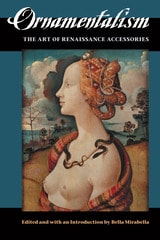
Ornamentalism
The Art of Renaissance AccessoriesEdited and with an Introduction by Bella Mirabella
University of Michigan Press, 2011
Lively, well-written, and richly illustrated with color plates, Ornamentalism will appeal to scholars of the material past and social practice, and those interested in fashion studies, manners and morals, gender and sexuality, theater and performance.
Orphan Girl
The Olesnicki Episode: One Body with Two Souls Entwined: An Epic Tale of Married Love in Seventeenth-Century PolandAnna Stanislawska
Iter Press, 2021
Written in 1685, Transaction or the Description of the Entire Life of an Orphan by Way of Plaintful Threnodies, often referred to as Orphan Girl, is a valuable, long-lost, seventeenth-century poetic text that documents women’s writing in the early modern period. In this autobiographical account, Anna Stanislawska speaks confessionally and unsparingly about her life, from her infancy to her widowhood and withdrawal from the world. Stanislawska was an incomparable memoirist, revealing the depths of her private life in a manner not to be matched until modern times. One Body with Two Souls Entwined brings together this spirited poetic account with an in-depth introductory and literary commentary by Barry Keane. Together the book offers a remarkable piece of scholarly, translational, and dramaturgical work and puts it in context amid the backdrop of Polish history.
Orwell’s Alert!
Power and the Politics of Control in George Orwell’s NovelsROBERT VAN DELLEN
Parkhurst Brothers, Inc., 2026
A college professor and former college president reveals the political underpinnings of George Orwell as expressed in his novels, with special emphasis on the author’s last two novels, Animal Farm and 1984. The growth of Orwell’s disdain for colonialism, as well as his concern for the quality of life under various political systems, undergirds the analysis. While flaws in Orwell’s analyses are acknowledged, the author believes readers can learn important lessons from the study, lessons that can be applied to the individual’s relationship to the state in our time.

Oscar Wilde Prefigured
Queer Fashioning and British Caricature, 1750-1900Dominic Janes
University of Chicago Press, 2016
Oscar Wilde Prefigured is a study of the prehistory of this “queer moment” in 1895. Janes explores the complex ways in which men who desired sex with men in Britain had expressed such interests through clothing, style, and deportment since the mid-eighteenth century. He supplements the well-established narrative of the inscription of sodomitical acts into a homosexual label and identity at the end of the nineteenth century by teasing out the means by which same-sex desires could be signaled through visual display in Georgian and Victorian Britain. Wilde, it turns out, is not the starting point for public queer figuration. He is the pivot by which Georgian figures and twentieth-century camp stereotypes meet. Drawing on the mutually reinforcing phenomena of dandyism and caricature of alleged effeminates, Janes examines a wide range of images drawn from theater, fashion, and the popular press to reveal new dimensions of identity politics, gender performance, and queer culture.

Osiris, Volume 20
Politics and Science in Wartime: Comparative International Perspectives on the Kaiser Wilhelm InstituteEdited by Carola Sachse and Mark Walker
University of Chicago Press, 2005
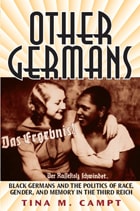
Other Germans
Black Germans and the Politics of Race, Gender, and Memory in the Third ReichTina M. Campt
University of Michigan Press, 2005
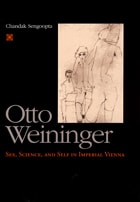
Otto Weininger
Sex, Science, and Self in Imperial ViennaChandak Sengoopta
University of Chicago Press, 2000
This provocative, enlightening study explores the milieu in which the philosopher Otto Weininger (1880-1903) wrote his controversial book Sex and Character. Shortly after its publication, Weininger committed suicide at the age of twenty-three. His book, which argued that women and Jews were mere sexual beings who lacked individuality, became a bestseller.
Hailed as a genius by intellectuals such as Ludwig Wittgenstein and Karl Kraus, Weininger was admired, not for his prejudices, but for his engagement with the central issues of the time—the nature and meanings of identity. Sengoopta pays particular attention to how Weininger appropriated scientific language and data to defend his views and examines the scientific theories themselves.
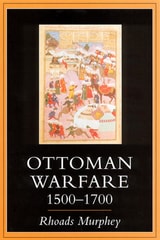
Ottoman Warfare 1500-1700
Murphey, Rhoads
Rutgers University Press, 1999
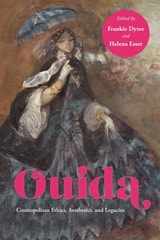
Ouida
Cosmopolitan Ethics, Aesthetics, and LegaciesFrankie Dytor and Helena Esser
Ohio University Press, 0
Outspoken, extravagant, and internationally celebrated in her lifetime, Ouida (Marie Louise de la Ramée, 1839–1908) was one of the nineteenth century’s most successful and controversial writers. Her fiction, essays, and cultural criticism captivated readers across Europe and beyond, yet her polemical politics, cosmopolitan outlook, and opulent style left her at odds with the modernist critical traditions that shaped later literary scholarship. As a result, despite her considerable influence, Ouida has remained on the margins of Victorian literary history. Ouida: Cosmopolitan Ethics, Aesthetics, and Legacies offers the first sustained examination of the ethical and aesthetic commitments that underpin Ouida’s work and its effect on nineteenth-century culture. Bringing together an international group of established and emerging scholars, the collection explores her writing through frameworks including psychogeography, ecocriticism, decadence studies, celebrity studies, and adaptation studies. Contributors reveal how Ouida challenged conventional boundaries of nation, gender, class, and species while shaping contemporary debates about art, politics, and society. Opening with a conversation between Victorian literary scholars Pamela K. Gilbert and Talia Schaffer, the volume traces Ouida’s influence across literary networks, media forms, and historical periods, from her impact on fellow authors and feminist modernists to her afterlives in adaptation, fandom, and participatory culture. Positioning Ouida as a profoundly cosmopolitan thinker and writer, the collection reconsiders the boundaries of Victorian studies itself, demonstrating how nineteenth-century literature can be understood through dynamic exchanges across genres, borders, media, and time. In doing so, it restores Ouida to a central place in literary history while highlighting the enduring relevance of her global legacy. Contributors Katja Anderson Natasha Anderson Joseph Bristow Lorraine Dubuisson Frankie Dytor Jesse R. Erickson Helena Esser Pamela K. Gilbert Andrew King Jane Jordan Crescent Rainwater Talia Schaffer Margaret D. Stetz Joanna Turner
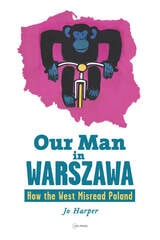
Our Man in Warszawa
How the West Misread PolandJo Harper
Central European University Press, 2021
Written by a Brit who has lived in Poland for more than twenty years, this book challenges some accepted thinking in the West about Poland and about the rise of Law and Justice (PiS) as the ruling party in 2015. It is a remarkable account of the Polish post-1989 transition and contemporary politics, combining personal views and experience with careful fact and material collections. The result is a vivid description of the events and scrupulous explanations of the political processes, and all this with an interesting twist – a perspective of a foreigner and insider at the same time. Settled in the position of participant observer, Jo Harper combines the methods of macro and micro analysis with CDA, critical discourse analysis. He presents and interprets the constituent elements and issues of contemporary Poland: the main political forces, the Church, the media, issues of gender, the Russian connection, the much-disputed judicial reform and many others.
A special feature of the book is the detailed examination of the coverage of the Poland’s latest two elections, one in 2019 (parliamentary) and the other in 2020 (presidential) in the British media, an insightful and witty specimen of comparative cultural and political analysis.