Results by title
3388 books match the query 'Fiction' and 91 start with o
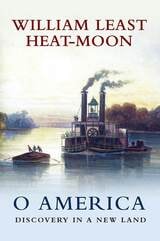
O America
Discovery in a New LandWilliam Least Heat-Moon
University of Missouri Press, 2027
Traveling by foot, horse, stage, canal boat, and steamer, Nathaniel and Nicodemus explore the backcountry and forge a deep friendship as they encounter a host of memorable characters who reveal the nature of the American experiment, one still in its early stages but already under the stress of social injustices and economic inequities.
O'Hearn
Greg Mulcahy
University of Alabama Press, 2015
O’Hearn is the story of the story the man tells himself in confused chronology as he struggles to make sense of a world and a landscape where things have stopped making sense.
The laws of causation are absent or profoundly obscured in this explanatory narrative, but then so is all individual motivation. Action seems to end only in a world of winners and losers and occurs solely to reinforce that world by further enriching the winners at the, sometimes willful, expense of the losers.
O’Hearn is funny, contradictory, satiric, heartbreaking—a work unlike anything in our contemporary literature.
O, How the Wheel Becomes It!
A NovelAnthony Powell
University of Chicago Press, 2015
Written at the peak of the late British master’s extraordinary literary career, this novel offers profound insight into the mind of a great artist whose unequaled style, ear for dialogue, and eye for irony will delight devotees and new readers alike.
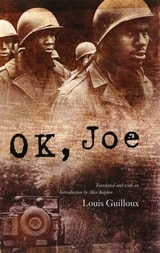
OK, Joe
Louis Guilloux
University of Chicago Press, 2003
Based on diaries that the author kept during his service as a translator for the U.S. Army in the aftermath of D-Day, OK, Joe follows Louis and the Americans as they negotiate with witnesses, investigate the crimes, and stage the courts-martial. Guilloux has an uncanny ear for the snappy speech of the GIs and a tenderness for the young, unworldly men with whom he spends his days, and, in evocative vignettes and dialogues, he sketches the complex intersection of hope and disillusionment that prevailed after the war. Although the American presence in France has been romanticized in countless books and movies, OK, Joe offers something exceedingly rare: a penetrating French perspective on post-D-Day GI culture, a chronicle of trenchant racism and lost ideals.
ORDINATION
SCOTT A KAUKONEN
The Ohio State University Press, 2005
“If my mother were to tell the story . . .” So begins the title piece in this debut collection of short fiction, eight stories that explore the gap between the stories we tell ourselves and the stories we have lived. In “Punitive Damages,” a father, the beneficiary of a huge financial settlement in compensation for his son’s death, must confront the truth of the life that the son’s death has provided. In “Punnett’s Squares,” winner of the Chicago Tribune’s Nelson Algren Award, an adopted son seeks to prove, against all evidence to the contrary, that his adoptive father is in fact his biological father. In “Induction Ceremony,” a small-town basketball hero returns to his hometown no longer a man but now a woman, and his onetime teammate-and-friend must reconsider who they were and who they are now. In the pair of pieces that bookend the collection, “Ordination” and “Be a Missionary,” a Baptist preacher’s son must reconcile the distance between the evidence of things seen and the evidence of things unseen.
These are men and boys who like to see themselves as worthy of the titles of father, son, husband, lover, and friend, but who must fight their own instincts and desires to claim such honors. These are boys and men for whom questions of identity—biological, cultural, sexual, religious, moral—are unavoidable, men and boys always seeking to be who they want to be, always aware of who they are.
Obscurity
Philippe Jaccottet
Seagull Books, 2015
After several years abroad, a young man returns to his hometown to seek the man he calls master. This master, a brilliant philosopher, had made the young man into a disciple before sending him out into the world to put his teachings into practice. Returning three years later, the disciple finds his master has abandoned his wife and child and moved into a squalid one-room flat, cutting himself off completely from his former life. Disillusioned and reeling from the discovery, the young man spends an entire night listening to his master’s bitter denunciation of the ideals they once shared. Written in 1960 during Jaccottet’s period of poetic paralysis, the novel seeks to harmonize the best and worst of human nature—reconciling despair, falsehood, and lethargy of spirit with the need to remain open to beauty, truth, and the essential goodness of humankind. Translated by Tess Lewis, Obscurity is Jaccottet’s only work of fiction, one that will introduce new readers to the multifaceted skills of this major poet.
Ocean, as Much as Rain
Stories, Lyrical Prose, and Poems from TibetTsering Woeser. Edited and Translated by Fiona Sze-Lorrain with Dechen Pemba.
Duke University Press, 2026
Odd Ducks
StoriesPatricia Lawson
BkMk Press, 2020
This debut collection of nine humorous stories, set in and around Kansas City from the 1950s to the 2000s, often depicts adults awkwardly mentoring talented young people, whether in a community garden, a library, or in one-on-one advice. Other characters feel like outsiders in their own neighborhoods or suddenly become outsiders when straying into unfamiliar places.
Of Forgotten Times
Marisela Rizik
Northwestern University Press, 2003
Of Interest to the General Public
About a Coronation Cloak from EthiopiaMaaza Mengiste
Diaphanes, 2026
The work of Maaza Mengiste draws from voices and stories that have been excluded, from gaps that seem inexplicable, from images, objects, and places that pulse with pasts unresolved. While exploring the African collections at the Ethnological Museum of Berlin, she was struck by an elaborate coronation cloak from Ethiopia on display. Inspired by the history of the 1868 British Expedition to Abyssinia (now Ethiopia) and the burning of the palace fortress at Magdala, Of Interest to the General Public uses photography and words to reimagine the journey of the royal mantle—out of battle, through fire, over mountains, to cross the waters into Berlin.
Of Mice and Mooshaber
Ladislav Fuks
Karolinum Press, 2014
Written before the occupation of Czechoslovakia in 1968 but not published until 1970, Of Mice and Mooshaber is Fuks’s first novel. The story takes place in an unspecified country in which the ruler has been overthrown and replaced by a dictator. The main protagonist, Mrs. Mooshaber, is an old widow whose husband was a coachman in a brewery. Her life revolves around her job as a caretaker for troublesome children, her own ungrateful children, and her fear of mice, which she tries to catch in traps. Blending elements of the grotesque with the fantastic, Fuks’s novel of heartbreaking tragedy speaks to the evil that can be found within the human soul.
Of Seven Fir Trees and the Snow
Early StoriesThomas Bernhard
Seagull Books, 2025
Before Thomas Bernhard became one of the most provocative voices in modern literature, he was a young writer testing the limits of form and subject. Of Seven Fir Trees and the Snow offers an unprecedented look at his evolution, from his earliest published work at nineteen to the emergence of his unmistakable voice. Translated into English for the first time, in these stories, Bernhard moves from stark naturalism to fairy-tale simplicity to the eerie, stripped-down surrealism reminiscent of science fiction. At the same time, he grapples with the fundamental ethical questions that would define his career: how does one navigate personal autonomy in a world fractured by the upheavals of the twentieth century?
Selected and arranged in chronological order by Douglas Robertson, this collection traces Bernhard’s transformation from an ambitious chronicler of Austrian rural life to a writer in dialogue with the broader currents of world literature. A rare glimpse into the making of a literary icon, this volume is essential reading for both longtime admirers and those discovering Bernhard’s singular genius for the first time.
Of Space and Mind
Cognitive Mappings of Contemporary Chicano/a FictionBy Patrick L. Hamilton
University of Texas Press, 2011
Chicano/a fiction is often understood as a literature of resistance to the dominant U.S. Anglo culture and society. But reducing this rich literary production to a single, binary opposition distorts it in fundamental ways. It conflates literature with life, potentially substituting a literature of protest for social activism that could provoke real changes in society. And it overlooks the complex range of responses to Anglo society that actually animates Chicano/a fiction.
In this paradigm-shifting book, Patrick L. Hamilton analyzes works by Rudolfo Anaya, Ana Castillo, Denise Chávez, Rolando Hinojosa, Arturo Islas, John Rechy, Alfredo Véa, and Helena María Viramontes to expand our understandings of the cultural interactions within the United States that are communicated by Chicano/a fiction. He argues that the narrative ethics of "resistance" within the Chicano/a canon is actually complemented by ethics of "persistence" and "transformation" that imagine cultural differences within the United States as participatory and irreducible to simple oppositions. To demonstrate these alternative ethics, Hamilton adapts the methodology of cognitive mapping; that is, he treats the chosen fictional texts as mental maps that are constructed around and communicative of the narrative's ethics. As he reads these cognitive maps, which envision Chicano/a culture as being part of U.S. society rather than as "resistant" and separate, Hamilton asserts that the authors' conception of cultural difference speaks more usefully to current sociopolitical debates, such as those about gay marriage and immigration reform, than does the traditional "resistant" paradigm.
Of This New World
Allegra Hyde
University of Iowa Press, 2016
Over the course of twelve stories, Hyde writes with a mix of lyricism, humor, and masterful detail. A group of environmental missionaries seeks to start an ideal eco-society on an island in The Bahamas, only to unwittingly tyrannize the local inhabitants. The neglected daughter of a floundering hippie commune must adjust to conventional life with her un-groovy grandmother. Haunted by her years at a collegiate idyll, a young woman eulogizes a friendship. After indenturing his only son to the Shakers, an antebellum vegan turns to Louisa May Alcott’s famous family for help. And in the final story, a former drug addict chases a second chance at life in a government-sponsored space population program. An unmissable debut, the collection charts the worlds born in our dreams and bred in hope.
Off Paradise
StoriesHart Wegner
University of Nevada Press, 2001
In stories that range from the Nevada desert to the lost world of prewar Silesia, Wegner explores, through the perspectives of Martin, his aging parents, and their small circle of fellow emigres, the intricate tapestry of the exile experience--childhood recollections of the vast and fertile plains of East Germany and the shelter of comfortable and loving homes, memories of the horrors of war, the guilt and terror and despair of displacement, the frustrations of finding one's way in a new and alien culture, the precious ties of family and longtime friendship. And most of all, loss--the loss of home; of an identity formed by an ancient language, the details of a shared culture, and a common sense of past and of future; of loved ones; and finally, and most tragically, of memory itself.
Wegner's characters are vividly and bravely human, bitter, tender, despairing, and full of hope. And ever-seeking a new home, a new place in which to belong after their long sojourn in the wilderness. The inner world of the exile has never been examined with such sympathy, such clarity, or such eloquence.
Oh, Serafina!
A Fable of Ecology, Lunacy, and LoveGiuseppe Berto
Rutgers University Press, 2023
Newly translated into English, Giuseppe Berto’s charming 1973 novel Oh, Serafina! was one of the first works of Italian literature to deal with ecological themes while also questioning the destructive effects of industrial capitalism, the many forms spirituality might take, and the ways our society defines madness. This translation includes a foreword from literary scholar Matteo Gilebbi that provides biographical, historical, and philosophical context for appreciating this whimsical fable of ecology, lunacy, and love.
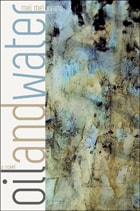
Oil and Water
A NovelMei Mei Evans
University of Alaska Press, 2013
Evans’s compelling story, influenced by her own experiences during the Exxon Valdez oil spill, is a provocative look at the choice that must be made between environmental safety and economic survival. A PEN/Bellwether Prize finalist, it will have readers reconsidering where they draw their own lines.
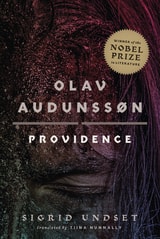
Olav Audunssøn
II. ProvidenceSigrid Undset
University of Minnesota Press, 2021
The second volume in the Nobel Prize–winning writer’s epic of medieval Norway, finely capturing Undset’s fluid, natural style in a new English translation, the first in nearly a century
As Norway moves into the fourteenth century, the kingdom continues to be racked by political turmoil and bloody family vendettas that serve as the backdrop for Sigrid Undset’s masterful story about Olav Audunssøn and Ingunn Steinfinnsdatter. Betrothed as children and raised as foster siblings, their unbridled love for each other sets in motion a series of dire events—with a legacy of betrayal, murder, and disgrace that will echo for generations. In Providence, the second of Olav Audunssøn’s four volumes, Olav settles in at his ancestral estate of Hestviken and soon brings Ingunn home as his wife. Both hope to put their troubles behind them as they start a new life together, but the crimes and shameful secrets of the past have a long reach and a tenacious hold. The consequences of sin, suspicion, and familial obligations may prove a greater threat to the pair’s happiness than even their long years of separation.
Set in a time when royalty and religion vie for power, and bloodlines and loyalties are effectively law, Providence summons a powerful picture of Northern life in the medieval era, as the Swedish Academy noted in awarding Undset the Nobel Prize. Conveying both the intimate drama of Olav and Ingunn’s marriage and the epic sweep of their story, it is at once a moving and vivid recreation of a vanished world tainted by bloodshed and haunted by sin and retribution.
As with her classic Kristin Lavransdatter, Sigrid Undset immersed herself in legal, religious, and historical writings to create in Olav Audunssøn an astoundingly authentic and compelling portrait of Norwegian life in the Middle Ages. And as in her translation of Kristin Lavransdatter, Tiina Nunnally does full justice to Undset’s fluid prose. Undset’s writing style is by turns straightforward and delicately lyrical, conveying the natural world, the complex culture, and the fraught emotional territory against which Olav’s story inexorably unfolds.
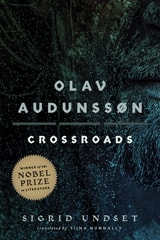
Olav Audunssøn
III. CrossroadsSigrid Undset
University of Minnesota Press, 2022
The third volume in the Nobel Prize–winning writer’s epic story of medieval Norway, finely capturing Undset’s fluid, natural style in the first English translation in nearly a century
In the early fourteenth century, Norway is a kingdom in political turmoil, struggling with opposing forces within its own borders and drawn into strife with neighboring Sweden and Denmark. Bloody family vendettas and conflicting loyalties sparked by the irrepressible passion of a boy and his foster sister (also his betrothed) have now set in motion a series of terrible consequences—with a legacy of betrayal, murder, and disgrace that will echo down through the generations. Crossroads, the third of Olav Audunssøn’s four volumes, finds Olav heartbroken by loss and further estranged from his son. To escape his grief, Olav leaves his home estate of Hestviken and agrees to serve as captain on a small merchant ship headed to London. There, separated from everything familiar to him, Olav begins a visionary journey that will send him far into the forest and deep into his soul. Questioning past decisions and future plans, Olav must grapple with his own perceptions of love and guilt, sin and penitence, vengeance and forgiveness.
Set in a time and place where royalty and religion vie for power, and bloodlines and loyalties are law, Crossroads summons a powerful picture of Northern life in medieval times, as the Swedish Academy noted in awarding Sigrid Undset the Nobel Prize in 1928. Conveying both the intimate drama and epic sweep of Olav’s story as grief and guilt drive him to ever more desperate action, Crossroads is a moving and masterly re-creation of a vanished world tainted by bloodshed and haunted by sin and retribution.
As with Kristin Lavransdatter, her earlier medieval epic, Undset immersed herself in the legal, religious, and historical documents of the time while writing Olav Audunssøn to create astoundingly authentic and compelling portraits of Norwegian life in the Middle Ages. And as in her translation of Kristin Lavransdatter, Tiina Nunnally does full justice to Undset’s natural, fluid prose, in a style that delicately and lyrically conveys the natural world, the complex culture, and the fraught emotional territory against which Olav’s story inexorably unfolds.
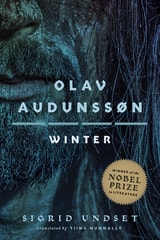
Olav Audunssøn
IV. WinterSigrid Undset
University of Minnesota Press, 2023
The fourth and final volume in the Nobel Prize–winning writer’s epic of one man’s fateful life in medieval Norway
Set in thirteenth-century Norway, a land racked by political turmoil, bloody family vendettas, and rising tensions between secular powers and an ascendant church, Sigrid Undset’s spellbinding masterpiece now follows the fortunes of Olav Audunssøn to the final, dramatic chapter of his life as it unfolds in Winter, the last volume of the tetralogy. When the orphaned Olav and his foster sister Ingunn became betrothed in their youth, a chain of events was set in motion that eventually led to violence, banishment, and a family separation lasting years. The consequences fracture their marriage and threaten the lineage for generations. Now, at the end of his life, Olav continues to grapple with the guilt of his sins as he watches his children, especially Eirik, make disastrous choices and struggle to find their rightful place in a family haunted by the past.
With its precise details and sweeping vision, Olav Audunssøn summons a powerful picture of Northern life in medieval times, as noted by the Swedish Academy in awarding Undset the Nobel Prize in 1928. Conveying both the intimate drama and the epic proportions of Olav’s story at its conclusion, Winter is a moving and masterly recreation of a vanished world tainted by bloodshed and haunted by sin and retribution—yet one that might still offer a chance for redemption.
As with Kristin Lavransdatter, her earlier medieval epic, Sigrid Undset wrote Olav Audunssøn after immersive research in the legal, religious, and historical writings of the time to create an astoundingly authentic and compelling portrait of Norwegian life in the Middle Ages. And as in her translation of Kristin Lavransdatter, Tiina Nunnally does full justice to Undset’s natural, fluid prose—in a style by turns plainspoken and delicately lyrical—to convey the natural world, the complex culture, and the fraught emotional territory against which Olav’s story inexorably unfolds.
Old Floating Cloud
Two NovellasCan Xue
Northwestern University Press, 1991
Yellow Mud Street tells of a street, its people, and a strange event that happens there. The street is dilapidated, though it once saw better times. The “S” Machinery Factory, which used to run day and night, is rusty and decaying, though people still deceive themselves into thinking this factory is a fine place, the envy of “foreign devils” and an important connection with “the authorities.” One day, “a thing” appears. No one is sure if it is a person, a flash of light, or a cloud of will-o'-the-wisp. It prompts rumor, superstition, political slogans, and an investigation by the authorities. A chorus of paranoid preoccupations wind up and down Yellow Mud Street, in a series of muttered refrains that build to a screaming frenzy.
Old Floating Cloud is the ruthlessly unsentimental story of a man who has an affair with his neighbor's wife. Can Xue describes the damage people do to each other, their obsessions, their lack of connection, and their attempts to exert power over one another. Lovers are not the only targets of Can Xue’s biting humor. Resentment flares between parents and children, in-laws spy, and employees abase themselves before their bosses. Like Yellow Mud Street, this novella teems with insects, excrement, and distorted bodies—visceral reminders of our earthbound state.
Old Masters
A ComedyThomas Bernhard
University of Chicago Press, 1992
art. With characteristically acerbic wit, Bernhard exposes the pretensions and aspirations of humanity in a novel at once pessimistic and strangely exhilarating.
"Bernhard's . . . most enjoyable novel."—Robert Craft, New York Review of Books.
"Bernhard is one of the masters of contemporary European fiction."—George Steiner
Old Sleuth's Freaky Female Detectives
From the Dime NovelsUniversity of Wisconsin Press, 1990
Old Wine
Phyllis Bottome
Northwestern University Press, 1998

Old Wives' Tales
Susan M. Dodd
University of Iowa Press, 1984
In these ten varied and keenly rendered tales, Susan Dodd explores the levels of the human heart by leading us through a gallery of feelings, insights, characters, and emotions. Whether writing about a 100-year-old woman in South America, a teenage suicide in Winnetka, a divorced couple meeting by chance, or a pair of lovers listening to the family on the other side of their apartment wall, Dodd places us in a world full of subdued conflict where bonds between loved ones and strangers are tested, broken, and sometimes renewed. Her themes range beyond the regional or contemporary, embracing those moments of loneliness and self-knowledge that confront us all. As the characters meet and separate, wonder and react, we travel with them, exploring the forms of our existence, and the substance of our hearts.

Old World
Fabienne Kanor
Seagull Books, 2024
Born in Cameroon and raised in the suburbs of Paris, Nathan feels unmoored, as if he does not belong in France. His mother tells him about his great-grandfather who left Cameroon for New Orleans to seek his fortune shortly after World War II. Nathan travels there to search for the vestiges of his ancestor’s passage in America. To him, New Orleans is the promised land for the Black man.
However, renting a room in a shotgun house in the Tremé district, he discovers a different reality. This storied neighborhood testifies to the strength of a people who have survived slavery, segregation, and the struggle for civil rights with a strong sense of community. But the relentless inequities, capped by Hurricane Katrina and its aftermath, have taken a toll. As Nathan comes to understand this fraught history, he also plumbs his own past, including his sense of abandonment by his father in Cameroon. In this coming-of-age novel, Nathan is coming to be.
The evocative, poetic language of Fabienne Kanor’s novel confers a brutal beauty in incidents of violence and moments of joy, holding the reader in a constant state of tension. Peopled by flawed human beings trying to find their way and grow a life under the constant threat of violence, Old World chronicles the deep trauma and long-term effects of systemic racism in the United States and people’s efforts to rise above it.
Ollie Miss
George Wylie Henderson
University of Alabama Press, 2007
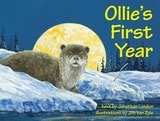
Ollie's First Year
Jonathan London
University of Alaska Press, 2014
The book follows Ollie the Otter through a year of new experiences, from swimming lessons to foraging practice, and through capers with his littermates. His budding knowledge of the world is put to the test when he is separated from his family and must travel through the forest alone. Luckily, a joyful reunion with his family awaits.
Longtime children’s book author Jonathan London and well-known Alaska illustrator Jon Van Zyle team up again to bring Ollie’s story to life with vibrant illustrations and text perfect for ages two to six. Notes about otter biology and habitat along with tips for keeping their environment safe will not only teach younger readers about wildlife but inspire them to protect it as well.
Omertà
A Book of SilencesAndrea Tompa
Seagull Books, 2024
A rural area not far from the city of Cluj-Napoca, a former Hungarian province that has been part of Romania since 1920. World War II has ended and the region is under the firm clasp of Stalinist collectivization. In the atmospheric village of Kolozsvár, Omertà unfolds a riveting tale through four poignant perspectives, each peeling back the layers of its central characters’ lives against the backdrop of a tumultuous Eastern Europe in the mid-twentieth century.
Kali, a peasant woman, escapes an abusive marriage to embark on a transformative journey to Kolozsvár, seeking refuge and purpose. She is employed as a maid by Vilmos, a reluctant Communist Party member with an unwavering dedication to his garden. As Vilmos’s botanical brilliance attracts the state’s attention, a clash between personal desires and political obligations ensues. Annush, the third narrator, a lovestruck teenager, becomes entangled in a complex web of emotions, grappling with love, loss, and the evolving landscape of her homeland. The tale deepens with Eleonora, who, seeking solace in a monastery, becomes a casualty of political purges and the suppression of religious faith under Romania’s oppressive regime.
In this epic novel, Romanian-born Hungarian author Andrea Tompa skillfully intertwines these tales, shedding light on the injustices and corruption of a regime that sought to extinguish cultural identities. The lives of Kali, Vilmos, Annush, and Eleonora weave a tapestry of love, resilience, the virtue of roses, and the quiet strength required to endure in the face of political turmoil.
Omoo
A Narrative of Adventures in the South Seas, Volume TwoHerman Melville
Northwestern University Press, 1999
Whitman praised its "good-natured style." But many reviewers doubted Melville's veracity, and some objected to his "raciness" and "indecencies." Some also denounced his criticism of missionary endeavors, for his attacks on missionaries were more polemical than those undertaken in the earlier book. Omoo, however, influenced later visitors to Tahiti such as Pierre Loti, Henry Adams, John La Farge, and Jack London; it was the book that sent Robert Louis Stevenson to the South Seas.
Omoo
A Narrative of Adventures in the South Seas, Volume Two, Scholarly EditionHerman Melville
Northwestern University Press, 1968
This scholarly edition aims to present a text as close to the author's intention as surviving evidence permits. Based on collations of all editions publishing during Melville's lifetime, it incorporates author corrections and many emendations made by the present editors. This edition of Omoo is an Approved Text of the Center for Editions of American Authors (Modern Language Association of America).
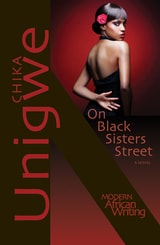
On Black Sisters Street
A NovelChika Unigwe
Ohio University Press, 2012
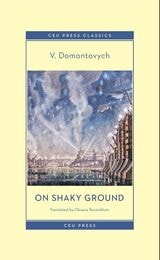
On Shaky Ground
V. Domontovych
Central European University Press, 2024
On Shaky Ground is a modernist novel written in the late 1930s and early 1940s and was originally published in Nazi occupied Kharkiv in 1942. One of the best examples of intellectual fiction of the time, the work summarizes the struggles of the Ukrainian intelligentsia in the late 1920s and early 1930s, when totalitarian reality, together with rampant industrialization, started to affect everyday life.
V. Domontovych is the pen name of Viktor Petrov, a historian and archaeologist, a representative of neoclassicism in Ukrainian literature. The novel follows the trajectory of art historian, Rostyslav Mykhailovych, who goes on a work trip from the capital city of Kharkiv to provincial Katerynoslav (today Dnipro), the place where he spent his childhood. In the late 1920s, a section of the Dnipro River became the place of a major industrial project, the construction of the largest hydroelectric station in Ukraine (Dniprelstan), which flooded the rapids over the river and led to serious ecological and social changes in the region. While the main goal of the trip is to save an old church from being turned into a museum, the journey becomes a philosophical reflection on dislocation and loss of connection with one’s birthplace, traditions, religion and more globally, a sense of security.
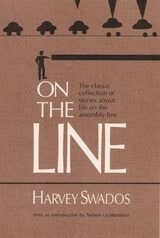
On the Line
Harvey Swados
University of Illinois Press, 1957
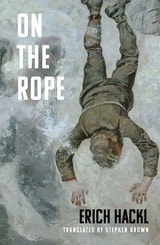
On the Rope
A Hero's StoryErich Hackl
Haus Publishing, 2020
Based on a true story, On the Rope is an account of extreme courage in the face of danger, violence, and hatred. Exploring themes of displacement and survival, friendship and family, it ends with the women’s efforts to bring recognition the selfless heroism of those who faced tremendous personal risk in order to protect them. A novella by one of Europe’s most prominent literary novelists, On the Rope layers deeply personal stories in a grounded historical account of life before, during, and after the Second World War. It paints a vivid picture of the hardships forced upon people by conflict and separation, depicting the forming and unravelling of relationships as a fact of life.
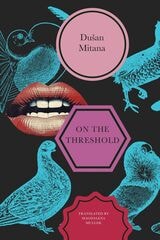
On the Threshold
Short StoriesDušan Mitana
Seagull Books, 2024
An unhappily married woman is impregnated by her elderly neighbor who lives in a building across the street and with whom she has never had any physical contact. Just as his attention creates life within her, his own life waxes and wanes with her gaze and attention.
A man finds himself trapped in a pub on a sweltering afternoon after refusing to buy a beer with his cigarettes. Guarded by a vigilante bartender and his beer-obsessed patrons, his every attempt at escape is foiled until their life-giving elixir, the beer, runs out.
This collection introduces English-language readers to the work of Dušan Mitana, a cult figure in contemporary Central European literature. In Mitana’s stories, appearing in English for the first time, the rational and the irrational are indistinguishable. His tales infect a banal, quotidian realism with mystical and supernatural distortions. Tinged with Hitchcockian paranoia and full of unexpected turns, the seventeen stories collected here offer a glimpse into Mitana’s trademark absurdist style.
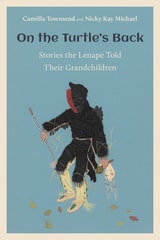
On the Turtle's Back
Stories the Lenape Told Their GrandchildrenCamilla Townsend
Rutgers University Press, 2023
The Lenape tribe, also known as the Delaware Nation, lived for centuries on the land that English colonists later called New Jersey. But once America gained its independence, they were forced to move further west: to Indiana, then Missouri, and finally to the territory that became Oklahoma. These reluctant migrants were not able to carry much from their ancestral homeland, but they managed to preserve the stories that had been passed down for generations.
On the Turtle’s Back is the first collection of Lenape folklore, originally compiled by anthropologist M. R. Harrington over a century ago but never published until now. In it, the Delaware share their cherished tales about the world’s creation, epic heroes, and ordinary human foibles. It features stories told to Harrington by two Lenape couples, Julius and Minnie Fouts and Charles and Susan Elkhair, who sought to officially record their legends before their language and cultural traditions died out. More recent interviews with Lenape elders are also included, as their reflections on hearing these stories as children speak to the status of the tribe and its culture today. Together, they welcome you into their rich and wondrous imaginative world.
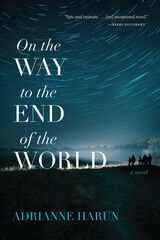
On the Way to the End of the World
A NovelAdrianne Harun
Acre Books, 2023
As the Cuban Missile Crisis eases, President Kennedy is casting around for a demonstration of American prowess when one of his Cabinet unearths an old mandate that US Marines be fit enough to walk fifty miles in twenty hours. Perfect! Kennedy decides to throw down the gauntlet to “today’s Marines,” but before he knows it, he’s sparked a wild fad. The entire country has answered the call, it seems, and for a few crazed winter weeks, masses of Americans will embark on their own arduous Big Walks—the “JFK 50-Milers.”
Yet in tiny Humtown—an isolated mill town in the Pacific Northwest—not everyone who shows up for a hastily organized Big Walk is motivated by patriotism. Not Helen Hubka, an inveterate gossip; not the suicidal Caroline, who months earlier lost her beloved husband during the Storm of the Century. Not ex-soldier/fisherman Jaspar Goode, nor the unknown man in their midst, a collared priest who seems to shift identities at will. Certainly not Avis, a battered teenager running from her terrifying brother . . . with a stolen town treasure. And when the walkers stumble upon the abandoned car of a missing young mother, they rekindle a mystery that soon reverberates among them, exposing hidden truths, talents, and alliances.
Splendidly imagined, with prose that sings on the page, On the Way to the End of the World is an adventure story riven with secrets, a national fairy tale twisted into a whodunit.
On the Wrong Side
J. M. G. Le Clézio
Seagull Books, 2024
J. M. G. Le Clézio’s On the Wrong Side, a collection of eight short stories, continues the author’s life-long pursuit of granting visibility to the unseen and a voice to the voiceless. Here, the author focuses on the underclasses, primarily children who have been left behind, abandoned, and subjected to unspeakable violence.
In these haunting tales, we encounter Maureez Samson, a mistreated orphan from Rodrigues Island, who, thanks to her exceptional voice, becomes a famous singer and defies all expectations; some young Indians in Darién, a region straddling Panama and Colombia, struggle to raise their young son and save their idyllic land from its invasion and destruction by drug lords; Juanico and Chuche, two slave children who are taken in by the community of Saint Kateri Takakwitha after an arduous and perilous journey; and in Nogales, on the border between Mexico and the United States, the “street rats,” children who cross through the sewers to wreak havoc and perhaps indulge their dreams of life on the other side.
In Le Clézio’s own words, these stories are not simply meant to reveal or describe the plight of the “rejected,” but to “create in the reader a feeling of revolt in the face of the injustice of what is happening to them.”
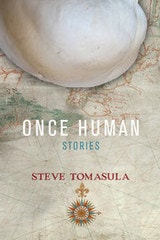
Once Human
StoriesSteve Tomasula
University of Alabama Press, 2014
A manga artist who is afraid that she herself is slipping into a cartoon version of life, a lab technician who makes art with the cloning technology she uses at work, a sociologist hunting for the gene that makes some people want to take risks—these are some of the characters that populate the stories in Once Human. Exploring the spaces where life is shaped by science and the technologies we bring into being, Steve Tomasula’s characters often find that the harder they look at the world, the less they can say. The map that emerges from these stories charts the territory of human longing and the failure of poetry, science, and technology to explain the “why” of the world, if not its “how.”
Once Upon a Cuento
Edited by Lyn Miller-Lachmann
Northwestern University Press, 2003
The stories are grouped by theme—heritage, holidays, and contemporary culture; family life; friends and other relationships; and dealing with differences. Individual stories explore additional themes such as the challenge of making do with little money, the process of moving to a new country and learning English, and young people's relationships to animals and to the natural world. Each story contains an introduction that offers historical, cultural, and biographical information. A general introduction and list of works by the thirteen contributors offer further avenues for research and discussion.
Once Upon a Time in the Twenty-First Century
Unexpected Exercises in Creative WritingEdited by Robin Behn
University of Alabama Press, 2020
Inspiring writers through creativity, experimentation, and unexpected discovery.
Once Upon a Time in the Twenty-First Century: Unexpected Exercises in Creative Writing is a unique creative writing text that will appeal to a wide range of readers and writers—from grade nine through college and beyond. Successful creative writers from numerous genres constructed these exercises, including poetry, fiction, and creative nonfiction to one-act plays, song lyrics, genre fiction, travel guides, comics and beyond. The exercises use a broad range of creative approaches, aesthetics, and voices, all with an emphasis on demystifying the writing process and having fun.
Editor Robin Behn has divided the book into three writing sections: Genres and Forms, Sources and Methods, and Style and Subject. In each section, Behn offers a brief introduction which explains how to get started and specific ways to develop one’s writing. Each introduction is followed by extensive exercises that draw on literature from classic to contemporary, as well as other art forms and popular culture. Examples range from Flannery O’Connor and Langston Hughes to Allen Ginsberg and Gertrude Stein, from Jamaica Kincaid and James Joyce to Arlo Guthrie and Harryette Mullen. Integrated within the exercises are apt examples of student writings that have emerged from actual use of the exercises in both the classroom and in writing groups. The book concludes with general advice and direction on how to get published.
Based on years of hands-on experiences in the teaching of creative writing in high schools, colleges, and after-school writing clubs, this volume of exercises offers inestimable value to students and teachers in the traditional classroom, as well as a growing number of homeschoolers, those who are part of a writing club or group, and independent writers and learners of all ages.
Once a Peacock, Once an Actress
Twenty-Four Lives of the Bodhisattva from Haribhatta's "Jatakamala"Haribhatta
University of Chicago Press, 2017
Haribhatta’s Jåtakamålå is a sophisticated and personal adaptation of popular stories, mostly non-Buddhist in origin, all illustrating the future Buddha’s single-minded devotion to the good of all creatures, and his desire, no matter what his incarnation—man, woman, peacock, elephant, merchant, or king—to assist others on the path to nirvana. Haribhatta’s insight into human and animal behavior, his astonishing eye for the details of landscape, and his fine descriptive powers together make this a unique record of everyday life in ancient India as well as a powerful statement of Buddhist ethics. This translation will be a landmark in the study of Buddhism and of the culture of ancient India.
Once into the Night
Aurelie Sheehan, Foreword by Laird Hunt
University of Alabama Press, 2019
Stories that explore the potent and captivating boundaries between the real and the imaginary
Aurelie Sheehan’s Once into the Night is a collection of 57 brief stories—a fictional autobiography made of assumed identities and what-ifs. What is the difference between fiction and a lie? These stories dwell in a netherworld between memory and the imagination, exploring the nature of truthtelling.
Here the inner life is granted pride of place with authenticity found in misremembered childhood notebooks, invisible tattoos, and the love life of icemen. Radical in its conception of story, this collection blurs the line between fiction, poetry, and essay, reconceiving contemporary autofiction in its own witty, poignant vernacular. The stories intersect with and deviate from a “provable” life—a twin distinction that becomes the source of their power.
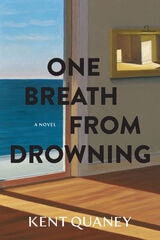
One Breath from Drowning
Kent Quaney
University of Wisconsin Press, 2022
The two men find moments of joy and humor together in Sydney, but arrests, infidelities, and addictions force them to finally face the issues holding them back. Though it initially presents as a love story, One Breath from Drowning is a tale of spiritual bildungsroman told in parallel. Ryan and Sam’s conflict and love ultimately push each of them to evolve, their transformation not the result of reckless acts of escape but the product of the fitful and difficult work of grappling with their complex realities.

One Dog Happy
Molly McNett
University of Iowa Press, 2008
In this award-winning debut collection, Molly McNett couples laugh-out-loud dialogue and wry observation reminiscent of Flannery O’Connor with disquieting strains of dashed hope, troubled sexuality, and disillusionment.
The adults in these stories can seem as hapless and helpless as the younger characters. Two neglected daughters use the language of clothes to cope with their parents’ divorce and their father’s mail-order bride. A young girl’s bizarre sexual fantasies help her gain control over the chaos of her family life. A gang of teenagers accuse a farmer of bestiality. A divorced father tries to create a pony-filled world that might appeal to his daughters. In the title story, Mr. Bob, the minister’s housesitter, loses a dog but finds someone to believe in. And in “Helping,” the darkest story in this amazing collection, Ruthie’s anger conquers her religious faith when she takes care of a severely disabled child.
We meet McNett’s endearing, often foolish characters at a point when their minds are open to manipulation by the people and events around them, and the conclusions they draw are heartbreaking: I am not allowed weakness; life treats people unequally; perhaps there is no God. Yet throughout they find quiet moments of possibility, courage, and a return to faith and comfort.
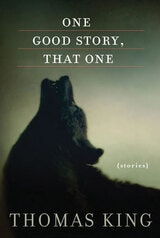
One Good Story, That One
StoriesThomas King
University of Minnesota Press, 2013
One Good Story, That One is a collection steeped in native oral tradition and shot through with Thomas King’s special brand of wit and comic imagination. These highly acclaimed stories conjure up Native and Judeo-Christian myths, present-day pop culture, and literature while mixing in just the right amount of perception and experience.
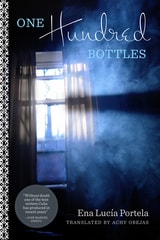
One Hundred Bottles
By Ena Lucía Portela
University of Texas Press, 2010
One Hundred Bottles, with its intersecting characters and unresolved whodunits, can be read as a murder mystery. But it's really a survivor's story. In a voice that blends gossip, storytelling, and literature, Z—the vivacious heroine of Portela's award-winning novel—relates her rum-soaked encounters with the lesbian underground, the characters carving up her home, and the terrifying-but-irresistible Moisés. As entertaining as any detective drama, One Hundred Bottles is ultimately made real by very rough love, intense friendship, and something small that decides to live.
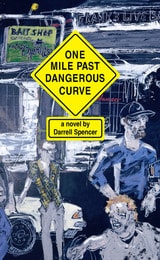
One Mile Past Dangerous Curve
A NovelDarrell Spencer
University of Michigan Press, 2005
"This book aims to be about the best of us as it shows us at our least. Thank goodness for Darrell Spencer, the only writer in America to be trusted on the subjects of faith, love, weal and woe."
---Lee K. Abbott
" . . . absolutely dire and dear, his best book, a novel about American life right now. . . . this book is accurate, acerbic, and heartfelt at once."
---Ron Carlson
Praise for Darrell Spencer:
"Mr. Spencer's writing crackles with freshness and lucidity, featuring characters who slide into one another in random encounters and relationships."
---New York Times Book Review
"[Spencer] possesses a remarkable ear for the cadence of everyday speech."
---Michael Chabon
From the acclaimed author of Caution: Men in Trees and A Woman Packing a Pistol comes a tale of kinship, love, and lawlessness.
One Mile Past Dangerous Curve is the story of the Dancers---a family on the verge of collapse. Glen Dancer has come to Ohio to set up another in a series of Snapper franchises. But in the midst of construction, Glen finds himself fighting a painful and futile battle with cancer.
His son Eddie, recently divorced, moves from Las Vegas to help. A sign painter by trade, Eddie finds only intermittent work in town until the day a mysterious and wealthy businessman commissions a series of twenty road signs, each different, all featuring odd, cryptic messages. It is on a back-country road, where Eddie has gone to assemble one of the signs, that some previously vague threats become concrete.
Though Eddie doesn't know it, the neighboring woods hide a secret, a secret that a gun-toting rural gang wants to keep at any cost.
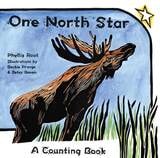
One North Star
A Counting BookPhyllis Root
University of Minnesota Press, 2016
Five toads hop, four brook trout swim, three elk graze, two loons call, and one beaver gnaws on a paper birch tree, all under one North Star. Through bog and marsh, along river and lake, across prairie and into the woods, children learn what lives where by counting the creatures on foot or in flight, swimming or perching in exquisite woodcut and watercolor illustrations created by Beckie Prange and Betsy Bowen in an artistic collaboration. For those looking for more about the pictured wildlife, Phyllis Root includes fascinating facts and information on the state’s ecosystems and the plants and animals that make their homes there.