Results by title
8812 books match the query 'Political Science' and 161 start with o
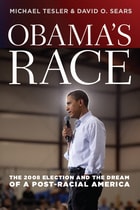
Obama's Race
The 2008 Election and the Dream of a Post-Racial AmericaMichael Tesler and David O. Sears
University of Chicago Press, 2010
Barack Obama’s presidential victory naturally led people to believe that the United States might finally be moving into a post-racial era. Obama’s Race—and its eye-opening account of the role played by race in the election—paints a dramatically different picture.
The authors argue that the 2008 election was more polarized by racial attitudes than any other presidential election on record—and perhaps more significantly, that there were two sides to this racialization: resentful opposition to and racially liberal support for Obama. As Obama’s campaign was given a boost in the primaries from racial liberals that extended well beyond that usually offered to ideologically similar white candidates, Hillary Clinton lost much of her longstanding support and instead became the preferred candidate of Democratic racial conservatives. Time and again, voters’ racial predispositions trumped their ideological preferences as John McCain—seldom described as conservative in matters of race—became the darling of racial conservatives from both parties. Hard-hitting and sure to be controversial, Obama’s Race will be both praised and criticized—but certainly not ignored.

Obama's Washington
Political Leadership in a Partisan EraEdited by Clodagh Harrington
University of London Press, 2014
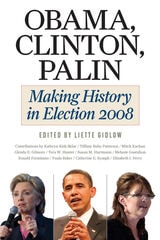
Obama, Clinton, Palin
Making History in Elections 2008Edited by Liette Gidlow
University of Illinois Press, 2011
Election 2008 made American history, but it was also the product of American history. Barack Obama, Hillary Clinton, and Sarah Palin smashed through some of the most enduring barriers to high political office, but their exceptional candidacies did not come out of nowhere. In these timely and accessible essays, a distinguished group of historians explores how the candidates both challenged and reinforced historic stereotypes of race and sex while echoing familiar themes in American politics and exploiting new digital technologies.
Contributors include Kathryn Kish Sklar on Clinton’s gender masquerade; Tiffany Ruby Patterson on the politics of black anger; Mitch Kachun on Michelle Obama and stereotypes about black women’s bodies; Glenda E. Gilmore on black women’s century of effort to expand political opportunities for African Americans; Tera W. Hunter on the lost legacy of Shirley Chisholm; Susan M. Hartmann on why the U.S. has not yet followed western democracies in electing a female head of state; Melanie Gustafson on Palin and the political traditions of the American West; Ronald Formisano on the populist resurgence in 2008; Paula Baker on how digital technologies threaten the secret ballot; Catherine E. Rymph on Palin’s distinctive brand of political feminism; and Elisabeth I. Perry on the new look of American leadership.

Obesity among Poor Americans
Is Public Assistance the Problem?Patricia K. Smith
Vanderbilt University Press, 2009
This book investigates the controversial claim by welfare critics that public assistance programs like Food Stamps and the National School Lunch programs contribute to obesity among the poor. The author synthesizes empirical evidence from an array of disciplines--anthropology, economics, epidemiology, medicine, nutrition science, marketing, psychology, public health, sociology, and urban planning--to test this claim and to test whether other causal processes are at work.
With a lucid presentation that makes it a model for applying research to questions of social policy, the book lays out the different hypotheses and the possible causal pathways within each. The four central chapters test whether "public assistance causes obesity," "obesity causes public assistance," "poverty causes both public assistance and obesity," and "Factor X causes both." The factors in the last category that may relate to both public assistance and obesity include stress, disability, and physical abuse.

Obliged to Help
Adolphine Fletcher Terry and the Progressive SouthStephanie Bayless
Butler Center for Arkansas Studies, 2011
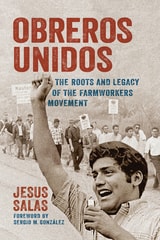
Obreros Unidos
The Roots and Legacy of the Farmworkers MovementJesus Salas
Wisconsin Historical Society Press, 2023
Taking inspiration from César Chávez, as a young man Salas and others led a historic march from Wautoma to Madison to demand that lawmakers address rampant violations of Wisconsin’s minimum wage laws and housing codes. These young labor leaders founded Obreros Unidos—Workers United—to continue the fight for fairness and respect, as well as to provide much-needed services to migrant families. This memoir of a movement details how their work went beyond the fields to have lasting impacts on representation in community organizations and access to education, empowering later generations to demand better.
Winner of the 2024 Benjamin Franklin Award for Multicultural Books
Winner of the 2024 Hamlin Garland Prize in Popular History from the Midwest History Association
“In recounting the story of Tejano settlement and struggle in Wisconsin, Salas unsettles this story line and, in the process, demonstrates the power of personal narrative and the lasting political implications of retrieving and restoring Latino history.”
—Sergio M. González, author of Mexicans in Wisconsin
“Salas’s story is an essential chapter in the history of Wisconsin and Milwaukee and mirrors the growth, progress and dreams of the Latinx community. His reflections speak to not only the importance of the Latinx community, but the need to build alliances across lines of race and gender and fulfill the promise of a multiracial democracy.”
—Barbara Miner, Milwaukee Magazine

Obstacles to Environmental Progress
A US PerspectivePeter C. Schulze
University College London, 2022
Despite the comprehensively understood severity of environmental problems faced today, progress in the United States is continually stymied, making sustainability feel like a far-off goal. Obstacles to Environmental Progress takes up the structural, political, and cultural forces that routinely hinder progress on existing environmental issues. Addressing problems both small and large, often regardless of whether an issue is controversial, this book illustrates obstacles that manifest in the United States but are globally pertinent. Peter Schulze identifies eighteen practical obstacles that fall into three categories: scientific challenges to anticipating and detecting problems; political and economic factors that interfere with responding; and obstacles to effective responses. This book seeks to hasten environmental progress by bridging academic disciplines to forewarn and forearm those who might otherwise encounter these anti-environmentalist obstacles in an ad-hoc manner.
Occupy
Three Inquiries in DisobedienceW. J. T. Mitchell, Bernard E. Harcourt, and Michael Taussig
University of Chicago Press, 2013

Ocean Yearbook, Volume 1
Edited by Elisabeth Mann Borgese and Norton Ginsburg
University of Chicago Press, 1979
Ocean Yearbook, Volume 10
Edited by Elisabeth Mann Borgese, Norton Ginsburg, and Joseph R. Morgan
University of Chicago Press, 1993
Ocean Yearbook, Volume 11
Edited by Elisabeth Mann Borgese, Norton Ginsburg, and Joseph R. Morgan
University of Chicago Press, 1995
Volume 11 addresses the development of marine resources, along with recent transportation, communication, marine science, and technology developments. Twenty-four articles focus on such topics as sea-based nuclear issues, regional cooperation, transport of liquefied natural gas, along with an analysis of the UN conference on Straddling and Highly Migratory Fish Stocks.
Ocean Yearbook, Volume 12
Edited by Elisabeth Mann Borgese, Norton Ginsburg, and Joseph R. Morgan
University of Chicago Press, 1996
Volume 12 focuses on the sustainable development and use of the world's oceans and their resources. Major articles examine the managerial implications of sustainable development in different oceanic regions as well as how they relate to fisheries, coastal ecosystems and genetic and biochemical resources. Current problems associated with marine transportation are also addressed. In addition, the twelfth edition celebrates the entry into force of the United Nations Convention on the Law of the Sea and the recent conclusion of the agreement relating to the conservation and management of straddling and highly migratory fish stocks.
Ocean Yearbook, Volume 13
Edited by Elisabeth Mann Borgese, Aldo Chircop, Moira L. McConnell, and Joseph R
University of Chicago Press, 1998
Ocean Yearbook, Volume 14
Edited by Elisabeth Mann Borgese, Aldo Chircop, Moira L. McConnell, and Joseph R
University of Chicago Press, 1998
Ocean Yearbook, Volume 15
Edited by Elisabeth Mann Borgese, Aldo Chircop, and Moira L. McConnell
University of Chicago Press, 2002
Since its inception in 1978, the Ocean Yearbook has proven an invaluable research tool to marine biologists, oceanographers, ocean development specialists, students of international law, as well as analysts of foreign policy and international security.
Ocean Yearbook, Volume 18
Edited by Aldo Chircop and Moira L. McConnell
University of Chicago Press, 2004
The Ocean Yearbook is an invaluable research tool for marine biologists, oceanographers, students of international law, and analysts of foreign policy and international security.
Ocean Yearbook, Volume 2
Edited by Elisabeth Mann Borgese and Norton Ginsburg
University of Chicago Press, 1981
Ocean Yearbook, Volume 3
Edited by Elisabeth Mann Borgese and Norton Ginsburg
University of Chicago Press, 1982
Ocean Yearbook, Volume 4
Edited by Elisabeth Mann Borgese and Norton Ginsburg
University of Chicago Press, 1984
Ocean Yearbook, Volume 5
Edited by Elisabeth Mann Borgese and Norton Ginsburg
University of Chicago Press, 1985
Ocean Yearbook, Volume 6
Edited by Elisabeth Mann Borgese and Norton Ginsburg
University of Chicago Press, 1987
Ocean Yearbook, Volume 7
Edited by Elisabeth Mann Borgese, Norton Ginsburg, and Joseph R. Morgan
University of Chicago Press, 1989
Ocean Yearbook, Volume 8
Edited by Elisabeth Mann Borgese, Norton Ginsburg, and Joseph R. Morgan
University of Chicago Press, 1990
Ocean Yearbook, Volume 9
Edited by Elisabeth Mann Borgese, Norton Ginsburg, and Joseph R. Morgan
University of Chicago Press, 1992

Oeconomies in the Age of Newton
2003 Supplement, Volume 35Margaret Schabas and Neil De Marchi
Duke University Press, 0
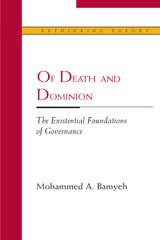
Of Death and Dominion
The Existential Foundations of GovernanceMohammed Bamyeh
Northwestern University Press, 2007
Death is the opposite not of life, but of power. And as such, Mohammed Bamyeh argues in this original work, death has had a great and largely unexplored impact on the thinking of governance throughout history, right down to our day. In Of Death and Dominion Bamyeh pursues the idea that a deep concern with death is, in fact, the basis of the ideological foundations of all political systems.
Concentrating on four types of political systems—polis, empire, theocracy, and modern mass society systems—Bamyeh shows how each follows a specific strategy designed to pit power against the equalizing specter of death. Each of these strategies—consolation, expansion, preparation, and repression—produces a certain style of political behavior, as well as particular psychic traumas. In making his argument, Bamyeh revisits a wide range of empirical and theoretical discussions in existentialist philosophy, psychoanalysis, comparative historical sociology, literary studies, and anthropology. By demonstrating how schemes of power are by definition also schemes for defying death—despite their claims to the contrary—his book encourages us to think of a new style of politics, one oriented toward life.
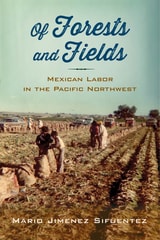
Of Forests and Fields
Mexican Labor in the Pacific NorthwestMario Jimenez Sifuentez
Rutgers University Press, 2016
Just looking at the Pacific Northwest’s many verdant forests and fields, it may be hard to imagine the intense work it took to transform the region into the agricultural powerhouse it is today. Much of this labor was provided by Mexican guest workers, Tejano migrants, and undocumented immigrants, who converged on the region beginning in the mid-1940s. Of Forests and Fields tells the story of these workers, who toiled in the fields, canneries, packing sheds, and forests, turning the Pacific Northwest into one of the most productive agricultural regions in the country.

Of G-Men and Eggheads
The FBI and the New York IntellectualsJohn Rodden
University of Illinois Press, 2017
John Rodden cuts this tall tale down to its authentic pint size, refusing to indulge the public relations myth promoted by J. Edgar Hoover's FBI. In Of G-Men and Eggheads, Rodden portrays federal agents’ hilarious obsession with monitoring that ever-present threat to national security, the American literary intellectual. Drawing on government dossiers and archives, Rodden focuses on the onetime members of a radical political sect of ex-Trotskyists (barely numbering a thousand at its height), the so-called New York intellectuals. He describes the nonsensical decades-long pursuit of this group of intellectuals, especially Lionel Trilling, Dwight Macdonald, and Irving Howe. The Keystone Cops style of numerous FBI agents is documented carefully in Rodden's meticulous case studies of how Hoover's men recruited informants to snoop on the "Commies," opened their personal mail, tracked their movements, and reported on their wives and friends.
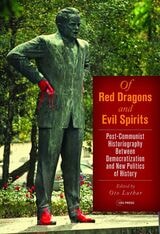
Of Red Dragons and Evil Spirits
Post-Communist Historiography between Democratization and the New Politics of HistoryOto Luthar
Central European University Press, 2017

Off the Network
Disrupting the Digital WorldUlises Ali Mejias
University of Minnesota Press, 2013
The digital world profoundly shapes how we work and consume and also how we play, socialize, create identities, and engage in politics and civic life. Indeed, we are so enmeshed in digital networks—from social media to cell phones—that it is hard to conceive of them from the outside or to imagine an alternative, let alone defy their seemingly inescapable power and logic. Yes, it is (sort of) possible to quit Facebook. But is it possible to disconnect from the digital network—and why might we want to?
Off the Network is a fresh and authoritative examination of how the hidden logic of the Internet, social media, and the digital network is changing users’ understanding of the world—and why that should worry us. Ulises Ali Mejias also suggests how we might begin to rethink the logic of the network and question its ascendancy. Touted as consensual, inclusive, and pleasurable, the digital network is also, Mejias says, monopolizing and threatening in its capacity to determine, commodify, and commercialize so many aspects of our lives. He shows how the network broadens participation yet also exacerbates disparity—and how it excludes more of society than it includes.
Uniquely, Mejias makes the case that it is not only necessary to challenge the privatized and commercialized modes of social and civic life offered by corporate-controlled spaces such as Facebook and Twitter, but that such confrontations can be mounted from both within and outside the network. The result is an uncompromising, sophisticated, and accessible critique of the digital world that increasingly dominates our lives.
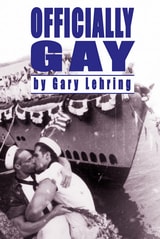
Officially Gay
The Political Construction Of SexualityGary L. Lehring
Temple University Press, 2003

Ogoni Women's Activism
The Transnational Struggle for Justice against Big Oil and the StateDomale Dube
University of Illinois Press, 2025
Dube’s account examines and documents the issues that drew women into the movement, from concerns for themselves and their communities to grander visions for the Ogoni. As she shows, these issues not only influenced organizing in Nigeria but also the diaspora in general and the United States in particular. Ogoni women relied upon nonviolent protest to realize their aims. Dube looks at their campaigns and how their actions reflected their concerns, values, interests, and priorities. The result is a rare account of Black women and transnational organizing for women’s, climate, and environmental justice that merges a history of their involvement with an in-depth analysis of the racial, gender, and ethnic dimensions of the Ogoni Struggle.
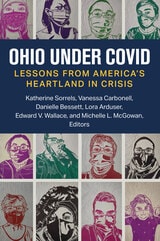
Ohio under COVID
Lessons from America's Heartland in CrisisKatherine Sorrels, Vanessa Carbonell, Danielle Bessett, Lora Arduser, Edward Wallace, and Michelle L. McGowan, Editors
University of Michigan Press, 2023
In early March of 2020, Americans watched with uncertain terror as the novel coronavirus pandemic unfolded. One week later, Ohio announced its first confirmed cases. Just one year later, the state had over a million cases and 18,000 Ohioans had died. What happened in that first pandemic year is not only a story of a public health disaster, but also a story of social disparities and moral dilemmas, of lives and livelihoods turned upside down, and of institutions and safety nets stretched to their limits.
Ohio under COVID tells the human story of COVID in Ohio, America’s bellwether state. Scholars and practitioners examine the pandemic response from multiple angles, and contributors from numerous walks of life offer moving first-person reflections. Two themes emerge again and again: how the pandemic revealed a deep tension between individual autonomy and the collective good, and how it exacerbated social inequalities in a state divided along social, economic, and political lines. Chapters address topics such as mask mandates, ableism, prisons, food insecurity, access to reproductive health care, and the need for more Black doctors. The book concludes with an interview with Dr. Amy Acton, the state’s top public health official at the time COVID hit Ohio. Ohio under COVID captures the devastating impact of the pandemic, both in the public discord it has unearthed and in the unfair burdens it has placed on the groups least equipped to bear them.
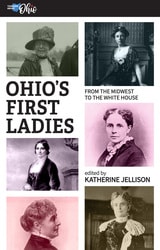
Ohio's First Ladies
From the Midwest to the White HouseKatherine Jellison
Ohio University Press, 0
This engaging collection of essays explores the lives and legacies of six Ohio-born First Ladies: Lucy Webb Hayes, Lucretia Rudolph Garfield, Caroline Scott Harrison, Ida Saxton McKinley, Helen Herron Taft, and Florence Kling Harding. With contributions by leading scholars, the volume moves beyond traditional biography to examine how each woman’s Ohio roots shaped her public role and influenced her husband’s political career at both state and national levels. Connecting Ohio history to the broader narrative of nineteenth- and early twentieth-century US history, these essays draw on rich primary and secondary sources to illuminate the intersection of regional identity and national politics. Accessible and insightful, Ohio’s First Ladies invites readers of all backgrounds—from high school students to lifelong learners—to discover how the Midwest helped mold women who would leave their mark on the White House. Contributors Benjamin T. Arrington Jennifer Capps Annette B. Dunlap Kara M. French Michelle Gullion Katherine Jellison Katherine A. S. Sibley
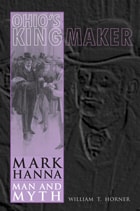
Ohio’s Kingmaker
Mark Hanna, Man and MythWilliam T. Horner
Ohio University Press, 2010
For a decade straddling the turn of the twentieth century, Mark Hanna was one of the most famous men in America. Portrayed as the puppet master controlling the weak-willed William McKinley, Hanna was loved by most Republicans and reviled by Democrats, in large part because of the way he was portrayed by the media of the day. Newspapers and other media outlets that supported McKinley reported positively about Hanna, but those sympathetic to William Jennings Bryan, the Democrats’ presidential nominee in 1896 and 1900, attacked Hanna far more aggressively than they attacked McKinley himself. Their portrayal of Hanna was wrong, but powerful, and this negative image of him survives to this day.
In this study of Mark Hanna’s career in presidential politics, William T. Horner demonstrates the flaws inherent in the ways the news media cover politics. He deconstructs the myths that surround Hanna and demonstrates the dangerous and long-lasting effect that inaccurate reporting can have on our understanding of politics. When Karl Rove emerged as the political adviser to George W. Bush’s presidential campaigns, the reporters quickly began to compare Rove to Hanna even a century after Hanna’s death. The two men played vastly different roles for the presidents they served, but modern reporters consistently described Rove as the second coming of Mark Hanna, another political Svengali.
Ohio’s Kingmaker is the story of a fascinating character in American politics and serves to remind us of the power of (mis)perceptions.
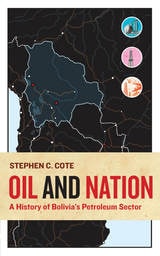
Oil and Nation
A History of Bolivia's Petroleum SectorStephen C. Cote
West Virginia University Press, 2016
The book advances chronologically from Bolivia’s earliest petroleum pioneers in the nineteenth century until the present, inserting oil into historical debates about Bolivian ethnic, racial, and environmental issues, and within development strategies by different administrations. While Bolivia is best known for its tin mining, Oil and Nation makes the case that nationalist reformers viewed hydrocarbons and the state oil company as a way to modernize the country away from the tin monoculture and its powerful backers and toward an oil-powered future.
Oil, Banks, and Politics
The United States and Postrevolutionary Mexico, 1917–1924By Linda B. Hall
University of Texas Press, 1995
Mexico was second only to the United States as the world's largest oil producer in the years following the Mexican Revolution. As the revolutionary government became institutionalized, it sought to assure its control of Mexico's oil resources through the Constitution of 1917, which returned subsoil rights to the nation. This comprehensive study explores the resulting struggle between oil producers, many of which were U.S. companies, and the Mexican government.
Linda Hall goes beyond the diplomacy to look at the direct impact of a powerful, highly profitable foreign-controlled industry on a government and a nation trying to recover from a major civil war. She draws on extensive research in Mexican archives, including both government sources and the private papers of Presidents Alvaro Obregón and Plutarco Elías Calles, as well as U.S. government and private sources.
Since the North American Free Trade Agreement has expanded United States business ties to Mexico, this study of a crucial moment in U.S.-Mexican business relations will be of interest to a wide audience in business, diplomatic, and political history.
Old Assumptions, New Realities
Ensuring Economic Security for Working Families in the 21st CenturyRobert D. Plotnick
Russell Sage Foundation, 2011
Old South, New South, or Down South?
Florida and the Modern Civil Rights MovementEdited by Irvin D. S. Winsboro
West Virginia University Press, 2009
How does a state, tarnished with a racist, violent history, emerge from the modern civil rights movement with a reputation for tolerance and progression? Old South, New South, or Down South?: Florida and the Modern Civil Rights Movement exposes the image, illusion, and reality behind Florida’s hidden story of racial discrimination and violence. By exploring multiple perspectives on racially motivated events, such as black agency, political stonewalling, and racist assaults, this collection of nine essays reconceptualizes the civil rights legacy of the Sunshine State. Its dissection of local, isolated acts of rebellion reveals a strategic, political concealment of the once dominant, often overlooked, old south attitude towards race in Florida.

Olfactory Rhetoric
Sniffing Out Environmental ProblemsLisa L. Phillips
The Ohio State University Press, 2025
Human senses have the potential to play a significant role in inspiring action to combat climate change. When we smell pollutants in the air, for example, or feel the blast of a polar vortex, we are more likely to act in response to these changes in environmental conditions. However, the sensorium—and particularly our sense of smell—is often downplayed when we consider the rhetorics of environmental crises. In Olfactory Rhetoric, Lisa L. Phillips argues that how we sense the world around us should be a crucial piece of rhetorical evidence when evaluating environmental injustices. Specifically, Phillips elevates olfaction (what we smell) and olfactory rhetoric (how we talk about and experience what we smell) when discussing three contemporary environmental crises set in historically marginalized communities: the Sriracha sauce factory controversy, the Salton Sea scent events, and the Blue Ridge Landfill emissions problem. On a broader scale, Phillips develops an intersectional ecofeminist sensory-rhetorical approach for evaluating how olfactory and sensory persuasions work and how they can be used to advocate for environmental justice and a more breathable future.
Oligarchy in America
Power, Justice, and the Rule of the FewLuke Winslow
University of Alabama Press, 2024
Roderick P. Hart Outstanding Book Award for the National Communication Association's Political Communication Division
A fascinating survey of the history of political and economic ideas in the US that have led to an increasingly entrenched ultra-rich class of oligarchs.
To an American, oligarchy is something that happens somewhere else. In Oligarchy in America, Luke Winslow reveals oligarchy’s deep intellectual roots and alarming growth in America. The book provides conceptual tools the lack of which have prevented Americans from recognizing oligarchy at home.
Winslow argues that generic labels like “billionaires” for a class of ultra-rich masks the pervasive structures that entrench their power. He introduces instead the concept of democratic oligarchy—an institutional arrangement in which the ultra-rich form a class consciously creating and leveraging state power to accumulate wealth.
Like a master class in political ideas, Winslow traces the intellectual lineage of oligarchy in the US. His lively and compulsively readable survey examines key rhetorical sources such as Herbert Spencer, Andrew Carnegie, Friedrich Hayek, Lewis Powell, Milton Friedman, Charles Koch, Donald Trump, Tucker Carlson, and others.
Oligarchy in America maps the connective web of oligarchic ideas uniting these disparate figures. By offering a lucid framework through which to view oligarchic ideas ambient in American culture, Winslow makes a vital contribution to readers and scholars of communication and rhetorical studies, public address, economics, and political science.
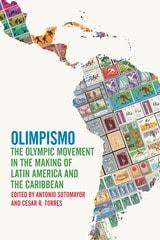
Olimpismo
The Olympic Movement in the Making of Latin America and the CaribbeanAntonio Sotomayor
University of Arkansas Press, 2020
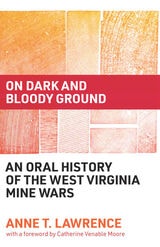
On Dark and Bloody Ground
An Oral History of the West Virginia Mine WarsAnne T. Lawrence
West Virginia University Press, 2021
In 1972 Anne Lawrence came to West Virginia at the invitation of the Miners for Democracy movement to conduct interviews with participants in, and observers of, the Battle of Blair Mountain and other Appalachian mine wars of the 1920s and ’30s. The set of oral histories she collected—the only document of its kind—circulated for many years as an informal typescript volume, acquiring an almost legendary status among those intrigued by the subject. Key selections from it appear here for the first time as a published book, supplemented with introductory material, maps, and photographs. The volume’s vivid, conversational mode invites readers into miners’ lived experiences and helps us understand why they took up arms to fight anti-union forces in some of the nation’s largest labor uprisings.
Published to coincide with the celebration of the Blair Mountain centennial in 2021, On Dark and Bloody Ground includes a preface by public historian Catherine Venable Moore and an afterword by Cecil E. Roberts of the United Mine Workers of America.
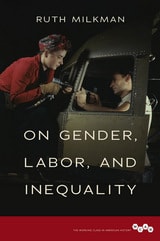
On Gender, Labor, and Inequality
Ruth Milkman
University of Illinois Press, 2016
Milkman's introduction frames a career-spanning scholarly project: her interrogation of historical and contemporary intersections of class and gender inequalities in the workplace, and the efforts to challenge those inequalities. Early chapters focus on her pioneering work on women's labor during the Great Depression and the World War II years. In the book's second half, Milkman turns to the past fifty years, a period that saw a dramatic decline in gender inequality even as growing class imbalances created greater-than-ever class disparity among women. She concludes with a previously unpublished essay comparing the impact of the Great Depression and the Great Recession on women workers.
A first-of-its-kind collection, On Gender, Labor, and Inequality is an indispensable text by one of the world's top scholars of gender, equality, and work.

On Humanity's Intensive Introspection
Joseph Cropsey
St. Augustine's Press, 2012
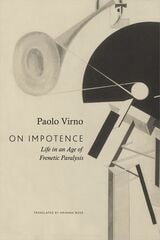
On Impotence
Life in an Age of Frenetic ParalysisPaolo Virno
Seagull Books, 2026
Contemporary life is marked by a paradoxical form of impotence. Whether in love, labor, or political struggle, we often find ourselves locked in a state of frenetic paralysis—unable to act as we wish or to endure what confronts us. This impotence is not born of lack, but of excess: an abundance of skills, capacities, and opportunities that, instead of taking form as coherent actions or speech, stagnate and turn in on themselves. In this thought-provoking meditation, philosopher Paolo Virno examines this strange impotence through the lens of classical thought, drawing especially on Aristotle and Marx.
To overcome this troubling state, Virno calls for a collective search for a shared spiritual and practical exercise aimed at reclaiming agency. He argues that only by learning to renounce renunciation can we cultivate deliberate words and timely decisions.
On Kings
David Graeber and Marshall Sahlins
HAU, 2017
Reflecting on issues such as temporality, alterity, and utopia—not to mention the divine, the strange, the numinous, and the bestial—Graeber and Sahlins explore the role of kings as they have existed around the world, from the BaKongo to the Aztec to the Shilluk and beyond. Richly delivered with the wit and sharp analysis characteristic of Graeber and Sahlins, this book opens up new avenues for the anthropological study of this fascinating and ubiquitous political figure.
On Parliamentary War
Partisan Conflict and Procedural Change in the U.S. SenateJames I. Wallner
University of Michigan Press, 2017
On Parliamentary War
Partisan Conflict and Procedural Change in the U.S. SenateJames I. Wallner
University of Michigan Press, 2019
Dysfunction in the Senate is driven by the deteriorating relationship between the majority and minority parties. Regular order is virtually nonexistent and unorthodox parliamentary procedures are frequently needed to pass important legislation. Democrats and Republicans are fighting a parliamentary war in the Senate to steer the future of the country. James Wallner presents a bargaining model of procedural change to explain the persistence of the filibuster in this polarized environment, focusing on the dynamics responsible for contested procedural change. Wallner’s model explains why Senate majorities have historically tolerated the filibuster, even when it has defeated their agendas, despite having the power to eliminate it. It also shows why the then-Democratic majority deployed the nuclear option to eliminate the filibuster for an Obama judicial nominee in 2013. On Parliamentary War’s game-theory approach unveils the relationship between partisan conflict and procedural change in the Senate.
On Posthuman War
Computation and Military ViolenceMike Hill
University of Minnesota Press, 2022
Tracing war’s expansion beyond the battlefield to the concept of the human being itself
As military and other forms of political violence become the planetary norm, On Posthuman War traces the expansion of war beyond traditional theaters of battle. Drawing on counterinsurgency field manuals, tactical manifestos, data-driven military theory, and asymmetrical-war archives, Mike Hill delineates new “Areas of Operation” within a concept of the human being as not only a social and biological entity but also a technical one.
Delving into three human-focused disciplines newly turned against humanity, OnPosthuman War reveals how demography, anthropology, and neuroscience have intertwined since 9/11 amid the “Revolution in Military Affairs.” Beginning with the author’s personal experience training with U.S. Marine recruits at Parris Island, Hill gleans insights from realist philosophy, the new materialism, and computational theory to show how the human being, per se, has been reconstituted from neutral citizen to unwitting combatant. As evident in the call for “bullets, beans, and data,” whatever can be parted out, counted, and reassembled can become war materiel. Hill shows how visible and invisible wars within identity, community, and cognition shift public-sphere activities, like racial identification, group organization, and even thought itself, in the direction of war. This shift has weaponized social activities against the very notion of society.
On Posthuman War delivers insights on the latest war technologies, strategies, and tactics while engaging in questions poised to overturn the foundations of modern political thought.