Results by title
870 books match the query 'Sports & Recreation' and 17 start with o
Off the Rim
Basketball and Other Religions in a Carolina ChildhoodFred Hobson
University of Missouri Press, 2006

Ohio State Athletics, 1879–1959
James E. Pollard
The Ohio State University Press, 0
Besides turning to the archives of the Lantern and the Makio to research the book, Pollard also relied on conversations with past Board of Trustees Secretary Carl E. Steeb, Professor Charles W. Foulk who actually competed for Ohio State as a student on the university’s first basketball team, and then current Athletic Director, Richard C. Larkins. Because many of the university’s earliest records were lost or destroyed, a significant amount of information also came from Columbus newspapers, Alumni Monthly, and official records of the faculty, trustees, and presidents.
Olimpismo
The Olympic Movement in the Making of Latin America and the CaribbeanAntonio Sotomayor
University of Arkansas Press, 2020
On Any Given Sunday
A Life of Bert BellRobert S. Lyons, Foreword by Don Shula
Temple University Press, 2009
Bell, who arguably saved the league from bankruptcy by conceiving the idea for the annual player draft, later made the historic decision to introduce “sudden death” overtime—a move that propelled professional football into the national consciousness. He coined the phrase “on any given sunday” and negotiated the league’s first national TV contract. Lyons also describes in fascinating detail Bell’s relationships with leading figures ranging from such Philadelphia icons as Walter Annenberg and John B. Kelly to national celebrities and U.S. Presidents. He also provides insight into Bell’s colorful personal life—including his hell-raising early years and his secret marriage to Frances Upton, a golden name in show business.
On Any Given Sunday is being published on the 50th anniversary of Bell’s death.
On Hunting
Roger Scruton
St. Augustine's Press, 2002
Among the most dramatic and ironic discoveries that On Hunting offers the typical American reader is that hunting is about a love and respect for animals, rather than a blood-thirsty hatred of them, and that the sport, far from being limited to an upper-class, old-monied aristocracy, is really one promoting an egalitarian meritocracy.
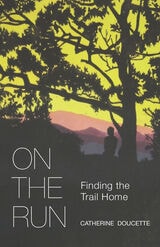
On the Run
Finding the Trail HomeCatherine Doucette
Oregon State University Press, 2021
For over a decade, Doucette chased winter around the world to ski, from the White Mountains of her native New Hampshire to the slopes of Alaska, British Columbia, California, Argentina, Switzerland, and beyond. But she always kept one eye toward living a more settled life and putting her heart on the line if someone would just ask her to. Like other women who choose or yearn to be in the wilderness, she wrestled to reconcile her outdoor ambitions with society’s expectations of women.
The personal essays collected in On the Run touch on the author’s origins in New Hampshire while focusing on the lure of big mountains in the West. They celebrate the comfort, challenge, and community found in expanses of wilderness while confronting the limitations and sacrifices that come with a transient, outdoor lifestyle. In a voice both searching and deeply grounded, Doucette contends with avalanches and whitewater along with the less dramatic but equally important questions of belonging. Anyone who has searched to define home, who has been called by mountains, or by movement, will feel at home in these pages.
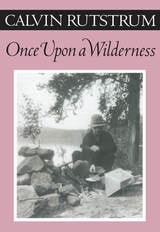
Once Upon A Wilderness
Calvin Rutstrum
University of Minnesota Press, 2002
The complete outdoorsman looks back on fifty years of wilderness adventures to find answers to today’s questions.
Though he began his life as a Twin Cities resident, Calvin Rutstrum came to see noise, material wealth, and perpetual frenzy as the narcotics of the city dweller. Like Henry David Thoreau, he set out to live a simpler, more meaningful life. In his pursuit, Rutstrum came to appreciate the natural world and the skills necessary to survive in it. Part memoir, part guidebook, and part environmental treatise, Once upon a Wilderness is a treasury of wilderness wisdom.
Rutstrum reminisces about lessons that his time in the wilderness has taught him. He writes about a range of backcountry issues, including environmental preservation, cultural sensitivity toward Native Americans, the urban versus the rural, and the artistic value of practical skills. Through his thoughtful consideration of the pleasure and value of wilderness, Rutstrum offers a clarion call for a saner, more socially responsible and environmentally sensitive way of living.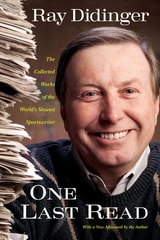
One Last Read
The Collected Works of the World's Slowest SportswriterRay Didinger
Temple University Press, 2023
Of the thousands of articles, columns, and profiles he has penned over the years, Didinger has selected his finest work to be included in this book. One Last Read contains entire chapters for each of the professional Philadelphia teams -- the Phillies, the Flyers, the Sixers and of course, the Eagles. But that is only half of the story. Included here is his coverage of college sports and the Olympics as well as the ful text of the speech he delivered in Canton, Ohio when he presented his boyhood idol, Tommy McDonald, for induction into the Pro Football Hall of Fame.
There are also some strongly-worded opinion pieces -- about former Eagles owner (and legendary high-roller) Leonard Tose, the career of Woody Hayes, and much, much more.
Didinger's introduction -- engaging, warm, whitty, and insightful -- is among his finest writing. For longtime readers, this essential collection of Didinger's work was worth the wait.
One Less Car
Bicycling and the Politics of AutomobilityAuthored by Zack Furness
Temple University Press, 2010
Although millions of people in the United States love to ride bicycles for exercise or leisure, statistics show that only 1% of the total U.S. population ride bicycles for transportation—and barely half as many use bikes to commute to work. In his original and exciting book, One Less Car, Zack Furness examines what it means historically, culturally, socioeconomically, and politically to be a bicycle transportation advocate/activist.
Presenting an underground subculture of bike enthusiasts who aggressively resist car culture, Furness maps out the cultural trajectories between mobility, technology, urban space and everyday life. He connects bicycling to radical politics, public demonstrations, alternative media production (e.g., ‘zines), as well as to the development of community programs throughout the world.
One Less Car also positions the bicycle as an object with which to analyze and critique some of the dominant cultural and political formations in the U.S.—and even breaks down barriers of race, class and gender privilege that are interconnected to mobility. For Furness, bicycles not only liberate people from technology, they also support social and environmental justice. So, he asks, Why aren’t more Americans adopting them for their transportation needs?

One Winter Up North
John Owens
University of Minnesota Press, 2022
A picture-book journey through the Boundary Waters Canoe Area Wilderness in winter, snowshoeing the frozen lakes and silent forest with family, encountering the wonders of northern wildlife in the cold season
In winter the Boundary Waters, way up north in Minnesota, is not the same place you canoed last summer—but still it beckons and welcomes you. Grab a pack, strap on snowshoes, make a path (Oh! they take some getting used to!), and venture out across the frozen lakes and through the snowy woods. The vast wintery world here is so still and quiet, you might think you’re all alone—but no! Who made these tracks? A deer? A hare? A fox? And far off there’s a musher, making tracks with his sled dogs.
It’s a magical place. The bright sun brilliant on the snow, the sparkling silence—wait, is that a wolf calling? Try to answer! And when the dark descends, the stars and pine trees holding up the night, your nose gets cold and it’s back to camp, to your warm winter tent, where Father feeds the stove with wood you gathered, Mother snuggles into her big sleeping bag, and you curl up in the fire’s glow and know that in your dreams and memories you will return again and again to this one winter up north.
A wintery adventure that unfolds in pictures, John Owens’s delightful book gives readers a chance to discover—or rediscover—another season full of wonder in the Boundary Waters Canoe Area Wilderness.
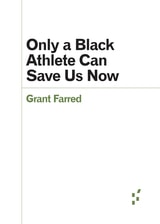
Only a Black Athlete Can Save Us Now
Grant Farred
University of Minnesota Press, 2021
A call to arms exploring the protest movements of 2020 as they reverberated through the athletic world
Starting with the refusal of George Hill of the Milwaukee Bucks to participate in an August 2020 playoff game following the shooting of Jacob Blake by police in Kenosha, Wisconsin, Grant Farred shows how the Covid-restricted NBA “bubble” released an energy that spurred athletes into radical action. They disrupted athletic normalcy, and in their grief and rage against American racism they demonstrated the true progressivism lacking in even the most reformist-minded politicians and pundits. Farred goes on to trace the radicalism of black athletes in a number of sports, including the WNBA, women’s tennis, the NFL, and NASCAR, locating contemporary athletes in a lineage that runs through Muhammad Ali as well as Tommy Smith and John Carlos at the 1968 Olympics.
Only a Black Athlete Can Save Us Now uses sport as a point of departure to argue that the dystopic crisis of our current moment offers a singular opportunity to reimagine how we live in the world.
Forerunners: Ideas First is a thought-in-process series of breakthrough digital publications. Written between fresh ideas and finished books, Forerunners draws on scholarly work initiated in notable blogs, social media, conference plenaries, journal articles, and the synergy of academic exchange. This is gray literature publishing: where intense thinking, change, and speculation take place in scholarship.
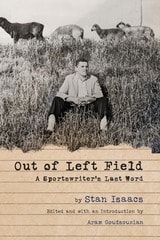
Out of Left Field
A Sportswriter’s Last WordStan Isaacs. Edited and with an Introduction by Aram Goudsouzian
University of Illinois Press, 2024
“Stan Isaacs is directly responsible for my television career--and much of how I approached what I’ve said and whom I’ve said it about.” --Keith Olbermann
Iconoclastic and irreverent, Stan Isaacs was part of a generation that bucked the sports establishment with a skepticism for authority, an appreciation for absurdity, and a gift for placing athletes and events within the context of their tumultuous times. Isaacs draws on his trademark wink-and-a-grin approach to tell the story of the long-ago Brooklyn that formed him and a career that placed him amidst the major sporting events of his era. Mixing reminiscences with column excerpts, Isaacs recalls antics like stealing a Brooklyn Dodgers pennant after the team moved to Los Angeles and his many writings on Paul Revere’s horse. But Isaacs also reveals the crusading and humanist instincts that gave Black athletes like Muhammad Ali a rare forum to express their views and celebrated the oddball, unsung Mets over the straitlaced Yankees.
Insightful and hilarious, Out of Left Field is the long-awaited memoir of the influential sportswriter and his adventures in the era of Jim Brown, Arthur Ashe, and the Amazin’ Mets.
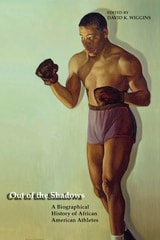
Out of the Shadows
A Biographical History of African American AthletesDavid K. Wiggins
University of Arkansas Press, 2008

Outside in the Interior
An Adventure Guide for Central AlaskaKyle Joly
University of Alaska Press, 2007
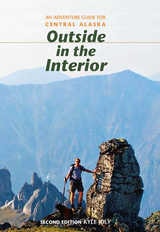
Outside in the Interior
An Adventure Guide for Central Alaska, Second EditionKyle Joly
University of Alaska Press, 2007
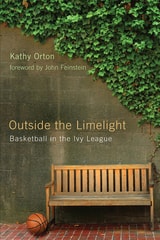
Outside the Limelight
Basketball in the Ivy LeagueOrton, Kathy
Rutgers University Press, 2018
With painstaking reportage, Kathy Orton vividly captures the internal fervor of the personalities who champion their gameùall the triumphs and disappointments of an Ivy hoop season. Scholarships for student athletes? None, and this is the only Division I conference that does not offer them. The TV spotlight? It barely shines, despite the passion, talent, and commitment of the players. Megadollar contracts from the NBA? Rarely does a player receive an offer. These age-old institutions are better known for turning out presidents, not point guards, and CEOs and captains of industry, not centers on the court.
Orton weaves together the stories of coaches and players as they move from fall practice through an entire season and ahead to the NCAA tournament. From Harvard to Penn, Princeton to Cornell and beyond, playersùperhaps more accustomed to pomp and circumstanceùface leaky gyms, endure long bus rides, rigorous courseloads, and unbearable exam schedules. Why? Just to prove they can hang with the big boys despite juggling multiple non-athletic responsibilities? Maybe. But more importantly, for the sincere love of the game.
Outside the Limelight provides frontcourt vision for college basketball fans everywhere to achieve an appreciation of this captivating conference and for diehard enthusiasts to gain greater insight into what brings Ivy League basketball to center circle.
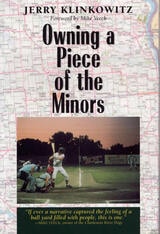
Owning a Piece of the Minors
Jerry Klinkowitz. Foreword by Mike Veeck
Southern Illinois University Press, 1999
Owning a Piece of the Minors is by and about a man who lived his dream and acquired a baseball team. When Jerry Klinkowitz joined the group that ran the Waterloo, Iowa, Diamonds in the 1970s, ownership of a minor league baseball franchise conferred little mystique. Neglected for a half century, minor league baseball was at best obscure. Yet in the purchase of fantasy, what difference if your desire is out of style?
Klinkowitz continued his work with the Diamonds through the 1980s and much of the 1990s. In Owning a Piece of the Minors, he maps out his personal journey through baseball and probes his fluctuating fortunes and those of his team as he evolves from a fan to a team executive and, most important, to a writer writing about baseball. This baseball story begins with a nine-year-old Klinkowitz who is elated when Milwaukee lures the Braves from Boston; this story of a love affair with baseball might have died—and in fact suffered a ten-year hiatus—when the apostate Braves fled to Atlanta in 1965.
Klinkowitz rediscovered the joy of being at the baseball park when, as a middle-aged professor, he took his own children to the Waterloo Diamonds games. Gradually his involvement with the Diamonds grew deeper until he owned the team. His immersion into team activities was complete, from shagging batting practice and working the beer bar to struggling with the Cleveland Indians and then the San Diego Padres as minor league affiliates to accommodate baseball's resurgence.
Klinkowitz writes of loss—first the Braves and later the Diamonds; of writing baseball fiction; of attending the 1982 World Series back in Milwaukee; of the great old ballparks around the country, including Wrigley, Fenway, and old Comiskey Park; of fictional and factual accounts of how the Diamonds franchise was lost; of friendships among season ticket holders in "Box 28"; and of Mildred Boyenga, the club president and Baseball Woman of the Year. A first-rate stylist, Klinkowitz shows the problems and perks and, most rewarding, the priceless relationships made possible in the world of baseball.