Results by title
4155 books match the query 'State & Local' and 94 start with o
OHIO
THE HISTORY OF A PEOPLEAndrew R. L. Cayton
The Ohio State University Press, 2002
Oases Of Culture
A History Of Public And Academic Libraries In NevadaJames W. Hulse
University of Nevada Press, 2003
The cultural and intellectual history of the Silver State is examined through the creation of its libraries. In Oases of Culture, veteran Nevada historian James W. Hulse recounts the tortuous and often colorful history of Nevada’s libraries and the work of the dedicated librarians, educators, civic leaders, women’s organizations, philanthropists, and politicians who struggled to make the democratic vision of free libraries available to all Nevadans. From the establishment of the State Library in 1865, only one year after statehood, through the creation of tax-supported public libraries after passage of a library law in 1895, to the development of today’s modern university and community college libraries and the public-library information services that serve Nevada’s booming and increasingly diverse population, Hulse recounts the trials and triumphs of Nevada’s libraries. He also examines the role of Nevada librarians in fostering literacy and confronting the First Amendment controversies that have periodically shaken the nation’s cultural foundations.
Object Lessons and the Formation of Knowledge
The University of Michigan Museums, Libraries, and Collections 1817–2017Kerstin Barndt and Carla M. Sinopoli, editors
University of Michigan Press, 2017
Odd Wisconsin
Amusing, Perplexing, and Unlikely Stories from Wisconsin's PastErika Janik
Wisconsin Historical Society Press, 2007
While Bob La Follette's exploits as leader of progressive politics are legendary, his early morning exertions to save valuable government documents and executive department paintings during the disastrous 1904 capitol fire are largely unknown - until now. Odd Wisconsin captures the Wisconsin people, places, and events that didn't make it into conventional state histories, lowering a bucket into the depths of Wisconsin history and bringing to light curious fragments of forgotten lives.
This unique book unearths the stories that got lost to history even though they may have made local headlines at the time. No mythical hodags or eight-legged horses here! Odd Wisconsin features strange but true stories from Wisconsin's past, every one of which was documented (albeit by the standards of the day). These brief glimpses into Wisconsin's past will surprise, perplex, astonish, and otherwise connect readers with the state's fascinating history. From "the voyageur with a hole in his side" to "pigs beneath the legislature," Odd Wisconsin gathers 300 years of curiosities, all under the radar of traditional stories.
Of Cabbages and Kings County
Agriculture and the Formation of Modern BrooklynMarc Linder
University of Iowa Press, 1999
No one today thinks of Brooklyn, New York, as an agricultural center. Yet Kings County enjoyed over two centuries of farming prosperity. Even as late as 1880 it was one of the nation's leading vegetable producers, second only to neighboring Queens County.
In Of Cabbages and Kings County, Marc Linder and Lawrence Zacharias reconstruct the history of a lost agricultural community. Their study focuses on rural Kings County, the site of Brooklyn's tremendous expansion during the latter part of the nineteenth century. In particular, they question whether sprawl was a necessary condition of American industrialization: could the agricultural base that preceded and surrounded the city have survived the onrush of residential real estate speculation with a bit of foresight and public policies that the politically outnumbered farmers could not have secured on their own?
The first part of the book reviews the county's Dutch American agricultural tradition, in particular its conversion after 1850 from extensive farming (e.g., wheat, corn) to intensive farming of market garden crops. The authors examine the growing competition between local farmers and their southern counterparts for a share of the huge New York City market, comparing farming conditions and factors such as labor and transportation.
In the second part of the book, the authors turn their attention to the forces that eventually destroyed Kings County's farming—ranging from the political and ideological pressures to modernize the city's rural surroundings to unplanned, market-driven attempts to facilitate transportation for more affluent city dwellers to recreational outlets on Coney Island and, once transportation was at hand, to replace farms with residential housing for the city's congested population.
Drawing on a vast range of archival sources, the authors refocus the history of Brooklyn to uncover what was lost with the expansion of the city. For today, as urban planners, ecologists, and agricultural developers reevaluate urban sprawl and the need for greenbelts or agricultural-urban balance, the lost opportunities of the past loom larger.
Of Caves and Shell Mounds
Edited by Kenneth C. Carstens and Patty Jo Watson
University of Alabama Press, 1996
Ancient human groups in the Eastern Woodlands of North America were long viewed as homogeneous and stable hunter-gatherers, changing little until the late prehistoric period when Mesoamerican influences were thought to have stimulated important economic and social developments. The authors in this volume offer new, contrary evidence to dispute this earlier assumption, and their studies demonstrate the vigor and complexity of prehistoric peoples in the North American Midwest and Midsouth. These peoples gathered at favored places along midcontinental streams to harvest mussels and other wild foods and to inter their dead in the shell mounds that had resulted from their riverside activities. They created a highly successful, pre-maize agricultural system beginning more than 4,000 years ago, established far-flung trade networks, and explored and mined the world's longest cave—the Mammoth Cave System in Kentucky.
Contributors include:
Kenneth C. Carstens, Cheryl Ann Munson, Guy Prentice, Kenneth B. Tankersley, Philip J. DiBlasi, Mary C. Kennedy, Jan Marie Hemberger, Gail E. Wagner, Christine K. Hensley, Valerie A. Haskins, Nicholas P. Herrmann, Mary Lucas Powell, Cheryl Claassen, David H. Dye, and Patty Jo Watson
Of Prairie, Woods, and Water
Two Centuries of Chicago Nature WritingEdited by Joel Greenberg
University of Chicago Press, 2008
These writings tell the tale of a land in transition—one with abundant, unique, and incredibly lush flora and fauna, a natural history quite elusive today. Drawing on archives he uncovered while writing his acclaimed A Natural History of the Chicago Region, Greenberg hand-selected these first-person narratives, all written between 1721 and 1959. Not every author is familiar, but every contribution is distinctive. From a pioneer’s hilarious notes on life in the Kankakee marsh to Theodore Drieser’s poignant plea for conservation of the Tippecanoe River to infamous murderer Nathan Leopold’s charming description of a pet robin he kept in prison, the sources included are as diverse as the nature they describe.
Oglethorpe in Perspective
Georgia's Founder after Two Hundred YearsEdited by Phinizy Spalding and Harvey H. Jackson, III
University of Alabama Press, 1989

Oh, Say, Can You See
The Semiotics of the Military in Hawai’iKathy E. Ferguson
University of Minnesota Press, 1998
Considers what the military presence in Hawai’i tells us about colonialism, gender, race, and class.
Everywhere you look in Hawai’i, you might see the military. And yet, in daily life few residents see the military at all-it is hidden in plain sight. This paradox of invisibility and visibility, of the available and the hidden, is the subject of Oh, Say, Can You See?, which maps the power relations involving gender, race, and class that define Hawai’i in relation to the national security state.
Western intruders into Hawai’i-from the early explorers, missionaries, and sugar planters to the military, tourists, and foreign investors-have seen the island nation as a feminine place, waiting to embrace those who come to penetrate, protect, mold, and develop, yet conveniently lacking whatever the newcomers claim to possess. Thus feminized, this book contends, the islands and the people have been reinscribed with meanings according to the needs, fears, and desires of outsiders. Authors Kathy E. Ferguson and Phyllis Turnbull locate and “excavate” sites of memory, such as cemeteries, memorials, monuments, and museums, to show how the military constructs its gendered narrative upon prior colonial discourses. Among the sites considered are Fort DeRussy, Pearl Harbor, and Punchbowl Cemetery, as well as the practices of citizenship that are produced or foreclosed by the narratives of order and security written upon Hawai’i by the military.This semiotic investigation of ways the military marks Hawai’i necessarily explores the intersection of immigration, colonialism, military expansion, and tourism on the islands. Attending to the ways in which the military represents itself and others represent the military, the authors locate the particular representational elements that both conceal and reveal the military’s presence and power; in doing so, they seek to expand discursive space so that other voices can be heard. ISBN 0-8166-2978-1 Cloth $49.95xxISBN 0-81662979-X Paper $19.95x240 pages 5 7/8 x 9 DecemberBorderlines Series, Volume 10Translation inquiries: University of Minnesota Press
Ohio Farm
Wheeler McMillen
The Ohio State University Press, 1997
Uncomplicated when compared with the task of managing today's highly mechanized agricultural complexes, life on the early twentieth-century small farm entailed hard work and afforded simple pleasures that brought satisfaction and enjoyment to the farm and family. Farming on that scale and in the same manner has now become almost completely infeasible, yet in those times a good farmer could prosper and become independent. Wheeler McMillen’s father, Lewis, did both.
Relying frequently on his father’s account books and concise diaries, for this is primarily his father’s story, McMillen recounts the immense labor that farming demanded before the advent of the tractor and the combine harvester. He evokes the special excitements of having company for Sunday dinner, attending the annual oyster supper at the Grange Hall, and gathering on the Fourth of July with the interminable wait for darkness to fall. McMillen also portrays the quiet peace and ineffable joy of private moments, such as resting the horses during spring plowing to watch bronzed grackles search for food in the freshly turned furrows.
Wheeler McMillen’s slice of history will speak to those interested in what rural life was once like in the Midwest and to Ohioans who would like to learn more about their state’s recent past.
Ohio Hopewell Ceramics
An Analysis of the Extant CollectionsOlaf H. Prufer
University of Michigan Press, 1968

Ohio On The Move
Transportation in the Buckeye StateH. Roger Grant
Ohio University Press, 1999
Few American states can match the rich and diverse transportation heritage of Ohio. Every major form of public conveyance eventually served the Buckeye state. From the “Canal Age” to the “Interurban Era,” Ohio emerged as a national leader. The state’s central location, abundant natural resources, impressive wealth, shrewd business leadership, and episodes of good fortune explain the dynamic nature of its transport past.
Ohio on the Move is the first systematic scholarly account of the transportation history of Ohio. To date, little has appeared on several subjects discussed here, including intercity bus and truck operations and commercial aviation. The more familiar topics of river and lake transport, canals, steam railroads, electric interurbans, and mass transit are extensively explored in the Ohio context.
In this inaugural volume of Ohio University Press’s Ohio Bicentennial Series, Professor Grant demonstrates the truth of the slogan that Ohio is “the heart of it all” - not solely by location but also in the impressive network of transportation arteries that have linked the state, whether natural waterways and air space or various artificial land-travel routes.
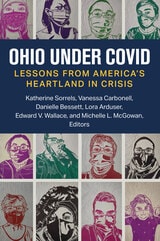
Ohio under COVID
Lessons from America's Heartland in CrisisKatherine Sorrels, Vanessa Carbonell, Danielle Bessett, Lora Arduser, Edward Wallace, and Michelle L. McGowan, Editors
University of Michigan Press, 2023
In early March of 2020, Americans watched with uncertain terror as the novel coronavirus pandemic unfolded. One week later, Ohio announced its first confirmed cases. Just one year later, the state had over a million cases and 18,000 Ohioans had died. What happened in that first pandemic year is not only a story of a public health disaster, but also a story of social disparities and moral dilemmas, of lives and livelihoods turned upside down, and of institutions and safety nets stretched to their limits.
Ohio under COVID tells the human story of COVID in Ohio, America’s bellwether state. Scholars and practitioners examine the pandemic response from multiple angles, and contributors from numerous walks of life offer moving first-person reflections. Two themes emerge again and again: how the pandemic revealed a deep tension between individual autonomy and the collective good, and how it exacerbated social inequalities in a state divided along social, economic, and political lines. Chapters address topics such as mask mandates, ableism, prisons, food insecurity, access to reproductive health care, and the need for more Black doctors. The book concludes with an interview with Dr. Amy Acton, the state’s top public health official at the time COVID hit Ohio. Ohio under COVID captures the devastating impact of the pandemic, both in the public discord it has unearthed and in the unfair burdens it has placed on the groups least equipped to bear them.

Ohio
A HISTORYWalter Havighurst
University of Illinois Press, 1976
From Harvey Firestone's rubber rims for buggy wheels to John Leon Bennet's wire flyswatter, from O. C. Barber's first book matches to Dr. Edwin Beeman's flavored chewing gum, Ohio has buzzed with inventive drive and creativity. The Wright brothers flew a winged crate over a Dayton cow pasture; Stephen Foster allegedly wrote "Oh Susanna" while working as a bookkeeper in a Cincinnati riverfront shipping office; and Ohio native Victoria Claflin Woodhull declared herself the first woman presidential candidate. The state also produced some of the Civil War's greatest leaders, including Ulysses S. Grant and William T. Sherman.
Havighurst gives a moving portrayal of Welsh inventor Samuel Milton Jones, who made his fortune with a device used in oil production and then turned his energies to creating his own "new deal" for his factory workers and, as mayor of Toledo, for his constituency. At the other end of the scale, shrewd, autocratic George B. Cox ruled Cincinnati through a sticky web of back-room corruption.
Focusing on the people who stamped the state with their vision, Havighurst captures the vibrancy and ingenuity of Ohio's inventors, manufacturers, leaders and dreamers, as well as the consequences, for the land and its inhabitants, of unchecked industrial excesses.
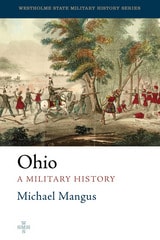
Ohio
A Military HistoryMichael Mangus
Westholme Publishing, 2016
Complete with a list of historical sites and a comprehensive bibliography, Ohio: A Military History is an important reference for those interested in the role of the Buckeye State in our nation’s history.
Westholme State Military History Series
Each state in the United States of America has a unique military history. The volumes in this series seek to provide a portrait of the richness of each state’s military experience, primarily defined by its borders, as well as the important contributions the state has made to the nation’s military history. Written by historians for the general reader, the volumes trace the history of conflict from the original native populations to today. The volumes are well illustrated and include specially commissioned maps, extensive bibliographies, lists of national and state historical sites, and a detailed index.
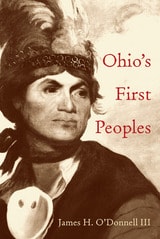
Ohio’s First Peoples
James H. O'Donnell
Ohio University Press, 2004
Although founders of the state like Rufus Putnam pointed to the remaining prehistoric earthworks at Marietta as evidence that the architects were a people of “ingenuity, industry, and elegance,” their words did not prevent a rivalry with the area’s Indian inhabitants that was settled only through decades of warfare and treaty-making.
Native American armies managed to win battles with Josiah Harmar and Arthur St. Clair, but not the war with Anthony Wayne. By the early nineteenth century only a few native peoples remained, still hoping to retain their homes. Pressures from federal and state governments as well as the settlers‘ desire for land, however, left the earlier inhabitants no refuge. By the mid-1840s they were gone, leaving behind relatively few markers on the land.
Ohio’s First Peoples depicts the Native Americans of the Buckeye State from the time of the well-known Hopewell peoples to the forced removal of the Wyandots in the 1840s.
Professor James O’Donnell presents the stories of the early Ohioans based on the archaeological record. In an accessible narrative style, he provides a detailed overview of the movements of Fort Ancient peoples driven out by economic and political forces in the seventeenth century. Ohio’s plentiful game and fertile farmlands soon lured tribes such as the Wyandots, Shawnees, and Delawares, which are familiar to observers of the historic period.
In celebrating the bicentennial of Ohio, we need to remember its earliest residents. Ohio’s First Peoples recounts their story and documents their contribution to Ohio’s full heritage.
Ohio’s War
The Civil War in DocumentsChristine Dee
Ohio University Press, 2006
In 1860, Ohio was among the most influential states in the nation. As the third-most-populous state and the largest in the middle west, it embraced those elements that were in concert-but also at odds-in American society during the Civil War era. Ohio’s War uses documents from that vibrant and tumultuous time to reveal how Ohio’s soldiers and civilians experienced the Civil War. It examines Ohio’s role in the sectional crises of the 1850s, its contribution to the Union war effort, and the war’s impact on the state itself. In doing so, it provides insights into the war’s meaning for northern society.
Ohio’s War introduces some of those soldiers who left their farms, shops, and forges to fight for the Union. It documents the stories of Ohio’s women, who sustained households, organized relief efforts, and supported political candidates. It conveys the struggles and successes of free blacks and former slaves who claimed freedom in Ohio and the distinct wartime experiences of its immigrants. It also includes the voices of Ohioans who differed over emancipation, freedom of speech, the writ of habeas corpus, the draft, and the war’s legacy for American society.
From Ohio’s large cities to its farms and hamlets, as the documents in this volume show, the war changed minds and altered lives but left some beliefs and values untouched. Ohio’s War is a documentary history not only of the people of one state, but also of a region and a nation during the pivotal epoch of American history.
Oil Cities
The Making of North Louisiana’s Boomtowns, 1901-1930Henry Alexander Wiencek
University of Texas Press, 2024
How international oil companies navigated the local, segregated landscape of north Louisiana in the first decades of the twentieth century.
In 1904, prospectors discovered oil in the rural parishes of North Louisiana just outside Shreveport. As rural cotton fields gave way to dense, industrial centers of energy extraction, migrants from across the US—and the world—rushed to take a share of the boom. The resulting boomtowns, most notoriously Oil City, quickly gained a reputation for violence, drinking, and rough living. Meanwhile, North Louisiana’s large Black population endured virulent white supremacy in the oil fields and the courtrooms to earn a piece of the boom, including one Black woman who stood to become the wealthiest oil heiress in America.
In Oil Cities, Henry Wiencek uncovers what life was like amidst the tent cities, saloons, and oil derricks of North Louisiana’s oil boomtowns, tracing the local experiences of migrants, farmers, sex workers, and politicians as they navigated dizzying changes to their communities. This first historical monograph on the region’s dramatic oil boom reveals a contested history, in which the oil industry had to adapt its labor, tools, and investments to meet North Louisiana’s unique economic, social, political, and environmental dynamics.

Oil in Texas
The Gusher Age, 1895-1945By Diana Davids Hinton and Roger M. Olien
University of Texas Press, 2002
As the twentieth century began, oil in Texas was easy to find, but the quantities were too small to attract industrial capital and production. Then, on January 10, 1901, the Spindletop gusher blew in. Over the next fifty years, oil transformed Texas, creating a booming economy that built cities, attracted out-of-state workers and companies, funded schools and universities, and generated wealth that raised the overall standard of living—even for blue-collar workers. No other twentieth-century development had a more profound effect upon the state.
In this book, Roger M. Olien and Diana Davids Hinton chronicle the explosive growth of the Texas oil industry from the first commercial production at Corsicana in the 1890s through the vital role of Texas oil in World War II. Using both archival records and oral histories, they follow the wildcatters and the gushers as the oil industry spread into almost every region of the state. The authors trace the development of many branches of the petroleum industry—pipelines, refining, petrochemicals, and natural gas. They also explore how overproduction and volatile prices led to increasing regulation and gave broad regulatory powers to the Texas Railroad Commission.

Ojibwe, Activist, Priest
The Life of Father Philip Bergin Gordon, TibishkogijikTadeusz Lewandowski
University of Wisconsin Press, 2019
Drawing on previously unexplored materials, Tadeusz Lewandowski paints a portrait of a contentious life. Ojibwe, Activist, Priest examines Gordon's efforts to abolish the Bureau of Indian Affairs, his membership in the Society of American Indians, and his dismissal from his Ojibwe parish and exile to a tiny community where he'd be less likely to stir up controversy. Lewandowski illuminates a significant chapter in the struggle for Native American rights through the views and experiences of a key Native progressive.
Old Abe the War Eagle
A True Story of the Civil War And ReconstructionRichard Zeitlin
Wisconsin Historical Society Press, 1986
The story of Old Abe, the bald eagle that became the mascot of the Eighth Regiment of Wisconsin Volunteer Infantry. It is also the story of the men among whom Old Abe lived: the farmers, loggers, clerks, and immigrants who flocked to the colors in 1861.
Reissued in 2012 with a new cover.
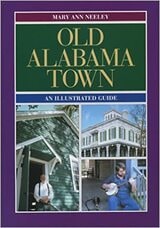
Old Alabama Town
An Illustrated GuideMary Ann Neeley
University of Alabama Press, 2002
Old Alabama Town is a visual and historical chronicle of one of the South's important architectural landmarks—four blocks of 19th-century buildings restored to their original condition, collectively forming an educational village that preserves and displays life as it was lived in Alabama from the 1830s through the 1890s. A creation of the Landmarks Foundation of Montgomery, a nonprofit organization developed in 1967, Old Alabama Town displays the lifestyles and environment of the time period through architecture, decorative arts, and living history. The "town" has been made available for students, secondary school educators for field trips, and to tourists for entertainment and family excursions.
More than 50 historic structures, all formerly in danger of demolition, have been transported from around central Alabama and restored on site. The Living Block of the village allows visitors to explore a log cabin, dogtrot house, carriage house, "shotgun" house, pole barn, schoolhouse, tavern, grange hall, and grocery. The Working Block allows patrons to visit a blacksmith's shop, drugstore, grist mill, cotton gin, woodcarver's shop, print shop, and cookhouse. Additional regions of the village present some of the most significant historic homes to be preserved in the state: the Cram-Lakin House, Thompson Mansion, and the Ordeman-Mitchell-Shaw House, among others.
Designed in full color, this paperback guide is introduced by the author's historical, sociological, and cultural overview of Montgomery. The 45 individual entries detail the history and features of each structure and are supplemented by a map, archival photographs of the buildings, and 60 contempo-rary color photographs. This book will be useful to tourists, preservationists, students and scholars of Alabama history and architecture, and all those interested in an interpretive museum of southern life.
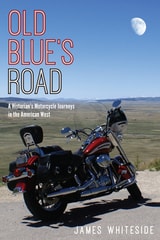
Old Blue's Road
A Historian's Motorcycle Journeys in the American WestJames Whiteside
University Press of Colorado, 2014
In 2005, Whiteside bought a Harley Davidson Heritage Softail, christened it “Old Blue,” and set off on a series of far-reaching motorcycle adventures. Over six years he traveled more than 15,000 miles. Part travelogue and part historical tour, this book takes the reader along for the ride. Whiteside’s travels to the Pacific Northwest, Yellowstone, Dodge City, Santa Fe, Wounded Knee, and many other locales prompt consideration of myriad topics—the ongoing struggle between Indian and mainstream American culture, the meaning of community, the sustainability of the West's hydraulic society, the creation of the national parks system, the Mormon experience in Utah, the internment of Japanese Americans during World War II, and more.
Delightfully funny and insightful, Old Blue’s Road links the colorful history and vibrant present from Whiteside’s unique vantage point, recognizing and reflecting on the processes of change that made the West what it is today. The book will interest the general reader and western historian alike, leading to new appreciation for the complex ways in which the American West's past and present come together.
Old Burial Grounds of New Jersey
A GuideJanice Kohl Sarapin
Rutgers University Press, 1994
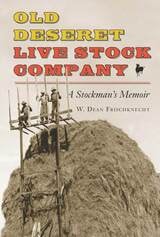
Old Deseret Live Stock Company
A Stockman's MemoirW. Dean Frischknecht
Utah State University Press, 2008
In the high country of the northern Wasatch Mountains, lies what is left of one of the West’s largest ranches. Deseret Live Stock Company was reputed at various times to be the largest private landholder in Utah and the single biggest producer of wool in the world. The ranch began as a sheep operation, but as it found success, it also ran cattle. Incorporated in the 1890s by a number of northern Utah ranchers who pooled their resources, the company was at the height of successful operations in the mid-twentieth century when a young Dean Frischknecht, bearing a recent degree in animal science, landed the job of sheep foreman. In his memoir he recounts in detail how Deseret managed huge herds of livestock, vast lands, and rich wildlife and recalls through lively anecdotes how stockmen and their families lived and worked in the Wasatch Mountains and Skull Valley’s desert wintering grounds.
Old Farm
A HistoryJerry Apps
Wisconsin Historical Society Press, 2013
Old Heart Of Nevada
Ghost Towns And Mining Camps Of Elko CountyShawn Hall
University of Nevada Press, 1998
Elko County, in the old heart of Nevada, is rich in historic sites, many of them hitherto uncharted and some verging on disappearing. For the first time, historian Shawn Hall identifies and locates the ghost towns and old mining camps of Elko County and recounts their colorful histories. Following a guidebook format, Hall divides the county into five easily accessible regions, then lists the historic sites within each region and provides directions to reach them. He offers a brief history of each site as well as a description of its extant structures and their present condition. The result is a lively compilation of local history and mining and ranching lore that records the dramatic past of Nevada’s northeast corner, its pioneers and prospectors, its towns and mines, its outlaws, ranchers, merchants, mining concerns, and civic leaders. The book offers never-before available information about the old heart of Nevada and the people who settled there. It will be of enduring value to tourists and weekend explorers, historic preservationists, and all those interested in the history and artifacts of this region.
Old Mobile Archaeology
Gregory A. Waselkov
University of Alabama Press, 2005
An archaeological guide to the earliest French settlement on the northern Gulf Coast. Archaeological excavations since 1989 have uncovered exciting evidence of the original townsite of Mobile, first capital of the Louisiana colony, and remnants of the colony's port on Dauphin Island.
Old Mobile
Fort Louis de la Louisiane, 1702-1711Jay Higginbotham
University of Alabama Press, 1991
The definitive account of the French colonial settlement that became Mobile, Alabama.
Commissioned to mark the 275th anniversary of the founding of the city of Mobile, Old Mobile is award-winning historian Jay Higginbotham’s definitive history of the origins of French settlement on Mobile Bay and the birth of the city.
Higginbotham’s narrative is replete with memorable characters, such as the LeMoyne brothers: Iberville, the aristocratic adventurer who abandoned the settlement and the younger Bienville, whose iron determination and Catholic faith sustained the community through its first hardscrabble years 26 miles upriver, a disastrous flood in 1711, and the community’s retreat to the city’s current location, nearer the French supply depot on Dauphin Island.
The majestic sweep of Higginbotham’s fascinating account also takes in early Mobile’s relations with neighboring European settlements, such as their meddling French neighbors in Louisana to the west and the Spanish in Pensacola to the east. Despite being rivals of a sort, Mobile and Pensacola became, of dire necessity, allies in survival. Higginbotham consulted a wealth of previously unpublished sources in the national archives of the United States, Canada, Mexico, France, England, Spain, and Cuba, creating an authoritative account never likely to be equaled. A copious bibliography, excellent illustrations and figures, tables of relevant statistics, and a detailed index round out this magisterial edition.
Scholars and readers interested in the founding of Alabama, the history of Gulf Coast settlements, the French colonial empire, or related subjects will find Old Mobile essential reading.
Old Orchard Farm
The Story of an Iowa BoyhoodHugh Orchard
University of Iowa Press, 2010
Old South, New South, or Down South?
Florida and the Modern Civil Rights MovementEdited by Irvin D. S. Winsboro
West Virginia University Press, 2009
How does a state, tarnished with a racist, violent history, emerge from the modern civil rights movement with a reputation for tolerance and progression? Old South, New South, or Down South?: Florida and the Modern Civil Rights Movement exposes the image, illusion, and reality behind Florida’s hidden story of racial discrimination and violence. By exploring multiple perspectives on racially motivated events, such as black agency, political stonewalling, and racist assaults, this collection of nine essays reconceptualizes the civil rights legacy of the Sunshine State. Its dissection of local, isolated acts of rebellion reveals a strategic, political concealment of the once dominant, often overlooked, old south attitude towards race in Florida.
Old Times on the Upper Mississippi
Recollections of a Steamboat Pilot from 1854 to 1863George Byron Merrick
University of Minnesota Press, 2001
A long-awaited new edition of the steamboating classic.
George Byron Merrick chronicles the entire panorama of steamboat life he experienced in the mid-1800s, where he started as a cabin boy and worked up to cub pilot on the mighty Mississippi. Originally published in 1909, Merrick’s narrative matches lively stories about gamblers, shipwrecks, and steamboat races with rich descriptions of river life and steamboat operations.
Fesler-Lampert Minnesota Heritage Series
Old Yukon
Tales, Trails, and TrialsJames Wickersham
University of Alaska Press, 2009
In this humorous and upbeat memoir, James Wickersham describes his career as a pioneer judge and later as a congressional representative assigned to a vast, snow-covered district, extending over 300,000 square miles in the undeveloped Alaska Territory. Wickersham’s many adventures include traveling by dogsled over hundreds of miles through snow-covered mountains; serving as judge for the trials of many famous outlaws in the midst of the gold strikes; and hunting, mining, and climbing in his local Alaska wilderness. Though he was instrumental in the early history of Alaska, and his legacy is evident throughout the state—for example, he named the city of Fairbanks—this is the first and only work to focus on Wickersham’s life during this pivotal time in Alaska’s history.

Old and New New Englanders
Immigration and Regional Identity in the Gilded AgeBluford Adams
University of Michigan Press, 2014
In Old and New New Englanders, Bluford Adams provides a reenvisioning of New England’s history and regional identity by exploring the ways the arrival of waves of immigrants from Europe and Canada transformed what it meant to be a New Englander during the Gilded Age. Adams’s intervention challenges a number of long-standing conceptions of New England, offering a detailed and complex portrayal of the relations between New England’s Yankees and immigrants that goes beyond nativism and assimilation. In focusing on immigration in this period, Adams provides a fresh view on New England’s regional identity, moving forward from Pilgrims, Puritans, and their descendants and emphasizing the role immigrants played in shaping the region’s various meanings. Furthermore, many researchers have overlooked the newcomers’ relationship to the regional identities they found here. Adams argues immigrants took their ties to New England seriously. Although they often disagreed about the nature of those ties, many immigrant leaders believed identification with New England would benefit their peoples in their struggles both in the United States and back in their ancestral lands.
Drawing on and contributing to work in immigration history, as well as American, gender, ethnic, and New England studies, this book is broadly concerned with the history of identity construction in the United States while its primary focus is the relationship between regional categories of identity and those based on race and ethnicity. With its interdisciplinary methodology, original research, and diverse chapter topics, the book targets both specialist and nonspecialist readers.

Ole Hendricks and His Tunebook
Folk Music and Community on the FrontierAmy M. Shaw
University of Wisconsin Press, 2020
Such tunebooks, popular during the nineteenth century, rarely survive and are often overlooked by folk scholars in favor of commercially produced recordings, published sheet music, or oral tradition. Based on extensive historical and genealogical research, Amy Shaw presents a grounded picture of a musician, his family, and his community in the Upper Midwest, revealing much about music and dance in the area. This notable contribution to regional music and folklore includes more than one hundred of Ole's dance tunes, transcribed into modern musical notation for the first time. Ole Hendricks and His Tunebook will be valuable to readers and scholars interested in ethnomusicology and the Norwegian American immigrant experience.
Olmsted's Riverside
Stewardship Meets Innovation in a Landmark VillageCathy Jean Maloney
Southern Illinois University Press, 2024
WINNER, Certificate of Excellence in “Scholarly Publications” from the Illinois State Historical Society’s 2025 Best of Illinois History Awards!
Honorable Mention, 2025 Society of Midland Authors Award in History!
The challenge to preserve Chicagoland’s unique haven
Just outside the bustling metropolis of Chicago lies the unlikely green oasis of Riverside, Illinois, a small village that has continued to directly influence American landscapes and suburbs since the 1870s. Once farmland, the location provided a blank canvas for preeminent designers Fredrick Law Olmsted and Calvert Vaux’s manifestation of a truly democratic society. Olmsted’s Riverside details the village’s historical significance, harmony with nature, and its nearly 150-year impact on American suburbs today.
Cathy Jean Maloney explores how Riverside’s layout and design presaged today’s urban planning goals of walkability, green space, public transportation access, sustainability, and resiliency. Houses in Riverside are set back from the road, sidewalks meander along gently curving roads, and public green spaces abound. Maloney shows how Riverside’s leaders and residents struggled with stewardship of Olmsted’s ideals by balancing competing interests in suburban development and Chicago sprawl from the 1870s to the 2020s. She details in chronological chapters how the village adapted to tragedies such as the Great Fire of 1871 and the Panic of 1873, as well as advancements in transportation, local civic life, urban policy, and environmental thought, all while staying true to the framework inherited from Olmsted and Vaux.
Olmsted’s Riverside provides engaging examples of how citizen involvement can protect a community’s ideals. This richly illustrated volume combines landscape architecture, regional history, and urban design to show how audacious civic planning and thoughtful conservation can provide a model for future American suburbs.

On Behalf of the Family Farm
Iowa Farm Women's Activism since 1945Jenny Barker Devine
University of Iowa Press, 2013
Focusing on women in four national farm organizations in Iowa—the Farm Bureau, the Farmers Union, the National Farm Organization, and the Porkettes—Devine highlights specific moments in time when farm women had to reassess their roles and strategies for preserving and improving their way of life. Rather than retreat from the male-dominated world of agribusiness and mechanized production, postwar women increasingly asserted their identities as agricultural producers and demanded access to public spaces typically reserved for men.

On Colfax Avenue
A Victorian ChildhoodElizabeth Young
University Press of Colorado, 2004
On Dark and Bloody Ground
An Oral History of the West Virginia Mine WarsAnne T. Lawrence
West Virginia University Press, 2021
In 1972 Anne Lawrence came to West Virginia at the invitation of the Miners for Democracy movement to conduct interviews with participants in, and observers of, the Battle of Blair Mountain and other Appalachian mine wars of the 1920s and ’30s. The set of oral histories she collected—the only document of its kind—circulated for many years as an informal typescript volume, acquiring an almost legendary status among those intrigued by the subject. Key selections from it appear here for the first time as a published book, supplemented with introductory material, maps, and photographs. The volume’s vivid, conversational mode invites readers into miners’ lived experiences and helps us understand why they took up arms to fight anti-union forces in some of the nation’s largest labor uprisings.
Published to coincide with the celebration of the Blair Mountain centennial in 2021, On Dark and Bloody Ground includes a preface by public historian Catherine Venable Moore and an afterword by Cecil E. Roberts of the United Mine Workers of America.
On Homesickness
A PleaJesse Donaldson
West Virginia University Press, 2017
One day, Jesse Donaldson wakes up in Portland, Oregon, and asks his wife to uproot their life together and move to his native Kentucky. As he searches for the reason behind this sudden urge, Donaldson examines both the place where he was born and the life he’s building.
The result is a hybrid—part memoir, part meditation on nostalgia, part catalog of Kentucky history and myth. Organized according to Kentucky geography, with one passage for each of the commonwealth’s 120 counties, On Homesickness examines whether we can ever return to the places we’ve called home.
On Shaky Ground
The New Madrid Earthquakes of 1811-1812Norma Hayes Bagnall
University of Missouri Press, 1996
Although most Americans associate earthquakes with California, the tremors that shook the Mississippi valley in southeast Missouri from December 16, 1811, through February 7, 1812, are among the most violent quakes to hit the North American continent in recorded history. Collectively known as the New Madrid earthquakes, these quakes affected more than 1 million square miles. By comparison, the 1906 San Francisco earthquake affected only 60,000 square miles, less than one-sixteenth the area of the New Madrid earthquakes.
Scientists believe that each of the three greatest tremors would have measured more than 8.0 on the Richter scale, had that measuring device been in place in 1811. Vibrations were felt from the Rocky Mountains to the Atlantic coast and from Mexico to Canada. The quake zone was in constant movement during this period. Five towns in three states disappeared, islands vanished in the Mississippi River, lakes formed where there had been none before, and the river flowed backward for a brief period.
Providing eyewitness accounts from people both on the land and on the river, Bagnall captures the fears of the residents through their tales about the smells and dark vapors that filled the air, the cries of the people, the bawling of animals, and the constant roar of the river and its collapsing banks. On Shaky Ground also traces the history of the founding of New Madrid and considers the impact of the earthquakes on population and land in southeast Missouri. Predictions for future earthquakes along the New Madrid fault, as well as instructions on preparing for and surviving a quake, are also included.
Informative, clearly written, and well illustrated, On Shaky Ground will be of interest to all general readers, especially those interested in earthquakes or Missouri history.
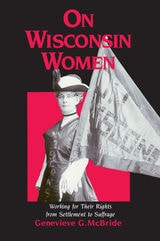
On Wisconsin Women
Working for Their Rights from Settlement to SuffrageGenevieve C. McBride
University of Wisconsin Press, 1993
In On Wisconsin Women, Genevieve McBride traces women’s work in reform movements in the state’s politics and especially in its press. Even before Wisconsin became a state in 1848, women’s news and opinions appeared in abolitionist journals and “temperance sheets,” if often anonymously. But the first paper in Wisconsin published under a woman’s name, however, was boycotted by Milwaukee printers and failed in 1853.
From the passage of the Fourteenth Amendment in 1866 to the state’s historic ratification of the Nineteenth Amendment in 1919, Wisconsin women were never at a loss for words nor a newspaper to print them. Among women who would be heard were Mathilde Fransziska Anneke, Emma Brown, Lavinia Goodell, Emma Bascom, Olympia Brown, Belle Case La Follette, Ada L. James, and Theodora Winton Youmans. McBride brings their voices vividly to life, in their own words on their lifelong work for woman’s rights.
Nowhere was “the struggle” fought for so long and so hard as in Wisconsin. While women elsewhere sang suffrage hymns, women in the Badger State marched to a “fight song” with a familiar tune but sung in their own words—lyrics too long forgotten until now.
On a Trail of Southwest Discovery
The Expedition Diaries of Frederick W. Hodge and Margaret W. Magill, 1886–1888Curtis M. Hinsley and David R. Wilcox
University of Arizona Press, 2024
The Hemenway Southwestern Archaeological Expedition (1886–1889), directed by Frank Hamilton Cushing, was the first privately funded expedition to the American Southwest. This volume examines the expedition through the diaries of two participants who fell in love on the expedition: the field secretary, Fred Hodge, and the expedition artist, Margaret Magill—who was also Cushing’s sister-in-law. It also presents the first biographical treatment of Hodge, who became a major figure in early twentieth-century anthropology. The book’s first two sections chronicle the field operations of the expedition, while the third describes the long anthropological career of Hodge after the end of the expedition. Through deep research in primary and secondary sources and archival materials, the book details both the daily operations of the expedition and the growing romantic relationship between Hodge and Magill.
For those interested in settlements in early Arizona and Zuni Pueblo, the book provides rare insights into the lives of both men and women, offering an intimate view of an enterprise that is now considered a foundation of Hohokam archaeology—even as it reveals deep love and persistent personal conflicts.
On the Hunt
The History of Deer Hunting in WisconsinRobert C Willging
Wisconsin Historical Society Press, 2008
On the Plains in ’65
The 6th West Virginia Volunteer Cavalry in the WestGeorge H. Holliday
Ohio University Press, 2021
A new scholarly edition of an Ohio boy soldier’s revealing post-Civil War memoir.
This annotated edition of Holliday’s recollections—known primarily among historians of the American West—re-contextualizes his memoir to include his boyhood in southern Ohio and the largely untold story of the hundreds of Buckeyes who crossed the Ohio River to serve their country in Virginia (later West Virginia) regiments, ultimately traveling across Kansas, Nebraska, Colorado, and Wyoming to safeguard mail and stage routes along the celebrated Oregon Trail during a pivotal time in American history.
Glenn Longacre’s extensive research in federal, state, and local archives, manuscript collections, and period newspapers complements his correspondence with the living descendants of Holliday and other soldiers. His research integrates this story deservedly as part of Appalachian history before, during, and after the Civil War. From this perspective it addresses an entirely new audience of Appalachian studies scholars, Civil War and frontier history enthusiasts, students, and general readers.
On the Plains, and Among the Peaks
or, How Mrs. Maxwell Made Her Natural History Collection: by Mary DarttJulie McCown
University Press of Colorado, 2021
Dartt’s book tells the story of Maxwell’s lifelong passion and dedication to work and education that made her a pioneer in more ways than one. It catalogs her important scientific contributions and development of museum habitat groupings and lifelike taxidermy mounts, showcases engaging accounts of wilderness excursions on the frontier of the Western United States in the 1860s and 1870s, and testifies to her resolve to show that women were capable of succeeding in traditionally male-dominated fields.
This scholarly edition of On the Plains, and Among the Peaks will spark renewed interest in Maxwell and Dartt as neglected figures in nineteenth-century US history and literature, opening a conversation that other literary scholars and historians will join to further situate their work within the numerous disciplines to which it speaks, including nineteenth-century American literature; women’s, western, environmental, and natural history; and gender, museum, and animal studies.
On the Turtle's Back
Stories the Lenape Told Their GrandchildrenCamilla Townsend
Rutgers University Press, 2023
The Lenape tribe, also known as the Delaware Nation, lived for centuries on the land that English colonists later called New Jersey. But once America gained its independence, they were forced to move further west: to Indiana, then Missouri, and finally to the territory that became Oklahoma. These reluctant migrants were not able to carry much from their ancestral homeland, but they managed to preserve the stories that had been passed down for generations.
On the Turtle’s Back is the first collection of Lenape folklore, originally compiled by anthropologist M. R. Harrington over a century ago but never published until now. In it, the Delaware share their cherished tales about the world’s creation, epic heroes, and ordinary human foibles. It features stories told to Harrington by two Lenape couples, Julius and Minnie Fouts and Charles and Susan Elkhair, who sought to officially record their legends before their language and cultural traditions died out. More recent interviews with Lenape elders are also included, as their reflections on hearing these stories as children speak to the status of the tribe and its culture today. Together, they welcome you into their rich and wondrous imaginative world.

On the Way
My Life and TimesBy Frank Denius
University of Texas Press, 2016
Frank Denius was not yet twenty-one when he fought his way across Europe and was awarded four Silver Stars, a Presidential Unit Citation, and two Purple Hearts. On the Way describes Denius’s formative experiences during World War II in gripping detail and will cause any reader to wonder how he or she might have held up under similar pressure. The powerful opening chapters are followed by a detailed account of Denius’s life and career after the war, assembled into a first-person memoir from conversations between Denius and Thomas Hatfield, and published by the Briscoe Center for American History at the University of Texas at Austin.
Discharged from the army in October 1945, Denius enrolled at the University of Texas within a week. He is a lifelong supporter of the university: as part of the Texas Exes, as a donor to numerous academic programs, and as a fan of Longhorn football. Former UT football coach Mack Brown liked to say, “Frank has been to more practices than I have.”
Denius graduated from the University of Texas School of Law and joined one of Austin’s leading law firms in the late 1940s. Denius recounts how Texas operated in Lyndon Johnson’s prime, observes power plays in the Texas energy industry, and describes his role in building a regional university into a global leader.

Once Upon a Time in Texas
A Liberal in the Lone Star StateBy David Richards
University of Texas Press, 2002
Once upon a time in Texas...there were liberal activists of various stripes who sought to make the state more tolerant and more tolerable. David Richards was one of them. In this fast-paced, often humorous memoir, he remembers the players, the strategy sessions, the legal and political battles, and the wins and losses that brought significant gains in civil rights, voter rights, labor law, and civil liberties to the people of Texas from the 1950s to the 1990s.
In his work as a lawyer, Richards was involved in cases covering voters' rights, school finance reform, and a myriad of civil liberties and free speech cases. In telling these stories, he vividly evokes the "glory days" of Austin liberalism, when a who's who of Texas activists plotted strategy at watering holes such as Scholz Garden and the Armadillo World Headquarters. Likewise, he offers vivid portraits of liberal politicians from Ralph Yarborough to Ann Richards (his former wife), progressive journalists such as Molly Ivins and the Texas Observer staff, and the hippies, hellraisers, and musicians who all challenged Texas's conservative status quo.
Once and Future Silver Queen of the Rockies
Georgetown, Colorado, and the Fight for Survival into the Twentieth CenturyChristine Bradley
University Press of Colorado, 2018
There are many studies of local communities during their heydays, but the life of a community in decline is rarely studied. The Once and Future Silver Queen of the Rockies delves into the life of Georgetown, Colorado, after the turn of the twentieth century as mining in Clear Creek County steadily declined and ultimately collapsed.
One of the earliest mining communities in the state, Georgetown began to struggle for survival as the nineteenth century drew to a close. The price of silver dropped precipitously while other mining camps were still opening around the region. The new, bright future once envisioned for the “Silver Queen of the Rockies” began to fade. Yet the community managed to survive and re-create itself in the new world of the twentieth century. Tourism, skiing, and historic preservation replaced mineral extraction as the basis of the regional economy. Today, Georgetown maintains the aesthetic feel of a nineteenth-century mining town and stands as an example of community-supported historic preservation.
This richly illustrated sequel to The Rise of the Silver Queen tells the compelling story of Georgetown’s survival, and ultimate flourishing, after the loss of its principal industry. It is an interesting and engaging addition to the history of Colorado and the West.