Results by title
28164 books match the query 'History' and 581 start with o
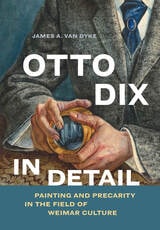
Otto Dix in Detail
Painting and Precarity in the Field of Weimar CultureJames A. van Dyke
University of Chicago Press, 2026
Offering a fresh look at German art during a period of extraordinary transition and precarity, James A. van Dyke focuses on overlooked but critically significant details in works completed by Otto Dix between 1919 and 1936. A small lump of paint, a monogram, an almost invisible self-portrait, the verso of a drawing, a patch of discoloration, and a web of fine cracks—van Dyke reveals such details, hidden in plain sight, as coded dialogue through which Dix addressed audiences and art-world insiders amid the combative world of cultural production in Weimar Germany. Sly, cutting, and provocative, these are the material traces of social relationships between the painter and those who represented threats to his professional ambition: an avant-garde mentor and rival, an increasingly skeptical critic, a prominent bourgeois photographer, and a local Nazi authority.
Proving that small things offer insight into the big picture, this book highlights Dix’s satirical, transgressive work as nuanced and polyvocal, reflecting the complex fields of power and economics in which the field of art is located.
Otto Weininger
Sex, Science, and Self in Imperial ViennaChandak Sengoopta
University of Chicago Press, 2000
This provocative, enlightening study explores the milieu in which the philosopher Otto Weininger (1880-1903) wrote his controversial book Sex and Character. Shortly after its publication, Weininger committed suicide at the age of twenty-three. His book, which argued that women and Jews were mere sexual beings who lacked individuality, became a bestseller.
Hailed as a genius by intellectuals such as Ludwig Wittgenstein and Karl Kraus, Weininger was admired, not for his prejudices, but for his engagement with the central issues of the time—the nature and meanings of identity. Sengoopta pays particular attention to how Weininger appropriated scientific language and data to defend his views and examines the scientific theories themselves.
Ottoman Empire and Islamic Tradition
Norman Itzkowitz
University of Chicago Press, 1972
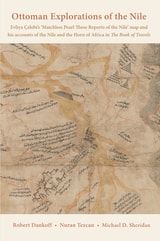
Ottoman Explorations of the Nile
Evliya Çelebi’s Map of the Nile and The Nile Journeys in the Book of Travels (Seyahatname)Robert Dankoff, Nuran Tezcan, and Michael D. Sheridan
Gingko, 2018
Evliya Çelebi’s account of his Nile journeys, in the tenth volume of his Book of Travels (Seyahatname), has been known to the scholarly world since 1938, when that volume was first published. The map, held in the Vatican Library, has been studied since at least 1949. Numerous new critical editions of both the map and the text have been published over the years, each expounding upon the last in an attempt to reach a definitive version. The Ottoman Explorations of the Nile provides a more accurate translation of the original travel account. Furthermore, the maps themselves are reproduced in greater detail and vivid color, and there are more cross-references to the text than in any previous edition. This volume gives equal weight and attention to the two parts that make up this extraordinary historical document, allowing readers to study the map or the text independently, while also using each to elucidate and accentuate the details of the other.
Ottoman Izmir
The Rise of a Cosmopolitan Port, 1840-1880Sibel Zandi-Sayek
University of Minnesota Press, 2011
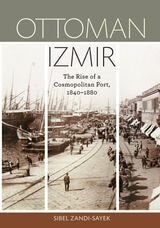
Between 1840 and 1880, the Eastern Mediterranean port of Izmir (Smyrna) underwent unprecedented change. A modern harbor that welcomed international steamships and new railway lines that transported a cornucopia of products transformed the physical city. Migrants, seasonal workers, and transient sailors thronged into an already diverse metropolis, helping to double the population to 200,000. Simultaneously, Ottoman officials and enterprising citizens vied to control and reform the city’s administrative and legal institutions.
Ottoman Izmir examines how urban space, institutional structures, and everyday practices shaped one another in the thriving seaport of Izmir during a volatile period of growth. Sibel Zandi-Sayek investigates a variety of urban actors—Muslims and non-Muslims, Ottomans and Europeans, newcomers and native residents, merchants, investors, civil servants, and press reporters—who were actively engaged in restructuring the city. Concentrating on the workings of urban committees and on laws and policies that were written, rewritten, but never fully implemented, Zandi-Sayek exposes how modern interventions sought to impose clear-cut concepts of public and private, safety and danger, and hygiene on a city that previously had a wide range of customary regulations.
Ottoman Izmir shows how Izmir’s various stakeholders contested its built environment. In so doing, it offers a new view of the dynamics of urban modernization.

Ottoman Jerusalem
The Living City: 1517-1917 Part 1 & 2Sylvia Auld
Council for British Research in the Levant, 2000
Ottoman Warfare 1500-1700
Murphey, Rhoads
Rutgers University Press, 1999
Ouida
Cosmopolitan Ethics, Aesthetics, and LegaciesFrankie Dytor and Helena Esser
Ohio University Press, 0
Outspoken, extravagant, and internationally celebrated in her lifetime, Ouida (Marie Louise de la Ramée, 1839–1908) was one of the nineteenth century’s most successful and controversial writers. Her fiction, essays, and cultural criticism captivated readers across Europe and beyond, yet her polemical politics, cosmopolitan outlook, and opulent style left her at odds with the modernist critical traditions that shaped later literary scholarship. As a result, despite her considerable influence, Ouida has remained on the margins of Victorian literary history. Ouida: Cosmopolitan Ethics, Aesthetics, and Legacies offers the first sustained examination of the ethical and aesthetic commitments that underpin Ouida’s work and its effect on nineteenth-century culture. Bringing together an international group of established and emerging scholars, the collection explores her writing through frameworks including psychogeography, ecocriticism, decadence studies, celebrity studies, and adaptation studies. Contributors reveal how Ouida challenged conventional boundaries of nation, gender, class, and species while shaping contemporary debates about art, politics, and society. Opening with a conversation between Victorian literary scholars Pamela K. Gilbert and Talia Schaffer, the volume traces Ouida’s influence across literary networks, media forms, and historical periods, from her impact on fellow authors and feminist modernists to her afterlives in adaptation, fandom, and participatory culture. Positioning Ouida as a profoundly cosmopolitan thinker and writer, the collection reconsiders the boundaries of Victorian studies itself, demonstrating how nineteenth-century literature can be understood through dynamic exchanges across genres, borders, media, and time. In doing so, it restores Ouida to a central place in literary history while highlighting the enduring relevance of her global legacy. Contributors Katja Anderson Natasha Anderson Joseph Bristow Lorraine Dubuisson Frankie Dytor Jesse R. Erickson Helena Esser Pamela K. Gilbert Andrew King Jane Jordan Crescent Rainwater Talia Schaffer Margaret D. Stetz Joanna Turner
Ouidah
The Social History of a West African Slaving Port, 1727–1892Robin Law
Ohio University Press, 2004
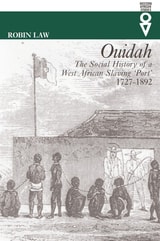
Ouidah, an African town in the Republic of Benin, was the principal precolonial commercial center of its region and the second-most-important town of the Dahomey kingdom. It served as a major outlet for the transatlantic slave trade. Between the seventeenth and the nineteenth centuries, Ouidah was the most important embarkation point for slaves in the region of West Africa known to outsiders as the Slave Coast. This is the first detailed study of the town’s history and of its role in the Atlantic slave trade.
Ouidah is a well-documented case study of precolonial urbanism, of the evolution of a merchant community, and in particular of the growth of a group of private traders whose relations with the Dahomian monarchy grew increasingly problematic over time.
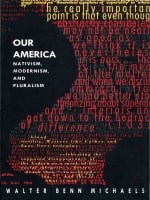
Our America
Nativism, Modernism, and PluralismWalter Benn Michaels
Duke University Press, 1997
“We have a great desire to be supremely American,” Calvin Coolidge wrote in 1924. That desire, Michaels tells us, is at the very heart of American modernism, giving form and substance to a cultural movement that would in turn redefine America’s cultural and collective identity—ultimately along racial lines. A provocative reinterpretation of American modernism, Our America also offers a new way of understanding current debates over the meaning of race, identity, multiculturalism, and pluralism.
Michaels contends that the aesthetic movement of modernism and the social movement of nativism came together in the 1920s in their commitment to resolve the meaning of identity—linguistic, national, cultural, and racial. Just as the Johnson Immigration Act of 1924, which excluded aliens, and the Indian Citizenship Act of the same year, which honored the truly native, reconceptualized national identity, so the major texts of American writers such as Cather, Faulkner, Hurston, and Williams reinvented identity as an object of pathos—something that can be lost or found, defended or betrayed. Our America is both a history and a critique of this invention, tracing its development from the white supremacism of the Progressive period through the cultural pluralism of the Twenties. Michaels’s sustained rereading of the texts of the period—the canonical, the popular, and the less familiar—exposes recurring concerns such as the reconception of the image of the Indian as a symbol of racial purity and national origins, the relation between World War I and race, contradictory appeals to the family as a model for the nation, and anxieties about reproduction that subliminally tie whiteness and national identity to incest, sterility, and impotence.
Our Americas
Political and Cultural Imaginings, Volume 2004Sandhya Shukla and Heidi Tinsman, eds.
Duke University Press, 0
This special issue of Radical History Review takes as its inspiration Cuban writer and revolutionary José Martí’s famous 1891 essay “Our America.” Focusing on Martí’s appropriation of the term “America”—used to refer to a transnational, regional project of solidarity in Latin America and to suggest a new epistemology that challenged the ideologies underpinning U.S. imperialism—Our Americas: Political and Cultural Imaginings investigates the highly contested concept of “the Americas” as it has been defined and deployed in differing strategic and politically informed ways across history. The issue is dedicated to probing the transnational political and social possibilities that emerge when the discursive boundaries established by fields such as “Latin American studies” and “American studies”—as well as the geopolitical boundaries drawn during the colonial era—are expanded or transgressed.
Drawing on history, cultural anthropology, literary criticism, and memoirs, the works in this collection, gathered from contributors from an array of geographic locales, seek to integrate “Latin America,” “North America,” “the Caribbean,” and other regions. Striving to move beyond a simple joining of “Latin America” and the United States, the transnational concept of “the Americas” is explored and complicated through essays that examine the contrasting visions of Latin American independence embodied in the writings of revolutionaries from different nations; discuss the ramifications of a political treaty that institutionalized a separation between Mexico and the United States; deconstruct the exclusionary discourses of U.S. nationalism; and expose the ways in which institutionalized racism and homophobia are roadblocks to social and political solidarity in Latin America. In discussion forums, contributors plumb the history and current relevance of the concept of “Latin America” for intellectual, social, and political work and address the unique challenges facing those who seek to teach “the Americas.”
Contributors. Arturo Arias, John Beck, John D. Blanco, Nestor Garcia Canclini, Patricio Del Real, Ian Christopher Fletcher, Paul Giles, Salah D. Hassan, Martin Hopenhayn, Aisha Khan, R. J. Lambrose, Ian Lekus, Kate Masur, Enrique C. Ochoa, Diana Paton, Rossana Reguillo, Gemma Robinson, Aimee Carillo Rowe, Maria Josefina Saldana-Portillo, Sandhya Shukla, Heidi Tinsman, Carlos E. Bojorquez Urzaiz
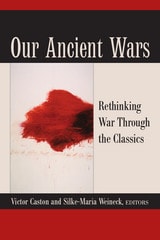
Our Ancient Wars
Rethinking War through the ClassicsVictor Caston and Silke-Maria Weineck, editors
University of Michigan Press, 2016
Our Ancient Wars features essays by top scholars from across academic disciplines—classicists and historians, philosophers and political theorists, literary scholars, some with firsthand experience of war and some without—engaging with classical texts to understand how differently they were read in other times and places. Contributors articulate difficult but necessary questions about contemporary conceptions of war and conflict.
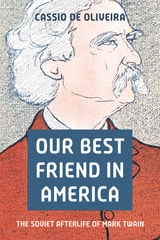
Our Best Friend in America
The Soviet Afterlife of Mark TwainCassio de Oliveira
University of Wisconsin Press, 2027
In 1960, the popular Soviet magazine Krokodil dubbed Mark Twain the USSR’s “American Friend No. 1.” This surprised neither the Kremlin nor the magazine’s readers: Twain and especially his Mississippi novels, The Adventures of Tom Sawyer and The Adventures of Huckleberry Finn, were favorites throughout the Soviet period, with the first translations dating to before the Bolshevik Revolution and film adaptations continuing to appear into the 1980s. Cassio de Oliveira explores why and how such a decidedly American writer came to occupy pride of place in a nation so emphatically opposed to American culture. How exactly did Twain become the Soviet Union’s “best friend in America”? How did that friendship change, and what did it signify, throughout the long and fickle decades of Soviet cultural policy and the Cold War?
What emerges from this complex history is not just the story of a single author’s foreign fortunes but also the history of Soviet literature as well as Soviet–American cultural interactions, which are revealed to have been more multifaceted and variable than might be assumed. Twain’s reception in the USSR also speaks to the largely hidden history of world literature in translation, even during decades of fraught geopolitical confrontation.
Our Blood
The Social Experience of HeritasMichael M. Bell, Loka Ashwood and Jay Orne
University of Chicago Press, 2026
From whom do I come? Our Blood describes the central importance of our sense not just of our heritage, but our embodied heritage: that our past is in our bodies and runs in our blood, and that our embodied past is central to our futures. Deeply felt heritas, as Michael M. Bell, Loka Ashwood, and Jay Orne call it, can be a source of great love and kindness for one another. But it can also be a beautiful horror, the source of some of our greatest hate and meanness towards one another. We think of our embodied heritage as natural and historical facts, beyond our choice, and therefore free of manipulation for social gain. We think of it as spirited presences in our bodies that we did not choose. We think of its origins as external to us, whether we are talking about family, class, caste, places, things, ethnoraciality, or our professions. We think of it as legitimate and rightful, therefore. But we do choose. We do select. Bell, Ashwood, and Orne argue that greater awareness of heritas’s social origins and social selectivity can help us cultivate a wider sense of mutual care and ease the divisiveness of our time. Ultimately, Our Blood asks us all to consider heritas, and in doing so, to perhaps even reconsider our very selves.
Our Caribbean Kin
Race and Nation in the Neoliberal AntillesReyes-Santos, Alaí
Rutgers University Press, 2015
Our Caribbean Kin considers three key moments in the region’s history: the nineteenth century, when the antillanismo movement sought to throw off the yoke of colonial occupation; the 1930s, at the height of the region’s struggles with US imperialism; and the past thirty years, as neoliberal economic and social policies have encroached upon the islands. At each moment, the book demonstrates, specific tropes of brotherhood, marriage, and lineage have been mobilized to construct political kinship among Antilleans, while racist and xenophobic discourses have made it difficult for them to imagine themselves as part of one big family.
Our Common Country
Mutual Good Will in AmericaWarren G. Harding, Edited by Warren G. Harding, III, & Intro by Robert H. Ferrell
University of Missouri Press, 2003
Our Elders Teach Us
Maya-Kaqchikel Historical PerspectivesDavid Anthony Carey, Jr. with a preface by Allan Burns
University of Alabama Press, 2001
Where Maya voices reclaim their history and reshape our understanding of the past.
Combining the methodologies of anthropology and history, Carey uses both oral interviews and meticulous archival research to construct a history of the last 130 years in Guatemala from the perspective of present-day Mayan people. His research took place over five years, including intensive language study, four summers of fieldwork, and a year-long residence in Comalapa, during which he conducted most of the 414 interviews. By casting a wide net for his interviews—from tiny hamlets to bustling Guatemala City—Carey gained insight into more than a single community or a single group of Maya.
The Maya-Kaqchikel record their history through oral tradition; thus, few written accounts exist. Comparing the Kaqchikel point of view to that of the western scholars and Ladinos who have written most of the history texts, Carey reveals the people and events important to the Maya, which have been virtually written out of the national history.
A motto of the Guatemalan organization Maya Decinio para el Pueblo Indigena (Maya Decade for the Indigenous People) is that people who do not know their past cannot build a future. By elucidating what the Kaqchikel think of their own past, Carey also illuminates the value of non-Western theoretical and methodological approaches that can be applied to the history of other peoples. Valuable to historians, anthropologists, archaeologists, or anyone interested in Mayan and Latin American studies, this book will inform as well as enchant.
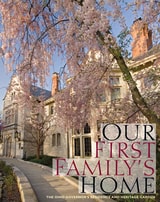
Our First Family’s Home
The Ohio Governor’s Residence and Heritage GardenMary Alice Mairose
Ohio University Press, 2008
This richly illustrated volume tells the story of thehome that has served as Ohio’s executive residence since 1957, and of the nine governors and their families who have lived in the house. Our First Family’s Home offers the first complete history of the residence and garden that represent Ohio to visiting dignitaries and the citizens of the state alike. Once in a state of decline, the house has been lovingly restored and improved by itsresidents. Development of the Ohio Heritage Garden has increased the educational potential of the house and has sparked an interest in the preservation of native plant species. Looking toward the future, the Residence is also taking the lead in promoting environmental issues such as solar powerand green energy.
Photographs by award-winning environmental photographer Ian Adams and botanical art by Dianne McElwain showcase the beauty of the home’s architecture and the myriad of native plants that grace the three acres on which the Residence stands. Dianne McElwain is a member of the American Society of Botanical Artists in New York. Her botanical paintings have won numerous awards and are found in prestigious collections throughout the United States.
Essays highlight the Jacobethan Revival architecture and the history of the home. The remaining pieces cover the garden and include an intimate tour of the Heritage Garden, which was inspired by Ohio’s diverse landscape. Finally, former Governor Ted Strickland and First Lady Frances Strickland discuss the increasing focus on green energy at the Governor’s Residence and First Lady Emerita Hope Taft explains how native plants can help sustain the environment.
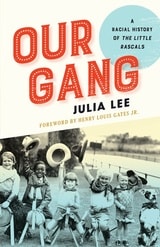
Our Gang
A Racial History of The Little RascalsJulia Lee
University of Minnesota Press, 2015
It was the age of Jim Crow, riddled with racial violence and unrest. But in the world of Our Gang, black and white children happily played and made mischief together. They even had their own black and white version of the KKK, the Cluck Cluck Klams—and the public loved it.
The story of race and Our Gang, or The Little Rascals, is rife with the contradictions and aspirations of the sharply conflicted, changing American society that was its theater. Exposing these connections for the first time, Julia Lee shows us how much this series, from the first silent shorts in 1922 to its television revival in the 1950s, reveals about black and white American culture—on either side of the silver screen. Behind the scenes, we find unconventional men like Hal Roach and his gag writers, whose Rascals tapped into powerful American myths about race and childhood. We meet the four black stars of the series—Ernie “Sunshine Sammy” Morrison, Allen “Farina” Hoskins, Matthew “Stymie” Beard, and Billie “Buckwheat” Thomas—the gang within the Gang, whose personal histories Lee pursues through the passing years and shifting political landscape.
In their checkered lives, and in the tumultuous life of the series, we discover an unexplored story of America, the messy, multiracial nation that found in Our Gang a comic avatar, a slapstick version of democracy itself.
Our Grief Is Not a Cry for War
The Movement to Stop the War on TerrorJeremy Varon
University of Chicago Press, 2025
Just after 9/11, President George W. Bush climbed the rubble where the World Trade Center had stood. Surrounded by shouts of anger, he said, “The people who knocked these buildings down will hear all of us soon!” With these words, Bush ushered in the War on Terror. Quickly, a global protest movement mobilized against it, reshaping the political, moral, and media landscape.
Jeremy Varon’s Our Grief Is Not a Cry for War is the definitive history of that movement. Millions of Americans participated in thousands of acts of protest, from demonstrations to civil disobedience to peace encampments in Iraq. On February 15, 2003, up to 30 million people worldwide took to the streets in the largest protest in human history. But this enormous outcry was not enough to stop the US invasion of Iraq. Varon explores the limits to the movement’s power but also shows how it worked to make opposition to the Iraq War a part of public debate, hastening its end and limiting the broader War on Terror. In the book, you’ll meet the families of the 9/11 victims, Iraq War veterans, and Gold Star families who spoke out against war.
Written with a lively and revelatory voice, Our Grief Is Not a Cry for War illuminates the passion of the peace movement, the mark it made, and the enduring legacies of the War on Terror.
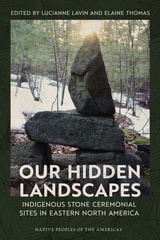
Our Hidden Landscapes
Indigenous Stone Ceremonial Sites in Eastern North AmericaLucianne Lavin
University of Arizona Press, 2023
This volume introduces readers to eastern North America’s Indigenous ceremonial stone landscapes (CSLs)—sacred sites whose principal identifying characteristics are built stone structures that cluster within specific physical landscapes. Our Hidden Landscapes presents these often unrecognized sites as significant cultural landscapes in need of protection and preservation.
In this book, Native American authors provide perspectives on the cultural meaning and significance of CSLs and their characteristics, while professional archaeologists and anthropologists provide a variety of approaches for better understanding, protecting, and preserving them. The chapters present overwhelming evidence in the form of oral tradition, historic documentation, ethnographies, and archaeological research that these important sites created and used by Indigenous peoples are deserving of protection.
This work enables archaeologists, historians, conservationists, foresters, and members of the general public to recognize these important ritual sites.
Contributors
Nohham Rolf Cachat-Schilling
Robert DeFosses
James Gage
Mary Gage
Doug Harris
Julia A. King
Lucianne Lavin
Johannes (Jannie) H. N. Loubser
Frederick W. Martin
Norman Muller
Charity Moore Norton
Paul A. Robinson
Laurie W. Rush
Scott M. Strickland
Elaine Thomas
Kathleen Patricia Thrane
Matthew Victor Weiss
Our History, Their History, Whose History?
Romila Thapar
Seagull Books, 2023
In this timely book, historian Romila Thapar delves into the complex world of nationalism and its impact on the interpretations of the past and on the discipline of history itself. History, she expounds, is no mere collection of information and chronology, and its purpose extends well beyond storytelling.
Recognizing nationalism as a powerful force that gives rise to various narratives that provide ancestry to communities and shape the direction of societies, Thapar explores how, in India, two conflicting notions of nationalism have evolved and shaped the idea of the nation. Today, one such nationalistic theory claims the victimization of one religious community by another through centuries of “misrule.” Such a claim willfully ignores ample evidence to the contrary to suit a particular political and ideological purpose. Thapar counters such attempts at misrepresentation by citing several historical instances of the nuanced interface and intermingling of cultures, as well as by showing how today’s conflicts have their roots in the British colonial construction of India’s history. She also addresses the recent controversy surrounding the deletions of sections of Indian history textbooks published by NCERT, the Indian educational council, and suggests that the intention is more likely to be the promotion of a particular reading of history that conforms to the ideology of those in power.
Engaging and thought-provoking, Our History, Their History, Whose History? invites readers to question the authenticity of historical narratives touted by one group of nationalists, and it explores the clash between professional historians who study the past to understand our inherited present and fabricators who wield history for political gain.
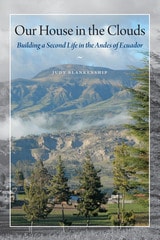
Our House in the Clouds
Building a Second Life in the Andes of EcuadorBy Judy Blankenship
University of Texas Press, 2013
While many baby boomers are downsizing to a simpler retirement lifestyle, photographer and writer Judy Blankenship and her husband Michael Jenkins took a more challenging leap in deciding to build a house on the side of a mountain in southern Ecuador. They now live half the year in Cañar, an indigenous community they came to know in the early nineties when Blankenship taught photography there. They are the only extranjeros (outsiders) in this homely, chilly town at 10,100 feet, where every afternoon a spectacular mass of clouds rolls up from the river valley below and envelopes the town.
In this absorbing memoir, Blankenship tells the interwoven stories of building their house in the clouds and strengthening their ties to the community. Although she and Michael had spent considerable time in Cañar before deciding to move there, they still had much to learn about local customs as they navigated the process of building a house with traditional materials using a local architect and craftspeople. Likewise, fulfilling their obligations as neighbors in a community based on reciprocity presented its own challenges and rewards. Blankenship writes vividly of the rituals of births, baptisms, marriages, festival days, and deaths that counterpoint her and Michael’s solitary pursuits of reading, writing, listening to opera, playing chess, and cooking. Their story will appeal to anyone contemplating a second life, as well as those seeking a deeper understanding of daily life in the developing world.
Our Joyce
From Outcast to IconBy Joseph Kelly
University of Texas Press, 1997
James Joyce began his literary career as an Irishman writing to protest the deplorable conditions of his native country. Today, he is an icon in a field known as "Joyce studies." Our Joyce explores this amazing transformation of a literary reputation, offering a frank look into how and for whose benefit literary reputations are constructed.
Joseph Kelly looks at five defining moments in Joyce's reputation. Before 1914, when Joyce was most in control of his own reputation, he considered himself an Irish writer speaking to the Dublin middle classes. When T. S. Eliot and Ezra Pound began promoting Joyce in 1914, however, they initiated a cult of genius that transformed Joyce into a prototype of the "egoist," a writer talking only to other writers.
This view served the purposes of Morris Ernst in the 1930s, when he defended Ulysses against obscenity charges by arguing that geniuses were incapable of obscenity and that they wrote only for elite readers. That view of Joyce solidified in Richard Ellmann's award-winning 1950s biography, which portrayed Joyce as a self-centered genius who cared little for his readers and less for the world at war around him. The biography, in turn, led to Joyce's canonization by the academy, where a "Joyce industry" now flourishes within English departments.
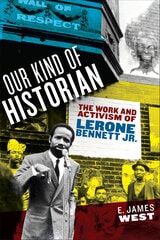
Our Kind of Historian
The Work and Activism of Lerone Bennett Jr.E. James West
University of Massachusetts Press, 2022
Journalist, activist, popular historian, and public intellectual, Lerone Bennett Jr. left an indelible mark on twentieth-century American history and culture. Rooted in his role as senior editor of Ebony magazine, but stretching far beyond the boundaries of the Johnson Publishing headquarters in Chicago, Bennett’s work and activism positioned him as a prominent advocate for Black America and a scholar whose writing reached an unparalleled number of African American readers.
This critical biography—the first in-depth study of Bennett’s life—travels with him from his childhood experiences in Jim Crow Mississippi and his time at Morehouse College in Atlanta to his later participation in a dizzying range of Black intellectual and activist endeavors. Drawing extensively on Bennett’s previously inaccessible archival collections at Emory University and Chicago State, as well as interviews with close relatives, colleagues, and confidantes, Our Kind of Historian celebrates his enormous influence within and unique connection to African American communities across more than half a century of struggle.
Our Lady Of Victorian Feminism
The Madonna in the Work of Anna Jameson, Margaret Fuller, and George EliotKimberly VanEsveld Adams
Ohio University Press, 2000
Our Lady of Victorian Feminism is about three nineteenth-century women, Protestants by background and feminists by conviction, who are curiously and crucially linked by their extensive use of the Madonna in arguments designed to empower women.
In the field of Victorian studies, few scholars have looked beyond the customary identification of the Christian Madonna with the Victorian feminine ideal—the domestic Madonna or the Angel in the House. Kimberly VanEsveld Adams shows, however, that these three Victorian writers made extensive use of the Madonna in feminist arguments. They were able to see this figure in new ways, freely appropriating the images of independent, powerful, and wise Virgin Mothers.
In addition to contributions in the fields of literary criticism, art history, and religious studies, Our Lady of Victorian Feminism places a needed emphasis on the connections between the intellectuals and the activists of the nineteenth-century women's movement. It also draws attention to an often neglected strain of feminist thought, essentialist feminism, which proclaimed sexual equality as well as difference, enabling the three writers to make one of their most radical arguments, that women and men are made in the image of the Virgin Mother and the Son, the two faces of the divine.
Our Lady of Guadalupe
The Origins and Sources of a Mexican National Symbol, 1531–1797Stafford Poole
University of Arizona Press, 1995
Our Lady of Guadalupe
The Origins and Sources of a Mexican National Symbol, 1531–1797Stafford Poole
University of Arizona Press, 2017
Our Latest Longest War
Losing Hearts and Minds in AfghanistanEdited by Aaron B. O'Connell
University of Chicago Press, 2017
America’s goals in Afghanistan were lofty to begin with: dismantle al Qaeda, remove the Taliban from power, remake the country into a democracy. But not only did the mission come completely unmoored from reality, the United States wasted billions of dollars, and thousands of lives were lost. Our Latest Longest War is a chronicle of how, why, and in what ways the war in Afghanistan failed. Edited by historian and Marine lieutenant colonel Aaron B. O’Connell, the essays collected here represent nine different perspectives on the war—all from veterans of the conflict, both American and Afghan. Together, they paint a picture of a war in which problems of culture and an unbridgeable rural-urban divide derailed nearly every field of endeavor. The authors also draw troubling parallels to the Vietnam War, arguing that deep-running ideological currents in American life explain why the US government has repeatedly used armed nation-building to try to transform failing states into modern, liberal democracies. In Afghanistan, as in Vietnam, this created a dramatic mismatch of means and ends that neither money, technology, nor the force of arms could overcome.
The war in Afghanistan has been the longest in US history, and in many ways, the most confounding. Few who fought in it think it has been worthwhile. These are difficult topics for any American or Afghan to consider, especially those who lost friends or family in it. This sobering history—written by the very people who have been fighting the war—is impossible to ignore.
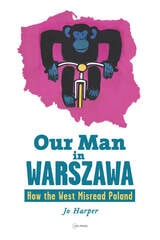
Our Man in Warszawa
How the West Misread PolandJo Harper
Central European University Press, 2021
Written by a Brit who has lived in Poland for more than twenty years, this book challenges some accepted thinking in the West about Poland and about the rise of Law and Justice (PiS) as the ruling party in 2015. It is a remarkable account of the Polish post-1989 transition and contemporary politics, combining personal views and experience with careful fact and material collections. The result is a vivid description of the events and scrupulous explanations of the political processes, and all this with an interesting twist – a perspective of a foreigner and insider at the same time. Settled in the position of participant observer, Jo Harper combines the methods of macro and micro analysis with CDA, critical discourse analysis. He presents and interprets the constituent elements and issues of contemporary Poland: the main political forces, the Church, the media, issues of gender, the Russian connection, the much-disputed judicial reform and many others.
A special feature of the book is the detailed examination of the coverage of the Poland’s latest two elections, one in 2019 (parliamentary) and the other in 2020 (presidential) in the British media, an insightful and witty specimen of comparative cultural and political analysis.

Our Moonlight Revels
"A Midsummer Night's Dream" in the TheatreGary Jay Williams
University of Iowa Press, 1997
Many ingenious theatrical worlds have been created for the fairy world of A Midsummer Night's Dream, from the baroque to the postmodern. This is the quintessential play for understanding the ways in which scenery, costumes, music, lighting, and playing spaces affect our experience of Shakespeare. A Midsummer Night's Dream also proves to be extraordinarily responsive to the cultural winds of each era, easily circulating a variety of sometimes competing social interests.
In his richly detailed, beautifully illustrated history of Shakespeare's most popular play—the first comprehensive study of A Midsummer Night's Dream in the theatre—Gary Jay Williams covers four hundred years of landmark productions in Europe, the United States, and Canada as well as important opera, dance, and film adaptations. Williams shows how the visual and musical vocabularies of production can be read as cultural texts and how these meditative texts determine this play's available meanings from generation to generation. His account, then, is the story of our imaginative and astonishing uses of Shakespeare's play.
Many famous theatre artists have been drawn to this play, and many of their productions have been turning points in theatre history. Williams offers detailed theatrical and cultural analyses of the productions of David Garrick, Ludwig Tieck, Elizabeth Vestris, Charles Kean, Harley Granville-Barker, Sir Herbert Beerbohm Tree, Max Reinhardt, Peter Brook, Liviu Ciulei, and other artists. His engaging, intelligent study will be invaluable to scholars and teachers of Shakespeare and theatre history and to professional directors, designers, critics, and actors.
•The Wedding-play Myth and the Dream in Full Play•Shakespeare Absolute: Fairies, Gods, and Oranges in Purcell's Fairy Queen
•“Signor Shakespearelli”
•The Scenic Language of Empire
•These Antique Fables . . . These Fairy Toys”
•The National and Natural Dream
•The Dream of Modernism: The “New Hieroglyphic Language of Scenery” and the Theology of the Text
•The Dream of Modernism: The Sacred and the Secular
•Postmodernism: “The Fierce Vexation of a Dream”

Our National Park System
Caring for America's Greatest Natural and Historic TreasuresDwight F. Rettie
University of Illinois Press, 1995
Rettie agrees, as many critics have claimed, that the system is in disarray; he proposes in detail stronger management operations, clearer and more stringent measures of personnel performance, and training of park rangers to help them become professionals knowledgeable about the scientific management and protection of resources.
For a concerned public as well as for policy-makers and students of government, this comprehensive analysis and outline may provide hope--and a future--for the invaluable legacy that is our national park system.
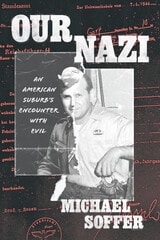
Our Nazi
An American Suburb’s Encounter with EvilMichael Soffer
University of Chicago Press, 2024
Reinhold Kulle seemed like the perfect school employee. But in 1982, as his retirement neared, his long-concealed secret came to light. The chief custodian at Oak Park and River Forest High School outside Chicago had been a Nazi, a member of the SS, and a guard at a brutal slave labor camp during World War II.
Similar revelations stunned communities across the country. Hundreds of Reinhold Kulles were gradually discovered: men who had patrolled concentration camps, selected Jews for execution, and participated in mass shootings—and who were now living ordinary suburban lives. As the Office of Special Investigations raced to uncover Hitler’s men in the United States, neighbors had to reconcile horrific accusations with the helpful, kind, and soft-spoken neighbors they thought they knew. Though Nazis loomed in the American consciousness as evil epitomized, in Oak Park—a Chicago suburb renowned for its liberalism—people rose to defend Reinhold Kulle, a war criminal.
Drawing on archival research and insider interviews, Oak Park and River Forest High School teacher Michael Soffer digs into his community’s tumultuous response to the Kulle affair. He explores the uncomfortable truths of how and why onetime Nazis found allies in American communities after their gruesome pasts were uncovered.
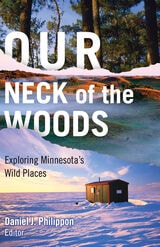
Our Neck of the Woods
Exploring Minnesota's Wild PlacesDaniel J. Philippon
University of Minnesota Press, 2009
What are the odds of finding Minnesota's tiniest orchid? Why take a Breathalyzer test to study frogs? How does ice fishing warm the heart? Who would live in such a cold, lean region? Our Neck of the Woods takes on these and other urgent (and sometimes quirky) questions, showcasing writers' own experiences in the best-loved places in Minnesota, including the North Shore, Lake Bemidji, the western prairies and grasslands, the Boundary Waters, and the Mesabi Iron Range.
The outdoor experiences described here range from sweeping natural history observations to adventurous tales of coming-of-age camping and hunting trips. We follow notable writers and conservationists Sigurd F. Olson, Paul Gruchow, Bill Holm, Jan Zita Grover, Greg Breining, Laurie Allmann, and many others as they descend a frozen river toward Lake Superior, explore a crystalline palace at minus 20 degrees, and trace a family's history along the Mississippi River. Writing on such themes as embracing winter, making camp, and finding wildness even amid development, these authors tell of hunting, fishing, birding, canoeing, and other great outdoor activities that help define what it means to be Minnesotan.
Drawn from the pages of Minnesota Conservation Volunteer magazine-published by the Department of Natural Resources since 1940-these writings evoke a strong sense of place and suggest that the outdoor experiences we share with others come to mean the most to us. With rich observations and spirited tales, Our Neck of the Woods beckons Minnesotans to work, play, and explore in the natural places close to their homes and hearts.
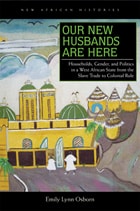
Our New Husbands Are Here
Households, Gender, and Politics in a West African State from the Slave Trade to Colonial RuleEmily Lynn Osborn
Ohio University Press, 2011
In Our New Husbands Are Here, Emily Lynn Osborn investigates a central puzzle of power and politics in West African history: Why do women figure frequently in the political narratives of the precolonial period, and then vanish altogether with colonization? Osborn addresses this question by exploring the relationship of the household to the state. By analyzing the history of statecraft in the interior savannas of West Africa (in present-day Guinea-Conakry), Osborn shows that the household, and women within it, played a critical role in the pacifist Islamic state of Kankan-Baté, enabling it to endure the predations of the transatlantic slave trade and become a major trading center in the nineteenth century. But French colonization introduced a radical new method of statecraft to the region, one that separated the household from the state and depoliticized women’s domestic roles. This book will be of interest to scholars of politics, gender, the household, slavery, and Islam in African history.
Our Oldest Task
Making Sense of Our Place in NatureEric T. Freyfogle
University of Chicago Press, 2017
Passionate and pragmatic, extraordinarily well read and eloquent, Freyfogle details a host of forces that have produced our self-defeating ethos of human exceptionalism. It is this outlook, he argues, not a lack of scientific knowledge or inadequate technology, that is the primary cause of our ecological predicament. Seeking to comprehend both the multifaceted complexity of contemporary environmental problems and the zeitgeist as it unfolds, Freyfogle explores such diverse topics as morality, the nature of reality (and the reality of nature), animal welfare, social justice movements, and market politics. The result is a learned and inspiring rallying cry to achieve balance, a call to use our knowledge to more accurately identify the dividing line between living in and on the world and destruction. “To use nature,” Freyfogle writes, “but not to abuse it.”
Our Own Sweet Sounds
A Celebration of Popular Music in ArkansasRobert Cochran
University of Arkansas Press, 2005
Our Own Way in This Part of the World
Biography of an African Community, Culture, and NationKwasi Konadu
Duke University Press, 2019
Our People, Our Journey
The Little River Band of Ottawa IndiansJames M. McClurken
Michigan State University Press, 2009
Our People, Our Journey is a landmark history of the Little River Band of Ottawa Indians, a Michigan tribe that has survived to the present day despite the expansionist and assimilationist policies that nearly robbed it of an identity in the late nineteenth century.
In his thoroughly researched chronicle, McClurken documents in words and images every major lineage and family of the Little River Ottawas. He describes the Band's struggles to find land to call its own over several centuries, including the hardships that began with European exploration of what is now the upper Midwest. Although the Little River Ottawas were successful at integrating their economic and cultural practices with those of Europeans, they were forced to cede land in the face of American settlements.
McClurken explains how the Little River Band was forced, in 1858, onto a reservation on the Pere Marquette and Manistee Rivers where they settled with a number of other Ottawa bands. However, the very treaty intended to provide the Grand River Ottawas with a permanent reservation "homeland" eventually allowed non-Indians to acquire title to nearly two-thirds of the land within the reservation by 1880.
Our Planetary Mirror
Earth Science and the Reimagining of HumanityBoris Shoshitaishvili
University of Chicago Press, 2026
A philosophical analysis of three scientific visions of humanity: the noosphere, the Anthropocene, and Gaia theory.
How can we explain humanity’s unique relationship to the Earth? In Our Planetary Mirror, cultural theorist Boris Shoshitaishvili considers the three major forms of thought Earth scientists have posited in recent years: the noosphere (humans as a layer of thought and culture covering the Earth), the Anthropocene (humans as a geological force), and Gaia theory (humans as part of a superorganism comprising life on Earth).
To explore how these concepts extend beyond contemporary science, Shoshitaishvili traces the metaphors at the heart of each framework through their ancient predecessors, including Babylonian myth, Greek philosophy, Aztec metaphysics, and medieval European theology. Using this approach, Shoshitaishvili develops fresh responses to pressing global issues such as geoengineering, artificial intelligence, and the balance between cosmopolitanism and a world of intensified nationalism.
Our Politics
Reflections on Political LifeDouglas Kane, with a foreword by Mike Lawrence
Southern Illinois University Press, 2019
In Our Politics Kane reflects on his nearly fifty years of active engagement in state and local politics. In a series of essays, he seeks to understand the forces, motivations, incentives and technologies that shape our politics and produce the consequences that we live with every day. He describes how candidates and officeholders deal with the fundamental contradictions inherent in the democratic process, and how and why the political power structure has changed. He also explores the personal experience of being a legislator, from deciding how to vote to building relationships with party leaders, fellow legislators, the governor, and the voters in the district. Kane concludes by considering the possibility of change, how it might happen, and the steps that candidates, political parties, activists and others might take to better our politics with results more to our liking.
While many journalists record politics from the outside, and numerous political memoirs focus on personalities and what happened to whom and when, this book gives an insider’s view of politics at the level of state government. This book is not about those politicians but about our politics, which together we have created and together we must deal with.

Our Precious Corn
YukwanénsteRebecca M. Webster
Michigan State University Press, 2023
Our Primary Expertise
A Future for the Study of ReligionRussell T. McCutcheon
Rutgers University Press, 2026
Our Science, Ourselves
How Gender, Race, and Social Movements Shaped the Study of ScienceChrista Kuljian
University of Massachusetts Press, 2024
When Christa Kuljian arrived on the Harvard College campus as a first-year student in the fall of 1980 with copies of Our Bodies, Ourselves and Ms. magazine, she was concerned that the women’s movement had peaked in the previous decade. She soon learned, however, that there was a long way to go in terms of achieving equality for women and that social movements would continue to be a critical force in society. She began researching the history of science and gender biases in science, and how they intersect with race, class, and sexuality.
In Our Science, Ourselves, Kuljian tells the origin story of feminist science studies by focusing on the life histories of six key figures—Ruth Hubbard, Rita Arditti, Evelyn Fox Keller, Evelynn Hammonds, Anne Fausto-Sterling, and Banu Subramaniam. These women were part of a trailblazing network of female scientists in the 1970s, 80s, and 90s who were drawn to the Boston area—to Harvard, MIT, and other universities—to study science, to network with other scientists, or to take a job. Inspired by the social and political activism of the women’s movement and organizations such as Science for the People, the Genes and Gender Collective, and the Combahee River Collective, they began to write and teach about women in science, gender and science, and sexist and racist bias and exclusion. They would lead the critiques of E. O. Wilson’s sociobiology in 1975 and Larry Summers’ comments about women in science thirty years later. The book also explores how these contributions differed from those of Nancy Hopkins’, author of the 1999 MIT report on women in science, and a “reluctant feminist.”
Drawing on a rich array of sources that combines published journal articles and books with archival materials and interviews with major luminaries of feminist science studies, Kuljian chronicles and celebrates the contributions that these women have made to our collective scientific knowledge and view of the world.
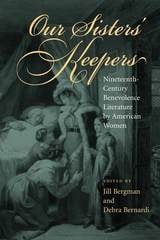
Our Sisters' Keepers
Nineteenth-Century Benevolence Literature by American WomenEdited by Jill Bergman and Debra Bernardi
University of Alabama Press, 2005
American culture has long had a conflicted relationship with assistance to the poor. Cotton Mather and John Winthrop were staunch proponents of Christian charity as fundamental to colonial American society, while transcendentalists harbored deep skepticism towards benevolence in favor of Emersonian self-reliance and Thoreau’s insistence on an ascetic life. Women in the 19th century, as these essays show, approached issues of benevolence far differently than their male counterparts, consistently promoting assistance to the impoverished, in both their acts and their writings.
Our Southern Zion
A History of Calvinism in the South Carolina Low Country, 1690-1990Erskine Clarke
University of Alabama Press, 1996
Three centuries of faith, intellect, and resilience—Calvinism’s quiet power in the Southern low country.
The South Carolina low country has long been regarded—not only in popular imagination and paperback novels but also by respected scholars—as a region dominated by what earlier historians called “a cavalier spirit” and by what later historians have simply described as “a wholehearted devotion to amusement and the neglect of religion and intellectual pursuits.” Such images of the low country have been powerful interpreters of the region because they have had some foundation in social and cultural realities. It is a thesis of this study, however, that there has been a strong Calvinist community in the Carolina low country since its establishment as a British colony and that this community (including in its membership both whites and after the 1740s significant numbers of African Americans) contradicts many of the images of the "received version" of the region. Rather than a devotion to amusement and a neglect of religion and intellectual interests, this community has been marked throughout most of its history by its disciplined religious life, its intellectual pursuits, and its work ethic.

Our Stories
Black Families in Early DallasGeorge Keaton Jr.
University of North Texas Press, 2022
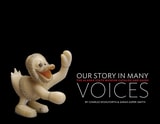
Our Story in Many Voices
The Alaska State Museum Catalog and GuideCharles Wohlforth
University of Alaska Press, 2025
Charles Wohlforth provides three major text sections—an introduction to Alaska, a summary of the museum exhibits, and a history of the exhibit development process—before the catalog of art and artifacts. Richly illustrated and presenting perspectives from Native and non-Native peoples, the book enhances visits to the museum and helps visitors recall and process their experiences, as well as broaden their general understanding of the state.
There is no single history of Alaska. Understanding the place and its peoples can be achieved only by viewing the multiple, complex, and even contradictory ways different people and groups perceive Alaska. Rather than present an official view of the state, Our Story in Many Voices contains independent and critical perspectives that use the extraordinary resources of the museum to consider Alaska’s most challenging cultural issues, reaching toward understanding and reconciliation.
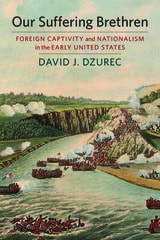
Our Suffering Brethren
Foreign Captivity and Nationalism in the Early United StatesDavid J. Dzurec III
University of Massachusetts Press, 2019
In October 1785, American statesman John Jay acknowledged that the more his countrymen “are treated ill abroad, the more we shall unite and consolidate at home.” Behind this simple statement lies a complicated history. From the British impressment of patriots during the Revolution to the capture of American sailors by Algerian corsairs and Barbary pirates at the dawn of the nineteenth century, stories of Americans imprisoned abroad helped jumpstart democratic debate as citizens acted on their newly unified identity to demand that their government strengthen efforts to free their fellow Americans. Deliberations about the country's vulnerabilities in the Atlantic world reveal America's commitment to protecting the legacy of the Revolution as well as growing political divisions.
Drawing on newspaper accounts, prisoner narratives, and government records, David J. Dzurec III explores how stories of American captivity in North America, Europe, and Africa played a critical role in the development of American political culture, adding a new layer to our understanding of foreign relations and domestic politics in the early American republic.

Our Way to Fight
Peace-Work Under Siege in Israel-PalestineMichael Riordon
Pluto Press, 2011
Michael Riordon takes us to thousand year-old olive groves, besieged villages, refugee camps, checkpoints and barracks. In the face of deepening conflict, Our Way to Fight offers courageous grassroots action on both sides of the wall, and points the way to a liveable future.