Results by title
4155 books match the query 'State & Local' and 94 start with o
One Day for Democracy
Independence Day and the Americanization of Iron Range ImmigrantsMary Lou Nemanic
Ohio University Press, 2007
One More Time
The Best of Mike RoykoMike Royko
University of Chicago Press, 1999
"A treasure trove lies between these covers. Royko was in a class by himself. He was a true original."—Ann Landers
"The joy of One More Time is Royko in his own words."—Mary Eileen O'Connell, New York Times Book Review
"Reading a collection of Royko's columns is even more of a pleasure than encountering them one by one, and that is a large remark for he rarely wrote a piece that failed to wake you up with his hard-earned moral wit. Three cheers for Royko!"—Norman Mailer
"Powerful, punchy, amazingly contemporary."—Neil A. Grauer, Cleveland Plain Dealer
"This crackling collection of his own favorite columns as well as those beloved by his fans reminds us just how much we miss the gruff, compassionate voice of Mike Royko."—Jane Sumner, Dallas Morning News
"A marvelous road map through four decades of America."—Elizabeth Taylor, Chicago Tribune Books
"Royko was an expert at finding universal truths in parochial situations, as well as in the larger issues—war and peace, justice and injustice, wealth and poverty—he examined. Think of One More Time as one man's pungent commentary on life in these United States over the last few decades."—Booklist
"Royko was one of the most respected and admired people in the business, by readers and colleagues alike. . . . Savor [his sketches] while you can."—Jonathan Yardley, Washington Post Book World
"Book collections of columns aren't presumed to be worth reading. This one is, whether or not you care about newspapering or Chicago."—Neil Morgan, San Diego Union-Tribune
"A treasure house for journalism students, for would-be writers, for students of writing styles, for people who just like to laugh at the absurdity of the human condition or, as Studs Terkel said, for those who will later seek to learn what it was really like in the 20th century."—Georgie Anne Geyer, Washington Times
"Full of astonishments, and the greatest of these is Royko's technical mastery as a writer."—Hendrik Hertzberg, New Yorker
"A great tribute to an American original, a contrarian blessed with a sense of irony and a way with words."—Bob Minzesheimer, USA Today
"In this posthumous collection of his columns, journalist Royko displays the breezy wit that made him so beloved in the Windy City."—People
One Shaker Life
Isaac Newton Youngs, 1793-1865Glendyne R. Wergland
University of Massachusetts Press, 2006
A member of the United Society of Believers, better known as the Shakers, Isaac Newton Youngs spent most of his life in New Lebanon, New York, home of the society's central Ministry. As both a private diarist and the official village scribe, he kept meticulous records throughout those years of both his own experience and that of the community. All told, more than four thousand pages of Brother Isaac's journals have survived, documenting the history of the Shakers during the period of their greatest success and providing a revealing view of the daily life of a rank-and-file Believer.
In this deeply researched biography, Glendyne R. Wergland draws on Youngs's writings to tell his story and to explore “the tension between desire and discipline” at the center of his life. She follows Youngs from childhood and adolescence to maturity, through years of demanding responsibility into his fatal decline. In each of these stages, he remained a talented and committed yet independent Shaker, one who chose to stay with the community but often struggled to abide by its stringent rules, including the vow of celibacy. Perhaps above all, he was a man who spent most of his waking hours working diligently at a succession of tasks, making clocks, sewing clothes, fixing roofs, writing poetry, chronicling his daily acts and thoughts.
In his journals, Brother Isaac writes at length of his efforts to control his lust as a young man, and he complains repeatedly about overwork as he grows older. He defines the rules of his community and identifies transgressors, while enciphering his critical entries (and those chronicling his own sexual desires) to avoid detection and uphold the demand for conformity. At times he admits doubt, but without ever relinquishing the belief that he is on the straight and narrow path to salvation. What emerges in the end is the complex portrait of an ordinary man striving to live up to the imperatives of his faith.

One Shot for Gold
Developing a Modern Mine in Northern CaliforniaEleanor Herz Swent
University of Nevada Press, 2021
An account of the creation of a modern, environmentally sensitive mine as told by the people who developed and worked it.
In 1978, a geologist working for the Homestake Mining Company discovered gold in a remote corner of California’s Napa County. This discovery led to the establishment of California’s most productive gold mine in the twentieth century. Named the McLaughlin Mine, it produced about 3.4 million ounces of gold between 1985 and 2002. The mine was also one of the first attempts at creating a new full-scale mine in California after the advent of environmental regulations and the first to use autoclaves to extract gold from ore.
One Shot for Gold traces the history of the McLaughlin Mine and how it transformed a community and an industry. This lively and detailed account is based largely on oral history interviews with a wide range of people associated with the mine, including Homestake executives, geologists, and engineers as well as local neighbors of the mine, officials from county governments, townspeople, and environmental activists. Their narratives— supported by thorough research into mining company documents, public records, newspaper accounts, and other materials—chronicle the mine from its very beginning to its eventual end and transformation into a designated nature reserve as part of the University of California Natural Reserve System.
A mine created at the end of the twentieth century was vastly different from the mines of the Gold Rush. New regulations and concerns about the environmental, economic, and social impacts of a large mine in this remote and largely rural region of the state-required decisions at many levels. One Shot for Gold offers an engaging and accessible account of a modern gold mine and how it managed to exist in balance with the environment and the human community around it.
One Small Farm
Photographs of a Wisconsin Way of LifeCraig Schreiner
Wisconsin Historical Society Press, 2013
“People’s lives are written on the fields of old farms. The rows of the fields are like lines on a page, blank and white in winter, filled in with each year’s story of happiness, disappointment, drought, rain, sun, scarcity, plenty. The chapters accumulate, and people enter and leave the narrative. Only the farm goes on.”—From the Introduction
In One Small Farm, Craig Schreiner’s evocative color photographs capture one family as they maintain the rhythms and routines of small farm life near Pine Bluff, Wisconsin. “Milk in the morning and milk at night. Feed the cows and calves. Plant crops. Grind feed. Chop and bale hay. Cut wood. Clean the barn. Spread manure on the fields. Plow snow and split wood in winter. In spring, pick rocks from the fields. Cultivate corn. Pick corn. Harvest oats and barley. Help calves be born. Milk in the morning and milk at night.”
There’s much more to life on the farm than just chores, of course, and Schreiner captures the rhythms and richness of everyday life on the farm in all seasons, evoking both the challenges and the joys and providing viewers a window into a world that is quickly fading. In documenting the Lamberty family’s daily work and life, these thoughtful photos explore larger questions concerning the future of small farm agriculture, Wisconsin cultural traditions, and the rural way of life.
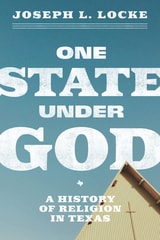
One State Under God
A History of Religion in TexasJoseph L. Locke
University of Texas Press, 2026
A broad and accessible history of religion in Texas, from prehistory to the present.
From sprawling megachurches to religious billboards and towering steel crosses, religion quite literally looms over Texas. Christian nationalism determines the state’s politics and, every school day, more than five million Texas children pledge allegiance to “one state under God.” But it wasn’t always this way.
In this wide-ranging chronicle, Joseph Locke uncovers the breadth of Texas’s religious history, from Indigenous painters of cosmological cave art and Spanish invaders who constructed missions to irreligious Anglo colonists, freethinking frontiersmen, Tejano folk saints, evangelical culture warriors, and Muslim immigrants. Locke traces the state’s religious transformations across the centuries, bringing them to life through his depiction of compelling figures, like enslaved preacher Anderson Edwards, fighting fundamentalist J. Frank Norris, and celebrated humanitarian Sister Norma Pimentel, and gripping moments, such as the murder of atheist newspaperman William Cowper Brann and the siege of the Branch Davidian compound in Waco. Comprehensive, fast-paced, and highly readable, One State Under God reveals how the Lone Star State’s spiritual path was blazed.
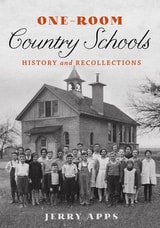
One-Room Country Schools
History and RecollectionsJerry Apps
Wisconsin Historical Society Press, 2015
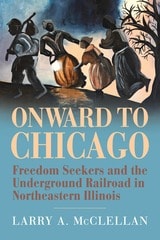
Onward to Chicago
Freedom Seekers and the Underground Railroad in Northeastern IllinoisLarry A. McClellan
Southern Illinois University Press, 2023
Uncovering stories of the freedom network in northeastern Illinois
Decades before the Civil War, Illinois’s status as a free state beckoned enslaved people, particularly those in Kentucky and Missouri, to cross porous river borders and travel toward new lives. While traditional histories of the Underground Railroad in Illinois start in 1839, and focus largely on the romanticized tales of white men, Larry A. McClellan reframes the story, not only introducing readers to earlier freedom seekers, but also illustrating that those who bravely aided them were Black and white, men and women. McClellan features dozens of individuals who made dangerous journeys to reach freedom as well as residents in Chicago and across northeastern Illinois who made a deliberate choice to break the law to help.
Onward to Chicago charts the evolution of the northeastern Illinois freedom network and shows how, despite its small Black community, Chicago emerged as a point of refuge. The 1848 completion of the I & M Canal and later the Chicago to Detroit train system created more opportunities for Black men, women, and children to escape slavery. From eluding authorities to confronting kidnapping bands working out of St. Louis and southern Illinois, these stories of valor are inherently personal. Through deep research into local sources, McClellan presents the engrossing, entwined journeys of freedom seekers and the activists in Chicagoland who supported them.
McClellan includes specific freedom seeker journey stories and introduces Black and white activists who provided aid in a range of communities along particular routes. This narrative highlights how significant biracial collaboration led to friendships as Black and white abolitionists worked together to provide support for freedom seekers traveling through the area and ultimately to combat slavery in the United States.
Opening Scripture
Bible Reading and Interpretive Authority in Puritan New EnglandLisa M. Gordis
University of Chicago Press, 2003
What role did the Bible really play in Puritan New England? Many have treated it as a blunt instrument used to cudgel dissenters into submission, but Lisa M. Gordis reveals instead that Puritan readings of the Bible showed great complexity and literary sophistication—so much complexity, in fact, that controversies over biblical interpretation threatened to tear Puritan society apart.
Drawing on Puritan preaching manuals and sermons as well as the texts of early religious controversies, Gordis argues that Puritan ministers did not expect to impose their views on their congregations. Instead they believed that interpretive consensus would emerge from the process of reading the Bible, with the Holy Spirit assisting readers to understand God's will. Treating the conflict over Roger Williams, the Antinomian Controversy, and the reluctant compromises of the Halfway Covenant as symptoms of a crisis that was as much literary as it was social or spiritual, Opening Scripture explores the profound consequences of Puritan negotiations over biblical interpretation for New England's literature and history.
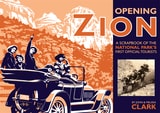
Opening Zion
A Scrapbook of the National Park's First Official TouristsJohn Clark
University of Utah Press, 2010
When Melissa Clark purchased a box of old scrapbooks online, she knew only that she had bought something relating to the University of Utah and Zion Park. What came in the mail was much more than she had expected. Instead of random mementos, two albums arrived full of photographs and newspaper clippings dating to 1920 that document a trip made by six young women from the University of Utah into the newly formed Zion National Park. Part of a promotional campaign developed by the Los Angeles and Salt Lake Railroad to advertise its national park shuttle service, the women entered Zion Canyon as its first offical tourists. When Melissa bought those timeworn scrapbooks she found a forgotten treasure: the opening of Zion.
With text by John Clark, the scrapbooks are now the basis of a one-of-a-kind publication. Part fashion spread, part adventure guide, and all Utah cultural treasure, Opening Zion is a stunning visual record of the park. Remarkably detailed black-and-white photographs show the young adventurers scrambling over rocky outcrops, pondering the dizzying height of Zion's sheer walls, and singing camp songs by the campfire. We are introduced anew to the "gigantic grandeur" of Zion National Park. As one of the women wrote, "One can think only beautiful thoughts amid such splendor."
Opening the Doors
The Desegregation of the University of Alabama and the Fight for Civil Rights in TuscaloosaB. J. Hollars
University of Alabama Press, 2013
Opening the Ozarks
A Historical Geography of Missouri's Ste. Genevieve District, 1760-1830Walter A. Schroeder
University of Missouri Press, 2002
The study begins with the French Creole settlement at Old Ste. Genevieve in the middle of the eighteenth century. It describes the movement of the French into the Ozark hills during the rest of that century and continues with that of the American immigrants into Upper Louisiana after 1796, ending with the Americanization of the district after the Louisiana Purchase. Walter Schroeder examines the cultural transition from a French society, operating under a Spanish administration, to an American society in which French, Indians, and Africans formed minorities.
Schroeder used thousands of French- and Spanish-language documents, including the Archives of the Indies in Seville, Spain, as well as documents from Ste. Genevieve and St. Louis to gather his information. He also utilized thousands of land records from the American period, including deeds of land sales and sales from the public domain, and plats from both the Spanish and American periods. In addition, Schroeder performed years of fieldwork and perused aerial photography of the area, interviewing residents and searching for vestiges of the past in the landscape.
As the only study to deal with the cradle of Missouri and the first trans-Mississippi expansion of the Anglo-American frontier, Opening the Ozarks will be invaluable to anyone interested in America’s geographical history, particularly that of Missouri.
Opera and its Voices in Utah
Walter Rudolph
Utah State University Press, 2018
The Arrington Lecture series, established by one of the twentieth-century West's most distinguished historians, Leonard Arrington, has become a leading forum for prominent historians to address topics related to Mormon history. Utah State University hosts the Leonard J. Arrington Mormon History Lecture Series through the Merrill-Cazier Library Special Collections and Archives department.
Opposing the Second Corps at Antietam
The Fight for the Confederate Left and Center on America's Bloodiest DayMarion V. Armstrong, Jr.
University of Alabama Press, 2016
A definitive guide to the Confederate army’s primary engagements at the epic Battle of Antietam
With a tally of more than five thousand killed, twenty thousand wounded, and three thousand missing, the Battle of Antietam made September 17, 1862, the deadliest day of combat in American history. In Opposing the Second Corps at Antietam, Antietam scholar Marion V. Armstrong Jr. completes his magisterial study of Antietam begun in Unfurl Those Colors! by examining Robert E. Lee’s leadership at the climactic battle in the Confederate invasion of Union territory.
Eminent Civil War historians consider Antietam the turning point of the war. Hoping to maintain the initiative they had gained at the Second Battle of Bull Run, Confederate leaders looked to a stunning victory on Northern soil to sour Northern sentiment on the war as well as to coax European powers to recognize the fledgling Confederacy. Having examined McClellan’s command and role at Antietam in Unfurl Those Colors!, Armstrong now recounts in riveting detail Lee’s command decisions and their execution in the field, drawing on a superlative collection of first-person accounts by Confederate veterans to narrate the cataclysmic struggle between Lee and McClellan.
Armstrong sets the stage with a lively recap of the political and military events leading up to the early fall of 1862 and foreshadowing the conflagration to come on September 17. Each chapter then traces a critical section of the battle, the fight for the West Woods and the bloody engagement of the Sunken Road. Armstrong augments this collection with an exceptional set of maps, which will be valued by scholars, readers, and visitors to the battlefield. These unique maps delineate troop movements in intervals as brief as fifteen minutes, bringing to life the fluid, mutable lines that characterize the glory and horror of Antietam.
Either together with Unfurl Those Colors! or as a stand-alone account of the Confederate side of the battle, Opposing the Second Corps at Antietam provides the fullest possible understanding of the experience of Confederate soldiers at Antietam.
Oral History, Community, and Work in the American West
Edited by Jessie L. Embry
University of Arizona Press, 2013
In many cases occupations brought people together in myriad ways. The Latino workers who picked lemons together in Southern California report that it was baseball and Cinco de Mayo Queen contests that united them. Mormons in Fort Collins, Colorado, say that building a church together bonded them together. In separate essays, African Americans and women describe how they fostered a sense of community in Las Vegas. Native Americans detail the “Indian economy” in Northern California.
As these essays demonstrate, the history of the American West is the story of small towns and big cities, places both isolated and heavily populated. It includes groups whose history has often been neglected. Sometimes, western history has mirrored the history of the nation; at other times, it has diverged in unique ways. Oral history adds a dimension that has often been missing in writing a comprehensive history of the West. Here an array of oral historians—including folklorists, librarians, and public historians—record what they have learned from people who have, in their own ways, made history.
Oregon Archaeology
Melvin C. Aikens
Oregon State University Press, 2011
Oregon Gold
A History of Mining from the Civil War into the Progressive EraWilliam F. Willingham
Oregon State University Press, 2025
Following the discovery of gold in 1862 at Auburn and Canyon City, new communities and prospects were established in eastern Oregon. Just as the lure of free land attracted homesteaders and livestock raisers in search of new opportunities, so did the possibility of finding wealth in gold and silver throughout the region. Based on exhaustive research and a wealth of sources—federal census and mining records, newspapers, mining periodicals, county land records, maps, and federal government reports—Oregon Gold offers a comprehensive study of mining in Oregon between 1862 and 1910. From carefully examining the eastern portion of the state to exploring the economic expansion and political development of Portland, William Willingham highlights what is unique about the Oregon gold mining experience and places Oregon’s precious metal mining in the context of mining throughout the American West.
Willingham shows how mining was an important aspect of the state’s history, far greater than has been traditionally understood. He provides special attention and analysis to the role Chinese miners played in the story of eastern Oregon mining and to the demographic makeups of two major mining communities, Susanville and Granite, that thrived during the period. The attention to detail and thorough reporting in Oregon Gold will captivate both scholars and general readers interested in western mining and Oregon history during the nineteenth century.
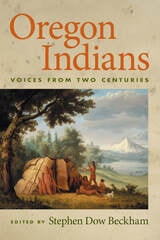
Oregon Indians
Voices from Two CenturiesStephen Dow Beckham
Oregon State University Press, 2006
In this deeply researched volume, Stephen Dow Beckham brings together commentary by Native Americans about the events affecting their lives in Oregon. Now available in paperback for the first time, this volume presents first-person accounts of events threatening, changing, and shaping the lives of Oregon Indians, from “first encounters” in the late eighteenth century to modern tribal economies.
The book's seven thematic sections are arranged chronologically and prefaced with introductory essays that provide the context of Indian relations with Euro-Americans and tightening federal policy. Each of the nearly seventy documents has a brief introduction that identifies the event and the speakers involved. Most of the book's selections are little known. Few have been previously published, including treaty council minutes, court and congressional testimonies, letters, and passages from travelers’ journals.
Oregon Indians opens with the arrival of Euro-Americans and their introduction of new technology, weapons, and diseases. The role of treaties, machinations of the Oregon volunteers, efforts of the US Army to protect the Indians but also subdue and confine them, and the emergence of reservation programs to “civilize” them are recorded in a variety of documents that illuminate nineteenth-century Indian experiences.
Twentieth-century documents include Tommy Thompson on the flooding of the Celilo Falls fishing grounds in 1942, as well as Indian voices challenging the "disastrous policy of termination," the state's prohibition on inter-racial marriage, and the final resting ground of Kennewick Man. Selections in the book's final section speak to the changing political atmosphere of the late twentieth century, and suggest that hope, rather than despair, became a possibility for Oregon tribes.
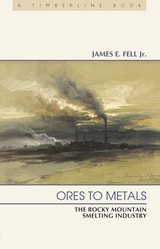
Ores to Metals
The Rocky Mountain Smelting IndustryJames E. Fell
University Press of Colorado, 2009
Although mining holds more of the glamour for those in and interested in the minerals industry, smelters have continuously played a critical role in the industry’s evolution since their introduction in Colorado in the 1860s. At that time, miners desperately needed new technology to recover gold and silver from ores resistant to milling. Beginning as small independent enterprises, progressing to larger integrated firms working in urban centers, and finally following a trend toward mergers, the entire industry was absorbed into one large holding company—the American Smelting and Refining Company. Over time, fortunes were won and lost, business success was converted to political success, and advances were made in science and metallurgy. Drawing on archival material, Fell expertly presents the triumphs and troubles of the entrepreneurs who built one of the great industries of the West.

Organizing Dixie
Alabama's Workers in the Industrial EraPhilip Taft
University of Alabama Press, 2007
"As befits a state in which coal, iron, and steel were the bulwarks of its industrial sector, Taft stresses that history of unionism among coal miners and iron and steel workers. Here we learn much about the experiences of the United Mine Workers of America and the Steel Workers Organizing Committee—United Steelworkers of America in the Deep South. Yet Taft does not neglect the history of other Alabama workers. Building tradesmen, railroad employees, textile millhands, and Gadsden’s rubber workers all appear in the pages of this book. Here we have the most complete and modern history of a state labor movement in the South written from the perspective of its institutional leaders." —American Historical Review
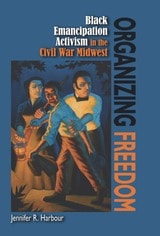
Organizing Freedom
Black Emancipation Activism in the Civil War MidwestJennifer R. Harbour
Southern Illinois University Press, 2020
Despite banning slavery, Illinois and Indiana share an antebellum history of severely restricting rights for free black people while protecting the rights of slaveholders. Nevertheless, as Harbour shows, black Americans settled there, and in a liminal space between legal slavery and true freedom, they focused on their main goals: creating institutions like churches, schools, and police watches; establishing citizenship rights; arguing against oppressive laws in public and in print; and, later, supporting their communities throughout the Civil War.
Harbour’s sophisticated gendered analysis features black women as being central to the seeking of emancipated freedom. Her distinct focus on what military service meant for the families of black Civil War soldiers elucidates how black women navigated life at home without a male breadwinner at the same time they began a new, public practice of emancipation activism. During the tumult of war, Midwestern black women negotiated relationships with local, state, and federal entities through the practices of philanthropy, mutual aid, religiosity, and refugee and soldier relief.
This story of free black people shows how the ideal of equality often competed against reality in an imperfect nation. As they worked through the sluggish, incremental process to achieve abolition and emancipation, Midwestern black activists created a unique regional identity.
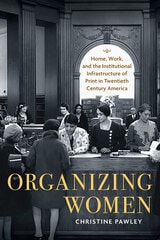
Organizing Women
Home, Work, and the Institutional Infrastructure of Print in Twentieth-Century AmericaChristine Pawley
University of Massachusetts Press, 2022
In the first decades of the twentieth century, print-centered organizations spread rapidly across the United States, providing more women than ever before with opportunities to participate in public life. While most organizations at the time were run by and for white men, women—both Black and white—were able to reshape their lives and their social worlds through their participation in these institutions.
Organizing Women traces the histories of middle-class women—rural and urban, white and Black, married and unmarried—who used public and private institutions of print to tell their stories, expand their horizons, and further their ambitions. Drawing from a diverse range of examples, Christine Pawley introduces readers to women who ran branch libraries and library schools in Chicago and Madison, built radio empires from their midwestern farms, formed reading clubs, and published newsletters. In the process, we learn about the organizations themselves, from libraries and universities to the USDA extension service and the YWCA, and the ways in which women confronted gender discrimination and racial segregation in the course of their work.
Origins of the TVA
The Muscle Shoals Controversy, 1920-1932Preston J. Hubbard
University of Alabama Press, 1961
How a North Alabama river fueled a national showdown over power, democracy, and the New Deal
Origins of the TVA: The Muscle Shoals Controversy, 1920–1932 is the definitive history of the bitter, decade-long struggle that gave rise to the Tennessee Valley Authority, one of the most consequential experiments in American public policy. Centered on Muscle Shoals, Alabama, this book traces how wartime investments in nitrates and hydropower became the focal point for national debates over public versus private power, regional planning, agricultural reform, and the proper role of the federal government.
In an era grappling with industrial transformation and sectional inequality, the story of Muscle Shoals illuminates why the TVA emerged as a landmark solution with global influence. Drawing on an extraordinary range of sources—more than twenty-five congressional hearings, the Congressional Record, private manuscripts, National Archives collections, and contemporary journalism—historian Preston J. Hubbard delivers a model of scholarly rigor and balance. Originally published in 1961 and still unmatched in scope, the book is widely praised for its restraint, clarity, and meticulous reconstruction of complex political, economic, and technological issues.
Hubbard demonstrates how a small group of lawmakers led by Senator George W. Norris ultimately shaped a durable vision of public power and regional development. This book will reward historians, political scientists, policy professionals, and students of Southern history, as well as readers interested in the origins of the New Deal, environmental policy, and the enduring debate over public resources and private enterprise.
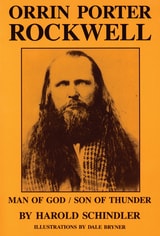
Orrin Porter Rockwell
Man of God Son of ThunderHarold Schindler
University of Utah Press, 1983
The legend of the Destroying Angel of Mormondom was well established by the time of his death, of natural causes, in 1878. Travelers sang ballads about him as they gathered around their campfires at night. Mothers used his name to frighten children into obedience. He was accused of literally hundreds of murders, all in the name of the Mormon Church.
Yet behind all the myth was a man, a human being. Orrin Porter Rockwell believed in his prophet, Joseph Smith. He spent most of a year chained in an Independence dungeon for his belief, then walked across Missouri to Nauvoo, stumbling into Joseph’s house on Christmas Day. Joseph said to him then, “Cut not thy hair and no bullet or blade can harm thee,” and the legend was born.
Rockwell continued to serve the leaders of his church—as hunter, guide, messenger, scout, guerilla, emissary to the Indians, and lawman. He traveled thousands of miles, raised three families, accumulated land and wealth—and favorably impressed almost everyone who met him. But although he walked with presidents and generals, scholars and scoundrels, in a life lived at the center of many of the great events of the American frontier, he has remained an enigma, a source of continuing controversy.
Harold Schindler’s remarkable investigative skills led him into literally thousands of unlikely places in his search for the truth about Rockwell. Dale L. Morgan, one of the west’s foremost historians, called the first edition “…an impressive job of research, one of the most impressive in recent memory, in the Mormon field. Mr. Schindler has shown great energy and sagacity in dealing with a difficult, highly controversial subject; and he has also made maximum use of the latest scholarship and newly available archival resources.”
But the author was not satisfied until he had probed even more deeply, and this revised and enlarged second edition contains greatly expanded documentation as well as textual additions that flesh out the characters and events of this classic drama of early America.
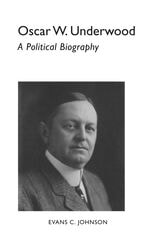
Oscar W. Underwood
A Political BiographyEvans C. Johnson
University of Alabama Press, 2006
Although Oscar W. Underwood was considered a titan of his age, few American political figures have suffered such neglect as he. Except for his candidacy for the Democratic nomination in 1924, his political career is largely forgotten even in Alabama. The one place in which Underwood is well remembered is in the folklore of Congress, where he is widely regarded as a great party leader who had mastered the rules perhaps as thoroughly as any member of Congress. This mastery, together with steady work, personal magnetism, and a willingness to compromise, made him effective as chairman of the Ways and Means Committee in formulating a majority program after the Democrats seized control of the House in 1910. Pat Harrison, Underwood's lieutenant as minority leader, referred to Underwood as the "greatest natural parliamentarian, the greatest leader of a law-making body that I ever saw."
--from the Preface to Oscar W. Underwood: A Political Biography
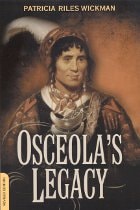
Osceola's Legacy
Patricia Riles Wickman
University of Alabama Press, 2006
A bestselling, re-evaluation of a major Native American resistance leader. Named an Outstanding Book by the Gustavus Myers Center for the Study of Human Rights.
Born in Alabama to a Muscogee/Creek Indian mother and an English father, Osceola, born Billy Powell, came to prominence in the 1830s for resisting the U. S. government's sweep into Florida. He protested the government's Florida Indian removal, killed a pro-emigration Indian leader and then made war on the US government.
Osceola's Legacy draws on a wealth of sources, including letters, diaries, and artifacts to bring this fascinating figure and the central role he played in the Second Seminole War into vivid focus. Of particular interest is a chapter on the forensic report on Osceola's grave as well as descriptions and the illustrations of his personal property at the time of his death.
Osceola's Legacy is significant for its genealogy and archaeological study of this Native American and his interaction with the federal government during the 1800s. The catalog of photographs of Osceola portraits and his personal possessions makes this a worthwhile reference book as well.
Others Had It Worse
Sour Dock, Moonshine, and Hard Times in Davis County, IowaVetra Melrose Padget Covert and Chris D. Baker
University of Iowa Press, 2013

Our First Family’s Home
The Ohio Governor’s Residence and Heritage GardenMary Alice Mairose
Ohio University Press, 2008
This richly illustrated volume tells the story of thehome that has served as Ohio’s executive residence since 1957, and of the nine governors and their families who have lived in the house. Our First Family’s Home offers the first complete history of the residence and garden that represent Ohio to visiting dignitaries and the citizens of the state alike. Once in a state of decline, the house has been lovingly restored and improved by itsresidents. Development of the Ohio Heritage Garden has increased the educational potential of the house and has sparked an interest in the preservation of native plant species. Looking toward the future, the Residence is also taking the lead in promoting environmental issues such as solar powerand green energy.
Photographs by award-winning environmental photographer Ian Adams and botanical art by Dianne McElwain showcase the beauty of the home’s architecture and the myriad of native plants that grace the three acres on which the Residence stands. Dianne McElwain is a member of the American Society of Botanical Artists in New York. Her botanical paintings have won numerous awards and are found in prestigious collections throughout the United States.
Essays highlight the Jacobethan Revival architecture and the history of the home. The remaining pieces cover the garden and include an intimate tour of the Heritage Garden, which was inspired by Ohio’s diverse landscape. Finally, former Governor Ted Strickland and First Lady Frances Strickland discuss the increasing focus on green energy at the Governor’s Residence and First Lady Emerita Hope Taft explains how native plants can help sustain the environment.
Our Hidden Landscapes
Indigenous Stone Ceremonial Sites in Eastern North AmericaLucianne Lavin
University of Arizona Press, 2023
This volume introduces readers to eastern North America’s Indigenous ceremonial stone landscapes (CSLs)—sacred sites whose principal identifying characteristics are built stone structures that cluster within specific physical landscapes. Our Hidden Landscapes presents these often unrecognized sites as significant cultural landscapes in need of protection and preservation.
In this book, Native American authors provide perspectives on the cultural meaning and significance of CSLs and their characteristics, while professional archaeologists and anthropologists provide a variety of approaches for better understanding, protecting, and preserving them. The chapters present overwhelming evidence in the form of oral tradition, historic documentation, ethnographies, and archaeological research that these important sites created and used by Indigenous peoples are deserving of protection.
This work enables archaeologists, historians, conservationists, foresters, and members of the general public to recognize these important ritual sites.
Contributors
Nohham Rolf Cachat-Schilling
Robert DeFosses
James Gage
Mary Gage
Doug Harris
Julia A. King
Lucianne Lavin
Johannes (Jannie) H. N. Loubser
Frederick W. Martin
Norman Muller
Charity Moore Norton
Paul A. Robinson
Laurie W. Rush
Scott M. Strickland
Elaine Thomas
Kathleen Patricia Thrane
Matthew Victor Weiss
Our Nazi
An American Suburb’s Encounter with EvilMichael Soffer
University of Chicago Press, 2024
Reinhold Kulle seemed like the perfect school employee. But in 1982, as his retirement neared, his long-concealed secret came to light. The chief custodian at Oak Park and River Forest High School outside Chicago had been a Nazi, a member of the SS, and a guard at a brutal slave labor camp during World War II.
Similar revelations stunned communities across the country. Hundreds of Reinhold Kulles were gradually discovered: men who had patrolled concentration camps, selected Jews for execution, and participated in mass shootings—and who were now living ordinary suburban lives. As the Office of Special Investigations raced to uncover Hitler’s men in the United States, neighbors had to reconcile horrific accusations with the helpful, kind, and soft-spoken neighbors they thought they knew. Though Nazis loomed in the American consciousness as evil epitomized, in Oak Park—a Chicago suburb renowned for its liberalism—people rose to defend Reinhold Kulle, a war criminal.
Drawing on archival research and insider interviews, Oak Park and River Forest High School teacher Michael Soffer digs into his community’s tumultuous response to the Kulle affair. He explores the uncomfortable truths of how and why onetime Nazis found allies in American communities after their gruesome pasts were uncovered.
Our Neck of the Woods
Exploring Minnesota's Wild PlacesDaniel J. Philippon
University of Minnesota Press, 2009
What are the odds of finding Minnesota's tiniest orchid? Why take a Breathalyzer test to study frogs? How does ice fishing warm the heart? Who would live in such a cold, lean region? Our Neck of the Woods takes on these and other urgent (and sometimes quirky) questions, showcasing writers' own experiences in the best-loved places in Minnesota, including the North Shore, Lake Bemidji, the western prairies and grasslands, the Boundary Waters, and the Mesabi Iron Range.
The outdoor experiences described here range from sweeping natural history observations to adventurous tales of coming-of-age camping and hunting trips. We follow notable writers and conservationists Sigurd F. Olson, Paul Gruchow, Bill Holm, Jan Zita Grover, Greg Breining, Laurie Allmann, and many others as they descend a frozen river toward Lake Superior, explore a crystalline palace at minus 20 degrees, and trace a family's history along the Mississippi River. Writing on such themes as embracing winter, making camp, and finding wildness even amid development, these authors tell of hunting, fishing, birding, canoeing, and other great outdoor activities that help define what it means to be Minnesotan.
Drawn from the pages of Minnesota Conservation Volunteer magazine-published by the Department of Natural Resources since 1940-these writings evoke a strong sense of place and suggest that the outdoor experiences we share with others come to mean the most to us. With rich observations and spirited tales, Our Neck of the Woods beckons Minnesotans to work, play, and explore in the natural places close to their homes and hearts.
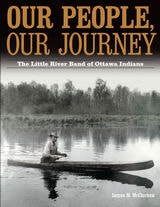
Our People, Our Journey
The Little River Band of Ottawa IndiansJames M. McClurken
Michigan State University Press, 2009
Our People, Our Journey is a landmark history of the Little River Band of Ottawa Indians, a Michigan tribe that has survived to the present day despite the expansionist and assimilationist policies that nearly robbed it of an identity in the late nineteenth century.
In his thoroughly researched chronicle, McClurken documents in words and images every major lineage and family of the Little River Ottawas. He describes the Band's struggles to find land to call its own over several centuries, including the hardships that began with European exploration of what is now the upper Midwest. Although the Little River Ottawas were successful at integrating their economic and cultural practices with those of Europeans, they were forced to cede land in the face of American settlements.
McClurken explains how the Little River Band was forced, in 1858, onto a reservation on the Pere Marquette and Manistee Rivers where they settled with a number of other Ottawa bands. However, the very treaty intended to provide the Grand River Ottawas with a permanent reservation "homeland" eventually allowed non-Indians to acquire title to nearly two-thirds of the land within the reservation by 1880.
Our Politics
Reflections on Political LifeDouglas Kane, with a foreword by Mike Lawrence
Southern Illinois University Press, 2019
In Our Politics Kane reflects on his nearly fifty years of active engagement in state and local politics. In a series of essays, he seeks to understand the forces, motivations, incentives and technologies that shape our politics and produce the consequences that we live with every day. He describes how candidates and officeholders deal with the fundamental contradictions inherent in the democratic process, and how and why the political power structure has changed. He also explores the personal experience of being a legislator, from deciding how to vote to building relationships with party leaders, fellow legislators, the governor, and the voters in the district. Kane concludes by considering the possibility of change, how it might happen, and the steps that candidates, political parties, activists and others might take to better our politics with results more to our liking.
While many journalists record politics from the outside, and numerous political memoirs focus on personalities and what happened to whom and when, this book gives an insider’s view of politics at the level of state government. This book is not about those politicians but about our politics, which together we have created and together we must deal with.

Our Story in Many Voices
The Alaska State Museum Catalog and GuideCharles Wohlforth
University of Alaska Press, 2025
Charles Wohlforth provides three major text sections—an introduction to Alaska, a summary of the museum exhibits, and a history of the exhibit development process—before the catalog of art and artifacts. Richly illustrated and presenting perspectives from Native and non-Native peoples, the book enhances visits to the museum and helps visitors recall and process their experiences, as well as broaden their general understanding of the state.
There is no single history of Alaska. Understanding the place and its peoples can be achieved only by viewing the multiple, complex, and even contradictory ways different people and groups perceive Alaska. Rather than present an official view of the state, Our Story in Many Voices contains independent and critical perspectives that use the extraordinary resources of the museum to consider Alaska’s most challenging cultural issues, reaching toward understanding and reconciliation.

Ours to Lose
When Squatters Became Homeowners in New York CityAmy Starecheski
University of Chicago Press, 2016
Those decades of strife, however, also gave the Lower East Side something unusual: a radical movement that blended urban homesteading and European-style squatting in a way never before seen in the United States. Ours to Lose tells the oral history of that movement through a close look at a diverse group of Lower East Side squatters who occupied abandoned city-owned buildings in the 1980s, fought to keep them for decades, and eventually began a long, complicated process to turn their illegal occupancy into legal cooperative ownership. Amy Starecheski here not only tells a little-known New York story, she also shows how property shapes our sense of ourselves as social beings and explores the ethics of homeownership and debt in post-recession America.
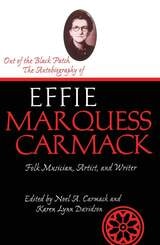
Out Of The Black Patch
Noel Carmack
Utah State University Press, 1999
Effie Marquess Carmack (1885-1974) grew up in the tobacco-growing region of southern Kentucky known as the Black Patch. As an adult she moved to Utah, back to Kentucky, to Arizona, and finally to California. Economic necessity primarily motivated Effie and her husband's moves, but her conversion to the Mormon Church in youth also was a factor. Throughout her life, she was committed to preserving the rural, southern folkways she had experienced as a child. She and other members of her family were folk musicians, at times professionally, and she also became a folk poet and artist, teaching herself to paint. In the 1940s she began writing her autobiography and eventually also completed a verse adaptation of it and an unpublished novel about life in the Black Patch.
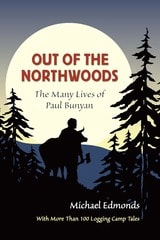
Out of the Northwoods
The Many Lives of Paul Bunyan, With More Than 100 Logging Camp TalesMichael Edmonds
Wisconsin Historical Society Press, 2009
Every American has heard of the lumberjack hero Paul Bunyan and his big blue ox. For 100 years his exploits filled cartoons, magazines, short stories, and children's books, and his name advertised everything from pancake breakfasts to construction supplies. By 1950 Bunyan was a ubiquitous icon of America's strength and ingenuity. Until now, no one knew where he came from—and the extent to which this mythical hero is rooted in Wisconsin.
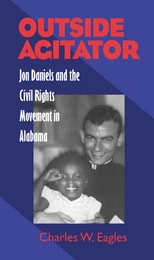
Outside Agitator
Jon Daniels and the Civil Rights Movement in AlabamaCharles Eagles
University of Alabama Press, 2000
WINNER OF THE LILLIAN SMITH BOOK AWARD
The story of faith, sacrifice, and moral courage in Alabama's fight for civil rights.
Outside Agitator tells the powerful, largely forgotten story of Jonathan Daniels—a white Episcopal seminarian from New England who answered the call of the civil rights movement and paid for that commitment with his life. In 1965, Daniels left the safety of Harvard and Cambridge for Selma and Alabama’s Black Belt, where he worked alongside Black activists to challenge segregation, register voters, and confront the moral failures of church and state. His murder by a white segregationist shocked the nation and exposed the deadly cost of racial injustice—and of moral courage.
More than a biography, this book asks urgent questions that still resonate: What does it mean to act on conscience in a society structured by inequality? What responsibilities do faith, citizenship, and privilege impose? Historian Charles W. Eagles places Daniels’s life within the turbulent final phase of the southern civil rights movement, revealing the everyday fears, ethical dilemmas, and racial tensions behind the iconic events of Selma and Lowndes County.
Outside Agitator will appeal to readers interested in civil rights history, religious activism, Southern history, and the moral dimensions of political struggle. It is essential reading for students, scholars, clergy, and general readers seeking to understand how individual lives can illuminate—and challenge—the ongoing fight for justice and equality.
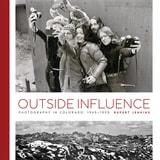
Outside Influence
Photography in Colorado, 1945–1995Rupert Jenkins
University Press of Colorado, 2025
Outside Influence: Photography in Colorado, 1945–1995 is the first detailed account of the state’s history of post–World War II expressive photography. The title “Outside Influence” alludes to the historic presence of the natural landscape as subject and to the transformative impact of out-of-state artists and educators. Their arrival in Colorado beginning in the 1960s galvanized interpretive photography by introducing innovative concepts, nontraditional materials, and emergent digital technologies to students, peers, and their audience-at-large.
Throughout the book’s nine chapters, Rupert Jenkins contextualizes Colorado photography’s postwar development with a social, political, and cultural abstract that encompasses national events and trends, the emerging presence of women and photographers of color, and institutional leadership. Drawing from more than 120 personal interviews, he identifies the medium’s principal in-state creators, mentors, and advocates from the modernist era of film processing to the emergence of interdisciplinary digital practice. Jenkins answers fundamental questions about the people and work of this era: Who generated this significant body of innovative, noncommercial photographic work? Where did they come from? Who inspired them, and who in turn did they inspire?
As Eric Paddock, curator of photography at the Denver Art Museum, discusses in his foreword, by looking at the schools, workshops, galleries, and museums that supported these artists, Jenkins stresses the importance of collaboration and community to any successful venture. Crucially, in examining the lives and careers of photographers like Robert Adams, Walter Chappell, Albert Chong, Cherie Hiser, Barbara Houghton, Winter Prather, Mark Sink, Melanie Walker, Myron Wood, and numerous others, Outside Influence seeks to affirm the medium’s legacy within Colorado’s fine arts canon.

Outside the Magic Circle
The Autobiography of Virginia Foster DurrHollinger F. Barnard
University of Alabama Press, 1990
Winner of the Alabama Library Author Award
Outside the Magic Circle tells the remarkable story of Virginia Foster Durr, a southern white woman born into privilige who (along with her husband Clifford Durr, a lawyer best known for defending Rosa Parks), nonetheless devoted her life to Civil Rights activism.
Outside the Magic Circle is the powerful and deeply personal autobiography of Virginia Foster Durr, a Southern woman who defied the expectations of her privileged upbringing to become one of the most courageous voices for civil rights and social justice in 20th-century America. Born into a wealthy, white Alabama family, Durr was raised in a world steeped in segregation and conservative values. Yet through a journey marked by moral reckoning, intellectual awakening, and political activism, she stepped outside the “magic circle” of Southern gentility to confront the injustices that shaped her world.
With a foreword by renowned oral historian Studs Terkel, this memoir captures Durr’s transformation from reluctant conformist to outspoken advocate. Her story spans decades of American history—from the Great Depression and New Deal politics to the McCarthy era and the Civil Rights Movement. Alongside her husband, attorney Clifford Durr, Virginia became a key figure in progressive circles, working to abolish the poll tax, defend civil liberties, and support Black activists in the segregated South.
Told in Durr’s own voice, the narrative is rich with anecdotes, reflections, and encounters with historical figures such as Eleanor Roosevelt, Rosa Parks, and Martin Luther King Jr. It is both a personal reckoning and a political document, offering rare insight into the inner conflicts of white Southern liberals and the cost of dissent in a deeply divided society.
Outside the Magic Circle is more than a memoir—it is a testament to the power of conscience, the courage of transformation, and the enduring fight for justice. It remains a vital resource for readers interested in civil rights history, feminist thought, and the complexities of Southern identity.
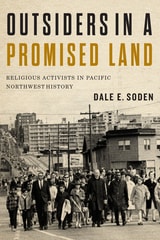
Outsiders in a Promised Land
Religious Activists in Pacific Northwest HistoryDale Soden
Oregon State University Press, 2015
As communities grew in population, early activists found common ground in a desire to protect women and children, and make their towns more hospitable to religious values. Protestants, Catholics, and Jews worked together to transform communities. Together they introduced public and private schools, health care institutions, libraries and orphanages, and lobbied for the prohibition of alcohol.
Beginning in the 1930s, religious activism played a crucial role in the emerging culture wars between liberals and conservatives. Liberals rallied around the protection of civil rights and the building of social safety nets, while conservatives decried the rise of secularism, liberalism, and communism. Today, religious activists of many faiths are deeply engaged in matters related to women’s and gay rights, foreign policy, and environmental protection.
Outsiders in a Promised Land is a meticulously researched, comprehensive treatment of religion in Pacific Northwest public life from the middle of the nineteenth century to the present. The first book of its kind, it is destined to be an essential reference for scholars, activists, and religious leaders of all faiths.
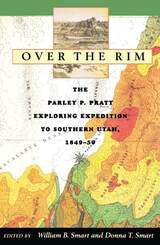
Over The Rim
The Parley P. Pratt Exploring Expedition to Southern Utah, 1849-50edited by William B. Smart and Donna T. Smart
Utah State University Press, 1999
Over the Rim is the first book about an important but little-known expedition sent by Brigham Young to explore southern Utah. Led by Mormon apostle Parley P. Pratt, the party traveled from Salt Lake City south across the rim of the Great Basin to the Virgin River near future St. George. They brought back to Mormon leaders their first detailed portrait of the country to the south that the church planned to settle.
Over the Range
A History of the Promontory Summit Route of the Pacific RailroadRichard V. Francaviglia
Utah State University Press, 2008
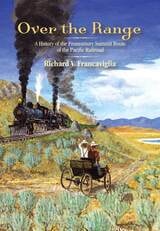
Francaviglia looks anew at the geographical-historical context of the driving of the golden spike in May 1869. He gazes outward from the site of the transcontinental railroad's completion—the summit of a remote mountain range that extends south into the Great Salt Lake. The transportation corridor that for the first time linked America's coasts gave this distinctive region significance, but it anchored two centuries of human activity linked to the area's landscape.
Francaviglia brings to that larger story a geographer's perspective on place and society, a railroad enthusiast's knowledge of trains, a cartographic historian's understanding of the knowledge and experience embedded in maps, and a desert lover's appreciation of the striking basin-and-range landscape that borders the Great Salt Lake.
Ozark Country
Otto Ernest Rayburn
University of Arkansas Press, 2021
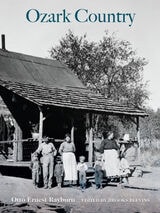
Published just days before America’s entry into World War II, Ozark Country is Otto Ernest Rayburn’s love letter to his adopted region. One of several chronicles of the Ozarks that garnered national attention during the Depression and war years, when many Americans craved stories about people and places seemingly untouched by the difficulties of the times, Rayburn’s colorful tour takes readers from the fictional village of Woodville into the backcountry of a region teeming with storytellers, ballad singers, superstitions, and home remedies.
Rayburn’s tales—fantastical, fun, and unapologetically romantic—portray a world that had already nearly disappeared by the time they were written. Yet Rayburn’s depiction of the Ozarks resonates with notions of the region that have persisted in the American consciousness ever since.