Results by title
8812 books match the query 'Political Science' and 161 start with o
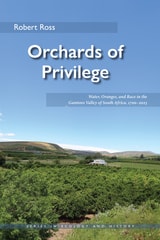
Orchards of Privilege
Water, Oranges, and Race in the Gamtoos Valley of South Africa, 1700–2023Robert Ross
Ohio University Press, 2025
This study of the Gamtoos River floodplain in South Africa’s Eastern Cape Province traces its transformation from an eighteenth-century natural landscape of thick bush into an agricultural zone now threatened by climate change. The first half of the book explains how missionaries from the London Missionary Society and residents of the Hankey Mission Station introduced irrigation, turning the area into a community of small-scale farmers. Despite early failures, by 1849 they had constructed South Africa’s first major irrigation tunnel and aqueduct. However, conflicts between the missionaries and residents led to the loss of communal lands to privatization, which ultimately impoverished the local farmers. The second half explores efforts to develop the valley for large-scale agriculture, addressing challenges like drought, flash floods, and saline water. By the mid-twentieth century, Afrikaners dominated the area, benefiting from the construction in 1970 of the Kouga Dam, which provided fresh water for the floodplain. This led to the rise of a wealthy white farming community, sustained by apartheid policies and labor from the “Coloured” and African populations. In the early twenty-first century, however, this prosperity has become threatened by severe droughts linked to global climate change. In view of these historical transformations, the Gamtoos River floodplain exemplifies the complex interplay between human ambition, environmental challenges, and sociopolitical forces.
Order and History, Volume 2 (CW15)
The World of the PolisEric Voegelin. Edited & Intro by Athanasios Moulakis
University of Missouri Press, 2000
This second volume of Voegelin's magisterial Order and History, The World of the Polis, explores the ancient Greek symbolization of human reality. Taking us from the origins of Greek culture in the Pre-Homeric Cretan civilizations, through the Iliad and Odyssey, Hesiod, and the rise of philosophy with the Pre-Socratics Parmenides and Heraclitus, this masterful work concludes with the historians of the classical period.
In The World of the Polis, Voegelin traces the emergence of the forms of the city-state and of philosophy from the ancient symbolism of myth. He maintains that the limits and ultimate goals of human nature are constant and that the central problem of every society is the same—"to create an order that will endow the fact of its existence with meaning in terms of ends divine and human." Thus, Voegelin shows how "the meaning of existence" achieved concrete expression in the typical political, social, and religious institutions of Greece and in the productions of its poets and thinkers. He deals with more than fifty Greek writers in the course of his analysis of the rise of myth and its representation of the divine order of the cosmos as the first great symbolic form of order, one later supplanted by the leap in being reflected in the emergence of philosophy.
The book is a tour de force, a virtuoso performance by a scholar and philosopher of great power, learning, and imagination that places its subject matter in a new light. The editor's critical introduction places The World of the Polis in the broader context of Voegelin's philosophy of history. Scholars and students of political science, philosophy, and the history of ideas will find this work invaluable.

Order and History, Volume 5 (CW18)
In Search of OrderEric Voegelin, Edited & Intro by Ellis Sandoz
University of Missouri Press, 2000
In Search of Order brings to a conclusion Eric Voegelin's masterwork, Order and History. Voegelin conceived Order and History as "a philosophical inquiry concerning the principal types of order of human existence in society and history as well as the corresponding symbolic forms." In previous volumes, Voegelin discussed the imperial organizations of the ancient Near East and their existence in the form of the cosmological myth; the revelatory form of existence in history, developed by Moses and the prophets of the Chosen People; the polis, the Hellenic myth, and the development of philosophy as the symbolism of order; and the evolution of the great religions, especially Christianity.
This final volume of Order and History is devoted to the elucidation of the experience of transcendence that Voegelin discussed in earlier volumes. He aspires to show in a theoretically acute manner the exact nature of transcendental experiences. Voegelin's philosophical inquiry unfolds in the historical context of the great symbolic enterprise of restating man's humanity under the horizon of the modern sciences and in resistance to the manifold forces of our age that deform human existence. His stature as one of the major philosophical forces of the twentieth century clearly emerges from these concluding pages. In Search of Order deepens and clarifies the meditative movement that Voegelin, now in reflective distance to his own work, sees as having been operative throughout his search.
Because of Voegelin's death, on January 19, 1985, In Search of Order is briefer than it otherwise might have been; however, the theoretical presentation that he had set for himself is essentially completed here. Just as this volume serves Voegelin well in his striking analyses of Hegel, Hesiod, and Plato, it will serve as a model for the reader's own efforts in search of order.
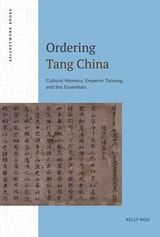
Ordering Tang China
Cultural Memory, Emperor Taizong, and the EssentialsKelly Ngo
Lever Press, 2024
By connecting the textual discourse with an analysis of its use and reception across the region, Ngo demonstrates that the Essentials was a key source of Confucian political thought and practice during the early Tang dynasty. In accounting for the place of the Essentials in political advice literature, Ngo illustrates how it drew from the ancient Confucian heritage and was still responsive to contemporaneous political concerns, suggesting that the Essentials played a part in the success of Zhenguan political practice.
Ordering Tang China also includes the first English-language translations of portions of the seventh-century anthology, with reference to partial translations published in nine languages. Utilizing the theory of cultural memory to study the Essentials not only opens a fresh approach to learning about the imperial consumption of literature, as well as the theory and practice of emperorship, but also offers a case study for how to study Chinese governance literature, including its “mirror for princes” genre.
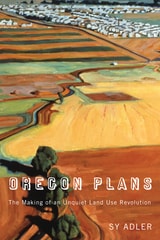
Oregon Plans
The Making of an Unquiet Land Use RevolutionSy Adler
Oregon State University Press, 2012
"Adler's story is about unusual conditions, purposeful action, dynamic personalities, and the messiness of democratic and bureaucratic processes. His conclusions reveal much about how Oregonians defined liveability in the late twentieth century." —William L. Lang, from the Preface

Organic Coffee
Sustainable Development by Mayan FarmersMaria Elena Martinez-Torres
Ohio University Press, 2006
Maria Elena Martinez-Torres explains how Mayan farmers have built upon their ethnic networks to make a crucial change in their approach to agriculture. Taking us inside Chiapas, Mexico's poorest state and scene of the 1994 Zapatista uprising, she examines the anatomy of the ongoing organic coffee boom and the fair-trade movement. The organic coffee boom arose as very poor farmers formed cooperatives, revalued their ethnic identity, and improved their land through organic farming. The result has been significant economic benefits for their families and ecological benefits for the future sustainability of agriculture in the region.
Organic Coffee refutes the myth that organic farming is less productive than chemical-based agriculture and gives us reasons to be hopeful for indigenous peoples and peasant farmers
Organized Agriculture and the Labor Movement before the UFW
Puerto Rico, Hawai’i, CaliforniaBy Dionicio Nodín Valdés
University of Texas Press, 2011
Puerto Rico, Hawai'i, and California share the experiences of conquest and annexation to the United States in the nineteenth century and mass organizational struggles by rural workers in the twentieth. Organized Agriculture and the Labor Movement before the UFW offers a comparative examination of those struggles, which were the era's longest and most protracted campaigns by agricultural workers, supported by organized labor, to establish a collective presence and realize the fruits of democracy.
Dionicio Nodín Valdés examines critical links between the earlier conquests and the later organizing campaigns while he corrects a number of popular misconceptions about agriculture, farmworkers, and organized labor. He shows that agricultural workers have engaged in continuous efforts to gain a place in the institutional life of the nation, that unions succeeded before the United Farm Workers and César Chávez, and that the labor movement played a major role in those efforts. He also offers a window into understanding crucial limitations of institutional democracy in the United States, and demonstrates that the widespread lack of participation in the nation's institutions by agricultural workers has not been due to a lack of volition, but rather to employers' continuous efforts to prevent worker empowerment.
Organized Agriculture and the Labor Movement before the UFW demonstrates how employers benefitted not only from power and wealth, but also from imperialism in both its domestic and international manifestations. It also demonstrates how workers at times successfully overcame growers' advantages, although they were ultimately unable to sustain movements and gain a permanent institutional presence in Puerto Rico and California.

Organized Labour and Politics in Mexico
Changes, Continuities and ContradictionsGraciela Bensusan and Kevin J. Middlebrook
University of London Press, 2012
This state of affairs - especially the failure to enact progressive labor law reform since democratic regime change in 2000 - limits democracy and imposes heavy costs on society as a whole.
Organizing Access To Capital
Advocacy And The Democratizationedited by Gregory D. Squires
Temple University Press, 2003
Organizing Democracy
How International Organizations Assist New DemocraciesPaul Poast and Johannes Urpelainen
University of Chicago Press, 2018
With Organizing Democracy, Paul Poast and Johannes Urpelainen argue that leaders of transitional democracies often have to draw on the support of international organizations to provide the public goods and expertise needed to consolidate democratic rule. Looking at the Baltic states’ accession to NATO, Poast and Urpelainen provide a compelling and statistically rigorous account of the sorts of support transitional democracies draw from international institutions. They also show that, in many cases, the leaders of new democracies must actually create new international organizations to better serve their needs, since they may not qualify for help from existing ones.
Organizing Insurgency
Workers' Movements in the Global SouthImmanuel Ness
Pluto Press, 2021
Organizing for Foreign Policy Crises
Presidents, Advisers, and the Management of Decision MakingPatrick J. Haney
University of Michigan Press, 2002
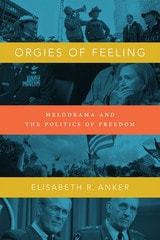
Orgies of Feeling
Melodrama and the Politics of FreedomElisabeth R. Anker
Duke University Press, 2014
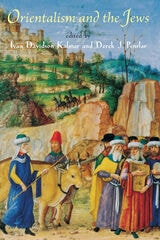
Orientalism and the Jews
Edited by Ivan Davidson Kalmar and Derek Penslar
Brandeis University Press, 2004
Orientalists, Propagandists, and Ilustrados
Filipino Scholarship and the End of Spanish ColonialismMegan C. Thomas
University of Minnesota Press, 2012
The writings of a small group of scholars known as the ilustrados are often credited for providing intellectual grounding for the Philippine Revolution of 1896. Megan C. Thomas shows that the ilustrados’ anticolonial project of defining and constructing the “Filipino” involved Orientalist and racialist discourses that are usually ascribed to colonial projects, not anticolonial ones. According to Thomas, the work of the ilustrados uncovers the surprisingly blurry boundary between nationalist and colonialist thought.
By any measure, there was an extraordinary flowering of scholarly writing about the peoples and history of the Philippines in the decade or so preceding the revolution. In reexamining the works of the scholars José Rizal, Pardo de Tavera, Isabelo de los Reyes, Pedro Paterno, Pedro Serrano Laktaw, and Mariano Ponce, Thomas situates their writings in a broader account of intellectual ideas and politics migrating and transmuting across borders. She reveals how the ilustrados both drew from and refashioned the tools and concepts of Orientalist scholarship from Europe.
Interrogating the terms “nationalist” and “nationalism,” whose definitions are usually constructed in the present and then applied to the past, Thomas offers new models for studying nationalist thought in the colonial world.

Origins of Instability in Early Republican Mexico
Donald F. Stevens
Duke University Press, 1991
Donald F. Stevens’ revisionist account challenges traditional historiography to examine the nature and origins of Mexico’s political instability. Turning to quantitative methods as a way of providing a framework for examining existing hypotheses concerning Mexico’s instability, the author dissects the relationship between instability and economic cycles; contradicts the notion that Mexico’s social elite could have increased political stability by becoming more active; and argues that the principal political fissures were not liberal vs. conservative but were among radical, moderate, and conservative.
Ultimately, Stevens maintains, the origins of that country’s instability are to be found in the contradictions between liberalism and Mexico’s traditional class structure, and the problems of creating an independent republic from colonial, monarchical, and authoritarian traditions.
Origins of Liberal Dominance
State, Church, and Party in Nineteenth-Century EuropeAndrew C. Gould
University of Michigan Press, 1999
Origins of a Spontaneous Revolution
East Germany, 1989Karl-Dieter Opp, Peter Voss, and Christiane Gern
University of Michigan Press, 1995
Origins of the TVA
The Muscle Shoals Controversy, 1920-1932Preston J. Hubbard
University of Alabama Press, 1961
How a North Alabama river fueled a national showdown over power, democracy, and the New Deal
Origins of the TVA: The Muscle Shoals Controversy, 1920–1932 is the definitive history of the bitter, decade-long struggle that gave rise to the Tennessee Valley Authority, one of the most consequential experiments in American public policy. Centered on Muscle Shoals, Alabama, this book traces how wartime investments in nitrates and hydropower became the focal point for national debates over public versus private power, regional planning, agricultural reform, and the proper role of the federal government.
In an era grappling with industrial transformation and sectional inequality, the story of Muscle Shoals illuminates why the TVA emerged as a landmark solution with global influence. Drawing on an extraordinary range of sources—more than twenty-five congressional hearings, the Congressional Record, private manuscripts, National Archives collections, and contemporary journalism—historian Preston J. Hubbard delivers a model of scholarly rigor and balance. Originally published in 1961 and still unmatched in scope, the book is widely praised for its restraint, clarity, and meticulous reconstruction of complex political, economic, and technological issues.
Hubbard demonstrates how a small group of lawmakers led by Senator George W. Norris ultimately shaped a durable vision of public power and regional development. This book will reward historians, political scientists, policy professionals, and students of Southern history, as well as readers interested in the origins of the New Deal, environmental policy, and the enduring debate over public resources and private enterprise.
Orwell’s Alert!
Power and the Politics of Control in George Orwell’s NovelsROBERT VAN DELLEN
Parkhurst Brothers, Inc., 2026
A college professor and former college president reveals the political underpinnings of George Orwell as expressed in his novels, with special emphasis on the author’s last two novels, Animal Farm and 1984. The growth of Orwell’s disdain for colonialism, as well as his concern for the quality of life under various political systems, undergirds the analysis. While flaws in Orwell’s analyses are acknowledged, the author believes readers can learn important lessons from the study, lessons that can be applied to the individual’s relationship to the state in our time.

Osiris, Volume 15
Nature and Empire: Science and the Colonial EnterpriseEdited by Roy MacLeod
University of Chicago Press, 2001
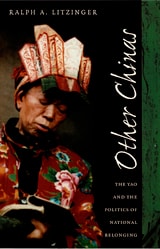
Other Chinas
The Yao and the Politics of National BelongingRalph A. Litzinger
Duke University Press, 2000
Litzinger begins by describing how during the Republican period the Yao were considered a dangerous people who preferred to consort with beasts and goblins rather than join in the making of a modern nation. He then compares this to the communist revolutionaries’ view of the Yao as impressive rebels and positive examples of subaltern agency. Litzinger shows how scholars, government workers, communist party officials, and Taoist ritual specialists have influenced the varied depictions of the Yao and, in doing so, he advances a new understanding of both the Yao and the effects of official discourse, written histories, state policy, and practices of minority empowerment. In addition to analyzing issues of ritual practice, social order, morality, and the governance of ethnic populations, Litzinger considers the Yao’s role in the cultural reforms of the 1980s. By distancing his study from romanticized depictions of minorities Litzinger is able to focus on how minority representation, struggle, and agency have influenced the history of the People’s Republic, cultural debates within contemporary Chinese society, and China’s rapidly changing role in the global order.
This book will be of interest to Asianists in both anthropology and cultural studies and should appeal more generally to scholars invested in issues of ethnic identity, minority politics, and transnationalism.
Other Worlds Here
Honoring Native Women’s Writing in Contemporary Anarchist MovementsTheresa Warburton
Northwestern University Press, 2021
All is not lost, however. Rather than centering a critical indictment of contemporary anarchist politics, Other Worlds Here maintains that a defining characteristic of New Anarchism is its ability to adapt and transform. Through close readings of texts by Native women authors, Warburton argues that anarchists must shift the paradigm that another world is possible to one that recognizes other worlds already here: stories, networks, and histories that lay out methods of building reciprocal relationships with the land and its people. Analyzing memoirs, poetry, and novels by writers including Deborah Miranda, Elissa Washuta, Heid E. Erdrich, Janet Rogers, and Leslie Marmon Silko, Other Worlds Here extends the study of Native women’s literatures beyond ethnographic analysis of Native experience to advance a widely applicable, contemporary political critique.
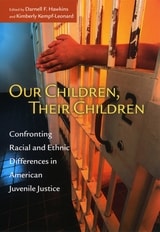
Our Children, Their Children
Confronting Racial and Ethnic Differences in American Juvenile JusticeEdited by Darnell F. Hawkins and Kimberly Kempf-Leonard
University of Chicago Press, 2005
Our Children, Their Children provides a state-of-the-science examination of racial and ethnic disparities in the American juvenile justice system. Here, contributors document the precise magnitude of these disparities, seek to determine their causes, and propose potential solutions. In addition to race and ethnicity, contributors also look at the effects on juvenile justice of suburban sprawl, the impact of family and neighborhood, bias in postarrest decisions, and mental health issues. Assessing the implications of these differences for public policy initiatives and legal reforms, this volume is the first critical summary of what is known and unknown in this important area of social research.
Our Common Bonds
Using What Americans Share to Help Bridge the Partisan DivideMatthew Levendusky
University of Chicago Press, 2023
One of the defining features of twenty-first-century American politics is the rise of affective polarization: Americans increasingly not only disagree with those from the other party but distrust and dislike them as well. This has toxic downstream consequences for both politics and social relationships. Is there any solution?
Our Common Bonds shows that—although there is no silver bullet that will eradicate partisan animosity—there are concrete interventions that can reduce it. Matthew Levendusky argues that partisan animosity stems in part from partisans’ misperceptions of one another. Democrats and Republicans think they have nothing in common, but this is not true. Drawing on survey and experimental evidence, the book shows that it is possible to help partisans reframe the lens through which they evaluate the out-party by priming commonalities—specifically, shared identities outside of politics, cross-party friendships, and common issue positions and values identified through civil cross-party dialogue. Doing so lessons partisan animosity, and it can even reduce ideological polarization. The book discusses what these findings mean for real-world efforts to bridge the partisan divide.
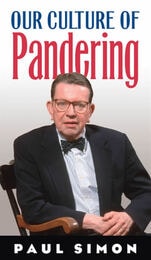
Our Culture of Pandering
Paul Simon
Southern Illinois University Press, 2006
As we broaden our views, embrace our differences, foster advancements in science and technology, and collaboratively strengthen the political, social, and educational underpinnings from which we build informed and productive lives, we have much to be proud of as a nation and as a people.
But we are tempted—particularly during times of political unrest and unbridled patriotism—to ignore the far-reaching repercussions of a society that caters to money and power. In Our Culture of Pandering, former U.S. Senator Paul Simon interrogates the arenas of politics, media, religion, and education to decry the disturbing practices that confuse public service with profit-making ventures or popularity contests, that compromise the best interests of the broader population to appease a powerful few. Boldly and eloquently contributing to a cumulative understanding of how we can build a sturdier, more ethical foundation for the future, Simon suggests proactive, long-term solutions to the problems that threaten our country’s moral, financial, and intellectual well-being—problems that are increasingly exacerbated by our culture of pandering.
Lest we grow complacent and our nation static, Simon urges us to demand more from the political candidates who chase dollar signs and cater to polls, to raise our expectations of local and national media outlets that recycle gossip and peddle scandals while foreign policy and international news receive back-page treatment or no treatment at all. He asks us to consider the implications of churches that spend more money remodeling their buildings than helping those in need within their own communities and throughout the world, and he presses us to acknowledge the staggering, long-term consequences of schools that drop their academic standards to sustain their reputations and maintain funding.
Our Culture of Pandering is a stalwart and earnest call to action from a steadfast and trusted advocate of progressive public policy. Leavened with altruism and rich with compassion for citizens of America and beyond, present and future, this important and cautioning treatise advocates genuine leadership in the realms of politics, media, religion, and education. In his trademark lucid and synoptic style, Simon supplements up-to-date examples of pandering in our society from a breadth of sources with commentary and interpretive wisdom garnered from a lifetime of public service.
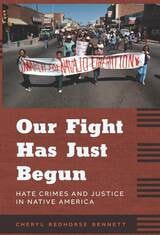
Our Fight Has Just Begun
Hate Crimes and Justice in Native AmericaCheryl Redhorse Bennett
University of Arizona Press, 2022
Illuminating largely untold stories of hate crimes committed against Native Americans in the Four Corners region of the United States, this work places these stories within a larger history, connecting historical violence in the United States to present-day hate crimes. Bennett contends that hate crimes committed against Native Americans have persisted as an extension of an “Indian hating” ideology that has existed since colonization, exposing how the justice system has failed Native American victims and families.
While this book looks deeply at multiple generations of unnecessary and ongoing pain and violence, it also recognizes that this is a time of uncertainty and hope. The movement to abolish racial injustice and racially motivated violence has gained fierce momentum. Our Fight Has Just Begun shows that racism, hate speech, and hate crimes are ever present and offers recommendations for racial justice.
Our History, Their History, Whose History?
Romila Thapar
Seagull Books, 2023
In this timely book, historian Romila Thapar delves into the complex world of nationalism and its impact on the interpretations of the past and on the discipline of history itself. History, she expounds, is no mere collection of information and chronology, and its purpose extends well beyond storytelling.
Recognizing nationalism as a powerful force that gives rise to various narratives that provide ancestry to communities and shape the direction of societies, Thapar explores how, in India, two conflicting notions of nationalism have evolved and shaped the idea of the nation. Today, one such nationalistic theory claims the victimization of one religious community by another through centuries of “misrule.” Such a claim willfully ignores ample evidence to the contrary to suit a particular political and ideological purpose. Thapar counters such attempts at misrepresentation by citing several historical instances of the nuanced interface and intermingling of cultures, as well as by showing how today’s conflicts have their roots in the British colonial construction of India’s history. She also addresses the recent controversy surrounding the deletions of sections of Indian history textbooks published by NCERT, the Indian educational council, and suggests that the intention is more likely to be the promotion of a particular reading of history that conforms to the ideology of those in power.
Engaging and thought-provoking, Our History, Their History, Whose History? invites readers to question the authenticity of historical narratives touted by one group of nationalists, and it explores the clash between professional historians who study the past to understand our inherited present and fabricators who wield history for political gain.
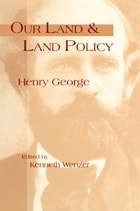
Our Land & Land Policy
Speeches Lectures, and Miscellaneous WritingsKenneth C. Wenzer
Michigan State University Press, 1999
Even before the publication of Progress and Poverty in 1879, San Francisco political economist and publisher Henry George (1839-1897) had written extensively about what he considered to be the causes for worldwide economic inequity—land monopolization and speculation by wealthy entrepreneurs and corrupt politicians. But his attacks on these evils were coupled with a plan for a possible brighter future, for a world in which disparities between people of different classes could be adjusted. By the time he died in 1897, his assessments of liberal 19th-century economic theory were critically acclaimed in Europe and the United States.
Michigan State University Press's new edition of Our Land and Land Policy includes the texts of speeches George delivered and essays he published during three decades of political activism. These pieces were chosen originally in 1901 by George's son, Henry George, Jr., to portray the expansiveness and depth of his father's philosophy and the sincerity with which the elder George struggled throughout his life for social justice.
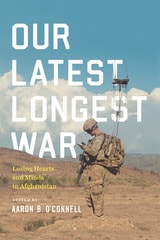
Our Latest Longest War
Losing Hearts and Minds in AfghanistanEdited by Aaron B. O'Connell
University of Chicago Press, 2017
America’s goals in Afghanistan were lofty to begin with: dismantle al Qaeda, remove the Taliban from power, remake the country into a democracy. But not only did the mission come completely unmoored from reality, the United States wasted billions of dollars, and thousands of lives were lost. Our Latest Longest War is a chronicle of how, why, and in what ways the war in Afghanistan failed. Edited by historian and Marine lieutenant colonel Aaron B. O’Connell, the essays collected here represent nine different perspectives on the war—all from veterans of the conflict, both American and Afghan. Together, they paint a picture of a war in which problems of culture and an unbridgeable rural-urban divide derailed nearly every field of endeavor. The authors also draw troubling parallels to the Vietnam War, arguing that deep-running ideological currents in American life explain why the US government has repeatedly used armed nation-building to try to transform failing states into modern, liberal democracies. In Afghanistan, as in Vietnam, this created a dramatic mismatch of means and ends that neither money, technology, nor the force of arms could overcome.
The war in Afghanistan has been the longest in US history, and in many ways, the most confounding. Few who fought in it think it has been worthwhile. These are difficult topics for any American or Afghan to consider, especially those who lost friends or family in it. This sobering history—written by the very people who have been fighting the war—is impossible to ignore.

Our Long Heritage
Pages From the Books our Founding Fathers ReadWilson O. Clough
University of Minnesota Press, 1955
Our Long Heritage was first published in 1955. Minnesota Archive Editions uses digital technology to make long-unavailable books once again accessible, and are published unaltered from the original University of Minnesota Press editions.
This collection of readings, selected from the books and documents that were the major sources of American ideas and beliefs during the period of the founding of the democracy from 1750 to 1780, demonstrates that America has a long heritage behind its social and political philosophy. The excerpts are from the works that represent four different cultural or historical heritage, and they are presented in this order: the classical heritage, the English tradition to 1700, the continental stream, and the eighteenth century, both British and American. Mr. Clough, a former professor of English at the University of Wyoming, provides introductory and explanatory comment throughout the volume. The first book of its kind, it should be particularly useful in American studies programs.

Our Man in Warszawa
How the West Misread PolandJo Harper
Central European University Press, 2021
Written by a Brit who has lived in Poland for more than twenty years, this book challenges some accepted thinking in the West about Poland and about the rise of Law and Justice (PiS) as the ruling party in 2015. It is a remarkable account of the Polish post-1989 transition and contemporary politics, combining personal views and experience with careful fact and material collections. The result is a vivid description of the events and scrupulous explanations of the political processes, and all this with an interesting twist – a perspective of a foreigner and insider at the same time. Settled in the position of participant observer, Jo Harper combines the methods of macro and micro analysis with CDA, critical discourse analysis. He presents and interprets the constituent elements and issues of contemporary Poland: the main political forces, the Church, the media, issues of gender, the Russian connection, the much-disputed judicial reform and many others.
A special feature of the book is the detailed examination of the coverage of the Poland’s latest two elections, one in 2019 (parliamentary) and the other in 2020 (presidential) in the British media, an insightful and witty specimen of comparative cultural and political analysis.

Our National Park System
Caring for America's Greatest Natural and Historic TreasuresDwight F. Rettie
University of Illinois Press, 1995
Rettie agrees, as many critics have claimed, that the system is in disarray; he proposes in detail stronger management operations, clearer and more stringent measures of personnel performance, and training of park rangers to help them become professionals knowledgeable about the scientific management and protection of resources.
For a concerned public as well as for policy-makers and students of government, this comprehensive analysis and outline may provide hope--and a future--for the invaluable legacy that is our national park system.
Our New Husbands Are Here
Households, Gender, and Politics in a West African State from the Slave Trade to Colonial RuleEmily Lynn Osborn
Ohio University Press, 2011
In Our New Husbands Are Here, Emily Lynn Osborn investigates a central puzzle of power and politics in West African history: Why do women figure frequently in the political narratives of the precolonial period, and then vanish altogether with colonization? Osborn addresses this question by exploring the relationship of the household to the state. By analyzing the history of statecraft in the interior savannas of West Africa (in present-day Guinea-Conakry), Osborn shows that the household, and women within it, played a critical role in the pacifist Islamic state of Kankan-Baté, enabling it to endure the predations of the transatlantic slave trade and become a major trading center in the nineteenth century. But French colonization introduced a radical new method of statecraft to the region, one that separated the household from the state and depoliticized women’s domestic roles. This book will be of interest to scholars of politics, gender, the household, slavery, and Islam in African history.
Our Politics
Reflections on Political LifeDouglas Kane, with a foreword by Mike Lawrence
Southern Illinois University Press, 2019
In Our Politics Kane reflects on his nearly fifty years of active engagement in state and local politics. In a series of essays, he seeks to understand the forces, motivations, incentives and technologies that shape our politics and produce the consequences that we live with every day. He describes how candidates and officeholders deal with the fundamental contradictions inherent in the democratic process, and how and why the political power structure has changed. He also explores the personal experience of being a legislator, from deciding how to vote to building relationships with party leaders, fellow legislators, the governor, and the voters in the district. Kane concludes by considering the possibility of change, how it might happen, and the steps that candidates, political parties, activists and others might take to better our politics with results more to our liking.
While many journalists record politics from the outside, and numerous political memoirs focus on personalities and what happened to whom and when, this book gives an insider’s view of politics at the level of state government. This book is not about those politicians but about our politics, which together we have created and together we must deal with.

Our Precious Corn
YukwanénsteRebecca M. Webster
Michigan State University Press, 2023
Our Roots Run Deep as Ironweed
Appalachian Women and the Fight for Environmental JusticeShannon Elizabeth Bell
University of Illinois Press, 2013
Motivated by a deeply rooted sense of place and community, Appalachian women have long fought against the damaging effects of industrialization. In this collection of interviews, sociologist Shannon Elizabeth Bell presents the voices of twelve Central Appalachian women, environmental justice activists fighting against mountaintop removal mining and its devastating effects on public health, regional ecology, and community well-being.
Each woman narrates her own personal story of injustice and tells how that experience led her to activism. The interviews--many of them illustrated by the women's "photostories"--describe obstacles, losses, and tragedies. But they also tell of new communities and personal transformations catalyzed through activism. Bell supplements each narrative with careful notes that aid the reader while amplifying the power and flow of the activists' stories. Bell's analysis outlines the relationship between Appalachian women's activism and the gendered responsibilities they feel within their families and communities. Ultimately, Bell argues that these women draw upon a broader "protector identity" that both encompasses and extends the identity of motherhood that has often been associated with grassroots women's activism. As protectors, the women challenge dominant Appalachian gender expectations and guard not only their families but also their homeplaces, their communities, their heritage, and the endangered mountains that surround them.
30% of the proceeds from the sale of this book will be donated to organizations fighting for environmental justice in Central Appalachia.
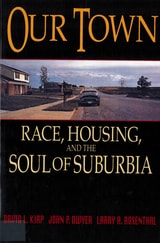
Our Town
Race, Housing, and the Soul of SuburbiaKirp, David L
Rutgers University Press, 1997

Our Veterans
Winners, Losers, Friends, and Enemies on the New Terrain of Veterans AffairsSuzane Gordon, Steve Early, and Jasper Craven
Duke University Press, 2022
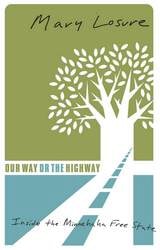
Our Way Or The Highway
Inside The Minnehaha Free StateMary Losure
University of Minnesota Press, 2002
An eyewitness account of this controversial environmental action.
Construction plans for the reroute of Highway 55 through south Minneapolis sparked an environmental movement that pitted activists against public authorities in one of the most dramatic episodes in the city’s history. Mary Losure was there; as a reporter for Minnesota Public Radio she witnessed the neighborhood’s transformation from a quiet street to the center of an emotionally charged standoff. Fueled by idealism and anger, a diverse coalition banded together to try to stop the highway expansion. Beginning in 1998, this group sustained protests for more than one year and eventually faced an unprecedented show of force by law enforcement.
In Our Way or the Highway Losure offers an inside view of the activist subculture that converged into a makeshift encampment dubbed the "Minnehaha Free State." Here, a retired stenographer befriended EarthFirst! members and appeared in the organization’s national journal, fist raised in protest of the destruction of her home. A pipe fitter abandoned his old life to defend what he believed to be the sacred sites of his Dakota ancestors. A dreamy, dreadlocked seeker hitchhiked to Minneapolis and spent days perched in a doomed cottonwood tree. A police lieutenant watched the trees fall and felt surprising sympathy for the activists’ beliefs. Engagingly written, Our Way or the Highway reveals the motivations, perceptions, and dynamics of those involved in this conflict of wills and ideals.Among the issues Losure explores are the roles of ecoanarchism and grassroots activism in the age of globalization. This fascinating subculture, brought to the spotlight during protests over the World Trade Organization in Seattle and Genoa, has been largely undocumented in the mainstream press. With a practiced reporter’s eye, Mary Losure shows the activists’ world and the way the establishment views them, and ultimately she lays bare the power of the existing order and the fragility and absolute necessity of dissent.
Our Way to Fight
Peace-Work Under Siege in Israel-PalestineMichael Riordon
Pluto Press, 2011
Michael Riordon takes us to thousand year-old olive groves, besieged villages, refugee camps, checkpoints and barracks. In the face of deepening conflict, Our Way to Fight offers courageous grassroots action on both sides of the wall, and points the way to a liveable future.
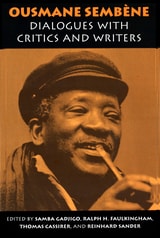
Ousmane Sembene
Dialogues with Critics and WritersThomas Cassirer
University of Massachusetts Press, 1993
This volume celebrates the work of Ousmane Sembène, the brilliant African filmmaker and writer. Since the 1950s, working in his native Senegal, Sembène has produced a series of films and novels that incisively depict the realities of contemporary African experience, particularly that of urban and industrial Africa. The book begins with critical essays on Sembène’s oeuvre by Frederick Ivor Case, Françoise Pfaff, Mbye Cham, and Claire Andrade-Warkins. There follows a series of presentations by distinguished black writers who discuss their craft and the ways in which language can function as a political act of cultural legitimation. These writers include Toni Cade Bambara, Earl Lovelace, Ngũgĩ wa Thiong’o, John Edgar Wideman, and Sembène.
The next section reproduces Sembène’s remarks on his film Camp de Thiaroye and an extended interview he recorded in Toronto in 1992. His comments are presented in both French and English. The volume concludes with annotated bibliographies of Sembène’s novels and of the films he has written and directed.
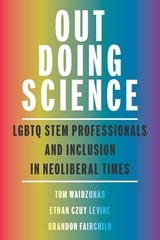
Out Doing Science
LGBTQ STEM Professionals and Inclusion in Neoliberal TimesTom Waidzunas, Ethan Czuy Levine, and Brandon Fairchild
University of Massachusetts Press, 2025
Winner of the American Sociological Association’s Section on the Sociology of Sexualities Distinguished Book Award
Over the past 50 years, lesbian, gay, bisexual, transgender, and queer professionals have organized to achieve greater inclusion into the fields of science, technology, engineering, and mathematics (STEM). This inclusion, however, has come at a cost. In the 1970s, these professionals sought to radically transform STEM fields by confronting the homophobia and sexism embedded within them. Instead, these fields became more corporatized and privatized, and STEM institutions and workspaces—particularly in the spheres of government and business—became dominated by a focus on individualism, self-improvement/advancement, and meritocracy, which are hallmarks of neoliberalism. For many LGBTQ STEM professionals, inclusion now required becoming more apolitical, pro-capital, and focused on professional development.
In Out Doing Science, Tom Waidzunas, Ethan Czuy Levine, and Brandon Fairchild explore this transformation of LGBTQ STEM professionals from oppositional outsiders to assimilationist insiders. Drawing on historical archives, oral interviews, and participant observation of professional societies and workspaces, the authors interrogate the meanings of “inclusion” and why some LGBTQ STEM professionals have benefited from it more than others. They also advocate for a “queer STEM” that challenges and transforms the racism, classism, sexism, cisheterosexism, and imperialism of these fields, institutions, and workspaces. Written in an accessible and engaging style, Out Doing Science will appeal to readers interested in LGBTQ studies, and science and technology studies, as well as anyone who wants to create a more diverse and inclusive work environment.

Out Of The Jungle
Jimmy Hoffa And The Remaking OfThaddeus Russell
Temple University Press, 2003
Out in the Union
A Labor History of Queer AmericaMiriam Frank
Temple University Press, 2015
Out in the Union tells the continuous story of queer American workers from the mid-1960s through 2013. Miriam Frank shrewdly chronicles the evolution of labor politics with queer activism and identity formation, showing how unions began affirming the rights of lesbian, gay, bisexual, and transgender workers in the 1970s and 1980s. She documents coming out on the job and in the union as well as issues of discrimination and harassment, and the creation of alliances between unions and LGBT communities.
Featuring in-depth interviews with LGBT and labor activists, Frank provides an inclusive history of the convergence of labor and LGBT interests. She carefully details how queer caucuses in local unions introduced domestic partner benefits and union-based AIDS education for health care workers-innovations that have been influential across the U.S. workforce. Out in the Union also examines organizing drives at queer workplaces, campaigns for marriage equality, and other gay civil rights issues to show the enduring power of LGBT workers.
Out of Line
Reading and Writing Protest in West Germany, 1968Peter Schweppe
University of Michigan Press, 2026
By analyzing how protest fused the politics of reading and writing in 1968 West Germany, author Peter Schweppe uncovers the vibrant history of an alternative literary form during a watershed moment of social upheaval. Out of Line interlinks the politics of reading and writing with the verve of Global Sixties’ protest, where fringe books, underground newspapers, incendiary flyers, and furtive graffiti galvanized readers and writers alike. The phrase “out of line” scrutinizes the emerging performative relationship between visual and textual media in the late 1960s as it metamorphosed modes of West German literary production, channeled the agenda of the protest movement, and, in doing so, shaped new kinds of textual meaning. Through its engagement with theories of materiality and “things,” Out of Line interrogates the dynamic ways that protest readers and writers pushed and broke conventional boundaries. Schweppe’s exploration of form discloses how reading and writing out of line implicates a textual and material history of protest and the lessons it offers protest histories to come.
Out of Many, One
Obama and the Third American Political TraditionRuth O'Brien
University of Chicago Press, 2013
Bearing traces of Baruch Spinoza, John Dewey, and Saul Alinsky, Obama’s progressivism embraces the ideas of mutual reliance and collective responsibility, and adopts an interconnected view of the individual and the state. So, while Obama might emphasize difference, he rejects identity politics, which can create permanent minorities and diminish individual agency. Analyzing Obama’s major legislative victories—financial regulation, health care, and the stimulus package—O’Brien shows how they reflect a stakeholder society that neither regulates in the manner of the New Deal nor deregulates. Instead, Obama focuses on negotiated rule making and allows executive branch agencies to fill in the details when dealing with a deadlocked Congress. Similarly, his commitment to difference and his resistance to universal mandates underlies his reluctance to advocate for human rights as much as many on the Democratic left had hoped.

Out of the Closets and into the Courts
Legal Opportunity Structure and Gay Rights LitigationEllen Ann Andersen
University of Michigan Press, 2004
Out of the Closets and into the Courts explores both the promise and the limits of using legal mobilization to effect social change. Crossing disciplinary boundaries, Ellen Andersen draws on the accumulated knowledge of political science, law, and sociology to explain the origins and outcomes of gay rights litigation. The resulting book is essential reading for anyone interested in gay rights, legal change, and social movements.
Out of the Frame
The Struggle for Academic Freedom in IsraelIlan Pappe
Pluto Press, 2010
Even before he wrote his bestselling book The Ethnic Cleansing of Palestine, historian Ilan Pappe was a controversial figure in Israel. In Out of the Frame, he gives a full account of his break with mainstream Israeli scholarship and its consequences.
Here he traces his journey of discovery from the whispers of Palestinian classmates to his realisation that the 'enemy's' narrative of the events of 1948 was correct. After completing his thesis at Oxford University in the early 1980s, he returned to Palestine determined to protect the memory of the Nakbah. For the first time he gives the details of the formidable opposition he faced in Israel, including death threats fed by the media, denunciations by the Knesset and calls for him to be sacked from his post at Haifa university.
This revealing work, written with dignity and humour, highlights Israel's difficulty in facing up to its past and forging a peaceful, inclusive future in Palestine.
Out of the Red
Building Capitalism and Democracy in Postcommunist EuropeMitchell A. Orenstein
University of Michigan Press, 2001
A detailed analysis of Poland and the Czech Republic suggests that alternation between strategies has been the secret to the success of East-Central European countries.
This comparative case analysis identifies the significance of reform mistakes during transition and the corrective benefits of policy alternation, its claims illustrated with an in-depth study of privatization policy in the two countries.
Mitchell A. Orenstein delves into the historic struggle to build capitalism and democracy during a decade of post- communist transition in East-Central Europe and develops a model that explains why democratic policy alternation may accelerate policy learning under conditions of uncertainty and constraint.
Out of the Red is accessible to a general audience and as such is suitable for both graduate and undergraduate courses on political economy. It will be of particular interest to economists, political scientists, sociologists, students of postcommunism, and anyone interested in the relations between capitalism and democracy in the contemporary world.
Mitchell A. Orenstein is Assistant Professor of Political Science, Syracuse University.